Thursday, May 7, 2015

Happy Accidents

Familiar Grounds (2011) - Lafleur
 photo 37ee8ec6-4dce-4076-986d-d0a80999c774_zps88zqavgj.png
 photo 20b2d124-dac3-4e3f-80dc-ade419b27e89_zpsmtdz8ipa.png
 photo 858efc8d-a359-48e3-88e1-282aaa21c30e_zpsqwbokbhw.png
 photo c3db3959-e96f-43db-bcf0-1878dde9688d_zpsjicdyaxw.png
 photo fbf9bb02-19f3-4251-9705-5e1385a6ed77_zpsg9qqw08k.png
 photo a9fc1e4d-7e33-4d5e-a6e6-3e32fb531944_zpsx7vnrrj9.png
Maryse (Fanny Mallette, from Lafleur's debut, Continental) leads a quiet, boring existence day in an day out. Her absent facial expression says it all. But lately, small things are getting to her - a mini forklift parked right outside all winter in front of her house, clogged sink, daily chitchat with her husband...everything. Her brother Benoit (Francis La Haye, also in Lafleur's Tu dors Nicole) is a ne'er do gooder. He keeps screwing up his relationship with a devorcée with a son who hates him. He is a child in grown man's body, still living with his aging dad. Then there is a man from the future. He is a local owner of a car dealership. He just happens to be from the future 6-7 month ahead.

Familiar Grounds is split in 3 chapters - Accident #1, 2 and 3. These accidents slightly propels the film forward. First one is offscreen severing of a worker's arm at a cardboard box factory Maryse works at. This makes her preoccupied with the thought of putting a severed arm in ice in order to reattach it later. The motif of arm, whether it's her examining hers in front of the mirror for hours or people raising their arms to say hi or that of mannequins courses throughout the film. Lafleur's connecting visual gags are perhaps the subtlest of them all in cinema and I love it. The second "accident" is a small bird running into Benoit's window. He cooks it for dinner (it was still alive according to him), not realizing that it is too small for 4 people. The third one concerns the man of the future, as he tells Benoit that his sister is going to be in a fatal car accident. He also tells him that it will be a beautiful summer. And Benoit decides to take charge.

Then the film becomes a road movie with the siblings going up to their dad's old cottage to get a trailer (to get rid of the forklift) in the blizzard. Winter has been long and miserable for both of them. Something's gotta change....

Wry, affecting and inventive, Lafleur's world has a unique, quiet charm all to itself. These accidents in life are not going to be life changing for these lonely, confused, disconnected people, but they give them a some sense of comfort for us to know that whether they know it or not, that we are all somehow connected in this world.

Wednesday, May 6, 2015

Invisible Connections

Continental: A Film Without Guns (2007) - Lafleur
 photo a0a56a56-a3c8-4253-8e75-f11fbaff6b77_zpsb0sydfsw.png
 photo 0f7a006d-c020-4f5e-ac49-7b9902408dd0_zpssevqmozu.png
 photo c211df45-469e-42dd-9cb0-cd0cfe4cf042_zpsiwpawkqa.png
Stéphane Lafleur's debut film charts a group of lonely people in Quebec. As he indicates with the title, Continental is a film without ever showing or firing a gun. Nor does it have any nudity or touching. Urban loneliness of Lafleur's world has more common with 90s- 2000s Asian films than any pretentious North American indies with the same theme with some quirky premises. Quietly, Lafleur paints these characters with real care and feelings. Their small connections don't feel labored or out of place. Their interactions are full of awkwardness and longing and their desires as grand as that of gods. They show their care in almost invisible ways but for us to see.

Monday, May 4, 2015

NY African Film Festival 2015

Scanning through the list of this year's New York African Film Festival, I am once again astonished by the breadth and scope of African diaspora in the 21st century transnational society. The countries represented in this year's festival, excluding the ones from the continent, are: Denmark, Spain, Brazil, Israel, Czech Republic, France, United Arab Emirate, USA and Canada. All in all, the staggering lineup represents 25 countries from all over.

22nd edition of the festival places special emphasis on digital technology and short form filmmaking which freed new generation of filmmakers from budgetary and technical limitations. The highlight of the result is shown in Women in the Media and Afripedia sidebar sections as well as two feature length documentaries - 100% Dakar and Stories of Our Lives. These films and filmmakers respresent the vibrant, multi-ethnic, collaborative art communities that are springing out from everywhere throughout the continent that we don't hear much about.

The Festival also put a spotlight on the modern classics of African cinema, including Kirikou and the Sorceress (1998), Mossane (1996) and last year's Oscar nominated Timbuktu.

*Read my interview with Abderramane Sissako (Timbuktu)

*Read my review of Timbuktu

Many of the filmmakers and actors will be on hand for the Q & A sessions after the screening of each film.

The quality of all 7 feature films I was able to preview here for this year's festival is quite extraordinary. For the list of the films and tickets please visit New York African Film Festival website.

The festival runs from 5/6 - 5/12 at FSLC, 5/14 - 5/17 at Maysles Cinema Institute and 5/ 22 - 5/25 at BAM Cinematek.


Cold Habour (Dir. Carey McKenzie, South Africa) *Opening Night Film
 photo 430896b3-fcbe-474d-9a11-cc8ac00af228_zpslyklwrum.jpg
Sizwe (Tony Kgoroge) is a beat cop and an ex-soldier against apartheid. He is a hard working man, but finds himself pitted against corrupt police establishment and former comrades-turned-criminals.

While investigating the death of a Chinese triad member at the harbor, involving illegal abalone poaching and drugs, he gets a much sought after promotion as a detective. But forces behind the promotion are dictating his actions. Sizwe must play his boss, seductive Chinese triad boss (scrumptious Nan Yu) and the Specialist (underworld crime boss and his former comrade in struggle) in order to survive.

Cold Habour is a superb policier from South Africa. Moody and understated, McKenzie's cold palette is big a contrast against sunny and earthy disposition of other recent South African films. Tony Kgoroge has a real presence as a brooding cop whose loyalty is being tested in an uncertain world.

Wednesday, May 6th, 7pm (Q&A with Carey McKenzie and Tendeka Matatu) – Walter Reade Theater, FSLC

Monday, May 11th, 2pm – Elinor Bunin Munroe Film Center, FSLC


100% Dakar - More Than Art (Dir. Sandra Krampelhuber, Austria/Senegal)
 photo f4523e54-6a67-4fdb-b313-cd8d8ed79902_zpsuzk9hjxr.jpg
Austrian filmmaker Sandra Krampelhuber documents a booming artist community in Dakar, Senegal. These young musicians, rappers, graffiti artists, fashion designers and dancers talk about their beloved city - Dakar is where it's at. For an African artist, days of being an expat, living in Europe or America is over. As the case of many interviewees, they were educated in other parts of the world but all have decided to come back.

They are short on resources, but counting on the country's 60% population being under the age of 25, they see a great potential being just where they are.

They talk about success in collaboration. These business savvy artists seized the opportunities after historic presidential election in 2012 where corrupt incumbent prez Abdoulaye Wade lost in a landslide. The young Senegalese said goodbye to the old ways of doing things- depending their future solely in the hands of politicians and authorities. As one says in the film, 'cultural activism became much more effective than political one.'

These artists are like kids left to their own devices. They are full of enthusiasm while being practical. It's their sense of optimism that I take away the most from watching 100% Dakar. And it's a good feeling.


May 9th at 4:15pm (Q&A with Sandra Krampelhuber)
Tuesday, May 12th at 4pm – Elinor Bunin Munroe Film Center, FSLC

Love the One You Love (Jenna Cato Bass, South Africa)
 photo 92bd7ad4475e66ee0ea284eaeb912b395ea4cfb6a6704a4288ca8d128837bf9e_large_zpswyzlziyb.jpg
Terri (Chiedza Mhende) works as a sex phone operator and Sandile (Andile Nebulane) works at a dog shelter. They are a great couple. All their friends say so. They themselves seldom question this fact. But deep down, Terri wants more than just love. She never utters "I love you"s but receives it aplenty from Sandile. For her love is the most insidious weapon there is. There is a world out there and South Africa is too small for her.

Everyone, including a shaman and a priest, reiterates that the commitment to love is a burden- might be a light one, but all the same. Terri's indecisiveness becomes a great chasm between them.

Then there is Nelson (Nelson Da Neves), having a hard time letting go of the memories of his ex. He hangs out with the ex's younger brother and leaves the side of the bed where she used to sleep untouched, keeping his melancholy vigil of the love that got away.

A conspiracy finds its way to the two interweaving stories - Sandile is convinced that it's some kind of outer force working against their happiness. Nelson finds an undisputed fact on the internet that he and his ex are meant to be together.

First time director Jenna Cato Bass has a delicate, fluid touch in sketching out the big questions/minutia in love and relationship in multi-culti, burgeoning Johannesburg. Love the One You Love is honest depiction of a relationship that is both charming and melancholic.

Friday, May 8th, 9:00pm – Elinor Bunin Munroe Film Center, FSLC


Red Leaves (Bazi Gete, Israel) *Centerpiece Film photo 3b45227c-be82-434c-be52-6ad02bff83f9_zpslgwzti6x.jpg
Ethiopian Israeli director Bazi Gete tells a King Lear inspired story taking place in bustling cosmopolitan city, Tel Aviv, starring non-actors. Not long after his wife's passing, an old Ethiopean-Israeli patriarch, Meseganio, announces at the shabatt dinner that he sold his apartment and that he intends to move in with one of his children. It's a shock to all three of his children, who have their own family to take care of and have gotten used to modern way of living.

Meseganio goes to his older son only to discover his daughter in-law being disrespectful and his daughter disobeying his wishes. Disgusted and upset, he leaves for his second son's house. Everything is ok at first, but soon he finds that there has been rift between his womanizing son and his long suffering wife. They fight like children in front of him and their teenage son. It is too much to bear for an old man who is a forever immigrant in a foreign country where he doesn't even speak the language.

To make matters worse, two sons decide to suggest Meseganio go to an old folks home, full of white Israeli retirees. He throws a fit, and leaves the house, only to be picked up and handcuffed by immigration services.

Red Leaves is a film that is shot like an observational documentary. Easy comparison can be made with Ozu's seminal Tokyo Story. But unlike the Japanese counterpart with its passive, aging father, Meseganio is still spirited man who is too proud to give up his old Ethiopian ways. His belligerence is treated without any sympathy. It's a harsh reality both generations have to face with head on and Gete doesn't shy away from its ugliness.

Friday, May 8th, 6:45pm (Q&A with Bazi Gete)

Sunday, May 10th, 4:15pm (Q&A with Bazi Gete) – Elinor Bunin Munroe Film Center, FSLC


The Narrow Frame of Midnight (Tala Hadid, Morocco/France/UK)
 photo 3721c5dc-74b0-4e94-9df1-3aaa8030738d_zpsy4plaswi.jpg
A stunningly beautiful, haunting film about displacement, memories and human connection. Moroccan-Iraqi Zacaria is on the road to find his brother, Yoseph, who went back to Iraq. Yoseph always has been the brave one, the one who had conviction.

Zacaria's path crosses with Aicha, a little girl kidnapped and sold to some Westerner sleazebag for pleasure, on route to a meeting point with her pimp and his girlfriend. She's come from a long way and wants Zacaria to take her away with him. He drops her off to his former French lover/wife Judith (Marie Josée Croze) living in remote Moroccan village. His journey takes him to Turkey then to Iraq.

Rather than long expositional dialog, director Tala Hadid relies on impregnated, poetic images and flashbacks to roughly sketch out the character's back stories. Lensed by Sokurov cinematographer Aleksandr Burov (Second Circle, Father and Son), the images and colors have real impact on understanding the violent history of the region and sorrows and loneliness of the displaced.

Monday, May 11th, 6:30pm (Q&A with Tala Hadid and Danny Glover) – Elinor Bunin Munroe Film Center, FSLC


National Diploma (Dieudo Hamadi, Democratic Republic of Congo/France) photo c78e644d-60ee-4067-8f50-300d12e4ad39_zpsrryey2em.jpg
Dieudo Hamadi documents trials and tribulations of high school students in Democratic Republic of Congo as they prepare for the National Exam. It's a do or die situation for many impoverished students because without the diploma, their fate is pretty much sealed in living in poverty forever. The school year has been bad - teacher's strike left many of the students lagging behind their studies. Teachers subsist on student's fees, so unpaid students get kicked out of the classroom every morning, during the roll call. It's cutthroat like that in Kisengani. The students who can't afford, and there are many, get together, chip in a little money for marquis (common house), start living together to study day and night for two months for the exam.

It's mindblowing to see how motivated and driven they are to pass the exam. It's an intense religious affair also- a preacher at the church blesses their ball pens, a girl falls down to the floor because she is possessed by ghost of her family members who don't want her to pass the exam so she needs to be exorcised, a kid goes to see a traditional witch doctor to bless him, etc.

Corruption is rampant. There is a racket for selling leak answers to the exam and everyone talks about strategies on how to cheat. Teachers come in to their marquis, complaining how they are not getting paid.

Come the exam days - one day it's a disaster because of leaks didn't provide right answers, the next day everyone's overjoyed because the given answers were right. Two months later, there are mad celebrations on the street. Then there are heartbreaks. We talk about our education system being broken. National Diploma is an eye opening experience into an education system that has everything going against students.

Sunday, May 10th, 9:00pm – Elinor Bunin Munroe Film Center, FSLC


Run (Philippe Lacote, Ivory Coast/France)
 photo 53bcbbae-2573-4ec6-a1ab-69a07d3fd17d_zpstlduahqm.jpg
A gritty modern parable that reflects recent civil war of Ivory Coast. Run tells an orphan boy named Run (played by Abdoul Bah as a boy and later Abdoul Karim Konaté), always running away from his ever changing circumstances and changing his allegiance.

Run starts first as the rainmaker's apprentice which signifies the west African country still steeped in mysticism. It's his hand that the rainmaker has to be sacrificed but he runs away. Then runs into and becomes an assistant to 'greedy Gladys', a plump woman touring and making money off of binge eating reflecting short-lived good times and greed after the country's independence. When she can't eat no more, he denies his acquaintance to her and joins a rebel group, Young Patriots, on the street. Young 'admiral' as their leader, the rebels act as the invisible arm of the government who incites jingoistic patriotism against all foreigners. Run, again, with shifty identity, running from one situation from another out of survival, has no loyalty toward the group.

It's Assa (Isaach de Bankolé), a father figure who gives him a purpose in life by training and arming him to kill the newly minted country's Prime Minister (who happens to be Admiral of the Young Patriots) for the better future of all Ivorians. The act also corresponds with the old rainmaker's prediction in the beginning what Run is destined to do.

From it's cyclical structure to beautifully shot and edited images, Lacote's skillful filmmaking is in its highest order. Combining elements of mysticism, political intrigue, gritty urban drama, Run is hypnotic and original film artfully reflecting the beleaguered nation's complex history.

Monday, May 11th, 9:00pm (Q&A with Isaach de Bankolé) – Elinor Bunin Munroe Film Center, FSLC

Leave Me Where I am, I'm Only Sleeping

Eddie The Sleepwalking Cannibal (2012) - Rodriguez
 photo 781617f1-c8e7-4d0e-bb98-1f8335b700a3_zpsy8h3mkvu.jpg
A once famous Danish painter Lars (Thure Lindhardt) gets a job in some snowy art college in a small town Canada. His intention is pure - he wants to teach and maybe start working on a new project ten years after his initial success in a tranquil, solitary environment. The town's suspicious inhabitants are hostile and the college folks are eager to use him as a savior as the school is in need of cash. In order to make good with the folks at college, he agrees to take care of Eddie, a big mute manchild whose aunt had been a sole funder for the school. There is one problem though. Eddie has a tendency to sleepwalk in his underwear and eat small animals in the woods.

Lars finds his new friend's appalling habit but also compelled by the carnage the sleepwalker leaves behind. He finds an inspiration for blood and gore for his new painting, just like he broke out in the art scene ten years ago after experiencing a catastrophic accident. In order to pump out new paintings, he needs to encourage Eddie to sleepwalk and ...kill. The great Stephen McHatty and his Pontypool co-star Georgina Reilly make an appearance. Another fun,wry horror comedy from Canada.

Monday, April 27, 2015

Intelligent Sexy Grindhouse

The Ladies of the House (2014) - Wildman
 photo 49884b56-bd5a-48e0-8415-ea8996d94e5c_zpsr29yglxs.jpg
An intelligent grindhouse movie sounds like an oxymoron but that's just what The Ladies of the House plays out to be. A husband-wife team behind the film - John Stuart Wildman and Justina Walford, gives the genre a dash of feminist twist and the result is gory, tension filled ride that is also funny and touching.

3 bros go to a strip club and behave badly and consequently get their comeuppances - sounds pretty formulaic but things get darker, weirder by the minute in The Ladies of the House. The men are there to celebrate a birthday of Kai (RJ Hanson), an obese, half-witted brother of studious and mild mannered Jacob (Gabriel Horn). But it's Derrick(Samrat Chakrabarti), their obnoxious friend who is the instigator and enabler of the whole mess. After a little squabble at the strip club, Derrick has a brilliant idea of following Ginger (Michelle Sinclair), the stripper of whom Kai has a crush on, to her home for some late night R & R. Ginger, new in town and doesn't know the house rules of her saucy co-workers/roommates, invites the boys in for a little party. As we soon find out, they chose the wrong house and wrong girls to party with.

Ginger's roomates, motherly Lin (Farah White), her lesbian lover Getty (Melodie Sisk) and sweet Crystal (Brina Palencia), come home before the boys have a chance to flee and find the house a mess and Ginger shot in the abdomen and dying. They put the house in a lock down and hunt for the men responsible.

It turns out that these ladies are not as sweet and sugary as they first seemed at the strip club. They have a Texas Chainsaw Massacre style slaughter pen with a heavy sliding door where Lin makes all the delicious meat dishes. They keep a piglet- a mute man servant, in a cage inside a walk-in closet. Crystal has a tendency to fall in love with their male victims and keep mementos in scrapbooks with their names.

The Ladies of the House Poster.jpgJacob, the most remorseful of the three, after discovered by Crystal in hiding in her closet, gets tied up in bed and becomes the object of her affection. He's for keeps, not for dinner, for now.

The Ladies of the House has everything that exploitation aficionados want in a movie- hot lesbian sex, mutilation, cannibalism as well as lots of stabbing, blood and gore. But even though they are long legged and perfectly proportioned murderous cannibalistic sexpots similar to the kinds that populate typical exploitation movies, you can't help rooting for Lin, Getty and Crystal. 

As the cat and mouse game drags on, we get the sense that the ladies have been in this situation before and that they are taking their sweet time. Wildman and Walford's script achieves each character's complex background with much reserved exposition. Besides being murderesses and cannibals, they are just a trio of lovely ladies surviving in a man's world. Their fraternity comes naturally.

The dinner scene is a cross between the one in Greenaway's The Cook, the Thief and His Wife and Her Lover and Texas Chainsaw Massacre. It ends with Getty telling an abortion joke that is as more biting and telling about women's place in our society than some dry dissertation in social disparity. Wildman succeeds in making grindhouse both intelligent and sexy

The Ladies of the House sees a VOD release on May 1. You can preorder the film on iTunes.

Sunday, April 26, 2015

Fetishistic Whimsy

The Duke of Burgundy (2014) - Strickland
 photo 5e7441e1-8dda-4933-ac2a-a709695d6e8e_zps0bx7vunr.png
 photo 133127c4-5584-4866-92d4-798f9c8f9c8b_zpsmabs35il.png
 photo 316edc6e-44cb-49ec-8f91-e92b8d83348c_zpsoqacdrfj.png
 photo 5bb1418e-7e83-4cff-a86d-6b76151103e6_zpsihcdbrto.png
 photo d3b2e10e-3950-4f05-b59e-4c1b6a45f4df_zps5lnw3dev.png
 photo e76119c6-bab9-4dfe-b38e-e053902304c7_zps4j4r5qdi.png
 photo 61bea05b-5189-4fe3-be99-43bd7780657a_zpssbrls8we.png
 photo c5fa6dd7-f229-444b-9192-7652a5c0300e_zpszdni7ncc.png
 photo 867925ba-faf1-42dd-b151-be5fbb2e209f_zpsbk0rj7ux.png
 photo 77800877-81c7-438b-b322-523fd598ec42_zpsezu2uo8p.png
A primp woman, Everlyn (Chiara D'Anna), walks to a vine covered grand old mansion. She is a maid and she is late. The lady of the house, Cynthia (Sidse Babett Knudsen), a proper lady in dolled up hair and silk stockings, coldly orders Everlyn around while reading or typing something. The wall is covered with collection of butterflies and moths and chrysalides. Cynthia is an entomologist who belongs to a society of women scholars it seems. Everlyn seems to get off washing Cynthia's colorful underwear and peeping on her master when she is changing to various lingerie.

This master/slave relationship turns out to be a game between two lesbian lovers. They follow scripted scenarios in endless cycle. It's demanding Everlyn's idea to be punished: be sat on, locked in a trunk, peed on and so on an so forth. Older Cynthia seems to be on hand at Everlyn's every whim and desires.

You can't help comparing Strickland's sumptuous craftmanship to French duo Hélèn Catet and Bruno Forzani (Amer, The Strange Color of Your Body's Tears) who also dabble in giallo inspired filmmaking. Only here, his style is much more classy and refined. Throwing in some repressed, prudish English attitude to female sexuality, you get a definite winner.

Collecting insect has been a center of other films, most notably Philip Haas' Angels and Insects, a British chamber piece based on A.S. Byatt's writing. In it, Byatt metaphorically uses bug collecting hobbies as main character's entrapment in a rigid society where perversion and cruelty rule the day. In Silence of the Lambs, it signifies Buffalo Bill's belief in transformation. No metaphorical musings in The Duke of Burgundy. Butterfly motifs are used as decorous, with its colorful wings and soft texture, adding to the fetishistic whimsy of two lovers in a man-less world Strickland creates.

But it's breathtakingly gorgeous though, and very hot! Especially the scene where a irresistible feathered blonde carpenter (Fatma Mohamed) visits to discuss a construction of a tiny bed where lovers can't escape being either on top or bottom.

Strickland confirms himself as one of the leading visual stylists. The Duke of Burgundy lasts a twee bit long for my taste. I would've been perfectly content with the butterfly/moth montage sequence 2/3rd way in as the end.

Beirut Confessional

Birds of September (2013) - Francis
 photo aa87d827-5cf9-4dfd-b9b7-0f2cfb946f4d_zpszcmvhjd3.jpg
I can see Birds of September fitting nicely in the catalog of films Havard Sensory Ethnography Lab has put out. A van equipped with large glass panels for sides and back slowly drives around Beirut with interview subjects candidly talking to the unseen director, Sarah Francis. The subjects are usually in the back of the van, sitting on a chair while the background changes constantly as the van weaves around busy traffic, day through night. It has a similar effect of Manakamana or a Kiarostami film. But the interviewees stories are distinctly Lebanese and Beiruti. Downtown Beirut seems very cosmopolitan and secular even though ahan (call to prayer) is heard from time to time. It's also achingly beautiful in rain.

Francis records people from all works of life - unemployed man, nurse, yogi, middle aged business woman. The film has several different layers visually and aurally. Their stories are recorded separately and laid over the subjects as they quietly look around their surroundings. They are separated from their environment by glass walls, yet not. In intervals, a male narrator's philosophical musings (written by Francis) fill the gap. The city with such a violent history seem like just any other place - the subject's lamentations are about the same as our concerns and wishes. 'Loneliness in individualism' bit strikes a cord with me. One of the best films I've seen this year.

Wednesday, April 22, 2015

Homeward Bound

White God (2014) - Mundruczó
 photo White-God_zpscrd2pxww.jpg
Despite its dumb, Sam Fuller mis-inspired title, Hungarian Kornel Mundruczó presents a simple, tugging at your heart strings tale of lost dog found or dog-finds-his-way-home-bloodily-avenging-misdeeds-along-the-way. White God is a technical marvel and dog trainers involved should get some recognition for this.

A button nosed, rebellious girl Lili (Zsófia Psotta) and her trusty brown lab mix, Hagen, have to spend three months at her divorced father's small bachelor apartment because her mother is going to Australia. Apparently there is a tax for keeping non-purebreeds in apartment buildings in Budapest, so there is a rift between father and daughter. After getting in trouble bringing in Hagen to a music practice (Lili is a trumpet player in a school band practicing Tannhauser for concert) and an argument, dad leaves Hagen in the middle of the street, much to Lili's dismay. Then the film becomes a harrowing homeward bound story. Hagen and his new stray friends on the street are persecuted and hunted by evil humans: nosy neighbors, city's dog pound, illegal dog fighting ring. Some of the film's sequences are hard to take and will undoubtedly raise some eyebrows of American viewers, however well faked they are. The question is: Will Hagen, now trained to be aggressive killing machine on the loose and hell bent on revenge, tear apart little Lili? Gotta admit though, watching hundreds of dogs flooding out the streets of Budapest and behaving the same way while Wagner blaring is at once comic, surreal and thrilling. Be nice to animals yo.

Tuesday, April 21, 2015

Cambodian Rock 'n' Roll Remembered

Don't Think I've Forgotten: Cambodia's Lost Rock And Roll (2015) - Pirozzi
 photo c04b16ca-a1dc-4964-ad53-c3de23eed29d_zps6bpyh1p0.jpg
If you are a hipster who picked up a copy of Cambodian Rocks Vol.II in the World Music section at your favorite vinyl shop then you might already be familiar with musicians like Sinn Sisamouth, Pan Ron and Yol Aularong. But did you know that these musicians all perished in forced labor camps along with an estimated 2 million others under the brutal Pol Pot regime? Don't Think I've Forgotten: Cambodia's Lost Rock And Roll isn't some cutesy, esoteric music documentary but a well researched, searing history lesson of Cambodia.

With mountains of archival footage and interviews, director John Pirozzi whose long list of credits include being a cameraman on countless documentaries and films on musicians, chronicles the history of the music scene in Cambodia. The result is an important, vivid reminder of the past and the music that reflected the era that was once almost erased and forgotten.

Cambodians saw their independence in 1953 after a long French colonial rule. Its very much revered, musically inclined leader Prince Norodom Sihanouk brought modernity and art to the country, making its capital, Phnom Penh, 'the Pearl of Southeast Asia'. Everybody flocked to the booming capital, including many musicians.

In Phnom Penh, the French and Afro-Cuban inspired music flourished. First made popular by Sinn Sisamouth, a svelt voiced, mild mannered singer who was regarded as 'the father of the soul of Cambodia'. Then there was Ros Serey Sothea, a country girl whose voice captured the hearts of the public. They recorded many songs together as the khmer music's royal couple. Another popular singer was Pan Ron, known for her versatility as she dabbled in a variety of genres as the music trend changed with the times.

As rock 'n' roll gained popularity in the West, Cambodian youth sought it out. It took off particularly after American GIs' radio stations on aircraft carriers off the coast of Indochina (a constant reminder of the Cold War brewing just across the border in Vietnam) filled the airwaves with Wilson Picket and the Shadows and Carlos Santana. Countless guitar bands started to pop up everywhere. Baksey Cham Krong was one of the first surf guitar bands who gained popularity. With their long hair and pants, they reflected the changing society.

Vibrant with archival footage, colorful rock 'n' roll poster art and album covers and enthusiastic interviewees, the film is an affectionate love letter to Cambodia's forgotten past.

Then things turn serious as Walter Cronkite and Dan Rather explain the intensifying situation on TV. As the Khmer Rouge gained ground in the northeast near the Vietnam border, Prince Norodom's neutral stance towards the Vietnam War abruptly ended with a military coup backed by the US. Incensed by the coup, the prince who had never been an ideologue, allied with communists, his former enemies. Pol Pot and Khmer Rouge used his popularity to their advantage among peasants, and their numbers swelled.

The indiscriminate bombing of rural Cambodia by the US didn't help the matter either. After the US decided to pull out their troops, Khmer Rouge entered Phnom Penh in 1975 to a flurry of welcoming civilians. Then everything stopped. Pol Pot's regime lasted only 4 years but its abominable legacy is still felt 35 years later. Pirozzi effectively uses countless mug shots of the disappeared during the time of Khmer Rouge. They are a searing reminder of the magnitude of this genocide.

Don't Think I've Forgotten, minding Cambodia's darkest history, contrasts the free spirited musicians and their lively music with the horrible fate that they suffered. The interviewed surviving musicians and artists solemnly recall how they lived through hell on earth, lying about their professions, as Khmer Rouge systematically exterminated anyone who had ties to the opulent, past culture.

10 years in the making, watching the film, you can feel the amount of passion and dedication that is poured into it. This documentary is not only a tribute to those musicians who perished but a celebration of music's resilient, lingering power in reminding us of the past.

Don't Think I've Forgotten will have an exclusive one week engagement at Film Forum here in New York. National roll out will follow. Please check the film's website for dates and more info. To celebrate the film's opening, City Winery will host two concerts featuring surviving musicians from the film, on Friday April 24 at 7:30pm and 10:30pm (Details here). The soundtrack for the film will be released via the specialty label Dust-to-Digital on 5/12.

Sunday, April 19, 2015

Just a Boy

Boy (1969) - Oshima
 photo 340c0e1f-972f-4796-bc72-2040d194849b_zpsns4basbc.png
A strong condemnation of Japanese war generation and their impact on post-war Japan. A swindler family - an invalid war vet father, much younger step mother who was a cabaret dancer, a 3 year old baby and boy, our unnamed protagonist, ekes out a living faking hit & run on unwitting drivers. Their 'work' takes them up and down the Japan's coastline. Their job is sometimes successful but always dangerous. It's usually mother who throws herself - albeit skillfully, into incoming cars (driven by rich and preferably women drivers), but boy slowly masters the craft with a little bit of bruising here and there.

Oshima makes it clear that it's belligerent father who robs the childhood out of boy. After all, he is just a 10 year old boy who imagines he is an alien from Andromeda. But this being Oshima film, he is observed with no sentimentality. He doesn't do anything adorable or mean or something meaningful. He just observes and reacts like any 10 year old boy would. He isn't naive or wise. He is just a boy. It's mother, even though she's not his real mother, is still full of sentimentality and melancholy in that motherly way.

It's no 400 Blows for sure. Oshima's penchant for playing with the medium is minimized here also. Some abrupt monochrome sequences pop up and great use of widescreen to accentuate boy's isolation but that's about it. It's the most straight forward film in this Japanese New Wave period by Oshima.

Boy tries to run away in many occasions but always comes back, yearning for that 'normal family life'. The most poignant scenes in the film are boy running away and sleeping on the rocks near the ocean, singing quietly himself to sleep and him destroying the snowman made of the red boot of a dead girl and a wrist watch his stepmother bought him.

You can see the lineage of Japan's often emasculated, souless baby boomers in countless contemporary Japanese films in Boy as we read the future of what's to come in boy's face.

Wednesday, April 15, 2015

The Eyes of Hannah Herzsprung

 photo 2b86c556-a87b-4cca-84b8-97d33ba3f53e_zpsuehgmjds.jpg
The first thing you notice in German actress Hannah Herzsprung is her stunning dark blue green eyes. They are like calm yet mysterious twin lakes. During the whole interview, I couldn't help losing myself in them.

I've become a huge Herzsprung fan, ever since I saw her brave performance as a deeply troubled young piano prodigy in prison in her feature debut Vier Minuten (Four Minutes) some years ago. I was really thrilled when I found out that she would be available for an interview for her new film Who Am I: No System is Safe, a stylistic cyber thriller, playing at KINO! Festival, here in New York. I tried very hard not to be a fanboy during the interview and it was very hard. Herzsprung turns out to be the most gracious, warm and open-hearted actress I've ever interviewed so far!

Herzsprung will be on hand for Q&A on Wednesday 4/15 screening of Who Am I: No System is Safe. Please check KINO! 2015 website for more info.

Hannah, I have to tell you that I'm a big fan.

Yeah?

Ever since I watched FOUR MINUTES. What a performance that was!

I'm glad to hear that. You know I am working with the director (Chris Kraus) again after exactly ten years. The shooting starts next month. It's called Blumen von gestern (Flowers of Yesterday). I've been waiting so long...because he does movies like every four years. He did one in between called Poll, have you seen that?

No. I haven't.

Oh you should watch it if you really like his work. It's an amazing movie. Also it was with this amazing young actress (Paula Beer) he found, she was 15 - 16 years old. So I could't play that role. I was too old. (laughs) But she did an amazing job. For Blumen von gestern, he picked Adele Haenel, the French actress?

Oh yeah.

She is great and also plays a great, strong character. I'm very excited to work with him again. But thanks for mentioning Four Minutes. It was such a once in a lifetime opportunity that can never be duplicated.

You've played a lot of different roles. You've done physically demanding films (FOUR MINUTES, HELL), romantic comedies (TRAUMFRAUEN), period pieces (BELOVED SISTERS, HABERMANN)... Do you have any preference in choosing roles?

Honestly, I am just happy to get these great scripts and offers. I count myself lucky getting all different roles after Four Minutes. Getting that range of experience is the best I hope for an actor. And you can pick among all these roles. It's not that I have thousands of offers and I can choose this and that.

Oh I just assumed that would be the case for you.

No no, that's not the case at all. (laugh) I have to say every character I played just came at the right place and the right time. Of course I read a lot of great scripts and auditioned for the roles but didn't get them because there were a lot of great actresses out there. But I love acting. It's definitely my favorite thing in the world. I'm a happy person.

If you could choose a character among you've played, which character resembles the real you the most?

Oooh. You can't hardly compare those characters with yourself. Obviously you play with your experience and all the feelings and emotions. You have to cull it from somewhere within you for sure. Of course it's great if you have a lot of experience where you can pick from. But I wouldn't say it's easier or harder if you have memories for characters all by yourself. It's the first decision you make when you read the script and you have the feelings for the character or not. Then I have to determine 'oh, do I have a feeling now because I am just happy to have it and to use it. I don't really bring myself in the character because it's not necessary really.

How was working with director Dominik Graf in BELOVED SISTERS?

It was amazing. You know in Germany Dominik is known as an actor's director. I don't know how he does it but he is a master of bringing out the best in you. He has that...

Intuition?

That's right. He has that right feeling about someone and he gets it. He doesn't rehearse that much. You talk about it a lot, and in this case because of Beloved Sisters is a period piece and all.

We talked about language, we talked about the film not getting too theatrical. He was very strict about how we said the lines. But then, when on shooting days, of course we discussed everything- what you do and what's happening, but he never really rehearsed the scene perfectly before he shot it. Because he doesn't want to miss those magic moments. And they happen, because he gives you that opportunity to let go.

He creates this base...a room and which he protects you. You know what I mean? You feel so free and you do things as an actor that, for me, sometimes after doing a scene, I was like, "did I really just do this? oh my god." It just happened because he gives you so much space. It's really hard to explain how he does it. It's just...Dominik being Dominik. it's really just him and communication between him and actors. You know, you can feel him what he wants. He protects you and you feel so brave to do so much. And that's why those magic moments really happens in his films. That's why if you watch his films, all the actors are brilliant.

Obviously Baran Bo Odar is a different director.

He is also amazing but in a different way. He is different but the same because he picks you and he knows what he wants from you. His scripts are very exact so you feel you know what exactly you have to do. But you can ask him everything. And if you do something and if it's not right, he immediately tells you. Then you change it and that's it.

He has such a watchful eye. Our job as an actor is being seen. But I don't want to see myself from outside, thinking what I'm doing, never. I just wanna let go and go crazy on my little stage where it says, "actor".

When I first heard that you were gonna be in Baran Bo Odar's film. I was hoping that you'd be the protagonist. I thought, wow, it would be cool to see Hannah as this cool hacker.

Haha, that would been cool. I'll talk to him about a sequel that there is another twist that it's all Marie (her character)'s doing.

Thinking about the technological world in Who Am I, how techno savvy are you?

Oh no, it scares me. That's why I loved playing Marie. I learned so much more. Jantje Friese who co-wrote the script with Baran did an amazing job. She was like, "I really want my mother to understand how this all works." I said, "Not only your mom but me also!" (laughs)

I mean the underground cyber-world and envelope exchange and masks - it's such a great idea. And just visualizing it, Baran really did a great job.

Living post-Edward Snowden era, how worried are you about your personal information being stored in some virtual cloud?

Yeah I mean, of course, if you read all the news and you get to hear what's happening, it really scares me. But I think you just have to be careful. And you just have to hope that you will never be too famous that people will care about you so much that they will try to find out everything about you. (we both laugh)

Tuesday, April 14, 2015

Boulevard of Broken Dreams

Starry Eyes (2014) - Kolsch, Widmyer
 photo 5ea1a127-84ab-4039-8c3d-1abf7ccbdd17_zps5rbsxnaf.jpg
Perhaps the best satire on Hollywood since Mulholland Dr. Alex Essoe kills it as Sarah, an aspiring actress dreaming a big break while working at Tatertots (fictional equivalent of Hooters) and sharing a bungalow apartment with other twenty something dreamers who spend their time talking about making it near the pool. It's a life of daily humiliations and heartbreaks. Lanky and awkward, Sarah suffers from anxiety attacks where she distorts her long body and pulls her hair out. She auditions for a mysterious horror project, Silver Scream. The audition doesn't go well, but a scary lady who was at the audition witnessing Sarah's fit in the bathroom gives her a second chance. She has a meeting with a sleazy, old producer of the project. He wants her to bare it all, body and soul. He wants her to go all the way and she gets scared and runs away.

Starry Eyes is part body horror, part devil worshiping cult and part boulevard of broken dreams movie. Essoe's pretty amazing in a demanding role with unusual vulnerability and ferocity. She is our new Barbara Steele. A superb horror.

Sunday, April 12, 2015

The State We Are In: Christoph Hochhäusler Interview

photo 10441d7c-10b6-4c09-8ab3-349864b8fd25_zpsyksklmet.jpg
One of the leading figures in Berlin School (Berliner Schule) movement, Christoph Hochhäusler (I am Guilty, The City Below) is known for creating psychologically complex characters in an imposing environment. His new film, The Lies of the Victors, a taut conspiracy thriller in post-Snowden era, then, can be seen as the director charting a new cinematic territory.

He is in town for KINO! festival and I was lucky enough to snag an interview. I have to mention that the interview took place in Silversalt PR office in Soho to give the context in part of our conversation.

The Lies of the Victors plays part of KINO! 2015 which runs 4/9 - 4/16. For more info, please visit the festival's website.
 
After directing THE CITY BELOW and ONE MINUTE OF DARKNESS  for DREILEBEN TRILOGY, you decided to make a political thriller, THE LIES OF THE VICTORS. What made you to do this film?

I have a relatively complicated back story about that. But I can tell you. You can choose to use it if you want to. Long before the two films you mentioned, I wrote a thriller centered around a journalist. But I never really found the right approach. The level of realism and obstruction was shifting due to what was happening at that time. Eventually I never used the script for anything. But I showed it to my co-writer, Ulrich Peltzer (co-writer of The City Below), who is at the moment doing a writer's residency at Cornell by the way. We decided to keep only the name of the main character. (laughs)

Fabian Groys?

Yeah and his profession - journalist, everything else changed. But I always liked the idea of journalists as heroes in films. That's a genre that is especially well developed in American cinema. There are not so much in European films dealing with journalists.

You mean ALL THE PRESIDENTS MEN and so on?

I mean also from the 30s. His Girl Friday is a favorite of mine and in all Howard Hawks films. The Lies of the Victors is pretty much a hardboiled detective story but a detective with a different agenda you know.

It does play out like a film noir without any gun play or car chase scenes.


And no explosions. (laugh) Yeah, that's what hooked me. And then I was searching for the ways to deal with what you could call modern problems. I mean like media industry and lobbyists and things that are not really personal stories but more about structures and so on. So that's how it got started.

What is your working process like with your co-writer, Ulrich Peltzer?

Usually I approach him with broad suggestions for a story. And then we write it together, meaning we seat in the same room and discuss everything. and usually he types. It's typing reading correcting typing reading correcting... it's a beautiful process.

The film struck me in very similar way as Costa Gavras' Z, probably because of its bleak assessment of what's going on around the world. But unlike THE CITY BELOW or ONE MINUTE OF DARKNESS where antagonists or antagonistic presence were kind of hidden, in THE LIES OF THE VICTORS they are more pronounced. Why is that?

It's probably because out of all my films, The Lies is the most typical 'genre' film I've done. I'm not saying that conspiracy genre is a very hard genre to do. There aren't a lot of rules that need to be established. It's a pretty blurry tradition. So it's not very limiting. But at the same time, there are some expectations in it that I tried to respect them more than in my other films. I'd say from all my films, this is the closest to a genre cinema I've done.

But it's also the nature of the story that antagonism plays a big part- there is no antagonists in The City Below other than the people themselves.

True.

The worlds that resemble our world in both THE CITY BELOW and in THE LIES OF VICTORS are very dystopic in nature. Do you share this bleak assessment of our world in real life?

Yes and no. Of course I'm not trying to be someone else when I make a film but I see life with a lot of optimism actually. (laughs)

Of course there are a lot of things I worry about. But I doubt that our time is worse than others. You know what I mean? Probably it's always the same shit all over. (laughs) But as always, there are possibilities for goodness, beauty and grace, you know. Then I have to agree that it's pretty bleak. If you look at the headlines of last couple of years, it's really a mess.

Then again what era was ever a good era? It's always the past we are fond of for some reason.

Another thing that interested me was that characters in your films often deal with being admittedly guilty or perceived as guilty but it's not clear in Fabian's case. I am wondering, if anything, what Fabian is guilty of?

Well I'm not sure if guilt is such a big theme for me personally, but of course it is in German culture in general. What he is guilty of is the same as we are all guilty of, carelessness. For example how news are being made, you know. Fabian is obliged as a journalist to question everything, that more skepticism is needed. He is an easy prey for those in power.

I mean old school journalism is quite unprepared for the possibilities of surveillance and new technologies. It's amazing what they can do now. They can even change source material without you ever knowing about it. It's really easier to get away than ever. And of course we are so concentrated on the state surveillance but we all know the companies do it. Discussions that have been going on so far post-Snowden, there have been too much focus on the state surveillance. NSA is a state organization, but there is enough proof that NSA contractors, like the one Snowden was working for, are working for other powers including the US industries.

All the telecommunication companies that all complied to the government since the Patriot Act...

They comply to the government but if you want to know what your competitors are doing, there are ways to find it out. The thing is it's being done already. They do it and there is not enough attention getting paid to it.

Following up Berlin School conversation I had with Christian Petzold and last year's MoMA coverage by Ben Umstead, how do you feel about being grouped in this kind of movement?

I don't have any problems with it. I think it's a critic's job to describe what's happening. There is a certain... family of filmmakers so to speak. We are in touch and there are discussions taking place and there is no money attached and there are no rules. I don't want to define who's in and who's out. But it's true that there are unusual amount of solidarity and interest for each other. So why not call it a name, Berlin school or otherwise.

Of course the implication of the label is sometimes harmful. For example, when it comes to financing a film I've heard many times that they say 'we don't want to finance Berlin school films'.

Wow, really?

Because the industry is full of expectations - 'they (the berlin school films) are too slow' or call it  whatever else you can think of when you don't like something. So there is always a problem being labeled like that.

I see.

It's probably the same in journalism. You are labeled as someone who only like this or that.

'You only cover genre films' or something like that.

Yeah exactly. It's limiting.

You mentioned in an essay that Berlin School is not limited to Germany but you see it happening everywhere.

I wouldn't say that Berlin school is everywhere. I think it's the same spirit in filmmaking whether it's Argentina or Korea or Austria or Portugal. It's international interest in certain tropes and modes of state it's on. I'm not saying that we influenced them.

Where do you think this similarities in spirit comes from?

It's the reaction to having too much formulaic. Every wave in film history is trying to regain a certain believability or to refresh things, you know. Every wave tries to regain something that is lost - if you look at neo-realism or nouvelle vague or free cinema, it's all about getting over the cliché of what's come before them.

For us, we are gunning beyond formula, beyond what's become as a commodity. There will be a lot of movements after us and there are already, I'm sure, with very different stylistic approaches. But I don't believe in stylistic revolutions. I really don't think it's about style. The style is what follows.

Do you still watch a lot of works of other filmmakers and follow what they are up to?

Of course. but I don't watch as much as I used to. I have two kids now. (laughs)

You used to be a film critic, no?

Yes and no. I co-founded and edit a film magazine called Revolver. We founded it in 1998. It's a magazine that mostly publish interviews. I'm still doing that.

So who do you like?

I mean one of the directors I admire the most is her (pointing at a La cienaga poster on the wall, by Lucretia Martel).

This is La cienaga, her first film and which might be her best film overall. But when it comes to form I'm a big fan of La mujer sin cabeza.

Headless woman. Yes, of course.

She is now making a new film and I'm very excited.

It seems that's where things are happening right now, Latin America.

Yeah, there are many. Lisandro Alonso, and few Mexican directors too.

What's next for you?

Among other things I am preparing a French film set in 1941, a period picture. It was initiated and starring Isabelle Huppert. But the financing is not there yet. As you can imagine, it takes a while. I don't know if it will happen.

Let's hope it does because it sounds awesome.

Thanks. And the other project is some sort of a gangster movie. I have ideas for all kinds of films. I'm also writing a new Dr. Mabuse film. so we will see what happens.

Saturday, April 11, 2015

Jonathan Rosenbaum: Interview with Matthew Asprey Gear

 photo fb19c972-ca01-4d41-9f26-5052b9b6289d_zpsiqfouobg.jpg
Jonathan Rosenbaum, the most revered film critic among cinephiles everywhere mentioned my name in an interview as an example of when blog-journalism triumphs printed, more established journalism (New York Times, no less). I'm truly in shock to think that Rosenbaum knows who I am and reads my puny little blurbs. And he thinks I have a better grasp of the film than Jeanette Catsoulis of the NY Times is blowing my mind right now.

This external validation from the great trumps everything - not getting a single penny for my writing for years, trouble at my day-job... everything! I don't really care that his article created a sworn enemy and therefore I'll probably never get a job at NY Times as a film reviewer in my lifetime. I really don't.

ASPREY GEAR: David Cronenberg recently denounced the increasing importance of bloggers and other self-appointed film critics, and that this phenomenon has “diluted” the role of the “legitimate critic.” He speaks as a filmmaker. How do you respond to this comment as a professional critic?
ROSENBAUM: It all depends on what one means by “legitimate”. My own experience tells me that institutional power has little relation to what I regard as legitimacy. If Cronenberg is saying that being appointed by the New Yorker or the New York Times is more legitimate than being self-appointed, one has to ask, “Legitimate for whom and for what?” Of course there are lots of ill-informed bloggers around, but there are also arguably just as many ill-informed staff reviewers, even if they’re more apt to know how to compose a sentence. For instance, Jeannette Catsoulis’s irresponsible and ill-informed review of Chuck Workman’s Magician[2], probably the best documentary about Welles that I’ve seen, is in all respects inferior to Dustin Chang’s review of the same film  on Twitchfilm[3], and I’m not only referring to evaluation here but to some intelligent grasp of the issues posed by the film. This is just one more or less random example of what I mean, but it would be easy to find many others.
Full article here: http://www.jonathanrosenbaum.net/2015/03/interview-with-matthew-aspey-gear-january-2015/

This means a lot to me. So I thank you sincerely Mr. Rosenbaum. Watching films and writing about cinema are my only true passion. I'll do my best to keep writing about films which gives me great pleasure. I'll try my darnedest to be a better critic with each review and interview.

Thursday, April 9, 2015

Art of the Real Remains to be the Best and Most Satisfying Film Series for Cinephiles

Entering only its second year, the Film Society of Lincoln Center's Art Of The Real series is, nonetheless, one of the must-see film events of the spring, and perhaps the year.

This is in large measure due to the boundless, eclectic mix of films, which, while generally classified as documentary, stretch and morph our notions of what both fiction and non-fiction filmmaking can look and feel like.

Running April 10 - 26 at the FilmLinc theater complex (full lineup and ticket info here)
, the series not only features a plethora of new, beguiling works from contemporary filmmakers across the globe, but also includes a tribute to the work of the audacious Agnès Varda, as well as a spotlight on reenactment in film, including Peter Watkins' masterwork Edvard Munch.

From short form works to a new film by visual essayist Jenni Olson, and an avant-garde reimagining of a Philip K. Dick novel, the sky's the limit with the Art Of The Real.

Included here are nine reviews of select films with a Q&A from co-programmer Rachael Rakes.

Q&A with Art of the Real co-programmer Rachael Rakes:
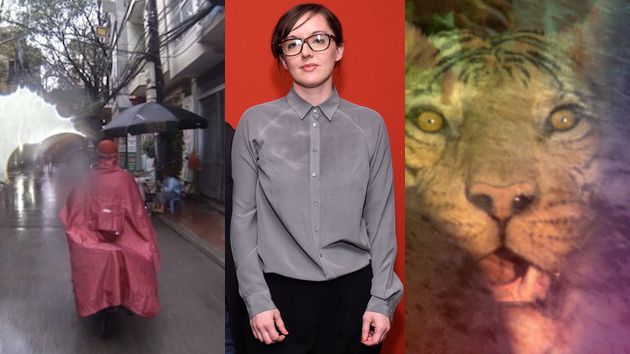
 photo rachael_rakes-thumb-630xauto-54703_zpsjaxqvsdf.jpg

What was the impetus for programming Art of the Real?

Over the past several years, we'd [co-programmer Dennis Lim] both had the experience of seeing really interesting and genre-forwarding work at international festivals, much of which didn't seem to find a place to be screened in New York, and we felt that it was time to bring those here. We also were interested in looking back at earlier pioneers of the documentary form, like Chris Marker, Chantal Akerman, and Jean Rouch, and remarked on how in many ways their work was more experimental and challenging than so much of documentary output today. So we wanted to revisit that work and in the course redefine what might fit within the overall definition of nonfiction art.

What's your criteria in choosing films for the series?

We look for films that in some way are surprising, adventurous or challenging. This could mean that they might disorient narrative, or combine several political ideas together, or combine form and ideas in unpredictable ways. This doesn't mean that they need to be difficult to watch, but that they are entertaining, moving, and captivating in less conventional ways. We do tend to focus on international works, as they are harder to see here, but are open to anything that seems to be doing something exciting.

It seems to be that there is more of an emphasis on queer cinema this year. Can you tell me the impact of LGBTQ filmmakers in relation to the series?

The reenactment sidebar includes a lot of LGBTQ filmmakers, I think because revisiting history is a necessary queer act. History is recorded through a very specific lens and by going back and, for instance, re-imagining a lesbian Beatles (Grapefruit), artists can highlight who has been left out, and help to change the writing of the present.

I Forgot! - Opening Nigh Short Film, Friday, April 10, 7pm
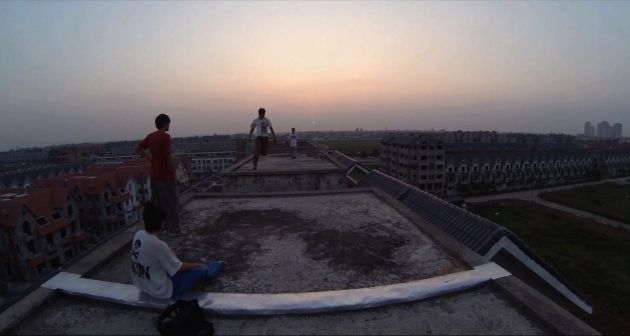
 photo 1dba9919-205a-4973-a84c-6417d61be67b_zps2ivsnf6z.jpg
Jarring, pretty, ambitious and a total sensory overload, Eduardo Williams' I Forgot! only exists in the space between reality and a cinematic realm without any pretension.

The film starts with an underwater shot and ends up in the sky. When it's not hovering between the two realms, it blazes through the wet, crowded streets of Hanoi on a scooter. A wayward youth, going from one job to another, being mistaken for someone else everywhere, forgetting everyone and everything. We get to see some amateur pakor action in an abandoned construction site, then the movie takes off to the sky, while the chatter of youth continues.

Williams achieves in showcasing the essence of the adventurous spirit of the cinematic possibilities in a short, succinct way.

Iec Long - Opening Night Short Film, Friday, April 10, 7pm
 photo 1bbe27d5-ad02-4e86-a8a6-e5205e920a30_zpsr7elpqin.jpg
Just as in their last film The Last Time I Saw Macao (NYFF 2012), the colonial past plays a haunting ghost in João Pedro Rodriguez and João Rui Guerra da Mata's Iec Long. This time, it's the closed firecracker factory Iec Long at its center.

Amazingly, within a very short lyrical cross fade between fireworks, neon lights and gold coins pouring down, the directing duo succeeds in setting up Macao's colorful past as a Portuguese colony and the West's seedy gambling den. The factory itself, now sits in beautiful decay: stained walls, empty corridors consumed by nature, with the remnants of its illustrious past scattered about - the colorful firecracker box wrappers, ribbons etc.

As I was reminded repeatedly that cinema is that of capturing ghosts - its images captured forever on celluloid, a fact it has has always been aware of from the beginning.

Iec Long then, is also haunted by the ghost of its child workers. Rodrigues and da Matta stage super-8 shot B&W footage of a child peeking through the ruins and juxtaposes it with the present day factory. With layers of images, a forlorn voice-over of an old man (a former child worker), ancient Chinese poetry and nature, the filmmakers concoct an intoxicating mix.

Li Wen At East Lake - Wednesday, April 15, 6:30pm
 photo c47c98d0-3d16-46e2-92ce-23e551ef95e1_zpsbej3bxxm.jpg
In my 2012 review of Li Luo's Emperor Visits The Hell, I compared the film's playfulness to the works of Apichatpong Weerasethakul and Miguel Gomes, declaring that Chinese cinema is alive and well.

Now, Li is back with another delightful cinematic exercise, a documentary/narrative hybrid, Li Wen At East Lake. It starts with a university student surveying East Lake, a disappearing cultural/historical site due to rampant land development in Wu Han, central China's ever-growing megalopolis. The developers have been inching away at the lake, filling in to make room for an amusement park, high rises and a proposed second airport. Enter police inspector Li (played by Li Wen, revising his deadpan droll presence in Emperor Visits The Hell), who is tasked to capture a mentally unstable man who keeps disrupting the peace by saying that the dragon of East Lake will take revenge on Wu Han.

There is an element of melodrama (Li's younger colleague is a gay man with an unrequited love story), police procedural, fantasy (the crazy man turns out to be a former fish), all in the background of China's capitalism on steroids. It's also part farce, part interesting character study (Li is an artist and belligerent old male from an older generation who loves to argue with young people about values and life in general). In the end, Li Wen At East Lake is so much fun.

White Out, Black In - Friday, April 17, 9pm
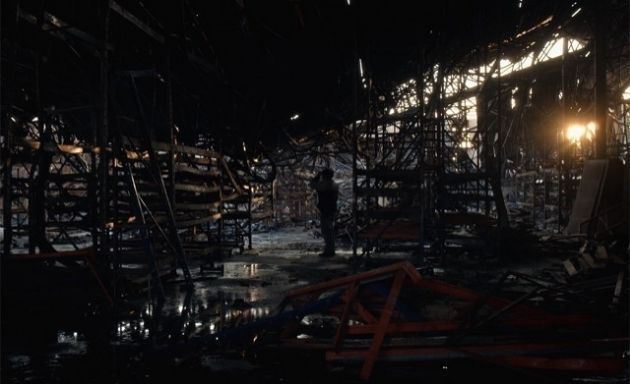
 photo f86bfaaf-789f-4bf1-a91a-698065b16862_zpsdiqjt76b.jpg
White Out, Black In is apparently what police blurted out when they busted a dance club in the city of Ceilandia, a suburb of Brasilia, in 1986.

The racially motivated attack was deeply ingrained, physically and psychologically, in the film's middle aged protagonists - Sartana, a former youth dancer whose leg was run over by police during the raid, and Marquim, a musician who is wheelchair bound from that faithful year. Adirley Queiros's ingenuous low-fi Sci-fi combines real events and people to comment on the racism that scarred the entire generation. The under-populated, derelict city doubles as a dystopian present.

Marquim, working as a radio DJ from his dilapidated apartment, reminiscing about the good times, playing classic music from the 80s, is making a big bomb with the help of Sartana which will certainly change the course of the future. Sensing that threat, the future government sends Dimas, an agent from the year 2073, to stop the bomb. He travels in a time machine that looks very much like a shipping container equipped with a disco ball. But in order to get paid, the agent needs to dig up the evidence of the past. When he finds out the violence against these blacks didn't just take away their mobility but robbed them out of their youth, will Dimas stop the bomb or will he change his mind?
What Queiros is doing here can be also seen as a therapy session for Marquim and Sartana. Playful and poignant, White Out, Black In is a true gem.

Snakeskin -Saturday, April 18, 6:30pm
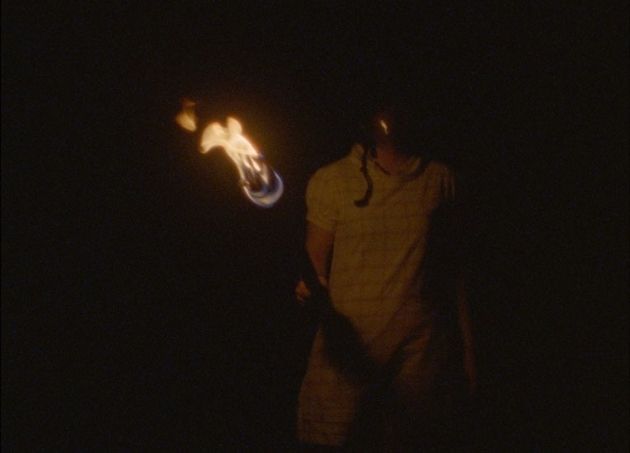
 photo 31f24b54-7f99-4b8c-a89d-2c3cc44354fd_zpsmf6ijfqc.jpg
The multiethnic nature of Singapore is thoroughly explored in Daniel Hui's Snakeskin. Many voiceovers wash over the film's images of present day Singapore. Among them are Malay-Singaporean, Chinese-Singaporean and Indian-Singaporean experience. Sometimes they are personal recollections told straightforward, sometimes they are the laments of a person reincarnated as a purring cat, other times they are from a time traveler. Some of them are presented as a film within a film. It charts the history of the area from the British rule, Japanese occupation, socialist government, student uprising, all the way into the future.

Just like many lo-fi sci-fi presented in the Art of the Real series that are obviously influenced by Chris Marker, Snakeskin also tinkers with the sci-fi element. Visually and aurally though, the film is gentle and lyrical, like watching someone's lucid dream.

Kamen - Wednesday, April 22, 9:30pm
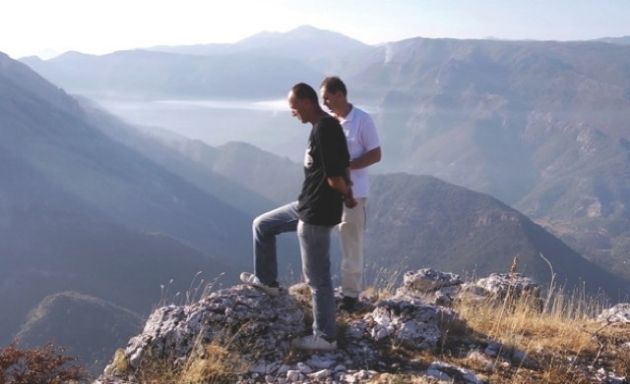
 photo 637df89d-0339-44ca-b314-c196a9e9d5e3_zpsoel4bbed.jpg
The subject of Florence Lazar's documentary is deeply disturbing. Kamengrad, or more recently known as Andricgrad, is a village within a village in Visegrad, Bosnia and Herzegovina, near the Serbian border. Built from the ground up, this fake 19th century themed village, where every ethnic group is represented and equipped with a multiplex, malls and cafes, was also the site of a mass execution during the Balkan War in the 1990s.

Lazar interviews ethnic minorities from the Muslim population as they try to rebuild their blown up mosques. She digs deeper into the Orthodox Serb majority's attempts to not only erase the history but also rewrite it by tampering with archeological sites and whitewashing with theme parks for tourists.
It turns out the man behind the Andricgrad,"Professor Kusturica", is actually the esteemed film director Emir Kusturica who has a strong Serb Nationalist view. Lazar counters this construction with a survivor, an archivist of the war atrocities. She recounts the dark, shameful days of modern European history, where ethnic cleansing once again took place merely 20 years ago.

Kamen questions the state of Europe where national fervor is once again on the rise. All I can say is I can't look at Kusturica's films the same way again, ever. The inclusion of serious documentary like Kamen shows yet again, the immensity and true greatness of the Art of the Real series.

Androids Dream, Thursday, April 23, 9:30pm
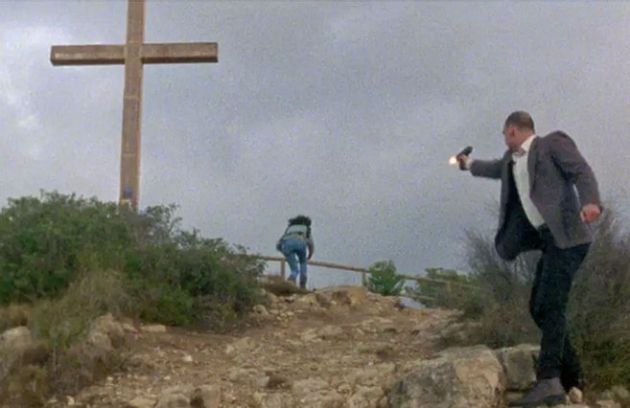
 photo b7f687ae-0afb-4f7e-80c6-5f16bd7573b9_zpspxhtnisr.jpg
The future is here and now in this super cheap Spanish remake of Blade Runner (well, not quite). A different interpretation of Phillip K Dick's seminal Sci-fi novel Do Androids Dream of Electric Sheep?, Androids Dream swaps Ridley Scott's iconic neo-noir images with sunny, sleepy eastern Spanish city of skyscrapers.

Ion de Sosa cleverly doubles empty construction sites, unfinished luxury apartments hit by the housing bubble and global recession as the future earth 2052, which is sparsely populated mostly by old people (pensioners on vacation). Remnants of young people turn out to be not human as we find out in their dialog. And it's our protagonist (Manolo Marin) who must hunt them down so he can afford the real sheep: the status of upper class, which now cost 4 1/2 million pesetas- yes, they have abandoned Euros.

Combining faded family vacation footage and grainy, economically shot (early in the morning presumably for empty streets) 16mm images, de Sosa gets the essence of the source material while commenting on the unending economic crisis of the present. This could be a good double feature with Aimee Siegel's reinterpretation of Louis Malle's Black Moon, presented at last year's Art of the Real, which saw grand abandoned mansions in Nevada (by the housing bubble, similarly) double as the future dystopia.

The Absent - Thursday, April 23, 7pm
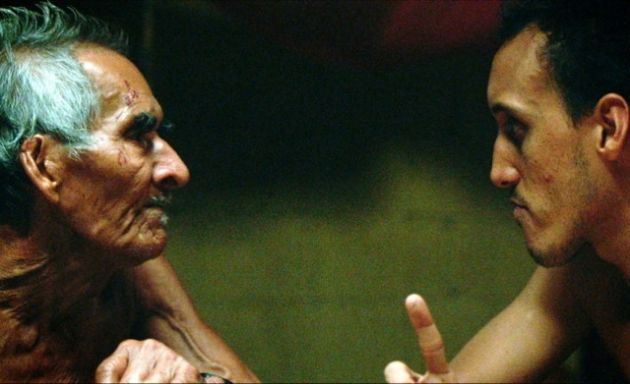
 photo 87578547-9617-4fbc-b5d5-adb78958cbd6_zpsqvfc7ttz.jpg
An old man lives in a shack near the beach in Oaxaca. Tending his cows and goats, he leads an uneventful, solitary life. The law says he doesn't have the deeds to the property and the shack will be removed. The old man is seen cleaning a gun in one scene. The next, we see him (from a far) threatening an official with the gun on the beach. The official is presumably there, notifying the demolition of his house.

Past and present exists on the same plane as the younger version (Director Nicolás Pereda regular Gabino Rodriguez) of the old man shows up holding the same gun. At one point he is all bloodied up, missing part of his ear, reflecting the old man's crooked ear. The home now gone, with the mist rolling over the forest, the past and present collide as the old man and the younger version of himself drink and singing together.

Visually ravishing and short on straight narrative, Pereda's The Absent is an enigmatic film full of mystery.

El Palacio - Screening with The Absent, Thursday, April 23, 7pm
 photo da022506-4ec3-4ae4-92cb-8eb82f1ae920_zpsas2tp9lj.png
Nicolas Pereda's short observational documentary focuses on a group of women living together in one house, doing everything communally - brushing their teeth in the morning, cooking, washing dishes, making beds, sleeping all under the same roof. Then there are training sessions in interview style. They are mostly women seeking domestic work - as a housemaid, eldercare or childcare provider etc. More experienced ones train others.

These Mexican women are living together for financial reasons and emotional support. The place they share, as the title suggests, is their home away from home (they refer to it as their home in job interviews). Uncharacteristically, the palace is rather quiet and its inhabitants quite disciplined and serious.

Pereda isn't interested in Oprah style Yaya sisterhood dramatics. Rather, he observes their communal living and their quiet resolve from a distance without elaborating further.


Wednesday, April 8, 2015

Hall of Mirrors: Olivier Assayas Interview

 photo 768f56ee-09b2-49cf-bdde-68430410ff96_zpskdvijoiq.jpg
Even though French director Olivier Assayas has been a trailblazer for international production for a long time, he surprised everyone by casting a teenybopper Kristen Stewart opposite the great Juliette Binoche in his new film Clouds of Sils Maria. The multi layered film is a hall of mirrors about acting, fame, aging & Hollywood. It is also perhaps the most entertaining film Assayas has ever done. Stewart went on to become the first American actress to win a Cesar Award for her role in the film.

As a big fan of his work, I was thrilled to catch up with him at last year's NYFF and talk to him about the film, his career and his filmmaking process.

Where did CLOUDS OF SILS MARIA originate?

It started simply. It started with Juliette Binoche. She called me one day saying, "I have a gap next winter for two months. Why don't you write something really quickly and shoot it quickly with small budget?" "I like the idea of where I'd be playing an old part, where we can show two sides of me," something like that.

I said to Juliette, "I don't know, let me think about this...." It's not how I exactly function, I don't write things fast, plus I was finishing another screenplay at the time, and was shopping for Something in the Air. Then I started thinking about it. She had a point that we should make a movie together, I mean, for many reasons. The most essential one, being that there is something beyond the relationship between a director and an actor. We had known each other for 30 years. We started our career together. We have some kind of parallel history. But we really haven't worked together, very little. I mean we only crossed our paths when we did Summer Hours together where she plays one of the characters in an ensemble piece. But ultimately, you know, if you think about how long we've known each other, we should've done more movies together.

It was often the matter of timing. I offered parts to Juliette once in a while when I had something that would correspond to her, including when I did Les Destinee Sentimentale. It just never happened because our schedule never matched up. It was frustrating. And because we had so much fun making Summer Hours, we wanted to expand it.

The thing is that I was convinced that there was an opportunity to do something different with Juliette, to do a film that she had never done it before in a sense. A movie where it won't be just a part intended for her but I could do something with my familiarity with her, I suppose. I could build something around the person she is, use her as 'Juliette Binoche the actress' with the history she has and build something from that. Of course it would echo with my own experience with time- growing and aging, both as a person and an artist. There was a potential for a film there. I wasn't sure what it would turn out to be but I could competently tell her that I have a shot at it.

Funny, preparing for this interview, I revisited André Téchiné's RENDEZ-VOUS, which you wrote, starring baby Juliette Binoche and baby Lambert Wilson, after twenty years. I realized what you are doing in CLOUDS OF SILS MARIA. The layers you create, with Juliette's history and her personal reflections- it's a really intriguing hall of mirrors you are creating. I am wondering if there was another layer that you put upon the film as a director that I am missing.

If you've seen Rendez-vous, you know how much I am drawing from that film. I used the same theme... I think I used the over all mood of the film too. It's still a completely different animal. But it's also because the world has changed. In terms of the themes, there are things in common: obviously the theater and the path towards becoming an actress. But the major difference is that I am doing something that André (Téchiné) is not doing in that film, which was using whoever those actors are. I mean, in this movie, one additional layer to the narrative which ends up giving it this kind of hall of mirror feeling which was not planned.

It just kind of happened to me in a certain way, but it derives from the logic that begins with deciding that I am going to use Juliette Binoche. That I'd give her another name and a slightly different character- one inch away from her where she can have fun playing an actress she could have been. She can make fun of herself in certain ways. But still, the audience knows that it is watching Juliette Binoche playing a famous actress who is very much like Juliette Binoche. But then what comes out of it is that you are also watching Kristen Stewart playing Valentine and Chloë Moretz playing Joan. They are playing whom they could have been or part of someone they know. It gives very specific texture to this film. In movies, it's all about making you forget that you are watching these actors- having them blending into these characters who are believable.  Here, part of the fun is experiencing, acknowledging Kristen is Kristen and Juliette is Juliette.

Do you see yourself in the fictional theater director Melchior who dies in the film?

Hmmm. I just couldn't think of any other stronger way to stress the passing of time. (laughs) All of sudden, the guy, the old mentor is gone. You have to reflect the time that has passed- what you've done with that time. It kind of provokes you to go back to whatever you experience with that person. It also is the event that provokes the subsequent events. Because he is dead, because of that shock, that all of a sudden, Maria accepts something that she initially didn't want to do, which was to play that part of the older woman. She is doing it for him but the minute she says yes she has second thoughts about.

So Juliette was already set for the part. Were Kristen and Chloë your first choices when you were writing the script?

No I wasn't really thinking about anyone in particular when I was writing it. But the minute I sat down with them, especially with Kristen, I knew she was the one. She was on the top of my list and obvious choice anyway. But things don't really happen that way in movie business, especially it being a small weird  European film and so on. So it stopped somewhere in the middle of the developing stage. Then Kristen finally got a hold of the screenplay and contacted us and told us she wanted to do it. But someone already had a part and that someone couldn't do it anymore and Kristen came back. So it ended up how it was supposed to be. For me Kristen was ideal embodiment of Valentine, perfect. I wanted someone who has both youth and power in front of Juliette. I wanted someone to challenge her. Not someone who would be in awe of Juliette. I wanted someone with guts.

Chloë happened very differently. I didn't have that much of a clear vision for Joan until I realized that what would be interesting was having someone very young to play the part. And that's what Chlöe had brought me. She was 16 when she played the role. She turned 17 while shooting the film. ultimately, it was that age difference that she had with kristen that made sense of the whole system.

Chloë came to me in the late stage but when I spoke with her it was completely clear. She has one more thing on top of what other young actresses have- her sense of humor. She is very witty. She is very sharp so she gets it really quickly. So that was very important in the comedy side of it also.

This is kind of off the cuff question.

OK.

I've talked with Christoph Honoré couple of years ago and he mentioned that there is no solidarity among the directors in the global film stage anymore. He said that there were real connections in the 60s and 70s where Truffaut would rescue Milos Forman from Russian Invasion of Czechoslovakia and Truffaut would star in a Spielberg film. You've done many international productions and I am wondering if you agree with that sentiment.

I understand perfectly what Christoph means but I've been trying to contradict that in a certain sense. When Christoph started making films in france, there was a whole indie scene that started happening. He could define or not based on his connections or disconnections with his peers so and so forth.

In my case, it was a little more difficult because there were older filmmakers but very few filmmakers of my generation I could speak with. So very early on I had to find the way to connect with other filmmakers in other cultures and different countries. Because they were the filmmakers I could have dialog with. To me it was very formative moment in my career. It was meeting Hou Hsiao-Hsien and Edward Yang- we are talking 1984, in Taipei. And those guys were completely reinventing Chinese cinema. It was like a big thing: those two guys changing the face of chinese cinema! And I was there! I was the first western writer (was writing for Cahier du cinema at that time) to meet them and understand what was going on. And...

You did a documentary on Hou (HHH) didn't you?

But it was way before doing the documentary, like ten years early. I kind of promoted their work to the world. When I was getting to ready to do my own feature, these guys were just slightly older than me. The thing is I understood what they were doing and it was exciting and modern compared to what was happening in France. I was inspired by them. I had much more creative, exciting dialog with Edward and Hou. Back then Hou didn't speak much English but with Edward who grew up in San francisco, my god, we talked so much!

I met Atom Egoyan when he was beginning to grow as a filmmaker. He's also someone who instantly became a friend, who I could have dialog with. I'm not even touching upon the guys I met in Hong Kong like Wong Kar Wai and Stanley Kwan...

I've always been concerned by those issues. And I tried to find my own solutions. Like when Edward did Majong, he used Virginie Ledoyen because he had seen her in my film. You know we met in Kyoto film festival when I was there with Virginie and we had lunch and the next day Edward emailed me asking if Virginie would be interested in being in his film. Or when Maggie (Maggie Cheung, Assayas' ex who was in his films Irma Vep and Clean) came to France to do my film. I understand that it is not part of the film culture anymore, so you have to provoke it. I've been provoking it as far as long as I know. I think it's because I've been a film journalist and had the exposure to international cinema that few french filmmakers had.

It's interesting that you mention sharing certain actors. I saw Mia Hansen-Love (his wife)'s last two films and your last two film and they have a lot of actors in common.

Even the cameraman (Denis Lenoir). (laughs)

Do you guys always share the pool of actors or recommend each other actors all the time?

With Mia I've been discussing movies for the last fifteen years on top of living together, and so and so forth. So yeah we share same values and I suppose we also have tastes in common. I love her films and when she watches my films she loves the actors in them. So she's going to pick this or that guy. You know like Felix de Givry who plays the main character in Mia's Eden. He wouldn't have been right for my film, Something in the Air, but the it was a decision I hesitated for weeks between him and Clément Métayer and ended up giving Felix another role. But I saw the potential in Felix that he would be great in other films. It's just a matter of casting for the right role because he looked a bit old for that role, what I liked about Clément was he has more of a child's face.

That's true. But Felix is great in EDEN.

Oh yeah. absolutely.

How was shooting in Switzerland?

It was great. We shot only parts of it in Switzerland. Most of the interiors which is supposed to be in Zurich, we shot it in Germany. Some exteriors including the chalet, we shot it in South Tyrol which is a just the other side the border of Engadin, Switzerland. It was still under European film production with tax breaks and all.

The key element of the film we shot it in Switzerland. The landscape was an essential part of the film. It's a character. So it was very vital to have those specific landscapes. It's something you have to struggle for. The producers tell you that mountain is a mountain. (laughs) But I said yes but this is not exactly any mountain and the lake isn't exactly like any other lake. You need the vibrations from the place...

Was it difficult to shoot in the mountains?

Yes. Of course it is difficult.  Especially you are out there shooting in the environment you can't control. You have to get up there in helicopter with your whole crew and everything. It's complicated. It's deceptively simple on screen but it involves fairly complex logistics.

Your actors are really troopers out there shooting int he snow. It must've been cold.

Yes it was cold! We were shooting in the summer and all of sudden it was snowing. but it was snowing for the right scene. I like the idea of snow in that particular scene. Also we were on the schedule that we couldn't lose a day. So it snows, so be it. But snow looks so beautiful on screen. I'm just extremely happy that it ended up in the film.

How long did the production take?

With small budget, you can't waste time. It took about 31 days.

I guess valentine is a reflection or Maria's projection. I can't help thinking that the disappearance of Valentine is because she is the only one who sees the irony in the situation as an assistant to the great actress taking a back seat to the rising star.

You know, basically she disappears so everyone can have their own take and interpretation on the disappearance. Everyone thinks it's a big thing, but ultimately its a small thing. It would be like, I add one shot of her buying a ticket and getting on the train for something. It's that tiny thing that opens up to a lot of interpretations and make it much more interesting.

I had couple of options you know. But none of it is as interesting as yours. No, I'm not joking. When you are a writer you don't control everything that's going on. When you are a reviewer you discover everything. (we laugh)

No, because you are discovering it and all of a sudden things make sense to you in ways it can't make sense to me. Because I was involved in assembling the elements and at some point things happen on their own and your imagination connects with the images and you recreate the film. Any audience recreates his or her own film, so when you have a gap in the narrative it's your whole imagination that is channeled into that gap. It's a way to appropriate the film.

After playing in TIFF and NYFF, Clouds of Sils Maria opens in theaters on 4/10. For more info, please visit IFC Films website.