Thursday, October 13, 2022

Unsolved Mystery

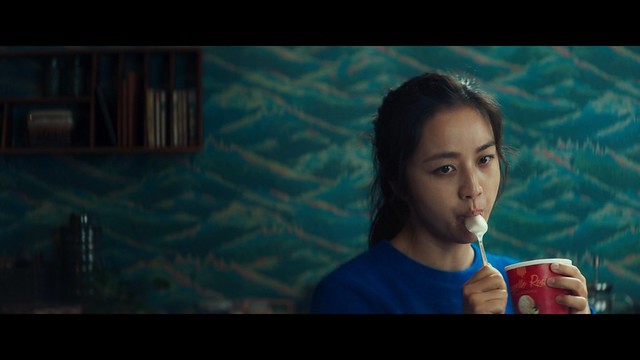
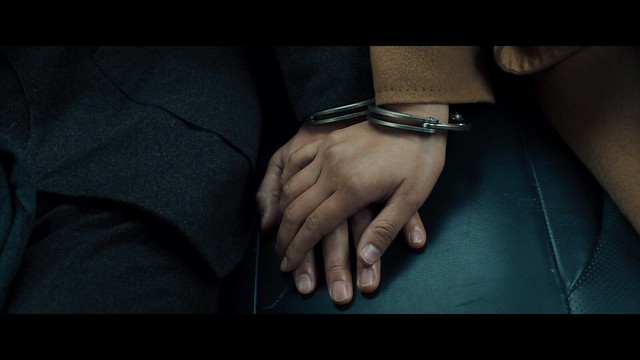
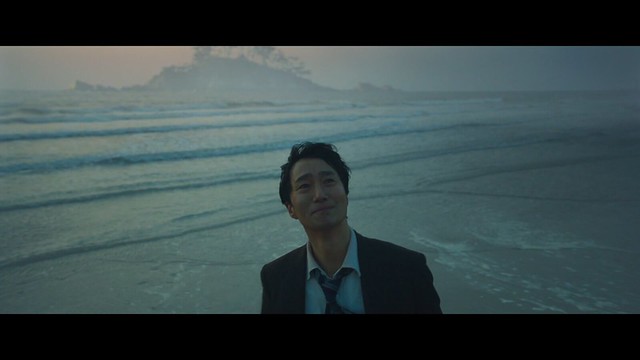
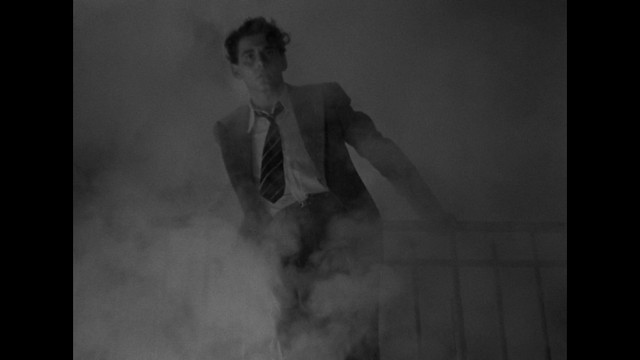
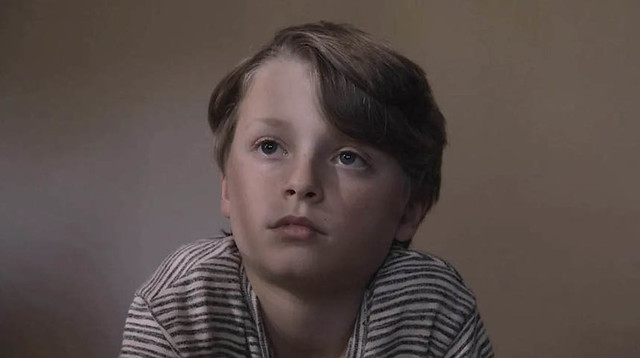
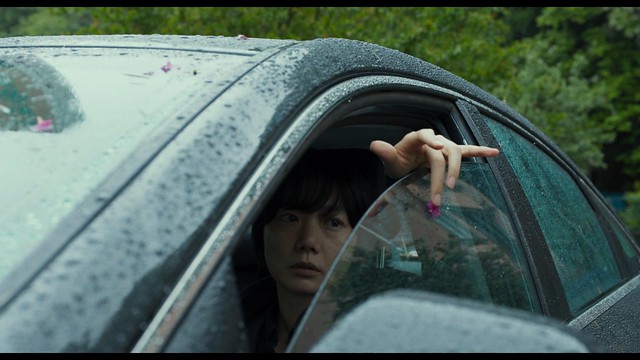
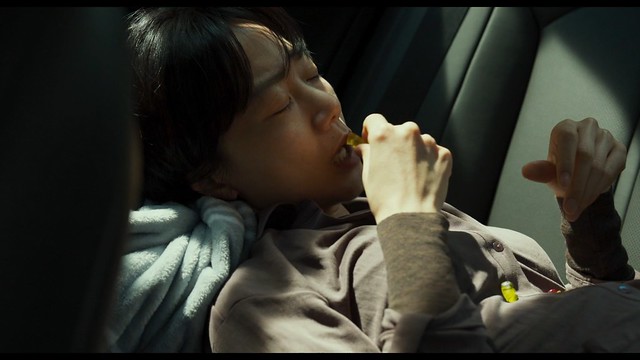
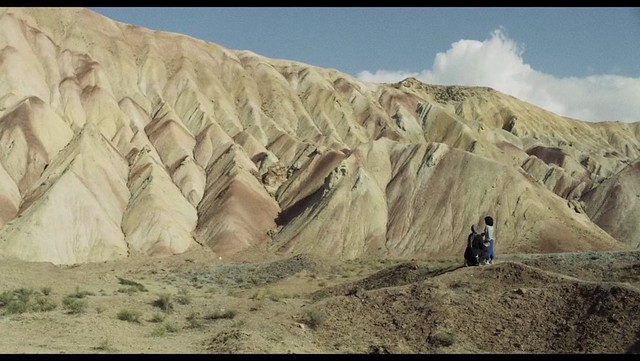
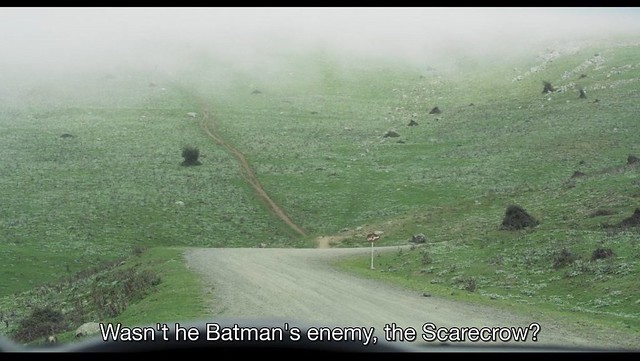
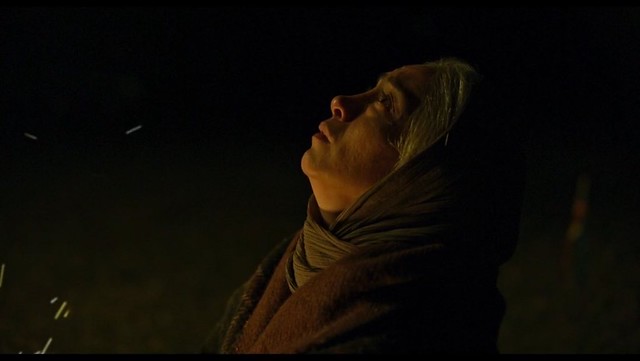
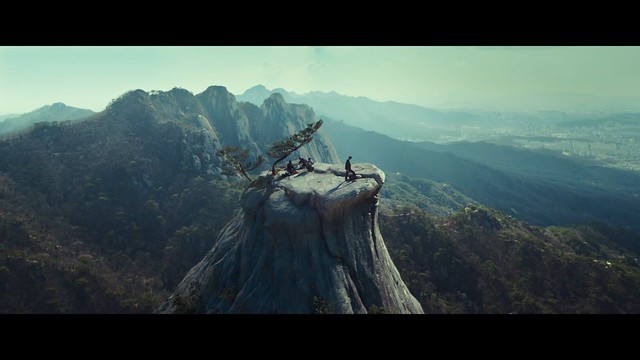
Decision to Leave (2022) - Park Screen Shot 2022-10-12 at 3.31.29 PM Screen Shot 2022-10-12 at 4.43.44 PM Screen Shot 2022-10-12 at 4.08.52 PM Screen Shot 2022-10-13 at 7.59.18 AM Screen Shot 2022-10-13 at 8.09.22 AM It is very hard for me to surrender myself into the Park Chanwook universe. It's because I've always regarded him as a visual stylist more than anything and can't help being self-conscious when I watch his films, that I am indeed watching a film, a make-believe, a fake. His every-over-the-top plot twist, every elaborate set piece, always reminds me that I am staring at the silver screen. Then it is perhaps the first time that I bought into the seductiveness of Decision to Leave, his sumptuous, yet down to earth film noir starring a luminous Chinese actress Tang Wei as the recipient of a Hitchcock heroine like obsession. Don't get me wrong, all his unrivaled trademark craftmanship is there - rapturous transition shots, highly textured production design, artful framing, etc. But it's Tang Wei's embodiment of her character, Seo-rae, a mysterious woman in foreign land that is truly the main magnetic pull here.

Detective Park (Park Hae-il of Memories of Murder) oversees investigating the death of an old rock climber in mysterious circumstances. The widow is a young Chinese woman, Seo-rae (Tang), who works at a nursing home. The focus of the investigation naturally falls on her, a young trophy wife of an old man who worked at an immigration office with a large sum life insurance. Even though she has an alibi, Park can't shake off the feeling that she is hiding something. It's more of a curiosity than suspicion. It's her beauty, and her foreignness that keeps him interested. So even after she is cleared of any suspicion in the death of her husband, he keeps surveilling her. Since he is seeing his nagging wife only on weekends because of work, Seo-rae becomes his almost companion, even from a distance. She obviously knows that she is being watched and keep their cat and mouse game going.

after she is officially cleared and the death ruled as suicide, for Park, it is over and done with. But for Seo-rae, it is just the beginning in an elaborate game to continue seeing him, at whatever the cost, because she wants to be the kind policeman's unsolved case, getting all his attention, at all times.

In Park's hand, our mundane everyday technology - smartphone, smartwatch, Bluetooth, etc., becomes something sensual, ASMR and highly hypnotic.

Once again, being a suspect of her 'next husband' murder, it culminates to Seo-rae meeting with Park on the top of a mountain. It's snowing, and their faces only illuminated by a headlamp, Park experiences Scotty's 'green dress' moment in Vertigo. Only it's the heroine who is actively making Scotty reaching ecstasy, in her own volition.

Decision to Leave's intricate plot, clever wordplays, sheer amount of visual details might be way too much to catch all in one viewing. It's so impeccably crafted and executed, yet relatively down to earth, huge thanks to Tang Wei's turn as a seductress. It's the most romantic film I've seen this year.

Wednesday, October 12, 2022

Heartbreak Hotel

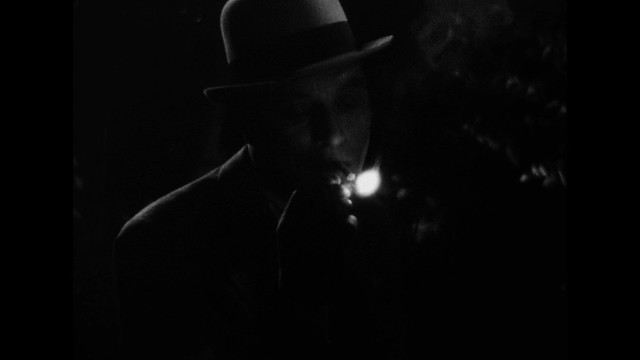
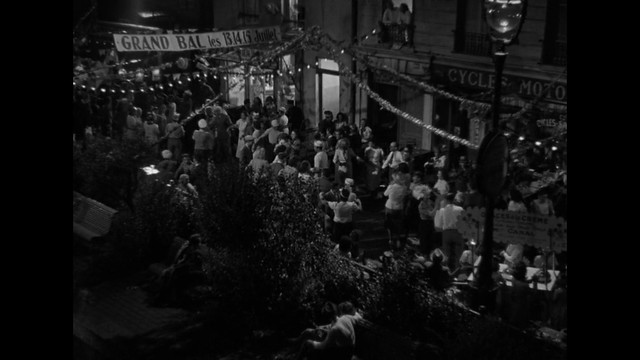
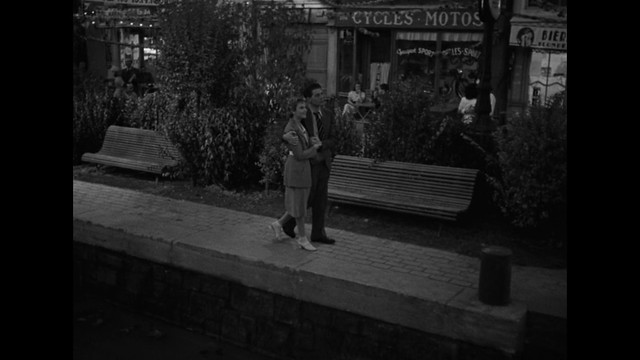
Hotel du Nord (1938) - Carné Screen Shot 2022-10-12 at 8.20.01 AM Screen Shot 2022-10-12 at 8.22.17 AM Screen Shot 2022-10-12 at 8.23.15 AM Screen Shot 2022-10-12 at 8.23.49 AM Screen Shot 2022-10-12 at 8.24.18 AM Screen Shot 2022-10-12 at 8.24.53 AM Screen Shot 2022-10-12 at 8.25.10 AM Young lovers, Pierre (Jean-Pierre Aumont) and Renée (Annabella), had it with life of poverty and made a suicide pact and checks in Hotel du Nord, a charming working class hotel alongside a lively canal. After shooting Renée in the heart, Pierre chickens out and flee the hotel with the help of one of the lodgers there, M. Edmond (Louis Jouvet), a cynical pimp who lives with his gal Raymonde (Arletty). Pierre soon turns himself in, confessing his crime to the police. Renée survives her injuries and confronts Pierre, for she is still in love with him. After Renée comes back to the hotel and gets a job there, Edmond is smittened by her presence. Perhaps it's her deathwish that draws him in. He calls off the trip with Raymonde and dumps her, to which she bitterly reminds him that there are gangsters (his former associates) after him. Edmond and Renée decides to go off together overseas to start anew, but at the last minute, Renée chickens out and comes back to the hotel, because she still loves Pierre. Edmond, knowing full well that coming back to the hotel is his demise, comes back during the Bastille Day celebration where the sound of firecrackers will overlap with gunshots.

Hotel du Nord is a typical fatalistic love story that was prevalent in the 1930s French cinema and synonymous with Poetic Realism. The set and production design inside the studio is impressive, so is the atmosphere it creates for poor working class neighborhood filled with cab drivers, cops, house painters, street urchins, pimps and whores. There's even a character who sells his blood for living. There's a casualness in Hotel du Nord - amorality is given - a husband is ok with his wife being asked to go out by a womanizing cab driver, homosexuality is out in the open, prostitution is just a profession.... People hook up and break up on a whim and pledges their love as if it is as easy as blowing their noses. Are these doomed lovers an omen for the upcoming world war? I ponder this because I know that the French New Wavers hated and rebelled against these canonical films from this period. But there was Vietnam and France's involvement in Algeria and Indochina before that before the emergence of the New Wave. I might have to dig deeper into this.

Monday, October 10, 2022

Building Memories

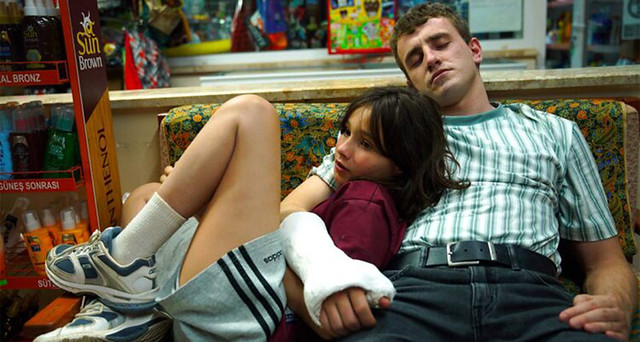
Aftersun (2022) - Wells Aftersun We all know that our memories are subjective. Our brains tend to obscure, distort and falsify as well as highten, protect and heal, depending on how you want to remember that moments or person in your life. Scottish newcomer Charlotte Wells's staggering achievement, Aftersun, is a poignant and deeply personal examination of those memories, told in a small, family vacation travelogue.

Going back and forth with Hi-8 handicam footage shot by both father and daughter and film, Aftersun plays out like a family vacation home movie - a young father (Paul Mescal) and his 11-year old daughter Sophie (Francesca Corio) are in a resort in sunny Turkey. Mom's at work and couldn't come (the reasoning behind this is little fuzzy), so it's an opportunity for them spending a short time together. After a little snag at their hotel - he reserved a room with two beds but there is only one bed, they settle in and have great time hanging out at the pool during daytime and at the outdoor cafe at night. They are a jovial pair, always laughing and having the grandiest time.

There are some unexplained details through out - Dad has a cast on one of his arms, flashes of an older woman that dad confronts on the dance floor in the resort, like dream sequences that later reveal their meanings. Young people remark if they are brother and sister, since dad looks so young. Dad just shrugs it off while Sophie takes it as a compliment in her 11-year old mind.

Dad and Sophie obsessively watches the video footage they shot in their quiet times, rewinding through the pixelated images of their happy days, as if they will discover some details they have missed, or there's going to be some kind of indication or clue to something that is different than the overly happy experiences that they are having.

Things take a slightly different tone when Sophie loses her diving goggles, an expensive item dad bought for her in one of the boatride excursions. She apologizes again and again profusely, in which always cheerful dad comforts her that it's not important. He dives deep in to the water retrieve them and we cut to the next scene. From then on, there are glimpses of unsettling, unexplained moments popping up - dad gets moody and not talkative, at night, while Sophie is giddily watching the video footage they shot, dad removes the cast in his arms painfully in an in camera split screen shot, Sophie witnessing grownups making out in the shadows, dad refusing to sing the bad rendition of REM'S Losing My Religion at a outdoor karaoke...

Surely there are other significant moments of growing up - the first kiss with the boy who play arcade games next to her, drinking beer with older kids at the billiards table, etc.

By the end, we realize that the vacation was the last time they saw each other. And Sophie, now some twenty years later, trying to recount her relationship with her father: the ideal father, the good memories and how we all want to suppress bad memories and remember only the good moments, forever.

Wells, with the help of Mescal and Corio, builds a touching tribute to a father-daughter relationship. Aftersun will make a great double feature with Chantal Akerman's News from Home.

Sunday, October 9, 2022

Familiar Ghosts

The Eternal Daughter (2022) - Hogg https __cdn.sanity.io_images_xq1bjtf4_production_25e9d3aa5b338cb55e5a31c542f1257d2e185161-5760x3840 A big black sedan rolls in the foggy English countryside. The sun is setting. Ominous flute piece is playing in the background. The car finally pulls up to a grand manor at dusk. If it weren’t for the car, you'd think of the opening sequence of The Eternal Daughter as the start of a Hammer Horror film or an adaptation of a Henry James novel. We are introduced to a mother, Rosalind, and daughter, Julie (both played by Tilda Swinton) and Rosalind's dog, Louis. They are arriving late to check in and the curt, young receptionist (Carly-Sophia Davis) has no records of them reserving the specific room on the second floor. After much polite haranguing, the receptionist relents and the mother and daughter finally settle in to the room they wanted. This is not a good start for the stay Julie was hoping for.

It is slowly revealed that Julie is a filmmaker working on a project about her mother and the grand inn they are staying in was once belonged to Rosalind's family. She has a lot of memories spending time in the place. Julie timed the visit as Rosalind's birthday and early Christmas celebration and mom seems pleased and sad at the same time. Julie wants very much to connect with her mom and please her but doesn't really seem to know how, other than superficial level. She is also at a loss on how to proceed with her project. And there is some supernatural occurrence in the manor that interferes with her work as well. Julie hears noises at night and can't sleep. When complained to the receptionist, she was told that the room above her has been vacant. Julie sees a ghostly figure at the windows while walking the dog outside. It also seems unusual that there are no other guests in sight other than her and mom. They dine alone and joke about sampling every meal on the menu in their stay.

Using the gothic horror trope, Joanna Hogg creates yet another meta-auto fiction about her own complicated relationship with her mother. Hogg's yearning for connecting with her mother through making a film about their relationship and feeling guilty about it at the same time, using the same actress playing those roles is in tune with real life mother-daughter team (Swinton and Rose Swinton Byrne) in Souvenir playing mother-daughter. Eternal Daughter takes the step further, yet getting no clear answers on finding out more about her own mother or closure of some kind she longed for. And that frustration is all illustrated in the film. After all, many of Victorian ghost stories are manifestation of repressed emotions and feelings. Swinton is glorious in a dual role in her white wig, pretty much carrying a conversation with herself. It is a subtly devastating performance - in many of the film's close-ups both as a mother and daughter, she conveys that nervousness of not trying to hurt one another, or in this case, herself, in that educated, polite British way. Hogg aces again.

Thursday, October 6, 2022

Stupid Brave

Pacifiction (2022) - Serra PACIFICTION - TOURMENT SUR LES ILES (2022) Lush in its widescreen presentation, Albert Serra's Pacifiction is perhaps the most cinematically ambitious film I've experienced in a long time. Thoroughly absorbing from beginning to end, its 2hr 45min runtime is completely justified in my book.

Rotund Benoit Magimel (The Piano Teacher) plays a sleek French High Commissioner named De Roller on the French Polynesian island. I'm convinced that all hunky sharp featured young French actors would eventually hit middle age and end up looking like Gerard Depardieu, without fail. He has to navigate through the angry locals, outside interests, a Navy commander and his marauding troops, to find out whether there is any truth to an international conspiracy that they, whoever they are, will be resuming nuclear bomb testing in the South Pacific.

De Roller, sweating profusely in pimpy white suit and loudly flower patterned shirt hanging out in his hotel resort and clubs, thinks he is wheeling and dealing, making deals to prevent, in the name of the Republic, what’s coming. It’s a glamorous game. At one point one of the character says it's like a James Bond movie but without all the explosions and action and stuff. But they don't get far. The suspects are too tight lipped and not easily swayed by all De Roller offers. You feel that there is a futility in his actions. That he is in way over his head. That whatever it is, is beyond his scope. Where are these men taking local prostitutes out on a boat in the middle of the night? Are there nuclear submarines lurking under the turquoise water? With this thin narrative, Serra paints his own Hearts of Darkness with big brush strokes.

Pacifiction is not dissimilar to Claire Denis's White Material or her most recent Stars at Noon, when it comes the hubris of White colonialism in its misguided superiority complex, and manifest destiny. But Serra's narrative scarcity makes Denis's films feel like reading a dense instruction manual for a washing machine by comparison.

But what's offered in Pacifiction is its grand scope and risk-taking in cinematic filmmaking, much like braving the unrelenting massive waves in the film - the surfing competition in real time with actors actually braving the choppy water, wakes your cinematic senses and wonder; the scene is so unbelievably stupid brave and stupid dangerous, you wonder out loud if this spectacle was meticulously organized or improvised on the spot (the after screening Q&A indicates the latter).

As the wild goose chase ensues for another two hours after the surfing competition scene, you are hooked, as if hypnotized by all the colors and beauty that only South Pacific can offer.

The cold war is never over in the minds of white colonizers. It's a dated stupid game they play, even in paradise. Yet as the world is hurtling towards the global climate catastrophe and a possible nuclear war, Pacifiction doesn't seem too far-fetched or too fictional. I loved every minute of it. It is undoubtedly my favorite film of the year so far.

Compulsion to Create

Showing Up (2022) - Reichardt Showing up Michelle Williams plays Lizzy in this wry comedy about perseverance of artists and their compulsion to keep on creating, directed by Kelly Reichardt (First Cow, Certain Women). Showing Up is as guileless and minimalistic as usual with all Reichardt’s films and conveys so acutely what it is like to be middle-aged working artists who struggle with self-doubt, professional jealousy, social ineptness, etc., yet keep chugging along, because creating art is the only thing they know.

Lizzy is a frumpy sculptor who works at an art college in a woodsy small-town Oregon. She has a new art show coming up at a small gallery in town but having a hard time concentrating on her work, because life keeps getting in the way – her landlord Jo (Hong Chau, Watchmen Series), who is also an artist and preoccupied by her 2 upcoming shows and keeps delaying fixing the boiler. Lizzy's cat is intent on destroying everything she owns, her divorced parents are always pestering and ever so slightly trying to undermine her achievements in that typical parents' way.

We are introduced to a smalltown art community that exists in every quaint college town where everyone knows each other – Lizzy’s mom is also an administrator at the college and shares an office where she also works. There are annoying colleagues who are less than cooperative at sharing the workload and others she has hots for but won’t reciprocate her feelings back, and even worse, sleep with her nemesis number one, Jo.

Many films on art and art-making, the centerpiece is usually the art itself. In those films, we are reminded of the transformative power of art and the suffering the artists must endure to produce such sublime masterpieces that inspire us all. In Reichardt’s film the art itself is secondary. The perserverance of their creators is.

Williams embodies this down and out creative person without all the backstories written down for her. It’s in her dour mannerisms. It’s in her unsmiling expressions. It’s in her pair of white Crocks and her baggy sweatpants. It’s in her stares of envy when she sees Jo’s large installation pieces.

Andre Benjamin is great as a hunky colleague from the school, so is Judd Hirsh as somewhat famous artist dad who is very supportive, so is Maryann Plunkett as judgmental mom. Hong Chau shines as Jo, a self-confident talented artist who is better in every department in life than Lizzy. But however different they are, at their stages in life, there is a mutual admiration for their craft because no matter what, they share the same compulsion to create.

Unlike the cynical satire of Art School Confidential or Ghost World, where every art school cliché is closely examined and made fun of, Showing Up is stripped down to concentrate on the act of creating. When we were young and in art school, we all thought that we were going to be a famous artist someday, having our work shown in New York galleries and become rich and famous. Some of our peers did become successful in their careers, but most of us didn’t.

As we grow older, us creative types take day jobs to make a living, and do our art on the side. We discuss and lament about not choosing the more lucrative professions, whatever that might have been. We lament about us getting close to making it. But as luck would have it, we didn’t while others did. There’s certain melancholy associated with that. But we don't dwell on that anymore. Life goes on.

Showing Up is emblematic of small pleasures we get from our creations that success doesn’t measure in fame and fortune. It’s self-satisfaction of showing up every day to your studio (or basement, or shed, or garage) and create.

This perserverance manifests itself in the form of a pigeon who was attacked by Lizzy's cat and taken in first by Jo, because of course, she knows how to fix the broken wing of a pigeon, then handed down to take care of by Lizzy, who secretly feels guilty. But the bird wouldn't die! And finally flies away at Lizzy's art show opening night.

Funny and light yet packed with so much daily life wisdom with great, natural performances by everyone involved, Showing Up continues to showcase Reichardt as a unique voice in American film scene.

Fallen Maestro

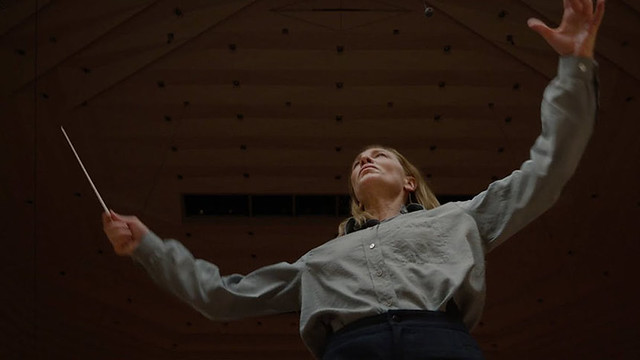
Tár (2022) - Field Tar I’m sure parallels between conducting and directing was not lost in Todd Field when he conceived the idea for Tár. With the film, he breaks 16 years hiatus after critical success of his dark suburban melodramas (In the Bedroom and Little Children), and proves himself to be a maestro, by directing, producing, and writing the film about the famed conductor, getting great performances out of great international talents. I’ve been closely following his career trajectory as he was supposed to adapt and direct Jonathan Franzen’s Purity as a showtime miniseries, since book has been my favorite of the last decade. And I was sad to learn the news when it didn’t materialize. But with Tár, he presents himself incontrovertibly to be Hollywood’s best kept secret.

Talking about gender equality in the face of sexual misconduct in the social media era, Todd Field's biting and grandiose character study Tár is at once current in its sexual politics and old fashioned in its rise and fall narrative of its subject. The film's astute observation of today's social climate and brisk pacing reminds me very of David Fincher's Social Network (but not its Adderall induced choppy editing). But unlike Fincher's precisely timed zeitgeist Facebook saga which was geared mainly toward millennials, where everything felt like kids-playing-in-adults’-clothes, Tár, heavily relying on the strength of Kate Blanchett's towering performance, feels very much a grown-up film.

Lydia Tár (Blanchett) is first seen nodding off on the private jet. Someone's recording her with their phone while texting. These first frames of the movie sets the somewhat ominous tone of what’s to come. Maestro Tár is one of the select few EGOT- Emmy, Grammy, Oscar and Tony awards recipients, and a resident conductor of the Berlin Philharmonic Orchestra. She divides her time between New York and Berlin, gives interviews, teaches at Julliard, drives her kid to school, takes meeting with her mentor and fellow conductors in fancy restaurants and hotel rooms. She is preparing the live music recordings of the much coveted piece within classical music circles, Mahler's 5th Symphony.

Field is quick to establish the ecosphere of the famed figure’s lifestyle - a Porsche, a private jet, a big cement architectural house in Berlin where she shares with a famed violinist Sharon (Nina Hoss, Barbara, Phoenix) and their adapted pre-teen daughter Olive. The lengthy TV interview she gives in the beginning also greatly reveals her public persona - a well-educated and well-traveled woman and how she broke the ceilings of white male dominant conducting world and how she learned to appreciate music from her mentor Leonard Bernstein. But perhaps being modest, she doesn't see herself as a trailblazer. 'Being a woman' was neither disadvantageous or beneficial to her success.

Another revealing, lengthy scene takes place at her Julliard classroom where she teaches young students. She mercilessly scolds a young man, who identifies himself as an BIPOC LGBTQ, for refusing to play Bach because he sees Bach as a white male misogynist who sired 20 children from several different women. She makes a point that but it's not the musician's private life but the music he produced that matters, which transcends gender, political, cultural, and even temporal boundaries.

It takes a long while, but the elegant, graceful, and glacial façade of Lydia sees little cracks appearing. There’s an early indication that Lydia is suffering from paranoia. She can’t sleep easily in neither of her houses – the big house she shares with Sharon and the small dilapidated flat she kept since her early Berlin days for work, and/or for secret rendezvous, because she hears noises in the middle of the night. She feels the presence that some one is watching her. She hears unseen woman screaming for murder in her jogging route in the woods.

The arrival of Olga, a young Russian Cello protégé, and Lydia's favoritism toward her also raises few eyebrows among the orchestra members. Surely young Olga is very talented and deserves the spot as a new cellist in the orchestra. But her incredibly obvious and almost creepy affection on display irks even her most ardent supporters, including Sharon, who stood by her all these years. Is Lydia’s self-deprecating U-Haul lesbian joke just another façade? Her trusty assistant Francesca (Nóemie Merlant, Portrait of a Lady on Fire) is unhappy with how Lydia handles the suicide of the pupil, whom they both obviously had affections for. After finding out Francesca still corresponded with the girl prior to her death, Lydia passes her up as her assistant conductor. Francesca soon disappears without any notice.

In the center of it all, is Blanchett in her blistering and physical performance. It’s a showy and hammy role specifically written for her by Field. Lydia Tár is just as much a juicy role for an actress to play as Daniel Plainview is for male actors. It’s a role that requires confidence and authority that no other actresses in her generation possesses. Blanchett is particularly suited for the role specifically because she was never young in her film career. It’s because she was always old. She has never been an ingenue. This is why she is perfect as a predatory older woman who can be just as ignorant and arrogant in her behavior as any man in power. It’s also her dedication to the role- learning to speak German, how to play piano and conducting that is truly impressive.

The long epilogue of the film and Blanchett’s performance as she confronts the sexual degradation is heartbreaking.

Field really achieved something remarkable with Tár. It’s one of those big character driven film that is rare to be made nowadays. With its mesmerizing closeups and Blanchett’s commanding performance, the film is spectacular on the big screen. Go see it big.

After Venice and New York Film Festival premiere, Tár opens in theaters this Friday via Focus Features.

Wednesday, October 5, 2022

Bodies, Bodies, Bodies

De humani corporis fabrica (2022) - Castraing-Taylor, Paravel de-humani-corporis-fabrica-4 Setting aside the politics of healthcare and its inadequate system, let's consider the frailties of human bodies. And this is what Julien Castraing-Taylor and Verena Paravel are interested in to document, in graphic detail- the blood, guts and no glory. Gaining unprecedented access to 5 hospitals in Paris, we are presented to operating tables, endoscopy, colonoscopy, Ophthalmology procedures, morgues. Tiny cameras in tubes goes in and out of the bodies, exposed human brains, cutting flesh, cesarean sections, exposed, bleeding penis... while doctors and surgeons talk about their daily lives as if the patients they are treating aren't even there. And you ask yourself, why do I need to see this? This is a legitimate question to ask. But this is fascinating stuff.

De humani corporis fabrica is not unlike Brakhage's Act of Seeing with One's Own eyes, where he filmed autopsies in the morgue. Brakhage's idea of showing dead bodies might have stemmed from making the audience confronting the uncomfortable truth that one way or another we all die. That death is part of our life and we don't need to seperate ourselves from seeing the dead and avoid it. It had a death positive intention.

Castraing-Taylor and Paravel go even further with the idea. There is a giddiness in De humani... Cutting out shiny flesh from the body with the help of tiny camera and monitor and doctor's indifference in treating the human body like any other object showcases unprecedented human progress in medicine contrasting with elemental nature of a human body- bag of bones. At times it is triggering, but as with their other films, especially Caniba, the filmmakers push us to an uncomfortable areas to contemplate the body and soul connections. Yes we are basically a bag of bones. As we grow older, our bodies deteriorate. But we got to be more than bags of bones, but are we?

This beats any documentary about debating healthcare with talkingheads.

Monday, October 3, 2022

Chimeric

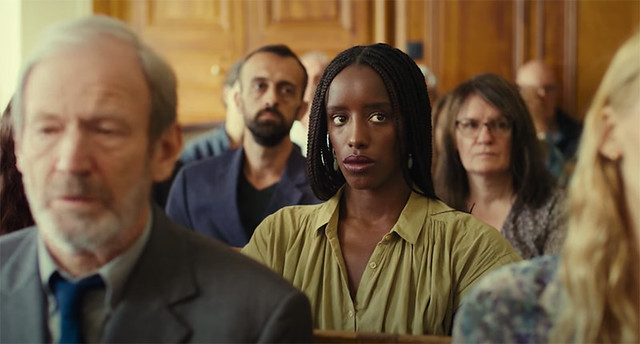
Saint Omer (2022) - Diop SaintOmer The fascism and hard-right are on the rise all over Europe and the US southern States are rounding up immigrants at the border, and putting them on the planes bound to more liberal north for political stunts, Iranian women are protesting in the streets against hijab laws are where things are at right now, when I seek the context while watching Alice Diop's powerful courtroom drama, Saint Omer. It is a French documentary filmmaker's first narrative feature. Mainly consentrating with African immigrant communities in the suburbs of Paris where she grew up in her documentaries, Diop sets this courtroom drama in Saint-Omer region of Northern France this time. It concerns an insanity defense of a young Senegalese immigrant, who drawned her baby in the sea. Going through the questioning of both a defense lawyer and a prosecutor and testimonies, we see the precarious position the society and the system puts countless migrant women in and demonstrates its effects in sobering ways.

Rama (Kayije Kagame), is a successful author and lecturer. She is seen at the lectern in a hall, showing the footage of women with shaved head in the nazi concentration camp. Her lecture is on Marguerite Duras and her theme of humiliation and the permanent scars it leaves on women. Rama is a sullen and serious woman who has a complex relationship with her Senegalese mother and her large family. Nothing is said outright, but it's her mother's gesture or silence that tells her that however successful she is, she would never satisfy her parent. This is something as an immigrant, I can totally relate to.

For her new book, Rama is following the sensational trial of Laurence Coly (Guslagie Malanga), a young Senegalese immigrant who is accused of the infanticide of her 15-month old daughter. She is termed as 'Medea' of Saint-Omer, a character in a Greek Tragedy, who killed her own children in a vengeful act against her unfaithful husband. In court, everyone comments that Coly speaks in highly educated French. She is well spoken, calm and doesn't seem to be under the spell or curse as she claimed to have been at the time where she knowingly abandoned her baby on the beach at high tide. It seems out of character since she is a Western educated woman. The prosecution is making the case as a manipulative woman killing her baby because of the baby was in the way of her career.

Yet Coly's journey has been a sad one: just like most of parents who is sending their children abroad, her Senegalese parents' priority was on education. Coly was supposed to study law in France. The pressure of being successful in her parents eyes was enormous while working as an au pair in a foreign country. Through relatives she met a much older white man who promised her financial security. But when she found out she was pregnant, she fell into a deep depression. She abandoned her studies, hid from the world and didn't leave her apartment for months.

Rama, attending the Coly trial everyday for her book research, slowly finds parallel storyline emerging with her own life. Meeting Coly's mother doesn't help the matter. Mrs. Coly's there to support her daughter. She immediately recognizes Rama as a fellow Senegalese and chats up in Wolof. Her judgmental stares is too much for Rama's guilty conscience. But guilty of what? Why her stares make her extremely uncomfortable? Even though her white, good natured husband's consoling that she is not her mother's daughter, what she sees in Colys is too much to bear.

Saint Omer directly addresses the pressures and impossible situations many immigrants and especially migrant women find themselves in, in a foreign country where there is nowhere else to turn to. And the mind plays tricks on you when you are desperate. Irrational becomes rational. For Coly, a bright young woman whose pride is crushed by circumstances and worse, humiliated by her predicaments went into a postpartum depression.

The film doesn't end with the verdict of the trial, but rather, ends with defense lawyer talking directly to the camera/audience and explaining the clinical term, a microchimera, an inter-change of cells between a fetus and its mother that goes both ways. That, in metaphorical sense, all women are chimeras, the mythic monster composed of different parts of the beast. Diop here is making a powerful statement, about the highly patriarchal society, colonialism, racism and women's rights, both subtly and unsubtly. Saint Omer is undoubtedly one of the best films of the year.

Sunday, October 2, 2022

Rum, Sweat and Rain Soaked Love Story in Global South

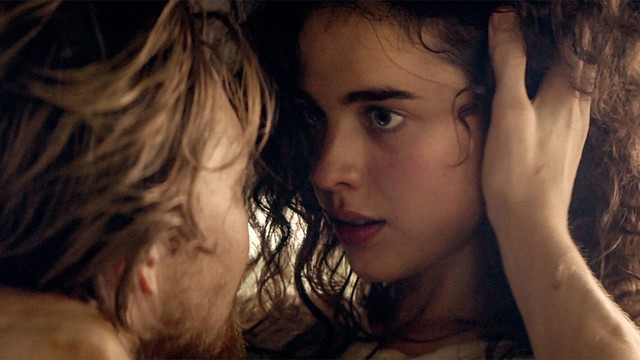
Stars at Noon (2022) - Denis Stars at Noon Margaret Qualley gives it all in a Claire Denis's Nicaragua set political intrigue, Stars at Noon, based on Denis Johnson's novel from the 1980s. In order to frame this in context, one has to wonder the filmmaker's intent on setting it in the now - during Covid 19 era. The Sandinista Revolution by FSLN versus the US backed Contra made Nicaragua the literal hell on earth in the 80s, which Johnson personally observed to write about, first conceived as a nonfiction then in fictional form.

Some forty years later, Ortega is still in charge as he serves the 4th term as the president, the economy is still in shambles, corruption and military/police oppression on activists are still being widely reported. The US intelligence and international conglomerate operatives are still very much present, and on the lookout for neighboring Costa Rica and other nations in Central America for possible disturbances. As she explored the white privilege and colonialist mentality still present in Africa with White Material, one can read Denis's new film through those eyes - a pervasive influence of the Global North playing out in an old, tired, cat-and-mouse international intrigue set in Central America, John le Carré style.

Qualley plays Trish, a self-proclaimed journalist who might have had noble intentions in coming to Nicaragua, but now marooned in sweltering purgatory with her resources cut off and passport confiscated, survives by turning tricks on a local law enforcement and political small potatoes for any types of favor, influence, money (both cordóbas and dollars), shampoo, air conditioner or just a decent shower. In her tiny bareback summer dress, she is always guzzling copious amount of rum and throwing Karen tantrums when her Spanish fails to communicate. She meets Daniel (Joe Alwyn) at a bar in the Inter-Continental Hotel, the bastion for all the white guests. Daniel says he works for an oil company executive. Giving him a tip that the sleek local interest he was meeting is a Costa Rican undercover cop, she hooks up with Daniel, and together, they move into a squalid motel Trish is staying in. They both know that they are in over their heads in a foreign country and they need to get out the dodge before they get arrested or worse, killed. It turns out the unassuming CIA agent (Benny Safdie) she meets on the road, wants Daniel and offers Trish safe passage to the Costa Rican border.

Qualley's wide-eyed, frizzy haired Trish, spitting out ridiculously hard-boiled noir lines is a revelation. If this film doesn't make her a big star I don't know what will. Alwyn is adequate as a hunky whitebread love interest, just to be dragged around by his nose. And Safdie is fantastic as cunning G-man. Eric Gautier's energetic cinematography skillfully captures the oppressing tropical climate and humidity glistening on Qualley's skin.

Stars at Noon doesn't quite work as a global intrigue espionage thriller, nor does it as a Claire Denis film. It's too old fashioned and plot and dialog heavy. Nevertheless, I can see the merit in Denis's comment on the pervasiveness of white colonialism in Central America where idealism and good intentions has gone to die. But it's an enjoyable ride in that 'rum, sweat and rain soaked, sexy love story in the jungle way' and I don't mind it.

Friday, September 23, 2022

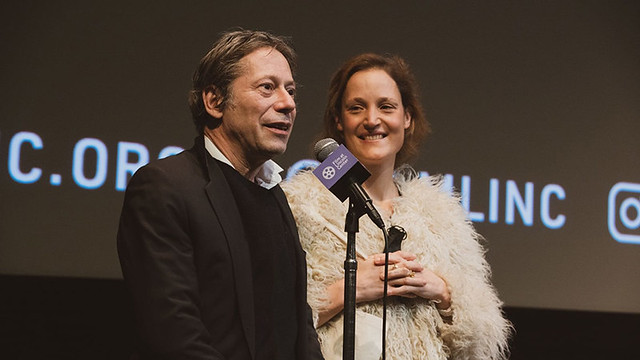
Cinema of Gesture: Interview with Mathieu Amalric on Hold Me Tight

Mathieu Amalric Mathieu Amalric, a prolific French actor whose filmography includes Diving Bell and the Butterfly, Quantum of Solace, Grand Budapest Hotel, Summer Hours and many many more, is also an accomplished film director with a wide range. Hold Me Tight, starring Vicky Krieps, is his latest directorial output and perhaps the most touching and emotionally resonant film from his filmography.

With the film opening statewide, I had a chance to chat with him about his craft and filmmaking process at length, via whatsapp, before his flight to the New York premiere of his film. I loved his sprawling answers that jumped from one subject to another fluidly. This interview gave me a great deal of insights into an artist's creative process.

Hold Me Tight is playing in New York and opens in Los Angeles on 9/23. Please check Kino Lorber website for more rollout dates near you.

The thing about you as a director since the early 90s, is how distinctly different each of your projects is, from one another. I am wondering about how you go about choosing your next project, and in this case, Hold Me Tight.

Yes it's really a miracle to find something concrete. It's like a magnet. It's true that when you don't have that, your life feels strange...but that's how you feel often. In one moment, you don't know why, but it congregates towards something, something that makes you see the whole world. And it's true what Truffaut was saying and everything, when I talk to friends who make films, well not all of them, but I feel certain things like that. The film before this was Barbara. I had some sort of a feeling that was solidifying. So I said, "let's go somewhere that is very strange...," I swear this is true. But after Barbara, I told a producer, "No more films that are in order, I want to film now the storytelling that is not in a straight line." It was Claudine Galea's play, a very slim book that had never been performed. It brought me to melodrama. Melodrama of the first degree. Very simple. When I read it I was struck by it. It was the opposite of everything I hated in Barbara. Of course everytime you make a film you throw it away and go somewhere else. And then later on you love them again. It was not to be a form of distance. It was not to be... Barbara was almost like a commission for me. It was Jeanne (Balibar) and the producer's idea. Jeanne was supposed to do it with Pierre Léon but the producer didn't want him. So they called me up and asked how about you do it? But it was a biopic. You can't really cheat in a biopic. But this film, based on a play, a melodrama, where it afforded me a direct access to the emotions I wanted. So it was that factor for this film.

I started to write, immediately in fact. What drew me into it was that Claudine developed a game of invention for this character Clarisse. I was attracted to her gesture toward imagination. Cinema can amplify those parallel lives. In fact, we deal with it each moment in our lives - we either accept or we are scared of them. That's what I like about Clarrise. That she finds the way to accept them and even bring more beauty to them than what she could've had in real life. But it is real. There's no difference in aesthetics between what's projected and what's real. I don't even know if there's a memory in this film. Maybe a discotek is a memory...maybe. But I think even that, she-

Invented.

-in my head, she transformed it a bit.

Got you.

But all the rest is a projection. I was thinking of a spectator looking at the screen, you know that there is nothing behind the screen but at the same time you believe in it. This is true. And that's what happened in the editing. With my editor, François (Gédigier), we really played around the idea that what the audience is experiencing can be very close to her gesture.

I see. You mentioned that Galea's play was pretty short. How much of it was from that and how much of it you invented?

It takes place in the Pyrenees. But in Galea's play, it's not really specific. It's here somewhere...

*Amalric looks around for the book.

There is a house, there is a car, there is a boy and a girl...thoughts, words and things that go from one place to another in the same graphic way...onto the pages like that. She uses italics, antiquated fonts, a long monologue...

*Amalric holds up Galea's play with the film poster as a cover.

It's a reprint, so they put that cover on it now. So it's not really a play in a typical sense. She is playing with forms. And at the end yet, there is a mountain.

I see.

For me, the mountain, my father comes from the Southwest of France, some of my filmmaker colleagues are from the Pyrennes, the border with Spain. So we searched for the house there, not in the mountains but at the foot of it, just outside Toulouse called Saint-Orens. And that's where we shot. When Clarrise takes the car, she goes to La Rochelle, by the sea. Do you know it?

No.

It's the west coast of France. A very lovely port town.

Vicky Krieps is wonderful in this film and how did you get to cast her for the part?

That is something that I really...the producers Laetitia (Gonzalez) and Yael (Fogiel), I gave them the book. And they said, yes we can try something with that. So I go to the house and for a day and a half I did archeological work. The first thing I did was start with objects and Vicky appeared. Just like that, she appeared in my head. I think I'd seen Phantom Thread four month prior. I remember the first shot she appears in as a waitress and... sometimes it happens in the streets, it's like, "I know that person. I knew that person somewhere..." We have those feelings sometimes. I tried to phone her and it doesn't go through because where I live in Brittany the reception is not so good. Then I googled and found out that she has a French agent and I call her agent and she says she will be in Paris in three weeks. So we meet. And I don't have a script yet. So I give her the book and we forget to say if we will meet again or do the film together or anything. It just happened! That's why we say it's our film. And we had to shoot in three different periods of time because of the mountains and the snow. It took a year and a half. Shooting and stopping for four month waiting for snow to melt and a lot of things happen during that time, you know. It is challenging to have the same crew for that long period of time. Life happens: separations, moving, new relationships.... And I think that was part of our film as well.

But the stretch of time was also valuable because we were editing between the shooting. That creates the possibility to be a spectator. We started by spring, which means we got rid of the dead immediately. After two days she finds the bodies. It's done. But that means we could move toward something relatively lighter - like her in the kitchen, or singing while driving, eating or trying to flirt with a man... things like that wouldn't have happened if we had to wait out of respect for the dead. So sometimes the order of which you film can have an influence.

What I love about the film are the small details- like Clarisse burying her face in ice in the fish market or hugging a total stranger in a pub... You don't know what those mean when you see them, but at the end you realize how things are all related and connected to each other, like her listening to the cassette tapes of Lucie playing piano. I am wondering how much was in the script and how much was improvised.

When I say I did the work of an archaeologist, this is what I meant. Yes they were not in the book but in a way, when I talked with Claudine, I don't know, I was trying to imagine this woman, that I was this woman. For instance, we had to film this scene in the cafe. At that moment, the audience is judging this woman, "how can she leave her husband and children?" She is guilty. That's what you think. But the whole crew and everyone on set knows that's not the case. She says, "He's gonna call me in a week." You just put yourself in that situation. It's her reality. Yet I pretend that I left and they stayed. It's so simple. She leaves like that. My job is to help my actors. So in this film it occurred to me that me being an actor really helped. It really helped me a lot because you don't need words sometimes to express. You just need an object or something to incite those emotions. Maybe it's the woman at the bar that I like a lot and I want her to believe me. Or that dream catcher in Lucie's room that invokes something in me, or I want the man at the bar close to me so if I fall, I won't fall to the ground. I would do a walk-through with my crew and cast where I am doing all those things and convey what I was trying to express.

Those things with the ice. It's in the morning. Me and my crew had a location scouting. La Rochelle has an extraordinary market. And the backstory is that Clarrise had too much to drink the previous night. I even wrote a scene where she had a party the night before. We didn't end up filming that. The thing is that when you go to the market in the morning, you see people working and it's full of life. Life is going on all around you. It continues. This morning I looked out the window and there were people preparing delivery and... I can watch that for hours. I guess I wanted to comment on real life. I don't know.

It makes sense.

That's why she went there. And when you saw that ice, because I am in her head, I know that there will be bodies underneath the ice come Spring and she still has to wait for the inevitable. That's unbearable.

I think I mentioned in my review but all your films have a sense of controlled chaos.

Yeah. It's true.

That chaos is reflective of what's going on inside your characters. It is very interesting to see that. I always wondered about what your film set is like. Is it controlled chaos or not at all. I wonder if it's very different from, say, the set of Arnaud Desplechin's film set, for instance.

There is. Arnaud's film set is becoming quicker and quicker. When we were young, he was doing 35 takes. We had time and we had three months to do the film, now he has to do his films in five weeks with a small budget, but he uses that. That is something we have in common. We love to shoot quickly. But this one was different. We were shooting for 6 weeks. And I write a lot, in fact - a lot a lot a lot. So that I can rewrite at the last moment, in the morning.

I see, I see.

And I give sort of a letter to the crew every morning, usually it's dialog but this film it was replaced by gesture or piece of music. What's the scene about? Where does it happen? Where are we? I have worked with the same people for twenty years and they will never leave me alone. But they won't let me be the artist on the ivory tower. They keep you in check.

Exactly. I know them and understand them because I was a film technician also- sound, first AD and I did all the jobs in movie making. So you know changes can occur at a moment's notice in film sets. You know what you have to decide and when you have to decide. There are all the books on Fellini that are great on that: 'the work of a great director is in fact decided on the last moment'. An example would be the fight scene between the brother and sister in the room. I didn't think it somehow was strong enough. Then we have this beautiful tree just outside the window. But you don't ask the person the morning of the shoot that he will be falling off of a tree. You plan that four days in advance. But things happen like that.

There is also a lot of live music playing in the film. The two girls who play Lucie, Juliette and Sophie, are not actors but musicians. So we had live piano music all the time. We had another house with a grand piano where they played because they have to practice for their conservatory. Both amazing pianists and that gave us something quite incredible.

We had very long one- takes for different reasons. I knew Vicky had to go deep into places to reach them and it is a hard thing to do. I'm not going to ask her to find the bodies twice you know. You do that once. She had to prepare for it. Really prepare for it. There's almost no professional actors in the film. They are people who actually own those places we shot. Only professional actors were Vicky, Arieh (Worthalter who plays husband, Marc) and the guy at Marc's job and Aurélia Petit at the gas station scene which I invented two days before the shoot. I thought to myself, "I think we need another scene before she leaves."

For this film I wanted to create objects that could go and connect to something that we already shot, a memory of something. For instance, when she falls after the ice scene and she is carried away in this blanket- what the prop master would do each time- because she is inventing all those scenes, to put all her objects in her projections, we used the same blanket that Marc uses after taking a bath. So we had a lot of different ways to go about connecting those moments - through objects, through music, through gestures, all the time.

Dang.

It was written precisely like that. But in editing, there are other possibilities to go different directions. In the scene where Clarrise is told by the innkeepers that she has to wait until Spring for the snow to melt. She goes out to the car and starts digging. The next scene is her and Marc in the discotek. She heard what was said but she doesn't want to hear it. With my editor, we ask, "So where could she go now?" For me, I feel that she goes to the beginning. The beginning is when she met this guy. Then they lived together, had children. "If I hadn't met this guy...," that's why she goes to the beginning. That's how the editing goes. In Claudine's book, it's the final, final revelation. You have suspected all along but it's literally the last page of her book that reveals it's her imagination that her family is growing without her because she left. The script was written like that. And because we had time between the shooting and editing, I hated the fact that the editor and I can be the puppeteer. You see what I mean? It's like, "Aha we know more than you!" It was clear after the first week of shooting that it was not us who were puppeteers but she was.

It's always the case with your films that it doesn't feel like trickery. I feel that there are real emotions behind it. I love hearing about the process of the film in how it was put together. It adds so much to the experience, looking back. I might have to watch the film again to get all the details and connections you put in. That's quite marvelous.

But I have the feeling that we all do that in fact. I was thinking about a traffic jam. Why would they prefer to be in there to go to work and get stuck in their cars? I think people need that sometimes, that they want to be alone sometimes. They are not at home and they are not at their job yet. It's in those moments you imagine horrible and beautiful things and that's where decisions are made in their own lives: it can depend on something they hear on the radio or what you see outside, or weather, or something stuck on your windshield... I am sure that we all imagine things, four or five things at the same time. I think cinema can explore your mind and body like that of dance. I think dance is an art form that can transpire those feelings, even more than music. There's no words to describe when you see someone move and you go "Ahhh" in awe.

My work is in storytelling and it's all about how to put those things together. So to what point do I want to give information? Do I need to make it too clear? Do the questions I ask need to be intellectual? How do you bring those questions down to the belly again? These are all done in the editing. We concentrate on the voice also. Do we need to make things clearer? Vicky was in Berlin and I would try to record her line reading in my iphone to put in the film. It was my editor and my producers not to make things more clear and more obvious. It's usually the other way around - directors want to make it more obscure and producers want to be more linear and more obvious therefore more commercial!

People take things differently. That's why I loved the Q&A last night at the sneak preview. Some people get it within a few minutes that she is in mourning. Some people don't get it, that she invented the whole losing the family thing to make excuses to leave her house. People also project their own lives from loss of a loved one or even a bad break up. It's great to see the different reactions.

You did something very special here. So congratulations. What else do you do when you are not making feature films?

I do a lot of short music documentaries. I've been working with John Zorn. You know during his famous marathon sessions? I filmed that. And I've been filming him since 2010 whenever I am in New York. We've done four, five of them together. My girlfriend Barbara Hannigan is a Canadian soprano opera singer. There is a youtube video called C'est presque au bout du monde that I did for Opéra national de Paris. You should check it out. It's very intimate. It's just a soprano preparing her voice.

I will do that.
Wednesday, September 14, 2022

Otherworldly Worldly

Moonage Daydream (2022) - Morgen Moonage Daydream The Queen is dead. She lived to be 96 years old. David Bowie passed on in 2016, at only 69. There is no justice in this world.

More than any other cultural icon's death, Bowie's passing was most shocking to me. It's because I didn't think he was capable of dying. For more than half a century, his presence in our lives, in every facet of art and creativity was undeniable. Me and my wife, aging Gen Xers, have 4 Bowie t-shirts in our daily wardrobe rotations between us, Man Who Fell to Earth art print as well as Aladdin Sane vinyl album cover adorn our living room wall, and we both consider The Rise and Fall of Ziggy Stardust and the Spiders from Mars, the perfect album from start to finish. In short, our Brooklyn apartment is better equipped with Bowie memorabilia than the SoHo Bowie pop-up store.

So how do you go on about making a documentary about one of the greatest musicians of our time, whose illustrious career spans more than five decades? What should it look and sound like? How do you capture a legend who knew little boundaries?

Brett Morgen, music documentarian is best known for his innovative Kurt Cobain doc, Montage of Heck back in 2015. With the unprecedented access he got to make that film, he made sure that the film is from the subject's point of view, not anyone else’s'. Concentrating on the music itself was the key. Moonage Daydream, narrated by Bowie in his own words then, with the wealth of unseen pristine materials of him in his most gorgeous days, highly benefits Moonage Daydream. And Morgen's approach here is more resonant and better fit here than Montage with because after all, it is Bowie, whom the camera adored. I have to hand it to Morgen, to have a vision for a kaleidoscopic biographical documentary to convince the estates of these musicians to grant him compete access to the precious, never-before-seen materials.

So how this shy boy from Brixston become a music, film, theater, dance and fashion icon? From the get-go, with the 70 mm IMAX projection and Dolby sound system, Moonage Daydream wastes no time blasting Bowie singing All the Young Dudes in concert footage. Morgen jumbles the pristine footage of Bowie in a Ziggy Stardust tour, backstage interviews, talk show appearances, his days in Singapore and the Blackstar music video to set the tone. Then the film slides into a chronological career of Bowie for the next two hours. It's a loud, candid, glorious and fitting celebration of the life of an artist.

Bowie's transformations and delving into different music genre over his career is well documented. The film highlights his endless searching and candid moments of reflection; from his glam rock days where he experimented with cut-up lyrics, to his grunge Berlin days when he went there to isolate himself and find new sound in electronica, to his hugely successful pop music stint in the 80s, to industrial sound of the 90s and 2000s. In candid interviews, he regrets and self-conscious about some of the career paths he has taken. Like appearing in a glitzy Pepsi commercial with Tina Turner.

We learn that even though he dabbled in painting and sculpture (in striking German Expressionism style), he never really exhibited them in public because he didn't think they were good enough.

Morgen also uses Stan Brakage inspired animation of exploding primary colors to accompany the glorious music, punctuating the isolated beats and guitar riff that starts many of the Bowie's famed songs. More than anything, Moonage Daydream sounds and feels like a rousing concert documentary where one can't help but feeling emotional several times.

A consummate professional and entertainer, Bowie worked on Blackstar album while he was dying of cancer. The album is staggeringly beautiful in its content, contemplating his entire career, his mortality and transient human life. He also became the first musician to reach No.1 spot after his death.

Moonage Daydream is definitely the maximalist gift for Bowie fans. And no doubt, it will introduce to one of the most, if not the most, important artists of our time, who was taken too soon, to a new generation of music lovers in a big way. See it big and see it loud. It's one of the best movie going experience of the year.

Moonage Daydream opens in Theaters and IMAX globally on 9/16.

Tuesday, September 6, 2022

Grieving and Letting go

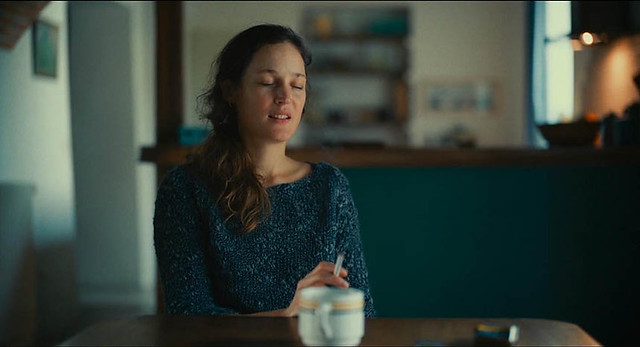
Serre moi fort (2021) - Amalric Hold Me Tight I have said many times that Mathieu Amalric is not only a great actor but a great director as well. Over the years, he has proven the fact time and time again with his incredibly diverse work in his filmography: On Tour, a film about a group of burlesque performers touring with a washed-up manager to ‘the end of the world’, Blue Room, a Gustave Courbet inspired sexy noir courtroom drama and Barbara, fiercely inventive biography of a popular French singer. He does it yet again, with Hold Me Tight with the great Vicky Krieps in a very affecting performance. Amalric's strength as a director has always been his seeming aimlessness or controled chaos if you will, which always ends up greatly resonating on an emotional level. Hold Me Tight is no exception.

It starts out with Clarisse (Vicky Krieps) playing polaroid pictures of her family like a deck of cards on her bed, then sneaking out of the house in the middle of the night, driving away in a dusty old car that’s been sitting in their garage, leaving behind her loving family - Marc, her hunky husband and two adorable pre-teen children, Lucie, and Paul. She tells herself that after a while they will not miss her. She is never coming back, and they will have to accept the fact. But why is she running away? What is she running from? She is seen saying goodbye to her friend in town (it’s mountainous region of Northwest France near Luxembourg/Germany border) at the gas station.

The film wisely cuts back and forth with Clarisse’s road trip and the happy family life. They are always on her mind and the thoughts of them make her smile while on the lonely road. As the film plays out, it’s as if she is watching her children grow up from a distance, as if by choice. Then the film becomes something else entirely.

Clarisse’s seemingly aimless road trip, listening to an old cassette tape recording of Lucie playing piano, incessant smoking, her pauses, staring at inanimate objects, silent smiles- each of these tell a story, so do her inexplicable, seemingly random behaviors as the film goes on: Why does she hug a stranger from behind in a pub? Why does she bury her head in ice in a fish market? Why does she berate tourists for not keeping an eye on their children? Why is she so insistent of getting the same room with bunk beds at a ski resort over and over again? Amalric builds upon these details to the film’s ultimate big reveal. But unlike the gotcha moments in other films, Hold Me Tight’s conceit doesn’t feel like a conceit. This is mainly because of Krieps, (in my opinion, the best actress working today), who embodies Clarisse with natural grace, inner strength, intelligence, and unassuming beauty all at once.

The fragments of memories of Clarisse's family that she plays in her head and the construction of what the life with them would have been clashes, when she tracks the life of a local piano protégé. Believing that it is her Lucie, now a fiery teenager, playing in an important competition, Clarisse acts out her mostherly concerns at the teenager. And it causes a scene.

Krieps gives a gut-wrenching performance in a film about grieving and letting go that is so portent and heartfelt than any other film I've seen in a long time. Constantly going back and forth with her and her family, feeling the absence of one another yet articulating the connection in a very ingenious way, Amalric, adapting from Claudine Galea's play Je reviens de loin, makes perhaps the most heartfelt film as a writer/director. Give Krieps all the acting awards there are!

Hold Me Tight opens 9/9 in New York, 9/16 in Los Angeles. National rollout will follow.

Tuesday, August 30, 2022

American Family Portrait, Textured

The Cathedral (2021) - D'Ambrose The Cathedral Ricky D'Ambrose, a micro-budget indie filmmaker whose initial series of shorts gained acclaim on the international festival circuit -- including Berlinale and New Directors/New Films -- made his feature-length film debut with Notes on an Appearance in 2017.

The Cathedral, his astute, semi-autobiographical follow up, premiered at Venice last year, then screened at Sundance earlier this year. The film paints a picture of an American family and its two decades of slow dissolution, with the culturally and politically volatile climate of the 80s and 90s in the U.S. as a backdrop, observed through the eyes of young Jesse Damrosch. It showcases the same minimalistic approach to filmmaking that D'Ambrose embraced while making shorts over the years: static shots, slow zoom-ins, and fragmented images, consisting of stills, old TV commercials, and archival news footage, with "narration" provided by voice-overs and diegetic sound.

Jesse Damrosch recounts how his parents, Richard (Brian d'Arcy James) and Lydia (Monica Barbaro), met, and then dramatizes how their uneasy union unraveled over time, partly due to Richard's volatile relationship with Lydia's family, the Orkin's. Their story is just like many other middle-class, suburban American families: money problems, death in the family, resentment and gossip, the divorce of one's parents and growing apart. We see birthday celebrations, the communion, funerals, family dynamics -- stepparents and extended families bickering over taking care of aging parents, and so forth -- all dryly narrated by an anonymous female voice.

The film also comments on changing times. Richard inherits a printing business from his dad, then struggling with the emergence of digital technology.

Time swiftly passes, jumping from the Reagan through the Clinton and Bush eras, covering the AIDS crisis, scandals, natural and man-made disasters, wars, and terrorism, all witnessed and heard by Jesse, a clear-eyed chap who's often seen staring yonder in various ages. D'Ambrose omits most of his own personal experiences. So there are no scenes of teenage rebellion, no mention of any friends, no love interests, no time of joy or disappointments.

In a way, the film is both autobiographical and not at the same time. It's like he is at the center of it all but also the fly on the wall. It acknowledges the political and cultural climate D'Ambrose (and by proxy, Jesse) and his generation are subjected to, without any prejudice or judgment.

What we are left with, are lingering small details, like the patterns on old furniture upholstery or how the light hit on the parts of his father's apartment or the metal ticking sound of an old radiator.

D'Ambrose's economical aesthetics and sensibilities have a lot in common with contemporary indie filmmakers across the globe. I see resemblance in the works of Dan Sallitt, Matìas Piñeiros, Bas Devos, and Ramon and Silvan Zürcher. His use of interior spaces in his chamber pieces is very much reminiscent of Chantal Akerman's.

Yet, with his even-keeled observations and dense layering of world events mixing with his own childhood memories, The Cathedral feels very much universal and personal at the same time, as it plays out like an emotionally unencumbered version of Richard Linklater's Boyhood, akin to Terence Davies' work.

The Cathedral establishes D'Ambrose as one of the major American voices in indie cinema, in tune with other contemporary filmmakers in the global indie scene embracing minimalist aesthetics with a keen observational eye on the world we live in. I welcome it.

The films opens on September 2, 2022 for one week engagement at Film at Lincoln Center in New York, then begins streaming exclusively via Mubi.

Thursday, August 4, 2022

Baby Box

Broker (2022) - Kore-eda Screen Shot 2022-08-03 at 10.54.41 AM Screen Shot 2022-08-03 at 1.15.43 PM Screen Shot 2022-08-03 at 12.08.47 PM Screen Shot 2022-08-03 at 11.42.31 AM Screen Shot 2022-08-03 at 12.15.51 PM Screen Shot 2022-08-03 at 12.40.56 PM Screen Shot 2022-08-03 at 1.17.50 PM Japanese filmmaker Hirokazu Kore-eda's foray into working internationally continues with Broker, a Korea set family drama with all Korean cast.
As the director of many films that prodded the traditional notion of family, such as Nobody Knows, Like Father Like Son, After the Storm and Shoplifters, he continues with Broker, a heartfelt film about makeshift family, which feels like a grittier and edgier version of its predecessor, Shoplifters. It seems that the film is the culmination of Kore-eda's desire to work with Korean actors within the booming Korean film industry (produced by CJ Entertainment) despite not speaking the language. Broker is a beautifully written and acted film that has just as much emotional resonance as his many celebrated Japanese films.

It's a rainy night in Busan, where a young mother, Soyoung (Lee Jieun, aka IU, a K-pop superstar) abandoning her newborn baby in front of a church. There is a baby box at the entrance where a unwanted baby can be dropped annonymously. The hesitant mother drops the baby right in front of the box and runs away, not knowing she is watched by two law inforcement agents (Bae Doona and Lee Juyoung), who have been doing a sting operation on the suspected baby-selling, broker operation by the church workers. Also witnessing the drop off are Sanghyeon (Song Kangho) and Dongsoo (Gang Dongwon), looking at the monitor inside the Church. They find the note with the baby by Soonjin that she will come back to fetch him soon. No date or contact info. So starts Broker, an ensemble piece with superb acting from everybody involved. It becomes a road movie as Soojin comes back to claim the baby and gets involved in underground baby broker business with Sanghyeon and Dongsoo, as they try to find a suitable parents-to-be for the baby (at the highest price). Boys can pull in upwards of 10,000,000 won ($76,000) and girls only half that. With the baby and an orphan boy from the orphanage where Dongsoo grew up in-tow, they make a makeshift family, traveling all over southern part of Korea to meet possible adoptive parents.

These are all down and out characters whose lives have been nothing but rosy. Kore-eda draws sharply on their resentment and distrust in each other in the beginning, but slowly builds on their commonality and innate human decency. The biggest 'change of heart' moment belongs to Bae Doona's Soojin, a veteran police woman whose hatred of Soyoung, from "Why even have a baby, only to abandon it?" to understanding people's circumstances as to why the decision was made. It also turns out Soyoung is on the run because she accidentally killed the rich baby daddy who didn't want the baby.

In a polarized era where the issue of abortion rights is much politicized, Broker might be seen as naive by not putting emphasis on the issue. But it has some sharp criticism on our modern society putting blames soley on women and lack of men's involvement in raising one and our collective role in raising the neglected ones in general. In a very touching scene, the orphan boy who hid himself in Sanghyeon's old van to sneak out of the orphanage, asks Soyoung to give a prayer before they all go to sleep in a hotel room. So Soyoung thanks everyone for being born. We do not have a say in us being born. Our circumstances might be different. But we are all here so we might as well give thanks.

Song Kangho is wonderful as usual. He portrayal of Sanghyeon, a divorced man dreaming of his past, gives much humanity and subtle humor, very much resembling Lily Franky in Shoplifters. Bae Doona is also great as a cold hearted detective slowly realizing that criminals are not so different than the rest of us, that they are just trying to get by. We also get to see her eat a lot of junkfood in the car and being mean to her underling. The real acting revelation is Lee Jieun as a young mom. Her bitterness, her anxious stares tell thousands stories. Her looks convey both volatility and hidden tenderness.

I did not know that Baby Box was a thing. And that there is a black market for babies for chidless parents who don't want to go through legal huddles to adopt. And there are so many orphans who grow up dreaming of their mother returning to pick them up. All these nicely fit into Kore-eda universe of what consitutes a 'family'. Just like Shoplifters, everyone in Broker knows that they won't get a second chance at having a family. Everyone knows that good things will not last. What counts is the human connections made by this particular brokering and the extended parenting it created. That the kid will be all right.

Saturday, July 30, 2022

Family Road Trip

Hit the Road (2021) - Panahi Hit the Road Hit the Road Hit the Road Hit the Road Hit the Road Hit the Road Hit the Road Hit the Road Hit the Road Hit the Road A family, mom (Pantea Panahiha), dad (Hasan Majuni), older son (Amin Simia), younger son (Rayan Sarlak) and sick dog are on the road in a borrowed SUV, in a picturesque Iranian countryside. Yet this is not a joyous family vacation. Something is up. Mom is overly paranoid thinking that they are being followed. Dad with one leg in a cast changes the phone's SIM card every so often. They do so while dealing with their hyperactive 8 year-old son who is just a bundle of energy and joy. The older son, whose been driving, rarely says a word. He is moody as he chastizes his doddering mom that he is not a child anymore.

It turns out that they are going to the border to see the older son off, as he is entangled in something the Iranian State deemed as unlawful. And the parents have been telling the younger son that his brother is going abroad to get married - a not-so-convincing lie that might be adding to his hyperactive state. On their journey, they meet people, talk to each other and share some magical moments together.

Panah Panahi, the son a famed Iranian filmmaker and democracy activist, Jafar Panahi, who was just sentensed 6 years in jail for criticizing the theocratic Iranian regime, makes a beautiful film here in the tradition of 'moving pictures', that usually take place in a car, of Kiarostami (Taste of Cherry, The Wind Will Carry Us) and his dad (This is Not a Film, Taxi) that emphasizes time passing and fleeting human life on earth. Hit the Road boasts perhaps the most memorable child acting in recent memory- by Sarlak as an adorable rascal. His joyful presence peaks out over the overall somber tone of the film that hangs like low lying clouds. His joy is infectious. It also features gorgeous rural Iranian vistas, humor, magical realism (relating to 2001: Space Odyssey) and poetry. It's a short, life affirming film that lingers long after watching.

Tuesday, July 26, 2022

Representation and Survival

Nope (2022) - Peele Nope With his third feature, adroitly titled genre mashup, Nope, Jordan Peele is fast becoming the new original voice in American cinema dominated by sequels and franchises. And using the power of cinema - visual (under)represenation in more ways than one, he incapsulates historical, institutional injustices. It also counters the industry which preaches the most liberal tendencies, but seldom practices, especially in casting. With wit and humor, Peele is obliterating the notion that a message film, a Black message film to be precise, has to be always literal. The 90's Spike Lees of the world don't have the same appeal to the tik tok, BLM generation of now.

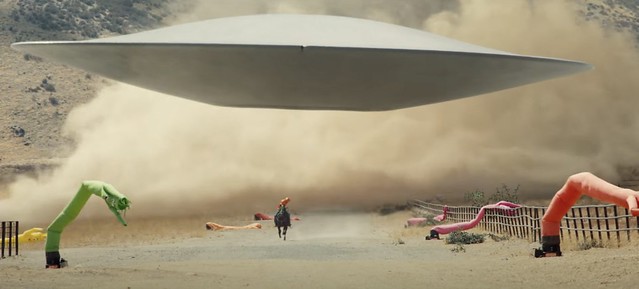
The Haywoods owns a California horse ranch, which has been supplying horses for Hollywood productions and commercial shoots for decades. After the old Otis Haywood (Keith David) dies in a freak accident (hit by random debris raining down from the sky - happens to be an old Indian Head penny), the less sociable Jr, OJ (Daniel Kaluuya) reluctantly takes over the business with his small time LA schmoozer sister Emerald (Keke Palmer). It would be hard to give up and sell all the beautiful horses and move on. There is a pride involved as a black owned business which is woven into the birth of cinema - the unnamed black jockey in Eadweard Muybridge's short moving picture of Man Riding a Horse in the early days of cinema was a fictional Haywood, an ancestor to OJ and Emerald.

There is another thread that Peele starts the movie with: Gordy's Home, a cheesy 90s sitcom featuring a chimp named Gordy. Things went horribly wrong when Gordy went on a killing spree on set and young Asian American co-star Ricky 'Jupe' Park (Steven Yeun) was spared. It was the friendly gesture, a fist bump, that saved the young Ricky. Now Ricky runs a UFO themed Western show near the Haywood ranch which supplies it with horses.

After some weird happenings - electronics, phones and power cutting on and off randomly around their ranch, OJ and Emerald suspect that there is an alien entity hiding in the static cloud nearby mountain range. They enroll the help of a nerdy CCTV installer, Angel (Brandon Perea) and a grizzled cinematographer (Michael Wincott) who's armed with a handcranked camera (to be immune to electrical storms), to record the Alien sighting and go 'Oprah' with it.

Nope is actually very much like a Spike Lee joint, packed to the brim with ideas and messages, but in a simple, breatheable, cinematic symbolist way. It has little to do with character development or backstory or the classic structure. Things go haywire with unexpected twists and turns. Its references range from Roy Rogers, Close Encounters, Phenomena, 90s TV sitcoms, reality TV, tabloids, even to Akira, not to mention all the other clever pop culture references. It speaks volumes about the notions of the untamed west, nostalgia, colonization, captivity and spectacle. And the gaze: one of the many brilliant moments comes in when OJ understands not to look at the predator in the eye, like many traffic stops POC faces everyday. Loved the unconventional design of the entity as well as hilarious use of the air balloon modeled on Steven Yeun as a weapon. There are many more details I am forgetting to mention here. Engaging, playful and original, Nope is one of the best films of 2022.

Wednesday, July 6, 2022

Old Love Never Goes Away

Both Sides of the Blade (2022) - Denis Both Sides of the Blade Shot during the pandemic, with her frequent collaborators, Claire Denis's moody chamber piece, Both Sides of the Blade, might be seen too wordy and conventional for the die-hard Denis acolytes who prefer her blissful visual filmmaking with colors and textures. But rest easy, because the film is nothing but. It contains enough visual/aural power and beauty, combined with blistering performances by Juliette Binoche and Vicent Lindon. It's a damn near masterpiece in my book.

Sara (Juliette Binoche) is a radio DJ, wading through the news the world in turmoil in between playing music. With people wearing masks in public places and on the streets places the film firmly in the now. She is with Jean (Vincent Lindon), a former rugby player and an ex-con, trying to rebuild his life. They are very much in love. They have a history together and that history involves François (Grégoire Colin), Sara's former lover, who resurfaces in their lives, shattering their relatively tranquil existence.

It is implied that something went down, Jean took the rap and went to jail and François disappeared. Sara chose Jean, stuck with him and supporting him financially while he is trying to get his life on track. He has a teenage son with his ex, whom he left for Sara and a doddering mom (played by Bulle Ogier) who has the custody of his son.

The mere mention of François brings back a tidal wave of emotions in Sara. Jean politely asks her if it's okay for her to see him and François work together again in a sport recruiting service venture. She, hoping to get a glimpse of her former lover and reignite their passion, says, "do what you think is best for you." It's the physical reaction of Sara that's telling. She trembles in private, thinking of her former love. Even mentioning his name takes her breath away.
While Jean constantly is absent to deal with his troubled son and with business, Sara and François slowly reconnect. She resists the temptation at first. Jean accuses of her cheating on him and they have emotionally charged arguments. This is not going to end well.

Colin, who has been playing objects of desires in Denis's films over the years, is appropriately charismatic. His sharp features may have dulled over the years, but his intense stares still holds enormous power and mystery. Does he really want Sara back? Or is he there to destroy Sara and Jean's happy lives as revenge?

Co-written by Christine Angot (Let the Sunshine In), Both Sides of the Blade treads somewhere Denis has not explored before, a domestic chamber piece mainly taking place indoors. It's a boiling teakettle that never spills over unlike the kitchen fire that is Bastards, nor nice cup of tea that is Friday Nights (both with Lindon, by the way). Angot seems to be the anchor for Denis to put her feet firmly on the ground, giving Claire Denis films more realistic depiction of life, before the esteemed director again goes off to do a bigger, higher concept, English language productions like High Life and Stars at Noon. But by no means Both Sides is lesser Denis. Both Binoche and Lindon are on top of their games. Strong, mature yet vulnerable - regular people buckling under the pressure of so called modern life, which seems to be going crazier by the minute. Stuart Staples (of the Tindersticks)'s moody score permeates every scene and keep the tensions high and Eric Gautier's tight lensing adds to the emotional state of these tragic characters embroiled in love triangle.

It's also great to see all the familiar Denis collaborators' faces in bit parts - Lola Creton (Bastards) turns up as a wordless girlfriend of François who shoots dirty looks at Binoche, Alice Houri (Nette and Boni) as a kindhearted bureaucrat and Mati Diop (35 Shots of Rum) as a family friend of Jean's mom.

Both Sides of the Blades might be the few happier results (at least for cinephiles) the Covid-19 pandemic has produced and I am glad for it.

Both Sides of the Blade opens in theaters on 7/8 via IFC Films.

Tuesday, July 5, 2022

Same Passion

Fire of Love (2022) - Dosa Fire of Love Facing volcanos and their sudden eruptions can cause anyone into a deep existential crisis – is anything in life ever stable? What is human existence compared to the awesome power and magnitude of these cataclysimic natural events?

The first time I’ve seen the footage of mesmeric volcanic eruptions with unnaturally glowing bright red lava, captured by The Kraffts, Katia and Maurice, the famed volcanologist couple, was in Werner Herzog’s Fireball. Using long lenses with a 16mm camera, the Kraffts captured some of the most awe-inspiring, iconic volcanic eruptions ever recorded on film. Through that Herzog’s film, I learned that they lost their lives in 1991 when they were on the path of a deadly pyroclastic flow after the eruption of Mt. Unzen near Nagasaki, Japan.

Filmmaker Sara Dosa (The Seer and the Unseen), sifting through tons of film and TV footage, photos and books the volcanologist couple left behind, crafts a poignant narrative about two people who lived and died together doing what they loved. Fire of Love starts with the last known footage of Katia and Maurice together, at the foot of Mt. Unzen, the day before their death. Then it retraces back to how they met in Alsace region in Strasbourg, France.

Growing up in post-WWII with all the aftermath of destruction, both Katia and Maurice leaned toward nature early on, visiting volcanos of Italy –the Mts. Etna and Stromboli respectively. Both were drawn to volcanos and its awesome power. After their first meeting in 1966 and attending anti-Vietnam War demonstrations of 1968, they decided to dedicate their lives to studying volcanos, “because we were disappointed with humanity. And since a volcano is greater than man, we felt this is what we need. Something beyond human understanding.” Maurice was the wanderer with his film camera, trying to capture everything and Katia, sharing the same passion, trying not to lose sight of him. Not that they had a deathwish, both preferred intense and short life rather than long and monotonous one.

So, they married in 1970 and the Geologist/Geochemist volcanologist couple was formed. They traveled everywhere volcanic eruptions were about to happen through the network of fellow scientists and ran straight to the calderas to study and archive, with Maurice’s trusty Arri SR 16mm camera and Katia’s still cameras. For them, studying volcanos is the science of observation. The closer you get, the more you see. And the images they captured were out of this world. And we see plenty of jaw-dropping images in Fire of Love, all culled from the Krafft archive- hundreds of film rolls. Their ‘freelance’ profession took them to Italy, Congo, Iceland, Indonesia, Washington State, Colombia, Japan… to all continents except Antarctica.

Since most of the footage was shot on film without accompanying sound recorder, Dosa and her team do a fantastic job in sound design – explosions, bubbling lava, lava flows, rocks falling, gaseous rolling clouds. And lyrical stop-motion animation illustrates the couple’s early encounters as well as many cataclysmic eruptions throughout human history.

The film is narrated by filmmaker/artist Miranda July, who came onboard after seeing Dosa’s first cut and deeply moved by what she saw: their passion, curiosity, and sense of awe toward nature- all things she as an artist could relate to. Her voice quivers at times as she is choked with emotions. July’s vulnerable delivery adds greatly to the love story narrative.

Volcanic eruptions were everything for them: as Katia describes as ‘feeling of being nothing’ in front of them. To keep chasing volcanos to the far sides of the world, they had to keep making appearances on TV, write books and give interviews and lectures. They definitely took advantage of being the only volcanologist couple in the world in their matching Jacques Cousteau-style red beanies.

The relatively safe ‘red’ volcanos that gave them otherworldly images of lava spewing and flowing gave way to studying more dangerous and unpredictable ‘grey’ volcanos in their later years, which ultimately killed them.

They knew the danger of these unpredictable, deadly eruptions. It was Nevado del Ruiz eruptions in Colombia in 1985 that killed estimated 25,000 that the Kraffts questioned their purpose in life. And they worked hard to create a warning system for evacuations which they are in place across the world now.

It is hard to find someone to spend our lives with, let alone to find one who shares the same passion. Armed with explosive materials accompanied by lyrical collages, Dosa accentuates the story of two lovers who shared the same passion and lived and died together. Fire of Love is an ultimate love story for the ages, presented in a spectacular manner. See it on big screen. Fire of Love is distributed by NatGeo, opens in theaters in NY and LA and national rollout to follow.