Showing posts with label Jean-Louis Trintignant. Show all posts

Wednesday, June 22, 2022

Non Communicative

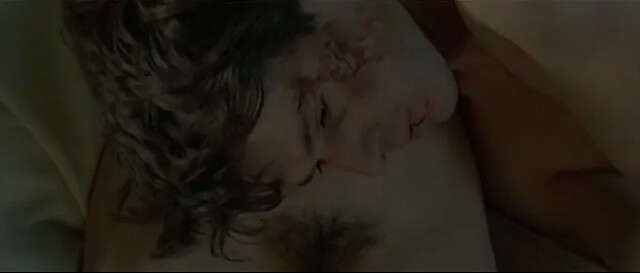
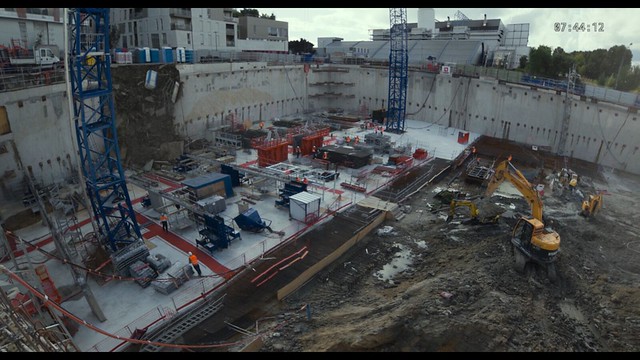
Happy End (2017) - Haneke Screen Shot 2022-06-22 at 7.03.50 AM Screen Shot 2022-06-22 at 7.03.01 AM Screen Shot 2022-06-22 at 7.02.26 AM Screen Shot 2022-06-22 at 7.01.17 AM Screen Shot 2022-06-22 at 6.59.06 AMScreen Shot 2022-06-22 at 6.56.41 AM Screen Shot 2022-06-22 at 7.05.07 AM Unlike its ironic title in Michael Haneke's searing portrayal of bourgeois French family, no one is quite happy with their lives. An aging patriarch of the house Laurent (Jean-Louis Trintignant) is quietly suicidal with his failing body and early Alzheimer’s. His daughter Anne (Isabelle Huppert), the head of the family construction business, is facing a lawsuit by a worker involved in an accident at one of the construction sites, which is shown in CCTV camera in the beginning of the film, and her grown up son Pierre (Franz Rogowski) is not good at anything and not ambitious enough for her despite all the pestering. His son Thomas (Mathieu Kassovitz), a surgeon, is having an illicit sexual affair with a musician while neglecting his second wife and a newborn baby. Then there is Eve (Fantine Harduin), a thirteen-year-old girl from Thomas's first marriage. She comes to live with the Laurents after her mother is hospitalized for poisoning (Eve secretly poisoned her mother and recorded the process on her phone for amusement).

New technologies always figure into Haneke's films and this time around, it's smart phones and the internet. Eve's incessant YouTube watching of very mean boys doing evil things and Thomas's explicit sexting with his mistress which Eve has no problem excessing. The smartphone video footage bookends the film.

Even though everyone's living under the same roof, they are all living their separate, secretive lives and no one's talking to each other about anything, least of all, their feelings. When they try, like Anne confronts Pierre and Thomas does Eve, they miserably fail. The old Laurent drives out of the house in the middle of the night and crashes his car intentionally into a pole with the full intention of killing himself but ends up with a broken ankle and bruises and ends up in a wheelchair. Everyone automatically accepts that the old man is losing his marbles slowly. In this well-mannered 1st world society, everyone is too polite to air their grievances or their problems out loud. They'd rather suffer internally. No dramatics, no heart-to-heart, no sentimentality. It is funny then, that Laurent ends up confiding his dilemma to his old barber in an attempt to get him a gun so he can commit suicide. The horrified barber refuses. OK OK, see you next time. And it's the 1st world/third world, haves/and have-nots dichotomy Haneke utilizes so skillfully: Laurent's long-time caretakers are a Muslim couple. We don't know anything about them other than their very servile attitudes. We don't know if they had a young daughter until she gets mauled by the family German Shepherd.

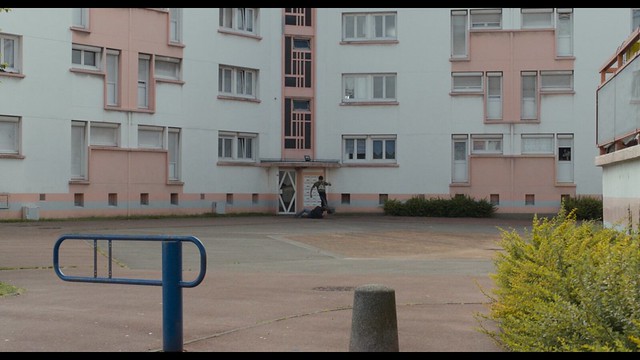
Haneke also uses wordless scenes in wide shots to demonstrate what's lost in translation. Pierre goes to an apartment building where supposedly the victim of the construction accident lives. He is there probably to apologize. But he only gets shit kicked out of him. A group of African immigrants make appearances in two different scenes: one with the old Laurent confronting them in his wheelchair on the street, seemingly bargaining them with his wristwatch for killing him off while a white onlooker mistaking them for thugs harassing an old man. Later, the same group of people show up on Laurent's birthday brought on by Pierre, intentionally trying to make a scene, introducing them to the party guest, as he awkwardly attempts to humanize them. The Laurents are the definition of self-righteous white liberals.

It falls on the old Laurent and Eve to connect over their killing tendencies. He confesses that he suffocated his aging wife in a mercy killing and Eve semi-confesses that she once poisoned her classmate in the camp. In a way, Happy End is a sequel or extension to Haneke's extremely affecting Amour and an affirmation of his advocation for having a choice to end life. Acting is superb all around. Great to see Haneke utilizing the great Franz Rogowski and his physicality here. Rogowski's acrobatic karaoke scene is that of end dancing scene in Beau Travail with Denis Lavant. Good to see Toby Jones as Anne's British love interest as well. But it's the late Trintignant who steals the show. His scene with young Harduin is so good. Bleak in the assessment of our present society which is grooming a generation that lacks empathy, Happy End is in line with such great Haneke films as Code Unknown and Benny's Video and just as strong.

Wednesday, October 8, 2014

Passion for Greatness

Rendez-vous (1985) - Techiné
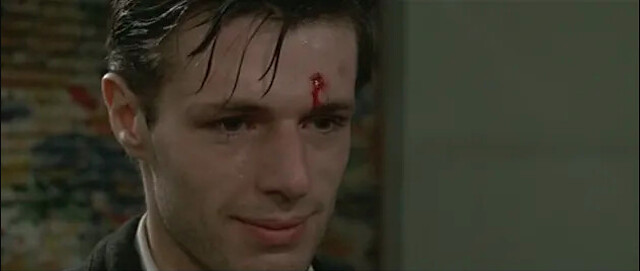
Rendezvous1 Rendezvous2 Rendezvous3 Rendezvous4 Young aspiring stage actress Nina (baby Juliette Binoche) walks into a real estate agency, looking for a cheap apartment. She just got to Paris 3 month ago. She makes a big impression on Paulot (Wadeck Stanczak), a lowly young real estate agent there. He follows her, suggesting a dirt cheap dump that just came in. Lovelorn Paulot accompanies to Nina's apartment where she breaks up with her current boyfriend who warns Paulot of her loose morals. Then Paulot brings her to his flat where he shares with charismatic Quentin (Lambert Wilson) who takes an interest in Nina also. After that encounter, Quentin stalks her with ferocious intensity, taunting her for her short comings as an actress and not knowing what true love means. He's an whirlwind of emotions that Nina didn't ask for, but she can't shake him off easily. Paulot's puppy dog love becomes an obsession and acts out his frustrations/jealousy and angrily at Nina. Then Quentin throws himself under the car.

Enter Quentin's mentor Scrutzler (Jean-Louis Trintignant), a theater director. He had worked with Quentin in his theater production of Romeo and Juliette. Since he's gone, there might not be another production. Nina auditions for the part of Juliette. Once she gets the part, she is having a hard time. How would she know to play the role if she's never been in love? Quentin's ghost haunts her.

Rendez-vous, is a beautiful film about passion. It's also about youth. It sounds like bullshit but in order to be great at whatever you do, you need to experience passionate love. Binoche looks so innocent in this great, breakout role. Top tier Techiné for sure.

Sunday, October 14, 2012

Dignified Death

Amour (2012) - Haneke
amour-haneke
Getting old is an ugly business and seldom a subject for cinema. I can't think of anyone more fitting than Michael Haneke to tackle this uncinematic, almost taboo subject. Amour is a somber and completely unsentimental depiction of a slow, agonizing death of a loved one. An old Parisian couple Georges (Jean-Louis Trintignant) an Anne (Emmanuelle Riva) are first seen at a piano concert among the audience. They are retired music teachers, attending one of their successful pupils' piano recitals. They start as audiences then quickly become our subjects.

A stroke leaves Anne half paralyzed and wheelchair bound and her health steadily declines. Before Anne loses her marbles, the couple serenely talks about their imminent future. She doesn't wish to go back to the hospital ever again. Georges obliges. As her conditions worsen, devoted Georges takes care of his wife 24/7, despite emotional protests from their daughter (Isabelle Huppert). Dying is a grisly, undignified, degrading affair where no one is to blame. Georges is old enough to know this. But the question is this: how much can you take the suffering of your loved one?

 Just like Haneke's other films, Amour is not a film to be enjoyed. Watching it makes you uncomfortable and sad- much sadder than his other films even. It's very straightforward and direct. Shot economically and with no visual flares by Darius Khondji (in their second collaboration), its cinematography takes a backseat to immense performances by the two principals. Riva gives, hands down, the best performance of the year. In her graceful face, you see the remnants of that beauty from Hiroshima Mon Amour- it makes the whole experience all the more devastating. Trintignant too is amazing. There is no music to guide us emotionally, even though they are pianists. It starts and ends in silence. In typical Haneke fashion, watching Amour, you don't get overly emotional, rather, you feel numb. It certainly deserves all the recent accolades.

Monday, April 2, 2012

Being Normal

The Conformist (1970) - Bertolucci *rewatch*
Photobucket
Photobucket
Photobucket
Photobucket
Marcello Clerici (Jean-Louis Trintignant) tries very hard to be normal in Italy in the 30s. This means he will become a perfect petit-bourgeois fascist. He marries a ditzy doll Giulia (Stefania Sandrelli) and takes up an assignment to kill his former teacher, now a political dissent living in Paris. He gets tangled up with beautiful and mysterious Anna (Dominique Sanda), the young wife of his teacher. The fact that Anna is a total opposite of Giulia is the main attraction to Marcello.

Trintinant's cold demeanor and small physique is perfect for the role of a weak willed man who wants to assimilate. On this viewing, it's delightful to find that Giulia and Anna's lesbo alliance has got to do with their bourgeois tendencies whether they are fascists or left-leaning intellectual dissenters against the rise of communism (there is a scene where 'Internationale' is sang by a couple of street flower sellers making underhanded mockery of Marcello and Anna's affair). Also, the inclusion of the party scene of the blinds in the basement was pretty cool. If anything, The Conformist is all style. But all the carefully composed shots last a lot shorter, and editing a lot clunkier than I remember. Marcello's memory of killing a pedophile chauffeur being a stand in for all those who followed war atrocities like a sheep doesn't have that much of an impact.