Monday, August 14, 2023

Synecdoche, Bucharest

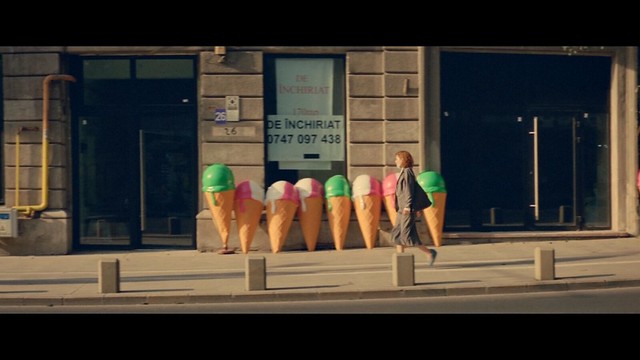
Bad Luck Banging or Loony Porn (2021) - Jude Screen Shot 2023-08-13 at 10.56.35 AM Screen Shot 2023-08-13 at 11.00.11 AM Screen Shot 2023-08-13 at 11.24.05 AM Screen Shot 2023-08-13 at 11.00.40 AM Screen Shot 2023-08-13 at 11.33.25 AM Screen Shot 2023-08-13 at 12.08.55 PM Radu Jude's satire of modern Romania, Bad Luck Banging or Loony Porn is both uproariously funny and biting in its criticism of the former Soviet Block country's checkered history. It starts with an explicit sex scene with a school history teacher, Emi (Patia Pascaríu) and her husband engaging in what appears to be a homemade sextape. Then somehow the whole thing ends up online for everyone to see.

After that, the whole movie is Emi walking around ugly, capitalist modern city of Bucharest, all stressed out for the consequences she has to face. Everything is hilarious, from Pascaíu's performance to Jude's aimless camera, often sidetracked by inanimate objects he pans to - a broken mannequin, a flower growing from the concrete floor, the McDonald sign, the political party posters, etc.

The middle part, titled as 'Collages', playfully goes through all the hypocracies in Romanian political history, vacuous modern culture and sexist stereotypes.

As Emi sits at the table in an impromptu PTA meeting outdoors (because of Covid), she tries to defend her actions as a private matter that somehow got out of hands and into kids' phones. As the meeting continues, the old conspiratorial, ignorant and racist tendencies from the parents reappear to the surface.

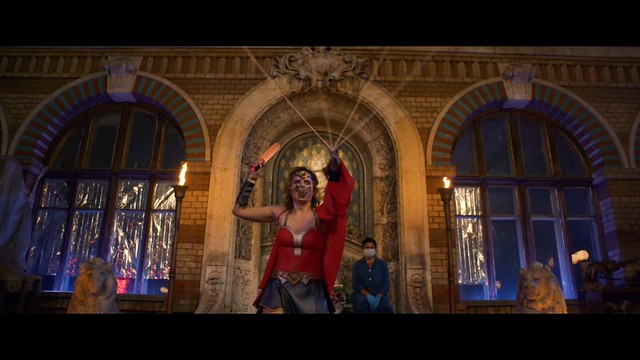
I mean, considering what's going on in Florida, what's happening in Bad Luck Banging is very much universal and on point. Jude's Ci(shit)ty Symphony movie of consumerist Bucharest and in-your-face satire exposing the society’s hypocrisy is, along with Triangle of Sadness and Barbie, one of the best comedies I’ve seen in years. Best Wonder Woman movie too where WW assaults everyone in the room with a dildo!

Saturday, August 12, 2023

Perspectives

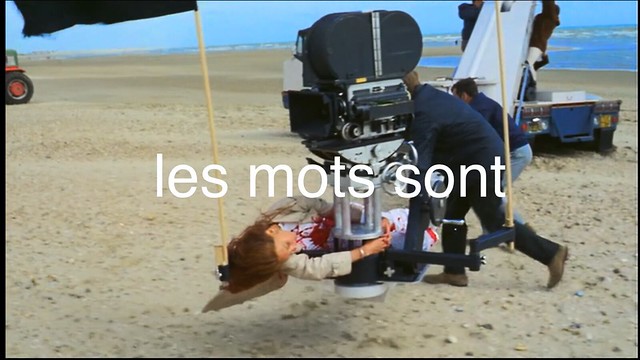
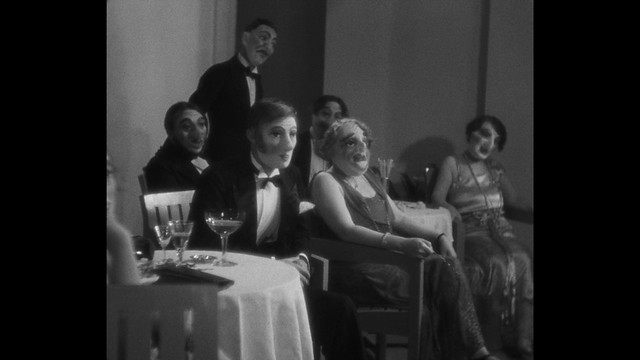
Les Trois Désastres (2013) - Godard Screen Shot 2023-08-11 at 11.57.05 AM Screen Shot 2023-08-11 at 11.59.29 AM Screen Shot 2023-08-11 at 11.55.04 AM Screen Shot 2023-08-11 at 12.07.06 PM Screen Shot 2023-08-11 at 12.05.57 PM Screen Shot 2023-08-11 at 12.04.56 PM Screen Shot 2023-08-11 at 12.04.35 PM Screen Shot 2023-08-11 at 12.01.49 PM Screen Shot 2023-08-11 at 11.58.34 AM Screen Shot 2023-08-11 at 11.58.40 AM Before Goodbye to Language (2014), where Godard embraced 3D as another art form, he participated in 3X3D, omnibus project commissioned by EU. I won’t even mention the other two shorts by other directors because they were terrible. But The Three Disasters, is a continuation of Godard’s contemplation on art and cinema. His wordplays are strong here: des =dice, astres=stars… as if predicting Hollywood’s short romance with the medium (again) as a gamble. “Writing was necessary. Printing was gratification. Digital will be dictatorship.” He drawls in his gravelly voice. He also observes the invention of perspectives in Western art ruined having any depth in content, correlating it to 2D and 3D in cinema. It’s Invigorating 20 minutes as any of his other films.

Thursday, August 10, 2023

Nocturnal Activities

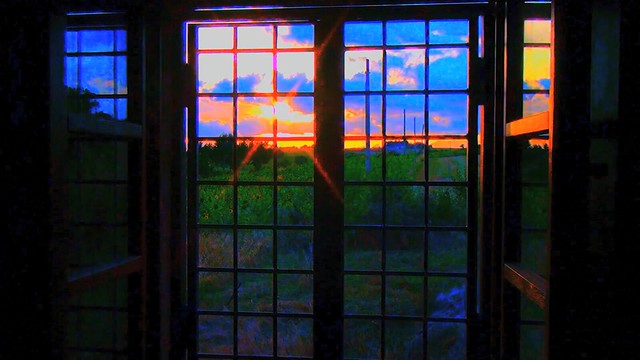
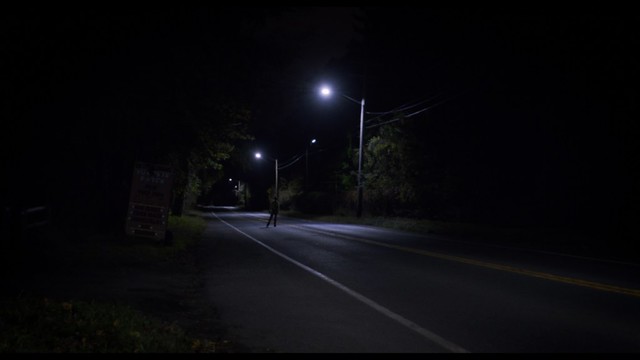
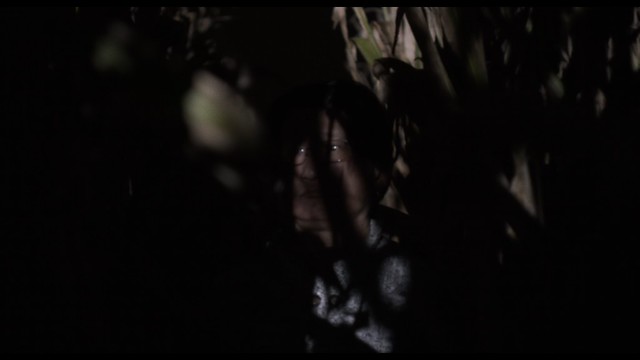
Happer's Comet (2022) - Taormina Screen Shot 2023-08-10 at 8.52.09 AM Screen Shot 2023-08-10 at 8.29.53 AM Screen Shot 2023-08-10 at 10.46.15 AM Screen Shot 2023-08-10 at 8.24.02 AM Screen Shot 2023-08-10 at 10.47.46 AM Screen Shot 2023-08-10 at 10.49.09 AM Screen Shot 2023-08-10 at 9.11.53 AM Screen Shot 2023-08-10 at 9.14.37 AM Tyler Taormina's dialogless film captures the loneliness of American suburbia perfectly. Entirely shot in the devil's hour, we see collages of nocturnal activities of inhabitants of anywhere USA faintly lit by TVs, cell phones and street lamps with soundtracks of insects, distant traffic and rails and music from the radio. The atmosphere is not threatening, rather, it's a comfortable darkness - the one that envelops you like a bath water or warm blanket. It lets personal inhibitions go, it seems, to these people, as they engage in activities such as roller skating/blading without being looked at or judged, and even engage in a cornfield orgies. Happer's Comet would make a great double/triple feature with Chantal Akerman's Toute une nuit and Bas Devos's Ghost Tropic as part of a lovely film series that features films devoted to nighttime.

Wednesday, August 9, 2023

Nouméa

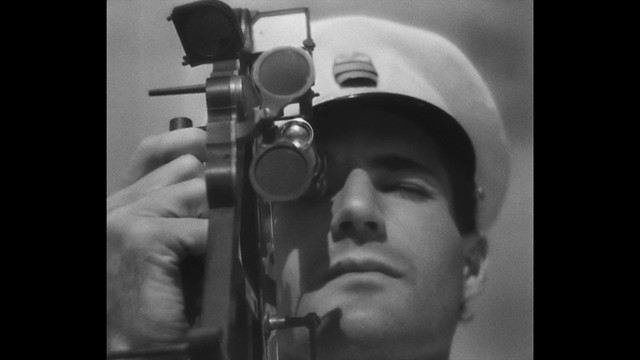
Daïnah la métisse (1932) - Grémillon Screen Shot 2023-08-09 at 12.02.06 PM Screen Shot 2023-08-09 at 12.09.28 PM Screen Shot 2023-08-09 at 12.09.36 PM Screen Shot 2023-08-09 at 12.08.44 PM Screen Shot 2023-08-09 at 12.09.29 PM Screen Shot 2023-08-09 at 12.11.07 PM Screen Shot 2023-08-09 at 12.09.21 PM Screen Shot 2023-08-09 at 12.11.45 PM Screen Shot 2023-08-09 at 12.38.10 PM Screen Shot 2023-08-09 at 1.00.40 PM Screen Shot 2023-08-09 at 12.59.27 PM Screen Shot 2023-08-09 at 1.02.38 PM A murder and racial/class politics in an ocean liner headed to New Caledonia in the South Pacific. Starring stunning Laurence Clavius as a temptress at sea who yearns to be free. Restored from a nitrate negative by Gaumont Pathé Archives in 2018. https://youtu.be/cS2sJWHQdCk

Wednesday, August 2, 2023

Jean Grémillon Restoration x2 at Metrograph

Jean Grémillon, largely overlooked and underrated among poetic realism directors of 1930s in French cinema, finally gets some well-deserved recognition with his two films - Lady Killer and The Strange Mister Victor, from the height of his career, beautifully restored from original negative to 4K by Hiventy and Pathé. New York's Metrograph is giving them a two-week theatrical run in the US for the first time, starting 8/4. With his depiction of complicated human nature and sophisticated technical prowess, Grémillon deserves to be put in the same league with his better known contemporaries, Renoir and Carné. True cinephiles shouldn't miss a chance to see Grémillon films in theaters in pristine conditions like this. Grasshopper is releasing.

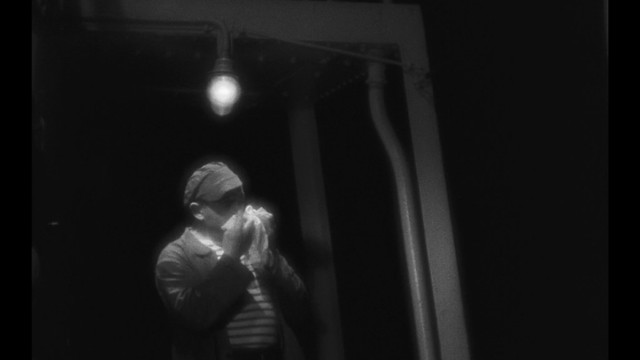
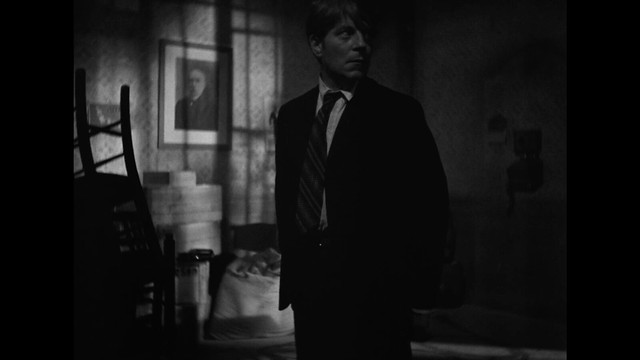
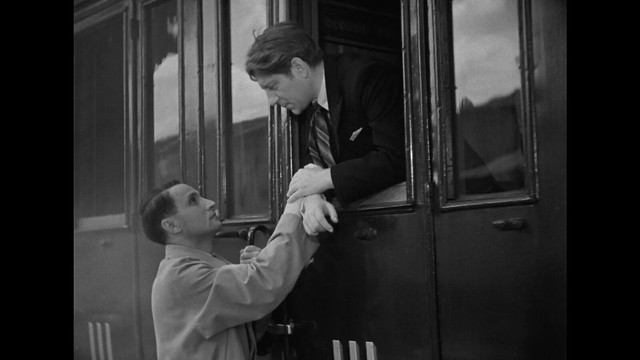
Lady Killer/Gueule d'amour (1937) Screen Shot 2023-07-29 at 9.28.36 AM Screen Shot 2023-07-29 at 9.36.08 AM Screen Shot 2023-07-29 at 11.15.08 AM Screen Shot 2023-07-30 at 4.33.53 PM Screen Shot 2023-07-30 at 5.32.19 PM Screen Shot 2023-07-30 at 5.47.45 PM Screen Shot 2023-07-30 at 5.55.31 PM Screen Shot 2023-07-30 at 5.56.02 PM Screen Shot 2023-07-30 at 5.59.57 PM In the tradition of a fatalistic romance, Lady Killer features the biggest heartthrob at the time, Jean Gabin, playing a soldier named Bourrache, stationed in Orange, Southern France. Because of his good looks and charm, he's known by his nickname, Gueule d'amour/lady killer among local women. The story takes a turn when Bourrache meets Madelene (Mirielle Balin), a high-society Parisian girl in Cannes, where he lends her money that he just inherited from a relative, at the casino, which she subsequently blows at the gambling den. Then she ditches him. This is the first time a woman did that to him and he can't forget her. After being discharged from the military, he looks her up in Paris, only to be seduced dumped, when confronted by her rich, old benefactor. Dejected and heartbroken, Burrache moves back to Orange and opens up a little bistro and leads a simple country life. Then Madelene appears again, tracking him down by seducing his army doctor friend to find his whereabouts. She turns out to be a archetypal femme fatale, a controlling monster one loves to hate.

Working with German cinematographer Günther Rittau (Metropolis), Lady Killer has some impressive shadowplay recalling German Expressionism. It should also be noted that Lady Killer reflects the sentiment of France at the eve of WWII - public's penchant for men in uniform (Fascism), decent, ordinary men being corrupted by decadence (Capitalism, consumerism).

The Strange Mister Victor (1938) Screen Shot 2023-08-01 at 8.08.10 AM Screen Shot 2023-08-01 at 8.34.57 AM Screen Shot 2023-08-01 at 8.35.15 AM Screen Shot 2023-08-01 at 8.38.56 AM On the surface, Victor Agardanne (Raimu) is an upstanding citizen of Toulon, a bustling port city in Southern France. He is a gregarious and bumbling man, who owns a successful general store. But he is in cahoots with criminals who've been making the local newspaper headlines with a series of violent robberies. After one of the robbers, Amédée, threatens Agardanne with blackmail, Victor kills him with a local cobbler's tool. Bastien the cobbler, gets convicted of a crime and gets 10 years of hard labor in the penal colony.

7 years have passed, Bastien escapes the colony only to come back to Toulon to see his young son. Guilt ridden Victor, has not been the same person as before - moody and irritable to his long suffering wife Madeleine and his young son, hides Bastien from the authorities at his home while playing a good hearted protector, who insists on the innocence of the fugitive. With Amédée's associates and authorities on his trail, Victor and Bastien will need to figure their way out.

The Strange Mister Victor is a taut morality tale with great characters all around. Great character actor and comedian Raimu shines as the title character with great range and humanity. Again, Grémillon shows his skills in sketching out the details of the locale and characters as well as balancing the mood of the film from comedic moments to thriller elements.

4K transfer is done from its original nitrate negative and other sources for The Strange Mister Victor in 2020 by Pathé and its lively city symphony of Toulon in the beginning is gorgeous to look at. Review of Grémillon's Remorques

Tuesday, August 1, 2023

Reflections Yet to Come

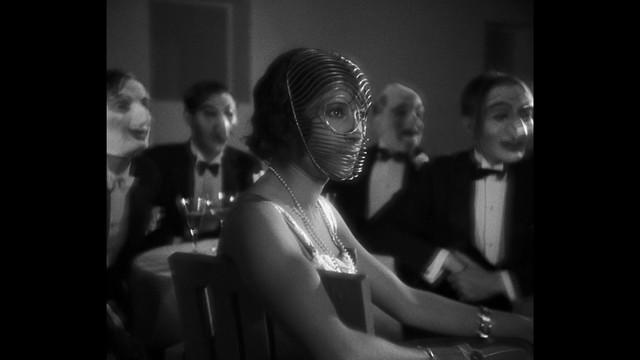
Passages (2023) - Sachs Ira Sachs’ PASSAGES Still 2 - Adèle Exarchopoulos and Franz Rogowski – Courtesy MUBI Past experiences shape who we are. It's the reflection of the things past that makes one grow as a person. Therefore, Ira Sachs's new film Passages, is a snapshot of a person going through that process of growth, for better or worse. It's a mature film in more ways than one and a realistic look at modern relationships. Passages highlights the true acting talent of great German actor Franz Rogowski (Transit, Undine, Great Freedom) because he is phenomenal in this sexually charged character study. Taking place in Paris, the film is about a love triangle among three very attractive people; there's Tomas (Rogowski), a German film director, his studious English husband Martin (Ben Whishaw) who owns a high end commercial print shop and a young school teacher Agathe (Adèle Axarchopolous, Blue is the Warmest Color, Five Devils).

Rogowski's Tomas, in his boyish looks and permanent lisp in any language he speaks, exudes a certain vulnerability that is quite irresistible. Tomas is first seen on a movie set, directing actors in English, asking an actor to walk down the stairs over and over again, dictating every movement. This intro gives an impression that he is a difficult person to deal with. At the wrap party for the film at a bar, Martin gets bored and leaves early. Tomas meets Agathe who also worked on set as a still photographer. Hooking up with a woman is a whole new experience for Tomas. And rightly, as soon as he tells Martin, jealous Martin packs his bag and leaves.

Over the course of the film, Tomas vacillates between Martin and Agathe - between the world of comfort and security, and newfound desires and possible parenthood. He is a self-absorbed artist who manipulates others' feelings for fulfilling his desires, only at his convenience.

Sachs, along with two other writers- Mauricio Zacharias (Keep the Lights On) and French arthouse veteran Arlette Langmann (A nos amours, Jean de Florette), keeps things real and guards Passages from falling into old style, cliché ridden melodrama. Martin is not a downtrodden house-wife by any means. He is a realist of the pair and a pragmatic one and won't take Tomas's bullshit when he sees it. So is Agathe, a tough school teacher, who is no pushover. But they often find themselves in situations where they can resist Tomas's undeniable magnetism and sex appeal.

And the sex scenes- both gay and straight are pretty steamy. Whether it's perfectly toned Whishaw's backside, or Axarchopolous's voluptuous body, or Rogowski's athletic, dancer-trained taut muscles underneath a see-through fishnet shirt, all very frankly and naturally depicted. There's definitely something for everyone in Passages.

As Tomas digs himself a hole over and over again, he finds himself rejected and alone. And it provides the film's most exhilarating and contemplative scene: a long tracking shot of Tomas riding a bicycle through the streets of Paris in a tux with a faux-fur coat. He wears a somber expression with Albert Ayler's upbeat Spirits Rejoice blaring. Did he learn anything from these experiences or is he the same self-centered boy as before? Is he determined to be a better person to everyone around him? As the title suggests, it's the passages we go through in life that benefit us. It might not hit Tomas right away what it all means, but it will eventually hit him down the road and grow up.

I really hope Rogowski gets the international recognition he really deserves with this film. He is a real deal.

Monday, July 24, 2023

Japan Cuts 2023 Preview

Japan Society's Japan Cuts: The Festival of New Japanese Film is back in its 16th year. It marks the first all in-person festival since 2019! From July 26-Aug 6, this year’s festival features over 25 films from major blockbusters to indie darlings, spanning narratives, documentaries, experimental and short films, and anime! This year’s festival features five International Premieres, 10 North American Premieres, seven U.S. Premieres, three East Coast Premieres, and three New York Premieres! Japan Cuts will also welcome six special guests and host two parties!

Leading this year’s guests, JAPAN CUTS has the honor of presenting acclaimed actor Yuya Yagira with the 2023 CUT ABOVE Award for Outstanding Achievement in Film for his role in Under The Turquoise Sky by director KENTARO.

Here are some unique and outstanding films I was able to preview:

The First Slam Dunk - Inoue SLAM_Image2 The wildly popular manga-turned-TV anime series Slam Dunk creator Inoue Takehiko finally comes up with The First Slam Dunk, a feature length anime about a high stakes final game in high school basketball tournament and its players. Using both 3DCG and 2D animation, Inoue creates tense, poignant sports film that is thoroughly enjoyable. It starts with Miyagi Ryota, a short kid from Okinawa who loses his mentor brother and becoming a point guard for the Shohoku high school team against unbeatable reigning champs, the Sannoh. Inoue wastes no time and throws us into the final game as the ragtag underdogs beating against all odds and turning the apathetic spectators around their sides with their tenacity and sheer will power. Other than Miyagi, there is the team's power forward loose cannon Sakuragi (the red head main protagonist in Slam Dunk manga series), Hisashi, shooting guard, Rukawa, small forward, and Akagi, the long-suffering captain and center. Each gets his own limelight and backstory. But it's the game itself that is exciting to watch - at one point down 20 points, the Shohoku team seems helpless and in the midpoint of the film. Then it catches fire as it plays out with some crazy play by play as their scores seesaw back and forth - the time elongates as the tension builds to the final moment of the game. And what a beautiful game it is! The First Slam Dunk is much less juvenile than its origins. It's not about playing basketball to be cool or get girls. Girls are on the sidelines. It's all about the game and it's exciting.

Under the Turquoise Sky - Kentaro sky3 Amraa, a Mongolian horse thief is first seen stealing a horse from a stable and riding through Tokyo city scape. He is soon apprehended by authorities. It turns out the horse belongs to an aging business tycoon Saburo. In turn, Saburo makes a deal with the Mongolian: take his spoiled, womanizing grandson Takeshi (Yagira Yuya, the youngest recipient of top acting winner at Cannes for Kore-eda's Nobody Knows in 2004) to Mongolia and find his long-lost daughter that he sired with a Mongolian woman when he was stationed there in WW2. So begins an unlikely journey Under the Turquoise Sky, driving through the breathtaking steppe landscape of Mongolia. Without much dialog, director Kentaro paints the picture with broad strokes, peppered with magic realism and visual poetry. This leisurely paced, Jarmusch-ite road trip movie has its charm. Amraa, a Mongolian horse thief is first seen stealing a horse from a stable and riding through Tokyo city scape. He is soon apprehended by authorities. It turns out the horse belongs to an aging business tycoon Saburo. In turn, Saburo makes a deal with the Mongolian: take his spoiled, womanizing grandson Takeshi (Yagira Yuya, the youngest recipient of top acting winner at Cannes for Kore-eda's Nobody Knows in 2004) to Mongolia and find his long-lost daughter that he sired with a Mongolian woman when he was stationed there in WW2. So begins an unlikely journey Under the Turquoise Sky, driving through the breathtaking steppe landscape of Mongolia. Without much dialog, director Kentaro paints the picture with broad strokes, peppered with magic realism and visual poetry. This leisurely paced, Jarmusch-ite road trip movie has its charm.

From the End of the World - Kiriya From the End of the World Kiriya Kazuaki (Casshern, The Last Knights) directs a low budget time traveling tale where a high school girl's recurring dreams of marauding samurais in medieval Japan may hold a key to survival of mankind from apocalypse. After her grandmother's death, 17-year-old lonely high school girl Hana (Ito Aoi), is giving up on her dream of being cosmetologist, to support herself by working at a bar. She is soon visited by a secret government official who seem to be very interested in what she's dreaming. It turns out the world is ending in two weeks and only her dreams can alter the outcome of the book which contains the humanity's fate. Navigating between reality and dreams, Hana must save Yuki, a little girl in her dream, from a menacing, time traveling samurai (Kitamura Kazuki, letting his eyebrow to do the talking as usual). The convoluted script resembles typical 'end of the world' manga premises, From the End of the World depends too much on lengthy explanation, but Kiriya's energetic DIY style (DP, Kanbe Chigi) camera movement and digitized color palette make an enjoyable two-hour ride.

Amiko - Morii Amiko A remarkable directorial debut of Morii Yusuke, based on a book Kochira Amiko (Look Here Amiko) by Imamura Natsuko, Amiko tells an oddball grade schooler (Osawa Kana) living in a small seaside town. She lives with her parents and her older brother. She has tendency to obsess over small things around her life - a big mole on her mom's chin, a neighborhood boy named Nori who's in the same class, various animals and insects that share her immediate, rural environment. She is an enthusiastic, high-energy child with wild imaginations. But she is sometimes too much for everyone around her. Unbeknownst to Amiko, life takes a darker turn as her mom's miscarriage reverberates throughout her family - mom's postpartum depression takes a toll on her mental health, her father is more absent-minded, and her brother becomes a raging juvenile delinquent.

Young Kana's wide-eyed wild child is a revelation, embodying Amiko who doesn't understand the consequence of her actions and tragedies that befall in life, obviously, because she is just a child. Morii captures all this in constant close-up of Kana's round, adorable face. It's a remarkable, heartbreaking unusual film about growing up.

Hand - Matsui te Hand - Matsui Sawako (Fukunaga Akari), a twenty-something office worker has a fetish for old men. She collects photos of old men taken on the street in a series of scrap books named "Happy Old Men," like schoolgirls collects pictures of cute animals. She thinks the snapshots of their content-with-life expressions and their bald spots and portly figures adorable. She gets a lot of attention from older men as well, but she observes that they tend to treat her like a little girl when they are alone. At home, her father prefers to interact with mom and her younger sister who's still in high school. It seems that her father doesn't quite know how to behave around his grown up daughter. Sawako starts an intense physical relationship with a former co-worker Koichi whom she confesses her love. But it turns out that he is in another relationship. Unwanted at home, and heartbroken with her lover, Sawako reassesses her adulthood. Conceived as a Roman Porno revival project by Nikkatsu Studio, Matsui Daigo (Japanese Girls Never Die) directs Hand. Yes, it abides by the Roman Porno rules (low budget, shot in a week with sex scene every 10 minutes). But the film is an exceptionally well written poignant, intimate relationship drama that gently approaches father-daughter relationship. Hand is a great little film which shows you that the spirit of Japanese indie film scene is alive and well.