Showing posts with label Christian Mungiu. Show all posts

Thursday, December 8, 2016

Romanian Rhapsody

Bacalaureat/Graduation (2016) - Mungiu
Screen Shot 2016-12-08 at 11.03.48 AM
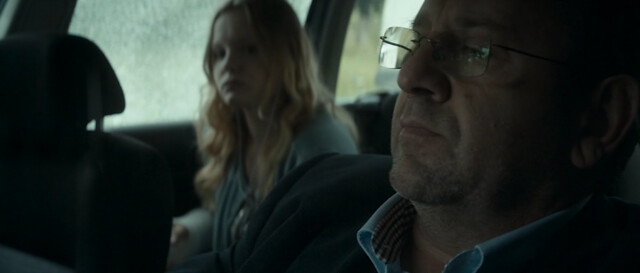
If nothing else, Romanian New Wave has shown that it excels at acute observations on ordinary people navigating through a chronically depressed, highly bureaucratic country- a society strewn with broken promises of capitalism after the collapse of communism. Christian Mungiu, once again, sharply yet subtly illustrates one such case with Bacalaureat. Romeo (Adrian Titieni), a medical doctor, sees his life unraveling before his eyes - having an affair with one of his patients (a single mom school employee) put a strain on his marriage (been sleeping on the couch for a year and a half), his frail old mother has fainting spells due to brain aneurism, so naturally, he puts all his hope on his pretty daughter Eliza getting a good education. Since Romania is so helpless, he is pushing hard for Eliza to go to England to get educated. In order to get a scholarship to go to overseas, she needs to ace Bacalaureat exam, a series of tests at the end of the High School year. But on the way to school one day, Eliza gets sexually assaulted by an escaped convict in a broad daylight. Visibly shaken and disturbed, she doesn't do well on the test next day. Considering all the circumstances, Romeo decides to ask for help of his police chief friend, not only for arresting the attacker of his daughter, but to 'fix' Eliza's test scores. The cop suggests a man in some higher level position in government, who needs a liver transplant. Can Romeo do anything about moving him up on the list of people in waiting ?

This doing favor in return thing and pulling strings in the system get entangled and awkward really quickly. Magda, the long suffering wife, thinks it goes against everything they taught their daughter but doesn't do anything about it since he has been always the doer/decider. To complicate matters even more, her biker boyfriend in town, Eliza also has second thoughts about going to England.

Romeo puts it grimly about the state of the country: he tells Eliza that he and mom decided to stay because they were hopeful but nothing had changed since then. That they tried but failed to move a mountain. That there is no future for the younger generation. And that she deserves better. He even tries (in vain) to revenge his daughter by following one of the suspects. He cries over the dog he ran over with his car. He tries to do right by the women in his life but life keeps throwing curve balls at him.

Bacalaureat draws Romeo's dilemma as a father, as a man, as a Romanian really well. It's an amazingly scripted film that contains all the nuances of the sticky human existence.

Thursday, March 7, 2013

Beyond Exorcism

Beyond the Hills (2012) - Mungiu
beyond the hills photo 034e2ef6-dfec-4693-b222-ba14b7d483af_zps7182a6c5.jpg
Christian Mungiu, the leading figure of Romanian New Wave, strikes again with Beyond the Hills. Just like his Palme d'Or winner 4 Months, 3 Weeks and 2 Days, which elevated a rather unpleasant subject matter (illegal abortion) into a dizzying, tension-filled masterpiece, here he manages to make something greater out of an exorcism-gone-horribly-wrong story based on a true event. Mungiu again proves to be a gifted storyteller and a great tension builder. He is also masterful at presenting nuanced human interactions.

The film takes place in a small remote Romanian monastery in the hills. A young nun named Voichita (Cosmina Stratan) reunites with her childhood friend Alina (Cristina Flutur) from their orphanage days after a long separation. Alina, emotionally stunted of the two, having been living in Germany alone for a long time, is determined to reclaim her long time love. But Voichita's world is now all about God and prayers, living without worldly attachment. Indeed, affectionately calling the head priest and Mother Superior papa and mama, she calls the electricity-less orthodox monastery her true home now.

After throwing an emotional tantrum and trying to throw herself into a well, Alina spends a night at a crowded local hospital. If she can't run away with Voichita, then she will join in. The priest insists on telling her that the monastic life is not fit for a person with human desires and monetary attachment, not noticing the seriousness of the girl's obsessive love for her best friend. Things escalate to a point where the esteemed priest is pressured to perform a sort of exorcism to rid the evil spirit from hysterical Alina, followed by the grisly aftermath. These nuns and the priest are not bad people and have the best of intentions in their hearts. But with the old rules they follow and their conduct for 'curing' the emotionally disturbed, they are still stuck in the Middle Ages. 

In Mungiu's films, Romania is a country full of contradictions where the past and the present precariously co-exist side by side. None are more pronounceable than one scene at the hospital where unsympathetic, overworked staff collide with the priest and nuns. In another scene, two arresting officers make small talk about a boy stabbing his mother to death in the presence of hushed nuns in a paddy wagon on the way to the police station. 

With great performances all around, Beyond the Hills is an emotionally exhausting experience. Even with a running time of 2 1/2 hours, the film succeeds in holding your attention from beginning to end with unrelenting tension. Stratan and Flutur deservedly shared the Best Actress honors for their portrayals, and Mungiu took home Best Screenplay award at last year's Cannes film festival.

Beyond the Hills has a limited release in theaters on March 8 and VOD on March 14. Please visit Sundance Selects website for more info.

Sunday, March 3, 2013

Frumpy Life

4 Months, 3 Weeks and 2 Days (2007) - Mungiu
4 months, 3 weeks, 2 days photo 1cb8c158-187a-4636-93d7-3197a4c58437_zps22c316b4.jpg
4 Months tells a story about Otilia (Anamaria Marinca), a college student, who is trying to help out her roommate Gabita (Laura Vasiliu) getting a sketchy illegal abortion. The messy, frumpy dorm life is presented matter of factly. There are class tensions and general hopelessness of living under communist regime. The acting is superb, so as layered interactions among the film's inhabitants. Christian Mungiu is a gifted storyteller. He also understands nitty-grittiness of everyday lives of his characters. It doesn't really matter whether his film takes place in the 80s under Ceausescu regime or in a monastery in a present day, there is always that unmistakable immediacy and urgency present- with the help of natural, handheld tracking shots and long takes throughout. And thankfully, Mungiu is not quick to judge his characters decisions or faults nor is he interested in being didactic. These judgment calls young people make under difficult circumstances are all relatable one way or another. He is very good at humanizing their faults but also great at not overly emphasizing heroism that only happens in movies. Hey, if Otilia was my girl, she's alright by me.