Showing posts with label Dennis Hopper. Show all posts

Friday, January 23, 2026

Use Your Illusion

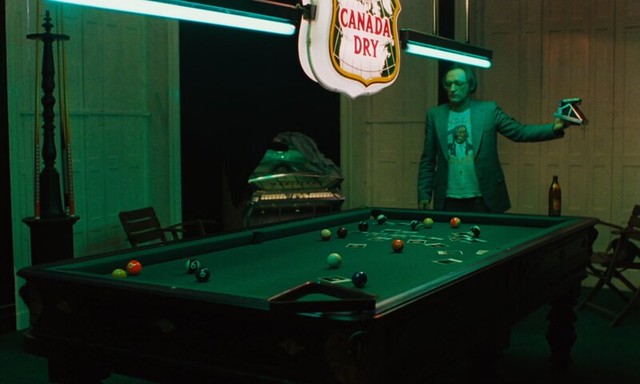
The Last Movie (1971) - Hopper Screenshot 2026-01-16 at 2.10.39 PM Screenshot 2026-01-16 at 1.48.53 PM Screenshot 2026-01-16 at 1.54.18 PM Screenshot 2026-01-16 at 2.09.12 PM Screenshot 2026-01-16 at 2.15.29 PM Screenshot 2026-01-16 at 1.52.58 PM Screenshot 2026-01-16 at 1.40.47 PM Screen Shot 2026-01-23 at 4.54.26 AM Screen Shot 2026-01-23 at 4.59.44 AM Screen Shot 2026-01-23 at 4.57.44 AM Screen Shot 2026-01-23 at 4.56.15 AM Screen Shot 2026-01-23 at 5.00.38 AM After the success of Easy Rider (1969), a movie which defined the counterculture/hippie generation, the Universal Pictures gave Dennis Hopper a carte blanche to make a new movie, fully expecting another hit with the youth audience. But what they got was jumbled, incomprehensible mess, a movie only a heavily drugged, highly egotistical Hollywood actor could dream of. The Last Movie has all the hallmarks of an ambitious and masculin epic possible-only-in-the-70s' feel to it - the exotic locations (shot in the high mountains of Peru), large sprawling cast including thousands of local extras, grand theme (film aping real life aping film) and recalls more successful, better articulated films of its day- Aguirre: the Wrath of God, El Topo, Heaven's Gate, The Days of the Locusts, etc.

The film 'loosely' tells the story of a Hollywood Stuntman Kansas (Hopper) doing stunt work on the set of a Hollywood western production, directed by Sam Fuller, up in the Andes. After the production ends and everyone goes back home, Kansas remains and shacks up with a local girl, Maria (Stella Garcia) and dreaming of having a good life - a house on the hills, with a swimming pool perhaps. His real motivations to stay is never clear.

In the meantime, there is a cult-like local group, unhealthily influenced by the presence of a Hollywood production, starts reenacting a movie production of their own, with cameras, lights and boom made out of sticks and firecrackers, and using real violence because they don't understand that the filmmaking process is fakery. The local priest (Thomas Milian) is not too pleased about it. It's a devil's doing, he says.

Kansas with his friend Neville (Don Gordon) try to suck up to Anderson, a rich, sleazy business owner and his bored lusty wife, for their expedition to find gold, and gets tangled up in sexual escapades, much to the distress of Maria.

As Kansas gets swepted up in the locals' 'movie production', he really gets hurt and is bedridden. But is it his drug filled imagination or is it real? With the non-linear narrative and no definite ending, it is up to the audience to decide.

Studded with appearance by Hopper's friends - Peter Fonda, Fuller, Kris Kristopherson, Toni Basil and the like, and heady with the metaphors for filmmaking, the US cultural colonialism and jump cuts and "scene missing" title cards, The Last Movie is full of grand ideas and stunning scenery (shot by László Kovács) but doesn't come together coherently. Panned by the critics, and its failure at the box office pushed out Hopper to an exile from Hollywood for a dacade after this film.

Wednesday, May 30, 2018

A Love Letter to American Cinema

The American Friend (1977) - Wenders
Screen Shot 2018-05-30 at 9.55.16 PM
Screen Shot 2018-05-30 at 9.41.44 PM
Screen Shot 2018-05-30 at 9.58.23 PM
Screen Shot 2018-05-30 at 9.55.50 PM
Screen Shot 2018-05-30 at 9.48.37 PM
Screen Shot 2018-05-30 at 9.56.52 PM
Unlike a lil sociopath playing elaborate games in Patricia Highsmith's novels, in Wenders's hands, Ripley is a quiet enabler, trying to stir shit up from a distance because someone stiffed him. But he is no less psychologically complex here. With all his American director heroes making a cameo - Nicolas Ray and Sam Fuller, admired for their hard hitting noirs and under-appreciation stateside, I'm sure, The American Friend is Wenders's thinly veiled love letter to American cinema.

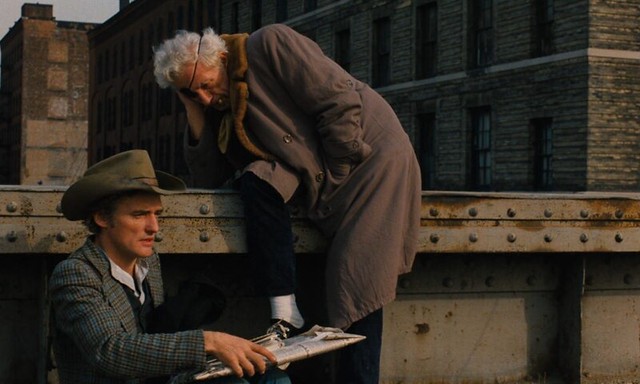
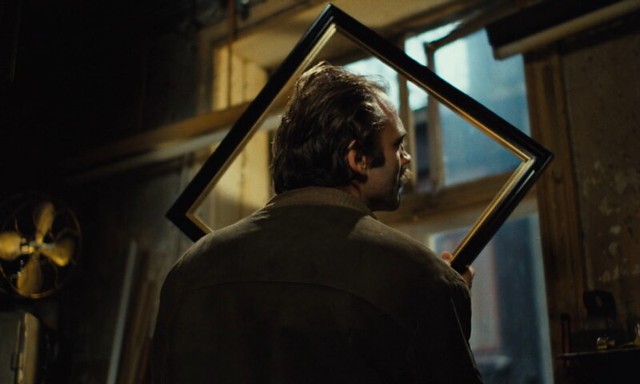
Jonathan Zimmermann (Bruno Ganz) is a soft spoken, picture framer/art restorer leading quiet life in Hamburg with his wife and son. He has a rare blood disease that he regularly visits his doctor for. He invites the ire of Ripley (Dennis Hopper), a cowboy hat wearing American con-man, when he disses him (wouldn't shake his hand) at an art auction where Ripley is selling one of the counterfeit paintings (painted by Nick Ray in Manhattan studio). In revenge, Ripley and a French gangster Minot (Gérard Blain) starts a rumor that Zimmermann's health is serious and don't have long to live.

Freaked out by his health concerns, he reluctantly accepts Minot's proposal - killing a couple of no good gangsters from New York for large sum of money for his soon to be widowed wife and fatherless son. The following Paris underground subway assassination sequence is thrilling to watch.

The killing takes a toll on mild mannered Zimmermann, physically and emotionally and when he's forced to do it again, this time in a moving train in Munich, Ripley, who's been mumbling, questioning himself who he really is, decides to help Zimmermann to be his friends.

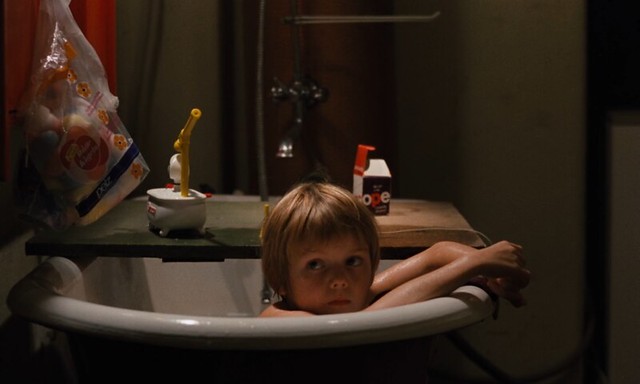
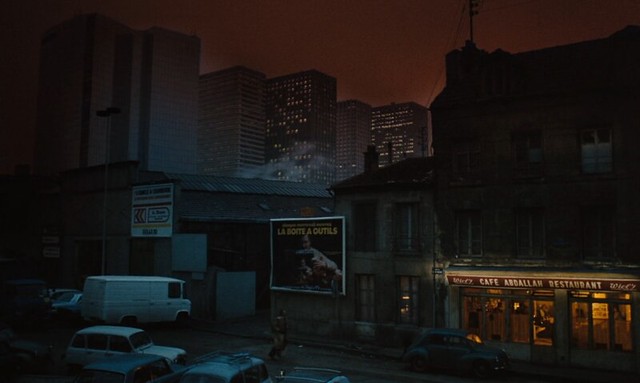
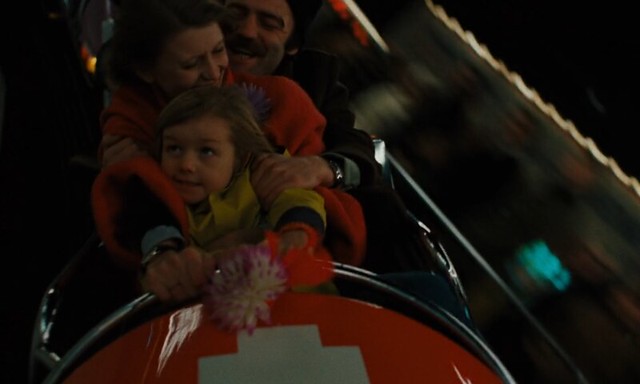
The plot line makes little sense but it's Robbie Müller's cinematography that really shines here. It's all about mood and atmosphere - Zimmermann's childlike red and white stripe scarf pops, red Voxwagon Beatle glows, dingy green flourecent lights adds character indoors, and soft crushed blacks and oranges are all gorgeous. With Fuller and Ray playing dangerous seedy characters, you can easily guess the romantic notion of gangsterism and its thrill equal American movies in the mind of impressionable German director. Ripley in a cowboy hat is the instigator who plants the seeds in an unsuspecting German man, but he himself can't avoid jumping in the action because it's so fun in the end.

I do not have a reference point here since I have not seen Wenders's 70s movies before they were restored. But along with Wrong Move, The American Friend is one of the most beautiful color film I've seen. It's like William Eggleston photographs reversal, saturatated Kodachrome photos. Bright, warm and gentle. I don't know if those were enhanced since it was shown in theaters in film print. But it's up there with A Woman is a Woman in terms of beauty.