Showing posts with label Japan Cuts 2020. Show all posts

Monday, July 20, 2020

A Generation Under Siege

Sacrifice (2020) - Tsuboi
Sacrifice
The Great Eastern Japan Earthquake of 11th of March 2011, which took the lives of 15,000, seared deeply into collective Japanese psyche. There have been films dealing with the aftermath of the disaster and manifested into popular culture in myriad of ways since then. But after less than a decade since the incident that affected millions of lives, its full psychological impact is still to be seen. Tsuboi Taku, who as a film student, worked on set of Kurosawa Kiyoshi's Journey to the Shore, as a second AD, makes a strong debut feature with Sacrifice, an understated, atmospheric thriller/murder mystery concerning the aftermath of such monumental tragedy and its effects on young people. Here he shows a great deal of potential as a writer/director.

The devastating earthquake and ensuing Tsunami happened 7 years ago when Midori (Gomi Michiko) was in middle school. She was known as Ap, her Sanskrit name back then. She belonged to a cult called Sacred Tide where its members believed a great tidal wave would purify the earth once again. She was a special child because of her ability to predict the future, as she did about the Great Eastern Japan Earthquake. But she escaped from the cult, in the hopes to have a normal life.

Now Midori is a college student and there's serial cat killer on the loose near the campus. The killer also claimed the life of Sora, her friend from her cult days. Toko (Handa Miki), an inquisitive fellow student, is determined to track down the killer and she suspects a quiet outcast named Okita (Aoki Yuzu) after she finds photos of gruesome cat killings in his possession. Toko is dating a good-natured senior Masaya (Fujita Kosuke), who is busy job hunting.

The cult is disbanded now but it morphed into a black-ops style private military firm, actively recruiting students on campus and scaring the general populace with their camo outfit and close to the skin haircuts. They want Midori back for her clairvoyant ability.

After Okita rescues Midori from threats made by a military man, they team up to find the killer. Okita suspects the cat killings are related to the date of the disaster, 3/11, that the killings won't stop until there are 311 victims that it is somewhat ritualistic in nature.

Reflecting the mood of the nation ailing from economic downturn and natural disasters, Sacrifice touches upon the collective anxiety of the young generation: students are faced with grim prospects of depressed job market after they graduate. They openly joke about their lack of interpersonal skills at job interviews. Some find the private military firm an attractive alternative even though the news of captured Japanese solders overseas constantly blaring on TV.

The film's visual style - large public places, an abandoned factory, the use of wide shots and effective framing, all for the benefit of generating eerie and atmospheric tone, are reminiscent of seasoned contemporaries - Kurosawa Kiyoshi, Tsukamoto Shinya and Ishii Gakuryu, just name a few. Sometimes the run-on exposition heavy dialog feels a little too much for the young cast to handle and wish he could've relied on his visuals to do the talking. But overall, Sacrifice is a brooding examination of a generation under siege by the catastrophe which they still struggle to understand its full impact.

Sacrifice exclusively streams as part of Japan Cuts 2020, July 17 - July 30. Please visit Japan Society website for tickets.

Saturday, July 18, 2020

Humanity in Lower Depths

Life: Untitled (2019) - Yamada
Life untitled
One can't go without mentioning Mizoguchi's superb melodrama, Street of Shame (1959), when we talk about films about sex workers. Like Street of Shame, where there were 5 different individuals with their own stories to tell, Yamada Kana's Life: Untitled manages to tell a group of people, men and women, engaged in a ramshackled escort business. Adapting her own play in her debut film, Yamada weaves stories of empowerment, identity, misogyny, gender roles and how bottled up sadness and anger materialize in the form of sociopathic behavior and violence. She also shows wealth of humanity in each character and brings out compassion and understanding. Not unlike Mizoguchi's film, Life: Untitled is a deeply moving film and sympathetic look at the world's oldest profession in modern Japan.

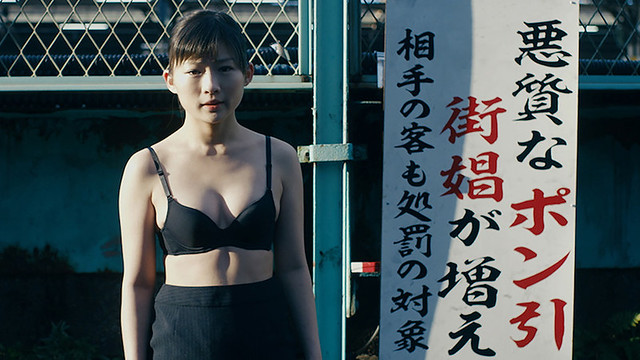
The film starts with Kano (Ito Sairi)'s voice over: she is a girl tired of leading ordinary life and down on her luck. She wants to give her life meaning, somehow. Then she ends up interviewing for a job at an escort service run by ruthless Yamashita. Kano has absolutely no qualifications for the job, as far as her resume is concerned. But she is up for anything, ready to challenge herself. But on her first assignment, Kano is grossed out by a horny client, fights him off in the hotel room and runs out to the street with only her bra on. After that, she is assigned to an office duty. She then becomes the fly on the wall for us.

The office, where girls hang out while waiting to be called and interact with each other, becomes a main stage for Life: Untitled. There is Mahiru (Tsukematsu Yuri), an always smiling, sweet girl and clients' favorite, Atsuko (Satsukawa Aimi), who always whines and complains, Kyoko (Morita Kokoro) who is helplessly in love with brutish Ryota, the company driver, Shiho (Nozaki Tomoko), an older woman who keeps to herself and Chika (Yukihira Aika), a loner who scribbles in her diaries in the corner everyday. They all have part of their stories played out.

Girls gaggle and play around in the office but also tempers fly for the smallest things. As with any profession, there are good sides and bad sides. With their profession, it's how well they keep its depressing bad side hidden to function. There are emotional blow-ups and threat of violence. Things boil up to the surface.

There are many poignant moments but the most touching episodes are one with Kyoko and Ryota, no matter how much he abuses her, Kyoko sees through Ryota's tough guy façade and sees him for what he is, a scared little boy who needs to be taken care of. It shows Kyoko isn't some mindless prostitute with masochistic tendency but sees in him the exact same qualities as herself, that they are made for each other. It's real pleasure to see their transforming relationship through out. Another is smiling Mahiro. Her sweet girl façade hides the sadness inside her and brings out pyromaniac in her. She wants to burn the whole Tokyo to the ground. She wants to burn it all down. Catharses small and big for these characters are movingly captured near the end, like a collective therapy session, reminding you of the ending sequence in Kieslowski's Blue, where camera hovers on each characters' lives.

Ito Sairi with her small figure with an improbably husky voice is a force to reckon with. Her physicality and presence anchors the film from hurtling away with multiple storylines. As well as being our eyes and ears, she stands firm as the moral core of the film, quietly managing everyone around her and brings out their stories.

Life: Untitled, with superb acting and energetic direction, reflects on the bittersweet lives of these affable characters on the bottom rung of the society. Highly recommended.

Japan Cuts 2020 is streaming this year! For virtual viewing, please visit Japan Society.

Friday, July 17, 2020

Sex, Love and The End of the World

It Feels So Good (2019) - Arai
It feels so good 1
It feels so good 2
It feels so good
It feels so good 4
'What would you do in the face of impending doom?' is the question posed on Kenji (Emoto Tasuku, Your Bird Can Sing) and Naoko (Takiuchi Kumi, Greatful Dead) in It Feels So Good. Writer/director Arai Haruhiko's new film, based on a novel of the same name by two time Naoki Literary Prize winning novelist Shiraishi Kazufumi, written right after Fukushima nuclear meltdown, sees a couple in the precipice of another major natural disaster in Japan.

It starts out with Kenji, unemployed thirty something divorcee seen on a riverbank, fishing half-heartedly, then getting a phone call from his unseen dad informing him that his cousin, Naoko, is getting married. Would he be able to come down from Tokyo and attend?

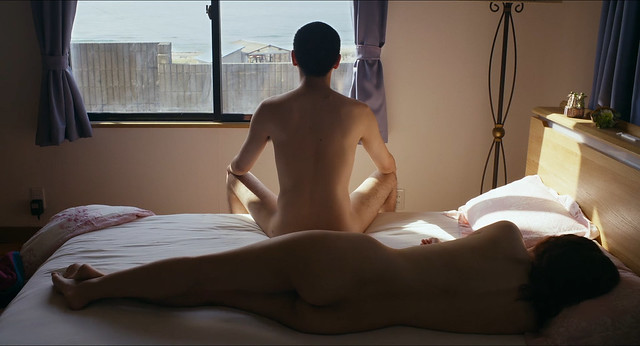
Naoko is getting married to an older career military man, who is in charge of disaster relief missions, in five days. He is involved in some National Security briefings right now. It turns out Kenji and Naoko share a past: they both were young and very much in love. Naoko even kept graphic photo album full of their sex acts taken by themselves. They tried every position, and everywhere. They used to explore every inch of each other's body. The memories of their affair come flooding back and they can't keep their hands off each other. They will continue to have sex until the day Naoko's fiance returns.

Arai makes sure that we see Kenji and Naoko and them only. We are invited into the couple's intimate bubble. No one else is seen and only heard occasionally on the phone. They go out to restaurants and street festivals, but the camera is only concentrated on them. But mostly, we see them having sex in his old mother's house, her parents house and her big empty new home which she will move in with her husband after the wedding.

Emoto and Takiuchi give commited, brave performances as lovers against socital norms and impending natural disasters. They have great chemistry together.

It is slowly revealed why they are not together. Kenji got someone pregnant and had to marry. Naoko only wants to marry the military man because she wants to have a baby. Obviously they have made some bad choices in their lives, they realize. Incest among cousins is looked down upon in Japanese society. But Japan is also a few countries which allow the first cosins to marry. There is a talk of inevitable eruption of Mt. Fuji, the sacred mountain of Japan. They reminisce about how they made love in front of the large picture of the caldera of Mt. Fuji, swearing their love into the volcano, as if sacrificing themselves to the mountain gods. They even took a picture to commemorate that night. Would they go their separate ways when Naoko's fiance returns?

It Feels So Good's theme is letting all your inhibitions go and live your life the way you want to, because it will all end anyway. Living in a country where natural disaster is way too common and people lead perpetually suspended in temporary existence, Ken and Naoko realize, it's now or never. From their point of view, their behavior might come across as nihilistic, but they are portrayed with much warmth and humanity by Emoto and Takiuchi. If we are to die tomorrow, who are we to judge how others led their lives? Intimate, natural and helplessly romantic, It Feels So Good is one of the best contemporary Japanese films I've seen.

It Feels So Good, exclusively streams as part of Japan Cuts 2020, 7/17 - 7/30. Please visit Japan Society website for tickets.