Showing posts with label War. Show all posts

Saturday, September 26, 2026

AI Assisted Genocide

Naza (2026) - Abraham, Szor NYFF64_NAZA Yuval Abraham and Rachel Szor, two of the four directors credited for 2024's Oscar winning documentary No Other Land, about Israel settler’s government sponsored landgrabbing and daily violence in the West Bank in the Occupied Territories, come with a new documentary Naza, about systematic destruction and genocide happening in Gaza. I say genocide here, because one of the subjects in the film matter-of-factly admits it is.

Naza is a shorthand for Nazek Agavi, ‘Collateral Damage’ in Hebrew. Just like No Other Land, there is a controversy brewing, as the film does its festival runs - first Venice Film Festival where it won Special Jury Prize, and now here at New York. Netanyahu's government is threatening to revoke Abraham and Szor's Israeli citizenship and publicly marking them as traitors and enemies of the state even before the film’s general release. All I can say is, see it for yourself when it comes out. The Guardian, a British publication produced it (with Jonathan Glazer serving as executive producer). The filmmakers are self-distributing it with the help of MK2, a French company.

Naza consists of 24 interviews conducted by Abraham as an interviewer and Szor at the camera. The interviewees, all former and active Israeli military personnel, mostly intelligence officers who were engaged in the destruction of Gaza, in retaliation of the October 7th surprise Hamas attack that resulted in the death of 1,200 Israeli partygoers in a music festival in northern Gaza in 2023.

The interviews are conducted at night on the rooftop of downtown Tel Aviv, with interviewees backlit against blinking lights of shiny skyscrapers and their faces hidden in shadows and some of their voices altered, for protecting their identities from retaliation.

The filmmakers give a little bit of a background about Gazan history of building communication lines by the Israeli government. In fact, all communications in Gaza- if you have a cell phone, you will be intercepted and eavesdropped; that Israel has a total and complete control over the airwaves. But then, this prelude poses an uncomfortable question - how did Hamas manage such a large scale surprise attack? One of the interviewees admits that Hamas really outsmarted everyone, somehow.

The interviews make it quite clear that they knew collateral damage was unavoidable while leveling Gaza, which killed approximately 73,000 Palestinians so far and ongoing, majority of them women and children. More shockingly, it turns out Gaza happens to be the first genocide assisted by AI. AI interprets that the acceptable ratio for collateral damage is 20 to 1, meaning it is OK to order an airstrike or drone bombing wherever suspects are at, regardless if they are in a crowded place or alone.

It is mind boggling as these interviewees speak so matter-of-factly of these AI assisted decisions. They even mention a Hollywood movie such as Eye in the Sky, about a morally conflicted drone operator in Kenya, as if it was their ethics training video. Many of these whistle blower interviews are truly revealing and disturbing, as Abraham pushes them to answer his questions - Did you make those decisions in retaliation against what happened on October 7? Was it pure hatred that they were all enemies and deserved to be killed? Many answers coolly with a hint of irony - we are there to achieve military objectives. The order comes from the top and we follow it. It's like videogames. We do our job. They knew there were women and children.

Because Israelis have complete control, they could monitor everything that has been happening in Gaza. Some walked away after seeing dogs eating piles of corpses on the streets, some are still serving. All these interviews are intercut from time to time to show daily lives of inhabitants of Tel Aviv observed from the rooftop at night - doing chores in their apartments, walking on the promenade along the water, eating and doing ordinary activities, while talking candidly about despicable nature of what has been unfolding in the ‘war on Gaza’.

Abrams and Szor are journalists and activists. They did not go to film school and do not possess narrative storytelling skills. In No Other Land, narrative came naturally; we witnessed a friendship between Abraham and Basel Adra, one of the co-directors and the subject, a Palestinian activist, forming as they spent time together as the world around them fell apart.

In Naza, you don’t need such narrative. This atrocity doesn’t need to be narrativized. It’s a visual record of the war crimes being committed aided by AI technology. The chilling last minute footage of a collapsed building with the entire family’s feet sticking out of the concrete wall is a good reminder that once we delegate our moral obligation to AI, we’ve already lost whatever we are fighting for.

Friday, January 19, 2024

Warm Bodies

Fallen Leaves (2023) - Kaurismaki Screen Shot 2024-01-19 at 3.45.23 PM Screen Shot 2024-01-19 at 12.08.29 PM Screen Shot 2024-01-19 at 12.15.43 PM Screen Shot 2024-01-19 at 12.37.38 PM Screen Shot 2024-01-19 at 12.54.18 PM Screen Shot 2024-01-19 at 3.49.23 PM Screen Shot 2024-01-19 at 12.50.27 PM Screen Shot 2024-01-19 at 1.00.47 PM Aki Kaurismaki's micro romance Fallen Leaves isn't revolutionary or anything, but it nevertheless succeeds in warming your heart. It concerns two lonely working class Helsinkians crossing paths and falling for each other in that driest, most deadpan Kaurismaki way possible. And as usual with his recent films (Le Havre and The Other Side of Hope), the state of the world (Russian invasion of Ukraine just began at the time the film was being made), is always on the airwaves reminding us how f'd up the world around us is.

Ansa (Alma Pöysti) is first seen stocking the shelves in a grocery store under the watchful eyes of a bulldog-like security guard. She sometimes takes expired food home and also gives away expired items to others. Her daily routine is pretty monotonous and uneventful. Holappa (Jussi Vatanen) is a construction worker who is constantly drinking at the job. He drinks because he is depressed. He is depressed because he drinks. They first exchange glances in a karaoke bar, accompanying their more sociable friends. But they are not talkative types. Then they meet again on the street. They go out for coffee, then to movies. They watch Jim Jarmusch's zombie comedy The Dead Don't Die. She gives him her phone number which he immediately loses. They lose their jobs for stealing and drinking. They go through one low wage menial jobs to another. After waiting at the movies, he meets her again and she invites him for dinner. This time he puts her address in his wallet. Dinner goes well. But losing many family members to alcohol, she can't allow someone with drinking problems in her life.

I'm glad Kaurismaki is getting a lot of accolades for this film, but Fallen Leaves is not too different from any other of his deadpan comedies. While his fellow deadpan comedy comrade Jarmusch is delving into zombie genre, Kaurismaki is making romance. While sad songs punctuate and homages to many great romantic films where two would be lovers are separated and need to find their ways to one another play out, the Finnish master makes room in our darkest times for us to smile, even for a short while.

Sunday, May 27, 2018

Memories and War

Mayak (2006) - Saakyan
Screen Shot 2018-05-27 at 10.18.03 AM
Screen Shot 2018-05-27 at 10.20.18 AM
Screen Shot 2018-05-27 at 10.24.26 AM
Screen Shot 2018-05-27 at 10.42.54 AM
Screen Shot 2018-05-27 at 10.44.24 AM
Screen Shot 2018-05-27 at 10.31.12 AM
Screen Shot 2018-05-27 at 10.29.44 AM
Screen Shot 2018-05-27 at 10.23.09 AM
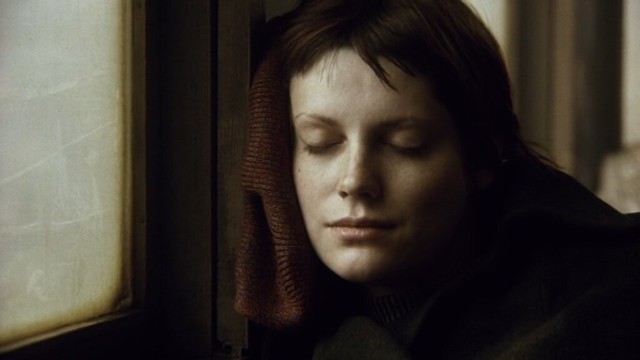
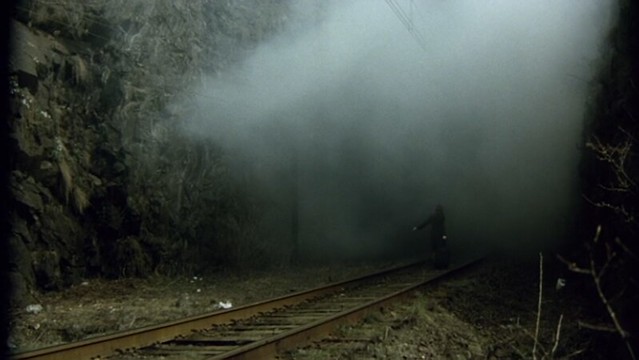
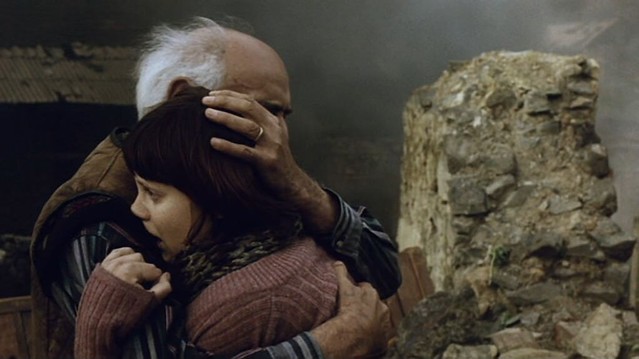
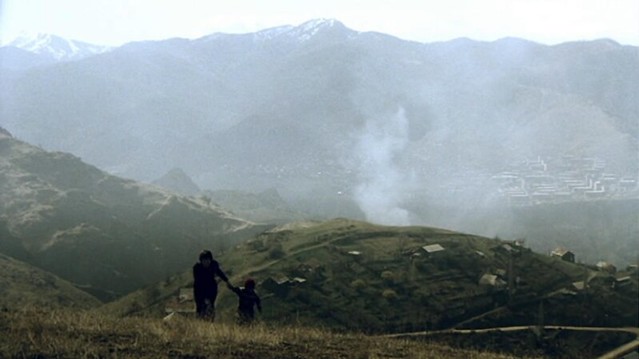
Lena (Anna Kapalena) comes back to her hometown, a small mountain town in war torn Armenia. The electricity is scarce, gunfires and military helicopters are heard day and night. Lena can't convince her grand parents to leave with her and go to Moscow. And the train station is swamped with people trying to leave but no trains are coming.

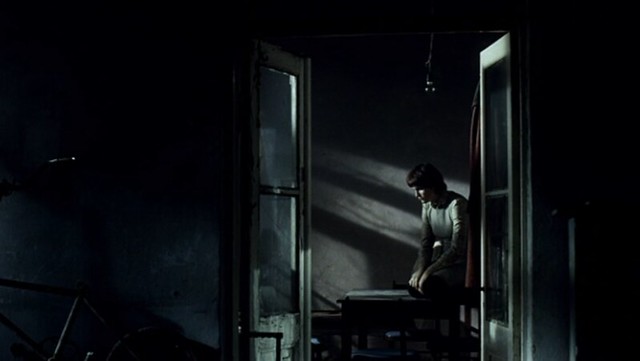
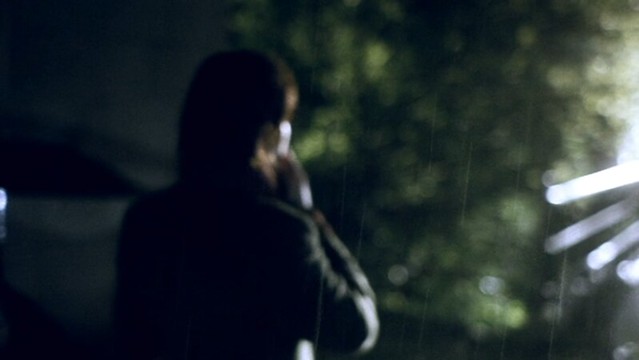
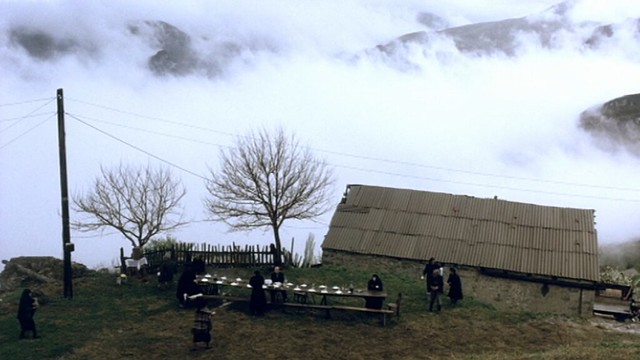
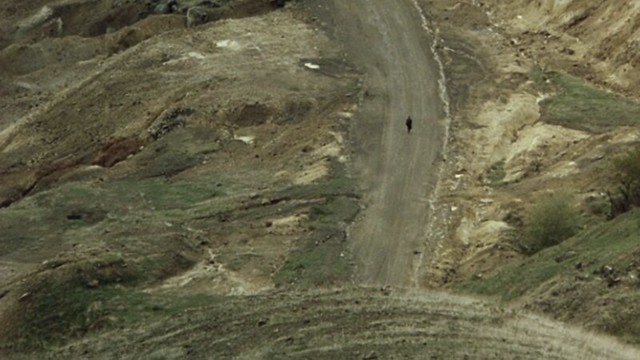
Mayak is a simple story: a young woman comes home, sees the devastation of war and leaves. But in this semi-biographical film taking place in 1990s Caucasus conflict, director Maria Saakyan lets stunning cinematography do the talking. In its dreamlike opening as Lena wakes up on the train and walking into the fog, her hometown in the mountains is like a time trapped mirage. Lena gets to enjoy her past life- gets drunk on the dinner table and shoots off a dresser by mistake. But the reality of war is near by- neighbors die, a helicopter swoops in, trains never stop.

Saakyan prefers non-chronological approach and includes documentary footage of the conflict and flight of the refugees. It's deeply moving, poetic contemplation of memories and war.

Sunday, March 17, 2013

The Hill

Restrepo (2010) - Hetherington, Junger
 photo cf85cee0-7269-4cb9-bc7a-5f6d9621747e_zpsba8331d0.jpg
I consciously blocked out the onslaught of Iraq & Afgan war movies ever since that war began more than a decade ago. I was opposed to any military actions and it was too soon and too much for me to stomach. Restrepo follows a US battalion stationed in the most dangerous area in Afganistan, Korengal Valley, 2007. No ideology, no messages, no judgment, just young soldiers doing their job which happens to be taking over a hill, build a post (called Restrepo, named for their fallen comrade) there to get a better view and hold that position amid intense firefight and angry villagers day and night. It's a riveting stuff. Soldiers are no older than students I deal with every day. They are under insane amount of pressure and stress. They see their friends being shot and killed. Hetherington and Junger are there right beside them. If not anything, they are as much adrenalin junkies as the soldiers are. At one point one asks one of the soldiers about the rush that's much greater than bungee jumping or being on crack, what happens when they go back to civilian life? They don't know. They can't sleep at night, thinking about their dead friends. No sleeping pill helps. The epilogue says the US troops began withdrawing from the valley in 2009. Restrepo doesn't have to be preachy. It shows the follies of war naturally.

Saturday, August 4, 2012

Genre Twist

La France (2007) - Bozon
la france
la france1
la france3
la france2
The setting is WWI France. Camille (always adorable Silvie Testud), a young wife of a soldler, receives a letter from her husband informing her that he never wants to see her again. Very much in love and determined to find him, she sets out to the frontline disguised as a young man. Soon she tags along with a band of soldiers. The lieutenant (Pascal Greggory) is at first, very suspicious of the whiskerless young lad who might be a war spy. Soon it is revealed that the brut soldiers are nothing but brutish: they break out into 60s sounding pop songs with improvised instruments (all songs start out with "I, a blind girl...") and talk incessantly about mythical land, Atlantis, to keep their spirits up.

La France is a delicious genre deviation. It's a deadpan war time comedy. Editing and photography are very cleverly done, but not in a showy way. Shot by Céline Bozon, director Serge's sister, the film boasts some very striking nighttime images. They obviously understand less is better. Guillaume Depardieu shows up late in the game too. A great find.