Thursday, September 13, 2018

Brigade of Police Poets

Les arts de la parole (2016) - Godin
Screen Shot 2018-09-13 at 10.47.58 AM
Screen Shot 2018-09-13 at 10.48.35 AM
Screen Shot 2018-09-13 at 10.56.31 AM
Screen Shot 2018-09-13 at 10.57.22 AM
Screen Shot 2018-09-13 at 10.40.17 AM
Screen Shot 2018-09-13 at 10.41.00 AM
Screen Shot 2018-09-13 at 10.43.01 AM
Screen Shot 2018-09-13 at 10.44.33 AM
Screen Shot 2018-09-13 at 10.45.30 AM
Screen Shot 2018-09-13 at 10.46.19 AM
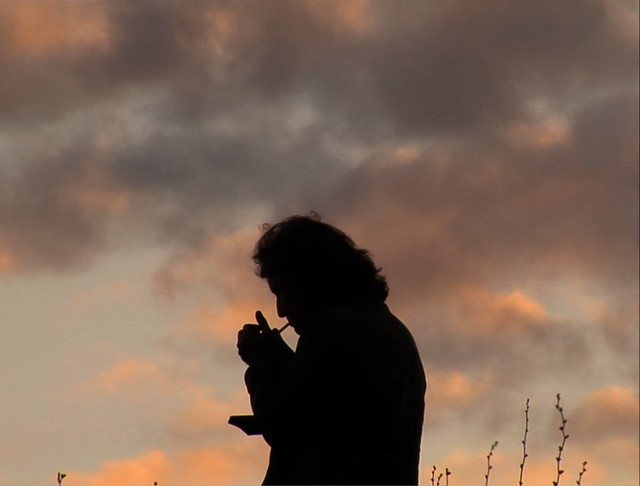
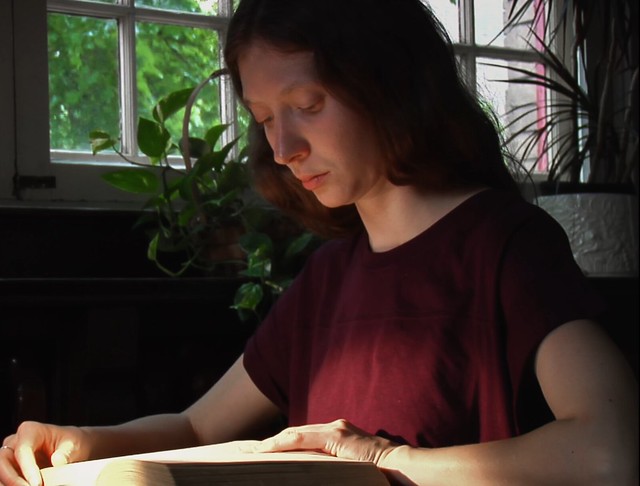
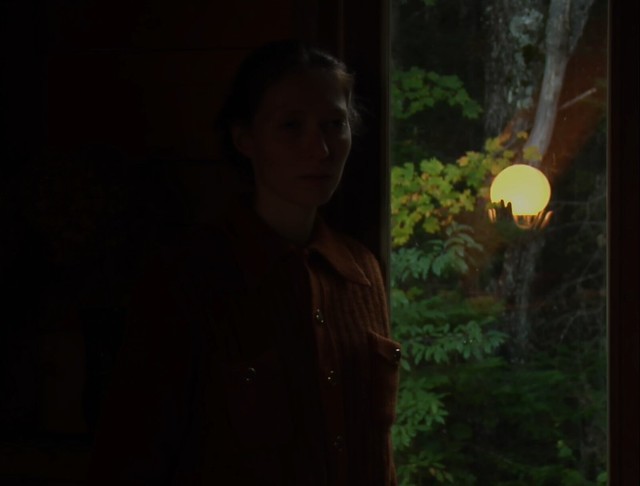
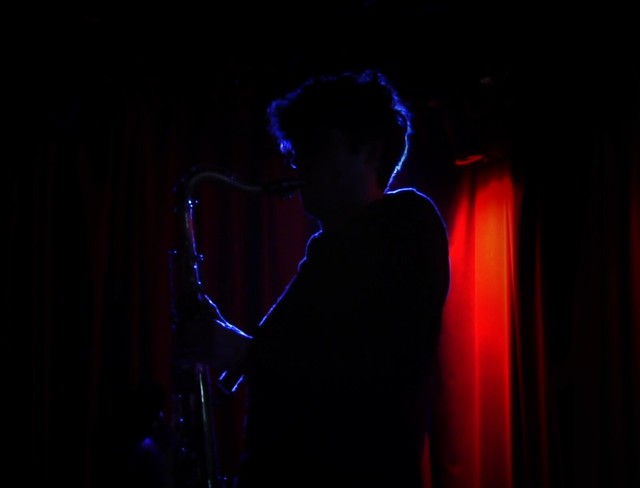
Steeped heavily in literary references, Quebecois filmmaker Olivier Godin's Les arts de la parole follows the trials and tribulations of detective Koroviev (Michael Yaroshevsky). With a leather patch over his eye, Koroviev is a studious and sensitive fella who teaches poetry in a brigade of police poets. He and his 'singing detective' partner Margerie (Michel Faubert) are put on the duty of keeping a watch (through the peephole) on Clemént (Etienne Pilon), a bank robber. Soon Koroviev is out with Clemént at a jazz club where his son plays saxophone. The musician doesn't know that Koroviev is his dad though, and Koroviev doesn't ever seem to have a chance to tell him the fact. The detective is in search of a bible annotated by Pierre Maheu, his literary hero and the captain of the legendary ship, St. Elias.

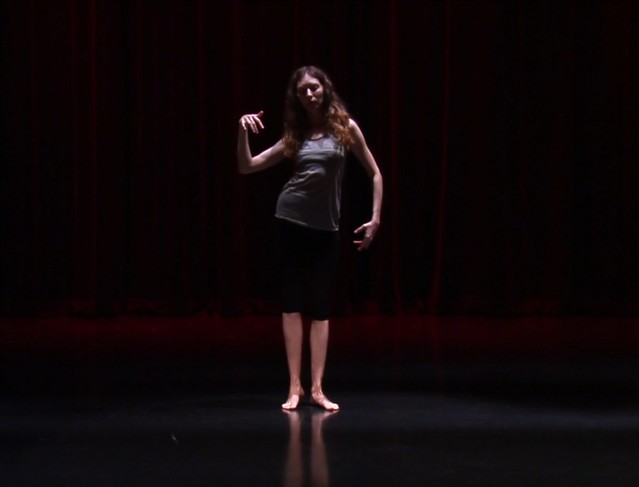
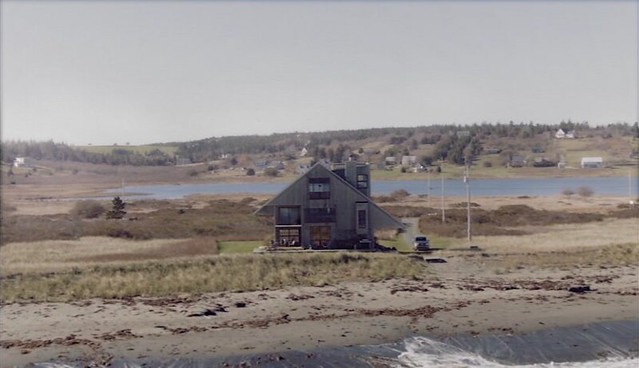
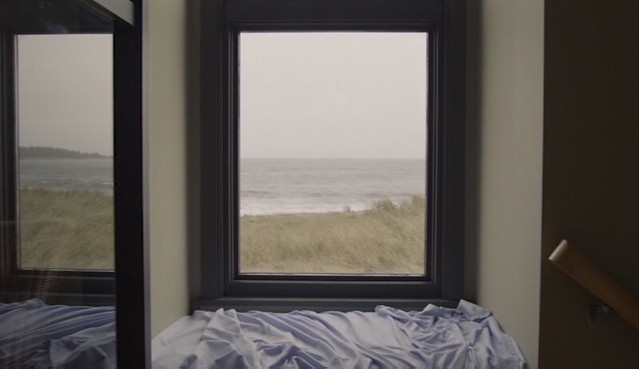
Koroviev sees Coriandre (Jennyfer Desbiens), a pre-Rafaelite beauty with heavy eyelids on stage and gets smitten. Margerie also pursues her by singing to her on the phone, much to Koroviev's displeasure. Coriandre knows Maheu because he lived in a house next to her dad's in the countryside.

With its droll humor and painterly framing and dissolves, Les arts de la parole strongly resembles '80s Godard. Add the crime genre elements, Vertigo style dualism and full of quirky characters, you got a charming, entertaining film.

Monday, September 3, 2018

Birds of Prey

Figures in a Landscape (1970) - Losey
Screen Shot 2018-09-03 at 8.44.14 AM
Screen Shot 2018-09-03 at 8.53.18 AM
Screen Shot 2018-09-03 at 8.55.38 AM
Screen Shot 2018-09-03 at 8.58.04 AM
Screen Shot 2018-09-03 at 9.06.45 AM
Screen Shot 2018-09-03 at 9.08.24 AM
Screen Shot 2018-09-03 at 9.09.36 AM
Screen Shot 2018-09-03 at 9.14.18 AM
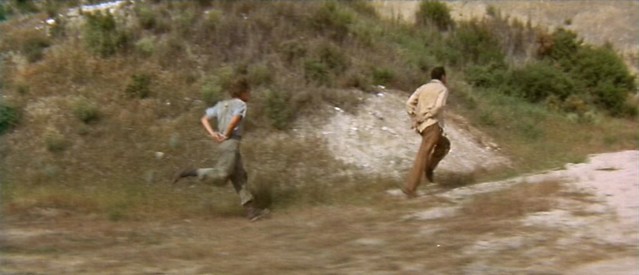
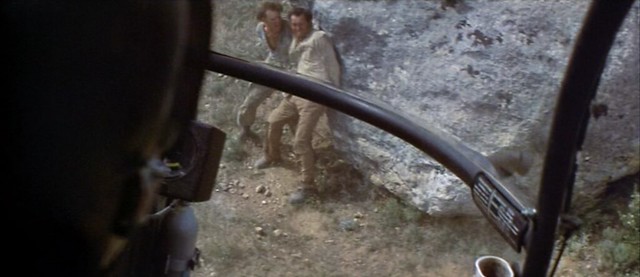
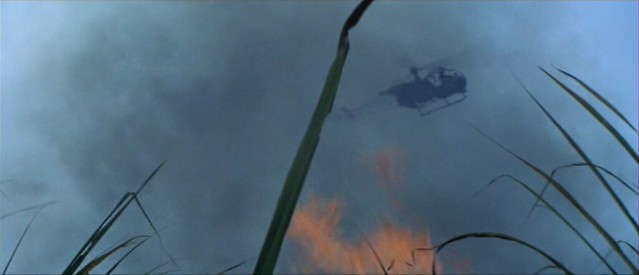
Two English men are first seen running, with their hands tied behind their backs, from the relentless pursuit by a hellicopter. There is no explanation as to why or how or what. Figures in a Landscape is one of those 70s wtf movies steeped in metaphor that are gripping and hypnotizing nonetheless.

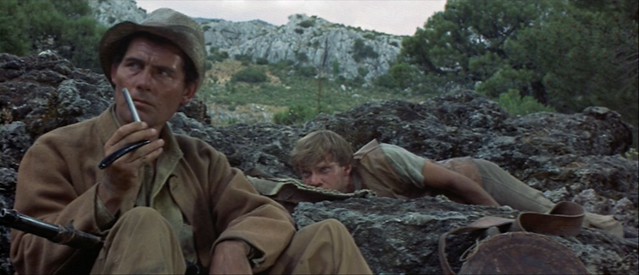
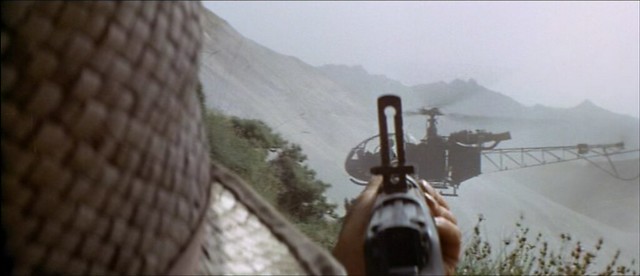
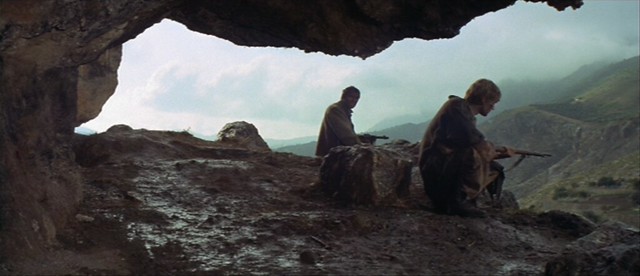
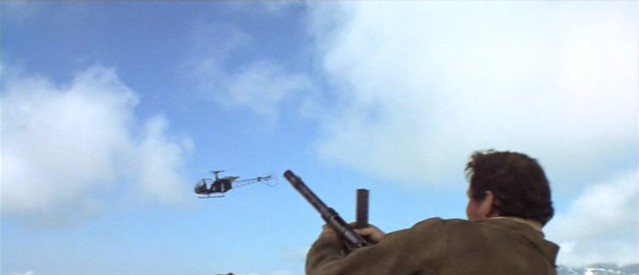
Robert Shaw (who also wrote the screenplay) along with young Malcolm McDowell, does amazing amount of cadio in an unnamed, rugged countryside (by looking at olive trees and snowy mountains at the end, my guess is Italy). After raiding a village at night, killing some villagers to steal some food, clothes and a rifle, the fugitives still find themselves the prey to the bird above. Things get more tense after Mac (Shaw) methodically shoots down one of the pilots off the copter. Now there is an army with automatic weapons pursuing their tracks along with the copter. With their visors firmly stuck in their faces, all the pursuers are silent and nameless.

Mac has no scruples about killing people but the young man is morally conflicted. Mac angrily accuses him as a hypocrite. Grinding his teeth and snarling, Mac is a great precursor to Quinn in Jaws. He even showcases his loony sense of humor when things go dire - as they are cornered in what it looks like a sugarcane field with the copter firebombing from above and angry farmers trying to put out the fire by releasing water from the irrigation dam, the duo has to resort to crawling in the muddy field surrounded by inferno. What does Mac do? He catches a little snake, waving around like a lunatic, happy as a clam.

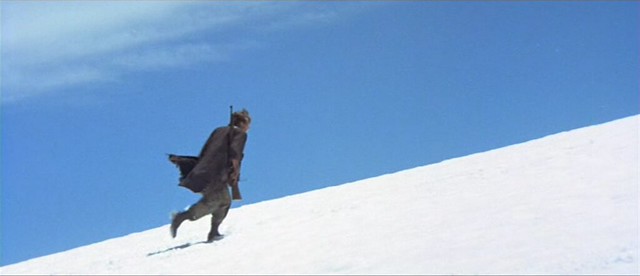
The hellicopter serves as a dominating force - an oppressive government or a dictator, a bird of prey, toying with you from above with its absolute power until it comes in for the kill. As they approach an arbitrary border to freedom in the snowy mountain, Mac's obsession - bringing down that symbol of oppression - a copter/a shark from above, takes over, even if it means costing your life. Visceral and oddly captivating, Figures in a Landscape is a very interesting film.

Sunday, September 2, 2018

Anti-Thesis of an American Film

Moonlight (2016) - Jenkins
Screen Shot 2018-09-01 at 10.19.38 AM
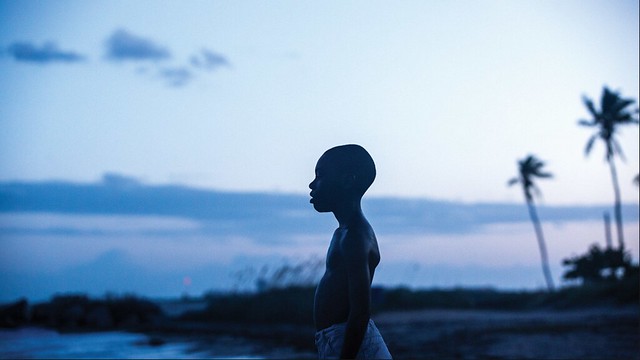
I haven't seen this up until now. I'm a bad person I know. Moonlight, by Barry Jenkins, is the antithesis of everything an American movies is- loud, overwritten and flat. Obvious influence here is films of WKW, to the point of almost distracting. Still, it owes a lot to its visual and aural landscape. Let's face it, no one is going to see a poor gay black boy on screen however authentic the film is. But despite all the stylings, the film's authenticity comes from its characters. There are no voice overs or heavy handed monologues. Jenkins lightly sketches out the three stages of life of Chiron, unsure of his identity and his place in the world and important people in his life. And it's those things unsaid, negative spaces, sporadic dialog that give the film its emotional heft. The ending is just about perfect.

It's a beautiful film. Can't wait to see If Beale Street Could Talk.

Saturday, August 25, 2018

Economic Emasculation: Lee Chang-dong Adapts Murakami in Burning

Burning (2018) - Lee
Screen Shot 2018-08-24 at 6.52.41 AM
Screen Shot 2018-08-24 at 7.04.47 AM
Screen Shot 2018-08-24 at 6.47.42 AM
Screen Shot 2018-08-24 at 7.05.28 AM
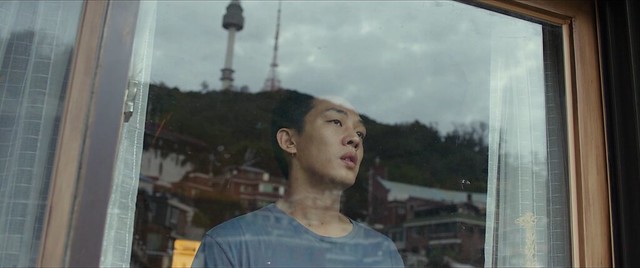
The film revolves around Jong-su (Yoo Ah-in), a farm boy from a small town near the North-South border, doing menial jobs here and there in the outskirts of Seoul and dreaming of being a novelist. His father is in police custody for assault charges. His mom ran off when he was young because of dad's anger issues. He runs into a childhood friend Haemi (Jeong Jong-seo), who dances in costumes in front of a department store to lure the customers in. She teases him for not recognizing her. It's because she had a facelift. Haemi is one of those thoughtful, attractive girls who sometimes falls into pit of melancholy as she thinks about the big questions in life - Why are we here? What's our purpose? So obviously Jong-su falls for her. Haemi has a favor to ask. She's been saving up for a trip to Africa. She wants Jong-su to take care of her cat while she's gone. What cat? He never sees her cat in her tiny apartment which faces Namsan TV Tower (its presence to Seoul-lites is as synonymous with Empire State Building is to NYers or Space Needle is to Seattlelites). But he knows the cat is there because its food bowl gets emptied out and there is occasional poo in its litter box every time he visits. He masturbates thinking of her, looking out the window, facing the tower.

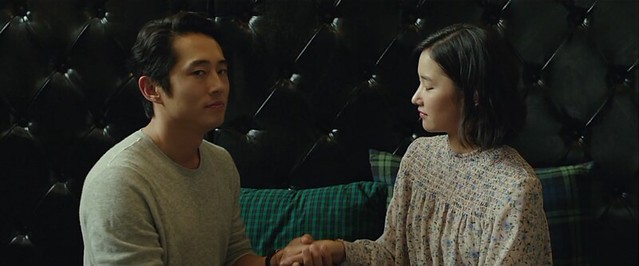
Things get complicated when Haemi returns from the trip. At the airport, Jong-su finds Haemi with her new friend, Benny (Steven Yeun), a mysterious yet affable man. He doesn't have a job. Seemingly extremely well off, he is chaperoning Hae-mi in his porche to nice restaurants and cafés while inviting Jong-su along. There is something off about Benny. His detached attitude, his nonchalance- it's as if he is gliding through life. Jong-su is also jealous that Haemi is smitten by the charming yet strange man. He doesn't seem to care about anything and anybody, including his well-to-do friends.

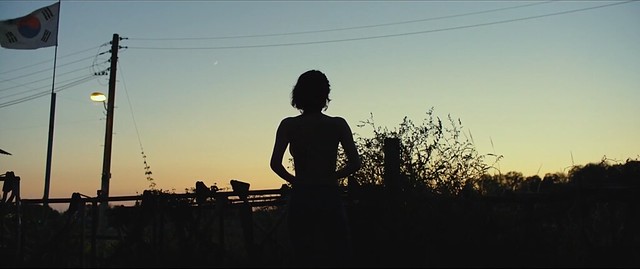
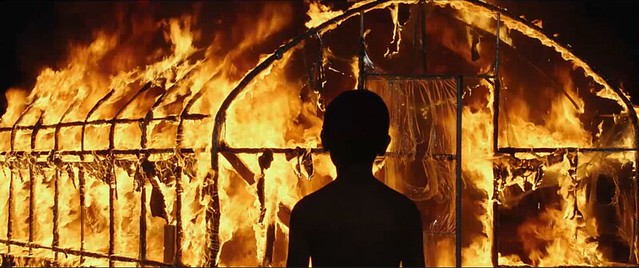
After his father gets sentenced, Jong-su goes back to his old house to sort through the mess. One day, Haemi and Benny visits the house unannounced. They drink and smoke pot and the two men watch Haemi dance topless. Her dance is so emotionally charged and beautiful, the two men blurts out their innermost thoughts after Haemi collapses on the couch. Ben likes to burn greenhouses down. It's thrilling because he doesn't get caught. In fact, the visit to his humble house was for scouting a new target. Jong-su angrily tells him that he loves Haemi. Then couple days later, Haemi disappears. And what about the cat?

Even though Burning is based on Haruki Murakami's short story Barn Burning, it's a very Korean film in every way. Yes, Murakami's typical - disaffected, nihilistic, don't-ever-have-to-worry-about-money hero is there, superbly embodied by Korean-American actor Steven Yeun- his slight otherness is perfect for the role. But Lee Chang-dong's emphasis is on the society's deep chasm between haves and have-nots, city vs countryside, living under the shadow of capitalism and the always imminent threat of war are all very Korean.

Burning is a slow-burn thriller that is utterly captivating from beginning to end. It's economic emasculation that brings inevitable violence at the end. Once again, it's Lee's script that shines: layered with hefty metaphors and symbolism, yet the film is surprisingly subtle and never loses its magnetism.

Wednesday, August 15, 2018

Guilt and Suffering: Marguerite Duras Style

Memoir of War (2017) - Finkiel
Screen Shot 2018-03-02 at 6.49.25 AM
French director Emmanuel Finkiel takes on semi-autobiographical book, La douleur by writer & film director Marguerite Duras. It's an ambitious project to tackle, since Duras is a key figure in Nouveau Roman, one of the most significant French literary movements in the 20th century. She scripted Alain Resnais' Hiroshima mon amour and saw several of her books adapted for the screen. She also directed many films including Natalie Granger, India Song and Drive, She Said.

Skillfully directed and beautifully acted, Memoir of War retains much of Duras' enigmatic, complex human tendencies during war time. Like her other works, it draws from her experiences and amplifies/embelishes many of her major themes - desire, suffering, shame, survivor's guilt, memories....

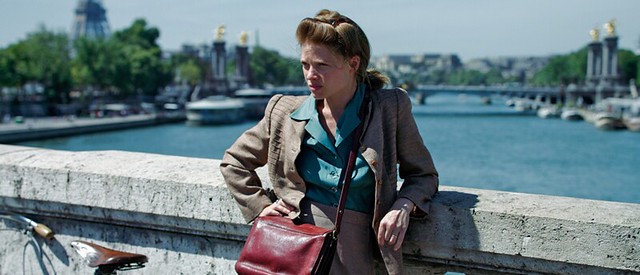
The film starts with Marguerite (Mélanie Thierry) in German occupied Paris at the tip end of WWII. She had found her own journal which is essentially the book the film is based on, but she doesn't recall if it was she who wrote it. She is waiting for her husband Robert's return. He has been in German custody for his resistance activities. Robert's prolonged absence has been a disorienting, unraveling experience for her.

We roll back to 1944, just before the scale tipped for the Allied forces. Marguerite was approached by Rabier (Benoit Magimel, with a hefty gait, becoming more and more like young Gerard Depardieu these days), a collaborator, working for the Vichy regime, offering help to find where Robert is. He is a working class bloke who dreams of opening up a bookstore and thus fancies Margueritte because she's a writer. Her circle of friends in the resistance first think it's too dangerous for her, then admit that it might be a good opportunity for her to play Rabier to get important information.

First, fear and intimidation grip her but she plays along as Rabier leads her on to the promise of Robert's well being. It is clear that he wants something in return - ratting on her resistance friends. A dangerous game of cat and mouse play out.

La douleur (The Pain) which the film is based on was published much later in Duras' career as a writer. But it was supposedly from her diary she kept from the war. This was long before she established herself as a formidable writer. Yet, we see the same theme of eroticism and shame associated with many of her later works. Even though it's subtly done in Memoir of War, you notice the shame Marguerite feels as she was attracted to Rabier the traitor.

And not unlike Duras scripted Hiroshima mon amour, A Memoir of War concerns the effect of war has on people- the guilt that survivors have to carry around weighs so heavily on them that they lose their sense of self. Marguerite often sees her surroundings in a third person perspective. She also sees herself from a distance as if she is experiencing an out of body experience.

Duras doesn't put blames on a collaborator alone. Holocaust happened. As a human being, we all have to wrestle with the fact that it happened. Using shallow depth of field, Finkel makes sure there that there is a distance between people at all times. There is a striking scene of empty Paris just before its liberation where Marguerite rides her bicycle. But she will never be free from that survivor's guilt. And it won't stop even if she has Robert back finally.

Thierry is a revelation as Marguerite, a learned, intellectual woman who slowly gets broken emotionally. She proves that she is much more than just a pretty face. The film signals the arrival of another major French star actress. Memoir of War is a great film.

Interview: Emmanuel Finkiel on Adapting Marguerite Duras' Semi-Autobiographical Work

Emmanuel Finkiel
It's a big challenge to adapt a book by one of the literary giants, Margeurite Duras. Known for her enigmatic, erotically charged, fiercely political writings and films, Duras was one of the key figures in the most significant French literary movement in the 20th century - Nouveau Roman. She also scripted Alain Resnais' greatest work, Hiroshima mon amour, which shares many of the themes with Memoir of War.

Luckily for us, French director Emmanuel Finkiel has made a beautiful film here with Mélanie Thierry in her mesmerizing, star turning performance as Duras, based on her semi-autobiographical book, La douleur. I got a chance to talk to Finkiel about his adaptation process and the film's implication on current political climate.

Screen Anarchy: The film is tremendous and very ambitious in presenting very complex story of Margeurite Duras. Are you a big fan of Duras writings and nouveau roman?

Emmanuel Finkiel: I had read that story written by Duras when I was young, about 25 years old and at that time it was a story that had really troubled me. It resonated because with my own family’s history. So when I was approached about adapting the book, I decided to do it right away. I was not at all afraid of taking on such a great literary monument because it resonated with me personally.

Can you tell me more about your family history if you don’t mind?

When my father was only 14, this was 1942, his parents and his younger brother who was 10, got rounded up and arrested. It was called Vel' d'Hiv Round up in July 1942. He never saw them again. After the war was over, even he was made sure that they were not going to return, he always retained that there was a little bit of hope. As a child I witness this in my father – the haunting by the absence of your very close family. He seemed to me to be always waiting and hoping that some day they will come back. I think that aspect – of waiting and hoping and that absence that resonated for me with Margeurite’s story.

I’m so sorry that happened to your family.

How close the film is to the memoir it is based on? Did you have to do a lot of research?

I think that the story that you see in the film is pretty faithful to the novel as any adaptation can be even with the elements of subjectivity involved. But the main difference is that in the book, Margeurite devotes quite a number of pages to the period of time after her husband returned where she really nursed him back to life. I decided that it would be very difficult to show that because I really didn’t know how to show that physical body of Robert on film. He was in concentration camp for so long and completely emaciated and I didn’t know how. So I decided not to deal with that part of the book.

You’ve worked with Mélanie Thierry in your last film Je suis pas un salaud. She is absolutely amazing in this. Rivetting performance. Was she always your choice to play Duras?

Actually even though I worked with her before, I hadn’t thought of her when I was writing this film. It was only through doing screen test as we tested a lot of actresses- when I did the screen test with Mélanie, she really stood out. Because I think that she is really capable of encompassing the kind of strength that was needed for the role but at the same time has real fragility. I knew that she was ready to meet this heroine, this character of Margeurite head on because she was able to find goods through her personal experience of suffering. The kind of depth that was needed, even though she’s very petit and fragile and caring woman.

She is absolutely fantastic in this film. I always thought of her as just another pretty face but she really really pulled it off and I am very glad you chose her.

Your experience with her was pretty much the same as with the French audiences. Nobody expected that much depth, everyone just thought she was just a pretty face.

Right.

So, you are not alone.

With Rabier the nazi collaborator, played by Benoit Magimel, and the cat and mouse chase that ensues between Rabier and Duras, is the same powerplay that you see in her other writings. You think it was Duras as a writer using the creative license or did that really happen?

I think that like much of Duras’ writing, this is also based on reality and real people she knew but she put them in a fictional cast. So she added things that were not real. So for example, I think that the character of Rabier mostl likely in real life was much more dangerous person and she had much more fear in her dealings with him but that’s not how you see him in the film. I think that she in a way chose to put this fictional cast- a romanesque (fictional) view of it rather than dealing with harsher reality.

And also think that when she writes her relationship with Rabier, there is kind of eroticism that emerges from it. I think this is very important because it generated a lot in her later writings which is the whole idea of shame.

Yes.

And that she behaved the way she did. And she carries her shame with her and it’s evident in a lot of her writing.

Right. Guilty conscience.

I think that it may have been the fact that she experienced kind of excitement whenever she met with Rabier at the same time she was waiting for her husband. Hence the feeling of shame and as you say guilt.

What’s also important is that she created someone who is not black and white. Many of the characters in her work are not black and white characters- they are very very complex who carry a great deal of contradiction in them. She talks to them almost mockingly with disdain but at the same time feels guilty about talking to them. None of her characters are simple.

There is a certain distance she keeps. There’s her seeing things objectively as if she is observing the scene as a bystander. We see this with only her in focus while everyone is out of focus. I am wondering if that also plays into what we are talking about.

Actually, the focus on her and everything somewhat blur is an indication of her subjectivity. Because what we are seeing in the film is not this woman living her day to day life in Paris under the occupation. It’s how she sees herself during that time and what her vision is of her life and her position that we are seeing. And that was what was reflected in those shots.

It makes sense.

I think you are correct in saying that she has this distance. But that’s not only the distance between herself and others around her. It’s the whole world and the whole situation and her in it that she is keeping distance from.

The epilogue that follows the end of the film that she left her husband after he came back. The very same person whom she waited for years. Why do you think that is?

In the book early on, she writes “I already decided to leave him.” She had decided to leave him even before he was arrested. So what becomes interesting is what she is waiting for. She is not actually waiting for Robert himself. She is waiting for the idea of Robert that she has created for herself. Like my father waiting for his family, once the person is no longer there your imagination takes over and that imagination creates a person who is not the real person but an object with whom you eventually fall in love. I think that was the case with Margeurite. She was so in love with the idea of Robert rather than Robert himself that she was planning to leave.

The French title is La douleur/The Pain – which seems much more correct I feel. The pain the character feels is the same pain in Hiroshima Mon Amour, caused by war – the survivor's guilt that destroys a sense of self.

Tell me if I am wrong, because I thought about the correlation between La douleur and Je suis pas un salaud where you touch upon our current society and economic injustice and racism. I thought about the war raging in Syria, Palestine and the middle east where we see destruction and hopelessness. I was wondering if you had our current society in mind when you made this film?

I am in 100 percent agreement with what you say. I think that you can find the thematic link between my previous film and this film perhaps. Regarding the title, I think that you are correct. Even though I don’t speak English, the way I understand it, the French title is much more effective. It’s stronger and it has kind of density. It is closer to what we see unfold.

This idea of shame and guilt and how we can live with it – I think that is very important and it carries on to the situation we see today. so there is that thematic link.
Tuesday, August 14, 2018

Spike Lee Still Got it

BlackKklansman (2018) - Lee
Screen Shot 2018-08-12 at 12.24.44 PM
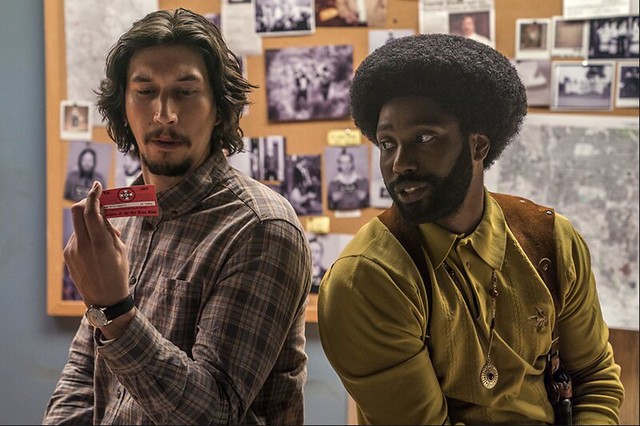
Spike Lee has a reason to be smiling. BlackKkansman is his best film since Malcolm X. It's both entertaining and pointy about the Trump's racist administration. Well timed for anniversary of white nationalist march in Charlottesville where activist Heather Heyer was killed, Lee doesn't shy away from linking the past and the present this unsubtly and directly, like no other major American filmmaker.

Adam Driver, playing Flip Zimmerman, a non-practicing Jewish detective in Colorado, proves himself that he's a solid actor here. Lee even pushes the idea of solidarity, a smack in the back of the head that we are all in this together, by making Zimmerman/Jews think about how extremely racist the view of the white nationalists against anyone other than Anglo Americans really is.

Sunday, August 12, 2018

Role Playing Group Therapy

Bisbee '17 (2018) - Greene
43262194404_f33ee9cb4c_z
Robert Greene's engrossing historical reenactment, Bisbee '17 serves as not only a forgotten history lesson but also perhaps the largest scale role playing art therapy session. Bisbee, Arizona, a dusty small town near Mexican border, once was a richest town in the state, is also dubbed as Copper Queen for its mineral resources during WWI military effort. A large open pit mine with the blood red contaminated water in the middle, now closed, serves as a reminder of its history in its not so subtle metaphor. And yes, there is nothing like a large scale war to trigger its citizens of their sense of patriotism and unfettered exploitation by the government and industry.

If you are familiar with the American Labor history, you know that it was WWI that effectively quashed the burgeoning labor movement in this country. Happened in New York, Chicago and Butte, Montana and all over where people were violently oppressed. And it happened in Bisbee in 1917, by armed sheriff department and 2,000 deputized citizens to round up its 1,800 inhabitants - immigrant miners, mostly Mexicans and Eastern Europeans, IWW (Industrial Workers of the World) strike organizers and supporters, and put them in cattle cars and deport them out of town, to New Mexican desert, presumably to die.

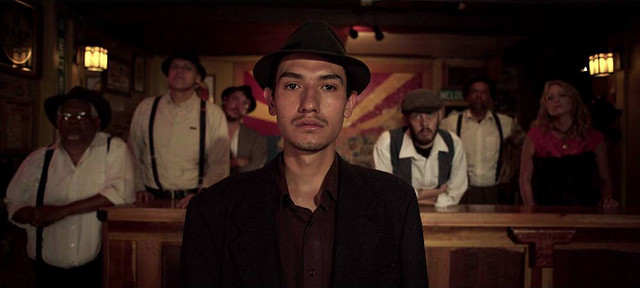
To mark the centennial of the occasion, some town historians and artists decide to enact the shameful history and Greene is there to document it. They are making a movie, where townsfolk play key figures of that shameful history. There are half-dozen key figures but the Greene keeps focus on the Rays and Fernando Serrano. They are in it for different reasons. The Ray brothers- Mel and Steve, by their mother's urging, will portray Edward and Archie, the brothers who were on the opposing side - Edward (their grandfather), deputized mob on behalf of the Phelps-Dodge Co. and Archie, a striking miner. Serrano, a young, soulful eyed apolitical Bisbeean whose mother was deported when he was 7, joins in out of curiosity. Except for some town's elders and artists, the Bisbee Deportation is long forgotten by the public, not taught in schools. And the only remaining records of it are that of the mining companies as they controlled the town newspaper, radio and telegrams. With those who remember and want closure, Greene embarks on perhaps his most ambitious project- as far as 'process is just important as the product' filmmaker is concerned.

Greene, always interested in the nature of playing a role in fiction and in real life, once again blurs the line here with Bisbee '17. As the centennial celebration and its enactment approaches, things get tense and emotional. And it reflects perfectly the current nightmare we are living in where immigrant children are in cages and their parents deported. History repeats itself. But the film ends on a hopeful note. Greene is not only a good filmmaker but a great teacher. Serrano belongs to the generation which will inherit this country very soon, is awoke. The film deeply affected me deeply on an emotional level.

Wednesday, August 1, 2018

Patterns

The Crescent (2017) - Smith
Screen Shot 2018-07-31 at 2.47.20 PM
Screen Shot 2018-07-31 at 2.48.45 PM
Screen Shot 2018-07-31 at 2.35.58 PM
Screen Shot 2018-07-31 at 2.34.05 PM
Screen Shot 2018-07-31 at 2.45.23 PM
Screen Shot 2018-07-31 at 2.40.17 PM
Screen Shot 2018-07-31 at 2.37.21 PM
Screen Shot 2018-07-31 at 2.38.46 PM
Screen Shot 2018-07-31 at 2.39.30 PM
Screen Shot 2018-07-31 at 2.41.07 PM
Screen Shot 2018-07-31 at 2.42.34 PM


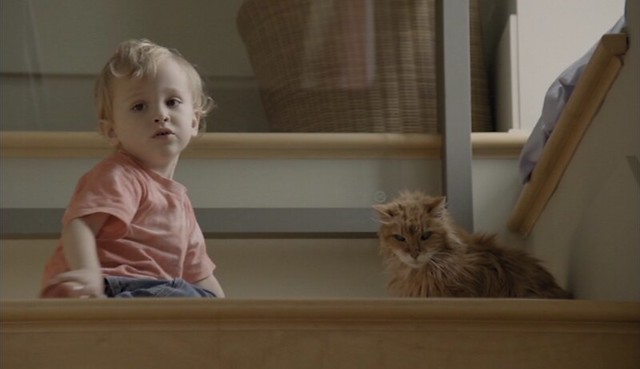
Beth (Danica Vandersteen) is an almost inappropriately young looking mother of Lowen, a toddler. She is seen attending a funeral in the beginning, presumably her husband in some kind of accident. She drives to a large wooden beach house in Nova Scotia. She will sell the house soon. But for now, she will live in there with her young son. Isolation, apart from human contact seems to be what she is looking for, out of grief one can assume.

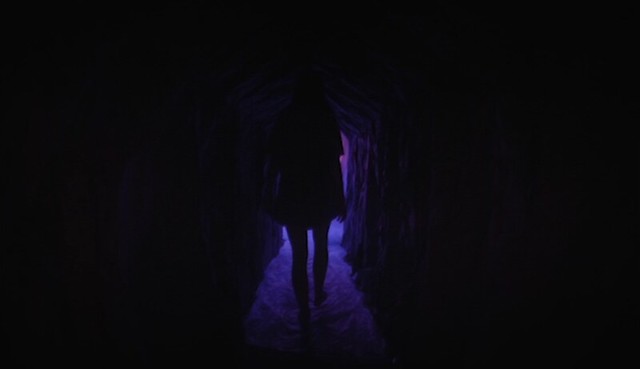
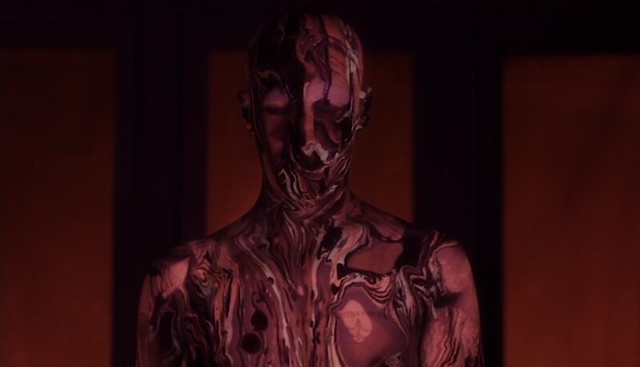
Lowen is a handful child. Always running around, doing what toddlers do, always falling over, always in imminent danger of injuring himself. Young Beth most of the times, doesn't seem to be a capable mother, at least the whole situation seems that way. There is a creepy old neighbor who's always eyeing on Lowen, saying ominous, creepy things. Beth is an artist, specializing in marbling, a technique where one drops oil based die on water and makes trippy patterns, then put a paper over it to get that groovy 70s style wall paper patterns. These patterns figure largely into the big picture later on - on Beth's wishes and nightmares, and in her surroundings. The film quietly develops into part Lovecraftian horror and part portal to a parallel universe thing.

There are a lot of modern horror films about death and grief and such. But The Crescent is a special film. Seth A. Smith, a visual artist and a filmmaker from Nova Scotia, is a real talent in creating certain quietude and sensitivity that is lacking in today's loud and obnoxious horror. Combined with his artistic skills, Smith evokes something that is deeply felt and memorable. Never a horror movie I watched recently that stayed on for days in my head- the visuals, details, the over all impact, and the sadness it carries. The Crescent goes down as one of the best films I've seen this year.

Saturday, July 21, 2018

The World is Ending, Let's Fall in Love

First Reformed (2017) - Schrader
Screen Shot 2018-07-21 at 10.12.36 AM
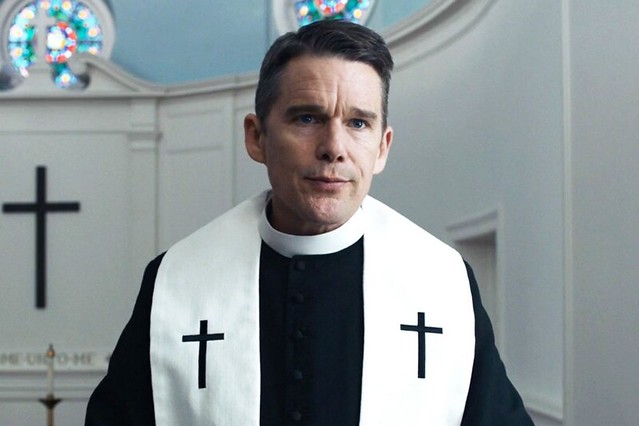
Toller (Ethan Hawke) is a mild mannered, wise pastor of the First Reformed church in small town upstate New York. His congregation is tiny. Even though the historic white chapel church is about to be reconsecrated for being 250 years old, it is functioning more as a tourist site and in Toller's own words, "gift shop", to the megachurch next door, Abundant Life. He lost his son in the Iraq war and so his marriage fell apart. He drinks and has health problems which he won't seek out help for. In the beginning of the movie, we see Toller starting a journal where he pours out his heart and soul. It's a test, self discipline of sorts. When it's filled, he will rip it up and burn the pages. We see the glimpse of internal struggle with his faith already there.

Things get shaken when a young couple come for his advice. Mary the pregnant wife (Amanda Seyfried) says her environmental activist husband Micheal (Philip Ettinger) is conflicted. He visits them at home. There Michael lays out the evidence of man-made destruction of the earth. That he sees no point of bringing a child to the world. Toller's typically wise man of god talk won't comfort the troubled man. After Michael blows his brains out, Toller's laissez-faire attitude at least from the outside perspective, changes. Not to complicate the suicide case, Toller tells Mary to get rid of any possible incriminating evidences - including a suicide bomb vest that her husband hid in his garage for whatever reason. Helping Mary coping with the death draws them closer too.

Things come to focus as Toller sees that the big donor of the church, is a coal baron whose industry is wrecking a havoc on the environment. As the First Reformed reconsecration service looms, he has one thing left to do.

I believe Schrader mentioned Bergman's Winter Light as a source of inspiration. And yes, there is more than the narrative thread with the suicide and everything in the beginning, that the film has its affinity with. But also that sinewy human entanglement that many Bergman's characters see as a prison is there too - definitely Bergman-esque. But whether you consider Schrader's filmography spotty at best, he is responsible for penning Taxi Driver. First Reformed is definitely not a rehash of the masters' older films he is inspired by. Dealing with the contemporary issue that we all face (it was the threat of atom bomb in Bergman's film), Schrader squarely puts the ball on our court to toil with.

Shot in stately full frame 4:3 and simple, straightforward narrative, First Reformed is an extremely lean film. There is a lot of humor in it too. Mystery Magic Tour scene alone is worth the admission. Ethan Hawke, with his craggy forehead, finally aging appropriately, gives the best performance of his career as a conflicted, religious man in the time of uncertainty. The ending goes haywire in the most beautiful way and I really loved it.

Thursday, July 19, 2018

Japan Cuts 2018 Preview

Japan Society's always immaculately curated film series, Japan Cuts, to me, over the years has been regarded as a smaller, quieter sister to massive and crazy and unruly New York Asian Film Festival. And I don't mean this as a bad thing. I think what happened was, when it comes to choosing films to cover from the full line up of Japan Cuts, after extravagance of NYAFF, my attention shifted toward Lo-fi, indie films. This year I specifically chose women directors' works. Many of them unknowns and first timers who need more exposure. And I was richly rewarded for it. Japan Cuts runs 7/19 through 7/29 at Japan Society.

Here are four films I was able to sample:

TREMBLE ALL YOU WANT - Akiko Ohku
Screen Shot 2018-06-27 at 9.51.12 AM
Matsuoka Mayu makes a star making debut playing Yoshika, an introverted twenty-something accountant, in Tremble All You Want. Stuck in her uneventful, lonely life, Yoshika the virgin resorts to a fantasy world where she converses with strangers at a coffeeshop, buses and streets. She is still carrying the torch for Ichi, a princely classmate from Middle school days. But her life takes a turn when Kirishima, a goofy co-worker, confesses his crush on her. In her mind, Ichi will always be number one (ichi) and however nice of a guy Kirishima is, will always remain number two (ni).

Yoshika organizes school reunion under a false name in order to see Ichi again but gets heartbroken when her doesn't remember her name. Going steady with Kirishima seems to be OK at first, that it feels good and natural. But it gets thwarted by her crushing insecurity. Sooner or later, she has to choose between the fantasy and real life.

Tremble All You Want's strength is in its incongruous details - Yoshika's daily rituals, her quirky mannerisms and her eccentric neighbor are all intimately observed. The film rides on the charm of Matsuoka as she breaks out in to a song or does something equally irrational at a moment's notice. A bit overlong for its foregone conclusion, yet with beautifully written characters and and winsome cast, the film is a constantly watchable rom-com.


AMIKO - Yoko Yamanaka
Screen Shot 2018-07-04 at 11.54.36 AM
20 year old Yamanaka Yoko's no budget debut Amiko, played drolly by Sunohara Aira provides a window to the low-fi angst of a high school girl leading a boring suburban existence. Mostly in close-ups, Amiko, our bowl cut haired, Radiohead listening heroine, leads an uneventful life in Nagano. Her ideal fantasy world comes in the form of Aomi (Oshita Hiroro), a nihilistic boy obviously too cool for school. He is in the school soccer club just because. And when things get boring at a practice, he'd fake leg cramps. They bond over their hatred of sports and Radiohead one day. Then it's the waiting game for Amiko. Time passes and nothing happens. She deliberately passes by him in the stores. Nothing. Then she hears that he ran away to Tokyo to live with a former student who was pretty and popular, the kind of shallow girl Amiko thought they both loathed. The life gives you lemons, you better suck them in the bathtub.

So Amiko embarks on a journey to Tokyo, to confront Aomi. There she finds that her ideal world is not what it's cracked up to be. That everyone realizes growing up and facing the reality suck donkeys. Completely devoid of adult presence, you can detect the sweet stench of youth emanating from every frame of Amiko. Peppered with French New Wave spirit - especially the "If you two are truly in love, dance with me!" impromptu dancing scene in the subway, the film packs a rebellious, playful punch.


DEAR ETRANGER - Yukiko Mishima
Screen Shot 2018-07-17 at 12.38.18 PM
Salaryman Tanaka (Asano Tadanobu) has an adoring daughter from a previous marriage. With the company he's been working for downsizing, lately he is having second thoughts about having another baby with his current wife who also has two girls (Eri and Kaoru) from her previous relationship. Good natured Tanaka is a good dad to all three, trying to do right by everyone. But Kaoru, the older sullen tween daughter with an abandonment issue, rebels against Tanaka, saying deeply hurtful things - that he will abandon Eri and her as soon as he gets a new baby with their mom.

Even though gentle, the situation pushes Tanaka to a breaking point. He lashes out to his wife and Kaoru. Boy, ain't the mid-life a bitch to wade through? Dear Etranger is as real as it gets. But it's also a downer, just because it's all too real. Asano shows a great range here as a everyday salaryman.


TOWARD A COMMON TENDERNESS - Kaori Oda
Screen Shot 2018-07-17 at 11.16.01 AM
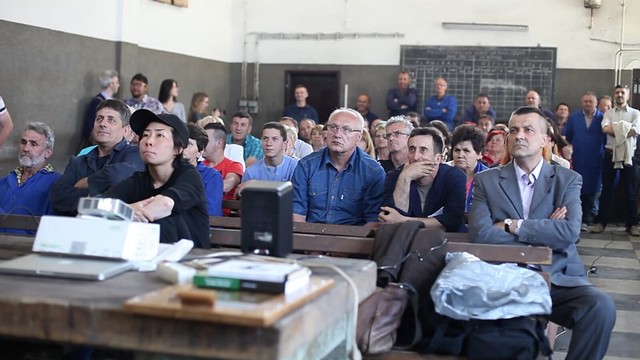
'Searching' is the main theme of Oda Kaori's deeply personal documentary, Toward a Common Tenderness. Oda, a young Japanese filmmaker, forever uncertain, is searching for her identity, both as a person and as a filmmaker. Her debut short Thus a Noise Speaks, she used the camera as a weapon, to confront her family who rejected her coming out as gay. She jumped at a chance to attend film.factory, founded by Bela Tarr, in Sarajevo. There, she was searching for the purpose of filmmaking. She discovers that she likes to film people - her hosts in a small village and Romani family who acted as guides. Their soulful, sad faces spoke volumes more than their limited verbal communication with her. Her project in the coal mines there resulted in the film Aragane.

The film is a compendium of Oda's work so far. It beautifully conveys her loneliness and isolation and longing. This time, Oda uses camera as a direct and intimate communication device. The film is a lyrical, poetic gesture of reaching out from Oda to herself, to her subjects and to the viewers.

Sunday, July 15, 2018

Line in the Sand

El mar la mar (2017) - Bonnetta, Sniadecki
Screen Shot 2018-07-15 at 6.50.09 AM
Screen Shot 2018-07-15 at 6.52.38 AM
Screen Shot 2018-07-15 at 7.04.42 AM
Screen Shot 2018-07-15 at 6.57.13 AM
Screen Shot 2018-07-15 at 7.05.39 AM

As Trump's cruel zero tolerance immigration policy and its inhumane consequences play out before our eyes, El mar la mar, Joshua Bonneta and JP Sniadecki's audio visual essay on the south of the border arrives. It's abstract, artful approach to the subject might infuriate some of the viewers who are inclined to witness emotional catharsis through human suffering for sure. But its deliberate omission of identifiers (other than some of the silent inhabitants on the north of the border) is perhaps the point - the film can emote without seeing the human faces.

Frenetically moving cameras capture stripey, zoetropic images of colors - green and brown, then we realize it's the border fences stretching for miles seen from a moving car or train. There are discarded clothing and other personal items strewn about, completely alien to empty, unforgiving yet achingly beautiful Sonoran desert. The night time provides with flickering lights of the either the travelers or the border patrols.

Voices of ranchers, well wishers, border patrols and immigrants spill in and out of the film, often over blank screen. They tell sudden encounters, compassion, indifference, harrowing and often fatal journey. There are vipers, coyotes. You run out of water, you die. You leave people who are weak and sick and old to die. It's all the more resonant now to think about human cost. Illegal immigration won't stop whether there are stricter laws or not. Isolationism won't solve the problem in the capitalist society where economic inequality is the root cause of all problems. El mar la mar addresses human cost of the border politics in a way that only the film medium can.

Sunday, July 1, 2018

Textural ADHD

Like Me (2017) - Mockler
Screen Shot 2018-07-01 at 1.06.04 PM
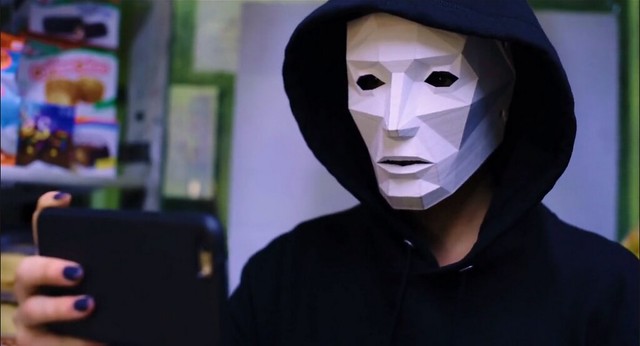
A movie made for the ADHD generation? Aptly titled Like Me concerns Kiya (Addison Timlin), a young woman videotaping her misdeeds and putting on the internet for garnering fame. Constantly on the road living in various motel rooms, she is a restless, aimless, lonely soul looking for human connections. After seducing middle aged motel manager Marshall (Larry Fassenden) and taping him on camera, humiliating him and getting one million views on youtube, they become an unlikely captor-captive pair. It works because he says he understands her. It is obvious that Kiya takes on a lot of different roles just to disguise her loneliness and her needs for validation.

Unlike other didactic take on loneliness and isolation in the age of social network, Like Me lets its loose narrative be and compensates it with candy color palette and dizzing edits. Fassenden has become as reliable of a presence in the indie world as Gary Oldman is to the mainstream films now. With all the excess style, I liked Like Me much more than I thought I would. Its textural, rough around the edges aesthetics really works for its there/not there theme. One of the year's best.

Thursday, June 28, 2018

NYAFF 2018 PREVIEW

Dubbed as the Savage Seventeenth edition, this year's festival hosts four world premieres, three international premieres, 21 North American premieres, three U.S. premieres, and twelve New York premieres, showcasing the most exciting comedies, dramas, thrillers, romances, horrors and arthouse films from East Asia.

NYAFF 2018 runs from 6/29 to 7/13. Please visit FSLC Website for more tickets and more info.

ONE CUT OF THE DEAD
Screen Shot 2018-06-20 at 1.31.40 PM
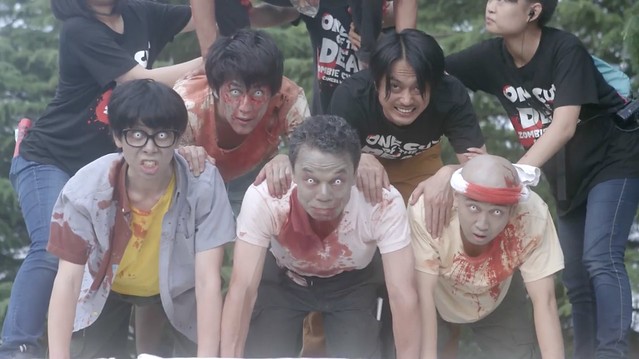
With Romero's Night of the Living Dead, the zombie genre has a humble, low-budget indie beginning. Taking the cue from this idea, Ueda Shinichiro's One Cut of the Dead serves a love letter to the indie filmmaking process as much as it works as being an entertaining zom-com.

It starts out with as an impressive 37 minute uncut zombie movie where a frazzled director screams at a young actress, who has just gone through her 42nd take. She needs to look more frightened. That she really needs to fear for life! His wish comes true soon enough, as real zombies run amok in the filming location, a large water treatment plant where the Japanese army conducted human experiment in the days of WW2.

The film rewinds and becomes a making-of documentary where it shows how the uncut movie was made in clever, comical ways. As anyone ever involved in low budget filmmaking would attest, no matter how terrible the end product turn out, there is tons of hard work and on-the-spot problem solving that goes in to each film. An interesting aside to considering: The movie gives the 'crane shot' a new meaning...

One Cut of the Dead is part zombie movie, part making-of documentary and part touching family drama. And it's hugely entertaining.

HUNGRY LION

Screen Shot 2018-06-20 at 8.18.04 PM
Comprised only with short static shots that cut to black, Ogata Takaomi's Hungry Lion takes a non-sensational, clinical approach to reflect on the peril of our society completely under siege by social networking. It's very Haneke yet very Japanese.

The film begins in a high school classroom where a teacher is getting led away by the police. The video of him having sex with a student went viral. Hitomi, a normal high school student who has a considerable SNS following or someone who looks very much like her was in that video. She denies that it is her. Some of her immediate circle believe that she is innocent at first. But once the rumor starts doing rounds, it spreads fast. People turn on her and the adults who are supposed to protect her innocence openly exploit her. The gossip at the school and home become too much for Hitomi and she throws herself in front of a train.

Hungry Lion digs deeper into our relationship with the world in the internet age and how we see things in a distorted way and prey on the most vulnerable. It's a compelling movie watching experience.

LIVERLEAF

Screen Shot 2018-06-19 at 11.48.20 AM
Violent Japanese schoolgirls! This is what I love about NYAFF!!

Based on a manga of the same name, Naito Eisuke's Liverleaf is a school bulling revenge movie. Haruka Nozaki (Anna Yamada) is a transfer student from Tokyo in a rural town Middle School. She is relentlessly bullied by a gang of close-knit friends, headed by cool redhead Taeko (Rinka Otani). It is said Haruka stole Aiba (Hiroya Shimizu) from Taeko. How dare she!

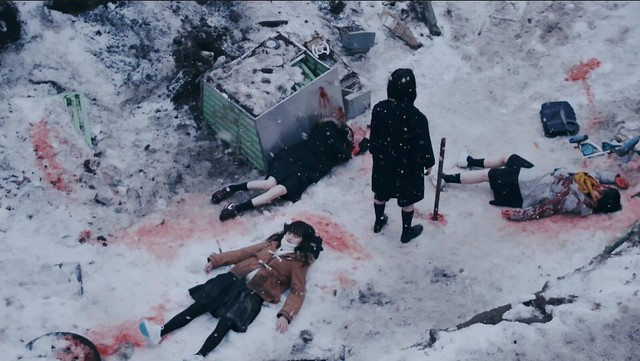
Things take a violent turn when Rumi (Rena Otsuka), a loner who would do anything to impress Taeko, actually carries out burning down Haruka's house with her family in it. With her parents killed and her little sister in an intensive care from burns, Haruka exacts revenge on the gang, one by one, using a rusty nail, a pair of wire cutters, a crossbow and a pocket knife. As usual, nothing is more beautiful than blood on the pure white snow in the Japanese countryside.

THE BLOOD OF WOLVES

Screen Shot 2018-06-22 at 11.30.36 AM
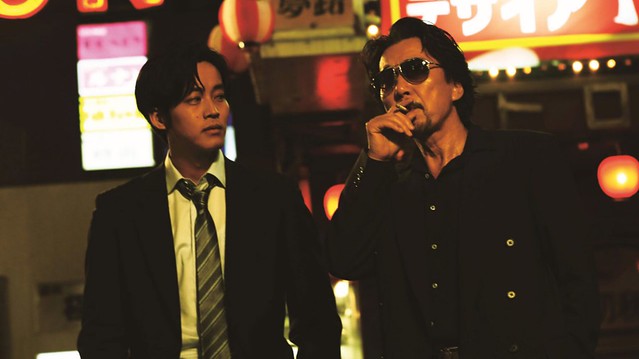
Detective Ogami (Yakusho Koji), known affectionately as 'Gami by his colleagues and yakuza friends alike, leads a colorful existence, walking a tightrope without falling to either side. He has been the key figure in keeping the peace between too warring yakuza clans. But it's Gami's method - taking bribes, getting favors, extortion, violence, etc that irks a young idealist rookie partner Hioka (Matsuzaka Tori). While investigating the murder of a civilian accountant, Hioka realizes Gami might be in too deep with Irako (Ishbashi Renji), one of the crime bosses. Would Gami find out that Hioka is an agent from internal affairs? Would they still bring down the gangs together?

As flamboyant Ogami, always dependable Yakusho is fabulous here playing against type. Without honor, loyalty or fear, his character is only interested in protecting civilians. With large, great supporting roles played by many familiar faces in Japanese cinema (including Maki Yoko of After the Storm, Like Father Like Son and Abe Junko of Still the Water), Blood of Wolves is an excellent, gritty crime film that is hugely enjoyable.

PARADOX

Screen Shot 2018-06-23 at 8.40.41 AM
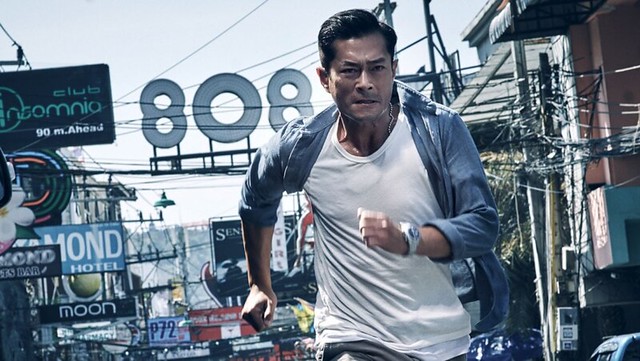
Hardened HK detective Lee (Louis Koo) sees his young daughter grow up to be a teenager. As soon as she takes up a no-good boyfriend and gets pregnant. After an abortion, she runs away to Thailand only to be kidnapped by local thugs who in deal organ transplants. Yes, just like previous SPL series, you don't watch Paradox for the plot. You watch it for a handful of heavenly action sequences!

Choreographed by Sammo Hung, with picturesque backdrops of the bay city of Pattaya, we get some glorious fight scenes involving Koo, Lue Wu and Tony Jaa (as local cops) and Chris Collins (as a sadistic organ trafficker). One set piece in the narrow hallways and rooftops with Collins and Jaa is breathtaking. So are the extended meat packing facility fight sequences, fully equipped (for your pleasure) with plenty of sharp, clanking cutlery. It's not great as the previous SPL series and the typical cheesy HK plotline drags down its greatness a notch. And you only wish you want to see more Jaa, but oh well. Vithaya Pansringarm (Only God Forgives) also shows up as a police chief.