Showing posts with label Kelly Reichardt. Show all posts

Wednesday, September 24, 2025

Master of None

The Mastermind (2025) - Reichardt The Mastermind Kelly Reichardt, who has built a reputation as a singular voice in American Indie cinema, garnered devout followers and admirers with her minimalist films over the years. But she stumbles here with the art heist period piece, The Mastermind. One can say that Reichardt's films are always small and narratively open and unresolved - that the beauty of her films is not in satisfying storytelling, but the loneliness she depicts within her often outsider protagonists. And that assessment rings true. But James, our protagonist in The Mastermind, played by Josh O'Connor, is a thoroughly downbeat, unpleasant character to identify with.

It starts with James Mooney (O'Connor) scoping a museum for a score, with his family in tow - his wife Terri (Alana Haim) and two doting young sons, Carl and Tommy (adorably played by real-life siblings Sterling and Jasper Thompson) in a small town, Massachusetts. The year is 1970 and the shadow of the Vietnam War is on TV and the streets every day. It is revealed that James is an art school dropout ne'er-do-gooder in the eyes of his father (Bill Camp), a local judge, who has strong opinions about law and order. James lies about the imminent commission job, so he can borrow money from his sympathetic mother (Hope Davis) behind his father's back.

The art heist, which happens pretty briskly in the first one third of the film, doesn't go well: his last minute assembled crew screws up and ends up on the front page of a local newspaper and on TV. Hiding the fact that he was the mastermind behind the bungled heist from his family and the paintings he stole ending up in the hands of threatening local criminals, James has no choice but to go on the run. And the film becomes a road movie.

James's first stop is a farmstead of old college buddies Fred (John Magaro) and Maude (Gaby Hoffmann). It is revealed that the paintings James stole belong to one of the professors in their art college days. That the burglary was partly out of old-time resentment (over success?) that James chose those particular abstract paintings to steal. Fred is amused that his one-time classmate made a front page of the news and on the run. Maude, a clear eyed realist who doesn't want more trouble in their stable yet poverty stricken life, sternly tells James to leave.

James now takes off to Cleveland, to mooch off of another old friend. But he finds out that they are not home. With money running out and nowhere else to go, he calls Terri, who promptly hangs up on him. With anti-war protests on the street, and cops swarming to control them, James needs to figure his way out.

Reichardt sketches out James's character in subtle ways, giving us only the slight glimpse of a man whose resentments against the success of others and authority figures run deep. Like her Oregon Trail film First Cow, which showed how capitalism was ingrained in the prospecting days of American history, The Mastermind deals with an apathetic character getting swept up in the anti-war movement in the 60s and 70s. But even in her depiction of a prospecting, proto-capitalist in the west in First Cow, there was a small warmth and humanity in the friendship forged between Cookie and King Hu. Instead, James is a person who would steal an old lady's purse during anti-war protests to get by.

I don't fault Reichardt for trying something different. But if her previous genre exercise was any indication - the eco-thriller Night Moves, the only film in her spotless filmography that I didn't care for, she has a real problem handling depicting on-screen violence. I understand her philosophy of refusing to show it and I respect it. But depictions of violence in genre films are wholly necessary, and avoiding it in unambiguous ways comes across as super awkward and unnatural.

I understand why hotshot actors like Josh O'Connor want to work with Reichardt. Her unique small films and her gentle way of depicting loneliness and isolation are truly remarkable. But when the scale of her project gets bigger and more complicated - like her take on a genre film, this time a heist movie in a period setting, the result is less emotionally engaging. The Thompson brothers give the film its laughs and humanity needed. Haim looks the part as a 70s wife/mom, but is wasted in her one note character.

Thursday, October 6, 2022

Compulsion to Create

Showing Up (2022) - Reichardt Showing up Michelle Williams plays Lizzy in this wry comedy about perseverance of artists and their compulsion to keep on creating, directed by Kelly Reichardt (First Cow, Certain Women). Showing Up is as guileless and minimalistic as usual with all Reichardt’s films and conveys so acutely what it is like to be middle-aged working artists who struggle with self-doubt, professional jealousy, social ineptness, etc., yet keep chugging along, because creating art is the only thing they know.

Lizzy is a frumpy sculptor who works at an art college in a woodsy small-town Oregon. She has a new art show coming up at a small gallery in town but having a hard time concentrating on her work, because life keeps getting in the way – her landlord Jo (Hong Chau, Watchmen Series), who is also an artist and preoccupied by her 2 upcoming shows and keeps delaying fixing the boiler. Lizzy's cat is intent on destroying everything she owns, her divorced parents are always pestering and ever so slightly trying to undermine her achievements in that typical parents' way.

We are introduced to a smalltown art community that exists in every quaint college town where everyone knows each other – Lizzy’s mom is also an administrator at the college and shares an office where she also works. There are annoying colleagues who are less than cooperative at sharing the workload and others she has hots for but won’t reciprocate her feelings back, and even worse, sleep with her nemesis number one, Jo.

Many films on art and art-making, the centerpiece is usually the art itself. In those films, we are reminded of the transformative power of art and the suffering the artists must endure to produce such sublime masterpieces that inspire us all. In Reichardt’s film the art itself is secondary. The perserverance of their creators is.

Williams embodies this down and out creative person without all the backstories written down for her. It’s in her dour mannerisms. It’s in her unsmiling expressions. It’s in her pair of white Crocks and her baggy sweatpants. It’s in her stares of envy when she sees Jo’s large installation pieces.

Andre Benjamin is great as a hunky colleague from the school, so is Judd Hirsh as somewhat famous artist dad who is very supportive, so is Maryann Plunkett as judgmental mom. Hong Chau shines as Jo, a self-confident talented artist who is better in every department in life than Lizzy. But however different they are, at their stages in life, there is a mutual admiration for their craft because no matter what, they share the same compulsion to create.

Unlike the cynical satire of Art School Confidential or Ghost World, where every art school cliché is closely examined and made fun of, Showing Up is stripped down to concentrate on the act of creating. When we were young and in art school, we all thought that we were going to be a famous artist someday, having our work shown in New York galleries and become rich and famous. Some of our peers did become successful in their careers, but most of us didn’t.

As we grow older, us creative types take day jobs to make a living, and do our art on the side. We discuss and lament about not choosing the more lucrative professions, whatever that might have been. We lament about us getting close to making it. But as luck would have it, we didn’t while others did. There’s certain melancholy associated with that. But we don't dwell on that anymore. Life goes on.

Showing Up is emblematic of small pleasures we get from our creations that success doesn’t measure in fame and fortune. It’s self-satisfaction of showing up every day to your studio (or basement, or shed, or garage) and create.

This perserverance manifests itself in the form of a pigeon who was attacked by Lizzy's cat and taken in first by Jo, because of course, she knows how to fix the broken wing of a pigeon, then handed down to take care of by Lizzy, who secretly feels guilty. But the bird wouldn't die! And finally flies away at Lizzy's art show opening night.

Funny and light yet packed with so much daily life wisdom with great, natural performances by everyone involved, Showing Up continues to showcase Reichardt as a unique voice in American film scene.

Monday, July 13, 2020

A Gentle Friendship in the West

First Cow (2019) - Reichardt
First Cow 1
First Cow 2
First Cow 3
First Cow 4
First Cow 5
First Cow 6
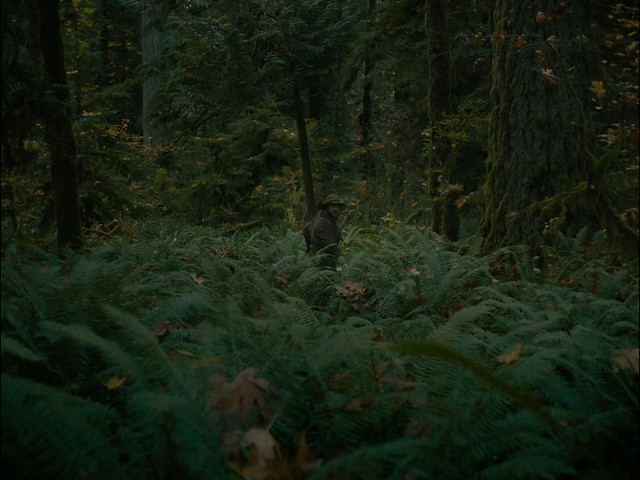
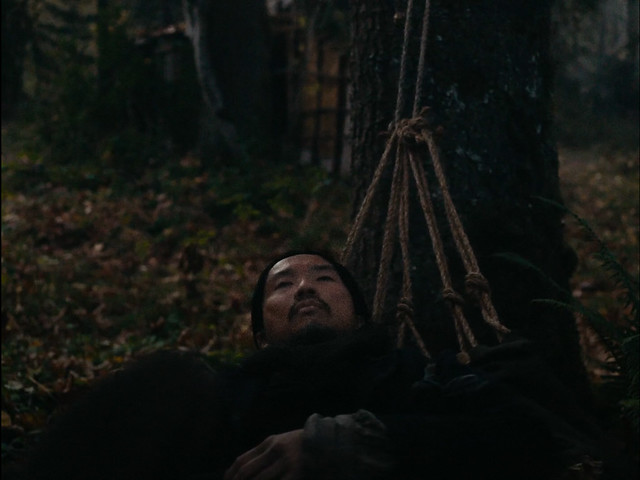
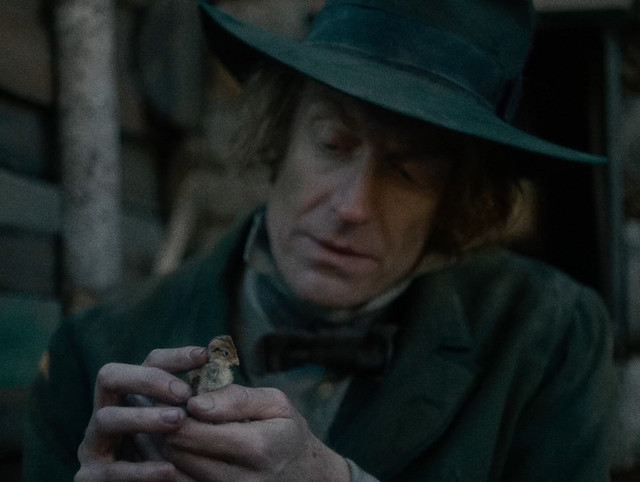
First Cow, Kelly Reichardt's new film, based on a novel, Half Life by her long time writing partner Jon Raymond (who also adapts here with Reichardt), is thing of a beauty from start to finish. It starts with an William Blake quote - "The Bird a nest, the spider a web, man friendship." Friendship here concerns between Cookie Figowitz (John Magaro), a beaver trapping party cook in an Oregon trail and King-hu (Orion Lee), a prospector on the run. When they first meet, King-hu is naked and starving, hounded by Russians who think he crossed them on a deal. Mild mannered Cookie isn't quite welcomed in his own party, as they aggressively bully and threaten him with violence. Cookie helps the Chinaman food and shelter over night. The next time they meet, they are in Fort Tillicum, a small outpost in the woods. They start sharing King-hu's shack in the woods, dreaming of going south and opening up businesses there. There is a cow that is brought up from San Francisco in the order of Chief Factor (Toby Jones), a proper English gentleman who drinks needs milk in his tea. The cow is said to be the first one in this part of the woods. The cow had its mate and a calf, but they didn't make the long journey, they say. Any type of bread is hard to come by those days, and Cookie mentions making some milk bisquits, if he only had milk, to King-hu in passing. King-hu, more entrepreneurial of the two, suggests they milk the Chief's cow at night to make bake goods and sell it. Who's gonna know?

With this simple premise, an unusual Western in the Reichardt way, unfolds. Reichardt's deliverately gentle tone and two gentle protagonists are polar opposite of the Wild West told in film we are used to. And just like her Meek's Cutoff, Reichardt redefines it with First Cow. This early days of America (at least in the prospecting west) back then, was ethnically very diverse and in too much of a survivalist mode to be overtly racist yet. It's good to see the presence of Lily Gladstone (Certain Women) and Gary Farmer in an interesting and perfectly fitting cast. I mean, where else would you see a western about a couple of gentle souls with their small dreams other than in a Kelly Reichardt film? As usual, shot in 16mm, 4:3 academy ratio by Christopher Blauvelt, the mossy forest of Pacific Northwest has never been more beautiful. And with gentle, fitting music by William Tyler, First Cow is one of those rare, perfect movies in every single way. It's something you want to cherish for years to come. Now I want some oily cake with honey.

Wednesday, October 12, 2016

Kelly Reichardt's Back in Form with Certain Women

Certain Women (2016) - Reichardt
 photo 12a5cf08-0ed6-4cdd-81a4-67a6cef7efde_zps2n0fayck.jpg
Certain Women signals that American indie auteur Kelly Reichardt is back in form.

In my opinion, Night Moves, her attempt at an eco-thriller starring Jesse Eisenberg and Dakota Fanning, was a small misstep in her otherwise spotless filmography. Her strength lies in her minimalist approach to depicting the inner lives of lonely people inhabiting her beloved Pacific Northwest, not in complicated plots or building up tension or presentation of violence.

If her newly restored/rediscovered debut film Rivers of Grass gave a nod to Bonnie and Clyde and old noir films, with Certain Women, Reichardt does Altman -- an ensemble cast and loosely connected stories, based on short stories (by a Montana Native, Maile Meloy). But it's still very much Reichardt's film: with muted tones, a sense of melancholy and loneliness, Certain Women excels at dramatizing small, minimalistic character studies that are distinctly small town Americana. Also, many of her films placed women in precarious situations to observe, but I think this is the first time that she is exclusively telling women's stories.

Three slightly interconnected stories, taking place in Montana -- still very much Reichardt's territory -- feature Laura (Laura Dern), a small time lawyer; Gina (Michelle Williams), an overachieving professional and wife/mom; Beth (Kristen Stewart), a newly minted adjunct teacher of a nighttime adult education class; and Jamie (Lily Gladstone), a ranch hand who has a crush on her.

Laura's story has to do with a client of hers, a disgruntled mechanic (Jared Harris) who was injured at the job, but took an early settlement. So he can't sue his former employer. He keeps coming to her office, asking her to check his file again and again. Until she takes him to another lawyer for the second opinion on the case, fully knowing that the other lawyer is going to tell him what she's been telling him for months: he doesn't have any recourse; he lost.

Harris gives an extremely sympathetic performance as a man who has lost everything because of his injury and is trying to hold on to some kind of human connection. Because Dern is attractive, attentive and warm, and because he's lonely and desperate, he just wants to prolong their futile if sexist relationship. The hostage situation ensues. It is beautifully drawn by Dern, who deftly handles sexism without losing her humanity and compassion.

Gina, a high-strung woman married to a mild-mannered, less assertive husband (James Le Gros) and an unresponsive teen daughter, is trying to build a new house for her family. She wants to have a good foundation and is attempting to ask a local kook, if he could sell her a pile of historical sand stone bricks on his otherwise barren lot. The old man doesn't like her sassy attitude and her husband isn't helping much to persuade the man.

Her attempt at building a harmonious family is failing and as we the audience know something she doesn't, it involves her husband. It's delicate, fine-tuned, unhurried storytelling and all the actors involved are fantastic. Michelle Williams might play the least sympathetic character of the three, but she does a very convincing job as a tough businesswoman who has to act a certain way to survive, never letting her guard down.

The most poignant story follows Jamie, a lonely horse ranch hand in the remote town of Belfry. She leads an uneventful, repetitive life, looking after horses day after day. One night she follows some folks into a classroom and meets Beth, a brand spanking new teacher on her first day, reading off an index card full of information on school laws.

She is instantly attracted to Beth and they go to a local diner before Beth drives off to Livingston, a two-hour commute she has to make every Tuesday and Thursday. The only reason Beth, a law school student who also works at a shoe store, took the job is because she thought she got the job at Belgrade, about thirty minutes from Livingston, not Belfry.

Now Jamie has something to anticipate. Their brief late night diner encounters become some kind of ritual, at least for Jamie. They have a moment when Jamie takes Beth to the diner on a horseback. But Beth doesn't show up for the next class and Jamie is told that due to a long commute time, Beth is no longer coming back. On impulse, Jamie drives up to Livingston the same night, in the hopes of seeing Beth again.

Stewart, who's been shedding her teen-idol image by choosing various interesting roles, continues to impress here, playing a straight-laced, awkward young woman whose presence is still magnetic. But she takes a step back, allowing clear-eyed Lily Gladstone to shine in her role. Gladstone's depiction of an ordinary woman with a crush and heartbreak is beautifully realized. Her silent gaze alone speaks volumes.

With the exception of the presence of cell phones, Certain Women has that distinctive, melancholic, 70's American movie vibe. Reichardt masterfully draws these sad and poignant human encounters with the help of director of photography Christopher Blauvelt, who has collaborated with her since Meek's Cutoff, lensing underpopulated, Ed Hopper-ish small towns and the beautiful scenic vistas of Montana. Perfectly tuned for its quietude imbued in loneliness and longing, Certain Women is certainly one of her finest films to date.

Certain Women premiered at the Sundance Film Festival and will open in select theaters in the U.S. on Friday, October 14.

Sunday, August 31, 2014

Going Upstream

Night Moves (2013) - Reichardt
 photo 49124d0e-ba89-4293-9116-4c07971668dc_zps13901a52.png
I like where Kelly Reichardt's headed with each of her films. I appreciate her intimate knowledge of the surroundings in her films. Night Moves is a moody character study with exceptionally written script and impeccable acting by three principals (Jesse Eisenberg, Dakota Fanning and Peter Sarsgaard). It concerns 3 eco-terrorists in Oregon, planning to blow up a dam. Because it's killing salmons. As one of the characters says that we don't need to check on our facebook or use our iphone every goddamn minute. We don't need another dam to generate electricity. But the politics of these peoples are peripheral.

Reichardt shows that she is very much capable of doing a superb thriller - tension she creates from these characters paranoia and the act of going upstream to blow up the dam is extremely well realized. Everyone they encounter, every car passing by makes them extremely cautious. After all, the job is not a rewarding one. Those days of becoming a hero or martyr for the cause is over. In this day and age, activism as we all know, is mostly theoretical and isolated to taking small actions. These random acts of violence are carried out discreetly and unceremoniously by only few committed individuals who truly believe that they can shake the system and wake people up. You can't talk about your accomplishments, you have to keep a low profile, probably for the rest of your life.

The fallout begins after the act. There is a camper missing after the dam break. Dena (Fanning) is guilt stricken and having anxiety related illness and keeps contacting Harmon (Sarsgaard), even though three of them agreed to not to talk with each other after the job. Harmon tells Josh (Eisenberg) to calm her down. Josh, having doubts about what they have done himself ('there are 21 other dams, blowing up one won't make any difference') gets even more paranoid about the prospect of Dena yapping to the authorities.

I know that Reichardt is a smart enough director not to blurt out an obvious message or anything. But the third act, the confrontation of Josh and Dena really didn't work for me. I also know that Reichardt's not into violence against women, but the whole sequence is pretty awkward. Even though the whole film is subtle, one would draw a conclusion that the film is about 'violence begets violence', instead of taking it as a fascinating character study. Yes it is unnecessary to have 23 golf courses in the middle of the desert community. We live in an excessive culture for sure. Knowing all these place and people who inhabit these parts of the world- Eugene, Bend, Lake of the Woods, Ashland, activist scene, communes, organic farming, I can tell you without any doubt that Reichardt has no disrespect for their political beliefs or way of living. But she is not the master of capturing the act of violence and murder. This is where her minimalistic approach hits the wall. Maybe I'm too critical of this one scene but I can't help noticing it, as it sticks out like a sore thumb.

Saturday, April 9, 2011

Manifest Destiny in Smaller Scale

Meek's Cutoff (2010) - Reichardt
I bet Kelly Reichardt has had several infuriating experiences sitting in the passenger's seat of a car driven by male drivers who suffered from 'never-ask-for-directions-when-lost' syndrome and been wanted to make a movie about it. This slight anti-western takes place in Oregon Trail in 1845. Three ox-carts driven pioneer families- the Tetherows (Will Patton, Michelle Williams), the religiously inclined Whites (Shirley Henderson, Will Huff) and the young Gatelys (Paul Dano, Zoe Kazan) with a blowhard guide named Meek (the great Bruce Greenwood, buried in stringy hair & beard and sounding like beetlejuice) get lost in the arid surroundings.


Stephen Meek is a quintessential foolhardy outdoorsman- arrogant, irrational and full of vanity. Soon the band picks up on Meek's bullshit, especially Emily Tetherow. She lets her displeasure known. He then asks her opinion on his philosophy about man and woman: "Woman is chaos and man is destruction." Emily answers with "I'll have to think about it." Whether Reichardt believes this to be true or not, in the end, it's Emily who becomes in charge of their destiny.


The drinking water is running low and the pioneers start dumping family heirlooms to lighten the load. The tension amongst them doesn't actually materialize until they capture a spying Peyote Indian (a violent savage, according to Meek). Meek wants to kill the savage right away but the Tetherows want to keep him alive since he might lead them to where the fresh water is. Gately girl (Kazan) takes the role of 'the one that goes crazy in the wilderness'. Ok, this being Reichardt movie, known for her minimalist aesthetics, nothing on the screen is too dramatic. Even Emily (with her bonnet tightly around her head, covering her facial expression most of the time- reminding me of a burqa on Muslim women) doesn't stand out much from the subservient the other two girls. Everything is understated.


Meek's Cutoff is a frontiers movie with a tinge of Aguirre. It's just a less dramatic take on manifest destiny. If Aguirre would register at 10 on the dramatic scale, Meek's Cutoff would be at about 0.5. But with good ensemble cast and beautiful yet pragmatic, mostly static cinematography and great tension creating soundtrack by Jeff Grace, the film is a quietly engrossing experience that doesn't provide you with an easy way out.