Showing posts with label Kristen Stewart. Show all posts

Saturday, March 21, 2026

Amphibian

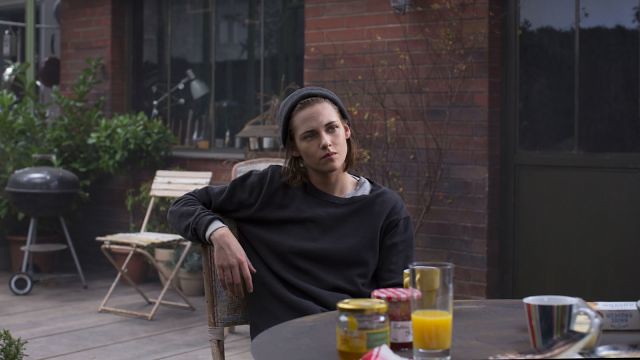
The Chronology of Water (2025) - Stewart Screen Shot 2026-03-19 at 6.06.09 AM Screen Shot 2026-03-21 at 8.17.01 AM Screen Shot 2026-03-21 at 8.15.29 AM Screen Shot 2026-03-21 at 8.12.20 AM Screen Shot 2026-03-21 at 8.14.46 AM Screen Shot 2026-03-19 at 6.39.09 AM Screen Shot 2026-03-21 at 7.06.10 AM Screen Shot 2026-03-21 at 7.16.15 AM Screen Shot 2026-03-19 at 6.04.55 AM Kristen Stewart's long gestating directorial debut, based on a memoir of the same name by Lidia Yuknavitch is a stunner. Grounded in Imogen Poots' committed performance, Stewart goes on an unconventional way to tell a story of a writer struggling to find her way from sexual abuse in the hands of her father that she and her sister suffered as children.

Rather than a straight, chronological narrative, the film jumps back and forth in fragmented, sensory overload fashion in grainy 16mm camera work. From the accumulation of these snippets of memories of Yuknavitch growing up, the narrative slowly emerges- competitive swimming, first marriage to an effeminate young man, still born baby, finding peace with now grown up older sister who fled home from abuse and therefore Lidia having attachment issues with, further exploration of her bi-sexuality and BDSM, drugs and alcohol addiction and writing.

The muted low hum of being under water is ever present, so is Lidia's voice over. It takes a while for Lidia to find her calling in writing. There were supportive people along the way - Claire (Esme Creed Miles, Silver Haze) her best friend and lover, Ken Kesey, the famous author of One Flew Over Cuckoo's Nest, played here by James Belushi as a mentor in writing workshop, Claudia (Thora Birch), Lidia's older sister who becomes a bedrock of her support system and Kim Gordon as a scarred photographer whom Lidia explores BDSM with.

The Chronology of Water is a raw and honest depiction of sexual abuse survivor and remarkable power of art and self expression to overcome the trauma. Poots is mesmerizing in her role as a damaged young woman. Belushi settles comfortably in a sage role, who recognizes Lidia's talent, exerting a major Gene Hackman vibe.

The jumpy structure in the timeline matches how our memory works- reminding us of the ebbs and tides of the waves of time: how it contracts and expands and memories intensify or dissipate and are triggered by seemingly trivial moments. It's a great debut by an intense artist who is serious about filmmaking and its messages.

Tuesday, May 31, 2022

Its Soul Got Sucked Out

Crimes of the Future (2022) - Cronenberg Crimes of the Future Hardly reinventing the wheel, but with Crimes of the Future, David Cronenberg reiterates his usual theme strongly- inadequacy of human bodies and our soulless society. Crimes might lack his usual titilation and shock value, but it's still quite potent in making those points, more so than his better films over the years, namely - Dead Ringers, Crash, Cosmopolis and even Dangerous Methods.

Crimes of the Future presages with a disturbing beginning where a mother murders her own child after the young boy starts chomping at the plastic garbage bin in their bathroom. It's the indescript near future where human bodies evolved to a point that they don't feel pain or in needs of anticeptics when the knives cut into them. Saul Tenser (Viggo Mortensen) is a performance artist. He and his partner, a former surgeon Caprice (Léa Seydoux) performs a sort of live autopsy on Saul's torso. It's Saul's ability to will a new organ that serves no function to his body and Caprice's tattooing and removing the organs that make them the superstars of this seemingly still unlawful and underground art form.

Saul, always shrouded in veils and hunched over, is physically not well. Either his mutations made him always brittle and ill, or his performances left him looking like a MS sufferer; he spends most of his time in the aide of a cocoon like bed hanging from the ceiling - a true cronenbergian contraption that looks like an upside down cockroach and a skeletal chair that helps him feed.

Their registering the new organs at the very literally named Organ Registy Office, a dreamy, Kafkaesque reimagining of what 'institution' looks like, connects the pair to a nebbish bureaucratic hottie Timlin (Kristen Stewart in a very comical performance), who breathlessly praises Tenser's artistry. Surgery is new sex, she declares. The dead child's father, who's also training his body to the effects of poison, approaches the pair and offers his son's body for the performance. Do they perform the live autopsy of the boy in front of the live audience or no?

Watching Crimes of the Future immediately reminded me of the famed painting by Rembrandt - The Anatomy Lesson of Dr. Nicolaes Tulp. In it, spectators surround a recently deceased corpse and Dr. Tulp is explaining the denuded musculature of the corpse's left forearm. Yet, the spectators' attention is not with the corpse but elsewhere and they are not even noticing the inaccurate arm (it's the right hand depicted instead of the left). Rembrandt was commenting on the inadequacy of seeking knowledge and truth in the human body in the Age of Enlightenment. And this is the point Cronenberg has been making all his career- our futile quests for answers in what makes us humans, in our bodies which are the most personal, tangible things that each of us possesses, and not finding it there. And pursuing so hard to find something in all the blood and guts, you lose sight of whatever the humanity that's left in us. In a way, Cronenberg is going back to the basics - to the flesh after more cerebral musings in searching for the soul (Dangerous Methods, Cosmopolis). Crimes of the Future is less kitschy and much less over the top parody like History of Violence or Maps to the Stars. And its general mood is closer to Spider and Dead Ringers. But nonetheless it's undeniably Cronenbergian and great.

Monday, November 1, 2021

The Little Things

Spencer (2021) - Larrain spencer Pablo Larrain is no stranger in creating unusual, yet incisive film versions of lives of famous historical figures (Neruda, Jackie). In Spencer, he approaches Diana, Princess of Wales, smartly and intimately with the help of Kristen Stewart. The result is a fleeting portrait of the inner life of a much exposed and examined tragic figure.
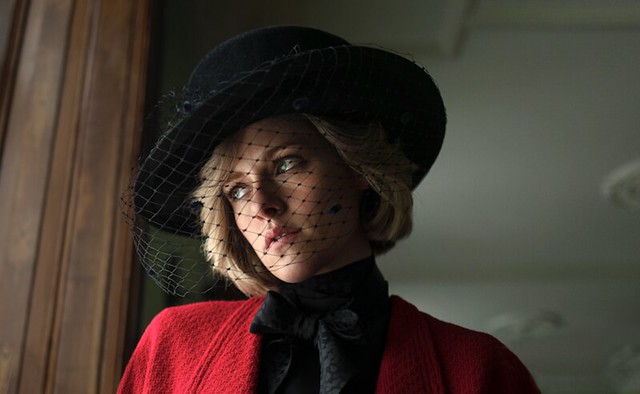
Unlike conventional biopics with long stretches of a subject's lifespan, Larrain frames Spencer within a period of 3 days (during a Christmas retreat) of Diana's life, in the midst of her failing marriage with Prince Charles in her 30s with two growing young boys. The opening title states "A fable from a true tragedy", effectively swatting away any possible criticisms of historical inaccuracies it might contain.

It's a fable indeed. Spencer is about a trapped young woman, forcibly bound by stifling tradition of the highest order and subjected to nearly hysterical media attention. The film takes a gentler look at her trying to find any momentary escape with the help of kind onlookers.

Even decades after her untimely, violent death, Princess Di still has a hold on public's fascination: the fairytale story of a young woman, a commoner, swept off her feet by a literal prince who is next in line to the British throne. There were countless portrayals of her on big and small screens over the years, most recently seen in the successful TV show The Crown, played by young ingénue, Emma Corrin, who captured the bewilderment and naiveté in the early stages of the royal matrimony.

So how does Larrain, one of the most exciting talent in modern cinema who is skilled at tinkering with the film medium both in form and in content, interpret the life of the princess? And what does the great Kristen Stewart offer in this well-worn subject?

Diana is first seen driving in her sports car in designer clothes and tinted glasses. She is lost on her way to The Sandringham House, the Queen Elizabeth II's retreat home in Norfolk, even though Di was born and raised near there. Things have changed around here quite a bit, she muses later on. Arriving last, Diana's confronted by Major Alistair (Tim Spall), a stern army man specially recruited to keep an eye on her, serving as a headmaster of the house for the duration. He keeps reminding her that it's the tradition and the oath to the betterment of the country that are the most important aspects for a public figure to keep.

The large house with grand hallways and opulent decors is figuratively and literally cold and unwelcoming. The British Royal Family is a tight pack that Di and her little cubs don't belong to. Suffering from bulimia, she is constantly late to dinners, forgets what clothes to wear on what occasions, can't open the curtains because of paparazzi and can't visit her childhood home, which is just a stone's throw away.

Someone left a book on Queen Anne Boleyn, who was beheaded for allegedly having an affair by Henry VIII, on Di's bed. Is this a warning of some kind- to make her behave or to leave before it's too late? Anne herself appears from time to time to warn her the same fate that is waiting for her.

Along with her trusty children, Maggie (Sally Hawkins), a childhood friend of Di, now her dresser and Darren (Sean Harris), the head of the cooks, are the only few friendly faces in that house. Like every British public at the time, they fell in love with a sweet, young princess. They can't bear the thought of their beloved Di to crumble in front of their eyes. They want very much to see her survive those three days. It turns out, Alistair also has a soft spot for her too and wants to grant her moments of freedom, like letting a canary out of its cage for a while.

Di finds her escape in small things. She rebels in changing her clothes while curtains open, sneaking out at night for a walk, intentionally getting lost, wearing the wrong dress in the morning mass, eating pastries in the middle of the night in the kitchen, etc.

Spencer paints the picture of Diana when she has given up to be happy - a trapped woman and a mother of two. There is no future and past is present.

French cinematographer Claire Marthon (Portrait of a Lady on Fire, Atlantics, Stranger by the Lake) keeps tight focus on Di (Kristen Stewart) the whole time. We don't get to see anyone in focus for a long time. Only later on we get to glimpse Charles (Jack Farthing) and the Queen (Stella Gonet) and the like. The power is in close-ups. Stewart's gaunt anguished face and fluttering eyelashes sell the film.

Jonny Greenwood's score adds another layer for the film. I find his work distracting in some other films, but in Spencer it works seamlessly. His mix of classic strings and jazzy bass, keeps the film flowing forward.

Stewart, who continues to choose interesting and diverse roles, digs deep into her role of a very famous tragic figure. Her physical vulnerability and beauty coupled with her youthful defiance and a sliver of smile she flashes while breaking the rules embodies the princess and her humanity in her darkest hours.

Hawkins, an actress who brings warmth in any role she plays with her smile is perfect for role of Maggie, Di's few confidants who sympathizes with her old friend. Maggie's declaration of love on the beach is perhaps the most joyous, heartwarming part of the film.

But the showstopper of Spencer belongs to a sequence where Di runs on the grounds of the Sandringham House, decked in countless designer clothes, running from screen left to right: Larrain captures the essence of Diana Spencer in that instance, a commoner princess, trying to outrun all the rigid traditions, failing loveless marriage and be free, all the while being a fashion icon in a fitting 80s music video aesthetic.

The 80s hit song All I Need is a Miracle blasting in the car stereo, Di and her cubs’ escapes the 3 days of hell, however short the reprieve that must've been in real life.

Larrain, a good tactician he is, knows how to go about tackling the subject who is so well known and overly exposed. Like in Jackie, it's all about contrasts and in all the small things. A trapped woman, like Jackie O in the room full of dark suited men after the assassination of her husband, her bruised leg, trying on various clothes. Casting has to be right. Portman was perfect for that measured, educated woman from a well to do upbringing. In Spencer, thanks to Stewart, there's a sense of abandon - sweet yet scarred with the hint of rebellion still left in her. Larrain understands exactly what more can be said about in these world famous tragic women. It's their humanity.

On the heels of his great, energetic dance film, Ema which was release last year, Spencer is yet another major film from Larrain, a modern master in cinema. And his illustrious, diverse cinematic expansion continues. Do not miss seeing the film on the big screen.

Spencer opens in theaters nationwide on 11/5.

Friday, June 5, 2020

Hatchet Murder Love Story

Lizzie (2018) - Macneil
Screen Shot 2020-06-05 at 9.25.37 AM
Screen Shot 2020-06-05 at 9.26.15 AM
Lizzie Borden has been a subject for folklore and American popular culture for a long time. Accused of her parent's sensational, grizzly hatchet murders but never convicted, Borden story has been constantly gossiped and dramatized ever since. Since everything about the murder is a pure speculation, director Craig Macneil, writer Bryce Kass and producer Chloë Sevigny tackle the subject from an unrequited lesbian lovers' angle in an aggressively patriarchal era. And it's an interesting angle indeed.

Sevigny plays Lizzie Borden, a woman past her prime and never married (by the time of murder, she was 32), probably due to her health conditions (she was epileptic). Confined in a victorian house with no electricity (family was wealthy but frugal) with her overbearing father and stepmother, Lizzie rebels, questioning her father's shaky finances and wanting independence.

Maggie (Kristen Stewart), a new young servant from Ireland catches Lizzie's eye and they become close confidents, especially after Lizzie finds out her father started frequenting Maggie's attic room in the middle of the night.

Things build up to the murder like a good thriller - Lizzie's father beheading all her beloved pigeons as a punishment for her insolence, her sexual affair with Maggie, her creepy uncle's shady financial scheme against her father's wealth. As story unfolds in non-linear fashion, we see the murders taking place while the court case plays out. In filmmakers interpretation, it was a completely exacted premeditated murder, not a crime of passion - Lizzie killed her stepmother first, since if father dies first, all his family wealth will go to the widow's family. And to make things easier for clean up, Lizzie (and Maggie) strips naked, sneaked around their victims with the hatchet (the same hatchet her father used to kill her birds) in their hands.

It's a very unsentimental, drama free interpretation of the incident. Cinematography, being in a electricity-less household, is minimal and dark. The main point is made when Maggie visits Lizzie in holding cell during trial. She asks her mistress what she wanted from her. Lizzie says she want them to try. Maggie responds, "You are dreaming. You don't see it. You can't see it. We live in this world, not another." In fact, Maggie moved away to live in Montana where she died of an old age, Lizzie defiantly remain in her home town in Massachusetts. It's very similar to Celine Sciamma's acclaimed hit Portrait of a Lady on Fire, but with blood and murders, yet strangely subdued. Not bad.

Sunday, March 12, 2017

Hyper Capitalism vs. Spirituality

Personal Shopper (2016) - Assayas
personalshopper2
Loved it. With a lucid, flowing script, Assayas lets out the best in Kristen Stewart. The film's more Demon Lover or Irma Vep than Summer Hours. Assayas sketches out the general framework of the film in broad strokes - Maureen (Stewart), a girl who can't let go of her twin brother's death, comes to Paris where he died and waits for his signal (they were both mediums). In the mean time, she works as a personal shopper for Kyra (Nora von Waldstätten), who can't do normal things for herself because of her celebrity status. The result is a delicious, genre bending whatsit that highlights Stewart's best assets - her nonchalance and youthful physical beauty. Added on here is her vulnerability. She is pretty much the same character here as she was in Clouds of Sils Maria or anything she's ever done that I saw her in, except here she is a fully flesh and blood, a young woman unsure of her judgment and emotion.

After determining the presence who vomits ectoplasm in her brother's house is not her brother and giving up the hopes of contacting her brother again, Maureen starts getting text messages from an unknown caller. He is watching her every move, and making her do things. Things turn darker and scarier for Maureen.

Assayas is operating on his top form with Personal Shopper. Forget about his penchant for portraying flash subjects and celebdom. No other European filmmaker better keeps balance in catering toward box office appeal while not compromising his/her artistic vision than he (Lars von Trier is the other I'm thinking of, but to lesser extent). As usual for Assayas standards, there are many international actors showing up - von Waldstättten (October November), Lars Eidinger (Everyone Else, Sils Maria), Anders Danielson Lie of Joachim Trier films. And of course in the middle of it all is Stewart. She plays her character with so much disdain. She doesn't need a man to be sexy (no pun intended). Her eyes reading the text message, "you are afraid because it's forbidden?" alone makes her sexy. And where else would you see her changing clothes and putting on expensive dresses so casually? One of the year's best.

Wednesday, October 12, 2016

Kelly Reichardt's Back in Form with Certain Women

Certain Women (2016) - Reichardt
 photo 12a5cf08-0ed6-4cdd-81a4-67a6cef7efde_zps2n0fayck.jpg
Certain Women signals that American indie auteur Kelly Reichardt is back in form.

In my opinion, Night Moves, her attempt at an eco-thriller starring Jesse Eisenberg and Dakota Fanning, was a small misstep in her otherwise spotless filmography. Her strength lies in her minimalist approach to depicting the inner lives of lonely people inhabiting her beloved Pacific Northwest, not in complicated plots or building up tension or presentation of violence.

If her newly restored/rediscovered debut film Rivers of Grass gave a nod to Bonnie and Clyde and old noir films, with Certain Women, Reichardt does Altman -- an ensemble cast and loosely connected stories, based on short stories (by a Montana Native, Maile Meloy). But it's still very much Reichardt's film: with muted tones, a sense of melancholy and loneliness, Certain Women excels at dramatizing small, minimalistic character studies that are distinctly small town Americana. Also, many of her films placed women in precarious situations to observe, but I think this is the first time that she is exclusively telling women's stories.

Three slightly interconnected stories, taking place in Montana -- still very much Reichardt's territory -- feature Laura (Laura Dern), a small time lawyer; Gina (Michelle Williams), an overachieving professional and wife/mom; Beth (Kristen Stewart), a newly minted adjunct teacher of a nighttime adult education class; and Jamie (Lily Gladstone), a ranch hand who has a crush on her.

Laura's story has to do with a client of hers, a disgruntled mechanic (Jared Harris) who was injured at the job, but took an early settlement. So he can't sue his former employer. He keeps coming to her office, asking her to check his file again and again. Until she takes him to another lawyer for the second opinion on the case, fully knowing that the other lawyer is going to tell him what she's been telling him for months: he doesn't have any recourse; he lost.

Harris gives an extremely sympathetic performance as a man who has lost everything because of his injury and is trying to hold on to some kind of human connection. Because Dern is attractive, attentive and warm, and because he's lonely and desperate, he just wants to prolong their futile if sexist relationship. The hostage situation ensues. It is beautifully drawn by Dern, who deftly handles sexism without losing her humanity and compassion.

Gina, a high-strung woman married to a mild-mannered, less assertive husband (James Le Gros) and an unresponsive teen daughter, is trying to build a new house for her family. She wants to have a good foundation and is attempting to ask a local kook, if he could sell her a pile of historical sand stone bricks on his otherwise barren lot. The old man doesn't like her sassy attitude and her husband isn't helping much to persuade the man.

Her attempt at building a harmonious family is failing and as we the audience know something she doesn't, it involves her husband. It's delicate, fine-tuned, unhurried storytelling and all the actors involved are fantastic. Michelle Williams might play the least sympathetic character of the three, but she does a very convincing job as a tough businesswoman who has to act a certain way to survive, never letting her guard down.

The most poignant story follows Jamie, a lonely horse ranch hand in the remote town of Belfry. She leads an uneventful, repetitive life, looking after horses day after day. One night she follows some folks into a classroom and meets Beth, a brand spanking new teacher on her first day, reading off an index card full of information on school laws.

She is instantly attracted to Beth and they go to a local diner before Beth drives off to Livingston, a two-hour commute she has to make every Tuesday and Thursday. The only reason Beth, a law school student who also works at a shoe store, took the job is because she thought she got the job at Belgrade, about thirty minutes from Livingston, not Belfry.

Now Jamie has something to anticipate. Their brief late night diner encounters become some kind of ritual, at least for Jamie. They have a moment when Jamie takes Beth to the diner on a horseback. But Beth doesn't show up for the next class and Jamie is told that due to a long commute time, Beth is no longer coming back. On impulse, Jamie drives up to Livingston the same night, in the hopes of seeing Beth again.

Stewart, who's been shedding her teen-idol image by choosing various interesting roles, continues to impress here, playing a straight-laced, awkward young woman whose presence is still magnetic. But she takes a step back, allowing clear-eyed Lily Gladstone to shine in her role. Gladstone's depiction of an ordinary woman with a crush and heartbreak is beautifully realized. Her silent gaze alone speaks volumes.

With the exception of the presence of cell phones, Certain Women has that distinctive, melancholic, 70's American movie vibe. Reichardt masterfully draws these sad and poignant human encounters with the help of director of photography Christopher Blauvelt, who has collaborated with her since Meek's Cutoff, lensing underpopulated, Ed Hopper-ish small towns and the beautiful scenic vistas of Montana. Perfectly tuned for its quietude imbued in loneliness and longing, Certain Women is certainly one of her finest films to date.

Certain Women premiered at the Sundance Film Festival and will open in select theaters in the U.S. on Friday, October 14.

Thursday, October 9, 2014

Hall of Mirrors

Clouds of Sils Maria (2014) - Assayas
 photo clo_article_story_large-630x420_zps4e9aad0c.jpg
Delicious! Assayas' take on celebrity, acting, time passing is an extremely entertaining hall of mirrors. It concerns an aging movie star Maria (Juliette Binoche) and her personal (very)American assistant Valentine (Kristen Stewart) heading over to Switzerland to celebrate the life and work of the great stage/film director Wilhelm Melchoir who gave Maria her first big break in Maljora Snake, a mythical tale of two women, only to find out that he just passed on. Now Maria has to improvise an eulogy instead of tribute. Valentine is a very able assistant, always on her mobile devices arranging everything for Maria. She informs her movie star employer that a young hotshot director (Lars Eidinger of Alle Anderen), wants her to be in the stage production of Maljora Snake revival, but this time, he wants her to play the older part. The younger part Sigrid, the part that made her famous, is going to be played by Hollywood's rising star and the center of the gossip world, 19 yr old Jo-ann (Chlöe Moretz). This proposition takes Maria through a whirlwind of emotional turmoil. She hated the character of Helena who commits suicide after getting dumped by Sigrid. Time has passed: no longer young, she has to endure the fate of her predecessors. With much Valentine's urging, she accepts the role and immediately regrets it right afterwards. She googles Jo-ann's latest shenanigans where the little brat assaults police officers, blabbering her mouth off at various talkshows, etc. But nevertheless, she starts rehearsing the play with Valentine in the remote house (Wilhelm's) on the mountains in Switzerland. As they say the lines back and forth, the material strongly resembles their relationship without them noticing it.

This multi-layered reflections on real life situations with all the principals involved is wickedly entertaining. In Assayas hands, these materials are never trash but playful. There is not an ounce of wink-wink sarcasm of typical Hollywood satire. There is no surprise in the great Binoche, showing wide range of emotions of a seasoned actress as she grapples the idea of time passing and celeb-dom but it's Stewart who steals the show. That cocky confidence, that one note delivery is a perfect match for the role. Their back and forth banter is extremely believable and nuanced. Assayas never makes it over-the-top: the sexual tension between the two women are subtly presented, never vulgar. And the storytelling is brimming with intelligence but never feels trickery. One of the most entertaining, engaging films I've seen by Assayas.

Clouds of Sils Maria
plays as part of NYFF on 10/8 and 10/9.