Showing posts with label Nina Hoss. Show all posts

Friday, December 15, 2023

Go with the Flow

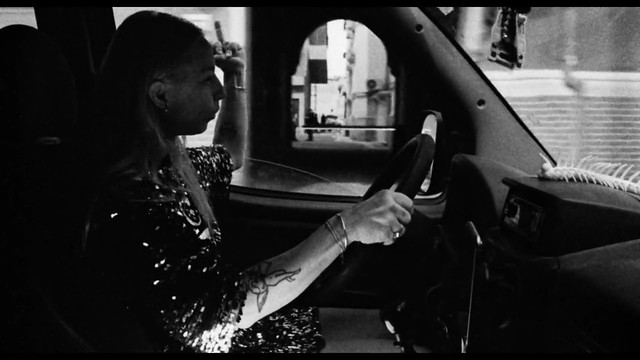
Do Not Expect Too Much from the End of the World (2023) - Jude Screen Shot 2023-12-14 at 8.54.14 AM Screen Shot 2023-12-15 at 10.56.40 AM Screen Shot 2023-12-15 at 10.46.01 AM Screen Shot 2023-12-14 at 8.35.58 AM Screen Shot 2023-12-14 at 8.44.45 AM Screen Shot 2023-12-14 at 8.44.58 AM Screen Shot 2023-12-15 at 8.49.07 AM Screen Shot 2023-12-15 at 11.27.55 AM As with his previous film, Bad luck Banging, Radu Jude's new film Do Not Expect Too Much from the End of the World is unsparing, uproarious satire that implicates everyone in this needlessly complex society we live in. And it's loads of fun. It's a frenetic, 'moving' picture as we take the passenger seat in a van driven by Angela, a hard-working production assistant of a PR firm, Forbidden Planet, hired by Austrian furniture company. Angela's Tik Tok filtered alter-ego is known as Bobita, a bold headed, thick unibrow and bearded dudebro who spews the vilest, sexist, racist rant with six thousand followers. She spends most of her time in her car driving because her job requires driving and interviewing potential workplace accident victims, one after another, who could be featured in the company's safety promotional video. And every chance she gets, she becomes Bobita anywhere.

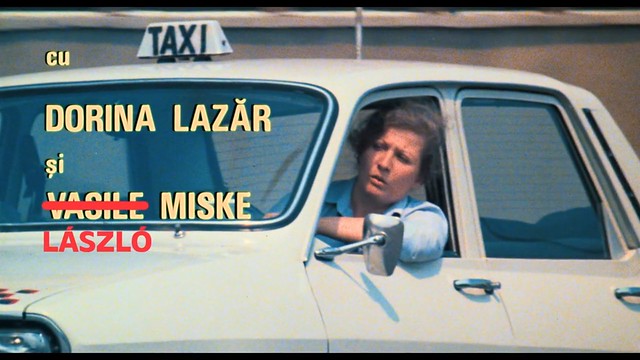
Angela's hectic daily routine is intercut with an early 80s Romanian melodrama called Angela Moves On, about a wholesome female taxi driver and her life, as she drives from place to place in Bucharest. The film juxtaposes the changes in the streets and neighborhoods from Ceaușescu era. Many anecdotes, and musings of all the characters concern the reality today's Romania and of the world.

Jude's playfulness is infectious. The actress who plays Angela the cab driver makes an appearance as the character in the film. She plays a mother of a man on a wheelchair who was chosen to be in the promotional video. The man plays himself who was a victim of the workplace accident that is obviously the fault of the company for its negligence.

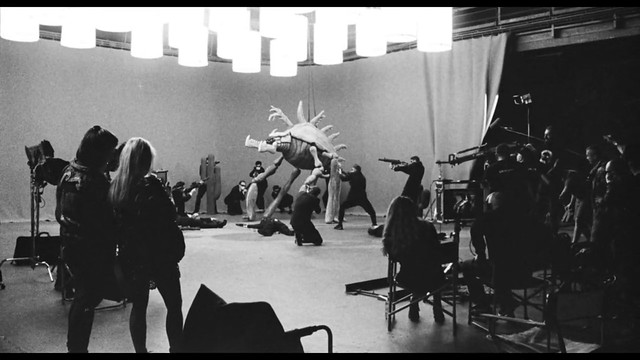
German Actress Nina Hoss plays the Austrian boss Doris Goethe (yes that Goethe), whose furniture company is leveling Romanian forests, Uwe Boll, the German b-movie director also makes an appearance as himself, directing a monster CGI movie in the green screen backdrop.

However hilarious, the film is not all laughs. In the middle of its 2 hrs. 30 min. running time, he devotes a good 4 minutes to feature a silent segment composed of hundreds of crosses that are strewn about along the highway which Angela describes as the 250-kilometer highway with 600 crosses, while giving Doris Goethe a ride to the hotel. Puzzled Doris asks what it means. It's a one-way road that has a very narrow emergency lane, but no one follows that. They use it as if it's two-way roads. "That's very stupid." Doris responds. "We are!" Angela responds. Nothing works the way it's supposed to. Corruption is everywhere. In the EU, Romania is the poorest country, she says. Maybe except for Albania. They are primitives, Angela utters.

Biting and thought provoking, Do Not Expect Too Much is a perfect survey of the state of our lives right now. Jude, along with Assayas and Bonello, is a master chronicler of ever changing, ever so complicated world we can't make sense of anymore. It's fun, it's tragic. All we can do is go along with the flow, like Taoists saying.

Thursday, October 6, 2022

Fallen Maestro

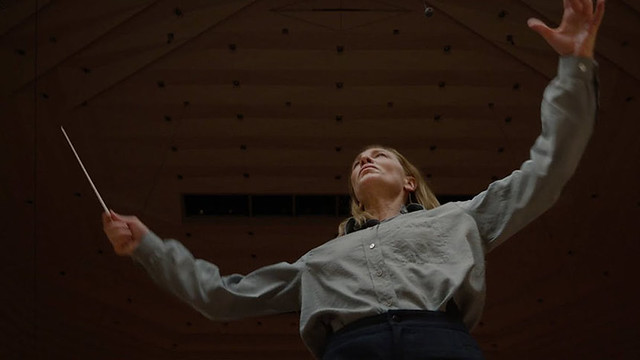
Tár (2022) - Field Tar I’m sure parallels between conducting and directing was not lost in Todd Field when he conceived the idea for Tár. With the film, he breaks 16 years hiatus after critical success of his dark suburban melodramas (In the Bedroom and Little Children), and proves himself to be a maestro, by directing, producing, and writing the film about the famed conductor, getting great performances out of great international talents. I’ve been closely following his career trajectory as he was supposed to adapt and direct Jonathan Franzen’s Purity as a showtime miniseries, since book has been my favorite of the last decade. And I was sad to learn the news when it didn’t materialize. But with Tár, he presents himself incontrovertibly to be Hollywood’s best kept secret.

Talking about gender equality in the face of sexual misconduct in the social media era, Todd Field's biting and grandiose character study Tár is at once current in its sexual politics and old fashioned in its rise and fall narrative of its subject. The film's astute observation of today's social climate and brisk pacing reminds me very of David Fincher's Social Network (but not its Adderall induced choppy editing). But unlike Fincher's precisely timed zeitgeist Facebook saga which was geared mainly toward millennials, where everything felt like kids-playing-in-adults’-clothes, Tár, heavily relying on the strength of Kate Blanchett's towering performance, feels very much a grown-up film.

Lydia Tár (Blanchett) is first seen nodding off on the private jet. Someone's recording her with their phone while texting. These first frames of the movie sets the somewhat ominous tone of what’s to come. Maestro Tár is one of the select few EGOT- Emmy, Grammy, Oscar and Tony awards recipients, and a resident conductor of the Berlin Philharmonic Orchestra. She divides her time between New York and Berlin, gives interviews, teaches at Julliard, drives her kid to school, takes meeting with her mentor and fellow conductors in fancy restaurants and hotel rooms. She is preparing the live music recordings of the much coveted piece within classical music circles, Mahler's 5th Symphony.

Field is quick to establish the ecosphere of the famed figure’s lifestyle - a Porsche, a private jet, a big cement architectural house in Berlin where she shares with a famed violinist Sharon (Nina Hoss, Barbara, Phoenix) and their adapted pre-teen daughter Olive. The lengthy TV interview she gives in the beginning also greatly reveals her public persona - a well-educated and well-traveled woman and how she broke the ceilings of white male dominant conducting world and how she learned to appreciate music from her mentor Leonard Bernstein. But perhaps being modest, she doesn't see herself as a trailblazer. 'Being a woman' was neither disadvantageous or beneficial to her success.

Another revealing, lengthy scene takes place at her Julliard classroom where she teaches young students. She mercilessly scolds a young man, who identifies himself as an BIPOC LGBTQ, for refusing to play Bach because he sees Bach as a white male misogynist who sired 20 children from several different women. She makes a point that but it's not the musician's private life but the music he produced that matters, which transcends gender, political, cultural, and even temporal boundaries.

It takes a long while, but the elegant, graceful, and glacial façade of Lydia sees little cracks appearing. There’s an early indication that Lydia is suffering from paranoia. She can’t sleep easily in neither of her houses – the big house she shares with Sharon and the small dilapidated flat she kept since her early Berlin days for work, and/or for secret rendezvous, because she hears noises in the middle of the night. She feels the presence that some one is watching her. She hears unseen woman screaming for murder in her jogging route in the woods.

The arrival of Olga, a young Russian Cello protégé, and Lydia's favoritism toward her also raises few eyebrows among the orchestra members. Surely young Olga is very talented and deserves the spot as a new cellist in the orchestra. But her incredibly obvious and almost creepy affection on display irks even her most ardent supporters, including Sharon, who stood by her all these years. Is Lydia’s self-deprecating U-Haul lesbian joke just another façade? Her trusty assistant Francesca (Nóemie Merlant, Portrait of a Lady on Fire) is unhappy with how Lydia handles the suicide of the pupil, whom they both obviously had affections for. After finding out Francesca still corresponded with the girl prior to her death, Lydia passes her up as her assistant conductor. Francesca soon disappears without any notice.

In the center of it all, is Blanchett in her blistering and physical performance. It’s a showy and hammy role specifically written for her by Field. Lydia Tár is just as much a juicy role for an actress to play as Daniel Plainview is for male actors. It’s a role that requires confidence and authority that no other actresses in her generation possesses. Blanchett is particularly suited for the role specifically because she was never young in her film career. It’s because she was always old. She has never been an ingenue. This is why she is perfect as a predatory older woman who can be just as ignorant and arrogant in her behavior as any man in power. It’s also her dedication to the role- learning to speak German, how to play piano and conducting that is truly impressive.

The long epilogue of the film and Blanchett’s performance as she confronts the sexual degradation is heartbreaking.

Field really achieved something remarkable with Tár. It’s one of those big character driven film that is rare to be made nowadays. With its mesmerizing closeups and Blanchett’s commanding performance, the film is spectacular on the big screen. Go see it big.

After Venice and New York Film Festival premiere, Tár opens in theaters this Friday via Focus Features.

Saturday, July 25, 2015

Masterful, Lean Film Noir

*Originally published on 3/2/15 for this year's Film Comment Selects Series. Phoenix is currently in theaters in NYC. For tickets and showtimes, please visit IFC Center and Lincoln Plaza Cinemas.


Phoenix (2014) - Petzold
 photo 3ecef6f5-98dd-47a2-b81f-5928074e54e3_zpsczbtm45z.jpg
Christian Petzold, (Gespenster, Barbara) perhaps one of the most gifted storyteller working in cinema today, strikes gold again with a Hitchcockian postwar noir revenge flick, Phoenix. Clocking at very lean 98 minutes, the film tells about a concentration camp survivor Nelly (beautifully played by Petzold's muse Nina Hoss in her 6th collaboration with the director), coming back to now American GIs occupied Berlin with the aid of Lene (Nina Kunzendorf), a case worker for the newly established Jewish State, who keeps urging Nelly to leave Germany and go to Palestine and start a new, as soon as her bandages come off. Badly disfigured by a gunshot wound in the camp, Nelly is told by doctors to choose any face for reconstruction or 'recreation' - perhaps a face of a movie siren or to be a different person altogether. Despite the urging of others, Nelly insists to have her old face back if at all possible. Even though she was told that her husband Johnny (Ronald Zehrfeld of Barbara) gave her up in order to save his own skin, Nelly can't stop searching for him, for she still loves him. They were a famous musical duo before the war (Nelly a chanteuse, Johnny a piano player).

Her search for him leads to Phoenix, a cabaret where Johnny now works as a busboy. She is shattered when he doesn't recognize her. But there is enough of a passing resemblance that triggers Johnny to his scheme: he wants Nelly, now Esther, to pretend to be his wife who miraculously survived the camp and back, to get money from her estate (he secretly divorced her right before her arrest). Still deeply in love with Johnny, she goes along, keeping her emotions in check, pretending to learn old Nelly's behaviors, speech and writing (or just being herself), in order to see if he recognizes her in time. This might need a total suspension of disbelief from the audience. But we do it with Vertigo anyway in order to go along for the ride. In Petzold's assured hands, melodrama is kept to a minimum in this rather hokey premise.

Hoss is superb as a conflicted woman, hiding a terrible secret in front of unusually unsuspecting husband. You can detect her bottled up emotions in her expressions without losing her composure. It's just a marvelous acting. Unlike his kindly doctor in Barbara, Zehrfeld's Johnny is a cold-hearted man whose priority is surviving. Kunzerdorf has a real presence, as a woman deeply scarred by the atrocity. Her Lene is the real tragic figure in the film. Stefan Will's jazzy bass score adds to the era it's portraying and helps setting the mood of the film. Cole Porter and Kurt Weill's music dominate its soundtrack and Hoss's rendition of Speak Low at the end is at its most haunting.

Petzold plays around with the idea of forced forgetfulness. After the atrocious war, many Germans wanted to erase its shameful history from their minds. It's Nelly and Lene who can't let go. She asks Johnny how to answer when the others ask how the camp was, once she reemerges. Johnny simply tells her, "They won't." But it's as if Johnny doesn't want to recognize her even though she is right in front of him - buried and gone. At first, it's very hard to buy that a woman as striking as Hoss, with her penetrating blue eyes and sharp cheekbones, would be unrecognizable to anyone despite the disfigurement. Petzold's regular theme of identity also plays a big role here. Nelly never had to be conscious of being Jewish before, but the Nazi Germany made her to, in a drastic way. She literally loses her face, but she longs for her old self even though she learns along the way that nothing is the same anymore. With these heady ideas in the background, the film moves along in its stunningly economical pace, without sacrificing beautiful period details or complexities of characters. In preparation for Nelly's comeback from the dead (to legitimize the inheritance), Johnny divulges about how his neighbors and friends turned away from them once Nelly was being hunted by the Nazis.

The film perfectly builds up to its emotionally cathartic ending. And what an ending! Phoenix is a deeply moving, deeply satisfying film by an incredibly talented director at the top of his game.

Thursday, May 16, 2013

Dark Fairytale for Adults

The Heart is a Dark Forest (2007) - Krebitz
 photo 0cea354c-16f3-4e37-9617-06a7b50740cd_zpsc05cac87.jpg
 photo 846b1b13-7f62-4557-9a7c-8710226f3aa9_zpse2180a33.jpg
 photo 94f2dd35-b915-4313-855a-e9671d0961ae_zpsb3c56988.jpg
 photo 90d71c5a-fa36-4295-9919-0ff8bff87127_zps0c918aaf.jpg
 photo d0bbfe61-90d3-4407-8d79-9633048244f9_zps4295339e.jpg
 photo 0f2b70e6-9cbc-4dd9-9ceb-893f5c756b7f_zpsb2c22f61.jpg
Model/actress turned director Nicolette Krebitz creates a dark fairytale of sorts for adults in this Tom Tykwer produced movie. She doesn't lack ideas or creativity when it comes to visuals- albeit derivative/homage heavy. (Maya Deren anyone?) What she lacks is consistency and cohesiveness. The film starts with the chicken scratch font titles as our heroine Marie (luminous Nina Hoss), a mother of two, waking up from a deep sleep. We are informed through dialog that she used to be a musician, just like her husband Thomas (always cherubic Devid Striesow), who's gone from classical violinist to playing 'pop things' for living. Their daughter's innocent mischief leads Marie finding out her husband having a double life with whole another family nearby. Devastated, Marie plunges into a slow hallucinatory descent and ends up at a masquerade ball that takes place in the castle in the forest.

Is it all a dream? The tone is all wrong. What does tiny Jesus running away from his cross mean- Is Krebitz doing Fire Walk with Me? Not so subtly Marie tells the Castle caretaker's wife that it's Medea who killed her children and not Maria Callas on TV. Then she goes skinny dipping, takes the gun from Otto Sander's cold dead hand and takes the bus naked to go back home. The hip style in the beginning doesn't add anything to the narrative. Dark Forest is obviously riding on the (bare)back of its star Hoss. But I feel she is too good for the material she is given here.

Wednesday, December 19, 2012

I Envision All These Great Small Movies in the Ruins of Hollywood: Christian Petzold Interview

ChristianPetzold
Christian Petzold's fantastic new film Barbara opens in the US on December 21, after garnering critical acclaim; Petzold won the Best Director award at Berlin International Film Festival this year and the film is the German entry for the Best Foreign Language Oscar. It was exciting to talk to one of the key figures in new German cinema at NYFF this past September. 

I have to admit that I wasn't really familiar with new German cinema until recently. My idea of German cinema always has been that of the 60s and 70s by directors like Schlendörff, Fassbinder and Wenders.

That's also my experience. That's the time I was brought up. Back then we never went to see a German film in theaters. When we did, it must've been to see Jaws or something like that. My first 70s German movie experience happened to be Alice in the Cities by Wim Wenders, partly shot in Wuppertal, the town I grew up in and the music by one of my favorite bands, Can. It was my town and my music! But it was a kind of strange reflection of Germany I knew in the seventies. That was the movie that opened my eyes for the first time.

I met Wenders later on and I told him my story. He told me that Germans are always attracted to something that is very close to them yet strange. I think GDR (East Germany) is just that- very close and very strange.

Far away, so close.

Yes, exactly.

This is very interesting because when you think of Wim Wenders's films and the current crop of German films, Berlin School if you will, there is this ongoing theme of transient life: people are always going somewhere or they are forced to move. I mean, in BARBARA, it's the same. She is being punished for trying to go to the West, so she is sent to a small town ...

But there is a difference. The thing you just brought up is very interesting. I'm sorry but now it's on my mind...

No, please go ahead.

In the 70s, everyone was rich in Germany. We thought that we've won 68' and we thought we could change the society...

Right, right.

Films by directors like Wenders- when they are on the road; they are on the road not because of economic reasons or pressure. They are like Novalis or Hölderlin. They are on the road because they are romantics.

There is a connection to the 70s in Berliner Schule (Berlin School) movies but people are not on the road because they are looking for something. They are on the run; they are migrant workers or refugees. They can't stay in one place.

There is also a theme in your movies that is in relation to the 60s and 70s. More of a reaction I should say. With the social upheaval of that time, the traditional family structure had broken down. In your movies there is a yearning for this ideal family life. Usually it's a mother figure in your films that is needed - Barbara somehow ends up as a mother figure to the young girl who ran away from the labor camp. That theme also plays a pivotal role in GESPENSTER (Ghosts).

That is interesting. When we made Die Innere Sicherheit (The State I Am In) in 2000, the metaphor was something to do with the sea. Say, there is a shipwreck, and people are scrounging up to build a raft out of what's left over. Since 2000, all my movies are about this structural collapse (both economic and familial) and people trying to build a lifeboat to survive. So what's happening on the raft? In Barbara, there isn't a father figure anymore. There is no love (at least for now) between the doctors. In Ghosts, the woman is not the girl's mother. All these films, they are trying to rebuild something you can live with, out of the ruins. Obviously we can't rebuild, say, Russia. The capitalist system is in the ruins. Fascists tried to nationalize the whole world and failed, we can't blame our woes saying Greeks are lazy and Muslims are the enemies and so on. We have to find little survival structures and I think that's what my movies are about.

It's amazing how complex your movies are. At a first glance, they are full-on melodramas and don't seem political at all. But more and more I think about it, it is very political and everything's got to do with the German society. And it fascinates me, especially BARBARA.

It's something to do with me being a novelist. But making film is different. Not everything that you see on screen is on my mind when I write a script. I'm not Orson Welles. The film you see is not the realization of what's in my head. I have an open, short story and the group of people I work with, the (acting) ensemble, the team (crew), we discuss it for weeks before the shooting begins - we go on long walks and to libraries together. The whole team and the actors, we go to cinema together ten times. For instance, Jerichow, about this Turkish immigrant worker, who tries hard to be a German, by reaching that German Dream - fantastic cars, a big house and a beautiful wife. But he becomes stranger and stranger still. Very melodramatic. It's not based on a novel that I've written. But it was born out of our collective, as we built upon it. You realize how the political side of it is scurrying around just beneath the surface, that our collective work makes everything not too in the face. But to have that kind of result, it takes a lot of work and time.

That leads me the next topic. Nina Hoss. What an amazing performance!

She is so disappointed that she can't be in New York. I think, in two hours, she needs to be on stage in Hamburg. You know, theater in Germany is very important. In Germany, film is like a dilapidated house and theater is like our Parliament. It's the culture: the distinctions between the two disciplines are very big. I hate that. But she is the most famous actress on stage in Germany right now. She really hates not being here but like Barbara, she can't leave. (laughs)

She is really amazing. From what I've read about you, you make a big distinction between what is written (script) and actual filming process. That your filmmaking is all about communication. So when you are not rolling the camera, you are constantly talking to each other?

Yeah. For our first meeting (for Barbara), we met at this fantastic loft building and everybody was sitting there and I talked for three hours. I was really exhausted. I don't think I talk too much but others have different opinions about that. (laughs) I told them the chronology of the project - how I found the story, what I thought about it, what I've made in the last half years, what music I listened to when I was writing it. Chopin... why I used Chopin's Nocturne because in The Deer Hunter by Cimino, this barkeeper plays Nocturne when Walken and De Niro and others are all lying around there in the bar. They hear Chopin, mind you that they are all working class steel mill workers. Their lives destroyed by the war and for that little moment while listening to Chopin, they realize something. But it's too late. And around the same time (Barbara is set in 1980) in GDR, Barbara's playing the same music. But she is playing it like a weapon to keep those Stasi police away. So I put on a Pollini's Nocturne CD and we listened the whole thing together. These are the things I love so much.

That's really fantastic.

It is not a typical film shoot. I consider it as a collective.

I've  got to ask you about the Rembrandt painting, The Anatomy Lesson of Dr. Nicolaes Tulp. I totally get that it is the reflection of the character André as he shows Barbara the painting. He made a mistake and he is pointing to something else to evade the eyes of authorities. But the whole time I was thinking that you were saying something about the folly of Communism.

Yeah, it is a metaphor for Communism.

So I wasn't wrong about that. How did putting that Rembrandt in the film come about?

I've read a book Rings of Saturn by Sebald. In the novel, he is thinking about this Rembrandt. For him, Rembrandt is criticizing the Age of Reason- Descartes, Kant, "We are now the owner of our fate," "We build our own society." attitude. And we got it for free without violent upheavals like the French Revolution. But we lost something on the way- faith, respect and so on. In this picture by Rembrandt, there is a group of scientists who haven't got any empathy nor sense for the complexity of life, but just looking at the anatomy book with pictures. For them the world has to be like the pictures. That kind of thinking creates violence. Communism is the direct result of Descartes and Kant, so as our current capitalistic society.

That's exactly right.

Right now new German cinema is not really well known in the States. A good friend of mine introduced me to your work and other German directors' films. So that's how I found out about Berlin School. But their films are not really available even though I want people to know and watch these films.

Yeah, there will be a big retrospective of Berlin School next year at MoMA. I just had a lunch with the curator there. It will be in September some time.

That's great. I'll definitely cover that.

Let me give you an example: Kelly Richardt's, Meek's Cutoff is a fantastic movie. I think it's the best Western I've seen in years. We have two cinemas playing that in entire Germany. We have about five cinemas playing a Gus Van Sant movie. Yes, Americans don't know about Berlin School but I think there is a crisis in cinema internationally. There is no relationship anymore that existed in cinema in the 30s, 40s, 50s, and 60s or even in the 70s- Truffaut was in a Spielberg movie and Arthur Penn got to direct Bonnie and Clyde because Truffaut hadn't had the time. They were in connection. They were looking at each other's work. When an American director met a German director, they talked about movies. This relationship was interrupted at some point. And it's not the fault of the directors but this big industrial structure we call the film industry. American companies own all movie theaters in Germany, so they have 800 theaters playing this and 800 theaters playing that. There is no room or time for small films. I read a lot about some great American movies but I can't see them. Margaret was a fantastic movie but you can't see it in Germany. You have to buy DVD online. We have all these resources, we really have to open the channels again and communicate with each other.

Would you ever consider doing an American production if you were asked?

They did ask me two times now. But I don't know anything about America really. I've read Howard Zinn's book...

People's History of the United States?

Yes, and I grew up in this Americanized culture but I'm still a German. I don't really know how to tell the story there other than maybe the Germans in America. But as far as doing an American film, I don't really see it happening.

You are not going Hollywood and doing big movies as Tom Tykwer does?

My goal has never been Hollywood. I'm dreaming of the new Hollywood. I don't live in the 50s. I'm not a retro man. I envision all these great small movies in the ruins of Hollywood.

Barbara Review
Sunday, September 30, 2012

The Anatomy Lesson

Barbara (2012) - Petzold

As a leading figure of Berliner Schule, director Christian Petzold has been portraying 'lost' people in both literal and metaphorical sense: desperate souls cornered into making tough and sometimes wrong decisions brought on by economic hardships in the post-global recession era. In his new film Barbara, even though the setting is East Germany and the year is 1980, that portrayal of characters in (im)mobile state fits well and works superbly here.

It's East Germany and the year is 1980. Barbara (Nina Hoss) is a city doctor who gets banished to the country as a punishment when she applies for her exit visa to go west. In her new environment, she is under constant surveillance by secret police and subjected to inspections and body cavity search routinely. Deeply distrustful about her new neighbors and colleagues, she tries to keep a distance and concentrate on what she is good at- taking care of patients, all the while planning her escape to the west with her wealthy West German lover.

A young, good-natured fellow doctor Andre (Ronald Zehrfeld) slowly wins her trust with his talent and sincerity. It turns out that he shares a similar history. Andre uses Rembrandt's painting The Anatomy Lesson of Dr. Tulp as an analogy for what it's like to be living under communist regime in the 1980s: you want to divert the attention of the spectators (or in this case, of government officials) to obtain a little bit of relief/freedom in a rigid society. And this applies to Barbara's situation as well. There is a mutual attraction growing.

Things get a little more complicated when Stella, a teen runaway from a labor camp with meningitis is admitted to the hospital. She immediately latches on to Barbara. The official policy is to send her back to the camp as soon as she is well. Later Stella confides in Barbara that she is pregnant. Going back to the camp undoubtedly means an end to her unborn child. As the planned escape date approaches, Barbara's personal ethics and morality are being challenged.

Barbara is the fifth collaboration of Hoss and Petzold. As it is revealed at the skype Q & A session after the press screening, the role was written specifically for Hoss. And she is mesmerizing in it. She gives the character a quiet resolve and strength. Deeply moving and humanistic, the film concentrates on the small heroism of one person rather than looking accusingly at a failed ideology.

Barbara screens on Oct. 1, 6pm, Oct. 6, 12:15pm and Oct. 9, 1pm at Film Society of Lincoln Center. For tickets, please go to NYFF 2012 website.