Showing posts with label TV. Show all posts

Friday, April 10, 2020

History/Story of Cinema and Us

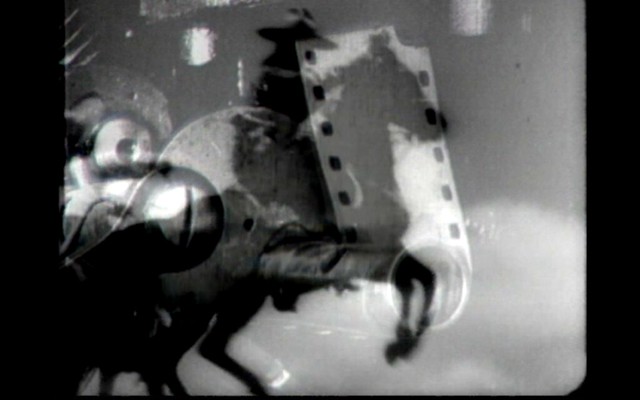
Histoire(s) du cinema (1988-98) - Godard
Screen Shot 2020-04-10 at 8.25.23 AM
So one thing I am thankful for this time of worldwide pandemic, where we are witnessing our capitalist society slowly collapsing in real time, is it finally shoved me into watching the whole of Histoir(s)du cinema, Godard's monumental reflection on the 20th century and the role of cinema in it. It's been a long overdue, to say the least. Except for Numero Deux which Godard directed with Anne-Marie Miéville (1975), Histoire(s) is the precursor to all his later essayistic films. Clocking at 266 hours, although divided in 8 parts, it marks the longest among his films.
Screen Shot 2020-04-09 at 6.27.38 PM
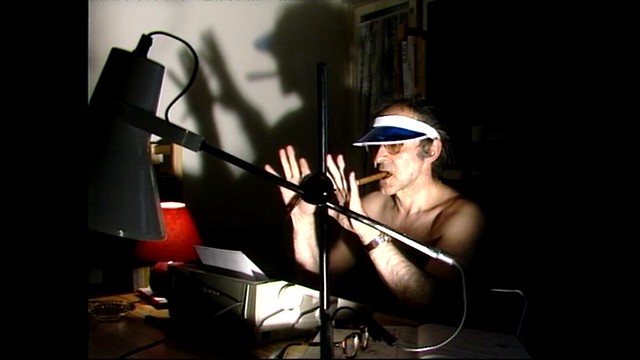
With a cigar permanently fixed in the corner of his mouth, his electric typewriter always roaring its plastic screech in the background and forever blinking images testing us with our persistence of vision, Godard sets out to examine the 20th century riddled with war and destruction and cinema's place within it, or shall we say, our place in cinema. His repetitive themes throughout the whole series is that cinema is neither art nor technique but a mystery. He makes numerous comparison with art and cinema throughout. The difference between film theorist and their books, Godard has been a 'camera-pen' of the auteur theory in practice, churning out these visual essays for almost four decades now.
Screen Shot 2020-04-09 at 6.06.20 PM
Screen Shot 2020-04-09 at 6.08.14 PM
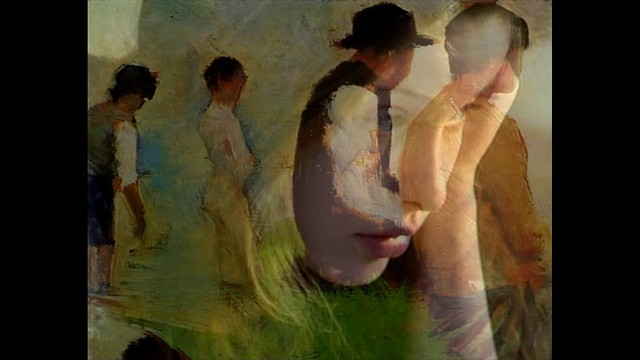
Godard makes the convincing case with him being a French New Wave filmmaker and how that puts him in unique position to assess cinema history: Belonging to the Post-War generation, seeing enough films through the cinema's evolution and progression. Born out of the idea of image projection by a feverish Napoleonic soldier in Russian prison, Histoire(s) is also the (hi)story of French cinema.
Screen Shot 2020-04-09 at 7.10.19 PM
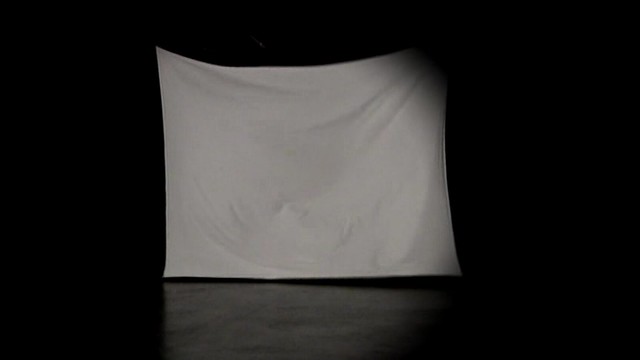
Godard's wordplay never stops. Besides the word histoire in French having two meanings (history and story), he dissects words and constantly rearranges them also. This project being started during the peak of video technology, he points out the implications of its terms - Master/Slave when describing master tape/file and its copies - the term we still refer in film post-productions and information technology. His assertion of the power of image throughout his filmography also hasn't changed - it seems, in Godard's mind, sequential shots of dead bodies in the atrocities of war and pornography reveals the duplicitous nature of cinema.
Screen Shot 2020-04-09 at 7.45.16 PM
In Deleuze's Cinema I & II, the philosopher makes a distinction between Movement-Image period and Time-Image period before/After World War II: and how Movement-Image oriented thinking gave rise to nazism and propaganda and ended up in the gas chamber. Time-Image concerns aberration of image and sound. And that more or less starts with Italian Neorealism which precedes French New Wave. Partly because they didn't have any reference point with total destruction of their surroundings, they had to think seeing images differently with sound as an independent partner, not just dialogue track. Obviously well-read, Godard knows this, and praises the films of de Sica, Antonioni and Pasolini because Italian filmmakers, with its long illustrated history and language, didn't remain silent during the war years (1941-45) and right after. In Cinema II, Deleuze also makes a point of the power of false; falseness in image, just as impactful but also dangerous. Godard says cinema is not entertainment nor communication device but rather cosmetics, a small industry of lies.
Screen Shot 2020-04-10 at 10.48.04 AM
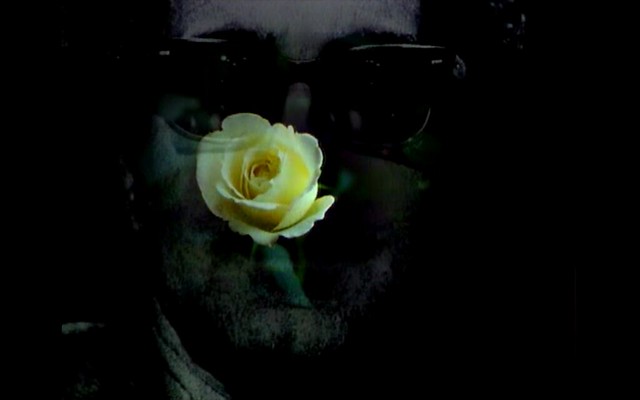
Balkan War in the 90s really affected Godard and its continuation and repetition of atrocities since the war affirmed his cynicism toward humanity greatly and it show in the later part of Histoire(s). He continues to revisit the notion of 'newness of history' and 'history of news'. In the time of fake news, how do we see through all these falseness and dig out the truth? Godard seems to admit that we live in a corrupt state, but like poetry and art, cinema can see us through. And I really hope this is the case.

Thursday, December 14, 2017

Wormwood is a Masterpiece We Deserve

Wormwood (2017) - Morris
Wormwood
One man's 60-plus years of obsession to find the truth about his father's death is the subject of the master documentarian Errol Morris' latest magnum opus, Wormwood, a 6-part Netflix series and/or 240-minute standalone movie.

It is one of the most inventive, refreshing cinematic events you will likely see this year. But this genre bending, indefinable whatsit is not really new to Morris. He made his groundbreaking docudrama, The Thin Blue Line, almost 30 years ago. It was the first 'true crime' documentary, and put him on the cinema map, utilizing cinematic reenactments along with a series of interviews, and spawned countless imitators. The film upset many genre purists then. But whether it was interests of the cinephiles or not, in the end, the film actually exonerated its subject Randall Dale Adams from a death row. Talk about cinema with real life consequences!

Looking through his diverse filmography since then, which includes A Brief History of Time, Mr. Death, The Fog of War and The Unknown Known, what always shines through is not his manipulation of medium, it's his clear-eyed quest for truth. It's always been about his meticulous search for truth by any visual, narrative means necessary -- remember his interrotron where you and your subject converse, staring right into each others eyes through his mirror/camera contraption?

Well, he doesn't use interroton in Wormwood, but instead a scripted narrative, acted out by esteemed actors -- Peter Sarsgaard, Molly Parker, Tim Blake Nelson and Christian Camargo -- and melding it expertly with long, multi-angle shot, wordy interviews, Morris creates something that is truly masterful and meaningful.

Wormwood definitely feels more like the expansive version of The Thin Blue Line, in which finding the truth is much more complex and the consequence of it has a grander implication to all of us and our nation rather than one person. I'm very glad that Netflix has given a filmmaker like Morris a blank canvas to play with. The series format fits the project well to tell a complicated story, rather than a typical two-hour film.

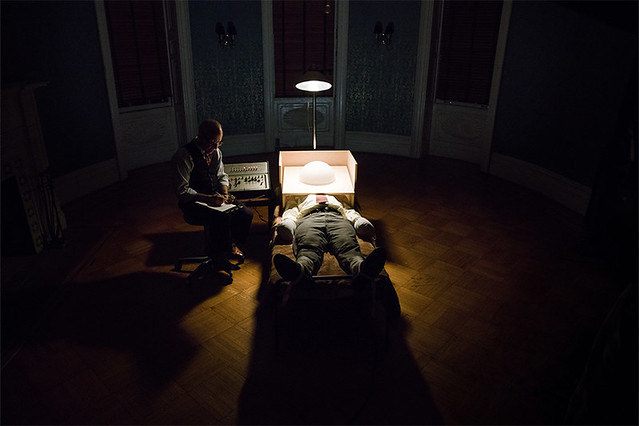
It concerns Eric Olson and his lifelong quest for the truth about the death of his father, Frank Olson, a military scientist who died in mysterious circumstances some 60 years ago. Frank was involved in MKUltra, a project where the US government experimented on mind control using LSD on volunteer subjects, along with other secret government projects.

One day in 1953 during a trip to New York, according to his superiors, he 'fell' from his 13th floor window of his hotel room. It said that it was possible that he might have 'jumped' while under the influence of the drugs. Without any prior drug or mental problems, for his family, this 'accident' came as a shock. Eric, still young, couldn't comprehend what they said. Fall and jump were two very different words and he struggled to reconcile the two.

Like many of Morris' subjects, Eric Olson is a brilliant and obsessive man. He's an extremely articulate man who might have had a promising career if it wasn't for his tireless search for the truth in his father's murder. Morris' interview with him, which takes up a large part of the series throughout, are compelling and absorbing, as he gesticulates wildly in split screen/multiple angle shots. He describes his investigation on the matter as collages and Morris visually makes the best out of these Olson's descriptions.

Olson is a tragic figure, who has spent six decades of his life devoted to finding the truth because he couldn't walk away from his father's ghost. For that, Morris uses and constantly goes back to the scenes in Lawrence Olivier's Hamlet. For any other filmmaker who uses metaphors, it would come across as corny. But not with Morris: everything feels well suited and purposeful.

The Rockefeller commission investigated the CIA in 1975 and the headline on the Washington Post read "Suicide Revealed." Eric realized that headline referred to his father. The report concluded that Frank Olson had been surreptitiously dosed with LSD a week before his death. The Olson family receives an in-person apology from President Ford and a set of documents explaining the event from CIA Director William Colby. But for Eric, the jumbled document doesn't make any sense but only adds more questions. The government is definitely hiding something and trying to quash any more inquiry from the family.

With wealth of home movie footage, documents, reenactments and series of interviews, Morris goes on like an investigative journalist with visual flair or a collage artist. Wormwood works like gangbusters as a 'true crime' doc and it's thrilling to watch. Every little thread is meticulously investigated, each with the same weight and importance.

Rightfully so, as they touch upon America's dark secrets: mind control experiments, germ warfare during the Korean War, brainwashing, Donald Rumsfeld and Dick Cheney... One revelation after another, Morris makes Olson's case for the truth playfully and cinematically but with resonance.

Shot by Igor Martinovic and Ellen Kuras, Wormwood looks and feels like a film noir. The period settings and somber mood are beautifully realized. The scripted narrative is mostly visual storytelling as it plays out like a silent film. Peter Sarsgaard, Molly Parker and Christian Camargo give deeply nuanced performances in their roles.

After exhuming the body of his father for further examination of any wrong play, and learning about discrepancies while talking to his father's surviving superiors and colleagues, Eric reconnects with renowned investigative journalist Seymour 'Sy' Hersh.

The year is 2013. Hersh once told Eric to let go of the matter before. He deemed it was impossible to go against the government as he hit the brick wall. But after new evidences Eric dug up, Hersh reconsiders the case, and concludes that it was definitely a murder case. That Frank was murdered and perhaps thrown out the window to his death for what he knew. Possibly regarding the illegal germ warfare. But for protecting his source, Hersh stops short of publishing his findings. Eric now knows the truth. But there won't be any accountability for Frank's murder. Not just yet.

For its namesake, Wormwood is a timely representation of our troubled times. There are no clear winners in the film. Is Eric satisfied knowing that his father was murdered because of what he knew, giving up his promising career in psychiatry and sixty years of his life to find out that truth? The answer is bitterness.

What makes Wormwood a great one to watch over Morris' other recent projects is that his obsessiveness of finding the truth is matched by his subject here. It's not finding the truth in brilliant yet flawed sociopaths -- Robert McNamara in The Fog of War, Fred Leuchter in Mr. Death or Donald Rumsfeld in The Unknown Known. With the film, he is saying that there is a beauty in seeking the truth while sacrificing everything. That it is something to aspire to, especially in dark times.

Expansive in its scope, engrossing, structurally daring and thoroughly watchable, Wormwood is a true masterpiece in the age of rampant misinformation and distrust.

Wormwood, a Netflix original story told in six chapters, opens in select theaters and globally on Netflix on December 15.

Christian Camargo on Errol Morris' Wormwood

christian camargo
Wormwood, all new 6-part Netflix series created by master documentarian Errol Morris, streams and also gets a limited release in theaters as a 240-minute film on December 15. Morris, known for his unique style and journalistic candor in finding the truth, achieves something truly unique and remarkable here.

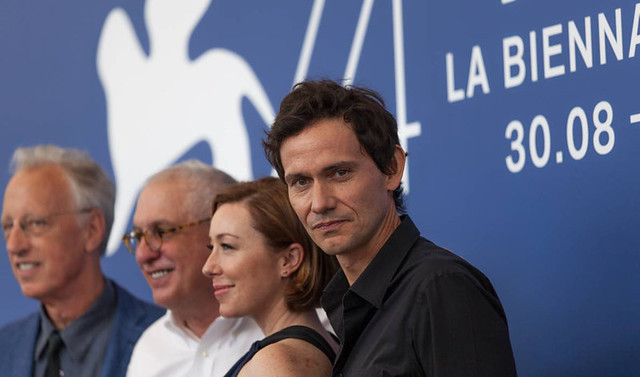
I had a chance to talk to one of the stars (in the narrative part of the series), Christian Camargo, a veteran stage actor, known for his dramatic roles in Dexter and Penny Dreadful.

Camargo plays a conflicted military scientist who witnesses a murder of a fellow scientist and the government cover-up. Eager to share his enthusiasm on the project, Camargo elaborates at length on what it's like working with Errol Morris, playing a real life character and being part of the genre blurring, groundbreaking project.

Just finished watching WORMWOOD. Even knowing Errol Morris’ previous work, I was struck by how incredible it was: a really fascinating subject and story and how it was told. Everything was really incredible. I am wondering how you got involved with the project and how the process was for you.

I first got involved with the project through Cindy Toland, the casting director for the project. I’ve known her for a very long time and am a huge fan of Errol Morris. They reached out to see if I was interested. You know, I’d do catering for him. (laughs) I would do anything to see how he works. And I adored working with him. This is not just a lip service, I truly mean it. He is like a… an irreverent Bodhi Satva. He uses everything in his arsonal to create a story that has a cause and direction greater than him. Does that make any sense?

Oh absolutely.

He is manipulating the artform but not manipulating the truth of his experience and of our experience. So what comes through is kind of absolute truth that we as a viewer have to discover. In a way he does it, he does it with great intensity and great joy.

He doesn’t have patient for conflict which is extremely liberating from an actor’s standpoint. The concept of having this double genre - both documentary and narrative fiction is new, you know. It hadn’t been done, even he hadn’t done it quite this way before. So he really surrounded him with the people he was able to trust and entrust with telling the story, including Igor (Martinovic), who is an incredible cinematographer.

He gave us freedom to sort of come up with characters. Robert Lashbrook, the character I play, there was one small picture of him and that was it. You don’t know anything about him. There is nothing online about him. He is very much a mysterious character. But for me it was extremely freeing to discover. Now for Peter Sarsgaard, there was a lot more material to work off of. But still there was a lot of freedom and liberty to be had.

The scripted part, we treated as a movie. Errol really encouraged that. We had a true story - Eric Olson. And the scripted part, we had that liberty. Between Errol and Steven (Hathaway) who edited the series, they found a language that echoed one another.

I think he did this on purpose: he chose actors who are very familiar with Hamlet as he uses that in the story of Eric Olson.

You are very familiar with Hamlet with your background in theater!

Exactly. He wanted that theatrical echo of the piece. But also what I loved about it was he allowed us to get rid of dlalog and work through silence and through image.

Interesting. Haven’t thought about that.

As you know, the amount of dialog that was going with Eric Olson with that storyline, so it was really fun to play from moment to moment.

I imagine that actual script must’ve been pretty short.

Yes, yes it was very short. And it was written in a narrative style, like a book. When I first looked at it, I didn’t know what to make of it. But Errol shot all the interview with Eric before, before we were getting into the scripted part. So he sent that over and I watched that. I was such a fan of Errol’s work, I was more interested in Errol’s interview to be honest. ‘Why do we need this other part?’ I thought. But when I see the cut together and made into the piece, wow, I get it. The use of imagination allows the audience to go, ‘what is the truth?’ ‘What really happened?’

I know what Errol is always after. It’s that kind of rabid passion. In this case it’s Eric (Olson)’s rabid passion for finding out what the truth is. Is that part of insanity or that it part of all of us should be pursuing?

One thing I was struck by is how conflicted your character, Bob Lashbrook is of all characters. Probably the most conflicted character in the whole series. What was your take on the character?

I’ve played few bad guys in my career. And I really love the psychology behind what makes people do certain things. That it is never black and white in my mind. The little I knew about Robert Lashbrook is that he wasn’t a heavy, muscle man. He was more of an intellectual on the science side of it. So I really looked at the situation - playing on both sides, and how tenuous, how in different waters they were all walking. In a time where we had Cold War and all the pressures from the administration and J Edgar Hoover and what was happening in America at that time…which is not completely dissmilar to what’s happening right now. You know there is nationalistic front and we are sort of heading back to McCarthy era.

There was a tremendous amount of concept and senses of ‘what is duty?’ you know? ‘What is right thing to do?’ The tragedy of Lashbrook for me was his sense of powerlessness. Following orders. There is sinister quality to him and I wanted to feel like he was sinister force but all of sudden I realized that he didn’t have any power. He just allowed the murder to happen. We found a lot of these conflicted moments. He just allowed that to happen. I enjoyed playing him. It gave more dimension.

The historical aspect of Wormwood. With MKUltra and germ warfare and all the so-called conspiracy theories, I found very interesting. I grew up in Korea but no one really talked about germ warfare in Korean War at all. Did you have any knowledge of these events prior to the production?

Actually I had some knowledge of the (POW's) confessions. But I thought they were just coersions and they ere brainwashed and that this was all part of war system. With the amount of information that are out now, it’s not hard. There is enough to give you the shadow of doubt about whether this was coersion or whether this was in fact, people telling the truth. And we do know now that the chemical weapons were made at that point in America.

I think this is one of the big things that Errol is opening up. With great art, it always knows when to appear- generally it’s not an artist planning it, it just happens, in the nature. He tapped into very astute presentation of America. I mean, there’s a lot of us, well some of us don’t, but a lot of us looking at Trump and go 'oh my god I can’t believe what America is right now!'

Right.


And yet, this little dark secrets have been going on for decades. And we need to understand as Americans that we are all culpable. We are complicit. And in the whole grand scheme of what is… in some circle, what’s wrong with humanity? That’s also another subject that is very Hamlet-esque.

True.

Errol has tapped into this, at such a time where the country is so polarized. And a lot of left-leaning liberals are pointing to this presidency as ‘this is the time where America is the worst’. No, this has been going on like this for years and years. It’s only through people like Eric Olson who are commited to figuring out what the truth is that that the light is shined on these indiscretions. It’s a momentous subject to have in our time right now to get to people to seek the truth. Unfortunately it was at the cost of very brilliant career that Eric had.

Right.

And hopefully that’s not over. He will continue this work now that this story has come out. Because he is really a fascinating person whose work needs to be recognized.

As Errol concludes that Eric knows the truth now, we have to reconcile the fact that there is no clear cut winner in this situation. Like wormwood, everything is bitter, everything is contaminated.

Absolutely. That is what will come out is that there isn’t. It’s all dirty. It’s one of the human conditions. What comes out is that there is no clear winners. There are definitely losers. I mean, Frank Olson was on the losing end.

But there are no winners. No one comes out with their hand completely clean. Really the underneath point to all this is that this legacy is handed over to us, to the viewer, the audience that our hands are not clean either: ‘If I allow this to go on, my hands are not clean’.

You think WORMWOOD is going to be the momentous occasion for the visual, storytelling medium that will change everything- cinema, TV, streaming services, etc.?

Yeah. There has been a lot of interests in reality based long form non fiction. But it’s not being done the way… well, it has been done in a subversive way, as in ‘we are following this documentary along then it becomes narrative'. But in that way the filmmakers are skewing it for their own purpose. But it’s never been done in such, ‘here we are, we have a real person, we have fiction, we have script, we have freedom. It’s hysterical because I think this is up for Academy Awards for Narrative but not Documentary category. (laughs) Classic human condition. Real life is like this. It gets all murky.

There is no genre here. It’s completely hybrid. It’s totally new. And I think it will open doors to whole diferent types of storytelling and people don’t have to pigeonhole them. And the industry has to catch up. Many people ask me what the project is like- is it a thriller? Is it this or is it that? I really hope and I can’t imagine that this won’t be successful enough to influence whole new way of thinking that we can allow the viewer, which Netflix does so well, to choose. You don’t have to be fed a genre. It’s not about statistics. I’m pretty hopeful and sort of idealistic that Errol is bringing the art back to the form.

Wormwood will be released in select theaters and will be available globally on Netflix starting December 15.

Monday, September 4, 2017

Some preliminary thoughts on Twin Peaks: The Return

Twin Peaks: The Return (2017) - Lynch
img_9811

Defying conventions

twinpeaks-news
maxresdefault-1
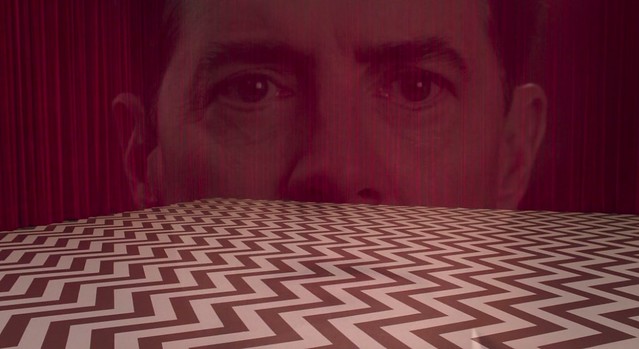
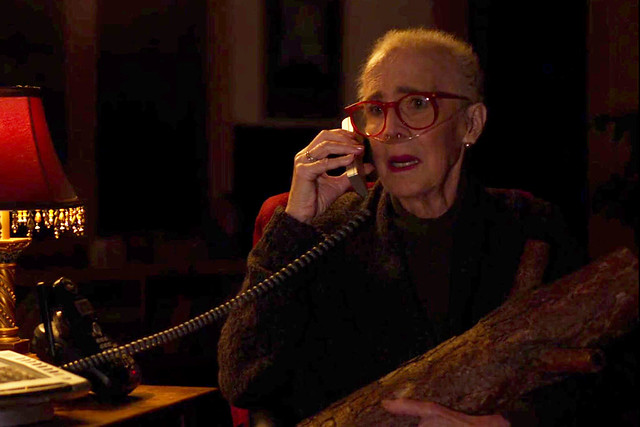
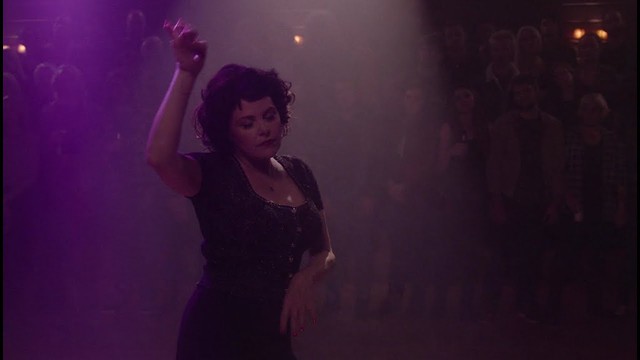
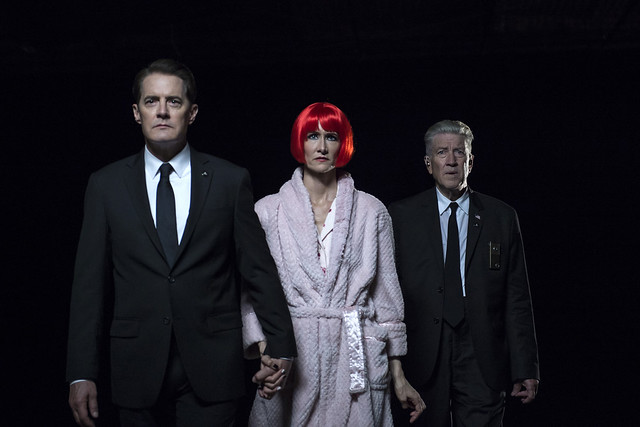
One thing that defined David Lynch's Twin Peaks: The Return is it defied everything we know about the tv or film narrative, genre, structure, casting, sound.... It even defied the original two seasons of the series. He didn't set out to make lip service for the diehard fans of the old series. Just as he re-imagined it with Fire Walk with Me, he has built a grander, larger mystery on top of the original Twin Peaks frame with co-creator David Frost. But he did not in any way disrespected the old characters. Notice that it's all the new characters who are fucked up, and all the old characters, growed up and wised up. OK, Shelly is still dumb as a doorknob

Who's dreaming who?

david_lynch_y_monica_bellucci_en_twin_peaks_9060_640x384
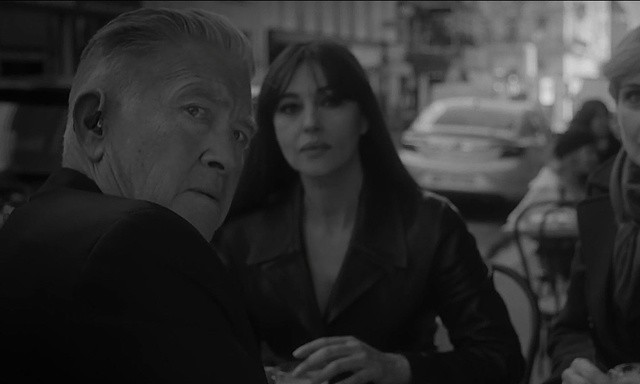
There have been many time traveling, dimension jumping Sci-Fi films and TV shows in the past. Some of these were cleverly done but they were always more interested in/in love with themselves in their own logic than metaphysical, spiritual consequences of such actions. None of these shows rose above the rules they set themselves within. Lynch applies it to 'the girl who lives down the lane' story. So much of Twin Peaks: The Return revolves around Dale Cooper and his evil doppelganger but by the end, we realize that he might have been dreamed up by Laura Palmer, a 17 yr old troubled High School girl all along, who died 25 years ago. It was Laura. It was always Laura. Laura is the one. That in fact the whole series, including all the 200 some characters are dreamed up by Cooper who is dreamed up by Laura. But if it was one of those 'it was all a dream' movie, everything is a lie, and it means nothing. But to Lynch, as his other films before this can tell you, dreams are as real and important as real life, that our lives, flesh and blood with its meaning of it all, may indeed be someone else's dreams. It's a humbling experience for sure.

You can't go home again

Twin Peaks part 8
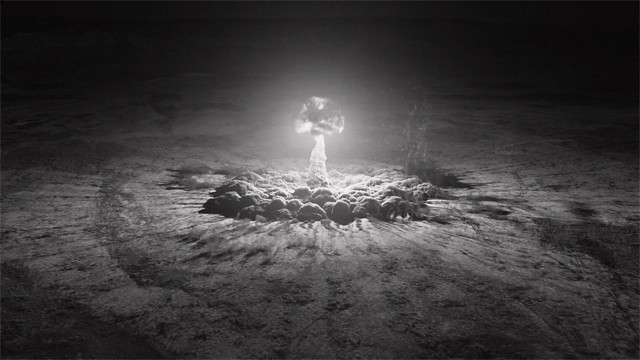
It's a well known fact that Wizard of Oz and Hollywood's golden era influenced 71 year old baby boomer Lynch greatly. There was Hollywood and there was WWII and an atomic bomb. Without being cynical, he sees beauty in the darkness in this often contrasting, dual world. Time and time again, Lynch plays with this duality over and over.

gotta-light-bad-guy
0u4bDKt
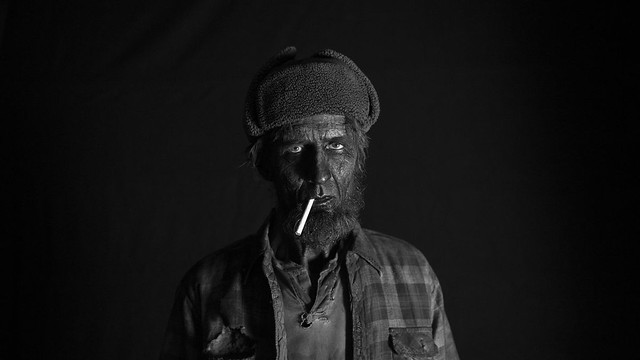
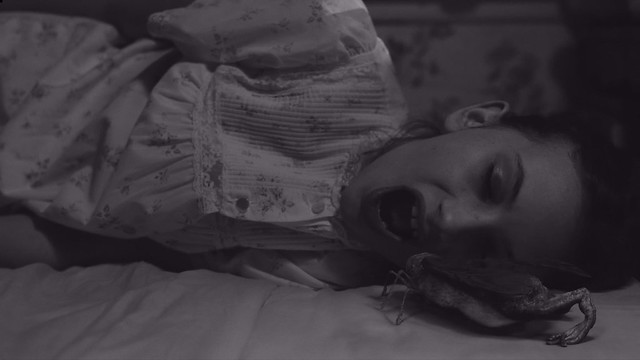
Lynch's approach to his fears and nightmares, whether it be homeless people or that drugged up naked brunette who walked down the white suburban neighborhood street or trailer park white trash or seemingly normal parents (all the flip side of Land of Aplenty) or a roach-frog he swore he saw as a child or an atomic bomb blast, is to face them head on- exorcising these negative thoughts out of his system on to the screen. They are frightening and mysterious. They are beautiful.

Even the well-meaning, special agent Cooper, who splits into two then becomes a whole again by the end, gets lost in his journey to make things right. The past doesn't dictate the future. The wicked witch, born out of an atomic blast, sidetracks him. He is as lost as poor Laura Palmer.

Mystery continues, beauty retained

TWIN PEAKS
The Return's finale was Every bit as frustrating as it had been expected. Part 17 neatly wrapped many of the messy threads the show was building up to. It was indeed the actual ending of one mystery, just as Lynch and co opened up another one with Part 18. Thankfully for us, the mystery continues and retains its beauty forever as the show ended. The whole show was still the most exhilarating viewing experience ever. It provided the most beautiful, spellbinding images I've ever experienced in my life. Part 8 alone is the most cinematic, thrilling event of all time in TV/film history, easily topping any works of Brakage or Malick had ever done.

I just feel so fortunate that this summer, we were blessed with 18 hours of new Lynch creations. Even if Lynch doesn't make another movie or tv show for the remainder of his life, this has been a true blessing. And I am very grateful for it ever happening.

Saturday, May 30, 2015

Through a Glass Darkly

Mildred Pierce (2011) - Haynes
 photo 79ec81c4-4428-48cc-90d3-dbefb3718c7f_zpstunksmtt.jpg
Michael Curtiz's 1945 noir classic with Joan Crawford became an unofficial Mother's Day film and made Crawford an emblem of saintly mother for generations of people, even though the ending suggests even a saint won't protect a murderous offspring. Written by pulp writer James M. Cain (Double Indemnity, Postman Always Rings Twice), the Depression era Southern California set Mildred Pierce is a highly melodramatic film about conflicting American values which are surprisingly not too different from our current society in the 21st century: a very Ayn Rand style self determination, the pitfall of class differences and star envy, thankless motherhood and the bad seed....

I'm not a fan of old Hollywood melodramas and don't claim to be Douglass Sirk aficionado. I haven't seen Haynes' parody/elegy to Sirk, Far from Heaven. But I really dug I'm Not There, his inventive take on Bob Dylan's public persona and Velvet Goldmine, about Glam Rock era and admire his artistry on parodying something he loves with so much affection and care. With this five part mini-series, Haynes is apparently a lot more faithful to the Cain's source material than Curtiz's very studio version with 7 writers credit attached (William Faulkner was supposedly involved).

Haynes's version is a handsome, impeccably recreated period piece. The great Kate Winslet plays a title role, married to a good-hearted but luckless, ambitionless Bert living in the Los Angeles suburb. After debts pile up and Bert's not up to providing, she divorces him and starts looking for menial work. Just like any mother would do, she wants to provide her two daughters with all the material goods. Older daughter Veda resents her working as a waitress at a hash diner. Mildred builds up an empire of restaurants named after herself, but nothing of her success is impressive under the scornful eyes of increasingly hauty Veda. Talking like Grace Kelley in pictures, Veda becomes a manipulative and unbelievably snotty bitch.

Haynes, obviously loves the hightened melodrama - a younger daughter dies of pneumonia while Mildred is having a night of passion with a LA playboy Monte (Guy Pearce), who largely figures in to the fiery finale, Veda's ridiculously theatrical mannerism, Mildred keeps saying, "I'm size ten!" out loud to anyone who care to listen. There are a lot of face slapping, a lot of yelling, a lot of emotional fireworks.

Edward Lachman's sumptuous cinematography reveals something more sinister from the chapter one. Throughout the whole series, Mildred is seen through a glass windows and display cases, giving the audience the slightly distorted images of her. It becomes all clear in Veda's final accusation in the series's finale- that she used all the men around her to her advantage - Bert, Wally and Monte, non of whom are portrayed as a typical male bruts or evils but rather sheepish and powerless. That her rise and fall has more to do with the highly materialistic world we live in. That in fact Veda, however manipulative and artificial she seems, is the one who saw, unveiled eyes, Mildred's pathetic middle class ambition - the hollow American dream, while sacrificing 'family'.

Evan Rachel Wood who plays older Veda eschews the hammiest role in the latter part of the series. Her spiteful, opportunistic beauty gets the ultimate revenge on her forever low-class mother by becoming an opera singer, then sleeping with Monte, a has-been playboy and emasculated, newly minted husband of Mildred. When it is first revealed this handsome playboy is dating her dumpy mother, Veda's thought is surely not "oh fuck, my mom rocks!" As she snarls through the dark sleeping chamber of her Monte, fully naked and touching her vagina in front of her mother is perhaps the most perverted and delicious revenge scene in any films in recent history.

This deconstruction of the saintly mother Crawford is what's most interesting about Haynes' interpretation. As Crawford's Mildred finally abandons her bad seed to incarceration, Winslet's Mildred finally, bitterly utters, "To hell with her!" But there is no recognition in her eyes registering what Veda said about her being an opportunist. Mildred Piece shows how skillful Haynes is at presenting a melodrama so perfectly put together but at the same time, sees the cracks in this otherwise sordid story and elevate it to a subversive social commentary.

Tuesday, May 29, 2012

Scandinavian Fever

Henning Mankell's Wallander: Revenge (2012) - Brandstrom
wallander-1-1
As if The Girl with the Dragon Tattoo and the Millennium Trilogy, The Killing and The Headhunters weren't enough to satisfy the recent Scandinavian films/literature craze overseas, the superb, original Swedish TV series Wallander (not to be confused with the equally popular Kenneth Branagh's BAFTA winning adaptation on BBC) finally makes a landfall in the US, in a standalone, 90-minute film version, titled Henning Mankell's Wallander: The Revenge in theaters. As a shrewd marketing ploy, Music Box Films is releasing the entire first and second season (13 espisodes) on VOD itunes, Amazon and Vudu earlier and DVD on May 29th. The Revenge is the season 2 premiere episode.

Before Stieg Larsson's Lisbeth Salander, there was Henning Mankell's Kurt Wallander. Based on an original story from immensely popular Swedish crime writer Mankell, Wallander: The Revenge follows the titular chief inspector Kurt Wallander (Krister Henriksson) as he investigates crimes and solves mysteries in the deceptively dark underbelly of picturesque modern Sweden.

The film starts with Wallander having achieved his life's dream- buying a house by the sea. The celebration is cut short by the citywide power outage. Someone blew up the only transformer in Ystad and in the middle of chaos, a civic official who allowed a controversial exhibit, depicting the prophet Mohammad in an unflattering way is murdered. Then the strategic car bombs go off and a nurse is murdered in the hospital in the same fashion as the official. The military is called in and the small idyllic town turns into a war zone. Wallander's hunch is the murders and the bombings are connected.

In the wake of the killing rampage in Norway just last year, Wallander: The Revenge weaves the state of multi-ethnic Scandinavia today into a storyline. It paints the complex picture of the society in tumultuous times where fear-mongering and racial profiling have become household names.

So how does Wallander: The Revenge stack up as a standalone film? Fast paced, topically up to date with likable characters, it works as a tight, intriguing thriller. Sure you might feel that you are thrown into the world of Wallander cold feet. But thanks largely to Krister Henriksson's downbeat, old fashioned, heavy drinking and slightly sexist Wallander, you feel somehow at ease in his world. His Colombo-esque affability is the film's best asset against the cold, tech savvy and always changing world.

As the film sets up for the rest of the season, one can detect future conflicts (with the sexy new recruit) and a new love interest in the form of his new boss and neighbor (Lena Endre from the Millennium film trilogy), I can see myself easily getting addicted to the series.

Henning Mankell's Wallander: The Revenge opens June 1 in limited release in New York and LA. The 13 Wallander films are available on VOD and DVD now.