Showing posts with label Netflix. Show all posts

Wednesday, November 10, 2021

Boys Don't Cry

Procession (2021) - Greene 

unnamed

Robert Greene, no stranger to the participatory, process oriented cinematic experiments (Actress, Kate Plays Christine, Bisbee 17'), presents a powerful documentary about a highly controversial subject - a rampant child sexual abuse by catholic priests. Procession, the filmmaker's collaboration with the abuse victims and a drama therapist, is perhaps the most powerful and impactful documentary I've ever seen since Act of Killing.


Greene, who moved to Missouri in 2015, to become Filmmaker-in-Chief for the Murray Center for Documentary Journalism at the University of Missouri, saw a news clip in 2018: a news conference of an attorney Rebecca Randle, who's been overseeing hundreds of abuse cases involving catholic priests in Kansas City and surrounding area over decades, accompanied by three victims, accusing many still practicing catholic priests of sexual abuses, when the victims were altar boys in grade school. This explosive and emotional news clip was a springboard for Procession, a project three years in the making, which premiered at this year’s Telluride Film Festival.


There's Tom, Michael, Mike, Joe, Ed and Dan. These participants are there to reenact the most painful memories of the abuses, to confront and crush their fears that haunted them most of their adult lives. What's striking from the very beginning of the film is their immediate strong bonds - awareness, love and understanding of each other among 6 men who never knew one another before the project began. For me, it is their kinship, borne out of collective trauma that is the main takeaway of this immensely moving film. 


There are the green glowing eyes of a priest and mass attending public‘s accusing glances which make the victims feel powerless. There’s the power of coercion in the confessional and the church appointed ‘independent review board’ rejecting claims of abuse from the victim for lacking merits. By reenacting these scenes and playing the roles of each other's abusers, there is a real danger it might backfire and harm the participants, and everyone involved in the project is acutely aware of this. But it’s their commitment toward the project, to honor the victims who lost their lives to suicide, alcohol and drugs after the abuse and to hold those responsible accountable by exposing them in these scenes and to help each other that outweighs the risk.


For many of them, just being inside of a church is hard. It's in the small things that trigger the suppressed, painful memories to come to the surface. For some, it's the smell of incense, the wood varnish on the pews or the chlorine of the swimming pool, or the color of stained glasses or the dark wood furnishings that bring up those memories. Gestures, hands in the religious ritual take on the significance in their suppressed memories too. And they are all put on the screen. The settings and items that should bring the feelings of security and comfort, instead, they've become things of nightmares for the participants.


There's a lot to be said about the hypocrisy of being 'men of god' and those in power in these pedophile priest cases. It was the sense of powerlessness as a young boy many victims felt that led to much undeserved self-blame and shame. By writing their own scenario and directing their own reenactments, Greene recognizes the power shift that can be beneficial and even cathartic for those who are participating. And a lot of catharses and breakthroughs happen  before your eyes in Procession.


You can't help but being teary eyed watching these grown men who's been trying to suppress those memories and they manifested terribly into their lives- recurring nightmares, insomnia, feeling of guilt, shame, relationship, trust issues and anger.  There is also an added context to the film taking place in Missouri and Wyoming, that this is the epitome of the American Midwest, where men were taught to be tough.

In Bisbee ’17, Greene involved entire community to participate in reenacting a centenary historical event for understanding and healing. In Procession, tending to only those 6 participants, the emotional impact is much greater with them telling their own intimate experiences. If historical context and taking artistic liberty in portraying the event was necessary in Bisbee, the filmmaker rightfully chooses not to delve too much into participants’ personal lives, but rather zero in on the abuses and its effects in Procession.

Procession also tells the power of popular narratives. Ed Gavagan, a contractor from New York, likens the participants including himself as the Avengers, uniting to fight for justice using the hammer of Thor, in the beginning of the film. A member of the film crew hands him a sledgehammer to destroy the set after finishing shooting his reenactment, as he gratefully accepts it to finish the job- having a breakthrough, in the most literal sense.

Netflix is doing the world a favor for picking the film up for its distribution and streaming. Procession needs to be seen broadly and widely discussed and the pedophile priests need to be exposed out in the open.  The personal stories of Joe Eldred, Mike Foreman, Ed Gavagan, Dan Laurine, Michael Sandridge, and Tom Viviano need to be widely seen and their kinship celebrated. Procession is one of the most powerful and important documentaries ever made.

Tuesday, December 22, 2020

Harrowing Refugee Tale Disguised as Horror

His House (2020) - Weekes His House 
Remi Weekes's debut film is a harrowing immigrant experience disguised as an extremely effective horror film. Not only it depicts of horror of being uprooted from your own home and culture and calamitous journey to the unknown, unwelcoming foreign land, it also illustrates the emotional toll of being the ones who left rather than left behind. His House, with the South Sudan refugee couple in focus, Weekes zeros in on that guilt that weighs down on the survivors. 

Bol (Sope Dirisu) and Rial (Wunmi Mosaku) after losing their daughter when the boat carrying them capsized in the Mediterranean sea, and after being processed at the English customs, arrive at their designated housing project in a drabby suburbs of London. It's a spacious- "bigger than my house," quips the icy, snickering housing authority figure, but derelict interior of the building needs a lot of tender loving care to be welcoming. Bol wastes no time to assimilate to his new surroundings, he eagerly changes to a new western clothes from his traditional garb, brings utensils to eat their food, exploring the depressing and hostile working class neighborhood. Rial on the other hand, refuses to change her ways and mourns the death of the child, eats her food on the floor with her hand, in traditional ways. 

A heartless case worker Mark(Matt Smith) checks on them and warns them that unless they improve their living conditions, meaning settling in and make the place more livable, it won't reflect good on their refugee status. 

Things start to fall apart right away - they hear scuttles in the walls day and night. Thinking they are from rats, the couple complain to Mark, but there is a very little can be done. Then they hear sound of children giggling, torturing the couple with the memories of their daughter who perished in the sea. Or did she? 

Not soon enough, Bol starts hammering the walls to find the source of the disturbance that leaves the plaster walls like swiss cheese. Water starts flowing out of nowhere. And the couple has encounters with supernatural. All these wouldn't help their status when Mark finds out. 

His House would make a great companion piece with the last year's Atlantics, another African ghost story that deals with the same subject. The film is a superb horror that reflects on the psychological scar a war perpetuates on its victims and those impossible choices that they are forced to make. Surprise find in Netflix streaming and very much looking forward Remi Weekes next project.

Tuesday, October 9, 2018

Alfonso Cuaron's Roma is Quietly Spectacular

Roma (2018) - Cuaron
Roma-1-1600x900-c-default
Alfonso Cuarón, a director known for his meticulously crafted Hollywood sci-fi movies Children of Men and Gravity, goes back to his native Mexico and gets more personal with Roma, based on childhood memories of his nanny. It is his first Mexican film since Y Tu Mamá También in 2001. The result is a well-balanced, mature, humanistic and highly subjective observation of a woman’s life.

We are introduced to Cleo (Yalitza Aparicio), an indigenous woman working as a housemaid for an upper-middle-class family in Mexico City. Shot in sumptuous black and white, large format (instead of getting help from his regular DP Emmanuel Lubezki, Cuarón shot the movie himself) and using subtle unassuming techniques (mostly in wide angle, slow pan and tilt), the movie focuses on the life of a woman and her profession, which is seldom a subject for a major motion picture.

We start with a long, static shot of the stone floor of a narrow, gated driveway being washed. We hear sounds from the lively neighborhood – dogs barking, children playing, various street sellers signaling their arrivals. The sudsy water is thrown over and over, and we see a plane going across the sky in its reflection on the floor. After the initial title sequence, we slowly tilt up to reveal Cleo doing chores in the courtyard. With this opening, Cuarón sets up the rhythm of Roma – the steady, forward march of time. We are about to witness for a little more than two hours the trials and tribulations of Cleo, the house servant, within a year’s span. The year is 1970.

Cleo and Adela (Nancy García García) are two live-in housemaids for Señora Sofia (Marina de Tavira) and her mostly absent husband, her old mother and their four rambunctious children. Cleo and Adela wake up before everyone else, cook, wake the kids one by one, get them ready for school, clean, wash, get groceries, carry luggage, make tea and do everything else in between. It is clear that much love is shared between the family and Cleo. Kids love her and say so often, and Cleo does too.

Sofia goes through a tough time dealing with the fact that her husband is cheating on her – he fakes business trips to Canada when in fact he is staying in the city with another woman. She appreciates all Cleo does but also lets her know her place on occasion. Cleo is part of the family but not quite: in one continuous sequence we see the whole family viewing a TV program together. It is some silly comedy and everyone is watching and laughing. Cleo, while mindful of everyone’s needs, watches and laughs with them. She approaches the couch where the kids are sitting and sits down on the floor next to them. One of the kids leans his head on her shoulder. Sofia tells her to go and make some tea. She gets up and goes to the kitchen.

Cleo gets pregnant by Adela’s cousin Fermín (Jorge Antonio Guerrero), a brash martial arts practicioner. He abandons her as soon as she tells him that she is pregnant. Sofia, perhaps feeling the sisterhood of abandoned women and/or out of the goodness of her heart, embraces Cleo’s pregnancy and pledges her support.

It is the small details Cuarón shows us that have a cumulative impact, like the sequence of the father very carefully parking his oversized car in the narrow driveway, the constant presence of dog shit on the floor, a plane flying across the sky…. With Roma, he doesn’t make a broad political or cultural statement. It is not that Cuarón ignores the social stratification or political climate in Mexico during 1970 and 1971. Quite the contrary – the family Christmas getaway in the mountains, at the opulent mansion of one of Sofia’s friends, reinforces the masters-and-servants relationship as they have separate living quarters and hangout areas. This is also where we get the only clue to Cleo’s background as she muses on the barren landscape and tells her friends, “This is what my hometown looks like. Drier than this though.” Then there is the Corpus Christi Massacre in 1971 where government thugs (known as Los Halcones) shoot and kill 120 protesting college students. The chaotic scene on the street plays out while Cleo, accompanied by Sofia’s mother, is on her way to choose a crib for her baby. She encounters Fermín, now as one of Los Halcones.

In focusing on Cleo and her surrogate family, who are painfully human with all their faults and blemishes, Cuarón makes the film very personal and subjective, therefore becoming universal.

Although the spectacular uncut ending sequence on the beach might be a technical marvel, Cuarón’s craft does not take away from or overshadow the overall emotional impact it has on the audience. The sequence encapsulates everything Cuarón has been working for – pairing technical virtuosity and universal human decency to a maximum impact. Quietly spectacular, this larger format, digitally shot film needs to be seen on the big screen. Hopefully Netflix, its distributor, will release it in theaters for a while before putting it in their streaming queue.

The underlying theme of Roma is giving love and respect to people who we take for granted – those unsung heroes, the backbone of our society. We make movies of spectacles and amplified emotions. Cuarón focuses on miniature crises in one year in the life of Cleo. Roma is a guileless, subtle, deeply felt human story that is definitely Cuarón’s best and most mature work and one of the year’s best films.

Thursday, December 14, 2017

Wormwood is a Masterpiece We Deserve

Wormwood (2017) - Morris
Wormwood
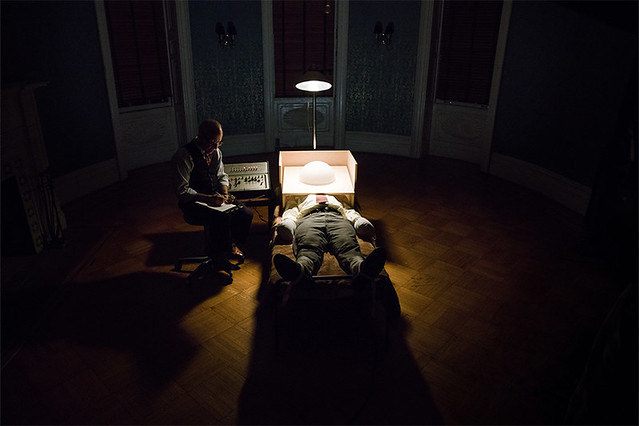
One man's 60-plus years of obsession to find the truth about his father's death is the subject of the master documentarian Errol Morris' latest magnum opus, Wormwood, a 6-part Netflix series and/or 240-minute standalone movie.

It is one of the most inventive, refreshing cinematic events you will likely see this year. But this genre bending, indefinable whatsit is not really new to Morris. He made his groundbreaking docudrama, The Thin Blue Line, almost 30 years ago. It was the first 'true crime' documentary, and put him on the cinema map, utilizing cinematic reenactments along with a series of interviews, and spawned countless imitators. The film upset many genre purists then. But whether it was interests of the cinephiles or not, in the end, the film actually exonerated its subject Randall Dale Adams from a death row. Talk about cinema with real life consequences!

Looking through his diverse filmography since then, which includes A Brief History of Time, Mr. Death, The Fog of War and The Unknown Known, what always shines through is not his manipulation of medium, it's his clear-eyed quest for truth. It's always been about his meticulous search for truth by any visual, narrative means necessary -- remember his interrotron where you and your subject converse, staring right into each others eyes through his mirror/camera contraption?

Well, he doesn't use interroton in Wormwood, but instead a scripted narrative, acted out by esteemed actors -- Peter Sarsgaard, Molly Parker, Tim Blake Nelson and Christian Camargo -- and melding it expertly with long, multi-angle shot, wordy interviews, Morris creates something that is truly masterful and meaningful.

Wormwood definitely feels more like the expansive version of The Thin Blue Line, in which finding the truth is much more complex and the consequence of it has a grander implication to all of us and our nation rather than one person. I'm very glad that Netflix has given a filmmaker like Morris a blank canvas to play with. The series format fits the project well to tell a complicated story, rather than a typical two-hour film.

It concerns Eric Olson and his lifelong quest for the truth about the death of his father, Frank Olson, a military scientist who died in mysterious circumstances some 60 years ago. Frank was involved in MKUltra, a project where the US government experimented on mind control using LSD on volunteer subjects, along with other secret government projects.

One day in 1953 during a trip to New York, according to his superiors, he 'fell' from his 13th floor window of his hotel room. It said that it was possible that he might have 'jumped' while under the influence of the drugs. Without any prior drug or mental problems, for his family, this 'accident' came as a shock. Eric, still young, couldn't comprehend what they said. Fall and jump were two very different words and he struggled to reconcile the two.

Like many of Morris' subjects, Eric Olson is a brilliant and obsessive man. He's an extremely articulate man who might have had a promising career if it wasn't for his tireless search for the truth in his father's murder. Morris' interview with him, which takes up a large part of the series throughout, are compelling and absorbing, as he gesticulates wildly in split screen/multiple angle shots. He describes his investigation on the matter as collages and Morris visually makes the best out of these Olson's descriptions.

Olson is a tragic figure, who has spent six decades of his life devoted to finding the truth because he couldn't walk away from his father's ghost. For that, Morris uses and constantly goes back to the scenes in Lawrence Olivier's Hamlet. For any other filmmaker who uses metaphors, it would come across as corny. But not with Morris: everything feels well suited and purposeful.

The Rockefeller commission investigated the CIA in 1975 and the headline on the Washington Post read "Suicide Revealed." Eric realized that headline referred to his father. The report concluded that Frank Olson had been surreptitiously dosed with LSD a week before his death. The Olson family receives an in-person apology from President Ford and a set of documents explaining the event from CIA Director William Colby. But for Eric, the jumbled document doesn't make any sense but only adds more questions. The government is definitely hiding something and trying to quash any more inquiry from the family.

With wealth of home movie footage, documents, reenactments and series of interviews, Morris goes on like an investigative journalist with visual flair or a collage artist. Wormwood works like gangbusters as a 'true crime' doc and it's thrilling to watch. Every little thread is meticulously investigated, each with the same weight and importance.

Rightfully so, as they touch upon America's dark secrets: mind control experiments, germ warfare during the Korean War, brainwashing, Donald Rumsfeld and Dick Cheney... One revelation after another, Morris makes Olson's case for the truth playfully and cinematically but with resonance.

Shot by Igor Martinovic and Ellen Kuras, Wormwood looks and feels like a film noir. The period settings and somber mood are beautifully realized. The scripted narrative is mostly visual storytelling as it plays out like a silent film. Peter Sarsgaard, Molly Parker and Christian Camargo give deeply nuanced performances in their roles.

After exhuming the body of his father for further examination of any wrong play, and learning about discrepancies while talking to his father's surviving superiors and colleagues, Eric reconnects with renowned investigative journalist Seymour 'Sy' Hersh.

The year is 2013. Hersh once told Eric to let go of the matter before. He deemed it was impossible to go against the government as he hit the brick wall. But after new evidences Eric dug up, Hersh reconsiders the case, and concludes that it was definitely a murder case. That Frank was murdered and perhaps thrown out the window to his death for what he knew. Possibly regarding the illegal germ warfare. But for protecting his source, Hersh stops short of publishing his findings. Eric now knows the truth. But there won't be any accountability for Frank's murder. Not just yet.

For its namesake, Wormwood is a timely representation of our troubled times. There are no clear winners in the film. Is Eric satisfied knowing that his father was murdered because of what he knew, giving up his promising career in psychiatry and sixty years of his life to find out that truth? The answer is bitterness.

What makes Wormwood a great one to watch over Morris' other recent projects is that his obsessiveness of finding the truth is matched by his subject here. It's not finding the truth in brilliant yet flawed sociopaths -- Robert McNamara in The Fog of War, Fred Leuchter in Mr. Death or Donald Rumsfeld in The Unknown Known. With the film, he is saying that there is a beauty in seeking the truth while sacrificing everything. That it is something to aspire to, especially in dark times.

Expansive in its scope, engrossing, structurally daring and thoroughly watchable, Wormwood is a true masterpiece in the age of rampant misinformation and distrust.

Wormwood, a Netflix original story told in six chapters, opens in select theaters and globally on Netflix on December 15.

Christian Camargo on Errol Morris' Wormwood

christian camargo
Wormwood, all new 6-part Netflix series created by master documentarian Errol Morris, streams and also gets a limited release in theaters as a 240-minute film on December 15. Morris, known for his unique style and journalistic candor in finding the truth, achieves something truly unique and remarkable here.

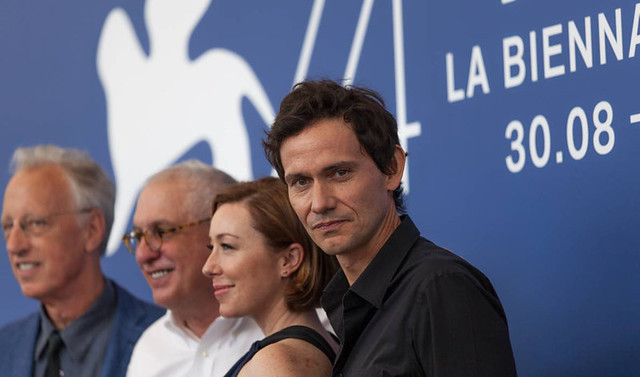
I had a chance to talk to one of the stars (in the narrative part of the series), Christian Camargo, a veteran stage actor, known for his dramatic roles in Dexter and Penny Dreadful.

Camargo plays a conflicted military scientist who witnesses a murder of a fellow scientist and the government cover-up. Eager to share his enthusiasm on the project, Camargo elaborates at length on what it's like working with Errol Morris, playing a real life character and being part of the genre blurring, groundbreaking project.

Just finished watching WORMWOOD. Even knowing Errol Morris’ previous work, I was struck by how incredible it was: a really fascinating subject and story and how it was told. Everything was really incredible. I am wondering how you got involved with the project and how the process was for you.

I first got involved with the project through Cindy Toland, the casting director for the project. I’ve known her for a very long time and am a huge fan of Errol Morris. They reached out to see if I was interested. You know, I’d do catering for him. (laughs) I would do anything to see how he works. And I adored working with him. This is not just a lip service, I truly mean it. He is like a… an irreverent Bodhi Satva. He uses everything in his arsonal to create a story that has a cause and direction greater than him. Does that make any sense?

Oh absolutely.

He is manipulating the artform but not manipulating the truth of his experience and of our experience. So what comes through is kind of absolute truth that we as a viewer have to discover. In a way he does it, he does it with great intensity and great joy.

He doesn’t have patient for conflict which is extremely liberating from an actor’s standpoint. The concept of having this double genre - both documentary and narrative fiction is new, you know. It hadn’t been done, even he hadn’t done it quite this way before. So he really surrounded him with the people he was able to trust and entrust with telling the story, including Igor (Martinovic), who is an incredible cinematographer.

He gave us freedom to sort of come up with characters. Robert Lashbrook, the character I play, there was one small picture of him and that was it. You don’t know anything about him. There is nothing online about him. He is very much a mysterious character. But for me it was extremely freeing to discover. Now for Peter Sarsgaard, there was a lot more material to work off of. But still there was a lot of freedom and liberty to be had.

The scripted part, we treated as a movie. Errol really encouraged that. We had a true story - Eric Olson. And the scripted part, we had that liberty. Between Errol and Steven (Hathaway) who edited the series, they found a language that echoed one another.

I think he did this on purpose: he chose actors who are very familiar with Hamlet as he uses that in the story of Eric Olson.

You are very familiar with Hamlet with your background in theater!

Exactly. He wanted that theatrical echo of the piece. But also what I loved about it was he allowed us to get rid of dlalog and work through silence and through image.

Interesting. Haven’t thought about that.

As you know, the amount of dialog that was going with Eric Olson with that storyline, so it was really fun to play from moment to moment.

I imagine that actual script must’ve been pretty short.

Yes, yes it was very short. And it was written in a narrative style, like a book. When I first looked at it, I didn’t know what to make of it. But Errol shot all the interview with Eric before, before we were getting into the scripted part. So he sent that over and I watched that. I was such a fan of Errol’s work, I was more interested in Errol’s interview to be honest. ‘Why do we need this other part?’ I thought. But when I see the cut together and made into the piece, wow, I get it. The use of imagination allows the audience to go, ‘what is the truth?’ ‘What really happened?’

I know what Errol is always after. It’s that kind of rabid passion. In this case it’s Eric (Olson)’s rabid passion for finding out what the truth is. Is that part of insanity or that it part of all of us should be pursuing?

One thing I was struck by is how conflicted your character, Bob Lashbrook is of all characters. Probably the most conflicted character in the whole series. What was your take on the character?

I’ve played few bad guys in my career. And I really love the psychology behind what makes people do certain things. That it is never black and white in my mind. The little I knew about Robert Lashbrook is that he wasn’t a heavy, muscle man. He was more of an intellectual on the science side of it. So I really looked at the situation - playing on both sides, and how tenuous, how in different waters they were all walking. In a time where we had Cold War and all the pressures from the administration and J Edgar Hoover and what was happening in America at that time…which is not completely dissmilar to what’s happening right now. You know there is nationalistic front and we are sort of heading back to McCarthy era.

There was a tremendous amount of concept and senses of ‘what is duty?’ you know? ‘What is right thing to do?’ The tragedy of Lashbrook for me was his sense of powerlessness. Following orders. There is sinister quality to him and I wanted to feel like he was sinister force but all of sudden I realized that he didn’t have any power. He just allowed the murder to happen. We found a lot of these conflicted moments. He just allowed that to happen. I enjoyed playing him. It gave more dimension.

The historical aspect of Wormwood. With MKUltra and germ warfare and all the so-called conspiracy theories, I found very interesting. I grew up in Korea but no one really talked about germ warfare in Korean War at all. Did you have any knowledge of these events prior to the production?

Actually I had some knowledge of the (POW's) confessions. But I thought they were just coersions and they ere brainwashed and that this was all part of war system. With the amount of information that are out now, it’s not hard. There is enough to give you the shadow of doubt about whether this was coersion or whether this was in fact, people telling the truth. And we do know now that the chemical weapons were made at that point in America.

I think this is one of the big things that Errol is opening up. With great art, it always knows when to appear- generally it’s not an artist planning it, it just happens, in the nature. He tapped into very astute presentation of America. I mean, there’s a lot of us, well some of us don’t, but a lot of us looking at Trump and go 'oh my god I can’t believe what America is right now!'

Right.


And yet, this little dark secrets have been going on for decades. And we need to understand as Americans that we are all culpable. We are complicit. And in the whole grand scheme of what is… in some circle, what’s wrong with humanity? That’s also another subject that is very Hamlet-esque.

True.

Errol has tapped into this, at such a time where the country is so polarized. And a lot of left-leaning liberals are pointing to this presidency as ‘this is the time where America is the worst’. No, this has been going on like this for years and years. It’s only through people like Eric Olson who are commited to figuring out what the truth is that that the light is shined on these indiscretions. It’s a momentous subject to have in our time right now to get to people to seek the truth. Unfortunately it was at the cost of very brilliant career that Eric had.

Right.

And hopefully that’s not over. He will continue this work now that this story has come out. Because he is really a fascinating person whose work needs to be recognized.

As Errol concludes that Eric knows the truth now, we have to reconcile the fact that there is no clear cut winner in this situation. Like wormwood, everything is bitter, everything is contaminated.

Absolutely. That is what will come out is that there isn’t. It’s all dirty. It’s one of the human conditions. What comes out is that there is no clear winners. There are definitely losers. I mean, Frank Olson was on the losing end.

But there are no winners. No one comes out with their hand completely clean. Really the underneath point to all this is that this legacy is handed over to us, to the viewer, the audience that our hands are not clean either: ‘If I allow this to go on, my hands are not clean’.

You think WORMWOOD is going to be the momentous occasion for the visual, storytelling medium that will change everything- cinema, TV, streaming services, etc.?

Yeah. There has been a lot of interests in reality based long form non fiction. But it’s not being done the way… well, it has been done in a subversive way, as in ‘we are following this documentary along then it becomes narrative'. But in that way the filmmakers are skewing it for their own purpose. But it’s never been done in such, ‘here we are, we have a real person, we have fiction, we have script, we have freedom. It’s hysterical because I think this is up for Academy Awards for Narrative but not Documentary category. (laughs) Classic human condition. Real life is like this. It gets all murky.

There is no genre here. It’s completely hybrid. It’s totally new. And I think it will open doors to whole diferent types of storytelling and people don’t have to pigeonhole them. And the industry has to catch up. Many people ask me what the project is like- is it a thriller? Is it this or is it that? I really hope and I can’t imagine that this won’t be successful enough to influence whole new way of thinking that we can allow the viewer, which Netflix does so well, to choose. You don’t have to be fed a genre. It’s not about statistics. I’m pretty hopeful and sort of idealistic that Errol is bringing the art back to the form.

Wormwood will be released in select theaters and will be available globally on Netflix starting December 15.

Thursday, June 29, 2017

Okja is Bong Joon-ho's Worst Film

Okja (2017) - Bong
okja
Come on. This is garbage. By far Bong's worst. The script is sloppy, mired in some pseudo animal rights bit that doesn't even pay off. This is what he said in indiewire about researching for the film:

For the next two months, he remained vegan. “Then I flew back to South Korea, and you know, Korea is a BBQ paradise,” he said with a laugh. “Every street on every corner is burning meat. I slowly, slowly came back to being a meat eater.”


Wow, talk about conviction! That's the lamest excuse for being Korean I've ever heard.

Bong's fast becoming the later Spielberg where he continuously churning out well crafted, well executed thrillers that contains a bit of excrement that fouls the whole experience. Extremely distasteful bit in Okja is not even the slaughterhouse scene. It is too grim to be a Miyazaki children's film, yet too cartoonish to be taken seriously.

Did Netflix execs go lets give this thing millions of dollars after reading that script? Is this the movie which was the focal point of controversy at Cannes, seriously? Just about everyone involved are wasted here, especially Tilda Swinton who plays meaningless double role, Giancarlo Esposito and cringeworthy Jake Gyllenhaal. Paul Dano's kindhearted animal activist can turn on a dime to be super violent, kicking that Korean guy from Walking Dead to a pulp?

Okja plays out like two different movies and neither of them are all that interesting. I understand a Korean director's balancing act but the movie's like oil and water, unsure of it tone and direction. Translation is sacred. Yes. But there are things that needs no translation to be understood. And that's the pitfall of Okja. Can you imagine the horror of Every Netflix watching American family, expecting it to be a wholesome entertainment?