Showing posts with label NYFF 2018. Show all posts

Monday, March 11, 2019

Interview: Jia Zhangke on Gangster Genre and Ash is Purest White

5dbf9a22b1e6441e379836ea00ac25da80b8caae
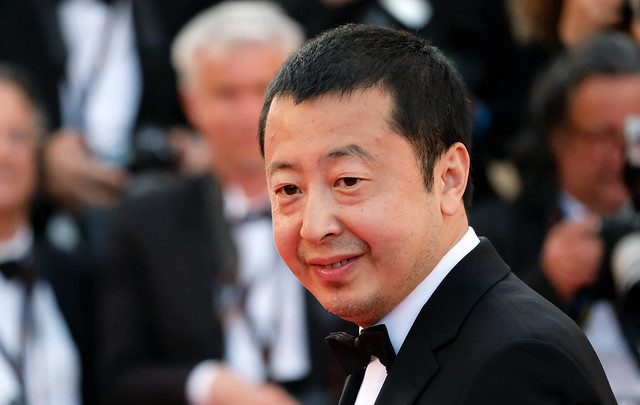
With his sprawling gangster epic melodrama Ash is Purest White opening this Thursday in New York, Jia Zhangke, the master chronicler of changing China, was in town and I was lucky enough to snag an interview. Spanning 17 years, Ash is a culmination of all of Jia's work, once again, starring his wife/muse, the great Zhao Tao in a performance that gathers more power and poignancy as the film goes along. The film ended up near the top of my favorite list for 2018 and everyone needs to see this beautiful film. So without further a do:

It seems you are going back to the long form storytelling with ASH IS PUREST WHITE, harkening back to your old films like PLATFORM or UNKNOWN PLEASURES rather than episodic storytelling of your past two films, A TOUCH OF SIN and MOUNTAINS MAY DEPART.


So first, thinking about doing a film about underworld (Jianghu), not only as a subject but as a genre. What attracted me about those jianghu films, is about the philosophy and their codes of conduct into personal relationship, cultivation of sense of loyalty. These are the values that I wanted to examine but did’t want to somehow pinpoint one particular era or one particular time pertaining my youth or contemporary time. What I wanted to examine was how these values and philosophy of the underworld evolved and changed and eroded in these long stretch of time so I can explore the connections between these- how it had changed and shifted to pursue wealth and power in the mainstream society. That’s the reason why I decided to not only narrating this particular underworld genre and motif but also long time span of 17 years in order for me to do so.

And another point of departure is I remember that when I was young and growing up in Shanxi Province, there was a big brother character, like a Brother Bin (Liao Fan of Black Coal Thin Ice) in the film in my own neighborhood. I remember that he was strikingly handsome and very masculine and well versed in cultivating that kind of personal bond and resolving conflict. He made a huge impression on me growing up. Later when I went back home from College I saw him middle aged, squatting by the street eating a bowl of noodles. All his underlings and brothers were gone. So I think that not only examining this particular underworld genre portrayal of how they evolved and how the values have been eroded, I also wanted to see how time change and change an individual such as this particular case the head of the gang and how this person changed internally but also externally in terms of appearance. How this face aged through time. Those are the two elements I wanted to examine.

It’s interesting you say that because the big part of the film belong to Zhao Tao’s character. In some strange magic she hasn’t changed not only physically but she had this inner strength and it’s her who goes to jail for and rescues Brother Bin at the end. She was the only one who was loyal to him all throughout those years. How did you come up with that character?

I wanted to make a comparison gender-wise in jianghu and also society in general. China is a very male oriented society and that kind of principles we used to have have changed. Male population seems to be more inclined to pursue those wealth and power and lose themselves in it. And on the other hand, the female population ironically are the ones holding on to those traditional values and cultures and those principles they didn’t lose. I wanted to create those contrast in current society. I’m not saying that the past was better. I‘m just showing what is changed in society.

The film is French co-production. How was working with the French crew?

In terms of collaboration with my french partner MK2, the distribution company which I worked with past 3 films. So I do think that gave me more options in terms of finding the talents and the people I can work with from the French side. For this particular film, the cinematographer was Eric Gautier collaborating with me for the first time. Sound mixers and also the hair and makeup were all french artists. In the past I tend to have a very close-knit crew from China. It was not so much about the funding and investment on the film that was important. It was more to do with creative team that I can pull from French side. I enjoyed a lot more that collaboration.

Was it a challenge to create that period in terms of production design?

The challenge was how to recreate this period that was seen in 2001. Because the people back in the day the way they look and their faces were completely different from how people look now. When doing the casting process I needed to make sure that I find the faces that had a bit of wear and tear, that show the ravages of time and hard work. They tended to have darker complexion and so on. Today’s young people, even if they are from the same province, same county, same hometown, they have a lighter skin tone with smoother surface - hamburger face that I constantly joke about- well-fed, well- nurtured and well protected in terms of sunblock and all that. So how I’m going to choose the right faces - actors and actresses and extras. So when I was actually positioning my main characters with all the makeup and movie magic, I was very concerned about how they would look believable so people will say yes these are indeed from 2001. So restaging of it was pretty challenging.

What’s interesting to me is that you are retracing your steps of your previous films be it Shanxi Province or Three Gorges Dam. How much have they changed since then?

So in terms of revisiting those places I previously shot my films in, instead of change of scenery that I witnessed that astonished me, it was how much it hasn’t changed for 17 years. For example, a lot of public spaces that were there are still standing, shockingly, compared with most of the 1st tier and 2nd tier mega cities- tend to demolish everything and restart completely. So the skyline would be completely different. Places like Datong and Three Gorges Dam, 17 years ago and when I made Still Life, many of the buildings and public spaces are still there and still very much the same. So many feels that as a country, China is a fast changing society and of progress. At the same time, it’s not balanced in urban city and in rural areas. So a lot of people are left behind and they never had a chance to catch up with mainstream progress that’s been so visible to the world.

Qiao (Zhao Tao’s character) in the first part of the film, when she bid farewell to her father at the train station and also the worker’s dormitory in the background - those were already there when I made unknown Pleasures in 2001, so I was so shocked. You see it a little weathered and can see the traces of time, but they are still there!

The question I had about Qiao is that she had a chance to leave everything behind and go west (Xinjiang) with this venture capitalist that she met on the train. But she doesn’t. I wonder about the choices that she made.

I think after breakup with her long time lover, she decides that it’s time to make a change, to break away from that past relations and trying to find the new one. It just happens to be this chance encounter with that person. It was almost like a very very short fling. But after that experience that she realizes that to go with him, to Xinjiang in this case, she would be removing herself completely from the underworld that she still very much see herself a member of. So she at the end makes the final decision. At the end of the film she says “I am jianghu and you are not.” She is actually telling this to Bin. It’s that spirit of jianghu she is abiding by, not any men.

You told me in 2014 that you might be doing a period piece about Chinese journeyman traveling West first, Europe and then South America. Is it still happening? If not, what’s next for you?

It’s not anywhere in preparation stage. It’s still one of the films I very much want to make. The next film we are preparing for is a period piece set in the late Qing dynasty. It’s going to be Wuxia genre film.

I am very much looking forward to that!


My review of Ash is Purest White

Wednesday, October 10, 2018

Godard Points Us in the Right Direction

Le livre d'image/Image Book (2018) - Godard
c2d0a10808bbe355523ba1fe21a84f8c-h_2018
With Image Book, Jean-Luc Godard is still at it at age 87. With his presence strongly felt at Cannes this year with its poster of Belmondo and Karina kissing from Pierrot le fou (purely out of their nostalgia trip and other superficial reasons) and Cate Blanchet led Jury ironically awarding him 'the Special Palm d'or', whatever that means. But in stark contrast to youthful exuberance and liberty of his earlier films, Image Book is in large part and as expected, dark, brooding and more inscrutable than ever and indirect condemnation of the cheap spectacle the festival has become. Completely consists of existing footage - from Hollywood, European and Soviet films, war atrocities, news footage of ISIS and films from the Middle East in later part, Godard grimly goes on about the power, or lack thereof, of images in his raspy, groveling voice over.

Like most of his essay films since the monumental Histoire du cinema, his fragmented, loosely connected images have been, if not anything, reminder of the terrible history of humankind. Image Book is no exception. With Bertolt Brecht's quote, "Only a fragment carries a mark of authenticity," he somewhat frees us from dwelling over his use of edits - how he cuts two images together, how he stops and drags an image, his discontinuous soundtrack, spastic English subtitles and digital manipulation where colors bleed and image become almost abstract. Truth is in the images themselves. And as far as collages go, it's an assault on your eyeballs, very much like that famous shot from Un Chien Andalou which he references to in the film.

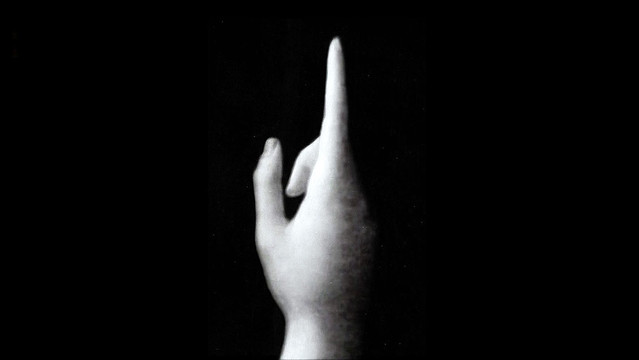
His thin image thread is there with the picture of hand pointing up, renaissance paintings where gestures have hidden meanings to recognizable movie clips include Vertigo, Kiss Me Deadly, Ivan the Terrible, Dr. Mabuse, Johnny Guitar, many from his own filmography and countless others I don't recognize. Train shots from various films invariably ends up in Auswitz footage. With Godard saying, "I have the courage to imagine. I take the train of history and I think of people who take the train for a job and who do not have courage to imagine." With images of 35mm film going through a projector, its thick and hammy celluloid strip jittering through the loop like a convulsing snake or slap of meat going through a tenderizer, Godard puts emphasis on the physicality of communication, the visual language, rather than spoken one.

The second half of the film settles into West's notion of Middle East as it was chastised by Edward Said in Orientalism. With barrage of film clips from old Egyptian films and other Middle Eastern nations, Godard examines An Ambition in the Desert, a book by Albert Cossery, an Egyptian born French writer. The book tells a story of a imagined Middle Eastern emirate of Dofa, a non-oil producing state therefore escaped from the Western colonialists' influence. It's deemed as paradise in the Middle East. Series of explosions rocks Dofa and Samantar, the main character of the story, would find out the attacks are planned by machiavellian Prime Minister of the emirate, Sheik Ben Kadem, who welcomes the influence from the west for his own political gain. Godard delves deeply into the subject, juxtaposing old Egyptian movie clips, surveillance ISIS footage and everyday street footage digitally manipulated to abstraction.

Godard's latest offerings are hard nut to crack, even more so than usual. Image Book is also the ones that needs to be mulled over after viewing. I didn't know about Cossery's book. I had to look it up. Even as an avid fan of his filmography, most of the stuff he talks about go over my head. But with Image Book, there seems to be a concerted effort for Godard to point us in the direction where he sees a corner of the world that is underexposed, underseen and misrepresented by the western world. He references his 1987 film King Lear a lot in Image Book, especially a shot of Cordelia (Molly Ringwald)'s dead body lying on the rock - as if telling us that Cordelia, the righteous, virtuos one, is dead and there is no good one left in the world. He also leaves in his coughing fit during the middle of voice over. Godard knows his time is almost up. There is a sense of urgency in his gravelly voice. Say what you will about cranky attitude, his stubbornness all these years not to conform, his perceived snobbiness. Yes, the representation and how you tell the story matters. But I'd rather get dictation from Godard and have him point me to the right direction than from anybody else. I sincerely hope Image Book is not his farewell message to the world.

Tuesday, October 9, 2018

Alfonso Cuaron's Roma is Quietly Spectacular

Roma (2018) - Cuaron
Roma-1-1600x900-c-default
Alfonso Cuarón, a director known for his meticulously crafted Hollywood sci-fi movies Children of Men and Gravity, goes back to his native Mexico and gets more personal with Roma, based on childhood memories of his nanny. It is his first Mexican film since Y Tu Mamá También in 2001. The result is a well-balanced, mature, humanistic and highly subjective observation of a woman’s life.

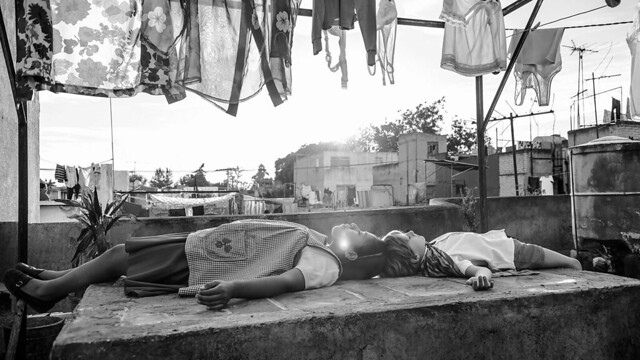
We are introduced to Cleo (Yalitza Aparicio), an indigenous woman working as a housemaid for an upper-middle-class family in Mexico City. Shot in sumptuous black and white, large format (instead of getting help from his regular DP Emmanuel Lubezki, Cuarón shot the movie himself) and using subtle unassuming techniques (mostly in wide angle, slow pan and tilt), the movie focuses on the life of a woman and her profession, which is seldom a subject for a major motion picture.

We start with a long, static shot of the stone floor of a narrow, gated driveway being washed. We hear sounds from the lively neighborhood – dogs barking, children playing, various street sellers signaling their arrivals. The sudsy water is thrown over and over, and we see a plane going across the sky in its reflection on the floor. After the initial title sequence, we slowly tilt up to reveal Cleo doing chores in the courtyard. With this opening, Cuarón sets up the rhythm of Roma – the steady, forward march of time. We are about to witness for a little more than two hours the trials and tribulations of Cleo, the house servant, within a year’s span. The year is 1970.

Cleo and Adela (Nancy García García) are two live-in housemaids for Señora Sofia (Marina de Tavira) and her mostly absent husband, her old mother and their four rambunctious children. Cleo and Adela wake up before everyone else, cook, wake the kids one by one, get them ready for school, clean, wash, get groceries, carry luggage, make tea and do everything else in between. It is clear that much love is shared between the family and Cleo. Kids love her and say so often, and Cleo does too.

Sofia goes through a tough time dealing with the fact that her husband is cheating on her – he fakes business trips to Canada when in fact he is staying in the city with another woman. She appreciates all Cleo does but also lets her know her place on occasion. Cleo is part of the family but not quite: in one continuous sequence we see the whole family viewing a TV program together. It is some silly comedy and everyone is watching and laughing. Cleo, while mindful of everyone’s needs, watches and laughs with them. She approaches the couch where the kids are sitting and sits down on the floor next to them. One of the kids leans his head on her shoulder. Sofia tells her to go and make some tea. She gets up and goes to the kitchen.

Cleo gets pregnant by Adela’s cousin Fermín (Jorge Antonio Guerrero), a brash martial arts practicioner. He abandons her as soon as she tells him that she is pregnant. Sofia, perhaps feeling the sisterhood of abandoned women and/or out of the goodness of her heart, embraces Cleo’s pregnancy and pledges her support.

It is the small details Cuarón shows us that have a cumulative impact, like the sequence of the father very carefully parking his oversized car in the narrow driveway, the constant presence of dog shit on the floor, a plane flying across the sky…. With Roma, he doesn’t make a broad political or cultural statement. It is not that Cuarón ignores the social stratification or political climate in Mexico during 1970 and 1971. Quite the contrary – the family Christmas getaway in the mountains, at the opulent mansion of one of Sofia’s friends, reinforces the masters-and-servants relationship as they have separate living quarters and hangout areas. This is also where we get the only clue to Cleo’s background as she muses on the barren landscape and tells her friends, “This is what my hometown looks like. Drier than this though.” Then there is the Corpus Christi Massacre in 1971 where government thugs (known as Los Halcones) shoot and kill 120 protesting college students. The chaotic scene on the street plays out while Cleo, accompanied by Sofia’s mother, is on her way to choose a crib for her baby. She encounters Fermín, now as one of Los Halcones.

In focusing on Cleo and her surrogate family, who are painfully human with all their faults and blemishes, Cuarón makes the film very personal and subjective, therefore becoming universal.

Although the spectacular uncut ending sequence on the beach might be a technical marvel, Cuarón’s craft does not take away from or overshadow the overall emotional impact it has on the audience. The sequence encapsulates everything Cuarón has been working for – pairing technical virtuosity and universal human decency to a maximum impact. Quietly spectacular, this larger format, digitally shot film needs to be seen on the big screen. Hopefully Netflix, its distributor, will release it in theaters for a while before putting it in their streaming queue.

The underlying theme of Roma is giving love and respect to people who we take for granted – those unsung heroes, the backbone of our society. We make movies of spectacles and amplified emotions. Cuarón focuses on miniature crises in one year in the life of Cleo. Roma is a guileless, subtle, deeply felt human story that is definitely Cuarón’s best and most mature work and one of the year’s best films.

Sunday, October 7, 2018

Fatalistic Love Story

Cold War (2018) - Pawlikowski
Cannes-5
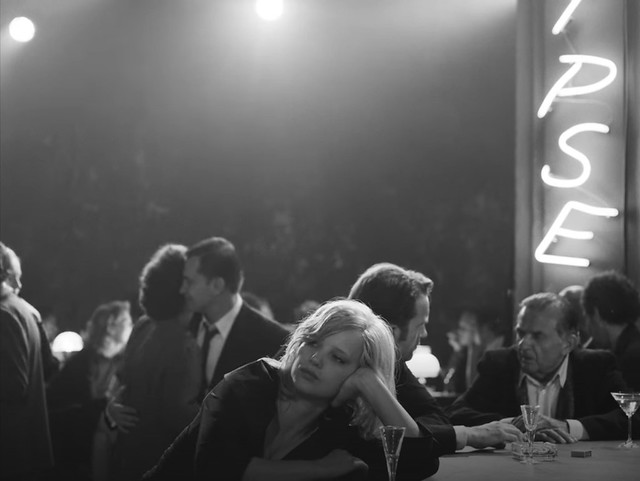
Cold War is a tragic, fatalistic love story set in Poland after the second world war. The year is 1949. Wiktor (Tomasz Kot) and Irena (Agata Kulesza), two musical enthusiasts are seen traveling and collecting samples of Polish folk music in rural areas. They are two pivotal force behind a newly established Polish State run music school. While auditioning many young, talented pupils, a sultry, troubled girl Zula (Joanna Kulig) catches Wiktor's eyes. It's a school where they train students to be entertainers on stage - involves not only singing but choreographed dancing in traditional garbs. Zula, talented and has a beautiful voice, becomes a star soon enough. And Wiktor and Zula soon become lovers. Now the year is 1952.

Soon the school and its trope becomes a success, the communist regime takes an interest and pressure them to integrate pro-Stalin propaganda songs. Irena objects at first but relents at the Kaczmarek (Borys Szyc), the founder of the school's insistence. But it gives school and Zula an opportunity to travel and perform elsewhere in Europe. While they are performing in Paris, Wiktor suggests Zula that they defect to the west. But Zula fails to show up at the rendez-vous point and they are separated.

Many years passes. Wiktor is now living in Paris, composing and playing piano in a jazz ensemble living in a tiny apartment, like a true bohemian in French movies. After seeing Zula perform with her traveling Polish group on stage in Zagreb, and after forcefully removed and put on a train out of Yugoslavia, they are reunited in Paris. But the whole Paris scene doesn't satisfy Zula. It's too stuck up and Wiktor seems to have lost his mojo in a foreign land - "In Poland, you were a man!" Zula chastises him. After couple of jealousy fueled fights - involving a poet Juliette (Jeanne Balibar) and movie director Michel (French director Cedric Kahn) in Wiktor's circle of artist friends, Zula goes back to Poland. Wiktor, crestfallen, decides to go back to Poland for Zula, risking being jailed as a unpatriotic traitor.

Shot again in full frame monochrome by Lukascz Zal, Cold War is every bit as beautiful as Ida. His use of head space is there and it's lovely. Kulig has a clear and beautiful singing voice in every style, providing some of the loveliest vocal tracks for the films great jazzy soundtrack.

Pawlikowski deftly directs, like his previous film, Ida this 90 minute film in a breeze. But whereas this quick, no moment to spare, no time to contemplate pace worked for a young woman coming of age story, for something like Cold War and the subject like tragic love, I wish the director spent a little more time with Wiktor and especially more with Zula, since Kulig, resembling Slavic Léa Seydoux, is very lovely to look at and listen to. Constant fade to black after pivotal moments in their lives doesn't feel like just times passing or mere transition but more like we've missed out on a lot of details. I understand Pawlikowski's driving idea of 'love has no ideology or borders', but the absence of the couple's political allegiance/aversion as 'artists' bothered me (same way as Ida wearing religion on her sleeve in Ida), especially no background for either of them were ever fully explored. The ending is beautiful but I feel like the rest of the film didn't quite earn it.

Saturday, October 6, 2018

Allegorical Tale of Haves and Have Nots

Happy as Lazzaro (2018) - Rohrwacher
Heureux comme Lazzaro (Lazzaro felice)
I've come to love folksy, good hearted nature of Alice Rohrwacher's delicate, charming films about rural Italian villages and their eclectic inhabitants peppered with her brand of unsentimental magic realism. Happy as Lazzaro, her latest offering is an allegorical tale that goes wonderfully unexpected ways.

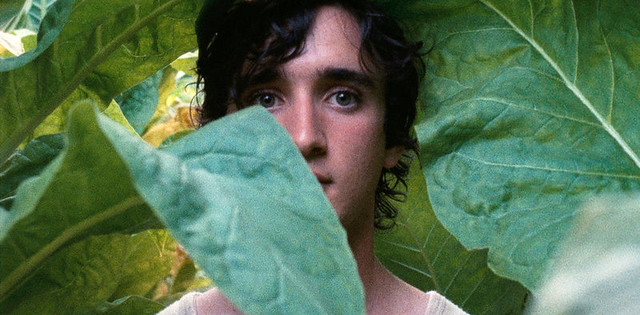
Inviolata is an isolated mountain village that seems like it is stuck in the middle ages. The farmers are seen tending livestock, harvesting tobacco plants and living in squalid conditions. Electricity seems to be scarce as they complain when the only light bulb in the common area of the house goes out. Everyone in the village, young and old, is working from morning to dusk non-stop. A wide eyed, good natured boy, Lazzaro (Adriano Tardiolo), seems to be in everyone's demand. Whatever the task, he is there to do it without questioning.

Nicola, in a funny suit and tie who seem to be in charge of the whole production comes in to collect the villager's tobacco harvest, does the calculation and tells them that they are in the red again after all the expenses that he brings in - light bulbs, supplies and what not. The villagers complain but quiet down soon enough. It seems their arrangement has been like this way for a long time. Nicola's wife, marquise de Luna (Nicoletta Braschi of Life is Beautiful and Johnny Stecchino) and their spoiled children Tancredi and Maria are in town, staying in their opulent mansion. Tancredi, a blonde boy who is clueless about the villager's living conditions, strolls around in his fancy clothes and his walkman, bored out of his skull. But he takes a liking to Lazzaro who obliges to his every whim.

After Lazzaro showed Tancredi his secret hangout up on the dusty hill, the rich boy comes up with an idea of kidnapping himself and sending a ransom letter to his parents. Days go by. Nicola suspiciously refuses to call police and marquise refuses to pay the ransom. Lazzaro, busy working, but also worried about his new friend up on the hill all by himself, worries himself sick and falls ill. Maria secretly calls the police and all hell breaks loose.

See, the first half of Happy as Lazzaro plays out like a gritty yet affable tale of small folks up in the mountains. Everything is very authentic and natural, showing their way of life- Young people fall in love and want to leave the village. They have to protect livestock from marauding wolves, tobacco plants need to be harvested and smoked and dried. It plays out something like humorous version of Ermano Olmi's realist film, except some strange inconsistencies like the presence of Tancredi's walkman and flip phones (Rohrwacher deliberately makes the time period obscure). You think it's a throw back of old, folksy yarn so far, then the film turns into something different altogether.

After the arrival of police, it is revealed that the town of Inviolata has been taken advantage of by the marquise and Nicola: after the historic flooding long ago, the town was cut off from the outside world and unbeknownst them, the marquise family continued to exploit them for their labor in their little modern feudal system. By the time our Lazzaro, who had fallen ill and in his delirium, fell from the cliff looking for Tancredi, regain his consciousness, many years had gone by and Inviolata had been emptied out.

Lazzaro meets two thieves, Ultimo (great Sergi Lopez) and Pippo, at now abandoned villa of the marquise and hitch a ride with them to their house, an old tanker beside the railroad tracks. There Lazzaro reunites with Antonia (Alba Rohrwacher, sister of director Alice), who was a little girl back in Inviolata and now is a grown up. In fact, most of the villagers who live in the same place, are all old now. They are scraping by, by way of stealing and scavenging. They regard Lazzaro, who hadn't aged a bit, with great deal of skepticism at first, calling him a ghost. But recognizes his innocence and good heartedness. Lazzaro, who had sworn his friendship with Tancredi, would never stop looking for him.

One can regard Lazzaro as Chance character in Being There. Almost saint like, Lazzaro is a metaphysical being that is too good to be true. In fact, all the villagers are. What's done is done. They don't hold the grudge against the marquise and her family. They are even willing to give them expensive pastries.

Rohrbacher makes a point about the current immigration situations that it's just as exploitative as the middle ages. As Lazzaro and Antonia watches, there is a scene involving a sort of reversed slavery auction: The recruiter shouts that a job pays four euros and 50 cents. Migrant workers grumble that the wage is too low. But instead of asking for higher wages, they compete for lowering their wage demands just to get a job.

Child actors are great, so is always excellent Alba Rohrbacher. And Hélène Louvart lensed 16mm cinematography is gorgeous. But the real star is Tardiolo. There is sense of decency in that babyface and wide fawny eyes. Lazzaro is someone who is desperately needed in this cynical, cruel world. Alice Rohrbacher's writing shines in bringing out humor and humanity in an whimsical yet pointy allegory full of wonders.

Emotions Run High in Hong Sangsoo's Grass

Grass (2018) - Hong
grass-2018-001-kim-minhee-at-computer
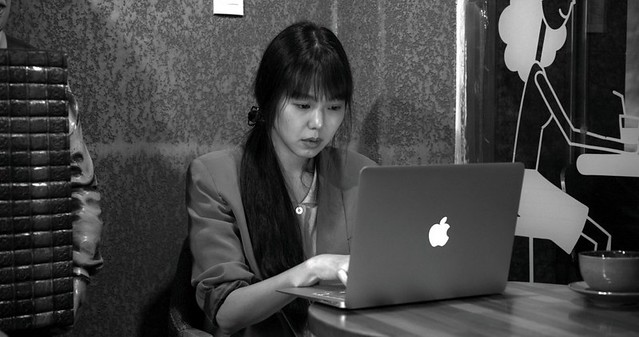
Yet another slight bunch of vignettes taking place in and around a coffee shop in Seoul, Grass is ever prolific Korean auteur Hong Sangsoo's first release of the two this year (the second one being Hotel by the River, read Pierce's review here). It sketches out 4 different 'conversations'. Clocking in brisk 66 minutes, the film sees director's ever present muse, Kim Minhee passively observing then participating in those conversations. Being in 5 of the last 6 Hong films, one can assume that Kim's contribution to his artistry is only growing. Here, she is still a beguiling beauty, but shows that she can be merciless and downright nasty when she wants to be even without the help of usual heavy consumption of soju. Grass is not groundbreaking or anything, but it's perhaps more cynical and darker than his other films. Still, Hong's human comedy continues with slight variations each time with delicious results.

Areum (Kim) is seen typing away her thoughts in her macbook in the near-window corner of an unassuming coffee shop. She eavesdrops conversations of customers and gives her thoughts in a constant voice-over. One can wonder if these conversations and arguments were her creations.

There are much discussions about death: the first conversation she eavesdrops is from the young couple. Their chat starts harmless then descends into emotional outbursts- the girl accusing the boy of their friend's death. Then there is an old stage actor whose attempted suicide over a woman left him jobless and homeless. But his pupil can't bring herself up to invite him to stay with her family. Areum makes assumptions and judges these people harshly in her thoughts.

What brings Areum's disdain out in the open is the presence of an actor/writer (played by Jung Jinyoung, pretty much Hong stand-in), who is looking for a writing partner for his new script. After his request gets rejected by his writer friend (Kim Saebyuk) who chastises him by saying, "writers write alone," he tries his luck on the beautiful stranger. Areum outright says that she is not a writer. She just writes for herself. He insists that they collaborate. And in order to do that, he needs to move in with her and spend 10 days observing her. Saved by her younger brother's arrival, she excuses herself out of the conversation. On the street, she tells her brother with the tone of disgust how the actor came on to her.

Her nasty streak continues when she meets her brother's new girlfriend. She skewers the young couple for thinking about marriage without knowing each other too well. "You are already set up for a failure!" She then blows up on her brother for not picking up the check for their lunch and scowls him for being pussy-whipped.

It's no use to describe Hong's style here anymore - minimal long take, goofy auto zoom and pan, two shot long takes. He's obviously not interested in 'making a mark' with his 'style'. But with just one look at his films, everyone can recognize that they are his. No style has become his style. I heard him saying "because I ran out of things to name," when asked why the film is called Grass at Berlinale. He tries different things here and there - notably in Grass, there is an extended over the shoulder shot where we don't see a man's face then camera pans to see his shadow on the wall gesticulating as the conversation heats up. The usual chicken scratch titles are gone and replaced by what looks like xeroxed title cards. Yet these (no) stylings don't add up to much, nor does dissonant classical music, that blares all over dialog, which only serves more as an absurd comedic effect.

The later part of the film brings them all together back in the coffee shop, drinking off of couple of soju bottles they sneaked in in the grace of unseen, good-hearted shop owner. There you see Areum accepting an invitation to join the conversation. She's shown that she can take care of herself from unwanted and frequent men's advances, and when necessary, doesn't take shit from anybody. “Emotions are gullible and forceful, precious, cheap and alluring.” her voice over says. Even if Areum looks down on everyone from her pedestal, at the end, emotions are what makes us human, Hong seems to say.

Thursday, October 4, 2018

Being Relevant

Double vies/Non-Fiction (2018) - Assayas
Screen Shot 2018-09-20 at 6.49.20 AM
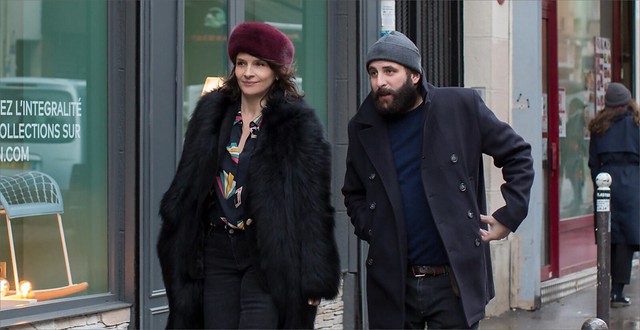
It seems, along with Godard, Olivier Assayas is one of the cinema's keenest chroniclers reflecting the soulless modern world in the late stages of capitalism. He reflected on the internet porn industry and shady side of desire in Demon Lover, corporate espionage and power politics in Boarding Gate, Hollywood & stardom in Clouds of Sils Maria and fashion industry in Personal Shopper. Now he takes on the fate of the print media with a biting new comedy, Non-Fiction. Unlike his last two collaborations with Kristen Stewart with international cast and locations, Non-Fiction takes place mostly in Paris with an ensemble cast of French actors - Juliette Binoche, Guillaume Canet, Vincent Macaigne and Nora Hamzawi. Although the scale of the film might seem smaller and less glamorous, Assayas' observation on the publishing industry and the rising popularity of TV are, as usual, spot-on.

Canet plays Alain, a book publisher. He is not too hot about the new manuscript of his long time client, Leonard (Macaigne), a semi-respected author. Alain used to like Leonard’s books, but the author's thinly veiled, self-aggrandizing autobiographical works have been getting on his nerves lately. So he decides to pass on his latest. Alain is also dealing with office politics with physical books transitioning into digital format and sales figures where prestige doesn't necessarily produce profit anymore. And there is a rumor of a large media conglomerate taking over the company he works for.

For Leonard, who is going through a hard time with his live-in girlfriend Valerie (Hamzawi), a sharp tongued political consultant for a major political candidate for the upcoming election, the news of Alain's refusal to publish his new book (titled Full Stop) is a big blow. Leonard also happens to be having a long term affair with Alain's actress wife Selena (Juliette Binoche) who also appears (thinly veiled of course) in Full Stop and she is deathly afraid of Alain finding out.

Valerie is getting frustrated because her earnest candidate's message is not getting through to people. In this post-Trump, post-truth era, there’s just too much noise for people to filter out, Leonard tries to console her to no avail. It doesn't help that when the allegation of sexual harassment turns up from the candidate's past.

Selena talks about a policier TV series that she has been starring for 4 seasons. It's physical work and kind of cool to be a feminist heroine but she doesn't feel any joy doing it anymore. Any TV show is something to put on when working stiffs get home after long day of work and binge watch and relax, she says. Alain chimes in that it's like those adult coloring books that are money-makers for publishing companies. They are for relaxation, nothing more. Selena complains that only other job offers she gets is Phaedra on stage, obviously because of her age.

All of these characters are trying very hard to make a mark in their own field. They want to desperately matter in an internet age where people prefer blogs instead of esteemed magazines and a twitter rumor can ruin someone's reputation in an instant.

Non-Fiction is a very wordy, very French film. In cafes, apartments and hotel rooms, they smoke, drink and talk non-stop. Leonard quips that because of twitter's narcissistic nature, it’s very French.

Printed literature versus e-book and the intellectual property rights versus the internet being the purveyor of democracy are all hot topics these days. Do we really prefer that digital media you bought, which eventually disappears from your computer’s digital library, to physical media that can never truly disappear? I feel that Assayas is the only major director who actually verbalizes these issues on screen.

A lot of big words are thrown about and discussed among these urban, cultured professionals - Unwitty witticism, auto-fiction, dematerialization, post-truth, etc. These characters embody the anti-thesis to the anti-intellectual world where everyone is free to spout three sentence haikus on twitter without any consequences.

Where it lacks Assayas' languid visual language, Non-fiction makes up with his sharp, witty dialog and humor. Macaigne, a comedian with his unkempt hair and portly disposition, appearing in many of quirky French comedies of late, is becoming a major figure in French cinema. He has worked his way up to having a full nude love scene with Juliette Binoche here.

In this fictional light comedy with its English Title Non-Fiction, along with its French Title Double vie, Assayas once again rightly reflects our society in real time. To top the movie's meta-ness, Alain tells that he is in negotiation with Juliette Binoche to do an audio book of Full Stop. This got the biggest laugh from the audiences at the film's press screening.

Wednesday, October 3, 2018

Basic Human Needs...in Space: Claire Denis' Rapturous New Film, High Life

High Life (2018) - Denis
i29623Y-1
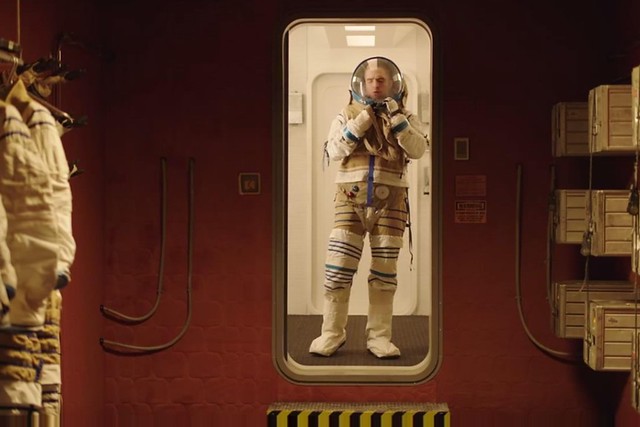
Hazy mist sprays over the vegetable garden from a sprinkler system. Monte (Robert Pattinson) in space suit is seen outside the space craft, doing some sort of repair. There is a baby in a makeshift crib. He is cooing the baby through the speaker system. As she cries louder and louder, he loses his concentration and drops his wrench into the void. So starts a rapturous new film by Claire Denis, High Life.

With jumbled timeline and voiceovers over the course of the film, we gather this square, retro looking spaceship once was populated by convicts on death row being subjects to medical experiments as they get close to the nearest black hole. Doctor on board is Dibs (Juliette Binoche) who apparently killed her entire family on earth. She administers drugs and experiments to the crew mostly comprised young people of all genders and races. It's their reproductive abilities near the black hole she is most concerned about. The experiment can't fail because the ship is programmed to cut off life supplies if it does. It's now Monte's job to keep it going. So this is the basic idea for High Life.

It's all about basic human needs- eating, shitting, fucking and making little babies, in space. It's all about the human bodily fluids. Shit happens and people die. The ship's interior is beige colored and stained (with human fluids) and worn out in that queasy 70s way. Doing Science Fiction, Denis goes about it with bare minimum - no grand establishing shots of the interiors, no extreme high-tech, anticeptic looking dingerdos, just because it's not her concern. There is a 'fuck box' where crew uses to get their rocks off. Monte is practicing celibacy because he wants to control himself. But Dr. Dibs has other ideas about that. Denis pushed the limit of what is considered good taste with The Bastards. With High Life, she pushes even further - Taboo isn't taboo anymore. It has sharp edges like her other films. And It's those ecstatic moments, like in many of her other films - frozen bodies floating in space, meteor showers, baby eating dirt in the vegetable garden, dead dog in the stream, sudden burst of violence and emotions that puts High Life very much in the top tier of all Claire Denis-ean film.

Tuesday, October 2, 2018

Bi Gan's Sophomore Effort, Long Day's Journey Into Night is a Stunner

Long Day's Journey into Night (2018) - Bi
NYFF_MainSlate_LongDaysJourneyIntoTheNight_01-1600x900-c-default
Bi Gan's sophomore effort, Long Day's Journey into Night, after his phenomenal debut Kaili Blues (2015), doesn't disappoint in terms of ambition, technical prowess and sheer ecstatic beauty. I've never experienced anything quite like it as far as an immersive movie going experience goes. If the uncut 40 minute shot in Kaili Blues took your breath away, just wait until you see a continuous hour long 3D scene in the later half of the film. Its pure cinematic power let you believe that cinema is still alive and well. Bi Gan is no joke folks. He is that rare combination of a filmmaker who really knows how incorporate technology into an artistic medium and runs amok with it.

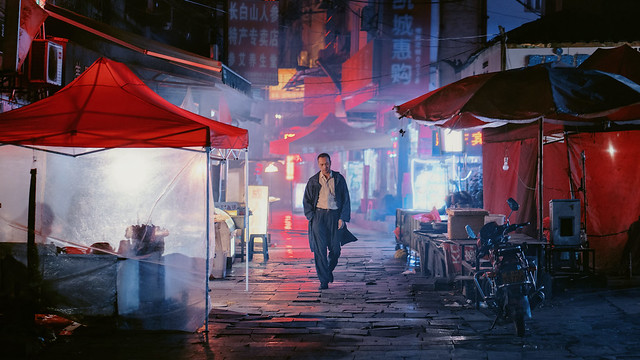
Lu Hongwu (Huang Jue) returns to Kaili for his father's funeral after many years of absence. There at his father's house, he finds an old photograph of a woman hidden in an old clock. As Lu tries to find her whereabouts, the noirish road trip morphs into an internal journey where his past and present and dreams are all intermingled. There are some very loose and abstract connections throughout, about his lost love and his sidekick named Wildcat who was murdered. It's a monsoon season in Kaili, the southern subtropical region of China. The air is damp, the walls are blackened, the basements are flooded and it's night. It's always night. The water drops flicker under the overhanging lighting fixtures. The sound of raindrops gently hitting the metal sidings, the cigarette smoke, the colors.... The atmosphere is so rich and dense, you want to reach out and touch it.

Lu hits up a mysterious woman (Tang Wei of Lust, Caution) in a shimmering green dress and follows her in his car into a dank tunnel. Her resemblance to his old flame is uncanny, he tells her. She flirts but never gives in, always leading, always seductive. Her name is Wan Qiwen. That's a Canton popstar's name, he quips. Is this scene from the past or is it a dream? In an outdoor stage, Lu waits for Wan to come out and sing. A woman suggests going to a movie to kill the time. This is just over an hour into the movie. He goes into the movie theater and puts a 3D glasses on and this is our cue to follow the suit.

We see the title for the first time in 3D as we follow Lu at night. A boy in a room where Lu wakes up in, says he will show him the exit if he beats him at ping-pong. Lu handily beats the kid at the game. The the boy leads the way down to an outdoor market. There is only one way to go down and it's the jerry-rigged one-seat cable car/zip-line. We follow him from behind and slowly descends into the dimly lit labyrinthine market. Now Wan is a young woman who manages a pool parlor. There are young hooligans giving her a hard time. Lu intervenes. It's her boyfriend's business and she is just overseeing it in his absence. It's dead of the night and she is closing the shop. Lu is mesmerized by her likeness to Wan/ex-lover and can't get away.

This lucid, languid night stroll continues ever so leisurely. Lu loses Wan and then finds her again. Like in a dream, the time stretches yet stands still. We take a literal flight to the other parts of the market, we take the steps up and down, waiting for a daybreak, all in one continuous take. The darkness in Long Day's Journey into Night is comforting, seductive and beautiful, never ominous or threatening. You are taken for an intoxicating ride and you don't want to wake up from this dream. You don't want to get out of the spell Bi Gan put on us. Long Day's Journey into Night is an unforgettable moviegoing experience and the most audacious film in years. Please see it in a theater, if you can.

Friday, September 28, 2018

Jia Zhangke's Ash is Purest White is an Epic Melodrama at Its Finest

Ash is Purest White (2018) - Jia
Screen Shot 2018-09-22 at 10.22.58 AM
An epic melodrama spanning 17 years, Jia Zhangke's new film, Ash is Purest White, harkens back to the Chinese auteur's earlier films. I say this not just because it mostly takes place in Shangxi province (the director's home province where he made 3 of his early films), but also because he abandons the episodic/omnibus storytelling of Touch of Sin and Mountains May Depart, two of his last films. Instead, he concentrates on a long and arduous relationship between Qiao (Zhao Tao, Jia's long time partner in crime) and Bin (Liao Fan of Black Coal Thin Ice). Ash can be seen as the compendium of 48-year-old auteur's filmography and its 144 minute running time can feel like a slog at certain points. But it's one of those films that gains strength and poignancy over time and certainly is the future classic in the making. It's definitely his most mature film to date.

The film starts in Datong, the nothernmost area of the director's home province Shangxi. The year is 2001. Qiao is seen in full frame video shot footage instructing dance moves in a dance hall. With her bangs and youthful looks, this footage might as well be from Unknown Pleasures (which came out in 2001). She enters the majong parlor, and it's in 1:85 aspect ratio (they used several different formats for varying degrees of success). She is the squeeze of a local low level mob Bin, who runs a majong parlor. It's a dangerous business and there are competing younger mob factions ready to take him and his men down when given an opportunity. Times are a changing.

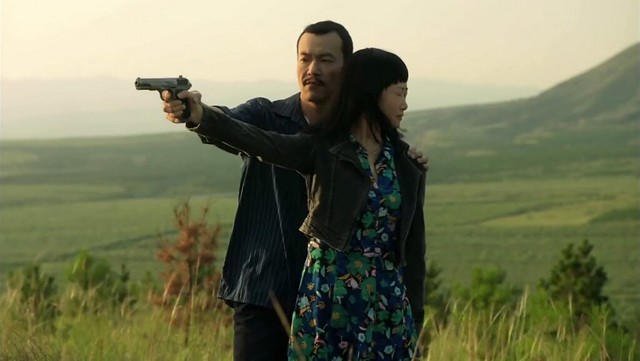
Bin brings Qiao to a field which saw volcanic activity thousands years ago, to teach her how to shoot a hand gun. It's an unregistered, illegal gun he acquired. The Chow Yun Fat-starring Hong Kong action movies had a bad influence on Bin and the rest of his generation. He mentions that the ashes from the volcanic eruption is the purest white, foreshadowing the rapid change in China, where anything old is demolished, buried or drowned for the new generation. A clean slate. A new beginning where no regrets, no tears, no sentimentality are allowed.

After a hit on Bin's crew sees him fatally attacked, Qiao fires the said illegal gun to save his life and is sent to jail for 5 years. Now it's 2006, and Qiao is out of jail and looking for Bin. He never visited her in jail and has moved to a town near Three Gorges dam. So this is where the road movie of Qiao starts: she meets various characters on the road/river with the rapidly changing nation in the background. The technology has changed appropriately, the fancy office buildings go up, all sorts of business ventures spring up. But people, the flood of people, trying to eke out the living with the changing times and circumstances, remain the same.

Bin, with a new girlfriend, refuses to see Qiao. Heart broken and with nowhere else to go but back to Datong, she almost agrees to go with a new venture capitalist whom she meets on the train, to the west. Decisions we make in our lives, good or bad, would lead to a different life than where we are right now. But how much can we deviate from our natural instincts, our traits, our character?

It's the New Year, 2018. Qiao finds Bin back in her life in Datong. He's had a stroke due to excessive drinking and is now a wheelchair bound. Qiao, who never married, silently takes care of him. He throws a fit sometimes, reliving his jianghu (underground gang) days in his head. She doesn't let him go off though. Is he ever going to change?

Ash is Purest White is a full-on (un)sentimental melodrama in epic scale. It's perhaps Jia's most down to earth, character study work. The long stretch in the middle gains more poignancy as the film goes along and afterwords. Some people reinvent themselves along with the changing times and some people don't. Some things in them though, remain the same. Jia expertly juxtaposes these conundrums, reflecting the soul of a changing nation. Ash is the Purest White is a deep and poignant masterpiece from a seasoned filmmaker.