Tuesday, November 22, 2011

A Different Kind of Fairy Tale

Sleeping Beauty (2011) - Breillat
Photobucket
PhotobucketPhotobucket
Photobucket
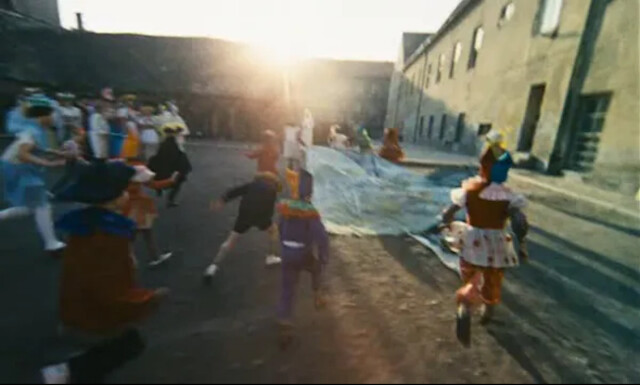
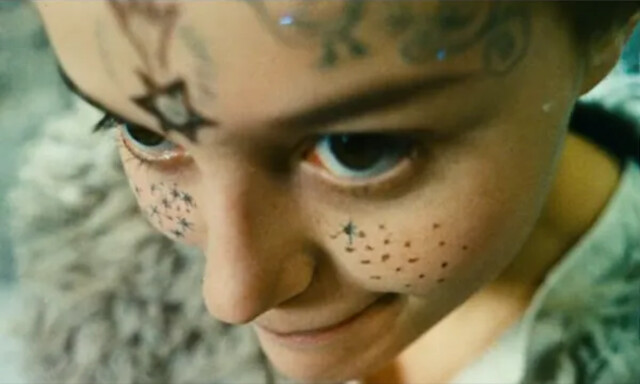
Catherine Breillat spins another well known fairy tale into a feminist sexual intrigue. Anastasia is cursed at her birth by a witch, that she will die after pricked by a spindle at age 16. But three good fairies intervene in time and change her fate: she will sleep for a hundred years instead. But when she is 6, Anastasia hits the road and encounters many strange people. And she is on her way to rescue Peter the prince (a childhood friend, older cousin, brother, uncle?) from the ice queen (stand-in for puberty). Now 16 and a hundred years later, Anastasia wakes up in the modern world and flirts with hunky Johan and experiments with homosexuality.

Breillat's second interpretation of the fairy tale trilogy (first Bluebeard and Beauty and the Beast planned), is much more playful and sumptuous (from production design to cinematography) than her previous efforts I've seen by her. Anastasia's journey is fantastic and candy colored. It ends abruptly with the dark undertones of sexual violence (fantasy or otherwise). It's a very intriguing film.

Monday, November 21, 2011

Reverse Shot

Notre Musique/Our Music (2004) - Godard
Part essay, part narrative, part lecture, this short elegy to Europe is perhaps the most definitive culmination of all Godard's work I've seen so far. Taking cues from Dante's Divine Comedy, the film is in 3 parts: Hell, Purgatory and Paradise (first and last parts are 10 minutes or so and Purgatory is the longest and the meat of the film).
Photobucket
The first ten minutes is rapidly cut reels of horrors of war- both real and imagined (clips from Hollywood movies) and in both black & White and color. Colors are wildly distorted into almost an abstraction.
Photobucket
Set in bullet riddled Sarajevo in winter, Purgatory mainly concerns the Israeli/Palestine conflict. Judith Lerner (Sarah Adler), a journalist from Tel Aviv is in town for a literary conference where Godard (as himself) is set to give a lecture on image/text relationship. Like a tourist in a new city, Judith is constantly visible taking pictures in the war-torn but now reviving city. While interviewing and talking to many people- a Palestinian poet, Spanish architect and so on, who appear as themselves, she is there to be assured/bare witness to, that a reconciliation is possible between bitter enemies somewhere, that the bridge (the famed Mostar bridge, built by the Ottomans in the 15th century and had been standing the test of time until was destroyed in the Bosnian War) can be rebuilt.
Photobucket
Then there is Olga Brodsky (Nade Dieu), a Russian Jew, planning to off herself in a sensational manner in the name of peace. In the Paradise part of the film, Olga walks through the green forest and ends up in water's edge where it is heavily guarded by American GIs.
Photobucket
Godard plays with complex ideas through series of images and sound. The film devotes considerable amount of time to Godard's lecture on misinterpretation of images. There is light then there is dark. There is a shot, then there is a reverse shot. As usual, this dichotomic world view that has been consistent throughout his career is pronounced. Similar images can contrast each other side by side but an image without context can be misleading.
Photobucket
Photobucket
The two women- Judith and Olga (both rather plain looking and not particularly noticeable) are mirroring each other. So are damaged, faded fresco of Saint Mary and Olga. The most devastating/hopeful image in Notre Musique is not of a pile of dead bodies or Mostar but close up of Olga's face at the end.

I have to admit that seeing a Godard film requires a bit of effort and get-used-to (visually, since he is not going to give you traditional looking beauty shots). Sometimes his usual heavy Euro-centric references get in the way of viewing. It also feels like a visual literacy class, albeit an exciting one.
Photobucket
Photobucket
Notre Musique is a serious film. His image association games don't feel like tricks. Gone are his youthful glee and silly satiric humor that has been generally perceived as reductive and contradictory, that alienated many filmgoers over the years. The film doesn't give the audience any easy answers. Godard merely suggests that there are things that need to be investigated further: what you can see is not necessarily the truth. Then I realized that Godard has always been paying the highest respect to the audience- to think for themselves. It's also the most non-combative and relatively easy-to-digest Godard film I've encountered so far. Also it's thrilling.

Only misstep (if I call it that) I consider is the appearance of American Indians. The idea of imperialistic America is pretty well pronounced throughout all JLG films. But I find the inclusion of them in the streets of Sarajevo a little more than distracting. Sure they are underrepresented and their stories seldom told. But it feels like harkening back to his old silly self in otherwise somber film.

Sunday, November 20, 2011

MMMM

Martha Marcy May Marlene (2011) - Durkin
Photobucket
First thing you notice in this film is its intentionally underexposed cinematography. It sets the tone and never lets up from beginning to end. The second thing you notice is Elizabeth Olsen's face. The crushed black, shallow depth of field and soft edges accentuate her ethereal beauty. She is in almost every frame of the film. Martha Marcy May Marlene concerns a young woman named Martha who runs away from what seems to be a communal farm house, mainly consists of young men and women, headed by charismatic Patrick (John Hawkes, channeling Charles Manson without the hippie bullshit). She calls her estranged older sister and spends the rest of the film with her and her yuppie husband in their lake front Summer house in Connecticut. Martha seems ok at first but as she remembers what she just left behind, she gets increasingly paranoid and anti-social.

Martha Marcy is not explicitly about a Manson type cult, nor it's about relationship between two sisters. It's all about dread a young woman feels after a traumatic experience. It's slick and accomplished filmmaking and has plenty of good acting and tension. But it fails to have any kind of impact on either emotional or cerebral level.

Monday, November 14, 2011

Wired

Welt am Draht/World on a Wire (1973) - Fassbinder
Photobucket
When Dr. Vollmer, the inventor of the Simulacron, a virtual reality world, dies in the eve of the huge conglomerate taking an interest in the project, they bring in a springy scientist Fred Stiller to take over the research. Fred has some reservations for the job since his predecessor died under mysterious circumstances, but happy to oblige to the given task, as the project is a scientific milestone. Odd things start happening around him though: he suffers from constant headaches, his friend at the company disappears in mid-conversation and nobody notices that he is gone. What's more, no one acknowledges that his friend ever existed. Then there are blackouts and memory lapses. Something is definitely wrong. Fred discovers that the world he sees as real is not at midpoint of the film's 3 hour running time. His existential crisis is similar to that of Hari, Kelvin's dead wife, created by the famed planet in Tarkovsky's Solaris.

Fassbinder tapped into the concept of virtual reality, way before Matrix. Its obvious influences are everywhere- the phone booth, contact/oracle and whatnot. But his approach is not some dumb, action filled, overblown, self-important fantasy, but got a lot more to do with identity crisis in the technologically infused world- our world. It's a talky film filled with fashionable women and colorful plastics. There are hardly any action or special effects. Nonetheless it's very intriguing and entertaining from start to finish.

Wednesday, November 9, 2011

Smell of Rice Cooking

Branded to Kill (1967) - Suzuki
Photobucket
Photobucket
Photobucket
Photobucket
A human blowfish Hanada (Jo Shishido) is a contract killer. Despite his irregularities- he has a fetishistic tendency to the smell of cooking rice, he is damn good at his job. But when he fails an assassination job, hired by butterfly collecting femme fatale Masako, he gets hounded by the invisible 'guild' and the ranked No.1 killer (Koji Nanbara).

This is a wild ride. Visually inventive, ultra modern sets and goofy humor, the Seijun Suzuki's gangster flick plays out like the adult, perverted combo version of Michel Gondry and Wong Kar Wai.

Friday, November 4, 2011

Prague Spring

Birds, Orphans and Fools/Vtackovia, Siroty a Blazni (1969) - Jakubisko
Screen Shot 2021-04-29 at 6.40.45 AM Screen Shot 2021-04-29 at 6.42.30 AM Screen Shot 2021-04-29 at 6.49.29 AM Screen Shot 2021-04-29 at 6.43.21 AM Screen Shot 2021-04-29 at 6.45.18 AM Screen Shot 2021-04-29 at 6.50.16 AM This allegorical tale of Czechoslovakia, post Prague Spring and following Warsaw Pact invasion, is all colors, beautiful decay, New Wave, Falstaff, concentration camp references, bizarre love triangle a la Jules et Jim, gaggle of children and...birds.

Yorick and Andrej are manic fools horsing around war torn Bratislava.They pick up Martha, a Jewish waif who dons a Jean Seberg haircut. Martha goes back and forth between wise-ass Yorick and virginal Andrej until Yorick goes to jail for a year. Then the tragedy ensues as the brief narration in the beginning sequence predicts. There is definitely method in all the chaos. Birds, Ophans... is a maddeningly intoxicating cinematic experience.