Showing posts with label Czechoslovakia. Show all posts

Wednesday, January 31, 2018

Light It Up

In The Intense Now (2017) - Salles
Screen Shot 2018-01-31 at 6.24.45 AM
Brazilian documentary filmmaker João Moreira Salles looks back at the year 1968 where everything seemed possible. He concentrates on four different events and places - Cultural Revolution in China, the student uprising/general strike across France, Soviet Invasion of Prague and March of the One Hundred Thousands against military regime in Brazil, all in that fateful year. Culling from images of homemade movies, newsreels and documentaries, Salles examines what it's like to take it to the street for something you believe in in that fateful year.

It starts out with the tourist footage in China in 1966. Salles' mother was there, taking in a foreign land where everything was opposite of what she was accustomed to. As many picturesque scenes play out - farmers, children, on-lookers, other tourists in the sunny, happy settings, Mao Zedong's China in the beginning of Cultural Revolution seemed like an idealist utopia (except for incessant insistence on singing of songs praising the Chairman) that gloomy French students only dreamed of in the streets of cities across France in 1968. In his mom's words, the trip to China gave her "ineffable emotion that follows the shock of the unlooked-for encounter." This seeming spontaneity, unfettered enthusiasm are the themes Salles visits again and again when he talks of taking it to the streets.

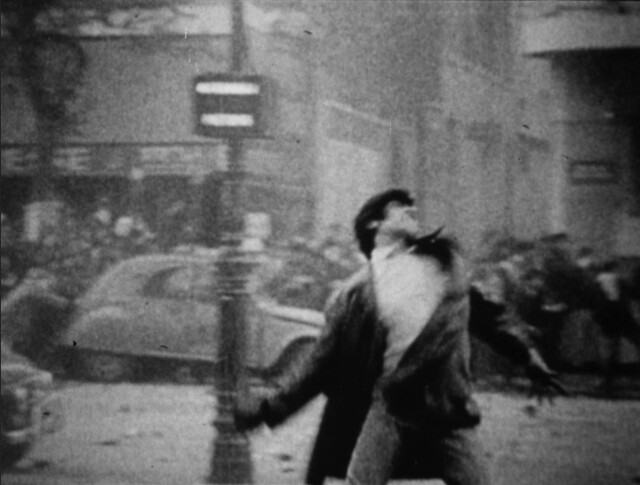
The May 68 first started as demonstrating students occupying college administration buildings. I do not want to generalize this nation-wide civil unrest or make light of it, but the gist of it was this: their opposition of American Imperialism in Indo-China and traditional social hierarchy with their Marxist, Maoist ideology struck a core with the factory workers, resulting in a largest general strike in France's history. School administrations and police's violent reaction just inflamed the situation even further. Armed with wealth of footage around that time, Salles examines the short-lived unity forged between students and striking workers against the status quo of de Gaulle regime and how quickly it dissipated.

He spends quite a substantial time on Daniel Cohn Bendit, who was one of the key figures in the student movement. Through several interviews and Salles' voice-overs, we get the impression that the decentralized student movement of 68 didn't actually have an end goal. And his road trip to Berlin accompanied by a photographer and funded by a magazine was seen as a sell-out. Even one of the famous slogans on the wall, 'Sous les pavés, la plage'/'under the bricks, a beach' can be read as extremely bourgeois.

But does it matter though when you talk about the spirit of 68? You believed in something so strong you had to take it to the street. These protests weren't without casualty though. Gilles Tautin, an 18 year old High School student died near car factory. The self-immolation of Jan Palach to protest Soviet occupation in Prague put the nation in moaning. Then there was Edson Luís who as shot to death by the police in Brazil.

The footage that stands out is a young woman factory worker interviewed by the news crew outside a car factory. She is crying and refuses to go back. She protests that nothing has changed, that everything is going back to status quo. The factory management made some concessions but the thought of revolution showed a glimpse of a more just world.

As the history that unfolded after that period, we know that Mao might have succeeded in building a cult for himself and solidified his political power with Cultural Revolution, but it also did irreparable damage and brought misery and death to millions of people. de Gaulle regime's grip got stronger and Communist and Socialist party lost support.

The smell of teargas and horse manure in the air, a street protest can be an exhilarating experience. A full-on revolution might not be possible in our heavily capitalist conditioned society, and we put too much emphasis on ends over means, failure over efforts. Neither Salles glorifies the May 68 nor dismisses it as naive. He doesn't spoon-feed the audience. What Salles is showing with his documentary is that a shock to the system, albeit minuscule in the grand scheme of things (May 68' movement didn't even last 6 months), is a necessity to keep the world in check. The legacy of 68 is that it made people 'woke'. Its impact still felt from Occupy Movement to more recent the Black Lives Matter and #metoo movements. Anyone who took to the street for one cause or another can deeply relate to In the Intense Now. With the disparity between haves and have-nots is greater than ever, the spirit of 68 is more relevant than ever before.

Thursday, August 16, 2012

Christophe Honoré Interview

christophe Honor�©
With his sprawling new musical Beloved, starring Catherine Deneuve, Chiara Mastroianni, Ludivine Sagnier, Louis Garrel and Milos Forman(!) getting a limited release in North America, I sat down with writer/director Christophe Honoré, a former columnist of Les Cahiers du Cinema and the French New Waver's heir apparent.


I went to the screening of Beloved with my mother-in-law, who is 70 years old and a big fan of musicals, Umbrellas of Cherbourg, Catherine Deneuve and all that. The film takes place in the 1960s and the 1990s spanning two generations. It's very literary, dense and much longer than your previous films. How did it all come about?


Before I answer that, what did your mother-in-law think about it?

She loved it.


Good. It's important for me to know because first and foremost, the film is from a first person's point of view. It concerns my parents' generation and mine. I can imagine what it was like but I can't be one hundred percent sure when it comes to portraying their perspective. So it is interesting for me to know how it rings for somebody who is actually from that generation.

She was saddened by the later part of the story. But we agreed after the film that there isn't really a difference in how we experience love no matter what decades we were in. She really loved it.


It was a project for me of course. In my parents' generation, there were the pills, the sexual liberation, etc., that the feeling of love was linked to hope. Where as for me whose sex life took off in the late 80s, it was a lot different. With AIDS, love was not associated with hope but with fear. We had to be watchful.

Now that I'm a father, I realize how nerve wracking it must've been to be a parent of an adolescent in that time period. Me as a gay person, starting to go out into the world, I can only imagine how my parents felt.

Even though we have this grand ideal that love is eternal and everything, but our intimate lives are shaped by our surroundings in that particular time. And that's why I was interested in this block of time to see how the characters were coping with their intimate lives.

This was the first time you were doing a period piece, correct?

Yes, but I'm not really sure there will be a next time.

Oh?

For me, it is very difficult to reconstruct a certain period. It is difficult for me because I realize that I like working in the present. Doing a period piece means that I have to artificially reconstruct whatever the time periods, and it's not something I really like to do.

Was choosing these two decades any way influenced by you being a father?

Of course, it's drawn from my life and anything I write is influenced by it. Though I guess what's missing from this film is the ensuing (younger) generation. I did have characters Justin in Montreal and Omar in London who are younger and have their particular relationships in regard to their homosexuality but a lot of their scenes are cut in the editing process.

The problem is that you still don't want to have that reflexive censoring of yourself when you have children and family. Before shooting Beloved I shot a short film called Man at Bath. It was shot during the course of a week and it's very sexual and absolutely not for children. I hope I'll never make something that is 'parent of a student' film, something that my daughter will be proud of me later on when she sees it. I'd prefer to make something that she'd feel a little ashamed of me. (laughs)

Nice!

It was good to see all the actors you worked with before again in Beloved- Ludivine Sagnier, Louis Garrel and Chiara Mastroianni of course. But I didn't expect to see Milos Forman there and singing! How did that come about?

Well I wanted a Czech actor who is Catherine Deneuve's generation. Unfortunately, there aren't many Czech actors from that generation still working. I kept saying, to casting directors that I needed someone like Milos Forman. Then I thought, 'Hey, I should just write to him and ask him'. And I think he was really happy to come back to France and to see Catherine again. Because when the (Soviet) tanks came into Prague, it was two French directors- François Truffaut and Claude Berri who drove up to Prague and rescued Milos and his family and brought them to France. So he has that relationship with French cinema. It was also the time when Truffaut was very close to Catherine. So I think all that played a role in him accepting my proposal.

What about the singing part? How did he react to the suggestion?

I had sent him my previous film Love Songs and he was gracious enough to tell me that he liked it. And I think he likes Beloved. He told me that I take a lot of risks in making films. I think he is someone who is very joyous in relationship to cinema. At no point on the set he made any comments that put pressure on me. I mean, he's done some amazing films and I was very self-conscious about him being there. But he is very much like Catherine- they both have a genuine respect for cinema and at the same time, they don't take it too seriously.

Once they realize that you hold the bar high and have high expectations, they jump right in and are very easy to work with. Because at the end of the day, you don't really know how exactly things will turn out in films.

How is the collaboration process with Alex Beaupain?

Alex is someone I've known since we were kids. He wanted to be a singer and I wanted to be a filmmaker and we feel very lucky that we've become what we wanted to be. So it's always fun to blend our stuff together and what better than a musical comedy.

I work in parallel with him from the beginning of the script and when I see a dialog that would work better as a song, I send it to him with general melodies I'm looking for. Since he is really fast, he sends me songs with some skeletal piano accompaniment within few days. And as I work on the script, I just integrate the songs into it, so when the script is finished, it's all there, ready to go.

I spent my twenties in the 90s. Everyone tells me that the 90s were the modern Dark Age for culture. I want to know what your take on that decade is.

I don't really agree with that sentiment. Certainly not in America since there were many great filmmakers in the 90s there. On the other hand in France, it's clear we were on the decline. Obviously French cinema is no longer a leader aesthetically or from an industrial standpoint. I would say Asian cinema was the leader in the late 90s and early 2000s.

When I started making films, there was a general reactionary movement harkening back to the old times. The values that are put on cinema today in France are the same as, I would say, during the war (WWII) and just after the war. What it means is that the filmmaking today is at odds with the spirit of the New Wave. So what I'm trying to say through my films is that the golden age of French cinema was the New Wave and I want to keep that spirit alive. But I realize that's a very minority viewpoint.

It is 2012 already and I wonder if there will be any difference in the post-Sarkozy era in French cinema?

In any case, French cinema that works abroad now is very Sarkozian cinema- like the Artist. If you look at the Artist, it corresponds with the idea of cinema that is really to the right of Sarkozy. I'd say right now the filmmakers who are revered, like Jacques Audiard, do very bling-bling kind of cinema. And that's not really what I strive for as an artist. But I have to say those kind of cinema works- it gets prizes and do well abroad, etc. So from the outside perspective they are what the best of French cinema can offer. I don't know if the change of political scenery will bring change in the value of cinema. But I don't think it's an accident that that kind of cinema is lauded when Sarkozy took over.

Let's hope it does.

Friday, November 4, 2011

Prague Spring

Birds, Orphans and Fools/Vtackovia, Siroty a Blazni (1969) - Jakubisko
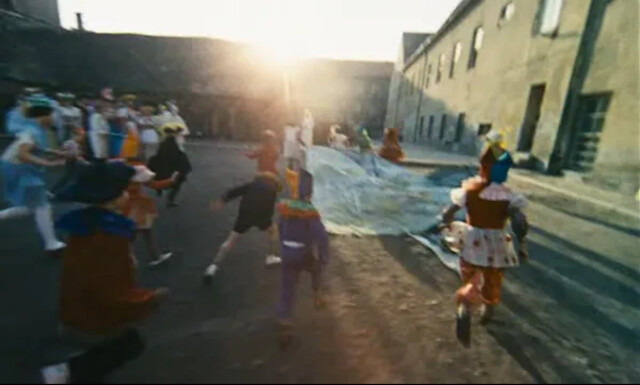
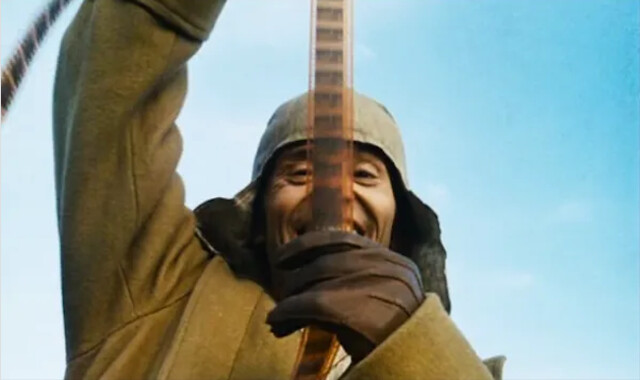
Screen Shot 2021-04-29 at 6.40.45 AM Screen Shot 2021-04-29 at 6.42.30 AM Screen Shot 2021-04-29 at 6.49.29 AM Screen Shot 2021-04-29 at 6.43.21 AM Screen Shot 2021-04-29 at 6.45.18 AM Screen Shot 2021-04-29 at 6.50.16 AM This allegorical tale of Czechoslovakia, post Prague Spring and following Warsaw Pact invasion, is all colors, beautiful decay, New Wave, Falstaff, concentration camp references, bizarre love triangle a la Jules et Jim, gaggle of children and...birds.

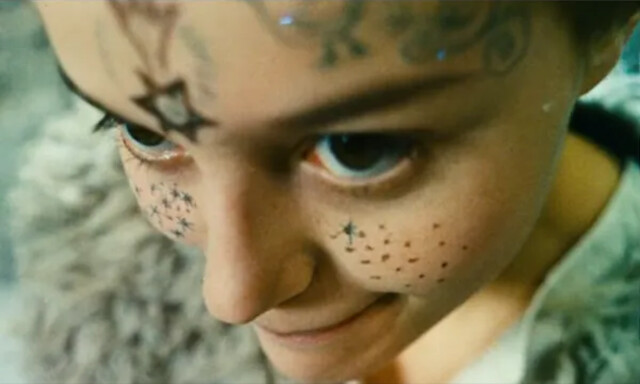
Yorick and Andrej are manic fools horsing around war torn Bratislava.They pick up Martha, a Jewish waif who dons a Jean Seberg haircut. Martha goes back and forth between wise-ass Yorick and virginal Andrej until Yorick goes to jail for a year. Then the tragedy ensues as the brief narration in the beginning sequence predicts. There is definitely method in all the chaos. Birds, Ophans... is a maddeningly intoxicating cinematic experience.