Tuesday, January 11, 2022

Little Human Connections

Hytti nro 6 (2021) - Kuosmanen compartment 2 Compartment 1 compartment 6 compartment 3 compartment 4 Compartment 5 A Finnish student (Seidi Haarla) is traveling alone from Moscow to see the 10,000 year old petroglyphs in the Arctic north in Russia, after her Russian professor/lover, Irina backs out of the trip. Last night in Moscow gives and impression that Irina, the worldly older woman tightly wrapped our shy and awkward heroine around her fingers. She is taking a crowded Russian railroad all the way to Murmansk, a small town near the Finnish border. Her bunkmate happens to be Ljoha (Yuriy Borisov), a brusk, blue color worker heading to the same destination for work in the mines. It's a big change for our unnamed Heroine, after hanging out in Irina's intellectual circle of friends in her fabulous flat full of antiques, books, music, meaningful conversations and laughter. She has to quell the sexual advances and lewd jokes from Ljoha. She contemplates quitting the trip and go back to Bourgie bossoms of Irina, but the thought of appearing weak in front of her mentor/lover is too much to bear.

Even though they are very different, this little Russian man’s presence slowly warms up to our heroine. A sort of traveling companion camaraderie develops in an impossibly small train compartment. The train stops overnight in a small town on the way to Murmansk, Ljoha invites her to his babushka (grandma? Aunt?)'s house. She experiences unexpected companionship and human warmth, sharing strong drinks and listening to the old woman's stories. They almost miss the train as they oversleep the next morning.

When our heroine helps out a fellow Finnish traveler who doesn't speak the language, by inviting him to their shared compartment 6, Ljoha is obviously unhappy and jealous. The hipster traveler with a guitar is everything Ljoha is not. She asks (in Finnish) the traveler if he ever feels lonely, and he says that everyone's alone.

Compartment No.6 has everything I love about cinema - Wanderlust, human connection, loneliness, trains, cold weather. Juho Kuosmanen, working from a novel by Rosa Liksom, finds a delicate balance in chiseling out beautiful moments of human connections without unnecessary backstories or dramatics. It's a little romance without all the fuss and stylings, but only warmth and silent understanding.

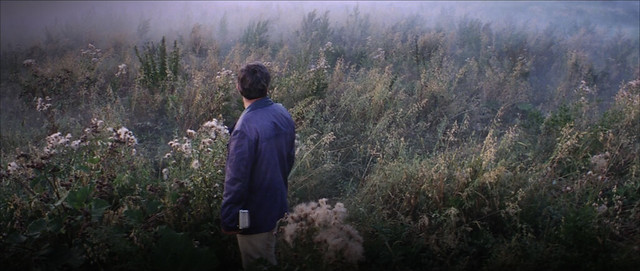
As the saying goes, it's the journey, not the destination. Our heroine gets stuck in the small town in a foreign land without any guide. It's winter and there is no one to take her to see the petroglyphs. She might have overestimated her relationship with Irina since she is not that helpful with her conundrum. It's only Ljoha who is crazy enough to arrange the snowy, supposedly dangerous trip without any hesitation. They climb on the wrecked ship in the blizzard after seeing not very impressive 10,000 year old scrawls on the rocks. They talk about Titanic. "Why? Are we about to die?" "No, Rose survives." "Well, she dies later." Yes everyone is alone and everyone dies. But what matters is the little moments of human connections and feeling the warmth of other human beings along the way and Compartment No. 6 captures them beautifully. Haarla and Borisov's guileless performances are also aces. Loved it.

Monday, January 10, 2022

Inner Space

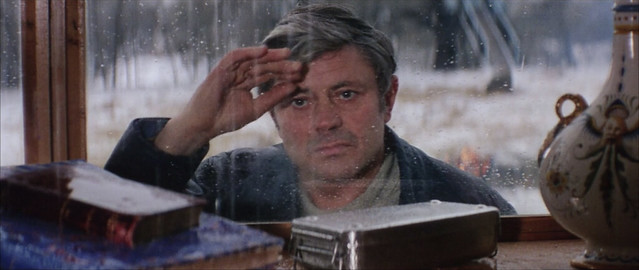
Solaris (1972) - Tarkovsky solaris 10 solaris11 solaris8 solaris7 solaris5 Solaris 1 solaris2 Solaris4 solaris3 Kelvin (Donatas Banionis) is tasked to go to a space station orbiting an ocean planet Solaris, to check on its remaining crew and determine if their probing mission is still valid. During the briefing, Burton, a former cosmonaut in the station, reports strange phenomenon going on, on the surface of Solaris, that the planet generates physical manifestations from the crew's memories. Once he gets there, he finds only 2 crew members still remaining: Snaut (Jüri Järvet) and Satorius (Anatli Solnitsyn) and the body of Gibarian who just killed himself and left Kelvin a taped message warning him about the 'visitors' that Solaris sends out. Soon enough, Kelvin's dead wife Hari (Natalia Bondachuk) turns up in front of him and any of his scientific research is out the door. Is she just a manifestations conjure up from Kelvin's memories of her? It doesn't matter to him. It is Hari and he will love her. But she begins to doubt her existence. She kills herself by drinking liquid oxygen only to be violently revived.

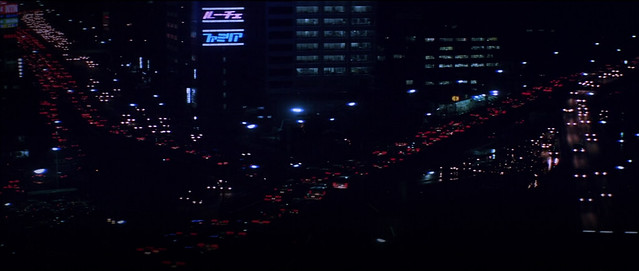
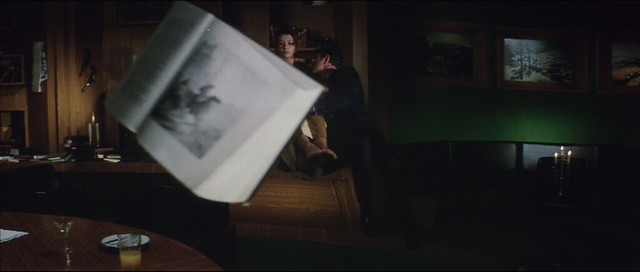
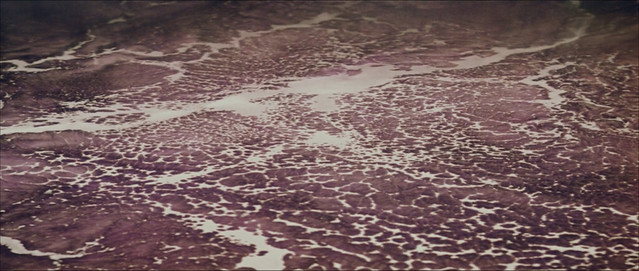
'Sculpting time' seems very appropriate in Solaris than any other film I can think of. With the series of long shots with slow zooms where actors quickly change their places around just outside the frame to take different positions within (and using multiple stand-ins in some cases), and repetition of images (in the beginning then later on), Tarkovsky invites audience to experience past, present and future at the same time. Loosely connected images such as reeds in the water and Tokyo traffic are just as striking as the famous bone to space ship transition cut in 2001 Space Odyssey but with more time devoted to percolate naturally in viewer's mind instead of visible edits. There are many notable scenes, but the most striking is perhaps Hari contemplating time, while watching Bruegel's Hunters in the Snow in the library of the station and them briefly experiencing weightlessness in embrace. Time is highly subjective so are our perceptions of the world.

Memories, dreams and fantasies all mingle in Solaris. How much do we know about other people? Is our existence just compounded memories of others? Tarkovsky is using the Sci-fi genre as a fodder to question our reality and contemplate human existence in perhaps the loneliest place we can imagine- outer space. Solaris is a deeply humbling experience.

Friday, January 7, 2022

Step on Me

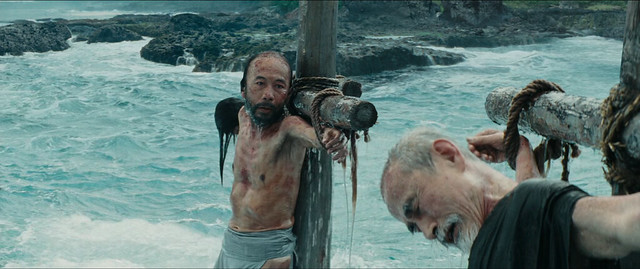
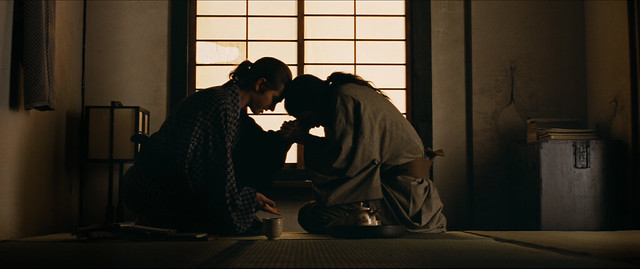
Silence (2016) - Scorsese Silence 1 Silence Silence 2 Silence, Martin Scorsese's passion project of 25 years, based on Shusaku Endo's book, despite its 161 minute run time, it's immensely more watchable and compelling than say, The Irishman. Silence tells two Portuguese Jesuit priests, Rodrigues (Andrew Garfield) and Garupe (Adam Driver), after hearing their mentor, Father Ferreira renounced his faith after being totured, to go to Japan to verify it. 16th century Japan is still a closed and hostile country to foreigners and many Christian missionaries and their followers are persecuted. The two are smuggled in to a small island inhabited by peasants. They found out that by their predecessors, Christianity took roots within some populations, but because of relentless persecutions by the grand inquisitor Inoue (Issei Ogata) and people ratting out the converts for silver rewards, all the Christians hide their faith.

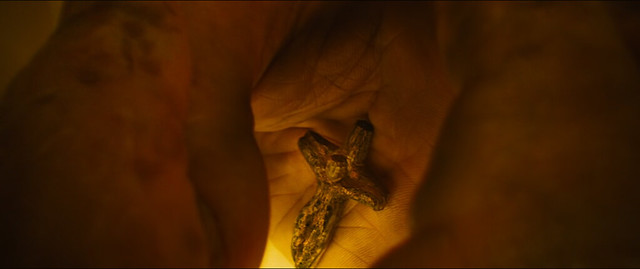
Rodrigues and Garupe become the defacto priests for the townspeople and their gospel spills out to neighboring villages in secret. But they witness terrible fate of their followers as Inoue's officials capture them and torture them to death - drowning, beheading, etc. Eventually, Rodrigues gets caught too and goes through grueling imprisonment and witness terrible things being befallen on his followers. Only his apostate will save them. All he has to do is step on a Christian iconography laid out in front of him.

Garfield is good. So is Driver (but underused) and Liam Neeson who plays Ferreira who denounced his faith and living as a scholar with a Japanese wife and family, who writes a book denigrating Christianity. But the real stars in Silence are four Japanese actors - Ogata, Tadanobu Asano as an interpreter for the inquistor, Shin'ya Tsukamoto (director of Tetsuo the Iron Man) as the peasant devotee Mokichi and Kosuke Kabozuka as wild-eyed peasant, Kichijiro who denounce his Christian faith many times for survival.

Rodrigues, in order to save some peasants being tortured to death in his name and urging of Ferreira, denounces Christianity by stepping on Jesus. He does so, after hearing God's voice. "It's ok to step on me."

The crux of the story is that Rodrigues never lost his faith and died a Christian. That early Christianity in hostile places, they endured by staying silent. All the time his prayers have gone unanswered, he finally understood god's silence. Silence is a somber film full of stellar performances. It's too bad Rodrigues realized that after all the death. With Rodrigo Prieto's crisp wide ratio photography, it reminds me of Scorsese's Kundun, in terms of theme and scale. I just wish he does more of these films instead of gangster flicks.

Wednesday, January 5, 2022

Quintessential Vaporwave

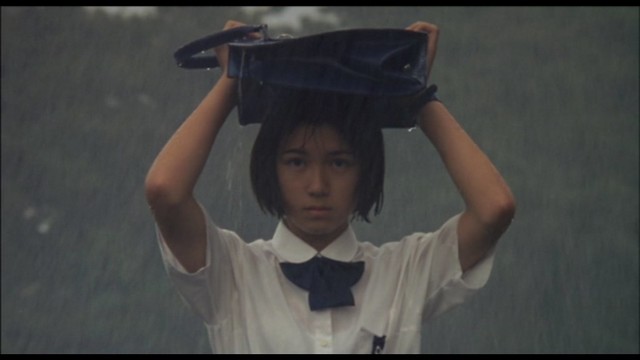
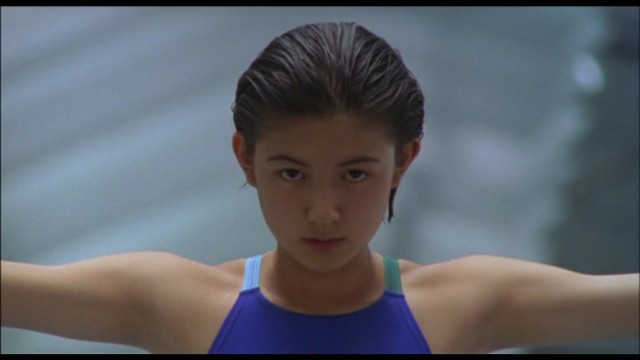
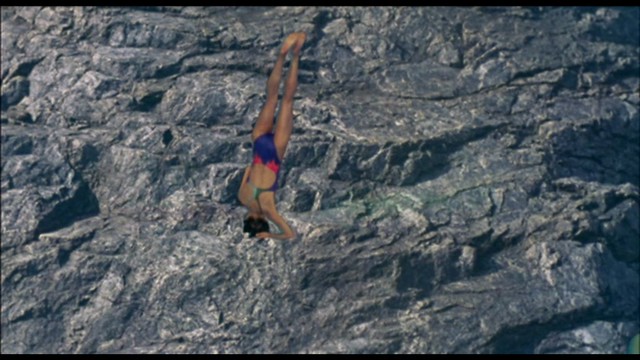
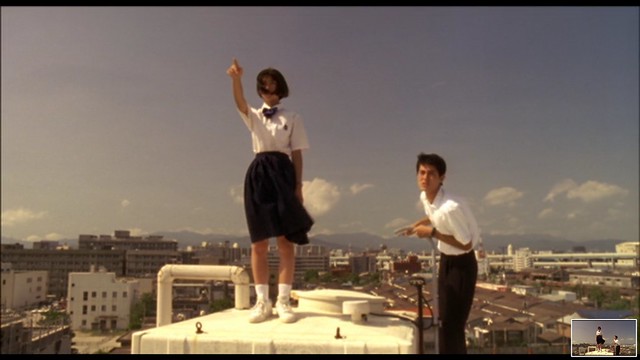
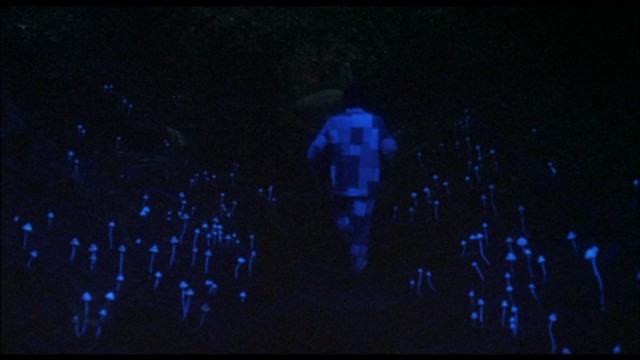
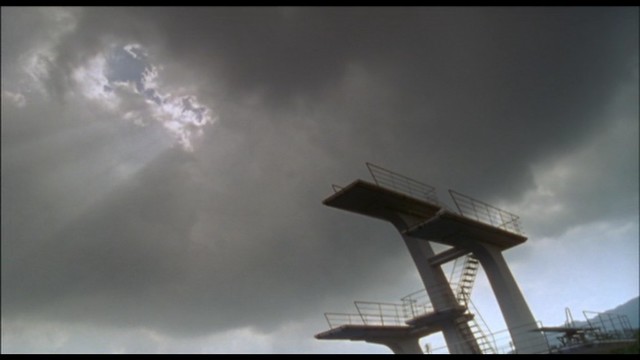
August in the Water (1995) - Ishii Screen Shot 2022-01-05 at 8.14.40 AM Screen Shot 2022-01-05 at 11.43.45 AM Screen Shot 2022-01-05 at 8.50.05 AM Screen Shot 2022-01-05 at 11.48.26 AMScreen Shot 2022-01-05 at 8.51.23 AM Screen Shot 2022-01-05 at 9.05.40 AM Screen Shot 2022-01-05 at 9.08.36 AM Screen Shot 2022-01-05 at 9.15.44 AM Screen Shot 2022-01-05 at 9.19.49 AM Screen Shot 2022-01-05 at 9.37.13 AM Screen Shot 2022-01-05 at 9.39.02 AM Supernova in a distant gallaxy causes a disturbance in alignment of the planets and two meteors falls on Mt. Hiko, creating large magnetic field. The city of Fukuoka is suffering from sever draught and many people are experiencing illness where their organs are 'turning to stone'. Izumi (Rena Komine) is a high school diving champ who just transferred to Fukuoka. She befriends Mao and Ukiya, two boys who are smitten by her after she plunges herself into the dolphin pool in the aquarium. Ukiya's tomboy friend Miki, who has a firm handle on everything computer, informs the boys that according to the computer calculations regarding Izumi's zodiac signs, she will be experiencing physical danger on the day of the diving competition. So the day comes, and just before Izumi takes a dive, she complains that water feels hard as a rock and she falls into a coma right after she hits the water.

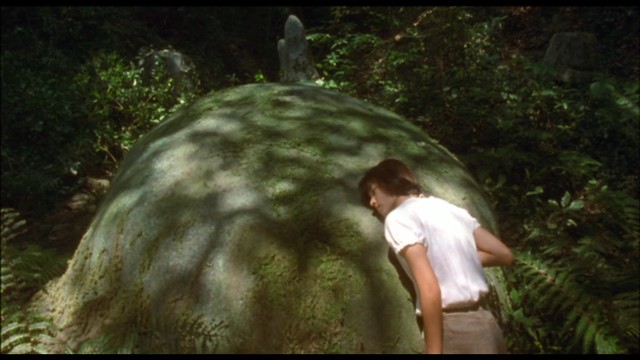
After she wakes up from the coma and recouperating, she tells Mao that she senses everything around her differently like a new born baby. She can communicate with nature telepatically, including dolphins. She sleepwalks to the large petrograph rock in Mt. Hiko with stolen meteorites.

The grand theme of all life on earth originated from somewhere else in the universe and technology taking over the human form (computer chips for human consciousness, therefore we don't need physical bodies), the film charts very much the William Gibson, JG Ballard territory, yet very Japanese.

Mixing New Age spirituality, animism, astrophysics and advancement in technology, Gakuryu Ishii's trippy 90's relic, August in the Water can be seen as the quintessential film for vaporwave - the synth tinged soundtrack, dolphins, rainbows, dated computer graphics, aliens, etc.

Sunday, January 2, 2022

Artist Contextualized

Edvard Munch (1974) - Watkins Screen Shot 2022-01-01 at 10.25.05 AM Screen Shot 2022-01-02 at 10.50.36 AM Screen Shot 2022-01-02 at 10.55.19 AM Screen Shot 2022-01-02 at 10.56.06 AM Peter Watkins's Edvard Munch plays out like how Kurt Vonnegut laying out time in Slaughter House Five. In it, Billy Pilgrim the protagonist, experiences time in non-linear fashion, through time travel, and he can clearly see causes and effects. It is us the audience who in Edvard Munch, the Norwegian painter's life, see things non-linearly, as if everything is happening all at once. Furthermore, the tumultuous time in late 19th century Europe is displayed in the background, giving the film much needed context behind Munch's often disturbing art.

The film shows abject horror of what it was like living in the 19th century Kristiania (Oslo), where rigid religious and conservative moral codes were pervasive: a large swath of population died of consumption, women's place in society was dreadful and caused them to either stick with loveless marriages, become hands-me-down mistresses or being forced into legalized prostitution. Losing mother and siblings to consumption, the disease which also almost took him at a young age, and scarred by a relationship with a married woman, Munch depicted death, grief and suffering in vivid, unnatural colors and ghoulish images. He was mercilessly attacked in his home country for his art and never garnered any recognition as a worthwhile artist when he was young. His life was always on the road, traveling from one country to another, all the while pursuing many ways to express himself in different mediums.

The climate of this tumultuous 19th century society in art and philosophy are laid out in this nearly four hour film with Munch as a struggling artist. Time and time again, we see his near death experience as a young boy, sticky agonizing affair with Mrs. Heiberg, his unapproving stern father and his grieving sisters, his circle of friends in Berlin whom all met tragic fate, and his practice in art, all jumbled together, side by side, again and again.

Watkins uses Munch (played by Geir Westby)'s nervous glances at the camera, which happens many times throughout the film, to connect him with us. And it is the most effective way to engage the viewer in a biopic I've ever experienced. Edvard Munch is a grand film that I will not soon forget.

Monday, December 27, 2021

Train of History

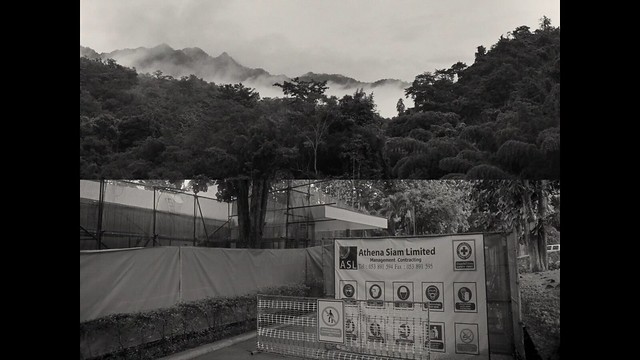
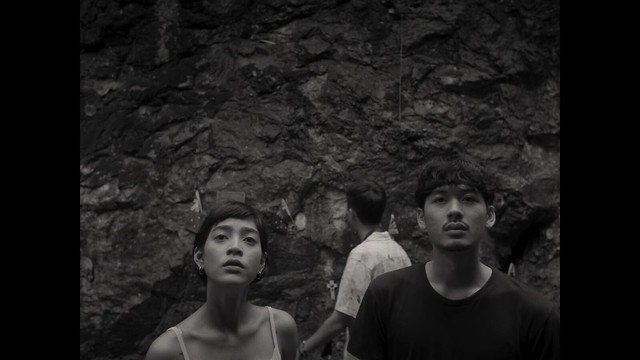
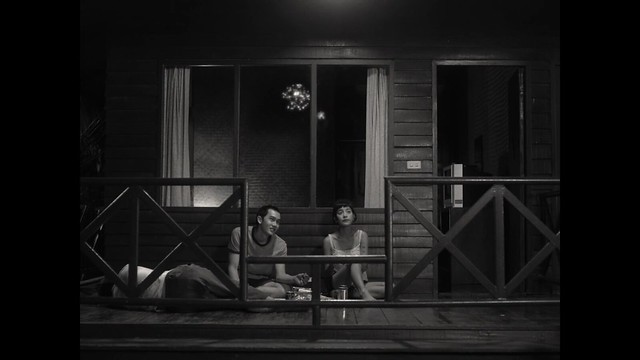
Come Here (2021) - Suwichakornpong Screen Shot 2021-12-27 at 10.14.54 AM Screen Shot 2021-12-27 at 9.52.04 AM Screen Shot 2021-12-27 at 9.52.37 AM Screen Shot 2021-12-27 at 9.34.35 AM Screen Shot 2021-12-27 at 9.37.15 AM Screen Shot 2021-12-27 at 9.39.03 AM Screen Shot 2021-12-27 at 9.54.41 AM Screen Shot 2021-12-27 at 9.55.04 AM Screen Shot 2021-12-27 at 9.55.13 AM Screen Shot 2021-12-27 at 9.36.34 AM Screen Shot 2021-12-27 at 9.44.56 AM A group of young theater actors take a trip to Kanchanaburi, west of Thailand, where Death Railway, once a site for WWII atrocities where tens and thousands civilians and Allied POWs lost their lives in labor camps. But the museum is under renovation and closed. The group, consists of 3 boys and 1 girl, leisurely hangs out at the lake house, smoke weed, mimics animal noises and engage in mundane conversations.

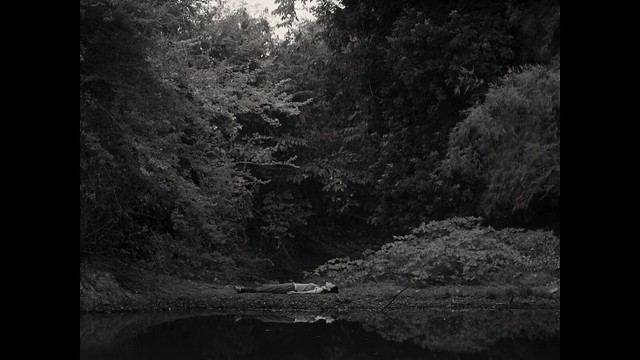
In a parallel action, a woman who is camping in the forest seems to be lost. Dazed and confused, she finds a stream, drinks the water then changes into a boy. Then we see the lakeside bungalow scene play out again on stage, with a scenery shot from the train out the stage window, moving us forward.

In her previous films, Suwichakornpong engaged us in a socio-political history buried underneath the lush forest of Thailand, very much like the fellow Thai filmmaker Apichatpong Weerasethakul. Her approach is more clinical and getting more and more abstract with each new film. Come Here, clocking at just over an hour, is like a puzzle piece with some of the vital pieces missing - what's the meaning of the transformation? Is the camper dreamed up by the girl by the lake or vice versa? How does a Bangkok's zoo closing figure into the story?

With the country's train and railway having imbued historical significance, Suwichakornpong's new film charts progress, nature, harkening back to animism, the younger generations collective historical amnesia, and the country's physical and spiritual transformation... in such a mysterious yet seductive manner. Watching Come Here is not frustrating- it provides you enough of threads, not at all in a teasing way, to decipher and mull over its sinuous connections and implications regarding history and it's thrilling.

Friday, December 24, 2021

Womansplaining

Verdens verste menneske/The Worst Person in the World (2021) - Trier 01-Verdens-Verste-Menneske-©-Oslo-Pictures-900x600-1 People. You love them, you hate them. You want to be around them sometimes, you want to be as far away as you can from them, other times. Some of us, by some miracle, end up with someone we love, to spend the rest of our lives together... or so we'd like to believe. As we grow older, we realize more and more that the human existence is frail and fleeting. And because the world we live in is increasingly getting crazier, for those of us who've found someone special, count ourselves lucky, and hope to have that special someone will be by our side in our last moments.

Joachim Trier and his writing partner Eskil Vogt, as they always do, bring maturity and erstwhile wisdom to their new film, The Worst Person in the World. And they tell a story decidedly from a young woman's point of view in an ironically titled film. And Trier again, embraces the title as one of the most literary directors working today - the film is in chapters with prologue and epilogue, like his debut film Reprise, of what's now known as the Oslo Trilogy (along with Oslo, August 31st). Similarity is there - an arc of young people on the verge of adulthood: careers, ambitions, disappointments, regrets... but from a female perspective.

It starts with a young woman named Julie (Renate Reinsve), impulsively trying various majors in college - Medical school, psychiatry, and then photography. Her indecisive nature limits her working at a bookstore as she nears 30. She meets Aksel (Trier regular, Anders Danielson Lie) at a party. He is a cartoonist, whose creation, Bob Cat, a foul mouthed, very non-PC cartoon feline has gotten some notoriety and he is making a comfortable living off of it. Also he is much older. Their attraction is palpable. They talk about pros and cons about getting involved with someone with their age differences - it's not going to end well. But Julie moves in with him and they become a couple. Julie has to deal with the usual challenges that any woman her age - the talk of having kids before it's too late, career goals (if there are any), aging parents, other's perception of her, her own prejudices, getting mansplained and psychoanalyzed about her life, etc.
Julie meets a total stranger Eivind (Herbert Nordrum) at a party she just crashed. As consenting adults, they talk about the moral ethics of cheating. They reveal a lot of themselves over that one magical night but part their ways. What Julie craves is to get a handle on her life by herself, because she feels like a spectator when she is with more 'successful' Aksel.

As usual per Trier films, there are a couple of cinematic showstoppers in The Worst Person in the world. Their simplicity and practical effects are real fun to watch.

Layered and richly textured in presenting and contrasting the object oriented Gen-Xers and the Millennials who grew up plugged into the internet and social network - tangible vs. intangible, nostalgia vs. impending doom, the film speaks volumes about modern life and its seeming purposelessness. When it's all said and done, what remains is our relationship with each other and the love we have for one another. It is not my swanky vinyl collection or books on my bookshelf or how many times I watched Dog Day Afternoon, or a clever article I once wrote online that I will be remembered for.

What I admire about Trier and Vogt's characters over the years is not only their modern sensibility, but also their indomitable youthful spunk, no matter what situation they find themselves in. It would be a mistake to define them by their cultured, ultra urban sophistication and therefore consider them hollow. There is a sense of defiance in these characters and Julie, played by Reinsve, who gives the tour-de-force performance, trying to navigate this crazy, complex and uncertain world on her own terms - even if her life decisions were bad. She doesn't resign herself into the corner of the world and retreat. She is a thoroughly modern woman and doesn't need to dress up like Annie Hall. Clothes she wears or music she listens doesn't define her. It's her defiance that defines her. And I love her for that.
Tuesday, December 21, 2021

Favorite Performances 2021

In alphabetical order:

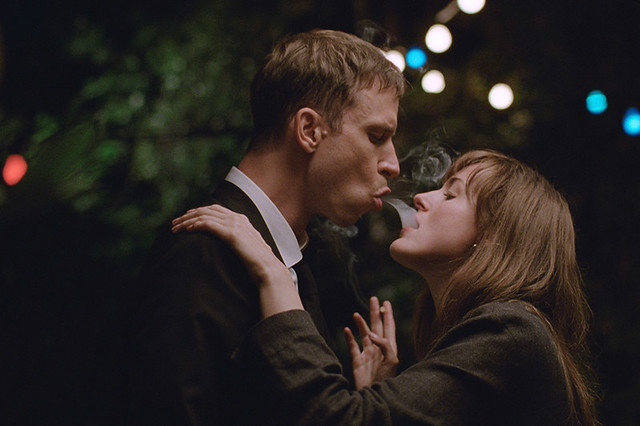
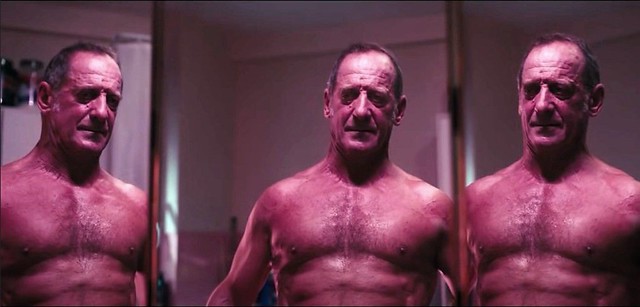
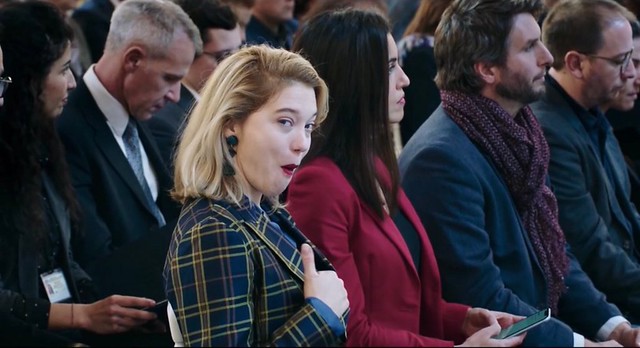
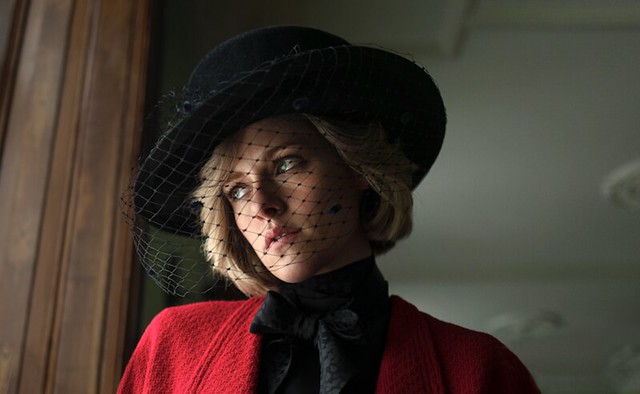
Richard Aoyade for Souvenir Part II Aoyade 1 Lee Haeyoung for In Front of Your Face In front of your face Vincent Lindon for Titane Screen Shot 2021-12-21 at 4.30.23 PM Park Yoorim for Drive My Car Screen Shot 2021-12-20 at 3.04.24 PM Renate Reinsve for The Worst Person in the World The-worst-person-in-the-world-interview-with-Renate-Reinsve Agathe Rousselle for Titane Agathe Rousselle Léa Seydoux for France Screen Shot 2021-12-21 at 4.40.43 PM Kristin Stewart for Spencer spencer Hisako Urabe for Wheel of Fortune and Fantasy Hisako Urabe Mia Wasikowska for Bergman Island Mia Wasikowska