Thursday, August 10, 2023

Nocturnal Activities

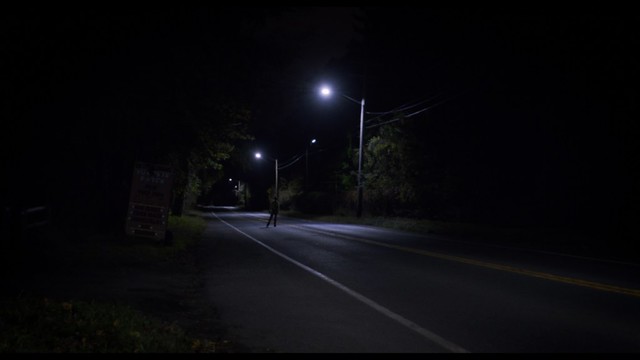
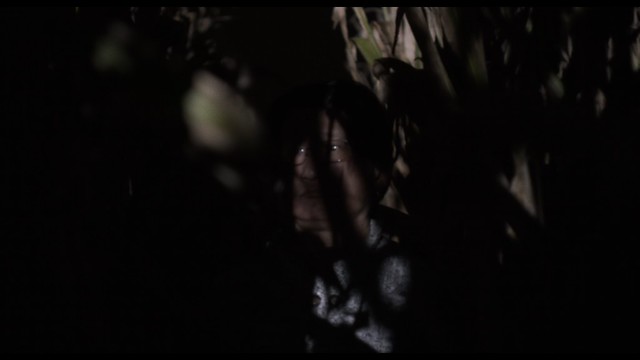
Happer's Comet (2022) - Taormina Screen Shot 2023-08-10 at 8.52.09 AM Screen Shot 2023-08-10 at 8.29.53 AM Screen Shot 2023-08-10 at 10.46.15 AM Screen Shot 2023-08-10 at 8.24.02 AM Screen Shot 2023-08-10 at 10.47.46 AM Screen Shot 2023-08-10 at 10.49.09 AM Screen Shot 2023-08-10 at 9.11.53 AM Screen Shot 2023-08-10 at 9.14.37 AM Tyler Taormina's dialogless film captures the loneliness of American suburbia perfectly. Entirely shot in the devil's hour, we see collages of nocturnal activities of inhabitants of anywhere USA faintly lit by TVs, cell phones and street lamps with soundtracks of insects, distant traffic and rails and music from the radio. The atmosphere is not threatening, rather, it's a comfortable darkness - the one that envelops you like a bath water or warm blanket. It lets personal inhibitions go, it seems, to these people, as they engage in activities such as roller skating/blading without being looked at or judged, and even engage in a cornfield orgies. Happer's Comet would make a great double/triple feature with Chantal Akerman's Toute une nuit and Bas Devos's Ghost Tropic as part of a lovely film series that features films devoted to nighttime.

Wednesday, August 9, 2023

Nouméa

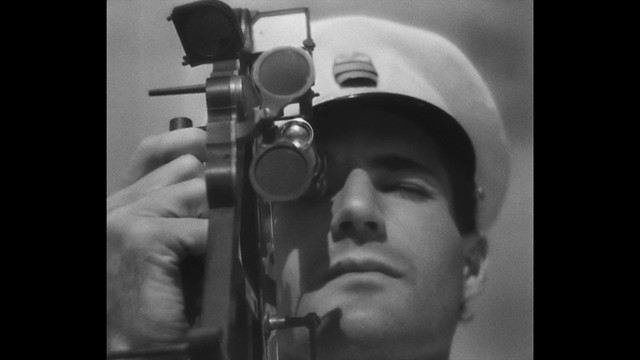
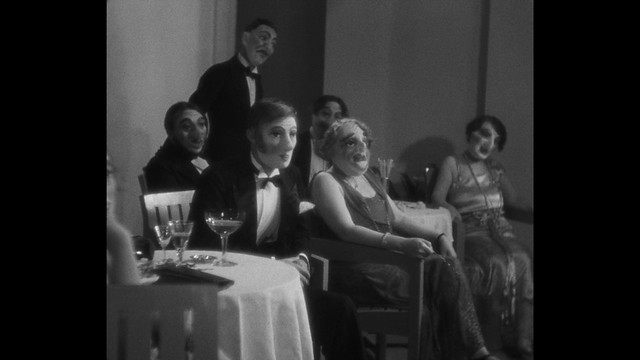
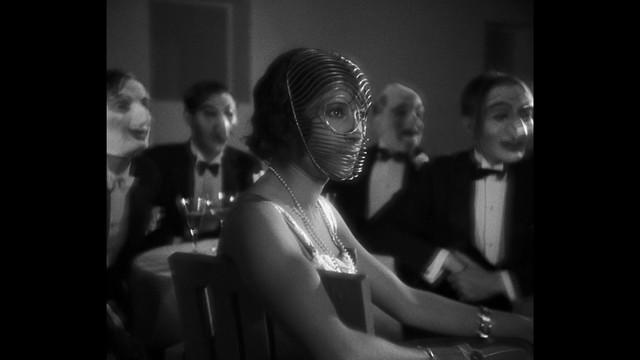
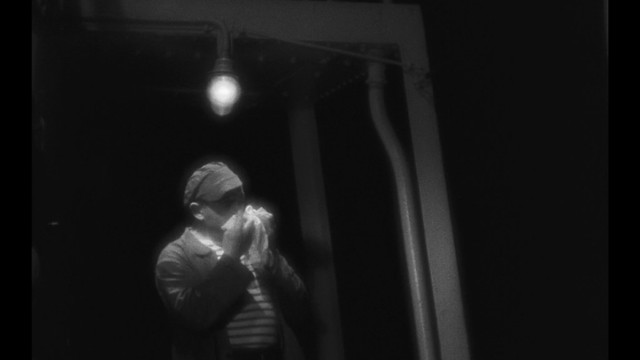
Daïnah la métisse (1932) - Grémillon Screen Shot 2023-08-09 at 12.02.06 PM Screen Shot 2023-08-09 at 12.09.28 PM Screen Shot 2023-08-09 at 12.09.36 PM Screen Shot 2023-08-09 at 12.08.44 PM Screen Shot 2023-08-09 at 12.09.29 PM Screen Shot 2023-08-09 at 12.11.07 PM Screen Shot 2023-08-09 at 12.09.21 PM Screen Shot 2023-08-09 at 12.11.45 PM Screen Shot 2023-08-09 at 12.38.10 PM Screen Shot 2023-08-09 at 1.00.40 PM Screen Shot 2023-08-09 at 12.59.27 PM Screen Shot 2023-08-09 at 1.02.38 PM A murder and racial/class politics in an ocean liner headed to New Caledonia in the South Pacific. Starring stunning Laurence Clavius as a temptress at sea who yearns to be free. Restored from a nitrate negative by Gaumont Pathé Archives in 2018. https://youtu.be/cS2sJWHQdCk

Wednesday, August 2, 2023

Jean Grémillon Restoration x2 at Metrograph

Jean Grémillon, largely overlooked and underrated among poetic realism directors of 1930s in French cinema, finally gets some well-deserved recognition with his two films - Lady Killer and The Strange Mister Victor, from the height of his career, beautifully restored from original negative to 4K by Hiventy and Pathé. New York's Metrograph is giving them a two-week theatrical run in the US for the first time, starting 8/4. With his depiction of complicated human nature and sophisticated technical prowess, Grémillon deserves to be put in the same league with his better known contemporaries, Renoir and Carné. True cinephiles shouldn't miss a chance to see Grémillon films in theaters in pristine conditions like this. Grasshopper is releasing.

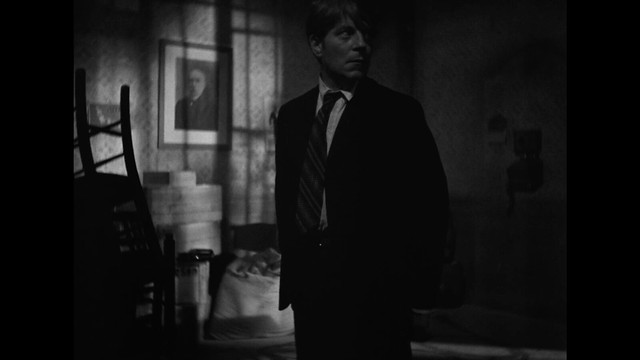
Lady Killer/Gueule d'amour (1937) Screen Shot 2023-07-29 at 9.28.36 AM Screen Shot 2023-07-29 at 9.36.08 AM Screen Shot 2023-07-29 at 11.15.08 AM Screen Shot 2023-07-30 at 4.33.53 PM Screen Shot 2023-07-30 at 5.32.19 PM Screen Shot 2023-07-30 at 5.47.45 PM Screen Shot 2023-07-30 at 5.55.31 PM Screen Shot 2023-07-30 at 5.56.02 PM Screen Shot 2023-07-30 at 5.59.57 PM In the tradition of a fatalistic romance, Lady Killer features the biggest heartthrob at the time, Jean Gabin, playing a soldier named Bourrache, stationed in Orange, Southern France. Because of his good looks and charm, he's known by his nickname, Gueule d'amour/lady killer among local women. The story takes a turn when Bourrache meets Madelene (Mirielle Balin), a high-society Parisian girl in Cannes, where he lends her money that he just inherited from a relative, at the casino, which she subsequently blows at the gambling den. Then she ditches him. This is the first time a woman did that to him and he can't forget her. After being discharged from the military, he looks her up in Paris, only to be seduced dumped, when confronted by her rich, old benefactor. Dejected and heartbroken, Burrache moves back to Orange and opens up a little bistro and leads a simple country life. Then Madelene appears again, tracking him down by seducing his army doctor friend to find his whereabouts. She turns out to be a archetypal femme fatale, a controlling monster one loves to hate.

Working with German cinematographer Günther Rittau (Metropolis), Lady Killer has some impressive shadowplay recalling German Expressionism. It should also be noted that Lady Killer reflects the sentiment of France at the eve of WWII - public's penchant for men in uniform (Fascism), decent, ordinary men being corrupted by decadence (Capitalism, consumerism).

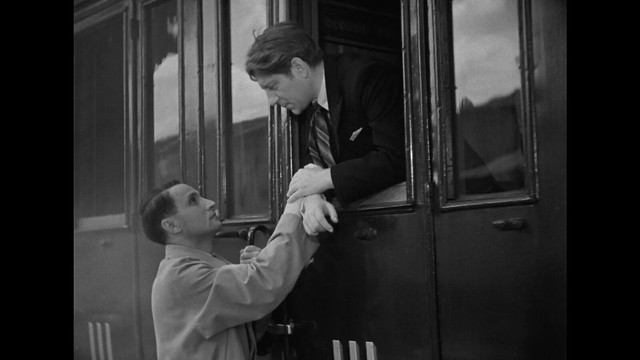
The Strange Mister Victor (1938) Screen Shot 2023-08-01 at 8.08.10 AM Screen Shot 2023-08-01 at 8.34.57 AM Screen Shot 2023-08-01 at 8.35.15 AM Screen Shot 2023-08-01 at 8.38.56 AM On the surface, Victor Agardanne (Raimu) is an upstanding citizen of Toulon, a bustling port city in Southern France. He is a gregarious and bumbling man, who owns a successful general store. But he is in cahoots with criminals who've been making the local newspaper headlines with a series of violent robberies. After one of the robbers, Amédée, threatens Agardanne with blackmail, Victor kills him with a local cobbler's tool. Bastien the cobbler, gets convicted of a crime and gets 10 years of hard labor in the penal colony.

7 years have passed, Bastien escapes the colony only to come back to Toulon to see his young son. Guilt ridden Victor, has not been the same person as before - moody and irritable to his long suffering wife Madeleine and his young son, hides Bastien from the authorities at his home while playing a good hearted protector, who insists on the innocence of the fugitive. With Amédée's associates and authorities on his trail, Victor and Bastien will need to figure their way out.

The Strange Mister Victor is a taut morality tale with great characters all around. Great character actor and comedian Raimu shines as the title character with great range and humanity. Again, Grémillon shows his skills in sketching out the details of the locale and characters as well as balancing the mood of the film from comedic moments to thriller elements.

4K transfer is done from its original nitrate negative and other sources for The Strange Mister Victor in 2020 by Pathé and its lively city symphony of Toulon in the beginning is gorgeous to look at. Review of Grémillon's Remorques

Tuesday, August 1, 2023

Reflections Yet to Come

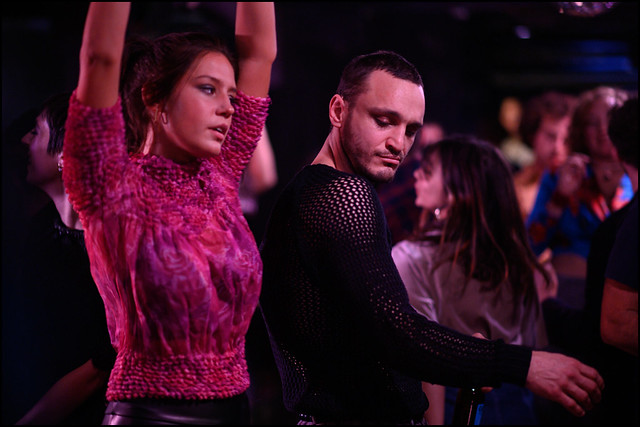
Passages (2023) - Sachs Ira Sachs’ PASSAGES Still 2 - Adèle Exarchopoulos and Franz Rogowski – Courtesy MUBI Past experiences shape who we are. It's the reflection of the things past that makes one grow as a person. Therefore, Ira Sachs's new film Passages, is a snapshot of a person going through that process of growth, for better or worse. It's a mature film in more ways than one and a realistic look at modern relationships. Passages highlights the true acting talent of great German actor Franz Rogowski (Transit, Undine, Great Freedom) because he is phenomenal in this sexually charged character study. Taking place in Paris, the film is about a love triangle among three very attractive people; there's Tomas (Rogowski), a German film director, his studious English husband Martin (Ben Whishaw) who owns a high end commercial print shop and a young school teacher Agathe (Adèle Axarchopolous, Blue is the Warmest Color, Five Devils).

Rogowski's Tomas, in his boyish looks and permanent lisp in any language he speaks, exudes a certain vulnerability that is quite irresistible. Tomas is first seen on a movie set, directing actors in English, asking an actor to walk down the stairs over and over again, dictating every movement. This intro gives an impression that he is a difficult person to deal with. At the wrap party for the film at a bar, Martin gets bored and leaves early. Tomas meets Agathe who also worked on set as a still photographer. Hooking up with a woman is a whole new experience for Tomas. And rightly, as soon as he tells Martin, jealous Martin packs his bag and leaves.

Over the course of the film, Tomas vacillates between Martin and Agathe - between the world of comfort and security, and newfound desires and possible parenthood. He is a self-absorbed artist who manipulates others' feelings for fulfilling his desires, only at his convenience.

Sachs, along with two other writers- Mauricio Zacharias (Keep the Lights On) and French arthouse veteran Arlette Langmann (A nos amours, Jean de Florette), keeps things real and guards Passages from falling into old style, cliché ridden melodrama. Martin is not a downtrodden house-wife by any means. He is a realist of the pair and a pragmatic one and won't take Tomas's bullshit when he sees it. So is Agathe, a tough school teacher, who is no pushover. But they often find themselves in situations where they can resist Tomas's undeniable magnetism and sex appeal.

And the sex scenes- both gay and straight are pretty steamy. Whether it's perfectly toned Whishaw's backside, or Axarchopolous's voluptuous body, or Rogowski's athletic, dancer-trained taut muscles underneath a see-through fishnet shirt, all very frankly and naturally depicted. There's definitely something for everyone in Passages.

As Tomas digs himself a hole over and over again, he finds himself rejected and alone. And it provides the film's most exhilarating and contemplative scene: a long tracking shot of Tomas riding a bicycle through the streets of Paris in a tux with a faux-fur coat. He wears a somber expression with Albert Ayler's upbeat Spirits Rejoice blaring. Did he learn anything from these experiences or is he the same self-centered boy as before? Is he determined to be a better person to everyone around him? As the title suggests, it's the passages we go through in life that benefit us. It might not hit Tomas right away what it all means, but it will eventually hit him down the road and grow up.

I really hope Rogowski gets the international recognition he really deserves with this film. He is a real deal.

Monday, July 24, 2023

Japan Cuts 2023 Preview

Japan Society's Japan Cuts: The Festival of New Japanese Film is back in its 16th year. It marks the first all in-person festival since 2019! From July 26-Aug 6, this year’s festival features over 25 films from major blockbusters to indie darlings, spanning narratives, documentaries, experimental and short films, and anime! This year’s festival features five International Premieres, 10 North American Premieres, seven U.S. Premieres, three East Coast Premieres, and three New York Premieres! Japan Cuts will also welcome six special guests and host two parties!

Leading this year’s guests, JAPAN CUTS has the honor of presenting acclaimed actor Yuya Yagira with the 2023 CUT ABOVE Award for Outstanding Achievement in Film for his role in Under The Turquoise Sky by director KENTARO.

Here are some unique and outstanding films I was able to preview:

The First Slam Dunk - Inoue SLAM_Image2 The wildly popular manga-turned-TV anime series Slam Dunk creator Inoue Takehiko finally comes up with The First Slam Dunk, a feature length anime about a high stakes final game in high school basketball tournament and its players. Using both 3DCG and 2D animation, Inoue creates tense, poignant sports film that is thoroughly enjoyable. It starts with Miyagi Ryota, a short kid from Okinawa who loses his mentor brother and becoming a point guard for the Shohoku high school team against unbeatable reigning champs, the Sannoh. Inoue wastes no time and throws us into the final game as the ragtag underdogs beating against all odds and turning the apathetic spectators around their sides with their tenacity and sheer will power. Other than Miyagi, there is the team's power forward loose cannon Sakuragi (the red head main protagonist in Slam Dunk manga series), Hisashi, shooting guard, Rukawa, small forward, and Akagi, the long-suffering captain and center. Each gets his own limelight and backstory. But it's the game itself that is exciting to watch - at one point down 20 points, the Shohoku team seems helpless and in the midpoint of the film. Then it catches fire as it plays out with some crazy play by play as their scores seesaw back and forth - the time elongates as the tension builds to the final moment of the game. And what a beautiful game it is! The First Slam Dunk is much less juvenile than its origins. It's not about playing basketball to be cool or get girls. Girls are on the sidelines. It's all about the game and it's exciting.

Under the Turquoise Sky - Kentaro sky3 Amraa, a Mongolian horse thief is first seen stealing a horse from a stable and riding through Tokyo city scape. He is soon apprehended by authorities. It turns out the horse belongs to an aging business tycoon Saburo. In turn, Saburo makes a deal with the Mongolian: take his spoiled, womanizing grandson Takeshi (Yagira Yuya, the youngest recipient of top acting winner at Cannes for Kore-eda's Nobody Knows in 2004) to Mongolia and find his long-lost daughter that he sired with a Mongolian woman when he was stationed there in WW2. So begins an unlikely journey Under the Turquoise Sky, driving through the breathtaking steppe landscape of Mongolia. Without much dialog, director Kentaro paints the picture with broad strokes, peppered with magic realism and visual poetry. This leisurely paced, Jarmusch-ite road trip movie has its charm. Amraa, a Mongolian horse thief is first seen stealing a horse from a stable and riding through Tokyo city scape. He is soon apprehended by authorities. It turns out the horse belongs to an aging business tycoon Saburo. In turn, Saburo makes a deal with the Mongolian: take his spoiled, womanizing grandson Takeshi (Yagira Yuya, the youngest recipient of top acting winner at Cannes for Kore-eda's Nobody Knows in 2004) to Mongolia and find his long-lost daughter that he sired with a Mongolian woman when he was stationed there in WW2. So begins an unlikely journey Under the Turquoise Sky, driving through the breathtaking steppe landscape of Mongolia. Without much dialog, director Kentaro paints the picture with broad strokes, peppered with magic realism and visual poetry. This leisurely paced, Jarmusch-ite road trip movie has its charm.

From the End of the World - Kiriya From the End of the World Kiriya Kazuaki (Casshern, The Last Knights) directs a low budget time traveling tale where a high school girl's recurring dreams of marauding samurais in medieval Japan may hold a key to survival of mankind from apocalypse. After her grandmother's death, 17-year-old lonely high school girl Hana (Ito Aoi), is giving up on her dream of being cosmetologist, to support herself by working at a bar. She is soon visited by a secret government official who seem to be very interested in what she's dreaming. It turns out the world is ending in two weeks and only her dreams can alter the outcome of the book which contains the humanity's fate. Navigating between reality and dreams, Hana must save Yuki, a little girl in her dream, from a menacing, time traveling samurai (Kitamura Kazuki, letting his eyebrow to do the talking as usual). The convoluted script resembles typical 'end of the world' manga premises, From the End of the World depends too much on lengthy explanation, but Kiriya's energetic DIY style (DP, Kanbe Chigi) camera movement and digitized color palette make an enjoyable two-hour ride.

Amiko - Morii Amiko A remarkable directorial debut of Morii Yusuke, based on a book Kochira Amiko (Look Here Amiko) by Imamura Natsuko, Amiko tells an oddball grade schooler (Osawa Kana) living in a small seaside town. She lives with her parents and her older brother. She has tendency to obsess over small things around her life - a big mole on her mom's chin, a neighborhood boy named Nori who's in the same class, various animals and insects that share her immediate, rural environment. She is an enthusiastic, high-energy child with wild imaginations. But she is sometimes too much for everyone around her. Unbeknownst to Amiko, life takes a darker turn as her mom's miscarriage reverberates throughout her family - mom's postpartum depression takes a toll on her mental health, her father is more absent-minded, and her brother becomes a raging juvenile delinquent.

Young Kana's wide-eyed wild child is a revelation, embodying Amiko who doesn't understand the consequence of her actions and tragedies that befall in life, obviously, because she is just a child. Morii captures all this in constant close-up of Kana's round, adorable face. It's a remarkable, heartbreaking unusual film about growing up.

Hand - Matsui te Hand - Matsui Sawako (Fukunaga Akari), a twenty-something office worker has a fetish for old men. She collects photos of old men taken on the street in a series of scrap books named "Happy Old Men," like schoolgirls collects pictures of cute animals. She thinks the snapshots of their content-with-life expressions and their bald spots and portly figures adorable. She gets a lot of attention from older men as well, but she observes that they tend to treat her like a little girl when they are alone. At home, her father prefers to interact with mom and her younger sister who's still in high school. It seems that her father doesn't quite know how to behave around his grown up daughter. Sawako starts an intense physical relationship with a former co-worker Koichi whom she confesses her love. But it turns out that he is in another relationship. Unwanted at home, and heartbroken with her lover, Sawako reassesses her adulthood. Conceived as a Roman Porno revival project by Nikkatsu Studio, Matsui Daigo (Japanese Girls Never Die) directs Hand. Yes, it abides by the Roman Porno rules (low budget, shot in a week with sex scene every 10 minutes). But the film is an exceptionally well written poignant, intimate relationship drama that gently approaches father-daughter relationship. Hand is a great little film which shows you that the spirit of Japanese indie film scene is alive and well.

Tuesday, July 18, 2023

People Who Remain

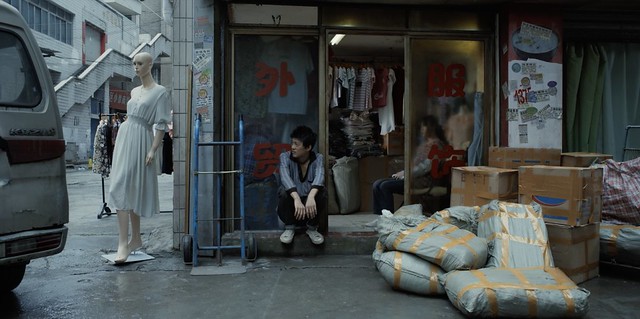
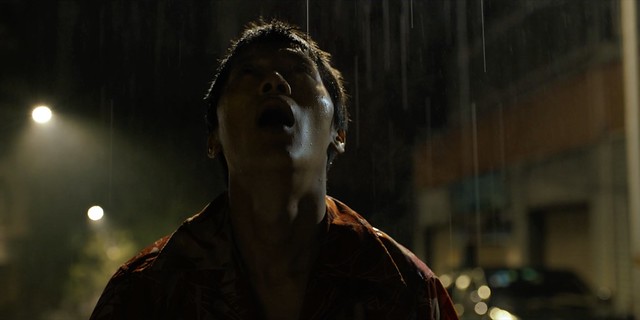
Streetwise (2021) - Na Streetwise 1 Streetwise 6 Streetwise 7 Streetwise 8 Streetwise 10 Streetwise 12 Streetwise 13 Streetwise 15 Streetwise 17 Na Jiazuo's rain soaked neonoir, Streetwise, gets a much-deserved theatrical run stateside. I say this because it's just gorgeous to look at in its grimy, urban decay glory. Set in anytown China in 2000s, where economic growth has considerably cooled, and once bustling streets are now deserted and shops shuttered. There's sense of hopelessness in the air.

Streetwise tells a group of the lonely, lost souls who occupy these wet, decaying dwellings and their sordid lives fatefully entwined like a tangled web which they can't escape from. Zidong (Li Jiuxiao), a gawky young man, is first seen tearing up a mahjong parlor where a debtor hangs out. He is a muscle man for a wry debt collector, Jun, who walks with a limp, probably from some shenanigans from his shady past. By the looks of it, Zidong is a rookie at whatever he does, with Jun constantly showing him the ropes.

Zidong keeps borrowing money from the local tattoo artist Jiu (Huang Miyi) to pay for his dad's mounting medical bills. Dad, once a leader of the street gang, due to his age and health, is forever committed to a hospital bed. Still spry, he still gets into fights and unsavory situations. Zidong and Jiu seem to have a special relationship where they keep each other company without wanting anything other than consoling their loneliness. Their relationship is a purely platonic one, like that of brother and sister. And they might as well be- Zidong's dad keeps insisting that she is a bad luck and they shouldn't ever sleep with each other, not only because she is the ex-wife of the boss, known as Four, the head of a local gang who oversees Jun and Zidong, but also was a protégé of Zidong's dad.

Zidong and Jiu contemplate skipping town and go live somewhere else countless times, even though they don't know where to go. Four, getting rejected repeatedly by Jiu for his pleas to get back together, is getting antsy about Zidong hanging around the tattoo parlor too much. In the meantime, Jun plots revenge after Four humiliates him in front of everyone.

Everyone in Streetwise is trying to runaway from something- the past, dire financial circumstances, love, misplaced loyalty, and themselves, but fails to do so. They can't get away from their own reflections in the putrid puddle strewn with trash in the street.

Jiu briefly leaves the cursed town, only to come back for Zidong and confront her fate.

Li in the role of Zidong bristles with youthful energy and puppy dog innocence. Huang, a graceful beauty, fits reminds me a lot of young Shu Qi.

Na creates a perfect neon colored urban purgatory where lost souls can't ever leave. Everything has a hazy, dreamy, not quite real feel to Streetwise. Even in crowded places like karaoke bars or hospital elevators has otherworldly quality to it. No one is purely evil or saintly. Everyone has baggage and weak spot for certain things or someone. It's that sinewy human connections that Na explores with exceptional visuals and everyday poetry.

Monday, July 10, 2023

Interview: Paula Beer talks Afire and working with Christian Petzold

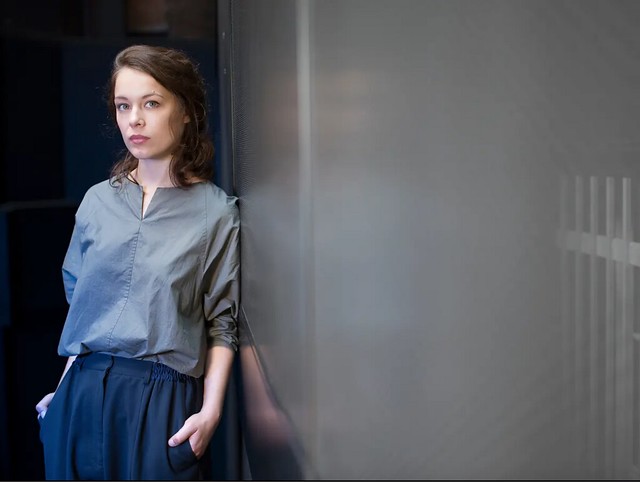
Screen Shot 2023-07-08 at 3.22.36 PM Paula Beer, a German stage and film actress, first got her international recognition in François Ozon's Frantz (2016). Since then, she has been working with director Christian Petzold to a critical acclaim. Their fruitful collaborations resulted in Transit (2018), Undine (2020), and now Afire (2023). In Afire, Beer plays Nadja, a love interest of self-absorbed young writer with a huge writer's block in the summer at Baltic Sea. The movie seems like a departure from Petzold's normal, serious themed filmography at a glance. A German 'summer movie' if you will. But as it plays out, with Beer as his muse, it morphs into the usual Petzold territory and more: secrets, loneliness, and creative process and self-reflection even, and of course, an acute observation of the world facing crisis. It's a delicious Petzold stuff as usual.

Beer was in town for Tribeca Film Festival to promote Afire and I jumped at the chance to talk to the lovely, intelligent actress about her methods and working with Petzold.

Afire opens in theaters 7/14 in New York and Los Angeles. The national roll out will follow.

I saw AFIRE about a week before the smoke from the Canadian wildfire reached New York and turned the sky an eerie dark orange color. And I am flabbergasted by how prescient the film is! Everything Christian Petzold makes, it’s so prescient- whether it’s the reemergence of fascism, gentrification or climate catastrophe. I had to add an addendum to my review after experiencing that thick dangerous air first hand. So I had a chance to talk to Christian remotely after he did Undine and this was when Covid was still happening. He told me that after Covid hit, he abandoned a dystopian project he was working on, to get away from all the depressing things and decided to make a summer movie, about young people in love, with you in mind. How did it come about?

The weird thing is that we were in Paris for the press for Undine. Everything turned out really good. Everyone was happy about the movie. It started playing in Berlin, and we were expecting to open in Paris as well. But our distributor said, “We have to wait for a speech from Macron (about the Covid situation) tomorrow morning.” So OK. But then the next day they told us that they were sorry that they couldn’t bring the movie to the cinemas in April (this was March 2020) that we had to cancel everything and try it again in September. So we knew the situation was getting very serious. When we got back to Berlin, we both got infected- maybe in Paris, who knows, but we got back home and were sick. So we stayed at home and waited. Then the first lockdown in Berlin came in the middle of March. And then Christian told me that he was working on the script for the other movie but he told me that the world is in crisis and that he couldn’t do a depressing movie right now.

He told me a story of Afire while eating falafel together. He told me about the summer and young people in love. “What do you think?” He asked me. During the pandemic we had so much time so we both watched a Rohmer box set that someone gave him as a gift. I understood his wish for taking all the drama of the world away and trying to introduce this light ambience to the world. But of course it’s Christian, so I knew it would dig into a deeper level, not some random light story.

Christian has a really steady career- there’s no movie that you’d think that it’s off or unlike him in his filmography. He has two kids who are a bit younger than me and finishing their school during Covid. He is such an open hearted and open minded person, and he sees what’s going on and what their concerns are and adapts that into a story. It really amazes me. From the very first time he told me about that story I knew that it was going to be something new. I can’t really say how, but the movie just felt different. I sensed his film language moving a little bit.

You’ve done three films with Christian now. How is his directing style different from any other directors you worked with?

It’s completely different. Before I started doing Transit with him, People told me that he has a very unique way of shooting. I was like, “ok, everyone says that. so there must be something true about it.” And as soon as I got to know the production and other people working as a crew for Transit, there was a different vibe. It didn’t have the pressure of a normal film set. There’s no big office with a lot of people. It’s always about the movie and the story: everyone is very engaged and very focused on that. And Cristian collects people around who are really good at what they do, but also calm and easy going. I go, “yeah this is a very good atmosphere to work in.” There’s none of these usual onset frenzy. It’s more like, “cool, we have a good script. Let’s make a good movie out of it.”

One thing we do as a crew and cast is to travel to the shooting locations together - without anything there. Just for us to have an impression of what the place is like.

That’s interesting.

For this movie, it helped a lot. It takes place in the Baltic sea. And we were shooting on a private island. There were no people at all. And it was just raw nature - peaks and forests as you’ve seen in the movie. It's what nature could be if people weren’t destroying everything. And being in the sea - yes the sea itself - the sand and the trees - what impact all of that has on a human being! This is what summer feels like - we have a lot of time. It's hot. no pressure, no stress, no nothing.

And then we have reading rehearsals. It's always important to see how everyone sees the character. For me it was very important to see Tomas (Schubert) who was reading Leon. It was amazing to see because Leon is such a hard character to like and to follow. When he read it. I thought, wow that’s enough. No worries, it’s going to be an amazing one…

You knew Tomas before this movie. You’ve worked together before?

Yes, when we were eighteen, a long time ago. (They were in Austrian director Andreas Prochaska's Dark Valley together). He played so well in that movie.

Then for the shooting, we would rehearse in the morning: it’s Christian and his assistant and all the actors in costume and no other people involved. We have coffee and tea, we look at the scene - we go to make up and they prepare the set, we come back, everything is ready, we shoot, one direction, usually one take, change set up, another shot from another angle, Then we have lunch. His set is very structured and very well organized. It helps you to focus and not—

Pressure

Yeah and there’s nothing to distract you from focusing on what’s important.

Was AFIRE all shot on location?

The house was close to Berlin. And that’s why it was important that we went to shooting locations before. We saw the sea and then we came back to Berlin to start shooting. Everything else was shot near the Baltic ocean.

Among the roles you played, how was Nadja compare to others in terms of preparation?

It’s different with each character. Each character requires different preparation and sometimes it seems so clear but I don’t get anything, others it’s the other way around and just great and you have fun. So it is hard to say how I prepare for a certain role. Every new character I play I go back to the beginning - that I don’t know how or where to start because it feels like a new job with every character. I will need to understand what I need, to play this character. Because I don’t think there is no…formula, to say 'this is how to create a character.' It’s how I play this character. It helped me a lot working with Christian two times before because I got to see how things work on his set and now I kind of know how or where…oh I am blanking, it must be the jetlag, (laughs) … where I will be ending up with him.

I know how his process of filming goes. And this helps me a lot to free myself. I am always like, “I have to prepare this and I have to prepare that. I have to be super prepared,” but his process gives me a lot of freedom and with Nadja, I can go with what I feel at that moment. This is Nadja, this vibe, now I just experience and enter her realm and react to other actors and their energy, off of my costumes and places. It's like an energetic trip through a movie.

The reason I asked is in UNDINE, there is this long monologue scene where Undine leads the tour in a museum and I was wondering how you managed that. That must’ve taken a long long time to prepare.

Yeah. When I was reading the script. I called Christian and said, “well you are making jokes right? You just don’t want me for the part!” In a way it’s very helpful to…. First for an actress, it’s a job to do. But then, the story that she tells is her text. She wrote that story. So it tells you a lot about her. Like how she sees things, how she is telling about it. But when I see the room where we are shooting that scene, it’s like diving through history. And I just loved doing all the preparations. She is from water, to our city and lives with human beings, she is searching for love and she doesn’t find it, she has to kill and go back to water. For me, it was, "OK, she actually lives in two worlds." The other world, which we don't see in the movie, is where she is most of the time, so I want to get to know this world in water. Then how she sees you- she knows Berlin from when the first house was built there. Because Berlin was this watery…

Swamp.

Yeah yeah, exactly. So she was there before the city was built. So she is not doing a presentation but telling her whole story of what she experienced and I love the idea of her explaining things - “So this bridge was built in so and so and this guy was doing this…” She was telling what she saw.

In Petzold’s characters, especially female characters, there’s always some sort of secret in them. Whenever they are looking at you and talking to you, it’s as if they are looking above your shoulder. Do you feel that way about Nadja?

I felt the same way about the Petzold’s characters I play, that they live in a kind of their own world. That they look for their own truth. But for Nadja, when I was reading the script, she doesn’t have that interiority even though you don’t really know. It’s the view from Leon’s perspective. The camera is a bit attached to him emotionally and it’s his point of view.That’s why you don’t really know who she is or what she’s up to. Reading the script I got that feeling as well. That’s why it’s fun to play. I think Christian gives characters their own worlds. For Nadja, I think he protected her world. She can have her own world and not get destroyed by others. She is present among people but she is not throwing everything at them. She knows who she is and she is self confident but she doesn’t have to show it. I like that about Nadja. It’s like when Tomas tells her, " You didn’t tell me that you are not just an ice cream seller.” and she says, “You didn’t ask.” I’m not going to give you everything because you are the man. I like that about her.

Nadja always whistles a tune. I am dying to know what that tune is.

Oh I just made that up. It’s Nadja’s vibe I felt when we were shooting. OK, she is full of life and full of joy. She knows how to live. And that ended up in the movie. (laughs)

That’s awesome.

Is there a difference between how Nadja sees herself and Leon sees her as? The reason I am asking is that it turns out Leon, the writer, embellishes everyone but Nadja, who is strong and confident, stays the same.

Yeah there is always that surprising moment in Chrsitan’s films that you doubt yourself as how things are, then “Aha!” As you said, who is she? Is she just his view or is she really that person… I love these games that Christian plays.

It’s great.

I know you are busy with other projects. I hear you are doing STELLA (based on a controversial figure Stella Goldshlag), and THIRTY THREE with Niels Arden Oplev. Is the latter project in English?

I believe so. There might be some parts in German.

Tuesday, June 27, 2023

The Eighties Paris

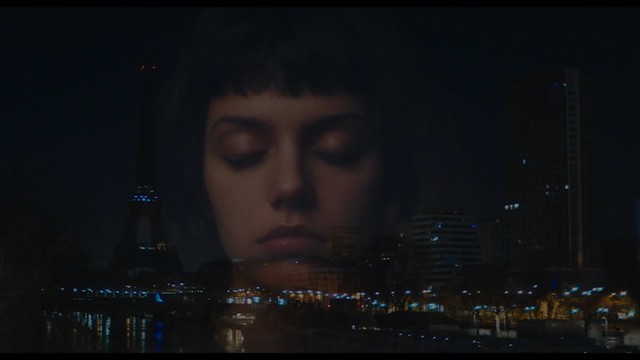
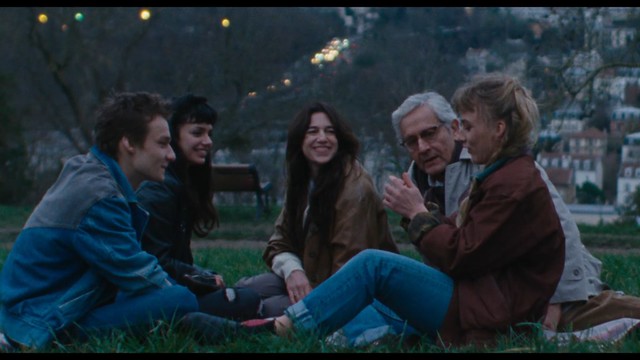
The Passengers of the Night/ Les passagers de la nuit (2022) - Hers Screen Shot 2023-05-26 at 8.22.52 AM Screen Shot 2023-05-26 at 10.15.12 AM Screen Shot 2023-05-26 at 10.39.21 AM Screen Shot 2023-05-26 at 11.31.08 AM If you are like me, who's very sensitive to noise and think modern films have become too loud, both in theaters and at home, then you might find Mikhaël Hers films to your liking. In one corner of Paris, he's been making finely tuned, melancholic urban tales of delicate human connections since the mid 2000s. And with Amanda in 2018 and now, The Passengers of the Night, he is turning his attention to the subject of family- some surrogate, some not, and away from his usual group of 20 or 30 something protagonists. It's not a question of this change is good or bad, just different. With The Passengers, his usual theme of death and grief are gone, yet the sadness and melancholy still remain. Also it takes place in Paris in the 80s, marking it his first period film.

Hers's quiet, singular filmmaking seems to attract big stars also. It features Charlotte Gainsbourg in a great role as a divorced single mother, who is discovering herself for the first time. Emmanuelle Béart, the once French megastar of 80s and 90s, also makes a welcome appearance, giving a confident, nuanced performance as a late night disc jockey. There is also a relative newcomer, Noée Abita as a beautiful drifter. Hers's regular, Thibault Vinçon, is there as a love interest as well.
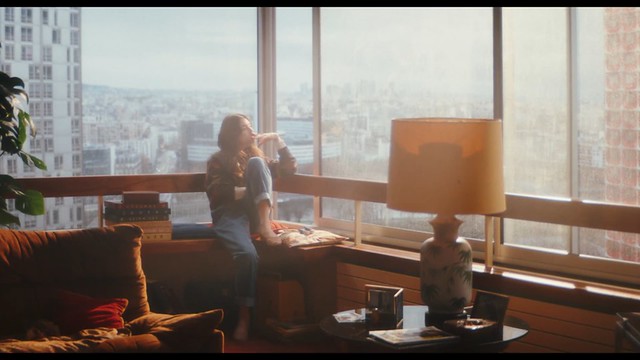
The film opens with the night of the 1981 presidential election where François Mitterrand and his Socialist party won big. There's an electricity in the air and everyone's celebrating in the streets. The title, The Passengers of the Night, is the name of a late night radio show where insomniacs and lonely souls tune in, to hear the host Vanda (Emmanuelle Béart) and talk to her on air. Her voice and wisdom are comfort to thousands of listeners. One such fan is a recent divorcée Elizabeth (Gainsbourg). She and her two growing high school age children Judith and Mathias live in a penthouse apartment with windows overlooking Paris. But since her husband left, she needs to find a job pronto. It's a scary time for Elizabeth, as she never held a job before. It is alluded that her husband left, because she had a brest cancer and went through a mastectomy. Lacking any employable skills and failing badly at menial office jobs, she writes a passionate letter to Vanda, and lands her a job at Vanda's radio station as a switch operator. Her job is to filter the listeners' calls, then connect them to Vanda on air. She and the team hit it off. Her daughter Judith is a firebrand and very into progressive politics, but her young son, Mathias is struggling in school and is rather directionless.

One night, a young drifter and a listener of the show named Talula (Noée Abita) shows up at the station. It turns out she doesn't have anywhere else to go. Elizabeth ends up bringing her to her flat and letting her stay in her spare room in the attic. Soon Mathias falls hard for the stunning drifter. They go to the movies, an activity that Talula says she does a lot because the movie theater is good place to go when the weather turns cold. There are hints of young people's passions and interests forming, foreshadowing their future path. But when Mathias gets too close, Talula leaves.

It's 1988, working at a library during the day, Elizabeth finds a new love in a younger man (Vinçon), Judith has moved out and Mathias now works at a local pool. One day, Elizabeth and Mathias find Talula passed out near their apartment. She has become a junkie. Same as before, they help her from the goodness of their hearts. Talula struggles with her addiction while Elizabeth and Mathias prepares to move out of the fancy apartment they've been calling home.

Hers has perhaps the gentlest touch of all French directors working today. Shot dreamily hazy with the mix of film and digital images, The Passengers combines the director's penchant for good music - the 80s in this case: Lloyd Cole & The Commotions, The Pale Fountains, Television, Low, and also pays tribute to 80's romantic cinema shot in the streets of Paris - Eric Rohmer's Full Moon in Paris, Jacques Rivette's Le pont du nord, and one of my early favorites during my formative years, Eric Rochant's The World without Pity.

No one dies or anything drastic happens in The Passengers of the Night, but as usual, Hers observes life's ups and downs and connections people make along the way. Gainsbourg is luminous as Elizabeth, giving a fine-tuned performance as a middle-aged woman finding herself in a changing world. Watching this film reminded me very much of Hou Hsiao Hsien's Tokyo set Ozu tribute, Cafe Lumiere in terms of its tone and place.

Thursday, June 22, 2023

Warcry

How to Blow Up a Pipeline (2022) - Goldhaber how-to-blow-up-a-pipeline-film We really did a terrible job safeguarding our environment. We are way passed the point of no return for major ecological disasters and this is going to be our legacy to our youth. And they obviously have reasons to be pissed off at us, the government, the world. Every time I talk with anyone younger than 30, their number one concern, without hesitation, is the environment.

I'm not saying that this so called ecoterrorism is new. There were Green Peace saboteurs before our generation; we had ELF (Earth Liberation Front) and have seen our friend Daniel McGowan off to jail for arson of the lumber company. But How to Blow Up a Pipeline is a renewed warcry from a generation that went through so much in so little time in the last two decades where everything seems to be accelerating toward the what seems to be now inevitable oblivion. The gig economy is not providing them any security or benefits (as the film touches on the subject). Forget about the culture wars or 'voting matters' slogan, in our mainstream discourse. They don't give two shits about any of those. The world will soon be totally uninhabitable, definitely in their lifetime. This is existential threat of today. It's the topic that they lose sleep over.
How to Blow Up a Pipeline is an angry propaganda disguised as an eco-thriller. With complex flashbacks structure, the film tells a group of conscientious young people deeply dissatisfied with the state of the world. Their definition of 'doing good for the world' is not volunteering at some soup kitchen. Incrementalism is not the solution. They'd rather move toward the path of a direct sabotage. All the paticipants of the deeds of the film title are personally affected, in one way or another, by the environmental destruction near where they live; their family member died because they live close to a chemical plant, get cancer because harmful air and water they breath and drink, get kicked out of their lands by developers, their land ceased by gov for digging oil wells, etc. They find each other online and by mutuals to form a group, like, in a heist movie. Daniel Goldhaber along with his writing partner producer Jordan Sjol (Cam) and Ariela Barer (who plays Xochitl in the film) writes a lean but urgent and angry script, devoid of sentimentality.

Xochitl (Barer) who lost her family to illness due to living near the chemical plant, comes back to Southern California after dropping out of college, disillusioned by non-urgent state of college protest scene. She reconnects with her best friend Theo (Sasha Lane) is dying of leukemia from the harmful chemicals, and her girlfriend Alisha (Jayme Lawson). She also hooks up with a like minded college friend, Shawn (Marcus Scribner), who agrees with her that the act of sabotage - violent actions of property damage (but without any loss of life), are necessary to shock the system. They contact a reclusive, angry young man Michael (Forrest Goodluck), living in a reservation, who posts 'how to' videos of homemade bombs on the internet. They also recruits Dwayne (Jake Weary), a family man, who lost their family plot in Western Texas to imminent domain for digging oil rigs. Then their is a druggy Seattle couple who may or may not be informants for the FBI. With these young characters, the film shows what unites them, across cultural and racial divide, is the anger that fuels their desire for direct action beyond protests, petitions or boycotts. The shrewd

They find their targets in Western Texas - one underground pipeline and the other above. The coordinated attacks will paralize the supply of the oil getting distributed across the state lines and cause economical damages to the company. A major disruption will be the goal.

The matter of fact presentation of bomb making and careful planning are the meat of the film. How to Blow Up a Pipeline plays out like a great little thriller. Their meticulous plan hit a snag when the rope holding the heavy barrel containing the bomb breaks, but despite the setback, they carry out the attack. The twist at the end is well earned as well. How to Blow Up the Pipeline is a compelling film. It is a justifiably angry film for the generation out of time and out of options.

Saturday, June 17, 2023

Six Love

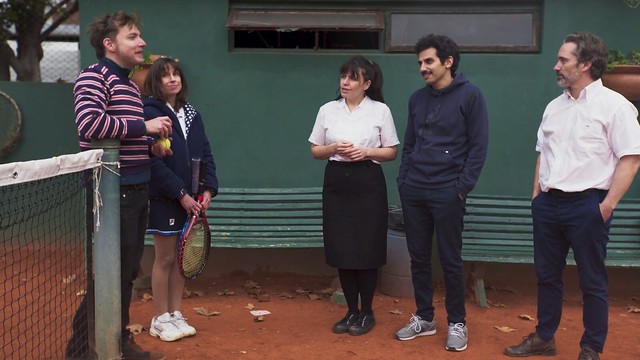
Smog en tu corazon (2022) - Seles Screen Shot 2023-06-17 at 10.00.38 AM Lucia Seles's wry comedy about a Tennis club and its employees and their romance may sound like a premise of a TV sit-com, but its presentation is nothing but. The editing style of Smog is truly innovative. With cutting between parallel actions, long sequences, jump cuts and repetitions, the film is jarring at first until you settle into its own rhythm, as we get invested on the characters. Most of them are neurotic mess: the owner of the place is Manuel, who is affable enough but still wants to present himself as a boss, Lujan, an employee with a penchant for classical music and her precious 16 CD collections precariously stacked on her tiny desk, Javier, a nervous accountant who likes to gather the team around and announce his incongruous findings about the world, Sergio, Manuel's childhood buddy who just came from San Juan to help the business out and Martha, a former player who is hired to give lessons and very sensitive about being called other than 'tennis player'.

As their daily activities play out with their silly and amusing anecdotes and stories, we find everyone is in love with someone else and the feelings are not reciprocal at all and no one is brave enough to come right out and say what they feel. In many ways, Smog en tu corazon is like a Shakespearean screwball comedy or Chekhovian chamber piece that takes place in a rundown small tennis club in Spain. It also reminds me of the sprawling yarn that has been coming out of Argentina in recent years- La Flor and Trenque Lauquen. It's good trend to have these little small films with no budget sprouting up.

Smog en tu corazon is most notable in its editing. It's not tethered to having an extra meaning or used as some sort of signifier; it presents a different cinematic language and rhythm. And I am surprised at myself how easily I get sucked in to these lives and completely forget about the formalist presentation. Enjoyed it immensely.

Monday, June 12, 2023

Look Around, The World is Burning!

Afire (2023) - Petzold Afire As the Canadian wildfire rages on and its smoke, carried on by the wind, covers the entire US Eastern coastline in thick orange hazardous air last week, Christian Petzold's new film, Afire, playing in this year's Tribeca Film Fest and coming out in US theaters in July, is such a prescient film about the world we live in now. You think Petzold shifts gears and concocts a seemingly a lighthearted summer fling story during covid? No. Quite the contrary. His previous films, Phoenix, Transit and Undine are laced with potent German history and reflecting on 21 century living. But at a glance, Afire doesn't seem too concerned about the German history, but it's still very much steeped in Petzold's usual themes: guilt, shame, forgetfulness and loneliness. And the Baltic sea set Afire is very much about the present- the world on the brink of ecological catastrophy. Afire is distinctly a Petzold's version of a 'summer movie'.

We are introduced to Leon (Thomas Schubert) and Felix (Langston Uibel), unlikely friends going to the Baltic seaside where Felix's mom has a summer house. The car breaks down and they have to walk the rest of the way. It is apparent that Leon is the designated pessimist of the two; too serious for his own good kind of a guy. Once they get to the house, they find that it is already occupied by Nadja (Paula Beer). They learn that Nadja is a family friend and now they will need to share the house during their stay. Leon is doubly disgruntled because he needs peace and quiet to finish his second novel, incongruously titled, Club Sandwich, but Nadja's nightly activity with a local lifeguard Devid (Enno Trebs) is just too loud.

After meeting the other occupants a couple of days later, Leon keeps being a major A-hole and a party pooper every chance he gets; whenever asked to come to swim and join them, he coldly tells Nadja, "Work doesn't allow it." a phrase that he instantly regrets saying right after, which fills him with much self-loathing. He just can't help it. His arrogance and superiority complex always get the better of himself, while struggling with writing his 'masterpiece'. But, when alone, he bounces the rubber ball off the house wall and falls asleep on the patio in front of the house that he claimed as his workspace.

To Leon's surprise, there's a budding romance between Felix and Devid. It's more like Leon is too obsessed with his own little world, he hardly notices anything else around him. It's like a forest fire that is raging in the distant which lights up the part of the sky red every night. It won't reach us, they tell themselves.

Nadja gives Leon every chance to open up, but his stupid pride keeps walling off her friendly gestures. At one of those of her attempts, he reluctantly agrees for her to read his manuscript. She reads it in one sitting one afternoon, as he nervously walks back and forth from distance. She returns it to him, "It's bad and you know it too." What does she know? She is just a seasonal ice-cream seller at a nearby town. He bitterly tells himself.

When Leon's agent, Helmut (Matthias Brant) comes into town to go over his manuscript and decides to stay for dinner which Nadja provides, it is revealed that Nadja is a literary scholar doing her Ph.D. She recites Heinrich Heine's poem Asra, about an Arab tribe, who perish when they love. Felix, who's in love with Devid now, so moved by the poem, asks her to recite it again. Foreshadowing what's to come.

There's a striking scene, where the ashes of the nearby forest fire descending upon the group. It's a surreal moment - mixture of beauty and imminent danger. It's one of the showstopper in Petzold's cinematic world. Helmut collapses at the same moment and must be taken to the hospital. Fire is fast approaching, and Leon witness firsthand the destructive power of all consuming fire.
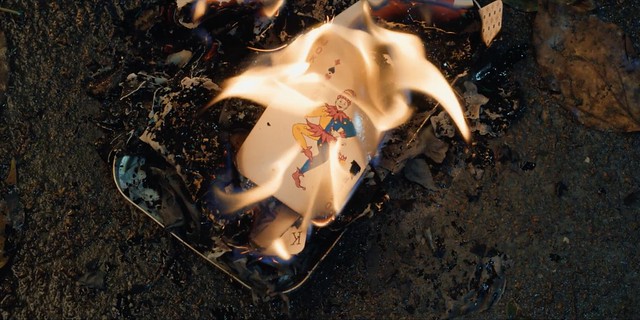
Afire is very much a Petzold's version of a summer film like that of Eric Rohmer's (which he says he watched a lot before conceiving Afire, during the covid lockdown) and other French summer fling films but with stinging message. Instead of summer love, we get Leon, our anti-hero completely blindsided by his self-centered world view and misses out on life. And even ecological disasters at his doorstep can't make him see what's in front of him.

The film tells a lot about the self-absorbed world in the face of climate change and global catastrophe unfolding. You might ask, 'Leon can't be that thick headed. How is he a friend with good natured, younger, optimistic Felix?' 'There's no chemistry between Leon and Nadja, how can he declare his love for her?' and so on. Afire is also about creative process and self-reflection. And it's beautifully, deliciously constructed by the master storyteller. It's as if Petzold saying get out of your head once in a while and look around you because if you don't, it might be already too late.