Girlfriends (1978) - Weill
Criterion recently put out the 4K restored version of Girlfriends and I can't recommend this film more. It's really fantastic. Susan (Melanie Mayron) and Annie (Anita Skinner) are roommates in a tenement apartment in New York City in the 70s. Susan is an aspiring photographer and Annie is a writer in the beginning of their career. They are best friends who can help each other out on their work when they need a second pair of eyes. Susan takes gigs as a photographer at bar mitzvah and weddings with the help of an older rabbi (Eli Wallach) at the local synagogue.
Things change with the news of Annie announcing that she is getting married and move to the suburbs. Susan is happy for her friend but also protests, "How can you marry him? You don't even know him!" It's a financial burden to cover the rent all by herself but also liberating to have her own space. Susan paints the wall red and starts going out with a young local artist she met at a party. Even though she spends most of the time in his apartment, she doesn't want to give up her apartment/independence. He could be annoying sometimes. She also starts relationship with the rabbi who is married.
Visit to Annie and Martin in the suburbs further illuminates the different life paths they took. Married life with a kid in the suburbs or being single in the city and struggling? Susan feels that their friendship is fading. On the way home, Susan picks up a young woman hitchhiker, Ceil (Amy Wright), a dancer who is very insistent about crashing at Susan's apartment until she gets her shit together. At first the arrangement is fine, but Ceil's inconsiderate behaviors are getting to Susan who needs her own space.
After landing a show in a downtown gallery with a very supportive, eccentric gallery owner, she invites everyone. But Annie doesn't show. Martin who came alone says that Annie's not feeling well. Susan decides to visit her by driving up to Annie's suburban house after the show. She finds out that Annie had an abortion. It turns out the married life is not what she thought it would be. They look at one another and share an understanding smile before Martin gets home.
Girlfriends is a very natural, great depiction of being a woman in the beginning of her career. It's not preachy in any ways and not judgmental about the characters it portrays. It's their decisions to make those life choices and will have to live with them. There is no wrong or right choice. There is only her choice. Independence is the key word in Girlfriends. Then there is sisterhood. It's a great film. Male supporting characters include, Bob Balaban and Christopher Guest.
Poor Things (2023) - Lanthimos
Visually and thematically audacious, Yorgos Lanthimos's fantastical steam punk period piece, Poor Things, plays out like a female version of a Terry Gilliam film, but good. It also shares a lot in common with my other favorite this year, Bertrand Bonello's time traveling period sci-fi, The Beast, as both films set in Victorian era. But whereas Bonello's film is based on Henry James's novella, Beast of the Jungle of 1903 which is very much a product of its time- the preoccupation with fate, predetermination and compounded trauma that would repeat itself over generations, Poor Things, based on a 1990 Scottish satrical novel by Alasdair Gray, Poor Things: Episodes from the Early Life of Archibald McCandless M.D., Scottish Public Health Officer, is a parodic look at its Victorian age and refreshingly forward looking in its main character's self determination.
Bella Baxter (Emma Stone) is a revived pregnant suicide victim by mad genius doctor Godwin Baxter (Willem Defoe), who swaps her fetus's brain with the dead woman's. Therefore, Bella has an unencumbered infant's mind that slowly will need to learn the way of things in life. Godwin assigns his good natured pupil McCandles (Ramy Youssef) to look after Baxter and soon the young man is smitten by Bella's beauty and her total lack of social ettiquettes. Fearing her being taken advantage by the rotten world outside the confines of his castle, Godwin makes McCandles Bella's betrothed. As soon as she grows and learn sexual pleasures, she is prayed on by shyster playboy Duncun Wedderburn (Mark Ruffalo) and leaves the country in a sensual whirlwind trip across Europe and North Africa. There Bella learns that physical pleasure is not all there is to be in the world, but pain, pain of others and injustices also exist.
The heightened sense of Victorian imagination, in the hands of Lanthimos, the turn of the century Europe - From Lisbon and Athens to Paris and Alexandria are colorful and whimsical in that bizaare early Czech animation (ie. Karel Zeman) way. Bella learns the world's injustices and unfairness first-hand and determines her destiny every step of the way herself while keeping her always sunny and curious disposition. It might be a naive notion to think that our super complicated 21st century society is just a construct that the past doesn't hold any influence over our lives, that human beings start as a blank page and free to self determine the future. But it's a nice thought.
Tryin’ to Get Over: Post-Civil Rights Era Soundscape in Black Films:How The Spook Who Sat by the Door and Superfly Soundtracks Reflected Changing Times
Since the beginning of cinema, music has been an integral part of filmmaking: from silent era films accompanied by live music on stage, to Golden Age of musicals in 1930s- 50s, to orchestral arrangements of individual composers such as Elmer Bernstein, Ennio Morricone and Morris Jarre in the 60s, and jazz and pop composers such as Henry Mancini, Lalo Schifrin, Herbie Hancock. By the late 1960s, even though there were still many music themed films made in Hollywood, the costly musical genre had all but died out. With troubles abroad - the Vietnam War, and at home - anti-war protests, race riots and political assassinations, the new generations of Hollywood filmmakers decided to reflect the mood of the nation not only in their films but in music as well by working with seasoned and popular musicians who were in transition themselves.
Also, Hollywood was taking notice in the Black audience market, which accounted for 30 percent of all movie-going public at the time. Driven by demographics, economics, and the political realities of the Civil Rights and Black Power movements, the studios hired their first black directors, who would redefine the African American image on the big screen. And who would they choose to collaborate for their motion picture soundtrack? Naturally, the biggest and most popular names in music of the era. And these Black filmmakers understood the power and sway of music on general audiences.
One can’t ignore the Blaxploitation phenomenon when discussing African American filmmaking or black representation in the 1970s. The African American community had entered a new phase in the Black Freedom Movement. America was witnessing a political shift from African Americans engagement primarily in non-violent Civil Rights tactics towards their participation in move vociferous Black Power actions. (Acham P.113) Long simmering tensions boiled over across the United States in July 1967, with violent rebellions - labeled “race riots” by the press - exploding in New York, Detroit, Milwaukee, Toledo, Houston, Newark, and other cities. President Lyndon Johnson’s Kerner Commission found systematic racism that Governmental institutions failed to address the poverty, crime, drug addiction, joblessness, inequality, poor housing, and general hopelessness growing in many African American communities. (Ryfle p.12) Sidney Poitier became number one box office drawer in 1967. His success was based on mainstream US acceptance of the roles that he played which were typically sidekick characters who supported white counterparts in obtaining their dreams. Poitier was now seen as an integrationist hero and was considered behind the times. (Acham p.113)
After the success of films such as Sweet Sweet Baadasssss Song (1971), Cotton Comes to Harlem (1970) and Watermelon Man (1970), black themed movies were generally marketed through the iconography of blaxploitation regardless of the narrative content of the film. This meant that films with predominantly black casts and/or themes surrounding race were seen at the time as occupying the same discursive space. At a time when African Americans’ battle with oppression heightened, and worsening city problems were evident, films that celebrated overcoming The Man were empowering and enjoyable. (Acham p.114) While many 1970s black-themed films were using limited black talent, The Spook Who Sat by the Door (1971), not only boasted a black cast, but black director Ivan Dixon and black writer Sam Greenlee. Greenlee, a Chicagoan who experienced racism firsthand while in the military, and while stationed in Iraq, found kinship with the oppressed Iraqis under the British and US backed monarchy, wrote The Spook which he then adapted as a screenplay for Dixon’s film.
On the surface, The Spook Who Sat by the Door looks like any other blaxploitation film. There’s the man who says things like, “those people make great athletes,” and “This is no place for misplaced cotton pickers.” There’s judo, there is Black militancy, there’s prostitute and there’s that offensive title. “Spook” here has a double meaning, spy, and a derogatory term to address an African American. But the film is much more radical than that. Taking advantage during the integration era, a black man named Don Freeman, patiently works up the ranks as a token black CIA agent, learning everything he could while being a model employee and in turn use all the knowledge, he acquired into an urban armed guerrilla warfare in his native Chicago against authorities. By the end, the film advocates armed uprising by the disenfranchised blacks in every major city in America. Despite the success of the film’s opening gross of half a million dollars in the first three days, the film was pulled from theaters and shelved.
Herbie Hancock, a pianist, keyboardist, and composer extraordinaire, first rising to prominence as a pivotal figure of the post-bop jazz movement of the 1960s, most notably through collaboration with Miles Davis’ incredible Second Quartet, continued to innovate, boldly embracing new technologies and new approaches in music. His keen interests in crossover appeal of jazz with soul, R&B, and funk, went on to become one of the most well-known and popular composers in American music. It was Italian film director Michelangelo Antonioni’s first English language feature film, Blow-Up (1966) that Hancock provided music for its soundtrack for the first time. Antonioni, a big jazz fan, knew Hancock’s music. The film, reflecting the decadence and excess of the decade, was perfectly accompanied by Hancock’s groovy, percussion heavy soundtrack. And like many of his compositions, “Bring Down the Birds” from the Blow-Up soundtrack would be sampled and enjoy a second life in the 90s in Deee Lite’s “Groove is in the Heart (1990).”
His seventh album The Prisoner (1969) was dedicated to the Civil Rights leader Martin Luther King Jr. who was assassinated the year before, the album and many of the songs on it reflect African American experience at the time. The most beautiful and delicate composition in the album is the first track I Have a Dream, invoking MLK’s famous speech at the steps of Lincoln Memorial in 1963, featuring a haunting flute by flutist Herbert Laws. This was the last album Hancock made with the legendary jazz label, Blue note. The second film he scored was The Spook Who Sat by the Door (1971). Dixon and Hancock met on the set of Hogan's Heroes (1965-71), an American TV sitcom, where Dixon played Staff Sergeant Kinch. Dixon knew his music and asked him to compose the soundtrack.
At the time of their collaboration, Hancock’s was moving on to something different. He signed with Warner Brothers Music and made forays into popular music including composing many jingles for TV commercials and Bill Cosby’s animated TV special Hey, Hey, Hey, It’s Fat Albert (1969). Musically, Hancock was going through his Mwandishi phase. It was his first departure from the traditional idioms of jazz, as well as the beginning of original and creative style which eventually appealed to a wider audience. Mwandishi means composer in Swahili, the name he chose for himself in the late 1960s to early 70s. Mwandishi (1971) happens to be the name of his 9th studio album. Albums he produced between 1969 - 1973 are now known as the work of Hancock’s Mwandishi period. Deeply influenced by Miles Davis’ foray into electronic music and working on In a Silent Way (1969) and Bitches Brew (1970) with the master trumpeter, he began to experiment with combining electronic with acoustic instruments during this period. Along with his Mwandishi albums, the soundtrack of The Spook marks the jazz pianist’s move from a straighter jazz sound to funk and a transition that would reach its apex with 1983’s “Rock It!” A hit single featured in his album Future Shock (1983) using scratching, drum machines and synthesizers, confounded jazz critics, set the blueprint for rap and much of the pop music for the coming years. Including dialog and sound from the film, the soundtrack is an important precursor to modern film soundtracks. Hancock worked on about ten soundtracks since then, most notably, Death Wish (1974), A Soldier’s Story (1984), Around Midnight (1986), Colors (1988) and Harlem Nights (1989). As an educator, Hancock influenced countless young talents over the years as a chair and an artistic director of Herbie Hancock Institute of Jazz at USC.
Unlike Ivan Dixon’s The Spook Who Sat by the Door which fell into obscurity after it opened and only to be rediscovered with the proliferation of home videos and streaming much later on, Gordon Parks Jr.’s Super Fly (1972) was a bona fide hit, grossing more than 4 million dollars at the box office. A film about a suave cocaine dealer, Super Fly has many of the negative stereotypes the blaxploitation genre was accused of perpetuating - pimps, hustlers, degradation of women, violence, and drug use. Youngblood Priest (Ron O’Neal), a tall, handsome black man with long flowing black hair and hyper fashionable attire with a big car and beautiful white and black girlfriends, lives a luxurious lifestyle in Harlem. He is a man of action and a ruthless boss. No one rips him off and everyone has to pay. But with all the money he is generating selling drugs, he still yearns to go straight. With his partner Eddie, he is trying to score big one last time before he retires from the drug business. The plan is, with $300,000 he and Eddie have, to buy 30 kilos of high-quality cocaine and turn it around for one million, split between them and get out of business. Eddie, although going along with the plan, is unsure. For him, dealing drugs is the only option left to them by “the Man”. After their goon, Freddie, gets killed by the police, they find out that it is the deputy police commissioner Reardon’s intention to keep them in the game and in his pocket. Although Eddie likes the idea of police protection and continuing being the drug dealer, Priest is his own man and no one else can have power over his life. After his mentor, Scatter, who helped him start the business, feeds him the information on the Reardon before he gets killed by the police, Priest devises a plan to escape the drug underworld clean with a big middle finger to the corrupt system.
The film struck a core with black youth film goers and became a cultural phenomenon. It also resonated with the post-Civil Rights Movement generation of African Americans, who saw Youngblood as a new example of how to rise in the American class system. Super Fly’s focus on black underground wealth generation was energized by its rejection of the two classic protest strategies of integration and transformation- the film spoke to disillusionment with both racially ameliorative civil rights politics and radical black nationalism. (Quinn, p.88) Classic civil rights mobilization was based upon those who worked hard at honest callings, whatever their origins, could better themselves and lift their children’s prospects. By romanticizing black criminal life, Super Fly was detrimental to their cause. In one pivotal scene, three “black militants” approach Priest and Eddie and challenge them to give something back to the community. “It is time for you to pay some dues!” Priest responds, “Unless you start killing some whitey, go sing your marching songs somewhere else.” In its staging of business dynamism outside of mainstream white structures, Super Fly proved extremely attractive in a hardening sociopolitical climate. Priest can be seen as a self-made African American outlaw entrepreneur, determined to transcend the endless cycle of crime and danger to which “the Man” has conscribed him, and smart and tough enough to succeed.
Curtis Mayfield was a singer, lyricist and record producer who started his career in a vocal group The Impressions. It was his socially conscious lyrics that made such songs as “Keep on Pushing (1964)” and “People Get Ready (1965)” being embraced by the Civil Rights leaders and utilized during the decades’ many freedom rides, that elevated Mayfield from soul group member to poet/artist/activist.
In 1970 Mayfield went solo and released Curtis (1970) and Roots (1971). With songs such as “The Other Side of Town,” “We the People Who are Darker than Blue,” and “Move on Up," he continued to show that he was acutely aware of America’s racial, and class divide and was not afraid to discuss it.
Recorded in just three days, the soundtrack made an indelible mark on pop consciousness. Blaxploitation films had opened an ancillary market for black musicians. Earth Wind and Fire perform the music for Sweet Sweetback’s Baadasssss Song (1971), Isaac Hayes did Shaft (1971) and Marvin Gaye did Trouble Man (1972). Now it was Mayfield’s turn.
In Super Fly soundtrack, Mayfield continued to offer his social commentary. For James Stewart in his article Message in the Music, it was a deliberate attempt to neutralize the thematic content and visual imagery by producing audio commentaries challenging the glorification of the underground economy. “In effect, these cultural warriors engaged in a type of guerrilla campaign against external cultural manipulation. (Stewart p.211)
The first single from the soundtrack, which was released just before the film hit the theaters, “Freddie’s Dead,” was a massive hit and sold more than a million copies. Freddie, a good-hearted yet weak willed man caught up in the life of a pusher, is killed unceremoniously in the film. Mayfield eulogizes this side character this way:
Everybody's misused him, ripped him up and abused him.
Another junkie plan, pushin' dope for the man.
A terrible blow, but that's how it goes.
If you don’t try, you’re gonna die.
Why can’t we brothers protect one another?
No one’s serious, and it makes me furious,
Don’t be misled, just think of Fred.
Mayfield was by far the best-remunerated African American on the project. Earnings from performance rights and royalties feld back to Mayfield because he owned his own publishing company and independent record label, Curtom Records, founded in 1963. The hit singles “Super Fly'' and “Freddie’s Dead” both sold more than one million copies, and the crossover soundtrack album went on to shift a colossal twelve million units. Mayfield ultimately earned more than $5 million for his soundtrack. (Quinn p.89)
After the critical and financial success of Super Fly,” Mayfield went on to score several more blaxploitation soundtrack albums: Claudine (1974), Let’s Do It Again (1975), Sparkle (1976), Short Eyes (1977) and A Piece of Action (1977).
Riding the tide of blaxploitation boon in the early to mid 70s, many of the prominent African American musicians from different genres and backgrounds were given the opportunity to collaborate and explore their craft and artistry to not only reflect the changing society but to help shape and sway African American youth to let themselves heard and protest the Civil Rights Movement’s unkept promises. Herbie Hancock lend his name and music to a radical, revolutionary black film while continuing his exploration of electronic music and found his way to a wider audience, working with different musicians and filmmakers. For Mayfield, while making a cultural milestone with a blaxploitation film soundtrack, he was afforded to counterbalance the negative reaction to the film with his activist lyrics.
Bibliography
Guest, Hayden. “Soundtrack by Herbie Hancock. Harvard Film Archive.” (February 2014).
https://harvardfilmarchive.org/programs/soundtrack-by-herbie-hancock
Quinn, Eithne. “‘Tryin’ to Get Over’: ‘Super Fly’, Black Politics, and Post—Civil Rights Film
Enterprise.” Cinema Journal 49, no. 2 (2010): 86–105.
Telotte, J.P. “The New Hollywood Musical: From Saturday Night Fever to Footloose.” In Genre and Contemporary Hollywood, ed. Stephen Neale, London: Bloomsbury (2001): 48-61.
Ryfle, Steve. “The Politics of Super Fly: The Blaxploitation Classic That Defined an African-American Battle for Self-Determination on Screen.” Cinéaste 44, no. 2 (2019): 12–16.
Stafford, James. “From the Stacks: Herbie Hancock- The Spook Who Sat by the Door.” Why It Matters. (August 25, 2015).
https://wimwords.com/2015/08/23/from-the-stacks-herbie-hancock-the-spook-who-sat-by-the-door/
Stewart, James B. “Message in the Music: Political Commentary in Black Popular Music from Rhythm and Blues to Early Hip Hop.” The Journal of African American History 90, no. 3 (2005): 196–225.
Yaquinto, Marilyn. “Cinema as Political Activism: Contemporary Meanings in The Spook Who Sat by the Door.” Black Camera 6, no. 1 (2014): 5–33. https://doi.org/10.2979/blackcamera.6.1.5.
What a year. Feels like everything fell apart and went to hell this year. Everything was bad...except for cinema which was exceptionally good. So, L O N G L I V E C I N E M A ! ? !
Missed Fallen Leaves, About Dry Grasses, La Chimera and Poor Things. Maybe next year. Happy Holidays folks!
Pacifiction, Unrest, Trenque Lauquen, Dry Ground Burning, Showing Up ended up in my 2022 Favorite list.
1. La bête/The Beast - Bonello
With arresting visuals and seductive filmmaking, Bonello has been chronicling our troubled 21st century like no other, with a string of films that are pretty, but not too pretty: House of Tolerance (sex workers rights), Nocturama (aimless angst of youth), Zombie Child (haunted by colonialism). and most recently Coma (Covid-19 lockdown). This time, Bonello is freely adapting Henry James's turn-of-the-century novella, The Beast of the Jungle. It tells of two would-be lovers forever beset by a sense of doom always hovering over them. It is a good parallel he is drawing with the state of things here and now. The dawn of the 20th century was an exciting time, both socially and politically. And the possibilities with the advancement in science and medicine were endless, at least for the citizens of the first world. But there was also volatility in every corner of the street. Violence, disease, extreme wealth and poverty and uncertainties everywhere.
Bonello taps on that anxiety with The Beast, which is a beast of a film, with all these hefty ideas swirling around and stylized to perfection. It is also greatly helped by mesmerizing performances by Léa Seydoux and George MacKay. This timeline-jumbled, massive film is set in three distinctive time periods (1904, 2014 and 2044); Bonello effortlessly shifts from one point to another.
2. A Little Love Package - Solnicki
It's 2019. Vienna, the last bastion among the European cities where smoking in cafe has been allowed, bans smoking indoors. It's the end of an era. Two women, played by Angeliki Papoulia (Dogtooth) and Carmen Chaplin are looking for a house to buy. One is rich and very picky about her choices and the other, her interior designer is getting frustrated as her suggestions get rejected one after another. The rich woman's child wants private music lessons from a Korean pianist in Vienna, because she doesn't like the strictness of the music conservatory. After the rich woman finds an apartment, Carmen, the interior designer, travels back to her home in Malaga to visit her aging parents and argue with her sisters about the future of their home and parents.
Shot beautifully by Rui Poças (Tabu, Zama, The Ornithologist), A Little Love Package is loosely associated ideas and images with free-flowing narrative. Argentine Gastón Solnicki's experiments with improvisation using, for the first time, professional actors and also their real family, bear interesting results that are oddly engaging and greatly liberating.
3. Musik - Schanelec
Angela Schanelec's new, nearly silent film, simply titled Music, is supposedly 'freely' based on the Greek Myth of Oedipus. It might be the most enigmatic offering from the esteemed German director. But its depiction of melancholy and fragility of human life is nevertheless so beautiful and timeless, I can't help tearing up by the end.
4. Coma - Bonello
From 9/11 to Iraq War to major economic crisis in 2008, to global warming then now to the pandemic, the Generation Z has been through a lot in their short semi-adult life. With its crazy kaleidoscopic images and sounds, the short film is an amalgam of what the short-attention-span generation has been going through psychologically and emotionally during the lockdown. But more than anything, Coma is a compassionate love letter from Bonello to his daughter Anna who just turned 18, and to her generation. We do not know what the future will bring. He ends with spectacularly frightening images of natural diasters- giant ice shelf melting off, abalanches and volcanic eruptions- some anthropocene and some not, either cases we have no control over anyway. Coma is more like Bonello saying, "Sorry kids, but at least I understand what you are going through, but the sun rises again tomorrow."
5. Roter Himmel/Afire - Petzold
The film tells a lot about the self-absorbed world in the face of climate change and global catastrophe unfolding. You might ask, 'Leon can't be that thick headed. How is he a friend with good natured, younger, optimistic Felix?' 'There's no chemistry between Leon and Nadja, how can he declare his love for her?' and so on. Afire is also about creative process and self-reflection. And it's beautifully, deliciously constructed by the master storyteller. It's as if Petzold saying get out of your head once in a while and look around you because if you don't, it might be already too late.
6. Retour à Séoul/Return to Seoul - Chou
First time actress Park Ji-min's performance is a revelation. She makes Freddie a strong willed, fascinating young woman in search of herself. Her magnetic presence makes her always watchable. Seeing from the perspective of an adoptee and a modern woman in a still very patriarchal society, Return to Seoul is a visceral journey toward self-discovery. The quiet ending reminds me a lot of Drive My Car. Return to Seoul has that novelistic quality about it that I like.
7. Eureka - Alonso
Argentine filmmaker, Lisandro Alonso, breaks 9-year silence with Eureka, after Viggo Mortensen starring meta-western Jauja. In an episodic structure, the film freely contemplates the state of indigenous people of the vast American continents, the past and present, as well as their uneasy relationship with cinema. It's perhaps his most expansive and ambitious film to date. He digs deep into the distorted representation and history, the effect of colonialism and the influence of Western culture that displaces the natives who are left out of place and out of time. Using his minimalist, elemental way of filmmaking, combined with Deleuzean look at time-image non-linear approach and Native American spirituality, Eureka is a deeply contemplative, perplexing film.
8. Nu aștepta prea mult de la sfârșitul lumii/Do Not Expect Too Much of the End of the World - Jude
Biting and thought provoking, Don't Expect Too Much is a perfect survey of the state of our lives right now. Jude, along with Assayas and Bonello, is a master chronicler of ever changing, ever so complicated world we can't make sense of anymore. It's fun, it's tragic. All we can do is go along with the flow, like Taoists saying.
9. Anatomie d'une chute/Anatomy of a Fall - Triet
Well tuned and balanced, Anatomie d'une chute is a revealing film about this day and age where patriarchy and everyday sexism is slowly losing its grip on our society (or lets hope). Sandra Hüller again, is fast becoming the heroine we need in this social climate. Also, Triet, as with Sybil, examines the nature of art and literature- the art immitating life, plagiarism and even autofiction in a very captivating way.
10. Perfect Days - Wenders
There's a very zen-like quality in Perfect Days. Is that Wenders converting the Buddhism late in life? There's a scene where two grown men, one dying of cancer, playing shadow tag, like little children. Perfect Days is a guiless movie that makes you think about enjoying simple things in life. Forget about the complicated life you are leading in a complicated world for a second. Play childish games once in a while and enjoy the moment.
11. Retratos fantasmas/Pictures of Ghosts - Mendonça Filho
Pictures of Ghosts is a loving, intimate documentary on ephemeral nature of our lives. Our loved ones grow old and die, buildings get torn down, video footages disintegrate, but there is evidence of those lives lived and experienced all over, if you know where to look. Combining his own experience and his love of cinema, Mendonça Filho serves as our expert guide to his beloved city of Recife. The movie ends with whimsical taxi ride, throwing shades on Hollywood's superhero movies. The 80s Michael Mann vibe with night lights reflecting on the car, as it rides the bridge at night with smooth jazz - reminds the audience that the Brazilian director undoubtedly grew up loving the 80s Hollywood cinema.
12. Augure/Omen - Baloji
With multiple storylines and characters, Omen introduces a different kind of storytelling that the Western filmmaking is not used to. Much like Anisia Uzeyman and Saul Williams’s Neptune Frost couple years back, the film is not bound to a straightforward narrative. Presenting a multicultural society in flux, where things clash with each other for dominance, the film’s colors and texture vie for your attention. It takes everything from everywhere – from the Democratic Republic of Congo, South Africa, and multiple other African nations, even from the Creole culture of Louisiana. The film is mainly told through sensations and visual poetry. It’s in Mujila’s breastfeeding the river in the beginning of the film with purple milk as purple milk slowly spills out. It’s in a decrepit school bus full of pink dress wearing street urchins violently being towed. It’s in a group of women mourners crying until the floor of the house is ankle deep with their tears. It’s in witch doctor trying to exorcise a couple with sexually transmitted disease by painting their bodies and pelting them with a tree branch soaked in palm oil. Omen is a truly unique experience to be had. Using the magical realism and symbolism steeped in tradition old and new, the film is a kaleidoscopic picture of bustling Africa that is here and now.
13. Godland - Pálmason
With its circle of life ending, Godland is a contemplation of us humans’ fleeting existence on earth. In a true Herzogian sense, with large brushstrokes, Pálmason draws a grand allegory that we are after all, elemental. And it's magnificent.
14. Human Flowers of Flesh - Wittmann
We see forever undulating sea on the deck and through the round windows from inside the ship, the horizontal sea level bobbing up and down as the ship sails through the waves. Just like her first feature Drift, Helena Wittmann presents long stretches of these scenes that has its own hypnotic rhythm. The ship crew converse in many different languages - English, German, Arabic, Portuguese, Greek and so on, yet nothing is explained about their background. Instead, Wittmann concentrates on the film's visually blissful moments - the shimmering sunlight reflected on the waves just below the deck, a piece of reef Ida brought from Antigua being passed around the crew, a dance party on the deck at night with colorful flags and lights gleaming and the blue sea as Ida (Angeliki Papoulia) swims back and forth. There are some show stoppers like the camera plunging into the blue depth to find a wreckage of a downed WWII plane at the bottom of the ocean floor. The film's full of sensual images that recalls Claire Denis films. But I think Wittmann's aim here is different. In her hands, the gleaming water and the sun are the subjects. They are vital to human life and we see that in Ida and her crew's uneroticised browned skin.
15. How to Blow Up a Pipeline - Goldhaber
The matter of fact presentation of bomb making and careful planning are the meat of the film. How to Blow Up a Pipeline plays out like a great little thriller. Their meticulous plan hit a snag when the rope holding the heavy barrel containing the bomb breaks, but despite the setback, they carry out the attack. The twist at the end is well earned as well. How to Blow Up the Pipeline is a compelling film. It is a justifiably angry film for the generation out of time and out of options.
16. Rewind & Play - Gomis
At the end of his European tour in 1969, Thelonious Monk appeared in Jazz Portrait, a French TV program. Director Alain Gomis (Félicité) gets a hold of the rushes of that taping & plays around with some very candid moments that reveal how Monk was viewed vs. how he carried himself in real life. The best part is obviously him playing ‘round Midnight, sweating profusely, as if nothing else existed around him but the grand piano.
17. Passages - Sachs
Past experiences shape who we are. It's the reflection of the things past that makes one grow as a person. Therefore, Ira Sachs's new film Passages, is a snapshot of a person going through that process of growth, for better or worse. It's a mature film in more ways than one and a realistic look at modern relationships. Passages highlights the true acting talent of great German actor Franz Rogowski (Transit, Undine, Great Freedom) because he is phenomenal in this sexually charged character study.
18. Le otto montagne/The Eight Mountains - Groenigen, Vandersmeersch
The strength of The Eight Mountains is its complex depiction of a male friendship. It speaks volumes in their knowing glances and silences as they spend time together up in the mountains. Our circumstances change but the mountains don't. It illustrates men's ultimate desire and to retreat from the human world and finding it futile. As they grow older, Pietro and Bruno understand this connundrum, and take refuge in each other's company. This all sounds corny as hell in words, but van Gronigen and Vandermeersch's earnest approach works beautifully, with awe-inspiring views of nature and superb, stoic acting by the two leads. Swedish singer Daniel Norgren's soulful, melancholic soundtrack does here what Leonard Cohen did for McCabe & Mrs. Miller.
19. Remembering Every Night - Kiyohara
Remembering Every Night captures the unseen-world of delicate web that connects us all together. The film's very much in the same vein as Hamaguchi Ryusuke's 2021 crowd pleaser, Wheel of Fortune and Fantasy but from a different, quieter, less punctuated angle. The film's nostalgic tone, imbued with contemplation of time, memories, loss of memories and longing, lingers long after its credits roll.
20. Tótem - Avilés
We often try our best to shield children from the ugly world of grownups: responsibilites, money, parenthood, guilt.... Young Naíma Sentís, like Anna Torres before her in Victor Erice's Spirit of the Beehive, shines as a young, innocent child full of life, but who is old enough to realize that there's something awry about adulthood. Death is something we experience more and more as we grow older. It changes you and perhaps makes you grow up faster. The ending shot of young Sol looking straigth through the birthday cake candles, conveys that understanding without saying any words. Delicate and infinitely patient in her storytelling, Avilés let the film play out reach where it ends as it is supposed to. A beautiful film.
Do Not Expect Too Much from the End of the World (2023) - Jude
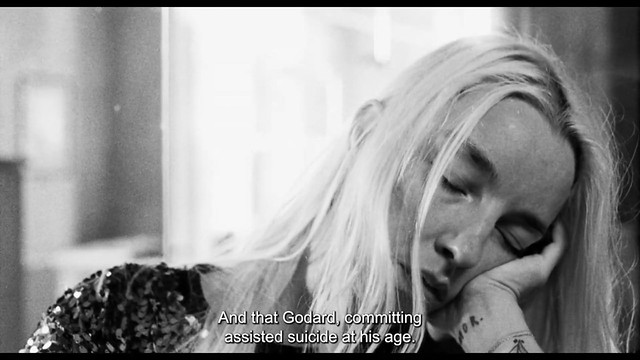
As with his previous film, Bad luck Banging, Radu Jude's new film Do Not Expect Too Much from the End of the World is unsparing, uproarious satire that implicates everyone in this needlessly complex society we live in. And it's loads of fun. It's a frenetic, 'moving' picture as we take the passenger seat in a van driven by Angela, a hard-working production assistant of a PR firm, Forbidden Planet, hired by Austrian furniture company. Angela's Tik Tok filtered alter-ego is known as Bobita, a bold headed, thick unibrow and bearded dudebro who spews the vilest, sexist, racist rant with six thousand followers. She spends most of her time in her car driving because her job requires driving and interviewing potential workplace accident victims, one after another, who could be featured in the company's safety promotional video. And every chance she gets, she becomes Bobita anywhere.
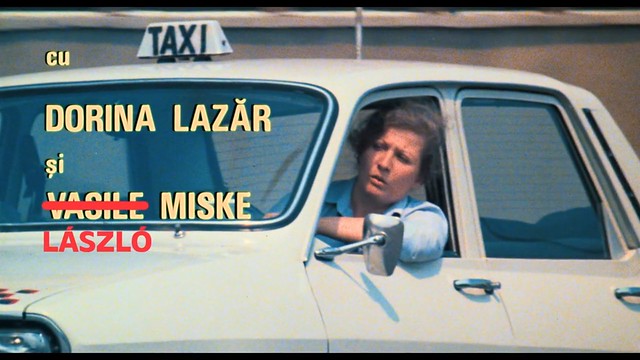
Angela's hectic daily routine is intercut with an early 80s Romanian melodrama called Angela Moves On, about a wholesome female taxi driver and her life, as she drives from place to place in Bucharest. The film juxtaposes the changes in the streets and neighborhoods from Ceaușescu era. Many anecdotes, and musings of all the characters concern the reality today's Romania and of the world.
Jude's playfulness is infectious. The actress who plays Angela the cab driver makes an appearance as the character in the film. She plays a mother of a man on a wheelchair who was chosen to be in the promotional video. The man plays himself who was a victim of the workplace accident that is obviously the fault of the company for its negligence.
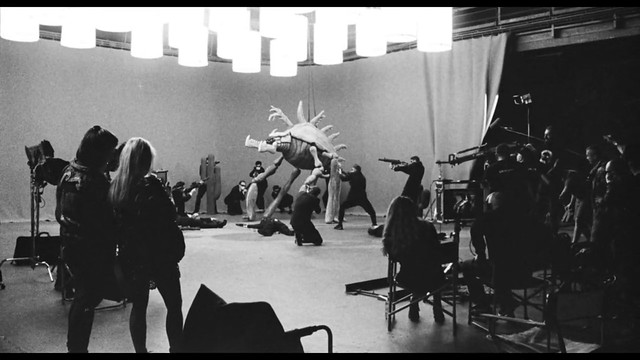
German Actress Nina Hoss plays the Austrian boss Doris Goethe (yes that Goethe), whose furniture company is leveling Romanian forests, Uwe Boll, the German b-movie director also makes an appearance as himself, directing a monster CGI movie in the green screen backdrop.
However hilarious, the film is not all laughs. In the middle of its 2 hrs. 30 min. running time, he devotes a good 4 minutes to feature a silent segment composed of hundreds of crosses that are strewn about along the highway which Angela describes as the 250-kilometer highway with 600 crosses, while giving Doris Goethe a ride to the hotel. Puzzled Doris asks what it means. It's a one-way road that has a very narrow emergency lane, but no one follows that. They use it as if it's two-way roads. "That's very stupid." Doris responds. "We are!" Angela responds. Nothing works the way it's supposed to. Corruption is everywhere. In the EU, Romania is the poorest country, she says. Maybe except for Albania. They are primitives, Angela utters.
Biting and thought provoking, Do Not Expect Too Much is a perfect survey of the state of our lives right now. Jude, along with Assayas and Bonello, is a master chronicler of ever changing, ever so complicated world we can't make sense of anymore. It's fun, it's tragic. All we can do is go along with the flow, like Taoists saying.


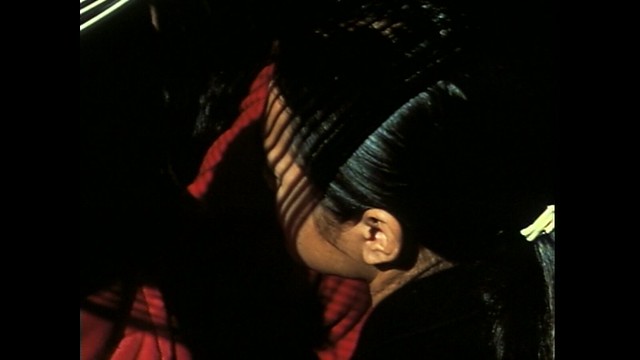

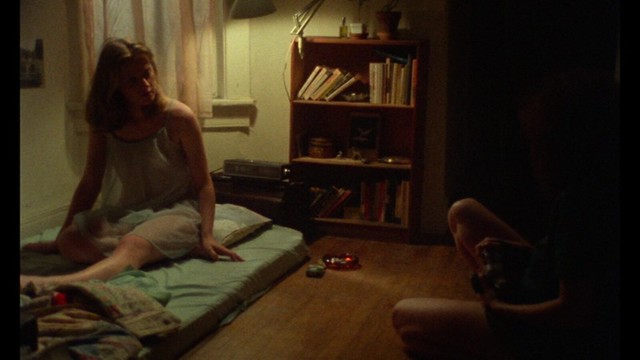


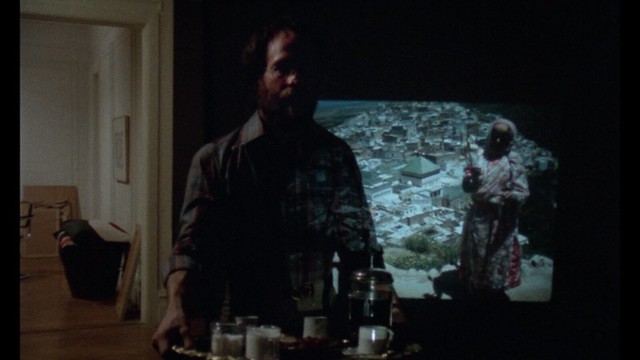
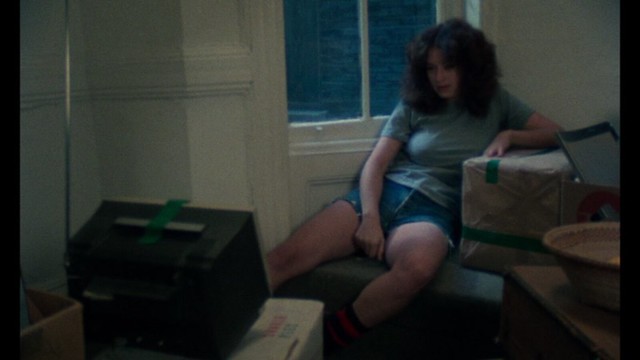


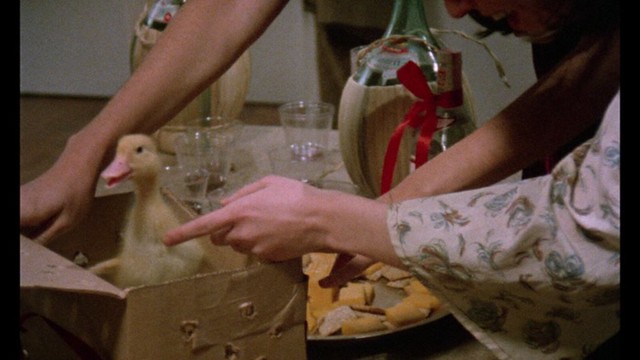
 Criterion recently put out the 4K restored version of Girlfriends and I can't recommend this film more. It's really fantastic. Susan (Melanie Mayron) and Annie (Anita Skinner) are roommates in a tenement apartment in New York City in the 70s. Susan is an aspiring photographer and Annie is a writer in the beginning of their career. They are best friends who can help each other out on their work when they need a second pair of eyes. Susan takes gigs as a photographer at bar mitzvah and weddings with the help of an older rabbi (Eli Wallach) at the local synagogue.
 Visually and thematically audacious, Yorgos Lanthimos's fantastical steam punk period piece, Poor Things, plays out like a female version of a Terry Gilliam film, but good. It also shares a lot in common with my other favorite this year, Bertrand Bonello's time traveling period sci-fi, The Beast, as both films set in Victorian era. But whereas Bonello's film is based on Henry James's novella, Beast of the Jungle of 1903 which is very much a product of its time- the preoccupation with fate, predetermination and compounded trauma that would repeat itself over generations, Poor Things, based on a 1990 Scottish satrical novel by Alasdair Gray, Poor Things: Episodes from the Early Life of Archibald McCandless M.D., Scottish Public Health Officer, is a parodic look at its Victorian age and refreshingly forward looking in its main character's self determination.
 Since the beginning of cinema, music has been an integral part of filmmaking: from silent era films accompanied by live music on stage, to Golden Age of musicals in 1930s- 50s, to orchestral arrangements of individual composers such as Elmer Bernstein, Ennio Morricone and Morris Jarre in the 60s, and jazz and pop composers such as Henry Mancini, Lalo Schifrin, Herbie Hancock. By the late 1960s, even though there were still many music themed films made in Hollywood, the costly musical genre had all but died out. With troubles abroad - the Vietnam War, and at home - anti-war protests, race riots and political assassinations, the new generations of Hollywood filmmakers decided to reflect the mood of the nation not only in their films but in music as well by working with seasoned and popular musicians who were in transition themselves.
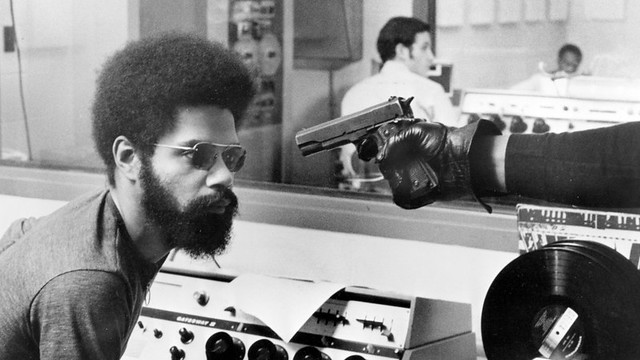 On the surface, The Spook Who Sat by the Door looks like any other blaxploitation film. There’s the man who says things like, “those people make great athletes,” and “This is no place for misplaced cotton pickers.” There’s judo, there is Black militancy, there’s prostitute and there’s that offensive title. “Spook” here has a double meaning, spy, and a derogatory term to address an African American. But the film is much more radical than that. Taking advantage during the integration era, a black man named Don Freeman, patiently works up the ranks as a token black CIA agent, learning everything he could while being a model employee and in turn use all the knowledge, he acquired into an urban armed guerrilla warfare in his native Chicago against authorities. By the end, the film advocates armed uprising by the disenfranchised blacks in every major city in America. Despite the success of the film’s opening gross of half a million dollars in the first three days, the film was pulled from theaters and shelved.
 Unlike Ivan Dixon’s The Spook Who Sat by the Door which fell into obscurity after it opened and only to be rediscovered with the proliferation of home videos and streaming much later on, Gordon Parks Jr.’s Super Fly (1972) was a bona fide hit, grossing more than 4 million dollars at the box office. A film about a suave cocaine dealer, Super Fly has many of the negative stereotypes the blaxploitation genre was accused of perpetuating - pimps, hustlers, degradation of women, violence, and drug use. Youngblood Priest (Ron O’Neal), a tall, handsome black man with long flowing black hair and hyper fashionable attire with a big car and beautiful white and black girlfriends, lives a luxurious lifestyle in Harlem. He is a man of action and a ruthless boss. No one rips him off and everyone has to pay. But with all the money he is generating selling drugs, he still yearns to go straight. With his partner Eddie, he is trying to score big one last time before he retires from the drug business. The plan is, with $300,000 he and Eddie have, to buy 30 kilos of high-quality cocaine and turn it around for one million, split between them and get out of business. Eddie, although going along with the plan, is unsure. For him, dealing drugs is the only option left to them by “the Man”. After their goon, Freddie, gets killed by the police, they find out that it is the deputy police commissioner Reardon’s intention to keep them in the game and in his pocket. Although Eddie likes the idea of police protection and continuing being the drug dealer, Priest is his own man and no one else can have power over his life. After his mentor, Scatter, who helped him start the business, feeds him the information on the Reardon before he gets killed by the police, Priest devises a plan to escape the drug underworld clean with a big middle finger to the corrupt system.
 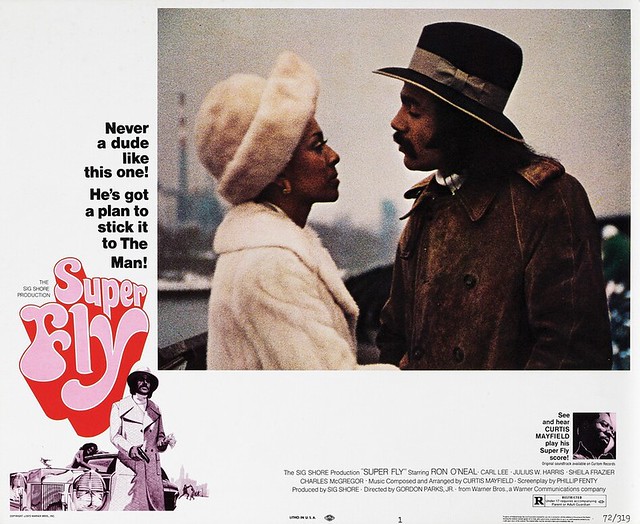 The film struck a core with black youth film goers and became a cultural phenomenon. It also resonated with the post-Civil Rights Movement generation of African Americans, who saw Youngblood as a new example of how to rise in the American class system. Super Fly’s focus on black underground wealth generation was energized by its rejection of the two classic protest strategies of integration and transformation- the film spoke to disillusionment with both racially ameliorative civil rights politics and radical black nationalism. (Quinn, p.88) Classic civil rights mobilization was based upon those who worked hard at honest callings, whatever their origins, could better themselves and lift their children’s prospects. By romanticizing black criminal life, Super Fly was detrimental to their cause. In one pivotal scene, three “black militants” approach Priest and Eddie and challenge them to give something back to the community. “It is time for you to pay some dues!” Priest responds, “Unless you start killing some whitey, go sing your marching songs somewhere else.” In its staging of business dynamism outside of mainstream white structures, Super Fly proved extremely attractive in a hardening sociopolitical climate. Priest can be seen as a self-made African American outlaw entrepreneur, determined to transcend the endless cycle of crime and danger to which “the Man” has conscribed him, and smart and tough enough to succeed.
Curtis Mayfield was a singer, lyricist and record producer who started his career in a vocal group The Impressions. It was his socially conscious lyrics that made such songs as “Keep on Pushing (1964)” and “People Get Ready (1965)” being embraced by the Civil Rights leaders and utilized during the decades’ many freedom rides, that elevated Mayfield from soul group member to poet/artist/activist.
The film struck a core with black youth film goers and became a cultural phenomenon. It also resonated with the post-Civil Rights Movement generation of African Americans, who saw Youngblood as a new example of how to rise in the American class system. Super Fly’s focus on black underground wealth generation was energized by its rejection of the two classic protest strategies of integration and transformation- the film spoke to disillusionment with both racially ameliorative civil rights politics and radical black nationalism. (Quinn, p.88) Classic civil rights mobilization was based upon those who worked hard at honest callings, whatever their origins, could better themselves and lift their children’s prospects. By romanticizing black criminal life, Super Fly was detrimental to their cause. In one pivotal scene, three “black militants” approach Priest and Eddie and challenge them to give something back to the community. “It is time for you to pay some dues!” Priest responds, “Unless you start killing some whitey, go sing your marching songs somewhere else.” In its staging of business dynamism outside of mainstream white structures, Super Fly proved extremely attractive in a hardening sociopolitical climate. Priest can be seen as a self-made African American outlaw entrepreneur, determined to transcend the endless cycle of crime and danger to which “the Man” has conscribed him, and smart and tough enough to succeed.
Curtis Mayfield was a singer, lyricist and record producer who started his career in a vocal group The Impressions. It was his socially conscious lyrics that made such songs as “Keep on Pushing (1964)” and “People Get Ready (1965)” being embraced by the Civil Rights leaders and utilized during the decades’ many freedom rides, that elevated Mayfield from soul group member to poet/artist/activist.
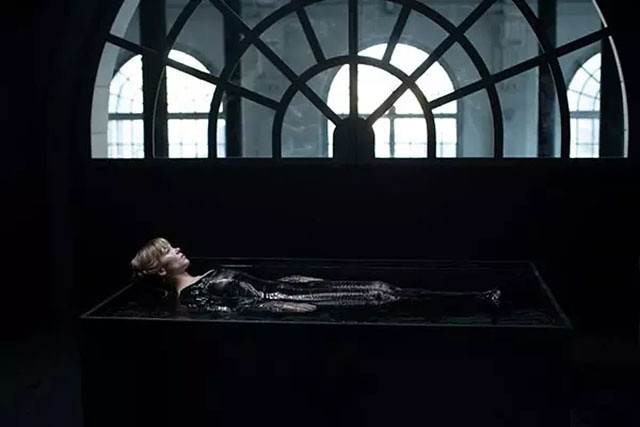 With arresting visuals and seductive filmmaking, Bonello has been chronicling our troubled 21st century like no other, with a string of films that are pretty, but not too pretty: House of Tolerance (sex workers rights), Nocturama (aimless angst of youth), Zombie Child (haunted by colonialism). and most recently Coma (Covid-19 lockdown). This time, Bonello is freely adapting Henry James's turn-of-the-century novella, The Beast of the Jungle. It tells of two would-be lovers forever beset by a sense of doom always hovering over them. It is a good parallel he is drawing with the state of things here and now. The dawn of the 20th century was an exciting time, both socially and politically. And the possibilities with the advancement in science and medicine were endless, at least for the citizens of the first world. But there was also volatility in every corner of the street. Violence, disease, extreme wealth and poverty and uncertainties everywhere.
 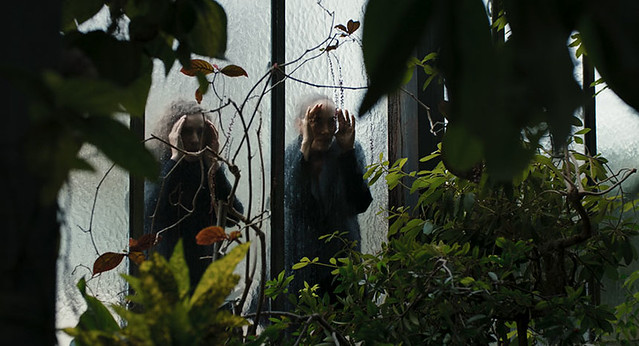 It's 2019. Vienna, the last bastion among the European cities where smoking in cafe has been allowed, bans smoking indoors. It's the end of an era. Two women, played by Angeliki Papoulia (Dogtooth) and Carmen Chaplin are looking for a house to buy. One is rich and very picky about her choices and the other, her interior designer is getting frustrated as her suggestions get rejected one after another. The rich woman's child wants private music lessons from a Korean pianist in Vienna, because she doesn't like the strictness of the music conservatory. After the rich woman finds an apartment, Carmen, the interior designer, travels back to her home in Malaga to visit her aging parents and argue with her sisters about the future of their home and parents.
 Angela Schanelec's new, nearly silent film, simply titled Music, is supposedly 'freely' based on the Greek Myth of Oedipus. It might be the most enigmatic offering from the esteemed German director. But its depiction of melancholy and fragility of human life is nevertheless so beautiful and timeless, I can't help tearing up by the end.
 From 9/11 to Iraq War to major economic crisis in 2008, to global warming then now to the pandemic, the Generation Z has been through a lot in their short semi-adult life. With its crazy kaleidoscopic images and sounds, the short film is an amalgam of what the short-attention-span generation has been going through psychologically and emotionally during the lockdown. But more than anything, Coma is a compassionate love letter from Bonello to his daughter Anna who just turned 18, and to her generation. We do not know what the future will bring. He ends with spectacularly frightening images of natural diasters- giant ice shelf melting off, abalanches and volcanic eruptions- some anthropocene and some not, either cases we have no control over anyway. Coma is more like Bonello saying, "Sorry kids, but at least I understand what you are going through, but the sun rises again tomorrow."
 The film tells a lot about the self-absorbed world in the face of climate change and global catastrophe unfolding. You might ask, 'Leon can't be that thick headed. How is he a friend with good natured, younger, optimistic Felix?' 'There's no chemistry between Leon and Nadja, how can he declare his love for her?' and so on. Afire is also about creative process and self-reflection. And it's beautifully, deliciously constructed by the master storyteller. It's as if Petzold saying get out of your head once in a while and look around you because if you don't, it might be already too late.
 First time actress Park Ji-min's performance is a revelation. She makes Freddie a strong willed, fascinating young woman in search of herself. Her magnetic presence makes her always watchable. Seeing from the perspective of an adoptee and a modern woman in a still very patriarchal society, Return to Seoul is a visceral journey toward self-discovery. The quiet ending reminds me a lot of Drive My Car. Return to Seoul has that novelistic quality about it that I like.
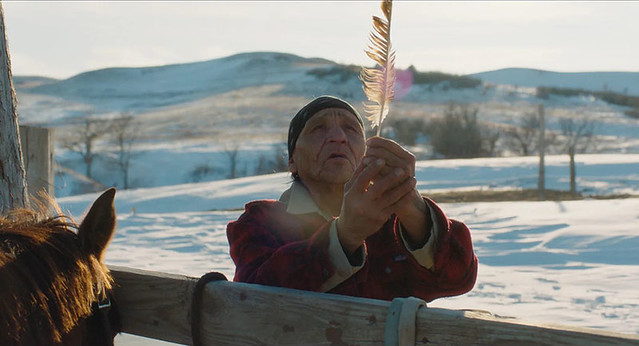 Argentine filmmaker, Lisandro Alonso, breaks 9-year silence with Eureka, after Viggo Mortensen starring meta-western Jauja. In an episodic structure, the film freely contemplates the state of indigenous people of the vast American continents, the past and present, as well as their uneasy relationship with cinema. It's perhaps his most expansive and ambitious film to date. He digs deep into the distorted representation and history, the effect of colonialism and the influence of Western culture that displaces the natives who are left out of place and out of time. Using his minimalist, elemental way of filmmaking, combined with Deleuzean look at time-image non-linear approach and Native American spirituality, Eureka is a deeply contemplative, perplexing film.
 Biting and thought provoking, Don't Expect Too Much is a perfect survey of the state of our lives right now. Jude, along with Assayas and Bonello, is a master chronicler of ever changing, ever so complicated world we can't make sense of anymore. It's fun, it's tragic. All we can do is go along with the flow, like Taoists saying.
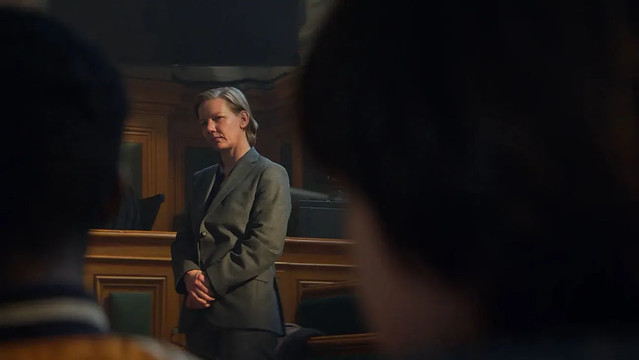 Well tuned and balanced, Anatomie d'une chute is a revealing film about this day and age where patriarchy and everyday sexism is slowly losing its grip on our society (or lets hope). Sandra Hüller again, is fast becoming the heroine we need in this social climate. Also, Triet, as with Sybil, examines the nature of art and literature- the art immitating life, plagiarism and even autofiction in a very captivating way.
 There's a very zen-like quality in Perfect Days. Is that Wenders converting the Buddhism late in life? There's a scene where two grown men, one dying of cancer, playing shadow tag, like little children. Perfect Days is a guiless movie that makes you think about enjoying simple things in life. Forget about the complicated life you are leading in a complicated world for a second. Play childish games once in a while and enjoy the moment.
 Pictures of Ghosts is a loving, intimate documentary on ephemeral nature of our lives. Our loved ones grow old and die, buildings get torn down, video footages disintegrate, but there is evidence of those lives lived and experienced all over, if you know where to look. Combining his own experience and his love of cinema, Mendonça Filho serves as our expert guide to his beloved city of Recife. The movie ends with whimsical taxi ride, throwing shades on Hollywood's superhero movies. The 80s Michael Mann vibe with night lights reflecting on the car, as it rides the bridge at night with smooth jazz - reminds the audience that the Brazilian director undoubtedly grew up loving the 80s Hollywood cinema.
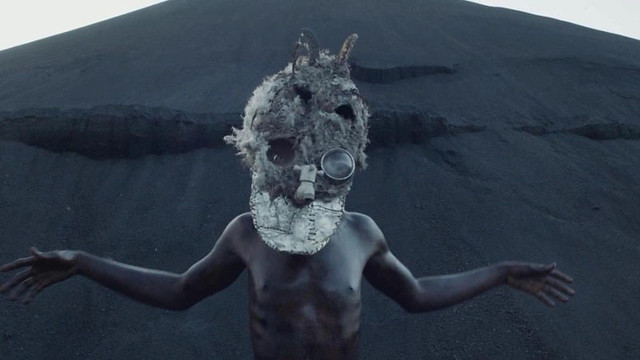 With multiple storylines and characters, Omen introduces a different kind of storytelling that the Western filmmaking is not used to. Much like Anisia Uzeyman and Saul Williams’s Neptune Frost couple years back, the film is not bound to a straightforward narrative. Presenting a multicultural society in flux, where things clash with each other for dominance, the film’s colors and texture vie for your attention. It takes everything from everywhere – from the Democratic Republic of Congo, South Africa, and multiple other African nations, even from the Creole culture of Louisiana. The film is mainly told through sensations and visual poetry. It’s in Mujila’s breastfeeding the river in the beginning of the film with purple milk as purple milk slowly spills out. It’s in a decrepit school bus full of pink dress wearing street urchins violently being towed. It’s in a group of women mourners crying until the floor of the house is ankle deep with their tears. It’s in witch doctor trying to exorcise a couple with sexually transmitted disease by painting their bodies and pelting them with a tree branch soaked in palm oil. Omen is a truly unique experience to be had. Using the magical realism and symbolism steeped in tradition old and new, the film is a kaleidoscopic picture of bustling Africa that is here and now.
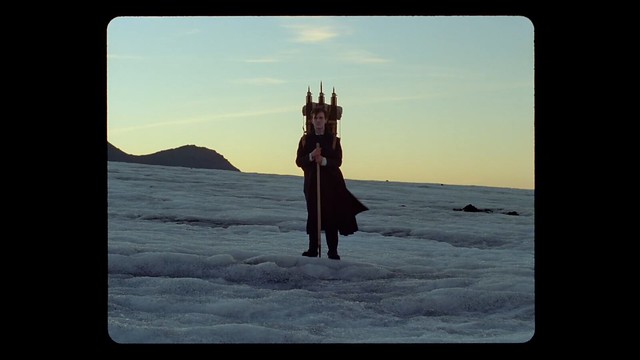 With its circle of life ending, Godland is a contemplation of us humans’ fleeting existence on earth. In a true Herzogian sense, with large brushstrokes, Pálmason draws a grand allegory that we are after all, elemental. And it's magnificent.
 We see forever undulating sea on the deck and through the round windows from inside the ship, the horizontal sea level bobbing up and down as the ship sails through the waves. Just like her first feature Drift, Helena Wittmann presents long stretches of these scenes that has its own hypnotic rhythm. The ship crew converse in many different languages - English, German, Arabic, Portuguese, Greek and so on, yet nothing is explained about their background. Instead, Wittmann concentrates on the film's visually blissful moments - the shimmering sunlight reflected on the waves just below the deck, a piece of reef Ida brought from Antigua being passed around the crew, a dance party on the deck at night with colorful flags and lights gleaming and the blue sea as Ida (Angeliki Papoulia) swims back and forth. There are some show stoppers like the camera plunging into the blue depth to find a wreckage of a downed WWII plane at the bottom of the ocean floor. The film's full of sensual images that recalls Claire Denis films. But I think Wittmann's aim here is different. In her hands, the gleaming water and the sun are the subjects. They are vital to human life and we see that in Ida and her crew's uneroticised browned skin.
 The matter of fact presentation of bomb making and careful planning are the meat of the film. How to Blow Up a Pipeline plays out like a great little thriller. Their meticulous plan hit a snag when the rope holding the heavy barrel containing the bomb breaks, but despite the setback, they carry out the attack. The twist at the end is well earned as well. How to Blow Up the Pipeline is a compelling film. It is a justifiably angry film for the generation out of time and out of options.
 At the end of his European tour in 1969, Thelonious Monk appeared in Jazz Portrait, a French TV program. Director Alain Gomis (Félicité) gets a hold of the rushes of that taping & plays around with some very candid moments that reveal how Monk was viewed vs. how he carried himself in real life. The best part is obviously him playing ‘round Midnight, sweating profusely, as if nothing else existed around him but the grand piano.
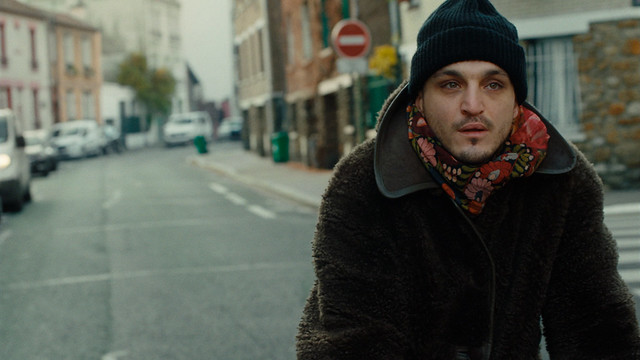 Past experiences shape who we are. It's the reflection of the things past that makes one grow as a person. Therefore, Ira Sachs's new film Passages, is a snapshot of a person going through that process of growth, for better or worse. It's a mature film in more ways than one and a realistic look at modern relationships. Passages highlights the true acting talent of great German actor Franz Rogowski (Transit, Undine, Great Freedom) because he is phenomenal in this sexually charged character study.
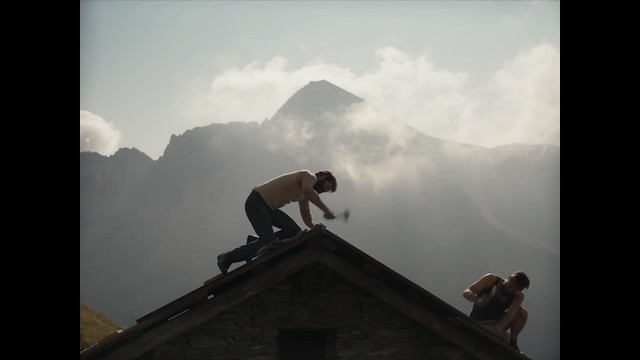 The strength of The Eight Mountains is its complex depiction of a male friendship. It speaks volumes in their knowing glances and silences as they spend time together up in the mountains. Our circumstances change but the mountains don't. It illustrates men's ultimate desire and to retreat from the human world and finding it futile. As they grow older, Pietro and Bruno understand this connundrum, and take refuge in each other's company. This all sounds corny as hell in words, but van Gronigen and Vandermeersch's earnest approach works beautifully, with awe-inspiring views of nature and superb, stoic acting by the two leads. Swedish singer Daniel Norgren's soulful, melancholic soundtrack does here what Leonard Cohen did for McCabe & Mrs. Miller.
 Remembering Every Night captures the unseen-world of delicate web that connects us all together. The film's very much in the same vein as Hamaguchi Ryusuke's 2021 crowd pleaser, Wheel of Fortune and Fantasy but from a different, quieter, less punctuated angle. The film's nostalgic tone, imbued with contemplation of time, memories, loss of memories and longing, lingers long after its credits roll.
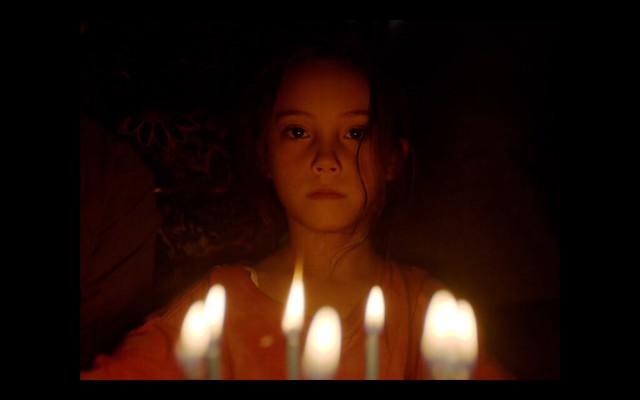 We often try our best to shield children from the ugly world of grownups: responsibilites, money, parenthood, guilt.... Young Naíma Sentís, like Anna Torres before her in Victor Erice's Spirit of the Beehive, shines as a young, innocent child full of life, but who is old enough to realize that there's something awry about adulthood. Death is something we experience more and more as we grow older. It changes you and perhaps makes you grow up faster. The ending shot of young Sol looking straigth through the birthday cake candles, conveys that understanding without saying any words. Delicate and infinitely patient in her storytelling, Avilés let the film play out reach where it ends as it is supposed to. A beautiful film.
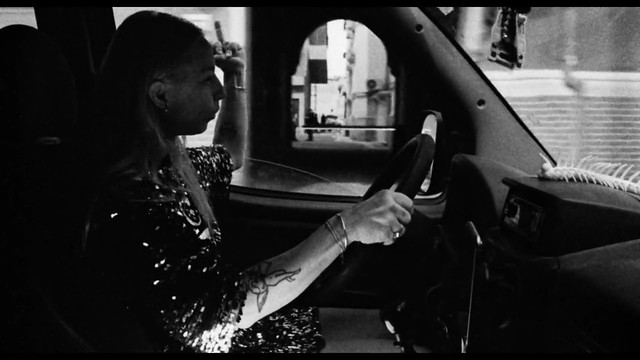


 As with his previous film, Bad luck Banging, Radu Jude's new film Do Not Expect Too Much from the End of the World is unsparing, uproarious satire that implicates everyone in this needlessly complex society we live in. And it's loads of fun. It's a frenetic, 'moving' picture as we take the passenger seat in a van driven by Angela, a hard-working production assistant of a PR firm, Forbidden Planet, hired by Austrian furniture company. Angela's Tik Tok filtered alter-ego is known as Bobita, a bold headed, thick unibrow and bearded dudebro who spews the vilest, sexist, racist rant with six thousand followers. She spends most of her time in her car driving because her job requires driving and interviewing potential workplace accident victims, one after another, who could be featured in the company's safety promotional video. And every chance she gets, she becomes Bobita anywhere.
