Monday, December 19, 2016

My Top 10 Discoveries 2016

This is more like a year end summery of my viewing habits. It pains me that I wasn't more adventurous this year and didn't dig deep enough to see more films, because it is evident that I watched more interesting stuff earlier in the year than later. I'll be more adventurous next year I hope.

Hunter (2015) - Scott Barley
3200254a-3a7b-4526-a62a-92dfbed96449_zpsr6wtr3b4
2016 started with a bang for me. In the KG Artist section at the torrent site, I discovered Scott Barley's work. Dark, mysterious and touching, his portrayal of beautiful loneliness deeply affected me. I've devoured everything the young artist has to offer. I contacted him and to my surprise, he responded and our correspondence resulted in an in-depth interview. There were other short experimental stuff I checked out too, notably:

Crystal World
(2013) - Pia Borg
crystal world2_zpsdetj4ha8

Then I watched
La Cienaga (2001) - Lucrecia Martel
tumblr_obo160iKlZ1r6kxjco4_1280
and I don't have to tell you how great it is. Lucrecia Martel is, borrowing an esteemed fellow filmmaker Christoph Hochhäusler's own words, "she is one of the world's greatest filmmakers working today".
Just like La Cienaga, there were certain well regarded films I've been neglecting to see for a long time, but finally visited and found their greatness:

Long Day Closes
(1992) - Terence Davies
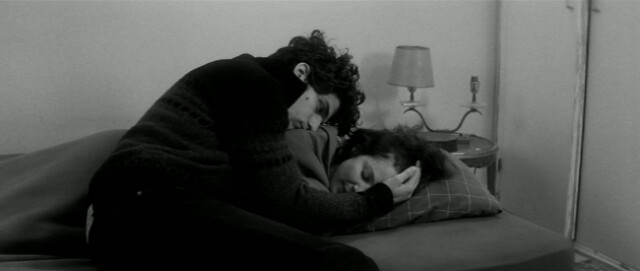
51050a98-2865-4803-8224-2336472e4abc_zpsaxspigbh
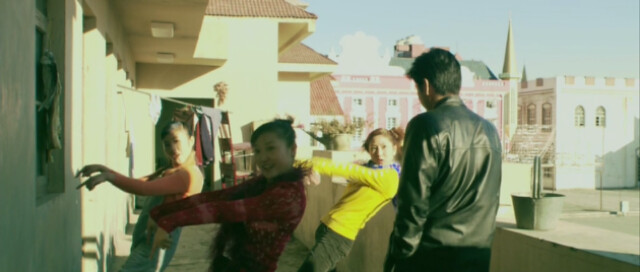
The World (2004) - Jia Zhangke
d6469c56-0abb-45e6-8f3f-aa9b8f1206ac_zps8r4jkfzy
and
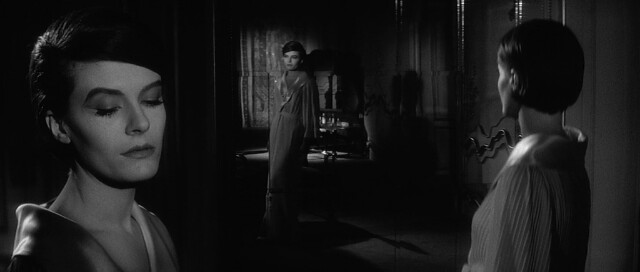
Last Year at Marienbad (1961) - Alain Resnais
Screen Shot 2016-11-20 at 6.25.28 PM
Great, all great stuff...

Found Garrel's self-reflexive artistry delicate and delicious:
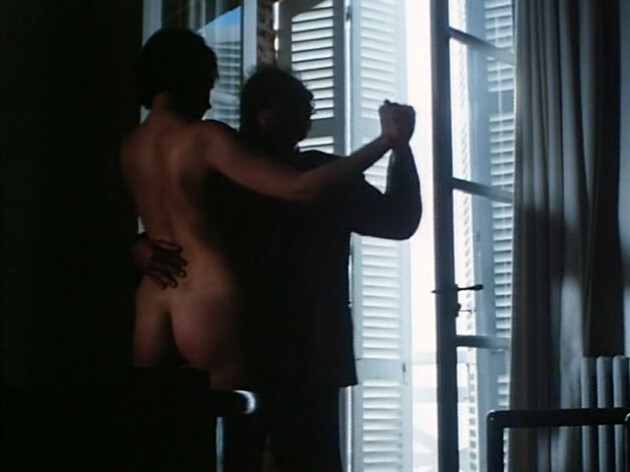
Jealousy (2013) - Philippe Garrel
f1f5811c-b579-4eb4-9fa1-389b0475c28d_zpsm7j0qt7z

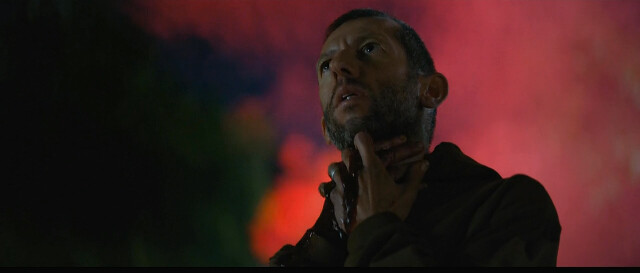
Then there was the heady world of Alexander Kluge to plunge into
Die Macht der Gefühle/The Power of Emotion (1983) - Alexander Kluge
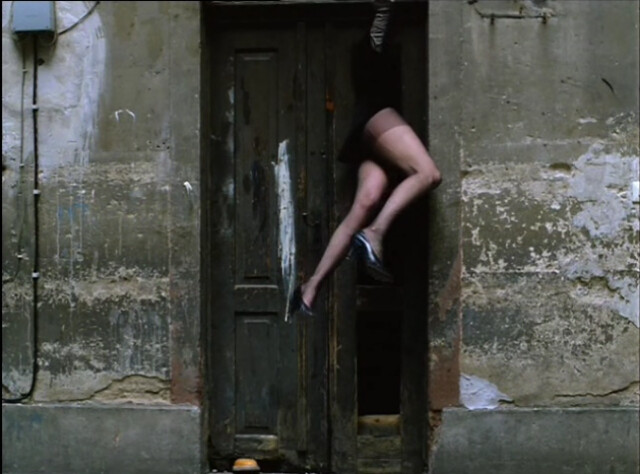
0e481f78-2518-471f-b8bb-5b3d4bd4ecd2_zpsdizwfetx
Der Angriff der Gegenwart auf die übrige Zeit/The Assault of the Present on the Rest of Time (1985)
Screen Shot 2016-12-15 at 9.25.44 PM

Also discovered the sensual world of Brazilian director Gabriel Mascaro
Ventos de Agosto/August Winds (2014) - Gabriel Mascaro
Ventosdeagosto_still_001_credito_beto_figueirora_300dpi

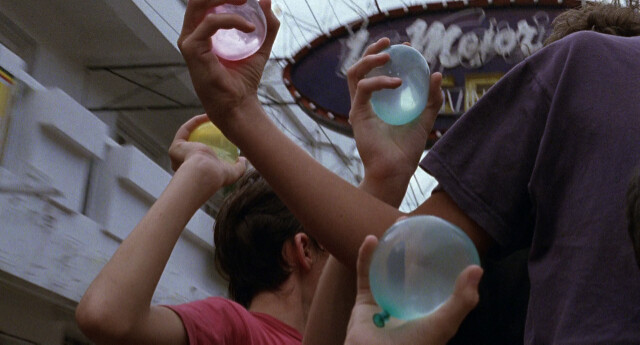
Then I dug into exciting world of Giallo and experienced first hand the sensual violence and the batting eyelashes of Edwige Fenech
abffcb2d-6a3d-4ced-98fc-d8ac4b297f1c_zpspo0i7482
and watched her in many giallos, especially in
All the Colors of the Dark (1972) - Sergio Martino
99e2f782-d1b3-4bd4-9748-f0291e01bd91_zpsagjkwsgr
also discovered that trudging through a dozen notable giallos that a good giallo is hard to come by. Other notable ones (But not as good as All the Colors) are - Strip Nude for Your Killer (1975) and Your Vice is a Locked Room and Only I Have the Key (1972)

Saturday, December 17, 2016

Path to Sainthood

O Ornitólogo/The Ornithologist (2016) - Rodriguez
Screen Shot 2016-12-17 at 11.18.32 AM
Screen Shot 2016-12-17 at 11.19.15 AM
Screen Shot 2016-12-17 at 11.45.07 AM
Screen Shot 2016-12-17 at 11.25.26 AM
Screen Shot 2016-12-17 at 11.27.04 AM
Screen Shot 2016-12-17 at 11.29.22 AM
Screen Shot 2016-12-17 at 11.30.42 AM
Screen Shot 2016-12-17 at 11.31.36 AM
Screen Shot 2016-12-17 at 11.32.22 AM
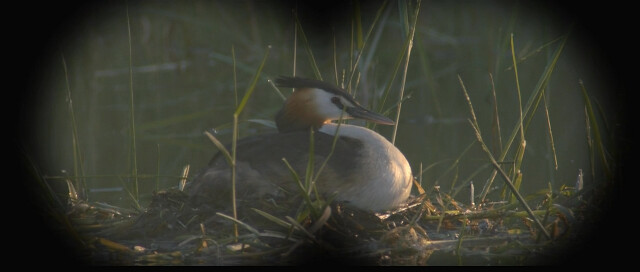
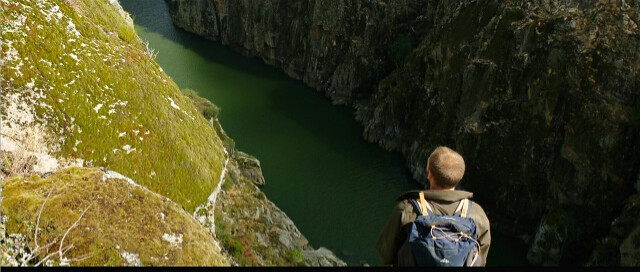
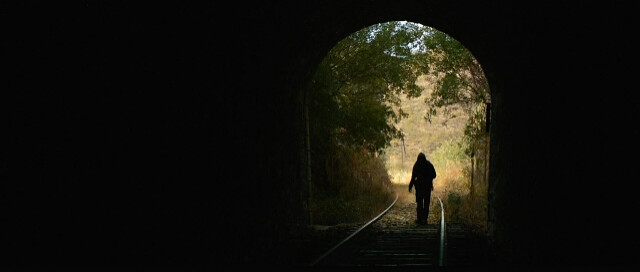
Portuguese filmmaker Joao Pedro Rodriguez's The Ornithologist strongly reminds me of irreverent, freewheeling cinema of Weerasethakul and Gomes. It tells a gay ornithologist's long and winding journey to self-discovery/sainthood in a series of misadventures while kayaking/hiking through the picturesque wilderness of Northern Portugal. Fernando is seen kayaking, observing rare birds through his trusty binoculars and communicating occasionally with his boyfriend through his cell phone. But the reception is spotty in the wilds. As he observes, there is a constant reminder that he is being observed too from the sky, the top of the cliff or trees, that this is not a one-way affair.

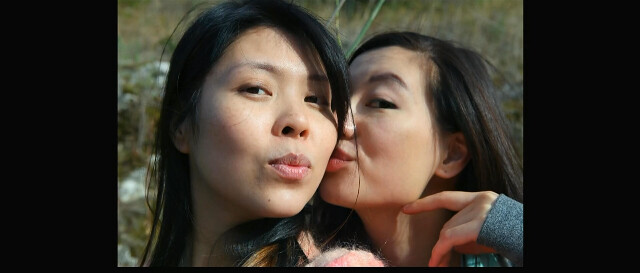
After his kayak hits the rapids and capsizes, he is revived by two chatty Chinese female hikers who are on a pilgrimage on foot to Santiago de Compostela, known as the St. James Trail. They are devout Christians who seem a little odd. There are a group of men in masks performing strange rituals in the woods at night and the girls ask Fernando to protect them and accompany them to find the way back to the Trail. But before Fernando realizes, these two 'crazy Chinese bitches' tie him up at night in St. Sebastian style to a tree and talk about castrating him in Chinese. He escapes at night and finds himself lost in the woods without a map.

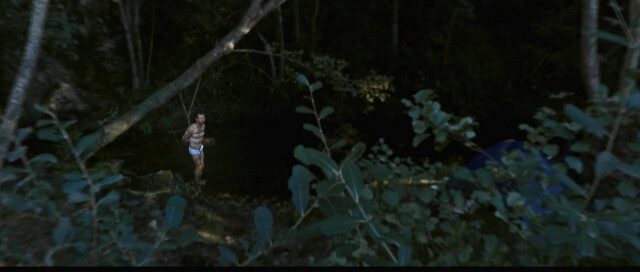
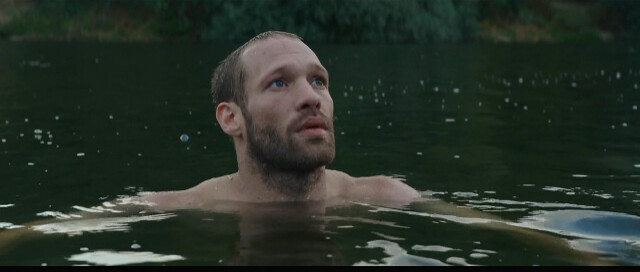
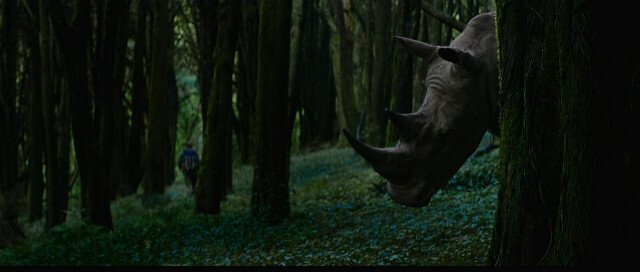
Fernando then runs into a baby-faced deaf mute goat herder named Jesus. After skinnydipping together, they have sex but one thing leads to another, he ends up putting a knife in Jesus's chest. By the time he gets his hoodie back and a having a knotted rope for a belt, Fernando slowly becomes looking more like a Jesuit priest. First with a white dove then encountering a lot of other animals (both alive and stuffed), and shedding his earthly attachment - phone, his pills, he is becoming one with his surroundings.

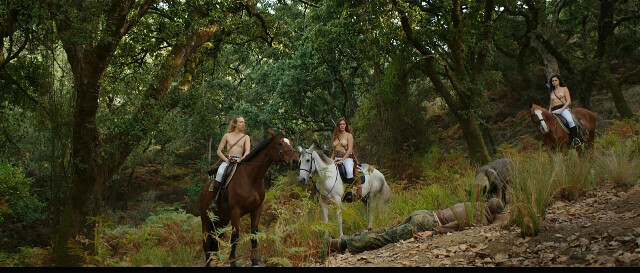
He then gets hunted by topless Amazonian women on a horseback, and meets back up with Jesus, or his twin brother who turns out to be a masked ritual performing man who had urinated on him before.

The increasing absurdity, punctuated by beautiful images of nature, this leisurely paced film is an intoxicating mix of madcap imagination and sensory cinematic experience that is truly hard to forget. It would make a great threesome with Honoré's Metamorphoses and Giuradie's Staying Vertical as examples of recent playful, eccentric and adventurous queer cinema at its best.

Thursday, December 15, 2016

Superfluous

Der Angriff der Gegenwart auf die übrige Zeit/The Assault of the Present on the Rest of Time (1985) - Kluge
Screen Shot 2016-12-15 at 9.27.41 PM
Screen Shot 2016-12-15 at 9.26.14 PM
Screen Shot 2016-12-15 at 9.25.44 PM
Screen Shot 2016-12-15 at 9.24.26 PM
Screen Shot 2016-12-15 at 9.20.52 PM
Screen Shot 2016-12-15 at 9.18.36 PM
Screen Shot 2016-12-15 at 9.19.45 PM
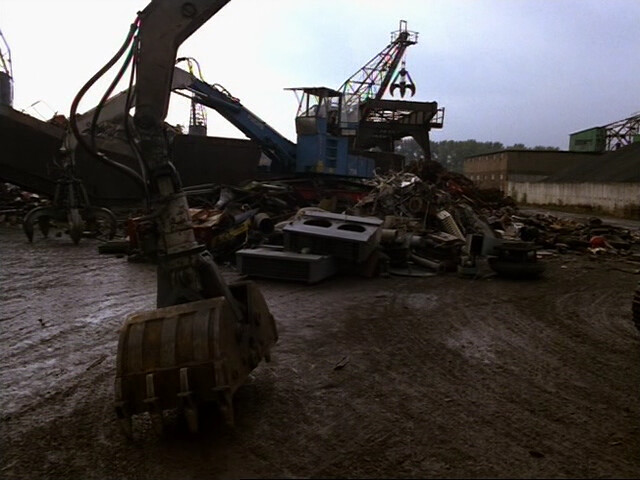
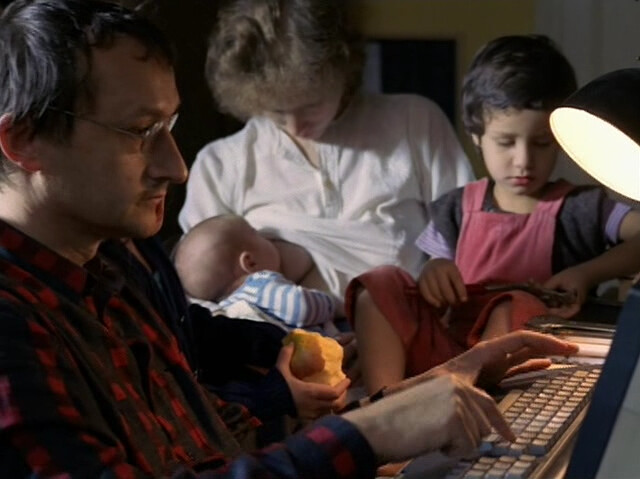
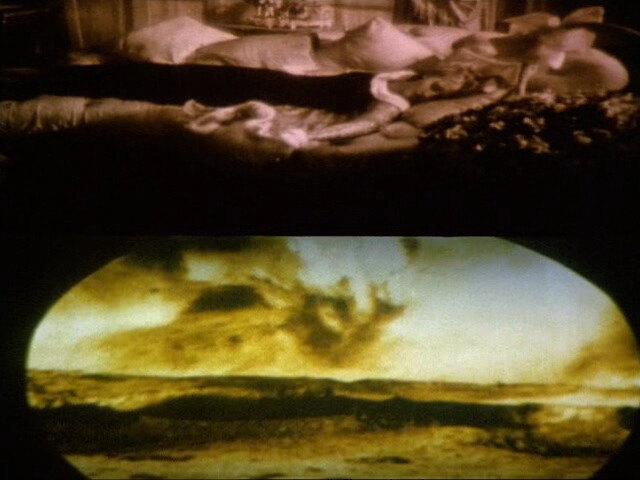
Just like his The Power of Emotion, The Assault is a jumble of short films taking on many different ideas. There is an interviewer pointing out a historian the stupidity of dividing world matters to 16 year intervals, a junkyard owner who get stumped by a philosophical questions about metal scrapes he's been producing, a chauffeur driving a businessman who makes a living making grave decisions all the time, there is a woman doctor who gets ousted by over equipped, mechanized, modern hospitals, a foster parent of an orphan girl hesitates giving back the girl to her opulent relative who doesn't really care about her, a family hooked on computer (internet), waiting for others to respond in front of it day and night and so on. The structure and method are pretty much the same as The Power of Emotions. There are operas, pinhole effects, narrator (Kluge himself) and stock footage of war and old movies. It's all heady stuff. People put too much emphasis on the present that they forget what came before it. They never learn from the past however atrocious it has been. We are always hurtling toward death anyway.

Kluge takes on cinema too. There is a bit about an old Polish couple in charge of The National Polish Film Archive, trying to save the place from Germans during its occupation by selling out their beautiful daughter to a German soldier. The last 1/3rd devotes to a story of a film director, played by Armin Mueller Stahl. He is struggling to answer why he is making a movie about a necrophiliac priest in the Middle Ages instead of contemporary stories. His eyes looking over yonder, he weakly responds that it's a love story, and that people weren't really capable of love in the middle ages. He turns out to be going blind and can't see his actors or whatever is going on in front of him. He has to rely on his assistants. There is a long sequence of a producer arguing over the phone, justifying why he needs to keep the blind director on the project. The reasons to keep him are just as good as the reasons not to.

The word that comes around frequently through out the many stories is superfluous. Kluge is an academical satirist who happens to make films. His films are layered and subtle. It never spoon feeds you with back stories or describing the motives of the characters and never laugh out loud funny. The film raises many questions about modern and often superfluous world we live in. I laughed out loud when he supposes that Film's been around only 90 years and it's superfluous, and maybe telephone will take over as a mode of communication. How right he was!

Poetic License

Neruda (2016) - Larrain
Neruda - Gael García Bernal
Despite its title, Neruda is not a typical biopic about the famed Nobel laureate and Chiléan national treasure Pablo Neruda, though it does feature the poet (adroitly played by Luis Gnecco) on the lam. But the film is more to do with the power of his poetry or, dare I say with a straight face, the transcendent power of art.

Neruda has all the ingredients of an 'award winning' film. Unlike all the heavy handed, self-important and mostly boring award winners, however, it floats around like a cloud while retaining all the artistry, elegance and poignancy without missing a beat. Immensely watchable and wildly entertaining, Neruda, along with his other release of the season Jackie, proves that Pablo Larrain has emerged as one of the major talents in contemporary cinema.

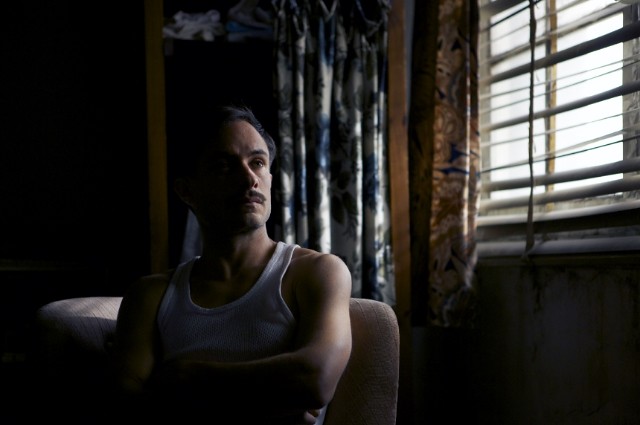
Neruda starts with a voice-over of a police prefect, speaking disdainfully about then senator Neruda. 'That fat communist,' he calls the poet. He is revealed later as inspector Oscar Peluchonneau (Gael Garcia Bernal). The year is 1948: Chilé elected Gabriel Gonzalez Videla a couple of years before, but Gonzalez betrays his radical left upbringing and starts hunting down his former communist friends, including Neruda, once his ardent supporter. Surrounded by his admirers and comrades-in-arms and his rich aristocratic Argentine wife Delia (Mercedes Moran) in tow, Neruda goes 'underground.'

Not willing to leave his beloved country nor give up his bourgeois tendencies -- visiting his beloved whorehouses and throwing wild parties whenever he can -- Neruda exposes himself to dangers of being captured and jailed, while Delia suffers quietly, locked in various safe houses. So begins the very loose game of cat-and-mouse between Peluchonneau and Neruda.

The hard as nails inspector has many close calls of crossing paths with the fugitive but the fat, bald man always sneaks away, always leaving the same detective novel for Peluchonneau to pick up. As the film progresses in its dreamlike, at times surrealistic way, both we and the inspector himself begin to wonder if he were a creation of the mind of the poet? Is he a mere supporting character in an unfolding narrative?

Larrain and writer Guillermo Calderón (Violetta Went to Heaven, The Club), with the help of fantastic acting from the entire cast, expertly move the focus from the famous historical figure to his art. Neruda is seen as a womanizing bourgeoisie, a so-called champaigne commie. But it's his beautiful poetry that captured the heart of the working class. Everywhere he goes, people ask him to recite his poems. From a drag queen in a whorehouse to a street urchin, to strikers and political prisoners, his poetry gives them a voice.

Sergio Armstrong (Young and Wild, No)'s fluid camerawork-- 360 degree long takes, plenty of anamorphic lens flares and full of light-- owns the film's borderline dreamstate quality. Shot digitally but with one 35mm anamorphic lens to have that old timey film look (more grains, soft edges), Neruda is definitely one of the most beautifully shot films in recent years that beckons to be seen on a big screen.

As Peluchonneau tracks down Neruda to the snowy Andes, the film takes another one of its many unexpected turns and becomes a metaphysical road movie - that it's not Neruda the person the inspector is after, rather, it's an idea of Neruda: a mirage or something unattainable, like his poetry, as it leaves your mouth and becomes something intangible but unequivocally meaningful.

Treading boundaries of reality in a free form that is unquestionably cinematic, Larrain achieves something very special with Neruda. It's a beautifully crafted film that feels completely effortless and airy. It is clever, playful and fluid yet not too showy, emotionally resonant yet not corny. It's a political treatise, yet it doesn't take itself too seriously. But it doesn't make light of the persecution and people's suffering either. Neruda is a great achievement in cinematic art form.

Neruda opens in the US on Friday, December 16.

Sunday, December 11, 2016

Death of a Revolutionary

abacus.a.102630541.lg
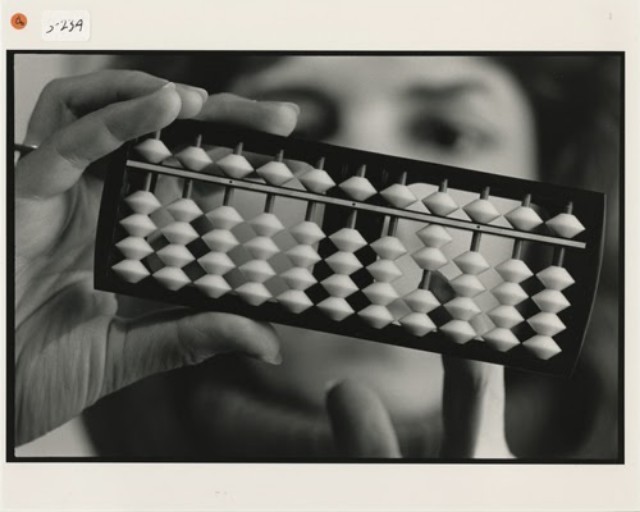
I was alone honing my pitching skills on the hill near my house by throwing rocks at empty soda cans. I used to do this after school everyday because I didn’t want to go to the abacus lessons. I mean we were living in a later part of the twentieth century. Who needed an abacus? Screw doing meaningless calculations. I had a future in major league baseball, not in being a grain grocer.

“Hey watch out!” Someone shouted. Before I got a chance to look back, a stray baseball from the other side of the lot hit me in the back of the head and knocked me down. I got up and retrieved the ball. Embarrassing. “Are you okay?” It was Jun, waving his glove from a far. I could tell that it was him because of his thick eyebrows. I nodded stupidly and threw the ball back to him.

Jun didn’t remember this when I told him about the incident when we were in class together in our high school senior year.
“I was intimidated by you back then, always looking sharp, hanging out with older boys,”
I was looking at a skinny, badly dressed teenager with a black eye. He just smiled. I remember these little things. I guess people don’t.
“Well, you like me better like this, right?” He said. And I nodded. Except for the black eye. I was worried about him.

Jun was around. A kid from the neighborhood. We went to the same elementary school. I don’t think we were ever buddy-buddies but we knew each other’s existence. He came to my mother’s clinic when he was sick. My mother knew everyone in the neighborhood. It came with the territory. She told me about Jun’s family; his family fortune dwindled when his father died in an accident when he was in middle school.

Being in high school, it meant only one thing- study day and night for college entrance exam. But the politics and what’s going on around the campus (our school was conveniently located right in the middle of the University Way, a cultural mecca and favored demonstration spot for college students), seeped into the classrooms. It was still dangerous time in Korea. Military dictatorship was still in place and dissidents were violently oppressed and persecuted. Student protests were daily occurrences. Molotov cocktails were thrown and tear gas lingered the street.

Even the teachers were divided. Young, idealistic recent college graduates were supportive of demonstrators. The older teachers just thought the younger ones were hopelessly idealistic or, worse yet, North Korean spies and communists! Study, they would say. Still want to take to the street? After the exam! If you don’t study now, you don’t get to go to good colleges and that means you won’t get good jobs and you will be a failure in life. Period.

Jun had become a studious fellow. He was one of the best in class. He excelled in English, Science and math but especially Korean Literature. He was a spelling champ. It was a well known fact that he was involved in student protests. There were times he would be called out of the class by some authority figures. And other times he would be absent. Teachers regarded him as a nuisance and would give him hard time. They picked on him and beat him- the practice was common when I was growing up. And they regularly called him a commie.

Mainstream media didn’t report missing persons cases that often. But there were always rumors of arrested college student demonstrators going missing and turning up dead, supposedly tortured by riot police squad. Most of us didn’t believe it until we saw some photos that were put up around our school by so-called agitators. A dead bloated body of a young man- one of the missing protesters, was fished out from a river. His eyes bulging out from a blackened face. The pictures were very disturbing. Couple days later they were taken down by the police. It wouldn’t surprise me if Jun had been involved in pasting those pictures up.

A lot has happened in the past seven years; Korean people democratically elected a president for the first time after a long military dictatorship, two of the former presidents were indicted of corruption and found responsible for the massacre of civilians with their roles in military coup, and then the end of the bubble economy in the late 90s. My mother told Jun that I am in town. He arranges a party for my homecoming. We hadn’t seen each other for a long time.
He is still living near where my parents live. I meet him near the bus stop. We ride the bus together, which is heading to the University Way. He’s aged. He got rid of his glasses. But his eyebrows are still impressive. 3 years of military service, putting head on the ground (military drill, where you do push-ups with your head and feet without using your hands) explains of his rapidly receding hairline, or so he says. All this time, I’ve been dying to find out about his revolutionary past. “You were pretty passionate back then, about things, “ “Like what?” He says. “You know, what was going on in the streets, demonstrations…” He waives off my inquiries as the bus turns on to a traffic jam. “That was long time ago, when we were young…” He trails off. Long time ago? When we were young? That is it? “It is important that you don’t give up what you believe in.” I say stupidly, He looks at me dispassionately. Then he looks away. It is an uncomfortable ride rest of the way.

Over unnaturally hot, cheap street food and Soju (cheap Korean malt liquor), a half dozen of us spew crass humor about women, making fun of our physical appearances and talk about good old days. But we never talk about Jun’s revolutionary past.

Thursday, December 8, 2016

Romanian Rhapsody

Bacalaureat/Graduation (2016) - Mungiu
Screen Shot 2016-12-08 at 11.03.48 AM
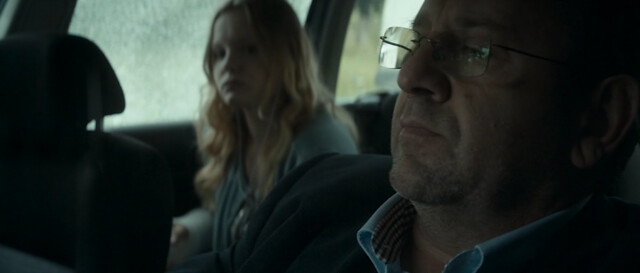
If nothing else, Romanian New Wave has shown that it excels at acute observations on ordinary people navigating through a chronically depressed, highly bureaucratic country- a society strewn with broken promises of capitalism after the collapse of communism. Christian Mungiu, once again, sharply yet subtly illustrates one such case with Bacalaureat. Romeo (Adrian Titieni), a medical doctor, sees his life unraveling before his eyes - having an affair with one of his patients (a single mom school employee) put a strain on his marriage (been sleeping on the couch for a year and a half), his frail old mother has fainting spells due to brain aneurism, so naturally, he puts all his hope on his pretty daughter Eliza getting a good education. Since Romania is so helpless, he is pushing hard for Eliza to go to England to get educated. In order to get a scholarship to go to overseas, she needs to ace Bacalaureat exam, a series of tests at the end of the High School year. But on the way to school one day, Eliza gets sexually assaulted by an escaped convict in a broad daylight. Visibly shaken and disturbed, she doesn't do well on the test next day. Considering all the circumstances, Romeo decides to ask for help of his police chief friend, not only for arresting the attacker of his daughter, but to 'fix' Eliza's test scores. The cop suggests a man in some higher level position in government, who needs a liver transplant. Can Romeo do anything about moving him up on the list of people in waiting ?

This doing favor in return thing and pulling strings in the system get entangled and awkward really quickly. Magda, the long suffering wife, thinks it goes against everything they taught their daughter but doesn't do anything about it since he has been always the doer/decider. To complicate matters even more, her biker boyfriend in town, Eliza also has second thoughts about going to England.

Romeo puts it grimly about the state of the country: he tells Eliza that he and mom decided to stay because they were hopeful but nothing had changed since then. That they tried but failed to move a mountain. That there is no future for the younger generation. And that she deserves better. He even tries (in vain) to revenge his daughter by following one of the suspects. He cries over the dog he ran over with his car. He tries to do right by the women in his life but life keeps throwing curve balls at him.

Bacalaureat draws Romeo's dilemma as a father, as a man, as a Romanian really well. It's an amazingly scripted film that contains all the nuances of the sticky human existence.

Wednesday, December 7, 2016

Leather Pants

Screen Shot 2016-12-07 at 10.54.00 PM
This tiny Indian restaurant was lit like some Christmas fanatic’s suburban mansion. Those bright, colorful blinking lights were almost seizure inducing.
“Are we ready for a birthday treat?” Marais said, grinning ear to ear.
“Whose birthday?” I asked.
“Yours of course, silly!” Everyone at the table burst out laughing.
Two Indian waiters sang Happy Birthday song while carrying out a special dessert cake with one lit candle in the middle of it. I blew it out unenthusiastically. Applauses all around. It wasn’t a big deal really. A harmless fun to get a free dessert out of this BYOB joint for a night out with my co-workers. But because it was Marais who initiated it, I resented it.

Marais was one of those people who got it easy in life because of his good looks. He resembled very much of a British actor, Ralph Fiennes. His wavy blond hair and charming smile were irresistible to many.
Marais came in for some carpentry work at a gallery where I worked as a lowly art handler. Then he charmed his way up to become a permanent hire in no time.

I got a leather jacket for my birthday that year. It was a jacket I had my eyes on for years but never had enough money to buy. I wore it day in and day out, not just because I loved it so much, but because it was my only winter jacket. Soon the pockets inside were worn out and had big holes in them. I’d lose my keys and change and they jangled inside it as I moved.
One day after work, I put my jacket on and found the inside pockets miraculously fixed. Marais tapped me on my shoulder.
“I think this is yours.” He said, handing me a leather jacket, which looked suspiciously similar to mine.
Apparently, Marais had exactly the same jacket as me.
“That’s funny, what a coincidence!” I told him, feeling mighty fraternal.
“Serendipitous it’s not. Mine isn’t all fucked up like this.” He said.
Holes in the inside pockets. Change, gone.
“Why do you have such an expensive jacket?” He asked me, smirking.
I didn’t like this guy.

It was an opening night at the gallery. People in fancy clothes crowded the place. As usual in these events, it wasn’t about marveling at those wallpapers passing as art but rather art of seeing and being seen. All staff had to work, serving wine and o'd'oeuvre to rich patrons. Marais fit in perfectly. He was having the grandest time chatting away. I saw countless old society ladies giving Marais huge tips and their phone numbers as they exited smiling at the end of the night. Call me petty. I hated Marais.

Then he disappeared. A Visa problem I heard.

I ran into him a year later on the street. I was contemplating where I would come up with $300 in two days for the deposit on our new apartment as I walked. I was still living with my then-girlfriend in a tenement building in Alphabet City, Manhattan; a real shit hole. We were about to move to Brooklyn for a better place. Everything was packed up and moved to a storage space and we were only sleeping there for a couple of nights until the move. Still $300 short. Those were hard times. Then I saw Ralph Fiennes smirking at me at the corner of 4th and Avenue A. It was Marais.
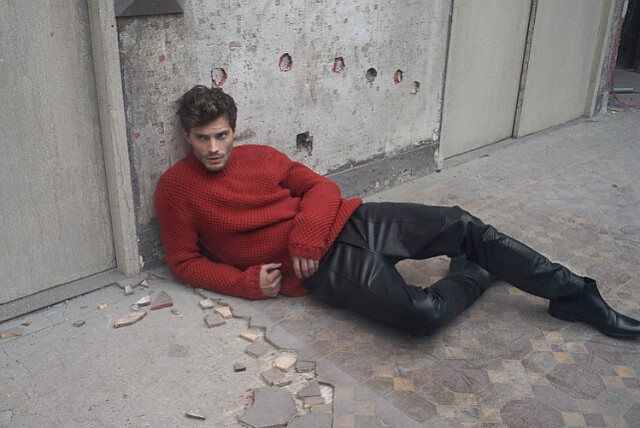
He looked sharp in a black dress shirt, a fancy velvet vest, black leather pants and riding boots. My fingers kept playing with the tattered inside pockets.
“I’ve got to ask you a favor. I need a place to crash tonight.” He said, smelling like gin and smoke.
“Bad timing. I’m about to move and-“
“But you are not moving today, are you?” He cut me off.
“Well, no.”
I told him the place didn’t really have a living room space. It was true. It had a useless long narrow hallway that led to two tiny rooms- one for me and my girlfriend and the other for my roommate. Marais was adamant and very persuasive.
“Come on, just for one night. I’ll sleep on the floor.”
I finally caved in.
“Okay. You can sleep in the hallway.” I told him.
“All right, see you then.” He said as he turned around to leave.
“What? Where are you going?”
Apparently, he had some prior engagement. He’d call me when he came around.

“What an asshole!” My girlfriend exclaimed as I told her about Marais.
“And you’re letting him stay?”
“Well, you know that I usually don’t pick up an Euro-trash from the street on a regular bases. But gotta tell you, he’s very good looking.” I told her.

Marais finally showed up at the doorstep at two in the morning. He was completely inebriated. Before I even properly introduced him to my girlfriend, he fell on the floor face down. I had to back up because of the narrowness of the hallway.
“Well, nice to meet you too.”
I nudged Marais with my foot. No movement. Out cold.
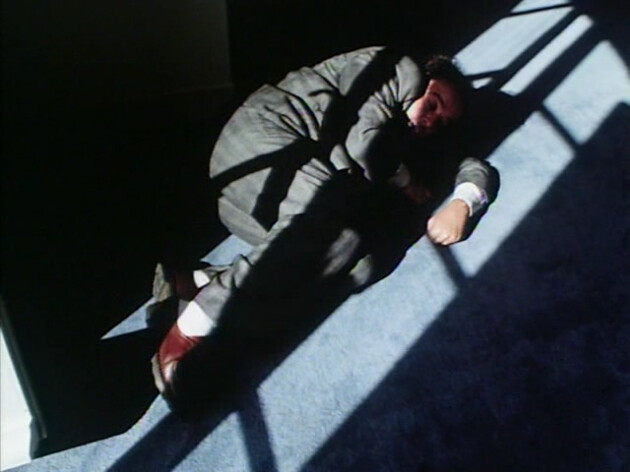
“Look at him. Look at what he’s wearing. I bet those leather pants alone must’ve cost more than our rent.” She said with the tone of disgust.
That gave us an idea. We looked at each other and smiled mischievously.
Everything was going to be okay.

Sunday, December 4, 2016

(M) by Dean Kavanagh

Just found the wonderful world of Dean Kavanagh. His short films inspire me and rekindled my desire to throw in my hands at filmmaking again. We will see...
Int the mean time, please enjoy this beautiful little film by Kavanagh

Tuesday, November 29, 2016

When a Good Man Goes Bad

oldstone_01
Inspired by a news report in 2011, in Guang Dong Province, where a toddler died after being ran over by two cars while bystanders watched on, Old Stone tells a gripping morality tale that takes place in rapidly developing China. The first driver stopped as the front wheel of a car ran over the two year old. After a bit of hesitation, he proceeded to go forward, running her over the second time. It was the total lack of empathy of the incident that shook the entire nation and abroad.

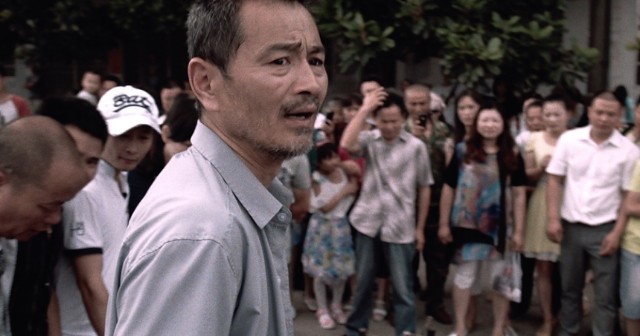
Old Stone starts with a taxi driver, Lao Shi (Chen Gang), who just ran over a delivery man on his motor bike, because his passenger was drunk which caused the accident. Everyone on the street is telling him something different in what to do next, while the victim lies unconscious, bleeding from his head. Lao Shi decides not to wait for the ambulance and takes him directly to the hospital, therefore saving the man's life, as the doctor tells him. But the man is in a coma. And because Lao Shi didn't followed the protocol, his taxi company and the insurance company refuse to pay for the man's hospital bill. Righteous in his stubbornness, he hides the accident from his wife (Nai An), whose worries are limited to paying for their daughter's daycare. Lao Shi tells the victim's wife not to worry about the money and starts paying the bills himself.

With the cell phone left by the drunken passenger who caused the accident, Lao Shi then tracks him down to an opulent wedding reception. He's there not to ask for money, but to get a police statement for the insurance company. But the passenger, who is a rich man, doesn't want to get involved, has Lao Shi thrown out. Talking to the wife of the victim doesn't help either. She confesses to Lao Shi that it would've been better off if her husband was dead, so she could've collected his life insurance.

After several weeks in hospital, the victim wakes up from the coma, and walks out of the hospital. Lao Shi starts spying on the man who is still feigning his wounds to get the money from his benefactor he never met. Was saving the man’s life worth ruining his marriage and emptying out his bank account?

Chen Gang's performance as a good man slowly losing his moral compass is nothing short of riveting. He is an archetype of a good man you only find in a Dostoevskian novel. He is a silent type, struggling to show his emotions or thought process to anyone, not even to his family. Old Stone/Lao Shi in Chinese means 'too honest'. People call someone Lao Shi if he/she is way too naive for the harsh world we live in.

I couldn't help comparing Old Stone to Lou Ye's latest Mystery in terms of its theme. Then I find out that Old Stone's executive producer Nai An is also a long time producer of Lou Ye (Suzhou River, Summer Palace). And here she also stars opposite Chen Gang as his wife. It couldn't have been easy for Johnny Ma, a Chinese Canadian filmmaker making his feature debut, to make a film that paints an unflattering picture of China under heavy censorship, especially with Nai An as a producer-- considering Lou Ye had been banned making films in China and only two of his seven films saw the release in mainland China.

Old Stone develops into a riveting thriller and asks weighty questions about the cost of doing right in an unempathetic society where people rather kill the accident victims off by running over them again rather than saving them. It's a raw and tough first film. And it signals a emergence of a major storyteller.

Old Stone opens on Wednesday, 11/30 in New York at the IFC Center. National roll out will follow. Please visit Zeitgeist Film's website for roll out info.

Interview: Johnny Ma on Old Stone

MG_2459-copy
I had a privilege to talk to Johnny Ma, a Chinese-Canadian filmmaker, whose gritty, urban thriller Old Stone is seeing a North American release after gathering much accolades at Toronto and Berlin Film Festival this year. Hearing Ma's insight on shooting a low budget film in China was very interesting and valuable in understanding Chinese film industry. But my main takeaway from our conversation is that the gripping morality tale Ma tells in the film -- where no good deed goes unpunished, can take place not just in China but any society. Johnny Ma is a real deal and one to watch out for in the furture.

Old Stone opens 11/30 at New York's IFC Center. National rollout will follow.

Your last short film Grand Canal takes place in China, then you made your feature debut with Old Stone, also set in China. What made you to decide to shoot in China again?

I went to Columbia University for film. When I was making films there- I’ve made one in Australia, Brazil, the US, I think that I was just starting to figure out how I like to make films. I guess in some way, I felt that process I thought worth doing was working with real people and from real stories. If I was gonna do this correctly, I should go back to where I was born and make one there to really understand. If I wanted to go on this path, I thought I can do it as honest as I can there.

I also knew that if my short film Grand Canal was going to be successful, it would be a great opportunity to make a feature film in China as well. I was also looking forward to that challenge to shoot there.

And actually the project that I ended up taking to China was called Ten Thousand Happiness. It was a Sundance Lab project. But we had a lot of trouble getting financing when we got to China. As a script we got all the accolades you can imagine - Toronto International Film Festival, Sundance, etc. But in China, the film industry works very strangely, where the support for arthouse independent films are just the worst. Obviously they can't make money from them so there are no interests. Investors start out by asking if your film is going to be commercial films or arthouse film. If it’s anything other than commercial, they are not interested in speaking to you. For me that’s not a good place to start.

So it was very very difficult. Old Stone was originally written as a US film with Micheal Shannon in mind in Detroit. And it was supposed to be my second feature film. I wanted to take premise of the film away from China that the conversation wouldn’t be just about, ‘it only happens in China’. What drove me most was to show how a good person turns bad. I wanted the conversation to be about that than the actual environment, where the incident inspired the movie actually happened.

So we had to change it to China again because we couldn’t get the other film done. We didn’t choose big cities like Beijing or Shanghai, but a small town which is my producer’s hometown. That’s how we got it made with a small budget.

That’s a really interesting story. The moral dilemma of the main character is very dark. It reminded me of recent Lou Ye’s film Mystery. Then I found out that your producer Nai An is also the producer of Lou Ye’s films. She also plays the wife part in your film.

That’s correct.

Are there any other connections to Lou Ye and Chinese independent filmmaking scene?

Yeah, just by Nai An came on board. When I went to China, because of the industry and the state of business there, they didn’t give me much of a chance. Also I didn’t feel that I trust them because in a way I didn’t trust that they would put story first rather than business side of it. I had a list of names that I trusted and knew they would make great films, Nai An, Lou Ye, Jia Zhang-ke… I went down the list. Nai An, I showed her Grand Canal, I felt distinct connection to her because I used Suzhou River as a reference when I was making Grand Canal. Also I didn’t know about this, but the pop song in Grand Canal, she and Lou Ye did a music video for that particular song. There was almost serendipitous kind of conection there. So when she saw the film, she wanted to meet me right away.

The way she approached working with me was like, ‘ok what kind of filmmaker would you like to be?', 'what kind of film would you like to do?’ It wasn’t like 'what kind of project do you have and which one can make money?' It was more like 'how do you want to build a career you want?' It was an amazing collaboration.

I mean, in a way she helped us much more than what I possibly could ask her for. When we couldn’t find an actress, because we had such a small budget, to be paired with the main actor, and she took time away from here work as she was getting ready for Lou Ye’s production and she came for 4-5 days to shoot the film.

That’s amazing.

I owe her everything. Even the money we got, which was super super small, because of her, we were able to get. Investors didn’t trust us, but they trusted her.

You can correct me if I am wrong but many of Lou Ye’s films were banned in China.

Yes.

I am wondering whether you had any problems going through the censorship with the film since I does portray some unflattering side of Chinese society.

Unfortunately, I can’t talk so much about it because it’s a sensitive issue. But I will try to be as honest with you as I can. Yes, the short answer to that is absolutely. We had a very very difficult time with that. And I think having Nai An as our executive producer, for the fact that Lou Ye was banned making films for 5 years after Summer Palace, she gave us a very good insight to how to deal with them. But essentially she never said, “don’t do the film like this, because it will never get made.” but “do the film you want and we will deal with the rest. We will try to work with it after it is done. But still we had a very very difficult time with the censorship. We were no one, having Nai An onboard, it made us even more of a target. In hindsight it was a disadvantage having her onboard but I would never have done anything differently. But I think just the fact that the film is not made by someone controversial but the first time filmmaker, the fact it’s by a filmmaker is from the west also helped alleviate some of the problems.

Was it difficult shooting in China?

Yes, definitely it was difficult. Shooting an indie film in China is about ten times harder than in any country I’ve ever made a film in, including Brazil, Canada and US. I think the main thing about it is actually you feel so alone when you are doing it because especially in China these days, there are a lot of commercial prospects- you can do anything and you can make a lot more money there. So if you set out to do an small budget indie film with a sensitive subject, the reaction you get is, “don’t do that. why don’t you do something that will take in profit?” From most people’s point of view, it’s very easy to make money in media right now. 'So why don’t you do something like that?'

It takes a very stubborn and foolish mind to risk it all to do a film that nobody cares about and I think I give all the credits to my collaborators who went on this journey with me to believe that there is an important story to tell and it would make a good film. Anytime I get a chance to take my Chinese collaborators overseas, not just for them to experience it but also encourage others to support making bold films that when you make a bold film you will have a support. I think that was the biggest challenge to do something that was against the grain of how things are done up there.

The main actor Chen Gang is incredible in this film. How did you find him? And did you base this Old Stone character on anyone you know?

The biggest problem in Chinese film industry is the actors being treated like kings and queens, much more so than in US. We had a list of names on our plate, the actors we would like to approach. Even with Nai An, we couldn’t get the script over there. I always felt that if you have a strong script, and if they are a true artist, they will give it a chance. They can’t do it then they can’t. But I think industry setup over there is where it’s really tough to get scripts to the people. We had an actor who is not really anybody, he was in a Jia zhang-ke movie and he quoted us the half of our budget. So it’s really difficult.

I saw a couple of small things Chen Gang was in. He was always been a supporting actor. I think he mainly did TV. He was not a really well known actor at all. I always knew he was very good. But we couldn’t find him. We heard rumors that he retired and he was living in a small town somewhere. I had about four different cell phone numbers and none of them worked. A week and a half before we were supposed to start the production, we found him and I talked with him on the phone. He has this thing about flying. So I couldn’t have him to come over and meet me. So I had to tell him that he was going to be my main actor over skype. So we had conversations over Skype. I just had to go with my instinct and say you are the guy.

I would say it was not an easy process working with him. Even though he is an unknown actor but he is part of that system so there were things that he was used to in other productions that we couldn't offer him. But having Nai An and Wang Hongwei (who plays the captain of the taxi company) who was in a lot of Jia Zhangke movies, having them on board and being supportive helped us to work with Chen Gang.

I push my actors really hard. what you see on screen - half of it is acting and half of it is real. It was what really what Old Stone, Lao Shi was going through. He and I don't talk very much because he blames me for other things that went on the set. He hasn’t seen the film with an audience yet. I think he is magnificent.

He definitely has charisma. It’s an amazing performance.

Does the title Old Stone mean something?

Yeah. In Chinese, his name Lao Shi literally means Old Stone. But in Chinese, the double meaning of that, you call someone Lao Shi, it means too honest, too naive. Your last question about who this character was based on—

Right.

Actually when I was writing the character, I wanted to create a character that was a good man, you know from traditional China, like what other Chinese literature says, what a good person should be. And I went far back as Confucius to look at his writing on how a man should be. When people first read the script, they were asking me, ‘Does this person even exist in our society?' This is to Chen Gang’s credit to bring the humanism back in to the film. He really believed it. But I think that it also is the point of the film that he does not exist. At any point of the film, he could just not do it and just protect himself and his family. To me, if you judge Lao Shi, if you judge him for what he’s done, and you are angry at him, and when you look back one of two days later, I mean only thing he is guilty of is that he was trying to do a good thing, and if you judge him of that, then perhaps the way we are looking at the situation is wrong. So yes, creating a character like that was intentional.

Gotcha. So what’s next for you?

The original project I went to China for. I revised that. It’s a Sundance project and something very personal. It’s an elite family in Beijing, it deals with the modern age where collusion of everything that is happening in China. It’s about a family gathering of a Grandfather’s 80s birthday where he announces that he is getting a divorce. And that sort of shakes up the whole family. And we look at the new generations of families and they look at their situations - the whole relationships, marriage and love. So it’s about the culture of Beijing and modern society but also, it’s a story about how people look for happiness in the 21st century in China.

I see.

It’s a good subject for me to do. Because I am 34 now, not married and pretty cynical about the idea of marriage because of what I’ve seen in my parents and my grandparents. So for me, the film is about finding out if the marriage is right for myself.

So it’s called Ten Thousand Happiness.

Yes.

And it will be shot in Beijing?

Yes, Beijing or Tenjing. I think we are still looking at it right now. But it’ll be a very different type of film than Old Stone. Old Stone we did very quickly. In many was Old Stone was a rough, raw film. I think Ten Thousand Happiness would be in between Wedding Banquet and Edward Yang’s Yiyi. It would be a much slower paced and more selective kind of film.
Sunday, November 27, 2016

Life's Curveballs

L'avenir/Things to Come (2016) - Hansen-Løve
Screen Shot 2016-11-27 at 10.57.15 AM
Natalie (the indomitable Isabelle Huppert), is a philosophy professor. She's married to a fellow academic, has two grown up kids and an aging, needy mother. They have a house in Brittany where their kids grew up, shelves full of books, in short a comfortable bourgeois life style. Natalie's life is thrown out of whack when her husband of 25 years tells her that there is another woman and he's moving in with her. Then her frail mother needs to be put in a nursing home. And she need to take care of her mother's cat named Pandora.

Mia Hansen-Løve, quite possibly the most astute observer of life and the passage of time in all contemporary writer/filmmaker, pulls off perhaps the most mature, nuanced and subtle work to date. In the Sarkozy era France background in political and social instability with student demonstrations dominating in and out of classroom (whatever the circumstances is, she makes a point that it's not unlike May 68'), the director contemplates the life that we thought we built for ourselves and the fragility of it.

And Huppert is, as always, marvelous. Her Natalie is literally losing everything- her marriage, parent, income from her text books that didn't get renewed. Surely there are some tearful nights alone in bed, but she is taking it all in strides. One of the members of her former student's collective in the mountain farm asks her political opinion on something (I don't remember what), she says she's been there and done that, that she's outgrown that ideal of her former self. Perhaps it's Natalie's experiences in life that makes her cope better with new, unexpected changes in life. That there are some values to getting old. There is a death and there is a birth in L'avenir but Hansen-Løve doesn't treat any of the life's 'big event' so dramatic.

L'avenir is also Hansen-Løve's most technically accomplished work to date. Sun drenched, warm cinematography and always moving camera make a point that whatever life throws at you, it's not as earth shattering as it seems. One of the very best this year.

Monday, November 21, 2016

Interview: Lucile Hadzihalilovic on Evolution

Lucille Hadzhalilovic
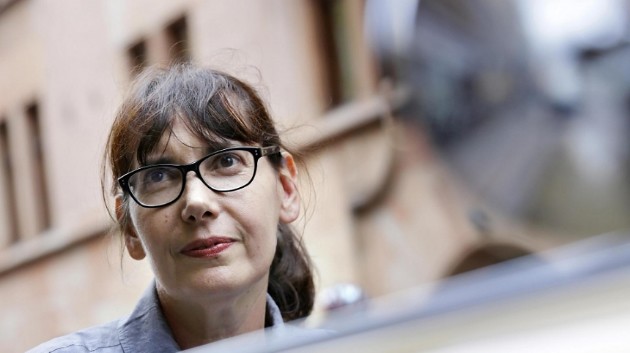
It was a tiny arthouse theater in New York city, with only a handful of audiences, I first watched Lucile Hadzihalilovic's breathtaking film, Innocence, more than a decade ago. The allegorical, dreamy, hypnotic film made an indelible mark in my head. Her dark, gorgeous images imbued with hidden meanings recall the world of David Lynch, but not thetered to the usual macho noir trappings. I thought Hadzihalilovic was a major new talent and was very much looking forward to her next project, any project.

12 years have gone by without a peep (although she made a 12 minute short in 2012), and after finding out that she is a real life partner of one of cinema's major provocateur Gaspar Noé, I was very eager to see her new offering Evolution at this year's New Directors/New Films series. And it didn't disappoint. And I jumped at the opportunity to interview Hadzihalilovic when she was in town.

Evolution Opens in Theaters Friday, Nov. 25th in NY & LA and on VOD

It’s a big honor to meet you. I’m a big fan of Innocence. I think it’s an amazing film. Now some ten years later, you come up with something that is equally, if not more stunning. First of all, what took you so long to make another feature?

It has been very difficult to finance it. I didn’t expect such a difficulty. Because it’s a kind of genre film, I thought that it would be easier at first. In a way it’s less abstract than Innocence and so on. But in fact, it was the opposite. in France, the genre films are not well considered. And it’s not really a commercial one or a mainstream movie, and more like an arthouse film. To be financed as an arthouse film you have to go through the system- the commissions and such which would consider and greenlight such projects. But they couldn’t get a consensus - some understood the project but others didn’t. People in general were not too keen on children being in a horror movie. I thought in France or Spain, they would be quite used to putting children in horror movies. (laughs)
So, it was much more complicated than I thought. Also I began to work with the first producer and thought we could get money by rewriting the script to make it more explicit or more digestible… So we tried in many ways - adding more elements with my co-writer but we realized that it was a very dangerous way to go because…I think the film should stay with your original vision and should not be compromised.

So I realized that it wouldn't be made with this producer so I tried to find someone else. It was (producer) Sylvie Pialat who said, "We can’t get any more money than this much. So we need to cut a lot from your script". So I did. So it was a project that was a lot bigger in concept but it shrank to what it is now but also back to the essential. I had to cut a lot out. It came back to maybe essence of what was the project in my mind in the first place. It’s more about the subconscious and that’s the original idea of the film anyway. I don’t regret what I cut. And that’s why it took a long time.

That’s crazy. I would think after such an amazing film you wouldn’t have any problems finding funding.

Innocence didn’t seem to help, like when people say, “Innocence is ok but I don’t understand this new project.” I thought Innocence could show them what it was going to be. But they didn’t seem to make that connection. I think people who are working in financing films or commissions are usually not the type of audiences for my films. I probably made many mistakes dealing with them, I don’t know. (laughs)

Speaking of connections between Innocence and Evolution. For me it’s pretty obvious. Evolution is an amazing companion piece to Innocence about fear and mystery of growing up. Was it conceived as a companion piece to begin with?

It was not like, 'ok, now I’m going to do the boys version'. Not at all. It was more of a small intimate story in the beginning between a boy and his mother in the hospital. It was only after that I developed an environment around them and I had this idea that it had to be on the seaside with the water, etc. And then it was a village and then an island and other women and children. So it grew like that. In the very beginning of the project I had an idea for it but then I got to do Innocence. I liked the organization of the village (where the girls lived). So only after that, I somewhat created that micro cosmos in Evolution. But it didn’t come from this idea of creating a cosmos, it really came from the boy and his mother and the boy’s fears and expectations and all that.

Your co-screenwriter, Alante-

Alante cavaite, she is a director too. you know her films?

I saw the trailer for The Summer of Sangaile. It looks beautiful.

Yeah. It does. It’s a beautiful film.
Did you have Alante in mind to collaborate with?

I’ve known her for a long time. In the beginning she was a reader for different drafts of the film I went through, then I found out that she was a very good writer. And little by little she became more involved in the writing. Even though we do very different films, we have the same tendency and yearning for surreal, fantastical elements, not realistic portrait as much. Her cinema is also very physical and visual experience. So that’s what we had in common. She helped me a lot to build up the structure out of this materials I accumulated over the years and to help me to find the story and to make the world in Evolution as current as possible.

How was shooting in Lanzarote, Canary Island? And how did you find the place? It’s an amazing looking place.

When I was working on the script, I didn’t know about Canary Island. But one of the producers knew a lot about Spain and knew the island. So thanks to him we found the place. We chose it for artistic reasons but also we could do it there for the money we had. It was a perfect combination. We did some scouting in different parts of the island. And I found this village in Lanzarote. There was another village in another island so I had to choose between the two of them, but Lanzarote was more simple and minimalistic. There is something very strong about the island. It’s volcanic with its black sand and
rocks so its very dramatic. But at the same time the white village is very familiar.

That’s a real village then?

Yeah. but it's not abandoned, really. People are not actively living there but they come for the weekend to relax. We didn’t do almost nothing to decorate the village. We just added a bit of dirt sometimes on the doors and the windows. There were a lot of green and blue color but it was too pleasant, so we did change that a bit. We didn’t have any time or money to do anything, so the village is pretty much like what you see on screen.

Wow. that’s crazy.

It was even better than what I imagined it to be.

Watching the film, the whole time I was thinking about the little wormy green gruel stuff the mother is feeding the boy. It looked very disturbing.

Very healthy. (laughs)

What was it made out of?

Maybe you should ask the guy who was in charge of the props. But it was just pasta and seafood but we added some green food coloring. But he wanted to make it taste good for the boy. But I thought it would be better if it didn’t have such good taste because it’s very hard for children to pretend. So I thought, 'ok, it should not be too delicious'.

Innocence was shot on Super 16mm film. And this was shot on digital?
Yes we shot it on digital camera. I wanted to shoot it on super 16 like Innocence but it was difficult. It wasn’t really about money but it was time constraints. We had to do it very fast and we were on this island, so in order to develop the film and see the dailies, it would’ve taken a lot longer. We had a very little margin of error window because of time we could afford. So we decided to shoot digitally. I was afraid that it would be too flat and not dreamy enough, not only physically but mentally. But we tried to work on it to have more texture and added fog. We did a lot in post production to add more texture and grain. That was what we were always looking for, texture all the time - texture with the sun, texture with the set, on the actual image and material. We tried to get that 'ethereal but also concrete at the same time' feeling somehow.

The whole film seemed it was intentionally underexposed. The film is physically dark.

There was a lot of night scenes and inside the hospital scenes are very dark.

So you did a lot of colorgrading and post work.

We did a normal colorgrading. We did make color a little more intense but it was not like totally changing the image. The image was captured like that by Manuel Dacosse.

How did you find Manuel to be your DP?

Few years ago I watched the film he did called Amer which I loved. I loved the work he did on it. There were both exterior and interior scenes in that film with lots of different colors and so on. Then I saw Strange Colors of Your Body’s Tears, also the colors in it were amazing. And we did a short film (Nectar) together before this. With Evolution, we were really heading into the same direction. He’s very quick. It was quite difficult shooting in Lanzarote because it was very hot and shooting with water was quite challenging physically. But we understood each other very well.

It’s so gorgeously shot.

I was very lucky to have him. And my set director, Laia Coll, who is great. She can do a lot of things with nothing. She was always happy and had a lot of great ideas. She and Manuel worked a lot together, especially in the hospital scenes. There were a lot of logistics to figure out because of the location with the set and the lights, but they worked together very well.
You’ve worked on many of Gaspar Noe’s films.

It was long time ago. When we first started making films. We founded a film production company (Les Cinema de la Zone) together because we wanted to produce our own films. But it was more for short films. But after that we didn’t produce our own films. Gaspar produced his last film (Love) himself but for mine, I didn’t produced it with the company. I did a medium length film called Mimi: La Bouche de Jean-Pierre, long time ago and he worked on it and I worked on Carne. But then we stopped working together because it became a normal production company.

Did he see the film? What does he think about it?

Yeah yeah yeah. He thought it was very strange. (laughs)

Well some thought it was strange and some people thought it was very familiar. I like that. I hope it’s not only strange but I’d like to be touching as well.

It's touching, it is very touching especially at the end.

It’s interesting about your take on the palpable male fears - fear of penetration and of pregnancy. I do fear those elements.

That’s interesting.

You said it was a bigger film. Was there more element to that of male fear?

No it was more to do with elements that gives context to the situations, like more things about the women- who they are, that maybe they are all part of the experiments. And the people who are doing experiments… Those elements wouldn’t have changed the nature of the film, they would’ve simply make audience understand more as to what’s going on. It was a funnel to create all this but then when the time came for me to cut, it seemed to me that those are not the heart of it. By cutting it I was going back to the emotional, the fear aspect of it.

When I was first experiencing Evolution, I felt that I needed more explanations but now I talk to you about it, keeping all its mystery, I think it’s perfect.

Sunday, November 20, 2016

Persistence of Memory

Last Year at Marienbad/L'Année dernière à Marienbad (1961) - Resnais
Screen Shot 2016-11-20 at 6.29.21 PM
Screen Shot 2016-11-20 at 6.27.55 PM
Screen Shot 2016-11-20 at 6.17.54 PM
Screen Shot 2016-11-20 at 6.18.49 PM
Screen Shot 2016-11-20 at 6.25.28 PM
Screen Shot 2016-11-20 at 6.22.12 PM
Screen Shot 2016-11-20 at 6.28.46 PM
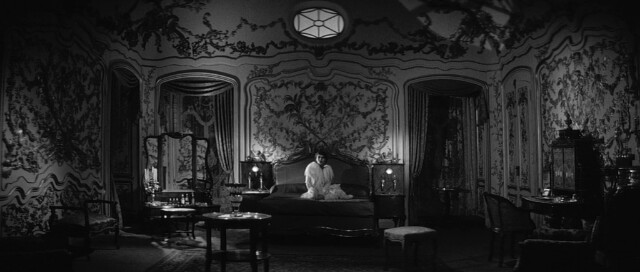
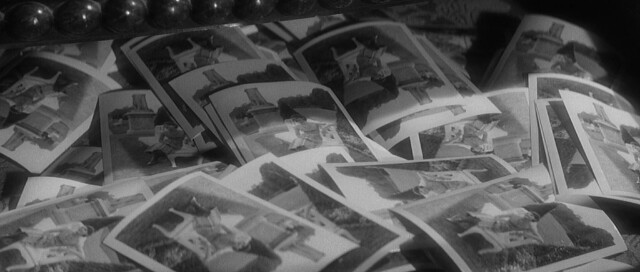
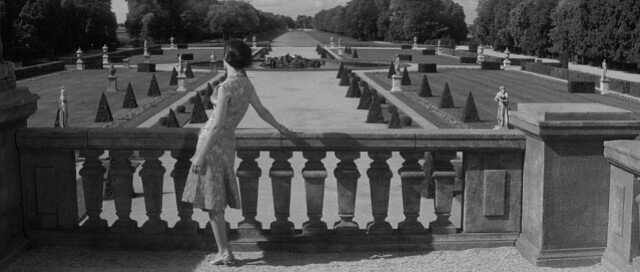
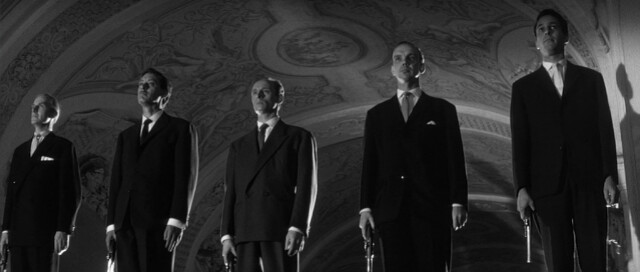
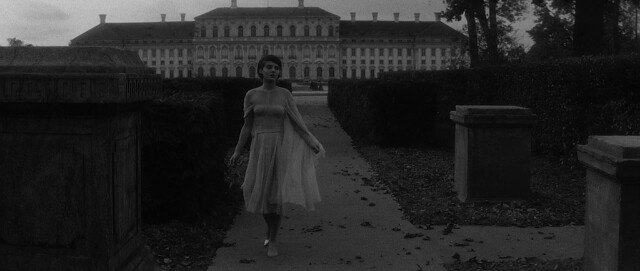
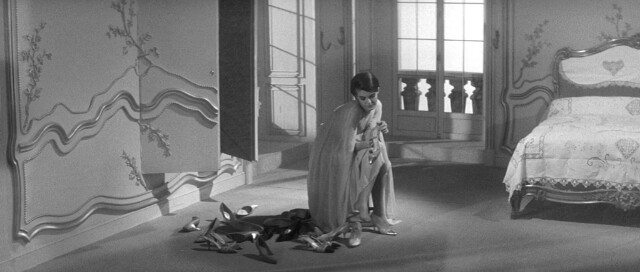
Camera tracks endless corridors, columns, doors, rooms in an opulent chateau. Lines are repeated, scenes replicated in different variations. Labyrinthine nature of one's memories- recalling, yearning, regretting and desiring. Time is relative and often standing still in Marienbad. Every gesture, gaze, word means something. The whole film is like a long piece of music, its rhythm flows up and down, pushes and pulls in and out. As does many of Resnais films, Marienbad deals with the persistence of memory. But more than anything else he has done, it deals with the subject with formalist rigor (even more so here than Hiroshima mon amour). The stilted placement of the actors and precise tracking shots can feel more machine than human. But he accomplishes uneasy feeling of someone pulling the rug out of your feet.

Marienbad makes a very strong case for film as an art form, that it can be as great as painting or sculpture or music.

Friday, November 18, 2016

Creative Process

Keep Your Right Up/Soigne ta droite (1987) - Godard
Screen Shot 2016-11-17 at 7.05.10 AM
Screen Shot 2016-11-17 at 7.06.11 AM
Screen Shot 2016-11-17 at 7.08.02 AM
Screen Shot 2016-11-17 at 7.12.14 AM
Screen Shot 2016-11-17 at 7.11.26 AM
Screen Shot 2016-11-17 at 7.08.56 AM
Screen Shot 2016-11-17 at 7.12.57 AM
Screen Shot 2016-11-17 at 7.16.51 AM
Screen Shot 2016-11-17 at 7.17.44 AM
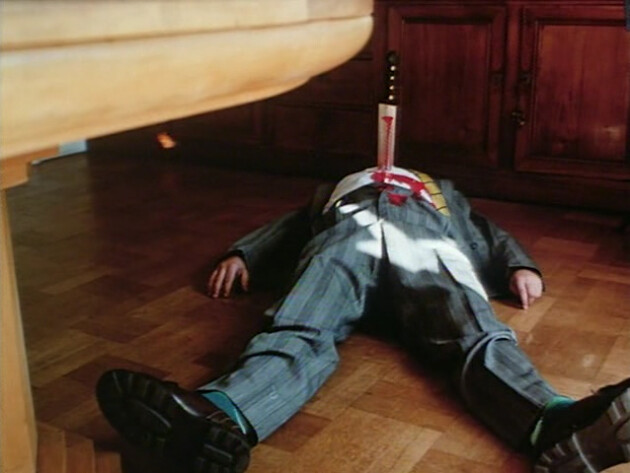
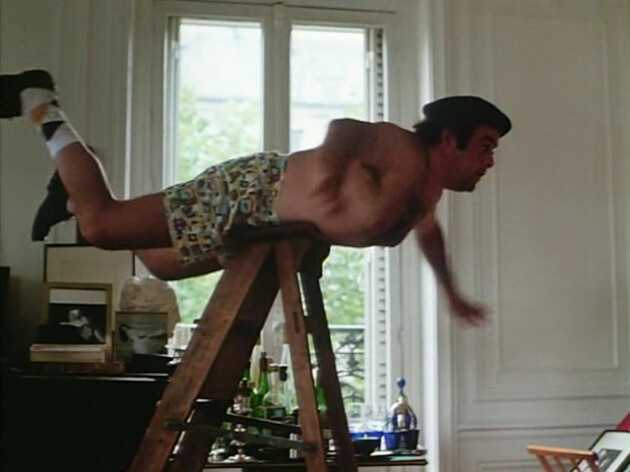
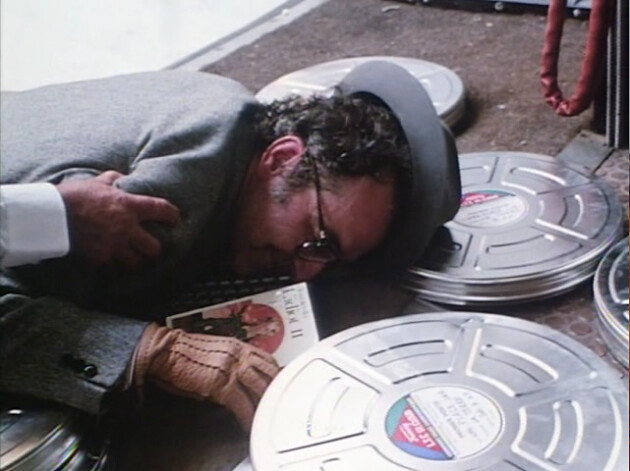
Godard presents himself as Prince Mishkin in Keep Your Right Up. He is a director who needs to deliver a finished film in a breakneck pace to some philosopher quoting industrialist who will pay top dollars for it. The director is seen as a bumbling idiot who doesn't know which way is up or down or east or west. But as always, he deals with grander themes - mortality, nature vs technology and of course, cinema.
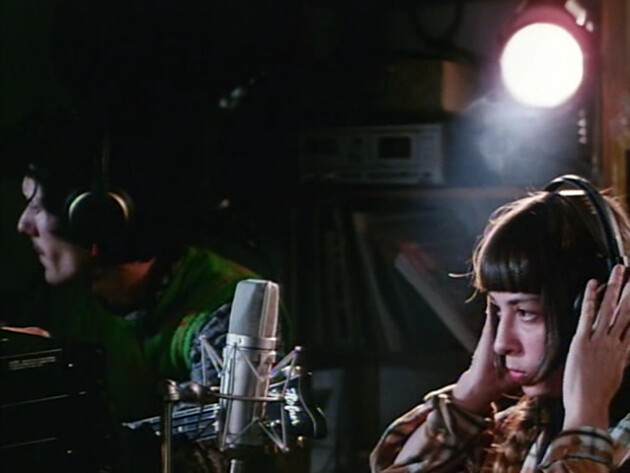
The film has three distinctive narratives running concurrently, cutting back and forth. One is with the Buster Keaton-ish idiot's journey on the road, the other one is about musicians, the 80s French pop band Les Rita Mitsouko (Fred Chichin and Catherine Ringer) as they compose and rehearse their musical numbers and lastly people going somewhere by car, plane and train, immobile and mobile at the same time.

Music is great. Les Rita Mitsouko's synth, rhythm box heavy pop is very catchy and Ringer's deep, sexy voice is infectious. Godard manipulates the sound like he does with images, using Mitsouko's recording sessions- playing with layers of studio recording. It's the creative process he is equating with music, as he had done since the beginning of his career, albeit crudely arranging two tracks of optical audio (as you remember dialog cutting off abruptly and replaced by music and vice versa). The later more sophisticated examples are Forever Mozart, Nouvelle Vague. This film would be a more polished/improved version of that experimentation. Bright primary colors are there, so as madcap slapstick, clusterfuck comedies of yesteryears. Keep Your Right Up feels freer and even more energetic than Godard's other films in the 80s- playing a fool and not taking himself seriously probably helped. It might be minor Godard, but no less fun.