Showing posts with label Kim Min-hee. Show all posts

Wednesday, October 9, 2024

If I Fall from Grace

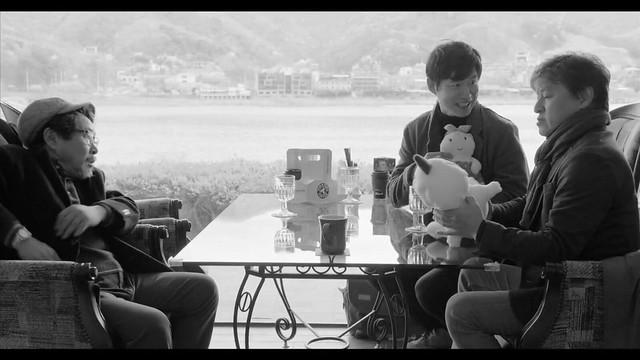
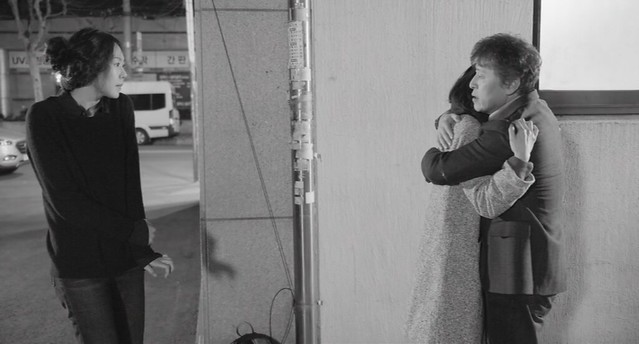
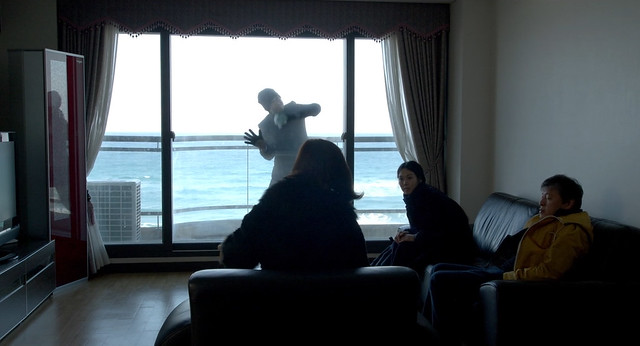
By the Stream (2024) - Hong By the Stream Clocking at 111 minutes, Hong Sangsoo's new film, By the Stream, is perhaps the most busily plotted and the most sinewy among his recent output. It touches on many of Hong's preoccupations and reflexive filmmaking, along with the recent surge of the Korean feminist movement.

It concerns a disgraced actor, now a small bookstore owner Siyeon (Kwon Hyeho) in Kangwon province, being invited to stage a play in the year end festival in a women's university in Seoul, by his niece Jeonim (Kim Minhee) that he hadn't seen for years. It turns out that he is a last minute replacement, because the young director who was in charge of the production was dismissed because he slept with 3 of the cast members. The actor sees this opportunity as a kind of redeemable occasion which would rekindle his passion for art as he felt when he first started his career, which happens to be at the same university long ago.

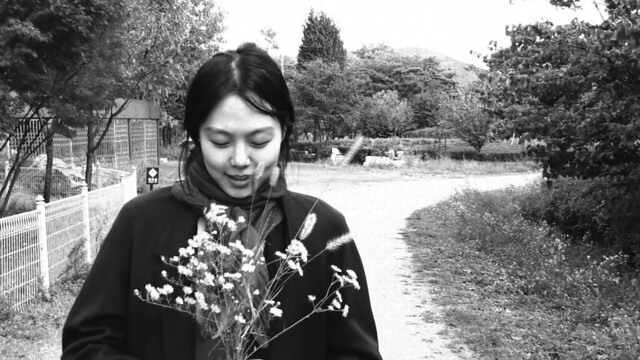
Jeonim, in her early 40s, is living a quiet, uneventful life as a textile artist and working at the university. She is first seen sketching in her notebook by the steam in earth colored Fall attire. It was the university's department chair Jeong (Cho Yunhee) who gave her the job and trusted her and became a big sister figure in her life. It turns out Jeong is a big fan of Siyeon as an actor and really wanted to meet him. After a couple of drinking occasions and some grilled eels, the actor and Jeong get along swimmingly and that makes Jeonim a little uneasy and jealous. In the meantime, with new materials that Siyeon wrote, the 4-female play team rehearses their play under his guidance. The young women are eager and full of optimism in their expression of joy and outlook- the way only not-yet-jaded-by-life young people say and behave.

Jeonim confronts the young director (Ha Seongguk) who was let go, when he comes back into the university campus to talk to one of the girls he professed his love for. His remorseless behavior and demands to get his job back and his material being staged receives Jeonim's contempt and anger. Her reaction is almost feral.

When the young man makes a second appearance to propose to one of the girls, Siyeon steps in and has a talk with the young man. We don't get to see what's being said.

Hong leaves a lot of threads messy and untidy, unlike Jeonim's textile patterns with intricate designs. What really happened to Siyeon the actor? What made Jeonim content with her life? Why did their play receive poorly and why did the dean of the school want to talk to Siyeon? It Doesn't matter. Hong's characters interactions are delicious as always. It's a change of pace from his minimalist work with his last couple of outings, even the Isabelle Huppert starring A Traveler's Needs that came out this year as well.

Sunday, June 12, 2022

Compulsion/Stagnation

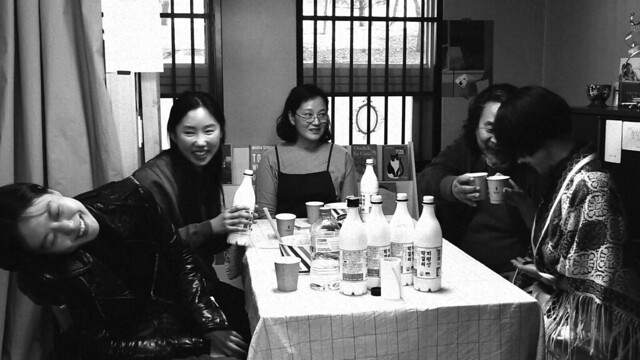
The Novelist's Film (2022) - Hong Screen Shot 2022-06-12 at 6.16.28 AM Screen Shot 2022-06-12 at 6.27.12 AM Screen Shot 2022-06-12 at 6.43.19 AM Screen Shot 2022-06-12 at 6.50.26 AM Screen Shot 2022-06-12 at 6.54.47 AM In Hong's latest, The Novelist's Film, the conversations revolve around a period of creative stagnation among artists. And it unfolds how chance meetings could break such a dry spell and give everyone involved a new direction. Junhee (Lee Hae-young of In Front of Your Face), a novelist in her slump, visits her old writer friend who fled Seoul and set up a bookshop in the suburb. She is salty about her friend's sudden disappearance and not contacting her. But they make up and Junhee is dropped off to a tall building nearby, which seems to be a local attraction, equipped with an observation deck where one can see the stretches of the Han River and nearby park. There she meets a film director Park (Kwon Hae-hyo) and his wife. Awkward pleasantries suggest that they have some histories together. Looking down at the river park, they decide to drive down to the park to have a walk. In the park, it is revealed that their project, an adaptation of Junhee's book, fell apart. Then they run into an actress Gilsoo (Kim Min-hee) who is contemplating quitting her profession. Park laments about the loss of a talent and wasted potential and Junhee vehemently defends Gilsoo's decision about her career. After the director and his wife leave embarrassed, the novelist and the actress hit it off. With Gilsoo's film school student nephew joining in, they concoct a short film project that Junhee wants to make, if Gilsoo and her artist husband agree to be in it.

By another chance, Gilsoo takes Junhee to her friend who is in need of help. Her friend turns out to be the bookshop owner. There, in the small corner of the bookshop, 5 people are crammed in to talk and drink copious amount of makgeoli (Korean rice wine). Junhee stopped writing because she found her words felt like exaggerating, as if she had to find meaning in each word she writes.

So goes another meta auto fiction of Hong as he reveals sliver of his filmmaking process - 'compulsion' to make films in the director's earlier days are gone, giving way to stagnation, brought on by success, relative comfort and getting old. Story isn't as important. It can be as simple as something from the real life. Inspirations and directions can't be forced and life provides them in unexpected ways. But as the director has always done by reflecting life with actors and script, he gives it a distance from himself, and by not putting any extra weight of what it all means. It doesn't have to be a documentary to be 'truthful', nor needs to be metaphoric and imbued with 'meaning'.

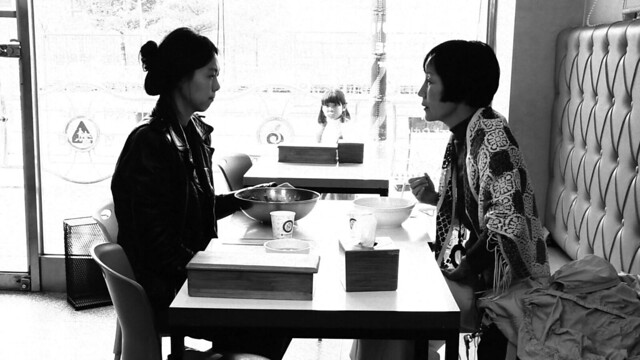
With his consistent output, Hong's metaverse has become as comfortable as home for his fans. Watching his films is like meeting and conversing with an old friend now - they know you, you know them. But also, you start noticing small things, a delicate story within a story and small nuances in characters that you find pleasurable. I find the bookshop owner's cutting all her ties in Seoul and 'start over' in anonymity in some other town story an added bonus. The beginning of the film where we hear off screen her berating her younger employee contrasts with Gilsoo's description of her as a good natured woman, gives more complex pictures of the character. The younger employee, played by Introduction's Park Mi-so, who played a young student lover, reveals that she is (despite her looks) 33, indicating that all these characters are grownups and no one can be told about what they need to be doing with their lives (and by extension Hong's both artistic and private life). There is a little girl staring through the restaurant's window while Gilsoo and Junhee eat lunch. Maybe she is staring at Gilsoo because she is a famous actress. Gilsoo excuses herself and goes out to talk to the little girl. We don't hear it, but she talks to the girl a long while, all captured in one take. Loved the poet (Ki Joo-bong) not remembering an unwelcomed story he wanted to tell while drunk. These are all delicious.

The Novelist's Film ends with Gilsoo watching the novelist's film. The film within a film, just like the rest of the film shot in high contrast black and white, most of the time Gilsoo looking directly at the camera, thus breaking the forth wall. The last spurts of color at the end gives a jolt, as if it is revealed that we are watching something real, private, truth.

Prolific as ever, Hong is not stagnating for sure. But I guess with the pandemic it crossed his mind. I hope his compulsion never stops.

Saturday, October 2, 2021

Lamentation on Young Love

Introduction (2021) - Hong Screen Shot 2021-10-02 at 9.20.25 AM Introduction, Hong Sang-soo's second film at the festival, is a timeline jumbled, melancholic piece about young love in the eyes of adults. Shot just before Covid pandemic and the ensuing lockdown in February-March of 2020, this slight film, clocking at mere 65 minutes, is an unusually serene drama for the director. Perhaps it was the result of our collective helplessness and fear for the future that Hong felt when he conceived the project, in regards to the younger generation.

It starts with a doctor practicing Chinese medicine at his office, praying to god that he would devote himself if god gives him a second chance. To do what? We never find out. Distraught, he forgets that he left patients with acupuncture needles still on them in the examining tables and even his son, Young-ho (Shin Seok-ho) who's been waiting to see him in the waiting room, and falls asleep at his desk.

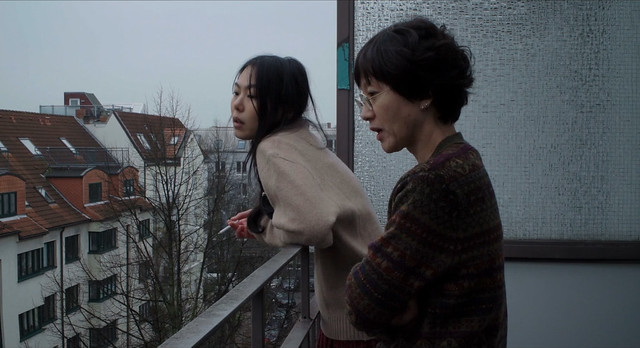
We move to Berlin, where mom (Seo Young-hwa) is dropping off her daughter Ju-won (Park Mi-so) in the care of a painter friend (Kim Min-hee). Ju-won is there to study fashion design. She sneaks off to see Young-ho, who surprised her by flying over to see her. They talk about Young-ho coming to study in Germany too, that they want very much to be together. HIs parents should help him financially to study abroad, he wishes.

Next we see Young-ho summoned by his mom (Cho Yun-hee, also in In Front of Your Face), to consult his career with a famous stage actor (Ki Joo-bong) in Kangwon province. (Hong's favorite destination for his characters to 'run away'to) Young-ho brings his buddy with him to the meeting, just to be his buffer. The meeting gets heated after a copious amount of soju is consumed: the reason Young-ho gave up acting was he felt guilty kissing other women in student films because of his girlfriend. The old actor blows up on him. How naive. 'Hugging' a woman, in Korean alludes to 'making love'. He shouts to the young men in his drunken stupor. "So hugging in acting is also an act of love. Everything an actor does is an act of love! How can your girlfriend not understand that?!"

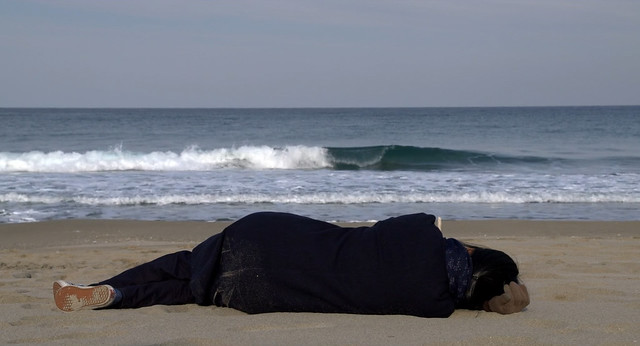
Young-ho excuses himself and runs out to the winter beach and finds Ju-won playing in the sand. She tells him that she left her German husband and came back to Korea. She is also going blind. He comforts her, saying everything will work out.

Then we do a double take on the beach, Young-ho is braving the water in his underwear, and his buddy warns him of catching a cold. In the distance, his mom is watching him from her hotel balcony.

Characters overlap in three chapters. Hong's cinematic playfulness is there. Loose structure and double takes are there too. But with black and white cinematography and blustery and cold winter landscape give way to the film's overall melancholic mood.

Introduction is a bittersweet love story of a young couple deeply lost, as they are swayed back and forth by the older generation. Even though they went through the same thing in their youth, the elders don't spare the youth in their criticism: they are too weak, too naive, and too idealistic. Kim Min-hee's painter, who is pragmatic and understanding, plays a bridge between two generations here.

The worldwide pandemic exposed many unnerving truth about our society, but how it affects the younger generation is seldom discussed and the future effect of this period remains to be seen. Perhaps Hong is asking us to be more introspective in the time of crisis and cut our young ones some slack.

Wednesday, October 7, 2020

Monotony vs. Chaos

The Woman Who Ran (2020) - Hong The Woman Who Ran Gamhee (Kim Minhee) is visiting Youngsoon (Seo Younghwa)'s house in the outskirts of Seoul. It's an almost pastoral setting. Youngsoon has a back yard and her neighbor has a chicken coop. Gamhee, married for five years, tells her long time friend that her trip to the house is the first time she is not accompanied by her husband. They never have been not together for even a day. How is that possible, Youngsoon and her roommate wonder over the grilled meat that Gamhee brought along with liquor. Gamhee says her husband believes that if they love each other, then they should be together all the time. And she doesn't seem to mind.

Again, Hong's new film is built around his muse Kim Minhee's character as she observes her surroundings. And of course the conversation naturally leads to reveal her relationships with men. Although Kim played many roles in slightly varying degrees in previous Hong's films, her characters were, however beguiling, more often than not, confrontational toward her male counterparts. In The Woman Who Ran, Gamhee seems to be more subdued and more comfortable with her situations and herself. Being a little bit older, it's as if she is tired of human entanglements and unnecessary interactions. But as the title suggests, Hong might be playing with something here. And everything is not what it seems. Who is the woman who ran if not Gamhee?

While they are having pleasant BBQ dinner, a new neighbor visits them. It's a young man and he passive aggressively complains about Youngsoon and her roommate feeding stray cats. His wife is afraid of seeing cats in their backyards and he wants to discourage them to feed the cats. They decline to do so, arguing the cats needs are just as important as humans. There are many references to animals in the film, including chickens, cows and cats, as women make case that humans are not the only animal with a conscience. With that, Hong seems to suggest that these relationships and entanglements are silly, in a larger scheme of things.

The next house Gamhee visits is Suyoung (Song Seonmi), a pilate instructor and a dancer friend. She lives alone in a modern apartment with a great view of a mountain. She recently bought the place with divorce settlement and some bank loan. She even scored a major discount because the building owner favors artistic types to live there. Gamhee again, tells the story about how she and her husband being inseparable. She could be so lucky. Their peace is interrupted by a 26 year old lovelorn poet at the door. He is in love with Suyoung. She shoos him off. The young man makes matters more complicated since she likes the neighbor who frequents the bar also frequented by the young man, she tells Gamhee. Gamhee makes an observation, "You live an interesting life!"

Considering Hong's penchant for a double take, these two encounters with older female friends might be a variation of the same encounter, suggesting infinite possibilities. And both of these encounters are interrupted by irate males.

Now Gamhee is in a cafe of a cultural center, coincidentally run by her frenemy Woojin (Kim Saebyuk). Gamhee used to date Woojin's now husband Jung (Kwon Haehyo), who is doing a book tour in the same building downstairs. Gamhee says she is there to watch a movie. Woojin, feeling guilty about stealing a man from her, apologizes to Gamhee who says it's all in the past and insists that she is not there to see him. Gamhee asks if he changed in any way since his career took off. Woojin says he is a chatterbox now and he comes across as insincere as he repeats his stories a lot in front of other people. It's becoming annoying.

She runs into Jung who was taking a cigarette break outside the building. Did she really come to see a movie or did she come to tell him off?

Deceptively simple yet deliciously playful, The Woman Who Ran again shows that Hong, a truly unique voice in cinema at his best, honing his skills as a storyteller by constantly experimenting with his usual theme.   

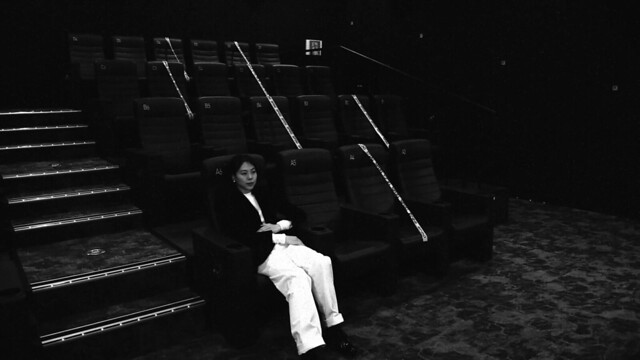
She goes back to watch the movie that she just came out of. It's the same scene of a beach with a jangling guitar soundtrack seen previously. Is Hong suggesting watching the film again to give it a second take? Or does the movie theater work as a sanctuary, a comfortable place for our heroine? In these Covid times, whether Hong intended or not, I'd like to think the latter is the case. As Gamhee sits alone in a cushy movie theater seats alone, eating a piece of bread, I want nothing more than being in the comfort of a movie theater, preferably alone.

Friday, July 5, 2019

Ambivalent but Diligent

Hotel by the River (2018) - Hong
Screen Shot 2019-07-04 at 11.16.08 AM
Didn't like it at all. Unusually sentimental for Hong standard, Hotel by the River is overlong and middling affair. It concerns an aging poet (Ki Joo-bong), recognizing his own mortality, summons his estranged two grown up sons to make amends. It's winter. He is staying at a hotel by Han River for free indefinitely, by the grace of its owner/admirer, whom he met at a bar by chance.

There is a side story about a woman (Kim Min-hee) recovering from a bad breakup with a married man, staying in the same hotel, visited by her older, kind friend (Song Seon-mi). They have run-ins with the poet and his sons.

As usual in Hong's movies, resentment and regret come to light when drinking- daddy abandonment issues, sibling rivalry, painful words are uttered, feelings are hurt and so on and so forth. On women's side, it's all "good men are hard to find."

There are a lot of nodding off in Hotel by the River: on the couches in the hotel coffee shop and hotel rooms. It's nice to see Kim and Song lying down in the same bed, face to face, sleeping in their cozy sweaters. The poet disappears for a length of time and reappears as if he is there but not there. Compare to Hong's other films, Hotel's volume is cranked down significantly. Wintry landscape helps with that too. It's pleasant.

The poet's younger son is a film director with a little bit of repute. Song's character explains his films to Kim, "a little bit ambivalent, but he is diligent." "Sounds boring", she replies. I can say the same thing about this film.

Saturday, November 18, 2017

Selfish Love

The Day After (2017) - Hong
Screen Shot 2017-11-18 at 12.26.43 AM
The Day After is just as delicious as Alone on the Beach at Night. Clocking just over an hour, it tells an illicit love affair of a small time book publisher (Kwon Haehyo) and his mousy employee (Kim Saebyeok) from the point of view of a new employee named Arum (beauty in Korean, played by Hong's muse Kim Minhee). Arum gets tangled up in the publisher's messy life on her first day on the job, when she gets assaulted by his suspecting wife. After half-convincing the wife that Arum is not the one, and telling her that the girl he was seeing went away, and asking Arum not to quit after one day at the job, to complicate the matter, the mousy lover comes back the same night. So he has to let Arum go (he can only afford one employee) after all. Arum is dejected and disgusted by this love affair she was involuntarily ensnared into, but ultimately could care much since it's not her problem.

As always in Hong fashion, The Day After is shot unremarkable and is in ugly black and white. Don't matter, it's still great human comedy about fickle relationships. Not as angry as Alone on the Beach, but just as confessional, Hong makes a case for how hurtful affairs can be. He and the publisher know too well that the affair is not going to end well. But when you are in love nothing really matters- you will sacrifice everything including a stranger who just happens to be there. Love can be a very selfish and ugly thing.

It's sad, funny and poignant all the same. Grown to love Hong's naturalism. There is no movie phoniness or over the top self-reflexiveness in his work. Kim's natural performance, as a kind of shy, yet frank beauty is a great fit in his films.

Friday, October 6, 2017

Don't Deserve Love

On the Beach at Night Alone (2017) - Hong
on the beach1
on the beach2
on the beach3
on the beach
The first part of the film, simply titled 1, starts with Young hee (Kim Min hee), a pretty Korean actress, in care of an older female friend in Hamburg in winter, pining for a married director she's been having an affair with. She keeps saying he might or might not come for her but she won't wait for him forever because being in love with him hurts so much. It seems she tried to get away from the publicized affair and is very much enjoying her anonymity and tranquil surroundings in another country.

In part 2, Young hee is back in Korea, in the coastal town of Kangrung, the same one seen in Hong's Power of Kangwon Province, in winter. It's a favorite spot a Seoulite can think of when they run away- the farthest, the most distant, remote place one can think of, near the sea. She is seeing some friends. The affair is over and the true colors come out over couple of drinks at the restaurant.

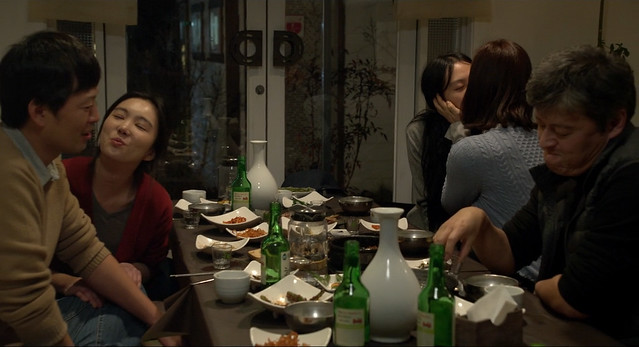
On the Beach reflects Hong's own much publicized affair with Kim in real life. We get to see from Kim Min hee's side mostly through Young hee- after couple of drinks, as she lashes out to others at the table how undeserving everybody is of love, that how her affair is anybody's business. A moments later she declares she'd rather do without men and go lesbo, starts kissing her kind, older confidant. Her heart's not in it, because she still misses him terribly.

In a later part of the film, the director in question, played by Hong regular Mun Seung gun, recite the passage from a book he tries to give her that describes the agony and ecstasy of their final embrace. He breaks down and cries, as she steely stares at him.

I was looking at Hong's films all wrong. As I see more of his, I realize that I don't need to compare him to anyone who might or might not have influenced him. His is very much his own and original. He has a sense of humor about portraying human vagaries. He's playful in his own small way and puts much trusts in his actors. He might be lazy about 'presentation' - unlike the title, Young hee doesn't end up on the beach at night. It's daytime, dusk at best. For a night time shoot, it would cost too much and too much of a hassle to arrange. But it doesn't matter to tell his story which is still simple and direct and real.

Love and break up is a painful business. Hong shows how it is under the scrutinizing eyes of the public, physically manifested here as a stranger in jarring surrealist moments - first in Hamburg, asking Young hee what time it is, then as a window washer in the second one. They are minor characters, but they are widely visible, but soundly being avoided and ignored yet their presence felt. For a Hong film, even though it has many funny moments, the over all mood of On the Beach is bitter and sad.

Wednesday, November 2, 2016

Supreme Male Gaze posing as a Sweet Love Story

The Handmaiden (2016) - Park
 photo 30574302-e6d1-4be8-8468-dda98b14294b_zpsdwtrzhqu.jpg
Park Chan-wook made name for himself creating one elaborate psycho-sexual set piece after another. He never shied away from over-the-top garishness or so called social taboos. But in the age of highly scrutinized sexual politics of the 21st century, he is walking a tightrope with The Handmaiden, an abashedly male gazed lesbian wet dream guised as a sweet lovestory. But we will see if it gets a pass on political correctness just because it's a subtitled foreign arthouse flick.

My takeaway is that it's a way over the top comedy bordering on (albeit lavishly done) lesbian porn-- how do I take the lovelorn/lusty expression of young Kim Tae-ri, as she protrude her tongue to lick her lover's vagina (the scene was repeated twice for viewing pleasure) from an angle that can only be described as pussy POV?

Park transports a Victorian era set novel Fingersmith, about a young but not so innocent heiress bred to recite pornographic writings in front of rich aristocrats, arranged by her perverted uncle who is set to marry her and a couple of low-life swindlers trying to trick them out of her fortune, into Korea under Japanese rule. But he consciously skips all the geopolitical implications and nationalism of that era in favor of cultural superiority which is completely hypocritical (remember incest in Old Boy?): as we advance with the story of seduction, fake marriage and triple cross into tentacle porn in the third chapter, we are already thoroughly exhausted by graphic scissoring and 69ing and an almost rape, the outrage over reciting pornographic novels doesn't really land its intended punch in the gut. Park's mechanism here is as usual, so elaborate and opulent, it's almost too rigid to embrace it fully. It's a fun movie. But its veneer is too shellacky, just like Wes Anderson's pastel colored papier maché doesn't do it for me.

Tuesday, May 31, 2016

Delightful Double Take

Right Now, Wrong Then (2015) - Hong
 photo 13b86af9-e0f5-47ff-9bdc-880c463683e8_zpsdxsnjjxx.jpg
Right Now, Wrong Then, a double take on a chance encounter is another delightful comedy of errors from Hong Sang-soo. Jeong Jae-yeong plays an arthouse movie director named Ham Chun-soo who finds himself in Suwon, a suburb of Seoul in winter, a day prior to his film screening and following discussions at the city's cultural center. The early voiceover suggests that he is contemplating banging his enthusiastic young guide from the center. Killing time at the near deserted ancient palace/tourist trap, he meets beautiful Hee-jeong (Kim Min-hee) and strikes up a conversation. Defensive at first, Hee-jeong soon finds Chun-soo more interesting once learning that he is a movie director she's heard of, even though she doesn't like watching movies or seen any of his films. He asks her to go out for coffee, even though she doesn't drink coffee or smoke (she is a sensitive type). They awkwardly flirt. It's all pleasantries and flattery. She used to be a model but now she is a painter. He wants to see her paintings, so they move to her atelier. Obviously he wants to bang her so everything that comes out of his mouth is some form of flattery. She goes along with it. Then they go to sushi for dinner and soju. They get shitfaced, still flattering each other but neither making the ultimate move. Hee-jeong suggests they go together to a party of her friends that she can't excuse herself out of. He obliges. Things get uncomfortable as Hee-jeong's friends who are fans of his and start mentioning the rumors of his womanizing ways and his marriage. A disaster!

We try again. Chun-soo this time, is more forward and honest, even though what comes out of his mouth hurts Hee-jeong. As they go through the same routine as the first, this honesty gets them closer, but also it means Chun-soo get more wasted on soju and make bigger ass out of himself in front of Hee-jeong and her unsuspecting friends.

What I appreciate about Hong is not only his steadfast consistency in traipsing the stickiness of the human relationship but also his complete disregard for what he deemed unnecessary bullshit - namely excessive title sequence, dramatic music or coverage (hence the excessive used of funny, automated zooms). Coquettish Kim Min-hee is amazingly cute in this. Right Now, Wrong Then also doesn't really care much about the conventions of a do over/what if romantic comedy. The first take isn't an earth shattering catastrophe or anything and completely plausible as much as second scenario which is obviously more desirable. He plays with the notion of the games we play and certain inhibitions in our society on different occasions. It's also a delight to see reversing those roles fueled by alcohol. His jab at film critics and how to behave in front of them were also telling. All in all, the film is yet another great comedy from prolific Hong who continues building a great, unique body of work.