Showing posts with label Mexico. Show all posts

Friday, September 1, 2023

Life is a Party

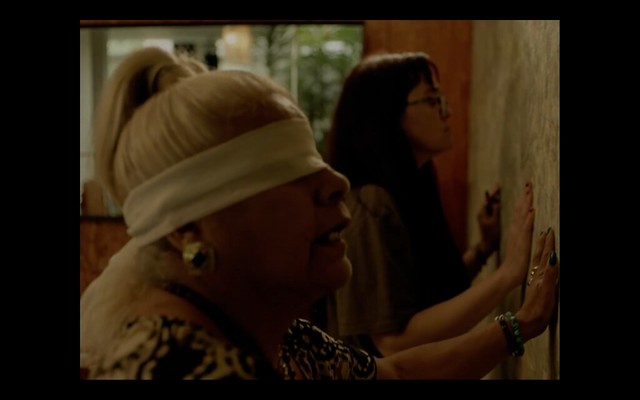
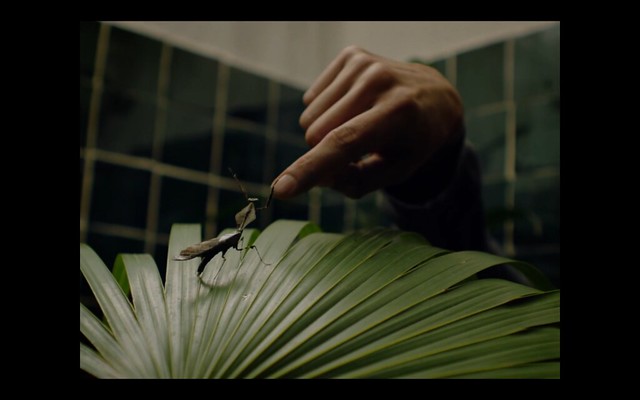
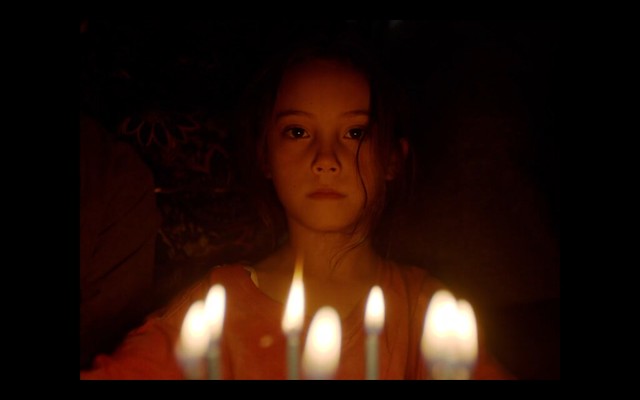
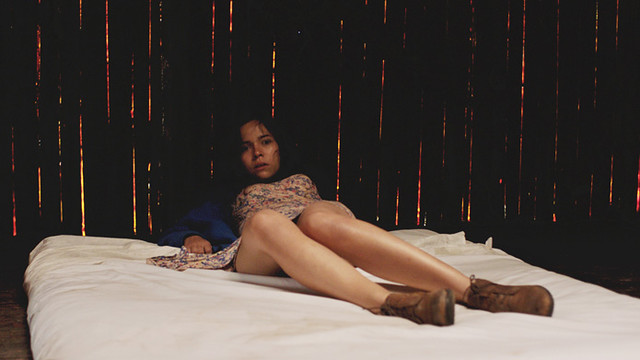
Tótem (2023) - Avilés Screen Shot 2023-09-01 at 5.09.29 PM Screen Shot 2023-09-01 at 5.12.52 PM Screen Shot 2023-09-01 at 5.15.38 PM Screen Shot 2023-09-01 at 5.15.53 PM Screen Shot 2023-09-01 at 5.16.11 PM Screen Shot 2023-09-01 at 5.18.52 PM Screen Shot 2023-09-01 at 11.01.23 AM Takes place in a day, Lila Avilés's Tótem tells a family gathering for the birthday of Tona, a young man dying of cancer, seen through the eyes of his 9 year old daughter, Sol (Naíma Sentíes). With her mom who is a theater actor, she is on her way to her grandfather's house. At the house, it's total chaos as Tona's two older sisters who are trying to prepare for the party. With more and more guests arriving - cousins and friends, sisters get on each others nerves - they argue about the responsibilites and about money, while Sol roams the house, eavesdropping, discovering various animals, playing with her cousins. Most of all, she wants to see her father, who is incapacitated most of the time in a room with the help of a personal nurse, Cruz (played by a great actress, Teresa Sánchez- Summer of Goliath, Fauna, Dos Estaciones). Tona, in great pain, is unsure if he can make it to the party.

We often try our best to shield children from the ugly life of grownups: responsibilites, money, parenthood, guilt.... Young Sentís, like Anna Torres before her in Victor Erice's Spirit of the Beehive, shines as a young, innocent child full of life, but who is old enough to realize that there's something awry about adulthood. Death is something we experience more and more as we grow older. It changes you and perhaps makes you grow up faster. The ending shot of young Sol looking straigth through the birthday cake candles, conveys that understanding without saying any words. Delicate and infinitely patient in her storytelling, Avilés let the film play out as it is supposed to. A beautiful film.

Tuesday, January 3, 2023

Worldly Desires of Intellect

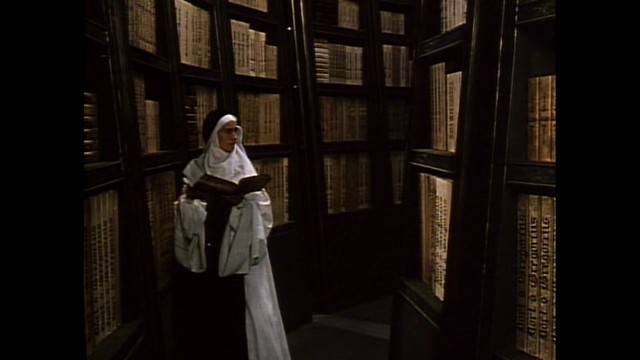
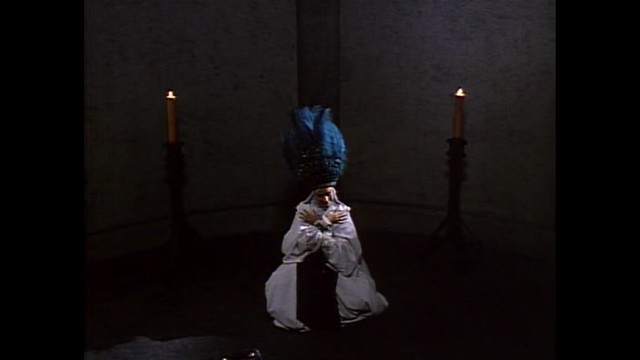
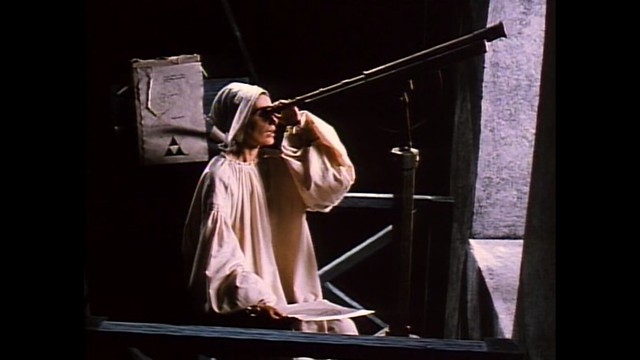
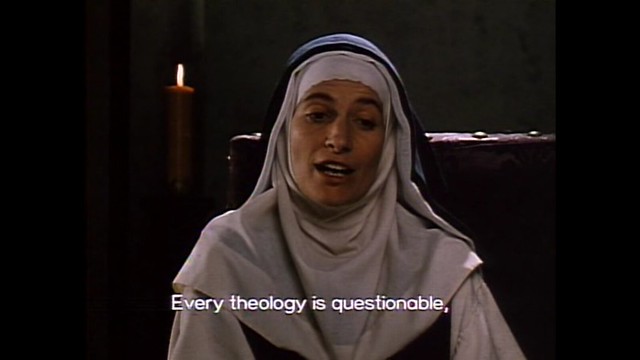
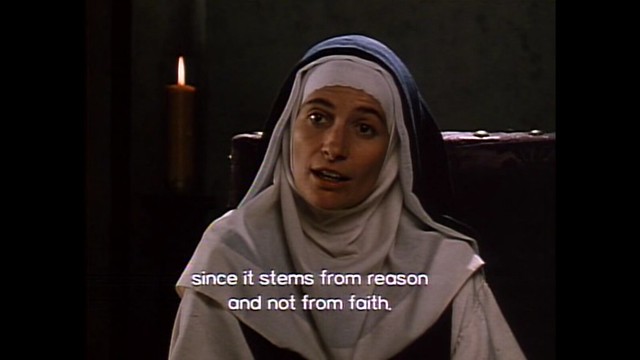
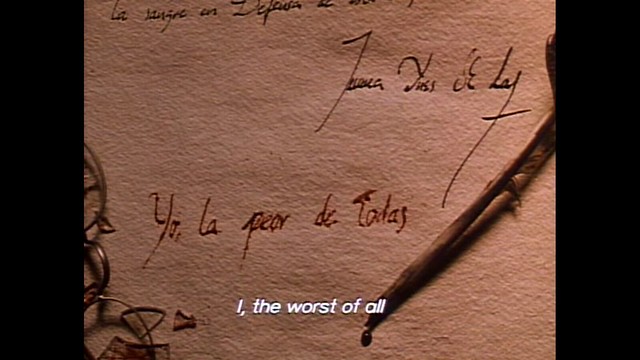
Yo, la peor de todas/I, The Worst of All (1990) - Bemberg Screen Shot 2023-01-02 at 9.17.18 AMScreen Shot 2023-01-02 at 9.26.56 AM Screen Shot 2023-01-02 at 9.33.18 AM Screen Shot 2023-01-02 at 9.55.43 AM Screen Shot 2023-01-02 at 10.09.08 AM Screen Shot 2023-01-02 at 10.09.14 AM Screen Shot 2023-01-02 at 10.51.30 AM Based on a historical figure, Juana Inés de la Cruz, I, The Worst of All, tells trials and tribulations of a catholic nun who lived in the 17th Century Mexico. Sister Juana who was a poet, playwright, theologian and a philosopher. And because it was unorthodox for woman to be an inquisitive and brilliant intellectual in the age of inquisition, she was persecuted by the patriarchal church and forced to denounce her 'sins'. Maria Luisa Bemberg directs the unflinching version of Sister Juana's story. Assumpta Serna plays Sister Juana, whose brilliance was the subject of both envy and jealousy in the convent. She is afforded with a large library and fine material things, like a telescope and harpsicord within the convent walls. She makes a big impression on the viceroy sent from Spain to the new world, and strikes up the friendship with the Vicereine (played by Dominique Sanda) who feels a certain kinship with the Sister (convent/marriage = jail). The Viceroy and his wife become an ardent supporter and protector of Juana against the vicious archbishop who thinks Juana is a nothing but a harlot and heretic.

Things get dire when Viceroy is called back to Spain and replaced by another. With her protection gone, Sister Juana becomes the target of archbishop's fury. Bemberg paints rampant religious hypocracy and sexism where women's intelligence were lauded only on the surface but ignored and actively repressed under the eyes of the church. Many of her supporters turn their backs on her. Then the plague hits the convent, where she devotes herself to the caring for the dying. It is her only confessor, the unnamed Father who reappears at the end to hear her confession, of her pride, her self-love and praises. He tells her that it's her selflessness in the time of plague is what God wanted all along.

I, the Worst of All, is a searing indictment of hypocracy of the religious institution and clear eyed examination of the true devotion and worldly desires of intellect. What happened to Sister Juana is a real tragedy.

Wednesday, September 1, 2021

Artful, Spiritual Anthropological Survey from Ethiopia

Faya Dayi (2021) - Beshir

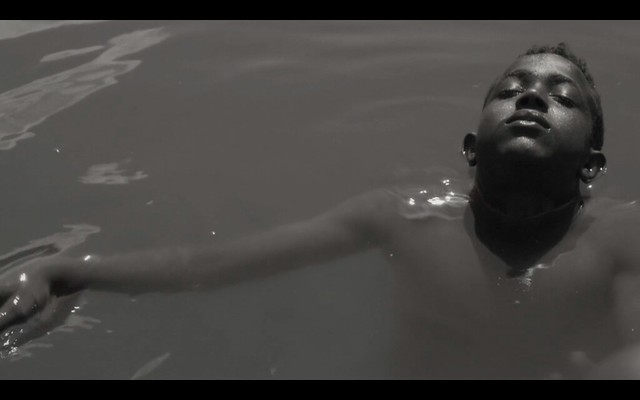
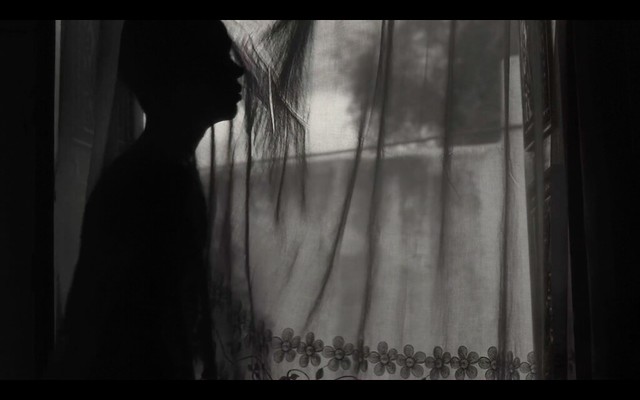
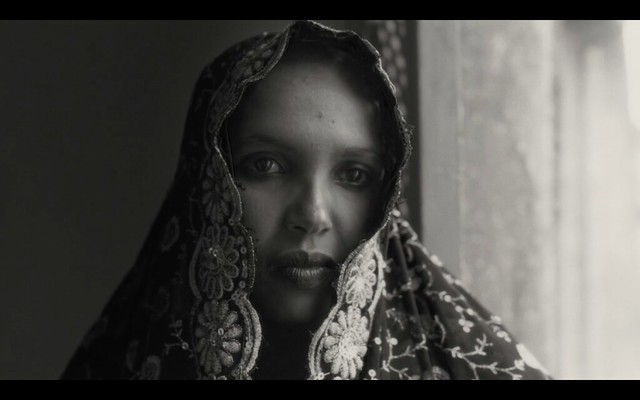
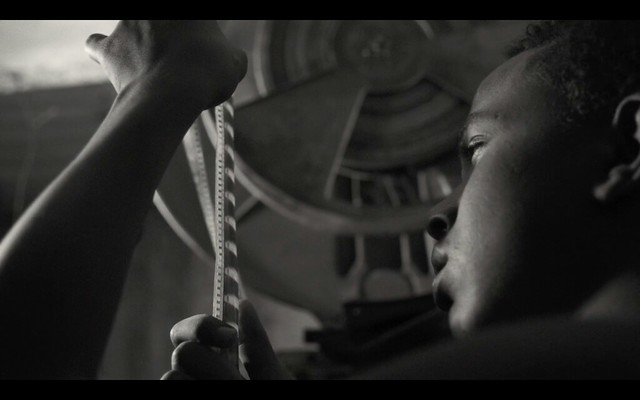
Screen Shot 2021-08-28 at 8.42.41 AM Screen Shot 2021-08-28 at 8.54.16 AM Screen Shot 2021-08-28 at 8.57.57 AM Screen Shot 2021-08-28 at 9.01.51 AM Screen Shot 2021-08-28 at 9.04.43 AM Screen Shot 2021-08-28 at 9.06.43 AM Screen Shot 2021-08-28 at 9.22.25 AM Screen Shot 2021-08-28 at 9.23.08 AM Screen Shot 2021-08-28 at 9.23.31 AM Screen Shot 2021-08-28 at 9.48.38 AM Screen Shot 2021-08-28 at 10.04.39 AM Screen Shot 2021-08-28 at 10.17.00 AM Could an anthropological study of the effects of khat, a flowering plant that has euphoric property when chewed, in Hararar, the walled city in Ethiopia, also be a stunning art film? Mexican-Ethiopian director Jessica Beshir proves that it can, with Faya Dayi, her mesmeric, immersive patchwork, shot mostly in silvery black & white. In here, every one of its hazy frame is a work of art. The film is visualized version of the phrase of a mystical sage or a lofty philosopher - Life is nothing but a waking dream. 

Along with dreamy images and scattered narrations, Beshir languidly builds upon the creation myth of khat, which involves the quest for Maoul Hayat, the water of eternal life. It seems every adult chews khat in Ethiopia, to get away, to escape harsh reality. For the younger generations though, for their future, they dream of fleeing to Europe, to Middle East, to other countries, even if it means risking their lives in an often perilous and costly journey and enduring lifetime of solitude and homesickness in a foreign land. 

There is a loose narrative, which concerns a young boy named Mohammad. He is a thin thread connecting the filmmaker's intergenerational observations. Mohammad is first seen with an older boy who fled the dreadful khat dominated life (to Egypt) only to come back to take care of his mother. For Mohammad, living with an abusive khat addicted father and missing his mother who fled to Saudi Arabia for better life, Hararar doesn't hold a future for him.

We see the full picture of the local economy based on khat, from its harvest to processing to distribution to consumption. And it's a long grueling process all done manually. It’s the industry’s berth, employing vast section of the country’s labor market that is truly astounding.

We are introduced to many of Hararar's inhabitants - there are women pining for lost love, a young man thrown into the khat industry because of the family tragedy that has befallen, the local sheiks with their prayer beads and scriptures, young naked children playing in ever receding ankle deep river. There's also a talk of street demonstrations and political prisoners among Oromo people, an oppressed ethnic minority trying to get by under the hostile Ethiopian regime. 

Beauty is in the shadows and silhouettes. It's in billowing curtains and in smoke of the ceremonial incense, in a group of black birds perched precariously on the tree branches on a windy night, in the water ripples, in the blackness of a woman's hijab against the white wall, in sleeping stray dogs, in cheap strobing lights on Mohammed's face, even in newly harvested shiny khat leaves. 

Khat as the myth goes, was a compensatory prize from god, for the journeyman who missed out on Maoul Hayat, to forget his sorrows. 

Dry anthropological documentaries are dime a dozen. Bashir in her debut film, with immersive and stunning visuals, achieves something extraordinary here. Faya Dayi transcends its filmic categories and achieves a deeply spiritual and contemplative viewing experience.

Monday, June 28, 2021

Performative Lives

Fauna (2020) - Pereda Fauna Fauna, Nicolás Pereda's new film, starts with a couple, Paco (Francisco Berreiro) and Luisa (Luisa Pardo) arguing in the car on the way to Luisa's parents's house. It's an arid rural area with no wi-fi reception. When they finally arrive at their destination and soon finds Gabino (Gabino Rodriguez), Luisa's brother, also marooned because their parents are not home. Paco takes off to get a cigarette and this sets up one of the most awkward meet and greet of a boyfriend & parents of all time. And it's not a good start for Paco who has to endure many awkward, long stretched moments with Luisa's family.

Paco is a bit actor from the TV series Narcos. And he has to 'act out' a scene from the show again and again by Luisa's dad's request. And in the middle of Fauna, Pereda shifts the narrative to concentrate on narrative within the narrative, enacting a pulpy book Gabino was reading. Pereda toys with the stereotypical roles in these scenarios from countless narco shows that dominate and perpetuate Mexican roles, mixing with reality in rural towns where local mine owners perpetuate violence on its citizens on a regular bases. There's telling scene where anxious Luisa wakes up her mom (Pereda regular Teresa Sánchez) to recite the lines with her for an audition, highlighting the difference between acting and lived in experience. Clocking in short 71 minutes, Fauna is another delicious experiment on identity and performance from Pereda.

Sunday, August 23, 2020

Bullshit

Nuestro Tiempo (2018) - Reygardas
nuestro_tiempo+still+1
My initial thoughts were right about Carlos Reygadas it turns out. I don't like to disregard a movie as pretentious. It implies that I didn't understand the film and am attempting to disparage it. But even from the beginning, starting with Japon, his first film, with all the critics going gaga over it, I didn't buy it. I didn't buy his supposed talent, his vision and questioned his intentions behind his stunts. Behind every single one of his movie except maybe Silent Light. Why do we need to see graphic sex scenes performed by non-actors? Why do we need to see animal abuse? Why do we need any of these? With each of his film, the experience felt like nothing more than exploitation. Visceral provocation has its place in films. But with nothing more than making its not so subtle points, I thought these scenes were beyond excessive and uncalled for. Just because of the strength of Silent Light, his serene contemplation of faith by way of Dreyer which I liked very much, I've decided to give him another try.

It's a 3 hour domestric drama starring Reygadas himself, his actress wife and his children in his ranch in rural Mexico. The beginning thirty minutes, involving children and teenagers playing in mudflats shot in anamorphic lens flare glories, are stunningly beautiful, if not creepy - like gliding over their nubile bodies which made me very uncomfortable, doesn't factor into the rest of the film at all. Our Time is definitely not about their offsprings. It concerns an open marriage of Jose (Reygadas), a renowned poet and rancher of bulls and his beautiful wife Esther (Natalia López) and a gringo horse breaker named Phil (Phil Burgers). Jose suspects that Esther is having an affair with Phil who is moving from job to job wherever he's service is needed.

It is not quite clear if Jose arranged his unfulfilled wife's affair with Phil from the beginning. But numerous narrations suggest he has something to do with the arrangement. But it doesn't make him compulsively checking Esther's phone for chats and passive aggressively confronting Esther about her lying. Our Time could've gone to the route of one of those cliché blinding jealousy movies or about an obsession. What Reygadas is doing here or not doing here is far worse - Time after time we hear Jose and Esther's narration (both their thoughts and reciting their letters to each other) over beautiful images - most notably over the extended shot of Mexico City at night from a plane as it descends through the fog, but what they are totally unreliable since their thoughts and their actions are completely different.

There is no causality for any of Esther's actions. Is she a nympho? Why is Jose encouraging her to have sex with other men? If he is for open marriage for satisfying Esther and not jealous, why is he still peeping while Esther is having very graphic sex with other men?

None of these makes much sense. It's not vascillation for some kind of resolution at the end emotionally or physically, it's going on like that forever. But is it about communication breakdown between a husband and wife? They talk but they can't articulate themselves? They tussle, throw chairs and still nothing gets resolved.

I read some interviews with Reygadas where he defends the reason for using his family. It's bullshit. Out of convenience, really? Our Time is perhaps the most egregiously self-indulging movie I've ever seen. It's Scenes from a Marriage only on the most superficial level. Even though I give benefit of the doubt in their trying that they are sincere in representing their relationship, I find them and their petit bourgeois life in the rural Mexico so uninteresting and boring.

He also said that it's not about masculinity that only American audiences would think that. It features bull ranch, bulls making horrendous sounds day and night, a bull gores a mule to death and a bull fight ends in the death of a bull at the end of the film. How does one interpret that any other way? This is movie is bullshit. Reygadas is bullshit.

Tuesday, October 9, 2018

Alfonso Cuaron's Roma is Quietly Spectacular

Roma (2018) - Cuaron
Roma-1-1600x900-c-default
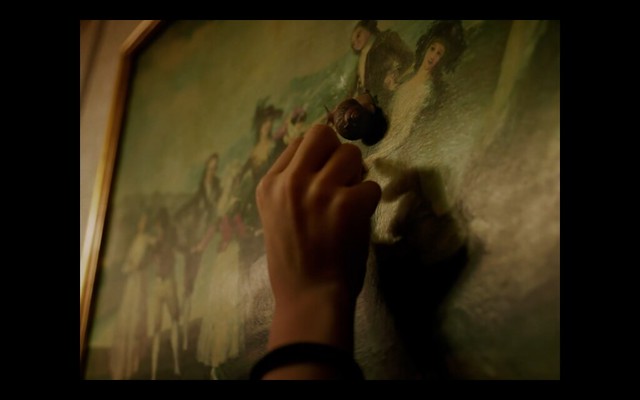
Alfonso Cuarón, a director known for his meticulously crafted Hollywood sci-fi movies Children of Men and Gravity, goes back to his native Mexico and gets more personal with Roma, based on childhood memories of his nanny. It is his first Mexican film since Y Tu Mamá También in 2001. The result is a well-balanced, mature, humanistic and highly subjective observation of a woman’s life.

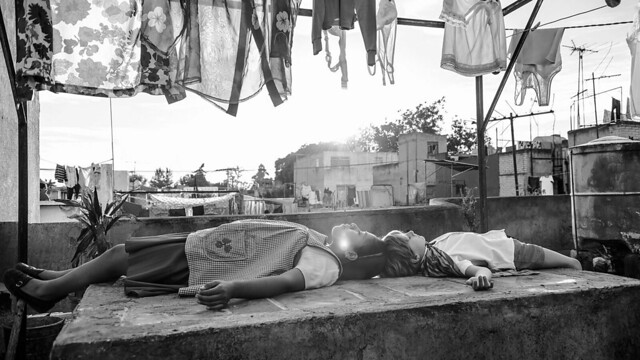
We are introduced to Cleo (Yalitza Aparicio), an indigenous woman working as a housemaid for an upper-middle-class family in Mexico City. Shot in sumptuous black and white, large format (instead of getting help from his regular DP Emmanuel Lubezki, Cuarón shot the movie himself) and using subtle unassuming techniques (mostly in wide angle, slow pan and tilt), the movie focuses on the life of a woman and her profession, which is seldom a subject for a major motion picture.

We start with a long, static shot of the stone floor of a narrow, gated driveway being washed. We hear sounds from the lively neighborhood – dogs barking, children playing, various street sellers signaling their arrivals. The sudsy water is thrown over and over, and we see a plane going across the sky in its reflection on the floor. After the initial title sequence, we slowly tilt up to reveal Cleo doing chores in the courtyard. With this opening, Cuarón sets up the rhythm of Roma – the steady, forward march of time. We are about to witness for a little more than two hours the trials and tribulations of Cleo, the house servant, within a year’s span. The year is 1970.

Cleo and Adela (Nancy García García) are two live-in housemaids for Señora Sofia (Marina de Tavira) and her mostly absent husband, her old mother and their four rambunctious children. Cleo and Adela wake up before everyone else, cook, wake the kids one by one, get them ready for school, clean, wash, get groceries, carry luggage, make tea and do everything else in between. It is clear that much love is shared between the family and Cleo. Kids love her and say so often, and Cleo does too.

Sofia goes through a tough time dealing with the fact that her husband is cheating on her – he fakes business trips to Canada when in fact he is staying in the city with another woman. She appreciates all Cleo does but also lets her know her place on occasion. Cleo is part of the family but not quite: in one continuous sequence we see the whole family viewing a TV program together. It is some silly comedy and everyone is watching and laughing. Cleo, while mindful of everyone’s needs, watches and laughs with them. She approaches the couch where the kids are sitting and sits down on the floor next to them. One of the kids leans his head on her shoulder. Sofia tells her to go and make some tea. She gets up and goes to the kitchen.

Cleo gets pregnant by Adela’s cousin Fermín (Jorge Antonio Guerrero), a brash martial arts practicioner. He abandons her as soon as she tells him that she is pregnant. Sofia, perhaps feeling the sisterhood of abandoned women and/or out of the goodness of her heart, embraces Cleo’s pregnancy and pledges her support.

It is the small details Cuarón shows us that have a cumulative impact, like the sequence of the father very carefully parking his oversized car in the narrow driveway, the constant presence of dog shit on the floor, a plane flying across the sky…. With Roma, he doesn’t make a broad political or cultural statement. It is not that Cuarón ignores the social stratification or political climate in Mexico during 1970 and 1971. Quite the contrary – the family Christmas getaway in the mountains, at the opulent mansion of one of Sofia’s friends, reinforces the masters-and-servants relationship as they have separate living quarters and hangout areas. This is also where we get the only clue to Cleo’s background as she muses on the barren landscape and tells her friends, “This is what my hometown looks like. Drier than this though.” Then there is the Corpus Christi Massacre in 1971 where government thugs (known as Los Halcones) shoot and kill 120 protesting college students. The chaotic scene on the street plays out while Cleo, accompanied by Sofia’s mother, is on her way to choose a crib for her baby. She encounters Fermín, now as one of Los Halcones.

In focusing on Cleo and her surrogate family, who are painfully human with all their faults and blemishes, Cuarón makes the film very personal and subjective, therefore becoming universal.

Although the spectacular uncut ending sequence on the beach might be a technical marvel, Cuarón’s craft does not take away from or overshadow the overall emotional impact it has on the audience. The sequence encapsulates everything Cuarón has been working for – pairing technical virtuosity and universal human decency to a maximum impact. Quietly spectacular, this larger format, digitally shot film needs to be seen on the big screen. Hopefully Netflix, its distributor, will release it in theaters for a while before putting it in their streaming queue.

The underlying theme of Roma is giving love and respect to people who we take for granted – those unsung heroes, the backbone of our society. We make movies of spectacles and amplified emotions. Cuarón focuses on miniature crises in one year in the life of Cleo. Roma is a guileless, subtle, deeply felt human story that is definitely Cuarón’s best and most mature work and one of the year’s best films.

Wednesday, November 29, 2017

Tentacles

La región salvaje/The Untamed (2016) - Escalante
the-untamed-1_intro1
Mixing naturalistic portrait of domestic disintegration and Lovecraftian Sci-Fi, Mexico's other bad boy of cinema, Emat Escalante creates an intriguing but ultimately empty study of toxic masculinity in a still very much religious and patriarchal society.

We are introduced early on to an alien creature through its fat, dirty-pink tentacles near the naked body of Veronica (Simone Bucio). It seems that two aging scientists couple living in a cabin in the woods have been keeping the creature in their barn ever since it landed on earth carried on by a meteorite (as seen on the first shot of the film). The old couple warns Vero not to come back. See, the creature gives them extraordinary pleasure but it's also very dangerous.

So this is the set up of the film:

Veronica, waifish, socially award girl on her motor bike, injured by the creature (the alien being gets tired of its sex objects and becomes violent), feigns her wounds on her side as a dog bite in the hospital. There she strikes up a friendship with Fabian (Eden Villavincencio), a kind gay nurse who's been having an intense sexual affair with his brother-in-law, Angel (Jesus Meza) who has repressed sexuality issues and happens to be a brutish construction worker (naturally!). Fabian's sister Alejandra (Ruth Ramos) is an unhappy, unfulfilled house wife with two young boys, dreaming of getting away from bleak reality.

With Vero as a lure, Fabian gets to experience the alien encounter. He gets his head bashed in and falls in to a coma (alien don't go that way?). According to the police, he also suffered sexual aggression. With their explicit sexual texting and eye witnesses accounts, Angel gets the blame and goes to jail. Vero then introduces Ale to the scientists and the creature.

Escalante dedicates the film to Zulawski, the Polish master known for his emotionally explosive, psychological dramas and whose film Possession is an obvious inspiration for the film. But unlike the tentacled creature in Possession which was more of a personification of a couple's tumultuous relationship, it seems thinner here in its metaphorical meaning - the reptilian sense of carnal desire. It's very much flesh and blood rather than the work of imagination or will.

There lies very thin line between the boyish horse playing of two grown men (construction workers) trying to grab each other's dicks in the field and the gay sex in a club bathroom. But Escalante is too timid for showing male nude or penetration on male subjects (there are some but not explicit). With alien encounters it's all one sided, male gaze. All women are waifs, except for the monstrous mother-in-law. If you want to shed a light on rampant sexual violence and repressed sexuality and make folly of male dominant macho culture, the tentacle porn would be the very last thing I would think of using to make that point.
But Escalante thinks he can have the cake and eat it too. So here we are, we end up seeing tentacle sex, all flesh and blood, explicitly. I feel bad for its actors.

Sunday, September 15, 2013

The Other Side of Mexican Cinema

Duck Season/Temporada de Patos (2004) - Eimbcke
 photo c752c4b1-a866-4132-980f-21f86429eb3a_zpsaf0875ee.jpg
 photo 800461fb-e6ac-4fe3-8cf6-825bd6c9614f_zps99e36429.jpg photo 8dfe9cdf-7366-4bc1-a1a0-dad23d82966c_zps7ce45dd4.jpg
A charming little debut film of director Fernando Eimbcke. Unlike the current crop of modern Mexican directors who tend to go for broke, Eimbcke chooses to be smaller and quieter in scale and scope - and it's refreshing. The awkward comedy of human connection, black and white photography, static long shots and fadeouts have more common with the world of Jim Jarmusch than that of Iñarritu. Young actors here are very good and natural. It tells the lives of two 14 year old boys left alone without adult supervision on one lazy sunday, which is meant to be a pizza and videogames duderthon, interrupted by a sexy 16 year old neighbor and a pizza deliveryman. They are middle class, ordinary people soaked in American culture, not miserablists in some poverty porn. It's a slacker comedy (which I usually hate), but a good, charming one. I enjoyed it.

Sunday, August 12, 2012

Dying of a Broken Heart

Stellet Licht/Silent Light (2007) - Reygadas
silent light2
silent light1
silent light
silent light3
silent light4
I’m still not convinced Carlos Reygadas is a great director. Yes, I get his Bressonian use of non-actors to convey real truth in human interactions. Yes, he is arguably one of the most technically daring contemporary directors that got me excited about current Latin American filmmakers. In Reygadas universe, those exchanges with true human feelings seem to be existing in extremes (and therefore everywhere?) – in Japon, it is in improbable September-December romance, in Battle in Heaven, it’s in btwn rich/beauty and poor/ugly. In Stellet Licht, it’s in an isolated Mennonite community in Mexico.

Johan, a Mennonite farmer, father of six, is having an affair with Marianne. He told his quietly suffering wife Esther when the affair began. He tells his father and best friend that he made a mistake marrying Esther because Marianne is a better match for him. Even though it's wrong, he just can’t end the relationship. It's been two years like that.

For Reygadas film, Stellet Licht is a surprisingly subtle one. It starts out with five minute long take of dawn breaking. The camera slowly rotates from the star studded sky down to the horizon then dollies slowly forward with the sound of barnyard beasts breaking its morning orchestra of insects: the scene is truly a virtuosic filmmaking. There are many measured, beautiful sequences throughout the film. His non-actors bring out some genuinely moving moments also.

Then the magic realism ending comes around and Reygadas leaves everything up to the audience to decide what to make of it. There are some indications to this conclusion- when Johan and Marianne were having one of their last rendez-vous in a small room, a leaf falls from the ceiling. Surely without that ending, the Stellet Licht is nothing but some technical brilliance and turgid melodrama. I haven't seen Carl Theodore Dreyer's Ordet which Reygadas pays an homage to. Maybe it's my cynicism that got a better of me. I just can't easily buy into films that someone dying of a broken heart anymore. I can see the beauty in the modern fairytale, but it's very hard to swallow.

Thursday, April 28, 2011

To the Sea

Alamar (2009) - González-Rubio
There is a brief intro to how Natan, a fat cheeked, curious dark little boy came about, in snapshots with his Italian mother's narration. She was vacationing and fell in love with a local fisherman in Mexico. But their lives were completely different, so now the boy lives in Rome and dad comes over and takes him to his tiny fishing village for a while.


This 'for a while' is Alamar- the boy learns how to snorkel, fish, makes friends with birds, interact with the locals and nature while living in a house on stilts in the middle of the ocean with his dad and grandpa. This docudrama captures some very intimate moments of father-son relationship in the stunning backdrop. Beauty is in its simplicity. Alamar is slice of life doc at its best.

Trailer

Monday, February 14, 2011

Family Business

We Are What We Are (2010) - Grau
Photobucket
The film starts with a disoriented old man dying in an urban shopping mall in modern day Mexico. Cops are called in when a mortician finds an undigested woman's middle finger in the old man's stomach.

It is difficult to review a film like We Are What We Are without revealing too much since much of the film's strength lies in keeping things under wraps. Let's just say it tells the disintegration of one of the most unusual families you will ever encounter and shows their determined, violent resolve to stay alive. Played with great urgency, acting in the film is excellent throughout. The anxious ridden family members are: Alfredo (Francisco Barreiro), the passive, sexually ambivalent older son. Julian (Alan Chávez), the hot-headed younger brother, their seductress sister Sabina (Paulina Gaitán of Sin Nombre) and their disapproving mom Patricia (played with gusto by Carmen Beato).

Director Jorge Michel Grau creates an amazingly suspenseful and assured first feature. It moves along briskly, not giving us enough time to think about its fuzzy details or logic. With the beautifully somber nighttime cinematography and effective sound design, it works like a good old-fashioned giallo with a grittier urban sprawl backdrop. I am partially in disagreement with We Are What We Are being sold as a cannibal movie. Just don't expect another Texas Chainsaw Massacre here. One can even draw the parallels between the family and the ancient Maya ritual involving human sacrifice. Watching the film is a visceral and tense experience. It is an inventive genre exercise done masterfully. Grau is a real talent and I can't wait to see what he will come up with next.

Monday, September 27, 2010

Sensual Panique

Alucarda (1978) - Moctezuma
Photobucket
Photobucket
Photobucket
Photobucket
Photobucket
After her parents' death, 15 yr old virginal Justine(Susana Camini) is sent to the convent/orphanage. There she meets Alucarda (Tina Romero), a dark haired beauty with mischievous smile. They develop a relationship quickly even though Justine smells danger around her new, mysterious friend. After their naked blood-letting initiation with a Puck like creature, the Sisters and the priests at the convent suspect that the girls are possessed by the devil and perform a barbaric exorcism on Justine on a cross. A big mistake.

I'm not a huge fan of Mexican Panic Movement of the '70s that includes Arabal and Jodorowsky who presented surreal, counterculture epics. But their colleague Juan Lopez Moctezuma seems he had a different sensibility. It's very sensual and I like it a lot. The film has almost eastern European feel to it (Valerie and Her Week of Wonders comes to mind). Vibrant color palette and organic looking sets are quite beautful to look at. Plenty of nudity, vampirism, beheading and spontaneous combustion occur throughout, all in the sacred ground. The craftmanship and its subversive nature of the film makes it more than just a b-horror.