Showing posts with label film festival. Show all posts

Tuesday, July 7, 2026

Japan Cuts 2026 Preview

North America’s largest festival of contemporary Japanese film returns for its 19th year this summer at Japan Society! Take a closer look at over 30 curated films from across Japan featuring major award-winners, indie darlings, up-and-coming filmmakers, restorations, documentaries, short films, anime and more. JAPAN CUTS will present lauded actress Hirose Suzu with the CUT ABOVE Award for Outstanding Achievement in Film and host the New York Premiere of A Pale View of Hills starring Hirose as our Centerpiece Film, and the festival will conclude with legendary director Koreeda Hirokazu appearing in-person for the North American Premiere of Sheep in the Box, as the Closing Film. The festival runs July 8 through 18.

And these are the films I was able to sample:

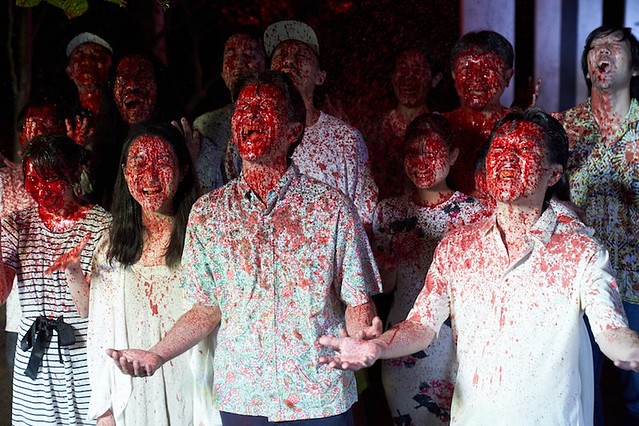
Burn - Nagahisa Screen Shot 2026-07-04 at 9.43.39 AM With expressionistic visuals that combine lo-fi aesthetics and 3D animations, Burn tells the story about Ju-Ju, a teen runaway from a religious zealot household where she and her little sister get regular whipping from her parents. Ju-Ju joins a colorful misfits group headed by seemingly benevolent leader Kami in the famous Toyoko Square in Kabukicho, Shinjuku. She befriends Mitsuba, a girl with a limp from a childhood accident, who uses her disability to lure men in for money. Soon Ju-Ju learns the rope in prostitution from Mitsuba, in the hopes of earning enough money to save her sister from parental abuse. But she slowly learns that her new-found family is not all unicorns and rainbows. She learns that the world is a sinister and endless destructive cycle that she can't escape from. Ju-Ju has only one option - burn it all down.

Burn features perhaps the most sinister foreshadowing in the presence of a pink dildo in the first half, later used as a murder weapon. Saccharine, yet sad, Nagahisa burrows into the narcissistic and fatalistic journey of an outcast teenage girl.

A Pale View of Hills - Ishikawa *Center Piece, featuring Cut Above Award recipient Hirose Suzu Screen Shot 2026-07-07 at 9.29.23 AM Niki (Aiko Camilla), a half-Japanese journalist in England is visiting her mom (Yoshida Yoh) in the countryside. Mom is selling the house that Niki and her sister Keiko grew up in. It's the 80s and everything 'Oriental' is in vogue and she is asked to write about her family origins in Nagasaki. So starts A Pale View of Hills, an understated, complex, handsome adaptation of famed English Author Ishiguro Kazuo (Howard's End, Never Let Me Go)'s debut novel.

Mostly told in flashback, the story centers around Niki's mother Etsuko (Hirose Suzu) in Nagasaki in post-war Japan. The year is 1952. As the country quickly recovered from the atomic bomb devastation and war defeat, the trauma and guilt are deeply felt in everyone. As a young woman expecting a child, Etsuko befriends Sachiko (Nikaido Fumi), a flamboyant woman with her daughter Mariko, yearning to move to America with her GI boyfriend. Mariko, who witnessed the aftermath of the atomic bomb blast and is deeply traumatized, has severe behavioral issues. The film addresses generational conflicts, survivor's guilt, and deep seeded traumas through an unreliable narrator. As with many Ishiguro's books, the emotional revelation in A Pale View comes slowly and subtly, like ripples in a pond. Through her mother's story, Niki is able to understand her sister's suicide and women's choices in the modern world.

Hirose, donning a bobbed curly hairstyle, has a striking resemblance here to Hara Setsuko, a darling of classic Japanese cinema, who starred in countless Ozu films.

Gosh!! - Odagiri Gosh!! Odagiri Joe's freewheeling comedy packed with familiar faces in Japanese cinema - among them, Odagiri himself as a K-9 unit police Dog who seems to be appearing in a middle aged womanizer in a dog suit to his human partner. There's a Bollywood style song and dance number, an elite K-9 handler police woman who faints like a goat when startled, surreal tacoyaki (fried octopus ball) festival, crooked red doors in the middle of the sea that transports you to another dimension, an old white haired ‘super volunteer’ who meddles in missing persons cases, gangsters in a swinging jazz club and a little old man fairy.

Odagiri shows his penchant for slapstick physical comedy here. Playful but directionless, Gosh!! plays out like a loosely connected string of comedy skits that doesn't really land hearty laughs.

Our Little Sister - Kore-eda *Featuring Cut Above Award recipient Hirose Suzu Our Little Sister The movie starts. The three Koda sisters gather in a mountain town for their dad's funeral. They hadn't seen him in more than 15 years. He had an affair with other women and their mother ran away long ago. It was the eldest, Sachi (Haruka Ayase)'s job to take charge of their old style home in picturesque seaside Kamakura and raise her siblings. They find out they have a wide eyed, 15 yr old little step-sister, Suzu (Suzu Hirose) who'd been taking care of their father on his deathbed. She doesn't get along with her step-mother (he was married 3 times). Sachi decides to invite Suzu to live with them. Suzu accepts the offer and they say their goodbye at the train station until their next encounter. The little girl runs after the leaving train... waving madly at the step-sisters, total strangers she just met... like a puppy dog in a shelter who just got some attention...

I break down. It's only been twenty minutes into the movie and I am sobbing like a little girl. Fucking Koreeda. He got me real good. Our Little Sister is such an old fashioned movie - a small town where everybody knows each other, sibling rivalry, life's little complications, family traditions.... But it's done in such a gentle, loving way, you can't deny its honest-to-god innate goodness in ordinary people Kore-eda's portraying. It's an achingly beautiful movie.

Rex: A Dinosaur's Story - Kadokawa Screen Shot 2026-07-07 at 8.08.14 AM Seldom seen outside Japan, this Jurassic Park meets E.T. story was a massive hit domestically, until it was pulled out of theaters amid scandal involving its director, Kadokawa Haruki and his cocaine smuggling business. It was released in 1993, just a few months after Spielberg's Jurassic Park debuted.

This Children's film tells an unlikely friendship of a baby T. Rex and a young girl named Chie (Adachi Yumi). Akira, a paleontologist father of Chie, discovers a frozen dinosaur egg inside a crystal pyramide, after following a Jomon period pictograph into an ice cave, with the help of an Ainu (indigenous people in northern Japan) in Hokkaido. Chie is reunited with her emotionally distant mother who happens to be an embryologist in New York, flies over to help in hatching the egg. She abandoned Chie over her career. Just like dinosaurs abandoning their offsprings after they are born. Chie becomes the baby dinosaur's surrogate mother after the egg hatches- wink-wink, nudge-nudge. But the sinister corporation is trying to capitalize on the discovery by putting Chie and Rex in commercials and selling merchandise, against their will. Rex is mistreated and caged like a circus animal. So it is Chie and the local munchkins to break Rex out, with snowmobiles and air balloons!

Created by the special effects legend Carlo Rambaldi (King Kong, Alien, Possession, E.T.), Rex is a wide-eyed adorable lizard-puppy, a live-action pokemon character with wagging tales, rather than a killing machine with razor sharp teeth. Jolly fun!

Monday, March 14, 2022

Preview: First Look at MoMI 2022

First Look, a Museum of Moving Image's annual showcase, scoping new innovative films from around the world, is back and I'm happy to announce that it's a real treasure trove this year.

This year's lineup includes Murina, a Cannes Camera d'Or (Best First Feature) winner from Croatia, two documentaries by Ukrainian master filmmaker Sergei Loznitsa, Valentyn Vasyanovych's all-too-precient realization of the Russian invasion in Reflection, Chinese artist Qiu Jiongjiong's spectacularly cinematic display of history and art, A New Old Play, Tsai Ming-liang's love letter to flourescent light soaked Hong Kong's afterhours in The Night, Adèle Excharpoulos starring satire on capitalism, Zero Fucks Given, just to name a few. The festival runs 3/16-3/20. For tickets and info, please visit MoMI's website.


Murina - Antoneta Alamat Kusijanovic *Opening Night Film Murina Julija is a teenage girl living in the small fishing island off the rugged, picturesque coast of Croatia with her overbearing father, Ante, and a former beauty queen mother, Nela. Antoneta Alamat Kusijanovic's debut film strongly develops into a fraught father-daughter relationship out in the open, or under the surface in this case with the striking opening sequence- they are spearfishing for an illusive sea eel together. As they come out of the water, you can see there is a cut in Julija's upper thigh near her groin. She was manhandled in the water for something she shouldn't have done. The tension rises when Ante's old friend, millionaire developer Javier (suave Cliff Curtis) visits the island for a land developing deal that Ante is cooking up. They are hoping to move to Zagreb and get an apartment if the deal goes through, possibly leaving behind the fisherman existence. Sexual tension, jealousy clash with controlling nature of patriarchal society. With lush cinematography and great feature acting debut by Gracija Filipovic, Murina stands above the usual coming of age film.

The Night - Tsai Ming-liang *screens with Murina as Opening Night Film The Night Shot in November of 2019 while making Days in Causeway Bay, Hong Kong, this 20 minute short, The Night, is an amalgam of all Tsai's films in a small package - urban loneliness. Long static shots of night exterior with a cold fluorescent lights with ordinary people walking, waiting at the bus stops, eating in tiny stalls, with occasional cars passing by, play out like a Hong Kong version of Edward Hopper painting in motion in a concrete jungle, where human beings seem tiny and insignificant. A melancholic old song "The Night is Too Beautiful to Last" by Pei Ni kicks in around 15 minute mark. The film is Tsai's love letter to the night and melancholy it brings.

Babi Yar. Context - Sergei Loznitsa Babi Yar Babi Yar is a ravine near Kiev where execution of 33,771 Ukrainian Jews took place when the city fell to invading German troops in 1941. They were rounded up by German SS soldiers and the Ukrainian Police Force. In this all archival footage documentary, Ukrainian filmmaker, Sergei Loznitsa, approaches the subject in his typical, non-authorial way, without any narration and spares no one in the process. The holocaust memorial wasn't built until 2016. Now with the Russian invasion with Putin's shrewd campaign to 'denazifying Ukraine' and Svoboda - ultra-nationalist/neo-nazi element in Ukraine and also having a Jewish head of the state Zelenskyy emerging as the national hero during war time, Babi Yar. Context provides Ukraine's complex history and counters what is termed as chronocide, or erasing history, in our modern society full of misinformation and propaganda.

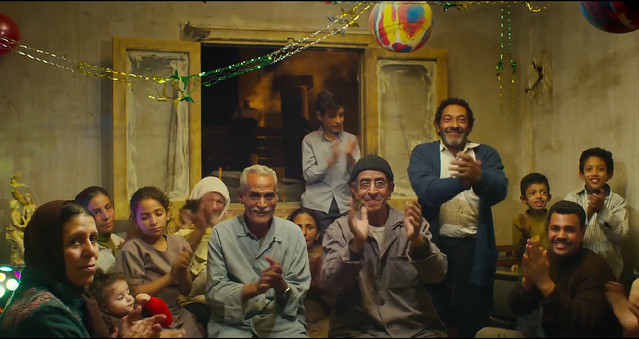
Feathers - Omar El Zohairy Feathers When her husband turns into a chicken during the magic trick at their son's birthday party, our unnamed female protagonist has to deal with 3 young children and crippling poverty and absurd amount of bureaucracy.

Feathers is an Kafka-esque absurdist social satire of the patriarchal, sexist Egyptian society. Director Omar El Zohairy, assistant director for fantastic 2016 film Last Day of the City, making his feature film debut, prefers tight, off-centered framing to accentuate the cramped interiors, physical dominance over the female heroine. Part surrealist comedy and part neo-realist drama, Feathers illustrates that there are very limited options for women living in a men's world.

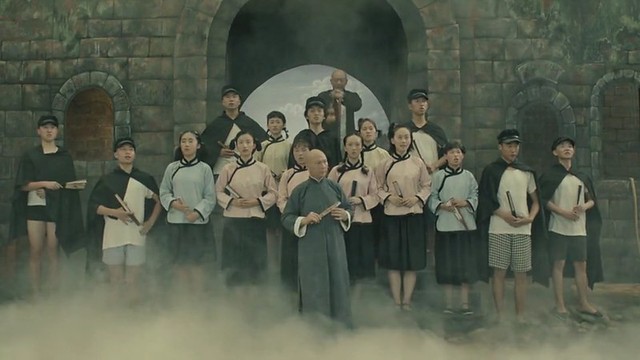
A New Old Play - Qiu Jiongjiong A New Old Play Impeccably crafted, Chinese artist Qiu Jiongjiong's epic A New Old Play is seen through the eyes of Qiu Fu (Yi Shicheng), a gifted Chinese opera singer through the tumultuous modern history of China from 1920s to Mao's Cultural Revolution and beyond.

Qiu, with a white patch around his nose permanently because of wearing his clown makeup all his life, is summoned by two demons (Bullhead and Horsehead) to report to hell, because he is dead. We are then taken back to Qiu's early years as a street urchin being picked up by the Sichuan theater troupe headed by Chinese opera enthusiast and army commander Pocky. Spectacular handpainted sets and backdrops (production design done also by Qiu) and with simple but clever camera staging - slow dolly tracking and playing with deep focus, A New Old Play has in common with Roy Andersson's and Wes Anderson's cinema, if only aesthetically. Through its 3 hour runtime as these carefully orchestrated sets and movements settle you in to lived-in, comfortable feeling. And its Qiu's unbiased approach to Chinese history that gives melancholic resonance and wisdom being a witness to history on a personal level. Qiu hits home the idea of life being a stage, where we live and die on it

Reflection - Valentyn Vasyanovych Screen Shot 2021-09-13 at 10.36.22 AM If Valentyn Vasyanovych's previous filmAtlantis was dealing with fictional scenario of the future ecological devastation and human toll from the prolonged war, Reflection, using gray landscapes and claustrophobic interiors, delves into the psychological damage of on-going conflict and threat from the neighboring ominous superpower. Sly metaphors, like dead pigeon, makeshift pyre, ravenous stray dogs are all present. But as with Atlantis, there is a glimmer of hope in Reflection. This time, it's not the love between a man and a woman, but that of father and daughter. Known to use non-actors in his films, Vasyanovych uses his own daughter to play Polina. She in turn, gives a great performance in long takes, engaging in religious and spiritual discussion with Lutskyi who plays her father. Her innocence shines through in a dreadful industrial, monochrome winter Ukraine landscape. Daring in its cinematic language, and unflinching in its presentation of the present, the film makes you impossible to ignore the state of the on-going conflict in that part of the world.

Read my full review from Venice 2021: https://screenanarchy.com/2021/09/venice-2021-review-reflection-resonant-formalist-look-at-russo-ukrainian-war.html

Zero Fucks Given - Emmanuel Marre, Julie Lecoustre Zero Fucks Given Sharp observations on the service industry in the 21st century capitalism is at the center of Zero Fucks Given. Adèle Exarchopoulos is Cassandra, a flight attendant at a small European airline company, Wing. The film devotes most of its running time to the banal day to day life of young flight attendants who dream of one day working for Emirates Air, the creme de la creme of the industry and hard to get into. But Cassandra seems to have no directions or ambitions, other than going through, repeating her daily routines of work, dealing with constant micro-management, partying off-hours, being lazy by the pool side in sunny Lanzarote where the company hub is located and countless one night stands through online apps.

Things take a drastic turn when she is reprimanded for buying a distraught customer a wine out of compassion and sent home to Brussels. Staying with her younger sister and her sad widowed father, it is revealed she was running away from her mother's sudden death.

With verité style candid cinematography by Olivier Boonjing and Exarchopoulos's committed performance, Zero Fucks Given comments on hyper capitalist society where work and personal life exist like oil and vinegar, yet one dictates another whether we like it or not.

Wednesday, August 18, 2021

Japan Cuts 2021 Hybrid Edition Preview

After last year's all online edition, Japan Cuts, North America's largest showcase for new Japanese films, has chosen to go for a combination of online and in-person screenings (at Japan Society, NYC) for their 15th edition, taking place 8/20 - 9/2. The festival is divided in Feature Slate, Next Generation, Classics, Documentary Focus, Experimental Spotlight, Shorts Showcase, Narrative Shorts and Experimental Shorts, totaling 38 films.

The 15th Edition of Japan Cuts kicks off with the U.S. Premiere of Matsumoto Soushi's charming Sci-fi and samurai tinged celebration of cinema, It's a Summer Film! For centerpiece presentation, Kurosawa Kiyoshi's Venice Film Festival winner, Wife of a Spy. Other highlights are an in-person screening of the late Obayashi Nobuhiko's 3 hour swan song Labyrinth of Cinema, 2K restored version of the cult classic, Hiruko the Goblin and Miike Takashi's The Great Yokai War: Guardians.

Without further a do, here are 5 films I was able to sample:

It's a Summer Film! It's a Summer Film It's a bubbly love letter to cinema with gaggle of high school girls. It stars Japanese idol singer Ito Marika (former Nogizaka 46 member) as a high schooler, Barefoot, who is obsessed with chanbara films and a Katsu Shintaro (Zatoichi) enthusiast. She is in a school film club but disillusioned by the films they produce - directed by and starring her rival popular girl Karin and her entourage. Barefoot decides to make her own samurai film to counter Karin's saccharine rom-com at the year end screening. With her best friends - Kendo champ Blue Hawaii and sci-fi nerd Kickboard and a rag-tag film crew, Barefoot embarks on a harrowing journey of indie filmmaking.

Even though she prefers brusk hero than a pretty boy type, Barefoot can't stop falling for her main actor Rintaro, a handsome time-traveling stranger she chose as her main actor in her film titled, "Samurai Spring." You see, in the future, there is no such thing as movie theaters, movies are only 5 seconds long and the traditional notion of cinema is non-existing. She needs to save the future of cinema! It's a Summer Film! is a cute, airy comedy geared towards Stranger Things crowd.

Wife of a Spy *Centerpiece Film Wife of a Spy Satoko (Aoi Yu), an unassuming young housewife of a wealthy merchant suspects that her husband is involved in something dangerous. The year is 1940. The place is Kobe. And Japan is slowly hurtling toward authoritarian nightmare before the World War II. Kurosawa Kiyoshi directs this period thriller off the script written by Yamaguchi Ryusuke and his writing partner Nohara Tadashi (Happy Hour, Asako I & II) .

Wife of a Spy involves atrocities committed by the occupying Japanese army in Manchuria, experimenting biological weapons on civilian population. It's a very straight forward wartime intrigue with a stellar performance by Aoi as an innocent woman who has her blind devotion to her husband tested and gets embroiled in an international espionage. The film might not feel like a usual KK film, but a solid one nonetheless.

Wonderful Paradise Wonderful Paradise Moving is never easy and letting go even more difficult. It's a moving day for the Sasayas from their large opulent house, because dad had some gambling debts and bad investments. While packing and being nostalgic about mementos strewn about the house, disaffected Akane, the daughter of the family, unwittingly tweets that there will be a party in the empty house with their address. So starts Yamamoto Masaki's madcap comedy Wonderful Paradise. There will be several dead bodies, a gay wedding, a funeral, The Thing inspired coffee bean monster, moving statues with laser beam shooting eyes, strippers, a choreographed dance number, traditional singing, ghosts, synchronized sex scenes, rebirths, a kid turning into a tree branch, a makeshift drug lab, a yakuza gambling den.... By the end of it, Sasayas learned something about life and themselves and finally let things go. Life is one big party.

Mari and Mari Mari and Mari Mari and Mari plays out like a Murakami Haruki novel. Norio (Maehara Kou) is a mild mannered 30-something working at a small casting agency. He is very much in love with Mari (Nao), his long time live-in girlfriend. Their almost nauseating lovey-dovey behavior is an easy target for both ridicule and envy of his co-workers. They even have a corny song of their own that they hum to each other. Then one day, Mari disappears and replaced by childlike girl (Amano Hana), also named Mari. This new Mari doesn't remember where she came from. She is just materialized in his apartment. Norio looks for his old Mari everywhere to no avail. He demands the new Mari to leave but she always returns.

In a very subtle manner, when it comes down to it, director Yamanishi Tatsuya seems to suggest that it's not a particular person but rather the idea of a person in a certain mould that you fall in love with.

As the new Mari sticks around, Norio begins to accept her as his girlfriend. They sing the same song, make fun of each other's silly habits. It's an intriguing film by first time director writer Yamanishi.

The Blue Danube The Blue Danube Ikeda Akira's droll anti-war film The Blue Danube starts with Tsuyuki (Maehara Kou) waking up at the sound of a marching band. As he reports to the army barracks for 9 to 5 shifts, wasting his life away shooting at invisible enemies across the river without a question like a clockwork. "Do as you are told without question" rules this town and everyone follows its rigid army style way of living. No one remembers how long the town has been at war with its neighboring town and the reason for the conflict. They just assume that the town across the river is horrible and its people are savages.

Things change after the new young recruit soldier starts questioning the ongoing conflict. Meantime, Tsuyuki is transferred to join the marching band after its trumpeter suddenly dies.

With intentionally stilted acting and droll delivery of the actors, repetitions and absurd deadpan humor, Ikeda pokes fun of Kafkaesque bureaucracy combined with blind trust in inept authorities and fear tactics instilled in people's mind in the war time. The Blue Danube highlights the meaninglessness of war.

Thursday, July 18, 2019

Japan Cuts 2019 Preview

Blue Hour
blue_hour_02_1
Hakota Yuko's debut feature Blue Hour starts with a flashback of a little girl running carefree in the field in the early/late hours where you can't tell it's day or night- hence the title, Blue Hour. The little girl is Sunada. She is all grown up (Kaho of Our Little Sister) and just turned 30. She has a steady job as a CM director and married, so she should be content with her life. But her lifeless expression and awkwardness around people tell a different story. There is something missing in her life and her affair with one of her crew members doesn't seem to be filling that gap either.

In the spur of the moment, Sunada decides to take a trip to her rural home town in Ibaraki with her quirky best friend Kiyu (Shim Eun-kyung) to see her grandmother who is in an old folks facility. It's been forever since Sunada visited home. It is apparent that she is embarrassed about her dairy farmer parents' 'tacky' lives. It's the life Sunada grew up with but left behind for the city living long ago. But relentlessly cheerful Kiyu is having the best time with her parents and rural surroundings, often teasing her about her snobbish attitudes.

Director/writer Hakota's tale of a modern Japanese woman dealing with what the society expects of her vs her own happiness is beautifully and subtly drawn out. Kiyu tells Sunada that it's the 'tackiness' that makes her feel alive. Kaho and Shim has a great chemistry together. Like Bae Du-na in Kore-eda's Air Doll, using a Korean actress Shim in Blue Hour adds that extra other-worldliness to the character of Kiyu.

Kamagasaki Cauldron War
kamagasaki caldraun war
Largely using actual Kamagasaki residents as his cast, Sato Leon, a documentary filmmaker, creates a humorous, satirical look at an Osaka's less desirable neighborhood of the title. It concerns a stolen iron cooking pot/cauldron, which symbolizes family and community in times of famine and difficult times. But this particular pot, however, belongs to the local yakuza family with their insignia at the bottom. There is Nikichi, a no good bum who hangs around the local whore house. There is Tamao, a reluctant heir to the local yakuza and a rival of Nikichi in childhood. And there is Mei, a free spirited prostitute whom the two men still carry the flame.

Everyone is stealing kamas (cauldrons) in the neighborhood in the hopes of getting rewards and Nikichi becomes an accidental hero while stealing a giant ceremonial kama, to the local radical homeless activists opposing the redevelopment and eviction of undesirables in the area.

Shot in beautiful 16mm with lots energetic moving camera shots, the film has a look and feel of a 70s Japanese New Wave film. The Kamagasaki Cauldron War showcases a part of society that rarely gets depicted on screen.

Orphan’s Blues

31PFF01_1
We are introduced to Emma (Murakami Yukino) furiously scribbling notes on paper, then on her arms and legs in sweltering heat. She seems to have burn mark in her back from years ago. It is revealed that she owns a tiny roadside bookshop on the coast and she constantly forgets the customer's orders. So more scribbling down the name of the book...

Then Orphan's Blues, writer/director Kudo Riho's first feature, becomes a road movie. Emma, with her backpack and a letter that has her friend Yang's last known address, she starts out her journey to find her orphanage mate. On the road she runs into Van (Kamikawa Takuro), another friend from orphanage. He and his young girlfriend Yuri are on the run from some local gangsters. So he decides to tag along with Emma to help her find Yang. The address on the letter takes them to a roadside cafe owned by Luka (Kubose Tamaki), but no Yang. As they spend days together in Luka's tiny, electricity scarce house, the buried secrets and raw emotions come to the surface. With her memories quickly disintegrating, Emma becomes completely disoriented over time.

Orphan's Blues is an unexpectedly moving film about childhood traumas that have a lasting effects on a group of friends. Even though the film is narratively shaky, with natural camera work and young actors' committed, raw performances, Kudo shows great promises as a major voice in Japanese cinema.

Melancholic
Melancholic
Like many Japanese millennials, Kazuhiko (Minagawa Yoji) is floating through his post-college life- still living in his parents' house with no job prospects, even though he graduated from the prestigious Tokyo University. With lanky figure and crooked Jeffrey Dahmer glasses, he is the very definition of dweeb.

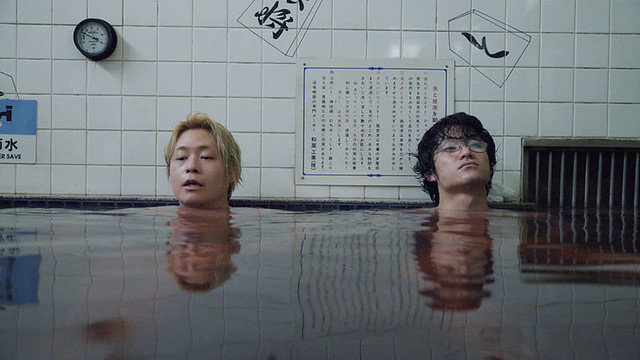
Kazuhiko runs into Yuki, a cute girl whom he went to High School with, at the local public bathhouse. And since the owner, Mr. Azuma, is hiring, Yuki suggests him to get a job there. It's a peaceful, easy job. And it also pleases his mild mannered parents that he is at least working, even though the job might be beneath him. But one night, Kazuhiko walks in on Azuma and a grunt co-worker killing and disposing a body in the bathhouse. He learns that they are indebted to Tanaka, a local yakuza and that he will need to be quiet about the body disposing business or else he will also get killed. So Kazuhiko becomes an accomplice, a cleaner after the deeds are done.

Even though director Tanaka Seiji borrows typical yakuza tropes, at heart, Melancholic is a laid back, quiet coming-of-age story that reflects Japan's economically depressed, directionless generation. The film sharply rejects the old, yet still finds comfort in the notion of 'family'. Its 'que sera sera', live-by-the-moment attitude is well suited for representing the 'melancholic' generation.

And Your Bird Can Sing
The Beatles song that film's title borrows from, is about people not really understanding who you are. It's an apt title for this poignant film about being young and living by the moment.

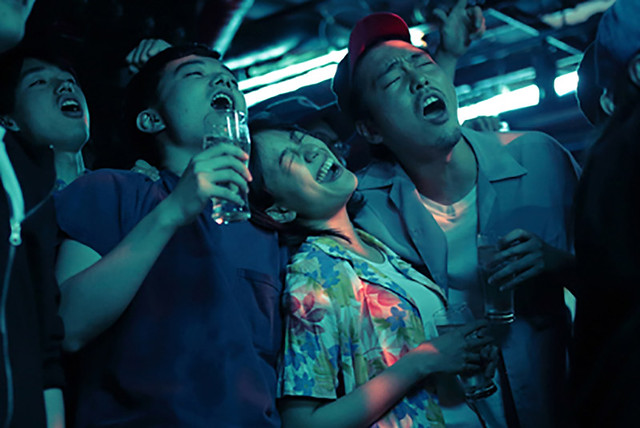
Emoto Tasuku is our nameless protagonist, sporadically narrating the film. He is a twenty something slacker working at a bookstore, part-time. He lives with an unemployed roommate Shizuo (Sometani Shota) whom he shares a one-room bunk bed apartment with. He hooks up with Sachiko (Isibashi Shizuka), a co-worker whose insistence in getting into his life he passively allows. The three of them spend their days out in bars, pool halls and clubs. The night is young for these young people.

Nothing fazes our protagonist. He insists and encourages Shizuo to take Sachiko out. He is indifferent about Sachiko's relationship with the boss at a bookstore. He just doesn't seem to care about anything. The good times won't last long, so why needlessly worry about the future?

And Your Bird Can Sing is much more interested in the embracing fleeting moments of youth than its character development. These three main characters don't have much of an arc nor have anything particularly interesting things to say. But director Miyake Sho captures the tone of this youthful melancholy right. It's that unspoken understanding that nothing is permanent that these characters are aware of and so do the audiences watching them. It's in his details - the fading bouquet of stolen flowers, the warm morning sun hitting Sachiko's pretty face and lovingly sketching out the lives of the film's secondary characters who seem to be contentedly living in their own bubble.

All three main actors Emoto, Sometani and Isibashi are outstanding for their roles in capturing the spirit of these young people. They could easily be seen as hedonistic, but their moments of sadness and silences tell a different story. The build up to the ending with the voice over that bookends the film seems a little tacked on but it worked for me.

The book the film is based on is Yasushi Sato's debut novel. The author killed himself in 1990. But many of his books have been adopted as of late including Sketches of Kaitan City, The Light Shines Only There. Even though the book came out in 1982, his wayward characters and sadness that hangs over like a cloud are still very much completely relatable in today's economically depressed nation.

Tuesday, June 21, 2016

NYAFF 2016 Preview

Alone - Park
 photo cb620cb6-996b-4754-a185-9097952558e3_zps1jn53och.png
A hilly, labyrinthine shanty town in Seoul is perhaps the biggest star in Alone, a thoroughly intriguing Hitchicockian mystery by Park Hong-min. It starts out with a POV shot of our photographer protagonist Su-min (Lee Ju-won) on all fours scrubbing the blood splatter on the linoleum floor of his photo studio. Then we cut to him witnessing a woman bludgeoned by masked men from a faraway rooftop through his camera. The men notice him taking pictures, give him a chase and catch him. Then right before they kill him with a hammer, we cut to the next scene, where now naked Su-min wakes up at night in the same neighborhood. So begins his descent into a purgatory filled with suppressed childhood memories and guilt and shame of a ne'er do well artist. 

Comprised with mostly a handful of long handheld sequences, Alone is an amazing feat from a technical standpoint. But its thin narrative stretches out a little too long. But its Escher like intricate narrow staircases and alleyways are a site to behold as they reflect the mind-scape of our protagonist perfectly. It's a great intriguing puzzle piece by the first time director Park. 

Hamog (Haze)
- Jover
 photo caa8d998-1a92-408e-bb8f-651f436c56da_zpsrphopvoc.jpg
Filipino writer/director Ralston Jover's Hamog (Haze) starts with 4 street urchins of Manila slowly waking up in a discarded giant concrete pipe near the filthy river. The little one keeps insisting that they go swimming. And you instinctively go, oh god, not another third world poverty porn. But what's great about Jover's gritty film besides stellar acting by its little protagonists, is its unpredictability. 
The kids subsist their living on stealing from drivers who are stuck in monstrous city traffic by distracting them as a team. After one such job, Jinky (Teri Malvar), the only girl in the group, gets taken by the angry taxi driver. Then another job cost them the life of Mo, the youngest. It's Rashid (Zaijian Jaranilla) who takes on the responsibilities of giving a proper burial to his friend. In the mean time, Jinky is pushed into a domestic servitude for the taxi driver and his always squabbling wife. But he has other ideas for Jinky to do. Jover concentrates on the strength and the resilience of these kids instead of depravity and ugliness of the streets. Shifting point of view affords Malvar and Jaranilla to shine in their respective roles. It’s a film with a huge heart that takes viewer to unexpected places. A great little film.

The Tenants Downstairs - Tsuei
 photo 6d935b1e-752c-4ab4-8103-0b11d72290cc_zps019zou95.png
This sleek, black comedy, based on a book by Taiwanese celeb writer Giddens Ko (You are the Apple of My Eye, Cafe. Waiting. Love) about a passive peeping tom, quickly devolves into a mayhem- murder, incest, sodomy, cannibalism, etc. Hong Kong superstar Simon Yam, speaking Mandarin here, plays a landlord of an apartment complex occupied by- a divorcé with a young daughter, a haughty office worker, a P.E. teacher who loves her, a gay couple and an online gamer.

At first, it is business as usual, through hidden cameras in each apartment, the landlord monitors comings and goings of the each occupant with occasional sexual gratifications, but always from a distance. Everything changes when a comely mysterious new tenant, Yingru (Shao Yu-wei) moves in. With big bulky suit cases adorning the living room seemingly unpacked, Yingru's calm demeanor lures our landlord in to her apartment to snoop, only to discover her American Psycho style habits (complete with a clear plastic raincoat).

They develop an unspoken understanding after she suggests him to set himself and others free from daily routine of ordinary life. So the landlord starts actively messing with the tenants' lives. Pitting them against each other in the most sinister, vile ways, he relishes in his god-like power.

The Tenants Downstairs is depraved, dark comedy that questions the true human nature. Tsai Ming-Liang's regular Lee Kang-sheng also stars as an older gay tenant whose love life becomes a little more complicated by Yam's character's shenanigans.

What’s in the Darkness - Wang
 photo 541a8ac1-b337-47dc-94c3-426f20d78373_zpswug66lnu.jpg
The film is an interesting melding of a serial killer genre and a coming-of-age story set in the early 90s rural China. Su Xiaotong shines as Jingjing, a curious Middle Schooler on the cusp of puberty. While her college-educated, but ineffectual police officer father grapples with unsolved murders of women (possibly by a serial killer, marking his victims with a cross sign on their upper thighs) in their small town, Jingjing slowly learns about opposite sex and how to behave in a society that is still steeped in old ways. It's the 90s China which is still a very conservative, authoritarian society where the country's one-child policy is bearing a new generation of bratty, insolent children.

With this complex backdrop, What's in the Darkness gives up being a police procedural in the middle since the police has no clue on what's going on. Instead the film concentrates on Jingjing's life, as she juggles the school, working at an old folks home, attentions from boys and her clueless parents. Bong Joonho’s Memories of Murder comparison is unavoidable and it’s a hard film to measure up to. But except for some technical issues and pacing, the film is a commendable fine first feature by first time director Wang Yichun.

Ten Years - Au, Ng, Chow, Kwok, Wong
 photo 5c600019-ddad-4151-a6f1-f1754f156728_zpszewugunn.jpg
It's hard to believe the handover of Hong Kong from 150 years of British rule back to communist China took place almost 20 years ago, in 1997. As one of Asia's biggest economic powerhouses, the peaceful handover of HK signaled the beginning of China's rise to the global economic superpower status. So what happened to 7 million Cantonese speaking Hong Kongers? After the initial jitters, the things have been relatively quiet. So the West largely ignored and have forgotten the fact that it was as much a cultural annexation as a political, economic one.

Reflecting the uneasy mood of many inhabitants of HK after massive sit-in demonstrations against Beijing's restrictive electoral reform in 2014, known as Umbrella Revolution- a non-violent, pro-democracy protests, 5 filmmakers envision what if scenarios in varying degrees of plausibility in 2025 Hong Kong, where ethnic minorities are used as a pawn for the political gain, housing shortage pushing people into self-sacrificing artifacts, speaking Cantonese is discouraged or worse, self-immolation is contemplated and acted upon as a political statement and children starting to spying on adults.

Ten Years is a contemplative, sobering reflection of what Hong Kongers are feeling now. No wonder it beat out Star Wars: Force Awakens at the HK box office last year and is banned in China.

Thursday, January 7, 2016

Get Your New Year's Cinephilia on with MoMI's First Look 2016

 photo f47fab6b-321b-4584-95eb-715da807daa9_zpsg3wnub0n.png
Starting this Friday and running for three consecutive weekends (1/8-1/24), in their beautiful state of the art theater in Queens, Astoria, the Museum of Moving Image's First Look Film Festival is fast becoming a new New York institution for many film aficionados. Selecting its roster from cinema's most cutting edge filmmakers, the 5th edition of First Look opens with the US premiere of Alexandr Sokurov's new film Francofonia.

Switching gears a bit this year with guest programmers such as Jean-Pierre Rehm of FIDMarseille, and Aliza Ma of Metrograph and Mónica Savirón, along with chief curator David Schwartz, this year's eclectic roster is heavy on the experimental/avant-garde/documentary.

It includes renowned experimental filmmaker Ken Jacobs' new films in 3D, Canadian video artist Dominic Gagnon's youtube culled Inuit epic Of the North, artist Margaret Honda's 70mm silent film Spectrum Reverse Spectrum, short films of Austrian visual artist Björn Kämmerer and Philippe Grandrieux's new film, Meurtrière (his continued exploration of bodies which started with White Epilepsy).

Then there are behind-the-scenes documentaries from Léa Rinaldi (This is What It Is- about Los Aldeanos, the most popular hip-hop group in Cuba, Traveling at Night with Jim Jarmusch and Behind Jim Jarmusch), a documentary on João Bérnard da Costa, a director of the Portuguese Film Museum in conjunction with Nicholas Ray's Johnny Guitar.

Here is how chief curator David Schwartz describes this year's edition in the press release:

This year's edition is a true cinephile's feast, filled with works that reflect on the medium itself, that urge us to reconsider our intimate connection to the ways that we experience cinema. as always, the films in First Look cannot be easily defined. They are artisan works, expressing distinct personal visions, with a strong emphasis this year on avant-garde cinema. To engage in the new possibilties of an art form is also to engage with the past, and this edition of First Look contains an ongoing dialogue with film history, with a selection of older works in dialogue withthe many premieres.

Twitch's own Christopher Bourne will be reporting on some of these selections in a short while, so keep a look out.

First Run Film Festival 2016 runs 1/8 to 1/24 at Museum of Moving Image. Please visit MoMI website for further information and showtimes.

Thursday, July 9, 2015

Japan Cuts 2015 Preview

Thanks to Japan Society's fabulous Shannon Jowett, I was able to see some of the best contemporary Japanese films making New York premiers at this year's Japan Cuts. In it's 9th outing, the series is not only North America's largest celebration of Japanese cinema, but also remains to be one the best film event in the city.

Japan Cuts 2015 runs July 9 through 19. Please visit Japan Society website.

Here are 4 outstanding quality films I got to see:


HIBI ROCK: PUKE AFRO AND THE POP STAR - Opening Night Film. July 9, 9pm [Introduction and Q&A with director Yu Irie, followed by OPENING NIGHT Party!]
Hibi Rock photo 4b403cfd-caf6-474f-a31a-78f601e5a0f5_zps48sex4mf.jpg
Returning to Japan Cuts this year with two films (Hibi Rock and Joker Game), Yu Irie is a familiar face around this part of the world with his crowd pleasing films depicting Japan's indie music scene- 8000 Miles Series, Ringing in their Ears. His new film Hibi Rock: Puke Afro and The Pop Star, once again, plunges us into that music world he knows intimately.

Based on the popular manga by Katsumasa Enokiya, Hibi Rock concerns the minimally talented rock band Rock 'n' Roll Brothers (Hibinuma- guitar/vocal, Yoda- drums and Kusakabe- bass). The film is, more than any other Irie films, at its most cartoonish, but also most fun: lead singer Hibinuma (Shuhei Nomura), with his afro, deer in the headlight expression and his mouth agape, is ripped straight out of a freeze frame of a manga page. There are a lot of kicking balls and instantaneous nose-bleedings at exposed boobies also.

Always an underdog, Rock 'n' Roll Brothers barely survive on cleaning toilets of the small venue they sometimes get to play at. But their luck changes when a super pop idol Saki Udagawa (Fumi Nikaido of Ringing in Their Ears and Why Don't You Play in Hell?) shows up and take an interest in their music. It's not really their skills she's thrilled with, but their infectious energy and freedom. Because what's the point of rocking out if you are not free? Saki reminisces about her humble beginning in a high school band playing guitar. She tells Hibi that she is empty inside even though she is a mega star. She is well aware that her fame and popularity will fade away. She wants him to write her a song.

After getting rejected by Saki's all powerful promoter, downtrodden Rock 'n' Roll brothers split up. Hibi ends up working at a fish cannery, gutting fishes, Yoda in construction and Kusakabe a lumberjack. Hibi learns the news that Saki is hospitalized and in serious condition and decides to deliver the song he wrote for her. So he runs to Tokyo, the note he wrote the song on in one hand and a dead fish in the other.

As usual, Irie's penchant for portraying lovable losers and youthful energy takes the center stage in Hibi Rock. Nomura's perfect as an all out cartoonish front man and a virgin. Even though she plays a sick girl, Nikaido's smile still kills. Hibi Rock is a loving tribute to the spirit of Rock 'n' Roll.


ASLEEP - Centerpiece Presentation. July 16, 6:30pm [Introduction and Q&A with star Sakura Ando]
Asleep photo 4cb09987-309e-440c-af33-be3c983863e1_zpsuc7zduvn.jpg
Based on one of the 3 stories from Banana Yoshimoto's novel of the same name, Asleep, tells a story of Terako (Sakura Ando of Love Exposure, 0.5mm, Penance), a young woman having an affair with an older, married man, Iwanaga, whose wife is in a coma. Terako spends most of her days in her bed under the fluffy covers in her underwear. She is kind of a kept woman in a sense, because Iwanaga wants her at his beck and call. She prods him about his wife in their rendez-vous in cheap hotel rooms, but he obviously doesn't want to talk about it much. Terako also struggles with the memories of Shiori, her roommate whose suicide impacted her life greatly. Shiori was sort of a 'sleep prostitute' - a person who keeps you company when you sleep.

The act of sleeping in Asleep is akin to a clinical depression. It's an exhausting affair. Terako finally realizes that Shiori's role to all those lonely people was to absorb their darkness like a sponge. Hence, she theorizes her roommate's death as sheer exhaustion from taking all that darkness. She needs to get out of her sleep-walking life. And the help comes from an unexpected source.

The film is far from being sad and gloomy. Always enigmatic Ando channels her soft, feminine side and gives our somnambulist heroine the subtlest, perfect emotional range. Photographer cum director Wakagi Shingo's uncluttered simple, airy look also betrays its potentially dark subject. In Wakagi's soft-edged world via quietly whimsical writings of Yoshimoto, waking moments are just as comforting and warm as your own bed.


100 YEN LOVE - Centerpiece Presentation. July 16, 8:45pm [Introduction and Q&A with star Sakura Ando with CUT ABOVE award ceremony. Followed by the PUNCH LOVE Party!]
100 Yen Love photo f3af03cd-9860-44d4-830a-9e7ccd51b7c7_zpspeffa4ev.jpg

I'm madly in love with Sakura Ando. The film tells a 32-year old no-do-gooder and a virgin slob Ichiko (Ando) still living with her parents, not helping her mom's small bento shop business and getting into a fist-fight with her just-divorced-single-mom sister. Her only outside contacts are a 24-hour 100 yen shop- American equivalent of a dollar store, where she gets her sustenance (junk food) from and a nearby boxing gym where she gets to glimpse of a boxer Yuji (Hirofumi Arai) exercising. He's not a good looking or anything, but she is entranced somehow.

After a big fight with her sister, Ichiko moves out and with the help of her softie mom, she gets a small flat and gets a night shift at the same 100 Yen store. Working there, she meets an assortment of weirdos who are just as much losers as she is. She even hooks up with Yuji, who always seem to forget his bananas he just bought at the store. "Why did I ask you out? Because I knew you wouldn't say no." He said coldly at their first date at the zoo. He invites her to his boxing match where he gets beaten badly. He says that he's 37 and that was his last match.

After being raped by a shady older co-worker, she decides to take up boxing herself. The coach mistakenly thinks that she's there to lose some weight but slowly but surely sees that she is determined to kick some ass, or maybe her own ass.

She finds Yuji inebriated in the corner of the street and takes him in and nurses him back to health. They become lovers of sorts. She still trains and works her night shift at the store.

It's a Jake LaMotta style transformation, only in reverse- Ichiko trains really hard and becomes a fit, ferocious girl. When asked by Yuji why box, she demurely answers, "I like how you hug each other and tap your shoulders after the match".

She bugs her coach, day and night, to give her a chance to get into the ring. The coach tells her that she is too old to be a professional boxer. The age limit for woman is 32. But she is determined to get that last chance to show the world that she is somebody. The coach tells her that it's no cakewalk.

We know she is 100 Yen kind of a gal. She says so herself. But would she stay a loser forever? The film is a total underdog story that largely relies on the shoulder of Ando and she gives, hands down, the best performance of the year here. Heart breaking and poignant, 100 Yen Love is easily one of the best films I've seen years.


VOICE OF WATER - July 17, 8:45pm
Voice of Water photo af98d0ab-d795-4358-a5e5-540b21add12c_zpskrhnk88e.jpg
Veteran indie filmmaker Masashi Yamamoto (Three Points) directs this intriguing story involving a beautiful Zainichi (Korean-Japanese) shaman.

What started out as a half-hearted, simple easy money making scheme- palm reading with the help of her best friend Mina (Shuri), Minjung (Hyunri), a granddaughter of shimbang (Korean Shaman) becomes a face of a religious cult, God's Water, backed by a suave ad executive Akao (Jun Murakami) who sees money in the venture. Her sincere attitude, exoticism and beauty are mainly the selling point, showing real compassion for troubled, but gullible souls who pour out their sob stories in front of her.

In the meantime, Minjung's no-good father Mikio, who owes a lot of money to a ruthless yakuza, shove himself again in to her life and in to God's Water organization as a janitor.

Minjung starts to feel the fang of conscience about what she's doing. Mina assures conflicted Minjung that even though she doesn't have special powers, she is indeed helping these lost souls. After Minjung's encounter with an old blind woman, she has a breakdown and announces that she is leaving God's Water. It's a shock to everyone and puts the organization in frenzy to find a replacement. She embarks on a journey to find her family roots and her purpose in life in the woods of Saitama.

Yamamoto's interest doesn't rely on sensational aspect of the religious cult as it is often portrayed in films. It's also not an all out satire on modern illness of gullible lost souls grabbing at the straws for salvation. It's mostly about a Zainichi woman's journey to find her family roots that she never knew before, through traditional elements from her ancestry. The ending is somewhat predictable with the gangster plot and you-can't-cure-damaged-goods storyline. But Voice of Water is deeply humanistic and thoughtful and a completely different take on typical prejudice, racism ridden minority story.

Thursday, June 25, 2015

NYAFF 2015 Preview

It's that time of the year again. New York Asian Film Festival is upon us. The sprawling two-week event (June 26 - July 11) is, as usual, filled with craziness- impossible action sequences, absurd humor, beguiling romance and general nutty mayhem. It takes place in FSLC and SVA Theater this year.

From Subway Cinema website:
Welcome to the 14th edition of the New York Asian Film Festival (NYAFF). We’re back with 54 feature films, including 2 World Premieres, 3 International Premieres, 14 North American Premieres, 5 U.S. Premieres, and 12 New York City debuts. The festival will be attended by 18 international filmmakers and celebrity guests traveling from Hong Kong, Japan, South Korea, Taiwan, and the U.S., headlined by this year’s NYAFF award recipients: Hong Kong’s legendary director Ringo Lam (Lifetime Achievement Award), Hong Kong superstar Aaron Kwok (Star Asia Award), and Japanese actor Shota Sometani (Screen International Rising Star Award).

NYAFF 2015 will feature five focus programs: Hong Kong Panorama; Myung Films: Pioneers and Women Behind the Camera in Korean Film; New Cinema from Japan; Taiwan Cinema Now!; and The Last Men in Japanese Film, a joint tribute to actors Ken Takakura and Bunta Sugawara, both of whom passed away last November.NYAFF 2015 will feature five focus programs: Hong Kong Panorama; Myung Films: Pioneers and Women Behind the Camera in Korean Film; New Cinema from Japan; Taiwan Cinema Now!; and The Last Men in Japanese Film, a joint tribute to actors Ken Takakura and Bunta Sugawara, both of whom passed away last November.

Please visit Subway Cinema website and FSLC website for more info and tickets.

Here are 4 films I could sample:

VENGEANCE OF AN ASSASSIN - July 10, 6pm
Vengeance of an Assassin photo 6b71c8b9-95e7-400c-b17e-9b41de6bb18a_zpsjtyohpwj.jpg
Thai martial arts action choreographer cum director Punna Rittikai died of liver failure in 2014. Rittikai was a mentor for Tony Jaa and largely responsible for the rise of Muai Thai craze. So unsurprisingly, his last film Vengeance of an Assassin features some of the most delicious no-holds-barred choreographed action sequences to cover up some very schmaltzy storyline and bad acting.

It starts out strong with full contact soccer match in a rusty factory full of sharp objects. Then there is low angle, shooter's POV long take gunfight sequence. Runaway train fight sequence is also awe-inspiring. Rittikai tops it all off with John Woo style gun fight sequence in one continuous shot, which is so mindblowingly choreographed, all I couldn't help but admire the logistics team behind it all. You definitely need to get a tetanus shot after seeing the movie!


FULL ALERT - June 28, 2pm *Director Intro
Full Alert photo 29fed632-80cc-40a4-9c20-13883dbf3ed7_zpslvzjpfob.jpg
Full Alert is a great Policier from the director of City on Fire (which Tarantino ripped off for Reservoir Dogs) and arguably the last great HK film he directed. Lam announced retirement from film business after his unsuccessful Hollywood stint with string of movies starring Jean-Claude Van Damme.

This kinetic film tells a cat and mouse game between inspector Pau (Johnny To regular Ching Wan Lao) and the educated master criminal Mak (Francis Ng). After Mak is captured and confessed for the murder of a chemist, his crew bows to get him out of police custody. This sets up the full scale street battle and heist sequence akin to Michael Mann's Heat. Full Alert also features great car chase sequence running through crowded downtown city scape and presents great street chase scene through bustling outdoor markets of Hong Kong. Lam doesn't neglect the human drama he is known for - loyalty, honor, family all play big parts amidst of mangled metals and flying bullets.

After a long hiatus, Lam is directing again. I am excited about his new film Wild City which he describes as the last of the City Trilogy (After City on Fire and Full Alert), starring Louis Koo and Shawn Yue.

*Director Ringo Lam will be honored with the 2015 Lifetime Achievement Award at NYAFF


BANGLASIA - July 10, 8pm *Intro Q & A
Banglasia photo 5010b7e6-ff8a-4bc9-8ff9-05d7d3fdca87_zpsazpvpd0p.jpg
Censored upon release then subsequently banned by Malaysian censor board, Banglasia is a controversial Malaysian musician/filmmaker/internet personality, Namewee's all-out satire on racism and jingoism in Malaysian society. The irreverent comedy stars a lowly worker from Bangladesh trying to earn enough money to get back to his fianée back home before she gets married off to another by the Chinese New Year, which is January 31st. He is confronted and bullied by a jingoistic internet activist (Namewee) who regularly calls him Bangla, even though he himself is from a Chinese heritage.

Throw in a pretty nurse who is smitten by the handsome, good natured foreigner and a cute tattoo artist, Banglasia is a kitchen sink full of infantile humor, gunfights, crazy dream sequences and instantaneous singing (including a Bollywood style dance number). It also is damning indictment of a politicians who uses race as bait for their own political gain. Banglasia is an over-the-top satirical comedy with a style and resonance that makes you wonder about paranoia and humorlessness of those in power.


SECOND CHANCE - July 11, 1pm
Second Chance photo 615fbf37-52e8-41bc-a66a-e29bfdd4569f_zpsbxgo8v52.png
An orphaned high school girl Hsieh (Huang Peijia) has to keep up with both being a Miss Little Perfect (a sword wielding captain of the school's honor guards) and a billiard parlor owner (inherited from her father). But unless she finds her washed up billiard champ uncle Siang Shuan Fen (Monster of Taiwanese rock group Mayday, making his feature film debut here), she has to go to a foster home and will surely lose her beloved billiard parlor to loan sharks. Thanks to a youtube clip, Shuan Fen is located and forcibly brought back by Hsieh Hsieh's long time admirer/neighbor/best friend/minion Oden (Liu Yihao). Hsieh decides to get into playing pool to save the parlor but needs a lot of practice and coaching. Shuan Fen sees it as an opportunity to get back in the game and get a second chance to get it right. Filled with likable performances, featuring real life international pool players and redemption plot, Second Chance is a great sports film in the tradition of Color of Money and Rocky.

Sunday, April 12, 2015

The State We Are In: Christoph Hochhäusler Interview

photo 10441d7c-10b6-4c09-8ab3-349864b8fd25_zpsyksklmet.jpg
One of the leading figures in Berlin School (Berliner Schule) movement, Christoph Hochhäusler (I am Guilty, The City Below) is known for creating psychologically complex characters in an imposing environment. His new film, The Lies of the Victors, a taut conspiracy thriller in post-Snowden era, then, can be seen as the director charting a new cinematic territory.

He is in town for KINO! festival and I was lucky enough to snag an interview. I have to mention that the interview took place in Silversalt PR office in Soho to give the context in part of our conversation.

The Lies of the Victors plays part of KINO! 2015 which runs 4/9 - 4/16. For more info, please visit the festival's website.
 
After directing THE CITY BELOW and ONE MINUTE OF DARKNESS  for DREILEBEN TRILOGY, you decided to make a political thriller, THE LIES OF THE VICTORS. What made you to do this film?

I have a relatively complicated back story about that. But I can tell you. You can choose to use it if you want to. Long before the two films you mentioned, I wrote a thriller centered around a journalist. But I never really found the right approach. The level of realism and obstruction was shifting due to what was happening at that time. Eventually I never used the script for anything. But I showed it to my co-writer, Ulrich Peltzer (co-writer of The City Below), who is at the moment doing a writer's residency at Cornell by the way. We decided to keep only the name of the main character. (laughs)

Fabian Groys?

Yeah and his profession - journalist, everything else changed. But I always liked the idea of journalists as heroes in films. That's a genre that is especially well developed in American cinema. There are not so much in European films dealing with journalists.

You mean ALL THE PRESIDENTS MEN and so on?

I mean also from the 30s. His Girl Friday is a favorite of mine and in all Howard Hawks films. The Lies of the Victors is pretty much a hardboiled detective story but a detective with a different agenda you know.

It does play out like a film noir without any gun play or car chase scenes.


And no explosions. (laugh) Yeah, that's what hooked me. And then I was searching for the ways to deal with what you could call modern problems. I mean like media industry and lobbyists and things that are not really personal stories but more about structures and so on. So that's how it got started.

What is your working process like with your co-writer, Ulrich Peltzer?

Usually I approach him with broad suggestions for a story. And then we write it together, meaning we seat in the same room and discuss everything. and usually he types. It's typing reading correcting typing reading correcting... it's a beautiful process.

The film struck me in very similar way as Costa Gavras' Z, probably because of its bleak assessment of what's going on around the world. But unlike THE CITY BELOW or ONE MINUTE OF DARKNESS where antagonists or antagonistic presence were kind of hidden, in THE LIES OF THE VICTORS they are more pronounced. Why is that?

It's probably because out of all my films, The Lies is the most typical 'genre' film I've done. I'm not saying that conspiracy genre is a very hard genre to do. There aren't a lot of rules that need to be established. It's a pretty blurry tradition. So it's not very limiting. But at the same time, there are some expectations in it that I tried to respect them more than in my other films. I'd say from all my films, this is the closest to a genre cinema I've done.

But it's also the nature of the story that antagonism plays a big part- there is no antagonists in The City Below other than the people themselves.

True.

The worlds that resemble our world in both THE CITY BELOW and in THE LIES OF VICTORS are very dystopic in nature. Do you share this bleak assessment of our world in real life?

Yes and no. Of course I'm not trying to be someone else when I make a film but I see life with a lot of optimism actually. (laughs)

Of course there are a lot of things I worry about. But I doubt that our time is worse than others. You know what I mean? Probably it's always the same shit all over. (laughs) But as always, there are possibilities for goodness, beauty and grace, you know. Then I have to agree that it's pretty bleak. If you look at the headlines of last couple of years, it's really a mess.

Then again what era was ever a good era? It's always the past we are fond of for some reason.

Another thing that interested me was that characters in your films often deal with being admittedly guilty or perceived as guilty but it's not clear in Fabian's case. I am wondering, if anything, what Fabian is guilty of?

Well I'm not sure if guilt is such a big theme for me personally, but of course it is in German culture in general. What he is guilty of is the same as we are all guilty of, carelessness. For example how news are being made, you know. Fabian is obliged as a journalist to question everything, that more skepticism is needed. He is an easy prey for those in power.

I mean old school journalism is quite unprepared for the possibilities of surveillance and new technologies. It's amazing what they can do now. They can even change source material without you ever knowing about it. It's really easier to get away than ever. And of course we are so concentrated on the state surveillance but we all know the companies do it. Discussions that have been going on so far post-Snowden, there have been too much focus on the state surveillance. NSA is a state organization, but there is enough proof that NSA contractors, like the one Snowden was working for, are working for other powers including the US industries.

All the telecommunication companies that all complied to the government since the Patriot Act...

They comply to the government but if you want to know what your competitors are doing, there are ways to find it out. The thing is it's being done already. They do it and there is not enough attention getting paid to it.

Following up Berlin School conversation I had with Christian Petzold and last year's MoMA coverage by Ben Umstead, how do you feel about being grouped in this kind of movement?

I don't have any problems with it. I think it's a critic's job to describe what's happening. There is a certain... family of filmmakers so to speak. We are in touch and there are discussions taking place and there is no money attached and there are no rules. I don't want to define who's in and who's out. But it's true that there are unusual amount of solidarity and interest for each other. So why not call it a name, Berlin school or otherwise.

Of course the implication of the label is sometimes harmful. For example, when it comes to financing a film I've heard many times that they say 'we don't want to finance Berlin school films'.

Wow, really?

Because the industry is full of expectations - 'they (the berlin school films) are too slow' or call it  whatever else you can think of when you don't like something. So there is always a problem being labeled like that.

I see.

It's probably the same in journalism. You are labeled as someone who only like this or that.

'You only cover genre films' or something like that.

Yeah exactly. It's limiting.

You mentioned in an essay that Berlin School is not limited to Germany but you see it happening everywhere.

I wouldn't say that Berlin school is everywhere. I think it's the same spirit in filmmaking whether it's Argentina or Korea or Austria or Portugal. It's international interest in certain tropes and modes of state it's on. I'm not saying that we influenced them.

Where do you think this similarities in spirit comes from?

It's the reaction to having too much formulaic. Every wave in film history is trying to regain a certain believability or to refresh things, you know. Every wave tries to regain something that is lost - if you look at neo-realism or nouvelle vague or free cinema, it's all about getting over the cliché of what's come before them.

For us, we are gunning beyond formula, beyond what's become as a commodity. There will be a lot of movements after us and there are already, I'm sure, with very different stylistic approaches. But I don't believe in stylistic revolutions. I really don't think it's about style. The style is what follows.

Do you still watch a lot of works of other filmmakers and follow what they are up to?

Of course. but I don't watch as much as I used to. I have two kids now. (laughs)

You used to be a film critic, no?

Yes and no. I co-founded and edit a film magazine called Revolver. We founded it in 1998. It's a magazine that mostly publish interviews. I'm still doing that.

So who do you like?

I mean one of the directors I admire the most is her (pointing at a La cienaga poster on the wall, by Lucretia Martel).

This is La cienaga, her first film and which might be her best film overall. But when it comes to form I'm a big fan of La mujer sin cabeza.

Headless woman. Yes, of course.

She is now making a new film and I'm very excited.

It seems that's where things are happening right now, Latin America.

Yeah, there are many. Lisandro Alonso, and few Mexican directors too.

What's next for you?

Among other things I am preparing a French film set in 1941, a period picture. It was initiated and starring Isabelle Huppert. But the financing is not there yet. As you can imagine, it takes a while. I don't know if it will happen.

Let's hope it does because it sounds awesome.

Thanks. And the other project is some sort of a gangster movie. I have ideas for all kinds of films. I'm also writing a new Dr. Mabuse film. so we will see what happens.

Monday, April 9, 2012

Disappearing Act IV - European Film Festival in NYC April 11-22

Disappearing Act, the only European Film Festival in NY is celebrating the fourth year April 11-22 with undistributed gems from emerging European filmmakers including Michael Hers, Miguel Gomes and Nanook Leopold. I am honored to be part of this year's event with my colleague Ben Umstead at Twitchfilm.

From Goethe Institute's press release:

The Czech Center New York and the Romanian Cultural Institute in New York, in collaboration with 23 other European cultural institutes and consulates in the framework of the European Union National Institutes for Culture (EUNIC), present the Disappearing Act IV European film festival in New York. This year, the series presents films in three venues with an opening night event, the screening of Marc Bauder's film The System, at the IFC Center on April 11; two days of screenings at Tinker Auditorium at the French Institute Alliance Francaise (FIAF) on April 13 and April 14; and in the digital cinema at Bohemian National Hall, from April 12-22.


The festival will present 25 contemporary European films from Austria, the Wallonia-Brussels and Flanders regions of Belgium, Bulgaria, Croatia, the Czech Republic, Estonia, France, Germany, Greece, Hungary, Italy, the Netherlands, Poland, Portugal, Romania, Serbia, Slovakia, Slovenia, Spain, Sweden and Switzerland.
  
Here are three films I covered:

The Little Room (2010) - Chuat/Raymond
The little room
The Little Room is a film about aging and loss, directed by two female Swiss filmmakers (Stephanie Chuat and Veronique Raymond). Unfortunately for them, it invites inevitable comparisons with The Mourning Forest, the Cannes Grand prix winning film directed by Naomi Kawase, which shares the same subject matter. Here the setting is snow covered Switzerland and the Alps instead of the green forest of Japan in summer. Sad faced Florence Loiret Caille plays a nurse and grieving mother and the great Michel Bouquet plays a stubborn old man who refuses to be looked after. It would've been a lot better if the directors restrained themselves on exposition through dialogue.

Wasted Youth (2011) - Papadimitropolous/Vogel
wasted youth
The financial crisis in Greece is leaving an indelible mark on its citizens' psyche. Argyris Papadmitropolous and Jan Vogel's Wasted Youth reflects this grim mood, leading up to the riot that erupted in 2008. There are two story lines: one about an aimless young skater and the other, an overworked, underappreciated cop. You can already draw a conclusion. With long, handheld takes and a realistic approach, the film strongly resembles Gus Van Sant's work. Brooding yet not too distanced for us to feel alienated, Wasted Youth is a subtle and poignant work that is a stark contrast to the current crop of mischievous, sensationalistic Greek films (Dogtooth and Attenberg come to mind).

Medal of Honor (2009) - Netzer
Medal of Honor
Romania, at least in films, seems like the bureaucratic purgatory discarded by the former Soviet Union, while its citizens are left to fend for themselves. In this Tuttle/Buttle black comedy, an aging pensioner Ion Ion (Victor Rebenguic) is falsely awarded a medal of bravery in WWII that he does not recall. He at first is suspicious about it, then elated, then outraged by the government recalling the medal because it was supposed to be given to a different Ion. Filled with funny little details about living in a squalid former communist country, and with plenty of humanism, Medal of Honor is definitely worth checking out for the fans of Romanian New Wave.

Read the whole preview of Disappearing Act IV at twitch

For more info and film schedule please visit Czech Center

Thursday, January 5, 2012

First Look at Museum of Moving Image

Photobucket
I am ashamed to say that in my 14 year stint as a New Yorker that I've never been to Museum of Moving Image, one of the city's better cultural institutions located in cozy Astoria, Queens. I've heard of all the great things, been impressed by many film series they've been offering over the years. But for some reason, I have never ventured north to visit.

Buried under the end of the year shenanigans, I totally overlooked the newsletters from MoMI about First Look: their first annual independent film showcase by visionaries from all over the world, starting this weekend. As I was beating myself up for missing the boat in getting the press pass for the festival, Tomoko Kawamoto from the press office at MoMI saved me from hurting myself further. Thanks to her, I'll be leisurely attending many of the screenings. The roster is just amazing: Chantal Akerman (Jeanne Dielman, 23 Quai du Commerce, 1080 Bruxelles), Philippe Grandrieux (Un Lac), Philippe Garrel (Regular Lovers), Gariel Abrantes & Daniel Schmidt (A History of Mutual Respect), Raya Martin (Independencia), Andrei Zvyagintsev (The Return), Johnnie To (Exiled)- all showcasing their latest films. I'll be reporting from Astoria for the next two weeks. Stay tuned!

From Museum of Moving Image Press Release:

Curated by Dennis Lim, Rachael Rakes, and David Schwartz

To start the New Year, the Museum introduces a brand-new showcase for inventive, groundbreaking international cinema. Modest in size but ambitious in scope, First Look is a highly selective group of films that are distinguished by their artistic audacity. Established and emerging directors create new approaches to narrative, documentary, and experimental film, in many cases creating hybrid forms. These films are adventures; not only do they bring us to new places, they offer new ways of seeing the world, and they redefine their medium. Nearly all of the selections are New York premieres, and many are accompanied by personal appearances. In-depth articles about the films will be published on Moving Image Source, the Museum’s multimedia magazine.


First Look at MoMI

Thursday, March 17, 2011

Korean Diaspora: Dai sil Kim-Gibson Retrospective at KAFFNY 2011


KAFFNY 2011 is hosting the first retrospective of Dai sil Kim-Gibson, the pioneering Korean woman documentary filmmaker as a part of their 5th Annual film festival. Varied in length, 5 of her docs feature Korean experiences overseas. Anthropological, yet highly personal in her approach, her films always examine the human cost of such dislocations and give voices to the voiceless.
She will be at the panel discussion The LA Riots 19 Years Later at the festival with the acclaimed African American director and her frequent collaborator Charles Burnett (Killer of Sheep, To Sleep with Anger).

Both Sa-I-Gu and Wet Sand tell the aftermath of the LA Riots from Korean women's perspectives. Filmed ten years apart, these films re-examines the meaning of American Dream. The title Sa-I-Gu refers to the date (4/29) of the LA Riots in 1992, when much of the South Central LA was engulfed in flames after the acquittal of 4 white police officers whose beating of Rodney King was caught on tape. Many of the Korean businesses were burned to the ground while Bel-Air was protected by the National Guards. Filmed not long after the riot, Sa-I-Gu tells how the media portrayed the riots as borne out of Korean American vs. African American feud, totally ignoring decades of neglect in the poverty and violence stricken South Central. Many who were interviewed feel disillusioned about American Dream. If anything, Korean American community have become more class conscious.

Motherland finds Kim-Gibson in Cuba where there are healthy number of Korean-Cubans. During her stay with a retired Korean-Cuban female professor of Pedagogy, the matriarch of a large family and of the same age as Kim-Gibson, the filmmaker reflects on her own rootlessness, her increasing alienation from the US- her capitalist/imperialist adopted homeland.

Then there is Silence Broken/Korean Comfort Women. A searing documentary about Korean women's sexual servitude under Japanese army in WWII. With compelling interviews and testimonies, it tells how one woman came forward to break the silence after 60 years.

For more information and tickets, please visit Dai sil Kim-Gibson Retrospective at KAFFNY 2011

5th Annual Korean American Film Festival Preview


*Programmer of KAFFNY 2011 Hosik Kim in front of Chelsea Cinema on 23rd Street, Manhattan

In its fifth year, the 2011 Korean American Film Festival New York (KAFFNY) is bigger than ever. While mainly showcasing films that illustrate Korean American experiences, this year's program is as diverse as it is ambitious in its scope. Highlights include the first ever retrospective of Dai-sil Kim-Gibson - the pioneering Korean woman documentary filmmaker, Psychohydrography - a high-res 15,000 still image experimental film by Peter Bo Rappmund, Red Chapel - a Danish mock-doc comedy in North Korea, and The Boat - a Korean-Japanese co-production making its international premiere. There is an outstanding assortment of short films, too. For its opening night, they are reviving the Korean classic Madame Freedom (1956) with live music accompaniment by DJ Spooky. The festival runs March 17-20th.

For more information and tickets, please check out KAFFNY website