Showing posts with label Queens. Show all posts

Wednesday, March 12, 2025

Preview: First Look 2025 at MoMI

A highlight of the MoMI’s annual film programs, the 14th edition of First Look returns March 12–16 with a diverse lineup—38 films including 4 world premieres and 23 U.S. or North American premieres, representing 21 countries—beginning with the New York premiere of Durga Chew-Bose's Bonjour Tristesse with the director and star Lily McInerny in person. Half of all films in the festival this year, including opening night, are directed by women. The full schedule and advance tickets are available here.

Below are some of the most intriguing titles I was able to sample:

Bonjour Tristesse - Durga Chew-Bose Screen Shot 2025-03-10 at 12.54.48 PM The original 1958 version, a cautious coming-of-age tale directed by Otto Preminger, made a star out of pixie-cut Jean Seberg (later to be immortalized in Godard's Breathless). It seemed Bonjour Tristesse was primed for an update. Durga Chew-Bose, a Canadian filmmaker, makes it her feature debut with Claes Bang as Raymond, a widowed father, Chloe Sevigny as Anne, Raymond's old friend, an elegant fashion designer from Paris and Lily McInerny as Cécile, a wide-eyed seventeen-year-old, trying to fix up her father's love life. In Chew-Bose's hand, this sun-drenched, French Riviera set fairy-tale-gone-wrong plays out like an elegant chamber piece, beautifully shot by Maximilian Pittner. She concentrates on the tender father-daughter relationship with a hint of sadness.

Sevigny, playing against type as an uptight, motherly Anne, with an air of unapproachability, a wounded woman being denied of her long-lost love for the second time. With decidedly old fashioned - costumes, the old parent-trap theme, Bonjour Tristesse doesn't feel like it belongs in 2025, but this reboot is fun, nonetheless. Desert of Namibia (2024) - Yoko Yamanaka Desert of Namibia Yoko Yamanaka, who made splash with her first low budget feature Amiko (2017) when she was just twenty, is at it again with her second feature, Desert of Namibia. This time, her protagonist is not a High School girl, but a wayward 21-year-old, bouncing from one boyfriend to another, having a hard time fitting into a rigid society, where things are in decline and there's no real prospect for the future, as a young zoomer woman.

Kana (Yuumi Kawai), a gazelle like beauty is first seen wondering around Tokyo, meeting a friend, who informs her the suicide death of one of their friends. But she is distracted by other peoples' conversations spilling in her earshot. The dissociation is a dominant feature in the film. One minute Kana is happy and sunny, the next, she is moody and unresponsive. After leaving a live-in boyfriend in their tiny apartment, she moves in to another crammed one with Hayashi (Daichi Kaneko), an artist. Both men are enamored of her. But she soon finds faults in men and become volatile in her relationships.

There's a scene Kana takes a tumble on the stairs outside their apartment after a heated argument. She is briefly hospitalized with a neck brace. But Kana's anger doesn't stop there. Everyone tells her that she is free to do whatever she wants and choices she makes in life is entirely hers. But it's as if she is watching her daily life (physically fighting with Hayashi) on her phone while on treadmill - which Yamanaka includes later, as a movie within a movie. The general idea of survival and foreignness Kana feels is suggested in the film's title. The handheld camera work and long takes in tiny spaces, Yamanaka captures the intimacy and suffocation that Kana feels expertly.

Israel-Palestine on Swedish TV 1958-1989 - Olsson Israel-Palestine Göran Hugo Olsson's new, well-timed archive-based documentary once again culls materials exclusively from Swedish Public Broadcasting (SVT), seeing the Israel-Palestine conflict from an as much non-partial point of view. But even with the wealth of footage, Olsson puts in the beginning of the film that 'the archive material doesn't necessarily tell us what really happened but says a lot about how it was told.' What's not shown or omitted holds just as much importance, he seems to suggest. These snapshots of 40 years of footage, with numbers, dates, the producer's names, the original title, and the type of film stock (up until the 80s) on 'archive cards', chronicles the rise of the State of Israel and 'The Palestine Problem'.

It features many of the movers and shakers of the region over the years, all of whom contributed to the downward spiral of the circle of violence and suffering. It illustrates when the powers-that-be lose the sight of the people, even while attempting to solve the Problem. It also suggests that it is unreasonable that a state exists on religious foundation in this day and age. As we go through early reports on Israeli society through 1967 war and tumultuous 70s, Sabra and Shatila Massacre and the collapse of Soviet Union, it shows how the public opinion has shifted as Israel's aggression intensified over the years. If anything, this clear-eyed, 3 1/2-hour documentary gives the historical and political context to what is happening in Gaza right now.

100,000,000,000,000 (2024) - Vernier Virgil Vernier Taking place in glitzy Monaco near Christmas time, Virgil Vernier's new film focuses on Alfine, an escort who describes himself as having a nice ass, nice lips, nice cock but lacking initiative. Not having a permanent residence, Alfine jumps from one client's luxury home to another and wonders around the port city-state lit up with Christmas decorations and lights, luxury shops, and shorelines filled with million-dollar yachts. He and his escort friends talk about opening an agency and their shallow dreams. Then he gets to babysit Julia, a twelve-year-old Chinese girl whose super rich developer parents are away on holidays. She says that her father is building an offshore island equipped with bunkers. She ominously tells Alfine that something bad is going to happen in the near future and she wants him to be on the island. The society we are living is in many ways incomprehensible. A million, trillion, quadrillion- numbers so big they lose all meaning and don't contribute to anything to our lives.

As usual, Vernier (Mercuriales, Sophia Antipolis), examines the seedy underbelly of our shallow modern society, urban isolation, loneliness, and human connection. Virgil Vernier remains to be one of the most interesting contemporary French directors working today.

Monday, March 14, 2022

Preview: First Look at MoMI 2022

First Look, a Museum of Moving Image's annual showcase, scoping new innovative films from around the world, is back and I'm happy to announce that it's a real treasure trove this year.

This year's lineup includes Murina, a Cannes Camera d'Or (Best First Feature) winner from Croatia, two documentaries by Ukrainian master filmmaker Sergei Loznitsa, Valentyn Vasyanovych's all-too-precient realization of the Russian invasion in Reflection, Chinese artist Qiu Jiongjiong's spectacularly cinematic display of history and art, A New Old Play, Tsai Ming-liang's love letter to flourescent light soaked Hong Kong's afterhours in The Night, Adèle Excharpoulos starring satire on capitalism, Zero Fucks Given, just to name a few. The festival runs 3/16-3/20. For tickets and info, please visit MoMI's website.


Murina - Antoneta Alamat Kusijanovic *Opening Night Film Murina Julija is a teenage girl living in the small fishing island off the rugged, picturesque coast of Croatia with her overbearing father, Ante, and a former beauty queen mother, Nela. Antoneta Alamat Kusijanovic's debut film strongly develops into a fraught father-daughter relationship out in the open, or under the surface in this case with the striking opening sequence- they are spearfishing for an illusive sea eel together. As they come out of the water, you can see there is a cut in Julija's upper thigh near her groin. She was manhandled in the water for something she shouldn't have done. The tension rises when Ante's old friend, millionaire developer Javier (suave Cliff Curtis) visits the island for a land developing deal that Ante is cooking up. They are hoping to move to Zagreb and get an apartment if the deal goes through, possibly leaving behind the fisherman existence. Sexual tension, jealousy clash with controlling nature of patriarchal society. With lush cinematography and great feature acting debut by Gracija Filipovic, Murina stands above the usual coming of age film.

The Night - Tsai Ming-liang *screens with Murina as Opening Night Film The Night Shot in November of 2019 while making Days in Causeway Bay, Hong Kong, this 20 minute short, The Night, is an amalgam of all Tsai's films in a small package - urban loneliness. Long static shots of night exterior with a cold fluorescent lights with ordinary people walking, waiting at the bus stops, eating in tiny stalls, with occasional cars passing by, play out like a Hong Kong version of Edward Hopper painting in motion in a concrete jungle, where human beings seem tiny and insignificant. A melancholic old song "The Night is Too Beautiful to Last" by Pei Ni kicks in around 15 minute mark. The film is Tsai's love letter to the night and melancholy it brings.

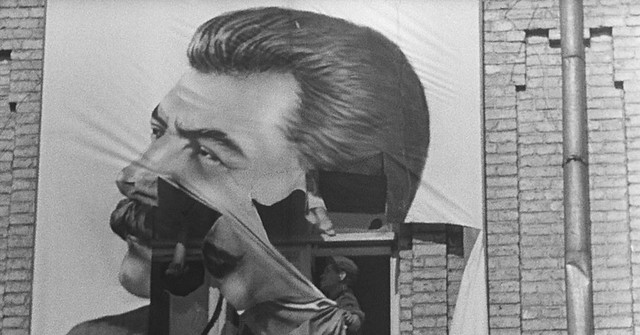
Babi Yar. Context - Sergei Loznitsa Babi Yar Babi Yar is a ravine near Kiev where execution of 33,771 Ukrainian Jews took place when the city fell to invading German troops in 1941. They were rounded up by German SS soldiers and the Ukrainian Police Force. In this all archival footage documentary, Ukrainian filmmaker, Sergei Loznitsa, approaches the subject in his typical, non-authorial way, without any narration and spares no one in the process. The holocaust memorial wasn't built until 2016. Now with the Russian invasion with Putin's shrewd campaign to 'denazifying Ukraine' and Svoboda - ultra-nationalist/neo-nazi element in Ukraine and also having a Jewish head of the state Zelenskyy emerging as the national hero during war time, Babi Yar. Context provides Ukraine's complex history and counters what is termed as chronocide, or erasing history, in our modern society full of misinformation and propaganda.

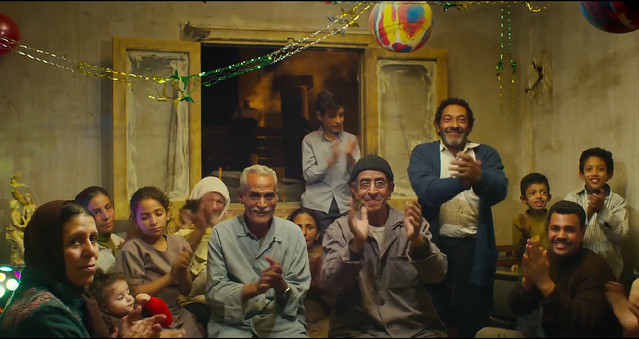
Feathers - Omar El Zohairy Feathers When her husband turns into a chicken during the magic trick at their son's birthday party, our unnamed female protagonist has to deal with 3 young children and crippling poverty and absurd amount of bureaucracy.

Feathers is an Kafka-esque absurdist social satire of the patriarchal, sexist Egyptian society. Director Omar El Zohairy, assistant director for fantastic 2016 film Last Day of the City, making his feature film debut, prefers tight, off-centered framing to accentuate the cramped interiors, physical dominance over the female heroine. Part surrealist comedy and part neo-realist drama, Feathers illustrates that there are very limited options for women living in a men's world.

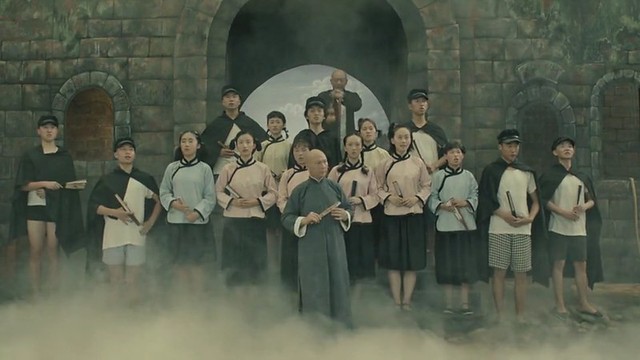
A New Old Play - Qiu Jiongjiong A New Old Play Impeccably crafted, Chinese artist Qiu Jiongjiong's epic A New Old Play is seen through the eyes of Qiu Fu (Yi Shicheng), a gifted Chinese opera singer through the tumultuous modern history of China from 1920s to Mao's Cultural Revolution and beyond.

Qiu, with a white patch around his nose permanently because of wearing his clown makeup all his life, is summoned by two demons (Bullhead and Horsehead) to report to hell, because he is dead. We are then taken back to Qiu's early years as a street urchin being picked up by the Sichuan theater troupe headed by Chinese opera enthusiast and army commander Pocky. Spectacular handpainted sets and backdrops (production design done also by Qiu) and with simple but clever camera staging - slow dolly tracking and playing with deep focus, A New Old Play has in common with Roy Andersson's and Wes Anderson's cinema, if only aesthetically. Through its 3 hour runtime as these carefully orchestrated sets and movements settle you in to lived-in, comfortable feeling. And its Qiu's unbiased approach to Chinese history that gives melancholic resonance and wisdom being a witness to history on a personal level. Qiu hits home the idea of life being a stage, where we live and die on it

Reflection - Valentyn Vasyanovych Screen Shot 2021-09-13 at 10.36.22 AM If Valentyn Vasyanovych's previous filmAtlantis was dealing with fictional scenario of the future ecological devastation and human toll from the prolonged war, Reflection, using gray landscapes and claustrophobic interiors, delves into the psychological damage of on-going conflict and threat from the neighboring ominous superpower. Sly metaphors, like dead pigeon, makeshift pyre, ravenous stray dogs are all present. But as with Atlantis, there is a glimmer of hope in Reflection. This time, it's not the love between a man and a woman, but that of father and daughter. Known to use non-actors in his films, Vasyanovych uses his own daughter to play Polina. She in turn, gives a great performance in long takes, engaging in religious and spiritual discussion with Lutskyi who plays her father. Her innocence shines through in a dreadful industrial, monochrome winter Ukraine landscape. Daring in its cinematic language, and unflinching in its presentation of the present, the film makes you impossible to ignore the state of the on-going conflict in that part of the world.

Read my full review from Venice 2021: https://screenanarchy.com/2021/09/venice-2021-review-reflection-resonant-formalist-look-at-russo-ukrainian-war.html

Zero Fucks Given - Emmanuel Marre, Julie Lecoustre Zero Fucks Given Sharp observations on the service industry in the 21st century capitalism is at the center of Zero Fucks Given. Adèle Exarchopoulos is Cassandra, a flight attendant at a small European airline company, Wing. The film devotes most of its running time to the banal day to day life of young flight attendants who dream of one day working for Emirates Air, the creme de la creme of the industry and hard to get into. But Cassandra seems to have no directions or ambitions, other than going through, repeating her daily routines of work, dealing with constant micro-management, partying off-hours, being lazy by the pool side in sunny Lanzarote where the company hub is located and countless one night stands through online apps.

Things take a drastic turn when she is reprimanded for buying a distraught customer a wine out of compassion and sent home to Brussels. Staying with her younger sister and her sad widowed father, it is revealed she was running away from her mother's sudden death.

With verité style candid cinematography by Olivier Boonjing and Exarchopoulos's committed performance, Zero Fucks Given comments on hyper capitalist society where work and personal life exist like oil and vinegar, yet one dictates another whether we like it or not.

Friday, May 3, 2019

Preview: Panorama Europe 2019

Museum of Moving Image (MoMI) hosts the 11th edition of Panorama Europe, showcasing current crop of best European films- both narrative and documentary works. The series presents a portrait of contemporary Europe during a period of tremendous flux. Also, though some of the films are by established directors many are by first-time and emerging artists, and 9 of the 17 films presented here are directed by women.

This year's lineup includes Mademoiselle Paradis, involving blind pianist protege and Dr. Mesmer, Fugue, a new film by Agnieszka Smoczyńska (The Lure) and Several Conversations about a Very Tall Girl, an intimate Romanian lesbian romance in the age of social media.

Panorama Europe runs May 3rd through 19th.

A Festival Pass (good for all MoMI screenings) is available for $50. All films will be shown in their original languages with English subtitles.

Here are four outstanding films I had a chance to see:

Madmeoiselle Paradis - Barbara Albert **Opening Night Film
Madmoiselle Paradis
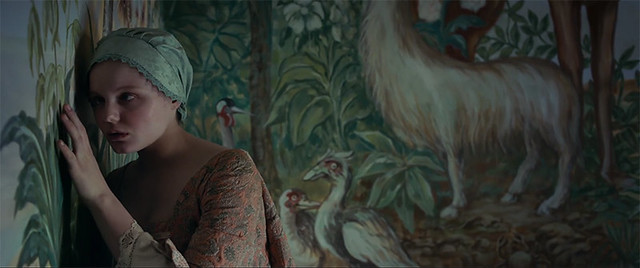
Maria Dragus (Graduation, The White Ribbon) gives a virtuosic performance as Therese Paradis, a blind pianist protege in 1777 Vienna in Barbara Albert's period piece.

Therese, a young woman who became blind at young age, is administered to the care of Dr. Franz Mesmer (Devid Striesow), a controversial figure, whose idea of animal magnetism that there is natural energy transference among all living creatures, still met with skepticism in Viennese social circle. But thanks to his unusual method, Therese slowly regains her sight, albeit fragile and weak still. All the new stimuli interferes her playing piano and her parents who are more worried about losing her disability pensions bestowed by the queen, scolds her that she is better off being blind.

Young and naive, Therese needs not only to contend with her newfound sense but also social, sexual and class dynamics. Also she is pushed to question her purpose in life for the first time. Albert expertly demonstrates the disparity in treatment and struggles of those who are disabled in the 18th century.

3 Days in Quiberon - Emily Atef
3 Days in Quiberon
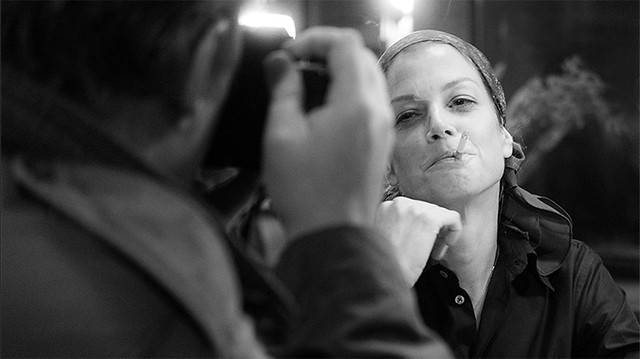
Romy Schneider, a luminous movie star of the 60s and 70s, died at age 43. In her private life, unlike her coquettish on-screen persona, she struggled with fraught relationships, family tragedies and alcoholism and hounded by tabloids. Filmmaker Emily Atef and actress Marie Bäumer tackle the brief days of her life a year before her death, when she was being treated at a spa in Brittany. Based on the interview and a photoshoot she gave to a German magazine crew in Quiberon, Atef builds an intimate, humanistic and respectful portrayal of a tortured artist.

Bäumer's uncanny resemblance to the late actress only enhances her soulful performance. Her Frau Schneider is a guilt stricken workaholic mom, fragile lover, victim of her own fame, broken soul by tragedies and who yearned to be left alone. The film also stars Charly Hübner as the photographer/former lover, Robert Gwisdek as a sharky reporter, Briggitt Minichmayr (Everything Else) as Schneider's best friend and Denis Lavant shows up as a superfan who ends up drinking and playing accordion together.

Several Conversations about a Very Tall Girl - Bogdan Theodor Olteanu
Several Conversations
Bogdan Theodor Olteanu's simple lesbian romance in the social media age hits all the right notes. Mainly dependent on two leading actresses Silvana Mihai and Florentina Nastase, Olteanu sketches out the beginning and end of a new short relationship as intimate and real as one can be. The two nameless women - Mihai as an older, urbane film student who is more experienced of the two and Nastase as a fresh faced web content writer from the countryside, bond over Facetime with their former shared fling - a very tall girl. They meet irl and start seeing each other. In the beginning, it's tender and sweet. But soon the shier, passive younger woman, after aggressive advances from the older one, withdraws herself, telling the other to be patient. Their budding relationship seems all too real and spontaneous.

The film student's video documents of her friends - a lesbian couple seen in the above picture gives the performance aspect of human relations, as a film within a film. But unlike other meta themed movies, that aspect of the film doesn't overshadow the relationship of its characters which feels genuine and real.

Olteanu and co.'s portrayal of homosexual relationship is an astute reflection of a country still very much steeped in traditions in modern age and a tender, intimate take on a slice of life.


Extinction - Salomé Lamas
Extiction
Falling somewhere between Chris Marker and Ben Russell's work, Portuguese director Salomé Lamas' 'parafiction' Extinction charts the complicated history of Transnistria which fell victim to be an unrecognized state after the dissolution of USSR. With a young man named Kolya, the unseen crew travels travels through borders, accompanied by monologues and unseen conversations at various checkpoints that give some background about ominous influences Russia holds in the region.

Shot in grainy black and white with old Russian architecture, Extinction gives that distinctive cold war era dystopian Sci-fi vibe even though it concerns the present and real life situation. Lamas examines the concept of borders in people who belongs to a country that is semi-permanently in limbo. But instead of being didactic, she raises more questions and asks audience's active participation in answering those questions.

Thursday, January 4, 2018

First Look 2018 at MoMI Ushers in the New Year with Boundary Breaking New Cinematic Work

In its seventh year, MoMI's First Look film series, organized by chief curator David Schwartz and associate curator Eric Hynes, introduces bold, formaly inventive, innovative international films to start the new year. And to all the adventurous cinephiles, this is definitely a good way to start 2018.

This year's selections in First Look go beyond the traditional screen presentsuch as Daniel Cockburn's quasi-film lecture All the Mistakes I've Made (Part 2); a new program of Radio Atlas short works comprised soley of audio recordings and projected subtitles; and even a work being produced during the festival, an update of Wim Wenders's documentary Room 666 in which filmmakers talk about the state of the art form.

First Look to open with U.S. premirere of Blake Williams's 3-D film PROTOTYPE, and will include new boundary-breaking work by James Benning, Ken Jacobsm and an exciting array of emergining artists from around the world January 5-15. Please visit MoMI website for more details.

Here are 7 outstanding films I was able to sample:

The Last Days in Shibati - Hendrick Dusollier
Screen Shot 2017-12-22 at 11.56.50 AM
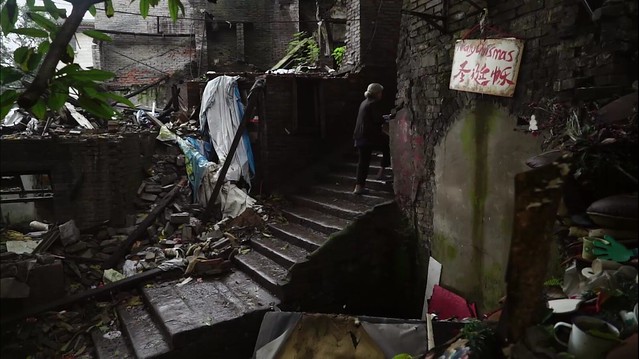
Disappearing urban slums have been documented before - Fountainhas of Lisbon in Pedro Costa's films, Kowloon: The Walled City by a German TV channel in the 80s, and of course, 24 City by great Jia Zhangke among many others. Frenchman Hendrick Dusollier spends a year in the last old district in Chong Qing one of the mega cities situated in the southern China. He films its inhabitants as the neighborhood slowly but surely disappears.

Unlike many other documentaries or dramatizations of a specific place, Dusollier let himself exposed and known to his surroundings. Everyone he meets and treats him as a foreign man with the camera who doesn't understand the language but films everything. His insistence as mostly silent observer wins over some curious inhabitants, namely a barber and his mother whose open, dimly lit shop continues to serve the community under the threat of imminent eviction, Zhou Hong, a neighborhood kid who shows Dussollier around through the labyrinthine dark alleys and Mrs. Xue Lian, an old woman who makes living by picking up bottles and who turns out to have the biggest collections of weird junk in the corner deep in Shibati.

Dussolier comes back to the place and revisit these people, sometimes with an interpreter, sometimes not. He visits them after they were forced to relocate. They understand that he is in Shibati to film what's going to be lost forever. It's this mutual understanding that makes Shibati different from other anthropological documentaries. Dusollier keeps things personal and human.

Marlina the Murderer in Four Acts - Mouly Suriya
Screen Shot 2017-12-23 at 8.17.37 PM
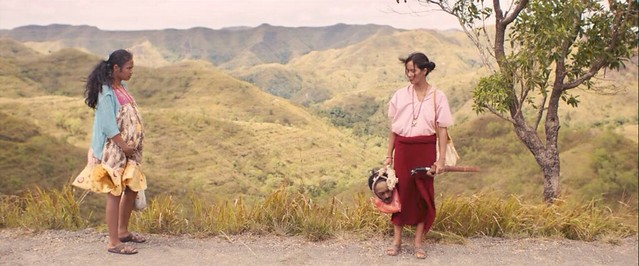
Sprawling, picturesque vistas of an Indonesian Island lensed in widescreen format as a back drop, Mouly Suriya's Marlina the Murderer in Four Acts, is a rape revenge western from a female perspective. Marlina (Marsha Timothy), a widow farmer is visited by Markus (Egi Fedly), who tells her that his gang is on his way to rape her and take all her livestock and reminds her that there is nothing she can do about it. When the rest of the gang get there, she poisons them and decapitates Markus while being raped. With Markus' head, she takes a journey to the police station- first by bus, where she meets Novi, a very pregnant woman and befriends her, then later on a horse. At the police station, she learns that justice won't be forthcoming and has to go back to her house for Novi who was captured hostage by the rest of the gang.

Marlina is quite significant coming from an extremely patriarchal society. Weird mixture of Bring Me the Head of Alfredo Garcia and Thelma and Louise, the film features some beautiful landscapes and local customs - keeping mummies of the loved ones in the house for example and humiliating sexist traditions - cattles for a dowry etc.

Communion - Anna Zamecka
communion
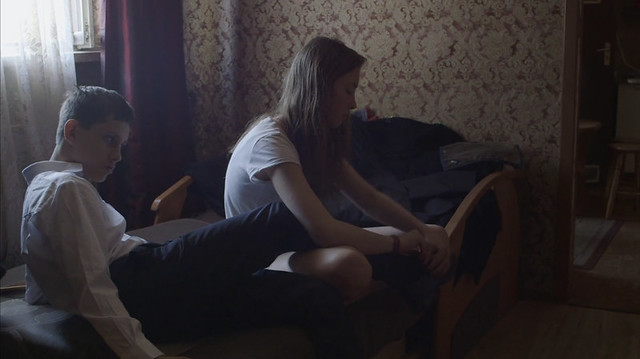
Ola, a 14-year old school girl is the focal point of Anna Zameca's intense documentary on fractured family in Poland. We also get the glimpse of a still deeply religious society. Ola has her hands full taking care of her autistic brother, Nicodem, and drunkard father. The film takes place when Nicodem's communion is approaching. Using the communion as an excuse, Ola tries to reunite her family with their estranged mom, who lives apart and has a baby with another man.

Ola is pretty much a mom to Nicodem, she bathes, clothes, feeds and takes care of his school needs. She is also a strict disciplinarian with her alcoholic dad, calls him to make sure he comes back home from pubs, no TV while baby's sleeping, shuts him off from saying incriminating things to welfare officers. She sweeps, washes, cleans and tends to the wood burning oven, yet she likes to put on a dress and have a good time at school dance.

Zameca captures some astonishing moments of intimacy and authenticity in a tiny, cluttered home. It also puts a spotlight on autism and how many societies are not equipped to deal with it. Nicodem is treated like a normal kid both in school and in the church. He definitely severely affected in his speech, attention, and repeated hand gestures. Yet is that kid who is 'a little strange'. It's also kind of scary to hear moments of clarity when he says things out of the blue. At one point in the bathtub, he repeats "The reality becomes fiction."

It's a family where the child parent roles are reversed in all functionality. She acutely observes that Ola growing up way faster because she has to- yet she is still a child who naively hopes that their family will be together again. Komunia is a heart breaking, beautiful film.

Railway Sleepers - Sompot Chidagosornpongse
Screen Shot 2017-12-24 at 12.08.27 PM
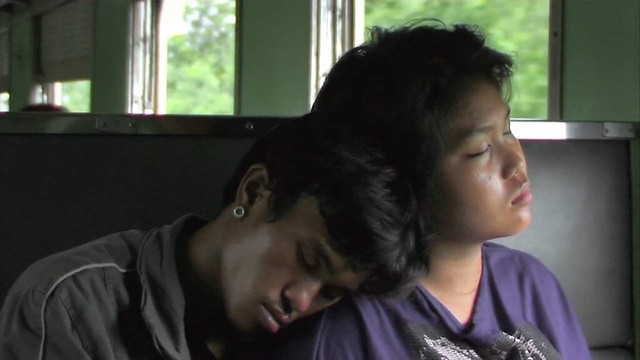
Part love letter to the Thai railway system, part documentary, part experimental, this Apichatpong Weerasethakul produced film moves along from Northern Thailand to South, recording two days and two nights of locomotive travel. First inaugurated by King Rama V in 1890s, Thai railways are revered and regarded as the nation's backbone. We see travelers of all ages and social strata, eating, talking, gazing and sleeping in a confined biosphere, a great microcosm of the world as it were- two recent previous films come to mind as a great example of this - Bong Joonho's dystopian Sci-Fi Snowpiercer and J.P. Sniadecki's artful Iron Ministry. Railway Sleepers feels more personal and intimate. Its slightly moving camera as the train moves along, captures day in the life of ordinary Thais. The film has that lulling hypnotic effect: it's as if the gently undulating train cars with that unmistakable, repetitive sound of a train rolling on the tracks invites you to sleep.

Exiled - Marcelo Novais Teles
Screen Shot 2017-12-26 at 11.37.15 AM
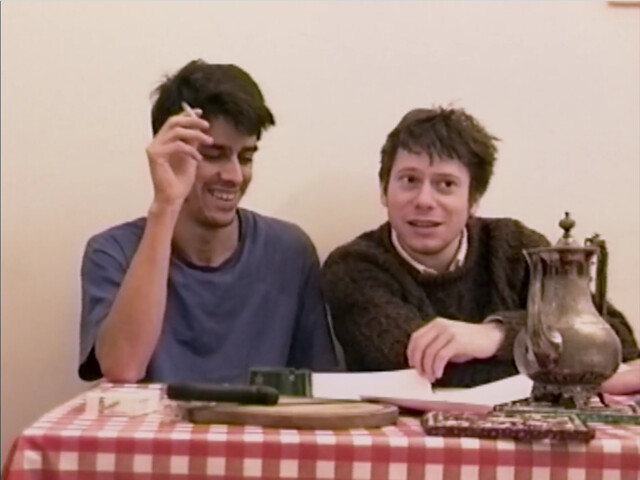
Marcelo Novais Teles, a young Brazilian man, moves to Paris to pursue an acting career in the 80s documents his life in grainy Super-8, Hi-8 and DV. L'Exilé is at once a deeply personal film and a time capsule of a certain generation of French filmmakers/actors. Teles, with his soulful face and charming accent, was able to surround himself with like-minded young, struggling artists. The film is filled with their honest conversations on life, art, love...etc. There are some recognizable faces in French cinema popping up now and then in Teles' home video footage - most notably Mathieu Amalric. This is way before he became famous.

There are a lot of footage of Teles playing with his friends' kids (including Amalric and Balibar's later on). Forever bachelor and struggling with his loneliness being an illegal alien in a foreign country, he shows his anxiety about constantly producing something meaningful in his lifetime.

As we watch an honest depiction of someone's life floating by- hope, ambition, love, regret, even considering the specificity of Teles' circumstances, we realize how universal our 20-30s are. Beautifully edited and intimate, L'Exilé is something that every struggling artist can relate to.

Colo - Teresa Villaverde
Colo
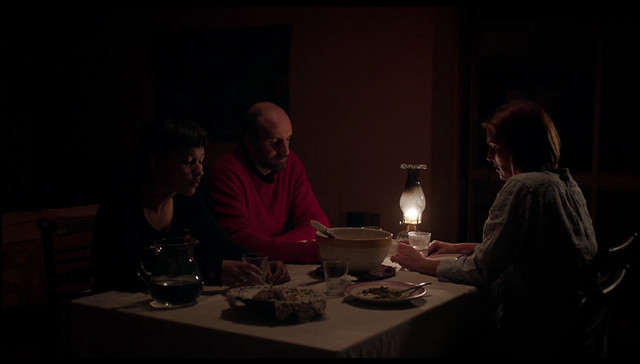
"We are not at war and no one's ill!" shouts Marta (Alice Albergaria Borges), a teen girl in a household disintegrating under the weight of economic hardship in Portugal. She is merely responding to her hard working mom, who announces that Marta and her unemployed father needs to move to grandma's house temporarily because they can't afford the rent or electricity. There is a time in one's lives, like a war or illness in the family which force us to rely on other family members is what mom tells her. Marta's response encapsulates what Colo and its sad characters are about.

Dad (João Pedro Vaz) spends days soliciting job interviews which he never gets responses from. Completely beaten by the circumstances, he is a hull of a human who can't do anything other than sulking. Mom, doing double shift to support her family, is exhausted and irritable all the time. Marta, going through teen years, gets heartbroken by a boy and falls in with a pregnant bad girl classmate Julia (Clara Jost). Everyone in Colo wants a way out of the situation they are in and out of the family.

Teresa Villaverde takes her time to build the characters but at times it seems things are too stretched out, as if we are seeing things in real time. There are several great moments though. No electricity affords some painterly scenes and there are a lot of beautiful connections among characters. Carefully written and sensitively treated, Colo shows the effect of economic devastation on a family.

The Lives of Thérèse - Sébastien Lifshits
Screen Shot 2017-12-31 at 11.27.17 AM
Sébastien Lifshits shifts his gears toward an old pioneer of LGBT movement in a solemn, unsentimental fashion in The Lives of Thérèse, from his usual beautiful young gay subjects in glitzy style. Thérèse Clerc was one of Lifshits' subjects in his documentary The Invisible Ones (2012) where he chronicled LGBT pioneers. As Clerc is dying of an old age, they mutually decided to record her final moments.

Here Lifshits doesn't reinvent the wheel of documentary or anything. But he approaches his remarkable subject directly with an utmost respect and love.

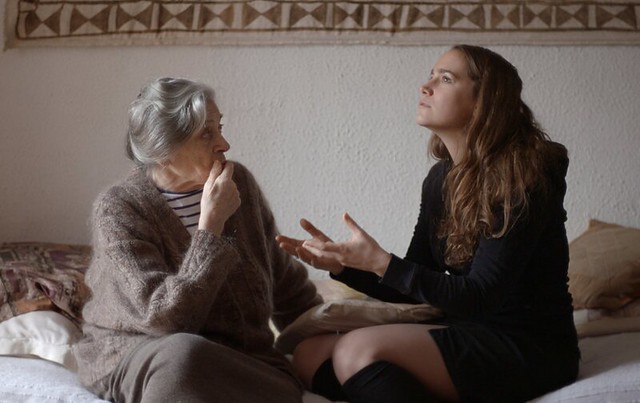
Clerc, as an activist for women's rights movement and fought for LGBT rights, was a subservient wife with 4 kids who had an awakening in 1968 revolution, divorced her husband, and became a lesbian at 40. The film consists of Clerc's daily routine of conversing with doctors at the hospital, with her grown up children and other friends. Her children talk frankly about their upbringing, their mother's sexuality and her approaching inevitable death. Clerc admits her body failing even though her mind is still the same. She talks with a young feminist about her sexuality- back then, homosexuality was a political act, the act of defiance. The young woman disagrees with her, that in her generation, homosexuality is out in the open, that she can be a feminist and a heterosexual.

The Lives of Thérèse is not as serene as Haneke's Amour. Often Lifshits captures Clerc in closeups as she falls asleep from exhaustion but the camera movement and color are all love. The film much more than a feminist manifesto. It's a celebration of an extraordinary woman who lived her life fully and loving tribute by those who loved and admired her.

Thursday, January 7, 2016

Get Your New Year's Cinephilia on with MoMI's First Look 2016

 photo f47fab6b-321b-4584-95eb-715da807daa9_zpsg3wnub0n.png
Starting this Friday and running for three consecutive weekends (1/8-1/24), in their beautiful state of the art theater in Queens, Astoria, the Museum of Moving Image's First Look Film Festival is fast becoming a new New York institution for many film aficionados. Selecting its roster from cinema's most cutting edge filmmakers, the 5th edition of First Look opens with the US premiere of Alexandr Sokurov's new film Francofonia.

Switching gears a bit this year with guest programmers such as Jean-Pierre Rehm of FIDMarseille, and Aliza Ma of Metrograph and Mónica Savirón, along with chief curator David Schwartz, this year's eclectic roster is heavy on the experimental/avant-garde/documentary.

It includes renowned experimental filmmaker Ken Jacobs' new films in 3D, Canadian video artist Dominic Gagnon's youtube culled Inuit epic Of the North, artist Margaret Honda's 70mm silent film Spectrum Reverse Spectrum, short films of Austrian visual artist Björn Kämmerer and Philippe Grandrieux's new film, Meurtrière (his continued exploration of bodies which started with White Epilepsy).

Then there are behind-the-scenes documentaries from Léa Rinaldi (This is What It Is- about Los Aldeanos, the most popular hip-hop group in Cuba, Traveling at Night with Jim Jarmusch and Behind Jim Jarmusch), a documentary on João Bérnard da Costa, a director of the Portuguese Film Museum in conjunction with Nicholas Ray's Johnny Guitar.

Here is how chief curator David Schwartz describes this year's edition in the press release:

This year's edition is a true cinephile's feast, filled with works that reflect on the medium itself, that urge us to reconsider our intimate connection to the ways that we experience cinema. as always, the films in First Look cannot be easily defined. They are artisan works, expressing distinct personal visions, with a strong emphasis this year on avant-garde cinema. To engage in the new possibilties of an art form is also to engage with the past, and this edition of First Look contains an ongoing dialogue with film history, with a selection of older works in dialogue withthe many premieres.

Twitch's own Christopher Bourne will be reporting on some of these selections in a short while, so keep a look out.

First Run Film Festival 2016 runs 1/8 to 1/24 at Museum of Moving Image. Please visit MoMI website for further information and showtimes.