Monday, March 14, 2011

Psychohydrography: Peter Bo Rappmund Interview

Photobucket
[Psychohydrography, a high-res, time-lapse HD project surveying the Los Angeles water system; from the Eastern Sierra Nevada to the LA river to the Pacific ocean, is truly one of a kind visual & aural experience. I had an opportunity to meet with its Director Peter Bo Rappmund who was in town for the Documentary Fortnight at the Museum of Modern Art screening back in February. ]

*Many thanks to Dave Kim at KAFFNY for arranging the interview:

Can you tell me a little about your background?

I am Korean American- my mom is Korean and my dad is of German descent. I lived all over the Western US: Wyoming, North Dakota, Texas, Arizona, Colorado and California. I did undergraduate studies at the University of Colorado and was originally learning business. I changed to film studies after discovering that Stan Brakhage was teaching there. I was at CU before and after he passed away. It felt like a time of transition in the film school. The South Park guys, who had also gone to school in Boulder, were becoming quite famous and most of my friends seemed to be interested in narrative filmmaking. Still, there was a small group of us who looked towards the avant-garde. I actually didn't do a film for a long time after getting my first degree. When I went back to school, I went for music. An adviser told me that I should check out CalArts (California Institute of the Arts). I eventually landed there and met many great people along the way. I ended up graduating with degrees in Music Composition and Film.

And that's where you made Psychohydrography?

Psychohydrography
was my thesis project that I worked on for 2 years. I shot it mostly alone. Sometimes my wife would come out with me but mostly it was just me and my dog.

The Music and sound are an integral part of your film. How important was the music for this project?


Yeah, I did record the location sound and used it throughout. But the music at the end (the Pacific ocean segment) is where it all came together for me. I showed it to some people before it was finished and they really responded emotionally to that part with the music. So I decided to make the arc of the film with that ending and kind of worked back and changed the sound design. Visually it had more cohesion after I did the last part. I realized that I could tie together more with the sound and not rely so much on each image butting up against each other. I ended up telling what's going on through the sound.

There is certainly a rhythmic quality throughout. Can you tell me about the process?


I was shooting with a DSLR camera (Nikon D90) with an intervalometer attached to it. Whenever I wanted to change the speed of the timelapse, I could manipulate it with a button. It's definitely a time consuming process, and you have to be actively engaged the whole time. In creating the layout of the film, I went to Costco and developed the stills and would use these for something like a storyboard. The photos are like fashcards that I can flip through sequentially. Psychohydrography was originally closer to two hours, so it was a very big stack of photos. In terms of non time-based media, I also looked to a lot of photo books and comics to study sequencing.

You mentioned Stan Brakhage. Are there other filmmakers who influenced you?

Phil Solomon, Betzy Bromberg, Charlotte Pryce, Thom Andersen, they all had a big influence on me. Jack Chambers' Hart of London is one of my favorite films. Also, thanks to Phil Schrader's Transcendental Style in Film has been critical to one aspect of my filmmaking.

The film reminded me a lot of Ed Burtynsky's photographs and the documentary, Manufactured Landscapes.

Yes. I didn't get to see that film until I finished my own project. I appreciate a lot of Burtynsky's work.

It also reminded me of James Benning's work.


Yeah. I did show it to James Benning (who teaches at CalArts) and he had an interesting reaction to it at first. (laughs) I think he has very strong principles about filmmaking. And I can't imagine he would ever use time-lapse. The aesthetic of my flm doesn't involve the slick type of time-lapse, not like something you'd find in Baraka or Koyaanisqatsi. The timelapse goes with the theme of water and its transient nature. I'm sure you noticed the flicker watching the film. Each shot being comprised of many single frame images, there are inevitable aperture issues. I have the control to correct this, but sometimes I would leave it to instill a more organic feel.

Watching it on the big screen (MoMA screening) was such a striking experience. Where do you go from here? There will be Blu-ray DVDs made?


It's such a high-res image, it really doesn't do justice when it's compressed to DVD format. Blu-ray is better of course. It did play at some festivals and hopefully will get more chances to be seen on the big screen. It will also be playing in the Gallery setting (White Box Gallery, NY). It will be interesting to see how people react to it.

I hope it gets to play on the big screen more often. It needs to be seen that way.


PSYCHOHYDROGRAPHY preview 1080P from Peter Bo Rappmund on Vimeo.


KAFFNY 2011 opens this Thursday!!

Saturday, March 5, 2011

Un-American

The American (2010) - Corbijn

Anton Corbijn's film is as precise as its title character Jack/Edward(George Clooney), a weapon maker/assassin in Italy. There is a Once Upon a Time in the West on TV in Italian cafe where brooding Jack drinks his 'Cafe Americano'. It's quite clear Corbijn is paying tribute to its Ford - Kurosawa - Leone/Melville, West/East/West genre borrowing by masters. The American has a very un-American feel to it. It has the mood of Le Samurai and other yesteryear's fatalistic brooding noirs of 'I just died in your arms tonight' variety. Corbijn trades fedoras, raincoats and jazz clubs in for no nonsense, undeniably American George Clooney in a minimalistic quaint European city setting. There are some effectively tense scenes throughout. Unlike its ominous title, the film is a completely subtext-free genre exercise.

Thursday, March 3, 2011

View from the Hill

Putty Hill (2010) - Porterfield
Photobucket
Tempted by the trailer and Ebert's four star rating that I actually went and bought a ticket to see it in one of the worst, smallest theaters in NYC, Cinema Village (the film's 2 week theatrical run ends there tomorrow). What disappointment!

White-trash-teens-in-the-American-heartland genre has been hi-jacked by the likes of Harmony Korine and American Apparel ads (if there was one before that) and never got a chance to prove itself worthy until the last year's Winter's Bone (in btwn, there was the promising David Gordon Green but he realized he was just bullshitting and went on to be a successful mainstream comedy director). But Korine made an indelible stain on the white wall and many impressionable young emo film students followed his footsteps to achieve that ethereal, slightly naughty, last white hope- the hidden treasures of the poor whites' culture that would very much like to be passed as 'art'.

Family and friends are gathering for the funeral of Cory, a young man who died of drug overdose. The unseen director, or the 'outsider' is heard asking questions. When did you last see Cory. Where do you live now. How long have you been away... Shot unimaginatively threadbare on HD and criminally underexposed with natural non-acting and painfully mundane conversations, Putty Hill feels completely vacuous.

The main problem for me is this: why go on all the trouble exposing the emptiness of these people's lives if you really care about them? Why show that they lead sad, boring lives? What's the point of recording this ultimately fake grief/non grief? Being non-judgmental is one thing, mistaking naturalism as profundity could be a big waste of time for moviegoers.

One guy walked out in the middle of the screening and I had a strong urge to follow him to the exit but I didn't. There, I goofed again.

Tuesday, March 1, 2011

Notes on Uncle Boonmee

Uncle Boonmee Who Can Recall His Past Lives (2010) - Weerasethakul
Photobucket
A ghost, a monkey spirit with glowing red eyes and a talking catfish all inhabit Apichatpong Weerasethakul's latest film, Uncle Boonmee Who Can Recall His Past Lives. This disjointed and time transcending narrative follows Boonmee at his farm in the Northeastern region of Thailand, as he encounters the ghosts of his family and is himself serenely waiting to die from kidney failure.

With his usual languid pace and long takes, the famed Thai director weaves personal memories and a latent political commentary into a gentle contemporary folklore. With its deliberately low-tech filmmaking, Uncle Boonmee playfully alludes to the genre conventions of Thai TV melodramas which Weerasethakul recalls from his childhood. Memory is an essential theme in his films, informing the storyline as well as the director's creative process.

As a part of Weerasethakul's multi-platform art project, Primitive, the Thai-Lao region's tumultuous history figures into Uncle Boonmee and the collective memories of its people. The landscapes themselves are characters in his films; caves play a significant role, figuratively and metaphorically, in Uncle Boonmee as well as in Tropical Malady (2004), illustrating the process of reincarnation. Uncle Boonmee is expression of an artist whose ingrained Buddhist philosophy and formative experiences which have shaped him into who he is.

Uncle Boonmee Who Can Recall His Past Lives is independent filmmaking at its best, without gimmick or pretense. The recent accolades on the film reminds us that there still is room for such a personal filmmaking in this day and age and I'm grateful for it.

Read my interview with Apichatpong Weerasethakul

Saturday, February 26, 2011

Cinema Reborn: Apichatpong Weerasethakul Interview

Photobucket
[Uncle Boonmee Who Can Recall His Past Lives, the latest from Apichatpong Weerasethakul, is a personal, gentle and playful contemplation of reincarnation and transmigration of souls. I got a chance to sit down for an interview (via skype) with the acclaimed Thai director about the film, art, censorship and Thai independent cinema. Despite some technical hiccups prior to our interview, his generosity and thoughtful responses impressed me a great deal.]

So Where are you right now?


I'm in Mexico City, at the museum where I'm doing installations for Primitive that opens this Saturday.

Uncle Boonmee is part of Primitive, a multi-platform art project that you've been working on for a while. Can you tell me how it came about?

It was right after Syndromes and a Century I began thinking about it. It's a survey of the northeastern Thailand where I grew up. After Syndrome, I wanted to go back to my roots, where I came from. So I started to travel around doing small art projects and I didn't even know what the final project would be like. But the traveling process through the region was very important to me. It gradually snowballed to what it is now.

I saw A Letter to Uncle Boonmee and Phantom of Nabua from Primitive. So they are all shot in places where you grew up?

Not exactly the same town, but in the same northeastern region near Thai-Lao border. Once a communist rebels' stronghold, the region holds important Thai history in my mind.

Is this an ongoing project that will go beyond Uncle Boonmee?


There is another project I'm planning to do in the same region but I need to differentiate the two. Primitive was about remembering the history of the region. The new one could be a fiction or a sculpture even. I don't know it yet.

Memories play an important role in your films and Uncle Boonmee is no exception. Reincarnation is also a common theme, mirrored in your notion of cinema being reborn. I'd like to know your take on the HD video revolution that is going on right now. This film was shot on Super 16mm?


Yes, Super 16. I am following the news very closely on digital technology. But Uncle Boonmee is, as you say, about memories of cinema that is either dying or transforming, so it had to be shot on film. For my installations projects, I shot them on video. Obviously video is much more spontaneous to capture something when staying with those teenagers for months. In terms of feature films, I don't think I'll use video just yet, because I don't think technology is there yet. The image quality of film is much better still. But we will see what kind of video cameras would be available in two or three years.

Some say that Uncle Boonmee is your action movie. It has ghosts, monkey spirits and a talking catfish...

Well, I'd say it's a very special action movie (laughs). That's fine by me, as long as it draws more audience to see the film. It's hard for me to judge how my work's going to be received. I view it differently when producers say, "oh this is going to be more accessible to audiences". In my mind, Uncle Boonmee is still similar kind of work I've always been doing. So it was quite a surprise for me that it had received better feedback and getting wider audience.

The whole time I was watching it, I was very taken by the glowing red eyes of the monkey spirits. Can you tell me how you achieved that, if you don't mind revealing the secret?

They are just simple LED lights. I wanted it to be low-tech. Just like the ghost (dead wife) scenes, where we used the old-fashioned mirror tricks. For the monkey scenes, we did a lot of tests. We didn't want it to look like a complete joke with a man in a monkey suit (laughs). I wanted to create that borderline in-between feeling.

Did winning the Palme d'Or make loosen Thai government censorship over Thai film industry at all?

Only for my film and not really changed for anyone else unfortunately. I think politically it was pretty bad for the Thai government at that time and they realized that they couldn't afford another controversy.

Was it released in Thailand?


Oh yeah. Thailand was the first country to get to see it. It was a big success!

So what's next?


I'm starting some art project on the Mekong River in the Thai-Lao region. It's about an ecological issue - how the constructions of dams in China, Laos and Thailand affect the livelihood of people there. There is also a short film (about 60-70 minutes) being done. It's called Mekong Motel. I am also raising money for a film by my editor (Lee Chatametikool), shooting in May. It's a co-production of Thai independent filmmakers, produced by me, Anocha (Anocha Suwichakornpong, director of Mundane History), and Aditya (Aditya Assarat, director of Wonderful Town).

There seems to be a healthy independent film movement in Thailand.


Hey, have you seen the poster for Uncle Boonmee's American Release?

Yes, of course. It's done by Chris Ware, no?


I've always been disappointed with the DVD covers of my films by Strand Releasing. So I wanted something different this time. I asked Marcus (Marcus Hu at Strand) if we could get a graphic designer for the poster. And first artist that popped into my head was Chris Ware. I love his work.

Uncle Boonmee Opens March 2 at Film Forum, NYC.

Click here for Animate Projects: Primitive

Thursday, February 24, 2011

Fever Dream

Tropical Malady (2006) - Weerasethakul
tropical malady
I fell asleep the first time watching this a while ago. I don't know, maybe it was its languid pacing. Maybe it was Summer heat. Or I might have been distracted that day. Since this film is the only one I haven't seen all the way through by one of my favorite directors, Apichatpong Weerasethakul, here I decided to try again. And it rewarded me handsomely.

What starts out as a little gay-soldier-in-the-jungle romance, Tropical Malady transforms itself in the midway into a hypnotic tale about transmigration of soul and love story unlike any other. Last half of the film- encounter with a ghost/tiger spirit, is mindblowingly beautiful. There are also many connections, themes one can find in other Weerasethakul's work here- memories, spirits, animism, nature... Organic, playful, gentle and breathtakingly gorgeous in its bare to the bone cinematography, it really reaffirms Mr. unpronounceable as one of the most original voices in contemporary cinema.

Monday, February 21, 2011

Proxy War

Summer Wars (2009) - Hosoda
Summer Wars
Summer Wars 2
Still haven't seen Social Network, but when it comes to internetz on the big screen, it fails miserably. What could be so exciting about people intensely hammering away at keyboard? The answer is obvious: it can only work in anime. And Mamoru Hosoda's Summer Wars answers with bright colors and cutesy style. In it, "Oz"- the network that is so vast and integral in our daily lives, when it gets hacked, the world is thrown into pandemonium. It's the Jinouchi Clan to save the world with the help of an emo programmer Kenji.

The digital animation of Oz and the avatars that inhabit the virtual world look very much like pop art sensation Takashi Murakami's work. Ah, circle of life, since Murakami's work totally rips off of anime. Also ironic is game of Hanafuda (Japanese card game) saving the day, since the game is socially and culturally looked down upon as crass, low brow entertainment. But behind the happy super fun exterior, Summer Wars actually has a story and a lesson in this internet age however slight it is. And I like that.

The Knack

The Knack... and How to Get It (1965) - Lester
the knack
the knack 2
Richard Lester's playful sex romp from the 60s can be hard to understand sometimes. But it doesn't make the film any less fun. Michael Crawford is Colin, a Ron Weasley-like school teacher who doesn't have the knack. He tries to learn from his suave, motorcycle riding housemate Tolen the ways of seduction but fails because he just doesn't have it. Enter Nancy Jones (Rita Tushingham), a new arrival in town, looking helplessly for YWCA, ends up with Colin and another of his eccentric housemate Tom while they are out to get a gigantic bed frame for Colin (just in case he scores). The following scenes are reminiscence of Jules et Jim but sillier.

With sight gags and plenty of physical comedy and playfulness, it strongly reminds me of early Woody Allen films. Fun film.

Wednesday, February 16, 2011

Crimes Don't See Colors

Odds Against Tomorrow (1959) - Wise
Photobucket
Photobucket
Photobucket
Photobucket
Robert Ryan is Earle Slater, a bigoted ex-convict and WWII vet who's been living off of his working girlfriend (Shelley Winters). Even though emasculated and aging, he still has the fire in him. Harry Belafonte is Johnny Ingram, a divorced vibraphonist with a massive gambling debt. Enter Dave (Ed Begley), an ex-cop trying to organize a heist in upstate NY. He puts a squeeze on the two so they have no choice but to go along with the "one last shot at the greatness" deal.

With a cool title sequence, rapid cuts, zoom-ins, extreme closeups, jazzy score and old New York scenery (including Central Park merry-go-round), there are a lot to love in Odds Against Tomorrow. It patiently spends 2/3rd of the film on the characters before the heist. It even pauses for Slater and Ingram to hang (albeit separately) in pastoral area looking all contemplative before the heist which, of course, goes horribly wrong.

Belafonte, a darker, edgier side of Sidney Poitier, is mesmerizing as a conflicted anti-hero, so as Ryan in his aging grizzly man persona. Gloria Grahame shows up as saucy next door neighbor of Slater and their scene together is deliciously explosive.

Moral of the story? As the last line of the film indicates, crimes don't see no colors.

Monday, February 14, 2011

Family Business

We Are What We Are (2010) - Grau
Photobucket
The film starts with a disoriented old man dying in an urban shopping mall in modern day Mexico. Cops are called in when a mortician finds an undigested woman's middle finger in the old man's stomach.

It is difficult to review a film like We Are What We Are without revealing too much since much of the film's strength lies in keeping things under wraps. Let's just say it tells the disintegration of one of the most unusual families you will ever encounter and shows their determined, violent resolve to stay alive. Played with great urgency, acting in the film is excellent throughout. The anxious ridden family members are: Alfredo (Francisco Barreiro), the passive, sexually ambivalent older son. Julian (Alan Chávez), the hot-headed younger brother, their seductress sister Sabina (Paulina Gaitán of Sin Nombre) and their disapproving mom Patricia (played with gusto by Carmen Beato).

Director Jorge Michel Grau creates an amazingly suspenseful and assured first feature. It moves along briskly, not giving us enough time to think about its fuzzy details or logic. With the beautifully somber nighttime cinematography and effective sound design, it works like a good old-fashioned giallo with a grittier urban sprawl backdrop. I am partially in disagreement with We Are What We Are being sold as a cannibal movie. Just don't expect another Texas Chainsaw Massacre here. One can even draw the parallels between the family and the ancient Maya ritual involving human sacrifice. Watching the film is a visceral and tense experience. It is an inventive genre exercise done masterfully. Grau is a real talent and I can't wait to see what he will come up with next.

Saturday, February 12, 2011

Carpathian Rhapsody

Shadows of Forgotten Ancestors (1964) - Parajanov
In pictures:
Photobucket
Photobucket
Photobucket
Photobucket
Photobucket
Photobucket
This simple Ukrainian folklore of star crossed lovers, Ivan and Marichka, against the stunning Carpathian mountain backdrop is told in truly cinematic fashion: astounding camera movements and colors, colors, colors. Interesting display of the regional culture steeped in both Christian and pagan rituals. A visual feast.

Thursday, February 10, 2011

Violence That is Pure and Clean

Cockfighter (1974) - Hellman
Photobucket
What makes a man? A set of balls? Perhaps a cock? Is it not what he says but what he does?

After losing a cockfight by shooting his mouth off against his long time rival (Harry Dean Stanton), Frank (Warren Oates) takes a vow of silence until he claims 'The Cockfighter of the Year' medal. For him, cockfighting is not about money, women, nor about cocks. It's not even about winning. It's his love for its simplicity - you give all you have in that ring, fight to the death, albeit second-hand. He wagers with his car, trailer, girlfriend, house, everything. Women don't understand him. They don't understand the violence that is pure and clean. No wonder his attitude toward them is take-it-or-leave-it.

There are two hilarious scenes that stick out- one with young Ed Begley Jr. as a hick farmboy who doesn't take a defeat well. And a stickup by group of presidential masked gunman at the motel where a makeshift cockfight takes place. Everyone has to take their pants off.

Laurie Bird reprises her role in Two Lane Blacktop here and Harry Dean is always dependable as leathery lowlife. But the film totally belongs to Oates. Relying on his body language and that good old toothy smile, he demonstrates his acting range as a single minded Hellman anti-hero without being someone other than Warren Oates.

Sunday, February 6, 2011

Keep That Coffee Hot

The Big Heat (1953) - Lang
Photobucket
Gloria Grahame, ooh la la. Who does she remind me of? Julietta Macina if she was ever young and sexy, maybe? It's a very difficult task to make a ditzy girl sexy and she does it here.

The big heat tells a tough cop, Bannion (Glenn Ford) in a sewer city. While investigating a cop's suicide, for some reason, Bannion can't keep his big mouth shut so everyone around him ends up dead, including his wholesome beer and steak dinner sharing wife, blown up by the bigwig Lagana's goons.

Enter Debbie (Grahame), a pretty young thang that belongs to Lagana's right hand man Vince (Lee Marvin). She sticks with the busyhand because she likes money and mink coats. But after Vince gets a shakedown by Bannion, Debbie walks up to Bannion and they 'talk'. Vince in turn throws a hot coffee in her pretty face.

Morally mucky film by Lang where its straight-shooting protag unknowingly direct everyone to their demise in order for him to get to the big fish, The Big Heat is perhaps the dirtiest noir I've seen so far. And Grahame is there to make guys think dirty. Bravo.

Sunday, January 30, 2011

Let Them Eat Cake

Ministry of Fear (1944) - Lang
Ministry of fear
Steve Neil (Ray Milland) is having a strange day. He gets released from an asylum after serving 2 years for poisoning his terminally ill wife. It was a mercy killing. Then he accidentally gets embroiled in a complicated Nazi plot involving a cake he won at a fair while waiting for a train to go to London 'to lead a normal, quiet life' and for some reason, everyone wants his cake: at first the ladies at the fair want it back, then on the train, it gets stolen by a man who pretends to be blind, who then dies in an air-raid. What the hell is going on?

This tight Graham Greene espionage thriller has great atmosphere and tension throughout with air-raid prone rainy London as a backdrop. The noir lighting in this film is just as sharp as Milland's hawky features. Highlights are the one involving the séance table and the night rooftop gunfight in the rain. I wish Lang could've elaborated on the nature of hypnosis in the beginning and the wall clock pendulum and séance element a little more because most of the time Ministry of Fear feels very much like a good Hitchcock film. One can easily see the film's influence on Coen Brothers. Anyone care for this slice of cake?

Life During Wartime

Bad Day at Black Rock (1955) - Sturges
Photobucket
Macreedy (Spencer Tracy), a mysterious one armed man in black, comes to Black Rock, a small desert town in the West and starts asking questions about a Jap farmer named Komoko who is nowhere to be seen. The townsfolk are less than welcoming, even downright hostile. The local honcho Smith (Robert Ryan, On Dangerous Ground, Billy Budd) who seems to be in charge of everything, wants Macreedy disappear.

This tale of racism/blind patriotism in the post-war small town America presented in anamorphic widescreen, features some amazing desert vistas in day time as well as night exterior scenes. Ryan is as menacing as ever, even shooting down a woman in cold blood in order to keep his racist murder case dead and buried in Black Rock. We get to know Macreedy's retired vet story. Tracy keeps the righteous torch burning 'til the end. Sturges mixes elements of Western and noir and the result is spectacular. Ernest Borgnine and Lee Marvin appear as Smith's goons. I got a great kick out of watching the scene where Tracy karate chops Borgnine. Great stuff.

I'm half horse half alligator scene

Mixed Tapes: Searching for Billie

Another mix from me over at 8tracks:

Saturday, January 29, 2011

Sperminator, not Spiderman on 42nd

The Basketball Diaries (1995) - Kalvert
Photobucket
Jim Carroll, the Lower Eastside staple, writer, poet, musician and a former heroin addict is played by young Leonardo Dicaprio. It's the late 70s NY which was a completely different world compared to spic and span of Bloomberg's 2011 version. Young catholic schoolboy Carroll with his rabble rousing, little delinquent friends (including Mickey, played remarkably by Mark Wahlberg who shows that he can be great when he's being his meathead self and doesn't act seriously), tears down the night and the city. Soon ether sniffing and fantasizing about shooting up the school slips into burglary and homicide.

Drawing from Carroll's harrowing experience as a junkie, Dicaprio really shines as a once promising high school basketball star to heroin addict who'd do anything to score some dope. Lorraine Bracco as discombobulated but tough working-class mom, Bruno Kirby as a basketball coach with pedophile tendencies make up the great supporting cast. It didn't make much impression when I first saw it years ago and my lady who grew up in NY had never seen the film before. And I'm glad I watched this with her.

Thursday, January 27, 2011

Falling Out of Love

Blue Valentine (2010) - Cianfrance
Photobucket
Documentary director Cianfrance examines a young couple's relationship, juxtaposing their sweet beginning with their falling out of love. Ryan Gosling plays Dean, a high school dropout underachiever and Michelle Williams plays Cindy, a med student from an upper middle class family. They share the common broken home background. In the beginning, it's a love-at-first-sight story, if a little too cliché involving abortion. 6 years later, Cindy has fallen out of love. With no one to blame and a lovely daughter in tow, the couple's marriage disintegrates. Both actors are endearing in those joyful and painful moments. Cianfrance's reductionism- focusing exclusively on the beginning and ending of the relationship, and no clutter of other characters to populate the couple's world, leaves the audience with deep, sad, beautiful sense of longing. I think it might have been better if he left the beginning of their relationship and the falling out part completely separate. But either way, I wanted more.

Thursday, January 20, 2011

Mixed Tapes

It was a matter of time someone had a good idea to set up a website for people to make their own mixed music list and share with others. Me, being the former mix tape master, this is very good news. After several days of idling, I put up a couple of mixes at 8tracks.com. I urge to join all of you my friends to do the same. Please click & listen to them for your pleasure:


Tuesday, January 18, 2011

The Vulnerables

Suburbia (1984) - Spheeris
Photobucket
I haven't felt this kind of empathy toward the kids on the skid in films since My Own Private Idaho. This is what Korines and Clarks of the world try very hard to emulate and always come across as bullshit. This is what Alex Cox succeeds in presenting only in attitude and spirits with his films. Suburbia is the real thing. Spheeris has real affection for these non-actors who act out their squatter punk kids roles super awkwardly, which is totally befitting for the film.

It starts out with a toddler being attacked by a vicious half breed doberman pinscher and ends with another gut wrenching tragedy. These punk kids might act tough, but they are vulnerable and need to be protected, not exploited. Spheeris understood that. Features D.I. and TSOL and the Vandals performances.

Sunday, January 16, 2011

I want my underwear to be handwashed

The Housemaid (2010) - Im
Photobucket
Plotwise, this remake of the old Korean classic doesn't rise above Lifetime channel movie of the week - a naive young woman getting a job at a super rich family mansion as a housemaid, sexually being taken advantage of by its handsome head of the family, gets pregnant, forced to have her baby aborted, takes revenge.

But under Im Sang-soo (President's Last Bang)'s direction, the film becomes a sly take on class a la Discreet Charm of the Bourgeoigie. It starts out with a random suicide of a girl in a busy neon and glass night where fashionable young people hang out. The difference of their young carefree life and people who serve them is shown in a very effective handheld- documentary style. Our heroine Eun-yi (adorable Jeon Do-yeon), a lowly restaurant worker is seen trying to get a peek at the fresh corpse. She is not frightened or sad, just curious.

I don't have to mention anything obvious here - the power play involving oral sex, the importance of male in Korean household... The thing is, everything, from set design, framing to acting, is just flawless. Im's robotic precision is counterbalanced by Jeon's good hearted, if not naive Eun-yi and Yun Yeo-jong's Byung-sik, the all knowing, eye-rolling, head of the caretakers. Despite all the fabulous looking people in the film, the middle aged Byung-sik, whose lifelong servitude to the obscenely rich family which make her a conflicted character, so much fun to watch.

Im saves the grotesquery of the wealthy to the last minute. But the build up (to the not so subtle climax and ending that can be read as slapdash) is so engaging and understated that it only amplifies the brilliance of Im's precision filmmaking.

Art of Seduction

The Eccentricities of a Blonde-haired Girl (2009) - Oliveira
Photobucket
The film starts with a distraught young man on a train, telling his hard luck story to a stranger next to him about his pursuit of a young blonde he first saw across the street from his office window. All the shots are so static and dolly movements so careful, as if not to disturb stuffy, dusty interior that feels like an old antique shop.

In its 64 minutes running time, time in The Eccentricities of a Blonde-Haired Girl is subjective - we see snow covered ground outside the train window in the beginning, green scenery by the end. The clock tower is missing arms but chimes away nonetheless.
Oliveira creates a richly layered parable about unattainability of perfection with beguiling Catarina Wallenstein as highly fallible example to the notion of ideal romantic muse. The problem I had with it is that its enigma disappears once you take the film as a parable. And the ending is very unsatisfying. Directed when he was 101 years of age, however well put together this film is, you can almost smell the old man's musk.

Mice that Roared: Dustin's Top 10 Films 2010

I don't know about you, but for me, 2010 was a really lackadaisical year for films. My movie going/viewing experience wasn't as vigorous as last year (and I say this every year- I guess I really am not seeing as many as before). Mainly small films and documentaries dominate the list. And here they are:

*Click on titles for reviews*

1. White Material - Denis
Photobucket

2. Film Socialisme - Godard
 photo ScreenShot2012-01-03at92134AM-1.png

3. Exit Through the Gift Shop - Banksy
Photobucket

4. Never Let Me Go - Romanek


5. Winter's Bone - Granik
Photobucket

6. Black Swan - Aronofsky
Photobucket

7. Marwencol - Malmberg
Photobucket

8. Non ma fille, tu n'iras pas danser/Making Plans for Lena - Honoré
Photobucket

9. Beetle Queen Conquers Tokyo
- Oreck

Photobucket

10. The Housemaid
- Im

Photobucket


Honorable mentions: Dear Doctor - Nishikawa
The Runaways, Bare Essence of Life, Alle Anderen/Everyone Else, Altiplano, Milk of Sorrow, Les Regrets, Turn It Up to 11, Missing Persons...

Friday, January 14, 2011

East of Eden: Kim Tae-gyun Interview

Photobucket
In 2002, East Timor (officially Timor Leste), a tiny island nation 400 miles north of Australia, became the first independent nation of the 21st century. A former Portuguese colony and invaded and annexed in 1975 by Indonesia with the help of US, this nation's history is marred by violence and poverty.

Director Kim Tae-gyun (Volcano High, The Crossing) uses this volatile backdrop for his latest film A Barefoot Dream, tells a story of a former Korean soccer star and failed businessman who travels to East Timor, like many other opportunistic foreigners, in the hopes of exploiting the local economy. Instead, he ends up coaching a soccer team of poverty stricken East Timorese kids, ultimately bringing them to a world tournament soccer victory. The film makes its North American premiere at the Tribeca Cinemas in Manhattan as part of bi-monthly Korean Film Nights series, made possible by Korean Cultural Service and the Subway Cinema. I had an opportunity to sit down and talk with director Kim prior to the screening:

How did you come across this incredible story?


There was a Korean TV documentary about East Timor and its independence. They featured coach Kim Shin-hwan and the East Timorese kids and how they won the Hiroshima International Youth Soccer Tournament very briefly. In it, Kim says, "I wish I could feed these kids some meat from time to time." That appealed to me a great deal.

Did many Koreans know about the existence of East Timor prior to A Barefoot Dream? In the States, except for some reports by independent journalists, the situation in East Timor didn't generate a lot of attention in mainstream media.

Yes and no, there were debates on sending peacekeeping troops in the parliament without much of fanfare (which we eventually ended up doing) when Indonesian troops were violently oppressing the East Timorese. I think Koreans are more aware of international issues once it became a viable economic power.

Was coach Kim Shin-hwan (as Won-kwang in the film, played by Park Hee-soon) involved in making of the film?


Oh, absolutely, from beginning to end. If it weren't for him, we wouldn't have the film. Just like you see in the film, Kim got to know the locals pretty well, first with his broken English (or Konglish as we call it) then by picking up their dialect. He was not only our consultant, but a guide, interpreter and ambassador. It was his friendship with Xanana Gusmão(the former President and present Prime Minister of East Timor) that made possible for him to appear as himself in the film!

What were some of the challenges you faced shooting in East Timor?

They literally had nothing there. After years of violent conflicts, there was no infrastructure set up. We had problems as soon as we landed. Bureaucracy over there is tantamount. Our gear was stuck at the airport for a long time. There have been no film productions in East Timor other than one Australian documentary crew before us. Dili is a small town of about 15000 people. And we needed about 300 extras for many of the scenes. We put out an ad for cast and extras but no one came. We had to actively seek out people on the street. But they had no concept of film business. They just came and went as they pleased. Understandably they were busy eking out a living. But for us every step was a challenge since all the things we took for granted in film productions were not there.

You have some amazing kids in this film. How was the casting process?

We cast mostly from Coach Kim's pool. He had about 30 members in his team. We picked kids whom we felt right for the part. They were around 9-11 years old.

Was it a difficult to direct them?


When the script was finalized, we gave them copies and asked them to read it prior to shooting. But kids just being kids, not some professional child actors, non of them read the script all the way through (laughs). So I had to sit them down beginning each day of the shooting and read it aloud together, one page at a time.

What became of the original team members?


As you know, it was 2004 when Kim led the East Timor team to become champions. The original members of that team are now in their late teens and many of them make appearances in the film (as grown up soccer players). They all went different ways. Some of them are still playing soccer.

You think some of the kids from the film have a future in professional soccer, for instance, Ramos? He is phenomenal.


Yes. I think Ramos could definitely be a soccer star. The other two (Motavio and Tuo), I'm not sure. I think they like to play but have other interests.

Your previous film, The Crossing (2008) (about the flight of the North Korean refugees) dealt with an important subject. Are you generally attracted to social justice issues in making films?


I think it's got to do with me getting old. I don't think film should be made just for entertainment purposes. I think there should be a good balance between entertainment and substance. At least that's what I try to do anyway.

There is talk that A Barefoot Dream is being considered for nomination for the Best Foreign Film Oscar. This film would certainly deserve such an honor.

For Trailer, Please visit Subway Cinema for Free Korean Movie Night

Monday, January 10, 2011

Kauai Morning

Recorded from the bedroom window 5:30am 12/30/10
Photobucket
6 min 30 sec

Wednesday, January 5, 2011

Before Sunset for Grown Ups?

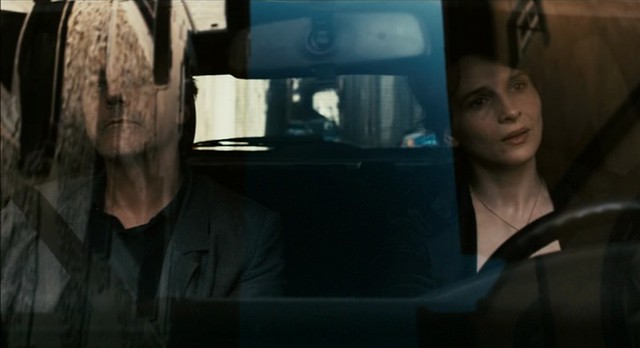
Certified Copy (2010) - Kiarostami
certified-copy-from-car-2
Is it safe to say Certified Copy is Before Sunset made by Abbas Kiarostami (Taste of Cherry, Wind Will Carry Us, Close-Up) starring middle aged people? Well, not really. It starts out with an Englishman James (William Shimell, resembling David Strathairn) giving a talk on his new book about the legitimacy of copies compared originals in art in picturesque Tuscani. As an infatuated antique dealer (Juliette Binoche, reviving her frazzled single mom in Hou Hsiao-Hsien's The Flight of the Red Balloon) picks James up and drives him around town as a guide, the film becomes something else: deconstruction of a marriage. Even though it's the first film set outside Iran, there are Kiarostami touches everywhere- long driving shots, actors talking while looking at you straight in the eyes, blurring the lines of what's real and what's not. As the couple exchange tit-a-tat, we witness the copy of the real married couple breaking apart.

I realized while watching it, that Kiarostami was at it with his magic again, completely blowing away my expections of what the movie was going to be with his elegance in simplicity.

Tuesday, January 4, 2011

Piece of Heaven

Anini Beach, Kauai Island, Hawaii 7:00am 12/31/10
Photobucket
9 min 30 sec

Sunday, December 19, 2010

No Gummo

Winter's Bone (2010) - Granik
Photobucket
Wow, not one false note: from its acting, script to HD cinematography. It's not the authenticity of what the people of the Ozarks are like that I loved, since I have only a blurry notion and won't pretend here that I know and understand, yet these poverty stricken, meth ravaged, unfathomably tough characters ring so true to me.

Jennifer Lawrence is Ree, a 17 year old girl who needs to take care of two younger siblings and sick mother in the absence of her unseen meths 'cooker' father. It turns out daddy's out of jail and a bail bondsman and other people are after him. If he doesn't make the court date, they will take the house. It is widely suspected that local bigwig family might have killed her dad for some old grudges. Unflinching against all the poverty and violence around her, resilient and resourceful Ree is a revelation. John Hawks shines (second best performance in the film) as Teardrop, Ree's scary uncle, and aging but well fitting Sheryl Lee also makes an appearance.

Debra Granik's depiction of the Ozarks is never patronizing nor sentimental. Winter's Bone is filled with the lives of the locals in great detail and presented with great care, nothing seems out of place. Definitely one of the year's better films for me if not the best.

Tuesday, December 14, 2010

Bird Flu

Black Swan (2010) - Aronofsky
Photobucket
It's one of those 'it's all in her head' films. Relax. I haven't blown anything. If you've seen the trailer, you know what's coming. What's commendable here is that Aronofsky reached the comfortable point as a skilled filmmaker that his audience doesn't feel cheated watching his films. Since The Wrestler, he's smart enough to contextualize his actors to fit his projects. All the actors shine (Barbara Hersh as a protective mother, Vincent Cassel as a sleazy ballet instructor, Mila Kunis as seductive rival). Here, once again, Natalie Portman plays a young woman on the verge of going to pieces as she always does. But she doesn't come across as a cry baby. Like Polanski using Mia Farrow's waifish quality fully in Rosemary's Baby, Aronofsky takes advantage of Portman's girlish fragility to 11. Black Swan is way over the top (not that his films were ever subtle) in saint/whore dichotomy with bombastic Swan Lake score. But it fits with visceral visuals creating internal chaos in the character.

Matthew Libatique's dizzing, grainy 16mm/HD camerawork matches perfectly with woman losing her shit theme. Hugely entertaining, this is by far Aronofsky's best film.

Friday, December 10, 2010

Spoilt Milk

La Teta Asustada/The Milk of Sorrow (2009) - Llosa
Photobucket
Photobucket
Photobucket
Photobucket
Sullen Fausta (luminous Magaly Solier) has the 'milk of sorrow' illness: offsprings of the rape victims during the civil war are said to be borne without souls. So afraid of being violated, she had shoved up a potato in her vagina. After her mother dies, she needs to come up with the money for the funeral (she lives in a shanty town on the hillside of Lima) and to take the body to her old village. She starts working as a maid for a rich pianist who wants her to sing with the promise of pearls.

It's really hard not to compare this to Claudia Llosa's previous effort, Madeinusa. Even though it's far better than most of the films I've seen this year, The Milk of Sorrow was underwhelming. Although it's beautifully photographed, it's not literal enough in that South American literary magical realism way. It boils down to a young girl getting over her fear of the world and finding wisdom in gardening- which isn't too interesting of a subject. For some reason, the 14 yr old heroine in Madeinusa seemed a lot more mature and interesting than Fausta in Sorrow. But don't get me wrong, Solier, with her trembling girlish voice and time-transcending face, is something of an enigma still. This will definitely end up on my top ten list of the year.

Llosa's Madeinusa review