Wednesday, October 12, 2016

Death and Irony

The Death of Louis XIV (2016) - Serra
 photo c085995e-e958-42e5-8f4a-e15d28b59158_zpszw5d8s18.jpg
Death is a grisly business. It comes to all of us. Even if you happen to be the King of France who's been reining the kingdom for 72 years. From all the documented evidence indicates Louis XIV died of gangrene on his leg caused by diabetes. The year was 1715, without modern medicine, he died a painful, horrible death surrounded by physicians who were perplexed by his conditions.

Catalan filmmaker Albert Serra has been tackling literary/historical figures in his films -- Don Quixote in Honor of the Knights, The story of Magi in Birdsong, Casanova and Dracula in The Story of My Death; approaching them in minimalist, aggressively formalist fashion. Armed with extensive court medical documents and writings of Duke Saint-Simon and the French New Wave icon Jean-Pierre Léaud as the king, Serra sets out to make a straightforward account of the last days of Louis XIV.

Except for the first few minutes of the film where we see the king on the carriage outside, coming back from a hunting trip, the entire film takes place in the stuffy ornate interior bedroom of the Versailles. Gangrene has set in on the king's left leg and physicians are rubbing it with herbs, hoping it will go away. The old king mumbles and shouts in pain while eating grapes and sweets administered by the same physicians who argue endlessly among themselves what to do about the situation. People try to entertain and laugh at everything his Highness says, priests are called in to give the last lights but then sent back because he feels better, and so on. Even the learned physicians of the Sorbonne have no idea about the king's illness. His leg starts to stink and turns completely black. Everyone's waiting on the inevitable.

There are some funny bits with a snake oil salesman played by great Catalan poet and art critic Vicenç Altaió (whose turn as Casanova in The Story of My Death was hilarious) with his 'cure all' tonic made out of bull's sperm and other animal parts. After the initial success of the king's improving health after taking the tonic, the condition worsens and they order the phony physician's arrest.

Léaud, 72, has been keeping his restless, adventurous New Wave spirit alive by working with many daring contemporary filmmakers (Tsai Ming-liang, Bertrand Bonello, Olivier Assayas just to name a few) over the years. Here, he accepts the physically confounding role and fully collaborating with Serra, whose filmmaking charts new territories in cinema.

Perhaps the most poignant moment of the film is forever bedridden Louis XIV receiving his 5-year old great-grandson (the future Louis XV) and giving him advice. Having seen countless war and suffering of people in his time, he recommends the young kid to relieve his people’s suffering and avoid war as far as possible.

Even though Louis XIV’s health deteriorated quite rapidly in a month, the film feels like an eternity. But Serra never waivers in his aesthetics and keeps a straight face until the end.

The irony of the king's death is heightened by its straightforward presentation and procedural approach. The Death of Louis XIV is a very singular formalist filmmaking in its highest order.

The Death of Louis XIV is acquired by Cinema Guild for Spring 2017 release. please check their website for more details.

Monday, October 10, 2016

Bi-continental Romance

Hermia & Helena (2016) - Piñeiros
 photo 39e414c8-288a-49e2-8b47-d9de7261d200_zpstra93hgr.jpg
Matias Piñeiro's Hermia & Helena begins almost identically as his last film Princess of France, looking down at the soccer field. But they are two very different films. Even though his usual light-as-feather approach at twenty-something's bohemian lives and romantic entanglements might be the same, but the tone, the tempo, the setting of the film is noticeably different in Hermia & Helena.

Taking the cue from A MIdsummer Night's Dream, Piñeiro builds up bi-continent tales of love and friendship, in his unique way without ever heavily delving into anything resembling of a plot. Just clocking in at 70 or so breezy minutes and like his other films, it solely relies on seemingly complicated, incongruous structure and charms of his regulars (mainly María Villar and Augustina Muñoz) and some new faces Piñero acquired during his 2 years living in New York.

Divided by chapters with characters names, we loosely track the flight of two friends: first, it's Carmen (Muñoz) finishing up her writing fellowship stint at 'the institute' in New York, living in the institute provided housing in Chinatown in winter, looking over the soccer field and the Coumbus Park. Then we are back to Buenos Aires, where her friends are. It's Carmila (Villar)'s turn to go. Camila, a small time theater director, at first, seems very much in love with her boyfriend (another Piñeiro regular Julián Larquier Tellarini), but not so much as we find out later. She feels ambivalent about the trip, leaving behind all of her friends for New York, translating A Midsummer Night's Dream into Spanish for her upcoming production. She embarks on anyway, and we follow her the rest of the film.

In snowy New York, Camila meets knick-knack of characters: there is Lukas 'the tall guy' (Keith Poulson) from the institute, who is kind of cute, Carmen's secrete friend/lover Danielle (Mati Diop, a filmmaker/actress who's been popping up in many international productions), a fellow fellowship artist/writer/performer whathaveyou from France, traveling across the United States sending postcards from each state she visits to Carmen, because she doesn't know Carmen finished up her time in NY and went home, her former lover (Dustin Guy Defa) who is a filmmaker and her father (Dan Sallit) whom she never met who lives upstate.

Just like his other films, H & H is extremely talky, but the feel of the film is much slower even languid at times. It's not more contemplative, per se. Perhaps it's New York's snowy winter landscape that's bringing out certain melancholy to the film. Because of Camila's journey takes unexpected turns (in romance or otherwise) and because of the people she meets and we get to see her (sort of) motives, the film comes closer to a character study and feels more personal than any other Piñeiro films I've seen.

Shot gracefully by his long time cinematographer Fernando Lockett, but H & H showcases some other beautiful elements - long cross-fades to signify two different cities, almost Woody Allenesque, chirpy piano music, and black and white, movie-within-a-movie in the middle.

There are elements he plays with the bard's work- be that in dialog or objects that are passed around or a father figure (or an idea of one). It's not a bad choice for inspiration or starting point to be playful, intermingling his love of books, music, poetry, good friends and other personal things and project that on the screen. It seems with Hermia & Helena, Piñeiro is upping the ante a little bit and put more cinematic playfulness in his small ways. And it's lovely.

Indiscreet Charm of Bourgeoisie

Aquarius (2016) - Filho
 photo 62de6e83-1225-49fb-a049-fd1389473675_zpsspayje39.jpg
Just like Filho's Neighboring Sounds, Aquarius is a clear eyed observation of changing times in Brazil. It deals with the class differences, rapid gentrification, generation gap, among others. The film's aided by blistering central performance by the 70s sexpot Sonia Braga (Lady on the Bus, Kiss of the Spider Woman). Now 65, raven haired, tiny but extremely fit Braga commands the screen as Clara, a retired music critic, who is the family matriarch and moral compass of the film. Aquarius is a small condominium complex right on the beach where Clara lives in an affluent Recife neighborhood. The building's blue exterior has faded over the years, but it's well kept. But it's all but overshadowed by glitzy glass towers that surround it.

Clara remains the only resident (with her faithful elderly maid) of the building. She weathered her husband's death and all the children growing up and moving out. A Goliath real estate company's young, US educated project manager is trying to make an offer to buy out Clara, but she wouldn't budge. There are just too many memories associated with the place. Her furniture, her LP collections, everything inside that apartment has a backstory and meaning-- the film starts in 1980 in the same apartment where they are celebrating the birthday of Clara's mother. While people are congratulating her and having a good time, mom's eyes are fixed on a bureau in the middle of the room. She is reminiscing about great sex she had on the bureau long ago. And that bureau remains in Clara's apartment, imbued with the memories of people who are long gone.

Filho doesn't shy away from human sexuality. Even though Clara had a breast cancer and had a mastectomy on one of her breasts, she engages in a steamy sexual fling with a male escort whom her friends recommended. She accidentally walks in on her young nephew and his new girlfriend having sex in the morning. She quietly backs out smiling. She flirts with a young lifeguard friend. Sex and desire are portrayed in a very frank, healthy light.

It is clear that slowly but deliberately, the developers want to force Clara out. They start engaging in psychological warfare with her- one day it's loud music and thumping, the next its drug fueled orgy that's taking place in the upstairs apartment which is supposed to be empty. The general upkeep of the building becomes shoddy. It's also Clara's daughter Ana Paula (Neon Bull's Maeve Jinkings), a cash strapped single mom, who is approached by the company to put pressure on Clara to sell the apartment. But when confronted with accusations, the young project manager plays innocent, as if everything is one big misunderstanding, that it's Clara who is always being unreasonable.

Even though the film's perspective is from bourgeois class through and through, and Filho clearly sympathizes with the main character, he takes jabs at the rifts between haves and have-nots matter of factly. When Clara's family and friends are gathered and walking on the pristine beach, her friends points where the sewer feeds into the ocean: "This is where the rich part of the town ends and where the poor part of the town starts" she says without irony.

Dense and richly textured, Aquarius works as a strong anthropological study of changing society and proves the cultural center of Brazil is not in the south and Rio and Favelas anymore. Along with other filmmakers from the Northeast Pernambuco region, Filho shows sophisticated, nuanced yet still sensual side of Brazilian cinema. With Braga's commanding performance and the quite explosive ending, Aquarius goes down as one of the finest films of 2016.

Saturday, October 8, 2016

Juxtaposition of the Refugee Crisis and the Old Europe

Fire at Sea (2016) - Rosi
 photo e347b518-0e9b-4fd6-b13d-a88b765c88c1_zpsmfavg5x5.png
Europe's refugee crisis is perhaps the biggest humanitarian crisis the continent has ever experienced since the WWII. Gianfranco Rosi, an Italian filmmaker whose observational documentary Sacro GRA made a splash in 2014, here focuses more narrowly on Italy's refugee crisis on the island of Lampedusa, a tiny island between the African continent and Sicily- the case clearly being served as a synecdoche concerning the state of whole Europe. Fire at Sea a devastating look at the human toll juxtaposed with the old way of life the homogenic white Europe has enjoyed for years.

In a parallel action, we see the flight of refugees, mostly from North Africa and some from the Middle East crammed in on tiny ships, being rescued by Lampedusa's patrol team, armed with helicopters and patrol boats, then we follow Samuele, a typical engergetic school boy and his everyday life on the island.

Due to bad weather and communication problems, sometimes the rescue team get there too late. Reportedly 15,000 people lost their lives of starvation, exhaustion and drowning off the coast of the island.

Slingshot wielding Samuele is destined to be a fisherman, just like his father and grandfather and great-grandfather but only if he gets over his sea sickness first. He has a lazy eye problem and suffers from hyper tension.

A local medical doctor who experienced the human misery first hand, tells the harrowing account of what he witnessed - piles of dead bodies of women and children, chemical burns on bodies caused by diesel fuel mixed in with sea water, dehydration, hunger, etc. It's the same doctor who treats Samuele for his hypertension.

In a crowded refuge camp, harrowing journeys of refugees of watery death (or near death) are sung by a Nigerian preacher who continues to document their flight in oral tradition - they fled their home countries (Eritrea, Mali, Syria, Nigeria, Sudan...) because of bombs were going off, they crossed the Saharan desert, drinking their own piss, they were tortured and driven out from Libya, then they were forced out to sea.

But there are sparks of joy in the camps too, as makeshift soccer games between many different countries, resulting in momentary eruption of cheers and laughter.

We observe simple lives of the fishing village in the island - people requesting Sicilian love songs for their spouses on the radio, diving in a wet suit into a roiling sea for sea urchins, kids being kids without any interjection.

Fire at Sea refuses to be a rhetorical documentary. There are no narrations nor sit down interviews with locals or 'experts' about how they feel about the tides of Immigrants coming ashore or what could be done about it. It is more of a straight up reportage on the ground, simply showing the magnitude of the crisis that begs your attention and understanding.

And it is a gut wrenching experience at times. Bodybags, tears and wailing are as common as Samuele and his friends shooting airgun at the sky. Simply juxtaposing the crisis and the tranquil, simple, traditional lives which I'm sure have continued unchanged for hundreds of years, Rosi lets viewer to take in and think for themselves about the situation without judgment.

Fire at Sea won the Golden Bear at this year's Berlinale and was selected as the Italian entry for the Oscar for the Best Foreign Language film.

Thursday, October 6, 2016

Masks We Wear: Why Toni Erdman is the Best Film of the Year

Toni Erdmann (2016) - Ade
 photo 5e208ddf-77fd-4ca8-85c0-3e0b2e170d6e_zpsq5vuyxua.jpg
Hollywood would have made a terrible film out of the premise of Toni Erdmann- starring the late Robin Williams and Kate Mara perhaps as goofy clownish father trying to teach his uptight, humorless grownup daughter to not take life too seriously and enjoy the moment or something. He would die and there would be a funeral and it would be a tearjerker and Mara does something goofy and... the end. It would've been a comedy that is best described by its tagline, "It's the 'Take Your Father to Work' Day!"

Toni Erdmann, even with its 2 1/2hrs running time, like the practical joke prone father character's favorite word choice, "spontaneously", is full of surprises that makes you laugh at every turn. Winfried (Peter Simonischeck) and Ines (Sandra Hüller) are very real and their interaction funny and touching. But it's not daddy nostalgia type movie. It's the first film I've seen that takes the father daughter relationship between two adults: one person putting on a ridiculous persona to mirror another playing the role of icy queen in the corporate world. That's why birthday scene works so well. But Ines's unraveling, or loosening up a little comes in even earlier in another ridiculous scene involving a naughty pastries. Even in its most riotous moments, involving, ehm, Whitney Houston song, it's not nostalgia but making an ass out of yourself/letting your hair down once in a while. It goes the same way with the prolonged ending- grown ups don't change drastically. Letting your hair down once is not going to change your life. In this sense, Erdmann doesn't have a happy ending. Ade doesn't end her film in Where the Wild Things Are style. She is too smart and mature for that. But it's not a sad movie either. We live out lives hoping that we are making some kind of impact on people you expect the same from others on you. That is what we hope for anyway. Toni Erdmann deserves all the accolades. It's amazingly acted, best written film I've seen this year.

Thursday, September 29, 2016

Youth and Optimism Through Female Gaze

American Honey (2016) - Arnold
 photo 583f2b91-9c6e-4644-86ee-4893f5e27e71_zpsfvcnqv4c.png
A modern day Wizard of Oz but Dorothy here is played with gusto by newcomer Sasha Lane. Her Star is a tough as a nail firecracker with a good head on her shoulders and a heart of gold. American Honey tell the rowdy group of traveling kids selling magazine subscriptions door to door. Only recognizable actors (I use the term loosely here) are Shia Labeouf and Riley Keough. But even they disappear into their respective roles as a slightly sexy older kid who show Star the ropes and young creepy, scary matriarch of the gang. The setting here is American south-midwest, but it isn't much different than Arnold's previous film Fish Tank, in terms of its theme- on the verge of womanhood, a girl from a poor family journeying through self-discovery. The hope Arnold portrays in those two films has less to do with its setting but with youth. This is what separates Arnold from other filmmakers. American Honey is being compared with Larry Clark's Kids. Yes there are plenty of graphic sex and violence. But whereas Clark's film unabashedly, proudly comes across as nothing but exploitation, Arnold's film shows real compassion toward its characters while not losing sight on the youthful passion. Arnold acknowledges physical, almost feral attractions that exist among people (even in adults in Red Road) but understands that she doesn't have to exploit it by showing boobies every other scene. For this reason, I think this film can be a great counterpart example to so-called 'male gaze' films by all these 'macho' directors.

Charging tirelessly through almost 3 hour running time, Arnold and co achieves something truly special here. It's a director's film through and through, not in any artificial David Fincher way. She even knows how to perfectly use actors like Labeouf who fits the role like a glove. She deserves every best director awards this year period.

Thursday, September 22, 2016

Stranger than Fiction

The Lovers and the Despot (2016) - Canaan, Adam
 photo 062e5ff8-cd33-45ca-bfb1-64f05e6c903e_zpswtodncqf.jpg
Truth is stranger than fiction. In 1978, famous South Korean director Shin Sang-ok and his ex-wife, actress Choi Eun-hee were kidnapped in Hong Kong by North Korean agents under order of Kim Jung-il, the future leader of North Korea. While they were held as captives, they made 7 movies in the hermit kingdom, until they made a daring escape in 1986 to Vienna. This bizarre and fantastic experiences that Shin and Choi went through reads like a crazy combination of a high-flying political thriller and a lurid tale from the dark underbelly of the movie business. And it's totally ripe for a movie adaptation that could easily be much more fascinating and entertaining than Ben Affleck's Argo.

Two British filmmakers, Robert Canaan and Ross Adam, have a go at it in documentary form. Their approach here is pretty straight forward, using tons of archival footage, movie clips from Shin's filmography, tastefully staged reenactments shot in the style of grainy super-8, and interviews with the full participation of survivors surrounding the story.

In the center of it all is director Shin. Once described as the 'Prince of the Korean cinema', Shin had a string of successes in the 50s and 60s with titles like A Flower in Hell, The Prince Yeonsan and Eunuch. Choi, his starlet, couldn't help but fall in love with the dashing movie director on set. They got married and had two children together. But because he was too much of an artist and not enough a realist and had no head for business, he fell into hard times after a couple of flops. Debtors sent gangsters to his office and house, ready to break his legs.

It was President Park Jung-hee (father of current South Korean President Park Gun-hae)'s strict miltary dictator regime which censored his films and eventually shut his film company down in the 70s. Choi and Shin split up when she found out that Shin had a secret family with a younger woman. He hit rock bottom. After his ex-wife's abduction, he went looking for her in Hong Kong but also disappeared under mysterious circumstances. Was he also kidnapped or did he willingly defect? The film only speculates, but chooses not to elaborate further. And Shin, who died of complications after a liver transplant in 2006, isn't here to defend himself.

On camera, Choi, now 89, comes across as an earnest, emotional person when remembering her harrowing (but also at times humorous) experience. She recounts her abduction clearly- She was chloroformed and taken by boat to the North. When she landed on the North Korean shore, she was welcomed by none other than the Kim Jung-il. He treated her like a VIP, all the while she was fearing for her life. Her preconceived notion of Kim, the heir apparent to the most feared regime in the world, was somewhat dulled by his self-degrading humor- "Are you surprised by my height? As short as a midget's turd, eh?" (He was 5'3" reportedly)

After 5 years of captivity and re-educationing, Shin and Choi were finally reunited. In an audiotape, we hear Kim Jung-il admitting the abduction of the two and mistreatment of Shin as all 'but-a-big-misunderstanding'. Shin tells her his several escape attempts and imprisonment. Soon they start planning an escape. But in the mean time, with unlimited support and resources provided by Kim, Shin excels as a movie director, resulting in 7 feature films for their captors.

The film touches upon many intriguing facts but none more so than a glimpse into the cult of Kim Jung-il. It is widely known that he was a movie buff- he was in charge of Ministry of Culture before he became the leader, overseeing every cinematic output of the communist country. Deeply unsatisfied by the lack of talents and typical lackluster sob stories the country's film industry was producing, he had ordered to kidnap South Korea's top talents - Shin and his muse Choi.

Through the secret audiotape that Choi recorded, we hear Kim's giddy, accommodating voice that doesn't really go with the image of the secretive, all powerful dictator. When Choi and Shin sought an asylum in the US, those tapes were valuable to the CIA. It was the first time any Westerners heard the voice of Kim.

The Lovers and the Despot is filled to the brim with amusing, entertaining anecdotes. But it could've been even better, considering how fantastic its subjects are. With all that great intrigue related to the abductions, one could easily make several films out of it. The life story of Shin would make a fascinating biopic alone, for instance.

I wish the filmmakers asked Choi, Shin's lifelong partner who went through those troublesome, fantastic years with him, some pertinent questions regarding the real motives of his being in North Korea instead of softball questions. Yes, Kim Jung-il's statement on tape might prove that he was also abducted, but South Korean intelligence didn't buy it and Shin couldn't come back to South Korea until the 90s. It would have made a fantastic love story if Shin willingly went to North Korea to find his estranged but missing ex-wife and remarry her with Kim Jung-il's blessing.

The Lovers and the Despot opens in Theaters in NY, LA, DC, Boston & Philadelphia and On Demand on Friday, September 23.

Thursday, September 15, 2016

Better Living Through Chemistry

To Have and Have Not (1944) - Hawks
tohaveandhavenot
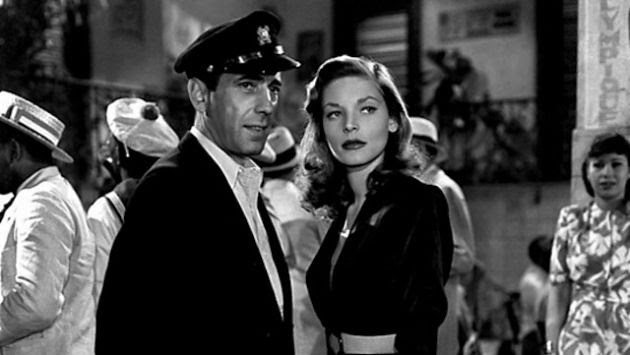
Its WWII French Martinique in the Caribbean sea setting is pretty similar to Casablanca in Nothern Africa for cynical, overly neutral business owners - Rick, a bar owner, Harry/Steve, a captain of a fishing charter boat. They are both played by wry Humphrey Bogart who always ends up doing the right thing. But its war intrigue is just a basis for Bogart to do his thing. To Have and Have Not is more of a comedy than melancholic love story. With 19-year old scene chewing Lauren Bacall, called 'Slim' here, you have two Bogeys running around wisecracking all of the time. Exchanging crackling banters when not singing while drinking or smoking, comfortably wearing righteousness on their sleeves, the backstory-less dynamic duo is just too goddamn cool for everything around them. Yeah corrupt cops can shake me but I won't even blink, oh you want me to pick up this person for the French Nationalists on my boat under the nose of Vichy royalist cops? Sure, gimme some money. We get caught by patrol boat? Oh we just shoot at their searchlight and run. Oh the dude got shot and we don't have a doctor? I'll dig the bullet out of his shoulder no prob. Honey, fetch me my first aid kit. Oh let me hit on the poor wife of the man who got shot. Oh let me make fun of the wife by mimicking her because I am jealous. I mean it goes on and on like that. To Have and Have Not showcases exemplary chemistry between the two leads. It's a really deliciously fun movie.

Sunday, September 11, 2016

Ultimate Giallo

Dressed to Kill (1980) - De Palma
 photo f32e385f-7052-4ee3-ba16-f144ffa84843_zpsbdrl0suc.png
 photo 0ba19c59-90bb-41cf-8ee4-e4cc179a2ced_zpscslewtn7.png
 photo f453e29f-9a90-4249-ab3a-dce18f5bfeda_zpsmd6g1hai.png
 photo 885abed3-abe0-4441-a911-bda3b30ea243_zpshieedaxf.png
 photo 2410e334-544c-4301-8f97-2134b5c42359_zpsqfdaehbi.png
 photo 488d4ca5-0833-4c2c-94e2-b9274c83517a_zpsszxjd5q9.png
Dressed to Kill is nothing but one elaborate set piece to another, strung together with plenty of nudity and blood for your pleasure. Boobs, pubes and talk of erections for everyone to hear. De Palma has a technical craft that many Italian giallo directors lacked. In that sense, the film is an ultimate giallo. Is it as enjoyable as, Deep Red or Strip Nude for Your Killer? No. Even though De Palma possesses that perverse voyeuristic tendencies and technical know-how, it lacks sensuality. The film's endless optical trickery and parallel actions, time bending slow-mo scenes, high camera angles and dolly shots are way too showy. I get the feeling that De Palma is a great student of cinema and takes elements and techniques from others but remains only to be a great copycat, never an auteur, even more so than Tarantino. He lacks the beauty and grace some other visualist directors - Argento, Park Chan Wook, Refn possess. Dressed to Kill was enjoyable and I am willing to explore more from his filmography. Let's see if I change my mind on him.

Thursday, September 8, 2016

Through the Looking Glass

Cameraperson (2016) - Johnson
 photo 817dcdb3-b7da-4e0c-81c7-979e3b0d6222_zpsxurdfiq0.jpg
Kirsten Johnson's career as a cinematographer is a long and accomplished one in the documentary field.

She is responsible for images of countless documentaries by filmmakers such as Laura Poitras, Michael Moore, Kirby Dick and many more. Her work took her to many of the world's trouble spots: Bosnia, Iraq, Afghanistan, Liberia, Nigeria, Rwanda.

With Cameraperson, she assembles the b-rolls from various films she worked on as an all visual self-portrait. What's amazing about the film is that she was able to see the beauty in the most horrendous conditions around the world and capture those moments on camera for everyone to see. The result is not only a portrayal of a committed professional but an intimate, moving memoir unlike any other documentaries I've seen.

It starts out in Foca, Kosovo, the focal point for mass extermination and mass rape of Muslim population by the Serb-military forces during the Balkan War in the 90s. Rolling hills, pretty wild flowers and traffic jamming sheep and sheep herders make an ideal picture of country life, covering up the violent, ugly past.

Johnson was there shooting I Came to Testify, a PBS documentary about the first International Tribunal of its kind to hand down a verdict that sexual violence against women during the war is a war crime. The footage finds Johnson focusing on a Muslim family who had been living there for generations and came back after the war. We see her being invited to the house and sharing their meals. It's all smiles and laughter. A real human contact.

Jumping back and forth from place to place and in time, Cameraperson plays out like someone's non-linear memories on screen, highlighting the brightest, most vivid moments. With the wealth of footage, we are introduced to the glimpses of beauty: the idyllic pastoral countryside in Kosovo, a baby being delivered in seriously underequipped, crowded maternity ward in Nigeria, a makeshift roadside picnic in Afghanistan, the beautiful girls walking by in the streets of Liberia...all under the shadows of violent past/present and imminent danger.

It's not difficult to guess where Johnson stands politically with all those topically charged documentaries she worked on. But as a visual artist, she doesn't have to be the loud, rhetorical voice, like the directors in those pointy films. Without relying on narrations, she quietly observes everything through the viewfinder of the camera and she manages to personally engage with her subjects.

Perhaps the most touching segments are home video footage of Johnson's family. We see her family, her twins (a boy and a girl) and her father. It also shows her mother's deterioration due to Alzheimer's.

Memories shape who we are as individuals. With that context in mind, Cameraperson becomes one individual's noble attempt to capture those unforgettable moments in her life and forever memorialize them. And I find her attempt here extremely moving.

Johnson goes back to Foca after five years, to the same area and visit the same family. She tells the townspeople why she came to the place the first time: to document unspeakable evil that took place. But long after that production wrapped, it was the beauty, warmth and kindness of that family that made an indelible mark in her life, so she had to come back. She shares the footage she shot five years ago with the family.

Things we see and feel, encounters and connections with others shape who we are. One could write a book, one could sing a song about it. This film is a deeply personal documentation of how Kirsten Johnson's experience as a filmmaker shaped her the person she is. And because she is a seasoned cinematographer, we all benefit from seeing how it unfolds on the screen. Deeply moving and contemplative, Cameraperson is a hands down one of the best documentaries I've seen this year.

Cameraperson opens in New York September 9 and in Los Angeles September 23.

Monday, September 5, 2016

'More Human Than Human' is Our Moto

Morgan (2016) - Scott
 photo 5eb11039-81f5-4551-9cc1-b5839f29f1ec_zps2wvzaxos.jpg
Lee (Kate Mara), a risk management personnel sent by the corporate to assess the recent incident in the lab where Morgan (Anya Taylor-Joy), the latest test-tube babe who grew up in the lab supported by caring scientists, violently attacked one of the carers (played by Jennifer Jason Leigh). Lee finds everyone to be too soft and sentimental about the potential killing machine growing in their midst. After Morgan attacks a psychiatrist during psych eval, everything goes to hell and carnage ensues and it's up to Lee to track 'it' down and terminate it.

I had no expectations whatsoever going in and didn't even know what it's about. I've heard that Ridley Scott's son is also a filmmaker and he is making some Sci-fi movie. Morgan, as far as man-made killing machine in the shape of a little girl movies are concerned, is a quite a modest yet highly effective effort. Interesting choice of actors all around - Michelle Yeoh, Paul Giamatti, Toby Jones, Jennifer Jason Leigh, Kate Mara and the girl from The Witch in a title role, a subhuman being borne out of a tube in the remote supersecret lab in the woods. Everything is confined to the lab and the surrounding beautiful woods.

It's no secret that Scott Sr.'s Blade Runner influenced generations of Sci-fi films and Morgan's no exception. The moral quandaries are there about being human and whatnot. But Luke Scott has a better sense to make everything succinct and precise. There is no discernible fat in his artistry from set design to dialog. Morgan is a tough, fast moving little package that is hugely entertaining. Kate Mara also shines as a tough fast moving little package. I liked it.

Saturday, September 3, 2016

J & B and Giallo

From: Your Vice is a Locked Room and Only I Have the Key  photo 032dbdba-4be9-438e-9bc1-e5f8edc1b8aa_zpshnrg4m5s.png

Have been watching a lot of Giallo films lately. Giallo is a Italian film genre that was popular in the late 60s - 70s. Giallo simply means yellow in Italian. It derived from popular pulpy crime novels with yellow jacket, hence the genre title. Gialli are mainly slasher films with some supernatural, crime elements with sexy heroines usually appearing in nude. Directors who were known for their craft in making delicious combination of thriller and softcore porn are Sergio Martino, Mario Bava, Umberto Lenzi and to some extent Dario Argento. Fetching Edwige Fenech became a big starlet of the genre and appeared in many gialli.

Killer eyelashes: the eyes of Edwige Fenech
 photo 9c087311-6e8a-4f01-b9ab-0b5b3727e3bd_zpssfpfra0r.png

As I was going through many well known Giallo films, I couldn't help notice recurring motifs. It seems that J&B, a blended scotch whiskey by Justerini & Brooks Liquour and Wine company based in England is the go-to beverage in these slashers, loved by killers and victims alike. So I was compelled to compile these J&B shots from the Gialli I've seen so far. And as I delve deeply into more Giallo, I am hoping to prove that this is not an isolated phenom.

From: Your Vice is a Locked Room and Only I Have the Key (1972) - Martino J&B meter 2/5
 photo c24f2e00-0c04-4e2f-9ede-08f0cb048254_zpshdcrc6kl.png

All the Colors of the Dark (1972) - Martino J&B meter 1/5
 photo 275ee837-af09-497e-be01-c5b0bf5ac8e7_zps7xsxsdjv.png

Strip Nude for Your Killer (1975) - Bianchi J&B meter 5/5
 photo 9f26ba4a-38fb-4459-9b03-81af89d29709_zpsebl8zwqd.png
 photo f411d416-2aed-46be-a9dc-6ae200b3e1e0_zpsfqbcygjl.png
 photo 0fb08d9f-8466-45c2-8f93-28f461cb2b4d_zpshbw7job0.png
 photo 451a249a-6e55-4a8d-8a9d-deba30956943_zpsvhq1q9gt.png

Torso (1973) - Martino J&B meter 2/5
 photo 24275664-28c8-459e-9652-b5786ef06494_zpskc6jwe5l.png

Five Dolls for an August Moon (1970) - Bava J&B meter 2/5
 photo 0aa851e8-97c3-499e-85bf-1f33c7a7a25f_zps6qcaquy7.png

Tuesday, August 23, 2016

A Fascinating, Rashomon-Style Meta Investigation

Kate Plays Christine (2016) - Greene
 photo e04d1de5-061e-4994-a45c-a9300e5ad8d7_zpsfxt2wsvg.jpg
Christine Chubbuck, a news reporter in Sarasota, Florida, killed herself in an apparent suicide on live television in 1974.

Because it took place way before the internet age, and the only existing original videotape of the actual incident is thought to be lost, Christine and her provocative action had largely been forgotten. Robert Greene, whose film Actress made a splash at Art of the Real 2014 -- a film series that showcases boundary pushing non-fiction films -- takes an interesting approach to the subject. Kate Plays Christine plays out like an investigation, intimately documenting an indie ingenue, Kate Lyn Sheil, as she prepares for playing the role of Christine in Greene's fictional production about her.

Even though Christine's act can be interpreted as a protest against the sensationalism on TV, as her station was all about "Blood, guts and in living color," without the fateful videotape in circulation, there isn't really much information available on her to make sense of why she committed suicide for Sheil to really bite into the role.

Christine was good looking and good at her job, but socially awkward and didn't have any friends. She was apparently a lonely, depressed person who might have been a virgin when she died at 29. But these bits of information are completely dependent on whom you are speaking with, as they are vastly different. So Sheil is left with a Rashomon-style tale of a complicated woman no one really knew.

Even in casting Sheil to play Chubbuck, Greene took an interesting approach. The two women are physically very different: Christine was a dark haired, dark eyed Joan Baez-like beauty, whereas Kate is a soft featured, pixie girl type. It wouldn't surprise me if Sheil gets to play photographer Cindy Sherman in her biopic. We get an all access pass to Kate physically transforming herself for the role, getting a tan on a tanning bed, trying on a raven haired wig and putting on brown-eye contact lenses to get into character. Kate still doesn't resemble Christine, though. Kate's left with a fake tan and badly fitting raven hair.

Greene documents Kate doing her research for the role down in Sarasota. She talks to a local historian, former TV station workers, a local gunshop owner and actors who are portraying parts in the fictional movie. But she is having trouble relating to her subject and what her motives were. With an information that Christine was a good swimmer, Kate tries to swim with the wig on to get closer to her subject. But the wig keeps falling off in the water, ominously floating in the green ocean water off the coast of Florida.

Things doesn't get better for Kate even after finally seeing Christine in one of her interview clips. The pressure of representing the mysterious dead woman accurately becomes too much for Kate. Full of doubts and frustration, Kate starts to resent Greene and the whole project. As the crew prepares for the final moments of Christine's life, with the blood squib and blood pump on the side of Kate's head, and sitting at the news desk, Kate muses if this sick curiosity, the voyeuristic sadism, is what audiences are after.

Much as Greene did in Actress with Brandy Burre as he documented the trials and tribulations of her real life acted out by the actress, in Kate Plays Christine, Greene also takes an ambitious, meta approach to the subject. Sheil is faced with a difficult task here, to play the role of herself as an actress investigating a role. With the apparently shabby, low-budget fictional movie Greene is making, Sheil intentionally pulls an affected acting job as Chubbuck in a movie-within-a-movie, I'm-frustrated-as-hell context. And it's a fascinating watch.

For me, as far as American indies go, Greene stands out as the most daring, formalistically invigorating director working today. It's not really recreation of the event that Greene and Sheil are after. It's not even a character study. They are after the process of an actress trying to connect with her subject. It's also about the nature of performances and giving another layer of complexities in portraying real life characters.

This would make a fascinating companion piece to Antonio Campos' upcoming Christine, a more straight forward, narrative take on Chubbuck's life, starring Rebecca Hall in the title role, which coincidentally premiered with Kate Plays Christine at Sundance this year.

Kate Plays Christine opens theatrically on Wednesday, August 24 in select U.S. cities.

Interview: Uncertainty Principle- Robert Greene on Kate Plays Christine

kate_plays_christine_09370.jpg
I first encountered Robert Greene's inventive and daring filmmaking at the Art of the Real film series in 2013.

Actress, his film starring Brandy Burre playing herself in a documentary-style portrayal of an aging actress in upstate New York, was decidedly refreshing in a documentary world inundated with straight up character studies that are as predictable and boring as reading someone's short bios on wiki. With his new film Kate Plays Christine coming out in theaters, Greene's adventure into meta filmmaking continues, digging deeper into the very nature of performance and also of the filmmaking process. It is a densely layered, thought provoking, endlessly fascinating piece of work that is very rare in the American Indie cinema landscape.

I got a chance to talk with Greene on the phone recently. Fiercely intelligent and always searching, Green talked at length about his approach in his unique filmmaking process.

So you are in Missouri now?


I am in Missouri, yeah. I’ve been living here, going on two years now.

Do you teach at the University of Missouri?

I do. The university got a big grant from Jon Murray, the guy who started The Real World and is a graduate of the the journalism school here, and we started the Documentary Journalism program. They hired me as a Filmmaker in Chief, so I get to do my own classes and they encourage me to make films. It’s not like I have to do my films on the side. It’s part of my job, so it’s great.

How’s it been going for you there?

I like it. I like teaching. I like being here and having a family. We are happy being in this small town and my wife was ready to get the hell out of New York. So we were happy to go. And I quite like teaching, actually.

The first time I saw ACTRESS was at the Art of the Real Film Series here in New York. I thought it was really interesting that you were one of the few American filmmakers presenting in the series. I really got a lot out of that film series. By far the best film series even in New York standards. It just blew me away.

Yeah, it’s a cool series.

I was wondering how you ended up choosing the Christine Chubbuck’s story after doing ACTRESS?

I had heard of her story about 10-12 years ago for the first time. This was before I made my first feature, even. At the time, I was probably in the mindset of listening and looking for possible stories. But the immediate feeling I had was that ‘this is not a story that I can tell’ because of what happened and details around that story bring a lot of questions about representation and about depression and why we try to tell stories about people who did things like what she did. I guess the feeling that I had for the last 10 years or so was that I shouldn’t do that film -- which is a weird feeling to hold on to.

But after Actress, I saw the possibilities in filming a documentary about an actor. With that I saw an opening to not only investigating THE Christine Chubbuck story but also expressing that feeling of anxiety about telling the story. So it opened up a pathway for me to see how I’d do it.

I thought the way you went about the film was really interesting. You are working closely with another actress here again. This time, it’s Kate Lyn Sheil. How was the collaboration? I am curious about your method in working closely with actresses.

Well, we are old friends. We needed to all be friends -- me, Kate, our cinematographer Sean Price Williams, our producers. We are all an extended family in a way. It’s kind of the only way we could make this movie, with a deep sense of trust, because, you know, when I went to Kate and said, 'OK I have this concept: I’m gonna document you while you are trying to make a film that shouldn’t be made.' In doing so, we know it’s going to fail on purpose. And it’s gonna be bad on purpose.

That’s something you can easily say, “oh, that sounds interesting” and yes to. But in practice, it’s quite exhausting for Kate to go through that. It’s very difficult for an actor to act badly. It just goes against all your instincts. So that whole thing, ended up very difficult to navigate. Kate was becoming so attached and so connected to Christine’s story and just the feeling of responsibility to portray Christine was overwhelming for her.

Ultimately she trusted me and I trusted her. But the contention really was, we would roll these reenactments and she’d say, “ That was terrible,” and I’d say, “That was great.” (Laughs.)

That's a weird place to be. Beyond that, Kate isn’t exactly comfortable with being documented in general. And it's a part of the reason why we did it. The original idea was for Actress was it was going to be a triptych with Kate, Brandy and an older actor but Brandy’s story just took over as it should.

Oh, I see.


I thought I was breaking Kate’s heart by saying we aren’t making a documentary about her but she said thank god.

I knew that there would be some tension on the screen just with filming her. And also, going in purposefully inadequate reenactments and then also even with the documentary process I knew that she would eventually turn on me, you know. For me that was part of it.

But a lot of times I had so much trust in her. By virtue that she knew where the film needed to go, which even created sort of an extra layer to her performance. She was basically playing up emotions she already had, all of which is in the film.

You are meant to be questioning all these things as you are watching and hopefully put your mind together to read her motivations, the way we tried to read Christine’s motivations. It’s all meant to put you in a psychological space of trying to read through what you are watching.

There certainly are a lot going on in the film. Going back to your creative process, how much of it was scripted and how much was improvised?

The feeling that I wanted, I wanted to make a movie within movie scenes to feel like they are a documentary of a fake movie and I wanted the documentary scenes to feel fictional. We shot them to feel that way.

The way I like to look at it is that I built sort of a conceptual box and within that conceptual box, we filmed a documentary. So that means, we were there for three weeks; we came in with certain things I wanted to get. I wanted her to be writing down the differences between her and Christine and reading them out loud. I wanted her to potentially tackle things like running into the water.

These things are what I wanted to happen. So these things are ones that could be scripted. But I would say they are not any more scripted than, you know, a standard documentary that does things like, hey we are gonna go here now and film this kind of thing.

Right.


So I would set it up and we watch what happens. So I was basically instigating situations and observing what was happening. There's also a level of performance that Kate brings to the table naturally when there is a camera on her, just like when there is a camera on anybody -- she's going to be performing. The difference is that she’s an actor so she is aware of that performance on a higher level. So even when we were filming her walking down the strip mall, going to a store, or when we were filming her interacting with a real person, there is an element of acting.

For me, the question of what’s real and what's non-fiction is only interesting as a starting point, It’s only interesting when we present that as a central question of the movie. Rather than revealing that at some point as 'oh it’s this or that', or 'we were tricking you', it’s really trying to drive you into the narrative, sort of the psychology of not only Kate but in some ways Christine, because when you’re looking at it going I don’t know what’s real and what’s being motivated and don’t know why — if it works properly, it could work as a psychological thriller and drives you into the story. You are left with trying to figure out what you are watching.

That also has a metaphorical parallel with Christine’s life and the sort of performances she was giving and there is this relationship between the performance and depression that she was constantly trying to balance, I think. Hopefully, the form that we created -- sort of questioning fiction or non-fiction things -- drives you deeper into something real.

I guess Werner Herzog put it as the Ecstatic Truth, or something like that in documentary.

Yeah, I just come at it from the angle of… that the documentaries are a staging ground. The myth of the documentary, whenever you say documentaries aren’t reality or documentaries aren’t objective, everyone says 'of course, of course' but when they start watching, they set it to be that way.

And I prefer to think of it as sort of a launching pad for something else. What that means is that you are dealing with the real thing -- you are dealing with things you can’t predict. We went into the process with something that we wanted but almost everything you see was totally unpredictable and risky to even try and capture it.

To me what makes a documentary is that everything was discovered, found with a great deal of uncertainty. You need to have pillars of stories that you can grab onto, but the driving energy of the film is in its deep sense of uncertainty.

The performance aspect of your filmmaking, from FAKE IT SO HARD to ACTRESS to now KATE PLAYS CHRISTINE, is that everything you see in your films is about performance somehow that is imbued in real life. Is that a fair assessment?

Yeah. I very much believe that the cliché or the maxim, however you want to call it, that the world is a stage. I am very interested in social performances as a social phenomenon, as things that define our daily interaction that we are performing roles -- we dress a certain way, we talk a certain way that we are performing our identities every day and we know that right?

But when you put a camera in there, we can intercept that performance and it becomes something else. When you can kind of make it so viewers can sense it and can see it then you start to read into things in a way that is productive and layered. Then you have a capacity of creating on-screen tension and real revelations about human behavior by capturing these performances and presenting them in a certain way.

That's what I love about Frederick Wiseman. Wiseman would not say he was getting performances but when you watch his movies you know they are carefully crafted. They are depictions of real life people, usually at their work. With a movie like Welfare, you have to perform the duty of an welfare officer but you have to perform the duty of someone receiving the welfare and you see the battle of these performances.

If we detect them as performances, we can do a better job of understanding what they mean in the bigger context of society and how to make the world work better, you know. You have to act a certain way or behave a certain way to get things done. Acting and behaving are really linked and I think it’s very interesting to put them in the movie, at least as a springboard for other questions.

Fake it so Real was about switching up the idea of what you thought of as a documentary performance and Actress was really about the role that we get trapped in. In Kate, performance is a springboard for a deeper investigation in some ways.

Do you think you and Kate are in any way close to finding out who Christine was after this experience?

I don’t know. So much of the process was just bewildering, which I think you see in the film. All I can say comfortably is that she was an incredibly complex person. Some people saw her as hard and distant, some thought she was funny and graceful, some thought she was deeply empathetic and a good friend and some thought she was very weird and off-putting. That’s honestly what we all are being described as.

Right.


If we take three or four facts of her life that made her commit suicide the way she did, I think it would be an inadequate portrait of who she was. So I feel very very comfortable saying that I don't know who she was. I feel touched by her story because I spent a long time thinking about it but that’s got nothing to do with her. It would be irresponsible for me to say I know her better now.

As you know there is another film, a fictional account of Chubbuck called CHRISTINE by Antonio Campos coming out. Not that I am dismissing his film but you think there is any way to portray a human being as complex as she was in a narrative format or is it that you are just going from a different angle?

It’s just gotta be a different angle. First of all, these sort of critiques of the movies they are presenting, they are all pointed inwards. They are all pointed to me and Sean and Kate and our producers. We are wrestling with ourselves. Me, I am much more in dialog with the documentary world as anything.

But they are not meant to be critiques of someone else’s vision at all. Having said that, the only way to make a fictional narrative is to conflate things to an extent you as an artist are comfortable doing. I don’t know if I am comfortable doing those things.

But I’ve seen the film and Rebecca Hall’s performance is incredible. I think what she did was, she created a new character out of the very limited information she got. And that new character is what Rebecca Hall and Tony Campos and their team created -- what they think is Christine Chubbuck. I think that’s just limited as anything but that doesn’t mean there is no value in it.

So you are OK with their representation of who she was.

I think there should be a long discussion to be had about anyone’s representation of the story. What I like about the fact that there’s two movies coming out about Chubbuck, people will have that discussion. I think the nature of our film and the nature of their film is going to create the conversations about representing the story in a way that I think will be very interesting.

Has Campos seen your film?

Yeah. I think we both feel the same way which is, 'not how I’d do it but more power to you' kind of way. It’s so personal for both teams, so it’s hard not to see it that way but I’m all for the conversation that it's going to create.

So what’s next for you?

I have this film I want to make about this event of a labor history that happened a hundred years ago. I want to sort of reenact it. It will be a reenacted ghost story that takes place in the present in a documentary setting. Kind of staging a performance in a real space in the southwest. So we are going to be making sort of gonzo, Western, documentary ghost story.

It was called the Bisbee Deportation where twelve hundred striking miners were forcibly removed from their homes and beaten and shipped to the New Mexico desert to die, pretty much.

That's great. I am pretty familiar with the labor history of the United States around that period. I can't wait to see that!

We have to raise the money, but hopefully we will get to reenact that in the centennial year of 2017.

Kate Plays Christine opens at the IFC Center in New York on Wednesday, August 24. A special preview screening will be held tonight (Tuesday, August 23) at 7:30pm at IFC Center followed by a discussion with the filmmaker.

Thursday, August 18, 2016

Herzog's Lo and Behold, Reveries of the Connected World is the Best Film about the Internet

Lo and Behold, Reveries of the Connected World (2016) - Herzog
 photo 0bcc047b-497d-4d07-b0c1-ae49515a3fcb_zpsc9guzyiw.jpg
A weak internet signal at my job caused massive delays in our daily operation the last couple of days, making us bang our heads against the table in sheer panic mode. This is where the internet got us: We are completely dependent on it, to the point that many of us can't even imagine life without it.

The integration of the internet into our lives was so swift and so complete, we didn't have time to reflect on it properly. There have been films about social networks, gaming, interactive technology, addiction, piracy, technology pioneers and privacy issues regarding the internet. But it's hard to believe that there hasn't been a comprehensive, contemplative take on it until now with Lo and Behold, Reveries of the Connected World, directed by none other than Werner Herzog!

It makes sense that only Herzog, 73, a self-confessed neophyte to everything internet -- his internet use is limited to email and occasional Skype, he started using a smart phone not too long ago and very recently discovered the joy of cat videos on Youtube -- can lend a fresh take on such a vast subject with his unencumbered eyes. Only Herzog can turn a hired-gun informercial project (supposed to be six short webisodes on Youtube, produced by NetScout) into a deeply meditative, Herzogian masterpiece.

Honestly, who could be better suited to make a film about the internet than Herzog, one of the master storytellers of our time, who's been continuously documenting vagaries of human life in such a meaningful way?

From its humble origins in the shabby UCLA computer laboratory to robotics engineers to famous hackers to victims of trolling to addicts to astronomers to radiation sufferers to explorers, the famed director leaves no stones unturned. This fascinating inquiry needs no slick graphics nor derring-do camera movement. He relies soly on his usual dry sense of humor, simple but direct questions and amusing observations. And it's as usual per a Herzog film, a hugely entertaining and deeply meditative revelry into quite possibly the most significant invention in modern history.

With the familiar sound of Wagner's Das Reingold in the background, we start with UCLA professor Leonard Kleinrock, explaining the first communication between the two closet-sized computers from UCLA to Stanford, a few hundred miles away, in 1969. The failed signal that ended up LO instead of LOAD explains the film's majestic title.

Herzog hops through different segments talking to many eccentric subjects who are genuinely amused by the filmmaker's almost naive yet inquisitive questions and observations. Some of the famed interviewees here are early internet innovators like Bob Kahn, Tim Berners Lee, Ted Nelson, Danny Hillis, entrepreneur/inventor Elon Musk, roboticist Sebastian Thrun, astronomer Lucianne Walkowicz, and physicist and cosmologist Lawrence Krauss.

Periodic massive solar storms, natural disasters and cyber attacks cause widespread blackouts all over the world. Many of the interviewees warn us that future blackouts are inevitable, that the question should be not if but when. With the food delivery system, power stations, and sewage treatment plants all relying on the internet, any prolonged blackout will cause a complete meltdown of the society as we know it.

These informal 'conversations' Herzog holds with his subjects, how he puts them together side by side for meaningful and sometimes humorous effects, are perhaps the best moments in the film. As Internet pioneer Ted Nelson explains how he got the idea of the web from the flow of water and questions his own sanity in his way of thinking, Herzog exclaims, "You are the sanest person I've ever met!" They laugh and Nelson proceeds to take a snapshot of Herzog and his crew, saying, "What a team!"

Many of his subjects are dumbfounded when he asks, "Does the internet dream of itself?" We see astronomer mega-babe Lucianne Walkowicz, revealing her Chauvet cave animal painting tattoo (Cave of Forgotten Dreams connection anyone?) on her arm, explaining why we should concentrate on conservation of our planet rather than on space exploration. Then Herzog cuts to Elon Musk, CEO of Space X -- a space exploration company, poised to have a human colony on Mars in the near future -- thinking, his eyes furiously searching for words for a good half a minute before he answers about the director's 'the internet dreams itself' riddle.

Herzog finds himself in Las Vegas for Hacker's Convention. There he meets forever elusive hacker legend Greg Mitnik. The buildup to reveal Mitnik is very dramatic, so when the famous hacker is finally revealed -- a middle-aged, schlubby Jewish guy with bad teeth -- you can't help but be amused by it. It's Herzog's unfazed attitude that makes this moment so hilarious. Him being a total neophyte on the subject works to his advantage.

The dark side of the internet -- trolling -- is gracefully summed up in one segment, focusing on one family who suffered the loss of a daughter in a fatal car accident. Within days, someone sent the family the pictures of the crash anonymously, making them available everywhere on the internet. In the guise of anonymity, people can hurt others with impunity.

Thoroughly comprehensive and often humorous meditation on our connected world, Lo and Behold is yet another masterwork by a master chronicler of human experience. It stands alongside Grizzly Man, Into the Abyss and Cave of Forgotten Dreams, Herzog's string of great documentaries. And it will go down as one of my favorites of the year. Kudos to NetScout for letting the master filmmaker do what he wanted to do with the project.

Lo and Behold, Reveries of the Connected World opens in theaters and on demand on August 19.

Friday, August 5, 2016

Metaphysical Thriller Set in Afghanistan

Ni ciel, ni la terre/Neither Heaven, Nor Earth (2015) - Cogitore
 photo 65cb1dbe-6824-4fbe-a461-4185c20e7087_zpsparxbujd.jpg
Neither Heaven Nor Earth is an effective, minimalistic metaphysical thriller set in a battlefield of Afghanistan from a French visual artist/filmmaker, Clément Cogitore, in his feature film debut.

It tells about French soldiers stationed in the Wakhan valley, an arid, remote mountain somewhere in Afghanistan, headed by Capt. Antares (The Dardennes Bros. regular Jérémie Renier). Through an army interpreter, they are keeping an uneasy relationship with nearby village folks, mostly sheep herders whom they are supposedly protecting from Taliban elements.

First it's Antares's trusty German Shepherd, then two soldiers who were keeping the watch on the top of the south hill, who disappear without a trace one day. The platoon goes on a full alert; it could be the untrustworthy villagers who ominously keep leaving sacrificial lamb tied to a stake nearby or it could be enemy combatants' doing. The paranoia overtakes the post. Antares, a man of reason, tries to keep everything together until another soldier gets taken right in front of an already paranoid soldier who's expecting a baby back home any day.

Then there is another unexpected development. A Taliban leader in the region, known as Sultan, wants to negotiate with Antares, assuming the French troops have their men, who also disappeared. After initial confusion, Antares OK's Sultan and his men's safe passage, despite objections from the soldiers, to the village where they ransack the place in vain, looking for their men. So after that, it is pretty clear that it wasn't Taliban nor the villagers who took the soldiers. There are some other forces that is in the works. The relationship between the village and French soldiers gets even more strained.

The villagers who are caught on crossfire, finally speak up about the place soldiers are disappearing. It is a sacred ground, known as Allah's Valley. People and animals have been disappearing if they fall asleep on the ground. It's been happening long before the soldiers came. Soldiers report strange dreams where all the missing people are sleeping in a cave. After sending an unhelpful military chaplain home, equipped with night vision goggles and thermal detection cameras and with an unlikely aliance with the Sultan, Antares tries to get to the bottom of the phenomena.

It's hard to believe the war in Afghanistan is still going on after 15 years. The Middle-East is a clusterfuck and the world is in total chaos, thanks to the destablizing effects of the whole region unequivocally caused by the invasion of Iraq and Afghanistan. With Neither Heaven Nor Earth, Cogitore creates an intriguing allegory of an unwinnable war.

The film is a beautifully drawn, almost religious allegory that suggests there is a higher power looking down on us. Thankfully, Cogitore doesn't take the preachy route to do so. The film works well as a thriller, while its feet are firmly planted in real situations, with some striking symbolism thrown in.

Neither Heaven Nor Earth is an unusual, elegant Afghan war thriller that gets its message across and even gives a salute to the hardworking military servicemen without any heavy political rhetoric.

Neither Heaven Nor Earth opens on Friday, August 5 at the Film Society of Lincoln Center with other cities to follow.

Tuesday, July 26, 2016

Devil's in the Details

Hieronymus Bosch: Touched by the Devil (2015) - van Huystee
 photo 693de68d-a836-4a33-a631-52473988e486_zpsqaxlzn4a.jpg
To mark the 500th year of his death, Hieronymus Bosch: Touched by the Devil follows a team of Dutch Bosch scholars and experts, headed by art historian Matthijs Ilsink, as they try to shore up existing paintings by the Dutch master, known for his elaborate, detailed depiction of literal, biblical heaven and hell, in an exhibition at Noorsbrabants Museum in his hometown of Hertogenbosch, Netherlands.

There are only 25 paintings and 20 or so drawings known to be painted by Bosch or at least by his workshop, scattered throughout Europe. The film works as an enthralling art detective story and a fascinating history lesson. There is not one boring moment in its 89 minute running time.

With his surrealistic, imaginative paintings, Bosch is now considered by many as the father of the renaissance, with the reasoning that his paintings, filled with grotesque creatures and unspeakable torture and human suffering, mark the beginning of expressionism and the humanist movement. You find his The Garden of Earthly Delights appropriated in pop culture, from The Simpsons to a pair of Doc Martin boots. There might not have been Dali or Geiger if it weren't for Bosch.

Since I've seen his paintings only in art books, it's a real delight to see his work up-close and personal, blown up on the big screen. As Matthijs' team compares and investigates the authenticity of each piece -- Bosch never dated his works -- with cutting edge technology, be it The Haywain Triptych or Death and the Miser, we get to have a closely-examined guided tour of a wondrous, hidden world we never will get to see, not even by looking at a real Bosch painting (since his actual paintings are on rather small wooden panels0, in a crowded museum behind the ropes.

We get to see the underdrawings of the master, as well as his intentions and last minute changes of each piece, by scanning each one through the computer and x-rayed images. It is an artist's brush strokes and techniques embedded in these underdrawings that determines their authenticity.

We get to see the intense politics behind the scenes of the high echelons of museum and academia worlds, as Mattijs and his team beg and plead to borrow Bosch paintings from some of Europe's biggest museums. It's the Museo del Prado of Madrid, a powerhouse among great European museums, that owns most of the most famous Bosch paintings since the reign of Philip II. The paintings have not left Spain for the past 400 years.

A frenzy of political maneuvering here plays out like an espionage thriller, complete with villains and colorful characters. Their detective work takes the team to Madrid, Venice, New York, Berlin, Rotterdam, Antwerp and even Kansas. At the climax of the film, we are presented with the discovery of a “new” Bosch in a small Kansas City museum, which prompts Julian Zugazagoitia, director of the Nelson-Atkins Museum of Art, to exclaim, "You love all your children. But it’s like one of your children just won the Nobel Prize”.

Long-time producer of the great Dutch documentarian Johan van the Keuken, Pieter van Huystee makes his great directing debut here. Hieronymus Bosch: Touched by the Devil is one of the most engrossing documentaries about art and an artist in recent years, along with Das große Museum (2014), about The Kunsterhistorisches Museum in Vienna. While never losing sight of the human element, the film is filled to the brim with great works of art full of intrigue and mystery. A great watch.

Hieronymus Bosch: Touched by the Devil has an exclusive two-week engagement at Film Forum in New York from July 27 through August 9.

Thursday, July 21, 2016

Making of a Monster in Brady Corbet's Accomplished Directorial Debut

The Childhood of a Leader (2016) - Corbet
 photo 896eab18-bdbd-4dd9-85fc-176cba0374d5_zpsdxynw5ee.jpg
An allegorical tale set in the shadow of WWI Europe, The Childhood of a Leader is a very accomplished first feature from 27 year-old American actor Brady Corbet. Considering his face has been showing up in the films of who's who in European arthouse cinema over the years -- Haneke, von Trier, Bonello, Assayas, Hansen-Løve, just to name a few -- this exclusively European production (UK/Hungary/France) seems far less surprising.

The film sees an American diplomat (played by Liam Cunningham) working for President Woodrow Wilson to end the horrific war that the world has ever experienced after the industrial revolution. His newly transplanted family consists of an educated, worldly wife (Berenice Bejo, The Artist, The Past) and an effeminate young boy (amazing Tom Sweet) with a bobcut blond hair, holed up in an old chateau in rural France.

With his parents always busy, the boy is neglected and being brought up by servants and tutors. In the first segment of the film "A Sign of Things to come," the boy is seen throwing rocks at the fellow church goers after the Christmas mass. Their stern, but emotionally distant parents don't know what to make of his violent behavior but still too preoccupied to do anything solid about it.

The film is divided into the boy's 'tantrums' and builds up to its violent climax. These could be seen as minor outbursts of a normal boy his age, maybe a little more violent and erratic. He paws at the breasts of his French tutor (Stacey Martin, Nymphomaniac) and manipulates a sympathetic old servant (Yolanda Moreau), getting them both fired by his mother. The boy, whose name is revealed toward the end as Prescott, is a bratty, spoiled kid who can be seen as a result of bad parenting or Devil Incarnate, like Damien in the Omen movies.

Despite its allusions to the political dictators of the past, Corbet and cowriter Mona Fastvold set the film and the boy's age somewhat removed from the rise of Fascism and Bolshevism in order to not to make it an overtly obvious biography of someone in particular.

You can tell that young Corbet takes a lot from Michael Haneke in terms of theme and stoic presentation. Cinematically speaking, the film is an impressive feat: Lol Crawley (45 Years, Here), director of photography, is responsible for the seriously underexposed cinematography (practically lit interiors) and Scott Walker's stirring string score dominate the film's dark, jarring mood, comparable in its greatness to Jonny Greenwood's blood-pumping There Will Be Blood soundtrack.

There are many fine small moments that wink at immoral adults who surround Prescott. It seems that there are some amorous relationships occurring in the father and the tutor and mother and the family friend in the form of an expat (Robert Pattinson). He also hints that neither parent wanted Prescott in the first place: mother never wanted to be a housewife, father wanted a daughter.

Tonally restrained yet vigorously formalist, Corbet's directing debut definitely doesn't feel like the work of a first-time filmmaker. Corbet also gets uniformly subdued performances from the veteran actors involved. Bearded Robert Pattinson does a fine job playing a double role in two of the film's most enigmatic roles.

But The Childhood of a Leader owes big to its young star Tom Sweet. As a wide eyed, bratty kid, his brave performance alone will cause a string of nature vs nurture debates in the minds of many audience members long after leaving the theater.

After winning the Best Director and Best Debut Prizes at the Venice International Film Festival - Horizons, The Childhood of a Leader had its New York debut at BAMcinemaFest and will open theatrically in New York on Friday, July 22, as well as on VoD, before rolling out nationally.

Monday, July 18, 2016

Time Lost, Time Regained

El abrazo de la serpiente/Embrace of the Serpent (2015) - Guerra
 photo 737bc679-6efd-421a-a7f3-bd7b406656f1_zpsogm3umj2.jpg
Gorgeously filmed in black and white, Ciro Guerra's film from the perspective of a native Indian deep in Amazonian jungle of Colombia is a rare beauty. The film centers around Karamakate (played wonderfully by Nilbio Torres in his younger years and by Antonio Boliva in later), the last of his tribe which is wiped out by encroaching white colonial rubber plantation in the early 20th century. First it was Theodore Koch-Grunberg (Jan Bijvoet), a sickly German scientist who came to find a rare medicinal plant that might cure him. His diary, published in Germany after his death inspires another botanical enthusiast Evan (Brionne Davis), retracing the steps of the journey with now older Karamakate who claims he doesn't remember anything anymore.

Embrace covers a lot of territories, not only geographically, but also the effects of colonialism thoroughly - religion, culture, language, spirituality, materialism, violence, etc. It's also very poetic and timeless in its presentation as the past and present, dream and reality overlaps each other. It strikes a good middle ground to be not too preachy nor too new-agey. The color part of the film is what Malick aspired to achieve in Tree of Life and Guerra does it with 1/1000th of a budget, I'm sure.

This made me to revisit Herzog's Ten Thousand Years Older, a ten minute documentary he made about Uru Erus of Brazil for Ten Minutes Older project which is Sublime. They go well together.

Wednesday, July 13, 2016

Japan Cuts 2016 Preview

Along with New York Asian Film Festival, Japan Cuts has become the cultural institution, a must see event in New York Summer tradition. Celebrating its amazing 10th year, the contemporary spread of the choicest Japanese cinema again opens its doors to the salivating public for two weeks at Japan Society. This year's lineup includes a new film from the always controversial Masao Adachi (Artist of Fasting), a couple from ever prolific Sion Sono (Love & Peace, The Whispering Star), a couple from Gakuryu Ishii (Burst City, Bitter Honey) and many more. More so than NYAFF, I find many gems that will eventually end up in my top films list at Japan Cuts every year. And this year is no exception. Japan Cuts 2016 runs July 14 - 24 at Japan Society. Without further a do, here are my take on some of the films presented this year.

Mother, I've Pretty Much Forgotten Your Face
 photo b0a3b3c3-4bed-4034-b304-5b7592e65689_zpsxavapy2y.jpg
Michiro Endo, once the frontman of Japanese punk group Stalin, turned 60 in 2011. He decided to travel all around Japan and make a movie. Turning 60 in Japan which is called called kanreki, has a special meaning. They consider the birthday as a the day of your rebirth. That you are a newborn into the world again. While touring and performing solo and with a group, Fukushima happens. Being a Fukushima native and hasn't visited his mother regularly, Endo journeys back to his hometown with a Geiger counter. With other musicians, Endo creates Project Fukushima! and launches the festival on August 15, 2011. 'Japan suffered 2 atomic bombs (in August 15), and one nuclear meltdown- the latter one was our own fault' Endo explains, 'that maybe the way we led our country after the war wasn't really right.' The festival was not to make Fukushima another place with forever negative connotation.

Mother is a documentary of not only a poignant personal journey but a hopeful reflection of Japan after such national disaster. Endo cites small radio stations popping up amidst disasters, connecting people, young and old, people getting together and influencing each other. He's still kicking ass on stage though, with his guttural, expletive filled screams against imperialists, parents and capitalism still resonate. The documentary also showcases the beauty of Japan in different seasons as Endo travels around.

Artist of Fasting
 photo 053b1daa-aeeb-49b8-834f-0ecbd3873510_zpsc5dzhtfs.jpg
Masao Adachi, one of the key figures of the Japanese New Wave and definitely the most radical of the bunch, had to live most of his adult life in hiding because of his associations with the Japanese Red Army, a radical communist student group which took up armed struggle in Lebanon. Even after extradited to Japan in 2000 on some trumped up passport violation charges, the controversial writer/director still kept on making films. His turbulent past has been a subject of many adoring western filmmakers over the years (It Maybe that Beauty Has Strengthened Our Resolve, dir. Philippe Grandrieux and Anabasis of May and Fusako Shigenobu, Masao Adachi and 27 Years Without Images, dir. Eric Baudelair). At age 77, marooned forever in Japan (Japanese gov refuses to issue him a passport), he turns his attention to contemporary Japan, the country in the midst of prolonged economic stagnation and reeling from Fukushima, where the militarism he was so opposed to is once again rising.

With that background, Artist of Fasting is a full blown, not so subtle protest against Japan's rising militarism than a movie, equipped with the footage of the Fukushima disaster, dying third world children, war atrocities, etc. His 'pinku eiga' background also comes to the fore with schoolgirl nudity and rape which will surely raise some eyebrows of modern movie going audiences. Appropriating Kafka's The Hunger Artist, Adachi tells a parable of a misunderstood man: our silent hero (Hiroshi Yamamoto) decides to sit down in the middle of the shopping district and fast. He is a non-emotive man, an empty vessel that everyone can reflect their desires upon. He soon becomes a media sensation and thoroughly exploited by 'entertainment' industry which puts him in a cage adorned with the infamous 'rising-sun' flags for arousing nationalistic fervor. The film ultimately raises a big middle finger to powers that be- current Abe government, religion, media, military, yakuza and just about everyone.

Burst City
 photo dee3f4f8-d13a-4a93-8e68-f1f13adbd5b6_zpsj3qyqluq.png
Without Gakuryu Ishii's seminal Burst City, there wouldn't have been no Tetsuo: The Iron Man, no Wild Zero and no Japanese cyberpunk culture for years to come. With his new film Bitter Honey playing at this year's Japan Cuts, this cult classic is making a North American theatrical debut and is a not to be missed! Never mind its almost incomprehensible narrative. But there are enough metal attire and rusty weapons to give you tetanus just by watching it. Starring who's who in punk rockers of the day (The Rockers, The Roosters, The Stalin, etc), this frenetic, handheld filmmaking is a dizzying mixture and excess of energy, attitude and absurdity, recalling anywhere from Mad Max to Rebel Without a Cause. It's mad fun!

Bitter Honey
 photo d9fb2ccf-dd3a-4d32-a796-16a8a889b734_zpsth8irm15.jpg
A fantasy love story set in post-war Japan, Gakyuru Ishii's Bitter Honey is a beautiful accomplishment in filmmaking. Loosely based on Saisei Muro's book of the same name, the film tells an old dying writer Saisei (Ren Osugi) and his very unusual muse, Akako (Fumi Nikaido), a goldfish named after her bright red color. Living with his bedridden wife for 19 years, Sai finds an inspiration in the company of child-like Akako, a ¥300 goldfish he bought from a sage-like fishmonger (Masatoshi Nagase), who says the fish has an ass like "Brigitte Bardot". Their love is consummated by her being swallowed whole by Sai, then swimming back up to his mouth. There are many double entendres to be had in her torn tail and him fixing it with his saliva and what not. But Ishii keeps everything classy with immaculate period set design, slick camera movement and fully committed acting from both Osugi and Nikaido. This balance is the key success of Bitter Honey.

Nikaido, always in her red dress with long billowy tail, prancing around making funny faces, somehow makes this muse of a writer who-is-a-goldfish work. She is naive, coquettish, emotional, defiant and more. Her Akako turns out to be a writer's creation he can't control. She turns out to be a thoroughly three dimensional character.

It was his psychological thriller Angel Dust that introduced me to Gakuryu Ishii (then Sogo Ishii). His masterful formalism and haunting images made an indelible mark in my brain. Bitter Honey is filled with equally stunning imagery. Coming from an underground punk filmmaking, Ishii came a long way to direct such a mature and masterful film without ever losing a sense of wonder.

The Actor
 photo 80fd4a7a-c247-4231-9dd5-f732ba1faccc_zpsrnonp1ao.jpg
Ken Yasuda plays the title role, a bit actor named Kameoka. He is one of those actors who you might recognize from countless movies but don't know the name. But Kameoka is a hard working fellow, whatever the role he takes - in yakuza or samurai films, he gives it all. His craft always gets recognized by his peers and filmmakers alike. When it comes to his work, he is a real professional. But he is a lonely, quiet, single man in life. After meeting an attractive single mother (alluring Kumiko Aso) at her small restaurant while on on the road for a film shoot, Kameoka has to reconsider what it means to be an actor in his own life.

It's good to see Satoko Yokohama's work again. Her goofy, good natured and highly original Bare Essence of Life was one of my favorites from Japan Cuts 2010. Here again, her unhurried, low-key film about an actor going about his life is completely unpretentious, agenda-less experience. There is nothing meta about The Actor despite its movie(s) within a movie premise, or actor playing an actor playing an actor. Veteran TV actor Yasuda with his sad, well-worn clown face gives a fine tuned, melancholic performance. It's his likability that makes the film. And we can't stop rooting for Kameoka's awkward attempt at romance. Even with the use of stage and goofy rare projections, nothing juts out in The Actor. Everything is well-rounded and tranquil. It's also very hard to categorize Yokohama's film one way or the other. It could be seen as many things or could be very simple. There are many humorous moments in this film. Albeit hushed, never laugh out loud funny but the gentle film puts a big smile on your face. I guess can be called a dramedy that puts a big smile on your face the whole time you are watching it. Yokohama is a rare, distinctive voice in a current Japanese cinema.

Tuesday, July 12, 2016

Three Kings

El cant dels ocells/Birdsong (2008) - Serra
 photo bbe1460b-76f3-47de-bb7a-dc4709504266_zpsbrll2sxw.png
 photo 4e73a770-b1a4-49ff-8af9-4a4b4c4eb561_zpslehzhfsn.png
 photo da2c3c5c-999d-4f81-8e4d-05628aef5935_zps5lcckusv.png
 photo 2c86515b-ac6f-4fc2-96bd-4df244075bca_zpsxzkc3w8g.png
 photo bca4d0c8-0375-4a55-b402-49b2fb13de58_zpsjtlptlmf.png
 photo 841c13c7-a0f9-4eeb-9056-877eec1f2b40_zpszdgpcbom.png
Albert Serra's minimalistic approach to a semi-literary figures doesn't really concern itself with its subjects much. The star of his films are its surroundings - the changing weather, drifting clouds that casts shadows upon what's below, the light and darkness. Shot on beautiful black and white, Birdsong tells a story about three kings crossing the desert and sea to pay tribute to the birth of the son of god. On their way, they complain about the rocky terrain and uncomfortable sleeping arrangements. Since everything is shot outside, Serra completely depends on the daylight. When the sun goes down, we can hardly make out the three figures. It's like Three Studges road trip on foot, only the presence of a short haired angel in cassock reminds everyone that this is the story of biblical Three Kings. Once they get to their destination, at the foot of Mary and the humble stone house in nowhere, the music swells, giving some sort of energy. But it dies down. Joseph says something about fleeing to Egypt before the Romans come, and it's time to go home for the trio. They talk about their absurd dreams in the woods while angels watch down from a tree. Beautiful, delightfully minimalistic, Albert Serra is one of a kind filmmaker.