Monday, November 14, 2011

Wired

Welt am Draht/World on a Wire (1973) - Fassbinder
Photobucket
When Dr. Vollmer, the inventor of the Simulacron, a virtual reality world, dies in the eve of the huge conglomerate taking an interest in the project, they bring in a springy scientist Fred Stiller to take over the research. Fred has some reservations for the job since his predecessor died under mysterious circumstances, but happy to oblige to the given task, as the project is a scientific milestone. Odd things start happening around him though: he suffers from constant headaches, his friend at the company disappears in mid-conversation and nobody notices that he is gone. What's more, no one acknowledges that his friend ever existed. Then there are blackouts and memory lapses. Something is definitely wrong. Fred discovers that the world he sees as real is not at midpoint of the film's 3 hour running time. His existential crisis is similar to that of Hari, Kelvin's dead wife, created by the famed planet in Tarkovsky's Solaris.

Fassbinder tapped into the concept of virtual reality, way before Matrix. Its obvious influences are everywhere- the phone booth, contact/oracle and whatnot. But his approach is not some dumb, action filled, overblown, self-important fantasy, but got a lot more to do with identity crisis in the technologically infused world- our world. It's a talky film filled with fashionable women and colorful plastics. There are hardly any action or special effects. Nonetheless it's very intriguing and entertaining from start to finish.

Wednesday, November 9, 2011

Smell of Rice Cooking

Branded to Kill (1967) - Suzuki
Photobucket
Photobucket
Photobucket
Photobucket
A human blowfish Hanada (Jo Shishido) is a contract killer. Despite his irregularities- he has a fetishistic tendency to the smell of cooking rice, he is damn good at his job. But when he fails an assassination job, hired by butterfly collecting femme fatale Masako, he gets hounded by the invisible 'guild' and the ranked No.1 killer (Koji Nanbara).

This is a wild ride. Visually inventive, ultra modern sets and goofy humor, the Seijun Suzuki's gangster flick plays out like the adult, perverted combo version of Michel Gondry and Wong Kar Wai.

Friday, November 4, 2011

Prague Spring

Birds, Orphans and Fools/Vtackovia, Siroty a Blazni (1969) - Jakubisko
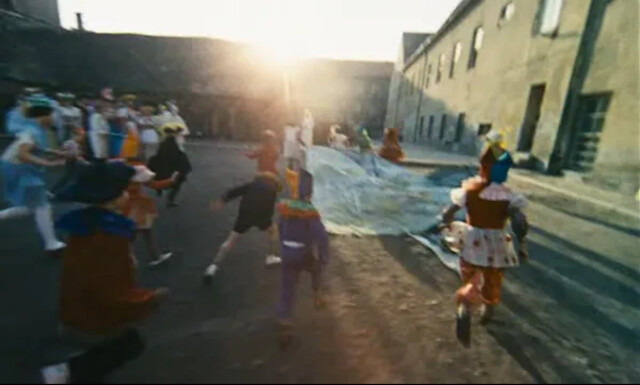
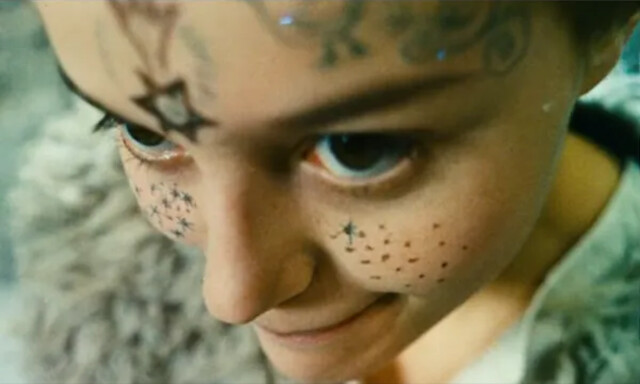
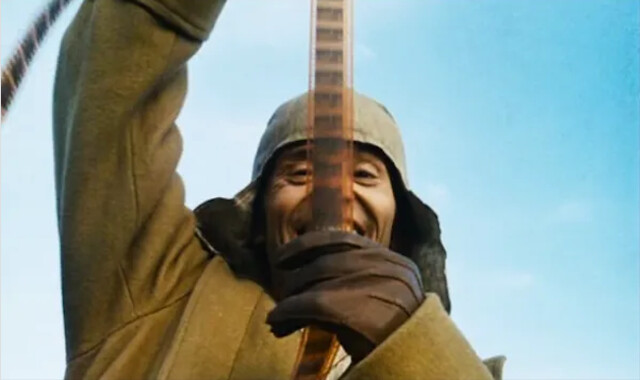
Screen Shot 2021-04-29 at 6.40.45 AM Screen Shot 2021-04-29 at 6.42.30 AM Screen Shot 2021-04-29 at 6.49.29 AM Screen Shot 2021-04-29 at 6.43.21 AM Screen Shot 2021-04-29 at 6.45.18 AM Screen Shot 2021-04-29 at 6.50.16 AM This allegorical tale of Czechoslovakia, post Prague Spring and following Warsaw Pact invasion, is all colors, beautiful decay, New Wave, Falstaff, concentration camp references, bizarre love triangle a la Jules et Jim, gaggle of children and...birds.

Yorick and Andrej are manic fools horsing around war torn Bratislava.They pick up Martha, a Jewish waif who dons a Jean Seberg haircut. Martha goes back and forth between wise-ass Yorick and virginal Andrej until Yorick goes to jail for a year. Then the tragedy ensues as the brief narration in the beginning sequence predicts. There is definitely method in all the chaos. Birds, Ophans... is a maddeningly intoxicating cinematic experience.

Tuesday, November 1, 2011

The Abyss Gazes Back

Into the Abyss (2011) - Herzog
Herzog continues his Americana with Into the Abyss, a documentary about Death Row. It is perhaps the most somber Herzog film in years. There have been similar death penalty issue films like Errol Morris's Thin Blue Line, and more recently Joe Berlinger and Bruce Sinofsky's Paradise Lost docs, which actually helped to exonerate their subjects (or at least to have them out of jail). But Herzog rather concentrates on the impact of violence that is felt on both sides of the crime. He doesn't overtly state the institutional killing is wrong. But he certainly makes us think about it with a skillfully balanced filmmaking.

Stripped away is Herzog's usual droll narration. Mostly comprised of interviews and crime scene videos, the film briskly moves on one scene to another. Michael Perry and Jason Burkett shot and killed three people while stealing a sports car in 2002. A senseless crime committed by a couple of 19 year olds. Perry was sentenced to death, and Burkett life imprisonment. In an interview with Perry, Herzog tells his subject upfront that he respects him as a human being and feels sorry for him that he has to die, but that doesn't mean he has to like him. Youthful and even jovial, 8 days before his execution, Perry tells Herzog his state of mind as a condemned man. "I'm going home or home either way." He cites 'hanging with the wrong crowd' as the root of the problem. It is evident in the interviews with friends and relatives of both perpetrators and victims, that in their lives there was a systematic pattern for unending violence, even in the suburbs of the American South: large numbers of family incarcerated, poverty, drugs, theft and felony. Serving a 40-year sentence for multiple felony charges, Burkett's father tells Herzog that he knew he saved his son's life when he saw two ladies in the jury crying after his tearful "Don't kill my son. He never had a chance," testimony during his son's sentencing. He says his most shameful moment came when he and his two sons (Jason's older brother is also in prison) got a chance to have meals together in the prison yard.

There are definitely Herzogian moments: the red Camaro, the source of the three lives lost, still sits in a police impound. The sheriff explains why they had to move the car to another spot: the tree grew from underneath the car and came through the floorboard. Herzog also gets in some memorable lines, "Describe your encounter with a squirrel," and "Would Jesus be for the capital punishment?" over the course of the film. Then there is Mellyssa who is carrying Jason's baby. They fell in love when she worked as a legal assistant on Jason's case. She is coy about how she has become pregnant.

Executions have an emotional impact on those who have to carry out the sentence as well. Herzog interviews a Texas man who had a breakdown after assisting in his 125th execution. Now, he opposes the capital punishment. A death row chaplain starts sobbing when he is asked about the last rites he performs for the inmates. "I can't stop the process, I wish I could." One must think of the recent execution of Troy Davis, a man whose trial was plagued by racial bias and police manipulation of witnesses. One of the arguments in the attempt to commute his death sentence was the potential psychological impact of forcing officers to perform an execution on a man whose guilt had not been established beyond a reasonable doubt. Lisa Stotler-Balloun, who lost her mother and brother to the crime, went to see the execution of Perry. Even though Perry's death can't bring her family back, she felt somewhat of a relief afterword. But when asked if the life sentence for the murderer would've satisfied her, she says yes.

Its generic title could be applied to any number of Herzog films. But with no traces of cynicism or sly wit, Into the Abyss is a particularly straightforward documentary. Thoroughly inquisitive and contemplative, Herzog seems to be saying enough is enough.


Into the Abyss made its debut at TIFF, Telluride Film Fest in September, it is an opening night film at Doc NYC on Nov.2 and opens in theaters Nov. 11 via IFC Films.

Saturday, October 29, 2011

Don't Tell Your Dreams to Anybody

Bal (2010) - Kaplanoğlu
Photobucket
Photobucket
Photobucket
Photobucket
Photobucket
Photobucket
Photobucket
Remote mountain village in Turkey is perhaps the biggest star in Bal (Honey), Semih Kaplanoğlu's last installment of the trilogy that includes Egg and Milk. Sunlight and silhouette dominate. It tells a very simple story of Yusuf, an 8-year old boy. He worships his beekeeper father, has some difficulties in reading, hates milk.... It's a bad bee season. So his father goes out of town to find a better spot to plant a new beehive. A couple of days pass and the father doesn't come back and things become uneasy for him and his mother.

There are many small beautiful moments with Yusuf and his father. One breathtaking dreamlike sequence takes place indoors: it's a slow tracking shot following Yusuf through the house that strongly resembles the indoor farm sequence in Tarkovsky's Mirror. Overall, In mood and tone, Bal has more common with The Spirit of the Beehive. A beautiful film.

Wednesday, October 26, 2011

In Love with the Ghost

Norwegian Wood (2010) - Tran
Photobucket
Photobucket
Photobucket
Photobucket
Photobucket
Photobucket
Nowegian Wood has been probably the most anticipated film for me since the announcement of its adaptation (3-4 years ago) of Haruki Murakami's heartbreaking book on the first love with the Vietnamese auteur Tran Anh Hung (Scent of Green Papaya, Cyclo) at the helm. For those who've read the book, the film is a great companion piece: with picture perfect framing, fluid camera movement, light and weather sensitive anamorphic cinematography (by In the Mood for Love cinematographer Lee Ping Bin). Tran, known for his sensual imagery, makes every scene and nuance count, gets every periodical detail right.

As Naoko, the girl who's in love with the ghost, Rinko Kikuchi is a perfect match. Her always searching, wide eyes pierce right through your heart. Kenichi Matsuyama possesses Toru Watanabe's innate goodness and naivete but doesn't quite pull off the wise nonchalance of the usual Murakami protagonist.

2 hour runtime doesn't really do justice as the film breezes through. The film feels empty behind all the pretty pictures, not as affecting as the book. Not a huge letdown but can't help being disappointed.