Showing posts with label FSLC. Show all posts

Wednesday, June 5, 2019

Preview: Open Roads: New Italian Cinema 2019 @ Film at Lincoln Center

Film at Lincoln Center and Istituto Luce Cinecittà present the 19th edition of Open Roads: New Italian Cinema, which will unfold from June 6-12.

These new crop of films reflects diverse issues facing the country, embroiled in social and political upheaval (like in many other European countries are facing, but very Italian) - prevalence of the comorra (modern mafia), African immigration, satirical look at Bellusconi years and others.

Some of more notable film titles presenting this year are Loro starring Toni Servillo by Paolo Sorrentino (The Great Beauty), Piranhas, the opening night selection, about the rise and fall of Naples' youth gangs, actress Valeria Gollino takes another great directing effort with Euforia and the great Alba Rohrwacher stars in a religious dramedy, Lucia's Grace.

The series also pays tribute to the late Bernardo Bertolucci (passed away last November) by screening his debut film La Commare Secca which he made when he was 21.

So without further a do, here are my 4 films preview of this year's Open Roads:

Piranhas *Opening Night Film
Screen Shot 2019-06-01 at 1.10.22 PM
The camorra/gangs of Naples are the subject of Claudio Giovannesi's sprawling coming of age story, Piranhas. It tells the story of Nicola (Francesco di Napoli), a fresh faced 15-year old and his scooter riding friends' ascent in the local gangland. Seduced by the glamorous bling life of the legendary local gangs, Nicola slowly climbs up the ranks by smartly navigating through the sinuous web of different underworld factions. But he and his friends are still kids, even though they can afford chandeliers and the best seat in nightclubs, they still complain about running out of pop tarts to eat in the morning.

Fluid camera captures some excellent, natural ensemble acting, Piranhas is at times exhilarating, heartbreaking experience.

Lucia's Grace
203625008-79113ade-0585-4b9f-8fce-f0ce0d41a768
Lucia (Alba Rohrwacher) is a young single mom struggling with life - her relationship with unfaithful Arturo is on the rocks, her fencing teenage daughter is growing up too fast, and her meticulousness is getting in the way as a land surveyor for Paolo, a local developer who wants her to rubber-stamp a big, opulent project on the hill.

To make matters worse, Lucia starts to seeing the vision of Virgin Mary telling her to stop the project and instead build the church on the same spot. Freaked out and fearful, she relocates to a friend's house and seeks out the help of a psychiatrist. People around her start noticing her erratic behavior- talking and fighting with herself (Holy Mother is invisible to others). And with the help of social media, she starts having worshipers following her around. But this mother of god not only insistent, but is downright physical, pulling and knocking Lucia around into submission.

Lucia's Grace touches upon environmental issues and the nation's anxiety of influx of refugees, but it doesn't quite go deeper in either directions. Script could have been tighter. But Alba Rohrwacher continues to impress here with her physical comedic turn, compensating for the film's weaker points.

Twin Flower
1543955200003
Laura Luchetti's lyrically lensed Twin Flower concerns a budding friendship between Basim (Kallil Kone), a teenage boy from Ivory Coast traveling by foot through Italy to find a better life in Nothern Europe and Anna (Anastasiya Bogach), a teen girl fleeing from Manfredi, a predatory man involved in human trafficking whom her father worked for.

After a harrowing experience, Anna loses her voice and becomes deeply mistrustful of any men. It takes some time for Anna to open up to good natured Basim who always seem to have positive spin on any situation even though things are dire and people can be unfriendly. With Manfredi still looking for Anna, the two young people find their shelter in the streets, fields and abandoned houses.

Anna gets a job working for an kind old florist in town who seem to understand her situation in silence while Basim sells his body to strangers to put the food on the table in their santuary - an abandoned house near the salt flats. But things are not going to stay as they are for long.

Luchetti's delicate direction with two young first time actors is the marvel of Twin Flower. She touches upon post-me too generation concerns and also immigration issues the country is facing. Kone and Bogach both give soulful and touching performances. But fragile as young people generally are regarded, I wished that Anna and Basim were not as helpless as they were portrayed here.

Normal
normal-publicity_still_2-h_2019
Gender roles are social construct from early age, filmmaker Adele Tulli seems to say with her ironically titled documentary, Normal. In the beginning few shots, Tulli establishes the gender norms - a little girl getting her ears pierced. It's an old man who is doing the piercing. He says to her that now she is just like her mother. Then there are screaming dads at the tiny motor bike race for boys decked out on race gears from head to toe.

From the toy industry to wedding industry, from violent video games to faux combats in the woods, from baby carriage aerobics to the pole dancing on a beach stage, from a 'husband cheating is a fault of both him and wife' church sermon to a conventional gay wedding, Tulli paints a disturbing 'normal' snapshots around Italy that is all too familiar and universal. Normal shows us that there's still a long long way to go.

Wednesday, April 17, 2019

Preview: Art of the Real 2019

As an adventurous spectator of cinema who writes about films and very much interested in where cinema is headed as an art form, I can say enough that Art of the Real, a film series that showcases innovative, daring, non-narrative films, has been a great wealth of resource and a place of discovery over the years.

Since its inception in 2013, Art of the Real at New York's Film Society of Lincoln Center has been celebrating genre-bending, non-narrative filmmaking. In its 6th year, the series presents new such works by filmmakers from around the world, plus retrospective by Japanese experimental filmmaker Toshio Matstumoto's non fiction work and a tribute to the late Lebanese filmamker Jocelyne Saab. If you are a curious about the possibilities of cinema as an art form, and hungry for something new and thought provoking as well as entertaining, Art of the Real series is the place to be.

The series runs 4/18 - 4/28. For tickets and more info, please visit FSLC website.


Closing Time
4638fdcd-1f86-46cc-8677-11626e4f5420
Swiss filmmaker Nicole Vögele's observational film Closing Time focuses on a tiny late night food stall owned by Mr. Kuo and Mrs. Lin, under freeway overpass in Taipei. The film leisurely explores the surroundings of this night neighborhoods - an arcade parlor owned by a young couple, a dollar store next door, a wayward dog waiting for its long lost owner, a late night/early morning market where Mr. Kuo shops. Stragglers converse over a rice porridge with side dishes about the weather - the recent strong typhoon destroyed domestic produce, leaving not too much choices for Mr. Kuo to shop for ingredients, about the changing neighborhoods, about working too much... The couple prepares and cooks 6 nights a week. We barely get to see them in daytime. The sky is always dawn violet, the street is filled with thousands of mopeds, traffic lights and signs of the shops reflected on the puddles, with the sounds of the night. You get used to the rhythm of this working class microcosm. It's quiet and somnambulistic.

On his moped, Mr Kuo takes off on the road in the later part of the film and ends up in a small town down in the south of the country. We don't know what conspired for him to take this path. Was he tired of his daily routine? Did he want to get away? Don't matter. We are afforded to a lush scenery of Taiwan's countryside. Beautifully composed in Super 16mm in a rainy season of Taiwan, Closing Time is a contemplative film shedding a light on a part of the world that rarely gets attention.


Those Who Desire
Elena-Lopez-Riera-853x480
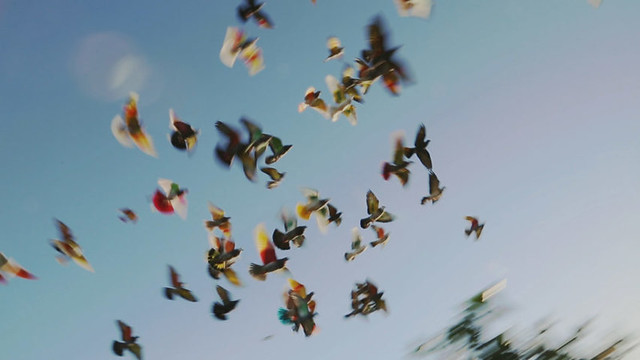
Valencia in southern Spain is a home of the Colombicultura, an exclusively male subculture where brightly colored male pigeons train and compete. Filmmaker Elena López Riera who grew up in the region, documents one of these competitions. The lone female pigeon is released in the air. Soon all male pigeons take to the air, chasing after her. There are amazing amount of rules and all these judges with walkies, watch intently every single move of these horny pigeons. It's not the speed, the narrator say, but lust and ability to conquer. I don't know what that means exactly. We see the swarm of pigeons in the air, on the ground. It's an orgiastic sight. But the competition ends due to bad weather before anything is determined.

Those Who Desire is the grossest projection of macho culture I've ever seen, but it's also fascinating.


Karelia: International with Monument
e07ee764-1d61-43ef-9458-bb97b92917b2
Karelia, the Northwest republic of The Russian Federation, bordering Finland has a rich cultural, political history. It had been occupied by Sweden, Finland and Russia. Spanish filmmaker Andrés Duque tries to link the cultural significance- the origins of Finnish epic where legends and magic with today's Karelia and ends up with documenting Orthodox Christian family, the Pankratevs, living in the remote area surrounded by nature, practicing some of the shamanism rituals handed down from generations. This first part of planned two part film about the region, Duque also digs up the not so flattering history of Stalin era massacres that took place in the same woods where Pankratev children play, and the Putin regime's effort to rewrite the history. Interesting history lesson contrasts with idylic family life in Karelia.


Movement of a Nearby Mountain
0xF12E1760863CFB1C13C8BC8AEB7095A4
Movement of a Nearby Mountain starts with a narration which tells a water fairy who was captured by hunters. In order to free from impending enslavement, the fairy promises the eternal riches pointing to the mountains. Iron. "Gold lasts a breath, silver lasts a lifetime and iron lasts forever". Soon as fairy was let go, it disappears into the water laughing. Its laughter forever lingering in the forest. This narrations repeats at the end of the film. Once in German, the other in Igbo.

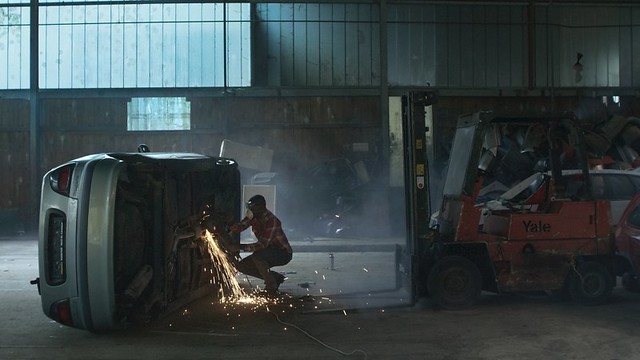
Cliff is a Nigerian man who owns and operates a chopshop in the Austrian Alps. He works there, cooks and eats there, shaves there - seems like his spends his waking life there. He buys cars, refurbishes, sells them whole or parts and also exports them to Nigeria. He deals with Hungarians and other Eastern European customers, sometimes in English, sometimes in German. Sometimes things heat up haggling the prices, but he seems to have his usual customers and well liked. But he is usually alone, spending days working. He sings Christian hymns under his breath.

We see a man of two worlds, bound by metal. The chorus of insects in the Nigerian jungle at night carries over the driving shot in the snowy Austrian Alps on autobahn. Sebastian Brameshuber's contemplation on these contrasts and the intimate portrait of one man against the stunning forest backdrop speaks volumes without saying much.


Swarm Season
Swarm Season
Hawaii's Big Island at a glance, is both a paradise and hellscape: the luscious vegetation along the coast contrasting vast black volcanic field created by overflowing volcanic activity inland that resembles the surface of Mars. Filmmaker Sarah Christman examines the intersection of elemental and superficial, nature and technology, ancient traditions and development, looking inward and space exploration, extinction and survival through the eyes of Manu, a preteen girl and her family who are in beekeeping business.

Manu helps out with her mom's honey producing by tracking wild bees and locating their beehives and relocating them. But she is also an average girl of her age, playing with My Little Pony toys in the sand and daydream while laying in the field. There are biologists collecting queen bees from the hives to study their swarming patterns and their survival.

Manu's dad is a tribal activist protesting the construction of another large telescope on top of the sacred volcanic mountain, Mauna Kea (13,803 ft). Then there is a group of astronaut training for Mars exploration in isolation on the mountain- ideal training ground because of similar climate (lack of oxygen and rough, barren terrain).

Swarm Season features some spectacular scenery of molten lava flowing out to sea, miles of barren black field created by volcanic eruptions, the underwater explosions as well as intimate tender moments with Manu and her family. The film's philosophical musings and seeing the bigger picture don't overshadow its anthropological study of its people and surroundings. It's a great film.


Accession
AOTR_Accession_01-1600x900-c-default
I've seen filming process as germination in one other film recently. It was Anocha Suwichakornpong's superb By the Time It Gets Dark. Where as the idea of film relating to germination was more of metaphorical one in By the Time, Tamer Hassan, Armand Yervant Tufenkian's Accession is more of a literal one. 13 correspondences in letter form about sending seeds are read mostly by someone related to the persons who wrote it, in various places and times in America, over the lovely hand processed 16mm footage. There are no other diegetic sound or effects sound to accompany these images and the narrations.

Accession is a testament of America as an agricultural society. Seed keeping, passed down to generations in families, is a dying tradition, so is the celluloid. Bringing forth new life year after year and the nurturing those who sow is somewhat equated here with the tradition of filming and creative process of so called 'experimental films'. Lovely, melancholic and resonant, Accession is a lovely piece of cinema.


Acid Forest
Screen Shot 2019-03-31 at 7.22.10 AM
Curonian Spit, a scenic peninsula in Lithuania is a Unesco Heritage site. It's also the home of Curonian Spit, a scenic peninsula in Lithuania is a Unesco Heritage site. It's also the home of Acid Forest, a swat of forests full of dead pine trees occupied by thousands of big, black, migrating cormorants who made those trees their homes. It's a tourist attraction. There is an elevated wooden platform to take in the scenery. Many tourists from all over the world climb up the wooden stairs to witness the devastating view. They all have something to say in their native language. Some comments that it looks like a nuclear fallout, or tornado aftermath. The guide explains to gaggle of Japanese tourists that trees died of the birds shitting on them constantly, to their amazement. Some invokes Hitchcock's Birds.

Many of these observations and amateur theories are downright hostile. Many jokes about having a gun and shooting them all down. Many complain that the birds are protected by the EU laws. Filmmaker Rugilė Barzdžiukaitė observes all the human activities from above, from a bird's eye view. Constant fly over shots of the whitened branches of the pine trees reveal thousands of these birds making home in Curonian Spit, oblivious of human crowing with their opinions down below.

A biologist is heard explaining to a TV crew that many of misconception about the birds are untrue, making a point that cormorants have existed since the ages of dinosaurs and it's not only their droppings that kill the forests. But we see the human interference at the end as we control much of our nature's destiny, unfortunately.


Walden
Walden
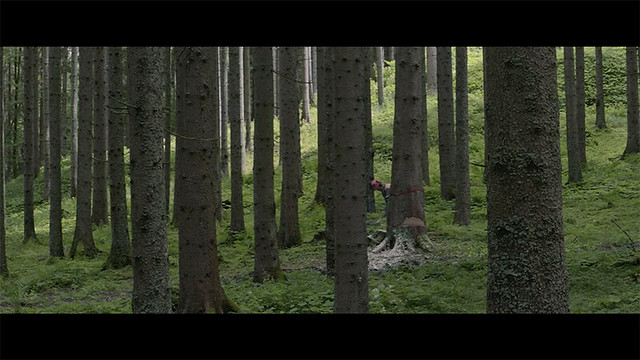
Walden consists of 13 slow 360° controlled panning shot from left to right. Each shot lasts about 10 minutes. It starts from Austrian forest where trees a being cut down with a buzz saw. Then the lumber is transported by trains, trucks, boats all the way to the Amazon, the lumber is finally transported by hands deep into the jungle. The film can be a slog for someone craving for a narrative or character to hold on to, but the key here is giving yourself up to the flow as the panning, moving picture creates its own steady velocity.

Each stage strategically stationed and shot in wide format and 50 fps for maximum coverage and the smooth movement, Swiss filmmaker Daniel Zimmerman's film takes an ironic, paradoxical look at a journey of timber in a global economy we are living in, done in a vigorously formalist approach.

Monday, February 25, 2019

Preview: Rendez-Vous with French Cinema 2019

The Film Society of Lincoln Center and Uni France again team up for the 24th edition of Rendez-Vous with French Cinema at Lincoln Center this year, 2/28 through 3/10.

This year, the series puts an empasis on showcasing new and up and coming voices across French cinema and includes Romain Laguna (Meteorites), Sébastien Marnier (School's Out), Virgil Vernier (Sophia Antipolis), Gaël Lépingle (Time of the Pirates) and Judith Davis (Whatever Happened to My Revolution). Also represented here are seasoned Rendez-Vous alums such as Bruno Dumont (Coin Coin and Extra Humans), Mia Hansen-Løve (Maya) and Gilles Lelouche (Sink or Swim).

The series also highlights number of French comedies this year, opening the series with the multiple César Award nominated The Trouble with You, starring comedian Pio Mamaï and two of the top leading actresses in French cinema - Adele Haenel and Audrey Tatou, directed by Pierre Salvadori.

It might be less star studded year without the presence of Deneuve, Huppert or Binoche for the first time in a long while, but there are plenty of little gems to be found as usual if you knew where to look.

So here's my guide to this year's Rendez-Vous with French Cinema. Enjoy:

TROUBLE WITH YOU - Pierre Salvadori *Opening Night Film
TheTroublewithYou_1200x600
After police Lieutenant Yvonne (Adele Haenel) finds out that Santi, her decorated dead cop husband was a bent cop, that everything she owns is from dirty money, she actively tries to make things right. She especially feels bad for Antoine (Pio Marmai), a young man who was wrongly accused and went to jail for 8 years because of Santi's fake bust at a jeweler, which was a insurance scam. After Antoine is released, she obsessively stalks him. Antoine, traumatized by the incarceration, can't stop acting out his bad impulses and commit violent crimes. Ever so guilt stricken, Yvonne helps him in his endeavors and tells him that she understands what he is going through while hiding the secret of who she is.

Thinking Yvonne is a salvation to all his anger and resentment, a person who finally frees him from being 'innocent', Antoine decides to leave his long suffering girlfriend (Audrey Tautou) and get freaky with Yvonne in a S&M den (a vacated crime scene where she took him after he burned down a restaurant) and keep committing crimes.

Trouble with You is a mad cap comedy. It has its moments but the jokes are stale and gags can be seen too easy and regressive- high heels = a prostitute, S&M body suit and sex toys oh-so-funny, etc. But affecting performances by Haenel, Mamaï, Tautou and Damien Bonnard make up for it.

MAYA - Mia Hansen-Løve
2018-maya
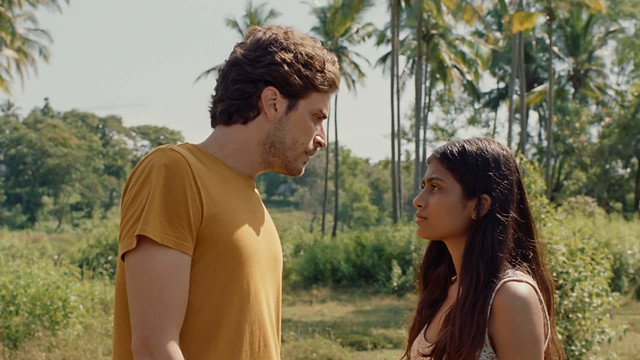
Mia Hansen-Løve's new film starts with a French war journalist, Gabriel (Roman Kolinka) being released from captivity with a fellow journalist Frederic (Alex Descas) by the ISIS in Syria. He gets a hero's welcome in Paris. The year is 2012. Even though he was beaten and tortured, he refuses to be treated by psychologists or take pills for his trauma. Only thing he feels is guilt because the third journalist is still not released. He decides to take off to Goa, India, just to get away from everything for a while. He knows that only thing he knows is being a war journalist and will need to go back. But for now, he will take some time off and travel India. Goa is where he spent his childhood with his mom (Johanna ter Steege) who now lives in Mumbai.

In Goa, Gabriel meets Maya (Aarshi Banerjee) a young woman who is a daughter of his Indian godfather, Monty (Pathy Aiyar), who runs a hotel business. But touristy Goa is in transformation and people are being forced out by land developers and Monty doesn't see the future for Maya to stay in Goa forever. Gabriel is an intense, brooding man and the news of the fellow captive's beheading doesn't help the matter.

At first, Gabriel refuses Maya's advances, waving off her as still too young. But they hook up and she is left heart broken. Gabriel can't reciprocate her love and he will go back to the war zone.

The film could easily be called Gabriel since it's mostly about him. We get his back story, his family and love life and Maya is just a young girl who falls in love with a hunky, intense French guy. She is just starting out her life. So this is why the film is an interesting narrative departure for Hansen-Løve, who's been making thoughtful observations on people in transitional period. Maya is not unlike Camile character in her Goodbye First Love, except she is not the main character. Or is she? Maya is a movie about that special person who had made a big impact on your life. He or she pretty much made what kind of a person you are now.

Again, beautifully scripted and ambitious in its scale, Hansen-Løve keeps expanding her territories while not losing sight on where her priorities are - portraying melancholy of growing up and acknowledging that there is a price to pay for following your passions. Kolinka's hunkiness almost derails the film. But what can you do? He's French.

METEORITES - Romain Laguna
meteorites_03
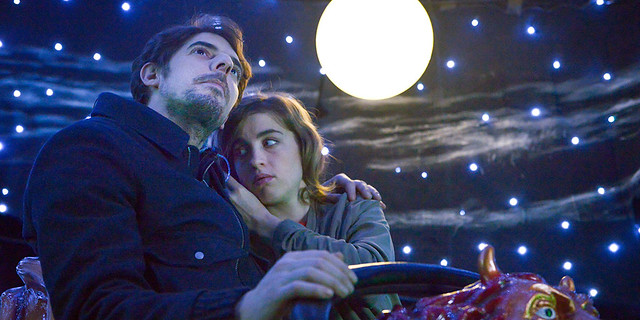
A young girl's search for her place in the universe is the theme of Meteorites, Romain Laguna's sensual debut feature. Nina (Zéa Duprez) is a High School dropout working at a dinosaur theme park in the south of France. One night, she witnesses a meteor charting across the sky and crashing over the rugged mountain. It seems only she saw the celestial event and no one else. She starts hanging around with Morad (Billal Agab), a good looking Algerian boy from a nearby project, who happens to be her co-worker Djamila's brother. Djamila warns her that she will get dumped. But their sexual attraction is palpable. She thinks the meteorite was the sign of their encounter.

It's a rocky relationship. Morad's aloofness and Nina's stubbornness clash in every turn. After Morad leaves for Algeria without notice and her old friend Alex declares joining the military and Nina finding out that she's not pregnant, she falls into a case of melancholy. Only searching and finding the meteorite that crashed will give her a peace of mind.

Shot in full frame with vibrant colors, lush sun drenched surroundings and with Duprez's sultry presence, Meteorites is an affecting, lyrical coming of age film.

SOPHIA ANTIPOLIS - Virgil Vernier
Screen Shot 2019-02-16 at 2.31.11 PM
Sophia Antipolis is a name of a southwestern French industrial park in French Riviera, known for its tech industry complexes and low lying office buildings and chain stores. It's a back drop of Filmmaker Virgil Vernier's new film of the same name. It starts with a plastic surgeon talking to several young women about the their breast argumentation options. An impatient young woman tells the reluctant surgeon that she needs to have them done fast before her job interview. The surgeon drily tells her the ethical implication of him letting her walking around without proper healing time, even with her own consent. Then there's a young black navy man trying to get a job at a security firm in town. The combat training they go through is grueling, conducted by drill sergeant types who yell at you racist things in your face if you were people of color or threatening rape if you were a woman to get you riled up. The young man befriends with an older man who introduces a group of vigilante security force believing in doing the jobs police wouldn't do, like raiding and destroying illegal camps or makeshift shacks by slashing and burning their tents down. The older guard tells him a story of him and his old partner finding a charred body in one of the empty office space. During a bust of a suspected child molester, it becomes too much and the young navy man who runs away.

Police gets involved in the burned body case and determines it's the body of a young woman who had breast implants. That she might have been killed and set on fire by some shady characters whom she owed money to. The story then pivots to a girl who was a High School friend of the dead girl. She is found holding a candle lit vigil where the girl had died.

Just like his previous film Mercuriales, Vernier's elliptical, loosely connected stories, Sophia Antipolis examines the seedy underbelly of a shallow modern society, urban isolation and loneliness and human connection. Daring, cerebral and playful with some lyrical 16mm shot images, it's one of the most invigorating film experience I've had in a while.

AMANDA - Mikhaël Hers
amanda
Reading only the plotline of Mikhaël Hers new film Amanda might not entice you because it is extremely conventional, lifetime channel movie material. But knowing the film is his, you know you are in good hands.

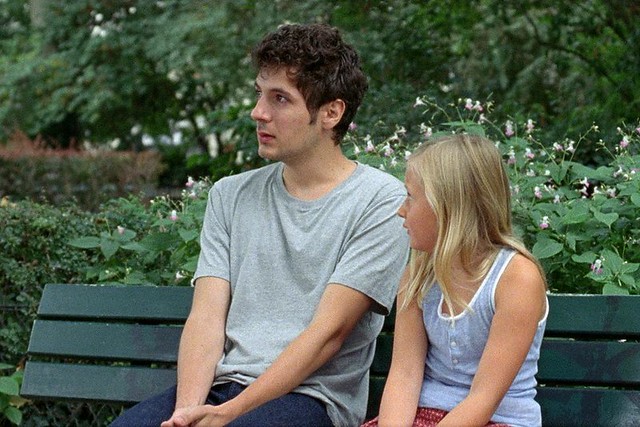
David (Vincent Lacoste) is a young Parisian scraping by doing menial jobs - as a middle man for the landlords, arranging pickup and introduction to places for travelers and as a seasonal park employee, trimming tree branches around the city. He has a loving older sister Sandrine (Ophélia Kolb) and an adorable 7 year old niece Amanda (Isaure Multrier) whom he picks up at the school when single mom Sandrine is busy. David meets Lena (Stacy Martin), a newly transplant from the countryside through his job and falls in love. Other than their father not in the picture and their estranged English mother (Greta Scacchi) reaching out to reconnect, they live in quiet, relatively uneventful life.

A sudden death of Sandrine and many others in a terrorist attack in the park shatters David's tranquil existence and affects Amanda greatly. Young and short on resources, David has to decide the fate of his young niece.

It might draw some flags for its non-political stance in the time of the extreme polarization, hate and fear for portraying the post-Islamic terrorism France, but Amanda is not about that. It's not about a young man's journey through adulthood either. Nor is it Doillon or Pialat-esque acting/directomg genius extravaganza. Just like Hers's other films, Amanda is all about human connections. And it's drawn beautifully. And also like his other films, loss and grief figure greatly in to it. But if they were on the periphery and overhanging cloud in films like Memory Lane and Montpanasse, they take the center stage in Amanda. Lacoste (seen in films of Mia Hansen-Løve and Christoph Honoré), a cross between Jean-Pierre Léaud and Andrew Garfield, has a great range and has a bright future ahead of him. He is also representing Freshman in this year's series.

TIME OF THE PIRATES - Gaël Lépingle
cf-seuls-les-pirates-photos-608257
It's Orleans suburbs where city officials are planning a new housing development. They hold town hall meetings and try to gather up the support. But this means Géro (Ludovic Douare), an aging, eccentric theater actor/director who lost his voice due to cancer and only whispers, will get evicted from his cluttered house and from his theater space too. So starts Gaël Lépingle's humanistic characters study Time of the Pirates. Géro gladly invites Leo, his fresh faced 18 year old nephew who wants to learn the theater craft and write, to live with him. Then there is a lonely city clerk who is fighting for the custody of her kid whom Géro has a hots for.

Leo turns out to be a young man who is politically aware and doesn't buy into Géro's romantic notion of "pirates are origins of revolutionary anarchists." The film takes a sly turn as one of Géro's 'associates' gets into trouble and flees to the country and Leo accompanies him. On the run and tall and handsome, for Leo, the fugitive is an ideal model for his writing. Then he finds out the man makes money off of smuggling refugees in. The boy is learning.

With finely tuned, naturalistic performances that don't resort to stereotypes and it's tone just pitched right - not too serious and not too silly, Time of the Pirates occupies a specific place in French cinema by portraying middle-class people and their lives with humor and warmth. I am definitely going to check out Lépingle's Julien next.

Tuesday, February 5, 2019

Preview: Film Comment Selects 2019

In its 19th edition, Film Comment Selects provides various films around the world, deemed their contributions to cinema as important and vital by Film Comment Magazine's esteemed editors. This year's lineup includes Steven Soderbergh's another iphone shot non-sport sport movie High Flying Bird, László Nemes' Sunset, his follow up to Son of Saul, Flight of a Bullet, a one-take docu into the heart of Russia-Ukraine conflict, Up the Mountain, Zhang Yang's formally daring portrait of the Bai people in Western China and The Hidden City, an audio-visual sensory tour of Madrid underground.

Most of these films in the selection are not masterpieces, but each brings a spark, its unique colors to cinema. This is the reason why I love the series. It keeps me on my toes and makes me giddy with joy because it reminds me time and again that cinema is indeed an great art form, not because of its consistency but rather its fluidity.

Film Comment Selects runs Feb 6 thru 10th at Film Society of Lincoln Center. Please visit their website for tickets and more info.

I had a privilege to sample the following:


Sunset
- László Nemes
46012-Napsz__llta__Sunset__-_L__szl___Nemes__film_still___33_-e1535984118277
László Nemes' follow up to a haunting holocaust drama Son of Saul, Sunset is yet another period film that is equally brilliant and challenging. It tells a story of Írisz Leiter (Juli Jakab), a young heiress to the famous hat maker parents who perished in a fire. She came to Budapest, to her parents' hat making showroom/shop to get a job as a milliner. But the manager of the shop Oszkár (played by great Romanian actor Vlad Ivanov of 4 Months, 3 Weeks and 2 Days, Police Adjective and Snow Piercer) doesn't want her there, saying the city is not for a country girl like her. But Írisz is determined to stay and find a brother she never knew she had.

The time is the height of Austro-Hungarian empire in the early twentieth century, on the eve of World War I. Soon Írisz finds herself in chaotic social upheaval where dangers and mysteries are around every corner where nothing is what it seems and everything is layered. Nemes keeps his Son of Saul subjective perspective - focusing closely on Írisz on steadicam, following her exclusively. It's a startlingly absorbing theater experience. As well as the visuals, Nemes put an emphasis creating soundscapes that reflects the tumultuous times with off the frame whispers, conversations and ominous soundtrack.

Sunset juxtaposes a society on the brink of self-destruction with setting the film around something trivial and decadent as a designer hat shop. There is something creepy about all the beautiful, young women hat makers preparing for the dance party for the crown prince and princess and be chosen as a personal milliner and move to Vienna. Is Írisz's brother an anarchist bent on toppling Oszkár and the ruling class? Nemes doesn't give an easy answer to any of these intrigue. Instead, he makes us work for it and it's great.


Flight of a Bullet - Beata Bubenec
Screen Shot 2019-02-02 at 10.15.54 AM
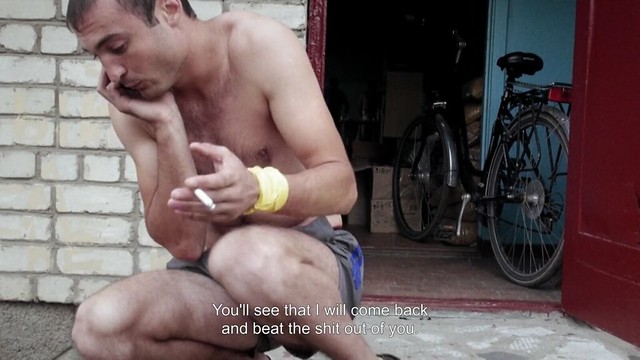
Flight of a Bullet, an uncut 80 minute footage of a village and its soldiers in Ukraine starts out like a typical political thriller where a innocent civilian gets caught between two factions - in this case Russia backed separatists and pro Ukraine forces, then eases into a glimpse of the effects of war on people, especially on young macho military men in the army barracks where director Beata Bubenec is embedded with.

We see a man taping a partially collapsed bridge. Some bystanders are making jokes and hitting on Bubenec who is behind the camera. The ski masked soldier takes a man into custody with Bubenec in tow, starts interrogating him to see whether he's a separatist or not. It's tense and realistic since it's real. After the intense scene dissipates, Bubenec moves outside and tracks a shirtless soldier on the phone with his girlfriend. He keeps on accusing his girlfriend, threatening violence once he gets home. The banal conversations that goes on through the rest of the film always carries tinge of violence. Flight of a Bullet is an interesting case study of the effects of the war.


Los Reyes
- Iván Osnovikoff, Bettina Perut
idfareyes-h_2018
Los Reyes is an oldest skate park in Santiago, Chile. Kids come and go with their skates and hang out. But the documentary focuses on two mangy dogs (Football and Chola) who live in the park and spend most of the time there, chasing tennis balls, napping, barking at cyclists, howling at the passing police sirens. Skaters are only present in voice overs here and there, mostly talking about smoking and selling pot.

Iván Osnovikov and Bettina Perut's documentary is an ode to street dogs. In extreme close ups, we see Football's aging features - matted shaggy hair, bloodshot eyes, teeth ground to the base, fly ridden ears, jagged paws, limping. But Football and Chola are energetic pair and owns the park as their territory. The filmmakers juxtaposes passing of time of dog days with aimless youth growing up and realizing that they have to face the real world in voice overs. Gentle, contemplative and beautiful.


Jessica Forever
- Bettina Poggi, Jonathan Vinel
Jessica-Forever
A young man is being chased in the suburban neighborhood. He suddenly lunges into the window of one of the houses. The glass shatters and the man motionless. So starts ultra slick Jessica Forever, a sort of a gamer's answer to all YA dystopia novel adaptations. Jessica (Aomi Muyock, last seen in Gaspar Noë's Love), is a surrogate mother of a pack of orphans all of whom are violent young man. We gather from various brief narrations that these baby faced non-emotive orphans have committed horrible deeds and hunted by the oppressive government forces (in the form of a swarm of armed drones). Jessica is apparently the only one who can calm them down and trying to build a makeshift family out of them by hugging them and whispering to them that everything will be okay.

There are some very nice visually orchestrated scenes and visual effects. But I don't know whether I need to take these hunky boys in kevlar vests and hockey pads, listening to Deathmetal ballads seriously or is Jessica Forever some sort of Verehoven-esque parody and I'm not getting it.


Up the Mountain - Zhang Yang
Up the Mountain
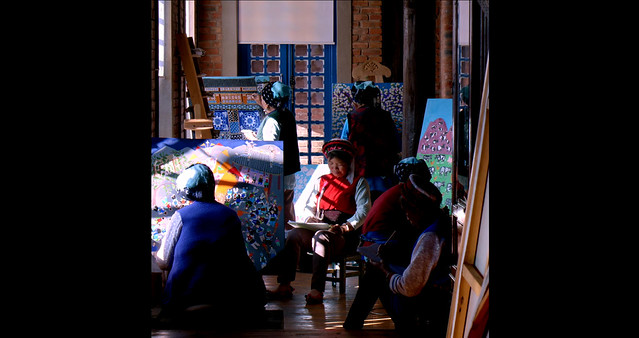
Gorgeous. Master painter Shen (Shen Jianhua) and his family relocated from Shanghai to Shuanglang, a lakeside village in Yunan Province, Southwest China, some time ago. His modern, airy residence is up on the hill overlooking the stunning view of the lake and the mountains. His art studio is always open to local grannies in their colorful traditional Bai clothes who flock to paint colorful scenes from their daily lives. Painting in his studio for the grannies has been sort of a communal retreat, away from their daily grind and a chance to express themselves creatively. Framed in the same manner as the square canvases used by these painting pupils, Up the Mountain unhurriedly observes the daily routines of the villagers. They tend to their barnyard animals, harvest their crops, cook, paint and chat about their lives.

In that static square with gorgeous nature backdrop, every frame is a work of art. Births, a funeral, a new year's celebration, a wedding occur in this documentary. Master Shen's studio is always busy - there are always people coming and going: they paint, they chatter, they cook and eat communally. You get used to the quiet rhythm of life. Master Shen and his family, even though thoroughly modern, cosmopolitan, somehow fit right in the region where modernization just has begun - many roads are still not paved, ancient traditions still performed. Up the Mountain also reflects on the harmonious side of changing China.


The Hidden City
- Victor Moreno
hidden_city-h_2018
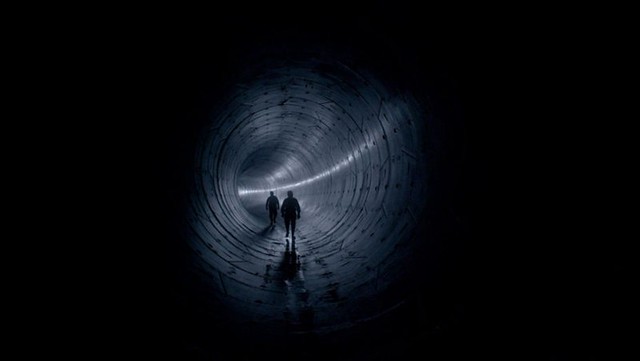
Darkness, then blinking stars slowly appear and fill the screen. Is this another lyrical film that makes you contemplate on our place in the universe? No. It turns out to be an underground system below the streets of Madrid. The stars turn out to be the reflection of the lights on the centuries of filth on the grimy tunnels. The Hidden City starts out with abstract images with familiar sounds of clink-clank of man made machines. And it's oh so dark. It's disorienting at first, the same way human eyes take some time to get used to in the complete darkness. It gets familiar - workers communicating through walkies, subway trains, grainy surveillance camera footage of rats, cockroaches and stray cats, commuters both above and below.

The Hidden City
charts somewhere between a sensory experimental art film and documentary. Darkness underground often provides truly cinematic shots - a single light source illuminates particles swirling around in the wild air flows, welding flames dance around like a Disney animation. Both beautiful and unreal.


Los Silencios
- Beatriz Seigner
ls_still_bloco_ii_print-101
Beatriz Seigner's somber refugee drama takes place in an island shanty town community bordering Brazil, Colombia and Peru. Amparo (Marleyda Soto), a mother fleeing Colombian civil war with her two young children, Nuria and Fabio, after her husband disappeared, arrives the Fantasia island by boat at night. It's a small fishing village with wooden shacks on stilts connected by wooden planks. There, Amparo needs to navigate through the system to get her refugee status, provide school supplies for kids, find a job. Her old auntie tells a story that the island is full of ghosts, living among the grieved. Amparo's husband's ghost appear - eating and communicating with the family.

Los Silencios
plays out lyrically in making its case for violence stricken community, where they are semi-permanently in limbo stage, where nothing is certain. Mixing professional actors and its real inhabitants in a improvised script, Beatriz Seigner achieves rare authenticity in real life situations and makes a deeper impact.

Thursday, June 28, 2018

NYAFF 2018 PREVIEW

Dubbed as the Savage Seventeenth edition, this year's festival hosts four world premieres, three international premieres, 21 North American premieres, three U.S. premieres, and twelve New York premieres, showcasing the most exciting comedies, dramas, thrillers, romances, horrors and arthouse films from East Asia.

NYAFF 2018 runs from 6/29 to 7/13. Please visit FSLC Website for more tickets and more info.

ONE CUT OF THE DEAD
Screen Shot 2018-06-20 at 1.31.40 PM
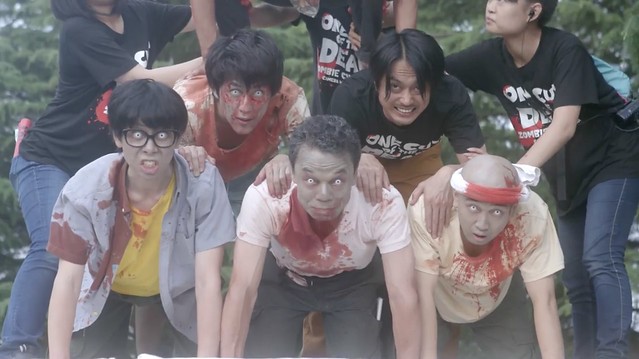
With Romero's Night of the Living Dead, the zombie genre has a humble, low-budget indie beginning. Taking the cue from this idea, Ueda Shinichiro's One Cut of the Dead serves a love letter to the indie filmmaking process as much as it works as being an entertaining zom-com.

It starts out with as an impressive 37 minute uncut zombie movie where a frazzled director screams at a young actress, who has just gone through her 42nd take. She needs to look more frightened. That she really needs to fear for life! His wish comes true soon enough, as real zombies run amok in the filming location, a large water treatment plant where the Japanese army conducted human experiment in the days of WW2.

The film rewinds and becomes a making-of documentary where it shows how the uncut movie was made in clever, comical ways. As anyone ever involved in low budget filmmaking would attest, no matter how terrible the end product turn out, there is tons of hard work and on-the-spot problem solving that goes in to each film. An interesting aside to considering: The movie gives the 'crane shot' a new meaning...

One Cut of the Dead is part zombie movie, part making-of documentary and part touching family drama. And it's hugely entertaining.

HUNGRY LION

Screen Shot 2018-06-20 at 8.18.04 PM
Comprised only with short static shots that cut to black, Ogata Takaomi's Hungry Lion takes a non-sensational, clinical approach to reflect on the peril of our society completely under siege by social networking. It's very Haneke yet very Japanese.

The film begins in a high school classroom where a teacher is getting led away by the police. The video of him having sex with a student went viral. Hitomi, a normal high school student who has a considerable SNS following or someone who looks very much like her was in that video. She denies that it is her. Some of her immediate circle believe that she is innocent at first. But once the rumor starts doing rounds, it spreads fast. People turn on her and the adults who are supposed to protect her innocence openly exploit her. The gossip at the school and home become too much for Hitomi and she throws herself in front of a train.

Hungry Lion digs deeper into our relationship with the world in the internet age and how we see things in a distorted way and prey on the most vulnerable. It's a compelling movie watching experience.

LIVERLEAF

Screen Shot 2018-06-19 at 11.48.20 AM
Violent Japanese schoolgirls! This is what I love about NYAFF!!

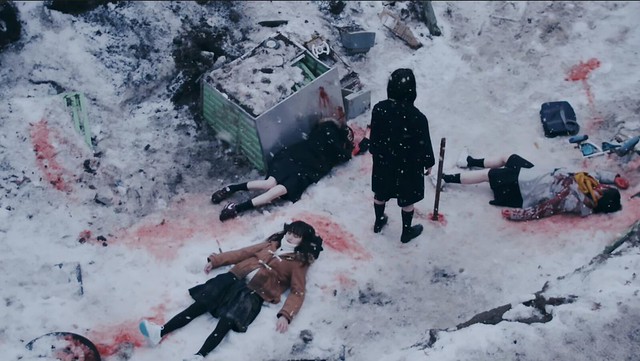
Based on a manga of the same name, Naito Eisuke's Liverleaf is a school bulling revenge movie. Haruka Nozaki (Anna Yamada) is a transfer student from Tokyo in a rural town Middle School. She is relentlessly bullied by a gang of close-knit friends, headed by cool redhead Taeko (Rinka Otani). It is said Haruka stole Aiba (Hiroya Shimizu) from Taeko. How dare she!

Things take a violent turn when Rumi (Rena Otsuka), a loner who would do anything to impress Taeko, actually carries out burning down Haruka's house with her family in it. With her parents killed and her little sister in an intensive care from burns, Haruka exacts revenge on the gang, one by one, using a rusty nail, a pair of wire cutters, a crossbow and a pocket knife. As usual, nothing is more beautiful than blood on the pure white snow in the Japanese countryside.

THE BLOOD OF WOLVES

Screen Shot 2018-06-22 at 11.30.36 AM
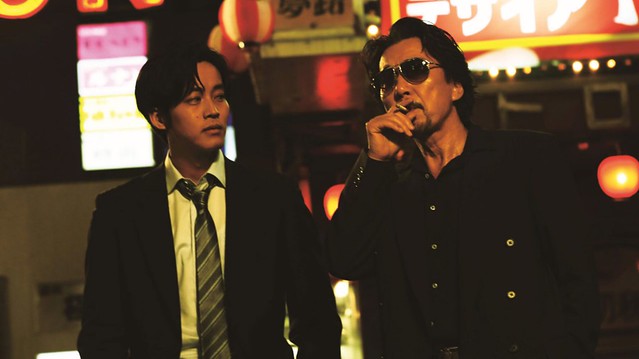
Detective Ogami (Yakusho Koji), known affectionately as 'Gami by his colleagues and yakuza friends alike, leads a colorful existence, walking a tightrope without falling to either side. He has been the key figure in keeping the peace between too warring yakuza clans. But it's Gami's method - taking bribes, getting favors, extortion, violence, etc that irks a young idealist rookie partner Hioka (Matsuzaka Tori). While investigating the murder of a civilian accountant, Hioka realizes Gami might be in too deep with Irako (Ishbashi Renji), one of the crime bosses. Would Gami find out that Hioka is an agent from internal affairs? Would they still bring down the gangs together?

As flamboyant Ogami, always dependable Yakusho is fabulous here playing against type. Without honor, loyalty or fear, his character is only interested in protecting civilians. With large, great supporting roles played by many familiar faces in Japanese cinema (including Maki Yoko of After the Storm, Like Father Like Son and Abe Junko of Still the Water), Blood of Wolves is an excellent, gritty crime film that is hugely enjoyable.

PARADOX

Screen Shot 2018-06-23 at 8.40.41 AM
Hardened HK detective Lee (Louis Koo) sees his young daughter grow up to be a teenager. As soon as she takes up a no-good boyfriend and gets pregnant. After an abortion, she runs away to Thailand only to be kidnapped by local thugs who in deal organ transplants. Yes, just like previous SPL series, you don't watch Paradox for the plot. You watch it for a handful of heavenly action sequences!

Choreographed by Sammo Hung, with picturesque backdrops of the bay city of Pattaya, we get some glorious fight scenes involving Koo, Lue Wu and Tony Jaa (as local cops) and Chris Collins (as a sadistic organ trafficker). One set piece in the narrow hallways and rooftops with Collins and Jaa is breathtaking. So are the extended meat packing facility fight sequences, fully equipped (for your pleasure) with plenty of sharp, clanking cutlery. It's not great as the previous SPL series and the typical cheesy HK plotline drags down its greatness a notch. And you only wish you want to see more Jaa, but oh well. Vithaya Pansringarm (Only God Forgives) also shows up as a police chief.

Wednesday, April 25, 2018

Art of the Real 2018 Preview

Art of the Real, FSLC's annual celebration of non-fiction cinema is back and remains my most anticipated cinema event even in the city that is not in short supply of great film series all year round. An amazing array of genre-defining, ever expanding cinematic experiments are presented to satiate your inquisitive cinematic minds! This year's lineup includes Infinite Football by Corneliu Porumboiu, Sergei Loznitsa’s Victory Day, Kazuhiro Soda's Inland Factory, and many more.

Again, Art of the Real is an immensely rewarding cinematic experience both in form and content. Don't miss it!

Art of the Real runs from April 26 through May 6, 2018 at Film Society of Lincoln Center in New York. Please visit FGSC for more info.

Here is preview of six notable films for your pleasure:

John McEnroe: In the Realm of Perfection *Opening Night Film
Screen Shot 2018-04-14 at 3.04.00 PM
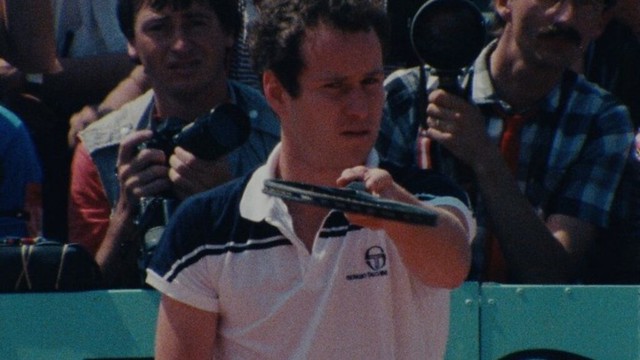
This terrific, archival footage documentary starts with a Godard quote - "Cinema Lies, Sport Doesn't." A French archivist Julien Faraut stumbled upon hours and hours of 16mm shot French Open matches at Roland Garros, initiated by Gil de Kermadec, the first director of French Tennis Federation, to study and make instruction films for aspiring athletes. But what Faraut saw was a compelling, verité style portraits of each players, and especially of McEnroe, who was at the time, the number one player in the world.

It happens that McEnroe wasn't a good model as an athlete who had atypical style for these often rigid, dry instructional films. His form was unusual and his methods were unpredictable, which gave his opponents a hard time. As a perfectionist of the game, he hated incompetency of people in the court and as a result, we've got to know him as who shouted and argued with umpires endlessly. He also hated being filmed or photographed. There are several moments where he stops the game to complain that the rolling cameras were bothering him while looking straight into camera.

Like last year's Dawson City: Frozen Time which uncovered the intersection of Gold Rush and cinema, In the Realm of Perfection finds the intersection of sport and cinema. Drolly narrated by Mathieu Amalric, Faraut creates Chris Marker style film that is both entertaining (thanks largely to McEnroe being himself) and thoughtful. The epic match between McEnroe and his long time nemesis Ivan Lendl in 1984 captured in grainy 16mm is literally, epic.

Casanova Gene
Screen Shot 2018-04-15 at 11.12.14 AM
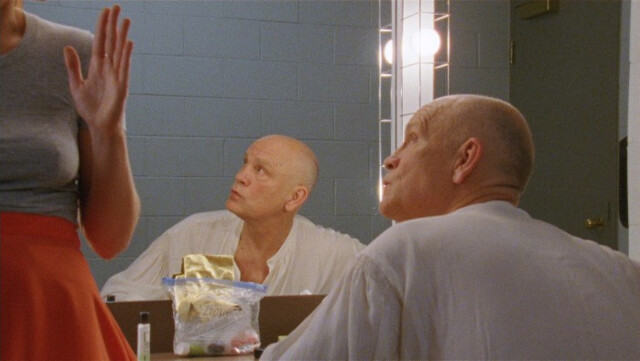
German filmmaker Louise Donschen examines desire of all forms in Casanova Gene and it's a fascinating one. In evolutionary biology studying finches in a science lab in the woods, an ornithologist tells us why female finches cheat on their partners - they inherited the Casanova gene from their fathers, as male finches are polygamous. "Is it beneficial to female finches?" the filmmaker asks off the frame and the ornithologist doesn't have an answer. John Malkovich plays Casanova or Malkovich the actor playing one, as he is interviewed by the filmmaker. He simply describes himself as a slave to his senses and explains the difference between character and temperament.

Carnival in Venice is juxtaposed with a church and the clergymen. Kids play in the forest, lights change, illuminating the rooms through the window, a dominatrix in SM studio holds a session, a hypnosis takes a place where a woman experiences intense orgasm. Then there is staged bar scene where transman complains that he misses uterus.

The colors - the red of the roses, orange beak of the finches, grey and red of the clothes- everything surreptitiously intermingles in this seemingly fragmented, yet arresting film that reminds me of the work of Alexander Kluge. A real gem.

Infinite Football
Screen Shot 2018-04-17 at 9.12.33 AM
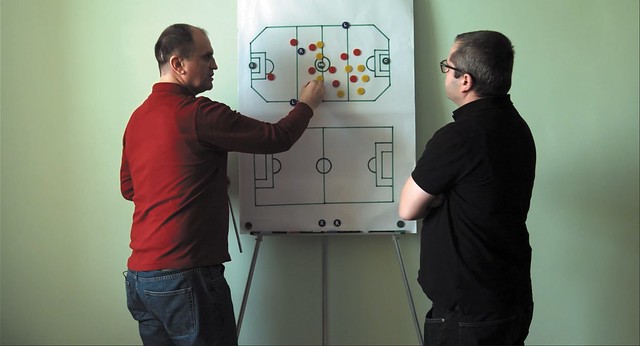
Romanian helmer Corneliu Porumboiu (Police Adjective, 12:08 East of Bucharest) makes a wacky yet poignant documentary about his childhood friend Laurentiu Ginghina, a middle aged bureaucrat who is obsessed with changing the rules of soccer to make the sport safer. At 19, he fractured his right fibula as many players in the opposite team ganged up on him in the corner when he had the ball. Because of the injury, he had to give up hope of going professional. Now he is hell-bent on changing the game - he wants to implement octagonal shaped soccer field with sectioned groups where 5 offensive and 5 defensive players can't cross each other's lines and no offsides. He says this improvement will speed up the game and make it smoother and safer.

He wanted to go to Forestry university but it required physical where you had to run which he couldn't do with his leg. His dream of coming to the US twice - first to run the ranch out in the West, then in Florida, gets thwarted by 9/11 and its aftermath with tighter restrictions. He ended up where he is, some desk job which is not that exciting. Ginghina's sad sap story, told in his office where he keeps getting interrupted with his daily tasks- an old lady with her inheritance questions, paperwork, meetings and appearances, brings out chuckles rather than sympathy.

Porumboiu prods his friend's obsession about 'the ball being free' in a sport where beauty is in player's skills and the ball is just an object. Our bureaucrat obviously is self aware, that deep down he equates himself with the ball and trying to escape from tight corners. That he sees himself as a superhero from comic books, like Superman or Spiderman who has a normal boring dayjob. Is his situation a stand-in for the general disillusionment with European Union, felt by majority of its members? Maybe.

After seeing his plan implemented on the indoor soccer field to not so enthusiastic results, he keeps changing his rules and therefore his creation being tagged as Infinite Football by Porumboiu. The film ends with Ginghina's poignant and touching monologue about the world where there is less violence which the director equates for political utopia. There is no fast zoom in/freeze frame or zany music for cheap laughs. Nor the film intentionally demeans our silly bureaucrat. Just like other Romanian new wave compatriots, Porumboiu knows how to justly reflect the lives of ordinary Romanians finding themselves riding along in a rapidly changing world and facing mildly amusing situations.

Braguino
Braguino
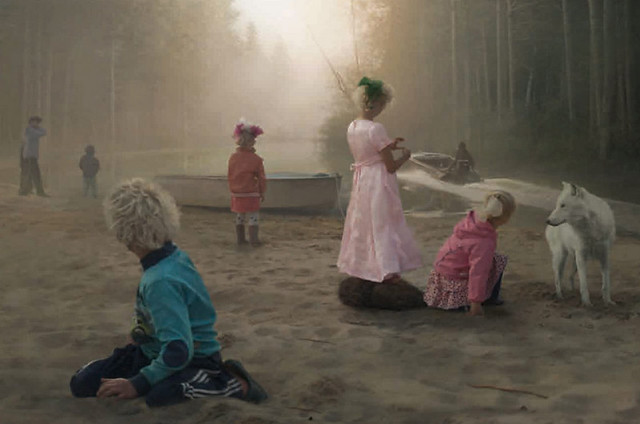
A French visual artist and film director, Clément Cogitore whose supernatural tinged Afgan war thriller, Neither Heaven Nor Earth, made waves at the film scene few years back, travels to remote Eastern Siberia to document the Braguinos, a family living off the environment. The head of the family tells us that they wanted to get away from it all, so they just packed up and left on their boat. Their 6 children were all born in the taiga. It is clear that the Braguino clan is not only dealing with family rivalry with the neighboring Kilins just other side of the river, but dangerous animals - especially bears and also ever expanding human presence in the region.

Cogitore and his cinematographer Sylvain Verdet is there to capture what can only be described as Tarkovsky-an beauty in rather dream-like Siberian taiga. The natural beauty is only accentuated by fair-haired Braguino children in their colorful dresses and clothes. As the helicopters full of heavily equipped newcomers landing on their territory, we all know that the happy days of the Braguinos are numbered. It's a striking non-fiction filmmaking featuring otherworldly beauty.

Milford Graves Full Mantis
Screen Shot 2018-04-21 at 10.06.50 AM
Milford Graves, a free-jazz percussionist, records his heartbeat with a self-made EKG machine hooked up to the computer and makes electronic melodies out of it. He is also a martial art enthusiast and practitioner- he learned his moves through studying preying mantis instead of going to a local dojo. His style is Yara, a yerba word for 'Nimble', a mixture of West African dance moves and martial arts. In the labyrinth of books, machines, instruments, artifacts of his house/studio in sunny South Jamaica in Queens, Graves reminds you of your eccentric uncle- a smart person with full of self-taught knowledge who forms a philosophy of life with first-hand experience. And when he plays, it's electrifying.

Relying completely on Graves' words, Jake Meginsky and Neil Young creates a compelling portrait of a modern day sage and a fantastic storyteller who is approachable and very down to earth. As he talks about his music being the conduit of vibrations of cosmos, you listen. He might be the remnants of 60s mind-body-spirit mumbo jumbo, but the way he is so in tune with nature, as he does gardening in his back yard, as he in tune with his body- his world view makes sense, especially now, when the whole world seems to have gone crazy.

All That Passes Through a Window That Doesn't Open
ALL THAT PASSES BY THROUGH A WINDOW THAT DOESN'T OPEN
Martin DiCicco's film charts transcaucasian trail on two side of tracks - Azerbaijan and Armenia. Once a vibrant railway system linking Turkey - Georgia - Armenia and Azerbaijan which served as the crossroads of Eastern Europe and West Asia left in ruins by decades of neglect and regional conflict. Without saying much of its very complicated geo-political history, DiCicco elegantly concocts tale of two countries, one with full of hope and looking forward, the other reeling from the ghost of the past.

In the first 2/3rd, it concentrates on Azerbaijani side, where mostly young migrant workers living on the train cars while they travel to upgrade the railways. Voices of some of its workers narrates their days on the rails, how it's lulling affects their bodies own senses and memories. One says he likes railway works because it's measurable against time. That there's sense of accomplishment as he and his co-workers go closer to their destination. There's dancing, drinking and sense of camaraderie and dangers of accidents too.

After the war between two countries and neighboring Turkey supporting the muslim Azerbaijan and closing off its borders in 1993, Armenian side of the tracks which was a lifeline for trade to the west and east, left to rot. The last 1/3rd of the film features an Armenian station agent guarding the one such neglected station, waiting for it to be open again. His words and accompanying visuals are poignantly drawn out.

All That Passes Through... invokes the poignancy of Kiarostami's road films in contemplating on the time passing. DiCicco and his editor Iva Radivojevic draw a evocative picture of the region full of history, longing and hope.

Tuesday, April 10, 2018

Lucrecia Martel Retrospective at FSLC 4/10 - 4/15

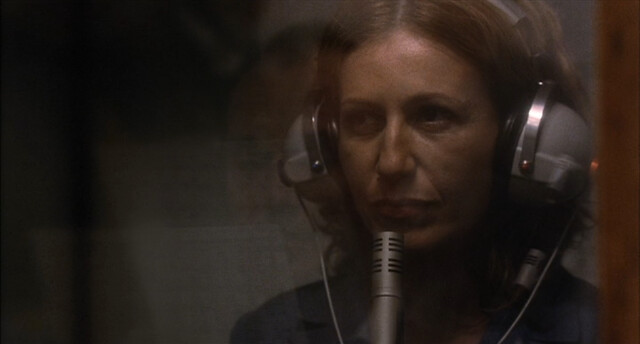
In conjunction with the theatrical release of Martel's new film Zama, Film Society of Lincoln Center is hosting the retrospective of one of the most important, daring filmmaker working today. My first encounter was with her much celebrated third feature, Headless Woman/La mujer sin cabeza. It didn't make much impact on me then. I thought the satire on upperclass Argentinian society was, if not cinematically daring, maybe too little on-the-nose. I had no point of reference since I've never seen her previous two films.

It was a German director, Christoph Höchhausler (I am Guilty, The City Below, considered as one of the key members of what critics termed as the Berlin School), who told me that Martel is the filmmaker he admires most when I interviewed him while he was in town three years ago. He pointed at the poster of La ciénaga on the wall of Silversalt PR office in midtown Manhattan, when asked what his favorite film was. Indeed, watching La ciénaga changed everything. Its visual/aural examination of dark and complex underbelly of Argentine bourgeoisie was an eye opener. As an adventurous cinema lover, La ciénaga offered everything I was looking for in cinema. Then Holy Girl, holy moly! I can stress enough the greatness of Martel who is quite possibly the greatest living filmmaker of our time.

I can't find what I wrote about Headless Woman, but here are the my reviews of her other three films for your reading pleasure. Watch Zama on the big screen if you can. It will change what you think of cinema once and for all.

La ciénaga (2001) - Martel
tumblr_obo160iKlZ1r6kxjco4_1280
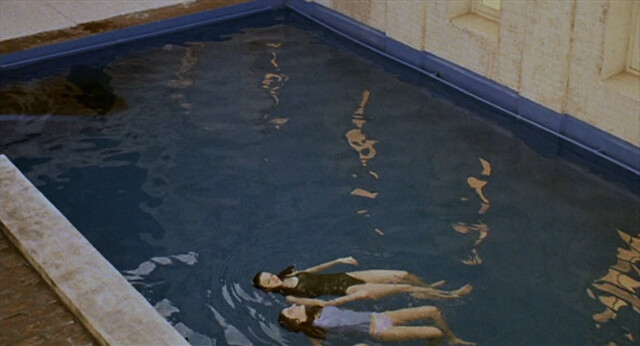
Compared to bombastic, unsubtle satires and social commentaries that we are used to, Lucrecia Martel puts some perspectives on how they should be done, masterfully in La Ciénaga (The Swamp). Taking place in the decaying manor in the jungle in one unbearably hot and sticky Summer in Argentina, the film illustrates the murky underbelly of bourgeoisie without delving into surrealism or making caricatures out of characters. Mecha (Graciela Borges) is seen sunbathing while drunk along with the rest of the inebriated grownups of the house by the pool side. After demanding ice cubes for her wine, she slowly rises in her stupor, tries to collect filthy wine glasses, drops them, falls on top of the shards. The rest of the family are not much better. The emasculated, husband keeps dying his hair and staining the sheets, the 15 year old Momi (Sofia Bertoloto) is obsessed with the pretty native housemaid Isabel (Andrea Lopez), the older daughter Vero (Leonora Balcarce) flirts with her ne're-do-well grown up brother José, who's living with a much older family friend, Mercedes in Buenos Aires, visiting after Mecha's fall and doesn't seem to have problem jumping in mother's bed for a cuddle. Young Joaquin lost one of his eyes while horsing around in the jungle with other boys.

Tali (Mecedes Moran), concerned cousin of Mecha shows up with her family (a grumbling husband, 3 girls and one boy who figure largely into the story later on), not only to check on her cousin but also use the pool for kids who are bored out of their minds. The said pool, neglected and not cleaned for years, is filthy, murky grey disease breeding ground. Isabel warns Momi not to go in there- she might catch something terrible. The contempt for native population is totally out in the open from Mecha down to Joaquin, casually calling them savages and accuse Isabel of constantly stealing towels. With TV always in the background, everyone, across the social strata, is drawn in by the news of appearance of Virgin Mary on top of a cement tower.

With amazing array of characters and richly contrasting social stratification not only in a familial but geographical and cultural, La Ciénaga is a complex examination of a society still steeped in colonial legacy and religion.

La niña santa/The Holy Girl (2004) - Martel
71a923c2-9137-4081-a85e-4618f5859055_zpsgwq9padw
f6d54976-796a-4f21-9eec-e9b3789860fa_zpsr4hjtubx
5411cf9a-a200-48d4-8798-d9a3d523e75e_zpsr9fxlewt
e1efc07f-f5b0-4f8a-b447-651c72c46d39_zps4lxtigpu
16eeacdf-9acf-44da-83c4-b13f7c8031f9_zps8hmg0qui
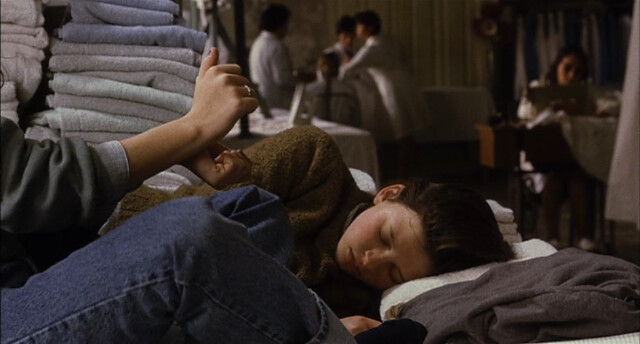
Amalia (María Alche), a sullen teen girl, lives with her divorced mom Helena (Mercedes Morán) in an old hotel with a thermal pool where mom works as a representative. She attends bible study group with her catholic school girl friends and recite prayers under her breath obsessively. Lately, she is obsessed with 'vocation'. A ear-nose-throat doctors convention is taking place in the hotel. Amalia finds herself being an interest of Dr. Jano (Carlos Belloso), a married man with kids, when he rubs against her bottom in the crowd gathered for a theremin player just outside the hotel. On the verge of sexual awakening with the help of a promiscuous, gossipy best friend Jose(fina), the experience leaves her not repulsed but curious.

She soon becomes obsessed with Jano, sneaking into his shared room, smelling his shaving cream, following him and spying on him at the poolside. Whatever this man means to her, her obsession becomes her 'vocation'. Jano's guilty conscience is not helping Amalia's cause. To make matters worse, Helena finds him attractive as well.

Martel proves to be the master of close-ups and shallow focuses. The details of the senses and small moments she captures on screen - touch, smell, whispers make up the film's superbly orchestrated, organic feel. All the connective tissues of the film are all spread out- the fact doctors are ear-nose-throat specialists - whispers and misheard information, smell, singing, but her approach is so subtle and fluid, you can't help but admire her skills. The Holy Girl is about Amalia as much as it isn't. The film's sordid details of the lives of middle class bourgeoisie can be seen as Almodovar-esque melodrama. But as in all Martel's films there is always a it's-barely-there-but-there satire. I can't really think of any director working today who works on Martel's level. The Holy Girl is a true cinematic feat!

Zama (2017) - Martel
zama
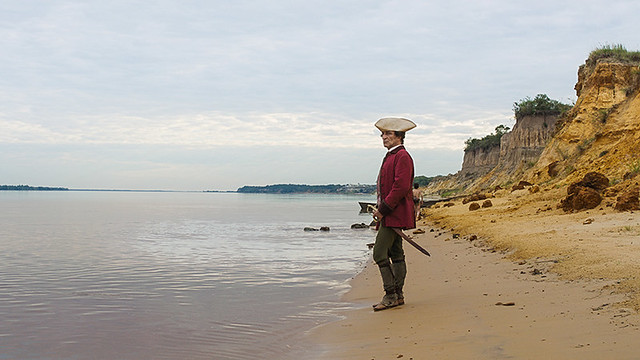
Lucrecia Martel suggested in her introduction to her sold-out screening of the much anticipated follow-up to Headless Woman that we audience might want to take in Zama like a whiskey. Indeed, it's a heady, at times bitter, at times sweet hallucinatory trip to the heart of darkness, showing the white man's identity crisis and misguided manifest destiny in the colonial era Latin America.

The film is a historical period piece, based on the much praised Latin American classic literature by Antonio di Benedeto. It's a hugely ambitious undertaking for Martel with just 3 films under her belt. But if anything, Zama confirms Martel one of the greatest directors of our time. Her mastery over the medium both in complex narrative storytelling and technical ingenuity has grown to exceptional height with Zama.

Don Diego de Zama (Mexican actor Daniel Giménez Cacho with an impressive Romanesque nose), a magistrate stuck in some unnamed South American colonial town deep inland in the 18th century, is anxiously awaiting to hear from the Crown (of Spain), his new assignment to the city. Even though he is a man of certain position and been stationed there for a while, he can't ever seem to get ahead or get what he wants - the letter of transfer never materializes, his rival Ventura (Juan Minujín) is much better at kissing asses and the local society lady de Luenga (Lola Dueñas) flirts with him but wouldn't give in.

Zama doesn't fair well with the natives either- seen in the beginning peeping at nude women taking mud bath and getting caught. He also has a nagging native woman he had an invalid child with. And the thought of the existence of this child weighs in his conscience like a brick. His misplaced valor to protect three virginal sisters is always overshadowed by the overhanging threat of a mythical bandit named Vicuña Porto who is notorious for raping and pillaging.

After physically threatening Ventura over de Luenga, Zama is demoted and moved out of his semi-opulent living quarters to a squalor with rotting walls, just outskirts of a city. At the governor's insistence and a promise of recommendation letter to the Crown, he delivers a scathing review of a book written by a well-meaning, trusting young civil servant (the governor can't stand the thought of the young man wrote the book while on the job). But no matter how many favors, how many people he fucks over, Zama realizes that he won't be leaving the backwater town any time soon.

Fallen out of favor and aging, Zama reinvents himself as a guide to the band of soldiers in the late stages of colonization. As they advance inland, they are terrorized by the red body paint natives who populate the land. Fighting with the elements and among themselves (one of the soldiers claims to be the elusive Vicuña- is he really? Does it even matter?), Zama and the men get completely lost in the strange land.

There have been countless other films about the white men's delusion of grandeur- Aguirre, Wrath of God and Apocalypse Now! easily come to mind. With Zama, along with lyrical Jauja few years back, directed by fellow Argentine Lisandro Alonso, Martel captures the existentialist angst in the age of colonialism/ad infinitum in Latin America with astonishing efficiency and grace. Shooting digital for the first time, Martel and her Portuguese DP Rui Poças (Tabu, The Ornithologist, To Die Like a Man), create lush, bright palates that are intoxicating and hallucinatory.

Martel's mastery of the cinema medium as sensory medium first and foremost is nothing short of brilliant. She subjects us to painterly framing and exceptional sound design in every scene. Those of you who followed her trajectory closely through La Cienaga, Holy Girl and Headless Woman and have been admiring her artistry will be richly rewarded here - a carefully measured framing where people's faces are just off the frame, shallow depth of field, soft focus, the full use of background/foreground and the use of dialog fading in and out with internal monologue thrown in, just to name a few.

She also uses the Shepard Tone whenever there is a dramatic moment for Zama. The tone is an illusory aural phenomenon that creates continuously swelling sound which builds tension and suspense. All these are very simple methods and not radical experiments at all, but it's Martel's simple approach that makes everything so fresh and radical. As you watch Zama, you can't help but feeling that you are watching a true cinematic masterpiece.

Finding the Latin American identity, as European settlers and their offspring, has been the continuous source for great literature over 300 years. Throw in the idea of class, masculinity, racism, sense of belonging, you get a very complex picture of what makes up the theme of Zama.

As usual, in Martel's hands, what seems to be an extremely messy affair at first, the sense of cohesiveness emerges from the chaos, then the sense of warm comfort wraps around the whole experience. Even though Zama is a lost character who goes through traumatic experiences, there is sense of catharsis that is reached in the last moments of the film. That he finally found home, that he reached his el dorado, imagined or otherwise. Zama is a utterly brilliant film. See it on the big screen if you can.

Wednesday, February 21, 2018

Film Comment Selects 2018

Curated by its esteemed editors, Film Comment magazine's 18th edition of Film Comment Selects returns to Lincoln Center.

A great mix of old and new cinematic gold, this year's lineup includes Ildikó Enyedi’s Berlinale Golden Bear-winner On Body and Soul; Mrs. Fang, Wang Bing’s unflinching document of an elderly woman in her final days, which won the Golden Leopard at Locarno; the North American premiere of Katharina Wyss’s powerful debut feature Sarah Plays a Werewolf, about a woman who channels her fears into theater; Govinda Van Maele’s fiction feature debut Gutland, featuring Phantom Thread’s Vicky Krieps; the U.S. premiere of Slovenian director Rok Biček‘s The Family, a compassionate portrait of a young man’s life over the course of 10 years; and experimental artist Bertrand Mandico’s exhilarating, gender-bending Wild Boys.

The series opens with US premiere of Life and Nothing More, a moving docu/fiction hybrid by Antonio Méndez Esparza.

The Series runs Friday, February 23 through Tuesday, February 27. Please visit FSLC's website for tickets and more info.

Here are six films I was able to sample:


Wild Boys/Les garçons sauvages
- Bertrand Mandico

Screen Shot 2018-01-27 at 11.33.29 AM
Five handsome boys from an exclusive boarding school go a little too far with their sexual desire with their literature teacher, reaching a state called 'Tresór,' symbolized by a jewel-crusted skull. As a punishment, they are cast away by a greasy, bearded ship captain (Sam Louwick) with a gigantic tattooed penis. Chained and fed only a fruit that resembles hairy balls, the boys go through a harrowing sea voyage under the ruthless captain. The ship is headed toward a mysterious island where men turn into the fairer sex. The idea is, taking a short trip to the island might make these wild lusty boys a little more even tempered, a little less testosterone filled.

Bertrand Mandico makes a feature debut after many fantastical, colorful, playful shorts with the crazy beautiful The Wild Boys. He flips gender roles, having the roles of the boys played by female actors (Vimala Pons, Pauline Lorillard, Diane Rouxel, Anaël Snoek and Mathilde Warnier) in ties and suspenders with short hair. After they get to the seemingly wild and unkempt island full of weird vegetation that resembles secreting penises and hairy balls (their only means of sustenance), they meet Dr. Séverin(e) (Mandico's muse Elina Löwensohn), a zoologist who became a woman after he landed on the island. One of the boys, Hubert (Rouxel) gets left behind with Séverine and the rest go back to the ship due to the captain's urging. But soon the boys revolt against the captain because they want to go back to the weirdly seductive island. The boat capsizes in the storm, and the boys end back up on the island.

A gaudy, sensual, daring and inventive take on both Goto: Island of Love by Polish master Animator/filmmaker Walerian Borowczyk and Lord of the Flies, The Wild Boys is a lot of fun. It plays out like a prettier, sexier Guy Maddin film. And its pan-sexual theme is not without a dash of humor. The beach fight/orgy scene complete with flying feathers and sand alone is worth the price of admission.


The Family
- Rok Biček
Screen Shot 2018-02-11 at 8.50.25 AM
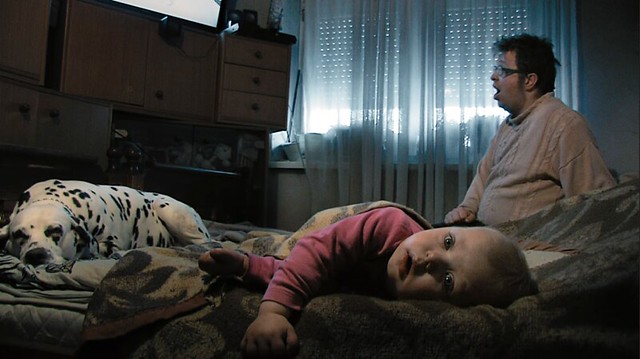
Rok Biček's non-judgmental, uncompromising Slovenian documentary follows young Matej's troubled life for a decade. It shows that the life is very complicated and not at all black and white.

In a jumbled timeline, we first see the graphic moments of Nia, Matej and his girlfriend Barbara's daughter, being born. They both are teenagers at this point. They move in with Barbara's parents'. It seems Matej has a strong bond with Barbara's dad. But their domestic bliss is very short-lived. We see teary Matej moving out and back into his parents'. It is quite easy to see why Matej seeks his parental love elsewhere- with a mentally challenged brother at home, his parents are not quite the nurturing types- uneducated and lost control over Matej long ago, their communication is limited to slurring words, yells and insults. But it's not like his parents are monsters. Dealing with a teenage son who is glued to his computer screen and completely shut out of his world, his parents deal with issues like any other parents of teenagers in the world.

A session with the with a school councilor reveals this dilemma. The councilor points out to Matej's dad that his son is quite bright, yet his has learning disabilities and has some behavioral issues. Dad tells her that he is doing all he can to help him. And the councilor reminds Matej that his parents 'doing all they can' might seem not enough under their circumstances, but that doesn't mean they don't love him.

As the custody battle over Nia ensues, Matej seeks vasectomy. He doesn't want to get a girl pregnant. And the sensation is not the same with condoms, he explains to the doctor. His application is denied because he's only 23. He gets involved with a 14 year old school girl and gets heavily dependent on her kindly mother.

With titling the film, The Family, Biček deliberately provokes us to examine what it means in the current complicated, messy world we are living in. There are numerous gaps in the timeline and important events in Matej's life we are missing out- his father died, how? What happened to his front teeth? It's that truncated history that gives the film its punch. Life goes on, whether we are watching or not. The film ends with young Matej snarkily asking, looking directly into the camera "Isn't my life interesting?" Yet the film's theme goes way beyond its mere subject.


Gutland
- Govinda Van Maele
Screen Shot 2018-02-07 at 12.27.24 PM
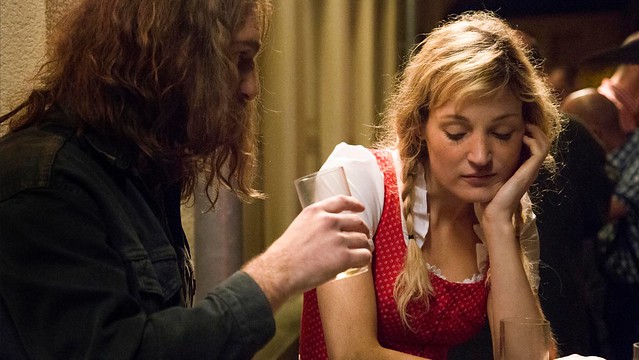
Starring pre-Phantom Thread Vicky Krieps, Gutland is a solid first feature from Luxembourgian director Govinda Van Maele. It's a slow burner that ultimately doesn't really pay off. It doesn't have a moral lesson or big revelatory ending. But it's all about maintaining that below-the-surface tension all throughout- Van Maele and co. do it very well with the help of effective dream/fantasy sequences and uneasy score.

It tells a story of a brusque German bank robber Jens (Frederick Lau) with a bag full of cash rolling into a rural farming community in Luxembourg. In order to lay low, Jens looks for a job as a farmhand for the harvest season. At first suspicious, the townsfolk warm up to the caveman-like Jens, especially Lucy (Krieps), the daughter of the towns mayor. A town's elder, the pillar of the community takes a liking to him. He warns him ominously of one thing though - do not get involved with any of the wives here.

Jens settles in with Lucy, making his stay semi-permanent, having a tranquil life. All the while, he has to deal with dirty secrets of the village, his own past and the bag full of money he buried in woods nearby. Is Jens a different man now he cut his caveman hair and beard off and plays in the town's orchestra? Is his second chance in life voluntarily asked for or forcibly given?

Gutland is an expertly crafted noir where you can't shake off that ominous feeling from beginning to end.


Life and Nothing More
- Antonio Méndez Esparza *Opening Night Film
Screen Shot 2018-02-16 at 10.24.41 PM
Falling somewhere between Roberto Minervini films and Florida Project, Life and Nothing More, directed by Antonio Méndez Esparza (Aqui y allá), brims with authenticity and empathy. If you were going in cold feet like me, the film is an extremely intimate documentary about a troubled teenager Andrew (Andrew Bleechington) and his overworked, but tough single mom Gina (Regina Williams). But a halfway through, you notice improvable, almost impossible camera placements in public places without being noticed and hear voice overs when they read letters. Then you realize that this isn't a documentary.

First, the focus is on Andrew, a quiet high school kid trying to stay out of trouble and taking care of his little sister while mom is at a diner working. He is bombarded from all sides (community groups and churches) that he needs to be good. Yet he is still a teen, trudging through a rough school and crime ridden neighborhood. With his dad incarcerated, he builds up his anger inside him. Then we shifts focus on to Gina and her budding romance with one of her customers, Robert (Robert Williams). She's done with men and doesn't have time for any bullshit. But very insistent Robert seems like a genuinely nice guy. What Andrew thinks of him is another matter though.

As it develops into a courtroom drama, the film charts a familiar territory - poverty, absent fathers, the inadequate, racist justice system, etc. But perhaps this uninspired story arc is the point - with little choices these characters have under the circumstances, this is how it plays out, just like in real life.

Quietly moving and beautifully portrayed by non-actors, Life and Nothing More is another moving, very human docufiction experiment about marginalized Americana.

*The California Film Institute's CFI releasing will theatrically distribute the two-time Spirit Awards nominee nationally this spring (TBA date). Award-winning filmmaker Antonio Méndez Esparza who is also a Guggenheim Fellow and professor at Florida State University will be in New York this week for the NY premiere screening and also participate in a Film Comment Free Talk on Race and Representation on 2/24.

On Body and Soul - Ildikó Enyedi
Screen Shot 2018-02-12 at 3.46.13 AM
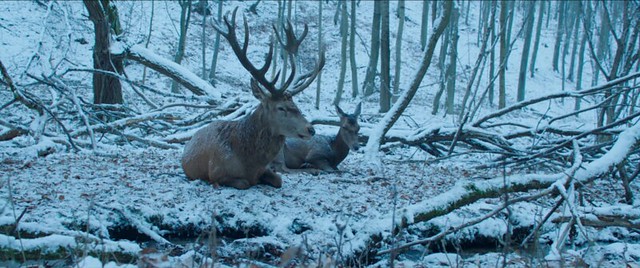
A handicapped, lonely and aging financial director, Endre (Géza Morcsányi) at an industrial slaughterhouse is intrigued by Maria (Alexandra Borbély), a new quality inspector who lacks any social niceties. It happens that they dream the same dream every night - that they are a deer couple, roaming the snowy forests, enjoying each other's company in silence. But even though they share the serendipitous events, unlike a regular romance, they have some big huddles to leap through - Endre has given up his love life a long while ago and Maria suffers from haphephobia for whatever reasons.

Hungarian director Ildikó Enyedi (My Twentieth Century) does whimsy right while contemplating all animals as sentient beings. On Body and Soul is a grown-up fairytale (as opposed to grown-up's fairytale). I liked that Enyedi doesn't rely on cuteness of the premise. It's mature and beautifully realized. I hate when a film makes sex as a clutch that solves every problem its characters have. Even though Maria's characterization is shorthanded, I loved the idea of her ethereal being coming down to earth by her elopment with Endre, realizing the love is accepting breadcrumbs on the table.


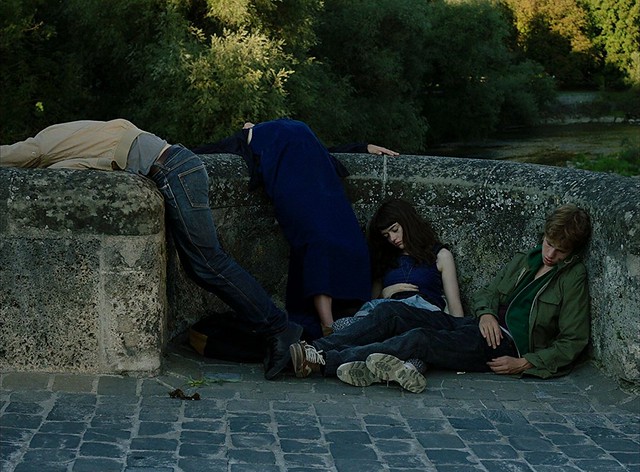
Sarah Plays a Werewolf - Katharina Wyss
Screen Shot 2018-01-24 at 10.04.13 AM
Sarah Plays a Werewolf paints a complex picture of what being a teenage girl is like. Sarah (Loane Balthasar) is a High School drama student in a picturesque Swiss town. She has a nice, well adjusted family - parents are well educated, cultured intellectuals & siblings are normal. Sarah has a penchant for dramatics - loving tragic figures in plays and opera, telling classmates that her imagined boyfriend is dead and Ben, her older brother who recently moved out to attend college, committed suicide even though he's alive and well. She doesn't have any friends or someone to talk to. It doesn't help that her parents are way too liberal with their parenting, encouraging her freedom in every which way, even condoning the thought of suicide. She and her Georges Batalle reading classmate Alice stage dramatic scene where Sarah plays a victim to Alice's torturer. Everyone, except for the drama teacher (Sabine Timoteo), is nonplussed and soon after Sarah loses Alice to a boy. She tries to make out with some of the boys but that doesn't work out either.

Sarah becomes more and more withdrawn and have schizophrenic episodes, until she attacks one of the student on stage. But her father refuses to medicate her or send her to therapy. "No one understands me," she keeps on saying.

Moody and melancholic, Sarah Plays a Werewolf is a clear eyed examination of being a teenage girl that reminds me of Bresson's films, especially Four Nights and a Dreamer and A Gentle Woman. Loane Balthasar's fearless performance is remarkable.


Mrs. Fang - Wang Bing

40172451022_dd2401175e_z
Mrs. Fang - Wang Bing

Death, the inevitable. It comes to everyone. It is part of life. We experience it more as we get older. But it never gets any easier. Wang Bing, the master chronicler of the shadowy side of Chinese economic boom, unflinchingly move forward with documenting an elderly woman's process of dying. Think of Mrs. Fang as real life version of Haneke's Amour, only less dignified and less poetic, just like death in real life.

We see Mrs. Fang, a plump, elderly lady silently looking in a dingy room. Six month later, she is skin and bones, unrecognizable, her teeth exposed, dying of Alzheimer's in the bed in a room she once looked in. Her family and friends flood the room looking in her condition. They argue loudly about the cost of her care, the funeral arrangement and her state of mind. As usual, through the series of long takes, we are confronted with a person dying in close up - her eyes staring nowhere, no voice and almost no mobility. People around her don't know about death, less about the Alzheimer's. They speculate endlessly in front of the dying woman.

Just like his other films, Wang depicts the rural, poor community. They are small fishing community. But there is no romanticism portrayed - they go off on their small metal fishing boat, cast the nets which makes buzzing sound, pull them in and come home.

Just who Mrs. Fang was is not Wang's concern to show. What she did, whom she loved is beside the point. The banality of death is. It's difficult to watch. Wang faces it head on. I admire that.