Monday, July 4, 2016

Master Filmmaker Abbas Kiarostami, 1940 - 2016

 photo 592c0441-aee9-4207-a893-c43edfe29c49_zpsf545555b.jpg
Abbas Kiarostami, an Iranian master filmmaker, passed away from gastrointestinal cancer in Paris today. As an avid fan of his humanistic, genre transcending films, I can say with a certain conviction that we've lost one of the greatest artists in the world of cinema.

It was his film, Taste of Cherry, winning the Palme d'Or at Cannes Film Fest in 1997 that introduced poetic, meta-fiction laiden Iraninan cinema to the world and put many Kiarostami contemporaries (Jafar Panahi, Asghar Farhadi, Moshen makhmalbaf) on the world cinema map.

But it was seeing one of his Koker trilogy, Wind Will Carry Us, that was a watershed moment for me in my cinematic education. I've never seen such a humanistic and poetic cinema before and the film made me scramble for anything Iranian afterwards.

Over the years, even though his films were never overtly political (although they could easily be seen as Iranian sociopolitical fable), he found filmmaking increasingly difficult within Iran under the government censorship. I reckon it was exactly that transcending subtle artistry that fooled the censorship for a long time. Thankfully for us, it resulted in two international productions - Italy set Certified Copy in 2011 and Japan set Like Someone in Love in 2013.

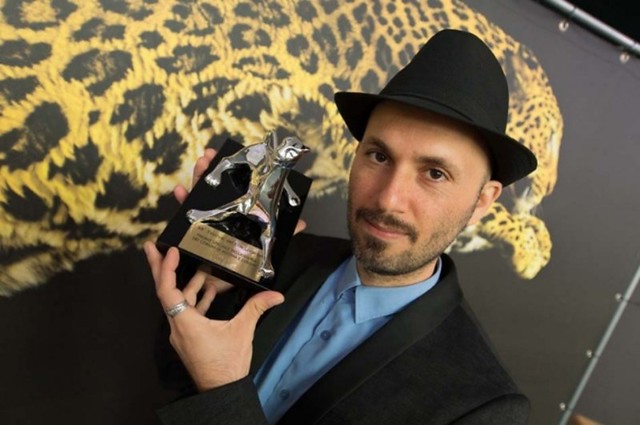
I had an honor and pleasure to interview Abbas Kiarostami in 2013 when his film Like Someone in Love played at NYFF. As expected, he was the warmest, wisest, humbliest, most thoughtful artist I've ever encountered in my short career as a film critic.

Kiarostami was not only a film director, but a renowned poet as well. Succinct and deceptively simple, his poetry was very much akin to his cinema or vice versa. Ill leave you with one of his short poems from his book of poetry walking with the Wind, published in 2002:
 photo 1753180c-9d4c-468e-b8b3-e179a4cf2e59_zpsqwohlhmw.png

My interview with Kiarostami

Rest in Peace, master.

Sunday, July 3, 2016

Los Angeles Eats Itself

The Neon Demon (2016) - Refn
 photo 61e66d4f-9a91-4bf5-aa51-900336afee34_zpsatwgvwla.jpg
Once again, in David Lynch's absence, NWR carries the torch, delving more and more into flashy, neon-colored abstraction. If Lynch is a true artist creating certain mood with set design and texture (I'm grossly simplifying his artistry, forgive me), Refn is all about the use of lights. Still abiding by a thin narrative, he creates gothic fantasy/nightmare filled with the notion of beauty, fragile innocence and narcissism. The Neon Demon can easily be dubbed as Los Angeles Eats Itself, literally.

The paper thin story revolves around Jesse (Elle Fanning), a beautiful High School dropout from bumfuck nowhere in LA. Living out of a skeeziest motel, run by a menacing, predatory man (Keanu Reeves at his sleaziest- Refn's genius in casting), our wide-eyed ingenue is at first a bunny in a wolf's den. She befriends a pretty makeup artist Ruby (Jena Malone) who introduces her to LA modeling scene. Jesse knows she can make money off of her looks. Her natural beauty soon finds her fame and causes her meteoric rise and in doing so accumulates number of enemies. Soon her success gets to her head.

Refn has grown as a visual artist. His use of shapes, namely triangles in this film, is pastiche of 70s psychedelia or 80s rudimentary video games than actual symbols with meaning. They trigger a certain uneasy mood. Some of the images here are really striking and unforgettable yet again, devoid of any meaning. One might argue that all these are empty symbols and skin deep but so does the subject Refn portrays. Just like Lynch's Mulholland Dr., the parodying LA is not the main draw here. It is certainly imbued in its view, but artistically it's much more. The Neon Demon is very much like a Dario Argento film in his haydays. You have to enjoy it for its aesthetics and mood. Let it wash over you and you will be richly rewarded.

Friday, June 24, 2016

When Desire Trumps Over Fear

Stranger by the Lake (2015) - Guiraudie
 photo cd705731-6f20-4931-9d45-a859a55de73a_zpssjq5g2pl.jpg
A beautiful lake in the woods is the background for this simple yet effective thriller. Franck (Pierre Deladonchamps), a good looking gay man comes to the lake, cruising, like many other men looking for a casual sexual encounter in the bushes. One man catches his eye. It's rugged, tanned, sexy mustachioed Michel (Christoph Maou). But it seems he is taken, as Franck has a run in with him in the woods while Michel is busy 69ing with somebody. Days go by, same routine and they share meaningful glances. Then even before they hook up, Franck witnesses Michel drowning the man he hooked up with previously. Perhaps the attraction is bigger now. He is falling in love.

The film's done with such a subtle minimalist grace, it has a neutralizing effect in its graphic depiction of gay sex. Franck got the bad case of desire over fear even though the result might be deadly. It's a great filmmaking.

Thursday, June 23, 2016

The Krays Story as Comedy

Legend (2015) - Hegeland
 photo ab473536-d9e4-4aa6-89b9-c0c2fafdeb1f_zpsw2jemc8m.jpg
The Krays, the notorious twin gangsters in swinging 1960s London are played by Tom Hardy. Ronny is the crazy homosexual one and Reggie is the smooth operator type. I don't know how truthful the Hegeland's script is to the true event, but unlike its gritty, more abstract the 90s predecessor by Peter Medak, simply called The Krays, Legend charts the more conventional narrative and plays out more as a comedy, not as a psychological drama. Even with its sporadic violence, the brothers never come across as scary. With his naturally nasally voice, Reggie resembles a torn down, romantic version of his Bronson performance while his Ronnie, always speaking his indecipherable, I-have-pebbles-in-my-mouth mumble is close to his Bane. Considering that they were identical twins, Hardy/Hegeland's decision to portray them completely separate is an odd choice. But it's always fun to watch Hardy. Legend comes down to Reggie being a faithful brother's keeper, even if that causes their eventual doom.

It gets more and more tiresome to watch films by so called Hollywood screenwriters. Hegeland has nothing much to offer other than relying heavily on Hardy's charm, so he insists upon meaningless/completely unnecessary voice over device by Reggie's young wife (Emily Browning). But all in all, it's a well crafted Hollywood movie with a lot of good British actors.

Tuesday, June 21, 2016

NYAFF 2016 Preview

Alone - Park
 photo cb620cb6-996b-4754-a185-9097952558e3_zps1jn53och.png
A hilly, labyrinthine shanty town in Seoul is perhaps the biggest star in Alone, a thoroughly intriguing Hitchicockian mystery by Park Hong-min. It starts out with a POV shot of our photographer protagonist Su-min (Lee Ju-won) on all fours scrubbing the blood splatter on the linoleum floor of his photo studio. Then we cut to him witnessing a woman bludgeoned by masked men from a faraway rooftop through his camera. The men notice him taking pictures, give him a chase and catch him. Then right before they kill him with a hammer, we cut to the next scene, where now naked Su-min wakes up at night in the same neighborhood. So begins his descent into a purgatory filled with suppressed childhood memories and guilt and shame of a ne'er do well artist. 

Comprised with mostly a handful of long handheld sequences, Alone is an amazing feat from a technical standpoint. But its thin narrative stretches out a little too long. But its Escher like intricate narrow staircases and alleyways are a site to behold as they reflect the mind-scape of our protagonist perfectly. It's a great intriguing puzzle piece by the first time director Park. 

Hamog (Haze)
- Jover
 photo caa8d998-1a92-408e-bb8f-651f436c56da_zpsrphopvoc.jpg
Filipino writer/director Ralston Jover's Hamog (Haze) starts with 4 street urchins of Manila slowly waking up in a discarded giant concrete pipe near the filthy river. The little one keeps insisting that they go swimming. And you instinctively go, oh god, not another third world poverty porn. But what's great about Jover's gritty film besides stellar acting by its little protagonists, is its unpredictability. 
The kids subsist their living on stealing from drivers who are stuck in monstrous city traffic by distracting them as a team. After one such job, Jinky (Teri Malvar), the only girl in the group, gets taken by the angry taxi driver. Then another job cost them the life of Mo, the youngest. It's Rashid (Zaijian Jaranilla) who takes on the responsibilities of giving a proper burial to his friend. In the mean time, Jinky is pushed into a domestic servitude for the taxi driver and his always squabbling wife. But he has other ideas for Jinky to do. Jover concentrates on the strength and the resilience of these kids instead of depravity and ugliness of the streets. Shifting point of view affords Malvar and Jaranilla to shine in their respective roles. It’s a film with a huge heart that takes viewer to unexpected places. A great little film.

The Tenants Downstairs - Tsuei
 photo 6d935b1e-752c-4ab4-8103-0b11d72290cc_zps019zou95.png
This sleek, black comedy, based on a book by Taiwanese celeb writer Giddens Ko (You are the Apple of My Eye, Cafe. Waiting. Love) about a passive peeping tom, quickly devolves into a mayhem- murder, incest, sodomy, cannibalism, etc. Hong Kong superstar Simon Yam, speaking Mandarin here, plays a landlord of an apartment complex occupied by- a divorcé with a young daughter, a haughty office worker, a P.E. teacher who loves her, a gay couple and an online gamer.

At first, it is business as usual, through hidden cameras in each apartment, the landlord monitors comings and goings of the each occupant with occasional sexual gratifications, but always from a distance. Everything changes when a comely mysterious new tenant, Yingru (Shao Yu-wei) moves in. With big bulky suit cases adorning the living room seemingly unpacked, Yingru's calm demeanor lures our landlord in to her apartment to snoop, only to discover her American Psycho style habits (complete with a clear plastic raincoat).

They develop an unspoken understanding after she suggests him to set himself and others free from daily routine of ordinary life. So the landlord starts actively messing with the tenants' lives. Pitting them against each other in the most sinister, vile ways, he relishes in his god-like power.

The Tenants Downstairs is depraved, dark comedy that questions the true human nature. Tsai Ming-Liang's regular Lee Kang-sheng also stars as an older gay tenant whose love life becomes a little more complicated by Yam's character's shenanigans.

What’s in the Darkness - Wang
 photo 541a8ac1-b337-47dc-94c3-426f20d78373_zpswug66lnu.jpg
The film is an interesting melding of a serial killer genre and a coming-of-age story set in the early 90s rural China. Su Xiaotong shines as Jingjing, a curious Middle Schooler on the cusp of puberty. While her college-educated, but ineffectual police officer father grapples with unsolved murders of women (possibly by a serial killer, marking his victims with a cross sign on their upper thighs) in their small town, Jingjing slowly learns about opposite sex and how to behave in a society that is still steeped in old ways. It's the 90s China which is still a very conservative, authoritarian society where the country's one-child policy is bearing a new generation of bratty, insolent children.

With this complex backdrop, What's in the Darkness gives up being a police procedural in the middle since the police has no clue on what's going on. Instead the film concentrates on Jingjing's life, as she juggles the school, working at an old folks home, attentions from boys and her clueless parents. Bong Joonho’s Memories of Murder comparison is unavoidable and it’s a hard film to measure up to. But except for some technical issues and pacing, the film is a commendable fine first feature by first time director Wang Yichun.

Ten Years - Au, Ng, Chow, Kwok, Wong
 photo 5c600019-ddad-4151-a6f1-f1754f156728_zpszewugunn.jpg
It's hard to believe the handover of Hong Kong from 150 years of British rule back to communist China took place almost 20 years ago, in 1997. As one of Asia's biggest economic powerhouses, the peaceful handover of HK signaled the beginning of China's rise to the global economic superpower status. So what happened to 7 million Cantonese speaking Hong Kongers? After the initial jitters, the things have been relatively quiet. So the West largely ignored and have forgotten the fact that it was as much a cultural annexation as a political, economic one.

Reflecting the uneasy mood of many inhabitants of HK after massive sit-in demonstrations against Beijing's restrictive electoral reform in 2014, known as Umbrella Revolution- a non-violent, pro-democracy protests, 5 filmmakers envision what if scenarios in varying degrees of plausibility in 2025 Hong Kong, where ethnic minorities are used as a pawn for the political gain, housing shortage pushing people into self-sacrificing artifacts, speaking Cantonese is discouraged or worse, self-immolation is contemplated and acted upon as a political statement and children starting to spying on adults.

Ten Years is a contemplative, sobering reflection of what Hong Kongers are feeling now. No wonder it beat out Star Wars: Force Awakens at the HK box office last year and is banned in China.

You don't need to leave to see the world

The World (2004) - Jia
 photo 92adb5fd-3d5b-4aba-88c2-7a29f4907e9d_zps9b0spkfc.png
 photo d0862ea2-a217-4547-a439-8587737b6be8_zpslwrunl1q.png
 photo d08fdb31-652a-4a64-8dc4-5218bf056382_zpsqgjiyddp.png
 photo bd8a65b7-0ab9-44ed-a84b-e5bdc93b4daa_zpsznaiycif.png
 photo 3a1f70aa-5362-49ab-b701-e777e059c3ce_zpsgjxnjfd4.png
 photo d6469c56-0abb-45e6-8f3f-aa9b8f1206ac_zps8r4jkfzy.png
 photo 51103192-20df-438f-8855-7662a552e661_zpsmkm1726t.png
 photo bd854d94-7bd7-418c-a45c-3a2add8a32d2_zpsw7bik0sp.png
The World Park, a never ending expo/theme park in the suburbs of Beijing is the setting for Jia Zhangke's masterful take on, what else, rapidly changing China. The motto of the park is, 'you don't have to leave to see the world'. As usual Zhao Tao plays the central character Tao, a worker at the park, donning many different costumes- Indian, Japanese, African, etc and dance around on a brightly lit stage every night. All her friends and co-workers and would be lovers are transplants from rural China, trying to eke out a living any way they can. Jia patiently observes and explores every part of the changing society in episodic storytelling, reminding the viewers that behind all the garishness and excess, there are human stories hidden in there, obscured and overwhelmed by the 1/3 actual size Effel Tower, Arc de Triomphe, Piramides and camels and space ship-like karaoke bars. He leaves nothing unturned - a sad story of Russian prostitution, fake brand clothing manufacturers, construction workers working dangerous conditions for overtime pay and of course, some on/off love stories thrown in for good measure. This unhurried, soft, fine tuned, long film has many poignant moments that never turn corny. It's one of the best films I've seen in a long while.

Monday, June 20, 2016

Lighthearted Romantic Entanglement

Princess of France (2014) - Piñeiro

Another slice of Shakespearean comedy by Matia Piñeiro. All his regular actors are back to play assortment of characters, romantically entangled among themselves. This time, everything revolves Victor (Julián Larquier Tellarini), who came back to Buenos Aires after spending a year in Mexico. He wants to do a radio project, doing the bard's Love's Labour's Lost with the group of his friends. In the absence of his girlfriend Paula (Agustina Muñoz), Victor flirts with every girl who is going to take part in the project.

Using mutiple takes on same scenes and settings with slightly different outcomes and a copy of Love's Labour's Lost working as a clever communication device, Princess is all about little details. After watching a couple of Hong Sang-soo films last couple of months, I was thinking about his equivalent in the world cinema. And I think I finally found Hong's match in Piñeiros. They are equally distinctive and very regional in their own way, but have a lot in common presenting lighthearted romantic entanglement and its infinite number of possible outcomes.

Sunday, June 12, 2016

Na Hong-jin's The Wailing is a major disappointment

The Wailing (2016) - Na
 photo a7b66eee-9525-40ab-8cfd-31461fdf3749_zpsql6tjz7h.jpg
With two taut, impeccable thrillers (Chaser, The Yellow Sea) under his belt, Na Hong-jin shoots for something bigger and grander and falls on his face hard here with The Wailing, an overlong, exorcism/policier movie taking place in rainy rural Korea. Na's great at creating unsettling mood but extremely under-equipped to handle a logical narrative. Obviously your enjoyment in watching a film depends heavily on what you are looking for on a warm sunny Saturday afternoon in June, but The Wailing is so directionless and shallow and muddled while still trying to abide in genre norms, it crumbles at a mere seconds of afterthought and leaves you with a bad taste in your mouth.

The film concerns a strange illness and multiple grisly murders going around in a rural Southwest Korean mountain town named Goksung. The townsfolk are spreading rumors that it all started after an appearance of a reclusive Jap (Jun Kunimura) that many saw him roaming around the forest naked, eating dead deer and having glowing red eyes. Jong-gu (Kwak Do-won), a local bumpkin cop, tries to make sense of everything but odd things are happening and happening too fast, he just goes along while making his emotions getting the better of the situations. When his own daughter falls ill with the same symptoms, Jong-gu summons a renown shaman to exorcise his daughter.

Extreme xenophobia aside, this premise could have gone many different, interesting route. But Na keeps stacking up more and more intriguing elements that don't pay off. With multiple unearned plot twists and overstretched ending in almost 3 hours running time, The Wailing is a muddled jumble of mess that is completely underwhelming and unsatisfying on every level.

Thursday, June 9, 2016

Dissonance

Hill of Freedom (2014) - Hong
 photo 1585943e-7dba-43d0-97d8-668fe294ad83_zpskganszur.jpg
The film starts with Kwon (Seo Young-hwa), a suit case in her hand, picking up a thick letter then dropping it on the floor. The multi-page letter was written by Mori (Ryo Kase), a Japanese man who came to Korea to look for her with the intention of confessing his love for her, without knowing she is away. As she picks up the letter all jumbled now and starts reading it, consequently the film too, is jumbled, timeline completely out of wack. With Hong's typical zoom in, we know that there will be some gaps in the storyline too, since she missed picking up some of the pages on the floor. Hill of Freedom is a gentle misadventure of Mori: as he waits for Kwon to appear, he meets people, talks and even have an affair with the cute cafe owner with a dog. It's perhaps the gentlest of all Hong films I've seen that it barely registers. Mori is a sweet, direct man who doesn't suffer from any of Hongian neurosis and selfishness of his usual boorish drunken characters. Dialog is mostly in heavily affected English- since Mori doesn't speak any Korean, and it adds to the overall disarray. I know what Hong is going for- a kind of dissonance and playfulness in structure, but some of the segments doesn't really go with the over all mood of the film, especially the scene with Jeong Eun-chae (of Our Sunhi), as she throws a loud fit for no apparent reason. It is a lesser Hong for me.

Atmospheric Netherworld in Tikkun

Tikkun (2015) - Sivan
 photo 44abb4fb-4ab3-4030-8241-7e529b9999cb_zpsuroyjofm.jpg
Shot beautifully in black and white, Israeli artist and filmmaker Avishai Sivan's Tikkun tells a story about a young orthodox Jewish man, embodied astonishingly here by first time actor Aharon Traitel, slowly losing his faith after a near-death experience. With impressionistic visuals, Sivan paints nighttime Jerusalem as a Lynch-ian netherworld, shrouded in fog, where past and present exist side by side. The result is a hallucinatory tale of urban alienation, invoking the films of Antonioni.

Haim-Aaron (Traitel) is a devout Yeshiva student, seen praying and fasting in the begining. He is not a talkative type and keeps things to himself. His father (Kalifa Natour) is a hard working kosher butcher. Bad plumbing in their cramped apartment causes Haim-Aaron to fall and suffer cardiac arrest while taking a shower and touching himself. EMTs arrive but are unable to resuscitate him, pronouncing him dead after 40 minutes. Haim-Aaron's father, unable to let his first son go, continues on the CPR, and to everyone's surprise, revives him.

This near-death experience is a both a blessing and a curse for father and son. Father struggles with the guilt of undoing god's will by reviving his son. He falls into deep self-doubt and is shunned by many of his ultra orthodox community members.

For Haim-Aaron, being undead affords him a freedom to venture out of his community and confront his hidden earthly desires for the first time in his life.

Unable to sleep, Haim-Aaron wanders the streets at night, hitching rides to anywhere these nocturnal strangers will take him. For him, outside his immediate surroundings is a completely different world: Jerusalem, a cosmopolitan city with just under a million inhabitants, is a wondrous and scary place for him. He meets many strange people and even gets to have a sexual encounter with a street worker. These activities put a strain on his studies, family and community.

Tikkun is, in many ways, an unsettling film. The uneasy tone is accentuated by Haim-Aaron's father's recurring horrific nightmares: evil crocodiles in the toilet, putting a knife to the back of his son and dumping the body in a monster-infested ravine.

Like Sivan’s previous feature The Wanderer, the urban alienation and repressed sexuality figure prominently into Tikkun. The film unveils the ultra-orthodox Jewish community, which is seldom portrayed in film, and perhaps somewhat unflatteringly here: with rigid traditions and rules, the community seems to be permanently stuck in the past.

In the hands of Sivan and his cinematographer Shai Goldman (The Band's Visit, The Kindergarten Teacher), Jerusalem has a look and feel of the lonely, unnamed industrial town in Eraserhead. With sparse dialog and strong visuals, Tikkun is intense, moody filmmaking and signals Sivan as one to watch for in the world of arthouse cinema.

Tikkun screened earlier this year at New Directors New Films series. It opens in New York on Friday, June 10, via Kino Lorber.

Interview: Avishai Sivan Talks Tikkun

Avishai Sivan Set in an ultra-Orthodox Jewish community in Jerusalem, Tikkun gives a unique glimpse into a highly reclusive world where tradition and religion dominate private lives. With its haunting imagery and thought provoking subject matter, Tikkun left me a lasting impression long after I left the theater. I had a chance to talk briefly with its fiercely cerebral director Avishai Sivan when he was in town for the New Directors/New Films series in March.

There seems to be a theme going on here, with your first feature WANDERER and TIKKUN, both featuring the ultra-Orthodox Jewish community in Jerusalem. Is this because of your background? What’s your fascination with the community?

It’s not my background. But I am interested in those communities, I think, in an almost romantic and stupid way, because they have this strict way of living. They dedicate their whole lives to a simple way of belief. I think you can find this belief not only in Judaism but it can be found everywhere - seeking and exploring. As a filmmaker and an artist, I try to reach that sublime of next masterpiece in films or fine art. Sometimes I have this inner battle, like the theme of this film Tikkun - the battle between mind and body…

What does TIKKUN mean in Hebrew?

It means to rectify, to fix something that went wrong but in Judaism, it has a deeper meaning: when a person dies and something went wrong in his life, his soul needs to go back to his life to fix it. Tikkun is the act of doing so, crossing over to the other life as a true believer of Jewish faith.

It’s interesting. I live in the part of Brooklyn which is a predominantly Orthodox Jewish neighborhood. Even though we are living right next to each other, I feel they are living in a very different world. What was the reaction of the community when it came out in Israel?

Had several screenings in Jerusalem Film Festival last year. It won almost all the awards there (Best Film, Best Actor, Best Cinematography, Best Screenplay) and also small festival in Tel Aviv called Utopia, but that’s about it. It will be out in September in Israel. Those film festivals attendees are film geeks, so I don’t think they (the Ultra Orthodox Community) had a chance to see the film yet. I am assuming they will see it in the future when its widely distributed. And am also assuming their reaction will be not good. (Laughs.) But I’m not doing films to please anybody.

How did you find Aharon Traitel, who portrays Haim-Aaron?

He’s not an actor.

Right. How did you get to cast him?

It took almost two years to find him for that role. It’s not like you can call an agent or find someone who wants to act. Usually the people who come out of religion are very vulnerable and don’t really want to expose themselves. They are also wracked with guilt - usually they left their family and the family is understandably angry with them.

I advertised Haim-Aaron’s role in this on-line community of people who left the religion. I think he was the only one who answered the ad and luckily he was the only one that fit the role.

The film is shot beautifully. I understand your background is in painting and video art. What made you to decide to shoot film on black and white? THE WANDERER was in color.

When I was writing it, I knew instantly that it would be in black and white. From that point on, I tried to reach the vision in black and white. The story is about life and death - the big battle/contrast. I tried to investigate that grey area in-between. Color wouldn’t have worked in that sense. B&W matched perfectly with the big theme of the film.

Haim-Aaron’s journey - his faith is shaken after the near-death experience. It struck me as the story of Golem - the undead. Does he think he is a dead person? Is that why he has a freedom to explore the outside world? Or is he looking for regaining his faith?

I don’t think he is looking for regaining his faith again. I think he wants to deepen his faith after he was re-born. All of sudden he can see much better than before. His physical experience is getting much more vivid. And he is feeling like God is testing him. He is a bit confused and trying to find his way. He is still sticking with his community. He is not shedding his clothes or anything. He is trying to find his true path within himself- how he is supposed to act as a believer, even in these radical, extreme places that I put him in as a screenwriter.

One of the most interesting aspects of both your films is the father-son relationship: how they see things differently. It was his father who revives him but also feels guilty that he did something against God’s will. Is this relationship an important theme for you?

Yes. It’s a not so sophisticated, not subtle way of seeing my relationship with my father. Because my father is a very enigmatic character. He speaks very little but he is...a very good person. He can break your heart with how good he can be. He is that kind of person. At the same time he is not very communicative. So his goodness can be seen as problematic.

You mean for you.

Yeah. This element is strongly reflected in Tikkun: he is trying to give his son love but in doing so, he is causing more and more problems. At the end, the accident happens by one of the cows he releases. He is inadvertently causing all the negative things that happens in the film.

That’s very interesting.

Your art and the elements of your films are sexual in nature. Can you tell me a little about that?

It’s human nature. What more can I say? It doesn’t matter what kind of background or environment you are living in, it’s still all there. I just reflect what’s already there.

I also saw some of your drawings of Jean-Luc Godard pleasuring himself on your website. I don’t know what to make of them since I am a big Godard fan.

I have more drawings of Godard. I’d love to compile them as a book and present to him!

Monday, June 6, 2016

Ali the Greatest

Muhammad Ali would laugh at my feeble attempt at an eulogy since he was the most charming, eloquent, charismatic speaker ever. Here is one of the most beautiful speeches he gave:

R.I.P. champ.

Tuesday, May 31, 2016

Delightful Double Take

Right Now, Wrong Then (2015) - Hong
 photo 13b86af9-e0f5-47ff-9bdc-880c463683e8_zpsdxsnjjxx.jpg
Right Now, Wrong Then, a double take on a chance encounter is another delightful comedy of errors from Hong Sang-soo. Jeong Jae-yeong plays an arthouse movie director named Ham Chun-soo who finds himself in Suwon, a suburb of Seoul in winter, a day prior to his film screening and following discussions at the city's cultural center. The early voiceover suggests that he is contemplating banging his enthusiastic young guide from the center. Killing time at the near deserted ancient palace/tourist trap, he meets beautiful Hee-jeong (Kim Min-hee) and strikes up a conversation. Defensive at first, Hee-jeong soon finds Chun-soo more interesting once learning that he is a movie director she's heard of, even though she doesn't like watching movies or seen any of his films. He asks her to go out for coffee, even though she doesn't drink coffee or smoke (she is a sensitive type). They awkwardly flirt. It's all pleasantries and flattery. She used to be a model but now she is a painter. He wants to see her paintings, so they move to her atelier. Obviously he wants to bang her so everything that comes out of his mouth is some form of flattery. She goes along with it. Then they go to sushi for dinner and soju. They get shitfaced, still flattering each other but neither making the ultimate move. Hee-jeong suggests they go together to a party of her friends that she can't excuse herself out of. He obliges. Things get uncomfortable as Hee-jeong's friends who are fans of his and start mentioning the rumors of his womanizing ways and his marriage. A disaster!

We try again. Chun-soo this time, is more forward and honest, even though what comes out of his mouth hurts Hee-jeong. As they go through the same routine as the first, this honesty gets them closer, but also it means Chun-soo get more wasted on soju and make bigger ass out of himself in front of Hee-jeong and her unsuspecting friends.

What I appreciate about Hong is not only his steadfast consistency in traipsing the stickiness of the human relationship but also his complete disregard for what he deemed unnecessary bullshit - namely excessive title sequence, dramatic music or coverage (hence the excessive used of funny, automated zooms). Coquettish Kim Min-hee is amazingly cute in this. Right Now, Wrong Then also doesn't really care much about the conventions of a do over/what if romantic comedy. The first take isn't an earth shattering catastrophe or anything and completely plausible as much as second scenario which is obviously more desirable. He plays with the notion of the games we play and certain inhibitions in our society on different occasions. It's also a delight to see reversing those roles fueled by alcohol. His jab at film critics and how to behave in front of them were also telling. All in all, the film is yet another great comedy from prolific Hong who continues building a great, unique body of work.

Friday, May 27, 2016

Riding with the Ghost

Journey to the Shore (2015) - Kurosawa
 photo 3b0bbba9-35cd-47ec-a22d-540ea5c487cc_zpsax83flzj.png
There is no shortage of similarities in Kiyoshi Kurosawa's new film Journey to the Shore with Kore-eda's 1995 quiet masterpiece, Maborosi. Both films deal with the loss, grief, impermanence of life and letting go. Both films star Tadanobu Asano as the husband who passed on. It is good to note that the books the two films are based on came out around the same time in the 1990s too. It might be my age but I've been thinking about the subject myself a lot lately. Once the thought of death hits you, from then on, you just live under the shadow of its inevitability. Sometimes it keeps me up at night. I don't know how people who are innately more precocious and neurotic than me deal with the fact. Anyway, back to the film:

Mizuki (Eri Fukatsu), a piano teacher and a wife whose husband has been presumed dead in the sea, leads a quiet existence in Tokyo. One day, her dead husband, Yusuke (Asano) appears in her living room, wearing shoes (Japanese take off their shoes indoors usually). He says it was a long journey to come back. His corpse was eaten by the crabs, so that's why there was no trace of him left, he says it matter of factly. She is delighted but also afraid that she will lose him again. Always on her toes, hoping that his semi-permanent reappearance is not just recurring dreams. He suggests they leave town, so he can show her many beautiful places he'd passed through during his home journey.

So begins Mizuki's journey to letting go: Yusuke left great impressions on many people he encountered the last three years in the Japanese countryside. Some of them are already dead like Yusuke - he says, again, very matter of factly, "He's like me," meaning the dead, or "She's like you, the living," and so on. So what does Mizuki learn? That human life is complicated? that nobody know anybody, not that well? That you still make differences in other people's lives even though you are dead? That you can have sex with a ghost? With somewhat conventional TV orchestral music, Kurosawa seems to be well aware of the film's Lifetime channel-like melodramatic nature. But as he demonstrated in Tokyo Sonata, he has a great eye for indoor spaces and framing, shadows and light and playing with supernatural/surreal elements that he has cultivated over many years in genre filmmaking. In this subtle, muted gentle chamber piece, he shows that yearning, grieving and fear of letting go are only a few degrees off from horror of loneliness in his genre films. Journey is not as lyrical nor as poetic as Maborosi, nor has a succinct narrative. But the film features many beautiful moments and fine tuned performances by two leads to make it quite memorable.

Wednesday, May 25, 2016

Behind the Great Museum

Das Große Museum (2014) - Holzhausen
 photo 17101851-f455-45e6-a84a-237eca3648bc_zpssyyahhom.jpg
 photo 773e7a8a-b24d-44d4-b329-7ea7ff5b99dc_zpspmiury0q.jpg
 photo 93b2f99e-add0-414d-b18b-b6601b49ff41_zpsgtm4dwnl.jpg
 photo dd58b68d-8079-4dd1-bbeb-973c2200df04_zpshu8g7nxz.jpg
Das Große Museum shows the painstaking preparation of Vienna's the Kunsthistorisches Museum's special exhibition of Hapsburg's treasures, named Kunstkammer in 2013. They did a total renovations inside this huge, multi-building museum complex from wall papers, floor, electric wiring to new modern chandeliers. We see there are hundreds of people involved in running one of the greatest museums in the world - archivists, restorers, accountants, construction workers, marketing people and so on. We are invited to their budget meetings- where one learns that Bruegel room has its own budget supported by Getty. We get the tour of thousands and thousands of ancient artifacts and paintings carefully handled by handlers and sweaty restorers- carefully removing dust and various insects eating away at old paintings, doing touch ups on a ceiling frescoes, counting all the pearls on an imperial crown and such. It's a fascinating watch. I remember spending a whole afternoon just in the Bruegel room alone. The place was massive and I didn't have enough time to see it all. :cry:

Spritual Music

The World According to John Coltrane (1990) - Palmer, Byron
 photo f24537c6-4417-44f1-8dfa-8795430d1f18_zpszaedwnp8.jpg
Focusing on his middle period with his original quartet (Elvin Jones on drums, McCoy Tyner on piano, Jimmy Garrison on bass), the World According to JC is still a satisfying doc for music alone. There are some uninterrupted long takes of My Favorite Things and some others. But it also shows his interests in music from different culture that shaped his later, post-Miles Quintet innovative period - India, Africa and shows interests in spiritual side of music. There's no info on his personal life except for his religious North Carolinian upbringing to Navy band player. The hodgepodge interviews are informative but pretty bare boned. But I'm not complaining. The music is glorious. As I am waiting for Sam Pollard's A Love Supreme: A Portrait of John Coltrane in 4 Parts to finish up, this will do for now.

Here is The World According to JC in its entirety on youtube:

They Look Like People - Well Done Buddy-Cohorrormedy

They Look Like People (2015) - Blackshear
 photo 9f4d6f42-ab96-45ce-92c3-a1b1ebfd8343_zpssb2hc5cv.jpg
Don't let the Williamsburg hipster setting scare you. Perry Blackshear's economically executed buddy-cohorrormedy is an exemplary minimalist filmmaking at its best. The director knows exactly what he's got - no money, a great character driven, self contained script, fantastic actors. The film doesn't try to be anything other than a little paranoia thriller and it works superbly.

The film sets up its eerie mood in the beginning with Wyatt (MacLeod Andrews), looking at his fiancee in bed at night. We can't see her face because the shadows and how her face is positioned. This prolonged shot is extremely unsettling. Wyatt gets phone calls telling him that the world is going to be taken over by monsters, that he needs to prepare, that he can't trust his friends or family because they may be infected. He sets out to the city to meet his childhood best friend Christian (Evan Dumouchel), an office worker in an advertising agency whose overtly outward personality and fit physique hides his former nerdy loser self. Christian insists Wyatt staying on until whenever. Wyatt, still schizo, still getting phone calls in the middle of the night, starts to prepare for the worst in Christian's basement with knives, axes, duct tapes, ropes, sulfuric acid...

Everything seems normal for a while - Christian has sort of a date with Mara (Magaret Ying Drake), a cute co-worker at the office whose attraction he's buffing off at the moment because of his too self-confident personality he put on for himself. This date turns out to be spending all night in an emergency room because a friend of Mara (who was supposed to be Wyatt's date) slipped on ice and has a mild concussion.

So how does these two storylines - a schizo trying to prepare the end of the world and a former loser trying to overcompensate go together? Marvelously. With natural dialog and performances, They Look Like People slowly builds up its tension into a thrilling conclusion. And it even somehow ends up very touching. They Look Like People is now available on Netflix. Please check it out.

Monday, May 23, 2016

All That Desert Allows

Queen of the Desert (2015) - Herzog
 photo aa547c15-b2a4-447a-9e40-3b3210fcf1e6_zpsvefrmpny.png
 photo a6379ecc-e61b-4168-899d-b3876e08b765_zpsamknvi8i.png
 photo eb8f9567-19cc-49ea-bc8f-3a9b6f065ac0_zpsvvdfljgh.png
 photo b220d04d-4f3b-4ea1-b379-78ba1f561855_zpsizucucit.png
 photo 2cf04f95-60c2-421e-811c-5e9180dc26c7_zpsk3wiwkvb.png
Seeking freedom and solitude is the driving force that attracted Gertrude Bell, a learned English woman from a well to do family who became largely responsible for divving up the Middle East. Bell could easily be made as the first proto-feminist of her kind way before Dora the Explorer. Oddly enough, despite it being a Werner Herzog film, Queen of the Desert is a weepy melodrama most of the time, dangerously treading Douglas Sirk territory. Surely, there are some stunning vistas of the desert and camels and ancient citadels made of mud and underground rivers and salt crusted earth and all that too in true Herzogian fashion. Not enough though. It plays out more like Love Affairs of Gertrude Bell, starring Nicole Kidman.

Bell (played by Kidman, radiantly photographed), an amateur archeologist whose short affair with Cadogan (James Franco), a gentle, lower ranking diplomat at the British embassy in Bagdad and his love fueled suicide leaves her men/love weary and makes her devote herself deeper into the desert, despite objections from British army men. She builds up a reputation as a foreigner who understands the intricate political/cultural landscapes in the desert, fully taking advantages of being a white woman in a male dominant world. She stacks up admirers, including many tribal leaders, T.E. Lawrence (Robert Pattinson), then a young archeologist, and Major Doughty-Wiley (Damian Lewis), a married army man stationed in Damascus. A romance blooms between Bell and the Major and she starts writing correspondences with him, fully knowing he won't leave his unhappy marriage, and so on.

Queen of the Desert is a perfectly respectable, largely entertaining film. James Franco's I'm a puppy about to die performance nor a Bambi outside the window didn't bother me too much. I'm just disappointed that it is a very un-Herzogian film. We are obviously not expecting some dry treatise on a historical figure nor a high melodrama from him. Kidman's very coquettish and alluring despite her age, but doesn't really have the balls to play a determined, strong willed woman (Charlize Theron might have been a better choice). And it's missing that audacity, that search for ecstatic truth the director is usually known for.

Thursday, May 19, 2016

Kaili Blues, The Most Impressive Debut in Years

Kaili Blues (2015) - Bi
 photo 2e462a6b-a45e-4573-9b78-93ea1b937fd1_zpsn397szpt.jpg
A country doctor's search for his nephew becomes an unforgettable existential road trip in Kaili Blues, directed by a 26-year old Chinese filmmaker, Bi Gan. It's an ambitious, mesmerizing film that you'd never think it is the work of a first time director. I don’t think I’ll be seeing another film as audacious and beautiful as this one anytime soon.

Chen (Chen Yongzhong) lives and works as an assistant doctor in Kaili, a sub-tropical region of southeast China. Through Chen’s sporadic conversation with the elderly woman doctor and with his irresponsible half-brother, Crazy Face, we gather Chen's past: he was in jail for taking the rap for his boss. His sickly wife died while he was incarcerated. Crazy Face resents the fact that their mother left Chen her house to continue housing the doctor's clinic to this day.

Crazy Face's young son, Weiwei, neglected and locked up most of the time at home while he's out gambling, is in danger of being sold off, according to townsfolk. It's usually under Chen's care Weiwei eats properly and goes to school. One day, Chen finds Weiwei missing and discovers that Crazy Face has dumped him at his old boss's house who lives in nearby Zhenyuan, because he is fleeing Kaili in order to evade debtors and won't take the boy with him. The old doctor happens to have an old fling living in Zhenyuan, of whom she hasn’t seen since the days of the Cultural Revolution, and wants Chen to find him and deliver a shirt and a mix-tape she made for him, too. So begins Chen's dreamlike journey, where past, present and future are all mixed in with lush greenery and sinewy river system in picturesque Southern China.

The 40 minute no-cut, wide angle traveling shot on a moped in the middle of the film is a legend in the making – it is a pure bravura filmmaking at its most playful and a feast for your senses. Wang Tianxing's fluid camera work is just as much a star in Kaili Blues. Even though all the scenes are exquisitely framed and every slow pan shot beautifully and meticulously composed, the technical aspect doesn't overshadow the overall lucid, mysterious, fantastic tone of the film. The camera freely moves from one conversation to another, often mingling with Chen's beautiful poetry (the director's own, I'm told) voiceover.

I think of Kaili Blues as school of fish. All the small characters and stories and their connections are illusive, fluid and gone in a flash, but when caught, every one of those fishes are unique, shiny, slippery individual jewels. The only way to catch them is with a net and your hands in the water. This very loose and thin net, full of holes and tears, that Bi uses is made of seemingly unrelated recurring motifs -- Weiwei's hand drawn clocks, an old photograph of the old doctor's lover, motor bikes, a disco ball, a childish pop song -- and Bi deliberately doesn't catch them all. What's left is a palpable, lasting sensation of fish swimming and touching your hands as they get away from your grasp.

I don’t want to pull ageism here but Kaili Blues doesn’t feel like a debut film of a 20 something director. If I had to compare it to the works of another filmmaker, I guess the film most resembles the films of Taiwanese master Hou Hsiao Hsien, particularly Goodbye South, Goodbye but with added lyricism and dreamlike quality. Infinitely wise and breathtakingly beautiful, Kaili Blues is definitely one of the very best films I've seen so far this year.

Kaili Blues has an exclusive one week engagement at New York's Metrograph, starting on May 20.

Sunday, May 15, 2016

Anarchy in the UK

High-Rise (2015) - Wheatley
 photo 5d310865-d34f-4fae-be2d-b2cfb575b163_zpskjorghje.png
JG Ballard's High-Rise was published in 1970s. This was the time of London Garbage Strike, the rise of punk movement, the rise of Thatcher and conservatism and the Winter of Discontent. In this parable, he saw our materialistic society contained in a 40 story concrete high-rise building. This complete biosphere is equipped with a supermarket, swimming pools, gym, a rooftop garden and a ground parking space that stretches as far as eye can see in this imagined, still barren and developing London suburb. He painted an ugly, disturbing picture of how quickly this microcosm of our society devolved into anarchy with greed and desire for power. Just like his other novels that took place in a materialistic, soulless machine age, High-Rise was a far-fetched, all out satire. With that, Ben Wheatley, a talented British director of such films as Kill List and Sightseers, takes on this darkly satirical material and wastes no time in plunging it into total chaos. The material is highly relevant to the late stages of capitalistic society we are living in.

This highly stylized film sees a physiologist/prof Dr. Laing (Tom Hiddleston) in the center, who just moved in to a much prized high-rise, on the respectable 25th floor. He is an embodiment of upper-middle class, whose meek demeanor and antipathy suits the supposedly anonymous apartment living perfectly. Impeccably dressed and stoic, Laing tries to keep to himself. Charlotte (Sienna Miller), a foxy single-mom neighbor from a floor above, takes a liking to him and introduces to the upper-upper class of the food chain of the high-rise which revolves around Royal (Jeremy Irons), the architect of the high-rise and its sister buildings sprouting up nearby, who with his snobby young wife occupies the penthouse with a private lift. His entourage includes a well-known TV announcer, Cosgrove (Peter Ferdinando), a gynecologist Pangborne (James Purefoy, in his best British twit) and his bodyguard (Dan Renton Skinner). Laing quickly realizes himself that he is not the top one percent and is put in his place. Then there is hard partying TV cameraman Wilder (Luke Evans in his best performance) who lives on the first floor with his very pregnant wife (Elizatbeth Moss) and two young kids. He represents the working class, whose determination to taste the high-life and Royal's gang trying to suppress him are the two main drives for the narrative.

Things devolves quickly into anarchy (the film starts with Laing in disheveled clothes and prickly beard looking like a Robinson Crusoe in an urban decay eating dog food out of a can surrounded by mountains of black garbage bags and debris and the next scene is 3 months earlier). Wilder, incensed by his kids and other children from the lower floors (only lower floor residents seem to have kids) rejected by entering the pool, located on 30th floor for making too much noise, he commandiers all the kids to go up through the stairs (elevators are constantly out of service) and break into a private pool party held by upper floor residents. The tension between upper and lower residents grows with rumors of checkout girl (from the lower floor) at the supermarket being fondled by upper floor residents in the elevator. Things gets violent with retaliations on their pets, and violent raid gangs are formed on both sides and women get assaulted. Strangely, even though garbage shoots get jammed, water stops running, electricity fails, all expensive cars down below get smashed by falling liquor bottles, people are reluctant to leave the building. A police patrol car stops by because of the state of the parking lot and the destroyed lobby seen through the garbage blocked, spray paint covered glass doors. Royal happens to be at the lobby, looking for his wife. He tells officers that everything is fine. Laing stops going to work all together. Everybody is into playing the parts of this addictive game, called social hierarchy in the capitalistic society.

High-Rise's pacing is so breathless that if you haven't read the book, you might find yourself being lost quickly. Why do they devolve so quickly into chaos? What's the reason for all the resentment? Wheatley and collaborator Amy Jump explain too much and too little. There are a lot of character omissions and some of the choices are too explanatory, leaving little rooms for mystery as in the book. Wilder's ascension to the top floor, that symbolic physical trip is the driving force of the book, not meeting Royal the architect as in the movie. I'd like to have seen that actual journey.

There are a lot to like in High-Rise. The look of the film: all textured concrete but chintzy furnishing of the 70s gives the world much sleazier feel than the usual retro-futuristic, cold, antiseptic world that we see too often in films. Even though it doesn't go far into cannibalism as in the book, it's a fun, entertaining film.

Thursday, May 12, 2016

Gloaming

Sunset Song (2015) - Davies
 photo 3811ff72-3935-4bbc-b292-d39288b4dc4c_zpsb91grbtc.jpg
A sweeping tale of changing times in Scotland in the early 20th century, Terence Davies's new film Sunset Song centers around a farm girl Chris Guthrie (Agyness Deyn) in the fictional rural town of Kinraddie near Aberdeen.

Chris is a thoroughly modern woman in-the-making, but held back by a still very much conservative, religious, patriarchal society and her love of the land. She is an educated girl who wants to become a teacher, an honest and noble profession, but her circumstances hold her back from achieving that goal.

Her mother, even though worn out by childbearing -- six kids and counting -- and by her overbearing husband (Peter Mullan at his most brutish), still insists that there's more to life than books and studies. But after finding out that she is pregnant again in her middle age, she has a mental breakdown and takes her own life along with the newborn twins.

After much abuse from pa, Chris's mild mannered, loving older brother, Will, also bails on her gets married and moves to Argentina. Pa reluctantly sends away Chris's two younger siblings to live with the relatives, leaving only Chris to take care of the house and the farm. It becomes unbearable when pa has a stroke and becomes bedridden, leaving Chris to endure all the hardship alone.

Things takes on a brighter side after pa's death. With a little money she inherited and the farm, she marries a charming neighbor farmer named Ewan (Kevin Guthrie) and bears a son. Everything seems hopeful and bright, but World War I comes rolling in and Ewan gets conscripted.

Never into the idea of leaving home and fighting the war, the couple is very opposed to the idea at first, but everyone around them in their nationalistic fervor -- the church and macho men -- keeps egging Ewan to go. After seeing the horrors of war, Ewan is a changed man and becomes abusive toward Chris. Their relationship gets strained beyond repairable and he takes off for another tour without saying goodbye.

It is easy to see why many regard Davies as the greatest living British filmmaker. Impeccably crafted, shot in glorious 70mm, Sunset Song is a stunning achievement. We've seen sweeping crane shots through swaying wheat fields before on screen in Terrence Malick films and his countless imitators, but not like this.

There is certain authenticity in images of Davies films that communicates beyond mere lyricism and beauty. It's in the pacing; Davies is not interested in prolonged nature porn. The compositions are perfect and they lasts no more than 30 seconds before they fade into the next shot.

Nature is worshipped but in a different way than American Westerns. Constantly raining and wind-swept, the Scottish countryside doesn't have that mythic, ethereal quality, but it's more lived-in, its edges dulled by years of cultivation and contant presence of livestock. Still, on the big screen, Sunset Song is a truly cinematic experience, even more visually ravishing than his autobiographical, Liverpool set masterpiece Long Day Closes.

It's in the casting, too; Deyn, a British model whose tall stature and fine, graceful features, truly belong to the era. Always in the center of the screen, erect and defiant, yet vulnerable, seeing our heroine in the autumn field evokes a lot of different emotions. Equally painterly are the interior scenes; shot on 4K digital, Davies and his director of photography Michael McDonough favor naturally dark rooms with warmth coming from fireplace and sunlight coming through the window.

Just like many of his other films, Sunset Song is a tragedy of a woman caught in the changing times. Adapted from the revered Scottish novel by Lewis Grassic Gibbon, Sunset Song is a lamentation on time passing, the loss of a way of life, and a love song to its inhabitants' attachment to the land. Davies captures the essense of the book beautifully. I just wish I had a good ear for languages to enjoy the film more. See the film on the big screen! It's glorious!


Sunset Song plays as part of the Terence Davies Retrospective at Museum of Moving Image May 7-22 and opens theatrically at Film Forum and Lincoln Plaza Cinema on May 13.

Interview: Terence Davies on poetry, art, actresses and more

Terence Davies, regarded as one of the greatest living British directors, doesn't make films too often. So when he does, it's a monumental event every time. With his long delayed passion project Sunset Song finally coming out in theaters this weekend and A Quiet Passion, his new film about American poet Emily Dickinson already in the can, the 70 year-old British director suddenly finds himself more prolific than ever (he's done only 9 features in 4 decades of filmmaking).

He is in town for his complete retrospective at Museum of Moving Image, 5/7 - 5/22, and I got a chance to sit down with him for an interview.

It was quite intimidating meeting the master filmmaker in person, but his unguarded, warm disposition put me at ease. It wasn't long before Davies, in his Liverpudlian accent, enthusiastically, breathlessly, explained his craft to me. It was a truly spellbinding experience.

*Fair bit of warning here: this interview contains loads of spoilers for Sunset Song.

You have Sunset Song and A Quiet Passion coming out back to back! To whom do we owe thanks?

Yes, not by design but a sheer accident. (laughs) It comes down to money as it always does. We didn’t have enough money to shoot Sunset Song. It was a very difficult shoot because of not having enough money and the post production dragged on for a long time, again because of the money. In the mean time I’d already written the Emily Dickson Film, A Quiet Passion. And we ended up having shot that. And by the time we were finishing shooting, that, by sheer accident, happened. It never happened like that to me before.

It’s great. We didn’t have to wait 8 years for another Terence Davies film to come out! Haven’t seen Quiet Passion yet but am very excited.

I just love Emily Dickenson’s poetry. I think she is the greatest 19th century American poet. Although the very first thing I’ve ever read, I was 9 or 10, was The Song of Hiawatha, It has a great stretches in that octosyllabic rhyme. You can’t ever forget it. But thank god now who reads The Courtship of Miles Standish anymore? I’ve never responded Longfellow’s poetry but I think Dickinson was a true genius and was well before her time. And the great poems are truly, truly great. It’s so succinct, i mean it’s distilled down to the bare essence. That’s why it’s so powerful.

The dying needs but little, dear-
A glass of water’s all,
A flower’s unobtrusive face
To punctuate the wall,
A fan perhaps, a friend’s regret,
No color in the rainbow
Perceive when you are gone.


(grabs his chest) Just heartbreaking.

Bravo! I really wish I have a better ear for language. Sunset Song takes place in Scotland and the film’s based on a revered Scottish novel by Lewis Grassic Gibbon. Did you have to do a lot of preparation to get the language right? How was the adaptation process?

Not so much…whenever you do an adaptation of a novel or a play, you try to get an essence of it. While remain true to the source, something has to change. There are things you can do in a film that you can’t do in a novel and vice versa. but if you listen to the material, the content dictates form, never the other way around. I mean, it will tell you. The worst thing is when you get back into the editing room and there are two particular scenes you love and and they got to go. That’s really heart breaking, but the material’s telling you that it’s too much and you have to listen to that.

And sometimes you get the essence of what something is without literally doing what was in the book. I mean at the end of Sunset Song, the whole of Kinraddie come to these standing stones and the preacher preaches about forgiveness. The wind was so strong, the standing stones we had were going like this (swaying his hands). It was awful.

So what is it in the ending that is about forgiveness? Well, let’s make it domestic. We’ve already seen Kinraddie people: there was a thrashing dinner and there was her wedding, we didn’t see them any other time. so let’s make it domestic. And there it’s a poetic license: when the sun comes up, it comes up at the same time, it doesn’t come up separately. And to do that we make up something strange - light enters the room and it’s strange and that’s when we hear him come back. He says, I’ve come home and that captures the essence.

And she goes up to the stones and the sky and the piper and her voice over and that’s how it ends in the book. But it’s the getting there by a different route and you are restricted by what you shot. It looked awful. It was just grey and flat. So you have to something. What does the subtextual meaning of those closing pages? And you think, well I think this will do it. Just as you putting things that are not there - like the scene where she holds his clothes. that’s not in the book.

That was a beautiful scene.

The whole Kinraddie going to church. That's also not in the book. It just says the town goes to church and you hear the sermon which is awful - it's about two and a half pages long and its full of xenophobia and hatred. What would be wonderful I thought, was the whole of Kinraddie arrive, in this gorgeous light. Someone said, well they would not walk through the crops and I said I don’t care. They are going to walk through the crops. So they arrive in this golden light of god. And then, after that, going to the church wanting the grace of god, and the preacher tells to go and kill one another.

Right.


That’s what’s horrific. And I’ve known about that song, All in the April Evening, since I was about 17. That’s when I started to listen to classical music. There was a thing on the radio called your hundred best tunes, the best known classical music, you know, Peer Gynt and Lachmann and all that. And then I heard this and that was an amateur choir from Glasgow, which was founded by a Glasgow Region Undertaker and the singing was just amazing. I’ve never forgot it and when I started the adaptation, I was going to put it somewhere. Because it was really important for me.

Shooting outdoors and a lot of farm animals. Was it hard for you?

It was very very difficult. It comes back to us not having enough money. We all took the risk. There were times when I said, “Can we afford this" and and the answer was "No we can’t, we have to cut it from the script”. I’ve never done that in 14 years and I’d never ever want to do it again. Because it can really seriously damage the film- you are cutting things that perhaps are needed but once in the cutting room, you can’t go back to New Zealand for it. No, we can’t even go back to Scotland to redo things. So that was the great strain.

You went to New Zealand to shoot it?

Yes, for the summer sequences. Because you can’t rely on Scotland’s weather. It rains all the time so we had to go to New Zealand to shoot that. The seasons are characters and if it’s just too grey and flat, there is nothing interesting about that.

But it was a very hard shoot. But everyone pulled together. I couldn’t have done it without not just the crew and not just the actors but financiers and the bond company- they were so supportive, I can’t tell you. It was quite wonderful. But it did take a lot out of me. I thought, "I am not gonna work like this ever again!"

All the exterior scenes are shot on film but all the interiors are shot on digital. Do you have any opinions on all these changing technology and how you make and see the film?

There used to be film then. Film still had an edge. It’s one of the things you have to take care of- you choose the right stock and you do the test and you say yes, it should look like that. But all the interiors are inspired by a Danish painter called Hammershøi who was active in the late 19 and early 20th century. His paintings were like Vermeer but with a smudged northern lights. They are of empty rooms with the doors open and if there was as subject in them, they were usually women back to the view and are exquisite. Obviously not the same class as Vermeer, my favorite painter but they have that Vermeerlike quality - the stillness, the ghosts of those people who used to be in those rooms. Exterior was just the way it was. Sometimes we got lucky and got that gloaming light. But it was pure luck.

But when we came to do Emily Dickinson, the digital replaced the film. It’s just as good. In fact, it’s getting better.

So you are fine with that.

It’s just good. And what they can do now is breathtaking. It’s just marvelous. I think it’s as important as coming of sound really. On a practical level, when you mark the dissolve on a film, it will take you most of the day. It takes two days for it to come back from the laboratories and with this (digital), you can do it in an instant.

Right.


The drawback of that is it can rob you of thinking time. And you got to say no, I want to think about this for two days. You got to wait.

Right right.


Just like anything in your films, the casting is always Impeccable. You’ve worked with some great actresses in the past, Gina Rowlands, Gillian Anderson and Rachel Weisz. Agyness Deyn did an amazing job as Chris Guthrie, the protagonist of the film, but she is kind of unknown, isn’t she? Do you have a preference in with whom you want to work with? How did you get to cast her?

No. I always cast people who I think are right for the part. I don’t care if they are big names or not. I’m not interested in that. And I don’t know anything about popular culture or anything about models. It was our casting agents who found her and she was the first person (at the audition) Monday morning. And she gave the most wonderful audition and I said to my producer that we found her.

You can tell, I get the feeling that she is right for the part. It’s got to be felt. I always know. It’s like when you are shooting and you feel that you gonna get (what you want) this time. The thing is I don’t want them to act. If it doesn’t work, we can try it again, because it’s digital and it’s cheap. But really it’s usually first couple of takes that’s what ends up on the screen. In A Quiet Passion, most of them I got in less than 4 takes. For the rape scene and marriage scene (in Sunset Song) we did it once. I didn’t even plan on doing another take. I told her I can’t possibly put you through that again.

Other times, like the execution scene, these are all young lads from Luxembourg, because all the interiors and war scenes are shot in there. Someone said, “They can’t act.” and I said, “Look, just put them in costumes, frame it and we’ll just watch them.” and of course people don’t stand still. They shift the gun around. That’s what you do when you don’t do anything but stand still. And that’s what makes the scene. In fact we shot that scene in 48 frames per second. It’s slightly slower and what you get is like a ballet performance. It has to be - both balletic and horrible.

The tension and sadness in that scene is unbelievable but I didn’t even notice that it was slowed down.

The train goes by in the background somewhat slowly.

Oh yeah!

You’ve done series of films that feature tragic female protagonists. Has it been a conscious decision on your part?

No, I’m just attracted to the story. But you mustn’t forget that when I was growing up in the 50s the big commercial hits were all about women. Love is a Many Splendored Thing, Magnificent Obsession, All That Heaven Allows, they were all huge successes. So I grew up with the idea of women being the main protagonists. Then a TV came along and that’s where I relearned all Joan Crowford films for instance. And The Letter from Unknown Woman, The Heirless, those are huge riches when they were finally shown on television. And they were all about women. By sheer accident!

It was funny that I found a youtube clip of you introducing 2001: Space Odyssey in some TV program, explaining things very technically.

(Davies laughs)

Because however visually accomplished your films are, I don’t ever think of you as a technical director.

It’s because I work with people who are artists on their own right, they can help me the correct lenses in front of the camera. Because I can ever remember what I’m looking at when I look down on the lens. I write as I see it. And for pure practical reasons, because we haven’t got much money, you can say, this and this days we’ll be tracking, on this day we’ll need a crane and that day we will need 25 extras. Because you’ve got to husband your resources. Since we don’t have vast resources, so you’ve got to know what you are doing technically.

I guess A Quiet Passion is your second American film, set in Massachussettes.

We shot very little in America. Because of the lack of money, we shot most of it in Belgium. (laughs) And a lot of Belgian actors do very good american accent it turns out. So they rebuilt the exact replica of the Dickinson house with two separate floors. It's quite extraordinary. But we shot in America for 3 days or something. We just couldn’t afford it. The whole production was just pure joy. There wasn’t a single problem from beginning to end. Absolutely wonderful. Especially after sunset song which was a murder. Everything went right for A Quiet Passion. It was an absolute bliss. I should never complain again. (laughs)

I am very much looking forward to it. I hope it comes out soon.

Oh me too.

How was Cinthia Nixon as Emily Dickinson?

she was extraordinary. It is the most extraordinary performance. She is Emily Dickinson! She really is! There is this one shot where she turns around and it’s emily Dickinson. And Jennifer Earle, who plays her sister who is just radiant. When they have a rouse, you gotta watch out. They are family and they support each other to the hilt but when they fall out, they really fall out. And they really go for each other. They were quite wonderful. But that performance is the most extraordinary I’ve ever seen.

We did a lot of guide tracks of her reciting poems. After movie was shot and we were in the editing room, she asked me if she needs to recite the poems again. I said that’s not necessary. The way she reads them… The first time I discovered Emily Dickinson was Claire Bloom reading Because I could not stop for death. She read it with this air of amusement, as if this was happening to someone else. It was devastating. It was just…WHAT MADE YOU THINK OF DOING IT LIKE THAT?

So what’s next for you since you became so prolific all of sudden?

Well one is already written. It’s called Mother of Sorrows. It’s based on an American novel by Richard McCann. That’s probably gonna happen next year. And at the moment I am writing a film about Siegfried Sassoon. I was asked to do it.

You have a lot on your plate. And hopefully money will come along?

Now, I’m all for that!

Sunday, May 8, 2016

Memories you'd want to take to your grave with

Long Day Closes (1992) - Davies
 photo 1c555e4a-0a53-457e-9d1f-0f48a25d11dd_zps2om75ysg.png
 photo bbd3edd9-9831-4782-b962-8264cf174255_zpsxcxytvrn.png
 photo 84f59b97-dcb0-4715-868c-6a4bbaa64abf_zpscjzdpft4.png
 photo dc02dbfe-dee7-4af9-85df-301064d2e2bd_zpsv6j1thbr.png
 photo 87f5a6ec-61b4-4073-8956-1dfeccbd36cc_zps7suwr1q5.png
 photo e06efb62-074a-49f7-856f-b9224fb7efe5_zpstg1bpxqt.png
 photo 814bbc48-43d4-47ce-87f2-003e8d5af516_zpshxkmuoj4.png
Davies's deeply personal, fragmentary recalling of his childhood growing up in post-war Britain has all his long-standing preoccupations - loving mother, going to the picture show, religion, the view of the world through the window and burgeoning homosexuality. Laced with show tunes and movie dialog from the 50s against grimy, rainy Liverpool backdrop, Long Day Closes shows Bud Davies, an introverted young boy from a working class family, living with his older siblings (and their mates) and widowed mother, turning to his imagination to escape from bullying, guilt and spartan school surroundings.

But unlike his Distant Voices, Still Lives, there is no villain (brutish father played by Pete Postlethwaite) in this. With no visible narrative, Davies's laments are distinctly impressionistic and extremely warm. Skipping all the philosophizing narration of the usual autobiographical films, Davies instead shows these beautiful, sorrowful, happy moments with amazingly accomplished visual style. I mean I'm not a big fan of dolly moves in films but hot damn! He knows how to use them and does so gracefully. Long Day Closes is one of the best films depicting childhood I've seen. These are the memories you want to take to your grave. It's a beautiful, cinematic experience that is full of warmth and hope.

Thursday, April 14, 2016

Ebbs and Flows: Gabriel Mascaro Interview

Gabriel_Mascaro
I had a chance to get a phone interview with Mascaro to discuss his first retrospective anywhere and his new film, Neon Bull.

Brazilian visual artist and filmmaker Gabriel Mascaro’s new narrative feature, Neon Bull, is garnering much critical acclaim. On the occasion of the theatrical release of the film in New York, Film Society of Lincoln Center revisits the works of one of international cinema’s most exciting new auteurs in Gabriel Mascaro: Ebbs and Flows, a five-film retrospective, starting 4/15.

Living and working in Recifé, the cultural capital of Pernambuco, a once neglected northeast region of Brazil, Mascaro established himself as an artist delving into photography, installations, documentaries and digital animation, commenting on ever so changing political, cultural, geographic landscapes. His astute observation on the lives of margins of society using non-actors in their working environs bore layered, fascinating, impossible to categorize films.

Neon Bull is the culmination of all of Mascaro’s preoccupations and his practices as an artist. It stars hunky Brazilian TV star Juliano Cazarré as a Vaqueiro (cowboy) who dreams of being a fashion designer. Gorgeously lensed by Diego Garcia (Cemetery of Splendour) and naturally acted by non professional and professional actors alike, the film observes human body at its most natural state – at work place and subverts it in the social, cultural, political context. It’s a multi-layered, sensual, deeply complex film.

Q: Congratulations on your retrospective, Gabriel Mascaro: Ebbs and Flows at the Film Society at the Lincoln Center here in New York.

A: Thank you very much. It’s the first time that my work has been shown all together. It’s a very interesting moment for me to see them all in one setting like that. I like the title Ebbs and Flows. For me it was a short (A Onda Trás o Vento Leva) that didn’t really work. It’s a happy choice of a title because I can reflect on my own work.

Q: Your discipline as a visual artist is not limited to a feature filmmaking. You’ve done shorts, documentaries, computer animation and installation work. Now you’ve done two feature length films back to back, what is it about a feature length narrative that are different than your other work? What is it that you are exploring in a narrative feature?

A: It’s a difficult question. I don’t really know exactly. But for me it’s a natural evolution. I came to make narrative features after getting into discussions about negotiating images in making documentaries. For me, documentaries are like auto-fictions…I don’t know how to translate this, but it’s the real people telling fictional stories about themselves, like a self-made fiction. In a way I wanted to deepen that experience.

Working with experienced actors in Neon Bull was a very different experience. It was a challenge because I’ve never really worked with experienced actors before. There was a change in my approach. But interestingly, one of my favorite moments was when Cacá (Aline Santana, an 8-year old who’s never acted before) became quiet in the film. The silent moments were the time when she was actually discovering herself and building her character. It was a magical moment in directing because she’s not an experienced actress. I told Aline to only speak when it’s necessary and assured her that there is no hurry, that filming can wait. That she should speak only if she believed in what she was saying, that she should take a deep breath and speak when only necessary. So it’s a film where characters only speak when they want to, when they have a desire to speak.

Q: On that note, I was wondering about your writing process. Did you have a tightly written script for both August Winds and Neon Bull? Or is your filmmaking more of an organic process where improvisation is necessary?

A: It’s an interesting question. I do work with a structured screenplay- the traditional one with dialog. But what’s different is the process of preparation with the actors.

In case of Neon Bull, the actors all read the script and they spent two months of preparation where they didn’t use the script anymore. They were working more on the dynamic of interactions. They did exercises with the dialog from the script but they weren’t rehearsing the dialog.

Before shooting the scenes in Neon Bull, I’d read out loud the dialog to the actors. And they would try to recover the structure of the script but they would still use the dynamic that they had developed during those two month of preparation. It brought them to a special place because these mixture of two approaches.

Q: That’s very interesting. How did Juliano Cazarré (who plays the main character, Iremar) take the script when he first read it?

I think Juliano was very intrigued and happy because the script gave him the opportunity to change the image that people have of him and the role they usually associate with him - strong, tough, macho type. And with this character, he shows his sweet and sensitive side.

He was worried about the sex scene, because he realized that it was a very strong scene. But he was very nervous and insecure about doing it. It was a challenge. But they figured it out.

The process for preparing the roles was that of a…gradual deduction: shedding the typical element of their supposed characters. They were entering it and giving themselves slowly to the process.

Q: There are a lot of interesting contradictions in Neon Bull. Iremar is a big handsome cowboy but he wants to be a fashion designer and two girls - Galega and Geise are a tough truck driver and an armed security guard. Was this sexual politics something you were interested in exploring?

I think the film is about the process of transformation, transforming bodies. Economically the transformation is very accelerated in Brazil. To project these bodies to the landscape without the typical gender roles and to contextualize them in the cowboy universe was something I was interested in.

It’s not just about inverting gender roles, its about bodies that are working in different scale - the opposites of pleasure and violence, sensibility and anger, it’s all about all these things together. It’s not about masculine woman and feminine man but we are talking about more abstract categories.

Q: What’s also interesting is that Housemaids, August Winds and Neon Bull all feature working people doing manual labor. Can you elaborate on that aspect of your films?

A: It’s a great question. No one asked me that before. I do research on bodies that are contextualized in the world of work. So in some ways, my work is a gesture in trying to explore the common subject. I guess the larger meaning in my work is to try to find extraordinary experiences in ordinary work.

Their occupation, their work that I show in these films often shows impersonalized faces and movements in repetition. So these films are subversion of the work itself. For example in August Winds, they have sex in the coconut cart during their break where they work and in Neon Bull, he makes fashion out of fallen tails of the bulls. So in a way it’s imagining the work in a more personal way. I am trying to elaborate the intervals of this kind of work with an eruption of the body in a more abstract sense as well- a warm and affectionate form of a body in impersonal places.

Q: Can you tell me about Pernambuco, the northeast region of Brazil in context to your films?

A: The region is often associated with poverty and hunger and people wanting to escape. I spent my whole life there and never left nor I wanted to. So I tried to build my work there. With the characters in my films, I try to discuss how to redefine this place. They are there in the northeast and they don’t want to leave.

The way these characters are written, they are not the ones you feel sorry for. They might have simple lives but they are strong people and they are not naive. Though in some ways, Neon Bull deals with the economic transformation that is happening in the region and it shows a lot of challenges that people are facing there, but I think a lot of it is universal - like gentrification, industrialization, large scale construction everywhere.

Q: What is your assessment of the recent surge in Brazilian cinema? I’ve seen some really interesting films produced in recent years. Adirley Queirós’ White Out, Black In and Kleber Mendonça Filho’s Neighboring Sounds, just give you couple of examples…

A: We are speaking of very special moment in Brazilian cinema. Many filmmakers who are working are more interested in developing a new language of film. They don’t have the pressure of the market so much. They are modest budget films but they all have one thing in common - they are all supported by the government funds. So they are able to elaborate their language of film without making any concessions.

The filmmakers you mentioned, Adirley Queirós and Kleber Mendonça Filho are doing very interesting films. Filho also has a new film out called Aquarius, and it will be a special and important film for Brazilian filmmaking.


**Special thanks to Austin Kennedy at FSLC for arranging the interview and Micheal Gibbons for translation

Thursday, April 7, 2016

Art of the Real 2016 Preview

Art of the Real, a film series showcasing nonfiction work from around the world, remains and continues to be the most essential film event for serious and adventurous cinephiles. Once again, curated by venerable Dennis Lim and Racheal Rakes, FSLC is presenting the most impressive lineup yet: new works from Roberto Minervini, Ben Rivers, José Luis Guerin and Thom Andersen among others. Tirelessly testing the boundaries of cinema, art and reality, these films assure me that cinema still is an artistic medium with much more to explore for a long time to come.

This year, they are also highlighting American avant-garde giant Bruce Baillie's films, organized by Garbiñe Ortega. The selection of Baillie's films in this year's Art of the Real pays homage to his body of work, and drecognizes his legacy as an artist as well as his outstanding work as a distributor and promoter of avant-garde filmmakers.

Previewing these amazing array of films ahead of the series year after year reminds me the reason why I am still putting up with living in New York. It's all worth it.

Art of the Real 2016 runs 4/8 - 4/21 at FSLC. Please check their website for schedule and tickets.

THE OTHER SIDE - Roberto Minervini **Opening Night Film
 photo 474684c2-b38d-46af-b551-eaff6b7d8478_zpsxfbwa8rx.jpg
Roberto Minervini's new film after his Texas Trilogy finds itself a little to the west this time, in rural Louisiana, where unemployment is high and poverty rampant. Mark, a man with a criminal record ekes out a living doing menial jobs and selling homemade drugs to pole dancers at strip clubs. Most of the time he is high on drugs and alcohol with his girlfriend Lisa in his trailer.

The Other Side is a remarkably frank document about people living on the fringes of society. Minervini, an Italian expat, got the complete access to the lives of Mark and Lisa and their extended family and friends, baring it all, in American deep south- with this fact alone, the film is a remarkable achievement.

It's a deeply immersive experience and not unlike Pedro Costa's In Vanda's Room. It's more impactful because the film takes place in America, especially when film devolves into dark territory with white militias with their assault weapons, shooting up Obama effigies and talking about imminent revolution, "when the n***a president declares Martial Law and take down your doors and trample on our constitution" in the latter part of the film.

Minervini observes all without once interfering or involving himself in any way, with real empathy, showing that all these people have left to hold on to is family and love. It's a strong, disturbing, beautiful film that deserves respect.

ACADEMY OF MUSES - José Luis Guerín
 photo f7ad5b37-499a-4ca0-ad5e-654e98abfdbb_zpsaxddk7hu.jpg
Rafaele Pinto, an enegetic middle aged Italian Philology professor at Univ. of Barcelona teaches a course on 'how to be a muse' in a class largely dominated by female students. His theses, that music and poetry can reach the dead that words have power, draw a passionate debates among students and create heated conversations that spill out of classroom to cafes and parked cars. Culling from Dante's writings that a muse 'should be an active force in the lives of her subject, not a passive object of adoration', he inadvertently pushes his student to take charge in their love lives.

Pinto is played by Prof. Pinto and the flurry of female students who later come into focus as the film goes along, are played by actual students. Once again, blurring the lines between fiction and documentary art and real life, Guérin concocts a film that is intellectually, emotionally rigorous, at the same time, deliciously playful.

Pinto's aging wife is doubtful about his project and worries with the way things are going that he soon might be involving himself with female students. Indeed, the power of words sinks in to many students' minds and they become enamored with Pinto. He in turn start dating students as if he's one of Woody Allen's alter-ego. He explains to his wife's deaf ears that it's part of his experiments.

The course work takes Emanuela (Emanuela Forgetta), a fiery Italian Brunette, to Sardinia with Pinto. There, intoxicated by the beautiful surroundings and pastoral life, she finds falling for a rugged shepherd. Pinto, part jealous and part studious, protests and tells her to think with a cool head. "You have to be his muse, not the other way around."

Mireia (Mireia Iniesta), a blonde Spaniard who confesses to him about her online relationship (which is completely based upon exchange of words) that left her heart-broken. Pinto tells her that even though she is suffering, in a sense, she made him a 'poet'. Then he takes her to Napoli, where he was born, to contemplate on his own mortality.

Shot simply by Guerín himself, the film implies matter of factly the complex relationships of people by shooting through various windows.

Academy of Muses is an intellectually, emotionally and stylistically satisfying viewing experience and by far the most invigorating cinematic exercise I've seen this year.

IL SOLENGO - Alessio Rigo de Righi, Matteo Zoppis
 photo a830905e-25b6-413a-b9c4-e949a066539a_zpslml19tyy.jpg
This Rashomon style tale of a village recluse of mythic proportions is told by grumpy old residents of the rural Italy. Mario de Macetta, otherwise known as Il Solengo - a lone boar, kept his distance from everyone and lived a hermit life in a cave for the last 60 years.

This is a typical talking heads documentary that is anything but typical - it's even refreshing in its strict old-fashioned, formal approach. It unobtrusively comments and contrasts on the old Italy versus the new- all the residents who were portrayed are old men and the setting is unencumbered by any sign of technology.

We don't see the subject until the very end, but that doesn't play out like a coy device for suspense. The film has its own rhythm and its slow pace reflects the environments and its residents. Would be a great film to be paired with Sacro GRA, another great Italian documentary in recent years shot in the rural peripheries of Rome.

A MAGICAL SUBSTANCE FLOWS INTO ME - Jumana Manna
 photo 3c788932-2366-4b61-94f4-6b7db7b18249_zpsov7zjtst.jpg
Artist Jumana Manna travels through Palestine and Israel, looking for ethnic music collected by Robert Lachmann, a German-Jewish musicologist in 1935 in his radio program, "Oriental Music". He invited many musicians from Palestinian territories all over and recorded their songs. But he drew only hostilities and criticisms from both sides. Reciting through his writings and music recordings, Manna charts intoxicating investigation through time and space both cultural and political.

What strikes me first is incredible diversity of the region: the patchwork of all the ethnic groups and their music is vast - there are Kurdish Jews, Morocans, Beduins, Copts, Samaritans and many many more. Manna sets up shops in an informal settings- mostly in her subject's kitchen, them preparing food or coffee, and the music starts flowing and it's magical.

DEAD SLOW AHEAD - Mauro Herce
 photo 24276fc3-fe37-4064-b675-8c5b4a59712a_zps4bhtwo8a.jpg
The comparison with Julien Castraing-Taylor & Verena Paravel's Leviathan is unavoidable. Shot entirely on a freight cargo ship, Fair Lady, as it makes its way to the vast ocean from somewhere in European continent, Mauro Herce records with stately, ultra clean high-def images of the giant ship from various angles.

What's impressive is its sound design along with eerie, Angelo Badalamenti-an soundtrack - mingling of giant machine hums, sonar beeps, engine room, the weather and roiling waves. The crew mostly comprised of Southeast Asians, spend their time doing karaoke and calling their families.

Things take a drastic turn as the ship taking in water in treacherous ocean, the desperate radio communication is overheard, "Entire river is coming through the keel," "The water is reaching the storage tanks," "Sir, this is a disaster!"

Cut to the sequence of red water - the palette is mostly green and red in the gigantic wheat storage area, and the workers shoveling grain in a relatively tiny buckets and throwing tons of grain overboard.

A ship as a metaphor for wayward, aimless capitalism lost at sea is dully noted in Dead Slow Ahead but not as obviously stated as in Godard's Film Socialisme. Still, it's rigorous formalism and amazing sound design are something to take note.

Poet on a Business Trip - Ju Anqi
 photo 2659b579-0853-486e-8648-153f278c927f_zps34k1badw.jpg
In 2002, director Ju Anqi and his friend, poet Shu went on a road trip and spent 40 days in the westernmost Chinese province of Xinjiang, hitchhiking and visiting various prostitutes along the way. The exhausting trip made the director and his actor/subject go separate ways and the footage was shelved for 12 years. It's a good thing that Ju picked up the movie again and edited it now. Like a good wine, it's better aged.

Shot in full frame low quality video, the color had been degraded, so Ju decided to present it grainy black and white. The result is an at times idiosyncratic, funny, sad, poignant road movie full of local characters and interactions and 16 poems.

With an absurd premise- that a poet sending himself on a business trip to a remote place, Poet works not only as a existential travelogue but an intimate time capsule of Uighur people, a Turkish speaking, muslim ethnic minority some 12 years ago. As Shu hitches a ride and share cheap hostel beds with these friendly people, there is no hint of ethnic struggle that's been turning violent over the years.

There are a lot to love in Poet on a Business trip: a sheep herder and Shu exchange their mutual admiration for each other's life, "I guess we both want what we don't have. That we are all the same everywhere," the sheep herder remarks. A karaoke night with a prostitute turns confessional, revealing loneliness and yearning for that special someone to settle down with. As the constant traveling takes toll on Shu's health and mood, the trip gets a little lonelier with its colorless scenery accentuating its emptiness.

What starts out as an idiosyncratic, goofy road trip, Poet on a Business Trip gains its poignancy over time, resulting in beautiful melancholia.