Tuesday, October 2, 2018

Bi Gan's Sophomore Effort, Long Day's Journey Into Night is a Stunner

Long Day's Journey into Night (2018) - Bi
NYFF_MainSlate_LongDaysJourneyIntoTheNight_01-1600x900-c-default
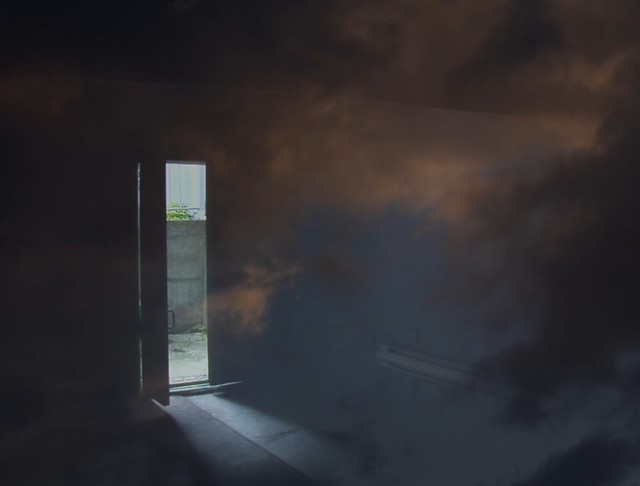
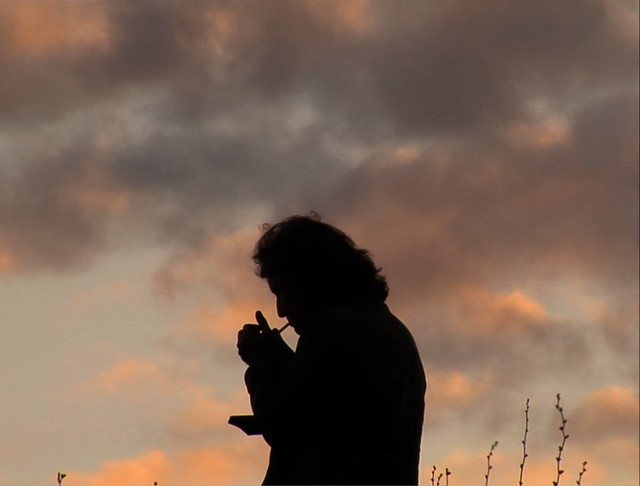
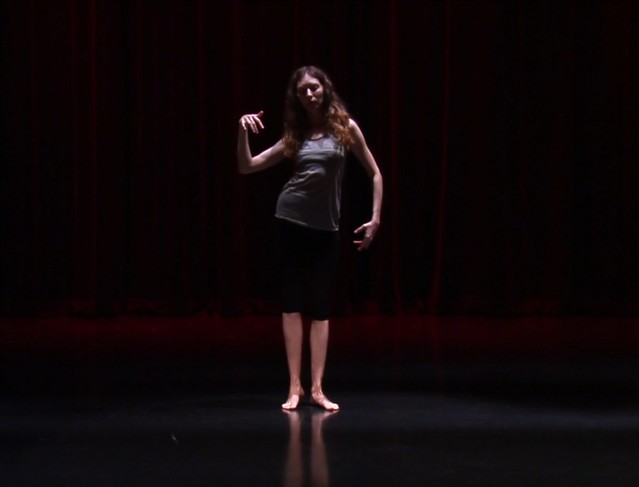
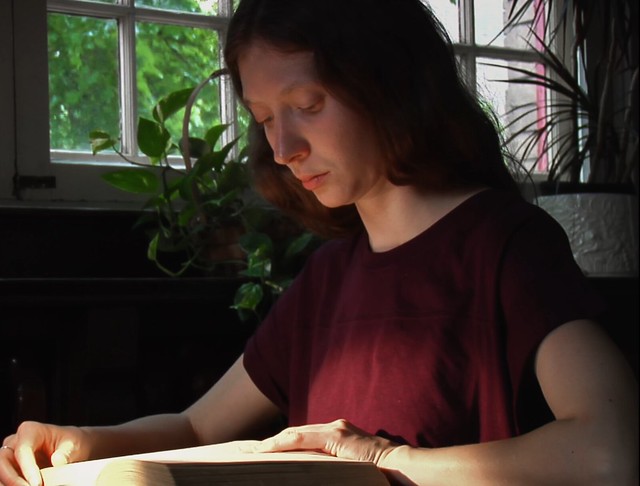
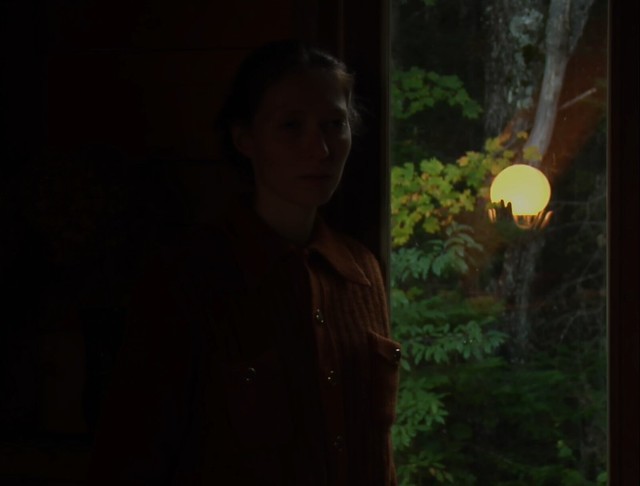
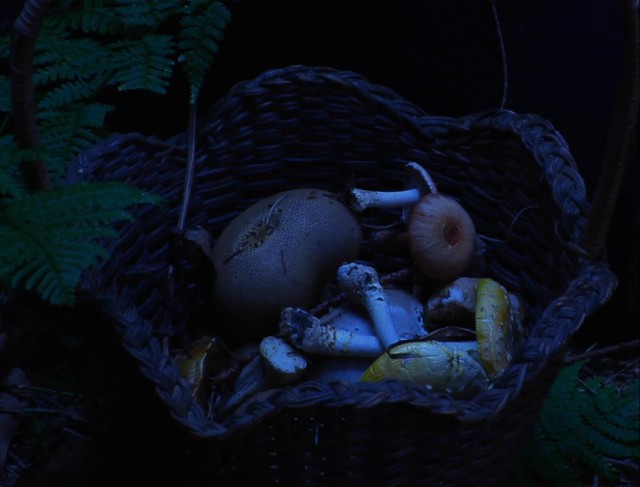
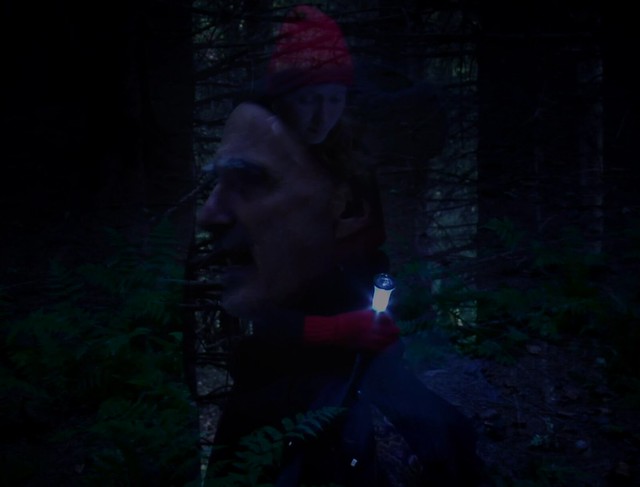
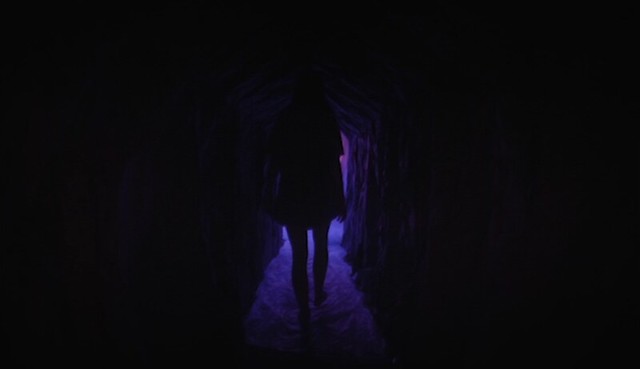
Bi Gan's sophomore effort, Long Day's Journey into Night, after his phenomenal debut Kaili Blues (2015), doesn't disappoint in terms of ambition, technical prowess and sheer ecstatic beauty. I've never experienced anything quite like it as far as an immersive movie going experience goes. If the uncut 40 minute shot in Kaili Blues took your breath away, just wait until you see a continuous hour long 3D scene in the later half of the film. Its pure cinematic power let you believe that cinema is still alive and well. Bi Gan is no joke folks. He is that rare combination of a filmmaker who really knows how incorporate technology into an artistic medium and runs amok with it.

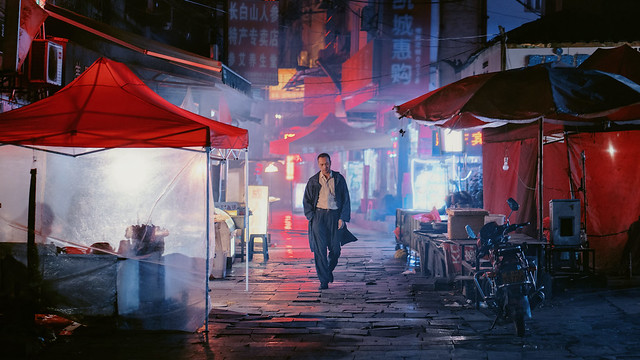
Lu Hongwu (Huang Jue) returns to Kaili for his father's funeral after many years of absence. There at his father's house, he finds an old photograph of a woman hidden in an old clock. As Lu tries to find her whereabouts, the noirish road trip morphs into an internal journey where his past and present and dreams are all intermingled. There are some very loose and abstract connections throughout, about his lost love and his sidekick named Wildcat who was murdered. It's a monsoon season in Kaili, the southern subtropical region of China. The air is damp, the walls are blackened, the basements are flooded and it's night. It's always night. The water drops flicker under the overhanging lighting fixtures. The sound of raindrops gently hitting the metal sidings, the cigarette smoke, the colors.... The atmosphere is so rich and dense, you want to reach out and touch it.

Lu hits up a mysterious woman (Tang Wei of Lust, Caution) in a shimmering green dress and follows her in his car into a dank tunnel. Her resemblance to his old flame is uncanny, he tells her. She flirts but never gives in, always leading, always seductive. Her name is Wan Qiwen. That's a Canton popstar's name, he quips. Is this scene from the past or is it a dream? In an outdoor stage, Lu waits for Wan to come out and sing. A woman suggests going to a movie to kill the time. This is just over an hour into the movie. He goes into the movie theater and puts a 3D glasses on and this is our cue to follow the suit.

We see the title for the first time in 3D as we follow Lu at night. A boy in a room where Lu wakes up in, says he will show him the exit if he beats him at ping-pong. Lu handily beats the kid at the game. The the boy leads the way down to an outdoor market. There is only one way to go down and it's the jerry-rigged one-seat cable car/zip-line. We follow him from behind and slowly descends into the dimly lit labyrinthine market. Now Wan is a young woman who manages a pool parlor. There are young hooligans giving her a hard time. Lu intervenes. It's her boyfriend's business and she is just overseeing it in his absence. It's dead of the night and she is closing the shop. Lu is mesmerized by her likeness to Wan/ex-lover and can't get away.

This lucid, languid night stroll continues ever so leisurely. Lu loses Wan and then finds her again. Like in a dream, the time stretches yet stands still. We take a literal flight to the other parts of the market, we take the steps up and down, waiting for a daybreak, all in one continuous take. The darkness in Long Day's Journey into Night is comforting, seductive and beautiful, never ominous or threatening. You are taken for an intoxicating ride and you don't want to wake up from this dream. You don't want to get out of the spell Bi Gan put on us. Long Day's Journey into Night is an unforgettable moviegoing experience and the most audacious film in years. Please see it in a theater, if you can.

Friday, September 28, 2018

Jia Zhangke's Ash is Purest White is an Epic Melodrama at Its Finest

Ash is Purest White (2018) - Jia
Screen Shot 2018-09-22 at 10.22.58 AM
An epic melodrama spanning 17 years, Jia Zhangke's new film, Ash is Purest White, harkens back to the Chinese auteur's earlier films. I say this not just because it mostly takes place in Shangxi province (the director's home province where he made 3 of his early films), but also because he abandons the episodic/omnibus storytelling of Touch of Sin and Mountains May Depart, two of his last films. Instead, he concentrates on a long and arduous relationship between Qiao (Zhao Tao, Jia's long time partner in crime) and Bin (Liao Fan of Black Coal Thin Ice). Ash can be seen as the compendium of 48-year-old auteur's filmography and its 144 minute running time can feel like a slog at certain points. But it's one of those films that gains strength and poignancy over time and certainly is the future classic in the making. It's definitely his most mature film to date.

The film starts in Datong, the nothernmost area of the director's home province Shangxi. The year is 2001. Qiao is seen in full frame video shot footage instructing dance moves in a dance hall. With her bangs and youthful looks, this footage might as well be from Unknown Pleasures (which came out in 2001). She enters the majong parlor, and it's in 1:85 aspect ratio (they used several different formats for varying degrees of success). She is the squeeze of a local low level mob Bin, who runs a majong parlor. It's a dangerous business and there are competing younger mob factions ready to take him and his men down when given an opportunity. Times are a changing.

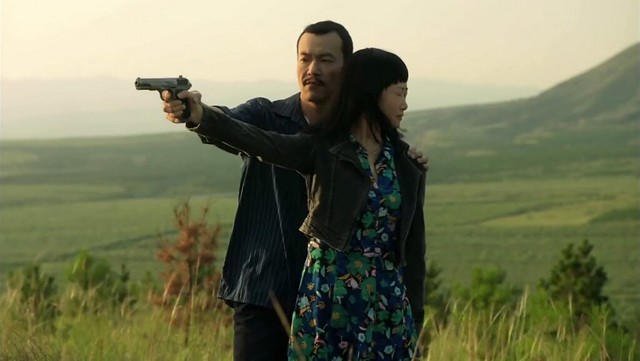
Bin brings Qiao to a field which saw volcanic activity thousands years ago, to teach her how to shoot a hand gun. It's an unregistered, illegal gun he acquired. The Chow Yun Fat-starring Hong Kong action movies had a bad influence on Bin and the rest of his generation. He mentions that the ashes from the volcanic eruption is the purest white, foreshadowing the rapid change in China, where anything old is demolished, buried or drowned for the new generation. A clean slate. A new beginning where no regrets, no tears, no sentimentality are allowed.

After a hit on Bin's crew sees him fatally attacked, Qiao fires the said illegal gun to save his life and is sent to jail for 5 years. Now it's 2006, and Qiao is out of jail and looking for Bin. He never visited her in jail and has moved to a town near Three Gorges dam. So this is where the road movie of Qiao starts: she meets various characters on the road/river with the rapidly changing nation in the background. The technology has changed appropriately, the fancy office buildings go up, all sorts of business ventures spring up. But people, the flood of people, trying to eke out the living with the changing times and circumstances, remain the same.

Bin, with a new girlfriend, refuses to see Qiao. Heart broken and with nowhere else to go but back to Datong, she almost agrees to go with a new venture capitalist whom she meets on the train, to the west. Decisions we make in our lives, good or bad, would lead to a different life than where we are right now. But how much can we deviate from our natural instincts, our traits, our character?

It's the New Year, 2018. Qiao finds Bin back in her life in Datong. He's had a stroke due to excessive drinking and is now a wheelchair bound. Qiao, who never married, silently takes care of him. He throws a fit sometimes, reliving his jianghu (underground gang) days in his head. She doesn't let him go off though. Is he ever going to change?

Ash is Purest White is a full-on (un)sentimental melodrama in epic scale. It's perhaps Jia's most down to earth, character study work. The long stretch in the middle gains more poignancy as the film goes along and afterwords. Some people reinvent themselves along with the changing times and some people don't. Some things in them though, remain the same. Jia expertly juxtaposes these conundrums, reflecting the soul of a changing nation. Ash is the Purest White is a deep and poignant masterpiece from a seasoned filmmaker.


Monday, September 17, 2018

He's a Lumberjack and He's Not OK

Mandy (2018) - Panos Costamos
Screen Shot 2018-09-17 at 7.00.23 AM
Screen Shot 2018-09-17 at 7.31.42 AM
Screen Shot 2018-09-17 at 6.38.43 AM
Screen Shot 2018-09-17 at 7.19.49 AM
Screen Shot 2018-09-17 at 6.40.34 AM
Screen Shot 2018-09-17 at 6.43.14 AM
Screen Shot 2018-09-17 at 6.45.00 AM
Screen Shot 2018-09-17 at 6.46.13 AM
Screen Shot 2018-09-17 at 6.46.47 AM
Screen Shot 2018-09-17 at 6.47.21 AM
Screen Shot 2018-09-17 at 6.50.58 AM
Screen Shot 2018-09-17 at 6.52.39 AM
Screen Shot 2018-09-17 at 7.30.50 AM
Screen Shot 2018-09-17 at 6.55.06 AM
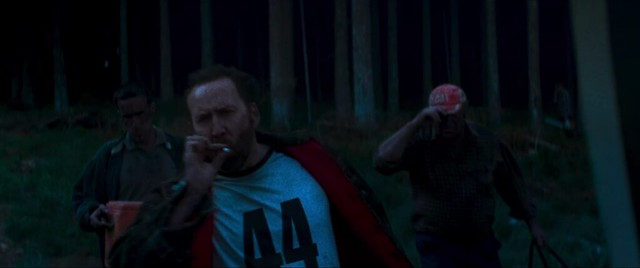
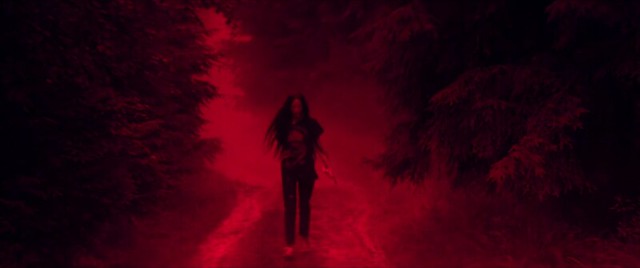
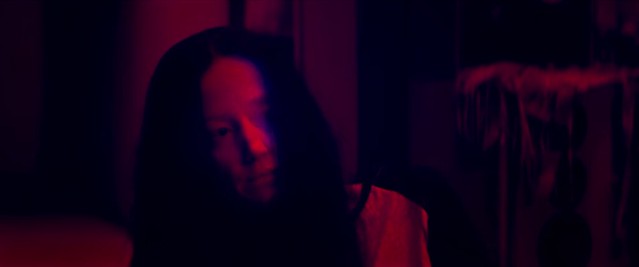
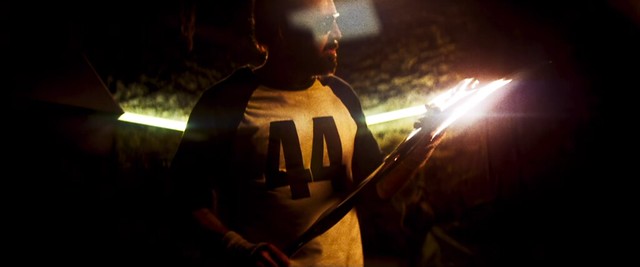
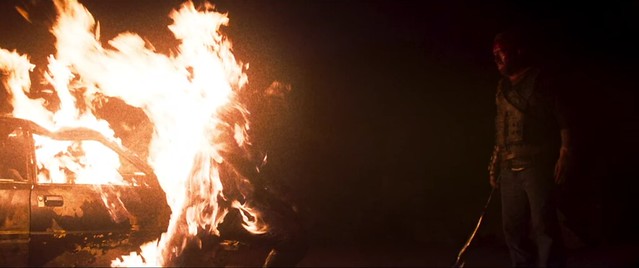
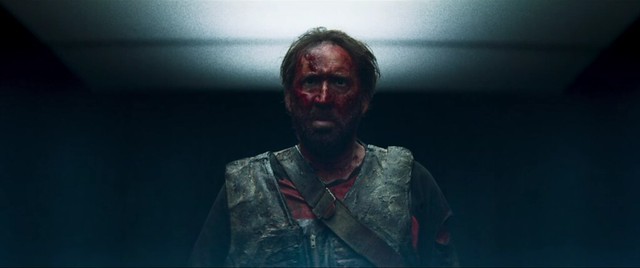
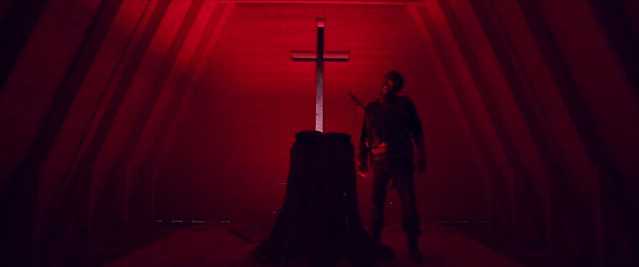
Mandy (Andrea Riseborough) is a raven-haired woman living in isolation in the woods with her lumberjack husband (Nicolas Cage). Usually donning some deathmetal t-shirts or her husband's baseball jersey and a nasty scar across her face, Mandy possesses that other-worldly, melancholy aura. Perhaps it's that aura that attracts a gang of violent religious nuts to her- a cult headed by Jeremiah (Linus Roache). The gang break in to their cabin one night. They tie the husband up. But after being rejected by Mandy, Jeremiah and the gang sets her on fire in front of the husband.

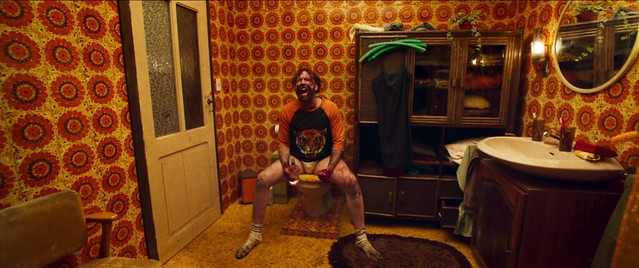
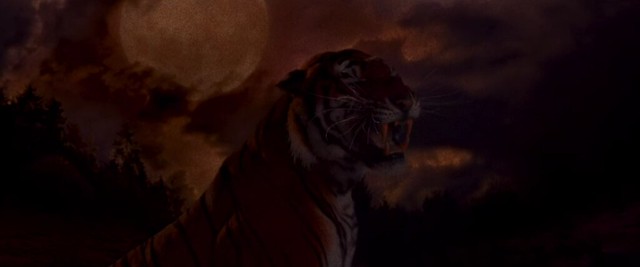
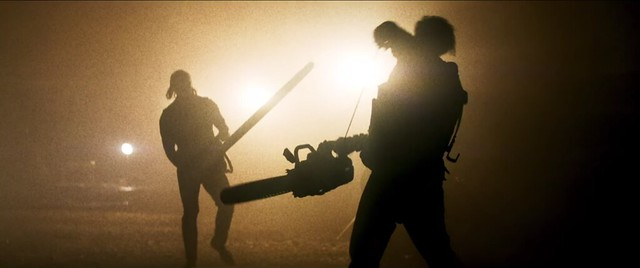
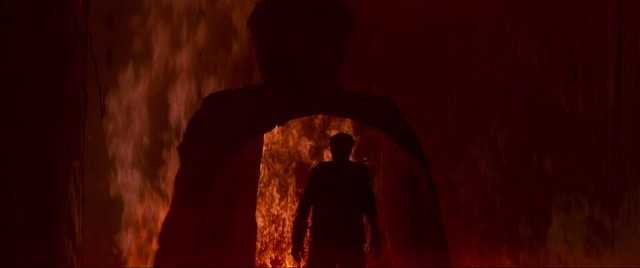
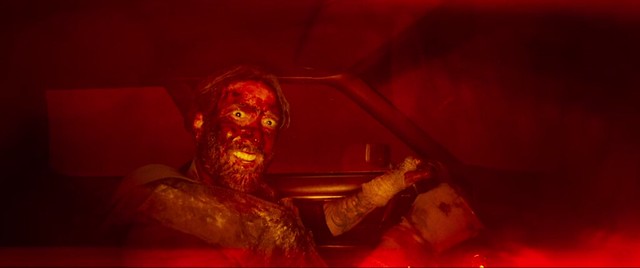
Her death propels the movie descending rapidly into total mayhem and provides perhaps Nic Cage's Nic Cagest performance in years. That long take rage scene in his underwear in the bathroom is a sight to behold. There are Hellraiser type demons, a tiger, axe smelting, a King Crimson song, a chainsaw fight, multiple title and animation sequences thrown in. Normally a concoction this wild and unwieldy wouldn't work at all, but Costamos manages to make Mandy, through dark brooding visuals and Jóhan Jóhansson's soundtrack, a visual tone poem akin to Valhalla Rising, with Cage as our avenging angel, slogging through hell and back (or not). It's an amazing visual feast and a cult classic in the making.

Thursday, September 13, 2018

Brigade of Police Poets

Les arts de la parole (2016) - Godin
Screen Shot 2018-09-13 at 10.47.58 AM
Screen Shot 2018-09-13 at 10.48.35 AM
Screen Shot 2018-09-13 at 10.56.31 AM
Screen Shot 2018-09-13 at 10.57.22 AM
Screen Shot 2018-09-13 at 10.40.17 AM
Screen Shot 2018-09-13 at 10.41.00 AM
Screen Shot 2018-09-13 at 10.43.01 AM
Screen Shot 2018-09-13 at 10.44.33 AM
Screen Shot 2018-09-13 at 10.45.30 AM
Screen Shot 2018-09-13 at 10.46.19 AM
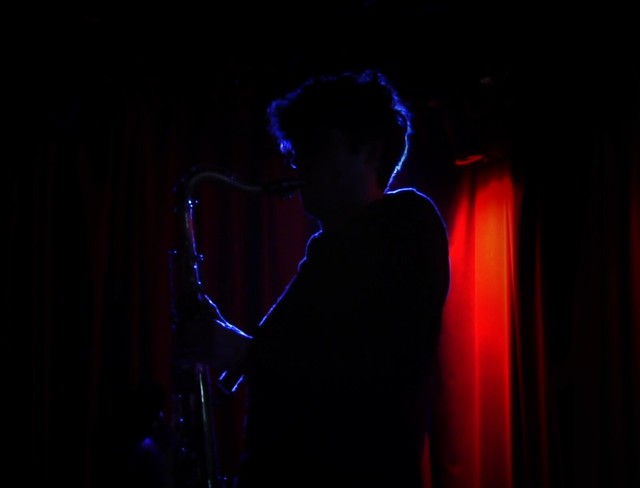
Steeped heavily in literary references, Quebecois filmmaker Olivier Godin's Les arts de la parole follows the trials and tribulations of detective Koroviev (Michael Yaroshevsky). With a leather patch over his eye, Koroviev is a studious and sensitive fella who teaches poetry in a brigade of police poets. He and his 'singing detective' partner Margerie (Michel Faubert) are put on the duty of keeping a watch (through the peephole) on Clemént (Etienne Pilon), a bank robber. Soon Koroviev is out with Clemént at a jazz club where his son plays saxophone. The musician doesn't know that Koroviev is his dad though, and Koroviev doesn't ever seem to have a chance to tell him the fact. The detective is in search of a bible annotated by Pierre Maheu, his literary hero and the captain of the legendary ship, St. Elias.

Koroviev sees Coriandre (Jennyfer Desbiens), a pre-Rafaelite beauty with heavy eyelids on stage and gets smitten. Margerie also pursues her by singing to her on the phone, much to Koroviev's displeasure. Coriandre knows Maheu because he lived in a house next to her dad's in the countryside.

With its droll humor and painterly framing and dissolves, Les arts de la parole strongly resembles '80s Godard. Add the crime genre elements, Vertigo style dualism and full of quirky characters, you got a charming, entertaining film.

Monday, September 3, 2018

Birds of Prey

Figures in a Landscape (1970) - Losey
Screen Shot 2018-09-03 at 8.44.14 AM
Screen Shot 2018-09-03 at 8.53.18 AM
Screen Shot 2018-09-03 at 8.55.38 AM
Screen Shot 2018-09-03 at 8.58.04 AM
Screen Shot 2018-09-03 at 9.06.45 AM
Screen Shot 2018-09-03 at 9.08.24 AM
Screen Shot 2018-09-03 at 9.09.36 AM
Screen Shot 2018-09-03 at 9.14.18 AM
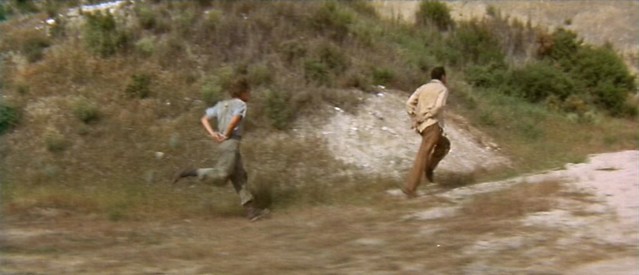
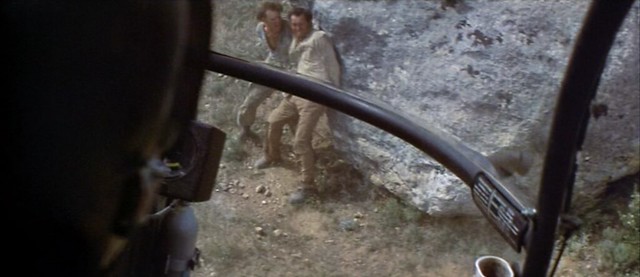
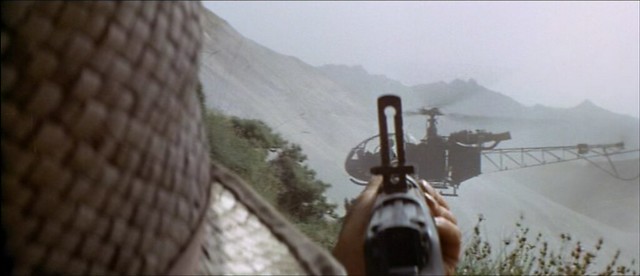
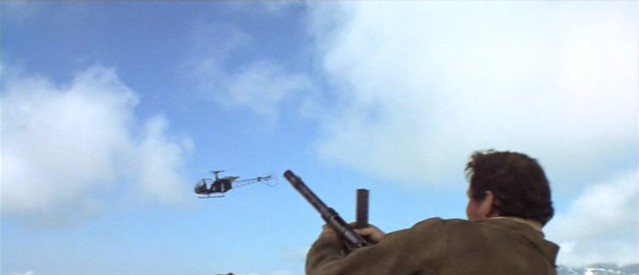
Two English men are first seen running, with their hands tied behind their backs, from the relentless pursuit by a hellicopter. There is no explanation as to why or how or what. Figures in a Landscape is one of those 70s wtf movies steeped in metaphor that are gripping and hypnotizing nonetheless.

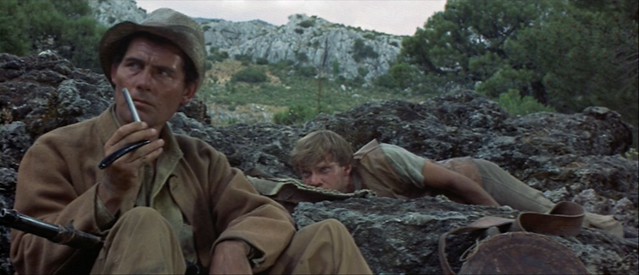
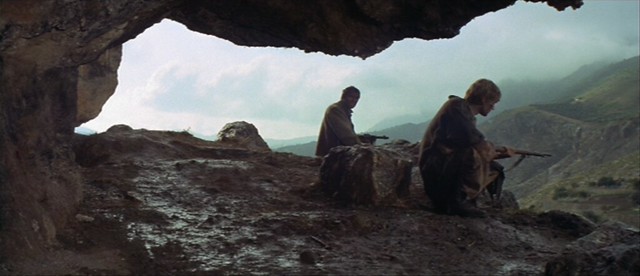
Robert Shaw (who also wrote the screenplay) along with young Malcolm McDowell, does amazing amount of cadio in an unnamed, rugged countryside (by looking at olive trees and snowy mountains at the end, my guess is Italy). After raiding a village at night, killing some villagers to steal some food, clothes and a rifle, the fugitives still find themselves the prey to the bird above. Things get more tense after Mac (Shaw) methodically shoots down one of the pilots off the copter. Now there is an army with automatic weapons pursuing their tracks along with the copter. With their visors firmly stuck in their faces, all the pursuers are silent and nameless.

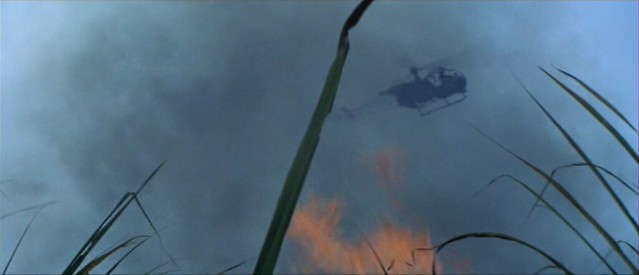
Mac has no scruples about killing people but the young man is morally conflicted. Mac angrily accuses him as a hypocrite. Grinding his teeth and snarling, Mac is a great precursor to Quinn in Jaws. He even showcases his loony sense of humor when things go dire - as they are cornered in what it looks like a sugarcane field with the copter firebombing from above and angry farmers trying to put out the fire by releasing water from the irrigation dam, the duo has to resort to crawling in the muddy field surrounded by inferno. What does Mac do? He catches a little snake, waving around like a lunatic, happy as a clam.

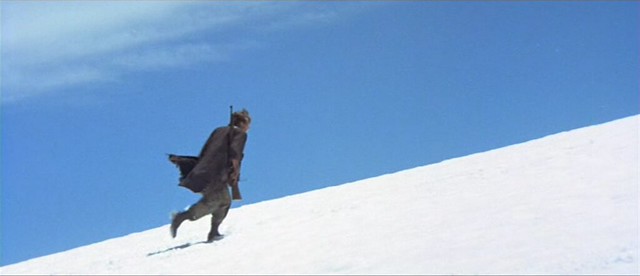
The hellicopter serves as a dominating force - an oppressive government or a dictator, a bird of prey, toying with you from above with its absolute power until it comes in for the kill. As they approach an arbitrary border to freedom in the snowy mountain, Mac's obsession - bringing down that symbol of oppression - a copter/a shark from above, takes over, even if it means costing your life. Visceral and oddly captivating, Figures in a Landscape is a very interesting film.

Sunday, September 2, 2018

Anti-Thesis of an American Film

Moonlight (2016) - Jenkins
Screen Shot 2018-09-01 at 10.19.38 AM
I haven't seen this up until now. I'm a bad person I know. Moonlight, by Barry Jenkins, is the antithesis of everything an American movies is- loud, overwritten and flat. Obvious influence here is films of WKW, to the point of almost distracting. Still, it owes a lot to its visual and aural landscape. Let's face it, no one is going to see a poor gay black boy on screen however authentic the film is. But despite all the stylings, the film's authenticity comes from its characters. There are no voice overs or heavy handed monologues. Jenkins lightly sketches out the three stages of life of Chiron, unsure of his identity and his place in the world and important people in his life. And it's those things unsaid, negative spaces, sporadic dialog that give the film its emotional heft. The ending is just about perfect.

It's a beautiful film. Can't wait to see If Beale Street Could Talk.

Saturday, August 25, 2018

Economic Emasculation: Lee Chang-dong Adapts Murakami in Burning

Burning (2018) - Lee
Screen Shot 2018-08-24 at 6.52.41 AM
Screen Shot 2018-08-24 at 7.04.47 AM
Screen Shot 2018-08-24 at 6.47.42 AM
Screen Shot 2018-08-24 at 7.05.28 AM
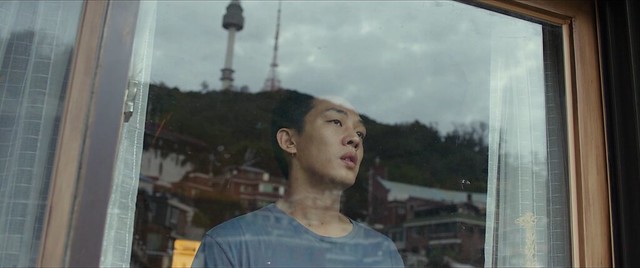
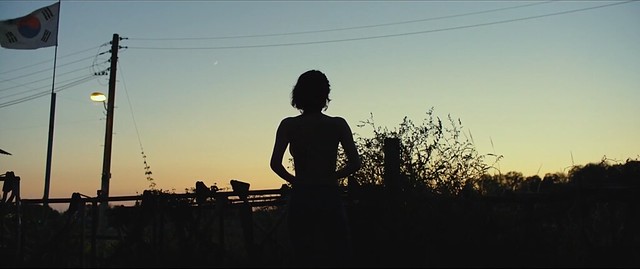
The film revolves around Jong-su (Yoo Ah-in), a farm boy from a small town near the North-South border, doing menial jobs here and there in the outskirts of Seoul and dreaming of being a novelist. His father is in police custody for assault charges. His mom ran off when he was young because of dad's anger issues. He runs into a childhood friend Haemi (Jeong Jong-seo), who dances in costumes in front of a department store to lure the customers in. She teases him for not recognizing her. It's because she had a facelift. Haemi is one of those thoughtful, attractive girls who sometimes falls into pit of melancholy as she thinks about the big questions in life - Why are we here? What's our purpose? So obviously Jong-su falls for her. Haemi has a favor to ask. She's been saving up for a trip to Africa. She wants Jong-su to take care of her cat while she's gone. What cat? He never sees her cat in her tiny apartment which faces Namsan TV Tower (its presence to Seoul-lites is as synonymous with Empire State Building is to NYers or Space Needle is to Seattlelites). But he knows the cat is there because its food bowl gets emptied out and there is occasional poo in its litter box every time he visits. He masturbates thinking of her, looking out the window, facing the tower.

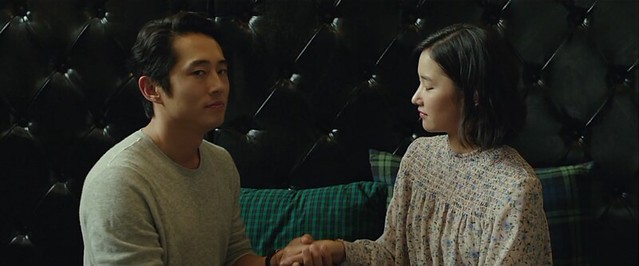
Things get complicated when Haemi returns from the trip. At the airport, Jong-su finds Haemi with her new friend, Benny (Steven Yeun), a mysterious yet affable man. He doesn't have a job. Seemingly extremely well off, he is chaperoning Hae-mi in his porche to nice restaurants and cafés while inviting Jong-su along. There is something off about Benny. His detached attitude, his nonchalance- it's as if he is gliding through life. Jong-su is also jealous that Haemi is smitten by the charming yet strange man. He doesn't seem to care about anything and anybody, including his well-to-do friends.

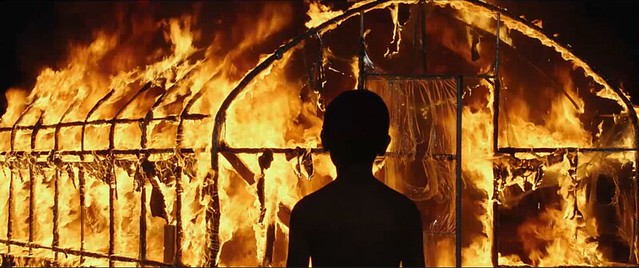
After his father gets sentenced, Jong-su goes back to his old house to sort through the mess. One day, Haemi and Benny visits the house unannounced. They drink and smoke pot and the two men watch Haemi dance topless. Her dance is so emotionally charged and beautiful, the two men blurts out their innermost thoughts after Haemi collapses on the couch. Ben likes to burn greenhouses down. It's thrilling because he doesn't get caught. In fact, the visit to his humble house was for scouting a new target. Jong-su angrily tells him that he loves Haemi. Then couple days later, Haemi disappears. And what about the cat?

Even though Burning is based on Haruki Murakami's short story Barn Burning, it's a very Korean film in every way. Yes, Murakami's typical - disaffected, nihilistic, don't-ever-have-to-worry-about-money hero is there, superbly embodied by Korean-American actor Steven Yeun- his slight otherness is perfect for the role. But Lee Chang-dong's emphasis is on the society's deep chasm between haves and have-nots, city vs countryside, living under the shadow of capitalism and the always imminent threat of war are all very Korean.

Burning is a slow-burn thriller that is utterly captivating from beginning to end. It's economic emasculation that brings inevitable violence at the end. Once again, it's Lee's script that shines: layered with hefty metaphors and symbolism, yet the film is surprisingly subtle and never loses its magnetism.

Wednesday, August 15, 2018

Guilt and Suffering: Marguerite Duras Style

Memoir of War (2017) - Finkiel
Screen Shot 2018-03-02 at 6.49.25 AM
French director Emmanuel Finkiel takes on semi-autobiographical book, La douleur by writer & film director Marguerite Duras. It's an ambitious project to tackle, since Duras is a key figure in Nouveau Roman, one of the most significant French literary movements in the 20th century. She scripted Alain Resnais' Hiroshima mon amour and saw several of her books adapted for the screen. She also directed many films including Natalie Granger, India Song and Drive, She Said.

Skillfully directed and beautifully acted, Memoir of War retains much of Duras' enigmatic, complex human tendencies during war time. Like her other works, it draws from her experiences and amplifies/embelishes many of her major themes - desire, suffering, shame, survivor's guilt, memories....

The film starts with Marguerite (Mélanie Thierry) in German occupied Paris at the tip end of WWII. She had found her own journal which is essentially the book the film is based on, but she doesn't recall if it was she who wrote it. She is waiting for her husband Robert's return. He has been in German custody for his resistance activities. Robert's prolonged absence has been a disorienting, unraveling experience for her.

We roll back to 1944, just before the scale tipped for the Allied forces. Marguerite was approached by Rabier (Benoit Magimel, with a hefty gait, becoming more and more like young Gerard Depardieu these days), a collaborator, working for the Vichy regime, offering help to find where Robert is. He is a working class bloke who dreams of opening up a bookstore and thus fancies Margueritte because she's a writer. Her circle of friends in the resistance first think it's too dangerous for her, then admit that it might be a good opportunity for her to play Rabier to get important information.

First, fear and intimidation grip her but she plays along as Rabier leads her on to the promise of Robert's well being. It is clear that he wants something in return - ratting on her resistance friends. A dangerous game of cat and mouse play out.

La douleur (The Pain) which the film is based on was published much later in Duras' career as a writer. But it was supposedly from her diary she kept from the war. This was long before she established herself as a formidable writer. Yet, we see the same theme of eroticism and shame associated with many of her later works. Even though it's subtly done in Memoir of War, you notice the shame Marguerite feels as she was attracted to Rabier the traitor.

And not unlike Duras scripted Hiroshima mon amour, A Memoir of War concerns the effect of war has on people- the guilt that survivors have to carry around weighs so heavily on them that they lose their sense of self. Marguerite often sees her surroundings in a third person perspective. She also sees herself from a distance as if she is experiencing an out of body experience.

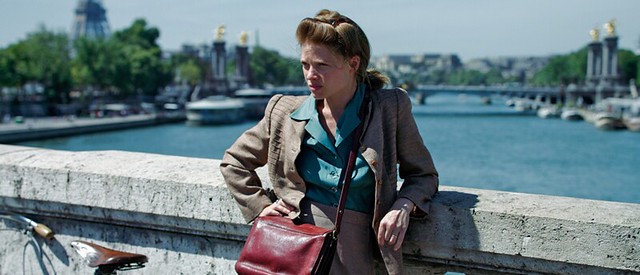
Duras doesn't put blames on a collaborator alone. Holocaust happened. As a human being, we all have to wrestle with the fact that it happened. Using shallow depth of field, Finkel makes sure there that there is a distance between people at all times. There is a striking scene of empty Paris just before its liberation where Marguerite rides her bicycle. But she will never be free from that survivor's guilt. And it won't stop even if she has Robert back finally.

Thierry is a revelation as Marguerite, a learned, intellectual woman who slowly gets broken emotionally. She proves that she is much more than just a pretty face. The film signals the arrival of another major French star actress. Memoir of War is a great film.

Interview: Emmanuel Finkiel on Adapting Marguerite Duras' Semi-Autobiographical Work

Emmanuel Finkiel
It's a big challenge to adapt a book by one of the literary giants, Margeurite Duras. Known for her enigmatic, erotically charged, fiercely political writings and films, Duras was one of the key figures in the most significant French literary movement in the 20th century - Nouveau Roman. She also scripted Alain Resnais' greatest work, Hiroshima mon amour, which shares many of the themes with Memoir of War.

Luckily for us, French director Emmanuel Finkiel has made a beautiful film here with Mélanie Thierry in her mesmerizing, star turning performance as Duras, based on her semi-autobiographical book, La douleur. I got a chance to talk to Finkiel about his adaptation process and the film's implication on current political climate.

Screen Anarchy: The film is tremendous and very ambitious in presenting very complex story of Margeurite Duras. Are you a big fan of Duras writings and nouveau roman?

Emmanuel Finkiel: I had read that story written by Duras when I was young, about 25 years old and at that time it was a story that had really troubled me. It resonated because with my own family’s history. So when I was approached about adapting the book, I decided to do it right away. I was not at all afraid of taking on such a great literary monument because it resonated with me personally.

Can you tell me more about your family history if you don’t mind?

When my father was only 14, this was 1942, his parents and his younger brother who was 10, got rounded up and arrested. It was called Vel' d'Hiv Round up in July 1942. He never saw them again. After the war was over, even he was made sure that they were not going to return, he always retained that there was a little bit of hope. As a child I witness this in my father – the haunting by the absence of your very close family. He seemed to me to be always waiting and hoping that some day they will come back. I think that aspect – of waiting and hoping and that absence that resonated for me with Margeurite’s story.

I’m so sorry that happened to your family.

How close the film is to the memoir it is based on? Did you have to do a lot of research?

I think that the story that you see in the film is pretty faithful to the novel as any adaptation can be even with the elements of subjectivity involved. But the main difference is that in the book, Margeurite devotes quite a number of pages to the period of time after her husband returned where she really nursed him back to life. I decided that it would be very difficult to show that because I really didn’t know how to show that physical body of Robert on film. He was in concentration camp for so long and completely emaciated and I didn’t know how. So I decided not to deal with that part of the book.

You’ve worked with Mélanie Thierry in your last film Je suis pas un salaud. She is absolutely amazing in this. Rivetting performance. Was she always your choice to play Duras?

Actually even though I worked with her before, I hadn’t thought of her when I was writing this film. It was only through doing screen test as we tested a lot of actresses- when I did the screen test with Mélanie, she really stood out. Because I think that she is really capable of encompassing the kind of strength that was needed for the role but at the same time has real fragility. I knew that she was ready to meet this heroine, this character of Margeurite head on because she was able to find goods through her personal experience of suffering. The kind of depth that was needed, even though she’s very petit and fragile and caring woman.

She is absolutely fantastic in this film. I always thought of her as just another pretty face but she really really pulled it off and I am very glad you chose her.

Your experience with her was pretty much the same as with the French audiences. Nobody expected that much depth, everyone just thought she was just a pretty face.

Right.

So, you are not alone.

With Rabier the nazi collaborator, played by Benoit Magimel, and the cat and mouse chase that ensues between Rabier and Duras, is the same powerplay that you see in her other writings. You think it was Duras as a writer using the creative license or did that really happen?

I think that like much of Duras’ writing, this is also based on reality and real people she knew but she put them in a fictional cast. So she added things that were not real. So for example, I think that the character of Rabier mostl likely in real life was much more dangerous person and she had much more fear in her dealings with him but that’s not how you see him in the film. I think that she in a way chose to put this fictional cast- a romanesque (fictional) view of it rather than dealing with harsher reality.

And also think that when she writes her relationship with Rabier, there is kind of eroticism that emerges from it. I think this is very important because it generated a lot in her later writings which is the whole idea of shame.

Yes.

And that she behaved the way she did. And she carries her shame with her and it’s evident in a lot of her writing.

Right. Guilty conscience.

I think that it may have been the fact that she experienced kind of excitement whenever she met with Rabier at the same time she was waiting for her husband. Hence the feeling of shame and as you say guilt.

What’s also important is that she created someone who is not black and white. Many of the characters in her work are not black and white characters- they are very very complex who carry a great deal of contradiction in them. She talks to them almost mockingly with disdain but at the same time feels guilty about talking to them. None of her characters are simple.

There is a certain distance she keeps. There’s her seeing things objectively as if she is observing the scene as a bystander. We see this with only her in focus while everyone is out of focus. I am wondering if that also plays into what we are talking about.

Actually, the focus on her and everything somewhat blur is an indication of her subjectivity. Because what we are seeing in the film is not this woman living her day to day life in Paris under the occupation. It’s how she sees herself during that time and what her vision is of her life and her position that we are seeing. And that was what was reflected in those shots.

It makes sense.

I think you are correct in saying that she has this distance. But that’s not only the distance between herself and others around her. It’s the whole world and the whole situation and her in it that she is keeping distance from.

The epilogue that follows the end of the film that she left her husband after he came back. The very same person whom she waited for years. Why do you think that is?

In the book early on, she writes “I already decided to leave him.” She had decided to leave him even before he was arrested. So what becomes interesting is what she is waiting for. She is not actually waiting for Robert himself. She is waiting for the idea of Robert that she has created for herself. Like my father waiting for his family, once the person is no longer there your imagination takes over and that imagination creates a person who is not the real person but an object with whom you eventually fall in love. I think that was the case with Margeurite. She was so in love with the idea of Robert rather than Robert himself that she was planning to leave.

The French title is La douleur/The Pain – which seems much more correct I feel. The pain the character feels is the same pain in Hiroshima Mon Amour, caused by war – the survivor's guilt that destroys a sense of self.

Tell me if I am wrong, because I thought about the correlation between La douleur and Je suis pas un salaud where you touch upon our current society and economic injustice and racism. I thought about the war raging in Syria, Palestine and the middle east where we see destruction and hopelessness. I was wondering if you had our current society in mind when you made this film?

I am in 100 percent agreement with what you say. I think that you can find the thematic link between my previous film and this film perhaps. Regarding the title, I think that you are correct. Even though I don’t speak English, the way I understand it, the French title is much more effective. It’s stronger and it has kind of density. It is closer to what we see unfold.

This idea of shame and guilt and how we can live with it – I think that is very important and it carries on to the situation we see today. so there is that thematic link.
Tuesday, August 14, 2018

Spike Lee Still Got it

BlackKklansman (2018) - Lee
Screen Shot 2018-08-12 at 12.24.44 PM
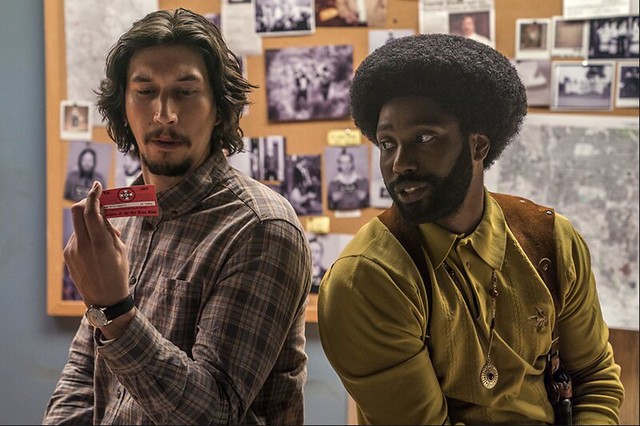
Spike Lee has a reason to be smiling. BlackKkansman is his best film since Malcolm X. It's both entertaining and pointy about the Trump's racist administration. Well timed for anniversary of white nationalist march in Charlottesville where activist Heather Heyer was killed, Lee doesn't shy away from linking the past and the present this unsubtly and directly, like no other major American filmmaker.
Adam Driver, playing Flip Zimmerman, a non-practicing Jewish detective in Colorado, proves himself that he's a solid actor here. Lee even pushes the idea of solidarity, a smack in the back of the head that we are all in this together, by making Zimmerman/Jews think about how extremely racist the view of the white nationalists against anyone other than Anglo Americans really is.

Sunday, August 12, 2018

Role Playing Group Therapy

Bisbee '17 (2018) - Greene
43262194404_f33ee9cb4c_z
Robert Greene's engrossing historical reenactment, Bisbee '17 serves as not only a forgotten history lesson but also perhaps the largest scale role playing art therapy session. Bisbee, Arizona, a dusty small town near Mexican border, once was a richest town in the state, is also dubbed as Copper Queen for its mineral resources during WWI military effort. A large open pit mine with the blood red contaminated water in the middle, now closed, serves as a reminder of its history in its not so subtle metaphor. And yes, there is nothing like a large scale war to trigger its citizens of their sense of patriotism and unfettered exploitation by the government and industry.

If you are familiar with the American Labor history, you know that it was WWI that effectively quashed the burgeoning labor movement in this country. Happened in New York, Chicago and Butte, Montana and all over where people were violently oppressed. And it happened in Bisbee in 1917, by armed sheriff department and 2,000 deputized citizens to round up its 1,800 inhabitants - immigrant miners, mostly Mexicans and Eastern Europeans, IWW (Industrial Workers of the World) strike organizers and supporters, and put them in cattle cars and deport them out of town, to New Mexican desert, presumably to die.

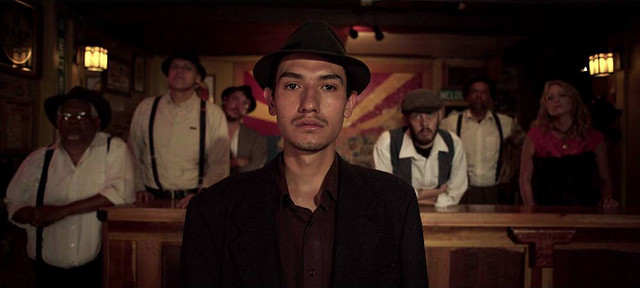
To mark the centennial of the occasion, some town historians and artists decide to enact the shameful history and Greene is there to document it. They are making a movie, where townsfolk play key figures of that shameful history. There are half-dozen key figures but the Greene keeps focus on the Rays and Fernando Serrano. They are in it for different reasons. The Ray brothers- Mel and Steve, by their mother's urging, will portray Edward and Archie, the brothers who were on the opposing side - Edward (their grandfather), deputized mob on behalf of the Phelps-Dodge Co. and Archie, a striking miner. Serrano, a young, soulful eyed apolitical Bisbeean whose mother was deported when he was 7, joins in out of curiosity. Except for some town's elders and artists, the Bisbee Deportation is long forgotten by the public, not taught in schools. And the only remaining records of it are that of the mining companies as they controlled the town newspaper, radio and telegrams. With those who remember and want closure, Greene embarks on perhaps his most ambitious project- as far as 'process is just important as the product' filmmaker is concerned.

Greene, always interested in the nature of playing a role in fiction and in real life, once again blurs the line here with Bisbee '17. As the centennial celebration and its enactment approaches, things get tense and emotional. And it reflects perfectly the current nightmare we are living in where immigrant children are in cages and their parents deported. History repeats itself. But the film ends on a hopeful note. Greene is not only a good filmmaker but a great teacher. Serrano belongs to the generation which will inherit this country very soon, is awoke. The film deeply affected me deeply on an emotional level.

Wednesday, August 1, 2018

Patterns

The Crescent (2017) - Smith
Screen Shot 2018-07-31 at 2.47.20 PM
Screen Shot 2018-07-31 at 2.48.45 PM
Screen Shot 2018-07-31 at 2.35.58 PM
Screen Shot 2018-07-31 at 2.34.05 PM
Screen Shot 2018-07-31 at 2.45.23 PM
Screen Shot 2018-07-31 at 2.40.17 PM
Screen Shot 2018-07-31 at 2.37.21 PM
Screen Shot 2018-07-31 at 2.38.46 PM
Screen Shot 2018-07-31 at 2.39.30 PM
Screen Shot 2018-07-31 at 2.41.07 PM
Screen Shot 2018-07-31 at 2.42.34 PM


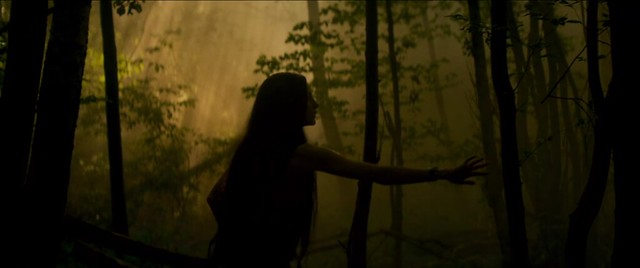
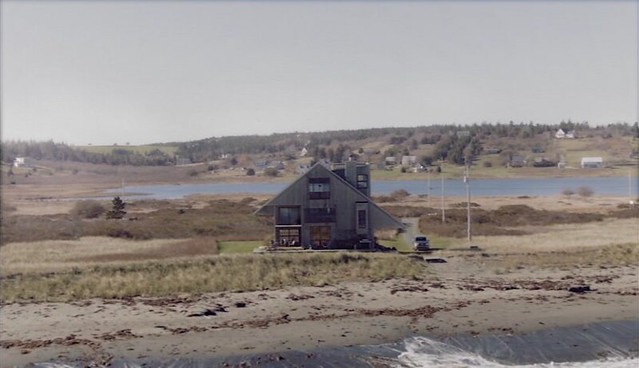
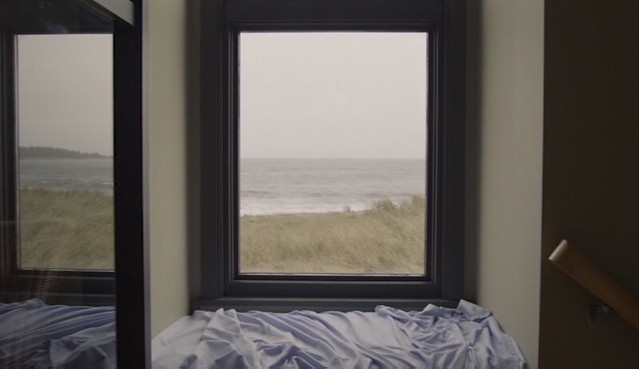
Beth (Danica Vandersteen) is an almost inappropriately young looking mother of Lowen, a toddler. She is seen attending a funeral in the beginning, presumably her husband in some kind of accident. She drives to a large wooden beach house in Nova Scotia. She will sell the house soon. But for now, she will live in there with her young son. Isolation, apart from human contact seems to be what she is looking for, out of grief one can assume.

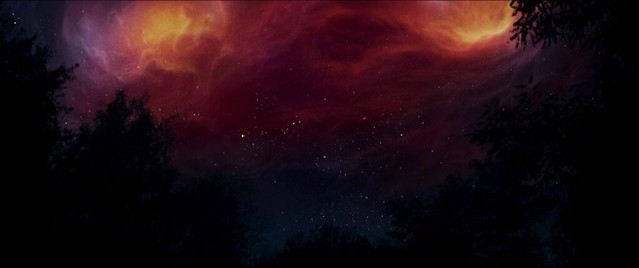
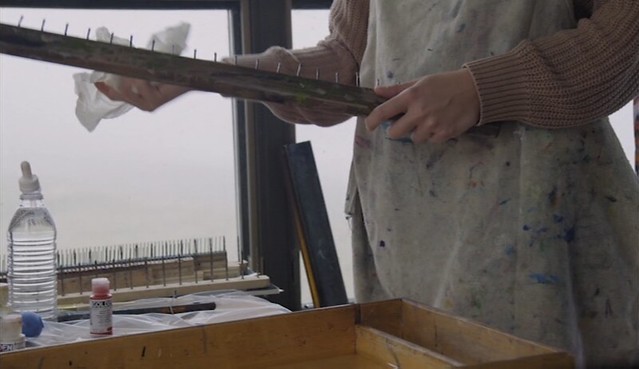
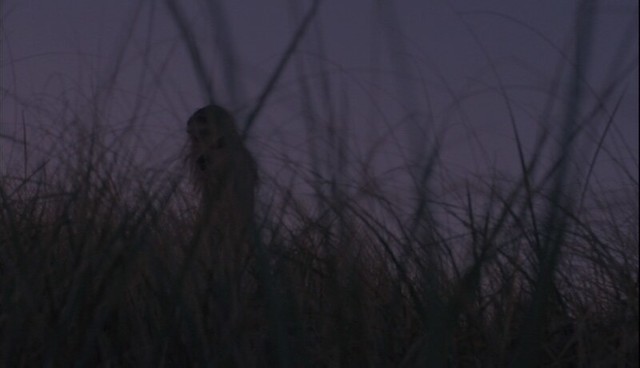
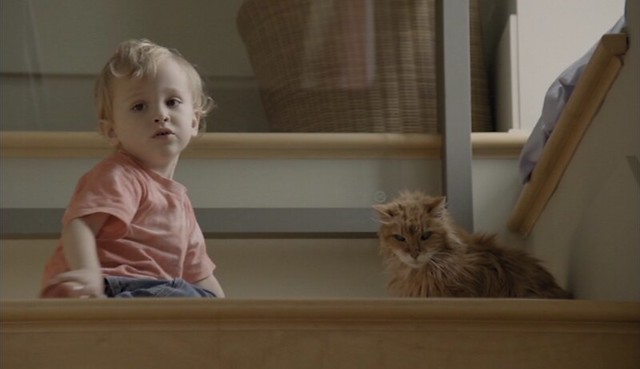
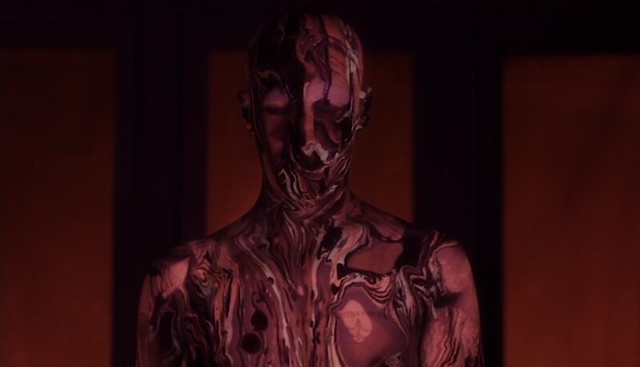
Lowen is a handful child. Always running around, doing what toddlers do, always falling over, always in imminent danger of injuring himself. Young Beth most of the times, doesn't seem to be a capable mother, at least the whole situation seems that way. There is a creepy old neighbor who's always eyeing on Lowen, saying ominous, creepy things. Beth is an artist, specializing in marbling, a technique where one drops oil based die on water and makes trippy patterns, then put a paper over it to get that groovy 70s style wall paper patterns. These patterns figure largely into the big picture later on - on Beth's wishes and nightmares, and in her surroundings. The film quietly develops into part Lovecraftian horror and part portal to a parallel universe thing.

There are a lot of modern horror films about death and grief and such. But The Crescent is a special film. Seth A. Smith, a visual artist and a filmmaker from Nova Scotia, is a real talent in creating certain quietude and sensitivity that is lacking in today's loud and obnoxious horror. Combined with his artistic skills, Smith evokes something that is deeply felt and memorable. Never a horror movie I watched recently that stayed on for days in my head- the visuals, details, the over all impact, and the sadness it carries. The Crescent goes down as one of the best films I've seen this year.