Wednesday, March 1, 2023

Preview: Rendez-Vous with French Cinema 2023

Showcasing the best of contemporary French films, this year's Rendez-Vous with French cinema features 21 features from old masters to newcomers, including new films by Philippe and Louis Garrel, Arnaud Desplechin, Dominik Moll, Patricia Mazuy and Léa Mysius. Though I feel like I say this every year, about this ultimate festival for Francophiles, but this year's offerings are possibly the strongest in terms of quality and cinematic audacity, in years. Guest attendees include Virginie Efira, Louis Garrel, Christophe Honoré, Alice Winocour, Patricia Mazuy, Melvil Paupoud and more.

Rendez-Vous with French Cinema is presented by Unifrance and Film at Lincoln Center and runs 3/2-3/12 @filmlinc

Here are 5 films I was privileged to sample for the festival:

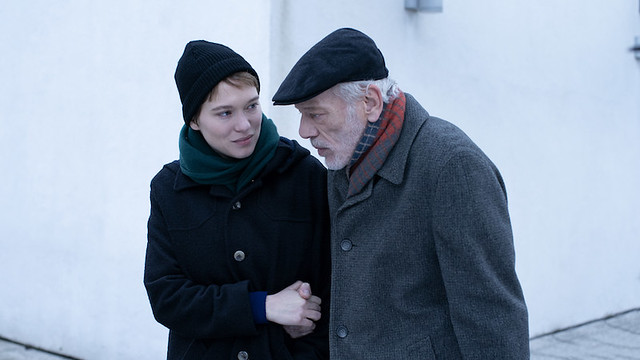
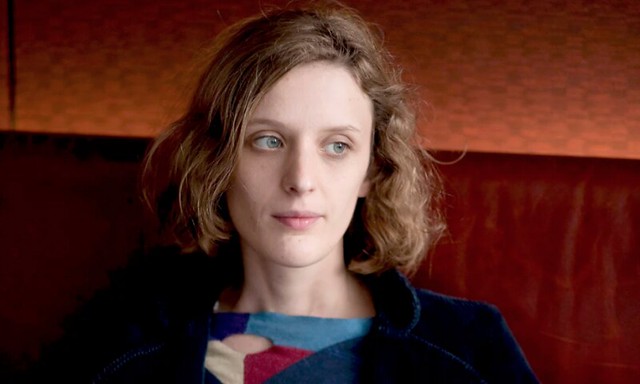
Brother and Sister - Desplechin Sister and Brother Arnaud Desplechin, one of the most literary minded film directors of our time, comes with Brother and Sister, a family drama rich with beautifully written characters. It stars Marion Cortillard and Melvin Poupaud as Alice and Louis, as estranged siblings coming to terms with their differences after fatal car accident involving their elderly parents. It starts out with a flashback at the wake of Louis and Faunia (Golshifteh Faranahi)'s young son where Alice and her husband are turned away at the doorstep by angry Louis. The film goes back and forth, peppered with flashbacks, giving the fraught sibling relationship its necessary contexts. It turns out that Alice, now a famous stage actress resented her younger brother's success as a writer. After many years of books by Louis writing about their thinly veiled relationship, they are not in speaking terms.

Things get very awkward while both parents are hospitalized because the siblings tiptoe around their visits, trying not to cross paths, while their partners, other siblings and friends encourage and discourage their possible encounters. Both Cortillard and Poupaud are marvelous as they act out the beautifully written script by Desplechin. It's the most emotionally resonant Desplechin film in years.

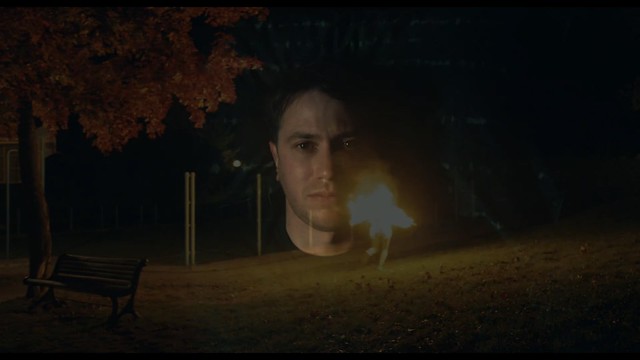
The Night of the 12th - Moll Screen Shot 2023-02-24 at 8.56.05 AM Gilles Marchant and Dominik Moll, the writer-director team known for tight Hichcockian psychological thrillers over the years, come with The Night of the 12th. It's a policier in the same vein as Memories of Murder and Zodiac. In a picturesque small alpine village near Grenoble on the night of October 12, a young woman is torched to death with a gasoline fluid and a lighter. It devastates the whole town and stumps its police department, headed by young captain Vivés (Bastien Bouillon) with lack of concrete leads. Moll deftly examines inherent sexism rampant in French society and generational differences in approaching romance and relationship. With its economical storytelling and sharply drawn characters, The Night of the 12th is an immensely watchable crime film.

The Five Devils - Mysius Five Devils - Still 2 Léa Mysius's follow up of her stunning debut Ava, is a time traveling queer love story starring Adèle Exachopoulos. The title refers to a small town overlooking the rugged mountain peaks in the southeast region of France. Exachopoulos plays Joanne, a swim teacher at a local pool living a mundane life with Jimmy, her firefighter husband and their adorable daughter Vicky.

Vicky, bullied constantly for her big afro, lives in her own world mostly and has a keen sense of smell of all things. She collects objects in jars to preserve their smells and has visions of the past. Things get shaken up when Julia, Jimmy's sister and Joanne's former flame returns to town. The Five Devils turns into a poignant story about prejudices and acceptance with black girl magic elements.

Winter Boy - Honoré Winter Boy Winter Boy tells a story of Lucas, a 17 year old gay high school student trying to come to terms with the sudden death of his father (played briefly by director Christophe Honoré) which might have been suicide. After the funeral, he tags along with his older brother Quentin (Vincent Lacoste) who is a burgeoning artist in Paris for a week. There, Lucas experiments with anonymous sexual encounters. He also falls for Lilo (Erwan Kepoa Falé), Quentin's roommate. Quentin gets furious when he finds out his sexual shenanigans and sends him home. Lucas then cuts his wrists while with his concerned mother, played by Juliette Binoche, and ends up in a rehab.

The film is set up like a confessional, with both Lucas and later mom talking to a dead father, as they try to deal with grief and absence of a loved one. Like many Honoré films, Winter Boy is a beautifully drawn, melancholic film dealing with truthful emotions when life hits you like waves. The living can't stay mad at the dead. We have a living to do, even with a hole in our heart.

Saturn Bowling - Mazuy Screen Shot 2023-02-26 at 7.09.11 PM Shocking in its depiction of violence against women, Patricia Mazuy's serial killer noir is extremely disturbing and uncompromising as it examines the origin of violence in our patriarchal society. Half-brothers Guilaume and Armand reunites after their father dies. Guillaume is a cop and just inherited a bowling alley from his dad. The bowling alley is a hub of his dad's big game hunter friends who want to keep things as it is. Guillaume doesn't want to deal with the business, so he offers Armand to run the place. Armand reluctantly accepts.

But it turns out Armand is a violent serial killer who preys on young women who frequents the bowling alley. He uses his dad's pad to have sex and kill them there. Bodies mount and unsuspecting Guillaume gets frustrated with the investigation. To complicate things, his love interest is an animal rights activist who doesn't see things eye-to-eye with the big game hunting crowds. With its deliberate pacing, simmering nighttime photography and daring perspective shifts, the film has a peculiar way to get under your skin while condemning male tendency or desire to kill. Making a point in a most brutal and succinct manner, Saturn Bowling is one of the most daring and unflinching film I've seen in a long while.

Sunday, February 19, 2023

Burnt Offering

Silver Haze (2023) - Polak Silver Haze Dutch director Sacha Polak teams up again with Vicky Knight, a British actress and a star of her previous film Dirty God, in her new film Silver Haze, which premieres at this year's Berlinale's Panorama section. Knight, who sustained serious burn on one third of her body as a child, plays Franky, a young woman who is a victim of a fire and carries the stigma both flesh and mind. Her East End family home is a mess - mom, an alcoholic who never recovered from her husband leaving for another woman, a younger sister who has yet to find her identity and an older male relative who is not quite the role model. Even though Franky is sleeping with a local boy, everyone close to her knows that she has lesbian tendencies. While working as a nurse at a hospital, she befriends a suicidal patient Florence (Esme Creed-Miles) and starts seeing her after being discharged. Florence, a young woman from a wealthy family, has been staying with Jack, her autistic brother, in the home of family friend Alice (Angela Bruce), an old black woman dying of cancer, near the beach in the south of London. Forever moody and unpredictable, Florence warns Franky that she is a bad person. Yet, Flo is the first person who makes Franky smile in a long time. She is the person who encourages her to come out of a shell. For the first time since she got burned, Franky can go out to swim, exposing her scarred body to the world.

But Flo is also a bad influence on Franky. She's Franky's id personified. After arguing and breaking up and disappearing for days on end many times, Flo encourages Franky to firebomb her dad's new house where he lives with his new family. It is dad's new wife whom she believes is not only responsible for the breakup of her family but also for setting a fire in the pub where she got burned.

Franky finds a makeshift family in Alice's home, away from daily bullying, physical, verbal abuses, and self-doubt. It is Jack, who has no filters, tells like it is - that the fire where Franky got burned might not have been an arson, that it could have been caused by a lot of different things, exposing Franky's hate and anger, and her desire to put a blame on one person all her life might have been willfully misdirected and a self-denial. Like the cannabis strain that Franky grows with care, where the title comes from, the film is about the smoke screens as a defensive mechanism to cope with life's traumatic events. But somehow you will need to face the reality to move on.

In the tradition of British kitchen-sink realism of Lynne Ramsay and Andrea Arnold and humanist makeshift family dramas of Kore-eda, Polak and Knight create an emotionally resonant film about forgiveness and finding peace via self-reflexive storytelling. Knight is a natural born actress and camera (captured by DP Tibor Dingelstad) adores her. Her brevity in using her life story and stigma she carries on screen is quite remarkable. Sensitively written and directed with clear eyes, Silver Haze is a great little gem and first great discovery of the 2023.

Wednesday, February 15, 2023

I am Here to Create the Most Fascinating Images Possible: Albert Serra Interview

AC_Website Event Hero 620 x 348  (3) - Albert Serra Headshot Albert Serra is a mad man. His latest, Pacifiction was my favorite of 2022. Its almost stupid bravado took my breath away. It's all in his digitally captured decaying grandeur of the first world; the remnants of colonialist spy game playing out in paradise, was perhaps the most audacious cinema I've experienced in a long while. Serra is a real auteur in every sense of the way. He might come across as arrogant at first, but listening to him at length, talking about his methods, you find that he is an adventurous soul, always looking for the ways to find images that goes beyond earthly concerns, yet deeply humanistic. It was a privilege to talk to him for the second time, even via Zoom.

Pacifiction opens this Friday, 2/17, Film at Lincoln Center in New York.

How are you?

I am good. I am in Dublin now. It’s late.

Are you working on something there?

I am just checking out the possible locations. Just randomly. I haven’t written any script or anything. But I shot here some years ago. (Singularity, for Venice Biennale, 2016) I dunno…I like some places I’ve seen and wanted to come here and see there’s something inspiring. I have some ideas. Sometimes I have this real place in mind. It’s an interesting thing. It helps to make the process more organic.

Was it the same for you with Pacifiction?

Well not the same because as I said, I couldn’t travel because of Covid, but in the end it was almost the same result. I couldn’t go but I was inspired by some books, you know? But some ideas are mine. Possible nuclear tests were mine! I never heard it or read it anywhere. It was totally an invention but became a visionary, because Russia invading Ukraine and all the talk of nuclear war became popular again.

True.

Everyone has forgotten it. Now it’s the center of the topic again. We went there to shoot, and I shoot very fast. With 4 weeks of preparation, we started shooting- preparation meaning, casting there, looking for locations. We do it very fast. But it was 2020.

Covid.

Because of Covid, on the third week, we had to leave.

Wow.

Because everything was locked down. So, we came back. Then I was thinking about the film in more concrete terms. I knew some of the locations and a little bit of casting and from what I saw there. So, before we started to shoot, already I had some cumulated volume in my head. But the film started very artificial, with plot being on the edge of being ridiculous. But I found it organic in a way. This is the balance I try to find: very artificial idea and setup, with the performances, the wilderness of its surroundings. It makes actors believe in everything they do even though its half humorous, half ironic, half visionary, half political, half serious…I don’t know.

Unlike your other films, this one takes place in the present. But it almost has an aura of the Cold War era paranoia and the colonial past. You said it was partly based on what you read. It feels very much like Conrad or Graham Greene.

Graham Greene perhaps. Conrad, I haven’t read it. It’s a strange thing I haven’t read the Heart of Darkness because it’s very important and good and I read a lot. Of course, there’s a link with Apocalypse Now! with this strange character that Marlon Brando plays because you don’t know if he’s good or bad – whether he is the beginning of something very bad or the end of something very good. But I think there’s something that is connected with his mental state. I don’t know if that is something specifically colonial. My film is more on the contemporary side where the savior/villain has no face. Nowadays everything is spread out, like a virus. Everything is based on total opacity of power – who makes decisions? What are the reasons behind these decisions? And which are the interest parties behind these decisions? Before, there were good people and bad people. Coppola’s film was the end of that illusion. Kurtz was the beginning of that ambivalence. Now we are in this era, and everything is flatter. Everything is less interesting, it’s more like the internet, you know. Real life dissipates, everyone has no face, and things are still going wrong and getting worse. And everyone feels it. Inequality and wealth gap keeps getting bigger and bigger. Everyone knows it and feels it. And no one knows how to correct it. This lack of humanistic approach to solve the problem brings something purely technical, they don’t take account to the souls of people therefore they don’t solve anything. Maybe to you the film feels like Conrad but it’s very contemporary. It’s something that is happening now.

How did you like Tahiti?

I don’t care. I try to force myself to think against cliché. For example, I try to think that these people are not victims of history. Because they do nuclear testing there, so they suffer from this and that. That they lead a very simple and quiet life and suddenly colonizers are sending these nuclear scientists and doing tests in paradise, whatever. But why do I want to tell that story? To say something about these injustices? These are things even a child knows. Everybody agrees. Then I force myself to go there and look for the faults of these people. Sure, they may be victims of history. But they might have bad genes and are lazy. Or maybe they receive a little too much aid. You know where I am going with this. But in order to see things the way they truly are, I have to let the images flow, let the images flow without control and without any meaning from my end. The idea that they are some hapless victims, it would be a cliché. But the reality is not so easy, especially nowadays. So, when I am in a place like this, I try to think the opposite, just to make things more complex and not to reduce the complexity of the matters. And I think it works. That everyone sees that things are unbalanced. When everyone thinks and goes the same direction, and I present the opposite, something happens. It’s a more faithful way to paint that place that you are in. I get the real inputs from the place just because I use this technique. I put myself in the position that I don’t have anything to say. I am here to create the most fascinating images possible.

Talk about being there and finding something. The character Shanna fascinated me. I am very interested in how you casted Pahoa Mahagafanau in that role and what her character means in the film?

She’s a non-professional actor, like all the indigenous people on the island. I have an intuition for people who are interesting and quite natural. They look natural and spontaneous, and I like them as human beings, you know. This is the main thing when I choose actors. There should be something in them I like as human beings. Something I respect, in order to start disrespecting them and start creating my own idea against them, but there should be this equilibrium between us. Not as much as collaborating with them but to abandon them to their own devices and this creates a little bit of tension and that generates interesting images in the film. In her case, I like her very much. She is very spiritual. This idea of transgender, from a strictly visual point of view, not moral or political point of view or anything, I think there’s some purity and ambiguity in her that was extremely fascinating and photogenic. The extraordinary thing is that there is no contradiction in her, not one single moment of tension between two human beings in one. One that was before and the one that is now. There is this pure way of being in her and I like that very much. Transgender thing always has to do with makeup and costume and attitude, you know. They don’t decide to be transgender, it's a family decision in their culture. For example, if they have two boys, depending on the places, if the third one is also a boy, they dress them and raise them as a girl. They do this at a very young age, so they don’t realize all the stigmas that we modern society have on transgender people. They don’t distinguish gender like us. There is no vindication. There’s no gender politics.

I have to ask you about the scene where the surfing contest takes place in the water. It’s so stupendous and surreal, I couldn’t stop laughing at its bravado.

Why not?

It’s so fascinating and spectacular–

It’s spectacular because he (De Roller, played by Benoit Magimel) is there. If you search YouTube, I am sure you can find much more spectacular surfing videos with great waves than this one. But you are not a motivated spectator unless you are a professional surfer. It’s because the actor is in there riding the waves. As you said, it is grotesque and makes you laugh. But at the same time, you are still fascinated by it because the actor is still not breaking out of his character. You question yourself what kind of film you are watching. It questions you a lot of different things. And this is my aim. The plot is very plastic with submarines and all that. You know him looking for a submarine with a torch light at night. And at the shady discotheque where things get very paranoid. It’s very ridiculous and dangerous and extremely cynical. It’s a mixture of all kinds of different things and layers and tonality. At the same time, it’s very compact. It’s hypnotic on the edit and the flow. For me this was the main discovery of the film. The possibility of mixing all these impossible things. And it still works.

Is this how your work usually is - you finding out as you go along?

Yeah. But other films were mainly historical, and you have to be a little bit more respectful. You couldn't open it too much for other tonalities. If it was too grotesque, it would’ve destroyed the credibility of historical ambience. You had to be much more careful with those. Too risky. too risky.

Did it take a long time for you to set that wave scene up?

One morning. 3-4 hours.

Wow.

The whole thing? 24 days of shooting. 1 day of reshoot. 25 days total.

That is fast!

Yes, that is fast. when I was 18, 19, I was working as a construction worker. My boss, who was teaching me, told me one good lesson. He said, “You have to work good and fast!” It stuck with me, and I do the same with cinema, 20-30 years later.

Pacifiction kept reminding me of Kubrick’s Dr. Strangelove.

Yes. Here is what I said before. The grotesque element is there. The political element is there. The scary future of the war is there. The humor is there but it’s a fiction and that makes him a total liar. Therefore, it's less hypnotic, less fascinating, less complex and there is less mystery. The mystery comes from how close to the truth it is or how close to the real show or fake show. The kind of images you see in Kubrick films are much clearer. I work with digital images. There is less control and therefore could be more dangerous. It means they can really capture things that are around that are even out of my control. This content can reveal something that is not so nice. I think it is important to keep the door open. But it’s also a commitment. It’s not that easy.

This is not a political question, but I am wondering is this how you see that it will all end? Unbeknownst us, a bomb goes off without warning?

Iam very pessimistic. I can tell you. Capitalism is spinning in a very harmful way. With the internet it’s even worse. All the human relationships among people are already damaged and the internet just accelerated the damages. The financial inequality and wealth gap grows exponentially and there is no way to stop it. And the tensions grow, and the revolution is not possible because power has all the instruments. The people in the colonies and who are still colonized understand this because that’s how they lived all their lives like that.

I don’t know. Maybe I will do a comedy musical next. Where people dance around and sing happy songs.

Tuesday, January 31, 2023

Elemental

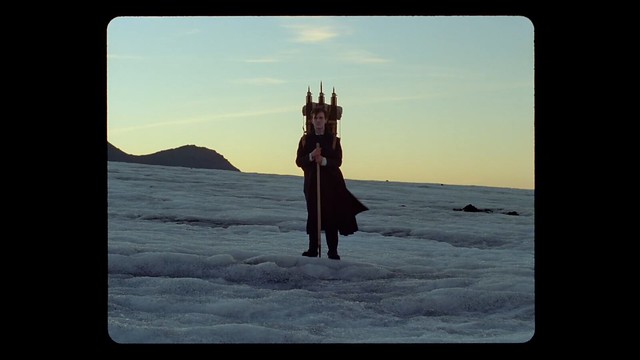
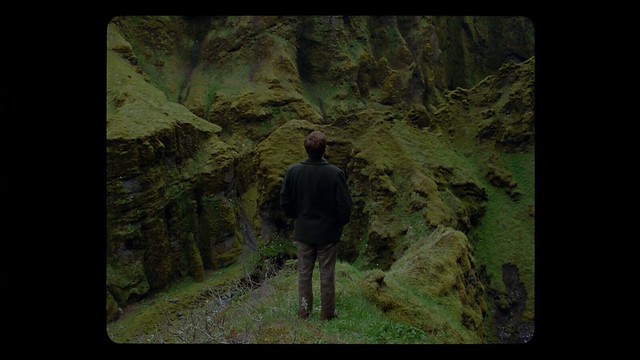
Godland (2022) - Pálmason screen shot 2023-01-24 at 9.36.43 pm screen shot 2023-01-24 at 9.35.30 pm screen shot 2023-01-24 at 9.31.31 pm screen shot 2023-01-24 at 9.44.40 pm screen shot 2023-01-24 at 9.36.32 pm screen shot 2023-01-24 at 9.46.18 pm screen shot 2023-01-24 at 9.36.07 pm screen shot 2023-01-24 at 9.46.50 pm screen shot 2023-01-24 at 9.38.04 pm screen shot 2023-01-24 at 9.39.23 pm screen shot 2023-01-24 at 9.40.10 pm Godland, directed by Icelandic director Hlynur Pálmason, is inspired by the first photographs found in the early settlement in the southwest of Iceland. The film has an awe-inspiring, majestic setting characteristic of many films shot in the active volcanic island nation. Indeed, everywhere Pálmason and his DP Maria von Hausswolff points their camera to, in its full frame portraiture style, the film is cinematic as hell. But it's not the gentle, sun-kissed nature we see in Terrence Malick films. Rather, it's an unforgiving, overwhelming, and downright threatening environment. There's little poetry or lyricism. Matching that backdrop, the film is not about one man's admirable, unwavering faith or enduring love. It's about guilt, envy, pride, prejudice, distrust, lust... in other words, humanity in a nutshell, and its insignificance against Mother Nature.

Young Danish priest Lucas (Elliott Crosset Hove) is ordered to travel to Iceland, which was a remote Danish Territory back in the late 19th century, to build a church for the small Danish settlement there. He is assigned a translator (Hilmar Guðjónsson) who is a half Dane and half Icelandic, and a small crew of Icelandic laborers. With his clunky large plate camera set up always tethered to his back (with upside down tripod sticking out over his head and shoulders like some sort of a religious artifact), he is an uneven match against scruffy crew of seasoned working-class journeymen.

When they get to the shore of Iceland, they hook up with Ragnar (Ingvar Sigurdsson), a brutish Icelandic man, as their guide. Ragnar's down-to-earth workingman ethics and his local knowledge of the land is a stark contrast to Lucas's nebbish priest from the so-called civilization. They don't see things eye to eye on many occasions.

At first it seems reasonable to trek the rugged surroundings, as they soak in the beauty and adventure spirits. But things fall apart quickly when they reach a river crossing. Against Ragnar's advice, Lucas orders the party to cross the raging river. Some of the horses carrying the supplies get swept away in the rapids, resulting the drowning of the translator whom the priest built a sort of friendship with. Wrecked with guilt, Lucas has a nervous breakdown shortly thereafter, and falls gravely ill. It is Ragnar who carries Lucas, tied to the back of the horse, all the way to the settlement.

Lucas is recovered in the care of Anna (Vic Carmen Sonne) and Ida (Ída Mekkín Hlynsdóttir), two daughters of Carl (Jacob Lohmann), a statesman of the settlement who helps build the church next to his home. Carl is stupefied for the fact that Lucas and his crew came all the way on foot, rather than sail to the settlement which would be much easier and faster. “To see the land and get to know its inhabitants?” he muses, puzzled.

Lucas is smitten by the older daughter Anna. Carl, sensing there is a weakness in Lucas’s character, warns her not to get close to him. These people come and go, he says. But Anna secretly yearns to go back to the motherland, back to civilization.

As the church construction is near completion and Ragnar and his crew is about to head back to their dwellings, things get tense between Lucas and Ragnar. First Lucas scoffs at the idea of Ragnar being interested in Christianity. They confront each other at a local celebration where they take part in traditional wrestling match in front of all the settlers and laborers. Then Lucas refuses to take photographs of Ragnar as a parting gift. Lucas’s deep seeded prejudices comes bubbling up to the surface. These Icelandic savages don’t deserve God’s love. Ragnar counters with extreme measures.

With its circle of life ending, Godland is a contemplation of us humans’ fleeting existence on earth. In a true Herzogian sense, with large brushstrokes, Pálmason draws a grand allegory that we are after all, elemental. And it's magnificent.

Tuesday, January 24, 2023

Life's Curve Balls

One Fine Morning (2022) - Hansen-Løve One Fine Morning After experimenting with the self-reflexive Bergman Island where she explored the origins of the artistic inspirations and the nature of art influencing life and vice versa, esteemed writer/director Mia Hansen-Løve comes back to her usual theme of grief and passage of time with quietly devastating yet lovely, One Fine Morning. The theme, I truly believe, that no other contemporary film directors can put in words and on screen, as acutely and sensitively as she can. With exceptional script and acting, One Fine Morning is a finely composed filmmaking at its best.

Léa Seydoux plays Sandra, a Parisian widow juggling life with tending to her grade school daughter, taking care of her aging father while working as a translator. She leads a relatively quiet existence with her loving daughter Sarah in her tiny apartment. She is a learned woman who speaks several languages and is very efficient at her job. But it's her father, Georg (Pascal Greggory) who's in sharp cognitive decline, and in great need of help with everything from opening the front door of his flat, to going to the bathroom. He often forgets where he is and where he places things. With her siblings busy with their own lives, it seems the duty to look after him largely falls on Sandra. As she and her mom/Georg's ex (Nicole Garcia), discuss the next steps, she realizes that Georg is facing grim prospects- Retirement home in Paris is expensive, has a long waitlist, and his pension alone will not cover it. And they've heard so many horror stories about the condition of many of these establishments. They are pretty much a waiting place for undignified death. He will also need to sell his flat, which is filled to the brim with books, as he was a scholar and a teacher. 'What do we do with all of his books?' Sandra wonders out loud. 'These were his life.' Françoise, maybe cold but more practical, tells her that they will have to throw away most of them. 'Why don't you just burn them?' She quips. Hansen-Løve doesn't shy away from all the life's complications. These are real quandaries people actually face in life. So is love and relationship.

Sandra finds love in an unexpected place. She runs into Clément (Melvil Poupaud), an acquaintance of her dead husband, at a playground while playing with her daughter. He is married and has a young son. He is an astro-chemist and takes long expedition trips to the remotest areas. There is a mutual attraction and they can't help but fall for each other. But he is not ready to leave his family for her. This is again, another added complication Sandra wasn't really looking for in life. Even though she still pretty young, she had given up on any romance long ago, resigned to the idea that part of her life is already over. But life throws curve balls at you like that.

It is almost unthinkable to see Seydoux, a glamorous international movie starlet as a sad, frumpy, middle aged single mom. But with short haircut and no makeup in her mom jeans, she is remarkably natural as Sandra, who thinks she is over her prime, weathering life's problems. In her understated way, Seydoux conveys Sandra's enormous compassion toward her father and deep understanding of his predicament - a brilliant academic whose age rapidly robbing away at what he once was and awkward shyness of finding herself to love and be loved again which she already had given up on. It is by far the best performance of her career if not the most poignant. Greggory, once a dashing leading man in French cinema not twenty years ago, plays demanding role of a brilliant mind in cognitive decline. Garcia gives matter of fact, no nonsense woman who provides much needed dry humor as she banters with her new husband about the state of French politics, portraying the embodiment of a Macron liberal. Poupaud is also on point with nerdy energy and charm, equally surprised by his own forwardness with the declaration of love.

As with all of her previous films, Hansen-Løve is a keen observer of fleeting life. This time she is tackling the theme of aging and decline, which is not a subject many filmmakers touch upon. This is part of life many people don't want to think about but fast becoming an issue as the elderly population grows larger. It makes you think about the attitudes towards elderly. Once brilliant, vibrant minds who need our compassion and treated with dignity, not pity and sympathy. Because we will all become old one day. One Fine Morning, as the simple title suggests, all we can do is face the life one day at a time. Leave all the sorrows of yesterdays behind because there will be another beautiful morning tomorrow.

One Fine Morning opens 1/27 in New York and Los Angeles. National release will follow.

Cinema Saved My Life: Mia Hansen-Løve on One Fine Morning

Mia-Hansen-Love It's always a pleasure to talk to Mia Hansen-Løve, one of my favorite contemporary directors in French cinema. Her astute observations of life and time passing always gets me. Her new film One Fine Morning, featuring mega movie star Léa Seydoux in an unrecognizable role as a single mother who juggles motherhood, aging parent and love, is a truly touching and moving film. The interview was conducted via Zoom in December. We talked about the film in detail, about Seydoux, her obsession and how filmmaking saved her life!

One Fine Morning opens 1/27 in theaters in New York and Los Angeles. The national roll out will follow.

The title of the film One Fine Morning/Un beau martin is a simple one and it reminds me of Yasujiro Ozu’s. The theme of time passing and family relations are all familiar Ozu territory. Is it safe to assume Ozu’s influence in your films?

Thank you for comparing my films to Ozu’s. I am a big admirer of his films. Yes. I loved his minimalism and also how restrained his style is, the way he looks at life without adding documentary to it, how he presents it straight with proper distance, proper frame and proper rhythm. There’s a feeling of truth, you know. I don’t pretend to say that I do the same way. I’m trying to find my own language, but I am sensitive to that kind of philosophy of filmmaking. His film Late Spring, for instance, haunted me a lot. There’s a lot of father-daughter relationships in Ozu’s films. It’s the subject I am very sensitive to.

I don’t know if I can say I ‘chose’ the title. One Fine Morning. It was some kind of illumination. During the writing process, the title just appeared to me. It was the same for my first feature, All is Forgiven. You don’t even know why, but there it is, and that is the title. I like it because it was not an intellectual process. It’s there where it should be. The title has to impose itself and then you can intellectualize about it and find reasons to it, not the other way around. Those are the best titles. Now I know what the title means: there’s the notion of the beginning, of clarity. Clarity is a word that matters to me a lot as a writer and a director but also as a person in my life. I enjoy that the notion of clarity in this title. But there is also a fairytale aspect of it. Do you know il était une fois, in German it’s Es war einmal…

You mean ‘Once Upon a Time…’?

And to me One Fine Morning is another kind of ‘Once Upon a Time’. There is something that has to do with storytelling and innocence. It’s like the lullabies in my films I use. I love lullabies in my films and it connects with the childhood, also we hear them as adults too and there’s a connection with this title as well. It’s a poetic idea of course.

Something like a New Beginning.

Yes, new beginning and it’s a difficult story and a sad story but there is a pleasure of a story being told. There’s something cathartic about fairy tales. We love to be told stories. It’s all unconscious though. I am thinking about it now and analyzing it now. (laughs)

I think choosing that title has to do with the desire of not only dealing with harsh reality but also has to do with romantic, cathartic way to hear stories and to tell stories.

Speaking of music and speaking of lullabies. I noticed Jan Johansson’s music in the beginning. Is there a story behind it?

Do you know Jan Johansson?

I’ve heard of him, but since I saw your film, I’ve been listening to him a lot.

I have to confess something I did here that I'd never done and probably will never do again, I stole that track from one of the lesser known Bergman films--

Ah.

The film that I love, it’s called The Touch. If you have seen the film, it would make sense. The two films have something in common in a way – an adulterous passion outside of a marriage. It’s a Bergman film that has been haunting me when I was preparing the film. And that music was haunting me so much that I couldn’t think of any other melody for my film. The music was not composed for Bergman by the way, it existed before. And I am using it again.

Interesting. Good to know.

Thinking about the role of Sandra. I wasn’t expecting Léa Seydoux in that role. Seydoux is a glamourous movie star and here she plays a single mom without any makeup. How did you get to choose here for the film?


Yes she is glamourous and yes she can be sophisticated in films and as a person too, but there is also a rawness about Léa. It’s not only that she plays with simplicity and rawness, but also there’s something almost masculine side of her. You feel she can be both, which is quite special, even without knowing her personally. While working with her it is quite apparent that her rawness is almost Bressonian. I find her presence very strong. On the one hand she has this star quality about her on the other hand, she is extremely simple and plain in her acting, like an Ozu or Bresson actress – she doesn’t force anything, there’s no intention and that’s all I care about when I deal with actors. I still love working with unknown, non-actors and with children and teenagers, as well as working with Isabelle Huppert, Vicky Krieps or Nicole Garcia. Both cases, what I care about is innocence. That’s what I admire. And sometimes it’s challenging when I work with actors who has great deal of experiences. It’s challenging to have them get rid of all their habits and let them show themselves as who they really are, and not pretend, you know. With Léa, it was incredibly easy. Easy for me at least. It’s what I am looking for in actors. She preserved the quality of innocence in her acting. It’s so easy with her, it’s almost embarrassing for me. Even with all the films with all these directors, she still has that innocence about her. Even more impressive is the emotions she brings on set. I mean, all the actors know how to cry on command, but it can be very mechanical without emotions. But when Léa cries in the scene, I cry. It never happened to me before. It’s hard to tell with her if she is acting or really living the scene. It is almost disturbing. Even when it’s not in the script, in some moments, just reading the lines with Pascal (Greggory) who plays her father, she becomes very emotional. She becomes the character and they become virtually the same.

Pascal Greggory’s character, once an intellectual person who is losing himself due to Alzheimers was heartbreaking. I was thinking about the physicality of your being. That all you have left at the end is your books. Do you think about your mortality often and what you will leave behind? Is that what this movie is partly about?

I think of that all the time. (Laughs) That’s why I started making films when I was 18 years old. I was obsessed with passing of time and what we are going to leave behind, at the age when you are not supposed to think about those things. I think that’s partly why I became a director. Some people would say naïve, but for me it was very efficient way of fighting against time and destruction it brings. The fact that life and death happen and time carries on and vanishes everything… I had that obsession ever since I was young. That makes me say today that I was a very melancholic young woman. And that’s why I say sometimes that cinema saved my life. Because cinema brought me back to the present. It made me enjoy the moments. It made me feel more rooted, thanks to the intensity of making films, especially the actual production (shooting). The intensity made me feel that I was alive and present in life, you know. Before I discovered making films, I always felt a little bit disconnected – the awareness of the passing of time took too much space in my head and it unbalanced my life. It all started there for me. I think it’s easier for me now but that obsession is still part of who I am. It influences my inspiration and my characters and art.

The father character who figuratively disappears which is inspired by my father. It is difficult to see my father disappear. But I want to and need to believe that there’s something remains. When I made this film, I am trying to meditate on that. I don’t want to cheat or tell lies to myself. I am trying to look at life the way it is. But I am trying to look further and find meaning to that. And I am trying to cling on to the idea that there is a soul, even with or without believing in god. And I am trying to approach the idea of what a soul is.

You will not be forgotten. I can tell you that.

(Laughs) I was talking about my father…

I know.

Tuesday, January 17, 2023

Body Parts

Une femme mariée (1964) - Godard screen shot 2023-01-14 at 11.23.16 am screen shot 2023-01-14 at 12.31.22 pm screen shot 2023-01-14 at 7.42.49 am screen shot 2023-01-14 at 8.02.49 am married woman 1 screen shot 2023-01-14 at 11.49.42 am screen shot 2023-01-14 at 11.56.42 am Macha Méril's Charlotte is a coquettish married woman vacillating between two men: a brutish plane obsessed husband (Philippe Leroy) and a narcissistic actor lover (Bernard Noël). It starts out with the static shot of each body part of Charlotte. Her days are spent on shopping, going to the cafes and the movies. She finds out that she is pregnant but doesn't know who the father is.

Godard's take on women being objectified in the consumerist 60s is on full display here. Also the talk of holocaust hangs like a cloud. Charlotte doesn't know what Auschwitz is as the men talk about it on the way back from the nazi trials in Hamburg. Biting and provocative.

Tuesday, January 3, 2023

Worldly Desires of Intellect

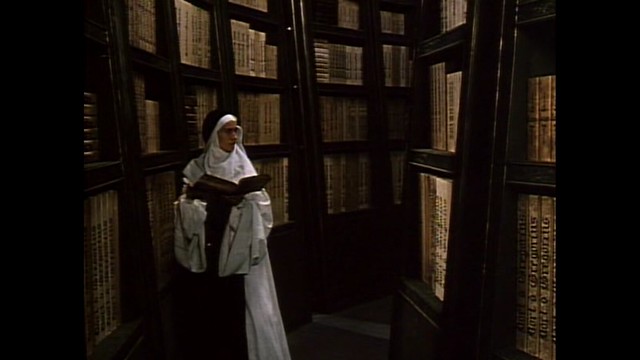
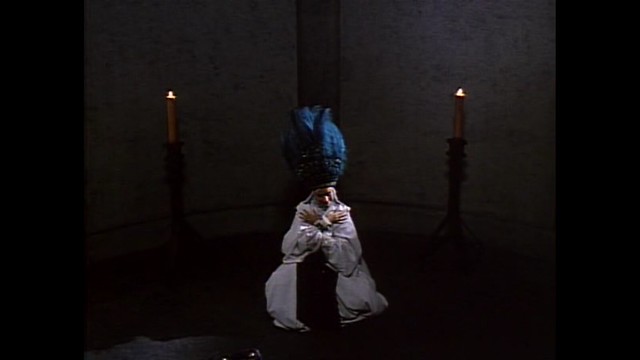
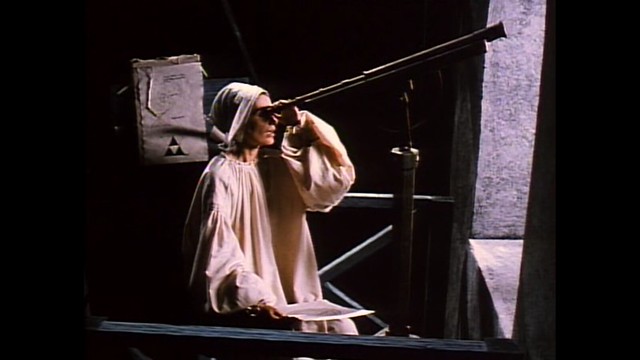
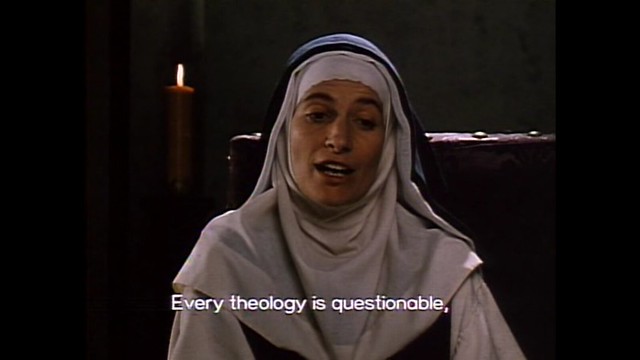
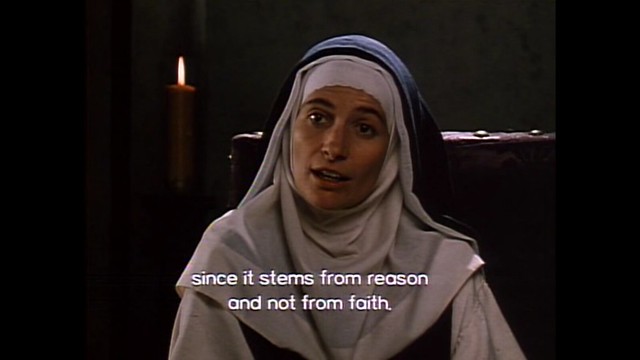
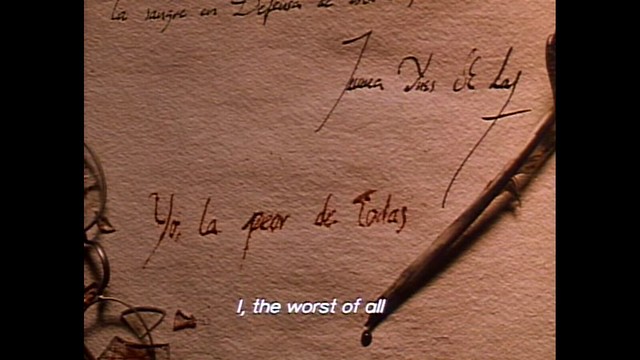
Yo, la peor de todas/I, The Worst of All (1990) - Bemberg Screen Shot 2023-01-02 at 9.17.18 AMScreen Shot 2023-01-02 at 9.26.56 AM Screen Shot 2023-01-02 at 9.33.18 AM Screen Shot 2023-01-02 at 9.55.43 AM Screen Shot 2023-01-02 at 10.09.08 AM Screen Shot 2023-01-02 at 10.09.14 AM Screen Shot 2023-01-02 at 10.51.30 AM Based on a historical figure, Juana Inés de la Cruz, I, The Worst of All, tells trials and tribulations of a catholic nun who lived in the 17th Century Mexico. Sister Juana who was a poet, playwright, theologian and a philosopher. And because it was unorthodox for woman to be an inquisitive and brilliant intellectual in the age of inquisition, she was persecuted by the patriarchal church and forced to denounce her 'sins'. Maria Luisa Bemberg directs the unflinching version of Sister Juana's story. Assumpta Serna plays Sister Juana, whose brilliance was the subject of both envy and jealousy in the convent. She is afforded with a large library and fine material things, like a telescope and harpsicord within the convent walls. She makes a big impression on the viceroy sent from Spain to the new world, and strikes up the friendship with the Vicereine (played by Dominique Sanda) who feels a certain kinship with the Sister (convent/marriage = jail). The Viceroy and his wife become an ardent supporter and protector of Juana against the vicious archbishop who thinks Juana is a nothing but a harlot and heretic.

Things get dire when Viceroy is called back to Spain and replaced by another. With her protection gone, Sister Juana becomes the target of archbishop's fury. Bemberg paints rampant religious hypocracy and sexism where women's intelligence were lauded only on the surface but ignored and actively repressed under the eyes of the church. Many of her supporters turn their backs on her. Then the plague hits the convent, where she devotes herself to the caring for the dying. It is her only confessor, the unnamed Father who reappears at the end to hear her confession, of her pride, her self-love and praises. He tells her that it's her selflessness in the time of plague is what God wanted all along.

I, the Worst of All, is a searing indictment of hypocracy of the religious institution and clear eyed examination of the true devotion and worldly desires of intellect. What happened to Sister Juana is a real tragedy.

Wednesday, December 28, 2022

Not so Goodtime

Le bonheur (1965) - Varda le bonheur François and Thérèse are young ideal working class couple with two adorable children, living in a provincial town. He’s a carpenter and she is an occasional dressmaker working at home. It’s all love love love happiness and happiness until he meets and starts having an affair with Émilie, a post office/phone clerk. He is happy with having two loves and Émilie contends with him being married. But what a girl to do, as long as her man is happy? The trio’s sunny happy lives come crashing down when he tells Thérèse about his affair, since he proudly says he doesn’t want to lie. He loves them both and happy with having more happiness. After seemingly agree with the arrangement and after they make love in the park near the lake, Thérèse drowns herself. After bit of mourning period, Émilie slides into Thérèse’s place and they continue to go on their lives with little changed.

Le bonheur is a really subversive film and a great counterpart to what was happening with male dominated French New Wave at the time - 1965. It's a film that challenges the patriarchal society's notion of happiness. Why does a woman's happiness always have to be tied to her man's? Why does she have to settle for what she has or be the one making sacrifices?

Shot in idyllic summertime w/sun-kissed photography, the film hides its real prodding intentions very well. Varda was much more than some frivolous artist Godard regarded her as.

Monday, December 12, 2022

Oh Captain My Captain

Triangle of Sadness (2022) - Östlund Triangle of Sadness Good comedies are hard to come by these days. Ruben Östlund, riding the success of absurd satires like Force Majure and the Square, comes back with another over the top-class satire, with international cast, in Triangle of Sadness. He starts out with modeling tryouts with hunky Harris Dickenson (Beach Rats). At one point, a casting director tells him, “Why don't you lose that triangle of sadness between your eyebrows?" Yes, male modeling is easy to make fun of, as well demonstrated in Ben Stiller's Zoolander. But what's easier? Social influencers. They live off their good looks. They make the age-old meet and greet of asking 'what do you do for living?' completely obsolete. So, what would be the ultimate setting for a class satire? On a luxury cruise ship, of course.

So, a model Carl (Dickenson) and his influencer girlfriend Yaya (Charlbi Dean) gets invited to a luxury cruise filled with uber rich crowd. It's an old money and new money alike: a Russian fertilizer tycoon, an English arms dealer couple, a lonely internet security expert and Carl (Dickinson) and Yaya. There's a team of dedicated crew who waits on the customers hand and foot, to attend their every absurd demand - like stop everything they are doing and jump on the water slide on the side of the boat, to celebrate their class consciousness(?). There's a recluse, alcoholic, Marxist captain (Woody Harrelson) who finally emerges from his deck only to go mano a mano with the Russian on which is better- Capitalism or Communism, while looking up and exchanging memorable quotes from google. After a big storm with everybody's projectile vomiting and shitting subsides, the ship is hijacked by pirates and the ship sinks.

Only a few survivors wash up ashore in what seems like a remote island. The water and food supply are limited. Paula (Vicky Berlin) the yacht steward, tries to keep everything and everybody in order, but soon realizes that there is no hierarchy anymore. Abigail (Dolly De Leon), a Filipino crew member who oversaw cleaning the toilet, emerges to be the leader because she is the only one who knows how to start the fire, how to fish and she gets to decide who eats and doesn't. She soon chooses Carl to be her sexual pet.

The reversal of roles is cathartic and delicious, but short lived. Östlund let you not forget that we live in an overly developed world that capitalism took over every corner of the world that it can't be defeated that easily. The world of pretend, married to our phone and constant flux of information that we rely our identity on, will not let you go. With all that cringey funny business he is so good at, at heart, Östlund is true Haneke pupil. But whereas Haneke has courage to cut the cord/throat/head off, two-time Palm d'Or winning director doesn't, as the murky ending suggests. And just like the people onboard of the yacht, when the movie is over, we laugh and pat ourselves on the back because the ordeal's over and exit to the elevator.

Friday, December 9, 2022

Top 30 Favorite Films 2022

OK. The world is going back to semi-normal, although with Covid variants still lingering, war in Ukraine has no end in sight, Trump and Kanye announced that they are running for president again, scientist found zombie virus under the permafrost and astronomers suddenly discovered a black hole ten time the size of our sun, some 16,000 light years away. But everyone was cautiously optimistic, or at least in a better mood in general this year. Cinema too, saw a spurt of ambitious and energetic filmmaking after two years of gentle, introspective and contemplative films, comparatively speaking. Caught some quality home viewings too, namely, Olivier Assayas's reworking of his own Irma Vep as an 8 part series for HBO, David Bruckner's reimagining of Hellraiser and Dan Trachtenberg's fresh take on the Predator franchise, Prey. All of which gave new dimensions to the notion of, and elevated the status of, remakes, revivals and new interpretations of the existing material.

There were some great films which largely benefitted from being seen on the big screen, once again, making a case for theater viewing experience that it still has a place in cinema discourse. Pacifiction, Decision to Leave, Tár, Moonage Daydream all excelled in larger format cinema experience.

*Petite maman, Wheel of Fortune and Fantasy, Tsugua Diaries, In Front of your Face, Neptune Frost all made last years list.

1. Pacifiction - Serra PACIFICTION - TOURMENT SUR LES ILES (2022) A grand, most intoxicating cinematic experience in recent memory, Pacifiction stood far above anything else I'd seen this year. Its invisible enemies and wildly outdated Cold War paranoia of the first world suits Serra's cynical, comic take on the impotence of the former colonizers whose meaningless posturing and silly power games is spot on. This is our generation's Dr. Strangelove.

2. Aftersun - Wells Aftersun Memories are subjective and selective. They also make us who we are. Charlotte Wells's poignant film about the memories of a young woman about her absent father shows us the fragility of our construction of self. Aftersun is a melancholic, futile attempt at reconciling the facts with our embellished and suppressed memories. It nearly broke me.
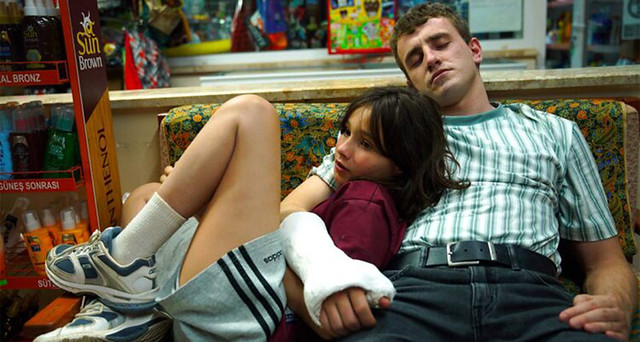
3. Decision to Leave - Park Decision to LeaveNot as bombastic or fantastical as his previous films, but Park's Decision to Leave is any less brilliant in its intricacy and execution. Its down to earth tone and Tang Wei and Park Hae-il's empathetic performances resonate emotionally more than any of his films. A supreme entertainment.

4. Hit the Road - Panahi Hit the Road A political urgency balances out with humor. In the tradition of 'moving pictures' of Kiarostami and Jafar Panahi, Panah Panahi's family road trip film is life affirming and full of humanity.

5. Irma Vep - Assayas Screen Shot 2022-10-24 at 6.09.37 AM With the long form storytelling (as an 8-part HBO mini series), Olivier Assayas is allowed to develop and elaborate more from his Maggie Cheung starring 1996 film. As usual, fluidly infusing his life long obsessions, reflections on film history and compulsion to create, in order not to get lonely, Assayas creates light, airy and playful love letter to creative process.
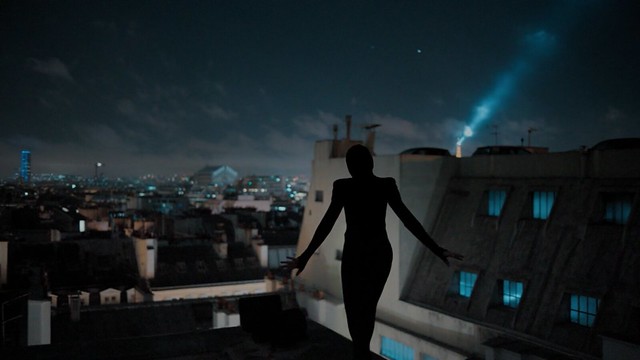
6. El Gran Movimiento - Russo Untitled Much more inviting and personable than Koyaanisqatsi trilogy, melding of old and new, El Gran Movimiento is a stunning visual tone poem of the world in crisis complete with a dance number.
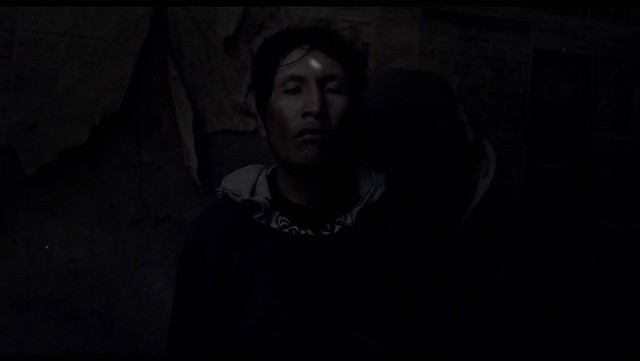
7. Hytti nro 6 - Kuosmanen compartment 2 Compartment No.6 has everything I love about cinema - Wanderlust, human connection, loneliness, trains, cold weather. Juho Kuosmanen, working from a novel by Rosa Liksom, finds a delicate balance in chiseling out beautiful moments of human connections without unnecessary backstories or dramatics. It's a little romance without all the fuss and stylings, but only warmth and silent mutual understanding.

8. Tár - Field TÁR (2022) Talking about gender equality in the face of sexual misconduct in the social media era, Todd Field's biting and grandiose character study Tár is at once current in its sexual politics and old fashioned in its rise and fall narrative of its subject. But Field really achieved something remarkable with Tár. It’s one of those big character driven film that is rare to be made nowadays. With its mesmerizing closeups and Blanchett’s commanding performance, the film is espetically spectacular on the big screen.

9. Un beau martin - Hansen-Løve un beau martin Mia Hansen-Løve does it again, so well, observing the time passing and melancholy of life. Seydoux and Gregory are both fantastic. This year's The Worst Person in the World without all the spunky enthusiasm.

10. Nope - Peele nope Nope is actually very much like a Spike Lee joint, packed to the brim with ideas and messages, but in a simple, breatheable, cinematic symbolist way. It has little to do with character development or backstory or the classic structure. Things go haywire with unexpected twists and turns. Its references range from Roy Rogers, Close Encounters, Phenomena, 90s TV sitcoms, reality TV, tabloids, to Akira even, not to mention all the other clever pop culture references. It speaks volumes about the notions of the untamed west, nostalgia, colonization, captivity and spectacle. And the gaze: one of the many brilliant moments comes in when OJ understands not to look at the predator in the eye, like many traffic stops POC faces everyday. Loved the unconventional design of the entity as well as hilarious use of the air balloon modeled on Steven Yeun as a weapon. There are many more details I am forgetting to mention here.

11. Unrueh - Schäublin Screen Shot 2022-10-30 at 7.35.49 AM Cyril Schäublin sets up the two contrasting forces - capitalism fueled by industrial revolution versus collectivist agitation in his beguiling, the Swiss Jura mountains set period film, Unrest. It is a great allegory of the society we live in now, where commodifying time, as demonstrated by the news of instating permanent Daylight Savings time, as if we only exist to be productive at work. It advocates for the balance, and better yet, anarchy!
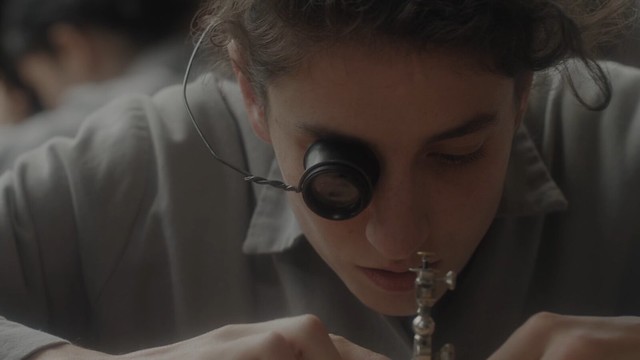
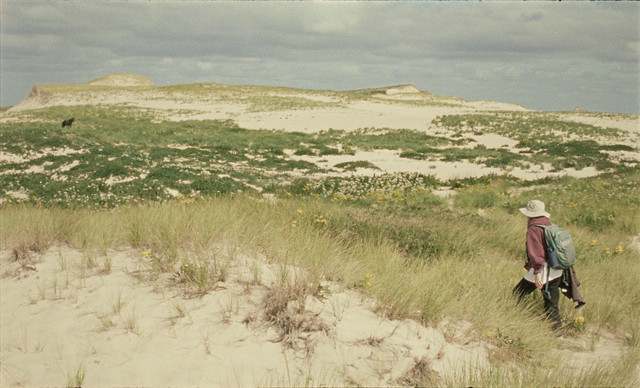
12. Geographies of Solitude - Mills Geographies_of_Solitude_Landscape Filmmaker Jacquelyn Mills, in collaboration with Lucas, lovingly documents all that a windswept remote island can offer - sand dunes, horses, seals and insects, its intricate ecosystem. She also comments on the human footprints on environment through Lucas while capturing some of the most breathtakingly gorgeous images on 16mm film. It includes naturally exposed film stocks only by moonlight and hand printed footage using natural surroundings, like horse dung, sand, kelp and yarrow.
13. Crimes of the Future - Cronenberg Crimes of the Future Watching Crimes of the Future immediately reminded me of the famed painting by Rembrandt - The Anatomy Lesson of Dr. Nicolaes Tulp. The painter was commenting on the inadequacy of seeking knowledge and truth in the human body in the Age of Enlightenment. And this is the point Cronenberg has been making all his career- our futile quests for answers in what makes us humans, in our bodies which are the most personal, tangible things that each of us possesses, and not finding it there. And pursuing so hard to find something in all the blood and guts, you lose sight of whatever the humanity that's left in us. In a way, Cronenberg is going back to the basics - to the flesh after more cerebral musings in searching for the soul (Dangerous Methods, Cosmopolis).

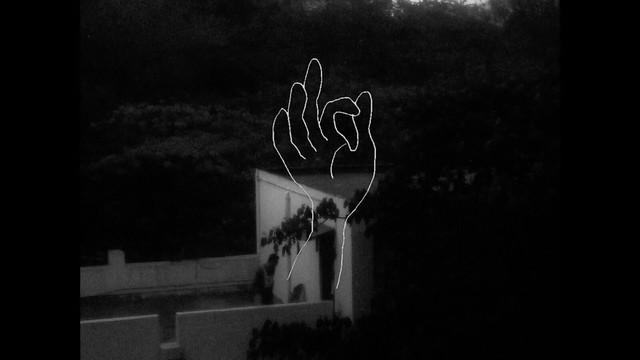
14. A Night of Knowing Nothing - Kapadia Screen Shot 2022-02-03 at 3.18.18 PM Memories fade, but nostalgia remains. From Godard and May 68', Mythical Hindu God films, to Chris Marker, A Night of Knowing Nothing weaves intoxicating visual, textural contemplation of our relationship with cinema as an unintentional but nevertheless undeniably nostalgic medium, even if the image is from only few years ago. Another beautiful contemplation of memories and what they mean to us I watched this year.
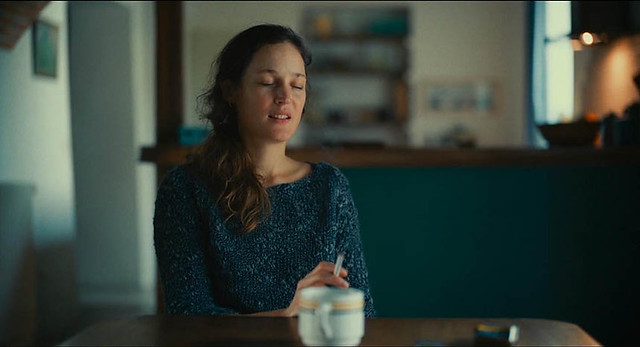
15. Serre Moi Fort - Amalric Hold Me Tight Vickey Krieps gives a gut-wrenching performance in a film about grieving and letting go that is so portent and heartfelt than any other film I've seen in a long time. Constantly going back and forth with her and her family, feeling the absence of one another yet articulating the connection in a very ingenious way, Amalric, adapting from Claudine Galea's play Je reviens de loin, makes perhaps the most heartfelt film as a writer/director. Give Krieps all the acting awards there are!
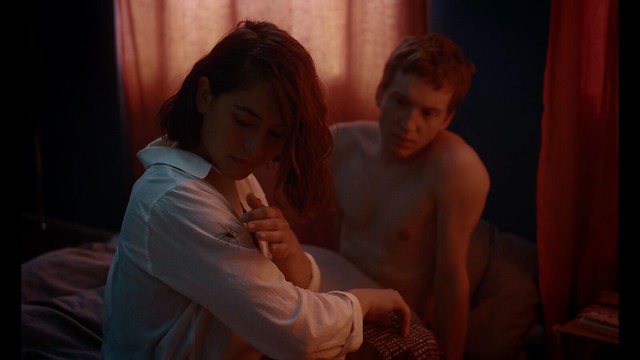
16. Das Mädchen und die Spinne - Zürcher Screen Shot 2022-04-03 at 12.23.05 PM Mara, our static figure on the sidelines, is not immune to be the object of desire, as she gets attention from both sexes. Is she taking a break from the sinewy human connections because of the STD? Or is she somewhat autistic the way talented people are (she sketches gorgeous portraits of people around her). She is also capable of cruelty. Does the spider which gets passed on from Mara to others and back, signify a disease or desire or both? Twin siblings Ramon and Silvan Zürcher's second film, after enigmatic The Strange Little Cat (2013), is yet another chamber piece as a microcosm of people's inner yearning and desire to connect in the modern society. And The Girl and Spider is just as ambiguous and non-conclusive and formalist as the former, if not more so. And it's a delicious concoction.
17. The Eternal Daughter - Hogg https __cdn.sanity.io_images_xq1bjtf4_production_25e9d3aa5b338cb55e5a31c542f1257d2e185161-5760x3840 Using the Victorian Gothic trope, Joanna Hogg creates yet another meta-autofiction about her own complicated relationship with her mother. A family is the source for all your sorrows and joy and regret. After all, many of Victorian ghost stories are manifestation of repressed emotions and feelings. Swinton is glorious in a dual role in her white wig, pretty much carrying a conversation with herself. It is a subtly devastating performance - in many of the film's close-ups both as a mother and daughter, she conveys that nervousness of not trying to hurt one another, or in this case, herself, in that educated, polite British way. Hogg aces again.

18. Avec amour et acharnement - Denis Screen Shot 2022-11-22 at 10.04.35 PM Shot during the pandemic, with her frequent collaborators, Claire Denis's moody chamber piece, Both Sides of the Blade, might be seen too wordy and conventional for the die-hard Denis acolytes who prefer her blissful visual filmmaking with colors and textures. But rest easy, because the film is nothing but. It contains enough visual/aural power and beauty, combined with blistering performances by Juliette Binoche and Vicent Lindon.
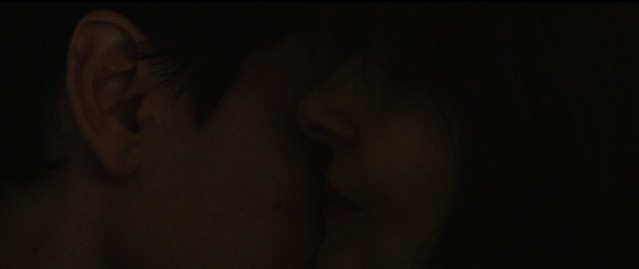
19. Ahed's Knee - Rapid Ahed's KneeIt culminates to Y making Yahalom admitting that there is strong censorship within the art community in Israel, and deep down she knows it is wrong. Ahed's Knee directly confronts the well-intentioned liberals and criticises for their sheepishness and passivity. It's an angry film and shows its director's resourcefulness in saying what he has to say in the strongest terms (in the guise of making a fiction) while getting away from the grips of the censors while making a film within the country. Unflinching and direct in its message with kinetic visuals and breathless pacing, Ahed's Knee is another strong film from a talented filmmaker with strong point of view.

20. Eo - Skolimowski EO The film, mostly shot from the donkey's point of view, with jarring close-ups, has a visceral, raw quality only seen in haptic cinema of Sensory Ethnography Lab (SEL). Unlike some cute Disney family movie starring a talking donkey, Eo is not a fairy tale. It can also be seen as sobering examination of the meat industry. But more importantly, it is an allegory for how people from different parts of the world, not by their own volition, get uprooted and go through unimaginable hardships and alienation only to be at the mercy of a handful of strangers who ultimately don't have any stake in their lives.

21. The Novelist's Film - Hong Screen Shot 2022-06-12 at 6.27.12 AM So goes another meta autofiction of Hong as he reveals sliver of his filmmaking process - 'compulsion' to make films in the director's earlier days are gone, giving way to stagnation, brought on by success, relative comfort and getting old. Story isn't as important. It can be as simple as something from the real life. Inspirations and directions can't be forced and life provides them in unexpected ways. With his consistent output, Hong's metaverse has become as comfortable as home for his fans. Watching his films is like meeting and conversing with an old friend now - they know you, you know them. But also, you start noticing small things, a delicate story within a story and small nuances in characters that you find pleasurable. The Novelist's Film is just that. And we find pleasure in many small details in the film.
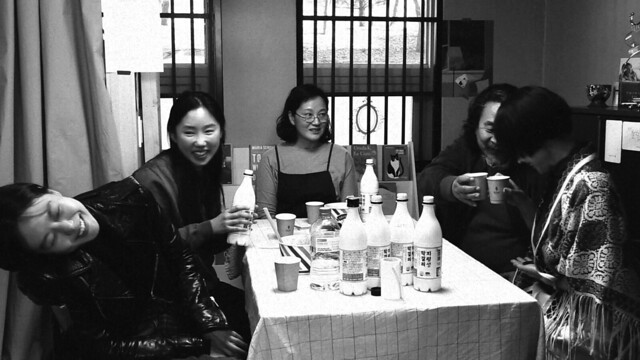
22. We're All Going to the World's Fair - Schoenbrun Screen Shot 2022-05-14 at 8.33.24 AM The main point of the movie is that in the internet discourse, no one knows one another, there is no distinguishing between what's real and what is not,that everyone has been circling around one another, for comfort, for lust, for real human connections, reaching out ever so timidly and endlessly without no tangible satisfaction. On a larger context, for the last two decades, this has been the case for millions of lonely souls. There has been some internet themed horror films in recent years, but none really concentrated on the alienation and performative aspects of the internet in a heartbreaking and poignant way Schoenbrun presents here.

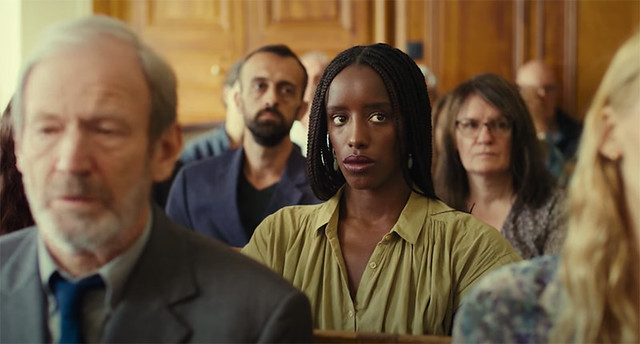
23. Saint Omer - Diop SaintOmer The film doesn't end with the verdict of the trial, but rather, ends with defense lawyer talking directly to the camera/audience and explaining the clinical term, a microchimera, an inter-change of cells between a fetus and its mother that goes both ways. That, in metaphorical sense, all women are chimeras, the mythic monster composed of different parts of the beast. Diop here is making a powerful statement, about the highly patriarchal society, colonialism, racism and women's rights, both subtly and unsubtly.
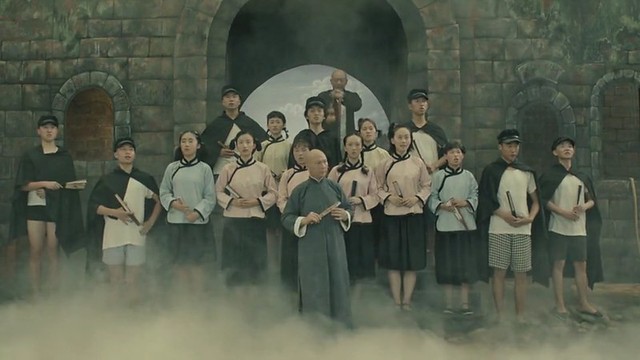
24. New Old Play - Qiu A New Old Play Spectacular handpainted sets and backdrops (production design done also by Qiu) and with simple but clever camera staging - slow dolly tracking and playing with deep focus, A New Old Play has in common with Roy Andersson's and Wes Anderson's cinema, if only aesthetically. Through its 3 hour runtime as these carefully orchestrated sets and movements settle you in to lived-in, comfortable feeling. And its Qiu's unbiased approach to Chinese history that gives melancholic resonance and wisdom being a witness to history on a personal level. Qiu hits home the idea of life being a stage, where we live and die on it.
25. Trenque Lauquen - Citarella Trenque-Lauquen-Still-3 Trenque Lauquen plays out like a funnier, warmer and more intimate version of 'disappearance of woman' films a.k.a. L'Avventura, seen from a woman's perspective. Endlessly charming and entertaining, the film is very much like watching a Hong Sangsoo film without all the drinking; the intricacies of character interactions, the intrigue of every day life, the men's folly, the urge to escape the city living and enjoy nature. And most of all, freedom.

26. Mato seco em chamas - Pimenta, Queirós Screen Shot 2022-11-27 at 9.37.45 AM Pimenta and Queirós fluidly combines fictional elements with reality, highlighting the lives of people in Sol Nascente are often stranger than fiction. But it's the defiance and fierce independence and self-reliance that matter. The film ends with the wrecked armored car on fire, like a carcass of completely hollowed out animal in flames.

27. Showing Up - Reichardt Showing up Many films on art and art-making, the centerpiece is usually the art itself. In those films, we are reminded of the transformative power of art and the suffering the artists must endure to produce such sublime masterpieces that inspire us all. In Reichardt’s film the art itself is secondary. The perserverance of their creators is. Showing Up is emblematic of small pleasures we get from our creations that success doesn’t measure in fame and fortune. It’s self-satisfaction of showing up every day to your studio (or basement, or shed, or garage) and create.

28. Moonage Daydream - Morgan Moonage Daydream Morgen also uses Stan Brakage inspired animation of exploding primary colors to accompany the glorious music, punctuating the isolated beats and guitar riff that starts many of the Bowie's famed songs. More than anything, Moonage Daydream sounds and feels like a rousing concert documentary where one can't help but feeling emotional several times.

29. Rien à foutre - Lacoustre, Marre Zero Fucks Given With verité style candid cinematography by Olivier Boonjing and Exarchopoulos's committed performance, Zero Fucks Given comments on hyper capitalist society where work and personal life exist like oil and vinegar, yet one dictates another whether we like it or not.

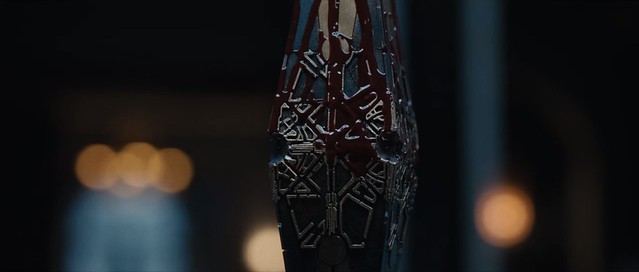
30. Hellraiser - Bruckner Hellraiser If the original Hellraiser film by Clive Barker was all about pleasures of flesh and dark human desires, this David Bruckner version equates cenobites with manifestations of the imaginings of a vulnerable mind and how it causes the sufferings of people around her. There has been a lot of emotional trauma horror films in recent years which I am not a big fan of, but Bruckner's Hellraiser is just gorgeous to look at.