Tuesday, October 27, 2026

Obsession

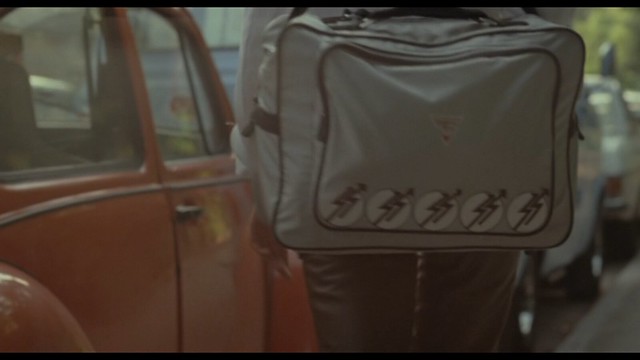
Der Fan (1982) - Schmidt Screen Shot 2026-10-25 at 8.09.05 AM Screen Shot 2026-10-25 at 8.18.30 AM Screen Shot 2026-10-25 at 8.05.05 AM Screen Shot 2026-10-25 at 8.06.21 AM Screen Shot 2026-10-25 at 8.22.49 AM Screen Shot 2026-10-25 at 8.39.10 AM Screen Shot 2026-10-27 at 5.04.25 AM Screen Shot 2026-10-27 at 5.07.22 AM Simone (Désirée Nosbusch) is a sullen teenager who is obsessed with R (Bodo Staiger, the lead singer of Rheingold), a Ian Curtis-like synth pop singer whose moody lyrics she thinks are written just for her. Soon, she is skipping all the classes, acts out at home, and waits outside the post-office for R's responses to her countless fan mails, I mean, love letters, that would never come. If she doesn't get a response in 7 days, she decides, she will track him down. He is making an appearance on a TV show called Top Pop in Munich, so she hitchhikes, risking unwanted sexual advances from older men. But she is determined.

Once she gets to Munich and settles outside the TV studio, she finally sees R. And to her surprise, he notices her from across the street, while surrounded by gaggle of other adoring teen girls, and calls her over, to attend his rehearsals. What's more, he wants to get away on vacation with her to his friend's mansion. It's a dream come true for Simone. They have sex. But it's just a one night stand for him. Once she realizes that, she won't let him go.

What starts out as a teenage fantasy film devolves into a dark and violent obsession, Eckhart Schmidt's lurid crime drama is soley relying on the presence of its young star Nosbusch and her new wave stylings- the walkmen, the hair, the clothing - including the see through backpacks complete with the fascist logos, leather pants, double breasted tops, Der Fan screams out the 80s. The Fan is obviously targeted for the young audience in its day, offering sex, edgy aesthetics, and cool music, then falling into that weirdness you'd expect in German underground cinema of Jörg Buttgereit- but more polished.

Thursday, October 8, 2026

Merits

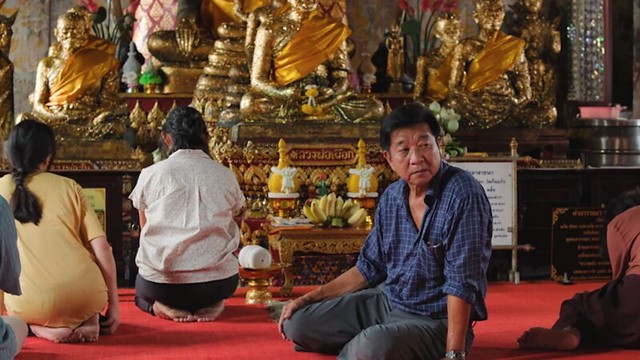
9 Temples to Heaven (2026) - Chidgasonpornse 9 temples to heaven Following the advice from his boss, who had a premonition of his mother's death, Sakol, a middle aged business man, embarks on a trip of merit making to 9 Buddhist temples in one day, to prolong his mother's life before her birthday, which is coming up in two weeks. He enlists 9 family members, spanning three generations into a rental van to visit all 9 temples.

Number 9 is considered a lucky number in Thailand, with it being similar sounding as the word 'progress', or 'moving forward'. With the Buddhism ingrained in everyday life of a Thai, Sokol is dead serious about making the pilgrimages. But with 9 individuals in one van (well there's Sakol's nephew and his girlfriend following them in their car, things are bound to go sideways. It is especially true regarding grandma, who is slightly annoyed about the whole situation and seen nodding off in the van most of the time, refuses to get out of the van after three temples, even though it’s all for her supposedly. She is tired and wants to go home.

The monks at the temples, eager to receive donations and money for merit making visitors, are a jovial bunch, giving Sokol generally vague advice in achieving merits- gifts, money and praying hard. The family argues among themselves about who would look after the grandma if her health deteriorates. They argue about the efficacy of the trip and giving gifts for merits to the temple. The younger ones, not very into the idea of Buddhism and its traditions - one is brought up Catholic to say the least, find the trip old fashioned and tedious. They talk about their plans for the future instead. Some will go abroad to study.

The golden Buddha statues glisten in the courtyards with their gold leaf skin flaking off in the wind. Temples get progressively more opulent as they visit each one. The gifts from the visitors stack up in the holding room like a bounty in a pirate's chamber - they sell gift box packages at the stores for the temple it turns out. The roadside meals are distributed according to their choices on the plastic table outdoors or in the van in the parking lot. As we follow along the road trip, we get to see the slice of life in bustling modern Thailand where past and present exist side-by-side.

Yet there is a spectacular Weerasethakul moment near the end, as the celestial event - a solar eclipse - with sudden gusts of wind and darkness enveloping all characters - all the resentment and bickering fall silent and the screen goes dark completely, at least for a moment.

As the film bookends with the funeral preparations of the grandma, whether the merit making business worked or the family made to all 9 temples is irrelevant. People die and life goes on regardless. Sompot Chidgasornpongse, who has served in many of Apichatpong Weerasethakul's films as an Assistant Director (Tropical Malady, Syndromes and a Century, Cemetery of Splendor, Memoria), may not share the otherworldly sensibility of his mentor (who produced the film), but his acute observation on changing Thai society, the generational gap and family dynamics feels something more akin to Taiwanese master Edward Yang's films. 9 Temples to Heaven is a great debut of a promising filmmaker.

Tuesday, October 6, 2026

Multi-Takes

The Day She Returns (2025) - Hong Screen Shot 2026-09-05 at 8.13.57 AM Hong Sang-soo, prolific as ever, presents at this year's NYFF again with two films. And I can't keep up with him! For Hong, with his small camcorder with minimal crew, sketching out one slight narrative after another. It seems filmmaking has become as natural to him as breathing or drinking Soju. More and more I watch his films, he seems to draw his inspirations from anywhere, however trivial and small they might be to others.

The Day She Returns, Hong's 34th feature, is about an actress coming out of a long hiatus and giving interviews to various journalists throughout the day, doing a press junket. It is a common practice to promote a film that filmmakers and actors perform, during a film festival or prior to film's release to the general public, which film writers like me are familiar with. A press junket maintains its own small ecosystem populated by filmmakers, their handlers, journalists and PR company folks, where we encounter same faces, same questions and answers over and over again.

Song Seon-mi (Hong's frequent collaborator, recently seen in Hong's Walk Up (2022)), plays Jeong-su, an actress making a comeback after a divorce, starring in a small indie movie by a young rising filmmaker. It's a press day and she is giving three interviews back to back, taking a smoke break in between, in a small German restaurant by the window.

As each interview by young adoring journalists progresses, Jeong-su reveals not only her acting career and the project, but also about her personal life. But her divorce is still a touchy subject. The short interviews in these press junkets are in themselves a delicate ritual - there's an awkward introduction and nervousness, once the niceties are settled, you get to talk about the project and other things, then invariably concludes with the 'advice for the younger generation' question.

If we learned anything from Hong Sang-soo Multiverse- a career spanning retrospective series, a few years back, is his penchant for exploring the double, triple, multi-takes of the same situations. In The Day She Returns, Hong uses the press junket to emphasize these multi-takes, that there are infinite, variable takes and angles of one object, situation, place or person in life.

Jeong-su is personable and very open to all interviewers and dying for a beer (the restaurant is known for its draft beer). She approaches the subject of ordering beer to all interviewers and all of them first politely declines. But she finds success with the second interviewer, a young woman who doesn't quite understand what the film means. Doesn't matter, there's a tall glass of cold beer in front of her. The drinking loosens Jeong-su up and she talks about her divorce and her ex, somewhat bitterly, which she regrets later and asks the interviewer not to publish the part about her divorce talk, in order to respect the privacy and reputation of her ex-husband.

During Jeong-su's three interviews, with similar yet slightly varied questions and answers, Hong delights us with the humorous formulaic nature of press interviews (oh we journalists think our questions are so clever and unique!), delicate human interactions (one more personable than the other), giving a bullshit generic wisdom of the elders that they themselves don't believe in - when asked about giving an advice to the younger generation, she gives the same answers to all young interviewers, "Love yourself first!" and the folly of believing that a short interview can reveal the truth about the subject.

During the third interview, Jeong-su reveals that she is still taking acting lessons from a renowned acting coach with a unique technique. After the interview, she hurries off to her acting lesson. Her acting coach (Oh Yeon-su) wants her to reenact the interviews she did with the help of an assistant Junhee (Park Mi-so, another Hong regular), playing the generic version of three interviewers. So we are watching yet another take of the same situations with varying degrees. Only this time, Jeong-su doesn't remember any details of what she talked about in those interviews.

The Day She Returns is yet another delightful, humorous and delicate slice of life film from Hong, one of the most unique filmmakers working today. May his multiverse continue in perpetuity.

The Day She Returns plays on 10/6 and 10/8 at NYFF.

Monday, October 5, 2026

Culture Clash

Fjord (2026) - Mungiu fjord-cannes-review-featured In Christian Mungiu's films, Romania is a country full of contradictions where the past and the present precariously co-exist side by side. It's that friction of old and new, tradition and modern world, belief and secular he pits against each other that works so perfectly as tension filled dramas - 4 Months, 3 Weeks and 2 Days, Beyond the Hills, Graduation. He does it again with Fjord, his first film not set in Romania, with two international stars - Sebastian Stan (Captain America: Winter Soldier, Apprentice) and Renate Reinsve (Sentimental Value, Backrooms) playing a cross-national Romanian Evangelical Christian couple, who just moved from Romania to Norway with their 5 kids.

Mihai Gheorghiu (Stan)'s large Romanian family moves into a small close-knit Norwegian town after he gets recruited as an IT support for the town's school. His parents have passed on, Lisbet (Reinsve)'s parents are close by as a support system, their church congregations is in town, and they want their children to have a better future, so their move was a logical choice, even if it means Mihai takes a job that he is totally overqualified for (he was a structural engineer in Romania). Lisbet, who works in the medical field, gets a job at a town's nursing facility. They move into a house neighboring the school principal and his retired lawyer wife, who have a teenage daughter, Noora, about the same age as Elia and Emmanuel, Mihai and Lisbet (Reinsve)'s two older children. They all attend the same school.

Generally welcoming and friendly, the townsfolk, for their liberal Northern European secular sensibility, Gheorghius are a little old fashioned and strict when it comes to their children - no cell phones, video games or social media allowed. They observe daily prayers and bible studies. It is fine what they do at home, stay at home, but they draw the line when Gheorghiu children start singing 'Amazing Grace' at school unprompted. The kids are reprimanded and Gheorghius is told that there's a strict separation of church and state, that a student can't influence another with their religious beliefs.

Things get bumpy when the school's PE teacher notices bruises on Elia's body. Upon examination and questioning Elia and Emmanuel, the school administrator become concerned that it might be child abuse at home and they notify child protective services right away. Elia and Emmanuel, the corporal punishment at home is a normal thing in their household. 'Slap in the butt' happens when they misbehave. But it is a big deal in Norway and they take allegations very seriously. The child protective services promptly take away all of Gheorghiu children, including the baby, whom Lisbet is still nursing.

Blindsided by the unfolding event and distressed, the Gheorghius solicit the help from their congregation in town and it becomes a huge international news. The media is framing it as child abuse versus oppression of religious freedom. Mild mannered Mihai becomes a posterboy for religious conservatism movement as the couple and the townsfolk get embroiled in the big custody battle court case.

Along with the title, snowy capped mountains surrounding the town and occasional avalanches stand as metaphor for the culture clash unfolding, Fjord is another tension filled, knotted social drama from Mungiu.

As usual, Mungiu presents characters navigating through our overly complicated current world, where any system is less than perfect and moral grey areas aplenty. He doesn't judge whether one system is worse than the other, he just expertly illuminates the differences, giving the sinewy human relations as much nuance as possible.

Double Take

Double Freedom/La Libertad Doble (2026) - Alonso Double Freedom To understand Double Freedom, a little bit of context is necessary: it was 25 years ago that Argentinian filmmaker, Lisandro Alonso, made his debut film, La Libertad/Freedom, at age 26. Since then, Argentina saw the resurgence of the national cinema, termed Nuevo Cine Argentino, along with the revitalizations of other Latin American countries' cinema, producing some of the most exciting, innovative films.

Along with Lucrecia Martel, Mariano Llinás, Matías Piñeiro and others, Alonso put Argentinian cinema on the global cinema map again, garnering much deserved attention and accolades. His reputation as a daring arthouse filmmaker, known for his boundary pushing, minimalistic, observational films, attracted foreign co-productions and yielded in collaboration with Hollywood actor Viggo Mortensen in Jauja in 2015, a Quixotic tale of lost daughter in the Argentine outback, where Mortensen takes on the role of Danish John Wayne in The Searchers. The ambitious triptych Eureka, came 8 years later, about the flight of the indigenous people in both South and North American continents across colonial and current timespan followed.

With his new film, Double Freedom/La Libertad Doble, Alonso is going back to his groundbreaking debut film where it all started, and picks up where he left off. In La Libertad, we meet a young lumberjack Misael (non-actor Misael Saavedra), chopping woods for local ranchers in the Pampas. Taking cues from the observational documentary tradition, the film showed Misael's daily routine, as he cooks, washes, defecates and chops woods, minimally interacting with others (who are also playing themselves). The lumberjack's daily routine and his solitary living made the audience question the nature of labor in the 21st century. Alonso's minimalism here was in itself radical. He wasn't representing the working men as the dignified beasts in the capitalist system. As Misael kills and greedily eats armadillo at the end of the film, we knew Alonso was a different filmmaker, trying to get at something bigger and deeper than just representing 'workers' or 'exploitation' and such.

So 25 years have passed. Misael, now 25 years older, is not a young man anymore. But he leads the same life in the Pampas, chopping woods and sellingl them locally. The process is swift and almost mechanical and our lumberjack takes no time in felling trees and stripping them and delivering them to the local ranchers, who use them as poles for their fences. You see the hard life and life experiences in his face and his actions. Yet, there is a continuity - his blue Mets baseball cap is the same, so is the big pitbull mix he keeps by his side - I have no idea if it's the same dog 25 years later or not.

One of his clients tells him that the local mental asylum is closing down due to lack of funding, that his sister Catalina (Catalina Saavedra) will be released. It's surprising news for Misael, who has been living a solitary life for decades now, in his ramshackle shack in the Pampas, now has a burden of taking care of his invalid sister. Catalina on the other hand, institutionalized for a long time, will taste her freedom in the outside world.

So Double Freedom has several meanings in Alonso's unusual sequel to his debut - the freedom afforded by living in the margins and in nature for Misael. Freedom from institutional confinement for Catalina. It also speaks of Alonso's filmmaking methods- not bound by traditional filmmaking, the film time-jumps, fastforwardings quarter a century, leaving the audience outside of time-space continuum, disoriented and confused - very much like David Lynch's Twin Peaks, the Return.

Using non-actors without much dialogue, Alonso's approach is that of Robert Bresson in the purist sense, stripping down all the artifacts and artificiality of filmmaking. Double Freedom questions what we regard as authentic representation of life and how the concept of freedom is ironically confined to the socio-political and individualized world view, with the true freedom always lies out of reach from us.

Sunday, October 4, 2026

Unrealized Utopia

Fatherland (2026) - Pawlikowski 1949 Thomas Mann, a Nobel Laureate (Death in Venice, Magic Mountain) and staunchly anti-fascist, reflected famously on the split German soul in a wartime broadcast, articulating the collective tragedy and responsibility of the German cultural conscience in 1945.

Pawel Pawlikowski sketches out Mann's historic return to divided Germany in 1949, after having fled Hitler's Nazism in 1933. Mann (played by veteran German actor Hanns Zischler), accompanied by his daughter/assistant Erika (Sandra Hüller), reluctantly comes back to Allied-occupied Germany, to receive a Goethe prize in literature, first in Frankfurt, then in USSR-occupied Weimar on a road trip, in Fatherland.

We first see Klaus (August Diehl, Inglorious Bastards, Hidden Life), a troubled son of Thomas, and Erika talking on the phone, discussing whether he would join their famous father for the occasion. Klaus, like Erika, an anti-fascist activist, and an author in his own right (Mephisto), is not sure; like both Thomas and Erika, Klaus swore off setting foot on Germany ever again after Hitler's takeover. But Erika tells him that she hopes to see him again. 'It's always been me and you against the world,' he says with a hint of bitterness.

Thomas and Erika find themselves surrounded by not only admirers who see Mann as the guiding light and voice of reason in New Germany, but also by old fascists who were collaborators of Hitler's regime, and are still very much in charge. The father/daughter Mann team spares no one when it comes to old Nazi guards asking favors, in front of everyone. 'The future faces of Germany,' Erika tells Thomas with much disdain. A reporter asks what Mann thinks is better for Germany, the capitalist American side or the collectivism of the communist USSR side. Mann replies that perhaps the combination of both sides would be better for Germany's future.

The news of Klaus' drug overdose death comes as a shock while still in Frankfurt. Visibly shaken, Erika doubts if the road trip to Weimar should be continued. But Thomas assures her that all the arrangements are made and taken care of by Michael, Erika and Klaus's younger brother, so they can continue their journey to Weimar.

In the usual Pawlikowski fashion, clocking in at 82 minutes, Fatherland is a taut, compact film, with brisk pacing and economical editing, with not much fat in the simple narrative storytelling. Yet with its full frame, crisp monochrome cinematography, which favors lots of headroom and ceiling spaces, the images imbue much more weighted meaning.

Klaus's death might as well have to do with his homosexuality and communist leanings living in exile, where his tendencies were not welcome. In fact, all of Mann's children lived in exile, first in California, then some ended up in Switzerland, including Thomas. They were all brought up anti-fascist and led a bohemian lifestyle - we see Erika openly flirting with a femaie AP reporter in the beginning of the film. And none of them came back to Germany to live out their remaining lives.

Watching Fatherland made me realize the origins of the main theme of the recent movement of German cinema, known as Berlin School. Filmmakers like Christian Petzold, Angela Schanelec and Ulrich Köhler, grapple with the unrealized utopia of unified Germany. In their films, the yearning for what could have been, but never materialized, haunts their characters' every move. And I realize they owe it all to Thomas Mann.

Mann, whose idea of Germany's future (and all of Europe by extension, which was cruelly divided by Cold War for the next 40 years) is made clear when he visits Weimar and is welcomed by Johannes (David Striesow), a propagandist for the USSR-occupied East Germany, as he refused to be the cultural minister, even though the title would be in name only and he doesn't have to do anything. For him, neither rampant capitalism and opulance of the West (safeguarded by nazis) nor Soviet led communism of the East are the answers for the future of Germany.

An emotional confrontation with Erika erupts, as she accuses her father of engaging in self-centered aggrandizement of his fame while his son has only recently died.

When the quiet ending rolls around, Pawlikowski presents a beautiful and moving moment with the father and daughter, both without a country, sitting together in a pew, contemplating the uncertain future of the country they love, in a bombed-out church where organ repairmen are playing Bach.

Fatherland is a film with hefty subject, conveyed with visual grace and succinct editing, with beautiful, subtle performances by both Zischler and Hüller.

Saturday, October 3, 2026

Great Equalizer

At Night (2026) - Gibson At Night_NYFF64_01_Copyright-Night Films Ltd Beatrice Gibson's At Night, shot on film and entirely at night, is a thing of beauty. It concerns a group of women as they converse about anything from family, motherhood, desire, economic inequality, to sex under dim fluorescent lights of late night cafes, restaurants and clubs, of the deserted back-alleys of Paris.

"I am a tone of voice." starts At Night, an experimental film by Gibson, making her feature debut here. Sparsely narrated by poet Alice Notley, whose book-length feminist epic poem, The Descent of Alette, is the basis of the film. We are introduced to B, a filmmaker (Gibson herself), doing location scouting for her new project, away from her partner and daughter, taking the night Metro into town. In her voiceover phone call to Didi (Diocouda Diaoune), a one time collaborator of her previous films, B lets her friend know that she is in town, is going to be near her neighborhood and wants to meet up. Their encounter comes in a little later in the film, with their story interweaving, in and out of focus, with the rest of the film.

Then there are others, six women - writer, philosopher, sex worker... all together in a restaurant, talking candidly about their life experiences, jumping from one topic to another. They talk about being naked in front of their partners, engaging in sexual activities. The lights on or off while having sex suddenly becomes an important topic. Why do we need to have 'big lights' on? "Night is for everyone, therefore more democratic," says one of the characters in JLG's Hellas pour moi. Their conversation reminded me of the quote. Indeed. Darkness hides our imperfections, our sins, our true self, therefore everyone is equal.

In their fluid conversation, nursing, parenthood, homosexuality, gender and economic disparities are all game. The night is young, the flow of their talk feels natural and limitless. It feels like watching six life-long friends just shooting shits, all captured on verité style 16mm film (shot by frequent Gibson collaborator and fellow filmmaker Ben Rivers). And it's sublime.

B runs into Didi in a 24 hour convenience store and they get an opportunity to catch up when the store loses power and they get trapped inside. Under the dim fluorescent light, the two women, sitting on the floor against the cooler, talk about life's struggles. Didi, a single mom living in a public housing, with her daughter, says that B's struggle in life is not the same as hers- different economical background, B's privilege as a white woman is checked when Didi says, "You think you win, and you think I lose…but I don’t see the point of playing a game where you’re always winning.”

Not since Chantal Akerman's Toute une nuit, night is portrayed with such warmth and melancholy like in At Night. Night is a great equalizer, but also an enabler where people can act and talk on impulses with impunity. You might regret what you are saying now. But we will worry about it tomorrow.

We run into artist/performer, Madam (Adam Christensen), in the back alley taking a cigarette break with his theater buddies, recounting a robbery, while being harassed by some young hooligans. Later we see him in full drag performing in a dimly lit club. Accompanied by his accordion, his voice is haunting. Everyone who appeared in the film shows up at Madam's show, enjoying their sisterhood, connected by music, love, guilt, and desire, all encased in velvety night. A welcome reprieve from the daytime world. At Night is a beautiful film.

Thursday, October 1, 2026

Foot Massage

All of a Sudden (2016) - Hamaguchi All of a Sudden_NYFF64_01 Ryusuke Hamaguchi's novelistic style tries patience in this well-meaning, but too-earnest-for-its-own-good tale of happenstance and compassion. Clocking at 3 hours and 16 minutes, All of a Sudden marks Hamaguchi's first production outside Japan, in collaboration with French actress Virginie Efira, set in Paris.

As a retirement home director, Marie-Lou (Efira), is walking a fine line between maintaining the morale of the overworked staff and pressure from the management to get the profits up. Her new initiative is called, Humanintude (!)- a care practice based on respectful and humanistic treatment of patients who are suffering from terminal illness, alzheimers and other illnesses associated with old age. For seasoned nurses, her technique is not practical in real life - it takes too much time in a fast paced environment where turn around and refilling the beds with new arrivals are critical. Long hours and constant battles with everyone is taking a toll on Marie-Lou.

One day on her way home on a tram, she sees a Japanese boy lost in the streets. She jumps off the tram, follows the boy to a hillside of a park. The boy is obviously on the spectrum with twitches and non-verbal and all that. So she decides stay with him and wait for the caretaker to show up. It is revealed that the boy is Tomoki, the grandson of a stage actor who is performing a play in Paris. She also meets the director of the play, Mari (Tao Okamoto) who invites her to the play. They converse in Japanese since Marie-Lou speaks Japanese fluently. Marie-Lou takes the chance to see the play, which is about Italian psychiatrist Bataglia who is responsible for abolishing mental asylum. Deeply moved by the play which relates very much to her profession, Marie-Lou and Mari strike up an instant friendship.

They converse in Japanese, English and French fluently whenever needed, and discuss the effects of capitalism at length, and the state of the care for the elderly and invalids. We find out they are well educated (Marie-Lou studied at Waseda Univ., and Mari at Sorbonne) and well versed in economics and philosophy. At this point if you are not nausiated by all the elitism of this movie, you can go on reading.

Mari tells Marie-Lou that she has an incurable cancer and the doctors told her her conditions can rapidly deteriorate all of a sudden and that will be it for her. So All of a Sudden is not only a cringe inducing elitist bullshit, it's also a terminal disease tearjerker movie. Oh boy!

They bond through long walks/conversations by the Seine until dawn, Marie-Lou accompanies Mari to Kyoto where her home is, and makes her to come back to Paris to be an artist in residence at her retirement home, where she will be cared for until her death. There will be therapeutic lessons in healing through touching and massaging each others' feet, there will be tearful confessions and encouragement interview sessions with hardened nurses and newbies and patients and their families, there will be the pigeon poop falling on their faces fraternity and there will be a lot of smiling and crying.

For some reason, the novelistic approach of Drive My Car (with just as long running time) worked for me. Maybe it was partly based on Haruki Murakami story? But All of a Sudden goes on waaaay too long. With long drawn out conclusions and an epilogue, it reminded me of Lord of the Rings multiple ending within the last 40 minutes where it could've ended at any point. It's not a good sign where you wonder, 'she's not dead yet?' everytime there is a scene change. All of a Sudden is way too earnest, way too cringy and definitely doesn't justify its running time. Hamaguchi desparately needs a script editor.