Showing posts with label interview. Show all posts

Wednesday, February 15, 2023

I am Here to Create the Most Fascinating Images Possible: Albert Serra Interview

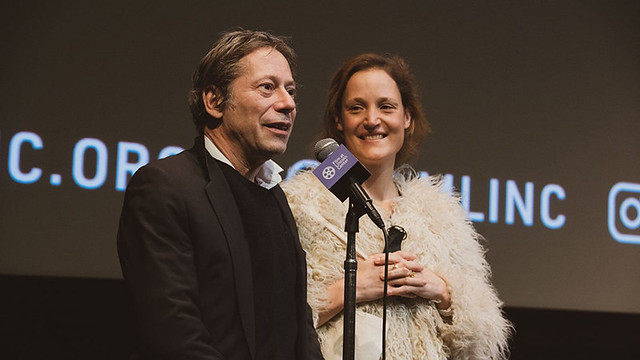
AC_Website Event Hero 620 x 348  (3) - Albert Serra Headshot Albert Serra is a mad man. His latest, Pacifiction was my favorite of 2022. Its almost stupid bravado took my breath away. It's all in his digitally captured decaying grandeur of the first world; the remnants of colonialist spy game playing out in paradise, was perhaps the most audacious cinema I've experienced in a long while. Serra is a real auteur in every sense of the way. He might come across as arrogant at first, but listening to him at length, talking about his methods, you find that he is an adventurous soul, always looking for the ways to find images that goes beyond earthly concerns, yet deeply humanistic. It was a privilege to talk to him for the second time, even via Zoom.

Pacifiction opens this Friday, 2/17, Film at Lincoln Center in New York.

How are you?

I am good. I am in Dublin now. It’s late.

Are you working on something there?

I am just checking out the possible locations. Just randomly. I haven’t written any script or anything. But I shot here some years ago. (Singularity, for Venice Biennale, 2016) I dunno…I like some places I’ve seen and wanted to come here and see there’s something inspiring. I have some ideas. Sometimes I have this real place in mind. It’s an interesting thing. It helps to make the process more organic.

Was it the same for you with Pacifiction?

Well not the same because as I said, I couldn’t travel because of Covid, but in the end it was almost the same result. I couldn’t go but I was inspired by some books, you know? But some ideas are mine. Possible nuclear tests were mine! I never heard it or read it anywhere. It was totally an invention but became a visionary, because Russia invading Ukraine and all the talk of nuclear war became popular again.

True.

Everyone has forgotten it. Now it’s the center of the topic again. We went there to shoot, and I shoot very fast. With 4 weeks of preparation, we started shooting- preparation meaning, casting there, looking for locations. We do it very fast. But it was 2020.

Covid.

Because of Covid, on the third week, we had to leave.

Wow.

Because everything was locked down. So, we came back. Then I was thinking about the film in more concrete terms. I knew some of the locations and a little bit of casting and from what I saw there. So, before we started to shoot, already I had some cumulated volume in my head. But the film started very artificial, with plot being on the edge of being ridiculous. But I found it organic in a way. This is the balance I try to find: very artificial idea and setup, with the performances, the wilderness of its surroundings. It makes actors believe in everything they do even though its half humorous, half ironic, half visionary, half political, half serious…I don’t know.

Unlike your other films, this one takes place in the present. But it almost has an aura of the Cold War era paranoia and the colonial past. You said it was partly based on what you read. It feels very much like Conrad or Graham Greene.

Graham Greene perhaps. Conrad, I haven’t read it. It’s a strange thing I haven’t read the Heart of Darkness because it’s very important and good and I read a lot. Of course, there’s a link with Apocalypse Now! with this strange character that Marlon Brando plays because you don’t know if he’s good or bad – whether he is the beginning of something very bad or the end of something very good. But I think there’s something that is connected with his mental state. I don’t know if that is something specifically colonial. My film is more on the contemporary side where the savior/villain has no face. Nowadays everything is spread out, like a virus. Everything is based on total opacity of power – who makes decisions? What are the reasons behind these decisions? And which are the interest parties behind these decisions? Before, there were good people and bad people. Coppola’s film was the end of that illusion. Kurtz was the beginning of that ambivalence. Now we are in this era, and everything is flatter. Everything is less interesting, it’s more like the internet, you know. Real life dissipates, everyone has no face, and things are still going wrong and getting worse. And everyone feels it. Inequality and wealth gap keeps getting bigger and bigger. Everyone knows it and feels it. And no one knows how to correct it. This lack of humanistic approach to solve the problem brings something purely technical, they don’t take account to the souls of people therefore they don’t solve anything. Maybe to you the film feels like Conrad but it’s very contemporary. It’s something that is happening now.

How did you like Tahiti?

I don’t care. I try to force myself to think against cliché. For example, I try to think that these people are not victims of history. Because they do nuclear testing there, so they suffer from this and that. That they lead a very simple and quiet life and suddenly colonizers are sending these nuclear scientists and doing tests in paradise, whatever. But why do I want to tell that story? To say something about these injustices? These are things even a child knows. Everybody agrees. Then I force myself to go there and look for the faults of these people. Sure, they may be victims of history. But they might have bad genes and are lazy. Or maybe they receive a little too much aid. You know where I am going with this. But in order to see things the way they truly are, I have to let the images flow, let the images flow without control and without any meaning from my end. The idea that they are some hapless victims, it would be a cliché. But the reality is not so easy, especially nowadays. So, when I am in a place like this, I try to think the opposite, just to make things more complex and not to reduce the complexity of the matters. And I think it works. That everyone sees that things are unbalanced. When everyone thinks and goes the same direction, and I present the opposite, something happens. It’s a more faithful way to paint that place that you are in. I get the real inputs from the place just because I use this technique. I put myself in the position that I don’t have anything to say. I am here to create the most fascinating images possible.

Talk about being there and finding something. The character Shanna fascinated me. I am very interested in how you casted Pahoa Mahagafanau in that role and what her character means in the film?

She’s a non-professional actor, like all the indigenous people on the island. I have an intuition for people who are interesting and quite natural. They look natural and spontaneous, and I like them as human beings, you know. This is the main thing when I choose actors. There should be something in them I like as human beings. Something I respect, in order to start disrespecting them and start creating my own idea against them, but there should be this equilibrium between us. Not as much as collaborating with them but to abandon them to their own devices and this creates a little bit of tension and that generates interesting images in the film. In her case, I like her very much. She is very spiritual. This idea of transgender, from a strictly visual point of view, not moral or political point of view or anything, I think there’s some purity and ambiguity in her that was extremely fascinating and photogenic. The extraordinary thing is that there is no contradiction in her, not one single moment of tension between two human beings in one. One that was before and the one that is now. There is this pure way of being in her and I like that very much. Transgender thing always has to do with makeup and costume and attitude, you know. They don’t decide to be transgender, it's a family decision in their culture. For example, if they have two boys, depending on the places, if the third one is also a boy, they dress them and raise them as a girl. They do this at a very young age, so they don’t realize all the stigmas that we modern society have on transgender people. They don’t distinguish gender like us. There is no vindication. There’s no gender politics.

I have to ask you about the scene where the surfing contest takes place in the water. It’s so stupendous and surreal, I couldn’t stop laughing at its bravado.

Why not?

It’s so fascinating and spectacular–

It’s spectacular because he (De Roller, played by Benoit Magimel) is there. If you search YouTube, I am sure you can find much more spectacular surfing videos with great waves than this one. But you are not a motivated spectator unless you are a professional surfer. It’s because the actor is in there riding the waves. As you said, it is grotesque and makes you laugh. But at the same time, you are still fascinated by it because the actor is still not breaking out of his character. You question yourself what kind of film you are watching. It questions you a lot of different things. And this is my aim. The plot is very plastic with submarines and all that. You know him looking for a submarine with a torch light at night. And at the shady discotheque where things get very paranoid. It’s very ridiculous and dangerous and extremely cynical. It’s a mixture of all kinds of different things and layers and tonality. At the same time, it’s very compact. It’s hypnotic on the edit and the flow. For me this was the main discovery of the film. The possibility of mixing all these impossible things. And it still works.

Is this how your work usually is - you finding out as you go along?

Yeah. But other films were mainly historical, and you have to be a little bit more respectful. You couldn't open it too much for other tonalities. If it was too grotesque, it would’ve destroyed the credibility of historical ambience. You had to be much more careful with those. Too risky. too risky.

Did it take a long time for you to set that wave scene up?

One morning. 3-4 hours.

Wow.

The whole thing? 24 days of shooting. 1 day of reshoot. 25 days total.

That is fast!

Yes, that is fast. when I was 18, 19, I was working as a construction worker. My boss, who was teaching me, told me one good lesson. He said, “You have to work good and fast!” It stuck with me, and I do the same with cinema, 20-30 years later.

Pacifiction kept reminding me of Kubrick’s Dr. Strangelove.

Yes. Here is what I said before. The grotesque element is there. The political element is there. The scary future of the war is there. The humor is there but it’s a fiction and that makes him a total liar. Therefore, it's less hypnotic, less fascinating, less complex and there is less mystery. The mystery comes from how close to the truth it is or how close to the real show or fake show. The kind of images you see in Kubrick films are much clearer. I work with digital images. There is less control and therefore could be more dangerous. It means they can really capture things that are around that are even out of my control. This content can reveal something that is not so nice. I think it is important to keep the door open. But it’s also a commitment. It’s not that easy.

This is not a political question, but I am wondering is this how you see that it will all end? Unbeknownst us, a bomb goes off without warning?

Iam very pessimistic. I can tell you. Capitalism is spinning in a very harmful way. With the internet it’s even worse. All the human relationships among people are already damaged and the internet just accelerated the damages. The financial inequality and wealth gap grows exponentially and there is no way to stop it. And the tensions grow, and the revolution is not possible because power has all the instruments. The people in the colonies and who are still colonized understand this because that’s how they lived all their lives like that.

I don’t know. Maybe I will do a comedy musical next. Where people dance around and sing happy songs.

Tuesday, January 24, 2023

Cinema Saved My Life: Mia Hansen-Løve on One Fine Morning

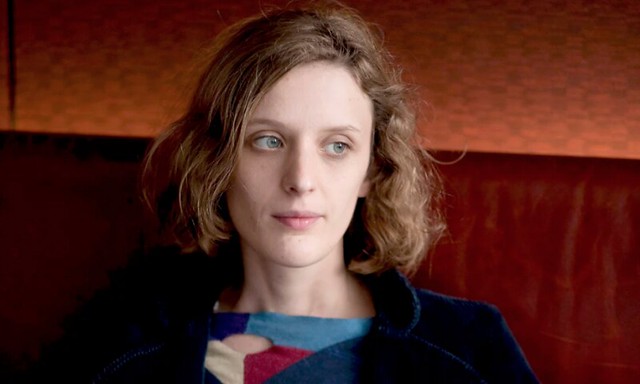
Mia-Hansen-Love It's always a pleasure to talk to Mia Hansen-Løve, one of my favorite contemporary directors in French cinema. Her astute observations of life and time passing always gets me. Her new film One Fine Morning, featuring mega movie star Léa Seydoux in an unrecognizable role as a single mother who juggles motherhood, aging parent and love, is a truly touching and moving film. The interview was conducted via Zoom in December. We talked about the film in detail, about Seydoux, her obsession and how filmmaking saved her life!

One Fine Morning opens 1/27 in theaters in New York and Los Angeles. The national roll out will follow.

The title of the film One Fine Morning/Un beau martin is a simple one and it reminds me of Yasujiro Ozu’s. The theme of time passing and family relations are all familiar Ozu territory. Is it safe to assume Ozu’s influence in your films?

Thank you for comparing my films to Ozu’s. I am a big admirer of his films. Yes. I loved his minimalism and also how restrained his style is, the way he looks at life without adding documentary to it, how he presents it straight with proper distance, proper frame and proper rhythm. There’s a feeling of truth, you know. I don’t pretend to say that I do the same way. I’m trying to find my own language, but I am sensitive to that kind of philosophy of filmmaking. His film Late Spring, for instance, haunted me a lot. There’s a lot of father-daughter relationships in Ozu’s films. It’s the subject I am very sensitive to.

I don’t know if I can say I ‘chose’ the title. One Fine Morning. It was some kind of illumination. During the writing process, the title just appeared to me. It was the same for my first feature, All is Forgiven. You don’t even know why, but there it is, and that is the title. I like it because it was not an intellectual process. It’s there where it should be. The title has to impose itself and then you can intellectualize about it and find reasons to it, not the other way around. Those are the best titles. Now I know what the title means: there’s the notion of the beginning, of clarity. Clarity is a word that matters to me a lot as a writer and a director but also as a person in my life. I enjoy that the notion of clarity in this title. But there is also a fairytale aspect of it. Do you know il était une fois, in German it’s Es war einmal…

You mean ‘Once Upon a Time…’?

And to me One Fine Morning is another kind of ‘Once Upon a Time’. There is something that has to do with storytelling and innocence. It’s like the lullabies in my films I use. I love lullabies in my films and it connects with the childhood, also we hear them as adults too and there’s a connection with this title as well. It’s a poetic idea of course.

Something like a New Beginning.

Yes, new beginning and it’s a difficult story and a sad story but there is a pleasure of a story being told. There’s something cathartic about fairy tales. We love to be told stories. It’s all unconscious though. I am thinking about it now and analyzing it now. (laughs)

I think choosing that title has to do with the desire of not only dealing with harsh reality but also has to do with romantic, cathartic way to hear stories and to tell stories.

Speaking of music and speaking of lullabies. I noticed Jan Johansson’s music in the beginning. Is there a story behind it?

Do you know Jan Johansson?

I’ve heard of him, but since I saw your film, I’ve been listening to him a lot.

I have to confess something I did here that I'd never done and probably will never do again, I stole that track from one of the lesser known Bergman films--

Ah.

The film that I love, it’s called The Touch. If you have seen the film, it would make sense. The two films have something in common in a way – an adulterous passion outside of a marriage. It’s a Bergman film that has been haunting me when I was preparing the film. And that music was haunting me so much that I couldn’t think of any other melody for my film. The music was not composed for Bergman by the way, it existed before. And I am using it again.

Interesting. Good to know.

Thinking about the role of Sandra. I wasn’t expecting Léa Seydoux in that role. Seydoux is a glamourous movie star and here she plays a single mom without any makeup. How did you get to choose here for the film?


Yes she is glamourous and yes she can be sophisticated in films and as a person too, but there is also a rawness about Léa. It’s not only that she plays with simplicity and rawness, but also there’s something almost masculine side of her. You feel she can be both, which is quite special, even without knowing her personally. While working with her it is quite apparent that her rawness is almost Bressonian. I find her presence very strong. On the one hand she has this star quality about her on the other hand, she is extremely simple and plain in her acting, like an Ozu or Bresson actress – she doesn’t force anything, there’s no intention and that’s all I care about when I deal with actors. I still love working with unknown, non-actors and with children and teenagers, as well as working with Isabelle Huppert, Vicky Krieps or Nicole Garcia. Both cases, what I care about is innocence. That’s what I admire. And sometimes it’s challenging when I work with actors who has great deal of experiences. It’s challenging to have them get rid of all their habits and let them show themselves as who they really are, and not pretend, you know. With Léa, it was incredibly easy. Easy for me at least. It’s what I am looking for in actors. She preserved the quality of innocence in her acting. It’s so easy with her, it’s almost embarrassing for me. Even with all the films with all these directors, she still has that innocence about her. Even more impressive is the emotions she brings on set. I mean, all the actors know how to cry on command, but it can be very mechanical without emotions. But when Léa cries in the scene, I cry. It never happened to me before. It’s hard to tell with her if she is acting or really living the scene. It is almost disturbing. Even when it’s not in the script, in some moments, just reading the lines with Pascal (Greggory) who plays her father, she becomes very emotional. She becomes the character and they become virtually the same.

Pascal Greggory’s character, once an intellectual person who is losing himself due to Alzheimers was heartbreaking. I was thinking about the physicality of your being. That all you have left at the end is your books. Do you think about your mortality often and what you will leave behind? Is that what this movie is partly about?

I think of that all the time. (Laughs) That’s why I started making films when I was 18 years old. I was obsessed with passing of time and what we are going to leave behind, at the age when you are not supposed to think about those things. I think that’s partly why I became a director. Some people would say naïve, but for me it was very efficient way of fighting against time and destruction it brings. The fact that life and death happen and time carries on and vanishes everything… I had that obsession ever since I was young. That makes me say today that I was a very melancholic young woman. And that’s why I say sometimes that cinema saved my life. Because cinema brought me back to the present. It made me enjoy the moments. It made me feel more rooted, thanks to the intensity of making films, especially the actual production (shooting). The intensity made me feel that I was alive and present in life, you know. Before I discovered making films, I always felt a little bit disconnected – the awareness of the passing of time took too much space in my head and it unbalanced my life. It all started there for me. I think it’s easier for me now but that obsession is still part of who I am. It influences my inspiration and my characters and art.

The father character who figuratively disappears which is inspired by my father. It is difficult to see my father disappear. But I want to and need to believe that there’s something remains. When I made this film, I am trying to meditate on that. I don’t want to cheat or tell lies to myself. I am trying to look at life the way it is. But I am trying to look further and find meaning to that. And I am trying to cling on to the idea that there is a soul, even with or without believing in god. And I am trying to approach the idea of what a soul is.

You will not be forgotten. I can tell you that.

(Laughs) I was talking about my father…

I know.

Friday, September 23, 2022

Cinema of Gesture: Interview with Mathieu Amalric on Hold Me Tight

Mathieu Amalric Mathieu Amalric, a prolific French actor whose filmography includes Diving Bell and the Butterfly, Quantum of Solace, Grand Budapest Hotel, Summer Hours and many many more, is also an accomplished film director with a wide range. Hold Me Tight, starring Vicky Krieps, is his latest directorial output and perhaps the most touching and emotionally resonant film from his filmography.

With the film opening statewide, I had a chance to chat with him about his craft and filmmaking process at length, via whatsapp, before his flight to the New York premiere of his film. I loved his sprawling answers that jumped from one subject to another fluidly. This interview gave me a great deal of insights into an artist's creative process.

Hold Me Tight is playing in New York and opens in Los Angeles on 9/23. Please check Kino Lorber website for more rollout dates near you.

The thing about you as a director since the early 90s, is how distinctly different each of your projects is, from one another. I am wondering about how you go about choosing your next project, and in this case, Hold Me Tight.

Yes it's really a miracle to find something concrete. It's like a magnet. It's true that when you don't have that, your life feels strange...but that's how you feel often. In one moment, you don't know why, but it congregates towards something, something that makes you see the whole world. And it's true what Truffaut was saying and everything, when I talk to friends who make films, well not all of them, but I feel certain things like that. The film before this was Barbara. I had some sort of a feeling that was solidifying. So I said, "let's go somewhere that is very strange...," I swear this is true. But after Barbara, I told a producer, "No more films that are in order, I want to film now the storytelling that is not in a straight line." It was Claudine Galea's play, a very slim book that had never been performed. It brought me to melodrama. Melodrama of the first degree. Very simple. When I read it I was struck by it. It was the opposite of everything I hated in Barbara. Of course everytime you make a film you throw it away and go somewhere else. And then later on you love them again. It was not to be a form of distance. It was not to be... Barbara was almost like a commission for me. It was Jeanne (Balibar) and the producer's idea. Jeanne was supposed to do it with Pierre Léon but the producer didn't want him. So they called me up and asked how about you do it? But it was a biopic. You can't really cheat in a biopic. But this film, based on a play, a melodrama, where it afforded me a direct access to the emotions I wanted. So it was that factor for this film.

I started to write, immediately in fact. What drew me into it was that Claudine developed a game of invention for this character Clarisse. I was attracted to her gesture toward imagination. Cinema can amplify those parallel lives. In fact, we deal with it each moment in our lives - we either accept or we are scared of them. That's what I like about Clarrise. That she finds the way to accept them and even bring more beauty to them than what she could've had in real life. But it is real. There's no difference in aesthetics between what's projected and what's real. I don't even know if there's a memory in this film. Maybe a discotek is a memory...maybe. But I think even that, she-

Invented.

-in my head, she transformed it a bit.

Got you.

But all the rest is a projection. I was thinking of a spectator looking at the screen, you know that there is nothing behind the screen but at the same time you believe in it. This is true. And that's what happened in the editing. With my editor, François (Gédigier), we really played around the idea that what the audience is experiencing can be very close to her gesture.

I see. You mentioned that Galea's play was pretty short. How much of it was from that and how much of it you invented?

It takes place in the Pyrenees. But in Galea's play, it's not really specific. It's here somewhere...

*Amalric looks around for the book.

There is a house, there is a car, there is a boy and a girl...thoughts, words and things that go from one place to another in the same graphic way...onto the pages like that. She uses italics, antiquated fonts, a long monologue...

*Amalric holds up Galea's play with the film poster as a cover.

It's a reprint, so they put that cover on it now. So it's not really a play in a typical sense. She is playing with forms. And at the end yet, there is a mountain.

I see.

For me, the mountain, my father comes from the Southwest of France, some of my filmmaker colleagues are from the Pyrennes, the border with Spain. So we searched for the house there, not in the mountains but at the foot of it, just outside Toulouse called Saint-Orens. And that's where we shot. When Clarrise takes the car, she goes to La Rochelle, by the sea. Do you know it?

No.

It's the west coast of France. A very lovely port town.

Vicky Krieps is wonderful in this film and how did you get to cast her for the part?

That is something that I really...the producers Laetitia (Gonzalez) and Yael (Fogiel), I gave them the book. And they said, yes we can try something with that. So I go to the house and for a day and a half I did archeological work. The first thing I did was start with objects and Vicky appeared. Just like that, she appeared in my head. I think I'd seen Phantom Thread four month prior. I remember the first shot she appears in as a waitress and... sometimes it happens in the streets, it's like, "I know that person. I knew that person somewhere..." We have those feelings sometimes. I tried to phone her and it doesn't go through because where I live in Brittany the reception is not so good. Then I googled and found out that she has a French agent and I call her agent and she says she will be in Paris in three weeks. So we meet. And I don't have a script yet. So I give her the book and we forget to say if we will meet again or do the film together or anything. It just happened! That's why we say it's our film. And we had to shoot in three different periods of time because of the mountains and the snow. It took a year and a half. Shooting and stopping for four month waiting for snow to melt and a lot of things happen during that time, you know. It is challenging to have the same crew for that long period of time. Life happens: separations, moving, new relationships.... And I think that was part of our film as well.

But the stretch of time was also valuable because we were editing between the shooting. That creates the possibility to be a spectator. We started by spring, which means we got rid of the dead immediately. After two days she finds the bodies. It's done. But that means we could move toward something relatively lighter - like her in the kitchen, or singing while driving, eating or trying to flirt with a man... things like that wouldn't have happened if we had to wait out of respect for the dead. So sometimes the order of which you film can have an influence.

What I love about the film are the small details- like Clarisse burying her face in ice in the fish market or hugging a total stranger in a pub... You don't know what those mean when you see them, but at the end you realize how things are all related and connected to each other, like her listening to the cassette tapes of Lucie playing piano. I am wondering how much was in the script and how much was improvised.

When I say I did the work of an archaeologist, this is what I meant. Yes they were not in the book but in a way, when I talked with Claudine, I don't know, I was trying to imagine this woman, that I was this woman. For instance, we had to film this scene in the cafe. At that moment, the audience is judging this woman, "how can she leave her husband and children?" She is guilty. That's what you think. But the whole crew and everyone on set knows that's not the case. She says, "He's gonna call me in a week." You just put yourself in that situation. It's her reality. Yet I pretend that I left and they stayed. It's so simple. She leaves like that. My job is to help my actors. So in this film it occurred to me that me being an actor really helped. It really helped me a lot because you don't need words sometimes to express. You just need an object or something to incite those emotions. Maybe it's the woman at the bar that I like a lot and I want her to believe me. Or that dream catcher in Lucie's room that invokes something in me, or I want the man at the bar close to me so if I fall, I won't fall to the ground. I would do a walk-through with my crew and cast where I am doing all those things and convey what I was trying to express.

Those things with the ice. It's in the morning. Me and my crew had a location scouting. La Rochelle has an extraordinary market. And the backstory is that Clarrise had too much to drink the previous night. I even wrote a scene where she had a party the night before. We didn't end up filming that. The thing is that when you go to the market in the morning, you see people working and it's full of life. Life is going on all around you. It continues. This morning I looked out the window and there were people preparing delivery and... I can watch that for hours. I guess I wanted to comment on real life. I don't know.

It makes sense.

That's why she went there. And when you saw that ice, because I am in her head, I know that there will be bodies underneath the ice come Spring and she still has to wait for the inevitable. That's unbearable.

I think I mentioned in my review but all your films have a sense of controlled chaos.

Yeah. It's true.

That chaos is reflective of what's going on inside your characters. It is very interesting to see that. I always wondered about what your film set is like. Is it controlled chaos or not at all. I wonder if it's very different from, say, the set of Arnaud Desplechin's film set, for instance.

There is. Arnaud's film set is becoming quicker and quicker. When we were young, he was doing 35 takes. We had time and we had three months to do the film, now he has to do his films in five weeks with a small budget, but he uses that. That is something we have in common. We love to shoot quickly. But this one was different. We were shooting for 6 weeks. And I write a lot, in fact - a lot a lot a lot. So that I can rewrite at the last moment, in the morning.

I see, I see.

And I give sort of a letter to the crew every morning, usually it's dialog but this film it was replaced by gesture or piece of music. What's the scene about? Where does it happen? Where are we? I have worked with the same people for twenty years and they will never leave me alone. But they won't let me be the artist on the ivory tower. They keep you in check.

Exactly. I know them and understand them because I was a film technician also- sound, first AD and I did all the jobs in movie making. So you know changes can occur at a moment's notice in film sets. You know what you have to decide and when you have to decide. There are all the books on Fellini that are great on that: 'the work of a great director is in fact decided on the last moment'. An example would be the fight scene between the brother and sister in the room. I didn't think it somehow was strong enough. Then we have this beautiful tree just outside the window. But you don't ask the person the morning of the shoot that he will be falling off of a tree. You plan that four days in advance. But things happen like that.

There is also a lot of live music playing in the film. The two girls who play Lucie, Juliette and Sophie, are not actors but musicians. So we had live piano music all the time. We had another house with a grand piano where they played because they have to practice for their conservatory. Both amazing pianists and that gave us something quite incredible.

We had very long one- takes for different reasons. I knew Vicky had to go deep into places to reach them and it is a hard thing to do. I'm not going to ask her to find the bodies twice you know. You do that once. She had to prepare for it. Really prepare for it. There's almost no professional actors in the film. They are people who actually own those places we shot. Only professional actors were Vicky, Arieh (Worthalter who plays husband, Marc) and the guy at Marc's job and Aurélia Petit at the gas station scene which I invented two days before the shoot. I thought to myself, "I think we need another scene before she leaves."

For this film I wanted to create objects that could go and connect to something that we already shot, a memory of something. For instance, when she falls after the ice scene and she is carried away in this blanket- what the prop master would do each time- because she is inventing all those scenes, to put all her objects in her projections, we used the same blanket that Marc uses after taking a bath. So we had a lot of different ways to go about connecting those moments - through objects, through music, through gestures, all the time.

Dang.

It was written precisely like that. But in editing, there are other possibilities to go different directions. In the scene where Clarrise is told by the innkeepers that she has to wait until Spring for the snow to melt. She goes out to the car and starts digging. The next scene is her and Marc in the discotek. She heard what was said but she doesn't want to hear it. With my editor, we ask, "So where could she go now?" For me, I feel that she goes to the beginning. The beginning is when she met this guy. Then they lived together, had children. "If I hadn't met this guy...," that's why she goes to the beginning. That's how the editing goes. In Claudine's book, it's the final, final revelation. You have suspected all along but it's literally the last page of her book that reveals it's her imagination that her family is growing without her because she left. The script was written like that. And because we had time between the shooting and editing, I hated the fact that the editor and I can be the puppeteer. You see what I mean? It's like, "Aha we know more than you!" It was clear after the first week of shooting that it was not us who were puppeteers but she was.

It's always the case with your films that it doesn't feel like trickery. I feel that there are real emotions behind it. I love hearing about the process of the film in how it was put together. It adds so much to the experience, looking back. I might have to watch the film again to get all the details and connections you put in. That's quite marvelous.

But I have the feeling that we all do that in fact. I was thinking about a traffic jam. Why would they prefer to be in there to go to work and get stuck in their cars? I think people need that sometimes, that they want to be alone sometimes. They are not at home and they are not at their job yet. It's in those moments you imagine horrible and beautiful things and that's where decisions are made in their own lives: it can depend on something they hear on the radio or what you see outside, or weather, or something stuck on your windshield... I am sure that we all imagine things, four or five things at the same time. I think cinema can explore your mind and body like that of dance. I think dance is an art form that can transpire those feelings, even more than music. There's no words to describe when you see someone move and you go "Ahhh" in awe.

My work is in storytelling and it's all about how to put those things together. So to what point do I want to give information? Do I need to make it too clear? Do the questions I ask need to be intellectual? How do you bring those questions down to the belly again? These are all done in the editing. We concentrate on the voice also. Do we need to make things clearer? Vicky was in Berlin and I would try to record her line reading in my iphone to put in the film. It was my editor and my producers not to make things more clear and more obvious. It's usually the other way around - directors want to make it more obscure and producers want to be more linear and more obvious therefore more commercial!

People take things differently. That's why I loved the Q&A last night at the sneak preview. Some people get it within a few minutes that she is in mourning. Some people don't get it, that she invented the whole losing the family thing to make excuses to leave her house. People also project their own lives from loss of a loved one or even a bad break up. It's great to see the different reactions.

You did something very special here. So congratulations. What else do you do when you are not making feature films?

I do a lot of short music documentaries. I've been working with John Zorn. You know during his famous marathon sessions? I filmed that. And I've been filming him since 2010 whenever I am in New York. We've done four, five of them together. My girlfriend Barbara Hannigan is a Canadian soprano opera singer. There is a youtube video called C'est presque au bout du monde that I did for Opéra national de Paris. You should check it out. It's very intimate. It's just a soprano preparing her voice.

I will do that.

Wednesday, June 1, 2022

Interview: Saul Williams and Anisia Uzeyman on Taking Back the Power in Afrofuturist Musical, Neptune Frost

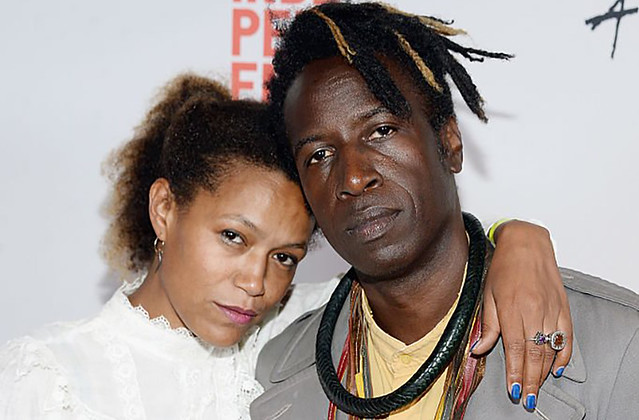
Saul and Uzeyman Neptune Frost, an Afrofuturist musical directed by multidisciplinary American artist Saul Williams and Rwandan visual artist Anisia Uzeyman, is a stunning film that defies conventions both content and form. When I saw it in a packed theater at New York Film Festival last year, I was enraptured by its sheer beauty - the DIY aesthetic, from the costume design to production, and its languid visual language. Then I was impressed by its very progressive politics - a non-binary superhero emerging and resistance movement against neo-colonialism.

I am very happy to see the film getting a theatrical release, thanks to good folks at KinoLorber, because Neptune Frost needs to be experienced visually and aurally on the big screen and talked about for the years to come.

Crowd-funded, the long arduous journey of production of Neptune Frost is something that needs to be looked at, concurrently with the release of the film, as an example of sheer will power and enthusiasm of its creators and everyone involved. I am very happy to bring you some of these backstories and more by having a chance to interview Williams and Uzeyman last week. So without further a do:

Saul and Anisia, thank you for talking to me today. I watched Neptune Frost at last year’s New York Film Festival and with a packed audience and was totally blown away by it. It must been such a monumental task and I don’t know how you pulled it off, but it was an amazing experience.

Saul Williams/Anisia Uzeyman: Thank you!

I understand you met each other on the set of Tey, directed by Alain Gomis, a Senegalese director’s film, as actors in 2012, am I correct?

Williams: Well actually we met at Jean-Michel Basquiat’s exhibition in Paris. It was even before Gomis film. And everything started from there. The desire to work together or collaborate came very early and the idea of this film, which didn’t start as a film but a stage play, a musical and as a graphic novel. Because both of us are actors, we wanted to create something that we can both act in, but when a producer, Steven Handel who produced Fela! On Broadway, read what we were putting together, told us that he loved the story and suggested that it would make an extraordinary film. We eventually realized that, as a film, it would shift and open much more possibilities, because here is a story that according to our writing that it would take place in Burundi and what have you, suddenly the idea of that we can go on location to shoot, the excitement about meeting all of the new faces and new actors and new talents - what it would mean for all the other artists whom we can bring in. But we had no idea what was in store for us when we accepted the idea of making a film. We hadn’t met our costume designers/set designers, Cedric Mizero, not until we went to Rwanda in 2016 to shoot a test.

Anisia Uzeyman: So we thought of the film taking place in Burundi but in 2015, Burundi kind of went through a lot (with the violent political, civil unrest), so it became a complicated location for shooting. But the idea of shooting the film there felt more liberating in terms of how our imagination went. So we went to Rwanda in 2016 to see how things were there. You know it’s the same landscape of hills and so on and there’s a lot of connection between the two countries. So we arrived there and met a lot of Burundian activists because of the flow of refugees fleeing the situation in Burundi.

Williams: 2015-2016, just as we were arriving.

Some two hundred thousand refugees?

Uzeyman: Yes. All these young people - students, activists, artists, fled the country and into Rwanda. It was this alignment of what you dreamt and what you found there that allowed us to say, “OK, this is the place!” It was synegistically clear.

Something that clicked in you, during that trip.

Williams: Yes. The first week of that trip, we encountered the majority of our cast. We also met Cedric Mizero our costume and set designer, and within the first conversation with Cedric about what the project was about, he was like 21,22 years old then, he understood immediately what we were doing. He came back the next day with sandals made of motherboards.

Oh wow.

Williams: and we said OK. This is it. We found the right person and we found the right people. Everyone introduced us to each other and the excitement in the story we were telling–

Uzeyman: And we also met the ensemble.

Williams: Yes, we also met the drum ensemble. They were refugees from Burundi who crossed the border with their drums, taking refugee in Kigali.

Uzeyman: That’s when we met Kaya Free who plays Matalusa. So we met almost everyone in the cast pretty early on. I told Saul to come and see these people and how to incorporate all these people and music and so on.

There are a lot of languages spoken in this film. When you composed the music, was it planned that way or was it something more fluid, a collaboration among all of the artists instantaneously?

Williams: So this is kind of a simple answer to your question. In that region of the world, when you are on the ground, what you find is that everyone speaks about 5 different languages. When you are sitting down at the table having conversation, they’d use expression that works best with each language. So we might say something in French or Swahili or Kinyarwanda or Kirundi and after a while we go, 'fuck this'. Me I speak English and French and I get certain words that might come through… the thing is, it’s extraordinary how we can communicate this way. All we wanted for the film was to reflect that. That’s why it’s like that. It’s not like bringing in a specialist to translate this or that language, it was naturally occurring. Our cast members naturally communicated with each other in many languages regularly. I remember going to karaoke in Kigali, Anisia’s people would be like, I want to sing this song from Mexico or this song is from Congo and this is from France. No one was flexing or showing off. They just knew that Spanish song, they knew that English song… It was just normal to them.

Uzeyman: This is very much so to the region and its history. It is also very much the case with fluidity of our culture as it expands as we open ourselves to the world.

I was going through the list of cast and crew and most of the names are not European or American, even though you both have connections in Europe and America as artists. Was it a conscious decision to employ local artists?

Williams: Yes. It was an extremely conscious decision to work with, both cast and crew locally and to bring in as few people from outside. It is true with a lot of different production companies with foreign money - European or American money, they fly in everybody and Rwandan people would be third and forth assistants. And we thought it was important to have local people heads of the departments. It was crucial to us. Secondly, there is no cinema rental facilities in Rwanda. So just because of our finance and what have you, we had to choose between spending all our resources to try to ship in all the lights for example, or build them.

DIY style.

Williams: It was easier to build our cinema lights and LED panels, dollies and 18 kilowatts cinema lights and even apple boxes. Everything you see in Neptune Frost was built by the crew. That was part of the excitement as well. We were not going in there like European or American film crew…

Uzeyman: We are from there. Simply because I was born there and Saul was adapted. (laughs) That’s why we did everything with our community. It was our desire to share the experience as a communal experience.

For those who don’t know about MartyrLoserKing Project. Can you tell us a little bit about that and its connection to Neptune Frost?

Williams: This whole project was born out of multimedia conceptualization. And so we were telling the same story as a graphic novel, as a stage play, as a musical and through a music album. As I mentioned, it was transition from musical to film- the graphic novel is still coming out next year. It's a surprise to us that our film is beating the graphic novel, but you see unlike the long list of names working on the film, there will be one or two illustrator and the writer for the graphic novel to tell that story. (laughs) Neptune and the hackers as a collective is known as MartyrLoserKing which we learn as it happens in the film. The biggest difference is that in the graphic novel, we see a little more from the MartyrLoserKing, the hackers collective's and the miners' perspectives. You see more of Techno’s perspective, you see more of that. It’s because there’s a lot more backstories in many of these characters. In the film there’s visual and there’s music and there’s a lot of space for you to explore and contemplate. But in the graphic novel, there’s a lot more texts.

That’s great. Already there’s a lot of layers in the film but there are a lot more to those characters and I am happy to hear that there will be more of them in the graphic novel. I think it’s also interesting to hear how you put all these elements together.

How I processed Neptune Frost and how it all clicked together is from the very beginning - the sound of the miners with their hammers and pickaxes digging and their singing were very similar to how American railway was built on the backs of African slaves and how the blues came about - that everything is cyclical with this global economy and rebellion and exploitation of resources and exploitation of the black bodies.

Neptune Frost is played first by Elvis Ngabo, then Cheryl Isheja. With this non-binary, intersex idea with all the young people involved in this project, you think it’s the future of humankind? Is that the message?

Uzeyman: Definitely. I think discussion on gender is ongoing. I think young people are fatigued by the old way of thinking and rightly questioning the patriarchal, empirical, the neo-colonial societal norms and this pushes people to find way to be more open and to liberate themselves from that thinking.

Williams: Yes. I mean, it’s our intention to through this film to be part of that dialogue, to provide working examples to be a part of that very modern dialogue that is crucial, to our understanding of each other, to the freedom and excitement of the new generation has and realizing the importance of being themselves beyond what they are assigned or being who they were told to be and who they were told they are.

Uzeyman: I think it’s so courageous also and I think it’s a kind of revolutionary moment that we are witnessing and being part of, in the desire of transforming, of refusing the status quo of the hierarchy of unfair and brutal society. It's not so much that we were projecting this with our film this is the discussion that’s happening right now.

Williams: And you see the pushback, you see the people trying to maintain a certain level of rigidity. It’s important that it’s not only the future but also the past - the colonial imprint that was heavily placed on people’s necks. That rigidity has put people lining up on the borders and the confines of the prison of rudimentary, heteronomative, binary definitions and–

Uzeyman: And people realize that it only starts with you.

Williams: Exactly. It affects everything. You asked about the fluidity of language. People on this side of the ocean were like, “You know how much money we are losing for not having the film in English?” When you're talking about seeing that it’s all connected that there is binary connection on every level and these rigid boundaries are placed on expression. So the authenticity of it and expression like you see in this film would automatically be thrown out. Why? Because there’s no famous people in it and it’s not in a language people of this country speak. There’s so much. It’s not only what we were doing on screen there. But every conversation, every experience we had in every festivals that everything we encountered to, just reach an audience to see the film has been a fight. It was intentional with its time. It was last year and the year before when we were talking about black bodies exploited, we were talking about BLM movement, transgender rights. We said, well here is something that is in conversation with that conversation. How do we respond to that, how do we support that? How do we uplift that or do we just go on to perpetuate the same cycle- the same bullshit, the same violence, the same bigotry, the same rigidity in our creative choices?

When we talk about Afrofuturism, how it provides not just mere escapism but a space to have this kind of conversation and exchange these kind of ideas. Do you think it’s possible to make films like Neptune Frost only in Africa - just because the wealth of cultural, social upheavals are happening there?

Williams: I’d say not at all. I need to hear from the people who are working in mines of China, Brazil, Peru, in Bolivia–

Uzeyman: We just saw a beautiful film from Bolivia.

Williams: It was about young miners. What was it called…

Uzeyman: ...and there was wonderful music in that too. It was El gran... it will come to me…

El Gran Movimiento! A great film!

Williams: Yes! So no. We at one point was thinking about shooting the film in Haiti. Our research brought us to shoot all over the world. The story of Neptune Frost- the exploitation of workers, the role of authority, belongs to the workers of the world. Those workers are still in Ireland, in Thaliand, in Cambodia. So no. I think Africa is a wonderful place for our story to be told, but for all the other places, there’s need to see and connect with those group of humanity and resources so we can share them. Yes, so at the same time, the story belongs to many, many people.

Uzeyman: Neptune Frost is kind of a retelling of a folktale, a fairytale, a birth of a superhero, right? It’s a journey of that person gaining their power. It’s just like any other superhero story. I’m pretty sure you will find that there is the same narrative everywhere.

Williams: Yeah, it’s a shared history. As you stated that while watching the film, you are connecting the dots. So yes, indigenous people of many lands can connect those dots and see themselves in this film. And that’s the first layer of what this film is about. It’s them realizing that their land is mined for power. Their land where they think and dream and birth and work on, is the power in us. Do we have that power? Are they mining our ancestors that we buried? Is that what’s affording them to communicate wirelessly? Is that our power? And Neptune is saying, yes. And that realization can be shared throughout the planet. Of course, it belongs to many.

This has been an amazing. I can’t thank you both enough for this conversation. Everyone needs to see this film on the big screen. BIG SCREEN.

Williams/Uzeyman: Yes.

Neptune Frost opens in theaters on June 3rd in New York and June 10th in LA. National rollout to follow.

Tuesday, April 12, 2022

Jacques Audiard, Lucie Zhang on PARIS, 13TH DISTRICT: Chinese Food, Covid Lockdown and The Internet

AudiardZhang Jacques Audiard, known for his superb thrillers (Read My Lips, The Beat that My Heart Skipped), became the supreme purveyor of French outlier cinema, chronicling gritty immigrant experiences in an increasingly diverse nation with such films as The Prophet, Dheepan and even to some extent Rust and Bone, comes out with a slight, sexy romance film based on Adrian Tomine's graphic novels called Paris, 13th District (Les Olympiades, Paris 13e). With its diverse cast and unusual setting (a lesser known and seldom seen neighborhood, in films anyway), Audiard is upending the typical notion of romantic French film taking place in Paris.

He also introduces us his new ingénue, Lucie Zhang, a 21 year old French actress of Chinese descent, giving a star making performance as Émilie, a disaffected, live-by-the-moment millennial who tries to navigate ever so complicated human relationship in the Internet age. They both were in New York for Rendez-Vous with French Cinema in March and I was able to snag an interview with them. It took place in Midtown Regency Hotel in Manhattan. Audiard, an industry veteran who worked with many great actors over the years, is a fast talking gregarious man, whereas Zhang by comparison, is much more subdued and shy, unlike the uninhibited charactor she portrays. It was an interesting dynamics that I got to witness.

Paris, 13th District opens Friday 4/15 in theaters statewide.

I know that the 3 narrative threads are based on the work of American graphic novel artist Adriane Tomine, I am curious how Paris, 13th District all came about?

Jacques Audiard: I’m afraid my answer might be a little uninteresting. At the time I was looking for a subject for a film. I didn’t have anything specific in mind. And a friend of mine recommended these graphic novels by Adrian Tomine, saying, “if you read them I’m pretty sure you will find something you might like,” and I wasn’t really familiar with him at all. And I read some of his work and I really loved them. So it was a good suggestion. And what I found interesting about Tomine as an author, is that for a graphic novel, it has a lot of psychological analysis - it had characters that are complex and he also left things unexplained in them. At the same time, his drawing style, he doesn’t beautify things- he just shows the reality of what they are like and that appealed to me as well.

Um hmm.

JA: I really didn’t know the popularity of Tomine. So when I started working on the project, people asked me what I was up to and when I tell them that I am doing this project based on Tomine’s work, I was surprised that everyone knew his work. I was the last to know! How does Tomine’s work translate to the Paris setting? Is it because the stories are universal? AJ: I don’t know. I think, the psychology of it, to me it is very individual and even very local. But what I think he does is he creates these portraits of complicated people. (pause) Ask Lucie. She will know. (laughs)

Lucie, What’s your relationship with Les Olypmiades?

Lucie Zhang: My answer is not that interesting either. I have a very good friend living there right now. And my parents met each other for the first time there and fell in love. I don’t live there but I often go there to get bubble teas and food and shop with friends.

What is your relationship with the place?

JA: My relationship is historical. I’ve lived there for a really long time. I moved away after between my first and second film. It’s an area that I know very well. I like it very much. It’s very diverse and always has been. It’s also an area that the last 15-20 years has really undergone a lot of physical change. And the sensation that you get, when you are there, is that you are in Paris without being in Paris, because it doesn’t have the look that we are all familiar with. Particularly, by filming it in black and white, it gave me an opportunity to show an illusion that it could be not even Paris, that it could be an Asian city. It has that kind of look to it. This is true, particularly when you go to Les Olympiades (the 4 high rise residential buildings and shopping malls), that give that kind of feeling. Well, its not like New York high rises in comparison. (laughs) It also feels very young because there are two branches of universities, so there are a lot of young people there. 


I mean, I go to Chinatown here in Manhattan all the time to eat and shop.

JA: Are we far from Chinatown here?

It's just a subway ride away downtown.

LZ: I was looking for it yesterday but took the subway and ended up in Queens Plaza.

Oh no. You took it to the wrong direction.

LZ: Oh really? I wanted to go to a Chinese restaurant because I was craving some good food. I ended up in some place and the food was not so good.

I should've known. I know some good places. How was the casting process?

LZ: Three sessions. First I saw it on the internet. I sent the email and met with Christel Baras (casting director). Second, it was a call back because she liked me, even though I wasn’t the obvious choice because at the time I was 19 and I believe the character was 25 I think. They thought I looked too young and too childish- I am still, I think. So they rejected me. Then the covid lockdown started. And during it I got a phone call again. Then I met with Jacques.

And how did you get to choose Lucie?

LZ: I won’t hear. (Laughs)

My question stirred up a frantic conversation in between Audiard and Zhang in French. I can only make out when Zhang says in English, looking at me laughing - "I lacked confidence," in response to what Audard was saying.

JA: Christel suggested several actresses for the part. So even though the casting process seemed very long for Lucie, it’s quite normal how we did it. What I learned from this process is I shouldn’t always trust my instincts because my first choice for a particular role can turn out to be a completely a wrong person. And for this film, with Amber (Jehnny Beth) and Nora (Noémie Merlant), were also a similar kind of situation. I think for me what worked here was Christel who really pulled the cast together. so you have to be really careful what to say when you are a director.

LZ: How do you know...at what point you know if it's the right person or wrong person for the role?

JA: Well, I worked with you in rehearsals and found out. It's actually very interesting because it concerns the timeline of how long it takes versus when I knew you were the right actor, for you it is the exact moment but for me it was working together for a while that I knew. That it wasn't temporal. Does it make sense?

LZ: I understand.

JA: I think the moment I knew was that Makita (Samba) who played Camille, came in that you guys work together very well. It's when they were talking and listening to each other that I knew.

This conversation was revealing in a lot of ways how Audiard's process with actors works. That it's not necessarily choosing the right actors but it's a bigger process and sculpting the actors during the rehearsal.

Obviously this film was shot during Covid Pandemic. Was it difficult for you?

JA: Of course there were a lot of protective restrictions and constant testing...and in a way it was kind of funny because after you come on to the certain part of the set, you test, you wear the mask, then you come on to the actual set, you take off your mask and take off your clothes... so it's a peculiar situation. But interesting thing during the lockdown is that you basically have a whole population that are forced to be inside, but here the actors were able to come to work and it was a really good time for them because it gave them some place to go outside. The french word here is confinement because they were really confined.

The party scene with the DJ, there were about 100 extras and all of them have been tested, tested and tested again to be able to come. And when they came they were really partying because it was a liberation for them, to the point they didn't want to leave! We had to usher them out because it was the first time they were out of their room in 3 month!

The film is vibrant and has a lot of great energy and has a hopeful ending. The world we live right now is not like that. It's full of disasters and wars. As a generation Z, who went through all these difficult times - The Gulf Wars, the financial collapse, pandemic and another war or invasion happening right now all in your lifetime. Do you feel that your generation is hopeful for the future?

LZ: It's a very hard question. I feel there are two types of people. One is people who are feeling really ill at ease and sometimes they feel they are victimized by all the things that are happening. For these people, they feel there is no hope. The other type is people who are more cognizant of history and what happened in the past that there were worse situations in the past and people managed to survive through them. And they are more optimistic. So it's really hard to say.

Internet. Is it helping or a hindrance for human connection?

JA: We can't make that kind of black and white distinction. It's bad in a sense that its a conveyor of conspiracy theories, fake news, all of that. But at the same time it helps people to connect with culture and broader idea of society, in that aspect it is good. If I can give you a brief analogy in the political world: In France right now they banned RTTV. the purveyor of propaganda. Personally I don't think its a good idea to ban it. We all know it's propaganda, we all know it's fake news, we all know that they are rallying against the liberal agendas and trying to rewrite history with their own fairytale in what is really happening. But at the same time, if we leave it there, we know we can look at them, see how they think and how they are progressing. But if we ban them completely, it robs us of that possibility. And sometimes people do stupid things (like banning) in the spur of the moment but I think it's better for us to leave it. OK. that's my bit of intellectualizing for the day. It's a time for a cigaret break!

Tuesday, June 1, 2021

Interview: Form Follows Function: Christian Petzold on Undine

Christian Petzold

It is always a delight to listen to Christian Petzold, German director of such films as Barbara, Phoenix and Transit, because he is a master storyteller. I could listen to him for hours on end as he enthusiastically talks about his filmmaking process.

His new film Undine is his take on the fantasy genre - about a water creature which takes a human form and takes revenge on humans when her love is not reciprocated. Melding this fantasy with the tumultuous history of the city of Berlin, Petzold concocts another beautifully written and gorgeously realized film that is at once seductive and thought provoking.

Even though we were conducting our interview over a Zoom session due to Covid, his enthusiasm and exquisite storytelling abilities were not diminished in any way. Below is the result of our conversation that took place in May.

Undine hits theaters and VOD platforms via IFC Films on 6/4.


Where are you now at the moment?

I am in Brooklyn. Are you in Berlin?

Yes. Berlin in the chilly spring afternoon. Waiting for the summer, waiting for the end of the pandemic.


Yeah, I was wondering. I heard that it's still pretty bad in Berlin and in Germany in general.


No, I think the peek is behind us. I hope that the cinemas will open in coming weeks. I can't stand looking at my TV set anymore. I miss going to movie theaters and the loneliness of being in the big crowd.


I hear you. Everything's okay with you and your family?


Yes, thank you. You know, I had Covid one year ago around this time.

Oh no!

It was not too serious, but for a full week, I had to stay in bed. I changed my whole plans for the future and put my dystopia script away. It was based on this book that I have bought the rights to, but I'm not interested in dystopia anymore. I don't want to see walking dead in a desert world. I really can’t say I want to do that anymore.

During my time in bed, I read many books including many novellas of Chekov and saw many films. My distributor in France sent me the Eric Rohmer box set as a gift. I said, my god, I haven’t seen Rohmer since back in the school days! What is it called, La Collectioneuse! I was impressed how well it holds up. It’s been such a long time. We had a teacher at the film academy who told us that we have to make movies, so 20, 30 years from now people will know how we had kissed, how we had touched, how we had walked through the streets and how our social life was. I was so impressed by Rohmer’s films so I started writing a new story and I am now finished with the script. It's about a group of young people, in the summer at the Baltic sea, surrounded by forests and the forest are burning and their desire and their hearts are also burning, and the fire in the end is out of control. So this is what I wrote during Covid and I’d love to make it. Paula Beer will play the main female role. But I have to wait for the next summer because it's a summer story and I need the sun. I need a world where we can touch each other without being tested!


Christian, I love to see your summer movie. That sounds amazing! I watched Undine last year at the New York film festival. It's such a beautiful film and it's visually really stunning. I really, really enjoyed it. And I'm glad it's coming out in theaters. 

You always dealt with genre cinema to tell your stories - you’ve done noir, horror, pollcier, sci-fi even, with your last film Transit. Now you are taking on the fantasy genre. It’s really interesting to see you melding it with the history of Berlin. And I'm just wondering how that came about, in terms of the story.


Yeah. You know, I grew up in, near the river Rhine in west Germany and this part of Germany it's filled with myths and songs and old tales. And when I was 20, I leave for Berlin for school. West Berlin was a big laboratory of politics, acting, theater and all that. But you know, this is a very modern city without tales, without myths, without songs, it doesn't have anything. The only myth we have is Adolf Hitler. Maybe it’s an oversimplification but the point is it's a very modern city. And the people in Berlin, they know so much about tales and myths because they are people like me, coming from other parts of the world, because it's a city where people are connected with their stories and with their backgrounds and so on.

The place I was born (West German city of Haan) was between two rivers and also Berlin is a city of the two rivers, Havel and Spree. Yeah. But these rivers are very boring: they are small and very narrow. Nobody's really interested in these and there are no songs. I grew up in this part of Germany between, the river Rhine and the Wupper. The Rhine is a very, very big river. And it's filled with songs about myths and sirens. And also it's that river where you, as a child, would be standing in front of, and you are thinking about going away- to take a boat and go to the sea and perhaps go to America, for instance. We have that sentimental-journey feeling associated with the river Rhine. The Wupper, there are no boats on the water because it's a wild river. And there's a saying in German, “geh über die Wupper”/to go over the Wupper means you know, this is the river Styx, the river of death. Someone's going over the Wupper means he's going into the land of the dead.


So we have the Rhine, which means you are going far away and the Wupper you're going into the end of your life. I'm thinking that living between those two rivers also had something to do with cinema. There's a cinema, which says to you it’s a road movie. And there's also a breaking through a wall, to go over border, to go into another life or could be the death, could be a bank robbery, with a head shot at the end. And so, I thought about my rivers from my youth and my work on Undine started.


That’s amazing! Also, there are a lot of talks about architecture in the movie and how Berlin was built in such a way. And there is obviously a division of the east and west. Paula Beer’s lecture monologue was very interesting. What struck me was when she says, “form follows function.” Can you tell me about that?


That's a very good question, because Paula loved the sentence. I think she loved the sentence more than when she says, “If you leave me, I will have to kill you.” I think of Berlin as a raped city architecturally. Every 3 years someone is coming with new architecture plans. The concept is making money with very cheap buildings with retro style buildings and no form follows function. The idea is totally out. They just want to make money.  

Right.

Before you have a fascist architecture. That was a form following function. Now it’s for tourism. Nothing can grow here. There's no organic life here. But Berlin has always tried to defend itself. So we have these idealist and we have the defenders. I'm so disappointed because in 1989, Berlin had the chance: we had a whole city being united, which was now in the hands of the government, it was not a private property. It was our property. We could’ve made something beautiful. In five, six years, they sold it to people who are only interested in making money. And so Berlin is now raped by money, by the banks in the US. I must say that. 

And so this, someone like Undine who's been living here for centuries, with all these changes, she is like a sad witness of our changing times. So this was our idea.

I remember when we were shooting the (guide tour) scenes and Paula was very very anxious, I must say. It was a bit of a stage fright she had, because it was 18 pages of monologue in the script. I told her that all the extras in that architectural model room were intellectuals: I don't hire dumb extras for an hour. They were university students and professors. So she had to give a very convincing presentation and I liked this as a director, capturing her nervousness. 

The situation in that scene is that the city we are living in, we don't even know so much about it. But now at that moment, we understand what’s happening: it’s the Humbolt Forum. It's a museum in the form of a castle. And Paula is in there surrounded by intellectuals stating that form follows function. I am also commenting on the state of cinema: we haven't got this form follows function anymore. It’s a little disappointing.

Interesting. 

I have to say that the Paula and Franz (Rogowski) have amazing chemistry together. I enjoyed them immensely in Transit before, but there is really something to them in Undine. I’d like to know how it was working with them.

Yeah. I had the idea for Undine during filming Transit because of these two actors. I've never seen a couple like this before. Neither have the German stage theater education. They never worked for the stage as an actor in their careers. They are quite different in their movement and speech, there is certain innocence about them in that way that I like. Interesting thing is they both are dancers. Franz is a professional dancer. He is from a dance background. 

My experience in Transit, when we did rehearsals in the morning, the first two or three hours, they didn’t talk about their lines or talked with me about the script or psychology of the characters. For example when they enter the hotel room, they walk around and touch things - windows, bed and they danced around. It was more like Pina Bausch: their concerns were more like, what is the distance and when can we touch each other? For me it was a fantastic experience working with these two very physical actors. It was more like two young actors dancing their lines.

So when I was thinking about making Undine, I couldn’t think of anyone else but those two for the part. So when three of us were doing rehearsals, especially in the apartment scene, it was like the same rehearsals in Transit: Who is in the terrace? Who is going out of the terrace? Who is going to the window? It was more like they were swing dancing!

So the first six or seven days of shooting, we filmed scenes without any dialogue. This is in their bodies. It’s the movement of their bodies that tells the story - how she puts her head on his shoulder. I always had a feeling that their movements were as if they were filmed underwater.

Forgive me saying this: not that your previous films are not visually beautiful, but I find Undine absolutely gorgeous. Especially underwater sequences with the Big Günter, the catfish and everything. Did you have those scenes in mind when you were writing the script?

I have never done storyboards before. I do rehearsals and make the storyboard afterward. But for those underwater scenes, I needed to do storyboards. It was like doing a graphic novel. All the things I drew for the movie, they were from other films: The catfish comes in like the scene from Jaws where they go under water to investigate the broken ship and find the decapitated head coming out of the hole. I wanted to have the catfish appear like that. Or the scene from 20,000 Miles Under the Sea and Creature from Black Lagoon by Jack Arnold, where the creature almost touches the legs of the girl…. Underwater scenes in cinema are like a liquid memory room. You don’t invent new things but the images are lodged in your subconsciousness. That’s why I like them so much.

It’s really beautifully done.

I think my time is up but I wanted to tell you that the ‘Staying Alive’ scene was hilarious as well as very romantic.

They really use it in Germany. It is in the lessons for the lifeguards. My producers were begging me not to use it because it’s Bee Gees and it was in another movie, the rights to it cost 17,000 dollars. But I had to have it in the film. It was just too good!

Thursday, November 12, 2020

Science and Sense of Awe: Werner Herzog and Clive Oppenheimer Interview

Herzog Oppenheimer

Werner Herzog. What more can be said about the man, the original Barbarian, the legend? Meeting Herzog as a film journalist has always been an elusive dream of mine. And I never thought I would get a chance. But at seventy eight, Herzog has been as prolific as ever. This year alone, he is seeing the release of three of his films - Nomad: In the Footsteps of Bruce Chatwin, Family Romance, LLC and now Fireball: Visitors from Darker Worlds. This gave me a little bit of hope that he'd be hitting the press junket. And when the interview opportunity finally came along, albeit through a zoom session because of the world wide pandemic, I couldn't pass up the opportunity to talk with one of my true heroes of cinema.

And I am happy to report that Fireball, his new film co-directed by volcanologist/geologist Clive Oppenheimer (with whom Herzog collaborated in Into the Inferno previously) , is a thing of a beauty. It encapsulates the very essence of the legendary filmmaker has been doing all his career - trying to awaken the sense of wonder, sense of awe, sense of curiosity in us audiences.

I had to tell Herzog off the bat that I was his biggest fan and that I would not waste my precious twenty minutes with him on being a fanboy and only ask him about the film at hand. To my surprise, besides being very Herzogian, he turns out to be very warm and funny and full of laughs. And Oppenheimer, as a wry scientist, his worthy partner in crime. I really hope they had as much fun as I did talking with them.

Oh and do not miss this film. Fireball is certainly one of the best films I've seen this year.

Fireball: Visitors from Darker Worlds opens virtually on Apple TV on 11/13.

First of all, I really really loved this film. It’s certainly one of the best I’ve seen this year. It’s beautiful and philosophical and everything I want to see in films. It’s tragic that I can’t see it on the big screen in theaters, like in normal times.

So you met each other while filming The Encounters at the End of the World. Then you did Into the Inferno together and now Fireball. How did this project come about? I know that you, Clive, initiated the project.

Herzog: First of all, we were lucky that we ran into each other on top of the volcano, it was 2500 feet altitude and 30 degrees below zero. We were immediately struck with each other’s presence and we stayed in touch saying we should make a film together one day. Ten years later, Clive came with Into the inferno, about volcanoes and then he called me again and said we should do another thing about meteorites. It took me five seconds and it was clear.

Oppenheimer: First thank you for your kind words on the film and I also agree I also miss not seeing it in theaters. I miss traveling with the film to the festivals and to be with the audiences and seeing it. I hope that it will be possible that there will be screenings in the future.

In its inception it was a piece of serendipity. It was spontaneous recognition that it would be a great topic to dig into: it was on a trip to South Korea where I met the scientists who go annually to Antarctica to hunt for meteorites.

Right.

They’ve already got a thousand of those. But they keep going there to find things they never found before. They showed us some of the specimen, which were beautifully curated in the laboratory with a kind of great visual aesthetic and in a scientific veneration, these examples displayed. It was for me an echo of veneration of meteorites in cultures around the world. One of the oldest falls, recorded falls is in Nogata, Japan. Now the stone in a shinto temple. So in Nogata, every five years, it goes on a procession through the streets. The black stone of Kabaa in the grand mosque… So clearly this is a topic like volcanoes that completely entangles the nature and culture… so we were off on another adventure.

Herzog: I am a storyteller so I can tell if it’s something big. And you know it instantly, like Grizzly Man, you know it instantly, this is so big, you gotta do it.

Yep. As you know, in this country, at least the last four years, there has been an anti-science sentiment that was pretty strong. And I know that—

Herzog: It’s just not the last four years. It’s not the administration…. It’s the American culture. It has to do with that frontier spirit. You are out there and you are against the frontiers and you are against the enemies out there and you have a rifle and your fist. So it’s culturally engrained which is not set by an administration alone. Now it just becomes more visible.

Oppenheimer: If anyone hasn’t read Naomi Oreskes’s book Merchants of Doubt, I mean, this is where you really begin to understand what it’s about. I’ve been at climate change conferences and I’ve seen exactly this pitting one so-called expert against another and sowing confusion in a very orchestrated way. So that’s the way it is.

The thing that struck me most the about your films is that over the years, Werner made all these films featuring scientists and science. I am wondering  what the correlation of your filmmaking and science and how you found this affinity between the two.

Herzog: Very simple. I wouldn’t have made a single film without a sense of awe. I wouldn’t have made a single story without sense of deep excitement. That’s culture – a collective agitation of mind. It’s the core of what culture is. A cow in the field doesn’t have that. And we have it.

Yes.

And the same excitement, the same sense of awe pervades science. You don’t become a scientist if you don’t have that excitement in you.

Right. It reminds me of that Jesuit priest in the film. Brother Guy.

Herzog: Clive discovered him. He gets the casting- like a credit in a good feature film. An essential character! And he found Brother Guy and what a wonderful conversation he has with him!

Oppenheimer: Who knew the pope had an astronomer? I didn’t know. (everyone laughs)

It’s amazing that you traveled all over the world for this film: 5 continents, not including the stock footage. All the time I was thinking, “OK. Werner is you know, putting someone younger in charge now to do the fieldwork and he is comfortably sitting in editing suite somewhere. But then I found that in Arizona you interject yourself into the frame. Then I realize, ‘oh my god, Werner was there the whole time everywhere that Clive went!’ How do you do it? It amazes me. That’s some stamina!

Herzog: I don’t like traveling, Traveling on planes with 8-9 hours time deference getting tossed in a different culture so we can’t really absorb it. That’s not healthy. That’s not good. But we had to go to various places because meteorites come down everywhere indiscriminately. And going to Antarctica means, of course there is less ground to search for them. But a hundred of thousands square miles of ice. So whatever on top of it is visible and it must’ve come from out of space. And just to clarify, I was with Clive in Antarctica for the previous film Encounters at the end of the world. But in this particular shoot, Clive with cinematographer Peter Zeitlinger and I wasn’t there I had started to organize the footage we shot already and put some narration and put some order into things.

Ah.

Herzog: But, I knew that time it would the last thing to shoot and Clive would do it. He was fluent in what we were doing so far so I didn’t need to be there. Because crew was there and Clive was there so I had total confidence in him.

Oppenheimer: We work very close together. You wouldn’t be setting up a case that I would be his surrogate. We worked as a team along with our wonderful sound recordist and cinematographer and editor and a lot of support from production. A lot of ingredients come together. We have a very clear sense of purpose when we collaborate. We know exactly what we are going to do.

Herzog: I only understand Clive as a filmmaker.  Since he is a scientist he brings some other skills into it and I bring my voice--

Yes.

Herzog: And Clive doesn’t have the crazy accent. That can not be replaced by Clive. It’s that Barbarian in me.

Oppenheimer: I have spent some time trying to emulate it…badly. (everyone laughs) But perhaps it should stay in private.

I didn’t know there were South Korean scientists looking for meteorites in Antarctica.  I am Korean. And their station there is huge! And they were eating lobsters and kimchi?

Oppenheimer: I tell you. It was so wonderful at Jang bogo station. The South Koreans, the whole program, have at least two stations there. They have research vessels and an ice-breaker and they are also working in the arctic. And this film starts with them. Meeting them in South Korea three years ago gave me the idea and on top of that Jung-ik Lee and his wife Mi-jung are such wonderful characters. Jung-ik--

Herzog: Clive, we have to point out that video they shot. It can’t get any better than that. The excitement, the exuberance screaming out by a scientist...it is now in the film that we made…we have never seen anything like this. I said ‘we must have this footage in our film. We must have conversations with the Koreans!’ Nobody expected that the highlight of the highlights would come from a Korean scientist who drops on his back and screams out (laughs). So we owe the Koreans a lot.  We owe them in the previous film. We owed the North Koreans a lot when we did Into the Inferno, on the gigantic volcano in the North Korean and Chinese boarder. Those astonishing footage comes from North Korea. And we had the perserverence to get the permit to shoot there. We had the most wonderful time with the Koreans. It has nothing to do with our conversation and our movie. But I come from a country that was divided, and then reunited. Deep in my heart and I hope and pray that Korea will be reunited.

Same. Same. (taking a bow with the hands clasped)

Did you get to keep the meteorite you found in Antarctica Clive?

Oppenheimer: Well… (I hear Herzog laughing at me)

Herzog: No of course not.

Oppenheimer: It flashed through my mind of course…but I knew that Pete Zeitlinger was up there on the helicopter with a camera pointed at me. So of course I respected it. I didn’t even touch it because there is always a possibility one of these organic rich meteorites were… there were many studies to be done and look at the amino acids, sugars and other molecules in it, so I didn’t even touch it.

Herzog: Early in the film, you see a dashboard camera footage of a meteorite coming down in Siberia. That was only five years ago or so. It was in Chelyabinsk in Siberia. Since my father-in-law is a great geophysicist in Siberia not very far from Chelyabinsk. And he had a small fragment of it about the size of a walnut and he gave it to me as a present.

Awww. That’s great.

I am married to my wife who is from Siberia originally and I do have a fragment of this very same large meteorite that exploded that you see on the film.

Awesome. That’s so great.

Oppenheimer: It was such a thrill to find that meteorite not only because I am a geologist and I never found the meteorite before. It was partly, feeling the sensation of being on the polar plateau, high altitude and the quality of light the light refracted in the blue ice, which is a hundred thousand years old. And with these snow snakes, wind is blowing all the time, you walk down the wind looking side to side for five or six hours, and to find the stone was a huge huge thrill.

And the specialists who were with us, recognized that it was not like the other common types. About 95 percent of them are called ordinary chondrites. At first that they thought it might be Martian, among a hundred or so that were found. So it got back to…see it didn’t end up in my pocket.  It did go back to South Korea. (laughs) And they identified it as Ureilite. That’s a very rear class of meteorite. So it spent four and a half billion years in space and about a hundred thousand years in the glacier and now it’s on a scientific journey and I will follow it with great interests and see what it reveals.

They should name it after you… or something like that.

Oppenheimer: Well, I was quite tempted to suggest when we filmed in Hawaii, Maui Island rather. It’s where they have Pan-STARRS telescope facility with the two largest cameras in the world with billion pixel sensors – every night they open up and scan the sky, looking for near earth objects and we had a conversation with the astronomer Rob Weryk, a young Canadian scientist, who discovered the first extra solar, a group of comets which briefly visited us in the night sky and barreled out of the axis of our solar system and never seen again. It was called Oumuamua in the local language something like ‘the first messenger from afar.’ I did, I tried to suggest, because they detected four the night before and to call one of them, the biggest, the meanest one, ‘the Herzog’.

Herzog: “A badass bad guy!” (laughs)

What Clive is mentioning is something that is not in the film. But the film has a lot of humor. Sense of humor, sense of awe, sense of excitement that is what we had to do, don’t be didactic. Not even a second. Let’s make a film that entices a kid to become a scientist.

Yes.

I talked with someone during the Covid. He is a documentary filmmaker. Part of his film is to do with film history. We were talking about how the Covid is affecting the film industry and he joked about if it’s the end of cinema. I think he meant it as the end of the movie going experience. Do you think this is the end of cinema?

Herzog: No I do not. It will remain but of course more limited than before. The tendency toward streaming platforms started  years before we had Covid. It only reinforced and emphasized what was already in motion.

Right.

Sure we have to face certain things but…for example kids are watching movie on their smart phones and some of them are watching one and a half speed. We have to face that fact. We have to face that world. But at the same time, the streaming Platform is uninterrupted by commercials. What you saw in documentaries, for example, they had every nine minutes there’s some sort of highlight, every nine minutes a cliff hanger then it switches to three minute commercials and keep the audience glued to the film so it has created an awful narrative structure. And that was what we had before.

Now the streaming platform has a great advantage. A fifteen year old would get in touch with me way before the pandemic struck, because he has seen Aguirre, the Wrath of God. Or the film that I made before their parents were even born. They start discovering these on the internet. They exchange wild emails and on social media. And all of sudden I am big among 15-year olds. (laughs) Thanks to the internet.

Oppenheimer: I want to add two things. One is I really miss live events. I miss being part of an audience. I miss seeing things on a big screen. But I also think the human perception and human imagination are incredibly adaptive. For example, an experiment where people were given inverting goggles, so everything was upside down. And pretty soon, they didn’t have any problems walking around and picking things up. And they could take them off again and few hours later they were back to normal. I suspect that people who are watching on a smart phone with one and a half speed, will probably still be able to project themselves into the world of that cinema. I don’t think I can do it. But I suspect a fifteen year old would probably have quite meaningful experience doing that. At least I hope so.

That’s an interesting point.

Well. Thank you gentlemen. I really appreciate you talking to me. This has been great. Much success to you and the film. Hopefully I will get to see this film on the big screen sometime soon.

Herzog: Very good talking to you.

Thank you so much.

Oppenheimer:  My pleasure.

Dustin Chang is a freelance writer. His musings and opinions on everything cinema and beyond can be found at www.dustinchang.com