Saturday, October 31, 2015

Sense and Sensibility

Crimson Peak (2015) - Del Toro
 photo 46264a3d-f744-435e-9ad7-155ec6880c77_zpsrd7gnhbg.png
Crimson Peak occupies an interesting space and time when moviegoing experience is at its lowest point in cinema history. Barely out for two weeks, I walked in to the theater where only a handful of people came out to see it on Friday night in a multiplex, by 'the director of Hell Boy and Pacific Rim' no less. It made me feel sad because it's precisely a movie that needs to be seen on a big screen. Along with Mad Max: Fury Road, this film was the only few I actually paid to see it in theaters this year and these occasions are getting rarer and rarer for me. I hear so-called mid-size budget indie filmmaking is back and some of them manages to break even with VOD market and online services. But there is no way in hell I'd watch an indie movie, especially American indie movie in theaters, let alone pay for it.

Guillermo del Toro is back in form at what he does best - a gothic horror with Crimson Peak. It's a grand, decaying, violent fairy tale made for adults and therefore harder to make money but beautiful nonetheless. It concerns an aspiring young writer Edith (always delightful Mia Wasikowska) in a well to do household in Buffalo, NY in the 19th century, getting involved with a dashing English nobleman named Thomas Sharpe (Tom Hiddleston) and his cold as ice sister Lucille (Jessica Chastain). The brother-sister team happened to own a decrepit manor in England, surrounded by red earth. They need an investment money to dig up and sell that red bubbling earth. Decaying mansion, snowy weather, blood red clay make a beautiful backdrop for this spoiled school girl ghost/love story (just like Edith's manuscript). You realize that all del Toro's ghost stories/fairy tales are just that. That this fat, bearded Mexican man has always had a sensibility of a school girl and bloodier imagination. Any way you look at it, there is no denying how gorgeous the film is. And all three actors are excellent in it. I'm very glad I got to see it on the big screen.

Wednesday, October 28, 2015

Camel in My Backyard

Le Meraviglie/The Wonders (2014) - Rohrwacher
 photo 0349f295-57c3-4244-babc-091199944f05_zps94a9b856.jpg
Just like her debut film Corpo Celeste, Alice Rohrwacher deals with an eccentric German-Italian working class family in Le Meraviglie (The Wonders). The story centers around Gelsomina, the oldest of the 4 young daughters in a beekeeper household. By how these rambunctious girls are treated by their disheveled, bug eyed, stressed out dad Wolfgang (excellent Sam Louwyck), it is pretty clear that they are the result of daddy and mommy (played by Alba Rohrwacher, the director's older sister) tried and failed to conceive a son. Gelso is a heir apparent to her father's business, as she accompanies him in his daily operations. Even though she is always a child in her daddy's eyes, she is growing up and it's pretty obvious that she doesn't want to be a farmer. Two events rock her world - there is 'village wonders' contest hosted by beautiful and glamorous local TV personality Milly (Monica Bellucci) where people showcase their farm products to win money. And the appearance of Martin, a young, troubled, almost mute German boy the family decided to foster for money. While Wolfgang is distracted and enchanted by the young boy whom he can put to work, Gelso secretly enrolls the family business to the contest.

Rohrwacher observes this chaotic family with much warmth and care. It turns out that the brutish dad actually loves his family deeply. He just wants to protect them at all cost from the end of days. He is just nutty that way. Kinky haired, even tempered mom is the bedrock of the family that everyone gravitates to. Gelso's chubby younger sister Marinella is one of those dreamer siblings, not made for the real world. Then there are two young runts, who gets into everything and everywhere, screaming their lungs out most of the time. Add to the mix is Coco (wiry Sabine Timoteo), another cooky German transplant who helps around the house and butt heads with Wolfgang. And there are real life wonders, all around Gelso's life, from Martin's magical whistling to presence of a camel in the back yard to white haired Milly to bees in her mouth. Rohrwacher reminds us that whatever the circumstances we are in, life is filled with full of wonders. Le Meraviglie deserves all the recent accolades.

The Wonders plays as part of NYFF 2014, on Oct.3 & 4. For more info, please visit FSLC website.

Tuesday, October 27, 2015

'The Treasure is Already on Your Back': Alice Rohrwacher Interview

Previously published in Oct. 2014. The Wonders opens theatrically in Oct. 30th.
 photo 6990735c-f5f4-41fd-9a71-c3b925f602fd_zps676b72d5.jpg
Alice Rohrwacher's The Wonders (Le Meraviglie), a dramedy about a rural Italian agrarian community, took home the Grand Prix at this years Cannes Film Fest. It's an amazing feat considering it's only the second feature of a 33 year old director. So I was expecting a mousy, serious artist type. Bur Rohrwacher turns out to be a bright, spunky, rambunctious young woman with a great sense of humor. As we talked about her film making, it was hard not to fall for her. Thank you Alice, you made my day.

There always seems to be a sibling rivalry in your films. How much of it is based on your relationship with your older sister (Alba Rohrwacher of I AM LOVE, DORMANT BEAUTY)?

Alice Rohrwacher: Not so much. I'm always fascinated by the relationship between brothers and sisters. My sister is the most important person in my life and this is something very personal. But I didn't make this film to analyze our relationship. If I wanted to analyze our relationship, I would've just gone on a vacation with her. I wouldn't have gone all the trouble putting together a production, crew and getting finance and all that.

How was directing Alba? I mean, now she is becoming a big star in Italian cinema.

First of all, it was marvelous really. Let me say that I choose to work with good people. My sister is a really great person so the first step was already completed. She is a great actress with a lot of irony and a lot of imagination. The most important thing is that I've never had an opportunity working with someone who had same imagination before. My sister and I do share the same imagination.

[She stops her interpreter at this point to clarify. She gets very animated.]

Not imagination but a set of imaginations. The collection of the world that we share. In any films, there is going to be autobiographical elements in the images you use and the archetypes you draw on to create those images. Let me give you an example: Let's say I tell an actor to wash dishes and they'll start washing dishes. And I say, "No what are you doing? That's not how you wash dishes!" "First you do the glasses and the plates." When I give directions to my sister to wash dishes, she will do exactly the way I'd do the dishes. [we laugh]

So having her there is both surprise and also confirming something. It was a great experience.

The character of the father, Wolfgang really fascinated me. Did you base him on someone you knew? Is it German characteristics in him that make him that way?

I'm very glad you asked that question because most men are afraid of the figure Wolfgang. He represent a kind of phantom, a masculinity. He is a self-righteous man. But like any self-righteous men, he fears two things about himself: being ridiculous or being violent. The press often talks about Wolfgang being German, but I don't think that's really true. The truth is that he speaks German very badly. He doesn't speak any language well - he speaks German badly, Italian badly and French badly. So in a certain sense he speaks nothing. He is a person who knows what he wants to say but doesn't have the words to say it. He is a foreigner. He is a foreigner par excellence. You can tell the way he speaks languages that he's lived in many different countries but he doesn't speak any of it properly.

I didn't quite get Wolfgang's fascination with the end of the world. Why is he so obsessed with that? Can you give me a backstory on that?

It's mine. [We laugh]

[In English]It's going to be worse and worse my friend! So we need a lot of humor.

I agree.

It seems in your films, Italy is a very conservative society. Religion is still a big part of life and I am wondering if that affected you growing up.

But I would say the right of the conservative, I think they lost. They really don't know what to conserve. It's like some were to write a book and don't know what to put in it. Or to set the table they don't know where to put the silverware or dishes. They don't know what to save or what to throw away. It's all lost in the mess. There are no good or bad people, they are all lost in the same boat, attaching the cult of tourism as kind of a redemption.

There are some big actors in this film, Monica Bellucci and also Sabine Timoteo, of whom I am a big fan. How did you get them involved?

I went looking for them. I recognized them when I saw them. [Laugh]

Monica, she is an actress I admire very much but i wanted to look at her with wide open eyes. I mean she's been given this label , the iconic beauty. so I wanted to open that Pandora's Box. So I put her in the film. And she is very ironic about the way men look at her and she can joke about that. Although everything is fiction, her presence kind of created a different dynamic because people knew that she was coming, there was sort of excitement in the village and all around it. It brought in the true element into the film. Sabine, I like her films a lot and when I met her I had no doubts about her.

And Sabine just said yes?

I think it's important that we create a very collective atmosphere. Before shooting I let everyone come in and live in my house and for children, we basically created a family. And I think Sabine was very generous.

How difficult was it shooting with live animals - bees, a camel, cows all that livestock?

The worst animal is the men. [we laugh]

If you can shoot human beings, you can shoot anything.

It seems that there is a resurrection of Italian cinema in recent years. I am wondering if this is helping you to fund your projects and making things easier for you?

[Coyly]Speriamo (I hope so).

The theme of being foreigners, about being immigrants in a foreign country. Is it something you always have in the back of your mind when you write your scripts?

I always like hybrids. People who are in the border area. Whether the border be age, geographical place, I find these junctures interesting. And it might also depend on the fact that I too am of a double ethnicity. But I hope it doesn't depend only on that. I don't know if you know the book called the Island of Arturo by Elsa Morante. It's one of my favorite books. It's a great source of inspiration for me: what she talks about what it means to be a mixed blood. She says that you are living with this mixed destinies inside of you. There is a man, a thief, looking for treasure everywhere not knowing the treasure is already on his back.

What's next for you?


It's hard to say because I am still in the writing stage. But it's going to be about some kind of community- in Corpo Celeste, it was church and in The Wonders it was agrarian community. Here again will be another community but I still don't know who they will be. It's too early to say. But what it is in the world that moves me, that attracts me, that also pains me, is the way people live together.

I'll seek out that book. I'll read it. Thank you very much. Your presence really made my day. You are so vibrant.

Oh no I feel so tired this morning but I am very happy.


The Wonders opens in New York on Friday, October 30 at Lincoln Plaza Cinemas with a national rollout to follow.

Take Me to the River

O Sangue (1989) - Costa
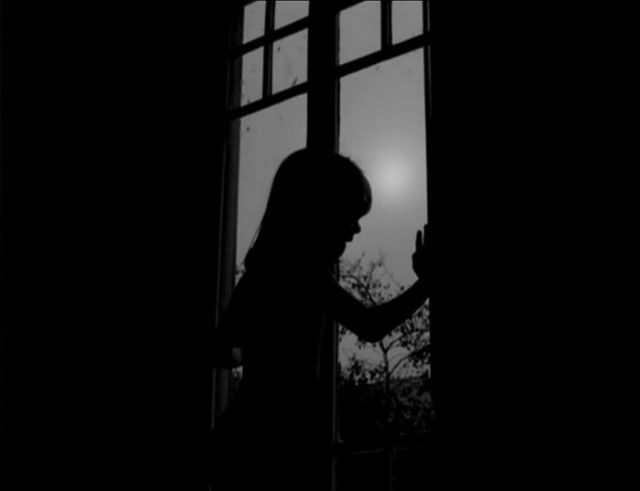
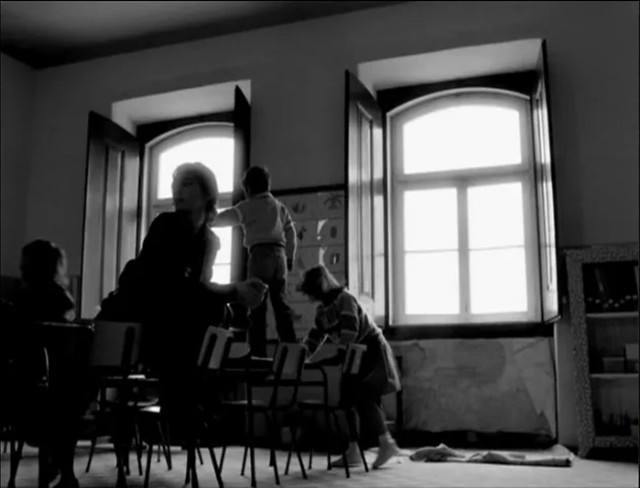
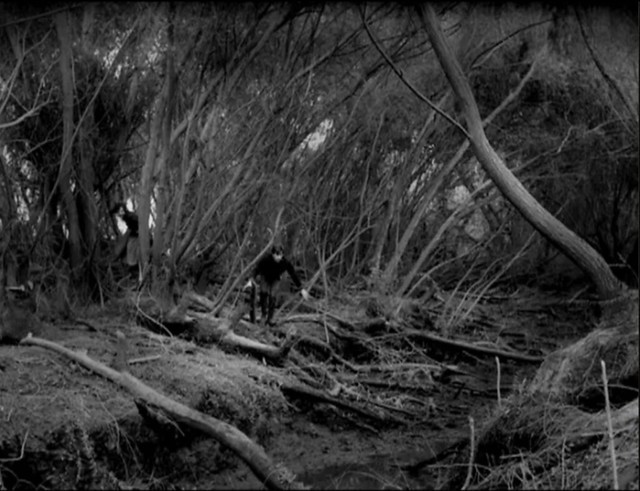
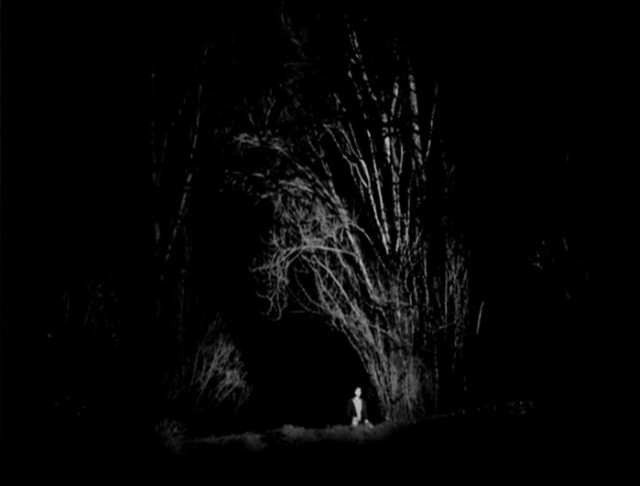
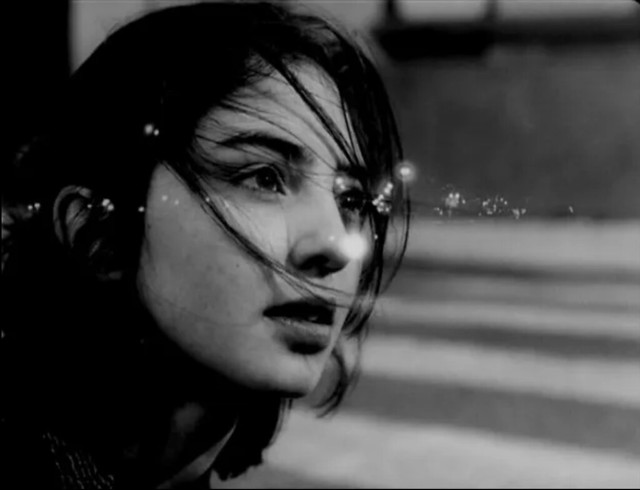
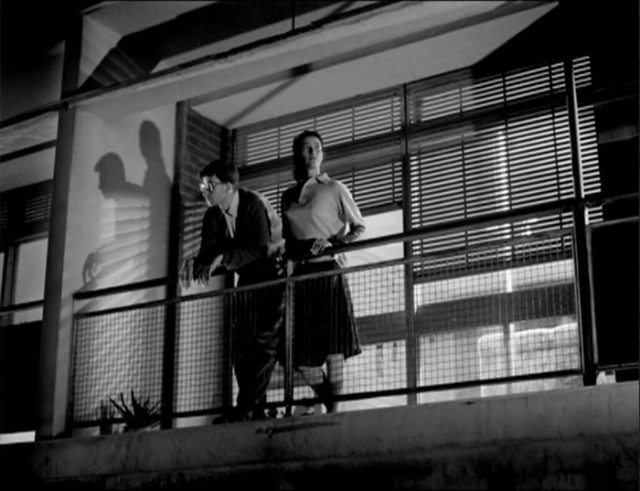
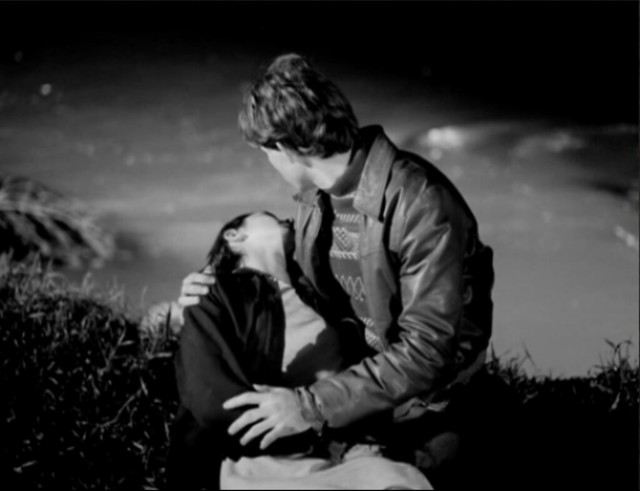
Screen Shot 2021-04-23 at 10.27.28 AM Screen Shot 2021-04-23 at 10.32.45 AM Screen Shot 2021-04-23 at 10.47.41 AM Screen Shot 2021-04-23 at 10.48.15 AM Screen Shot 2021-04-23 at 10.28.55 AM Screen Shot 2021-04-23 at 10.48.46 AM Screen Shot 2021-04-23 at 10.49.20 AM Screen Shot 2021-04-23 at 10.49.47 AM Screen Shot 2021-04-23 at 10.51.42 AM Screen Shot 2021-04-23 at 10.29.21 AM Screen Shot 2021-04-23 at 10.29.42 AM Screen Shot 2021-04-23 at 10.43.14 AM Screen Shot 2021-04-23 at 10.30.22 AM The film starts with a face slap in the middle of rural road. Dying father hides his illness from his young sons. But Vicente (Pedro Hestnes) is growing up too fast and knows what's going on. He in turn, tries to shield the truth from his sickly younger brother Nino (Nuno Ferreira). "He went away and you will never see him again," Vicente announces after finding an empty hole and burying his father in the cemetery at night with the help of his childhood sweetheart, now a school helper Clara (Inês de Medeiros). The brothers' uncle from Lisbon tries to take Nino away and Vicente attacks him. But gangsters whom his dead father owes money to comes after Vicente and the uncle takes Nino to the city. Clara first needs to get Nino back, then Vicente.

Shot rapturously in monochrome with old timey music, O Sangue feels like watching a fairy tale story from the silent era. You can tell that Costa is a good student of old films- the lyricism in O Sangue evokes those of Jean Epstein, Jean Vigo, Jacques Tourneur and Robert Bresson (especially Four Nights and a Dreamer). Beautiful moments between our two young lovers, always by the river at night, are interrupted by deaths - one such scene even reminds me of foggy boat ride in Ugetsu. Look and feel-wise, it also has much in common with Leos Carax (another good student of old films)'s equally stunning debut, Boy Meets Girl. The loneliness he portrays at the balconies on New Year's Eve is just as picturesque as the rest of the film. At once melancholic and optimistic, old and new (there is a dance party near the river where they play 80s dance music), Costa's sodden poetic images and lost but determined souls have magical power to move you. It's an astonishingly beautiful film. Definitely the top 100 material.

Saturday, October 24, 2015

Rhythmic Passion

Junun (2015) - Anderson
 photo 251ac4df-986f-4097-97d4-e0d77c10c2fc_zps02la1bhy.png
 photo f0ec9158-ba7a-4013-9757-3b099e84f4e7_zpso28yfgul.png
 photo ea0a14e4-c5f3-443c-833e-23a3fe42f53f_zpsbtxjy65k.png
 photo 4aee782a-148f-4ded-8511-eb9529accd87_zpsgvmz3m0m.png
 photo 1faa38dd-d559-431a-9408-90a83b81e76d_zpsopfcep9r.png
PT Anderson documents the recording session of Israeli musician Shye Ben Tzur and Radiohead's Jonny Greenwood, set in ancient Mehrangarh Fort in Rajasthan, India. There is no title card or introduction for musicians involved or about the project. It's context free and all music. Anderson doesn't interrupt anything and just let it play. There are glimpses of beauty of Rajasthan through drone shot footage and some handheld outdoor shots. But it's all music and it's glorious. Interesting that Anderson decided to put it out through Mubi streaming right after its debut at NYFF this year. I guess these streaming platforms could be a playground for seasoned filmmakers' one-off experimental endeavors.

Monday, October 19, 2015

Beautiful Conceit

Letters to Max (2014) - Baudelaire
 photo f37a5a8d-012a-456b-9e73-14fb0eaafdd6_zpsjdtl91ws.jpg
The film's initial conceit- using old fashioned snail mail (in blue and red edged airmail envelopes no less) to communicate with an old friend Max Gvinjia who is a diplomat in the Republic of Abkhazia, in the internet age, doesn't damper the loveliness of this essay/docudrama on national identity, collective memories/forgetfulness and cinematic inventiveness. After the fall of the USSR, Abkhazia, a small nation on the Black Sea bordering Georgia, fell short of declaring independence, fought a war against invading Georgia in 92-93 and won and still in a international diplomatic rigmarole to be recognized as a country (only a few nations recognize it as such). Only appearing in white text of his letter, Baudelaire wonders if his letters are actually finding their way to his long time friend living in a diplomatically non-existing country. In response, affable Max, a devorcé and father of 3, reads his letters and answers, then takes us on a tour of often beautiful scenery of Abkhazia. There are signs of war everywhere too - decaying buildings covered with vegetation, abandoned tanks and artillery, monument to the national heroes and such.

It is pretty apparent with all the western chain shops and cell phones that Abkhazia is just like any other developed Eastern European country, but through Baudelaire's honest and sometimes pointy questions, it's as if he is creating his imagined view of the country, steeped in nostalgic history (albeit recent). He admits that he might be asking the questions to himself since he doesn't know if the letters are getting to their destination. Max plays along, having personal/national triumphs and losses during the span of the film (was a Deputy Foreign Minister, celebrated independence declared by then Russian Prez. Medvedev, becomes a Foreign Minister then loses the post with the regime change).

Thoughtful, intriguing, relevant and intimate, Baudelaire (Anabasis of May and Fusako Shigenobu, Masao Adachi and 27 Years Without Images) is doing something that really speaks to me in testing the boundaries of cinema.

Thursday, October 8, 2015

Wuxia of a Different Kind

The Assassin (2015) - Hou
 photo 701ba8b9-a2f1-44ae-bb37-12d832b3131e_zpsvxmnfvrv.jpg
The Assassin plays out like a overly conscious filmmaker going over the script of Crouching Tiger, Hidden Dragon and say, "OK, we will do complete opposite of what's written here, line by line." But it's Hou Hsiao Hsien. So you know he is aiming for something else entirely.

There is a complicated plot set in 8th Century Tang dynasty, in the region of Weibo where the talk of revolt against the imperial court is brewing. There is a love story somewhere and a beautiful assassin Yinniang (Shu Qi) wrecking havoc. In a beautiful crisp black and white intro, Yinniang is seen cutting her target's throat who's mounted on a horse in blinding seconds. Again, it being Hou's wuxia, action sequences are brief and often cut abruptly by the following scene without any resolution. Yinniang was taken and trained by a nun princess (the backstory we only briefly hear about) who chides not for her swords skills but the resolve in her heart because she refuses to kill intended targets when they are with their children. Just as fleetingly as the flow of the film, Yinniang is assigned to kill her cousin/childhood sweetheart Tian (Chang Chen), the governor of Weibo. Would she fulfill her mission? Or is it ever a point of the film?

Watching the Assassin is like watching the river flowing down in autumn sunset. You were watching an object reflected in golden sunlight just above the surface of the water all the way on the right corner of your eye, you were mesmerized by the sparkling, undulating water and before you realized that the object was flowing down the river all the way to the left corner of your eye and one hour and forty minutes have gone by. Hou is the kind of director who's more interested in steam rising from the ornate bathtub than his actress's beautiful naked body. His decisions are so efficient, yet it conveys everything any costume melodramas convey, without corny tears, excessive expositions and phony intrigue. He doesn't need to show the wounded bare back of Yinniang for emotional effect. We already know she is a kick-ass assassin and she will get over it with some Chinese herb patch. Sumptuously shot on film in full frame by Hou's regular cinematographer Mark Pin-Bing Lee, The Assassin is rapturously gorgeous. Shu Qi looks amazing in her black Assassin's outfit. Marvelously elegant in its simplicity and subtlety The Assassin is a true beauty to behold.

Sunday, October 4, 2015

Giving Another Dick Billionaire a Pass

Steve Jobs (2015) - Boyle
 photo e979fe0b-6e41-46c1-a3ba-6d2b037ccd9d_zpszkaed6bo.png
The first question is: do we really need another Steve Jobs movie? Then, what merits does the life of the billionnaire co-founder of Apple have, to prompt 3 movies about him within 2 years? Yes, Apple product is cool, but what else is there to talk about?

I have to admit, that I've been an Apple user all my adult life. It's not because of brand loyalty, but because I inherited a Mac Classic II from my ex-girlfriend in college. Since then I rarely used PC other than some odd office jobs I've briefly held. I was too young to have seen the famous 1984 Apple commercial and has never been a good consumer who would grow feeling of attachment with inanimate objects, to be honest.

The new Steve Jobs movie, called Steve Jobs, is based on Walter Isaacson's biography, scripted by Aaron Sorkin and directed by Danny Boyle, is as exciting as a production of a High School play. This ill conceived film stars Michael Fassbender as Jobs, an innovator of series of Apple products, Kate Winslet (in her annoying Polish accent) as his trusty long time marketing director Joanna Hoffman and Seth Rogen as Steve Wozniak as the disgruntled engineer and co-founder of Apple. For the next breezy two hours, we go from one launching event (the launch of the original Macintosh computer in 1984) to another (NeXT in 1988) to another (iMac in 1998), signifying 3 phases in Jobs's career.

It is Seth Rogen who steals the show as Wozniak though. Forever not credited by ungrateful Jobs for creating Apple II which was bread and butter for the company for a long time, he is the only one who show some real emotions in the film, demanding Jobs to mention him and his team in all three launching events. His cuddly presence also balances out the dead-eyed, angular Fassbender and their antiseptic surroundings. Jeff Daniels cakewalks through the screen as John Sculley, a Pepsi executive turned CEO of Apple who fired jobs from Apple but was apparently a father figure for Jobs.

No one disputes Sorkin's penchant for snappy dialog and just like in The Social Network, Steve Jobs is full of it. So much so, you wonder, if casting these esteemed actors were really necessary, when they are just mouthing the great Sorkin dialog when there is so little drama. In The Social Network, however artificial Fincher's filmmaking generally is, there was movement, fluidity, breath and scope. Jobs, boxed in convention halls and other indoor spaces, one can't escape the feeling of watching a play.

So meat of the story is this: whatever chips he has on his shoulders, Jobs wouldn't recognize Lisa (played by Makenzie Moss and Perla Haney-Jardine, respectively) as his daughter. There is 28 percent of all man in the country can be her father, according to his algorithm). Her no-good mom Chrisann Brennan (Katherine Waterston) keeps asking him for money. He is also ruthless and egotistical leader who is never wrong. Would he find his way to admit that he is not perfect?

This trend of 'giving a billionaire dicks a pass in life because they are only human and have flaws' storyline is getting on my nerves. Sorkin hit it big with the young, hip demographic (under 25, white, college educated) with The Social Network but his HBO series The Newsroom was only viewed and appreciated by my mother-in-law. His street cred is gone. Steve Jobs is a massive waste of talent and money and Danny Boyle is not the director who is up to the challenge of making gold out of nothing, which Steve Jobs is.

Thursday, October 1, 2015

Focused

Son of Saul (2015) - Nemes
Son of Saul
I understand Godard's criticism of Schindler's List now. No holocaust movie should be a thriller. It shouldn't give you a thrill in expecting if someone is going to live or die. Hungarian first timer Laszlo Nemes's Auschwitz set drama is at once riveting and quietly devastating experience and it doesn't feel like a gimmick.

From the get-go, the fast moving film quickly sets up that the film belongs to only one man by shallow focusing on and following around Saul, a Hungarian sonderkommando - a worker chosen to be working in a crematorium, from handling the new arrivals to their deaths to gas chamber cleaning duties, to shoveling ashes into the river. Most of atrocities around him are out of focus but it's the effective sound design that does the job. Everything changes when he finds a boy survivor in a pile of bodies. Doctors are called in and a German doctor quickly suffocates the boy to death. Since he is an abnormality, they want to perform autopsy. Saul thinks the boy is his son and it becomes his mission to give him a proper burial at any cost. First, he needs to find a Rabbi to say a prayer for the dead.

It's an amazing technical feat to have the whole movie sort of 'first person' perspective. Camera almost never leaves from Saul's close-up face, even in very tight spaces. The full frame cinematography adds the trapped, caged surroundings. There are no backstories or music or even tears- there is no time for any of it. Nemes, who served as Bela Tarr's assistant director (on Man from London), knows a thing or two about long takes. Still, it's mighty impressive choreography, especially everything must've been pretty much handheld.

Yet, Saul is deeply moving experience. It doesn't feel like a holocaust ride. There is death everywhere, but Saul's unflinching focus to his salvation against his sealed fate feels very noble and humanistic. Géza Röhrig gives an amazing performance as Saul, the man who seems already dead.

Monday, September 28, 2015

Ubering with Jafar Panahi

Taxi (2015) - Panahi
 photo 05ccdf17-c9b8-41fc-ade9-43e0d7117850_zpskhrbqpef.jpg
Jafar Panahi was jailed, then put on house arrest and banned from filmmaking for 20 years by the Iranian government in 2010 when it deemed the award winning filmmaker an anti-government propagandist. This didn't stop the filmmaker from making films though.

At first, Panahi was creatively bending the absurd rules that were put on him by making unscripted films in his house with with a small video cameras and smart phones. His frustration and ingenuity were in full display in This is Not a Film and Closed Curtain. With Taxi, his latest, the Golden Bear winner at this year's Berlinale, Panahi raises his middle finger again. The film is yet another self-reflexive, droll, poignant whatsit and defies the powers that be.

In Taxi, very much in the tradition of the fellow Iranian great Abbas Kiarostami, Panahi uses the confines of a moving car to unfold the snapshot of Tehran and its inhabitants in real time. Things are little more sophisticated this time around. There are multiple angle shots, edits and the line between fiction and reality are blurrier than the previous two films.

Panahi himself sets out as a taxicab driver, picking up passengers and their interactions are all captured by small dashboard cameras. The passengers are as diverse as they get. Some get into a heated political discussion - the harshness of the Sharia Law. Ironically the one who advocates the capital punishment turns out to be a criminal.

A motorcycle accident on the street brings in a couple, an wounded man and his hysterical wife. On the way to a hospital, the bloody man orders Panahi to record his last will with his cell phone. He wants to leave all his assets to his wife. Panahi knows that his injuries are minor and will be OK. But after he drops the couple off at the hospital, he promises the wailing wife that he will make sure that she will get the footage.

Then there is an illegal DVD seller who recognizes the famed director. He is the reason how Panahi got to watch films like Once Upon a Time in Anatolia and Midnight in Paris in Iran where most of foreign movies are banned.

There are deeply superstitious old ladies who wants to go to Ali Spring to release a couple of goldfishes. They think their lives depend on the fishes being free. The hilarity ensues after the ladies break the fishbowl in the cab, due to Panahi's bad driving.

But it's Panahi's own niece Hana (Hana Saeidi), a precocious, button nosed young schoolgirl who steals the show. Armed with her tiny digital camera, she wants to make a 'distributable' film. The guideline to make a distributable film that her film teacher told her reveals a lot about the country still steeped in religious fundamentalism - respect the Islamic headscarf, no touching between opposite sex, no political discussion, voluntary self censorship ("deep down, you know what's best"), no sordid realism. After giving Panahi's human rights lawyer friend a ride to the jail where she is trying to visit a woman who is on hunger strike after getting arrested for attending a volleyball game (along with other women), bright eyed Hana asks her uncle what sordid realism means: "We are all real. And that means what we see is all truth." To this, Panahi replies, "There are some truth they don't want you to see."


I used to think that Panahi's more politically active approach in filmmaking is less elegant in portraying human conditions. With Taxi, it's either me warming up to his filmmaking or he is getting better and wiser as a filmmaker, even with much less resources and more restrictions.

The film shows regular Iranian's resilience. Many recognizes his dashboard cam and understands that Panahi is making yet another film. No one in the film hides his/her face or runs away screaming. Whatever the conditions your government put you under, the life still goes on. And the filmmaker has enough of a common sense not to put up the credits at the end of the film.

The film ends with a plain clothes government officials trying to steal the memory card from his dashboard camera while Panahi is out to deliver a purse that was left in the cab by one of the old ladies.

Deeply poignant in its simplicity and undeniably human, Taxi is one of the best non-political, political films I've ever seen.

Taxi will have its New York Premiere at BAM Cinematek on 9/29 and opens nationwide Oct. 2nd.

Eva Salina at Brooklyn Americana Music Festival, DUMBO 9/27/15

 photo 3f7a3155-0727-478f-afda-2f450b92e027_zpsjbqvnm75.jpg
I happened to be down in Dumbo today. Just walking around in a brisk fall weather. Then I heard this enchanting voice singing a song that sounded like a Balkan music. I followed the voice and ended up under the Manhattan bridge where they were having Americana Music Festival. The acoustics under the arch of the bridge is quite ideal but performers have to compete with the rumbling of subway trains constantly going by overhead. The voice belonged to Eva Salina. She sang mostly Balkan songs with or without her accordion and I was entranced and stayed there for the whole duration of her set. I got to record one of her songs:


Please visit Eva's website at evasalina.com

Sunday, September 27, 2015

Giving Them a Soul

The Walk (2015) - Zemeckis
 photo 34ad179b-88e7-48b2-bc58-59ce43059056_zpsx2nh6rhc.jpg
Forget about Joseph Gordon-Levitt's ridiculous Pepé Le Pew French accent. Forget about his weird toupé and blue contact lenses, forget about candy colored fairyland a.k.a. Paris in the first hour. Robert Zemeckis's new film The Walk still works as a thrilling movie experience because of its 20 minute sequence of 'the walk' itself, shot in stereoscopic 3D and presented in IMAX.

The film is a dramatization of a real event that took place in New York in 1974. A crazy little Frenchman, Philippe Petit, aided by his friends, pulled a stunning and ultimately awe inspiring stunt - high-wire walking between the Twin Towers of the World Trade Center, then still under construction. The thing is, we know about this event already, thanks to James Marsh's superb 2009 Academy Award winning documentary Man on Wire which played out like a great caper film.

Even though the film says it is based on a true story, the look and feel of The Walk is nothing but. Gordon-Levitt narrates his story from the CGI-ed torch of Statue of Liberty, looking like a caricature of a Frenchman in some corny children's book. The tone of a street performer/tightrope walker's early life is that of a fairy tale - an exotic foreign circus manager Papa Rudy (played by weirdly deflated Ben Kingsley) taking little Philippe under his wing, romancing a wide-eyed gamine street musician, Annie, (Charlotte Le Bon), and Philippe performing in the impossibly clean Paris street under CG Eiffel Tower. There is even a Keystone cop chase sequences in black and white for no apparent reason.

After successfully executing the walk between two steeples of the Nortre Dame, things get into a high gear once Philippe and his friends, who believe and shares his dangerous and beautiful vision, set the date of their coup and fly over to New York. With the help of newly recruited accomplices - a street smart electronics salesman (James Badge Dale) and a wildly mustachioed American insurance executive (Steve Valentine), who has an office on the 82nd floor of the North Tower as their inside man, they scout and execute the clandestine plan to get the wire across from the South to North Towers with the bow and arrow, while evading the eyes of security officers and construction crew.

Zemeckis is obviously targeting the widest audience with The Walk. Things are kept energetic and humorous and colorful, faithfully following the almost childlike enthusiasm of Petit as we saw in Man on Wire and his Oscar acceptance speech. But as an adult living in a cold, hard world and one of eight millions who calls New York home, I had a very hard time buying into the juvenile tone of the film. And is it only me who feels that Gordon-Levitt's face is growing more and more insincere every year? He'd make a great villain one day.

But it's all about the thrill of experiencing the walk itself between the 110 story Twin Towers: as we are watching from all the impossible angles as Philippe starts walking on the thin steel wire stretched across 140 feet. Especially when looking down, Zemeckis accomplishes the impossible feat of duplicating what it must've been like on the wire 1,300 feet above the ground. All it lacks from the real thing is the wind blowing on your face. Somebody invent The Blowervision already!

I always thought the Twin Towers were ugly. But I never knew that gazing at them from Radiohead concert at Liberty State Park a week before 9/11 was the last time I'd see them standing. Seeing the truss of the Twin Towers automatically gives many who remember a strong emotional response. Zemeckis handles 9/11 aspect of the WTC much more gracefully than I expected. One of the more poignant moments, Annie declares that what philippe's daring-do accomplished was to give a soul to those buildings. Petit's special bond to the towers was sealed early on, but it was to be forever.

But one of the reasons why Man on Wire is a superior film is seeing the emotional responses of the two events on people's faces. We can read it on faces of Petit and everyone involved as they reminisce the walk in that documentary coupled with the fate of those towers. You can't fake that even with all the technology in the world.

Sunday, September 20, 2015

Island of the Dead

Casa de Lava (1994) - Costa
 photo 283e017d-bb70-4681-9d33-99053cd57494_zps9mwmzfqs.png
 photo c9149d4e-d209-499c-aa1f-6e9bf9358918_zps09o2nsaf.png
 photo 2c2b418a-aa6e-4e67-945c-88fdd54a6fba_zpst8gz4sxf.png
 photo ebb1135e-5d91-4f4e-8d4b-5b5fafe8af93_zpso9vlojsx.png
 photo 3cc7b88d-2839-443a-8b61-760cb5b4b5d0_zpsuzxfebet.png
 photo 4ae308a8-7a6b-4f7c-a651-b3f651c9a299_zpsoyzatana.png
 photo d73dd048-7fdb-47dc-88c6-fc942587efa9_zpsv1neoa2v.png
 photo f711269c-b81e-47be-a90f-e9bcff4b7600_zpsejczz2mj.png
 photo f0587b22-c1a1-48ec-94da-c4f2b3e70304_zps2oo6wu87.png
 photo 1ef9ad10-2459-4aed-96d4-ee1383d77766_zps1mwps9dm.png
Costa talks about Casa de Lava as the gateway to his subject of his four films, now gone, Fontainhas, an urban shanty town of Lisbon of which many Cape Verdean immigrants once called their second home. It was the otherworldly landscape of the volcanic island of Fogo, that he had heard so much about from the immigrant workers which lured him in.

A nurse named Mariana (Inês de Medeiros) accompanies a construction worker, Leão (Isaach De Bankolé), who fell into a coma from an accident (or suicide attempt?) to his home in Cape Verde. The transportation fee was anonymously donated by the inhabitants of that island nation who wanted him back. Taking a cue from Jacques Tourneur's I Walked with a Zombie, Costa equates Cape Verdeans or what's left of them (massive immigration to the mainland and many are still preparing to leave) to the dead and the dead are calling back Leão. Devoted Mariana isn't getting anywhwere, stuck in the land of the dead, stuck between her loyalty to Leão and the local white boy, the son of mysterious white woman Edith (Edith Scob).

The colonial past is ingrained in everyone's faces - former booming slave trading post, inhabited by pirates and also used as a penal colony, abandoned after 19th century, the mixed race faces are as distinctive and beautiful as that of Brazilians. Elliptical narrative has no stronghold in this but the glorious nighttime cinematography and the beauty of volcanic surroundings make up for its lyrical poetry. You can totally see his later impressionistic approach to filmmaking brewing in the midst of Casa.

Thursday, September 17, 2015

Perfection: Cannonball Adderley's Autumn Leaves

In my early 20s, if I wanted to be anything, I always wanted to be a jazz music writer. Not music criticism per se, but more of a gushing appreciation that I couldn't contain in my head that I felt it was my duty to share with others how brilliant that particular piece of music is. Well, youtube and all the other social media killed my ambition pretty quickly over the years. I have to confess that I can't play any musical instrument. I failed at piano when I was young. But imho, I strongly believe I have musical ears and I pick up sound, especially jazz and can appreciate it much more than any other art form. I know I sound like Clint fucking Eastwood who is apparently a big jazz aficionado.

As I was listening to Cannonball Adderley's Autumn Leaves on the way to work, one brisk September morning, I couldn't stop but admire its mind blowing perfection as one succinct piece of art that is finite and infinite at the same time. It's up there with John Coltrane's My Favorite Things and Miles Davis & Coltrane's version of Bye, Bye Blackbird.

It starts slowly with simple but infectious rhythm by Hank Jones's piano, Sam Jones's bass and Art Blakey's struming. It transitions into birds chirping high up in the trees, letting you know the arrival of Miles Davis. Instantly recognizable by his delicate, emotive playing, he put you in that cozy melancholic mood associated with the composition right away. Adderley's sax exchanges dialog with Davis's then in turn with Jones's keys. Despite Adderley being the band leader on this, his showmanship never overshadows the whole piece and gives Davis a lot more playtime. The gorgeous melody goes on for eternity, and you never want it end. Then Miles's horn peaks and dies in around 8 minute mark, giving me a little heart attack until Jones's keys pick up where Davis left off, like, milliseconds ago, giving it the most thrilling transition ever in music history! Blakey and Jones pick up where they started. And in the dead last minutes, Davis is resurrected to give the smokey finish to the piece. I mean, what composition, what collaboration, what... dang.

Sunday, September 13, 2015

Greenpoint Outing 9/13/15

Nicole and I went out to Greenpoint today to checkout Brooklyn Renegade Craft Fair. Most of those exquisite trinkets were too much to afford as expected but we had a great time walking around. Here are some pictures:
 photo 05918f2a-b6a5-477a-8e0d-5dfad3b03cb1_zps8ufrkawm.jpg
The setting sun hitting just the top of the Ed Hopper row houses on Kent Ave.
 photo bc130a5e-b51c-45e8-9e61-fbb40ecc70bb_zpsadxbzvqy.jpg
Nicole at The Bounty. They have a lovely backyard, well more like a greenhouse. We took a shelter as the rain drops fell. The sky was getting dark then cleared again.
 photo a8773500-b904-4565-95cb-c5f6fc5a81cd_zpslnr37e1k.jpg
The ceiling of the greenhouse.
 photo 27c490cc-668e-4f1a-aeca-f2a5fd5488d3_zpsnhfzyg3z.jpg
 photo 203ec110-698c-4e7a-9152-da6b399a0012_zpsapt1popd.jpg
Inside the Bounty Bar.
 photo cfc40ba6-fbb9-469a-9d42-d716a949ba61_zpsiffx9u8z.jpg
A window display of a house full of toys. This person must love showing off his toy collections.
 photo 4bc8362c-9a8d-4611-b2dc-b987ee46aa64_zpst01fpbrs.jpg
Empty lot near the East River overlooking across Manhattan at sundown.
 photo ad9c18c5-a7bb-4ffd-bb23-cd7099536ba5_zpsudbfvj4q.jpg
Ducks taking a bath in rain puddle.
 photo b6595ee5-bb1a-4aef-a83d-84fcf0c6b561_zpseiy79zha.jpg
Some funny Ad campaign.
 photo 07de30c3-913e-4132-a94a-870190008a19_zps2vpdh57h.jpg
On the Waterfront looking across Empire State Building at dusk.
 photo ae0af4c4-676d-4113-9441-04d16b23dcbd_zpssjipyql7.jpg
Some salacious poster for a show.

Saturday, September 12, 2015

Where is Our Mommy?

Goodnight Mommy (2014) - Franz, Fiala *Originally Published March 26, New Directors/New Films
 photo 541673d5-6431-42b1-8173-4e70d7dcf4cb_zpsboqpdwc8.jpg
As far as creepy twins movies go, Goodnight Mommy tops it all. Impeccably executed and acted, this Austrian chiller rubs shoulders with Funny Games on cringy inducing level. It is no surprise then that the film is directed by the wife and the nephew of Ulrich Seidl. It's quite an achievement what they pulled out from the young real twin brothers Lukas and Elias Schwarz.

We are introduced to preteen twins, Lukas and Elias, playing in the corn field, then near the lake. Colors are lush and vibrant you can almost smell the warm Summer surroundings. Something dark and sinister is hiding just around the corner. You can feel it. Then there is mom (brave Susan Wuest), whose face is bandaged like a mummy. She is cold and distant and barks orders at Elias and doesn't seem to acknowledge Lukas's presence. It becomes pretty clear that Lukas doesn't really exist and that something terrible has happened before. But there is scarcely any dialog for the first half of the film. They are in the hiding in the ultra modern house in the country, away from Vienna. Lukas is feeding his brother some unspeakable thoughts: our mother isn't really our mother. We need to find out where our mother is from that woman who is not her. From then on, Goodnight Mommy slowly slips into very dark, dark territory.

Franz and Fiala know to build tension without the help of music or dialog. Goodnight Mommy is quite a feat for visual storytelling. Images, shots and editing matters. Not quite formalist approach of Seidl but the images have power in this film.