Wednesday, December 23, 2020

Top 20 Favorite Films of 2020

What can I say about 2020 except it sucked big time? Possibly one of the worst years I've experienced in my lifetime if not the worst. My viewing films suffered as well: many film series and festivals have faltered or postponed, on top of all movie theaters being shuttered because of the world-wide pandemic that has been raging since March. I did catch up with some good films though. This year, unlike any other year, was the year of gentle, subtle films. It has been a good pace of change to balance out the ugly, anxiety filled reality leading up to the presidential election and losing loved ones and sharing heartbreaks with those who are greatly affected by Covid 19. It was also the year of women filmmakers - Reichardt, Gomes, Zhao, Song as well as newcomers Zheng Lu and Kulumvegashivli made the list. 

Happy holidays! Good riddance 2020. Here's hoping for a better year everyone!

1. First Cow - Reichardt First Cow 1

2. Ghost Tropic - Devos Ghost Tropic4

3. Lovers Rock - McQueen Screen Shot 2020-12-15 at 10.52.57 AM

4. O que arde/Fire Will Come - Laxe Screen Shot 2020-04-04 at 9.24.39 AM

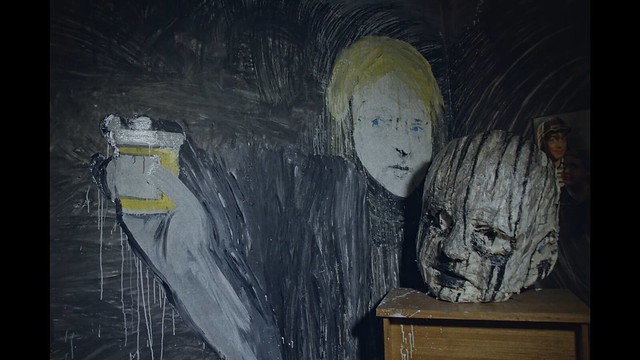
5. La casa lobo/The Wolf House - Cociña, León Screen Shot 2020-07-07 at 6.02.13 AM

6. The Disciple - Tamhane The Disciple

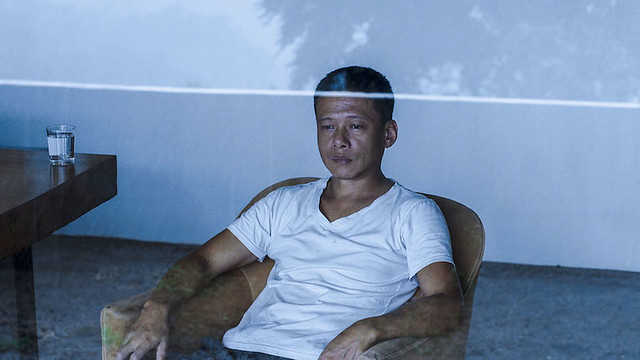
7. Days - Tsai Days

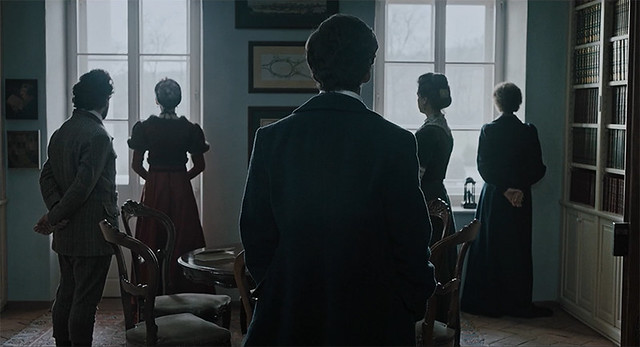
8. Malmkrog - Puiu Malmkrog

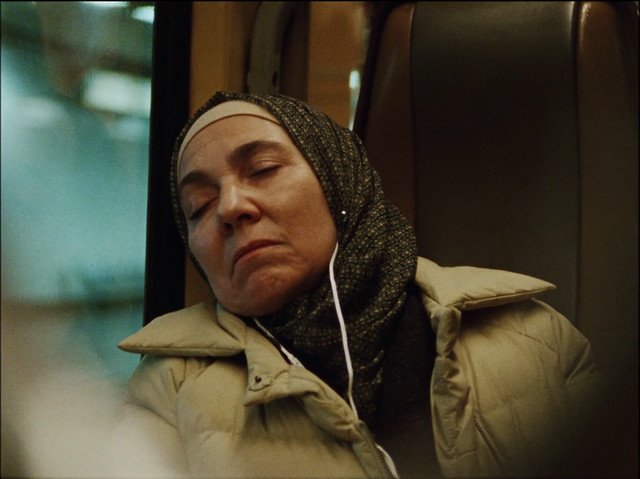
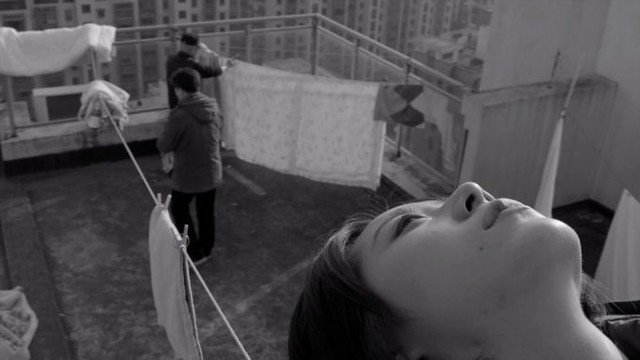
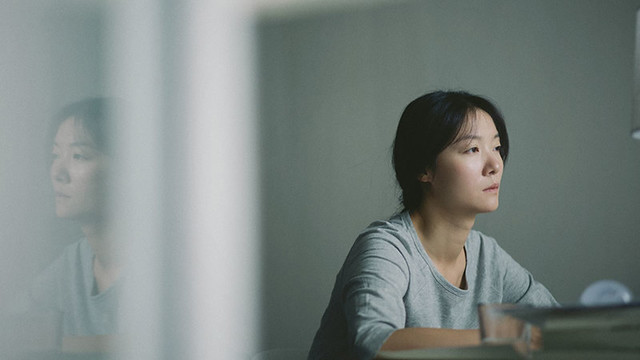
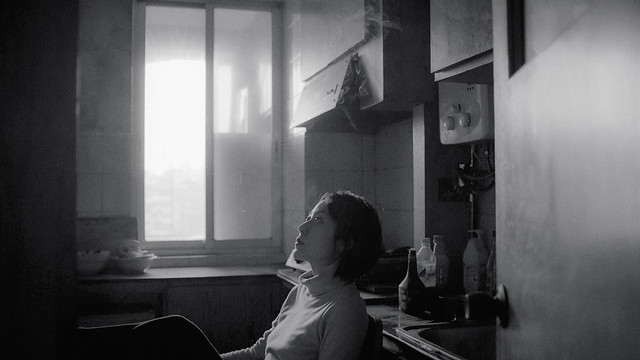
9. The Cloud in Her Room - Zheng Lu The Cloud in Her Room

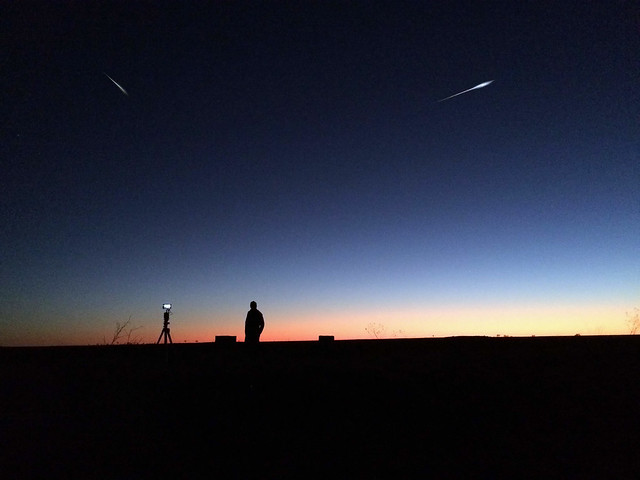
10. Fireball: Visitors from Darker Worlds - Herzog, Oppenheimer Fireball-Visitors-from-Darker-Worlds

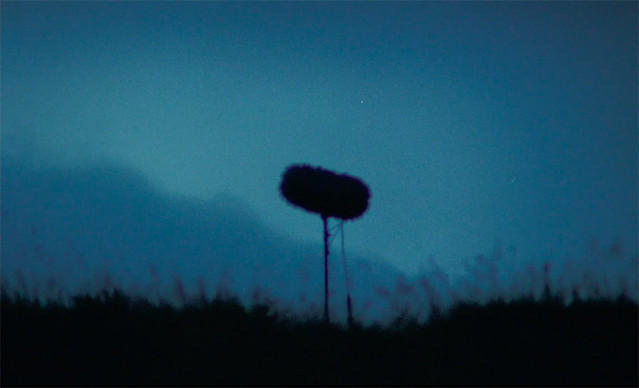
11. The Two Sights - Bonnetta Second Sights

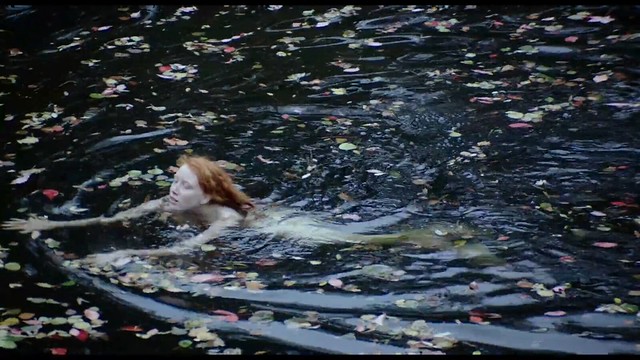
12. Undine - Petzold Undine

13. Notturno - Rosi Notturno

14. A Portuguesa/A Portuguese Woman - Gomes Screen Shot 2020-07-24 at 10.58.30 AM

15. Fourteen - Salitt Screen Shot 2020-06-12 at 11.23.26 AM

16. His House - Weekes His House

17. Beginning - Kulumvegashivli Beginning

18. Nomadland - Zhao nomadland

19. Calming - Song The Calming

20. American Sector - Velez, Stephens Screen Shot 2020-11-11 at 9.13.39 AM


Vitalina Varela, Bacurau, Wild Goose Lake, I Was Home, But...and Zombie Child all made my list last year.

Click here for yearly top 10

Top 10 Discoveries 2020

Tuesday, December 22, 2020

Harrowing Refugee Tale Disguised as Horror

His House (2020) - Weekes His House 
Remi Weekes's debut film is a harrowing immigrant experience disguised as an extremely effective horror film. Not only it depicts of horror of being uprooted from your own home and culture and calamitous journey to the unknown, unwelcoming foreign land, it also illustrates the emotional toll of being the ones who left rather than left behind. His House, with the South Sudan refugee couple in focus, Weekes zeros in on that guilt that weighs down on the survivors. 

Bol (Sope Dirisu) and Rial (Wunmi Mosaku) after losing their daughter when the boat carrying them capsized in the Mediterranean sea, and after being processed at the English customs, arrive at their designated housing project in a drabby suburbs of London. It's a spacious- "bigger than my house," quips the icy, snickering housing authority figure, but derelict interior of the building needs a lot of tender loving care to be welcoming. Bol wastes no time to assimilate to his new surroundings, he eagerly changes to a new western clothes from his traditional garb, brings utensils to eat their food, exploring the depressing and hostile working class neighborhood. Rial on the other hand, refuses to change her ways and mourns the death of the child, eats her food on the floor with her hand, in traditional ways. 

A heartless case worker Mark(Matt Smith) checks on them and warns them that unless they improve their living conditions, meaning settling in and make the place more livable, it won't reflect good on their refugee status. 

Things start to fall apart right away - they hear scuttles in the walls day and night. Thinking they are from rats, the couple complain to Mark, but there is a very little can be done. Then they hear sound of children giggling, torturing the couple with the memories of their daughter who perished in the sea. Or did she? 

Not soon enough, Bol starts hammering the walls to find the source of the disturbance that leaves the plaster walls like swiss cheese. Water starts flowing out of nowhere. And the couple has encounters with supernatural. All these wouldn't help their status when Mark finds out. 

His House would make a great companion piece with the last year's Atlantics, another African ghost story that deals with the same subject. The film is a superb horror that reflects on the psychological scar a war perpetuates on its victims and those impossible choices that they are forced to make. Surprise find in Netflix streaming and very much looking forward Remi Weekes next project.

Sunday, December 20, 2020

Top 10 Discoveries 2020

One good thing about this most horrendous year was that it provided me, at least in the beginning of the Covid19 lockdown, with enough free time to catch up some big films I've always wanted to but never had time to. So, many of the films on this list, I was proud to finally put checkmarks next to them. So without further a do:

Listed alphabetically

All That Jazz (1979) - Fosse Screen Shot 2020-08-05 at 5.19.54 AM 

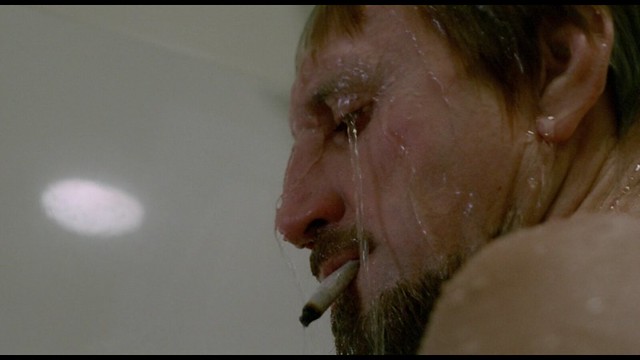
La Bande des Quatre/Gang of Four (1989) - Rivette Screen Shot 2020-04-30 at 4.01.38 PM 

Born in Flames (1983) - Borden Screen Shot 2020-10-17 at 10.33.27 AM 

A Brighter Summer Day (1990) - Yang Screen Shot 2020-04-24 at 1.58.59 PM 

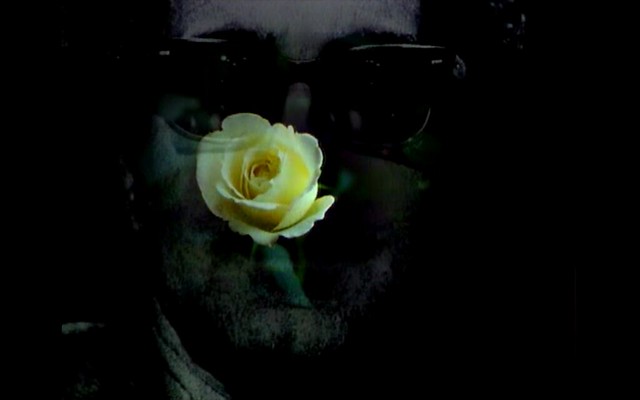
Histoire(s) du cinema (1988-98) - Godard Screen Shot 2020-04-10 at 10.48.04 AM 

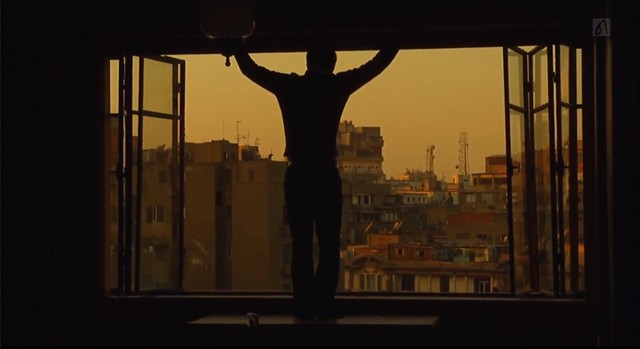
In the Last Days of the City (2016) - El Said Screen Shot 2020-04-29 at 1.04.23 PM 

Satantango (1994) - Tarr Screen Shot 2020-04-14 at 3.30.03 PM 

Space is the Place (1974) - Coney Space-is-the-Place-1 

Der traumhafte Weg/The Dreamed Path (2016) - Schanelec Screen Shot 2020-06-03 at 7.00.48 AM 

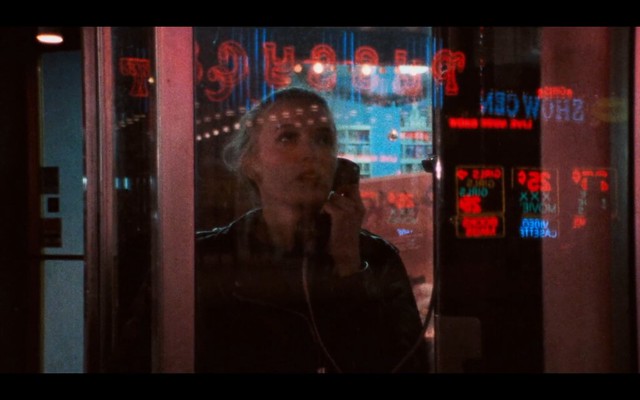
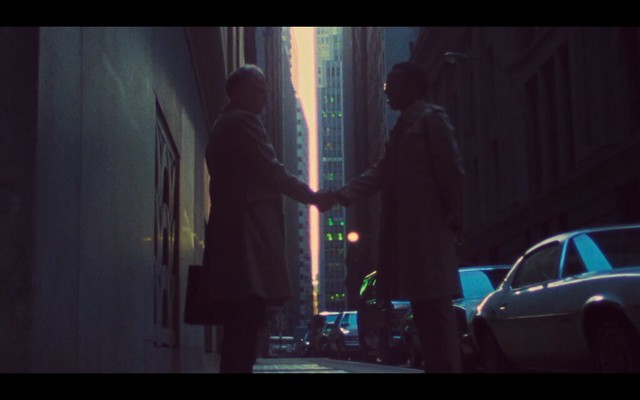
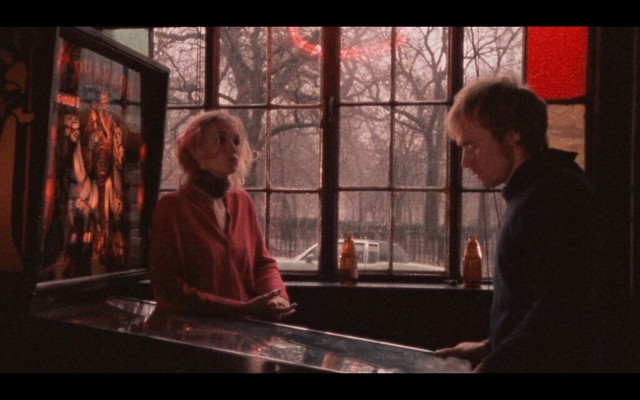
Variety (1983) - Gordon Screen Shot 2020-11-29 at 4.10.30 PM

Time is a Flat Circle: Temporal Dissonance and Trauma in Christian Petzold’s Transit

Time is a Flat Circle: Temporal Dissonance and Trauma in Christian Petzold’s Dystopian Tale: Transit

Time is a Flat Circle         I’m thinking about Nietzsche’s concept of eternal return when I think about Christian Petzold’s film Transit. Eternal return/eternal recurrence is a concept that the universe and all existence and energy have been recurring and will continue to recur, in a self-similar form an infinite number of times across infinite time and space. “Time is a flat circle,” is a phrase uttered by Rust Cohle, a character who has a very pessimistic view on human existence in an HBO show True Detective, when he is reminiscing about an old, unsolved case, “Someone once told me time is a flat circle. Everything we’ve ever done, or will do, we are gonna do all over again.” He is suggesting that we are destined to relive the same experience over and over, past and present melding into one another. And this is the case with Transit which takes place in a hypothetical world where fascist Germany is occupying France once again and its characters, traumatized by the unfolding events, enter into a sort of fugue state where there is no escape.

        All characters in Petzold’s films are in a state of uncertainty: they are forced to embark on a journey by the outside forces, rather than by their own volition like in Wim Wenders films or the works of Novalis or Hölderin of German Romanticism. In effect, the title Transit, can be used in all his films, interchangeably, making it a perfect title that emblemizes his work. With Transit, I’d like to examine how temporal, spatial dissonance causes the lasting trauma in people’s psyche and how Petzold and the Berlin School filmmakers use genre conventions to reflect on the post-wall neoliberal Germany as well as its nazi past.

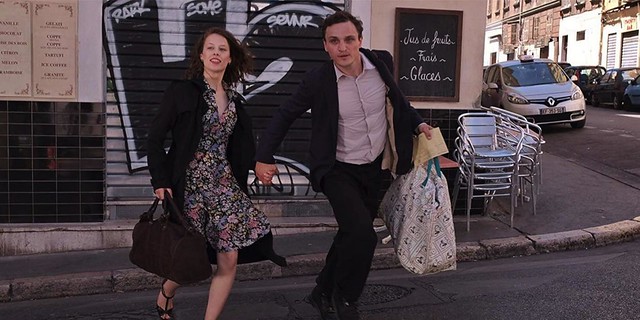
Transit         Transit is a novel written by Anna Seghers based on her own experience in France under the nazi occupation in 1942. Petzold transposes its setting to contemporary Europe; a modern day Marseille. The film’s setting can be interpreted as either an alternate reality or a very near future where Germany has become a fascist state yet again. But Petzold goes about presenting this slyly, often blurring the boundaries between past and present - there are no discernable historical/cultural markers in the film- no swastikas, propaganda posters or incendiary slogans on banners in public squares. But the motor-vehicles and police in riot gear suggest that the film takes place in the present day. Pinpointing the film’s timeframe is a tricky business. Judging by the conversation held by characters about a movie about zombies- that even the dead not having much imagination by going to a shopping mall, it alludes to taking place post-1978 or even 2004 (the release year of George Romero’s classic Dawn of the Dead and Zach Snyder’s remake respectively). Curiously, there is no sighting of mobile phones anywhere, adding more confusion to the film’s timeline. There are also no lamentations by any of the characters on how history repeats itself. It’s as if Germany’s dark war past has been deliberately erased from history or invoking its history is a taboo subject. Yet for us audiences, hearing the sound of jackboots marching, a talk of ‘cleansing of the Jews’ and seeing police rounding up people in the streets are familiar sight and sound from countless World War II films set in the cities under nazi Germany. Seeing and hearing this in the present setting is jarring and disorienting. There is a definite temporal dissonance. It’s an interesting choice for Petzold to directly invoke Germany’s nazi past to reflect on the current state of Germany and Europe.

        Transit was released in 2018 under the shadow of the foiled assassination plot on the German Chancellor Angela Merkel in 2016 and after the extreme right-wing nationalist party AfD (Alternative für Deutschland) gained 12.6 percent of the seats in the German Parliament in 2017 (later it became the largest opposition party). Germany’s white nationalist movement has seen a steady growth since the fall of the Berlin Wall in 1989. With the influx of over 1.2 million immigrants (not counting 3 million Turkish descent German citizens who have been living there since the 60s), the racial violence against ‘outsiders’- meaning, against people of the Middle-Eastern and African origin as well as German Jews, has been increasing over the recent years. According to the Interior Ministry data, xenophobic acts of violence saw 19.7 percent jump in 2017 from the previous year.

        Christian Petzold, as a leading figure in the Berlin School which is Germany’s most significant film movement since the New German cinema of the 60s and 70s and a prominent voice in a recent surge of German cinema in the global stage, has been making films that reflect the cultural & political landscape and collective German psyche in the post-wall, neo-liberal era Germany. The Berlin School is a term given to a group of loosely connected filmmakers who attended German Film and Television Academy (DFFB) in the late 80s and early 90s, namely Thomas Arslan, Christian Petzold and Angela Schanelec - known as ‘The First Wave’. Ulrich Köhler, Valeska Grisebach, Christoph Hochhäusler, Maren Ade and many more were considered and later added to the growing list of like-minded filmmakers. The main themes these filmmakers share in their work are: loss of identity, guilt, aimlessness and dislocation under neo-liberal Germany. One of the main themes they often deal with is, as Marco Abel puts it, ‘sehnsucht’ (longing): a longing for Germany that has never materialized under neoliberal capitalism. The Berlin School, in effect, is about ‘reseeing’ Germany.

        Utilizing genre conventions and twisting them to reflect on the current state of the post-wall Germany is a tendency of many filmmakers of the Berlin School: Heist films/thrillers/noir are bread and butter for many - The City Below, The Lies of the Victors (Christoph Hochhäusler), In the Shadows (Thomas Arslan), The Robber (Benjamin Heisenberg), The Dreileben Trilogy (Höchhausler, Dominic Graf and Petzold). They also dabbled in Western - Gold (Arslan), horror - Yella (Petzold), Sci-fi - In My Room (Ulrich Köhler) and fantasy - Undine (Petzold), just to name a few. Although many critics emphasized the Berlin School’s presentist and realist approach – the contemporary world observed in almost obsessive detail, Petzold has been deeply concerned with history in various ways throughout his filmography. Especially with his last four output - Barbara (2012) a period film that takes place in East Germany in the 80s, Phoenix (2014), set in the aftermath of WWII, Transit (2018), set in the near future/alternate present where Europe is in the grips of Fascist German regime once again and Undine (2020), his take on folklore/fantasy genre, investigating Berlin’s tumultuous past just underneath the surface of fast changing city, Petzold, unlike most of his compatriots of the Berlin School, does not shy away from Germany’s ugly war past and have found innovative approaches to address the same inquiry through genre conventions the unfulfilled desire of finding a collective utopia that is ‘Deutschland’.

        Gilles Deleuze talks about ‘time out of joint’ in Cinema 2: The Time-Image. It was the Second World War that changed cinema from movement-image to time-image based medium. It signifies that time is no longer subordinated to movement, but rather movement to time. This break happened because of the devastation the war brought: atrocities in situations we no longer knew how to react to, rubbles in spaces we no longer knew how to describe. In these leveled cityscapes, a new race of characters was born: they saw rather than acted- they were seers. Transit starts with Georg (Franz Rogowski) being asked to deliver two letters to Weidel, a writer of some importance in Paris by an acquaintance at the bar. It's a dangerous mission- there are police raids daily and it's harder to get around on the street without constantly being asked for proper papers. Everyone knows a major crackdown is about to happen: already there are people being dragged away in the streets by the heavily armed authorities- 'the purge/cleansing' is just around the corner. But with some money promised, Georg is game. Georg is a typical (anti)hero of the Berlin School films - unmotivated, lost, just going through the motions, like a ghost among his fellow citizens. He is an observer, not a participant. He scoffs at the notion of “danger visa,” when the acquaintance tells him why he can’t make the delivery himself since he is deemed ‘dangerous’. Georg is nobody special. Just a face in the crowd. Petzold makes sure that he is not the narrator of his own story by inserting a voice over of a man, completely unrelated to the main characters, who turns out to be a bartender in Marseille later on. Once Georg gets to Paris, he finds out that the writer has committed suicide, leaving his documents and the latest manuscript behind. With some more money promised, he reluctantly takes a sick man wanted by authority along with him on a train (as stowaways) to Marseilles. Once he gets there, he is to notify the Mexican consulate about the death of the writer. Weidel’s documents reveal that he had a safe passage arranged for him and his wife Marie (Paula Beer) to go to Mexico. The letter Georg was supposed to deliver to Weidel is from Marie, declaring that she is leaving him.

        Once he arrives in Marseilles, Georg assumes the identity of Weidel as he is mistaken for the dead writer at the Mexican Consulate. He makes friends with an Arab immigrant boy whose dad (the sick man) died on the way. He also sees Marie everywhere, scouring the city for Weidel, her husband, day in and day out. Her search is intensified since Georg assumed her dead husband’s identity. So she thinks he is still alive, but avoiding her. This is where Transit embraces a full noir/thriller genre. Petzold’s penchant for genre cinema is pretty well known, as his films often borrow major aspects of their plots from the “cemetery of genre cinema, from the remainders that are still there for the taking.” For example, Jerichow is his adaptation of Jame M. Cain’s pulp noir Postman Always Rings Twice, with the victim switched to a successful small-time Turkish businessman. With Yella, the director takes direct cues from an American b-horror movie Carnival of Souls. In Something to Remind Me and Phoenix, the plots play out like an inverted Vertigo with the loss of identity/false identity playing a big role (also in Transit). His love for the noir/thriller genre is well known; his recent praise of generic American heist thrillers such as Den of Thieves confirms this fact. They are also present in his TV work (Polizeiruf 110), as well as most of his films.

CE_Transit2         Transit’s alternate reality fits the description of Deleuze’s modern cinema very well. “As for the distinction between subjective and objective, it also tends to lose its importance, to the extent that the optical situation or visual description replaces the motor action. We run in fact into a principle of indeterminability, of indiscernibility: we no longer know what is imaginary or real, physical or mental, in the situation, not because they are confused, but because we do not have to know and there is no longer even a place from which to ask. It is as if the real and the imaginary were running after each other, as if each was being reflected in the other, around a point of indiscernibility.” Marseille is ‘any-space-whatever’ Deleuze talks about in Cinema II as well. In Transit Marseille is not quite the rubble or empty factories that lay waste in the aftermath of WWII. But it’s not the bustling second largest French city with shops and beaches either. In the film, it is a sparsely populated, lifeless place where lost people in transit converge, waiting to set sail for their new destinies. It is a mere place to pass through. Waiting however, is exactly what these people do which seems eternal. Marie is involved with Richard (Godehard Giese), a doctor who has put his departure on hold because he doesn't want to leave her behind. No one wants to be the one who leaves. These characters are stuck in there, trapped by love, by the sense of loyalty, by guilt. Transit's got a lot to do with guilty conscience: guilt of leaving someone behind. Guilt of forgetting. Guilt of being indifferent. Time seems to stand still in Marseille, as characters run around in circles, day after day, waiting for what they desire that will never materialize, while the ‘cleansing’ is inching closer to them (the rumour has it, the cleansing is happening in nearby Avignon).
         

        ‘Wartender/Waiting’ happens to be the title of Weidel’s last manuscript that Georg carried from Paris to Marseille. It turns out to be a good reflection of what Georg and Marie are experiencing. Out of boredom in transit to Marseille, Georg reads the manuscript and has an opportunity to tell its story to an arrogant consul at the American embassy when asked about his/Weidel’s new book. In this ‘story within a story’, the main character is dead and waiting to register in hell at the gate. The waiting turns from hours to days to weeks to months to years. After many years have passed, the character asks the gatekeeper just when he will be admitted to hell. The gatekeeper tells him, “Why man, this IS hell!” 

71-la-douleur-duras

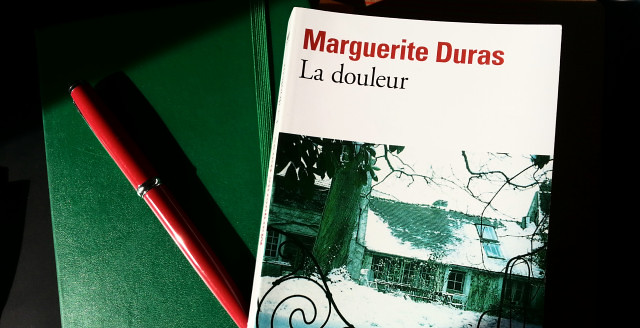
        Experiencing any war is painful. Its effect lingers for a long time - maybe for decades, over generations. The American Psychological Association defines trauma as the lingering psychological and emotional response to a singular traumatic event that threatens injury, death, or the physical integrity of self or others and also causes horror, terror, or helplessness at the time it occurs. The French literary giant Marguerite Duras, in an introduction to her memoir with a very literal title- La Douleur/The Pain, culled from her essays and diaries in the occupied France during WWII, as she was involved in the resistance movement and waiting for her husband’s return from a concentration camp, she claims that she doesn’t remember writing those words, "When would I have done so, in what year, at what times of day, in what house? I can't remember." The emptiness left by the absence of her loved one is so great, she would lose herself.

        If there were another title that can encapsulate the theme of all of Petzold’s films other than Transit, it would be ‘ghost’. Some critics grouped three of his earlier films ‘The Ghost Trilogy - The State I am In (2000), Ghosts (2005) and Yella (2007) for portraying characters who have to contend, one way or another, with the economic hardships and invisibility in post-wall neoliberal Germany. But his subsequent works, along with the theme of transient lives, Petzold’s protagonists suffer from loss of identity and invisibility also. Burdened with terrible secrets they can’t reveal, they tread their paths as if on eggshells - like the East German doctor who hides her intentions to defect to the West in Barbara, a disfigured concentration camp survivor who has to go along with her new identity in Phoenix, Georg who assumes the dead man’s identity but can’t reveal his secret in Transit. It might be a different pain: one caused by economic hardship in highly capitalistic society, the other caused by violence of war. But they both make ghosts out of people who experience them. The economic disparities and characters with lost identities in Petzold’s earlier films and many other works by the Berlin School filmmakers can be attributed all the way back to atrocities of the nazi Germany in WWII. Losing oneself, losing one’s identity is deeply entwined with the survivors’ guilt, the guilt of leaving others behind/betraying others. That guilt for those who remember the past, never really went away. They have been the theme of Duras and many of the Nouveau Roman writers as well as all Petzold’s films and many of other directors in the Berlin School.

Syrian refugees         Let’s put the film in context of the world events in 2017-18; the Syrian civil war was still raging and the refugee crisis was deepening, Trump enacted the Muslim Ban restricting visas from 7 predominently muslim countries, started to build the wall in the southern border with Mexico, the Israel-Palestine conflict intensified, just to name a few. It is not difficult to see what is reflected in Transit is not far from what’s been happening on the news on TV every night. The future is already here: the film’s premise, the ugly past repeating itself and its temporal dissonance says a lot about the highly advanced capitalist, neoliberal society. The world is moving too fast, while humanity has a little time to reflect on the past. I see Transit as an allegory of Germany’s war past and its citizen’s collective, willful amnesia, caused by the war itself. Hence, the merry-go-round of war - trauma - collective amnesia - war - trauma - collective amnesia being repeated. Suffering from an identity crisis, Georg desperately tries to save Marie while concealing the bitter truth that Weidel is dead and gone all in the midst of fascist takeover: Georg is a stand-in for Germany, Weidel for the utopia that never materialised and Marie for the country’s future/younger generation. Going back to Sehnsucht/longing for the utopian Germany that never was, and regarding Germany’s dark history repeating in Transit, I believe Petzold is telling us that however painful it is, we will have to face the past in order to understand trauma so we don’t repeat it.

Sources Consulted 


1. Abel, Marco. ​The Counter-Cinema of the Berlin School​. Boydell and Brewer, 2013: 1-28, 69-110

2. Chang, Dustin. “I Envision All These Great Small Movies in the Ruins of Hollywood: Chrsitan Petzold Interview, Screen Anarchy, December 12, 2012

https://screenanarchy.com/2012/12/i-envision-all-these-great-small-movies-in-the-ruins-o f-hollywood-christian-petzold-interview.html

3. Deleuze, Gilles. Cinema 2: The Time-Image, University of Minnesota Press, 1989: xi, 1-67

4. Hamann, Hilary Thayer. “A Harsh Tale of War, But Unforgettable Read,” NPR, February 16, 2011

https://www.npr.org/2011/06/29/133811002/a-harsh-tale-of-war-but-an-unforgettable-read

5. Mirthy, Vikram. “Christian Petzold on Transit, Kafka, His Love for Den of Thieves and More,” RogerEbert.com, February 24, 2019

https://www.rogerebert.com/interviews/christian-petzold-on-transit-kafka-his-love-for-den-of-thieves-and-more

6. Mudd, Cass. “What the stunning success of AfD means for Germany and Europe,” The Guardian, September 27. 2017

https://www.theguardian.com/commentisfree/2017/sep/24/germany-elections-afd-europe-immigration-merkel-radical-right

7. Staff. “Germany sees extremely alarming rise in racist and anti-semitic hate crime,” The Local, May 14, 2019

https://www.thelocal.de/20190514/germany-sees-extremely-alarming-rise-in-racist-and-anti-semitic-hate-crime

Thursday, December 17, 2020

Or This Dream We Call Human Life

The Cloud in Her Room (2020) - Zheng Lu The-Cloud-in-Her-Room-1 
Muzi (Jing Jin) is home in Hangzhou for the new year's. She is a recent college graduate, trying to find her way in the world. Her parents are divorced and in other relationships. She herself is in uncommitted relationship with a college flame Yu Fei (Zhou Chen) who comes to town to see her. She is also trying to vie for the attention of an older, worldly bar owner (Kangning Dong). She spends a lot of time alone in her parents old high-rise apartment, now empty and abandoned. So this is the backdrop of this densely layered, cinematically inventive debut of Zheng Lu Xinyuan. 

Mixing documentary style handheld camera work, interviews, inverted images, mirror effects and static long takes, the monochrome The Cloud in Her Room is perhaps the most astutely realized work that befits its self-consciously digital cinematography (by DP Mathias Delvaux), even much more so than Alfonso Cuaron's Roma. It's precisely because of its social realism, here and now of changing China, instead of period piece of reimagined Roma - the vast crisp grey mid-tone reflects the smoggy industrial cityscape and one-thousand-cigarettes-a-day urban ennui much more so than the 70s Mexico City. It also accentuate its dreamy, ethereal, soft-edged quality of the film. Some of the compositions and experimental playfulness as well as its mid-tones remind me not of French New Wave (incessant smoking notwithstanding), but that of Japanese New Wave, namely some of Wakamatsu's work and Yoshida's Heroic Purgatory. 

As the characters declare never to fall in love again, and buff each others advances and (not)say farewells in haze and smoke, we realize that it's all been done and seen before. But Zheng Lu seems to have found a new fresh way to look at the human banality and make it beautiful and dreamy, breathing a new life into, uh, life.

Tuesday, December 15, 2020

Music is Life in McQueen's Lovers Rock

Lovers Rock (2020) - McQueen Screen Shot 2020-12-15 at 10.52.57 AM It seems Steve McQueen figured out how to capture the culture in a specific time period on film perfectly: with food and music. Lovers Rock, a slight film clocking just over an hour, part of his 5 part Small Axe anthology charting the West Indies community in London in the 70s, shot intimately and energetically by Shabier Kirchner and score by Mica Levi, is one of those dream movies- where every decision of the filmmaker seems right as it plays out organically and naturally. Its large ensemble cast of unknowns all seem to fit in at home, every details, the dresses, suits, embraces and elbow grabs and hanging arms and hands over would-be-lovers shoulders just seem right.

Taking one night at a large house party, Lovers Rock, named after the form of reggae love songs that everyone seems to know the lyrics to, invites you the guest, into the West Indian culture in London in the 70s with open arms. It starts out with Martha (Amarah-Jae St. Aubyn) sneaking out of her house at night to meet with her friend Patty (Shaniqua Okwok) to go to the aforementioned houseparty. It is busy already in the big house with activities - the vinyle covered couch needs to be moved in to the backyard, goat curry and other yummies are being prepared in the kitchen, DJ and sound system need to be set up. There are some volatile characters and playboys and some show of misogyny that comes with the territory. But what keeps everyone together is the music. There are several blissful sequences where music does the job of storytelling - one is with Carl Douglas' Kung Fu fighting, extended cappella rendition of Janet Kay's Silly Games and Revolutionaries Kuntakinte Dub. These gatherings- under the watchful eyes of whites in the neighborhood and police, were the only outlet these communities had for each other to let the steam out, before you go back to the white world they live in the next day.

Vibrant and joyful and poignant, McQueen serves up a perfect Christmas gift this season. Lovers Rock is thrilling to watch and great, sweet middle piece companion to Small Axe anthology that is filled with serious stories of cultural, political struggle of the West Indie's community.

Monday, December 14, 2020

Spotlight on Racist Colonial History Through Stunning Stop-Motion Animation

La Casa Lobo (2018) - Cociña, León Screen Shot 2020-07-07 at 6.02.13 AM Painstakingly created stop motion animation serves to tell the story of 'the colony (Colonia Dignidad)' in Chile in the 70s, founded by German nazi exiles. Paul Schäfer, the founder, was accused of child molestation in Germany before he came to Chile. On the surface, they were agricultural collective, consisted of 'harmless eccentrics', but the colonists were involved in kidnapping, torture and murder of civilians, working together with Pinochet's military regime. 

La Casa Lobo tells a story of Maria, a German speaking girl who lives in a German colony. She is sweet and innocent. But she was sentenced to 100 days of solitary confinement because she didn't take care of her pigs properly. In a fit of rebellious spirit, she runs away from the colony with her two pigs to a small cabin in the woods. 

La Casa Lobo takes a lot from fairytale elements - from Red Ridinghood to Three Little Pigs. But its representation is nothing but fairytale. The stop motion animation, combining painting and sculpture using clay, paper and other materials, is constantly morphing into something else ingeniously within the confined space. And the images are not pretty but almost nightmarish. 

As the pigs grow up to be pair of brown children, we see that Maria is not the benevolent protector she portrays herself as. Use of German and Spanish are also interesting, highlighting the dynamics of master/servant, colonizer/locals. Endlessly inventive, La Casa Lobo is one of those animations for adults- dark and gloomy, pointy in its politics and mesmerizing in its craft. One of the year's best.

Sunday, November 29, 2020

Power Play

 Variety (1983) - Gordon

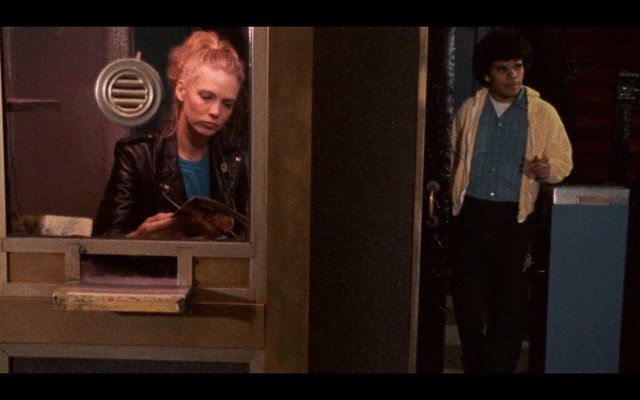
Screen Shot 2020-11-29 at 2.02.21 PM Screen Shot 2020-11-29 at 4.09.42 PM Screen Shot 2020-11-29 at 4.10.30 PM Screen Shot 2020-11-29 at 11.54.30 AM Screen Shot 2020-11-29 at 1.58.53 PM Screen Shot 2020-11-29 at 11.37.43 AM Screen Shot 2020-11-29 at 2.01.37 PM Screen Shot 2020-11-29 at 11.56.32 AM Screen Shot 2020-11-29 at 4.07.48 PM Screen Shot 2020-11-29 at 12.00.55 PM Christine (Sandy McLeod) needs a job. She's not making ends meet as an occasional journalist/reporter/writer. At her friend's suggestion, even though it might be beneath her, she takes a job as a ticket taker at Variety - a porn theater in the heart of the Red Light District in the city, near the 42nd street. 

So starts Bette Gordon's lumination of the gritty 80s New York and its feminist underground culture scene where emerging female cultural voices are presented- Variety's script is scripted by Kathy Acker and stars photographer Nan Goldin as one of the recurring characters- who later published stills from the film which became famous. Gordon examines female sexuality in a world dominated by male sex.

It is not about gradual change we witness in an uptight girl from Michigan into a raging slut, because her environment made her so. It is more to do with a women's point of view in sexual politics. As emboldened Christine talks about the sexually explicit materials with her male counterpart (Will Patton's journalist Mark and an unsuspecting pinball player at the bar), the increasingly uncomfortable men have no choice but either to flee the premises or stay put and listen silently. 

The movie then becomes a sort of detective noir as Christine follows a mysterious businessman Louie (Richard Davis), an occasional Variety patron who shows an interest in her and who might be involved in expansive illigal mob activities. Her snooping takes her to various places in New York - from the Yankee's Stadium to now defunct Fulton Street Fish Market to Chinatown to Brooklyn and to Asbury Park, NJ., showcasing the 80s gritty New York through the blurry lens of veteran NY indie DP Tom Diccilo. The fish market scene where she is the only female, surrounded by ogling eyes of all male fish mongers reminded me of the scene in Antonioni's L'Avventura where Monica Vitti's character walks down the stairs and watched by group full of men. It also features young Luis Guzman as the kind hearted manager of Variety. 

Christine reading dirty magazines or dressing up like a prostitute in front of her mirror or imagining scenarios where she starrs in a 'dirty movie' with Louie is not indicative of her turning into a slut. Variety is about sexual power. She calls Louie with her findings about him. Her reason is not to blackmail him, but rather, to have power over him. Variety directly counters the macho NY of Scorsese's Taxi Driver and it's fresh and delicious.

Friday, November 13, 2020

Stardust

Fireball: Visitors from Darker Worlds (2020) - Herzog, Oppenheimer

Fireball

Legendary filmmaker Werner Herzog and Volcanologist Clive Oppenheimer met in Antarctica during the filming of Encounters at the End of the World in 2007. They made a big impression on each other, kept in touch and ten years later, collaborated on a film Into the Inferno, about volcanoes around the world and what they mean to people who live under their shadows. With their joyful new film, Fireball: Visitors from Darker Worlds, they embark on a globetrotting adventure once more, investigating meteorites and wondering about human existence in relation to the universe. It's a funny, engaging, inspiring and dare I say hopeful film, even though the subject touches upon the total devastation of our planet.

It is not a new thing for Herzog to focus on science and scientists in his films. Besides those with Oppenheimer, many of his documentaries over the years - White Diamond, Cave of Forgotten Dreams, Lo and Behold: Reveries of the Connected World and Nomad: In the Footsteps of Bruce Chatwin - have featured enthusiastic scientists in their respective fields. It is easy to see why he likes them: it's their tendency to be obsessive and passionate in their work. It's their infectious curiosity and wonder that he has affinity with. Their unending quest for truth is not dissimilar to the essence of what the filmmaker has been doing his entire career with his films.

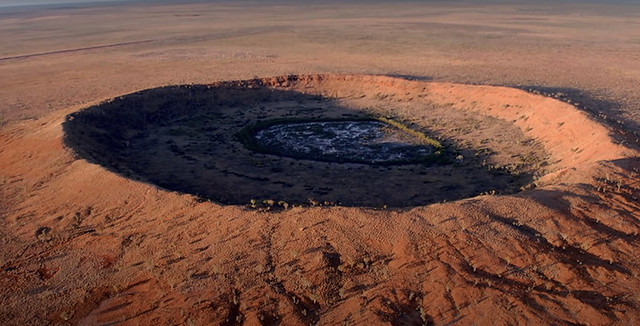
Spanning five continents, Fireball: Visitors from Darker Worlds, features an array of wry, funny characters (most of them scientists), introduces many different cultures, and involves meteors in one way or another. There's a great deal of majesty in these celestial imprints on earth that the film presents - from Wolfe Creek crater in the Australian desert, to Ramgarh crater in Rajasthan, to Chicxulub crater in the Yucatan peninsula: the imprint of the biggest ecological disaster the earth has ever experienced millions years ago. Its impact crater is so huge, human eyes can't even detect its enormity. Cenotes, the water cave system created around the rim of the impact site and satellite pictures tell part of its story. Then there are quasi crystals that reveal the building blocks of space and micro-meteorites- dust particles that reveals their celestial beauty under the microscope.

But the real fun part of the film is its human subjects. These bright, inquisitive, funny scientists and enthusiasts are tirelessly entertaining and the filmmakers give enough time for each of them to shine. It is quite astounding to think that Herzog and company were there to film all of them, hopping from one continent to another. Oppenheimer is in charge of all the interviews, while Herzog narrates with his trademark wry sense of humor and rarely interjects from behind the camera. When he does, as he does at the Arizona State University meteor lab, it's to crack jokes when the conversation turns to Carl Sagan's famous quote that "we are all stardust". Herzog quips "I'm not stardust. I am a Barbarian! We meet a famous Norwegian jazz musician who collects micrometeorites on the rooftops of Oslo with his DIY equipment. Then there is Brother Guy, a scientist turned Jesuit Priest in the Vatican, who embodies a perfect marriage of religion and science, as he eloquently illustrates his philosophy in front of an impressive collection of meteorites, citing "You can't do science if you don't have that sense of awe. You can't believe in the creator God without experiencing creation." Then there there is Planetary Defense Coordination Office at the Pan-STARR observatory in Maui, where two scientists are daily monitoring the night sky to catch sight of any rogue meteors coming our way that might cause the earth's destruction.

It all culminates with Oppenheimer being on the polar plateau in Antarctica, thousands of square miles of ice stretched as far as the eye can see, with a team of South Korean scientists, to collect meteorites. The polar plateau as it turns out, is where the best specimens of meteorites can be found because of its high altitudes and freezing temperature that best preserve molecules in those rocks. There, surrounded by enthusiastic and highly emotional South Koreans, Oppenheimer finds a highly valuable meteorite specimen all captured on camera from a helicopter above. How can you not be emotional, when you are at the presence of a space rock that might be 4.5 billion years old that has been frozen in Antarctic ice for another hundred thousand years?

Funny and surprisingly hopeful in these dark times, Fireball is, in essence, the amalgamation of what Herzog has been doing throughout his illustrious career: it tries to awaken that sense of awe, sense of wonder in us audiences. He finds a great partner in crime in Oppenheimer, a bright scientist with matching lust for life and knowledge to instill in us that infectious curiosity and enthusiasm about, of all things, life. I sincerely hope they continue their collaboration in the future.

Fireball: Visitors from Darker Worlds opens virtually on 11/13 on Apple TV.

Thursday, November 12, 2020

Science and Sense of Awe: Werner Herzog and Clive Oppenheimer Interview

Herzog Oppenheimer

Werner Herzog. What more can be said about the man, the original Barbarian, the legend? Meeting Herzog as a film journalist has always been an elusive dream of mine. And I never thought I would get a chance. But at seventy eight, Herzog has been as prolific as ever. This year alone, he is seeing the release of three of his films - Nomad: In the Footsteps of Bruce ChatwinFamily Romance, LLC and now Fireball: Visitors from Darker Worlds. This gave me a little bit of hope that he'd be hitting the press junket. And when the interview opportunity finally came along, albeit through a zoom session because of the world wide pandemic, I couldn't pass up the opportunity to talk with one of my true heroes of cinema.

And I am happy to report that Fireball, his new film co-directed by volcanologist/geologist Clive Oppenheimer (with whom Herzog collaborated in Into the Inferno previously) , is a thing of a beauty. It encapsulates the very essence of the legendary filmmaker has been doing all his career - trying to awaken the sense of wonder, sense of awe, sense of curiosity in us audiences.

I had to tell Herzog off the bat that I was his biggest fan and that I would not waste my precious twenty minutes with him on being a fanboy and only ask him about the film at hand. To my surprise, besides being very Herzogian, he turns out to be very warm and funny and full of laughs. And Oppenheimer, as a wry scientist, his worthy partner in crime. I really hope they had as much fun as I did talking with them.

Oh and do not miss this film. Fireball is certainly one of the best films I've seen this year.

Fireball: Visitors from Darker Worlds opens virtually on Apple TV on 11/13.

First of all, I really really loved this film. It’s certainly one of the best I’ve seen this year. It’s beautiful and philosophical and everything I want to see in films. It’s tragic that I can’t see it on the big screen in theaters, like in normal times.

So you met each other while filming The Encounters at the End of the World. Then you did Into the Inferno together and now Fireball. How did this project come about? I know that you, Clive, initiated the project.

Herzog: First of all, we were lucky that we ran into each other on top of the volcano, it was 2500 feet altitude and 30 degrees below zero. We were immediately struck with each other’s presence and we stayed in touch saying we should make a film together one day. Ten years later, Clive came with Into the inferno, about volcanoes and then he called me again and said we should do another thing about meteorites. It took me five seconds and it was clear.

Oppenheimer: First thank you for your kind words on the film and I also agree I also miss not seeing it in theaters. I miss traveling with the film to the festivals and to be with the audiences and seeing it. I hope that it will be possible that there will be screenings in the future.

In its inception it was a piece of serendipity. It was spontaneous recognition that it would be a great topic to dig into: it was on a trip to South Korea where I met the scientists who go annually to Antarctica to hunt for meteorites.

Right.

They’ve already got a thousand of those. But they keep going there to find things they never found before. They showed us some of the specimen, which were beautifully curated in the laboratory with a kind of great visual aesthetic and in a scientific veneration, these examples displayed. It was for me an echo of veneration of meteorites in cultures around the world. One of the oldest falls, recorded falls is in Nogata, Japan. Now the stone in a shinto temple. So in Nogata, every five years, it goes on a procession through the streets. The black stone of Kabaa in the grand mosque… So clearly this is a topic like volcanoes that completely entangles the nature and culture… so we were off on another adventure.

Herzog: I am a storyteller so I can tell if it’s something big. And you know it instantly, like Grizzly Man, you know it instantly, this is so big, you gotta do it.

Yep. As you know, in this country, at least the last four years, there has been an anti-science sentiment that was pretty strong. And I know that—

Herzog: It’s just not the last four years. It’s not the administration…. It’s the American culture. It has to do with that frontier spirit. You are out there and you are against the frontiers and you are against the enemies out there and you have a rifle and your fist. So it’s culturally engrained which is not set by an administration alone. Now it just becomes more visible.

Oppenheimer: If anyone hasn’t read Naomi Oreskes’s book Merchants of Doubt, I mean, this is where you really begin to understand what it’s about. I’ve been at climate change conferences and I’ve seen exactly this pitting one so-called expert against another and sowing confusion in a very orchestrated way. So that’s the way it is.

The thing that struck me most the about your films is that over the years, Werner made all these films featuring scientists and science. I am wondering  what the correlation of your filmmaking and science and how you found this affinity between the two.

Herzog: Very simple. I wouldn’t have made a single film without a sense of awe. I wouldn’t have made a single story without sense of deep excitement. That’s culture – a collective agitation of mind. It’s the core of what culture is. A cow in the field doesn’t have that. And we have it.

Yes.

And the same excitement, the same sense of awe pervades science. You don’t become a scientist if you don’t have that excitement in you.

Right. It reminds me of that Jesuit priest in the film. Brother Guy.

Herzog: Clive discovered him. He gets the casting- like a credit in a good feature film. An essential character! And he found Brother Guy and what a wonderful conversation he has with him!

Oppenheimer: Who knew the pope had an astronomer? I didn’t know. (everyone laughs)

It’s amazing that you traveled all over the world for this film: 5 continents, not including the stock footage. All the time I was thinking, “OK. Werner is you know, putting someone younger in charge now to do the fieldwork and he is comfortably sitting in editing suite somewhere. But then I found that in Arizona you interject yourself into the frame. Then I realize, ‘oh my god, Werner was there the whole time everywhere that Clive went!’ How do you do it? It amazes me. That’s some stamina!

Herzog: I don’t like traveling, Traveling on planes with 8-9 hours time deference getting tossed in a different culture so we can’t really absorb it. That’s not healthy. That’s not good. But we had to go to various places because meteorites come down everywhere indiscriminately. And going to Antarctica means, of course there is less ground to search for them. But a hundred of thousands square miles of ice. So whatever on top of it is visible and it must’ve come from out of space. And just to clarify, I was with Clive in Antarctica for the previous film Encounters at the end of the world. But in this particular shoot, Clive with cinematographer Peter Zeitlinger and I wasn’t there I had started to organize the footage we shot already and put some narration and put some order into things.

Ah.

Herzog: But, I knew that time it would the last thing to shoot and Clive would do it. He was fluent in what we were doing so far so I didn’t need to be there. Because crew was there and Clive was there so I had total confidence in him.

Oppenheimer: We work very close together. You wouldn’t be setting up a case that I would be his surrogate. We worked as a team along with our wonderful sound recordist and cinematographer and editor and a lot of support from production. A lot of ingredients come together. We have a very clear sense of purpose when we collaborate. We know exactly what we are going to do.

Herzog: I only understand Clive as a filmmaker.  Since he is a scientist he brings some other skills into it and I bring my voice--

Yes.

Herzog: And Clive doesn’t have the crazy accent. That can not be replaced by Clive. It’s that Barbarian in me.

Oppenheimer: I have spent some time trying to emulate it…badly. (everyone laughs) But perhaps it should stay in private.

I didn’t know there were South Korean scientists looking for meteorites in Antarctica.  I am Korean. And their station there is huge! And they were eating lobsters and kimchi?

Oppenheimer: I tell you. It was so wonderful at Jang bogo station. The South Koreans, the whole program, have at least two stations there. They have research vessels and an ice-breaker and they are also working in the arctic. And this film starts with them. Meeting them in South Korea three years ago gave me the idea and on top of that Jung-ik Lee and his wife Mi-jung are such wonderful characters. Jung-ik--

Herzog: Clive, we have to point out that video they shot. It can’t get any better than that. The excitement, the exuberance screaming out by a scientist...it is now in the film that we made…we have never seen anything like this. I said ‘we must have this footage in our film. We must have conversations with the Koreans!’ Nobody expected that the highlight of the highlights would come from a Korean scientist who drops on his back and screams out (laughs). So we owe the Koreans a lot.  We owe them in the previous film. We owed the North Koreans a lot when we did Into the Inferno, on the gigantic volcano in the North Korean and Chinese boarder. Those astonishing footage comes from North Korea. And we had the perserverence to get the permit to shoot there. We had the most wonderful time with the Koreans. It has nothing to do with our conversation and our movie. But I come from a country that was divided, and then reunited. Deep in my heart and I hope and pray that Korea will be reunited.

Same. Same. (taking a bow with the hands clasped)

Did you get to keep the meteorite you found in Antarctica Clive?

Oppenheimer: Well… (I hear Herzog laughing at me)

Herzog: No of course not.

Oppenheimer: It flashed through my mind of course…but I knew that Pete Zeitlinger was up there on the helicopter with a camera pointed at me. So of course I respected it. I didn’t even touch it because there is always a possibility one of these organic rich meteorites were… there were many studies to be done and look at the amino acids, sugars and other molecules in it, so I didn’t even touch it.

Herzog: Early in the film, you see a dashboard camera footage of a meteorite coming down in Siberia. That was only five years ago or so. It was in Chelyabinsk in Siberia. Since my father-in-law is a great geophysicist in Siberia not very far from Chelyabinsk. And he had a small fragment of it about the size of a walnut and he gave it to me as a present.

Awww. That’s great.

I am married to my wife who is from Siberia originally and I do have a fragment of this very same large meteorite that exploded that you see on the film.

Awesome. That’s so great.

Oppenheimer: It was such a thrill to find that meteorite not only because I am a geologist and I never found the meteorite before. It was partly, feeling the sensation of being on the polar plateau, high altitude and the quality of light the light refracted in the blue ice, which is a hundred thousand years old. And with these snow snakes, wind is blowing all the time, you walk down the wind looking side to side for five or six hours, and to find the stone was a huge huge thrill.

And the specialists who were with us, recognized that it was not like the other common types. About 95 percent of them are called ordinary chondrites. At first that they thought it might be Martian, among a hundred or so that were found. So it got back to…see it didn’t end up in my pocket.  It did go back to South Korea. (laughs) And they identified it as Ureilite. That’s a very rear class of meteorite. So it spent four and a half billion years in space and about a hundred thousand years in the glacier and now it’s on a scientific journey and I will follow it with great interests and see what it reveals.

They should name it after you… or something like that.

Oppenheimer: Well, I was quite tempted to suggest when we filmed in Hawaii, Maui Island rather. It’s where they have Pan-STARRS telescope facility with the two largest cameras in the world with billion pixel sensors – every night they open up and scan the sky, looking for near earth objects and we had a conversation with the astronomer Rob Weryk, a young Canadian scientist, who discovered the first extra solar, a group of comets which briefly visited us in the night sky and barreled out of the axis of our solar system and never seen again. It was called Oumuamua in the local language something like ‘the first messenger from afar.’ I did, I tried to suggest, because they detected four the night before and to call one of them, the biggest, the meanest one, ‘the Herzog’.

Herzog: “A badass bad guy!” (laughs)

What Clive is mentioning is something that is not in the film. But the film has a lot of humor. Sense of humor, sense of awe, sense of excitement that is what we had to do, don’t be didactic. Not even a second. Let’s make a film that entices a kid to become a scientist.

Yes.

I talked with someone during the Covid. He is a documentary filmmaker. Part of his film is to do with film history. We were talking about how the Covid is affecting the film industry and he joked about if it’s the end of cinema. I think he meant it as the end of the movie going experience. Do you think this is the end of cinema?

Herzog: No I do not. It will remain but of course more limited than before. The tendency toward streaming platforms started  years before we had Covid. It only reinforced and emphasized what was already in motion.

Right.

Sure we have to face certain things but…for example kids are watching movie on their smart phones and some of them are watching one and a half speed. We have to face that fact. We have to face that world. But at the same time, the streaming Platform is uninterrupted by commercials. What you saw in documentaries, for example, they had every nine minutes there’s some sort of highlight, every nine minutes a cliff hanger then it switches to three minute commercials and keep the audience glued to the film so it has created an awful narrative structure. And that was what we had before.

Now the streaming platform has a great advantage. A fifteen year old would get in touch with me way before the pandemic struck, because he has seen Aguirre, the Wrath of God. Or the film that I made before their parents were even born. They start discovering these on the internet. They exchange wild emails and on social media. And all of sudden I am big among 15-year olds. (laughs) Thanks to the internet.

Oppenheimer: I want to add two things. One is I really miss live events. I miss being part of an audience. I miss seeing things on a big screen. But I also think the human perception and human imagination are incredibly adaptive. For example, an experiment where people were given inverting goggles, so everything was upside down. And pretty soon, they didn’t have any problems walking around and picking things up. And they could take them off again and few hours later they were back to normal. I suspect that people who are watching on a smart phone with one and a half speed, will probably still be able to project themselves into the world of that cinema. I don’t think I can do it. But I suspect a fifteen year old would probably have quite meaningful experience doing that. At least I hope so.

That’s an interesting point.

Well. Thank you gentlemen. I really appreciate you talking to me. This has been great. Much success to you and the film. Hopefully I will get to see this film on the big screen sometime soon.

Herzog: Very good talking to you.

Thank you so much.

Oppenheimer:  My pleasure.

Dustin Chang is a freelance writer. His musings and opinions on everything cinema and beyond can be found at www.dustinchang.com


Art of the Real 2020 Showcases Constantly Evolving State of Filmmaking


I was devastated back in April that Art of the Real, my favorite annual film series at Film at Lincoln Center didn't happen because of Covid Outbreak. But here we are, 7 month later, the celebration of non-narrative/hybrid filmmaking is back, again with superb offerings. Better late than never! And I am so grateful for it. So if you want to get over the election hangovers, and plunge into far reaching, innovative, refreshing and adventurous cinema, please join me to explore some of the most delectable choices in non-narrative/hybrid films the festival is offering. Presented with the support from MUBI, Art of the Real runs two weeks 11/13-11/26 with 34 films presenting. Please visit Film at Lincoln Center Virtual Cinema for tickets and info.
Below are 6 films I had a privilege of sampling:

La vida en común la vida en comun

Ezquiel Yanco’s La vida en común tells a story of a group of teenage boys in Pueblo Nación Ranquel, an indigenous settlement in the San Luis territory in the middle of Argentina. The first thing that you notice is its government built housing the inhabitants live in– a geodesic concrete huts with pipes sticking out, looking like an unfinished 70s sci-fi movie set. There is an unseen puma stalking the village, and these boys see tracking and hunting it as the rite of passage to adulthood.

Part Lord of the Flies, part Waiting for Godot, La vida en común is an engrossing coming of age story that emphasizes the absence – of adults, of things to do in the vast and arid territory. Kids let their imagination go wild, while continuing their machismo culture based on the folklore of the Rankülche tribe.

La vida en común touches upon a lot of issues such as colonial past, assimilation, globalization and cultural heritage. The film is intimately observed and endlessly fascinating. 


Bird Island Bird Island

Maya Kosa and Sergio da Costa’s Bird Island takes place in a bird rehabilitation center in Switzerland. Antonin, a young man with a long bout with illness and isolation, is assigned to the center to reintegrate into the work force. He has to learn everything about taking care of birds from Paul, whose retirement is just around the corner. Paul’s job was prepping meals for various birds in the sanctuary, including breeding and ultimately killing mice for birds of prey, being a part of reintegration procedure when rehabilitated birds are released into the wild.

At a first glance the film with real life characters (all characters are playing themselves), their short exchanges and their wooden demeanors might come across as awkward. But as it plays out, with beautiful full frame photography, this simple, observational documentary exude human kindness and compassion without trying hard. Also interesting is how Antonin’s reintegration to the humanity mirrors that of birds. With his gentle nature, Antonin may never learn how to kill mice before Paul retires, or how to show his crush on the center’s veterinarian Emilie, but the life goes on. Some birds die, some live, some come back after their release, some heal completely.

Emilie wonders why there is an upsurge of wounded birds? What are they feeding on outside that make them sick? With that, here is also an environmental message in this lovely film.


Małni – Towards the Ocean, Towards the Shore Malni

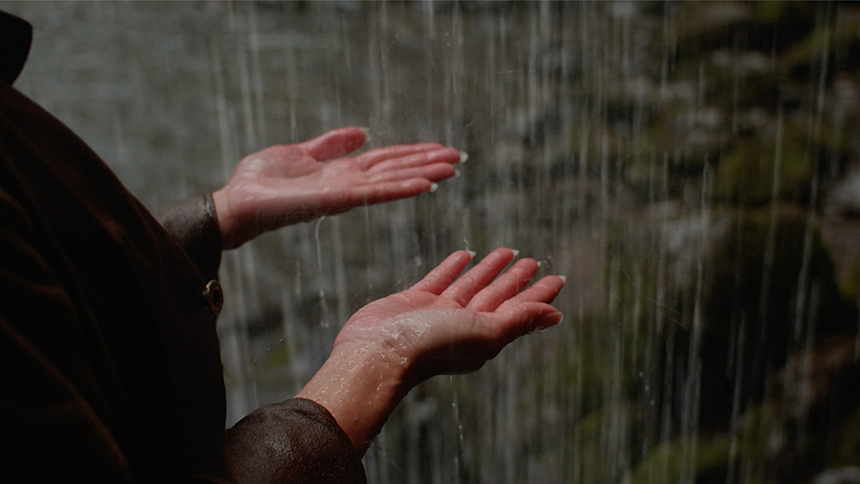
Mostly narrated in chinuk wawa, a rhythmic language of Chinukan people of the Pacific Northwest, by director Sky Hopinka, Małni- Towards the Ocean, Towards the Shore follows Sweetwater and Jordan, two people of the Chinuk origin, as they talk about home, identity and keeping the tradition alive within the frame of the origin of death myth of Lilu and T’alap’as (wolf and coyote). With the two (un)related young expecting parents, Małni is a lyrical contemplation of cyclical nature of life in the gorgeous backdrop of the lush, mossy Pacific Northwest. Everything is related to water – waterfalls, rain, the sea, enveloping everything – death, birth and everything in-between. Beautiful filmmaking.


A Shape of Things to Come  A Shape of Things to Come

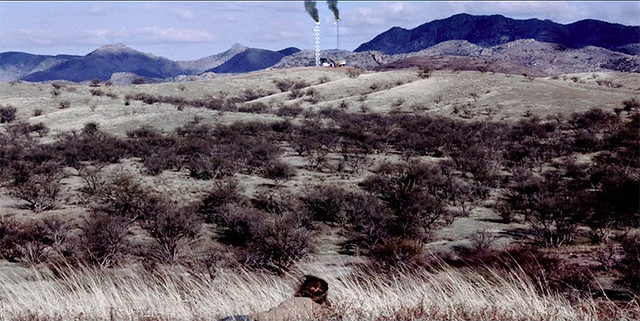
Directed by Havard Ethnography Lab alum J.P. Sniadecki (The Iron Ministry, El Mar La Mar) and Lisa Malloy, A Shape of Things to Come tells a story of Sundog who leads a survivalist existence in his trailer with the Sonoran Desert as his back yard. Sniadecki met Sundog while filming El Mar La Mar, a visually arresting film that also condemned the US Government’s inhumane immigration policy near the Southern border.

The film starts with a constant electronic noise and shots of satellite towers. It’s pretty clear that they are communication towers used by the US border patrols.

Capturing Sundog’s day-to-day life, the filmmakers document the essence of outdoor living- hunting, gathering and animal husbandry with all the connotations that associated with it – freedom, America, western expansionism, self-reliance. Being an herbalist, Sundog collects various of fauna, mixes in with alcohol to make medicine that he sells. He also collects toads at night to extract their white secretions to make hallucinogens out of it, which he eagerly partakes after drying the substance into a fine powder. He also practices with his long range rifle.

Part nature documentary, part character study and part eco-terror fantasy, A Shape of Things to Come offers another fascinating mix of non-fiction/fiction with great intimacy and urgency.


The Two SightsSecond Sights

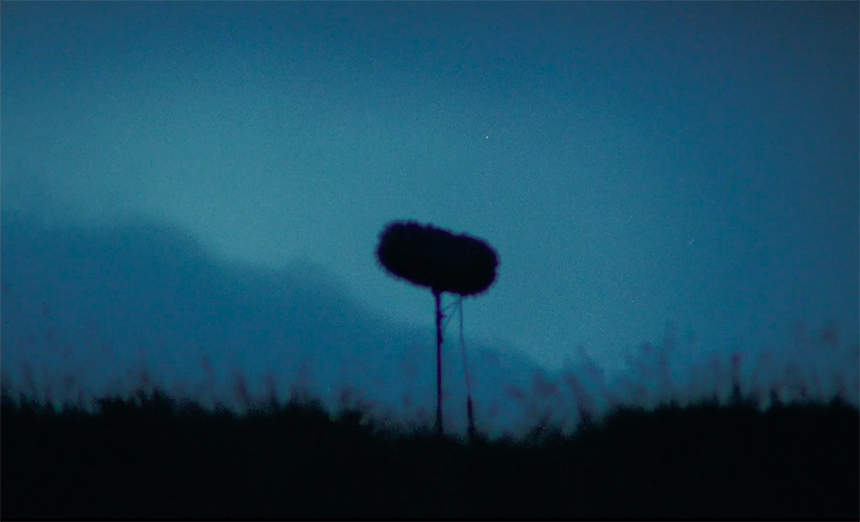
Shot and collected from various Scottish isles, The Two Sights is composed of little eerie Gaelic tales that were sent down in oral tradition. An old timer narrates in the beginning that these sight-seers, either see or hear something in and out of their surroundings. It makes sense as director Joshua Bonnetta sets up his microphone in the windy field and just exits the frame in the beginning of the film. The often picturesque Scottish outdoors feature the elements of nature – rain, waves, birds and other animals, as well as boats and other human made sounds. By looking at the images and hearing sounds Bonnetta collects, you can totally see how these tales took their forms – the rustles against the thatched roofs, a seal floating in the water, the reflections on a calm loch surface, nature can play tricks on you very easily in these parts of the world.

But the narrations take much more spiritual tone. Singing/humming at their loved one’s passing, caring for a beached whale until it expires –the connection and communing with nature are the points of The Two Sights.And it’s also one of the most beautiful cinematic experience I’ve ever seen and heard.


The American Sector Screen Shot 2020-11-12 at 11.18.05 AM

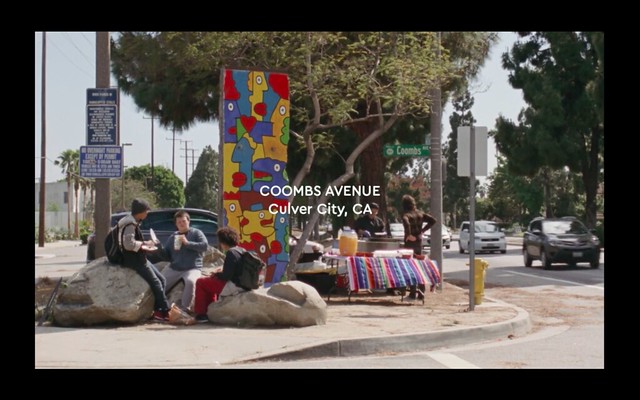
Pacho Velez (Manakamana, The Reagan Show), another Havard Ethnography Lab alum and Courtney Stephens direct this travelogue of sorts. They document concrete slabs that used to be the Berlin Wall which are scattered all over the US. The American Sector is an extremely fascinating examination of symbols, metaphor, propaganda, personal historicity, bias and bigotry, physical artifacts vs intangibles....

You'd find these memento mori in expected places - museums, public parks, college campuses, military stations and government buildings. But they can be also found on the curbside of interstate highways, in front of a restaurants, in private homes, gated communities, corporate headquarters and theme parks.

The film posits some very interesting questions about how to put contexts in inanimate objects to its surroundings. Once removed from its original space and time, does the object hold the same meaning? Its layered spatial-temporal musings on the subject make The American Sector a delightful cinematic experience.