Monday, December 22, 2014

Power vs Virtue

King Lear (1987) - Godard
 photo 9fd719b0-83cc-48d6-bb3e-2b3d64e8c331_zps2bba7729.png
 photo 99759c5d-3d58-4c92-994c-edd53f07b016_zps1b8c586d.png
 photo 9f79246e-6964-467d-b682-c0b4c6682e9c_zps9bdd9a4e.png
 photo 686cdfe1-ce9c-4f3f-8827-667224e66e11_zps7e708b92.png
 photo d8b3d271-2235-4779-a222-f1226afea731_zpsb7cadf73.png
 photo 2cbd65c5-7ed9-44e4-bb12-e499e41267ba_zps314a33f0.png
 photo 89e55f5b-ea70-4bc8-abcb-98f5a45ade97_zpsf5658702.png
 photo 5c641890-c48d-41be-8e9c-37bf45ffe457_zps660fbb80.png
 photo cf8792dd-43bc-4b82-90a4-3f3751a765ef_zps9a480fc5.png
 photo 1c6d870d-703b-460e-9e2d-21e7828df081_zpsa57c9049.png
 photo e03f86b2-a638-4de0-b123-972a8291d8a0_zpsd1752fe4.png
"Instead of King Lear having three daughters, Cordelia has three fathers - a writer, writer playing the role of the writer and myself, the director" quips Godard in a gravelly voice. The writer in this case is Norman Mailer. He says he can only do King Lear as a gangster film. Thus Lear becomes Don Learo. Learo is sniveling Burgess Meredith and Cordelia is Molly Ringwald. The setting is Nyon, a lakeside Swiss town. Chernobyl happened and wiped out the whole civilization. Movies and art are lost. The 'image' needs to be reinvented. A Shakespeare's descendent (theater director Peter Sellars), is trying to rediscover all the great plays of his ancestor and he finds an inspiration from the old man (Meredith) and his young daughter (Ringwald). In the meantime Prof. Pluggy (videowire dreadlocked Godard, gruffing in English from the side of his mouth and sounds like as if Meredith had a stroke, plays basically a cultural shaman) with his young minions, Edgar (Leos Carax) and Virginia (Julie Delpy), is trying to create the image with the help of sound (multiple voiceovers, waves, seagulls overlapping and interrupting dialog). Sound is important because it relates to the silence of Cordelia. There is a parallel rediscovering 'movie' and 'art'.

Godard juxtaposes old men's penchant for young beautiful girls, from Renoir the painter to Renoir the director with King Lear, the powerful, dying, demented and Cordelia, the young, virtuous but untender and a bloody bedsheet, suggesting incest (hence the appearance of Woody Allen at the end or pure coincidence?). The words are cheap and Cordelia doesn't wear her heart on her tongue. He also comments on the doomsday scenarios (Chernobyl just a year before) and dominant video technology vs film - there is a scene where a reel of film discarded in the forest being rescued by Carax. It's less cinematic and messier than his other 80s films and a little jarring to hear everyone speaking English in this Godard's first and only English feature, but his playfulness is there and the choice of 80s teenqueen Ringwald as Cordelia makes a lot of sense here.

Sunday, December 21, 2014

Top 10 Performances of 2014

Most memorable of the bunch, not necessarily in order

Sara Forestier in Mes séances de lutte/Love Battles
 photo 8976a57c-a534-4e27-9f54-111729d1f53f_zps1d4da5d6.jpg

Isabelle Huppert in Abus de faiblesse/Abuse of Weakness
 photo 7bebd27b-93da-45e8-b57c-97e2ee14831b_zps7e96420a.jpg

Juliette Binoche in Clouds of Sils Maria
 photo clo_article_story_large-630x420_zps4e9aad0c.jpg

Tony Servillo - La Grande Bellezza/The Great Beauty
 photo 03e89d87-d09c-4c3c-9737-ef86948ea76d_zps55e3175f.png

Kristen Stewart in Clouds of Sils Maria
 photo b16b69ad-c6dd-464b-bce3-912c056e3bd1_zps71578111.jpg

Liao Fan in Black Coal, Thin Ice
 photo f6f383cc-d814-4c0f-ac24-f17d3395bd77_zpsc1cfec13.png

Michael Fassbender in Frank
 photo 1ce8c957-3a54-4f1d-bb5c-af13f083656b_zps6277aa5d.jpg

Patricia Arquette in Boyhood
 photo c0a7e3e2-e92f-4619-a926-87fac3c40a2c_zps7cdfae2f.jpg

Agata Trzebuchowska in Ida
 photo d41f1693-78ff-4ba7-8141-ba47af8f4e0a_zpsd52344ff.jpg

Emmanuelle Devos in Arrête ou je continue/If You Don't I Will
 photo d6fd1c5f-7bd4-4db2-8c43-b203f3238414_zps409fcf41.jpg

Saturday, December 20, 2014

My Top 10 Favorite Films of 2014

Oh Lordy, it's that time of the year again. It was a solid year at the movies. And I thank North Korean hackers stopping yet another James Franco/Seth Rogen jerking each other movie from coming out in theaters. Two films I saw early on this year held their impact- Under the Skin and Love Battles, and topped this year's chart, while Boyhood really surprised me since I was never into Linklater's work. As usual, there were some spectacular documentaries: The Look of Silence, The Iron Ministry, Manakamana and many others. Godard never seizes to amaze me, so too Breillat. So without further a do:

*Click on title for full review

1. Under the Skin - Glazer
 photo 145b466c-fa1e-4636-bc9e-28b94c049c95_zpsdc51e37b.png
My mind was made up early on this year, after watching Jonathan Glazer's Under the Skin that nothing would beat this film as my favorite. And I was right. Audacious and cinematic, looking at humanity through the eyes of alien in the form of Scarlett Johansson, the film is a profound, hypnotic headtrip for sure.

2. Mes séance de lutte/Love Battles - Doillon
 photo 0e43cd81-7d6d-4435-8a82-04e95ff0f417_zpsc62dec2a.jpg
The sheer force of physicality of Love Battles is just mind-boggling. Unlike von Trier's hollow exercise on human sexuality, Doillon's grand experiment has real resonance and honesty that can't be duplicated.

3. Cavalo Dinheiro/Horse Money - Costa
 photo 60d4c184-e5af-4c86-a0b5-423c4bee54d9_zps7214e9ef.png
Pedro Costa does it again here with Horse Money. Bravely exorcising his non-actor subject's own past without guise or limitation.

4. The Look of Silence - Oppenheimer
 photo 5b583487-cb43-48d0-82dc-73445281ffd8_zpsd73fce61.jpg
Perhaps the bravest of all filmmaker working today, Joshua Oppenheimer faces the evil from victim's point of view this time. The film is just as compelling and disturbing as last year's Act of Killing.

5. Jauja - Alonso
 photo 5102279f-cd4d-4edc-8258-0f40294343cc_zpsab404b0a.png
Finally got to see a Lisandro Alonso film and happy to report that it is magical. I have a lot to explore from this Argentine auteur's filmography coming new year!

6. Eden - Hansen-Løve
 photo 97ec2567-e46c-43ec-9f0a-3b9318ebb635_zpsxeksdg1g.jpg
Eden is a film of lasting impression. It gains its poignancy long after you watch the film. It's sprawling epic that is tender and touching and beautiful. This might end on my top 100 some day.

7. Adieu au langage/Goodbye to Language - Godard
 photo 0f7de2e2-eaf7-4ebe-b944-c6b0b64c5b58_zps4e732b33.png
3D Godard! Certainly one of a kind experience.

8. Clouds of Sils Maria - Assayas
 photo clo_article_story_large-630x420_zps4e9aad0c.jpg
Perhaps the most entertaining non-Hollywood Hollywood film of the year.

9. Black Coal, Thin Ice - Biao
 photo dccf732f-d7b0-4511-8c43-9f8de113c177_zpseb94d9ff.png
Biao Yinan's neo-noir is the whole package: handsomely crafted, compelling characters, great narrative pull - everything we want in films. It reminds us that Chinese cinema's future is not in mega million CG wu xia films but in low-budget independent filmmakers like Biao Yinan, Li Yang, Lou Ye, Jia Zhangke, Ying Liang and so on.

10. Abus de faiblesse/Abuse of Weakness - Breillat
 photo 7bebd27b-93da-45e8-b57c-97e2ee14831b_zps7e96420a.jpg
Breillat's stroke didn't stop from her from making a brilliant depiction of a sexual power game. It made even better.

The Rest:

11. Timbuktu - Sissako

12. Ida - Pawelikowski

13. Le Meraviglie/The Wonders - Rohwacher

14. La Grande Bellezza - Sorrentino

15. The Iron Ministry - Sniadecki

16. Frank - Abrahamson

17. Die Zeit Vergeht Wie Ein Brüllender Löwe/Time Goes by Like a Roaring Lion - Hartmann

18. The Dance of Reality - Jodorowsky

19. Manakamana - Spray, Velez

20. Boyhood - Linklater

Friday, December 19, 2014

Winter Ennui

Kis uykusu/Winter Sleep (2014) - Ceylan
Winter Sleep
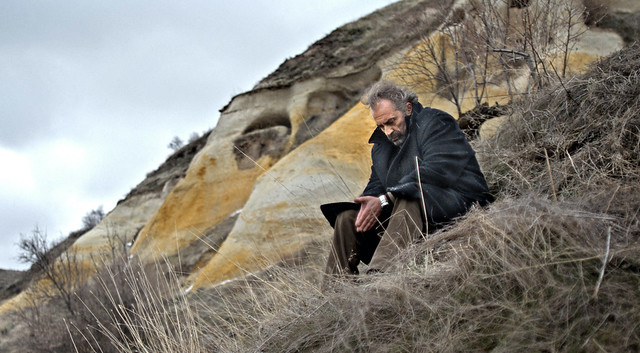
Aydin (Halruk Bilginer) is a proprietor of an ancient, picturesque carved-cave inn. He also owns a lot of properties around this Anatolian mountain community. He is an insolent, arrogant man who inherited his father's wealth and once a stage actor. He lives with a much younger, beautiful wife Nihal (Melisa Sözen) and equally insolent divorcée sister Necla (Demet Akbag). Aydin writes flowery columns for a community paper and is preparing to write a book on history of Turkish theater. When he is not writing, he talks to various guests who are staying at the inn. Things hasn't been good between Aydin and Nihal. She's been accusing him of not being interested in her philanthropic work and he in turn talks down on her lack of life experiences.

Winter Sleep is mostly composed of long winded indoor scenes broken up by some striking outdoor scenery. It's like kitchen table stage play where everyone sits down and argues for ages while drinking copious amount of tea. I really hated all three major characters who are extremely self-centered and very good at hurting each other's feelings with their petty resentments. I hate dialog where characters are all wearing their hearts on their sleeves and it happens A LOT in Winter Sleep. The only remotely interesting parts are about how Aydin and Nihal deal with poor folks - it starts out with Aydin and his property manager Hidayet visit one of the piss poor family after a young son from that family throws a stone at Aydin's car and breaks the passenger side glass. The family has been suffering financially and can't pay the rent. Hidayet had to remove their TV and other home appliances for collateral. Aydin is far removed from these tit-tat earthly affairs and has a hard time when confronted by it. Guilt ridden Nihal tries to help them but her ways lead to highly melodramatic results. What I didn't like about Ceylan's international breakthrough Distant was its pretty pictures have little to do with uninteresting main characters. There is no cohesion with its surroundings and these people who inhabit it. I have the same problem here with Winter Sleep, but only this time, they yak all the way through. It's as if Ceylan lifted his magic filter used in Once Upon A Time in Anatolia. The magic is gone: dialog is atrocious, slow zoom-in has no context whatsoever and voice over at the end felt like a cheat.

Winter Sleep is based on Chekov's short stories "Excellent People" and "The Wife". It's basically a filmed chamber play. I can see Nehal being a young wife trapped in a loveless marriage with a emotionally abusive older husband, a typical Chekov stuff. The thing is it's way too familiar, too predictable and too melodramatic, whereas in Anatolia there was a mystery that we are sort of trying to solve (setup being a police investigation). I checked imdb for writing credit as Ceylan writes everything with his wife Ebru and Ercan Kesal (Anatolia and Three Monkeys). Kesal's not credited as one of the writers for WS. Maybe that was the problem?

WS imho, definitely one of the weakest of all Ceylan I've seen. However unaffecting it was, Distant's minimalistic approach was refreshing and relies a lot on the viewer's imaginations to get into the minds of those two characters who are very different and distant. Chekov's work is all about confessing, divulging their inner thoughts for the readers/audiences. This may work on stage, but cinematically, it's too general and one note - Yeah it's winter and desolate. Yeah that's how they feel. FOR THREE HOURS. Anatolia was more layered, thematically and cinematically. I felt WS was just plain lazy filmmaking.

Cold-Hearted

Black Coal, Thin Ice (2014) - Diao
 photo 7821ff77-9151-43a1-8e5d-da12957f5b63_zps881bfbf9.png
 photo dccf732f-d7b0-4511-8c43-9f8de113c177_zpseb94d9ff.png
 photo 1b43dd95-c238-496d-a7c3-193aac4b7a4c_zps1a7d3d2c.png
 photo 92ccb7e8-a220-47cb-8365-b25b5082c6f1_zps95649856.png
 photo 6a3ac60c-4a5b-4e24-8ed3-ed3fd8ebd10c_zps98e5150c.png
 photo 8dfeeffb-10f5-4e18-a306-3cc10d30b115_zps8d34f414.png
 photo d024f4e8-bb1f-4385-9de3-7a6758295ee2_zps17458172.png
 photo d706a35d-cee1-49f5-be10-32b48d0db000_zps08b8b24e.png
 photo f6f383cc-d814-4c0f-ac24-f17d3395bd77_zpsc1cfec13.png
 photo c2fe555f-f6c3-4b50-b1ef-4ba5ac8cc797_zpsac51ab18.png
Black Coal, Thin Ice is a strong, gritty policier that pulls you right in. It features one of the coldest movie protagonists, even in noir standards. The year is 1999. Liao Fan plays 'stached police officer Zhang, whose wife is filing for divorce. He gets injured while investigating what seemes to be serial killings- body parts found in various coal processing plants all over. Then five years go by in a brilliant transition shot. Zhang, now a drunkard, works as a security guard for some factory. Again, body parts are found scattered and it rekindles Zhang's interests in the case and springs him up to investigate on his own. There is a mousy woman (Gwei Lun Mei) working at a laundromat who holds the key to all the murders. As he gets close to the woman, he finds out that her husband, presumed dead as one of the victims from 1999, is still alive and might have faked his death (DNA testing wasn't available back then). Zhang coerces her to give him up. He is just very good at what he does. He is not brutish and doesn't necessarily use violence. But his heart is colder than Nothern China in winter. His environs - grim, cold, joyless and perverted, reflect his character.

The film's almost theatrical lighting scheme (yellow, green, red and purple) doesn't give the film any warmth or slickness, rather it accentuates Zhang's hollow existence. Only in the dance sequence he lends any kind of emotion for the audience. The greatness of this sad/funny dance number is about the same as Denis Lavant's in the ending sequence of Beau Travail. Diao's China, the Beijing Olympics still 4 years away, is still very much provincial ("Who brought in a horse in my apartment?"), yet fast changing and cold-hearted. More dynamic than Lou Ye's Mystery or Jia's Touch of Sin, Black Coal, Thin Ice announces the arrival of another major auteur in Chinese cinema. I gotta track down Diao Yinan's two other films ASAP.


Thursday, December 18, 2014

Better a witty fool, than a foolish wit

Viola (2012) - Piñeiro
 photo 94a39cb7-d297-4aaa-bff3-6243892e9a0e_zps4f82265f.png
 photo d1db11fe-9971-4a98-89b9-ae1b23835f34_zps6f628977.png
 photo 61881f18-4f3f-44a0-95fe-567e12c2c57e_zps4540a3bb.png
What a delightful film! Doesn't hurt it features tightly shot closeups of very attractive actors bathed in warm, inviting color palates. It starts out as something and morphs into something completely different, but not in a conventional, hokey way. It's light, playful and seems to have some magical, personal logic of its own to follow. Characters goes in and out of the scenes, focus shifts from one to another, plots cross each other and intermingle, sunny and rainy in a same day and certain part is a dream...? Also it's the first movie I can think of where Shakespeare play is used in a very nonchalant, adorable way. The rehearsal scene where two beautiful girls (Elisa Carricajo and Augustina Muñoz) reciting from Twelfth Night over and over again is extremely sexy. Then there is Viola (Maria Víllar), a girl works as a delivery person on a bike for her and her nerdy looking boyfriend's CD/DVD counterfeit operation out of their living room. The ending is even more delightful. I am so regretting not seeing Piñeiro's new film The Princess of France at this year's NYFF.

Sunday, December 14, 2014

Power Game

Abuse of Weakness (2013) - Breillat
 photo a0fd12b6-f338-4753-90bb-46448408026d_zps906128c2.jpg
Why on earth an intelligent, ballsy woman get herself knowingly conned out of all her money? Based on a real life experience, director Catherine Breillat's Abuse of Weakness poses that question. Always dabbled on sexual power politics in her films, Breillat sets the stage for Maud (Isabelle Huppert), an esteemed film director and a charismatic conman Vilko (Kool Shen). Maud has a stroke one morning in her bed that leaves her paralyzed left half of her body. After a long rehab, she is somewhat back to the way she was. But the usual day-to-day chores becomes tantamount tasks for her. After seeing a TV interview of a thuggish ex-con man Vilko, she immediately decides to cast him in a new psycho-sexual film despite everyone's objections. Vilko, amused by this frail, older woman who doesn't get impressed/intimidated by him and his tall tales, sets out to do what he knows best, charming her to squeeze money out of her. The movie idea is long forgotten. She writes checks upon checks to him as he cites various reasons for these 'advances'. She, in physically vulnerable place but financially has an upper hand, plays out this dangerous power game. Not exactly a sugar mommy, but she enjoys the power she has over the brut. She likes to have him carry her into the car or puts her custom made kinky orthopedic boots on for her. There is a sexual tension, but she doesn't let him have it which is also part of the power game. Things change when she runs out of money.

Abuse of Weakness is endlessly fascinating and delicious and features the most fearless, complex performance of the year by Huppert.

Secrets

The Imitation Game (2014) - Tyldum
 photo 9245e15b-81da-4fea-a3a1-a1c8ea8e1b84_zpsc86737e6.jpg
The film doesn't turn out to be about brilliant English mathematicians led by Benedict Cumberbatch breaking the Nazi Enigma Code. But it's more about keeping secrets in the time when there was less tolerance. Cumberbatch gives a remarkable performance as an arrogant genius who has a terrible secret. Not a stretch for him by any means. He and his team may have helped to win the war but their heroics were classified for 50 years. But it's an unfulfilled, tender love story between Alan Turing (Cumberbatch) and his computer Christopher and the actor really shines portraying the agony of double secrecy Turing had to live with. Touching and well acted, The Imitation Game is a top notch entertainment. Norway's Morten Tyldum (Headhunters) proves to be a very capable director.

Friday, December 12, 2014

All the world's a stage, And all the men and women merely players

Synecdoche, New York (2008) - Kaufman *rewatch
 photo 6ba2e19c-8017-43f3-adf1-96d7265d2d79_zps5b238e51.png
Loneliness and death. For Caden (Phillip Seymour Hoffman) they figure greatly into his unraveling life. Yes there are other important things like finding self and representing truth in art and such. But the bottom line is, everyone dies some day. Don't know how Caden ended up in a loveless, downright cynical marriage and a daughter. His stage play gets a good reception and he gets smitten by a flirtatious box office girl Hazel (Samantha Morton) but waves her advances off to be truthful to his family. But as he struggles as a playwright and with his hypochondria, his artist wife Adele (Katherine Keener) leaves with their 4 year old daughter Olive to become a successful painter. Then he gets a MacArthur Fellowship/Genius Grant. He wants to put up a massive play that reflects real life. Caden, so caught up with producing something truthful, he loses track of time. Time passes aggressively fast. He sets up a duplicate copies of everything in a massive warehouse space, the buildings, people he knows in real life. With a blink of an eye Caden is old, Olive is a lesbian stripper covered with tattoos, dying of ink poisoning, Adele has died after leading successful career as an artist who did tiny paintings of people, just like how she used to make Caden feel- insignificant, during their marriage.

This multi-layered, ambitious film affected me like no other. Kaufman touches upon universal theme of loneliness and melancholy through the eyes of an obsessive artist who builds a replica of life on stage within the replica, within the replica.... Kaufman gives the well worn premise of life imitating art- vice versa and life as a stage play with more depth and intimacy. However absurd the idea of recreating life that is just like the one you are living in in a giant warehouse in New York, Synecdoche's consistently somber mood takes the surrealist whimsy down to earth. Forever romantic, he allows Caden and Hazel to finally unite, but too old to 'fuck each other until they merge into chimera'. There is more in Synecdoche than every 10 yr old's inclination that the world evolves around him/her. As Caden, nearing the end of his life after overseeing the ongoing, unfinished work - the lifelike biosphere he created, realizes that he too, is playing the role, directed by an actress who plays a cleaning lady (Diane Wiest). Synedoche is a massive undertaking that is at once deeply personal, complex and touching as much as any works of Bergman or Fellini.

Thursday, December 11, 2014

A Massive Collage Tribute to Orson Welles

 photo bdc79b55-fd5d-4bd5-9b11-e1681dfed7c4_zps0e72621e.jpg
In Magician: The Astonishing Life and Work of Orson Welles, documentarian Chuck Workman, best known for his assembled clips for the Oscar ceremonies, including In Memoriam segments, doesn't have to do much to enhance the drama in Welles' life, because there is plenty of drama already. Using great wealth of materials- clips from Welles' films, interviews with many of his artist friends, colleagues, admirers, historians, his TV appearances and much more, Workman constructs patchwork of the legendary filmmaker's entire lifespan, not unlike that of Charles Foster Kane.

It is interesting that even though there are a lot of things said and written about Welles but no documentaries were made about him previously. Perhaps it was because, as Workman points out in the film, of the disagreement between Welles' two surviving daughters, Chris and Beatrice, that prevented it from happening (Workman did the film without Beatrice's involvement) and many of his work still in legal quagmire.

The film is divided into 5 chapters. It starts with Boy Wonder, 1915-1941, chronicling Welles' rise from a humble Illinois household to theater wiz kid then goes on to dominate Federal and Mercury Theaters. The film unsurprisingly starts with the 'Rosebud' scene and moves on to his infamous 'Invasion from Mars' radio broadcast. We learn that his 'confidence of ignorance' from his theater days bled into making of Citizen Kane as novice filmmaker and acting on screen for the first time.

Outsider and Gypsy cover chapters during 1942-1949 and 1949-1957. The former as an unbankable director and later his exile period mostly in Europe, finding himself to be the reluctant proto-independent filmmaker. The Road Back which covers 1949-1966 includes two of the strongest late Welles' classic, The Trial (my personal favorite) and Chimes at Midnight.

Countless interviews ranges from good- with Welles' biographer Joseph McBride, his filmmaker friend Peter Bogdanovich and critic Jonathan Rosenbaum to irrelevant and crass- Julie Taymor (on theater) and chef Wolfgang Puck (chipping in on the subject's penchant for gastronomy).

In interviews, Welles seems remarkably candid about his career. When asked if his poverty in any way helped his creativity, he answers with definite "No!" He also always loved Hollywood but felt it didn't love him back as much. Was it financial reasons that myriad of his project went unfinished, including his long labored adaptation of Don Quixote and The Other Side of the Wind, or his perfectionist tendencies? With all the interviews Workman presented in the film, the answer lies somewhere in the middle.

'A destitute King' as Jeanne Moreau calls him in one of her interview segments, Welles' life reflects not only that of Kane but that of Paranoid, guilt ridden Joseph K from The Trial and most acutely and self-consciously, that of Falstaff, in his late masterpiece, The Chimes at Midnight.

Magician is not for hardcore film nerds who are already familiar with Welles' trials and tribulations throughout his career, for there are a lot of well publicized, known facts surrounding the legendary filmmaker and his tenuous relationship with Hollywood. Now anyone can google 'Orson Welles wine commercial' and view inebriated Welles fumbling lines and swearing on camera on youtube. But there are plenty more of juicy morsels to go around here to satisfy almost everyone.

Sunday, December 7, 2014

Solar Deity

Mr. Turner (2014) - Leigh
 photo e70baa82-80dc-409e-b2d1-2caa0353aaf3_zps79a588bb.png
 photo 512d71cb-5134-46ae-8fec-3769d0542ff8_zps3e30de15.png
 photo 5fbed39a-de22-4fab-8239-eb9715c33958_zps053d0d34.png
 photo 6212e7ef-f100-4d41-bac2-dad9fef5b6b5_zpsdbd37fde.png
 photo 451afcd7-610f-4b28-a084-418b1ed0519c_zpse76cbdcb.png
I think the last Mike Leigh movie I saw was Career Girls. I haven't seen his period pieces or biographies. But are they this lackluster? The subject here is J.M.W. Turner, the best known English painter whose almost abstract seascape paintings are the country's biggest treasures. A barber (played wonderfully by Paul Jesson)'s son, Turner (a Leigh regular and great character actor Tim Spall) is obsessive, gregarious painter who is constantly traveling to capture the ever luminous sunlight. For two and a half hours, we follow Turner as he goes back and forth from his London studio to a seaside town, him conversing with the snobby London painters' society, to his death. But Mr. Turner is too subtle to be about anything. He was a fervent abolitionist- where is the fire? He is played by Tim Spall, who's not a good looking man- where is the ramification for his hideousness? His long suffering maid- where does she fit in? Even though he enjoyed relative wealth and fame, he suffered public ridicule for his increasingly abstract work- where is his struggles with this notion? Struggle is precisely what's missing from this film. It's too subdued and too safe. I understand that Leigh is trying to show that Turner was an ordinary man. But he wasn't. There has to be some kind of spark in him to be regarded as the Rembrandt of England.

Shot by Leigh regular Dick Pope, the film showcases beautiful palettes. Turner's primary color, that of the sun, yellow is everywhere. Gary Yershon's score is also beautiful and delicate. Tim Spall grunts his way through Turner's not so eventful life. But watching Mr. Turner is a struggle and a half.