Saturday, October 7, 2017

Claire Denis Does Hong Sang-soo?

Un beau soleil intérieur (2017) - Denis
Screen Shot 2017-09-28 at 6.18.13 AM
I think Claire Denis has been hanging out with Hong Sang-soo a little too much because I never expected her to do a wordy romantic comedy! And the result is delightful! It boasts the best rolling end credit of any movie ever.

Let the Sun Shine In concerns middle aged divorcée painter Isabelle (radiant Juliette Binoche). The film starts with her having sex with her regular lover, Vincent (Xavier Beauvois), a portly, pompous banker with terrible bedside manner. Some off-handed comment he says makes her cry. In fact, our disheveled heroine cries a lot, out of loneliness, in bed at night alone. Vincent is a married man and constantly says he won't ever leave his wife and family. He just want to bang her regularly is all.

Then there is a brooding stage actor (Nicolas Duvauchelle) Isabelle hits up on at the bar. They are about to work professionally together. But she is very anxious to know if he's interested in her as much as she is in him. But he rambles on about his acting, his identity whatev, finishing what seems to be his 15th beer. After hilarious and super awkward exchange in the car, Isabelle pretty much passive-aggressively makes him to 'come up for coffee' and stay the night. The next day, she is super happy about what happened but he's not. He's full of regret.

Then there is François (Laurent Grévill), Isabelle's ex, whom she has a 10 year old daughter with. She constantly regrets that she left him. He sometimes comes over and they screw. But they say some hurtful things to each other. They go their separate ways unhappy.

Always on the verge of tears, she confesses to her friend that she is deathly afraid that she'd pass the age to meet the love of her life, that she'd live the rest of her life alone and die alone. Easily swayed by other's opinions, whoever she meets, she asks for advice and second guess herself if she's doing the right thing.

Frustrated with her current relationship arrangement, Isabelle takes a trip to the countryside with her art circle acquaintances where they are invited to a little art festival. While taking a walk with the group, their pompousity and forced social niceties become too much for her and she blows up on everyone. Yet she finds herself in the arms of a soulful country bumpkin on the dance floor. Would that fling last?

We've all been there. The relationship is a fickle business and there are no easy answers. As you grow older, the need for companionship grows. Loneliness is a terrible thing. In a rom-com setting, Isabelle embodies a middle aged woman in the city dealing with these issues perfectly. With co-writer Christine Angot, Denis wrote a very funny script and created a very funny character that is unlike anything she created previously. The only comparable film she made would be Friday Night (2002). But that was a mood piece more than anything else with little dialog.

Since it's shot by the great Agnes Godard, Let the Sun Shine In is filled with gorgeous close-ups. As the arresting images unfold with jazzy soundtrack (by Stuart Staples of Tindersticks), you are safely in Denis territory. And the familiar faces show up - Alex Descas plays one of Isabelle's lover to be (there is a lot of potential), Valeria Bruni Tedeschi briefly shows up too.

The biggest suprise, figuratively and literally, is the appearance of Gerard Depardieu as a fortune teller who's motives are suspect. His long, meandering exchange with Isabelle got hearty laugh from me.

After a couple of very dark films (White Material and Bastards), Denis is trying something different. Let the Sun Shine In feels much looser and lighter than her other films but it still retains all of her visual language and style. With her announced English Sci-fi project with Robert Pattison, I welcome this change. Someone please give this woman a best director prize already!

Let the Sun Shine In plays as part of NYFF 2017 at Film Society of Lincoln Center on 10/7 and 10/8. Please visit FSLC website for tickets and more information.

Agnès Varda's Faces Places is a Perfect Antidote for This Ugly, Ugly World

Faces Places (2017) - Varda
Screen Shot 2017-10-07 at 8.44.56 AM
You really gotta give it to Agnes Varda: at 89, our pint sized grand dame of French New Wave is still incredibly open, generous and always searching (into both past and present). In doing so she inadvertently raises some interesting questions when it comes to what constitutes public art and what's personal without bombarding us with schoolmaster rhetoric. There are also a lot of reflections in Faces Places on impermanence of human existence, art and mortality.

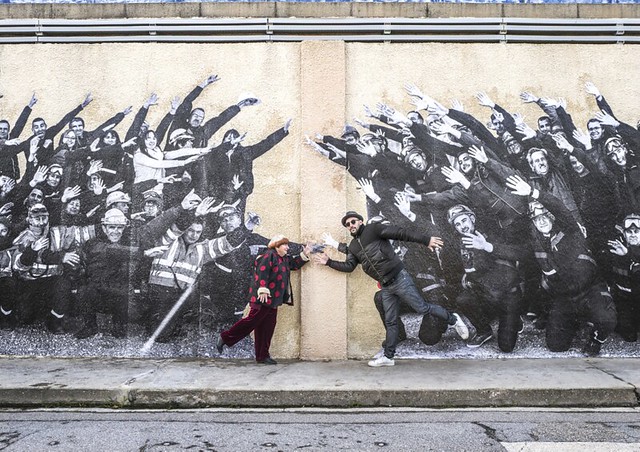
Varda, always keen on meeting new people and discover new things, pairs up with a 33 year old wheat pasting street artist known as JR. Together, they take a road trip to the northern French coastal towns. There they meet various working class people and their families - a postman, cafe owners, butchers, factory workers,miners, longshoremen, goat farmers and they take their pictures, print them out from the side of JR's portable printer/van and wheat paste them on the large public spaces, relate to the subject's environment.

The conversation is not always one sided- Varda doesn't have to exert herself into every story. She's fucking Agnes Varda. Things naturally come out. She's visited many many places and full of memories and mementos. In turn, JR is a jovial and energetic, and very good with dealing with elderly people (he lives with his grandma). Lanky with sunglasses glued to his face, JR reminds her of Godard and this train of thoughts plays out near the end, for better or worse.

It's not a typical light and fluffy travelogue of the rich and famous that would end up in travel channel. It's more about ordinary people. In this day and age, Varda believes in face to face human contact and genuine friendship. Except for some corny intros, Faces and Places feels very improvised and light and ultimately very touching and beautiful without trying so hard.

So they arranged the meeting with Godard. When they get there, the reclusive director and long time friend is not home. He scribbled a cryptic message with a marker on the window that upset's Varda almost to her tears. "If he tried to hurt me, he succeeded. That rat bastard!" One sentence is about the death of Jacques Demy, her husband, the other is a jab at the very same film she is making now, suggesting Faces Places is a fluffy travelogue of the bourgeoisie.

So there you have it. Godard has always been an innovative, genius filmmaker, brilliant researcher and historian, but an extremely cynical one who has long lost the ability to see the brighter side of humanity. Varda is totally opposite - completely open, transparent in what she sees and does and incredibly giving and sharing with her being. Which do we need more in this ugly world right now?

Faces and Places is a perfect antidote for the grim reports on the news these days. Please go see it.

Friday, October 6, 2017

Don't Deserve Love

On the Beach at Night Alone (2017) - Hong
on the beach1
on the beach2
on the beach3
on the beach
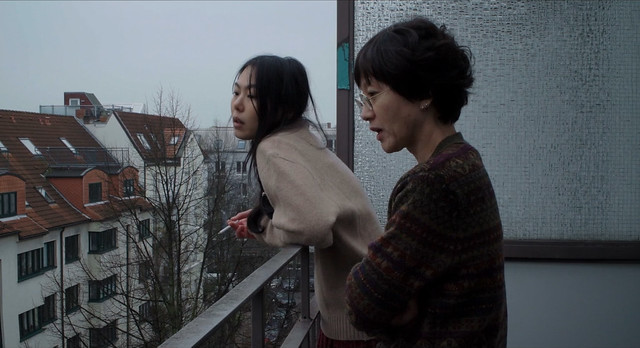
The first part of the film, simply titled 1, starts with Young hee (Kim Min hee), a pretty Korean actress, in care of an older female friend in Hamburg in winter, pining for a married director she's been having an affair with. She keeps saying he might or might not come for her but she won't wait for him forever because being in love with him hurts so much. It seems she tried to get away from the publicized affair and is very much enjoying her anonymity and tranquil surroundings in another country.

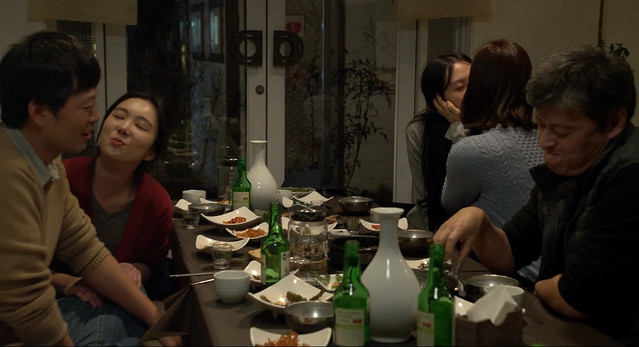
In part 2, Young hee is back in Korea, in the coastal town of Kangrung, the same one seen in Hong's Power of Kangwon Province, in winter. It's a favorite spot a Seoulite can think of when they run away- the farthest, the most distant, remote place one can think of, near the sea. She is seeing some friends. The affair is over and the true colors come out over couple of drinks at the restaurant.

On the Beach reflects Hong's own much publicized affair with Kim in real life. We get to see from Kim Min hee's side mostly through Young hee- after couple of drinks, as she lashes out to others at the table how undeserving everybody is of love, that how her affair is anybody's business. A moments later she declares she'd rather do without men and go lesbo, starts kissing her kind, older confidant. Her heart's not in it, because she still misses him terribly.

In a later part of the film, the director in question, played by Hong regular Mun Seung gun, recite the passage from a book he tries to give her that describes the agony and ecstasy of their final embrace. He breaks down and cries, as she steely stares at him.

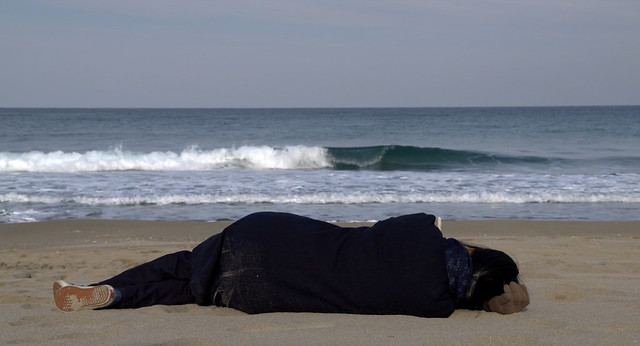
I was looking at Hong's films all wrong. As I see more of his, I realize that I don't need to compare him to anyone who might or might not have influenced him. His is very much his own and original. He has a sense of humor about portraying human vagaries. He's playful in his own small way and puts much trusts in his actors. He might be lazy about 'presentation' - unlike the title, Young hee doesn't end up on the beach at night. It's daytime, dusk at best. For a night time shoot, it would cost too much and too much of a hassle to arrange. But it doesn't matter to tell his story which is still simple and direct and real.

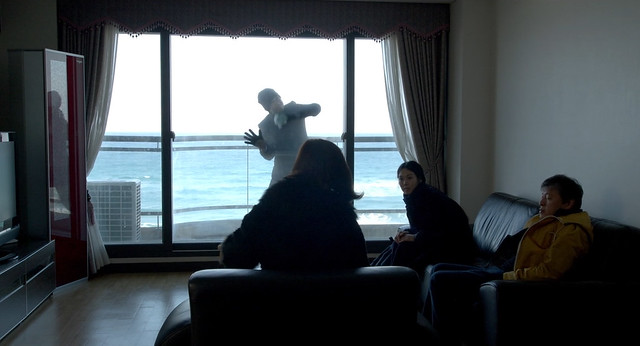
Love and break up is a painful business. Hong shows how it is under the scrutinizing eyes of the public, physically manifested here as a stranger in jarring surrealist moments - first in Hamburg, asking Young hee what time it is, then as a window washer in the second one. They are minor characters, but they are widely visible, but soundly being avoided and ignored yet their presence felt. For a Hong film, even though it has many funny moments, the over all mood of On the Beach is bitter and sad.

Thursday, October 5, 2017

Syrian Refugee Crisis Aki Kaurismaki Style

The Other Side of Hope (2017) - Aki Kaurismaki
Screen Shot 2017-09-08 at 6.22.09 AM
I find it odd that no major filmmakers are tacking the Syrian refugee crisis. Estimated 5 million people fled the war torn country since 2012 and the number easily doubles when you add up internally displaced refugees. I find it doubly odd that it is Aki Kaurismaki, the Finnish master of deadpan comedy taking on the topical subject. First it was his French language film Le Havre, which dealt with immigration. With The Other Side of Hope, Kaurismaki lends a hand, with his light touch, on Aleppo, without sacrificing the seriousness of the situation. Surprisingly, the result is an affecting, optimistic look at human kindness and decency. It also turns out to be one of his finest films.

There are two strands of narrative at the start of the film. One about a Syrian refugee and the other, an aging, troubled traveling salesman figuring out his life. Somewhere their paths cross. Khaled (Sherwan Haji) is first seen emerging from the mountain of coal in a cargo ship docked at a Helsinki harbor. As he seeks an asylum as a Syrian refugee from Aleppo at a police station, the unsympathetic police puts him in a waiting facility to be processed. There he meets an Iraqi refugee who's been in Finland for a while and seems to know the way around. Khaled is desperately looking for his sister who was separated on their way out of Syria. He likes Finland and wants to get a job and settle down. But first, he needs to not get deported. His Iraqi friend gives him some pointers, "Don't look so glum. Be cheerful. They deport sad looking ones."

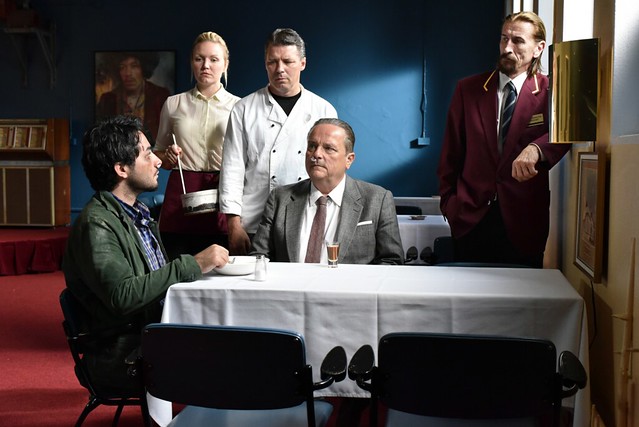
Wikstrom (Sakari Kuosmanen), a middle-aged traveling man's shirt salesman, walks out on his wife, and embarks on a restaurant business with the money he won at a gambling table. It's a little dumpy restaurant/bar called Golden Pint. The owner seems very eager to get out the dodge, and leaves three disgruntled employees behind- a doorman, a waitress and a cook for Wikstrom to deal with.

In the mean time, Khaled flees from the refugee facility after judge deems that his situation is not dire enough and decides to deport him back to Aleppo. Khaled gets into a fistfight with Wikstrom at a parking lot where he was sleeping. And Wikstrom decides to hire him for his restaurant.

There are many Kaurismaki comedic moments and sight gags throughout the film. His brand of minimalist comedy is truly unique.His cultural references are all mixed up and wrong- Kati Outinen, one of Kaurismaki's regular, plays Wikstrom's client who says "I'm going to Mexico and dance Hula Hula." and Golden Pint crudely changes to Sushi restaurants to attract more customers, serving a spoonful of wasabi on each sushi. When they run out of fish, they use salted herring. It is priceless to see the defeat on the crew's faces as the customers leave in droves.

Khaled is pursued by Finnish nazis with nationalist slogans on their jacket. Kaurismaki encapsulates them in one utterance near the end of the film, showing that nazis, in any country, are ignorant assholes and absolutely need to be eradicated.

Extremely silly and endlessly charming, The Other Side of Hope reminds us that the complicated world we are living in doesn't need to be complicated. Through the Kaurismakian glass, the world is filled with decent people and it remains a hopeful place as long as people help each other out.

The Other Side of Hope plays as part of NYFF 2017 at Film Society of Lincoln Center on 10/5 and 10/10. Please visit FSLC website for tickets and more information.
Repressed No More

Thelma (2017) - Trier
thelma_a35_kayawilkins_eiliharboe_copyrightmotlysas
Joachim Trier's new offering starts out rather ominously - Norwegian Liam Neeson named Trond (Henrik Rafaelson) goes out hunting with his young daughter Thelma in the snowy woods. But when they spot a deer, unbeknownst to the little girl, Liam Neeson dad aims his rifle at her. The tension builds up, but at the end, he can't do it. So we know, there must be something terribly wrong with our Thelma.

Now Thelma is a mousy, good Christian girl attending college in the city. Except for unusually nosy parents, seen calling everyday to check on her, She leads a very normal life as a Freshman at college. There are little vices around at every corner - the boys, alcohol and weed, the usual stuff. She has to fend off these temptations with daily prayers and atone her sinful thoughts. Thelma has an episode of a violent seizure at the school library. She doesn't remember having one when she was growing up and fear of being called back home, she hides the fact from her parents. This episode introduces her to Anja (Kaya Wilkins), a dark beauty who came first to her aid. They fast become friends.

Weird things are happening around Thelma. Her dreams have become more vivid and she can't distinguish if they are hallucinations or her will to make happen. As she falls deeply in love with Anja, her seizure episodes also increases. Through the remnants of her medical history, she finds out that her conditions might be hereditary and her parents have been hiding things from her.

Trier and his writing partner Eskil Vogt wrote a beautiful script once again, this time applying their skill and grace to their first genre film - a Sci-fi thriller. But Thelma is much more than that. Instead of going the route of a typical teen superhero flick, Trier and Vogt portray being an adolescent in its truest form - frightening sexuality: massive confusion where you can't trust your feelings nor your body and the terror of being in love for the first time. Added here is a big middle finger to organized religion, combined with some show-stopping imagery that trier has ever created in his short but fruitful filmography- especially the snake scene and the underwater pool/lake scenes.

Eili Harboe does a phenomenal job as a supremely confused young woman whose power has been repressed for so long. She gives achingly vulnerable performance as Thelma.

Thelma is first and foremost, a love story. It will make a handsome double feature with The Witch as a kind of female empowerment anthem. But instead of being cynical, something to fear and gaze at, girrrl power in Thelma is a sweet, positive and dare I say, life affirming affair.

Quiet Catharsis

Zama (2017) - Martel
zama
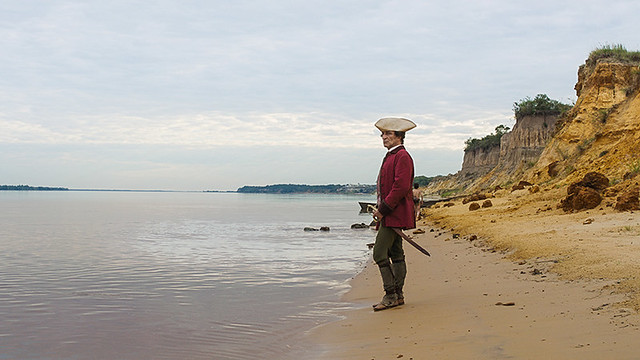
Lucrecia Martel suggested in her introduction to her sold-out screening of the much anticipated follow-up to Headless Woman that we audience might want to take in Zama like a whiskey. Indeed, it's a heady, at times bitter, at times sweet hallucinatory trip to the heart of darkness, showing the white man's identity crisis and misguided manifest destiny in the colonial era Latin America.

The film is a historical period piece, based on the much praised Latin American classic literature by Antonio di Benedeto. It's a hugely ambitious undertaking for Martel with just 3 films under her belt. But if anything, Zama confirms Martel one of the greatest directors of our time. Her mastery over the medium both in complex narrative storytelling and technical ingenuity has grown to exceptional height with Zama.

Don Diego de Zama (Mexican actor Daniel Giménez Cacho with an impressive Romanesque nose), a magistrate stuck in some unnamed South American colonial town deep inland in the 18th century, is anxiously awaiting to hear from the Crown (of Spain), his new assignment to the city. Even though he is a man of certain position and been stationed there for a while, he can't ever seem to get ahead or get what he wants - the letter of transfer never materializes, his rival Ventura (Juan Minujín) is much better at kissing asses and the local society lady de Luenga (Lola Dueñas) flirts with him but wouldn't give in.

Zama doesn't fair well with the natives either- seen in the beginning peeping at nude women taking mud bath and getting caught. He also has a nagging native woman he had an invalid child with. And the thought of the existence of this child weighs in his conscience like a brick. His misplaced valor to protect three virginal sisters is always overshadowed by the overhanging threat of a mythical bandit named Vicuña Porto who is notorious for raping and pillaging.

After physically threatening Ventura over de Luenga, Zama is demoted and moved out of his semi-opulent living quarters to a squalor with rotting walls, just outskirts of a city. At the governor's insistence and a promise of recommendation letter to the Crown, he delivers a scathing review of a book written by a well-meaning, trusting young civil servant (the governor can't stand the thought of the young man wrote the book while on the job). But no matter how many favors, how many people he fucks over, Zama realizes that he won't be leaving the backwater town any time soon.

Fallen out of favor and aging, Zama reinvents himself as a guide to the band of soldiers in the late stages of colonization. As they advance inland, they are terrorized by the red body paint natives who populate the land. Fighting with the elements and among themselves (one of the soldiers claims to be the elusive Vicuña- is he really? Does it even matter?), Zama and the men get completely lost in the strange land.
There have been countless other films about the white men's delusion of grandeur- Aguirre, Wrath of God and Apocalypse Now! easily come to mind. With Zama, along with lyrical Jauja few years back, directed by fellow Argentine Lisandro Alonso, Martel captures the existentialist angst in the age of colonialism/ad infinitum in Latin America with astonishing efficiency and grace. Shooting digital for the first time, Martel and her Portuguese DP Rui Poças (Tabu, The Ornithologist, To Die Like a Man), create lush, bright palates that are intoxicating and hallucinatory.

Martel's mastery of the cinema medium as sensory medium first and foremost is nothing short of brilliant. She subjects us to painterly framing and exceptional sound design in every scene. Those of you who followed her trajectory closely through La Cienaga, Holy Girl and Headless Woman and have been admiring her artistry will be richly rewarded here - a carefully measured framing where people's faces are just off the frame, shallow depth of field, soft focus, the full use of background/foreground and the use of dialog fading in and out with internal monologue thrown in, just to name a few.

She also uses the Shepard Tone whenever there is a dramatic moment for Zama. The tone is an illusory aural phenomenon that creates continuously swelling sound which builds tension and suspense. All these are very simple methods and not radical experiments at all, but it's Martel's simple approach that makes everything so fresh and radical. As you watch Zama, you can't help but feeling that you are watching a true cinematic masterpiece.

Finding the Latin American identity, as European settlers and their offspring, has been the continuous source for great literature over 300 years. Throw in the idea of class, masculinity, racism, sense of belonging, you get a very complex picture of what makes up the theme of Zama.

As usual, in Martel's hands, what seems to be an extremely messy affair at first, the sense of cohesiveness emerges from the chaos, then the sense of warm comfort wraps around the whole experience. Even though Zama is a lost character who goes through traumatic experiences, there is sense of catharsis that is reached in the last moments of the film. That he finally found home, that he reached his el dorado, imagined or otherwise. Zama is a utterly brilliant film. See it on the big screen if you can.

After two soldout screenings, NYFF decided to add the third screening of Zama on the last day of the festival, 10/15. For tickets and more info, please visit FSLC website.

Wednesday, October 4, 2017

A Glimpse of the Life of a Modern Woman in Kinshasa

Félicité (2017) - Gomis
felicite
Senegalese-French director Alain Gomis's Félicité is a great patchwork of elements that are full of contradictions and contrasts. And it's beautiful, energetic and refreshing. It's about a singer in an outdoor bar, also a single mom, played by enigmatic Véro Tshanda Beya Mputu, trying to survive day-to-day life in Kinsasha, Democratic Republic of Congo. Strong willed and free spirited, she is a modern woman who doesn't need a man by her side. But life throws curve balls at her when least expected and keeps her on her toes.

As with Gomis's previous films that took place in Dakar, Senegal and its streets, the sight and sound of bustling city of Kinsasha become as much a character in the film.

First half of the film plays out like a docu-drama of the Dardenne Brothers- after a motorcycle accident, Samo, unresponsive teenage son of Félicité ends up in a hospital with a broken leg. Running against time, Félicité frantically runs across town to gather money for her son's operation by any means necessary. It means involving police to people who owe her money, swallowing her pride and asking her ex and family members for help and going door-to-door in super rich neighborhood and begging for money while making a scene.

In the latter part of the film, the tempo changes dramatically and things slow down significantly. And it concerns Félicité's on/off romance with Tabu (Papi Mpaka), a local drunkard and blowhard with a great heart. It's the budding formation of modern family in Kinshasa. Contrasting the frenetic first half, the second half is full of laughter, hope and optimism.

Félicité is a melding of many conflicting elements. There are documentary-like naturalism (thanks to handheld cinematography of a veteran DP, Celine Bozon, sister of French director Serge Bozon) mixed in with recurring beautiful dream sequence in the woods in near darkness. There is local music (featuring the Kasai Allstars) rubbing shoulders with Kinshasa Symphonic Orchestra playing classical pieces by Arvo Pärt. Félicité's strong willed, modern woman meets Tabu's womanizer and drunkard, accept each other and continue their amicable relationship.

It's the music that is at the heart of the film. Sang by earthy, smoky voiced Muambuyi, the lead singer of the Kasai Allstars, Mputu's Félicité comes to life whenever she's on stage. The "Congotronics" is an infectious, eclectic music that represents many different ethnic groups that consist the region. Arvo Pärt's somber music fills in for somber moments but it fits surprisingly well in the film.

The running joke that takes up much of the screen time is Tabu's epic struggle with Félicité's dying fridge. It's an impetus for their budding romance and also provides glimpse of the earthly concerns of Kinsasha's everyday life, as Tabu scans the bustling outdoor market for spare parts - the dirt road, pan handlers, dancing traffic signal cop, pickpockets, etc. It's a dizzing display of what it's like living in such a place and also a testament of human resilience.

Mputu ‘s broad, beautiful face with her steely gaze is the bedrock of the film. Even when things get dire, the film never succumbs to cheap sentimentalism. Papi Mpaka’s naturalistic performance also helps the cause.

Félicité is not another downbeat film about Africa steeped in miserablist tendencies. Gomis and company don't lose the sight of happiness in the daily lives of its ordinary citizens. There is much humanism and culture and joy to be had in Félicité and I am grateful for it.

Friday, September 29, 2017

Pure Magic

The Florida Project (2017) - Baker
TFP-cover
Sean Baker, a director of much praised iphone shot movie Tangerine, digs deeper into the flip side of American Dream with The Florida Project, starring kids and featuring the lives of kids on Route 192, under the shadow of Disney World. As with Tangerine, Baker uses mostly untrained non-actors to portray people on the skid and just have them run with the materials they were given. The result is stunning work of authenticity, brimming with humor, heartache and much humanism.

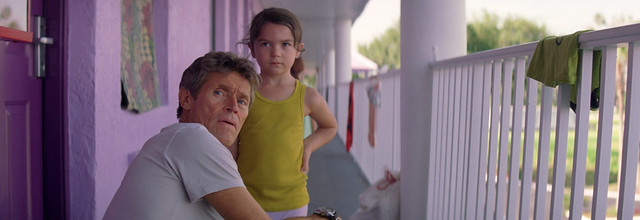
Moonie (Brooklynn Prince), a six year old girl living in the pink motel called Magic Castle with her young, tattooed irresponsible, daisy dukes wearing mom, Hally (Bria Vinaite). Moonie and her friend Scooty are always up to no good and wrecking havoc - spitting on neighbor's car from the balcony, starting fire in an abandoned house, panhandling tourist for ice cream money, etc., much to chagrin of the good-hearted motel manager Bobby (Willem Defoe). It doesn't really help that Hally is a real fuck-up. Always facing eviction for whatever violations against the motel policy and late for rent, she panhandles, steals, even prostitutes herself to make the rent.

The fake happiness of tourist subculture surrounding Disney World sharply contrasts with the pure joy and innocence of childhood captured by Baker. While kids are having fun, the adults in the film have to deal with depravity, submission, humiliation and consequences of being parents. Kids can have fights one day and make up next day as if nothing happened. Adult life is more complicated than that. With Hally, you couldn't picture a more stereotypical welfare mom. But she is also a loving mom, always trying to protect Moonie from the world and make the best out of ugliness of their surroundings.

But the film's about the kids being kids, always curious, always screaming and yelling, running across the various balconies and up and down the stairs of colorful motels, all named similar to Disney attractions - Future Land, Alibaba, Magic Castle and so on, and the nearby grassy swamp full of empty houses. It's beautifully captured verité style in mostly 35mm by Mexican DP Alexis Zabe (Silent Light, Post Tenebras Lux).

The performances by three kids – Brooklynn Prince, Valeria Cotto (Jancey) and Christopher Rivera (Scooty) are so natural and so untamed, it makes you wonder how on earth Baker ever managed to bring them out. Firebrand newcomer Vinaite is also great, easily topping Riley Keough's portrayal of white trash skank in American Honey (which will make a handsome double feature as Flipside of American Dream). But the range these kids have, especially Prince who seems to convey range of emotions on cue, is astounding.

There is so much joy and happiness of childhood in The Florida Project. For almost two hours running time, we spend our time invested with Moonie and her friends' (mis)adventures. As Hally digs herself a hole time and time again, and as the inevitable finally catches up with her and her daughter, we deeply feel for Moonie and her well-being. We know it's not a documentary because there is unmistakable face of Willem Dafoe trying to pass as a real person (and he does because he is a great actor), Caleb Landry Jones shows up for a moment too. We know it's a make-believe and that everything is going to be all right. But the final moment of the film, taking place in the real Magic Kingdom, shot on shaky iphone, really got me emotionally. It is, shall we say, pure magic.

The Florida Project plays as part of NYFF 2017 at Film Society of Lincoln Center on 10/1 and 10/3. Please visit FSLC website for tickets and more info.

Thursday, September 28, 2017

Skooled

Mrs. Hyde (2017) - Bozon
973045
Serge Bozon's idiosyncratic WWI musical comedy La France impressed me when I watched it some years ago. In it, he demystified war heroics and masculinity with his deadpan humor. In Mrs. Hyde, in his peculiar way, Bozon takes jabs at the failing education system where intelligence is willfully ignored and pent up rage and anger simmers just below the surface.

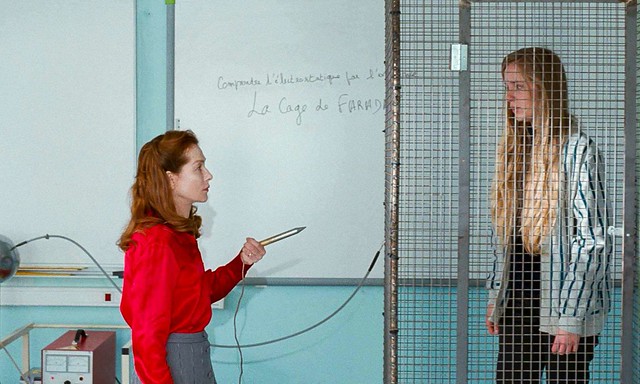
The indomitable Isabelle Huppert plays Marie Géquil, a soft spoken, extremely ineffective Physics teacher in a rough suburban school where most of her students in her vocational class are comprised of rowdy, uninterested students of color. They incessantly make fun of her and scold her and have zero respect. But always good natured, Marie tries to get through to them, especially Malik (Adda Senani), her worst tormentor who's handicapped and relies on crutches for walking, even though no one give him the light of day. At home, she is greeted by Pierre (Sergio Garcia), a supportive, teddy bearish, stay-home husband who cooks elaborate meals and plays music for her but doesn't quite understand what she goes through day after day.

She takes solace in her laboratory in a trailer in the school lot after hours where she deals with complicated blinking machines and math equations. One day she is hit by a lightening in the trailer and becomes an occasional red-glowing night crawler.

Things change after the incident. Having more confidence in herself (as the energy visibly moves through her vain), she finally gets through Malik, despite objections of favoritism by do-good students (two white girls who always talk in unison in class). With the laws of reflection, not only she shows the path from Point A to Point B, she shows him how to stop and think. But despite the breakthrough, Malik still wants to belong to a street rap group consists of dropouts. In her sleep walking glowing form, Marie ends up frying one of the rappers in front of Malik one night.

I can watch Isabelle Huppert picking her nose for two hours no problem. She's done comedies before, but in Mrs. Hyde, her performance is completely against her type and it's still mesmerizing watch. Romain Duris, playing smarmy, self-loving, small time principal here represents, along with an uppity 35-year old teacher-in-training, the clueless establishment.

I didn't expect a biting, timely social commentary from Bozon and from Mrs.Hyde. Unlike Robert Louis Stevenson's Jekyll and Hyde, Bozon's two faced, mild mannered school teacher parable has a lot more to do with the society we live in - which lacks self-determination, individual thoughts, and honestly, is more and more very much anti-intellectual. Dangerous Mind it's not. The film shows us that we have responsibility to teach our new generation faced with a lot of problems and distractions to stop and think for themselves. That they can't rely on a savior ('white savior syndrome' that is prevalent in popular culture) because that will eventually burn you. I was mildly and pleasantly surprised by the audacity of Bozon's moral lessons that digs deeper while maintaining his brand of deadpan comedy on the surface.

Mrs. Hyde is a social commentary that packs a punch wrapped in a screwball comedy form. Highly recommended.

Mrs. Hyde plays as part of NYFF 2017 at Film Society of Lincoln Center on 9/29 and 10/1. Please visit FSLC website for tickets and more info.

Sunday, September 17, 2017

Alienness of Human Bodies

Malgre la nuit (2015) - Philippe Grandrieux
Screen Shot 2017-09-16 at 12.17.44 PM
Screen Shot 2017-09-16 at 11.07.05 AM
Screen Shot 2017-09-16 at 11.09.16 AM
Screen Shot 2017-09-16 at 11.04.01 AM
Screen Shot 2017-09-16 at 11.11.52 AM
Screen Shot 2017-09-16 at 11.12.36 AM
Screen Shot 2017-09-16 at 11.15.13 AM
Screen Shot 2017-09-16 at 12.20.30 PM
Screen Shot 2017-09-16 at 11.18.35 AM
Screen Shot 2017-09-16 at 11.21.16 AM
Malgre la nuit plays out like a lurid Lars von Trier film, plot-wise. Gotta say, it is perhaps the most narrative heavy Philippe Grandrieux film to date. But the imagery he presents here is still tour-de-force. The bodies, the alienness of white human skins against its dark backdrop - in the woods, unlit bedroom, basement, whathaveyou... make strong visual impact and brings out visceral, emotional reaction from me. Grandrieux makes a good use of his two skinny actors bodies - Ariane Labed (Yorgos Lanthimos regular) and Kristian Marr. Often completely naked, with their fawn-like sad faces, they go through raw emotions of being in some kind of mythic tragic love story.

Lenz (Marr) is in town, looking for love of his life, unseen Marlene. At some sado-masochistic gathering, he meets Helen (Labed), a deeply troubled young woman with a Laura Palmer style deathwish. Through his sleazy friend Louis (Paul Hamy of The Ornithologist), Lenz is introduced to an alluring dream pop singer Lena (beguiling Roxane Mesquida). She falls for self-distructing Lenz and as he rejects her, she burns with jealousy for both Madelene and Helen. She will be relying on her powerful underground boss dad to exact revenge.

I've said this before. In Lynch's long absence, I welcomed Grandrieux's artistry to fill the void. They are kindred spirits in more ways than one - their love of texture, steeped in noir trappings, fatalistic love, the dark side of human desires etc. As Lynch came roaring back with Twin Peaks: The Return, their differences are more pronounced - Lynch loves puzzles and working in his inner logic, Grandrieux is only interested in images. And these are not criticism at all for either one of the artists. Just an observation. But seriously, narrative is for pussies.
Anyone knows how to get a hold of the soundtrack of Malgre la nuit, please let me know. I need Roxane Mesquida's sweet dream pop in my life!

Monday, September 4, 2017

Some preliminary thoughts on Twin Peaks: The Return

Twin Peaks: The Return (2017) - Lynch
img_9811

Defying conventions

twinpeaks-news
maxresdefault-1
One thing that defined David Lynch's Twin Peaks: The Return is it defied everything we know about the tv or film narrative, genre, structure, casting, sound.... It even defied the original two seasons of the series. He didn't set out to make lip service for the diehard fans of the old series. Just as he re-imagined it with Fire Walk with Me, he has built a grander, larger mystery on top of the original Twin Peaks frame with co-creator David Frost. But he did not in any way disrespected the old characters. Notice that it's all the new characters who are fucked up, and all the old characters, growed up and wised up. OK, Shelly is still dumb as a doorknob

Who's dreaming who?

david_lynch_y_monica_bellucci_en_twin_peaks_9060_640x384
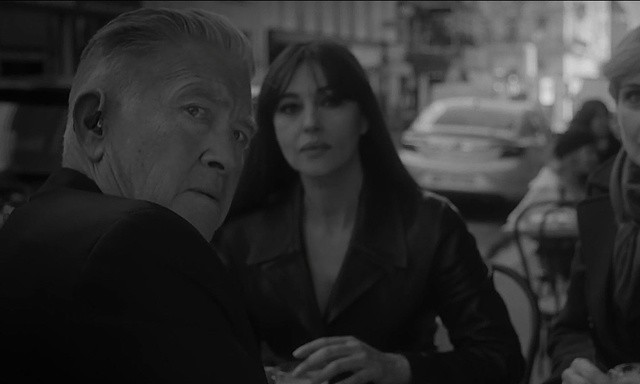
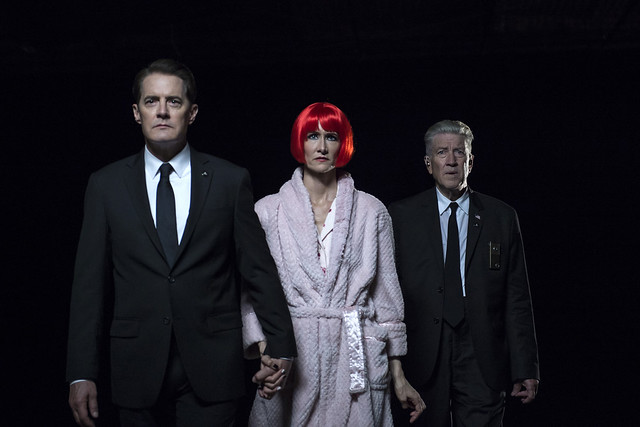
There have been many time traveling, dimension jumping Sci-Fi films and TV shows in the past. Some of these were cleverly done but they were always more interested in/in love with themselves in their own logic than metaphysical, spiritual consequences of such actions. None of these shows rose above the rules they set themselves within. Lynch applies it to 'the girl who lives down the lane' story. So much of Twin Peaks: The Return revolves around Dale Cooper and his evil doppelganger but by the end, we realize that he might have been dreamed up by Laura Palmer, a 17 yr old troubled High School girl all along, who died 25 years ago. It was Laura. It was always Laura. Laura is the one. That in fact the whole series, including all the 200 some characters are dreamed up by Cooper who is dreamed up by Laura. But if it was one of those 'it was all a dream' movie, everything is a lie, and it means nothing. But to Lynch, as his other films before this can tell you, dreams are as real and important as real life, that our lives, flesh and blood with its meaning of it all, may indeed be someone else's dreams. It's a humbling experience for sure.

You can't go home again

Twin Peaks part 8
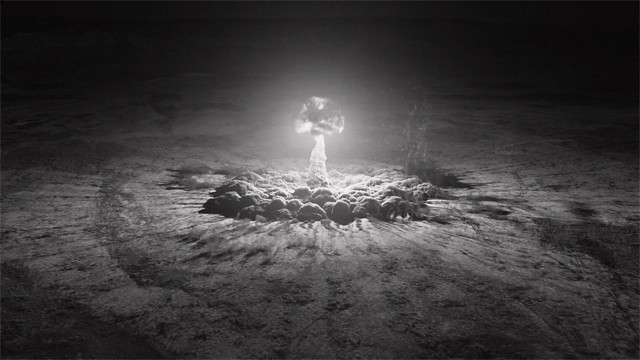
It's a well known fact that Wizard of Oz and Hollywood's golden era influenced 71 year old baby boomer Lynch greatly. There was Hollywood and there was WWII and an atomic bomb. Without being cynical, he sees beauty in the darkness in this often contrasting, dual world. Time and time again, Lynch plays with this duality over and over.

gotta-light-bad-guy
0u4bDKt
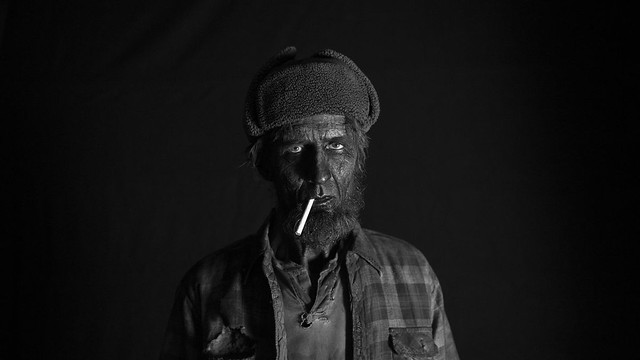
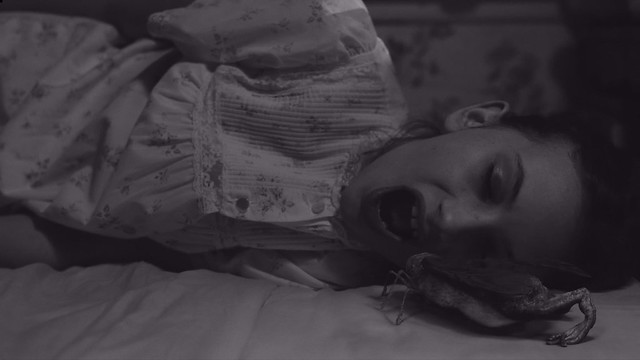
Lynch's approach to his fears and nightmares, whether it be homeless people or that drugged up naked brunette who walked down the white suburban neighborhood street or trailer park white trash or seemingly normal parents (all the flip side of Land of Aplenty) or a roach-frog he swore he saw as a child or an atomic bomb blast, is to face them head on- exorcising these negative thoughts out of his system on to the screen. They are frightening and mysterious. They are beautiful.

Even the well-meaning, special agent Cooper, who splits into two then becomes a whole again by the end, gets lost in his journey to make things right. The past doesn't dictate the future. The wicked witch, born out of an atomic blast, sidetracks him. He is as lost as poor Laura Palmer.

Mystery continues, beauty retained

TWIN PEAKS
The Return's finale was Every bit as frustrating as it had been expected. Part 17 neatly wrapped many of the messy threads the show was building up to. It was indeed the actual ending of one mystery, just as Lynch and co opened up another one with Part 18. Thankfully for us, the mystery continues and retains its beauty forever as the show ended. The whole show was still the most exhilarating viewing experience ever. It provided the most beautiful, spellbinding images I've ever experienced in my life. Part 8 alone is the most cinematic, thrilling event of all time in TV/film history, easily topping any works of Brakage or Malick had ever done.

I just feel so fortunate that this summer, we were blessed with 18 hours of new Lynch creations. Even if Lynch doesn't make another movie or tv show for the remainder of his life, this has been a true blessing. And I am very grateful for it ever happening.

Sunday, September 3, 2017

Night the great equalizer & enabler

Toute une nuit (1982) - Chantal Akerman
Screen Shot 2017-09-03 at 11.07.42 AM
Screen Shot 2017-09-03 at 11.09.10 AM
Screen Shot 2017-09-03 at 11.10.31 AM
Screen Shot 2017-09-03 at 11.14.14 AM
Screen Shot 2017-09-03 at 11.15.55 AM
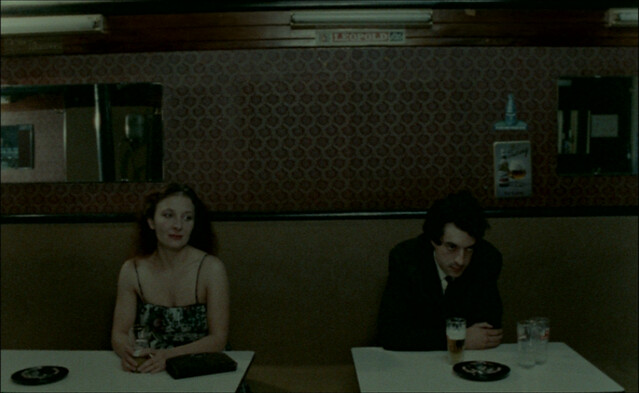
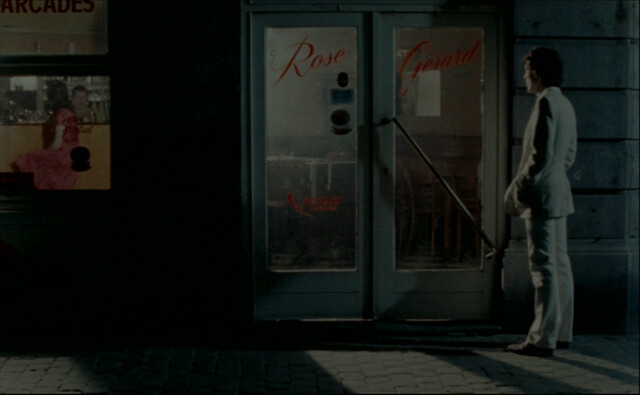
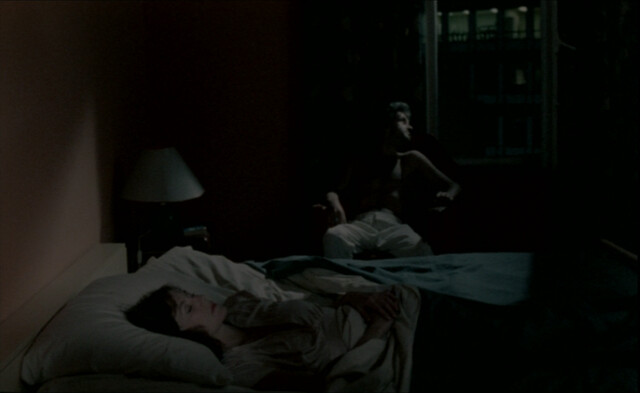
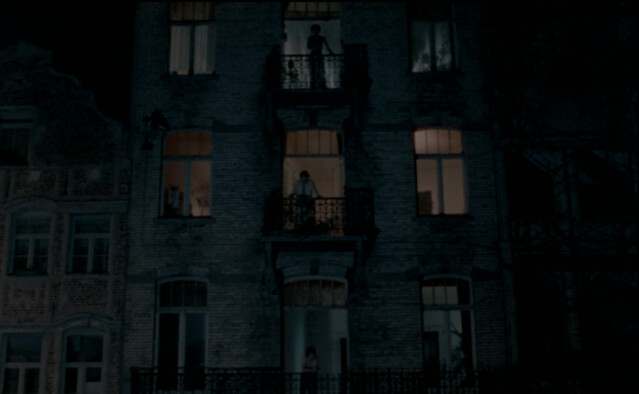
Night is a powerful equalizer - in the shadows, we can hide all our imperfections. In the shadows, night is also an enabler for those who act on their impulses. This is how I felt watching Toute une nuit. No one does loneliness like Akerman. She stitches together these lonely souls in short, almost silent segments as they sit in empty bars, cafes, rooms, balconies, corridors. They also run around, pack and leave, break up, and embrace each other and dance. There are so many embraces in Tout une nuit. They are not the happy ones. They are desperate, sad ones- holding each other tight, not able to let go and becoming sad dances.

Toute une nuit is a beautiful, melancholic piece that speaks to the lonely hearts everywhere.

Sunday, August 20, 2017

Rare Occurrence

Le rayon vert (1986) - Rohmer
Screen Shot 2017-08-20 at 10.13.53 AM
Delphine (Marie Rivière) just got dumped by her fiancé just before the Summer vacation. Now she has no idea where to go and who with. The Green Ray follows her one uncomfortable situations after another, as she vacillates, agonizes every choices she makes in desperation, out of loneliness. She doesn't want to go to Ireland with her sister's family. It's too cold there and weather's lousy. She agrees to go to Cherbourg with her friends but once she's there, she's miserable even though everyone around her is very nice and trying to accommodate her eccentricities at every turn. Her vegetarianism turns into a discussion on being light which Delphine can't quite explain (so as a lot of things she's feeling) and they end up calling her a being like a plant. Once back in Paris and still plenty of time left for her vacation, she goes to the mountains alone where she and her ex-fiancé have had a contact who rents out a cabin. But soon as she gets there, she gets bored, ends up coming back to Paris the same day- this must've been a nightmare scenario for Rohmer's producer: "what, you want to go to the Alps for a couple of shots that lasts less than a minute screen time for a character to show she doesn't know what she wants? Boy, that would be a logistical nightmare and will cost you half of your budget!"
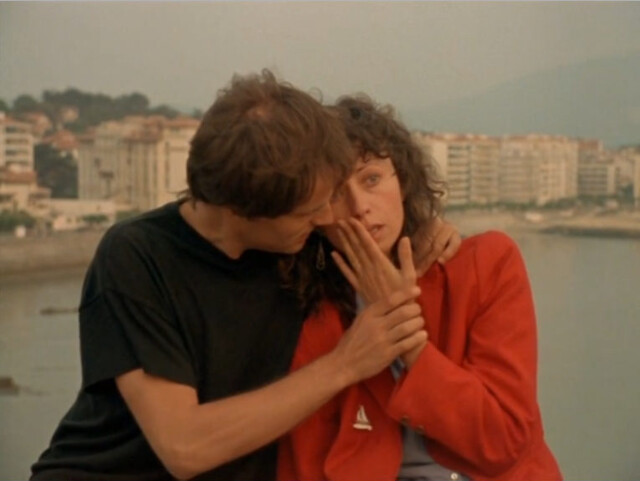
Delphine's life might not be too exciting but she is a perfectly lovely woman. So she's not exactly an extrovert nor extremely neurotic. She cries a lot, out of her loneliness. The thing is, we've all been there or know someone who's been there. Rohmer gently, beautifully sketches out a woman who suffers greatly from loneliness but too stubborn to be outgoing. The Green Ray makes me think about the relationships in the age of social media generation where everyone seems to have their emotions on their sleeve, ready to divulge their innermost feelings for everyone to see. With her complicated feelings and her lack of clear communication skills, Delphine is a hard woman to like, but that's precisely why I find her so lovely and relatable.

Back in Paris, she runs into an acquaintance who has an access to an apartment in the resort beach town of Biarritz. So she is off to Biarritz, swimming on the beach but still lonely. She meets a vivacious topless Swedish girl who doesn't take things as seriously as she does. The two men come over to flirt with them. They are perfectly nice, but that's not what Delphine wants. After she runs away from the scene, she eave drops old folks talking about the green ray, a rare occurrence where you see the sliver of green light at the tip of the setting sun for a second as it disappears on the horizon. Dephine needs that rare occurrence in her life. That it is possible that there is somebody who is in the same wavelength as you. However rare meeting that person is, it could happen.

Deeply humanistic and beautifully drawn, Le rayon vert is one of my new favorites of all time.
Thursday, August 10, 2017

Lost in La Mancha

The Trip to Spain (2017) - Winterbottom
The trip to Spain
The third installment of The Trip series, which started as a TV show in 2010, Michael Winterbottom, Steve Coogan and Rob Brydon's The Trip to Spain delivers yet another delightful, charming road movie.

Coogan and Brydon again reprise their slightly exaggerated (still fictional) roles as themselves, on another assignment given by The Observer (Brydon again, serving as a food critic) and The New York Times (Coogan, travel essayist), this time to Spain and engorge themselves on great food and appreciate local culture in spectacular scenery of many different Spanish regions while wrestling with aging, self-worth and fragile masculinity.

Calling The Trip to Spain anything other than an overly indulgent project would be an understatement: the endless in-jokes, impersonations and food porn aplenty. But who cares? As a fan of the series and Coogan and Brydon's sardonic banter, Spain is by far the funniest of the three.

In Cervantes-esque whimsy, Coogan, the cocky narcissist of the two, takes on the Don Quixote role to good-natured family man Brydon's Sancho Panza, which ties nicely in with the theme of Lost in La Mancha, later in the movie.

They start in England, taking a ferry to their first destination, Getaria, a picturesque fishing village in the Basque region. After dining on some grilled seafood and some hilarious Mick Jagger impersonations, they drive to inland region of Rioja. There, the arid desert vistas of inner Spain is spectacular and the medieval town built on the ledge of the barren mountains is a site to behold.

Coogan is seen flirting with women everywhere he goes, and Brydon is seen skyping with his wife and their young kids every night. It's their established rapport through the years, which makes them such a great team. Their priorities are slightly changed since the last time: Coogan's success as a writer/actor boosted his ever growing self-importance. But he still struggles to be recognized as a serious artist. Last seen having an extra marital fling with a tour guide, Brydon is settled in domestic bliss. His only job now is ribbing Coogan whenever he deems necessary to do so.

Their impersonations of course, gets the most laughs- Mick Jagger, David Bowie, Anthony Hopkins, Marlon Brando, John Hurt by way of Caligula in I Claudius and Quentin Crisp (in Naked Civil Servant).

Talking about Moorish influence in Spain, they start impersonating Roger Moore to impress their female companion. A plate of grilled scallops develops into a stand off between Moore’s Bond and Christopher Lee’s Scaramanga. Brydon's insistence in Moore-ing everything, which goes on forever, should in theory outlive its welcome in a minute, but because its Coogan and Brydon, it's consistently funny all the way through.

And of course, their version of Michael Fucking Caine. They pull out "SHE'S ONLY SIXTEEN YEARS OLD!" in the film's most inappropriate moment and I couldn't stop laughing.

My minor quibble is that perhaps because the film is basically a shortened version of the 6 part TV series (like the other two films were) into an hour and a half movie, I find the ending quite muddled and unsatisfying.

On paper, two middle aged white male British comedians going through beautiful places, eating delectable cuisine, always cracking silly jokes and impersonating celebrities, don't sound all that attractive. But because it's Coogan and Brydon, who are genuinely funny and charming, makes The Trip to Spain one of the funniest movies I've seen in years.

The Trip to Spain opens in select U.S. theaters on Friday, August 11.

Tuesday, August 8, 2017

Cog in the Machine

Machines (2016) - Jain
machines 3
Machines1
Machines
machines4
Machines2
In my humble opinion, digital filmmaking, with its extremely sharp image, isn't really suited for general narrative filmmaking. I do not need to see every pore on Charlize Theron or Scarlet Johansson's face. I do not need to see every piece of debris when an alien space craft explodes.

But the high resolution digital technology renders wonderfully in documentary filmmaking, capturing nitty-gritty details of everyday life that was not possible with shooting on a film stock. In comparison and in context, I can think of Forest of Bliss, a lyrical documentary depicting life and rituals in Benares, India, directed by much-revered documentarian Robert Gardner.

Even though I have a film background and am a big fan of anything shot on film (just the sight of 16mm shot, grainy images triggers Pavlov's effect on me), seeing that deteriorating film reel projected on screen -- scratched, high contrast, with no details in the shadows -- I can only speculate what Gardner, Malle, Van der Keuken and a lot of other great documentarians could've captured with light(er) weight, larger censor cameras that can shoot 6K to 8K images for hours on end without stopping.

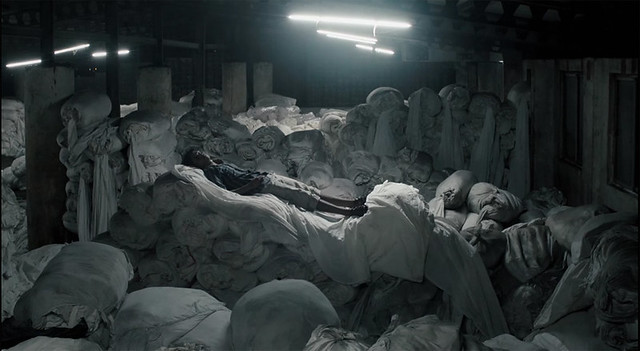
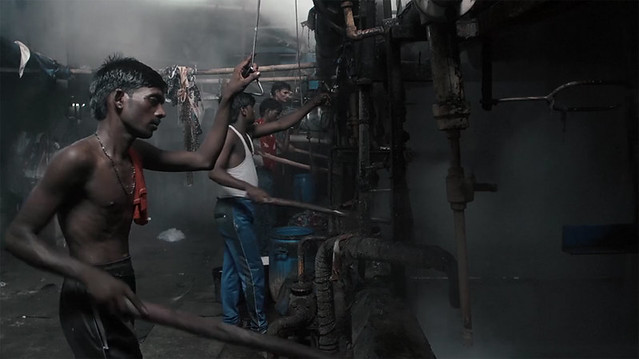
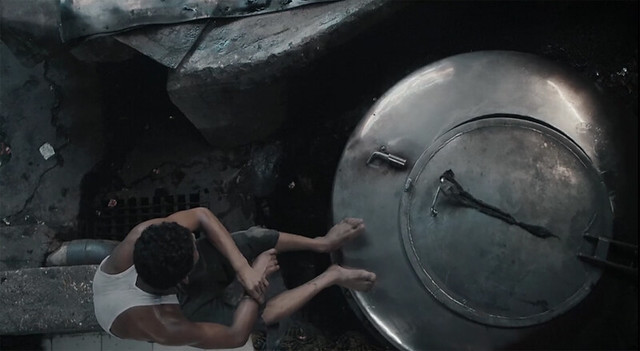
Machines, a film by Rahul Jain, answers that possibility. Shot entirely in and around a textile factory in the Guajarat region of India, the film doesn't only depict the everyday working conditions of the hundreds of manual laborers, but also captures it in a startlingly clear, beautiful imagery.

Using only medium to wide lenses, Jain invites us into the giant, labyrinthine factory where shirtless male workers go on about their work day. Even though the process is pretty heavily machinized on the floor, each step of the process needs human hands and eyes: moving the heavy loads of fabric, dragging paint drums from one place to another, the actual silk screening process, mixing paints, guarding fabrics through the machines, keeping the furnaces going, maintaining the axles of the machines. Their shifts in the factory require long, grueling, hard work.

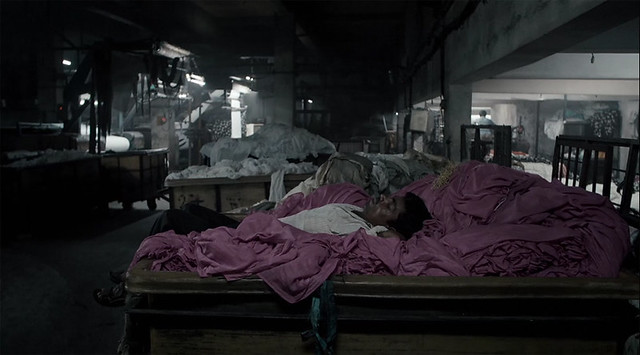
Perfectly framed, these static shots of the interiors of the greasy, grimy factory, lit only with cold, dim fluorescent lights, is strangely, hauntingly beautiful. Colors and texture -- steam, metal, glistening human skin, the brightness of the fabric they produce -- all contrast/accompany each other in mind-boggling detail on the screen.

Is Jain drawing a correlation between heavy machinery and human labor, as demonstrated in cinema history as early as Fritz Lang's Metropolis and Charles Chaplin's Modern Times? Machines and their beautiful imagery can be easily used for poverty porn, but Jain takes a different approach.

Without a swooping score to manipulate audience's emotions, he silently observes the workers and they in turn talk about their working conditions. The filmmaker rightfully excuses himself from being seen or heard, leaving his silent questions to be answered by workers in a breathtaking 360 degree shot just outside the factory, surrounded by workers.

They came to Guajarat because there is work. Their travel cost put them into debt. Their 12 hour shift pays 300 rupees (about 5 US dollars). They have a short break, then go back for another 12 hour shift. The only thing they can afford is chewing tobacco which will keep them awake.

They talk about the futility of organizing; who has time for union activities? In debt and exhaustion, they literally can't afford to go to a union meeting. It's a vicious cycle. Jain interviews the management also. A boss gives a speech that's right out of some early 20th century capitalist handbook: "If the workers get paid more than what they get now, they get lazy. They need to be hungry to be a good worker."

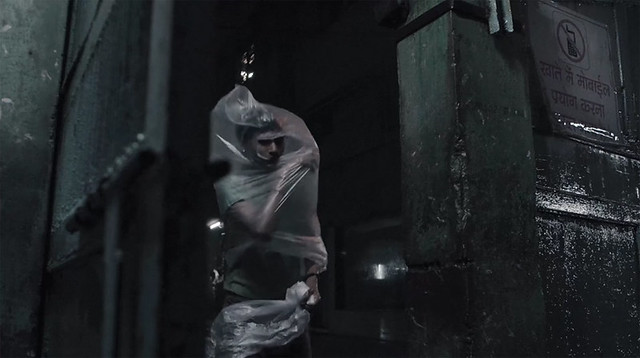
There is an imminent danger we feel when a child worker nods off while on the job, then there's a tranquility in the shots of workers taking a nap during their break wherever they can. It's all beautifully captured. Even their makeshift raincoats, a big plastic bag with the hole for their face under a torrential downpour, are beautiful.

Bosses vs workers is an age old subject. But Machines is a visually sumptuous observation piece that transcends being a mere social commentary.

Machines will have a one-week engagement, August 9 – 15, at Film Forum.

Wednesday, August 2, 2017

Melancholic Fable

Bella e perduta/Lost and Beautiful (2015) - Marcello
Screen Shot 2017-08-02 at 9.46.53 AM
Screen Shot 2017-08-02 at 9.52.13 AM
Screen Shot 2017-08-02 at 9.53.53 AM
Screen Shot 2017-08-02 at 9.50.13 AM
Screen Shot 2017-08-02 at 10.50.22 AM
Screen Shot 2017-08-02 at 10.56.31 AM
Screen Shot 2017-08-02 at 10.47.17 AM
Screen Shot 2017-08-02 at 10.55.34 AM
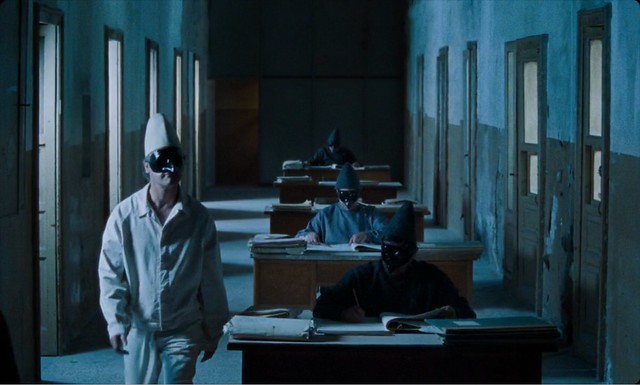
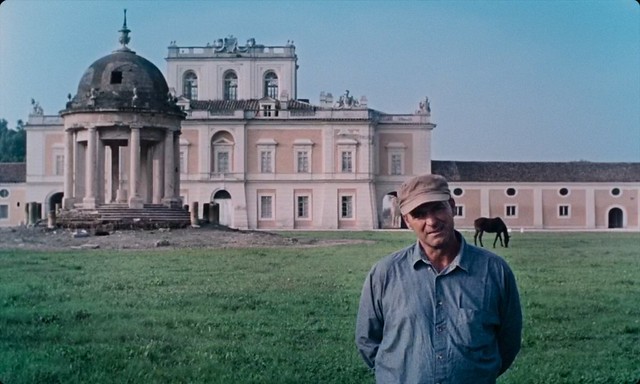
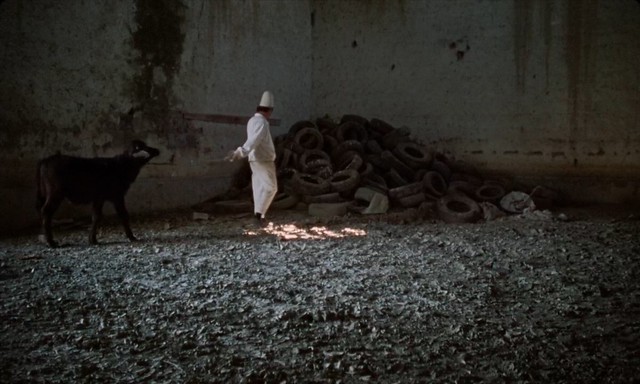
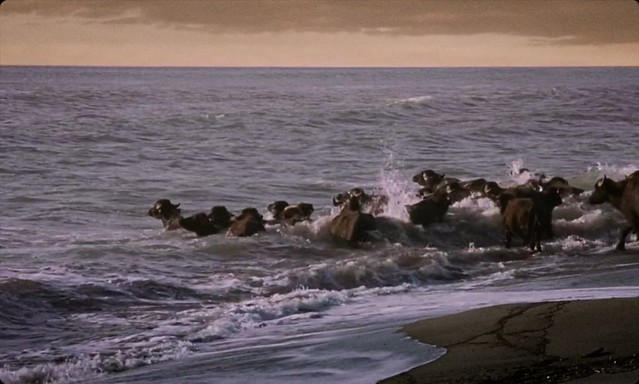
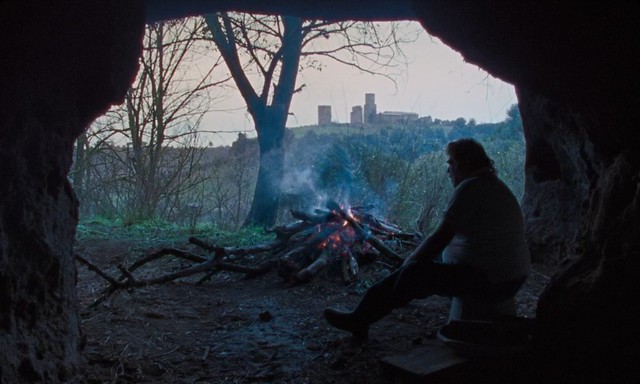
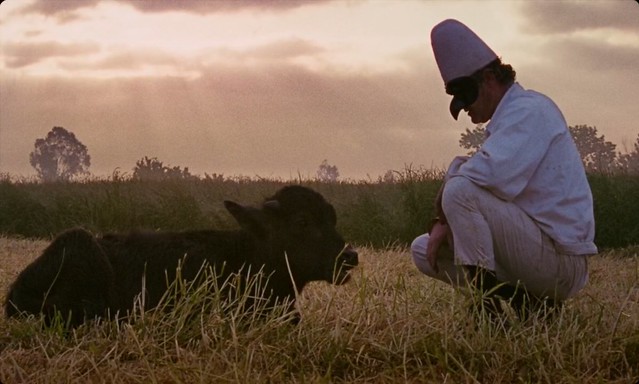
In Lost and Beautiful, Pietro Marcello concocts a heady and lyrical mixturer of fantasy and reality. There is Tommaso the sheep herder turned the keeper of an abandoned Bourbon palace who kept up the structure by his own means, against vandals and loiterers. There is Pulcinella, a masked actor from the 17 century who is ordered to take an orphan water buffalo calf named Sarchiapone (who narrates part of the film in voice over) from Tommaso. There is Gesuino, a larger than life hermit with a booming voice....

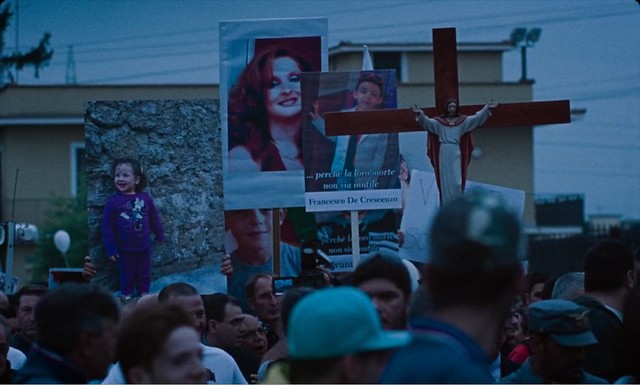
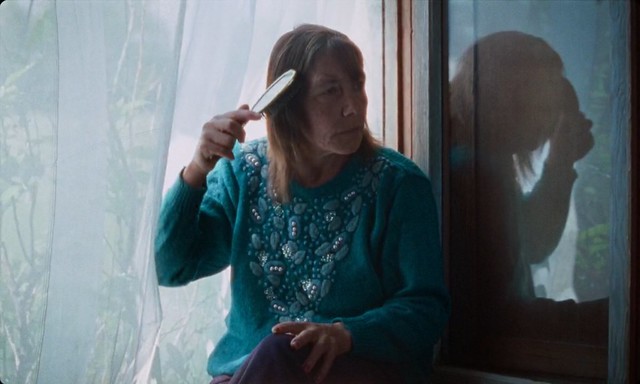
Shot on gloriously beautiful 16mm, the film is really something else. Marcello presents everything so gracefully, putting equal measure of importance on everything, whether it's the footage of ordinary people taking to the street against Mob violence or intensely blue-eyed Tommaso giving a silent tour inside the decrepit palace or a close up of an old farmer brushing her hair or picturesque pastoral countryside where Pulcinella and Sarchiapone take their long journey on foot.

Is human existence is all a dream of a buffalo calf? Lamenting the loss of the way of life, Lost and Beautiful is an immensely wise, melancholic look at what it means to be human. Beauty.