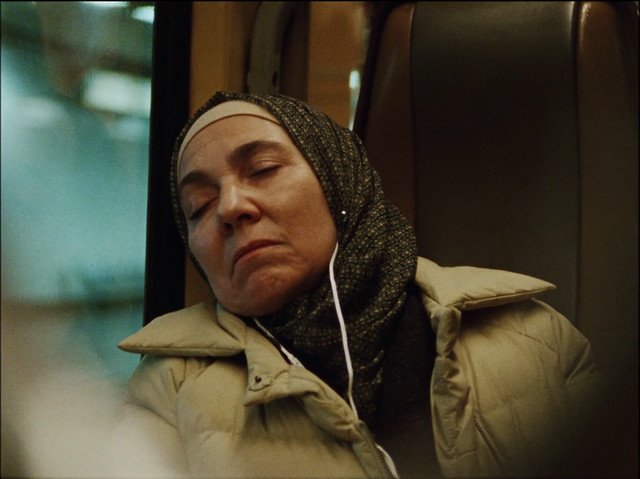
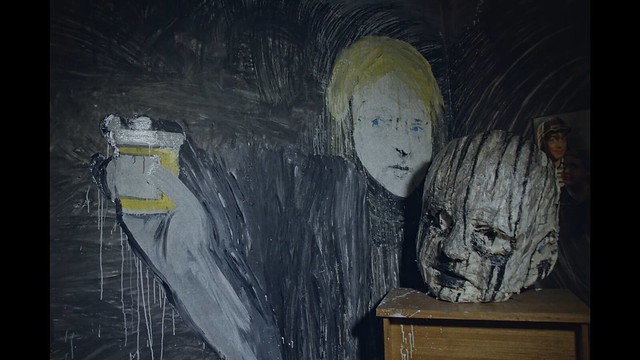
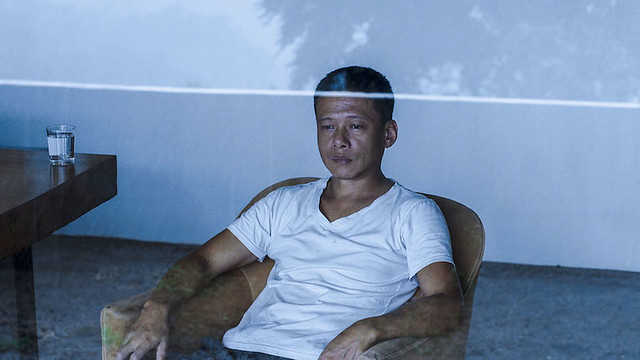
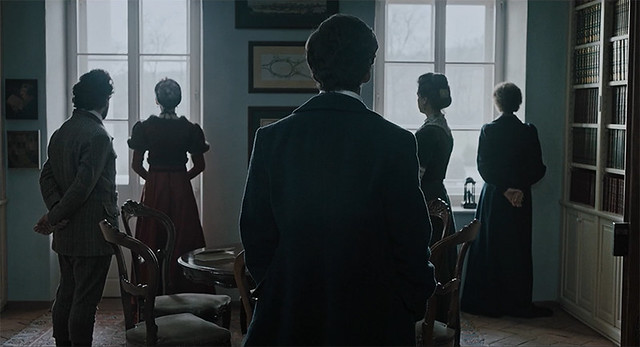
Friday, January 8, 2021

Your Wedding, My Funeral

 An Autumn Afternoon (1962) - Ozu

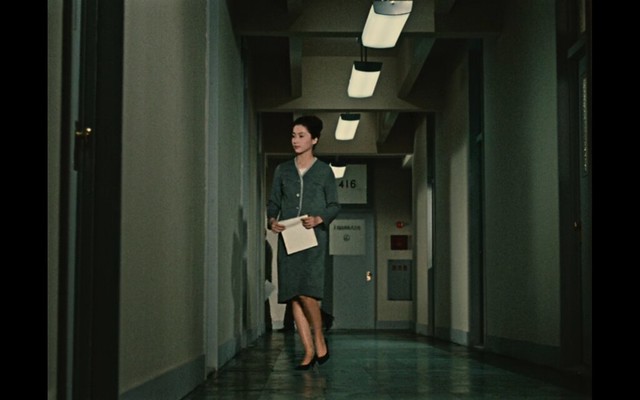
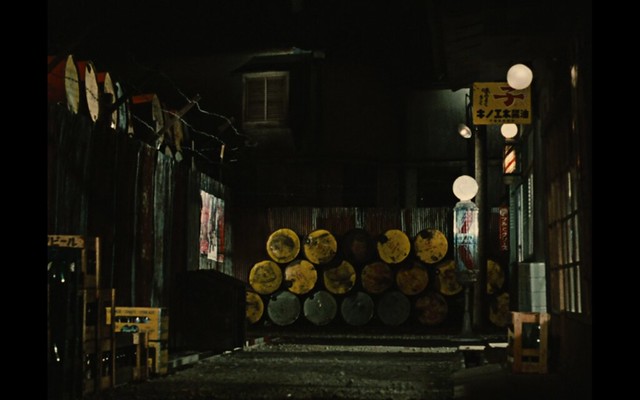
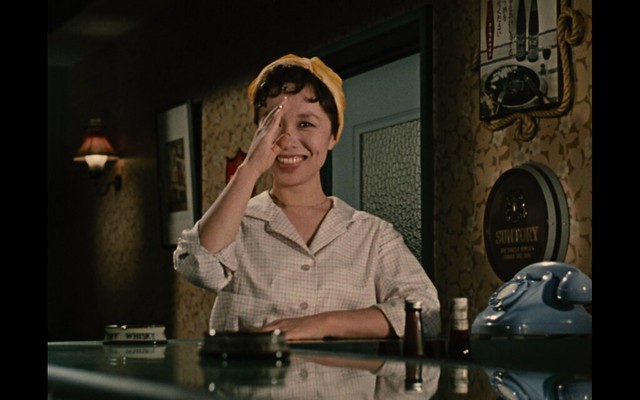
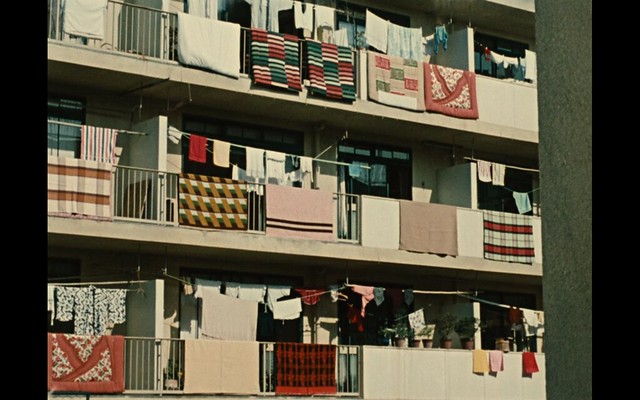
Screen Shot 2021-01-08 at 6.04.56 AM Screen Shot 2021-01-08 at 6.23.14 AM Screen Shot 2021-01-08 at 6.33.25 AM Screen Shot 2021-01-08 at 6.46.41 AM Screen Shot 2021-01-08 at 6.46.46 AM Screen Shot 2021-01-08 at 6.51.17 AM Screen Shot 2021-01-08 at 7.00.23 AM Screen Shot 2021-01-08 at 9.13.15 AM From a pure aesthetic point of view, with symetry of the frames in both interior and exterior sets, boring but exact shot/reverse shot in dialogue scenes, perfunctory movement and gestures of actors, An Autumn Afternoon is not disimilar from Jacques Tati films. But just as with all Ozu films, it's about changing times and its effects on family - mutual guilt, regret, loneliness, nostalgia, melancholy. Also it's a good reflection of the recently minted materialist society - industrial factories with smoke stacks, golf clubs, designer handbags, household gizmos. And they all but overshadow real human emotions. Its that none-emotiveness, holding-backness and the boomer humor leaves a bad taste in my mouth. An Autumn Afternoon is supposed to be wise and poignant observation on fleeting human life, like all Yasujiro Ozu films are. And in a way it is. An old salary man is afraid of losing his daughter by marrying her off. She is 24 and not getting any younger. If he does, he will be alone and lonely. She doesn't say anything out of duty as a daugther because father knows best. The film is way too geriatric for me to appreciate it more.

Someone once mention that if the cinema survives for ways in the future and got discovered in some sort of archeological digs by our descendents or aliens from outerworld discovered it in a cosmic dust, without recognizing its language, what the future men or aliens will get out of it is perfunctory human activities - walking, in transit (car, train etc) and eating & drinking. If they dug up and saw An Autumn Afternoon, what they will mostly see is men eating and drinking, a lot. I mean, the amount of drinking scene in this movie far surpasses any Hong Sangsoo movie I've seen. It's too bad that Ozu had no interest in actually showing what they are eating. I'd like to have known that.

Thursday, January 7, 2021

Hyper Sensory World

The Reason I Jump (2020) - Rothwell

The reason I jump Autism is not a dirty word anymore. We all know someone in our lives who are deemed autistic. But even though our society may have gotten better at treating people on the spectrum over the years (relatively speaking of course), our understanding of how a person with autism views the world has been rudimentary at best. It wasn't until 2013, when, a then 13-year old autistic Japanese boy named Higashida Naoki wrote a memoir called The Reason I Jump and British author David Mitchell (Cloud Atlas) translated the book with his wife into English, the whole world, for the very first time, had a chance to get a glimpse of how people on the spectrum perceive the world. The book has been a revelation for many, and helped thousands of anxious parents who for years had to cope with having autistic children without much guidance on the subject. Then again, it was those parents - their persistence, dedication and unconditional love that made this breakthrough possible; for it was Naoki's mother who devised a handmade Japanese alphabet grid so her non-verbal son could finally express himself in words and eventually write the book. I read his memoir a long while ago and it was truly an eye-opening experience.
The Reason I Jump is loosely adapted by documentarian Jerry Rothwell. With jumbled home movie footage and recent events with the help of immaculate sound design by Nick Ryan, the film succeeds in presenting the world of autism as an audiovisual sensory experience. As Naoki explains in his words (in voice over narration by Jordan O'Donegan)that he, as an autistic person, experiences time differently - not in linear fashion, but in spurts: what he experienced when he was little can be present right next to what happened two minutes ago- with all the emotions he felt then come rushing in with it. This explains autistic people's seemingly abnormal behavior - sudden outbursts of shouts, anger or laughter or unexpectedly stopping in their tracks, as if lost in their own worlds. The film also does a fine job of zooming in and superimposing images, approximating how an autistic person concentrates on details of an object and gradually figure out what he/she is seeing in front of them. Obsession, repetition and attachment to an object are also the signs of being on the spectrum, as they give them a sense of security in ever-changing surroundings.

The film start with a cute, button-nosed Japanese boy (Jim Fujiwara) wondering around the woods. With the whimpering noise he makes here and there, you can tell he is autistic. It seems that everything he sees, hears and feels is new and wondrous experience for him. He and the narrator in Naoki's words are coherent threads that guide us through the film.

We are introduced to five of those on the spectrum - Amrit in India, Joss in England, Ben and Emma in the US and Jestina in Sierra Leone. We also meet their parents who care for them. Amrit, although non-verbal, creates colorful, beautiful figure paintings from her surroundings and on her way to have her first gallery exhibition. With Joss, we get to see the progression of an autistic child growing into a man with uncertain future and their devout parents struggling with the fact. Ben and Emma are childhood friends and, unbeknownst each other's parents, have been communicating non-verbally for years and planning their future together. Jestina and her parents, struggling in a society where people with autism were considered possessed by demons and social stigma is stronger, help find a community and finally establish a school for autistic children.

The film acknowledges the horrendous social stigma associated with having an autism and doesn't disguise our atrocious past in treating autistics as subhuman by playing the audio clips of eugenicists and 1938 Nazi propaganda where they advocated for ending those 'invalids'' miserable existence. There are many heartbreaking moments but one of the most searing one is Jeremy, Joss's dad talking about his son's future and breaks down contemplating what's going to happen to his son when he is not around to take care of him anymore. And I am pretty sure that's the worries of thousands of parents who have kids who are on the spectrum.

Produced by Jeremy Dear and Stevie Lee, two of the parents of the autistic children in the film, The Reason I Jump is also a tribute to those parents who give unconditional love and care. The film asks for understanding and, above all, patience by showing how autistic people perceive the world. But perhaps the most moving part of the film is when Naoki says in the narration at the end that if he could get a chance to do it all over again, he wouldn't change a thing. The point being that Naoki and countless others experience the world differently, even better way than we 'normal people' do - a hyper sensory world we can only approximate on film.

The Reason I Jump opens virtually on Friday 1/8 nationwide. Please visit Kino Lorber website for more info.

Torching the Traditional Motherhood

Ema (2019) - Larrain Screen Shot 2021-01-06 at 6.29.03 AM Screen Shot 2021-01-06 at 10.34.22 AM Screen Shot 2021-01-06 at 6.48.15 AM Screen Shot 2021-01-06 at 6.53.25 AMScreen Shot 2021-01-06 at 9.21.43 AM Screen Shot 2021-01-06 at 9.57.58 AM
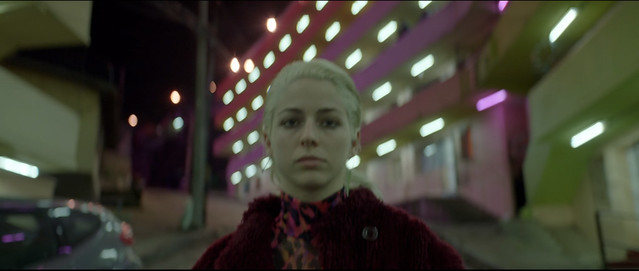
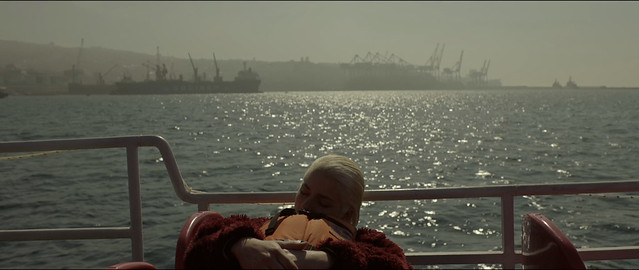
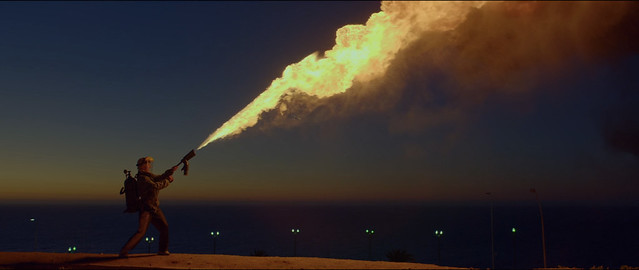
Ema (Mariana Di Girólamo) is in any way a mom material. She is first seen torching the traffic signal in the middle of the night in the Chilean city of Valparaiso with her flame thrower. This sleek platinum blonde beauty is a dancer in a group who dances street dance known as Reggaeton. She is in divorce proceedings from Gaston (Gael Gacia Bernal), a choreographer of the group, 12 year her senior and a foreigner. She also maintains numerous amorous relations within her team, mostly comprised of female persuasion. 

Ema-Gaston backstory is that Gaston can't conceive a child. So they adopted 12 year old Colombian boy. But when things got tough and the boy tried to burn down the house and half of Ema's sister's face (got that tendency from mom obv), they gave up the boy and sent him back to the system. The rest of the movie is Ema trying to get the boy back by manipulating her way into the boy's new adopted parents' lives.

It's fun, horny movie that torches the traditional notion of motherhood into oblivion. 

Last October, Chile overwhelmingly voted (78 percent!) to rewrite their constitution which was written in the military dictatorial years of Pinochet which was supported by American government of course. Argentina just voted to legalize abortion. Seeing yesterday's shenanigans at our nation's capitol where Trumpers stormed the halls of our House chambers and reading the reactions to it online, one thing that struck me is that we as a society failed miserably for our next generation. No one under 40 will ever trust our government ever again to do anything right.  In this context, Ema is as much of a rebuke of the old generation than anything else. Who are we to judge what's amoral or what is a right thing to do? Burn the shit down!

Energetic with fuck-all attitude, Ema is a new breed of filmmaking that signals the arrival of the next generation who are more empowered and care-free, as if saying "whether we like it or not, the future is ours." I tend to agree.

Saturday, January 2, 2021

Shanghai Surprise

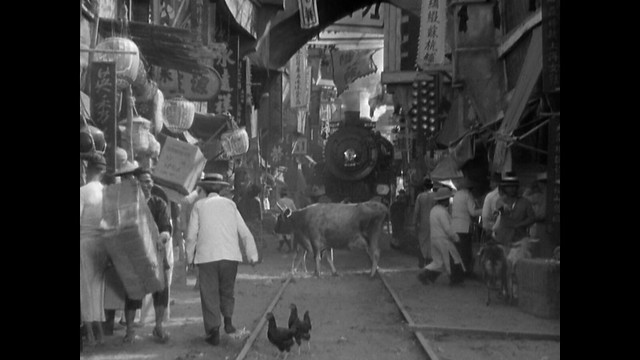
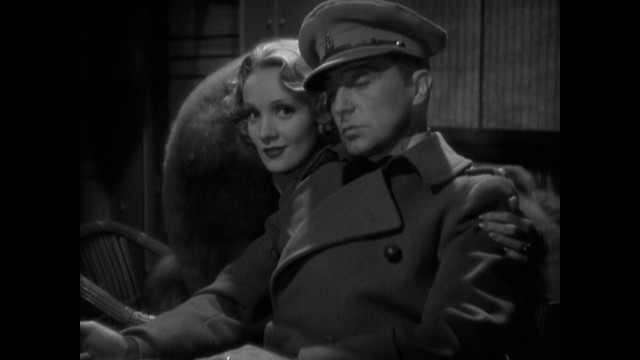
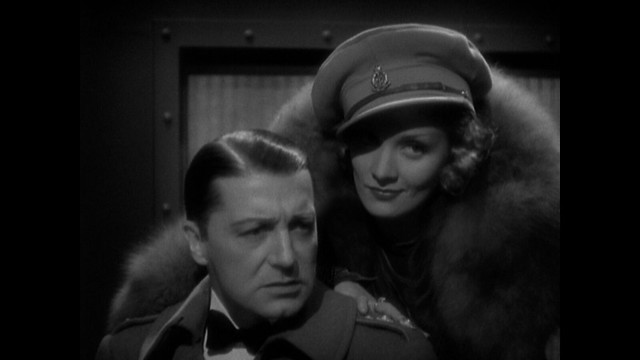
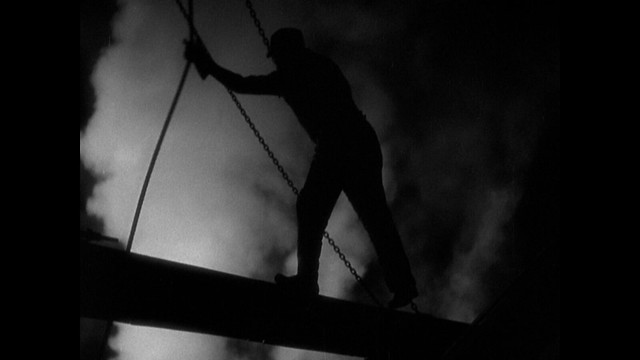
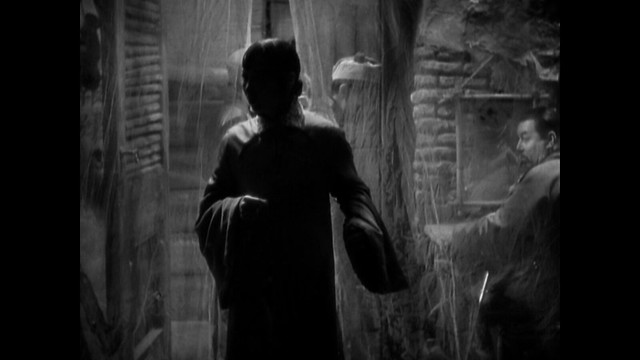
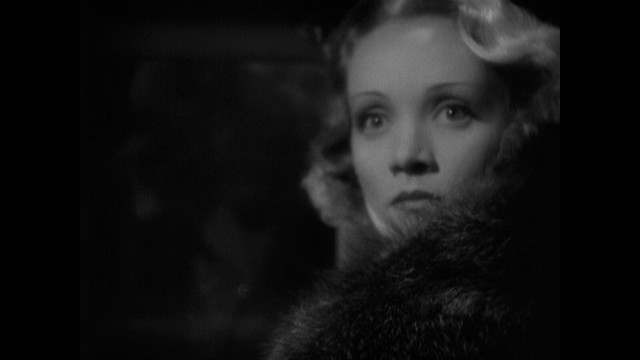
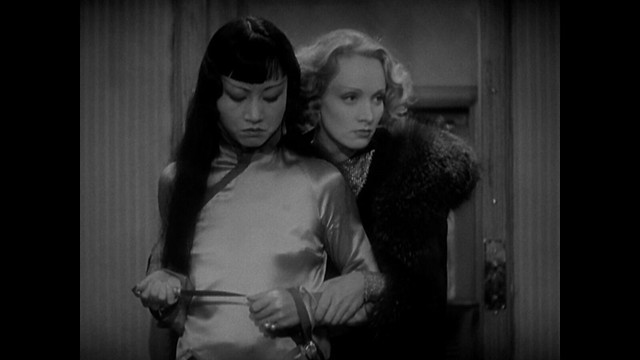
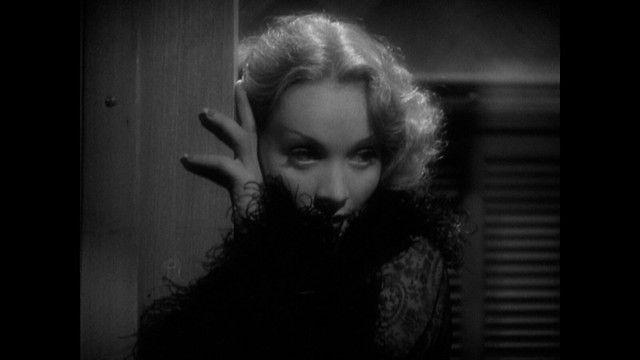
Shanghai Express (1932) - Sternberg Screen Shot 2021-01-01 at 9.26.15 PM Screen Shot 2021-01-01 at 9.27.18 PM Screen Shot 2021-01-02 at 10.27.29 AM Screen Shot 2021-01-01 at 9.30.59 PM Screen Shot 2021-01-01 at 9.32.50 PM Screen Shot 2021-01-01 at 9.34.04 PM Screen Shot 2021-01-01 at 9.34.33 PM Screen Shot 2021-01-02 at 10.25.46 AM Screen Shot 2021-01-01 at 9.38.00 PM Screen Shot 2021-01-01 at 9.38.32 PM Screen Shot 2021-01-01 at 9.47.04 PM Screen Shot 2021-01-01 at 9.39.19 PM Screen Shot 2021-01-01 at 9.40.21 PM Screen Shot 2021-01-01 at 9.40.55 PM Screen Shot 2021-01-01 at 9.42.51 PM Screen Shot 2021-01-01 at 9.44.11 PM Screen Shot 2021-01-01 at 9.44.52 PM Joseph Sternberg's portrayal of 1930s China is that of a Westerner's exotic dream of what the East is supposed to be like - full of danger and intrigue filled with beautiful, dangerous dames while everyone speaks perfect English. Shanghai Express is a visual feast made up of long tracking shots, expressive dissolves, gorgeous shadow play and most of all, its luminous star, Marlene Dietrich's stunning wardrobe changes.

Shanghai express's plot contains lost loves between a British officer Harvey (Donald Brook) and a courtesan known as Shanghai Lily (Dietrich) as they embark on a train ride from Peiping (Beijing) to Shanghai. Then there is a rogue element in Chang (Warner Oland in ridiculous 'oriental' makeup- raised eyebrows and three point mustache that looks like a Halloween gag costume for racists) who feigns to be a passenger but a revolutionary sleazebag who masterminds the train jacking and taking hostage of Harvey in exchange for his second-hand man who got captured by Chinese gov't troops earlier. Chang also threatens to keep Lily as his concubine and after her rejection, turns to Hu Fei (Anna May Wong), Lily's chamber-mate, and rapes her. The siege ends in Lily sacrificing herself - to stay with Chang to release Harvey without Harvey knowing it. After Hu Fei kills Chang and everyone gets released, Harvey, thinking that Lily chose the captor for her own volition makes the rest of the train ride a very uncomfortable one.

Silly plot aside, Shanghai Express is all light and shadows and how to light its star as beautiful as possible. And Dietrich is as always, stunning. Wong also shines as knife wielding dangerous beauty without backstory. It would have been great if there were a Hu Fei spinoff. Will investigate Wong's filmography in the future.

Tuesday, December 29, 2020

Bad Moon Rising

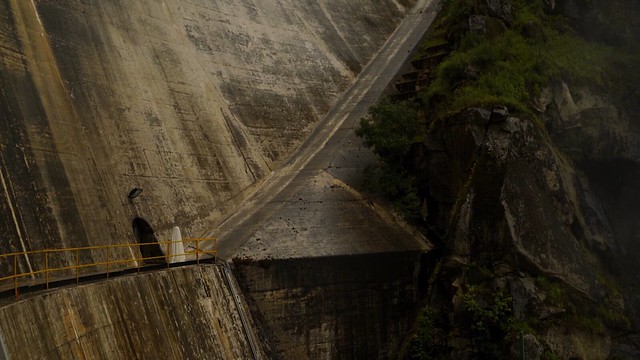
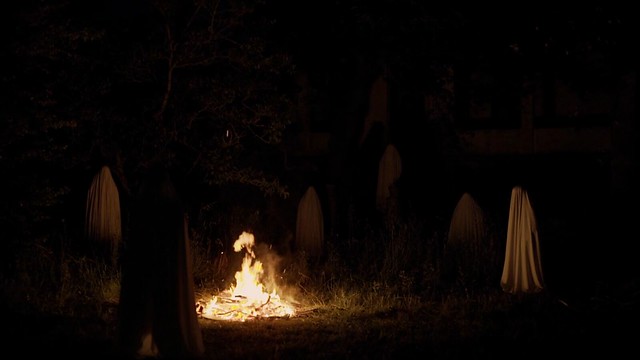
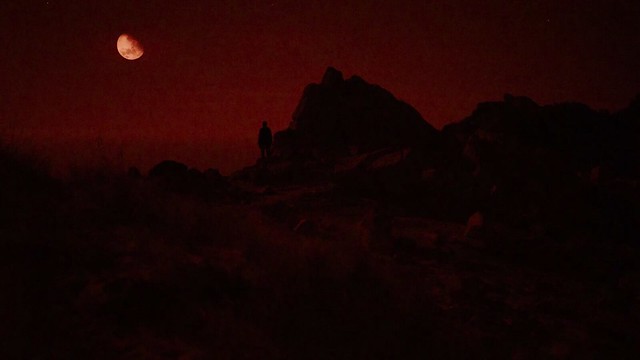
Lúa vermella/Red Moon Tide (2020) - Lois Patiño Screen Shot 2020-12-28 at 11.12.01 AM Screen Shot 2020-12-28 at 11.11.35 AM Screen Shot 2020-12-28 at 11.10.28 AM Screen Shot 2020-12-28 at 10.22.56 AM Screen Shot 2020-12-28 at 10.33.27 AM Screen Shot 2020-12-28 at 10.29.36 AM Screen Shot 2020-12-28 at 10.48.32 AM Screen Shot 2020-12-28 at 10.53.08 AM Screen Shot 2020-12-28 at 10.53.14 AM Screen Shot 2020-12-28 at 10.58.12 AM Screen Shot 2020-12-28 at 11.05.30 AM Screen Shot 2020-12-28 at 11.09.34 AM Screen Shot 2020-12-28 at 11.10.08 AM In a coastal fishing village in Gallicia is experiencing another ocean related tragedy; Rubio, a fisherman who is known for retrieving dead bodies of shipwreck victims so the mourning villagers can have closures, became the victim himself of the tumultuous waves off the coast when his ship sank. His body might never be found. The local legend dictates that there is a monster living in the dark sea, awakened by the devil moon. Three ancient witches come in to town, to take its villagers who seem to be immobilized by grief on the spot where they stand by shrouding them over with white clothes making them a literal ghosts statues, while under red moon. And that's the gist of the story in Lúa Vermella.

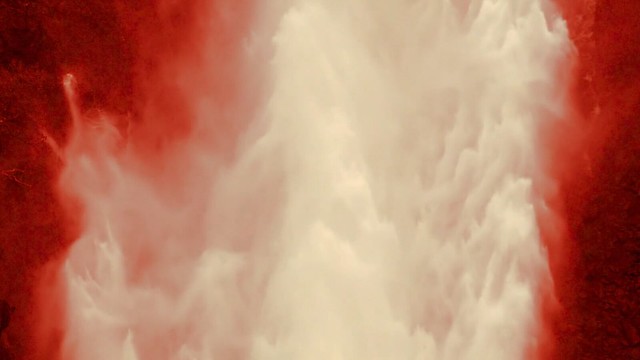
Like Oliver Laxe's Fire Will Come, Patiño makes full use of Galicia's rustic natural beauty and its real inhabitants to tell a tale steeped in legends and its surroundings. His images are out of this world though. I've seen his short Fajr before, shot in Morrocan desert morphed with shadowy cloaked figures. Lúa vermella goes several steps further. I mean, those mindboggling transition shots alone makes it a worthwhile viewing.

Sunday, December 27, 2020

Female Desires

Smithereens (1982)/Desperately Seeking Susan (1985) - Seidelman Smithereens Susan Susan Seidelman's first two films - Smithereens and Desperately Seeking Susan tapped into the period between last throes of gutter punk 80s New York into New Wave scene like no other films did. Only rivaling films that capture that era NY culture are perhaps Slava Tsukerman's Liquid Sky (1982) and Martin Scorsese's male counterpart, After Hours (1985). Smithereens and Susan are similar in themes. Both are from the perspectives of New Jersey women who long to be part of New York scene and for that, they will manipulate their ways all the way to the Alphabet City to get what they want. They will emotionally abuse and parasidically live off of any willing men as long as necessary to be a part of New York's Lower Eastside music scene. However morally reprehensive these characters are in today's standards, these two films are intriguing time capsule cases, representing its time and place. And I can't help myself looking back on it nostalgically. These girls are bitchy, tough but also extremely attractive - Wren (Susan Berman) in Smithereens, Roberta (Rosanna Arquette) and Susan (Madonna) in Desperately Seeking Susan.

No they don't have an arcade game in their or their friends apartment, or cool furniture or lamp or anything of value. They usually don't have a place to sleep at night because they burned too many bridges already. But they somehow get by, usually by the grace of some ditsy girlfriends or men with heart of gold who they emotionally abuse.

The two films also reflect the changing landscape in New York at that time. The punk was almost dead and moved on to LA, the so-called no wave was too unglamorous to have groupies. Desperately Seeking Susan was shot in the summer of 84. MTV had their first music video award in the fall of 1984 which would make a mega star out of Madonna. Seidelman knew how to read the changing music scenes accurately. She also had the 80s sensibilities. There are no real tragedies in the Seidelman's grimey NY - no drug overdose, no AIDS yet, no serious domestic violence. Instead, there are cool shades, smashing jackets, spiked ankle boots, laced gloves and guys donned cool hairdo. It's the hip 80s, not the tragic, ugly 70s anymore.

Skindeep these films maybe. But Seidelman somehow makes these characters likable, partly because they are driven by their own desires. It's not their clothes and their coquettish looks, it's their drives to get what they want that turn out to be their most attractive qualities.

Wednesday, December 23, 2020

Top 20 Favorite Films of 2020

What can I say about 2020 except it sucked big time? Possibly one of the worst years I've experienced in my lifetime if not the worst. My viewing films suffered as well: many film series and festivals have faltered or postponed, on top of all movie theaters being shuttered because of the world-wide pandemic that has been raging since March. I did catch up with some good films though. This year, unlike any other year, was the year of gentle, subtle films. It has been a good pace of change to balance out the ugly, anxiety filled reality leading up to the presidential election and losing loved ones and sharing heartbreaks with those who are greatly affected by Covid 19. It was also the year of women filmmakers - Reichardt, Gomes, Zhao, Song as well as newcomers Zheng Lu and Kulumvegashivli made the list. 

Happy holidays! Good riddance 2020. Here's hoping for a better year everyone!

1. First Cow - Reichardt First Cow 1

2. Ghost Tropic - Devos Ghost Tropic4

3. Lovers Rock - McQueen Screen Shot 2020-12-15 at 10.52.57 AM

4. O que arde/Fire Will Come - Laxe Screen Shot 2020-04-04 at 9.24.39 AM

5. La casa lobo/The Wolf House - Cociña, León Screen Shot 2020-07-07 at 6.02.13 AM

6. The Disciple - Tamhane The Disciple

7. Days - Tsai Days

8. Malmkrog - Puiu Malmkrog

9. The Cloud in Her Room - Zheng Lu The Cloud in Her Room

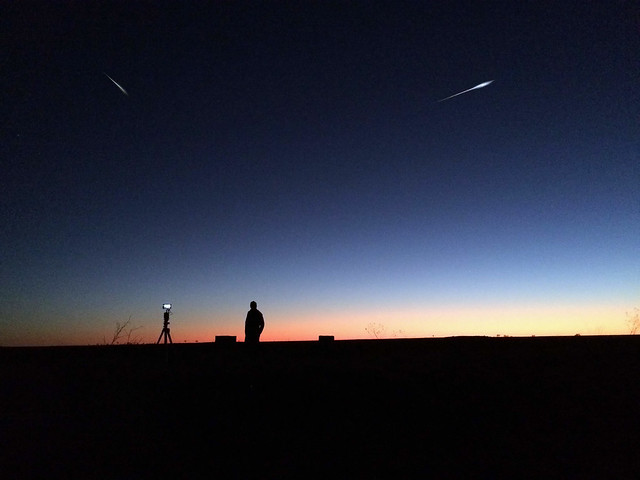
10. Fireball: Visitors from Darker Worlds - Herzog, Oppenheimer Fireball-Visitors-from-Darker-Worlds

11. The Two Sights - Bonnetta Second Sights

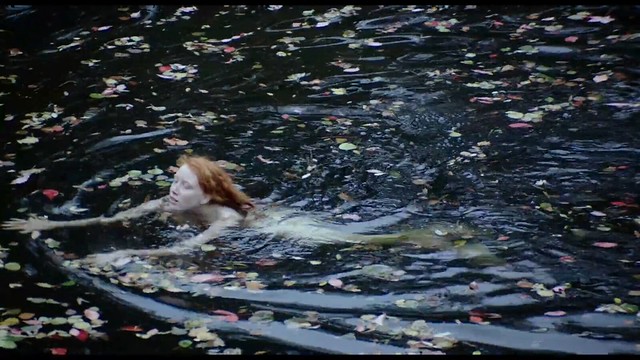
12. Undine - Petzold Undine

13. Notturno - Rosi Notturno

14. A Portuguesa/A Portuguese Woman - Gomes Screen Shot 2020-07-24 at 10.58.30 AM

15. Fourteen - Salitt Screen Shot 2020-06-12 at 11.23.26 AM

16. His House - Weekes His House

17. Beginning - Kulumvegashivli Beginning

18. Nomadland - Zhao nomadland

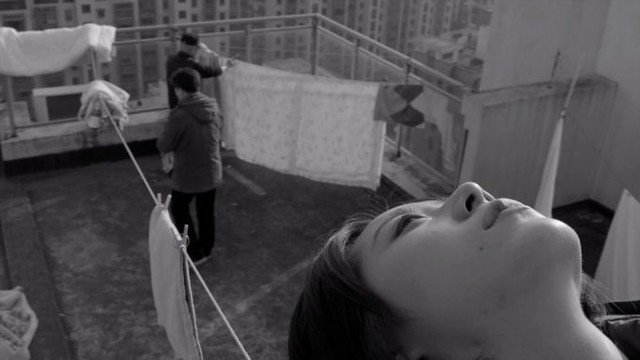
19. Calming - Song The Calming

20. American Sector - Velez, Stephens Screen Shot 2020-11-11 at 9.13.39 AM


Vitalina Varela, Bacurau, Wild Goose Lake, I Was Home, But...and Zombie Child all made my list last year.

Click here for yearly top 10

Top 10 Discoveries 2020