Sunday, March 27, 2022

Domestic Terror

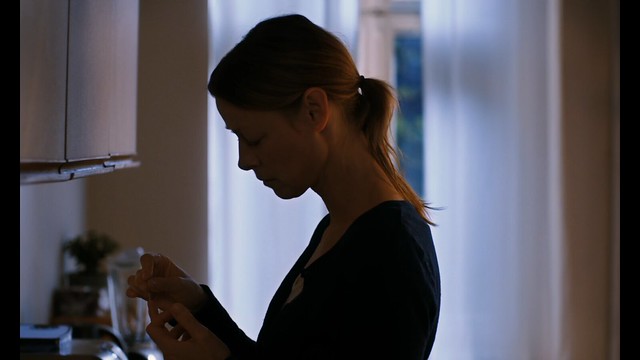
The Strange Little Cat - Zürcher Screen Shot 2022-03-27 at 9.10.25 AM Screen Shot 2022-03-27 at 9.11.44 AM Screen Shot 2022-03-27 at 9.12.33 AM Screen Shot 2022-03-27 at 9.13.12 AM Screen Shot 2022-03-27 at 9.14.02 AM Screen Shot 2022-03-27 at 9.16.16 AM An unusual chamber piece that holds more mystery and tension in its 70 minute runtime than an average thriller, Ramon Zürcher's The Strange Little Cat calls on a normal German middle-class family life into question: Are they OK?

The film is composed entirely of medium static shots in the family's small apartment, never to reveal the goings-ons of off frame. Everyone says things in a matter-of-fact fashion and their interactions with others are limited to us watching them staring vacantly to the other person off camera. Mom, played by Jenny Schily who always looks like she is suffering from migraines, tries to hold it together for one day, hosting a dinner party for her extended family. Her two grown children, Simon and Karin, are visiting from elsewhere. Her younger daughter Clara screams on top of her lungs whenever the blender is on and always wrecking havoc with the growling family dog and the orange tabby cat, which won't stop jumping on the dining table. The washer is broken and in need of service, there's moth flying around the kitchen and there's a rat scurrying around in the courtyard below.

Everyone has a strange encounter stories to tell but no one really pays any attention to them. Are they not significant enough or are they the signs of distress? How about the shots of objects - a glass of milk on the kitchen counter with floating hair on top, a yellow ball the dog plays with, a dancing bottle on the stove - what do they signify?

Anything that is said and heard in The Strange Little Cat accumulates into an uneasy feeling. Everyone's saying something to the others but nothing really sticks. This is more of the case to mom than others. She tells a weird story about going to the movies and a stranger next to her put his foot on her foot but she missed the opportunity to withdraw or let him know. Was she getting hit on, or was she making things out of proportion? She tells Karin about a crowded place she goes for lunch during the dog walk, just to have lunch next to some strangers.

People's cruelty to one another seems more accepted - Karin's attitude toward the neighbor's kid who kicked a hacky sack into the kitchen window, or mom's lingering foot above the cat's head, Simon's story about a drunk woman at the party who later got arrested, or mom's contemplation of pricking her finger with a sewing needle, and so on.

There's a lot to unpack in The Strange Little Cat. It's the everyday domesticity that plays out like a horror film.

Monday, March 14, 2022

Preview: First Look at MoMI 2022

First Look, a Museum of Moving Image's annual showcase, scoping new innovative films from around the world, is back and I'm happy to announce that it's a real treasure trove this year.

This year's lineup includes Murina, a Cannes Camera d'Or (Best First Feature) winner from Croatia, two documentaries by Ukrainian master filmmaker Sergei Loznitsa, Valentyn Vasyanovych's all-too-precient realization of the Russian invasion in Reflection, Chinese artist Qiu Jiongjiong's spectacularly cinematic display of history and art, A New Old Play, Tsai Ming-liang's love letter to flourescent light soaked Hong Kong's afterhours in The Night, Adèle Excharpoulos starring satire on capitalism, Zero Fucks Given, just to name a few. The festival runs 3/16-3/20. For tickets and info, please visit MoMI's website.


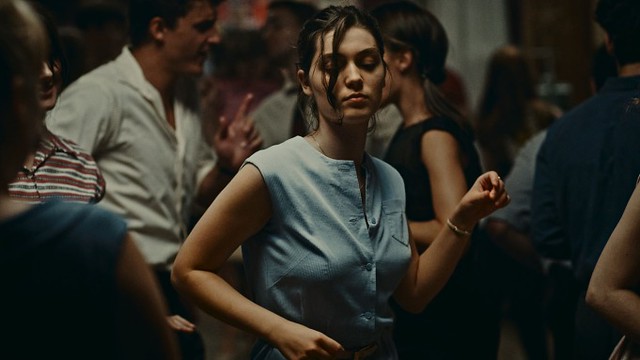
Murina - Antoneta Alamat Kusijanovic *Opening Night Film Murina Julija is a teenage girl living in the small fishing island off the rugged, picturesque coast of Croatia with her overbearing father, Ante, and a former beauty queen mother, Nela. Antoneta Alamat Kusijanovic's debut film strongly develops into a fraught father-daughter relationship out in the open, or under the surface in this case with the striking opening sequence- they are spearfishing for an illusive sea eel together. As they come out of the water, you can see there is a cut in Julija's upper thigh near her groin. She was manhandled in the water for something she shouldn't have done. The tension rises when Ante's old friend, millionaire developer Javier (suave Cliff Curtis) visits the island for a land developing deal that Ante is cooking up. They are hoping to move to Zagreb and get an apartment if the deal goes through, possibly leaving behind the fisherman existence. Sexual tension, jealousy clash with controlling nature of patriarchal society. With lush cinematography and great feature acting debut by Gracija Filipovic, Murina stands above the usual coming of age film.

The Night - Tsai Ming-liang *screens with Murina as Opening Night Film The Night Shot in November of 2019 while making Days in Causeway Bay, Hong Kong, this 20 minute short, The Night, is an amalgam of all Tsai's films in a small package - urban loneliness. Long static shots of night exterior with a cold fluorescent lights with ordinary people walking, waiting at the bus stops, eating in tiny stalls, with occasional cars passing by, play out like a Hong Kong version of Edward Hopper painting in motion in a concrete jungle, where human beings seem tiny and insignificant. A melancholic old song "The Night is Too Beautiful to Last" by Pei Ni kicks in around 15 minute mark. The film is Tsai's love letter to the night and melancholy it brings.

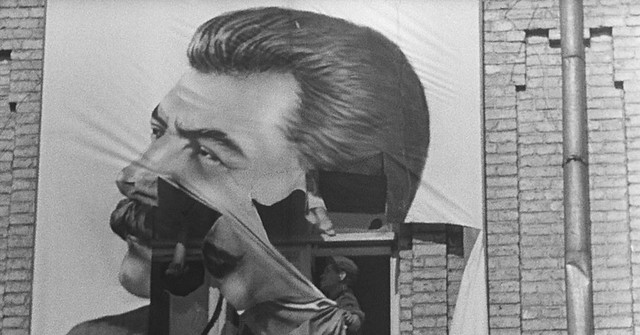
Babi Yar. Context - Sergei Loznitsa Babi Yar Babi Yar is a ravine near Kiev where execution of 33,771 Ukrainian Jews took place when the city fell to invading German troops in 1941. They were rounded up by German SS soldiers and the Ukrainian Police Force. In this all archival footage documentary, Ukrainian filmmaker, Sergei Loznitsa, approaches the subject in his typical, non-authorial way, without any narration and spares no one in the process. The holocaust memorial wasn't built until 2016. Now with the Russian invasion with Putin's shrewd campaign to 'denazifying Ukraine' and Svoboda - ultra-nationalist/neo-nazi element in Ukraine and also having a Jewish head of the state Zelenskyy emerging as the national hero during war time, Babi Yar. Context provides Ukraine's complex history and counters what is termed as chronocide, or erasing history, in our modern society full of misinformation and propaganda.
Feathers - Omar El Zohairy Feathers When her husband turns into a chicken during the magic trick at their son's birthday party, our unnamed female protagonist has to deal with 3 young children and crippling poverty and absurd amount of bureaucracy.
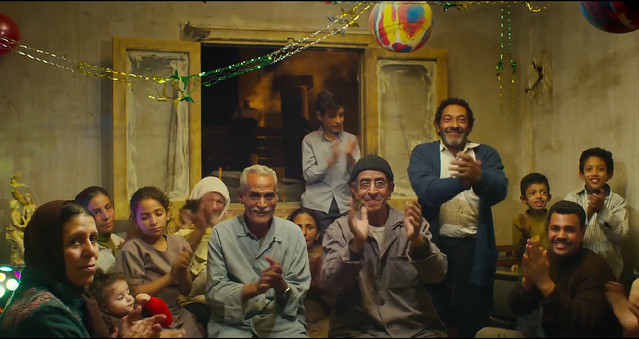
Feathers is an Kafka-esque absurdist social satire of the patriarchal, sexist Egyptian society. Director Omar El Zohairy, assistant director for fantastic 2016 film Last Day of the City, making his feature film debut, prefers tight, off-centered framing to accentuate the cramped interiors, physical dominance over the female heroine. Part surrealist comedy and part neo-realist drama, Feathers illustrates that there are very limited options for women living in a men's world.

A New Old Play - Qiu Jiongjiong A New Old Play Impeccably crafted, Chinese artist Qiu Jiongjiong's epic A New Old Play is seen through the eyes of Qiu Fu (Yi Shicheng), a gifted Chinese opera singer through the tumultuous modern history of China from 1920s to Mao's Cultural Revolution and beyond.
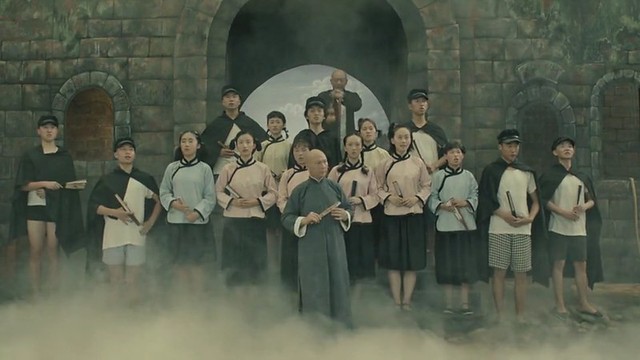
Qiu, with a white patch around his nose permanently because of wearing his clown makeup all his life, is summoned by two demons (Bullhead and Horsehead) to report to hell, because he is dead. We are then taken back to Qiu's early years as a street urchin being picked up by the Sichuan theater troupe headed by Chinese opera enthusiast and army commander Pocky. Spectacular handpainted sets and backdrops (production design done also by Qiu) and with simple but clever camera staging - slow dolly tracking and playing with deep focus, A New Old Play has in common with Roy Andersson's and Wes Anderson's cinema, if only aesthetically. Through its 3 hour runtime as these carefully orchestrated sets and movements settle you in to lived-in, comfortable feeling. And its Qiu's unbiased approach to Chinese history that gives melancholic resonance and wisdom being a witness to history on a personal level. Qiu hits home the idea of life being a stage, where we live and die on it

Reflection - Valentyn Vasyanovych Screen Shot 2021-09-13 at 10.36.22 AM If Valentyn Vasyanovych's previous filmAtlantis was dealing with fictional scenario of the future ecological devastation and human toll from the prolonged war, Reflection, using gray landscapes and claustrophobic interiors, delves into the psychological damage of on-going conflict and threat from the neighboring ominous superpower. Sly metaphors, like dead pigeon, makeshift pyre, ravenous stray dogs are all present. But as with Atlantis, there is a glimmer of hope in Reflection. This time, it's not the love between a man and a woman, but that of father and daughter. Known to use non-actors in his films, Vasyanovych uses his own daughter to play Polina. She in turn, gives a great performance in long takes, engaging in religious and spiritual discussion with Lutskyi who plays her father. Her innocence shines through in a dreadful industrial, monochrome winter Ukraine landscape. Daring in its cinematic language, and unflinching in its presentation of the present, the film makes you impossible to ignore the state of the on-going conflict in that part of the world.

Read my full review from Venice 2021: https://screenanarchy.com/2021/09/venice-2021-review-reflection-resonant-formalist-look-at-russo-ukrainian-war.html

Zero Fucks Given - Emmanuel Marre, Julie Lecoustre Zero Fucks Given Sharp observations on the service industry in the 21st century capitalism is at the center of Zero Fucks Given. Adèle Exarchopoulos is Cassandra, a flight attendant at a small European airline company, Wing. The film devotes most of its running time to the banal day to day life of young flight attendants who dream of one day working for Emirates Air, the creme de la creme of the industry and hard to get into. But Cassandra seems to have no directions or ambitions, other than going through, repeating her daily routines of work, dealing with constant micro-management, partying off-hours, being lazy by the pool side in sunny Lanzarote where the company hub is located and countless one night stands through online apps.

Things take a drastic turn when she is reprimanded for buying a distraught customer a wine out of compassion and sent home to Brussels. Staying with her younger sister and her sad widowed father, it is revealed she was running away from her mother's sudden death.

With verité style candid cinematography by Olivier Boonjing and Exarchopoulos's committed performance, Zero Fucks Given comments on hyper capitalist society where work and personal life exist like oil and vinegar, yet one dictates another whether we like it or not.

Thursday, March 3, 2022

Life Restricted

Great Freedom (2021) - Meise GreatFreedom It's almost unthinkable now, in a free, democratic society that Paragraph 175, a provision of the German criminal law that criminalized homosexual act, existed more than a century and was only abolished in 1994. Austrian director Sebastian Meise tells the injustices done under such law and concentrates on a character with the camera firmly stationed behind the prison walls most of the time. Great Freedom again showcases the immense talent of its star Franz Rogowski, an actor best known for recent string of films by Christian Petzold - Transit, Undine, whose quiet demeanor and soulful stares communicate with the audience way better than wordy dialog. His portrayal of Hans, who frequents prison for just being who he is and living his life, once again proves that he is one the best working actors out there.

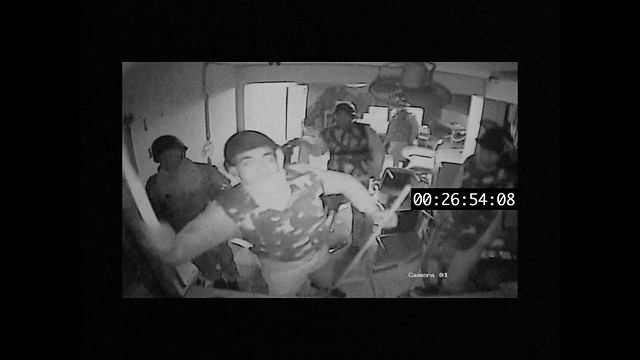
The film starts with surveillance camera footage of seedy men's bathroom where homosexual sex acts are taking place. Hans (Rogowski) is seen taking part in that footage. It is documented that German police engaged in surveillance program in public places to 'weed out' illegal activities in the SC and SC extensively. As Hans is arrested and thrown in jail and his casual self-deprecating exchange with the long term convict Viktor (Georg Friedrich) that this isn't the first time Hans was in prison. The year is 1968.

After trying to protect a young gay man in a prison yard fight, Hans is thrown into a solitary confinement. This also seems like a reoccurring theme. Meise uses these solitary confinement and release from it as a temporal jump points to the past and back, highlighting the longevity and persistence of Paragraph 175. Hans is seen being liberated from a concentration camp by Allied Forces only to be transferred to another prison to serve his remainder of his sentence for performing homosexual acts.

It's this prison where he meets Viktor for the first time. Viktor, a convicted murderer serving a long sentence and an innate homophobe, first acts violently at the news that his new bunkmate is a homosexual. But over time, his hostility and aggression softens and takes a younger, sensitive bunkmate under his arm. Being an amateur tattooist, he even offers to cover Hans's concentration camp numbers on his arm.

Hans can't help himself for falling in love with younger, vulnerable gay men being sent to prison. And they are always the target of prejudices and violence in a prison environment. Against Viktor's warning, Hans keep getting involved in fights while protecting his lovers and keeps getting thrown into an unbearable solitary confinement.

With the simple date titles, we go back and forth between three time periods. Over 3 decades, the law stays the same, Hans keeps coming back to prison. Meise puts a soft touch on these transitions rather than actor's physical transformations, accentuating that time passes differently from the inside the prison wall. The moon landing on TV doesn't have the same effect there as outside. The world keeps evolving, but the unjust, inhumane law is still prevalent. Rogowski's performance adapts to the passing of time, his silent expression and dancer trained body language showcases from nervousness to volatility to resignation.

Friedrich, a veteran German actor, is also fantastic as Viktor, serves as a witness to the injustice done to his fellow inmate and friend, while contemplating his misdeeds as a young man; his sad and weathered face reflecting our humanity.

As the talk of the reformation of the law, Hans finally gets a chance to be free. Would it be the last time he and Viktor will see each other?
Great Freedom beautifully illustrates about genuine human connection while examining the injustices done to generations of people who were persecuted just for being who they are. The film is also a great reminder, along with the recent films like Audrey Diwan's Happening, that the rights we have gained (fairly recently) are not to be taken for granted, especially the world is experiencing great fascistic conservative pushback from the right.

Great Freedom opens in New York on 3/4 and Los Angeles on 3/11. National rollout will follow. Please check Mubi website for rollout dates.

Wednesday, March 2, 2022

Rendez-Vous with French Cinema 2022 Preview

The 27th edition of celebrating the best of contemporary French cinema offers a star studded 23 film line up. And after going all virtual last year due to the pandemic, this year's Rendez-Vous is back at the beloved Walter Reade Theater, Film at Lincoln Center, NY. The festival runs 3/3 - 3/13.

Opening night film is a highly anticipated Berlinale winner, Claire Denis's Juliette Binoche and Vincent Lindon drama, Fire. Other notables include Mathieu Amalric's Hold Me Tight with Vicky Krieps as a grieving French housewife, Jacques Audiard's contemporary romance Paris, 13th District, Christophe Honoré's stage adaptation of Proust going awry during Covid-19 in Guermantes, Arnaud Desplechin's adaptation of Philip Roth's Deception, starring Léa Seydoux.

For showtimes and tickets, please visit FLC website.

Here are some notable films I was able to sample:

Deception - Arnaud Desplechin Deception Tackling on Philip Roth's autofiction, Arnaud Desplechin's Deception showcases Léa Seydoux's talent and charisma once again (they collaborated in his last effort Oh, Mercy, where she played a poor working class girl mired in crime).

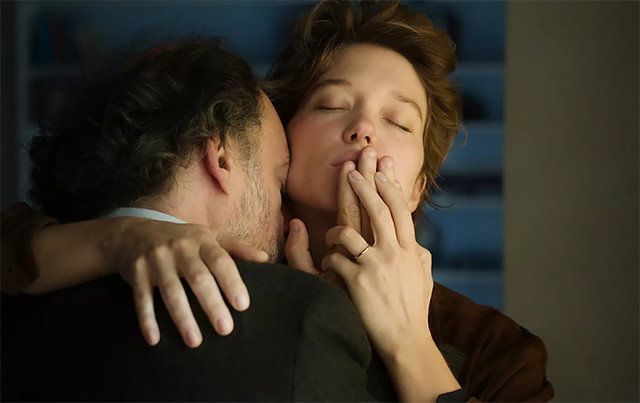
Here Seydoux plays a sophisticated Londonite whose unhappy marriage drives her into the arms of Philip Roth(Denis Podalydès), a London based American writer, also stuck in loveless marriage. In his London flat, they talk and make love. He jots down his thoughts about her in his trusty notebook for keepsake. They break up many times yet have a strong hold on each other and can't let it go completely. His wife suspects and accuses him of having an affair and he defends himself by saying that Seydoux character is just that, a character, a manifestation of a writer's imagination run amok. As usual for a Desplechin film, Deception is wordy and performance driven. And despite the setting and the characters nationalities, with the usual neurosis and everything, Deception is decidedly and predictably Desplechin and very French.

Hold Me Tight - Mathieu Amalric Hold Me Tight I've said many times that Mathieu Amalric is not only a great actor but great director as well. Yet again, he proves it with Serre moi fort/Hold Me Tight.

It starts out with Clarisse (Vicky Krieps) sneaking out of the house in the middle of the night, driving away in an old car, leaving behind her loving family - Marc, her hunky husband and two adorable children, Lucie and Paul. She tells herself that after a while they will not miss her. She is never coming back and they will have to accept the fact. But why is she running away? What is she running from?

Then the film becomes something else entirely. Krieps gives a gut wrenching performance in a film about grieving and letting go that is so portent and heartfelt than any other film I've seen in a long time. Constantly going back and forth with her and her family, feeling the absence of one another yet articulating the connection in a very ingenious way, Amalric perhaps makes the most heartfelt film as a writer/director.

Guermantes - Christophe Honoré guermantes The planned stage play of Guermantes, based on Proust's third volume of In Search of Lost Time (appropriate title for our pandemic times), is getting canceled, because of Covid. Director Christophe Honoré and a large cast of mostly theater actors, who's been rehearsing the play together for months, are devastated by the news. So they have two choices, stop the project, admit the defeat and go home, or continue to rehearse without a guarantee that the show will ever be staged in the future. After much debate, they continue their rehearsal.

So starts this delightful, communal film of actors and a novice theater director rehearsing the Proust's labyrinthine texts while making the Théâtre Marigny and its lovely garden their home- sleeping, eating, singing together and make the best out of the world wide pandemic.

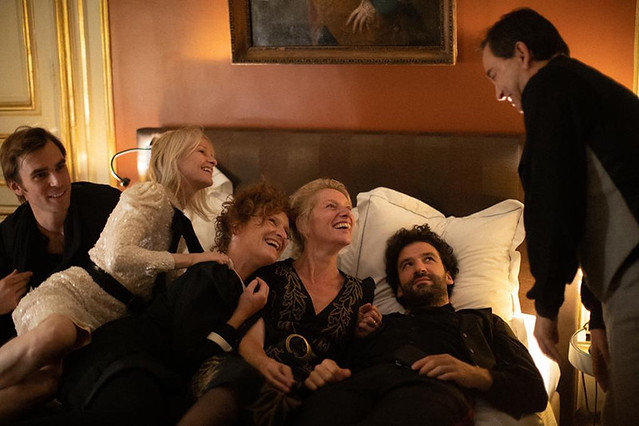
Unlike the play they are enacting which lacks many of the characters back story due to it being a chapter in a 7 volume book, Honoré explores many of the actors backstory and their lives, making the film much more than a mere documented rehearsal. It's obviously scripted cinematically playful and shot beautifully on film, by frequent collaborator Rémy Chevrin. A delightful salvo of a film that shows a power and resiliency of art in the pandemic era.

Paris, 13th District - Jacques Audiard PARIS 13TH DISTRICT Les Olympiads, the high-rise residential buildings named after the cities that hosted Olympics over the years, is a middle income housing built in the 70s, located in ethnically diverse 13th District in Paris. Audiard, known for his well crafted thrillers and highly emotive characters, tries his hands at a modern romance film with his sleek, staccato style, shot on beautiful black and white.

Webcam, dating apps and decidedly young attractive actors give Paris, 13th District, a fresh, vibrant look at the lives of young, ethnically diverse Parisians of today.

Breakthrough performance here is definitely Lucie Zhang as Emilie, a Taiwanese descent millennial looking for love while living off in her grandma's apartment in Chinatown, located in the 13th District. Zhang's uninhibited performance is contrasted by Noémie Merlant (Portrait of the Lady on Fire) as Nora, a 30 something Bourdeaux transplant running away from the grip of her husband to find herself in the city. Their lives cross paths through handsome Camille, played by Makita Samba, a public school teacher whose self-assured but arrogant demeanor both attracts and repels women. Co-written by Céline Sciamma, Paris, 13th District weaves a seductive, fresh tale of modern romance.

Thursday, February 10, 2022

Nostalgia for the Present

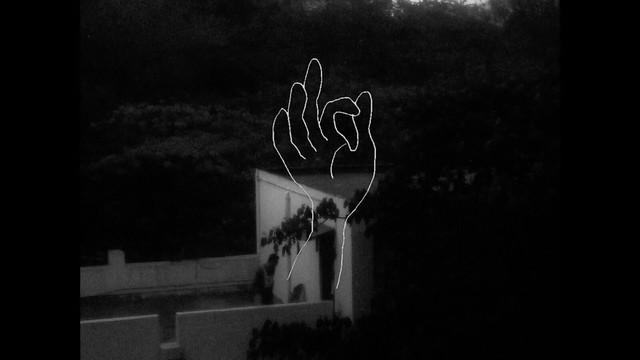
A Night of Knowing Nothing (2021) - Kapadia Screen Shot 2022-02-03 at 9.59.40 AM Screen Shot 2022-02-03 at 9.26.50 AM Screen Shot 2022-02-03 at 3.18.18 PM Screen Shot 2022-02-03 at 3.06.54 PM Screen Shot 2022-02-03 at 3.10.08 PM Screen Shot 2022-02-03 at 2.58.15 PM Screen Shot 2022-02-03 at 9.20.59 AM Payal Kapadia's debut film, A Night of Knowing Nothing is a tapestry of grainy 16mm, archival and surveillance cam footage, beautifully capturing the spirit of youth and their undying idealism in chaotic, uncertain times we live in.

A woman reading wistful letters written by L, a lovelorn student at The Film and Television Institute of India, narrates the film. Her belongings were found in the dormitory where she stayed as a student. These letters, addressed to her boyfriend who is no longer in school, were written on a notebook and never sent. From that, we gather that her love is not reciprocated because of India's rigid caste system: his parents don't approve of their relationship and have taken him away. Kapadia and her team use her letters as a springboard for an essayistic examination of contemporary India.

A Night of Knowing Nothing starts and ends with black and white footage of young people dancing. These silent images of undeterminable time period, is joyous, energetic, and emblematic of college life. They are dancing in front of a movie projected on a big screen. Cinema or visual image here is already tied to the past, invoking nostalgia. There are images of young people in their rooms- some laying in bed half naked, some watching Godard's Breathless on a small TV.

There are empty darkened alleys and billowing curtains, sound of rain and birds chirping accompany these images. Then there's a home movie shot in color, of a wedding, which seems like from the 70s. (judging by their clothes)

As L writes to her lover about their mutual friends, we get the glimpse of 2015 strike at the FTII, a public college, protesting the appointment of a Hindu Nationalist actor to the chair by the right-wing Modi Government. Their strike spreads to college campuses across India, protesting not only the government's assault on public education system but also the violent crackdown of the minority Muslim population. The footage of protests and sloganeering is cheerful at times. But the baton wielding police in the streets and the surveillance footage of masked right-wing militia thugs breaking down the barricaded doors of a university building full of students and corralling them and beating them mercilessly are truly terrifying.

These issues are explained with the voices of newscasters and leaders of the demonstrators with or without visuals, always shot on grainy film. The mood and energy is same as that of May 1968, when universities across Europe exploded in protest against the governments and its policies and war in Vietnam. And just like back then, students question if their movement could be truly successful without the support of the country's working class. This is especially true with a country like India where the deep-rooted social tradition of the caste system make things a lot more complex and difficult. Justice for Dalit (the lowest in the caste system) become the theme of the protests. And L's love affair with a boy from another caste comes up again, tying the narrative threads.

As the film plays out, L in her later letters, isn't sure if she was writing to her unresponsive lover or the ideal version of him, whom she can confide in her thoughts and feelings. Memories fade, but nostalgia remains. From Godard and May 68', Mythical Hindu God films, to Chris Marker, A Night of Knowing Nothing weaves intoxicating visual, textural contemplation of our relationship with cinema as an unintentional but nevertheless undeniably nostalgic medium, even if the image is from only few years ago. It ends in a hopeful tone. As one leader of the protesters addresses the crowds that it doesn't matter what came before them or what's handed down to them and no matter what today's circumstances are, the moment right now is theirs for them to seize it. Keep on dancing.

Swept Up in Chaos

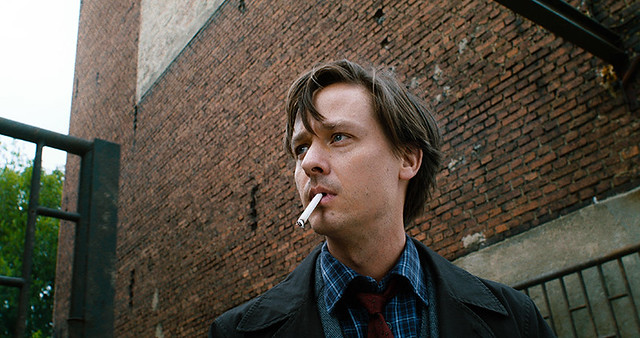
Fabian: Going to the Dogs (2021) - Graf Fabian Veteran German filmmaker/TV director Dominik Graf's Fabian: Going to the Dogs (last year's multiple Lola Award winner), based on Erich Kästner's book Fabian, Die Geschichte eines Moralisten (Fabian, the Story of Moralist), chronicles madness and decadence during the last years of the Weimar era Germany just as Nazism was rising to power through the eyes of a young advertising executive. With multiple voice overs crisscrossing and energetic camera movement and editing, Fabian plays out like a visualized jazz improv session, taking you back to the hubbub of 1930s Berlin.

We observe Jacob Fabian (Tom Schilling), originally a country boy from Dresden, as he precariously balances his hectic life as a cigarette company adman and pulling all-nighters at the anything goes nightclubs with booze and women with his well-to-do friend Labude (Albrecht Schuch), neglecting his writing career.

Everything changes when he meets Cornelia (Saskia Rosendahl), an entertainment lawyer in training and aspiring actress at the backstage of a club one night. It's a love at first sight and Fabian can't believe himself as a thirty-something wise-cracking nihilist falling in love with 'another actress wannabe type'. But Cornelia turns out to be a smart modern woman who will not let anything stop her ambitions.

In the meantime, the repercussions of WWI are starting to drag the country down, the bread line keeps getting longer for veterans, people lose their jobs and there are incendiary rhetoric and marches of the Nazi party on the street. And Jacob, loses his job too and hides the fact to Cornelia and his mom.

Things are getting dire - Cornelia leaves him for a powerful movie producer. Then the PTSD suffering Labude first disappears to an underground whorehouse, only to reemerge to kill himself in his father's grand mansion.

Deeply affected by all the happenings, Fabian retreats to his family home in Dresden where idyllic country tranquility rules the day. Still very much in love with each other, he and Cornelia promise to see each other again in Berlin. But the fate would have it the other way.

With dizzying camerawork, breakneck editing and flashbacks sprinkled throughout, Fabian: Going to the Dogs starts with a rhythm of a jazz jam session and finds its narrative rhythm as the main character gets a hold of his own narrative. It's a beautiful directing in Graf's part, orchestrating the chaotic and colorful backdrop serving a long drawn out, sweet love story. Youthful Schilling is perfect as a wise-ass misanthrope, an wily observer of life who gets swept up and falls victim to the tumultuous time in history.

The film shouldn't be regarded as one of those German prestige pictures, depicting the past with period costumes and sets, because it's not a mere nostalgia picture. It's a stark reminder of reemergence of fascism and ultra-right wing nationalism across Europe. Kästner's pacifist stance in the 30s and moralist point of view might come across as naive but should serve as warning to anyone now to be more alert and not fall victim to the collective nationalist fervor.

Fabian: Going to the Dogs opens in theaters on 2/11 in New York and 3/4 in Los Angeles.

Sunday, January 23, 2022

Faces

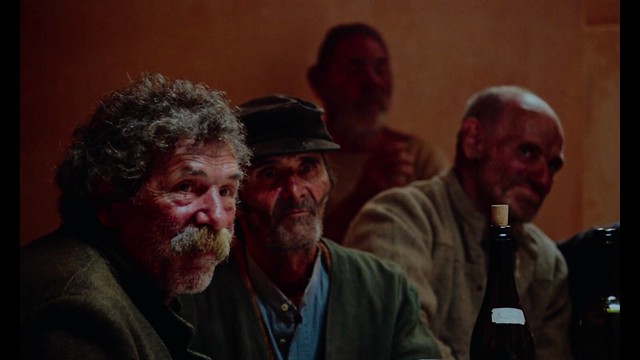
The Tale of King Crab (2021) - de Righi, Zoppis Screen Shot 2022-01-21 at 4.45.02 PM Screen Shot 2022-01-23 at 10.46.45 AM Screen Shot 2022-01-23 at 10.47.01 AM Screen Shot 2022-01-23 at 10.51.31 AM Screen Shot 2022-01-21 at 3.29.45 PM Screen Shot 2022-01-21 at 1.21.13 PM Screen Shot 2022-01-21 at 3.27.54 PM Screen Shot 2022-01-21 at 1.22.46 PM Screen Shot 2022-01-21 at 1.41.06 PM Screen Shot 2022-01-21 at 3.25.07 PM Screen Shot 2022-01-21 at 4.44.46 PM I am a fan of people's faces in films. Uglier, craggier the better. They tell thousands of untold stories on their own. No explanations necessary. And they leave lasting impressions long after I forget the plot of the films they peek their heads in. I remember an ageless street urchin's face, smoking silently in Sharunas Bartas's Three Days. I remember Harry Dean Stanton's weathered face in Slam Dance. Denis Lavant's too with that ugly smile. More recently, I remember the face of Amador Arias in Fire Will Come.

Same here in The Tale of King Crab, by documentary filmmakers Alessio Rigo de Righi and Mateo Zoppis, trying their hands on fiction - a hybrid of documentary elements with fictional retelling of a folklore or two. The film starts in present-day with the old and craggy residents of a small town in Italy, all played by locals, telling each other a folklore that's handed down from generations to generations. Their faces are so distinctive inside a dim hut, they resemble van Gogh's Potato Eaters.

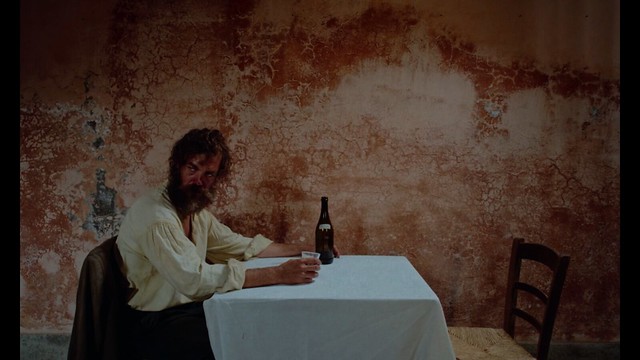
They tell the stories about Luciano (Gabriele Silli), a local drunkard with bad temper who abandoned his aristocratic lineage and making enemies with peasants and landowners alike. The story goes and we get to see them reenacted as Luciano falls in love with a sheepherder's daughter (all grown up Maria Alexandra Lungu, who played the memorable child lead in Alice Rohrwacher's The Wonders). But a local aristocrat landowner has hots for her and as he stops allowing locals to use his property to be used as a footpath becomes a crying rally for hot blooded Luciano. And their confrontation ends in tragedy.

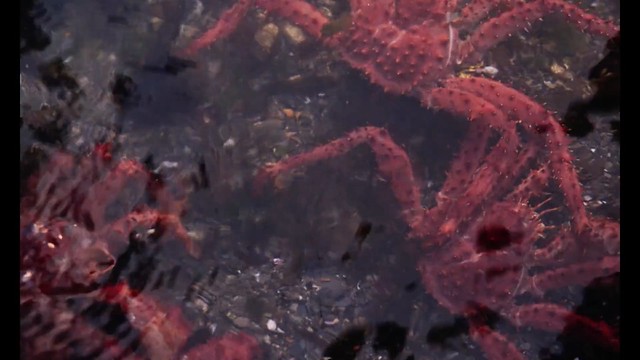
Silli too, has that face: A scar runs down on his forehead, his unkempt beard and wild hair hides his past secrets but its his penetrating steel blue gaze stops you in your tracks. After burning down the village gate in a fit of rage, Luciano is banished to the end of the world (in this case, South America). But he resurfaces again as he takes an identity of a dying priest he met in an Argentinian wilderness and inherit a giant red land crab who works as a compass to find a hidden Spanish treasure atop of mountain lagoon.

We don't get to know, if the later half of the story is a folklore or something the filmmakers came up with, because the narration of the local folks stops in the middle. After all, any stories handed down in oral tradition have thousands of additions and modifications. The temporality is out the window: the first story might have taken place in medeval times, as the second one takes place decades later. Who knows? But the transition between the two stories is so smooth and you don't even get to notice it or care, because you already have bought into Luciano's crazy adventure narrative and intrigue. The views are stunning as Luciano, the crab and other treasure hunters slowly venture up to the rugged, unforgiving Andes mountains as the film becomes an odd adventure/western.

Simone D'Arcangelo, cinematographer and DIT on various projects (Il Solengo and Woody Allen films), captures stunning landscapes and colors, resulting in dated, Herzogian beauty on grainy 16mm film. The Tale of the King Crab is that rare breed of films which inhabits both past and present; harkening back to the ambitious days of cinema of the 60s and 70s, possessing that spirit of capaturing a fever dream that was/is cinema and all knowing modern sensibility to experiment and be playful at the same time.

The Tale of King Crab is an adventure in more ways than one. Silli's recurring craggy face with his smooth, clear voice guides us through the most unlikely places both the narrative and form, making a delicious concoction, worthy of its spectacular crustacean subject.

The Tale of King Crab opens in theaters 4/15 in New York and 4/29 in Los Angeles and national rollouts to follow. Please visit Oscilloscope website.

Thursday, January 20, 2022

It's Happening Again

L'événement/Happening (2021) - Diwan LÉVÉNEMENT-Official-still-H-2021 Audrey Diwan, adapting an autobiographical novel by Annie Ernaux, tells a harrowing tale of a young high school senior Anne (Annamaria Vartolomei) trying to get an abortion in France in the 60s when the practice was still illegal, in Happening.

The style of the film is decidedly social realist: honest and unsparing. Diwan's intentional de-emphasizing on the time frame, that music is the only indicative element of the decade, reflects on our present political climate and the assault on women's rights by the emboldened far-right social conservatives everywhere, all over again.

Anne, a bright high school student from a working class family, is preparing for the all too important baccalaureate exam. She wants to study literature in college and be a writer.

She finds out that she is pregnant from her family physician who confirms her suspicion. But she can't still believe it. And the film moves briskly forward, counting her weeks of pregnancy.

Because of social pressure and shaming involved, she can't tell anyone about the fact — not to her hard working parents who think the world of her, who pack her food and do her laundry when she is home from the school dormitory every weekend, not to her best friends, who think that all law breakers need to go to jail, out of her pride, not to the baby daddy, who is from an out-of-town rich aristocratic family, not to her teacher, who worries about her suddenly failing grade, because he is a male.

She finally confides in Jean, a local cool male friend whom she thinks knows his way around the world, in order to find a back-alley abortion provider. But right away she finds out that as soon as she mentions that she is pregnant, people's perceptions about her change: for guys, she is an easy girl, for girls, she is a slut who sleeps around.

She tries to find direct solutions herself — a self administered abortion, taking shots from a dubious doctor and finally, from a back alley abortion provider. And all things do not go as planned.

Clear-eyed Vartolomei's performance is something of a miracle here as a young woman with her whole promising future tittering on the cliff because of the legality of a simple medical procedure to her body, her own body (!)

With some graphic scenes and its realistic depictions, it draws comparison to a 2020 American indie Never Rarely Sometimes Always. But where Eliza Hittman's film is a complete downer and its protagonist almost anonymous in its clinical depiction, Happening, with strong supporting cast -- Sandrine Bonnaire as caring mom, almost unrecognizable Anna Mouglalis as a cut throat, deep voiced abortion provider, Fabrigio Rongione as sympathetic country doctor and Pio Marmaï as a concerned teacher -- and Vartolomei's bright eyed, blistering performance, makes a compelling yet humanistic and more urgent film in telling the story that is unfortunately as relevant and resonant as ever.

Along with Sebastian Meise's recent Great Freedom, where the filmmakers shed light on Germany's infamous Paragraph 175, which criminalized homosexuality, and the fact it only recently was abolished, Happening looks back at not so distant past where the rights we enjoy right now were the results of hard won battles. The film is a stark reminder that if we don't keep up the fight and push back, as absurd as it might sound, we might lose those rights we've been taking for granted.

Happening played as part of this year's New Directors New Films series. It opens May 6 exclusively in movie theaters via IFC Films. *Addendum; Leaked US Supreme Court Decision to overturn Roe v Wade came out last night, 5/2/22. The goings on in Happening some 50-60 years ago becomes reality in the US, the so called the first world country where there's supposed to be the separation of Church and State, the right to privacy. We need to cease this humbling moment and take it as a signal and mobilize en masse.

Wednesday, January 19, 2022

Leprosy of the Heart

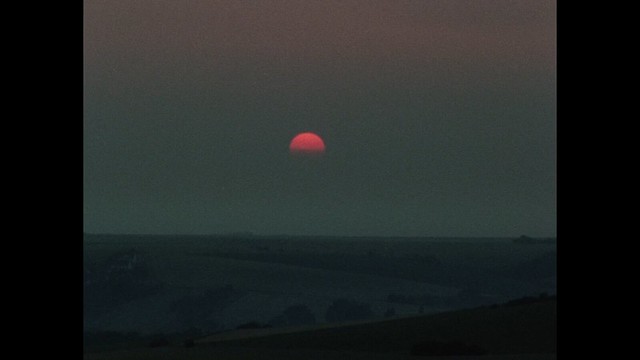
India Song (1975) - Duras Screen Shot 2022-01-17 at 9.40.12 AM Screen Shot 2022-01-17 at 10.02.41 AM Screen Shot 2022-01-17 at 11.49.45 AM Screen Shot 2022-01-17 at 10.24.40 AM Screen Shot 2022-01-17 at 11.13.45 AM India Song is a slow, melancholic jazz tune that plays out over and over again throughout the film. And it fits into the narrative of colonialism in Marguerite Duras's film. With the setting sun that opens the film, India Song tells the end of the Western colonialism. She equates that with love and how insatiable it is.

The film starts with a narration, talking about a mad woman who came all the way from Indochina, singing an old tune. No one knows how she got to India. The madwoman's voice and singing is also heard, throughout the film.

Anne-Marie (Delphine Seyrig), a wife of an absent French diplomat, resides in a grand, decaying, ornately furnished mansion with wordless turbaned servants. We are introduced to her many lovers, lounging around the corridors, standing still, looking forlornly and slow dance with our red haired aging beauty. There's a stink of decay in the air, as if these people are ghosts inhibiting their old playground, not knowing they are dead, forever trapped in time. The film's many voice-overs say as much, that she later died on an island, out of lethargy, boredom. Seyrig exudes that unachievable mirage, the symbol of western civilization in its last days.

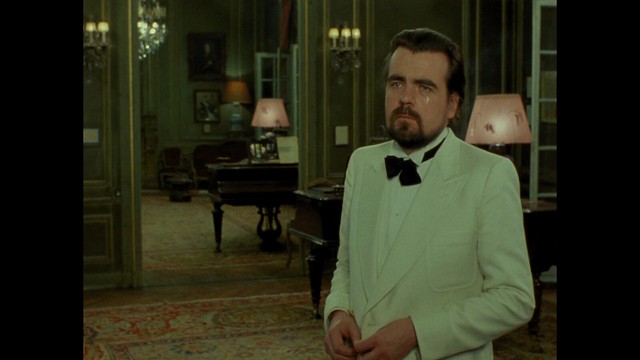
A vice-consul of Lahore (Michael Lonsdale), nicknamed the last virgin of Lahore, is madly in love with Anne-Marie, but unlike all her other suitors, she never reciprocates and never gives him a time of day. He cries, watching her dance with her many lovers, standing still in the corner of the room. He later warns her that he will make a scene unless she flees with him to the islands after a brief slow dance to India Song with her. He howls in pain, begging her to leave with him, to give him a chance to be with her. His cries are heard all night long after he gets dragged out of the frame.

Meticulously staged and filmed with slow tracking shots and intentionally wooden performances, India Song strongly resembles fellow nouveau roman scribe Alain Robbe-Grillet's Last Year at Marienbad, directed by Alain Resnais. Highlighting decadence of the Western colonizers with their completely out of place sense of entitlement and how it rots the human hearts, India Song is a cinematic achievement that encompasses all of Duras preoccupation- colonialism, war, love, memories, from a woman's point of view, equally as man's.

Friday, January 14, 2022

Cannibal Adderly

Expedition Content (2020) - Karel, Kusmaryati Screen Shot 2022-01-14 at 9.21.17 AM Ernst Karel, a sonic artist and a familiar name to audiences attuned to watching many of FSC-Harvard/Sensory Ethnography Lab alum's projects, together with fellow anthropologist Veronika Kusmaryati, comes up with Expedition Content, a hour long audio clips strung together from 1961 Harvard Peabody Expedition led by Robert Gardner, Anthropologist who pioneered the visual anthropology field, and recorded by Michael Rockefeller, of THE Rockefellers, then a 23 yr old Havard student who disappeared without a trace in West Papua, then The Netherlands New Guinea, during the same expedition.

Watching Expedition Content, or rather listening to it while staring at the black screen is rahter a fascinating experience. I mean, I've been always interested in the use of sound in relation to cinema and always preaching the importance of it. As usual, with any Sensory Ethnography Lab's project, Expedition Content tinkers and plays with the boundaries of the cinema as the visual/aural medium.

But what we see, in this case hear- dialog among white ethnographers and Hubula or Dani people doing their everyday chores, singing and conversing, need to be digested in context. After hearing expedition team's discussing the technical aspect of photography and the sound of the Hubula people, we see a little bit of the background of the project in texts across the screen.

So the context is this: the expediton is sponsored by the Colonial Netherlands Government. The Rockefeller family's business, Standard Oil, had a big stake on West Guinea, Michael's father Nelson, then the New York Governor, later became the Vice President of the United States. Keeping this in mind, perceiving this project becomes a little different. It's not some random collection of soundbites from an exotic world.

Surely, there are some wondrous aural moments like the sound of storm passing by, a woman washing sweet potatoes in the stream and yelling at little Mike (Rockefeller who recorded most of the tracks we hear) not to stay too close to her, swarm of bees morphing into a singing chorus which turns into a group wailing. And because it is mostly sound recordings (there are about 30 seconds of Gardner's film footage of a bat cave exploration inserted with the sound in the middle), there are some candid conversations caught on tape (hotmics so to speak), of boys locker room talks and making fun of jazz music and its coolness by imitating how African Americans talk. These supposedly civilized, well educated people would make an (un)intented, racially, culturally, doubly insensitive joke, Cannbal Adderly (playing on Cannonball Adderly the jazz musician).

At times tender and jarring in others, Expedition Content is a wondrous experience to be had. In order to experience it properly, unless in theaters, which I stupidly missed my chance when it was playing as part of Art of the Real in 2020 and at Anthology Film Archive just past week, I suggest you to wear a set of headphones and experience it alone in the dark and let your mind wonder.

Tuesday, January 11, 2022

Don't Go Chasing Waterfall

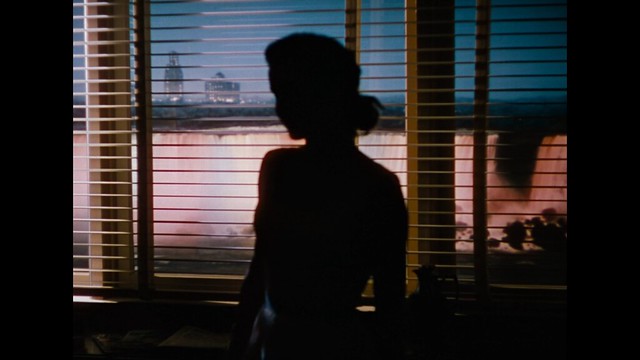
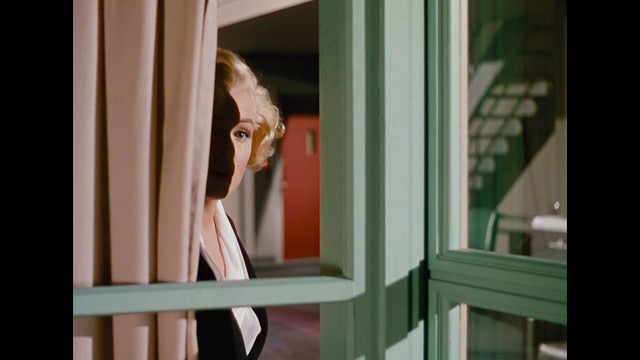
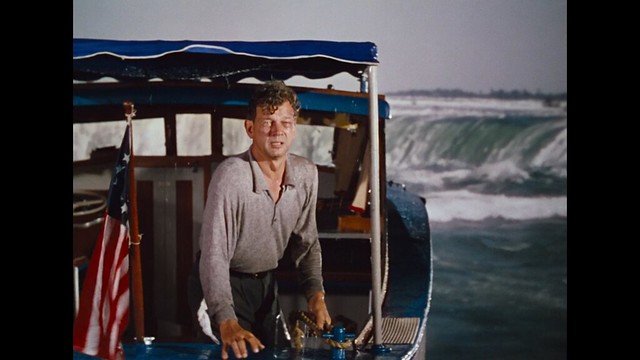
Niagara (1953) - Hathaway Screen Shot 2022-01-11 at 3.32.03 PM Screen Shot 2022-01-11 at 3.38.15 PM Screen Shot 2022-01-11 at 3.54.21 PM Screen Shot 2022-01-11 at 4.16.23 PM Screen Shot 2022-01-11 at 4.19.36 PM Screen Shot 2022-01-11 at 4.20.11 PM Screen Shot 2022-01-11 at 4.30.21 PM Marilyn Monroe plays scheming, unhappy wife to Joseph Cotten's Korean War PTSD'd husband in Henry Hathaway's sunny, Technicolor shot noir. The Cutlers, (Jean Peters of Pickup on South Street and Max Showalter as Polly and Ray) a young-ish couple spending their delayed honeymoon arrive at their destination, The Rainbow-inn, a motor lodge with the overlooking spectacular view of The Niagara Falls, only to find out their reserved room is still occupied by the Loomis (Monroe as Rose and Cotten as George). Very convincing Rose feigns her husband's bad health to keep the room and The Cutlers, being a wholesome, upstanding American dream couple they are, agree to take another room. It is quite clear that Rose is a head-turner everywhere she goes. And her makeup and painted red lips never comes off even in bed. It is quite clear the Loomis are in the fritz, when George storms out of the room and shatters a vinyl record that Rose just put on and been singing along in her svelty sexy voice at a small gathering at the lodge. It is revealed that the song, Kiss, is some sort of a trigger warning for George who breaks out in jealous rage for whatever her past transgressions.

Soon Polly witnesses Rose in a passionate embrace with her lover in one of the Falls' raincoat and galoshes wearing tour. This Rose girl is up to no good but a goody two-shoes Polly will stay out of these gossips. Rose then arranges to off George with her lover, at the same tour and make it look like it's a suicide. And somehow Polly gets entangled in this grisly affair.

I can totally see Monroe's sex appeal in her first major starring role and Hathaway, the hard hitting noir veteran, makes the most of her in various sexy wardrobe and in shadow play. Technicolor is stunning, so as the set design. Rose's prolonged, almost silent murder scene is as good as it gets and puts most stylish giallos to shame.

And of course, the setting is Niagara Falls, one of the most spectacular natural wonders of the world! The boat is not gonna just float around on top, it has to go over the edge of the foaming, roaring water and fall to its demise and it's pretty spectacular. This movie is pretty awesome!