Wednesday, May 24, 2017

Visual Journal of Raymond Depardon

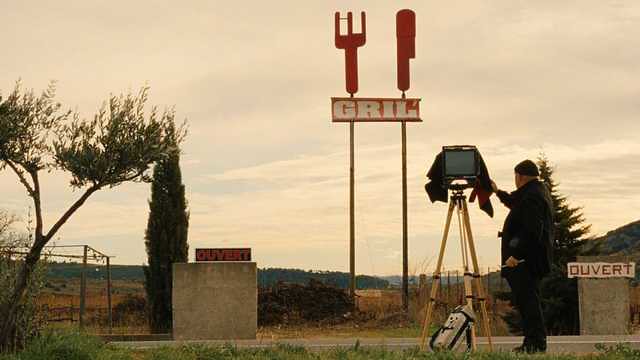
Journal de France (2016) - Depardon
depardon
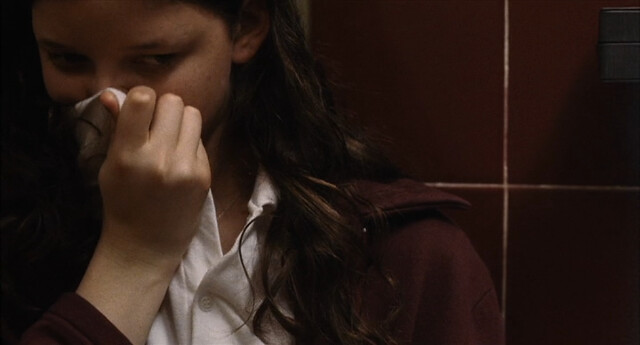
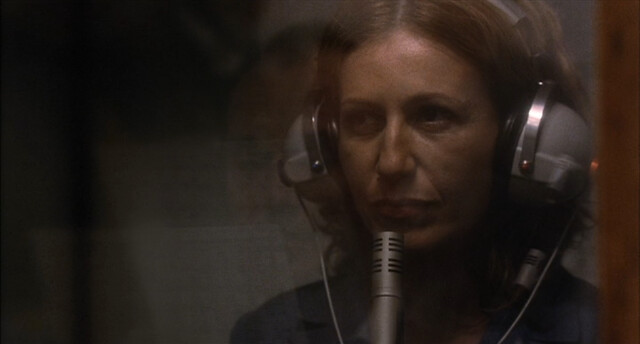
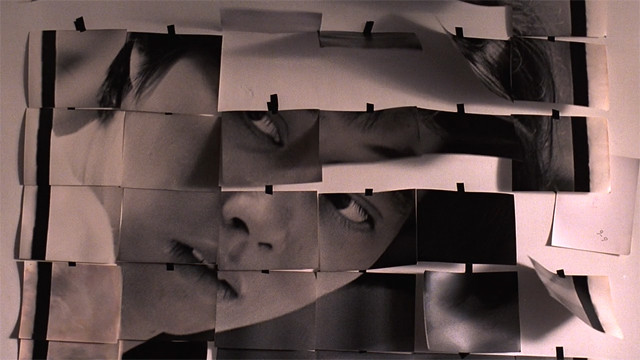
An intimate portrayal of a journalist, photographer, filmmaker Raymond Depardon as he embarks on a tour of his country with his large format still camera. Unseen narrator is his long time collaborator/wife/Sound recordist Claudine Nougaret. It's both journey through time and intimate portrayal of Depardon and his unending curiosity around the world and at home. Depardon's assembled, mostly handheld reportage takes us to various political hotspots around the world since the 60s - Venesuela, Chilé, Czechoslovakia, Congo, Djibouti, South Africa and a lot more. It also illustrates the artist's obsession with the desert with all it represents. We get to see how Depardon and Nougaret hooked up through various stock footage. It's a great doc that avoids being a sentimental nostalgia piece. Great Saturday morning movie it turns out to be.

Thursday, May 18, 2017

The Great Western Pathos

Day of the Outlaw (1959) - de Toth
15c6b1c6-f914-4bc4-a991-d3af74c609cf_zpskmpsiwlj
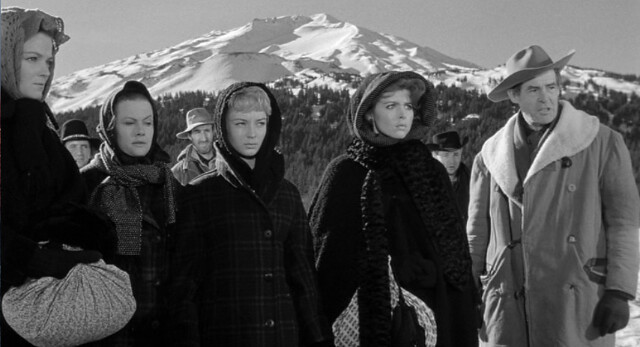
The self-righteous anger and violence has been a staple pathos for the Western genre. This tough male victimhood is as privileged and outdated as white supremacy movement that is rampant in this country. One can't deny that America is built on violence but no one wants to admit it. All highly regarded Westerns follow pretty much the same pathos - The Searchers, The Man Who Shot Liberty Balance, etc. Andre de Toth's Day of the Outlaw is no exception but it makes a hero out of Robert Ryan's gruffy rancher without ever firing a gun. So kudos for that.

Ryan plays Blaise (more like Blasé), a hardened rancher who's had enough of Crane, a farmer and husband of his former lover Helen (Tina Louise), encroaching his territory. Blaise has no qualms about shooting down Crane just on principle alone. But a group of outlaws, headed by former army captain Bruhn (Burl Ives), rolls into town, just in time for Blaise & Crane showdown and start terrorizing its twenty or so citizens of the small town. Bruhn's men are thirsty and lusty. But perhaps because he knows that he is dying, Bruhn promises the townsfolk that his men will not touch the booze and women, until they have secured a safe passage, away from trailing calvary. Blaise, knowing that Bruhn's death will commence raping and pillaging, urges the town's horse doctor to extract the bullet from Bruhn's chest and keep him alive as long as he can.

After a night of dancing and some molestation of women, Blaise decides to deceive the gang and lead them to certain death in the mountain, promising that there is a secret safe passage through the snowy mountains. Greedy and trigger happy, the gang starts to kill each other off.

Day of the Outlaw is a great western. Top notch acting from Ryan and Ives and Louise is a real beaut. Snowcapped vista also accentuates the harshness of the American west.

Tuesday, May 16, 2017

Chip on His Shoulder

Moonrise (1948) - Borzage
Moonrise1
moonrise 2
moonrise8
moonrise 3
moonrise4
moonrise5
moonrise7
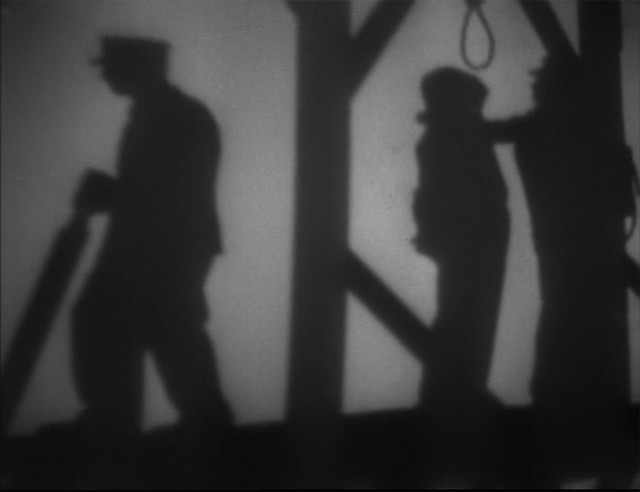
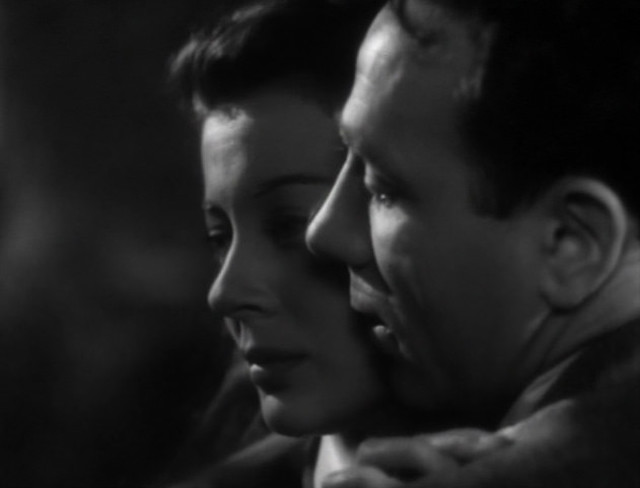
Danny (Dane Clark) has been fighting against a stigma of being a son of a murderer who was hanged- as a child, he was relentlessly bullied and grew up to be a young man with a major chip on his shoulder. He gets into a fight during social dance and ends up killing Jerry, a local rich banker's son (Lloyd Bridges) who's been tormenting him all his life. Danny starts romancing Gilly (Gail Russell), a comely school teacher and Jerry's sweetheart, who's been having feelings for Danny and sees goodness underneath his erratic behavior and moody nature. Soon enough, local sheriff suspects him of foul play and closes in on him. Still struggling with his father's demise, Danny blames the bad blood running in his family for his predicament.

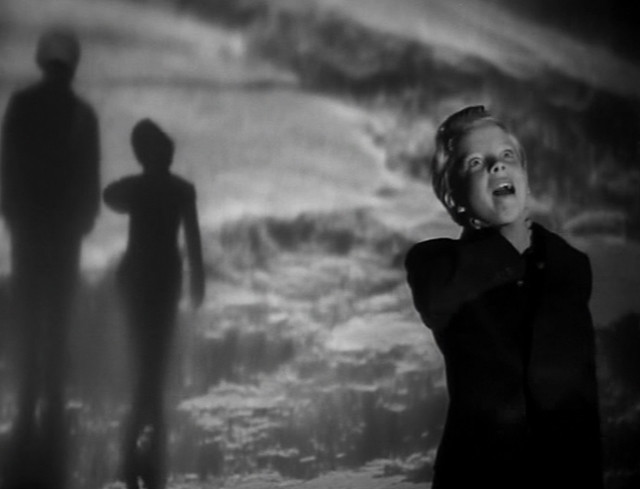
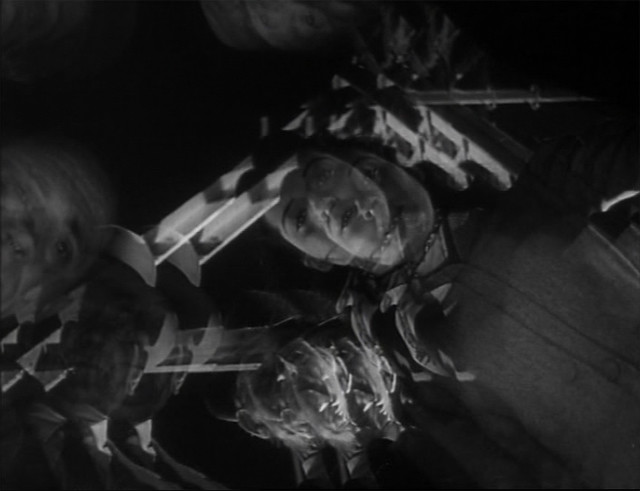
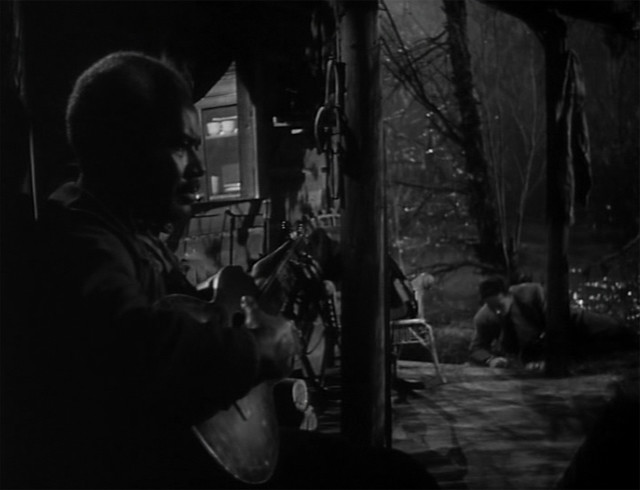
Moonrise starts with an ominous shadowplay and its dark, moody photography never lets up until the very end. Its redemptive plot is nothing to write home about, but there are several beautiful details that makes the film stand out. It's indoor shot southern backwoods has its stagey appeal (with swamps and everything). The foretelling and suggestive dialog/singing reflects Danny's increasing paranoia is quite delicious. It has several poignant moments involving the village idiot (Harry Morgan) Danny projected himself to, animals - coons and bloodhounds, sage black man Mose (Rex Ingram) who has the best lines in the film.

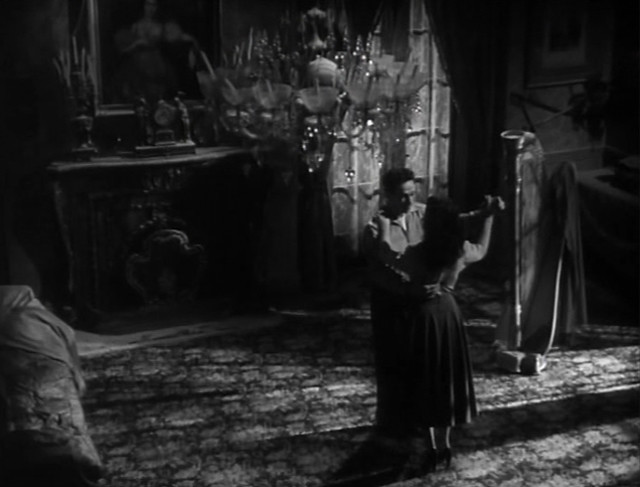
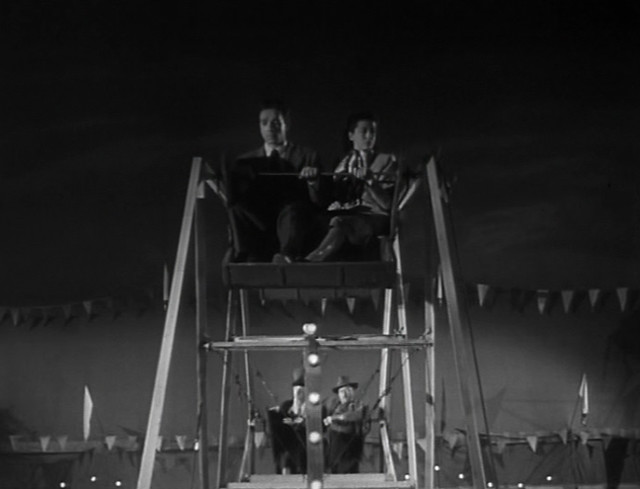
There are several striking scenes in the film that highlights Borzage's skill as a highly visual filmmaker. Most notable ones are the swooping crane shot of Danny and Gilly dancing in a derelict mansion and of course, Danny going crazy on a ferris wheel ride as he jumps off from his seat to the ground. Borzage's sensibility is close to that of Jean Cocteau and Jean Epstein than his Hollywood contemporaries. This could have been a great Farley Granger vehicle. I loved it and looking forward to delve into Frank Borzage's filmography.

Thursday, May 11, 2017

Holy Cinema, in the Subtlest Possible Way

La niña santa/The Holy Girl (2004) - Martel
71a923c2-9137-4081-a85e-4618f5859055_zpsgwq9padw
f6d54976-796a-4f21-9eec-e9b3789860fa_zpsr4hjtubx
5411cf9a-a200-48d4-8798-d9a3d523e75e_zpsr9fxlewt
e1efc07f-f5b0-4f8a-b447-651c72c46d39_zps4lxtigpu
16eeacdf-9acf-44da-83c4-b13f7c8031f9_zps8hmg0qui
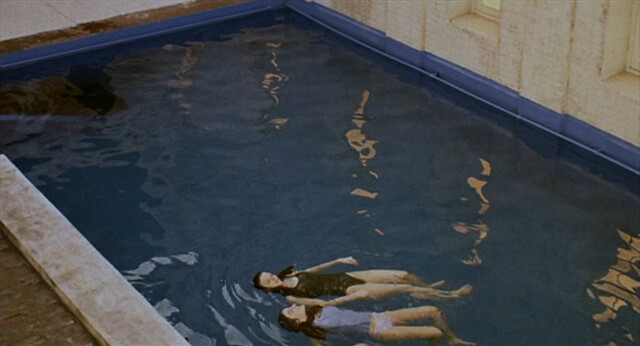
Amalia (María Alche), a sullen teen girl, lives with her divorced mom Helena (Mercedes Morán) in an old hotel with a thermal pool where mom works as a representative. She attends bible study group with her catholic school girl friends and recite prayers under her breath obsessively. Lately, she is obsessed with 'vocation'. A ear-nose-throat doctors convention is taking place in the hotel. Amalia finds herself being an interest of Dr. Jano (Carlos Belloso), a married man with kids, when he rubs against her bottom in the crowd gathered for a theremin player just outside the hotel. On the verge of sexual awakening with the help of a promiscuous, gossipy best friend Jose(fina), the experience leaves her not repulsed but curious.

She soon becomes obsessed with Jano, sneaking into his shared room, smelling his shaving cream, following him and spying on him at the poolside. Whatever this man means to her, her obsession becomes her 'vocation'. Jano's guilty conscience is not helping Amalia's cause. To make matters worse, Helena finds him attractive as well.

Martel proves to be the master of close-ups and shallow focuses. The details of the senses and small moments she captures on screen - touch, smell, whispers make up the film's superbly orchestrated, organic feel. All the connective tissues of the film are all spread out- the fact doctors are ear-nose-throat specialists - whispers and misheard information, smell, singing, but her approach is so subtle and fluid, you can't help but admire her skills. The Holy Girl is about Amalia as much as it isn't. The film's sordid details of the lives of middle class bourgeoisie can be seen as Almodovar-esque melodrama. But as in all Martel's films there is always a it's-barely-there-but-there satire. I can't really think of any director working today who works on Martel's level. The Holy Girl is a true cinematic feat!

Sunday, May 7, 2017

A Puzzle Piece

Terrorizers (1986) - Yang
terrorizers
Some no good gang is holed up in a shady apartment, shooting people on the street at random. A young photographer takes pictures of a man shot dead on the street by the same gang. A fiction writer is having a writer's block, but her supportive but meekly doctor husband who is up for promotion doesn't understand what she's going through. Edward Yang's Terrorizers briskly, busily sets up the premise in the beginning twenty minutes. The film is a puzzle piece that doesn't resolve neatly, yet done in smart, intriguing way, you can't help but admire Yang's skills as a filmmaker.

In the center of it all is a young street hustler (Wang An) who alone escapes the police raid, but is captured by the young photographer's lens. She breaks her leg during her escape and put on a house arrest by her mother. So she spends her time prank calling people at random. The photographer who is obsessed with the girl in his photos, ends up breaking up with his girlfriend and moving into the shady apartment where the gang was holed up at, making it his dark room. The writer becomes a victim of the girl's prank call and it becomes the catalyst for her finishing the novel and leaving her husband.

It's the young photographer who pieces it together and informs the doctor about the girl who maybe responsible for his wife leaving. After that, the unhinged doctor, whose life is in shambles, carries out revenge, mirroring his wife's now famous novel.

On paper it reads like a sordid crime film very much akin to what the author says in an interview after she won the first prize, that she was "inspired by Japanese crime novels". But Terrorizers is nothing but. Everyone is well equipped with back stories and their motivations, except for the wayward youth with no moral compass, suggesting that this girl, the catalyst for everything that happens in the film might be the work of fiction, that her appearance is what people are wishing for in their daily tedious lives.

With Haneke like double take at the end, the film puts an emphasis on the fiction overtaking reality overtaking fiction. Ambitious and seductive, Terrorizers beckons me to watch more of the Taiwanese master's films.

Saturday, May 6, 2017

Primordial

Womb (2017) - Barley
womb1
womb
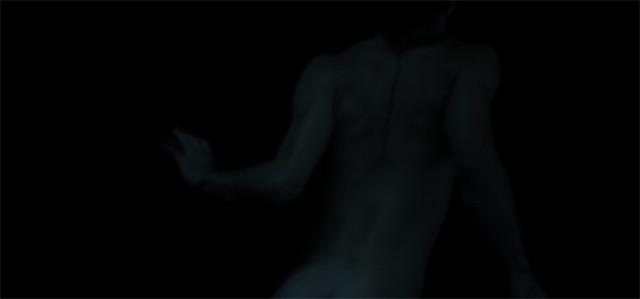
Scott Barley fixes his gaze from his native Welsh outdoors onto a human body in the darkness. Womb can be a little brother to Grandrieux's White Epilepsy, yet still unemcombered by narrative or genre conventions of traditional 'movie-making'.

There is a gaping hole in the universe in the shape of a womb. Barley's internalization of the universe is unwavering. With amazing sound design, Womb is another hypnotic concoction and nice addition to the prolific young artist's growing filmography. There is always something more primordial about Barley's work. His images are devoid of symbols or layered contexts but completely bare and visceral. And I like that about his films. Here he is furthering his cinematic adventure and exploring a new territory as an artist. I love it.

Ideal Version

Empathy (2016) - Rovinelli
6a102b35-2f83-41ad-be0f-b19bbad6e0a1_zps4qimeqnx
Em Cominotti works as an escort. In brief introduction in the beginning, we get to know her background a little bit - a Pittsburg native, currently living in New York, trying to kick heroin habit. Shot on mostly long takes, Empathy is a empathetic, intimate look at a girl's life. Cominotti is a beautiful young woman with warm beguiling smile. You want to get to know her. We see her with a Shakespeare quoting client. Their long take sexual act is graphic but also very natural.

She is back in Pittsburg, hanging out with some old friends, going out to clubs. Then she is in LA. She treats her work as sort of a performance art, playing an ideal version of herself.

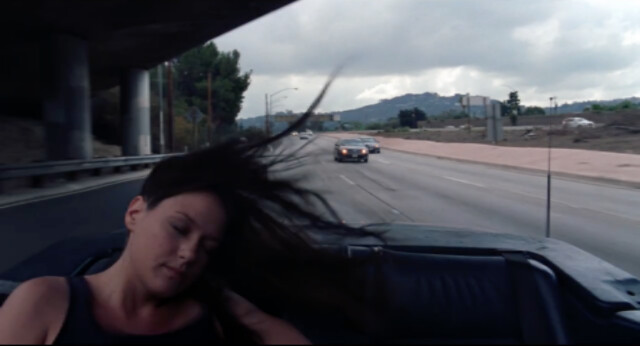
Empathy is a collaboration of director Jeff Rovinelli and Cominotti, a real sex worker and a junkie. It's a scintillating cinema - seductive yet nitty-gritty, near pornographic yet undeniably intimate. It is a fascinating watch. To top it all off, it ends with 10 minute long take of Cominotti in the back sit of convertible as the car drives through a windy Los Angeles highway.

Thursday, May 4, 2017

Exposing the Exposer

Risk (2016) - Poitras
julian_assange_risk_still_-_publicity_-_h_2017-1
Last week, US Attorney General Jeff Sessions announced that Julian Assange's arrest is a priority of the Trump Administration. So Laura Poitras decided to go back to the editing table to add that information in before Risk, her new documentary about Assange and WikiLeaks, gets released in theaters on May 5. (it will debut on the Showtime premium channel this summer.)

Mind you, it debuted as a work in progress last May at the Cannes Film Festival. But a lot has happened since then; bigly, the US election and the Russian hack scandal. Six years in the making, Risk tries to keep up with a whirlwind of information, highlighting Poitras's unprecedented access to Wikileaks and Assange as many events around the world were unfolding.

Risk is an intense film. It starts in 2011, with Sarah Harrison, a close friend of Assange and one of the editors of WikiLeaks, trying to reach Hillary Clinton on the phone. It's a courtesy call to let her, then Secretary of State, and the US State Department know that they are about to leak some damning information. Jacob Applebaum, another editor at WikiLeaks, is seen at a telecom conference in Egypt after the Arab Spring and Abdel Fatah el-Sisi's military takeover, accusing Egyptian telecom moguls of piggybacking on the revolution, while in fact, they colluded with the Mubarak regime and restricted people's access to the internet and Twitter during it.

As the sexual assault case against Assange takes the center stage, Poitras laments that the project is not what she thought she was making, that she thought she could avoid contradiction in him, but that she was wrong. In her sporadic production log voice-overs, she asks herself, why is Assange still allowing me to film this? His ego? Is this film going to be a collateral for his game later on?

Risk does not make a devil or martyr out of Assange. This will surely disappoint and infuriate both his supporters and detractors alike. There are no new revelations, either. One thing it does is paint a grey picture of the very complicated world we are living in.

It shows that in this information age, the Orwellian dystopia where everything is black and white, and the government has total control over media, can't possibly happen. Even Kim Jung-un's North Korean regime is losing grip on its people because of widely circulating contraband South Korean TV dramas, according to a recent high official defector. But instead, we are left in the moral and ethical muck caused partly by hackers, WikiLeaks and individuals like Assange.

Risk never really answers why Assange chose to harm Clinton over Trump during the election. For someone who is in the know, his opinion seems to be pretty conventional: in his words, she is a war hawk and he is unpredictable, which was everyone else's opinion at the time. But for the sake of the argument, let's suppose WikiLeaks dumping hackers' DNC email did tip the scale in the 2016 election in favor of Trump. With the world on the brink of a nuclear war showdown, was Assange wrong about his choice in risk taking? Only time will tell.

The fact is that unlike Edward Snowden, a cleancut whistle blower and a true patriot (who also was the subject of Poitras's award-winning Citizenfour) or Chelsea Manning, a conscientious objector, Assange is rather a calculating, vain character who is in a position of great power and excercises it by his own principles, weighing the risk factors like a chess game, disregarding how his actions might affect the lives of others along the way.

I question Poitras's judgment as a filmmaker: Why did she include a clip of Applebaum jokingly comparing WikiLeaks' method to unprotected sex to roomful of women journalists out of six years of footage? With the accusations against Assange, it's a little on the nose for me.

It doesn't help when Poitras admits having a relationship with Applebaum, who turned out to be an abusive man, accused by many WikiLeaks women employees and forced out of the organization in 2013. With that, she is taking a risk here of the film being too personal to be objective, too limited by her own involvement to see the bigger picture.

Assange was upset that Poitras got the exclusive with Snowden but didn't come to him to release the tapes. So he severed the contact with her. Three years later, he contacts her again to resume filming. In an epilogue, she says Assange wasn't happy with the latest version of the film.

As we speak, WikiLeaks started to dump CIA secret documents in what seems to be the retaliation to the Sessions speech and renewed interests in extraditing Assange (or vice versa). Luckily the film ends with the info that Wikileaks already uploaded tons and tons of secret documents somewhere as a 'kill-switch option.' So just in case anything happens to the organization, they will be released to the public. Expect a lot more leaks and revelations in the years to come.

If anything, Risk shows that Assange is a man of strong principles and greatly enjoys risk-taking when stakes are high. Exposing the exposer can be a risky business. It's the one that will make people love you or hate you in this politically polarized world. Poitras seems deeply conflicted yet committed to tell the truth. And this is why Risk needs to be seen widely.

RISK will open in NY (and nationally) on May 5 at the IFC Center and the Alamo Drafthouse Brooklyn. Showtime will air it in the summer.

Wednesday, May 3, 2017

Languid Visual Poetry

Diamond Sutra (2012) - Bi
e10c3d88-0f7f-4c8c-aa14-859d5b0f83ce_zpsjneruefm
71b76256-c877-4ce2-83c8-a168324d643f_zpsf3uzouop
7dfa8666-3679-4ac2-a4f8-05e0240b14bb_zpsxno6py0q
4261b42a-fc2f-4c6e-ad2d-f48dfbd4da61_zpsqx2jdzxq
So Kaili Blues was not some fluke. Bi Gan's short, Diamond Sutra/The Poet and The Singer, before Kaili charts the same trajectory - a road movie essentially, about two criminals, there are poetry and singing and boat ride involved. All seemlessly, effortlessly mingling together. Its languid visuals and otherworldly beauty is really something to be experienced. Bi really understands cinematic language and visual poetry. Can't wait to see Bi's next project.

Sunday, April 30, 2017

Ritual de Habitual

A Dark Song (2016) - Gavin
adarksong
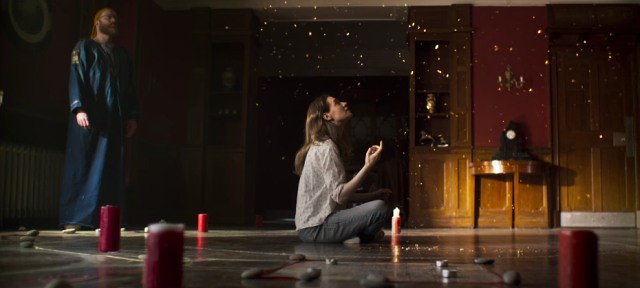
Sophia (Catherine Walker) is seen renting out a big old house in the Welsh countryside, money doesn't seem to matter. As long as the windows are facing west, she'd take it. There is a sense of desperation in her. She picks up Mr. Solomon (Steve Oram), a bearded, track suited occultist at a train station. He has barrage of questions. He is direct and rude. Sophia doesn't seem to mind all that. It turns out she spoke with other occultist and she chose him. She says she's doing it for love. He scoffs. Once he gets there, looking around, and asking more questions, Solomon says the house is wrong and Sophia is not being truthful in her intentions and he is leaving. Back at the station, Sophia confesses that it's her dead son. She wants very much to communicate with him one more time. He softens and agrees to partake in the ritual only under his strict, at times brutal rules. They stack up food and supplies for 6 to 8 months. They surround the house in lime sulfur circle. So starts A Dark Song, a superb thriller that's unlike anything I've seen.

Writer/Director Liam Gavin doesn't go for cheap thrills or emotional fireworks so prevalent with this genre. He takes time to build up to a rather conventional, religious- good versus evil ending. But it is so earned and beautifully done, by the time it comes around I was already sold on the film long ago, it didn't really matter. A Dark Song is all about anticipation or process of anticipation. The premise is set up. Sophia has to prepare for the grueling process Solomon prepares for her - gradually abstaining food, water, sleep and sex, sitting and staying in a drawn circle or square in each room for days, daily cold water cleanse, reading ritual texts and drawing continuously on the floor, and even ritual sex. I love rituals in films. Some sort of daily order fascinates me. That's why I love films like Innocence, Institute Benjamenta and The Ring Finger.

Steve Oram (Sightseers) and Catherine Walker are both great, giving tremendous, natural performances as damaged characters. They don't have to have character arcs. Sophia wants vengeance for the killers of her son. Solomon is merely doing his job - helping her get what she paid for through his unrelenting, brutal rituals. There are moments of tenderness and sexual tensions rising from being two of them alone for a long time, but these don't overshadow the overall film. Dark, gripping and beautiful, A Dark Song is a great film.

Sunday, April 23, 2017

Existential Crisis

Malina (1991) - Schroeter
a8a472b6-51d6-4914-81b0-02d0ff8cff03_zpsoyzpcvfo
adc1f100-9412-4f6a-b58b-83bcf8c1558a_zpsqc9d85ol
0ce8c128-1b10-453e-9e29-96e272419890_zpscym9fajs
86d4bdfb-5491-4baf-a28b-294cd29ee2f5_zpsitm3fzhz
bef572f6-f0ad-4dc5-b57d-3cfd9b9bad38_zpsvwlacp5w
a0227341-50d7-4446-a70f-1a4ec0cc7c36_zpseydio8c8
1648b3d7-022e-4699-96cb-e11aae426c9d_zpsujommdlh
b2dea77e-20e7-4e95-a5a5-8504d9fa639f_zpsnyucbov5
f16de952-6947-4ba9-8a60-ca6cbdaadb45_zpsaztewuqn
73978a94-3faf-4f3e-915e-0ae8d4470f2d_zpsyiyc6yog
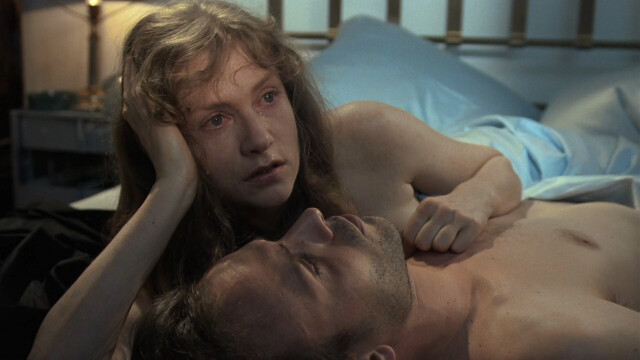
A Viennese writer (Isabelle Huppert) is having an existential crisis. She struggles between two men - Malina (Mathieu Carrière), her stoic, supportive husband and Ivan (Can Togay), her young handsome Bulgarian lover, to define her existence. It's a gripping, surreal film that showcases Huppert as an actress. She is absolutely radiant in this.

The writer is always seen typing away countless letters that ends up on the floor of her flat that will never get sent. She goes through a whirlwind of emotions, searching for that eternal happiness, but not finding with either men. Malina, with the female sounding name, could be the one and the same as the writer herself. He is the rock in her fragile existence in the beginning. But as she slowly loses her grip with reality, he stays distant and cruel. Ivan, whose nonchalance makes her all the more desperate. finally ends up abandoning her.

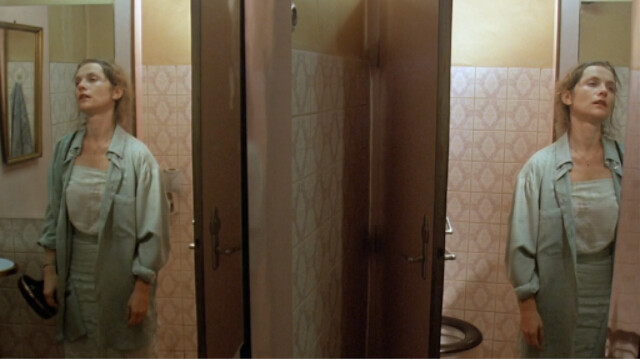
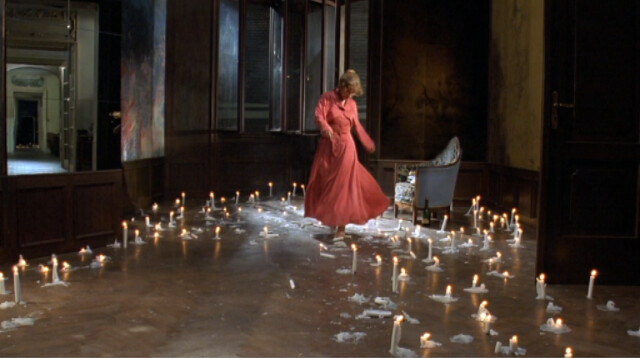
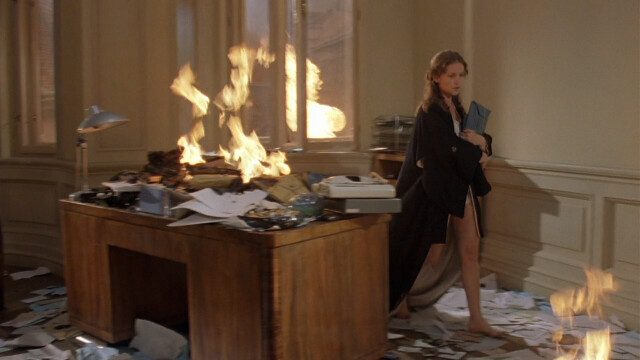
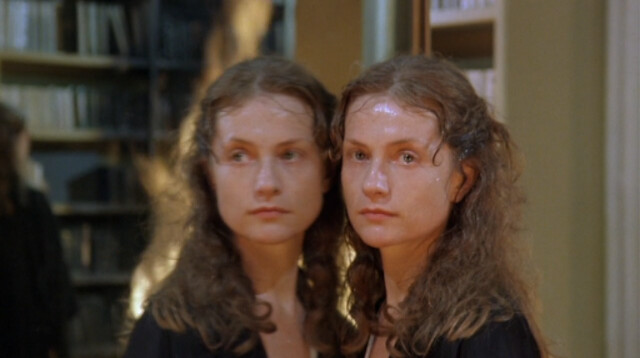
The film begins with a horrific nightmare of the writer. Her father throws her younger-self out the roof of the building. Her father is a recurring figure, sometimes seen in a Nazi uniform, reinforcing patriarchal post-war male dominant European society. Malina is a complex and crazy movie filled to the brim with symbolic images and close ups of Huppert's tearful face. Mirrors, reflecting our writer's state, is also prominently used. It goes completely bonkers in the last 30 minutes as things turn completely surreal, with part of the writer's apartment constantly on fire while Huppert pacing back and forth in her letter strewn flat as if everything is normal. Malina has a same emotional intensity as any Zulawski films and Huppert gives all to her blistering performance as a woman who desperately needs to validate her existence.

Friday, April 21, 2017

Living in the Present

Mundane History (2009) - Suwichakornpong
mundane3
Mundane
mundane1
mundane2
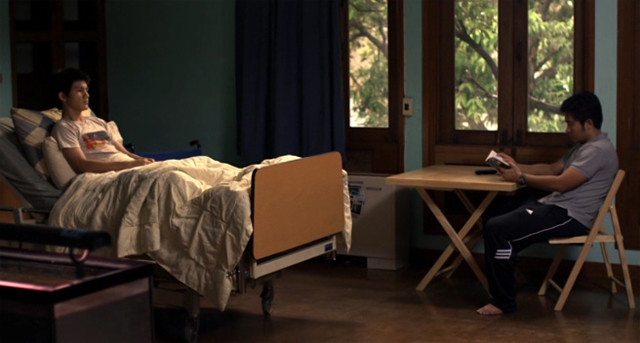
With fractured timeline, Anocha Suwichakornpong's gorgeous film tells a slight friendship that develops between Ake, a young paralyzed man and his home care male nurse Pun. From what I gather, Ake's from a rich family and Pun is from a countryside. It was an accident that made the young man bed ridden and seems to have attributed to his general somber mood. We see their repetitive days - eating, talking, reading, day after day. Stars born and die just like us humans, even though it takes billions of years. Does our lives really matter? All we can do is live in the present.

Mundane History veers away from expensive philosophizing a la Tree of Life or soapy life affirming movies. There is no eureka moment. It just unhurriedly goes on about making a simple point its own measured, quiet ways. And it's mad affecting.

Wednesday, April 19, 2017

Art of the Real 2017 Preview

Art of the Real, a nonfiction filmmaking showcase at Film Society of Lincoln Center in New York, celebrates its fourth year with 27 films in the lineup, continuing the exploration of cinematic possibilities of the film/digital medium.

This year, the series highlights established figures such as Heinz Emigholz, Robinson Devor, Jem Cohen as well as newcomers Theo Anthony (Rat Film), Salomé Jashi (Dazzling Light of Sunset) and Shengze Zhu (Another Year).

It also gives well deserved recognition to the Chilean cinema with two from documentary veteran Ignacio Agüero and two from José Luis Torres Leiva whose film The Sky, the Earth and the Rain made an international splash in 2008. His new film The Wind Knows I'm Coming Back Home, starring Agüero will be shown as well.

This edition also pays tribute to radical Brazilian filmmaker, Andrea Tonacci who founded Cinema Marginale against more conventional Cinema Novo movement. It will be a rare accasion to see his films - Blah, Blah, Blah, Bang Bang and Hills of Disorder, all in 35mm.

As I cover the series in its forth year, I realize that this so-called nonfiction/hybrid way of filmmaking has always been present as long as the film medium has been around, intrinsically woven into its DNA, yang to the narrative fiction filmmaking's yin, that it's not a groundbreaking, brand new thing to be embraced. But for me, it's a much more exciting, stimulating and less limiting form than the narrative fiction ever will be. Art of the Real remains to be the coolest film series even for New York Standards. Below are some of the highlights from the series:

Rat Film - Theo Anthony *Opening Night Film
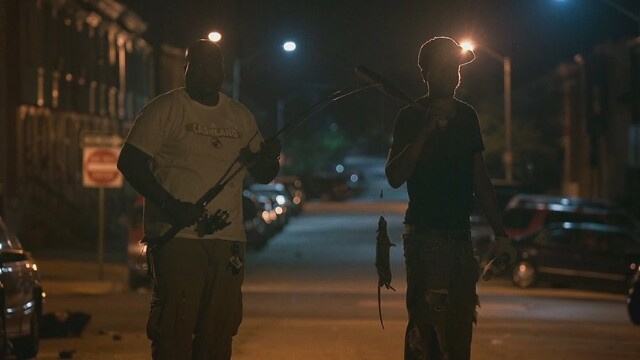
2c856e72-2e0f-4d1e-bd64-b3c4a4f004b1_zpsz8ivqcuj
There hasn't been a film that more effectively and entertainingly illustrates the 'inner city' problems than Theo Anthony's Rat Film. The subject is Baltimore, MD. Just like many declining city on the Eastern Seaboard, Baltimore has its share of problems with violence, segregation and poverty ever since the urban planning became a thing after the great depression. Anthony connects the dots with the city's rat problem and poor living conditions of its inhabitants, juxtaposing and paralleling at length, the science experiments involving rats since the 30s (by the Johns Hopkins researchers), and that of human counterparts.

Rat Film is perhaps the most devastating, thought-provoking anthropological study ever put on film in years. It slyly brings forth the institutionalized racism using not only wealth of data, an old educational film sounding narration, VR graphics but also human characters and their interactions. He shows inadequacies and impersonable nature of the data and technology in illustrating the human cost of an American inner city's decline and gracefully balances out with the presence of a philosophical city pest control officer who guides us through the vagaries of human life. Definitely one of the year's very best.

This is the Way I Like it II - Ignacio Agüero
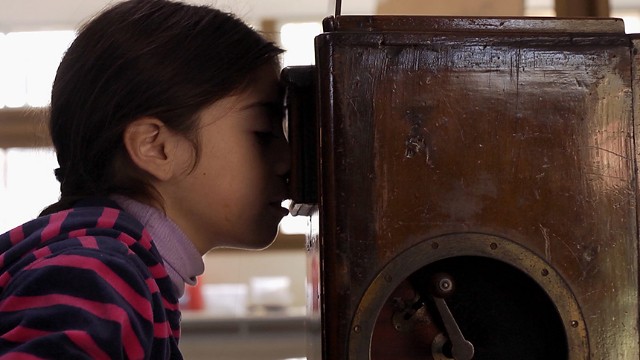
1d903906-a8a5-4a59-b303-45e35d1d14c3_zpsxmy0mddf
A fascinating survey of Chilean cinema through historical as well as personal context, Ignacio Agüero makes This is the Way I Like It II/Como me da la gana II a delightful viewing. As one of Latin America's leading documentarians, Agüero started making films under Pinochet and persisted to film on the street while his political filmmaker friends went into exile. He was one of the filmmakers who directed political commercials and featured in Pablo Larrain's No. In his 1985 short film This is the Way I Like it, which is integrated in the newer version, among with his other films, he is seen asking his filmmaker friends why they are out on the streets filming violent clashes between protesters and police.

In the newer version, he 'interrupts' various film sets that are in production in Chile, including Larrain's Neruda, José Luis Torres Leiva's The Wind Knows I'm Coming Back Home and other notable Chilean filmmakers who are making strides on the international cinema scene, and asks them what the essence of cinema is. As they deal with various subjects that are not only limited to politics and history anymore, they give Agüero a vastly different answers to his question.

He also connects dots with his first feature film 100 Children Waiting for a Train, about a children's film workshop that has been continuing for years in Santiago and images of the children watching the screen in silence with his set visits to these new, relatively young filmmakers.

Agüero's images are often gorgeous and his juxtapositions gain more resonance and poignancy as I learn his work. This is the Way I Like It II is not only a self-reflexive work but a great display of enduring power of cinema.

World without End - Jem Cohen
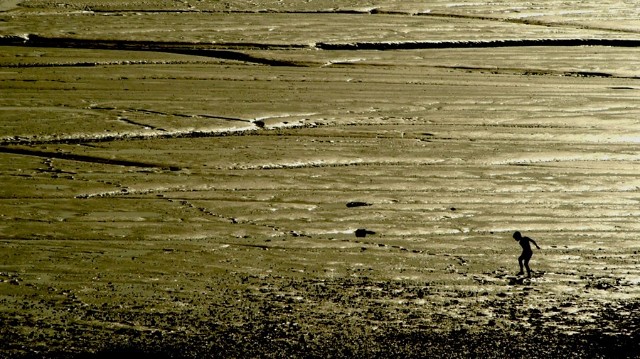
5d41f221-513c-4307-9872-999cdeed33b8_zpszimovg5v
Commissioned by a local arts group in Thames Estuary, a seaside resort area south of London, known as Southend (on-Sea) which encompasses Essex, the Canvey Island facing off Kent to the south, Gem Cohen lovingly documents the foggy streets and a mile and a half stretches of mudflats in low tide. He documents sleepy town full of little shops and its working class inhabitants.

He interviews random people, from a hat store owner with encyclopedic knowledge on English hats, a curry takeout joint restauranteur who witnessed the 2008 economic meltdown to middle-aged music promoters who reminisces about how Southend once was a hot bed for proto-punk. As usual, it's a muted, intimate, observational docu Cohen is known for.

Ama-San - Claudia Varejão
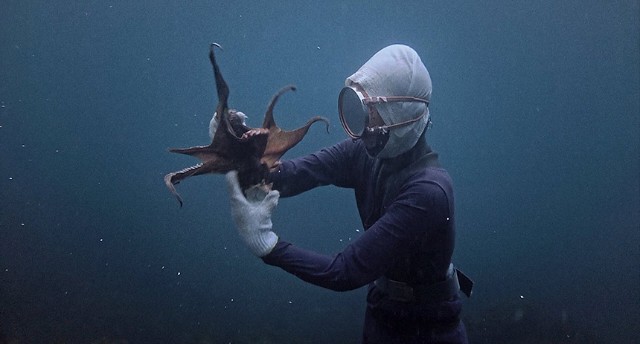
0b9a2a89-fa59-4f3f-8a02-182241b90299_zpsst1dyfoi
Traditional Japanese women deep sea divers are called Ama-san. They don't rely on oxygen tanks or fancy scuba gears to dive into a cold Pacific ocean to harvest abalone, sea urchins and sea snails. They can just hold their breath for an unnaturally long time. This has been a 2000 year tradition.

Portuguese director Claudia Varejão serenely observes the lives of these modern day mermaids, as they go on their lives. With shallow depth of field, we concentrate on three of these divers and their family lives. Two are grandmothers and one is a mother of three, taking care of domestic duties while diving for the source of income.

I'm a sucker for underwater footage and Ama-San provides some great underwater stuff. After their hard work, they commiserate around irori (Japanese sunken hearth) in a communal space. They eat, doze off, talk about their daily lives.

Varejão takes a more personable, subjective documentary track rather than informational one as the film doesn't go on the details of its geography nor fishing method nor its historical significance. These are not heroic women, trailblazing their field or whatev, or are they portrayed as some sensual objects diving gracefully in and out of ocean. Varejão's interest is elsewhere, in their earthly existence above water, built upon their unusual but deeply traditional jobs underwater.

Dazzling Light of Sunset - Salomé Jashi
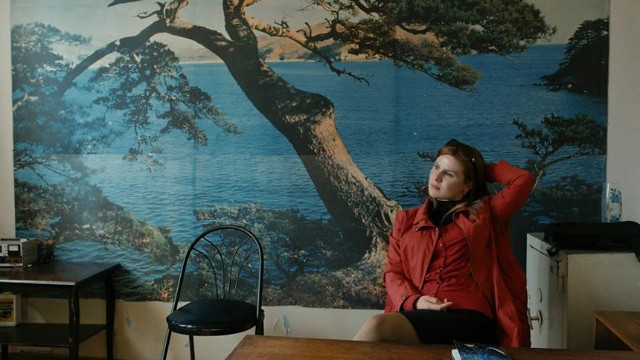
bcbc797e-04a5-4837-b57d-34c8d3475408_zpsmnuc8osn
Georgia, known for his unique culture and natural beauty, exemplified by Sergey Parajanov films, is the setting for Dazzling Light of Sunset. The small, two person local TV station at its center, Salomé Jashi's film takes a mirror on the media and its representation of the region.

Dariko, the anchor woman of the station, runs to one story after another, however big or small, filming and interviewing locals and broadcast them for its local viewers. Jashi in turn, goes on and film, not only Dariko and her activities, but weddings, beauty pageant, traditional dances and music on stage, church activities, etc. Dariko and Kakha think they are doing a great job covering and they probably are honest and well intentioned at what they do. They get scolded for covering politicians and local elections (which Dariko hates to cover), because they are seen as colluding with its corrupted officials.

In our media saturated world where everything gets bogged in partisan politics and truth becomes muddled and buried, Dazzling Light of Sunset is an interesting look on how the media sees the world through the glass darkly. It raises the questions about the representation of truth being obscured, even in Jashi's own document.

Casa Roshell - Camilla José Donoso
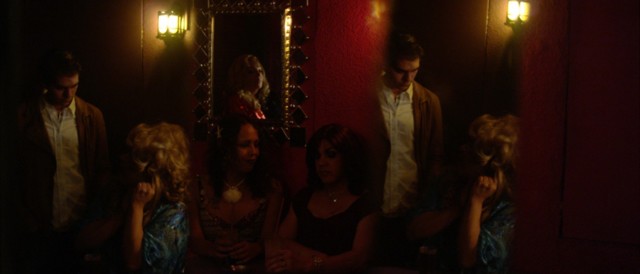
8de39559-aa17-4ee2-a24c-2be5259a2112_zpsv6bfdw2f
"It's a form of therapy", one of the transgirls explains why the flock to Casa Roshell, the home away from home for men who want to dress up and put on a make up and walk on stilettos. Whether you are trans, bi, gay, looking for fun, romance, sex or just want to be at some place you can be yourself, Casa Roshell is the place. The film starts with the drab reception area seen through the security camera and unglamorous dressing room of the performers. We only see them transforming from men to women through mirrors, as they converse while putting on lingerie, wigs and makeup. Mme. Roshell conducts a workshop on how they learn to walk, dress and behave like a woman.

Colorful lights light up the stage and glamorous Rosh walks up the crowd - "When I started this place, I had nothing. There were police raids and persecution. But what's changed now? Well now we can sue for discrimination. But who has time for that?" People start flirting and negotiate the terms of their romance and decide whether they want to go to the 'dark room' behind the curtain. Married men confess their affection to transgirls because they are very 'feminine'.

The highly stylized, staged courtships have an air of movie romance. Switching to grainy film footage from time to time suggests mingling past and present. Camila José Donoso's film situates itself comfortably between fantasy and reality.

Hills of Disorder - Andrea Tonacci *Tribute to Tonacci Sidebar
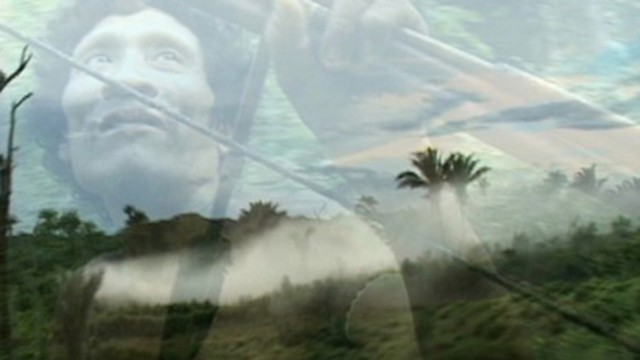
39b988ff-1d40-41c8-bbe8-a8aed2769a83_zpsbujtxi76
Blending reenactment, archival and real time footage, Hills of Disorder tells a true life story of a Avá-Canoeiro indian deep in the Brazilian Amazon jungle. And it's quite a story- after surviving a massacre of his family, he was captured by townsfolk from a small settlement and lived among them. Then he was relocated to an area where he and his remaining tribe members were reunited.

In the beginning, we follow Carapiru and his large extended family leading their nomadic life in the thick jungle, moving to find a better place to settle, carrying all their belongings - bows and arrows and other stone age tools, a firebrand, a pet monkey on their back and a couple of domesticated boars following their trail. They find a space near water, and sets up camp with thickets and tree branch. This existence must have been the same for thousand of years, until civilization inched toward them and made contact. Then, with a series of archival footage - deforestation, mining, human settlement (to sky scrapers), military coup and violent social upheavals, Tonacci shows a brief history of how things quickly evolved.

Filming Carapiru always in the center of everything, Tonacci makes sure that we get to know him pretty well. Even with Carapiru's limited ability to communicate, his docile demeanor makes him allies wherever he goes.

After returning to Angical, a small settlement North of Goias State in the middle of Brazil where he was first captured, he is welcomed by townsfolk and treated as one of its members. We spend quite some time with Carapiru in Angical until he is suddenly removed again, by a bearded white scientist, who relocates him, first by car, then by plane, to a restricted settlement where remainder of his tribes are. On the way there, he is reunited with his only surviving son who is brought in as an interpreter, who is seen being captured in the massacre in the beginning. Now grown up and educated under civilized world, his son recognizes Carapiru's face.

There are many funny and poignant moments in Hills of Disorder. But unlike other films on the same subject- God Must be Crazy, Walkabout etc., which are fictions, using real life story of a real person re-enacted by himself, the film has a stronger impact without diminishing or exploiting its subject. Truly one of a kind film.

Art of the Real runs April 20 through May 2. Please visit FSLC's website for tickets and more info.
Saturday, April 15, 2017

Godzilla as Moby Dick

Shin Godzilla
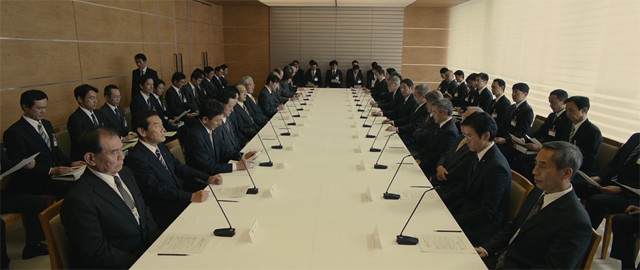
Please introduce yourselves one by one with your job title... (this consumes 20 minutes of the movie)
shin godzilla1
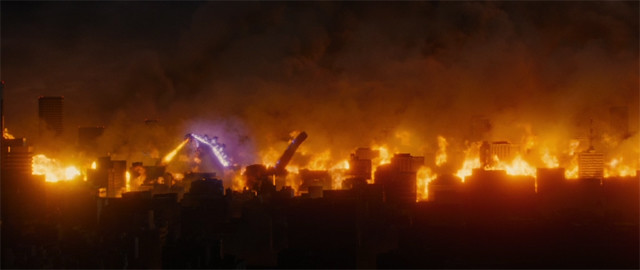
Complete destruction of Tokyo. No joy.
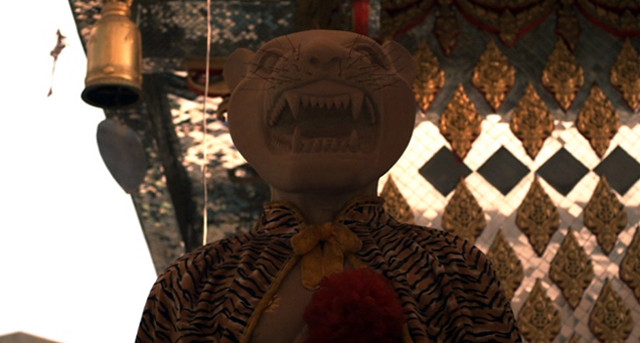
Deputy Chief Cabinet Secretary, Deputy Director (Japanese Meteorological Agency), Deputy Chief Cabinet Secretary (Ministry of Defense), Tokyo Bay Aqua-Line Wind Tower, Japan Coast Guard Super Puma 225 MH691, Umi Hotaru Parking Area, Aqua Tunnel Evacuation Slide, Crisis Management Center Conference Room Stairs, Fifth Floor Hallway, Prime Minister and His Attendents, Briefing for the Prime Minister, Minister of Science, Minister of Defense, Minister of Transportation, Minister of Disaster Management...

This is how many Title overlays are in this new Gozilla movie within its 5 opening minutes. The movie is two hours long and the titles keep coming whenever camera pans and rapid edit-cuts are made - every person, every place, every military gear gets its name mentioned. It's as if Moby Dick's boringest part where Melville describes every single fishing gear and part of Pequod in excruciating detail for pages after pages as its readers time don't really matter. Am I making a correlation between Moby Dick and Gozilla? Yes, yes I am. Is this radioactive material guzzling, mutating monster which destroys Tokyo again and again a metaphor for Japan's military impotency and economic downturn as Moby Dick was Melville's warning to America's gungho manifest destiny? Is Shin Gozilla an apt social commentary on the Japanese bureaucratic efficiency that has reached its limit and find itself useless against natural disasters?

The movie painstakingly goes on to explaining (by way of a hot and sassy Japanese American daughter of an American senator) that the US Department of Energy knew about the existence of such creature known as 'God'zilla, but didn't share the info with Japan because their sinister plan was to harvest its energy source. After missle attacks from land and air fail, Americans and UN contemplate dropping the nukes on Tokyo to 'erradicate' the monster. Time is ticking, so a ragtag of surviving bureaucrats needs to find a way to stop Godzilla and nuclear bomb once again dropping on Japanese soil.

Godzilla franchise always had that passive aggressiveness of a victimhood even though the message always has been anti-atomic/anti nuclear and peace upon world. As Japan goes through its decline while its aggressive neighbors (militarily/economically China, militarily North Korea and culturally South Korea) bid for their time in the sun, Shin Godzilla's timing and its pseudo seriousness can only be seen as the most passive aggressive blame game and egregious dodging of responsibility and absolving their sins. I mean the movie even disowns Gojira as an American invention. Wow.

Thursday, April 13, 2017

Quiet Riot

A Quiet Passion (2016) - Davies
a quiet passion
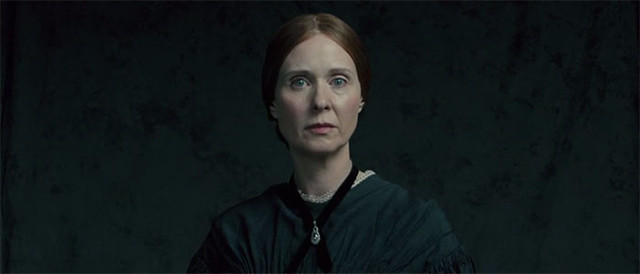
Just like many artists, Emily Dickinson never saw fame nor recognition as a poet in her lifetime. Her poetry and letters were only read and appreciated posthumously, after her death in 1886. Many of her admirers of her work say, not only her intimate poems touched them, but also with unusual punctuation and dashes, her style was ahead of its time. One of her ardent admirers happens to be Terence Davies (Long Day Closes, Deep Blue Sea) one of the greatest living British filmmakers. The nationality of his female subject might be different here, but there are a lot of common themes coursing through A Quiet Passion which his past films also bear - family, struggling within a strict social norm, independence and freedom, isolation and depression.

Born in a wealthy, respected family in Amherst, MA with loving parents and supportive siblings, Emily (played by Emma Bell as younger, then Cynthia Nixon as older Dickinson) grows up to be an honest, smart young woman who can think for herself. She is seen first as a young woman in Mount Holyoke Seminary school, defying the wishes of her teacher with her logical defense to be indecisive in either accepting or denying god. But being a woman of the 19th Century, Emily struggles from early on with her self image, patriarchy, conservative, puritanical society, sexism, the thought of death and immortality.

Davies, an ardent reader of Dickinson's poetry, composed a truly beautiful script here, imagining much of the film's dialog that lends the full view of the complicated poet and the great Cynthia Nixon personifies her in flesh and blood. Even though Dickinson lived most of her adult life in isolation, through her letters and 1,800 unpublished poems, and as we see in the film, she led a quite passionate inner life.

Unlike many fathers in Davies' other films who terrorize the working class families and women, Edward Dickinson, played here beautifully by Keith Carradine, is a learned, dignified man who is a main stable force for Emily to depend upon. Strict but humble, it is his dignity and sense of right and wrong that deeply affects Emily's upbringing. She strikes up a friendship with free spirited Ms. Buffam (amusingly played by Catherine Baily) whose acerbic wit matches her own. They talk about being friends forever but both know that when the time comes, more extroverted Buffam would marry and settle and move away. And she does.

Dickinson briefly romances a married pastor but the bitter experience turns her more into isolation. After their parents' death, Emily becomes more embittered with life, she isolates herself even further, wearing only white and communicates her thoughts mostly in letters. Her devout younger sister Vinnie (Jennifer Ehle) becomes her only source of checks and balances against Emily becoming a bitter, defeated person.

Death and immortality were her big themes in her writing as she was weary of attaching herself to anyone and always worried about everyone close to her leaving. Calling herself nobody, she was aware that her writing wouldn't be recognized by anyone in her lifetime.

Davies succeeds in showing a complicated woman bound by tradition and societal rules. But however tragic and lonely her life was, he also shows us that Dickinson lived the way she wanted to, that it was her own choosing, that she was a thoroughly modern woman, defining the world the only way she knew how. A Quiet Passion is another masterpiece from Davies.

Dustin Chang is a freelance writer. His musings and opinions on everything cinema can be found at www.dustinchang.com

Heart Wins Over Brain

Heal The Living (2016) - Quillévéré
heal-the-living-reparer-les-vivants-venice-2
A young blonde boy Simon (Gabin Verdet) wakes in the pre-dawn winter morning, kisses his girlfriend who's still in bed, sneaks out of the window that’s facing the ocean in the distance, bikes to join his buddies to go surfing. The whole beginning sequence of Katell Quillévéré (Love Like Poison, Suzanne)'s Heal the Living has a fluidity of a movement and detached youthful spirituality of a Gus Van Sant movie.

The surf and the youthful bodies against the waves are all beautifully captured by her regular cinematographer Tom Harari. And this is what makes the following scene so tragic. On their way back from the beach, Simon’s friend falls asleep at the wheel and the car veers off the road and crashes. The crash is also almost poetically realized: capturing the boys’ lucid stage simply overlaying the image of the waves on the flat surface of the open road and its surroundings. Simon wasn’t wearing a seat belt. He falls into a coma and is pronounced brain dead.

The film is an organ transplant weepy: 'An accident cuts a young man's life short and gives another person a second chance in life' story. We've seen this before, many times. But Quillévéré elevates this Lifetime Network movie of the week premise to a higher level with her strong ensemble cast, including Emmanuelle Seigner, Kool Shen, Tahar Rahim, and Alice de Lencquesaing. She orchestrates them beautifully, as she did with her previous films. As usual she is gifted with making every one of her characters shine.

Based on a bestselling book by Maylis De Kerangal, Heal the Living examines Quillévéré’s familiar territory: the death of a loved one and how it affects the living. Through Simon, one way or another, we see the glimpse of other lives, both professional and private in equal measure.

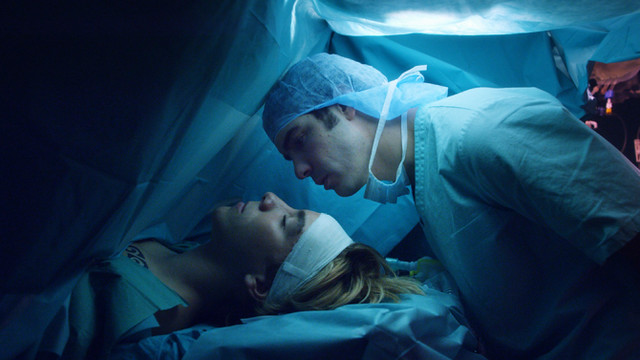
There is a middle-aged rapping head surgeon (Bouli Lanners), an overworked nurse (Monia Chokri) daydreaming a sexual tryst in a hospital elevator, a good-hearted transplant specialist (Tahar Rahim of A Prophet, The Past) who has a tough job of convincing a grieving family to give consent, a mother of two grown-up sons who needs a heart transplant (Anne Dorval of Xavier Dolan's films)… the list goes on and on.

Then there is the film’s odd couple, French rapper Kool Shen (Abuse of Weakness) and Emmanuelle Seigner (Frantic, Diving Bell and the Butterfly) as the grieving parents of Simon, who are left with hard decisions. And they are improbably fantastic together. Shen’s working class, everyman attitude matches well with Seigner’s soft-featured maternal figure.

It's the space between the brain and the heart that makes us human. That's the space Quillévéré also explores. It can definitely turn corny in less assured hands. But the fluidity of the scenes, accompanied by Alexandre Desplat’s gorgeous score, shows what she is capable of if she has means to realize something more deep and complex through a visual, aural language.

Science has decided that the death of the brain is the end of a person. But it’s the stopping of the heart beat which has more of emotional resonance to us, as it is synonymous with love.

Quillévéré understands those connections and implies that in Heal the Living in a cinematic way. Every movement in the film has to do with being alive. Every stillness implies death. She understands that death is part of life. We lose somebody close and feel like time is standing still -- the camera movement becomes static.

But we go on living again -- and the camera moves again. I thought Suzanne was a flat-out masterpiece, even though it perhaps lacked cinematic flare. Deeply moving and thoughtful, Heal the Living is definitely her most mature work to date.

Heal the Living opens in New York on April 14 at the Quad Cinema.

Wednesday, April 12, 2017

Katell Quillévéré on Heal the Living and Always Challenging Herself as a Filmmaker

Katell
Katell Quillévéré is a rising star writer/director in French cinema. With only three feature films under her belt, she's gaining quite a bit of critical acclaim ever since her coming-of-age debut film Love Like Poison in 2010. Her second film Suzanne, a true masterpiece, starring two of the biggest names in French cinema now -- Sarah Forestier and Adele Haenel -- put her in the league of other great contemporary women directors such as Mia Hansen-Løve, Céline Sciamma and Alice Rohwacher.

Quillévéré's strength is in her ability to make all of her characters shine. Her new film Heal the Living (original title: Réparer les vivants) is a big leap in terms of cinematic filmmaking and the most mature one to date. I got a chance to talk with her during the Rendez-vous with French Cinema series here in New York. In person, she is so lovely and charming.

Heal the Living opens in New York on April 14 at the Quad Cinema.

I’ve seen all your films. So I know a little about the preference of your subjects. I am more curious about your background. You were born in Ivory Coast. Did that influence you in any way as a filmmaker?

Katell Quillévéré: Well, I don’t know. (Laughs.) I have memories but, they are from early childhood… so it’s not really possible for me to make that link with anything. But I remember watching cartoons there. They were American cartoons. I was really fond of the Tom Sawyer and Huckleberry Finn cartoons. It was my first time seeing images and fell in love with those two boys and their insolence…

I don’t think I was really programmed to be working in movies, because there were no artists in my family. Both of my parents are scientists. So my way to avoid school in a way, playing hooky, was cinema. Sorry, that’s not a specific African memory. (Laughs.)

That’s fine. Your previous two films are co-written by Mariette Désert. But HEAL THE LIVING is quite different. It’s an adaptation of a pretty well known, popular book. How did it come about that you decided to do an adaptation?

I started writing a new original script. So I was not looking for an adaptation for a movie project. It came almost by accident, to me. Its meaning was so strong for me in an emotional way. So I decided to put aside the script I was writing and meet the author, Maylis de Kerangal. So I just followed my instincts, actually.

After that, during the process of writing, I discovered that this movie would be as personal as my previous ones. For me it’s a continuation; the story of Heal the Living is the story I’m always telling, the story of the way you survive losing someone, by separation or death. The loss of someone you love and life goes on. It’s always about love, you know. Even though that person is no longer with us, the link between them are still alive. So for me I tell the same story but in a different way. It’s also a way to renew myself in a new environment, in a new narrative way also.

It was really interesting when I was making Suzanne, I had to compress someone’s 25 years of life into a two-hour film. Heal the Living takes place in the timespan of 19-24 hours. So it was an opposite challenge. I also had to deal with it emotionally in the opposite way, because with Suzanne, the main events in her life happens outside the screen -- the loss of her mother, the loss of her child, the day she runs away with this guy -- and here in Heal the Living, everything pretty much happens almost in real time in front of the camera: you have the death of the child, you have to say yes or no for organ donation, you have to accept the transplant, all that. So, that was really interesting for me to confront myself to a new way of dealing with emotions.

For me it did seem like a departure, even though you said the same theme courses through all your films. Cinematically speaking, I think it’s a lot more sophisticated, if you don’t mind me saying so. Even though SUZANNE had very distinctive storytelling style, it didn’t seem to me as cinematic as HEAL THE LIVING. It starts with the boy waking up and going to the beach on his bike. And it’s so gorgeously done. It reminded me of Gus Van Sant's films.

I love Gus Van Sant.

And the surfing scenes with waves. Really beautiful stuff. You used the same cinematographer, Tom Harari, as you did on your previous films. Did you talk about the look of the film with him extensively for this film?

Yeah, but we did it for every movie we made. We’ve known each other since we were at university when we were 20, he shot all my movies, even shorts. Before shooting we kind of make a book with every shot of the movie mapped out and described, even if we change things on location, you know. We prepare a lot because it takes a lot of money to make movies. Time is money. So if you are well prepared, you can save time, therefore save money.

As you say, it’s more sophisticated but we progressed together; he’s better and I am better than before too. We learn our jobs. Every movie we tried to do it better and challenge us. We did have more money for this. We could do more travels, camera movements. We could afford…

Steadicam?

Yes, cranes and steadicam which I couldn’t afford it with Suzanne. The sophistication of mise-en-scene really depends on the money you have.

Right.

But if you want me to tell you about the image more?

Yes, of course.

We were really thinking about constructing the figure of a circle. Like a movement of the waves. Death is not the end. It is part of the living. So we built a movie with the heart in the center and it echoes throughout. The image of the waves is also important in de Kerangal’s book.

So if you pay attention, you can see the construction of those images. I played with symetricity too; in the beginning, those two young guys in the car, the two heads sleeping -- one leaning against the other before the accident, -- there were two young guys sleeping in the waiting room at the end of the movie waiting for their mother to come out of the surgery.

Ah, that’s right.

Two teenagers on the bed in the beginning and the two women in bed later, those are the ways to create the links between characters to create that organic feeling in the movie and to create these waves. Waves are also like the rhythm of the heart.

Moving and traveling were also like DNA of the movie or like the blood circulating inside the body. Them traveling the inside of the body of the movie. When movement stops, it’s always about death. The accident, diagnosis at the doctor's office, confrontation with the question of death, all have stillness. Everything stops. And then when the questions are resolved, the life goes on again. It’s a pretty simple idea but I thought it would go well with the theme of the movie.

Very interesting cast. I know you’ve worked with some of the top actresses in France before. Now you have Tahar Rahim, Emmanuelle Seigner, Kool Shen…

You know Kool Shen?

I know his music a little bit. And I’ve seen him in ABUSE OF WEAKNESS. You also have Anne Dorval, the French Canadian actress… You have all these different actors. How was it dealing with all these different actors?

Okay. First, I wanted to have strong personalities in my movie because it deals with a tough, strong subject. I really wanted to bring this movie to the audience. I wanted people to see it. But I knew the subject is kind of hard. It’s not typical to go see a movie about death and the death of a child.

Right.

So I need them [the actors] to help me to bring the movie to the audience. But I also wanted them to be really different from each other, kind of representing diversity of the society. People from different kind of movies, different countries, different everything. And some are really famous, some are not famous at all. Young actors: some are not professional; for Simon (Gavin Verdet), it’s his first movie, you know.

So that’s what was interesting to me, to choose these people and also, every actor I chose, they have never done the kind of role they play in this movie before. I always pay attention when proposing a role to an actor as kind of a challenge.

But they really look great together. Kool Shen and Emmanuelle. I never dreamed of them being a couple in anything but they are really great together!

Yeah. When I proposed it, “Kool Shen’s going to be the husband of Emmanuelle Seigner.” Everyone was like, "Are you sure?" (Laughs.) No one really believed it.

It really works!

I do like surprises. It’s one of my missions to have surprises like that. Bringing actors to another universe that they are not familiar with is also cool thing to do. And they both are singers.

That is true.

Maybe they will work on an album together. (Laughs.)

What I find interesting is that it has heart and brain connection. Obviously those two things makes us human. Which one, for you, makes us human? Heart or brains?

One can always replace the other. The science decided that the death occurs not when heart stops beating but the death of the brain. That’s what’s changed the definition of death. What the movie is saying is that death of the heart will have a symbolic importance for a human being, for the people left behind.

So that’s why the ritual seems so important, like when Thomas puts the headphones on the boy. Because technically the boy is dead, but in a spiritual way and for his parents who can’t say good bye, the ritual aspects of death will always have an importance, in spite of the question.

So you have to take care of the heart, that’s what I’m trying to say.

Great music always in your films.

Oh thank you. I love music. It’s really important for me.

Yeah so there was a Radiohead song in the end of LOVE LIKE POISON…

Yeah. It’s so cool to meet someone who’s seen all three of my movies.

Yes, of course! (We all laugh.)

But you didn’t think that Heal the Living is not really different than the previous ones.

I didn’t. But I was thinking about it when I was watching it.

Because for me, I really planned it carefully that there is a continuation.

I felt that you have something for each character to explore. That you care about each one of your characters. But I didn’t necessarily think that there were connections between the first two and the third one.

The thematic similiarities I talked about?

Yep. I get it.

You get it now?

Yes. After talking to you, yes definitely.

(She laughs.)

So Suzanne is the Leonard Cohen song, sung by…

Nina Simone.

Yes, the great Nina Simone. And this you have Alexandre Desplat. A beautiful score. Can you tell me a bit about your collaboration with him?

I don’t know if many directors do it this way. Not sure about how they do it in the States. But I have a music consultant who is a friend of mine, and he makes a compilation. So I listen to it before the shooting, during the writing and everything, and we discuss together, then I choose all the music for the movie -- the ones which are going to stay, and also the ones that will be replaced with the new musical composition. I play music on set, too. It can affect the camera movement and emotions of actors and many other things.

Then I work with it in editing. Sometimes it stays on its right place, sometimes it moves when it doesn’t need music or need more and everything. Then I do final edit. Then I give the film to a composer.

A composer knows exactly where the music is needed, from that frame to that frame. He is free to listen to what I used and decide if it works or not. He can do whatever he wants to do and we stop. That’s what Alexandre did. He wanted to listen to what influenced me. But then he forgot it and put it in the garbage and used his own music. And this is really important time for me because I discover that composer is like the first viewer of my movie really.

True.

Because he sees it and he digests it. And he gives it back to me with normal music. And it’s really scary because you know the importance of the music in a movie. It’s also very exciting. We went back and forth a little to find some right melodies but Alexandre is very quick. I don’t know, I think it was two or three weeks. He works so fast. He’s so good at finding the right melody. I can’t really explain how he does it.

What impressed me was that he worked with so many incredible directors, but he is always completely dedicated to a director he is working with, even if the director's young and not famous like me. ‘What is important for me is the movie and intention of its director,’ not his own music. And I think that’s why he is so good. He is really in love with cinema and incredibly generous.

Dustin Chang is a freelance writer. His musings and opinions on everything cinema and beyond can be found at www.dustinchang.com