Monday, June 6, 2022

Altitude Sickness

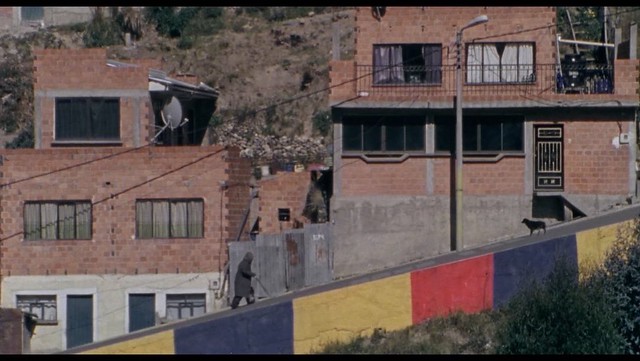
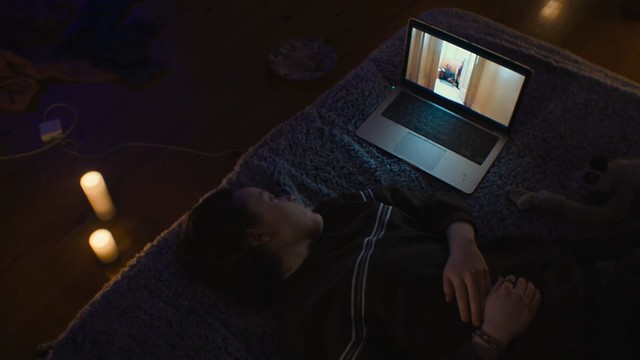
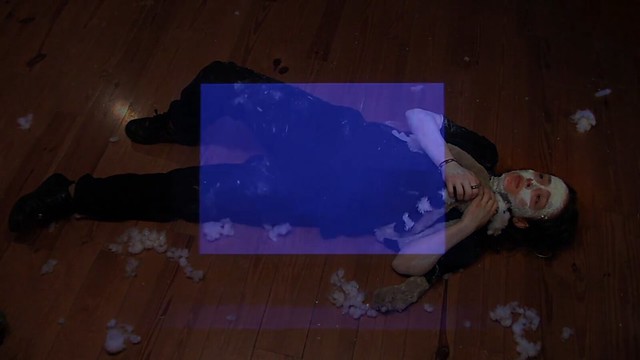
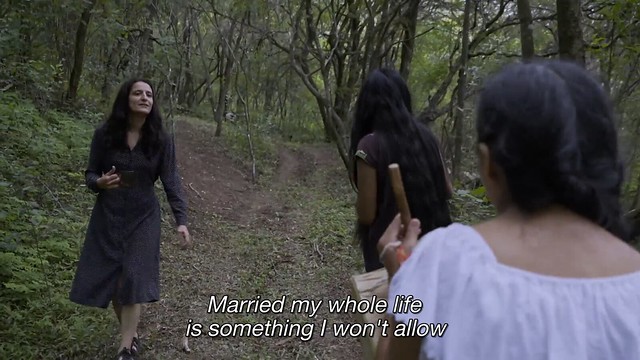
El Gran Movimiento (2021) - Russo Untitled Untitled Untitled Untitled Untitled Untitled Untitled Untitled Untitled La Paz, Bolivia's capital, sitting on the high plains of the Andés is a bustling city and home of close to 1 million souls. With electric wires and cable cars criss-crossing the ultra-modern glass skyscrapers against rugged natural vistas, the city spells out the rapid progress of the global economy in the ancient colonial capital where agriculture, mining, human labor are still dominant force. Director Kiro Russo conveys this imbalance in strong visual terms without employing too many words in the beginning of his 16mm shot beautiful film, El Gran Movimiento.

The film starts with a miner's street demonstration in the city center. They lost their jobs and came to voice their opinion in the capital. Elder (Julio César Ticona) and two other miners walked 7 days to get to La Paz. Elder seems to be suffering from some mysterious illness. Others chime in about his conditions, that he might be suffering from altitude sickness or might have miner's lungs. Doctors say it's more psychological.

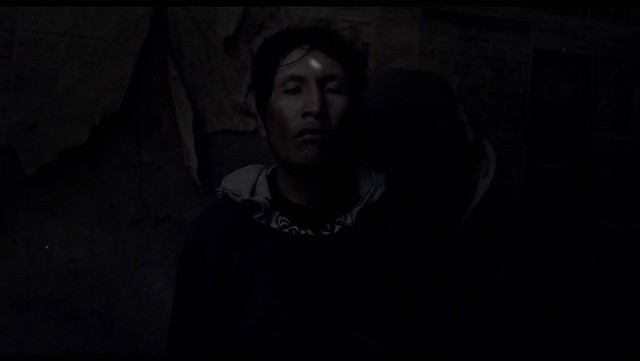
In the parallel storyline, there is Max (Max Bautista Uchasara), a hooded vagrant who lives in the wilderness on the rim of city. He occasionally comes down to the city and serves as a mystic healer and converses with the locals. Elder and Max's storyline converge, thanks to Mama Pancha (Francisa Arce de Aro), an old street bendor who knows everyone and seems to be everyone's godmother.

The narrative here is decidedly loose. Russo's almost documentary style suits the film as he comments on the modern society's illness, tying it with La Paz's stunning geography - the fact the city is sitting on the Amazon basin (the highest elevation by the largest human settlement at 12000 feet) surrounded by towering natural peaks, affording its otherworldly atmosphere and contrast.

El Gran Movimiento culminates to Max giving Elder some sort of an elaborate, spiritual exorcism and we witness Elder’s pale body slowly gaining its color back and its modern illness leaving his body.

It might be too inelegant and inadequate assessment to see Pancha and Max as stand-ins for the universal guardian and healer, as film doesn't really come across as a typical, steeped in traditional, psychedelic, old versus new, didactic lesson. Russo lets his visuals to do the talking - the white dog running down the hills at night, Elder having a panic episode in the street among crowds, mangled electric/telephone wires, meat grinder image preceded by mining operation... culminating to rapid-cut images all jumbled together climax serving as a mirror to complex global society we live in.

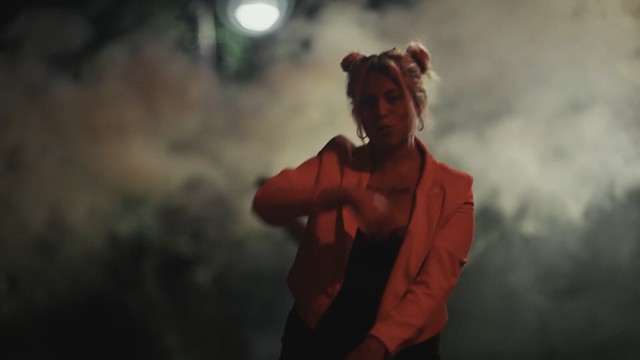
But not everything is doom and gloom. There's a memorable, non-sequitur choreographed dance sequence at night by the locals. It comes completely out of nowhere and breaks the film’s otherwise immersive documentary feel. Emma Goldman once famously said, “If I can't dance I don't want to be in your revolution”. And it adds to the message of the collective power of everyday people. Russo seems to know all the tricks of narrative filmmaking and goes against it intentionally and having fun with it while doing it. El Gran Movimiento is a topical film with strong visuals as well as boundary pushing cinematic exercise that is undoubtedly one of the best films of the year.

Wednesday, June 1, 2022

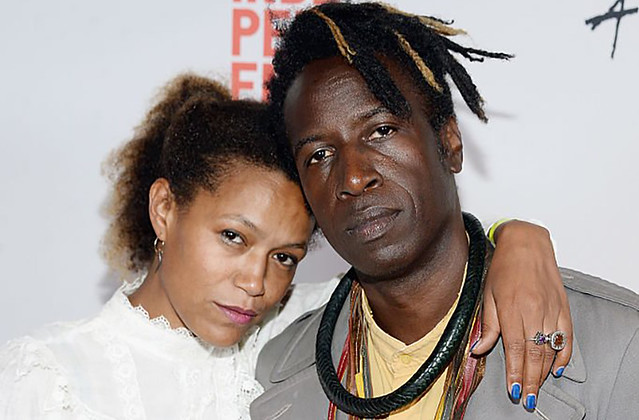
Interview: Saul Williams and Anisia Uzeyman on Taking Back the Power in Afrofuturist Musical, Neptune Frost

Saul and Uzeyman Neptune Frost, an Afrofuturist musical directed by multidisciplinary American artist Saul Williams and Rwandan visual artist Anisia Uzeyman, is a stunning film that defies conventions both content and form. When I saw it in a packed theater at New York Film Festival last year, I was enraptured by its sheer beauty - the DIY aesthetic, from the costume design to production, and its languid visual language. Then I was impressed by its very progressive politics - a non-binary superhero emerging and resistance movement against neo-colonialism.

I am very happy to see the film getting a theatrical release, thanks to good folks at KinoLorber, because Neptune Frost needs to be experienced visually and aurally on the big screen and talked about for the years to come.

Crowd-funded, the long arduous journey of production of Neptune Frost is something that needs to be looked at, concurrently with the release of the film, as an example of sheer will power and enthusiasm of its creators and everyone involved. I am very happy to bring you some of these backstories and more by having a chance to interview Williams and Uzeyman last week. So without further a do:

Saul and Anisia, thank you for talking to me today. I watched Neptune Frost at last year’s New York Film Festival and with a packed audience and was totally blown away by it. It must been such a monumental task and I don’t know how you pulled it off, but it was an amazing experience.

Saul Williams/Anisia Uzeyman: Thank you!

I understand you met each other on the set of Tey, directed by Alain Gomis, a Senegalese director’s film, as actors in 2012, am I correct?

Williams: Well actually we met at Jean-Michel Basquiat’s exhibition in Paris. It was even before Gomis film. And everything started from there. The desire to work together or collaborate came very early and the idea of this film, which didn’t start as a film but a stage play, a musical and as a graphic novel. Because both of us are actors, we wanted to create something that we can both act in, but when a producer, Steven Handel who produced Fela! On Broadway, read what we were putting together, told us that he loved the story and suggested that it would make an extraordinary film. We eventually realized that, as a film, it would shift and open much more possibilities, because here is a story that according to our writing that it would take place in Burundi and what have you, suddenly the idea of that we can go on location to shoot, the excitement about meeting all of the new faces and new actors and new talents - what it would mean for all the other artists whom we can bring in. But we had no idea what was in store for us when we accepted the idea of making a film. We hadn’t met our costume designers/set designers, Cedric Mizero, not until we went to Rwanda in 2016 to shoot a test.

Anisia Uzeyman: So we thought of the film taking place in Burundi but in 2015, Burundi kind of went through a lot (with the violent political, civil unrest), so it became a complicated location for shooting. But the idea of shooting the film there felt more liberating in terms of how our imagination went. So we went to Rwanda in 2016 to see how things were there. You know it’s the same landscape of hills and so on and there’s a lot of connection between the two countries. So we arrived there and met a lot of Burundian activists because of the flow of refugees fleeing the situation in Burundi.

Williams: 2015-2016, just as we were arriving.

Some two hundred thousand refugees?

Uzeyman: Yes. All these young people - students, activists, artists, fled the country and into Rwanda. It was this alignment of what you dreamt and what you found there that allowed us to say, “OK, this is the place!” It was synegistically clear.

Something that clicked in you, during that trip.

Williams: Yes. The first week of that trip, we encountered the majority of our cast. We also met Cedric Mizero our costume and set designer, and within the first conversation with Cedric about what the project was about, he was like 21,22 years old then, he understood immediately what we were doing. He came back the next day with sandals made of motherboards.

Oh wow.

Williams: and we said OK. This is it. We found the right person and we found the right people. Everyone introduced us to each other and the excitement in the story we were telling–

Uzeyman: And we also met the ensemble.

Williams: Yes, we also met the drum ensemble. They were refugees from Burundi who crossed the border with their drums, taking refugee in Kigali.

Uzeyman: That’s when we met Kaya Free who plays Matalusa. So we met almost everyone in the cast pretty early on. I told Saul to come and see these people and how to incorporate all these people and music and so on.

There are a lot of languages spoken in this film. When you composed the music, was it planned that way or was it something more fluid, a collaboration among all of the artists instantaneously?

Williams: So this is kind of a simple answer to your question. In that region of the world, when you are on the ground, what you find is that everyone speaks about 5 different languages. When you are sitting down at the table having conversation, they’d use expression that works best with each language. So we might say something in French or Swahili or Kinyarwanda or Kirundi and after a while we go, 'fuck this'. Me I speak English and French and I get certain words that might come through… the thing is, it’s extraordinary how we can communicate this way. All we wanted for the film was to reflect that. That’s why it’s like that. It’s not like bringing in a specialist to translate this or that language, it was naturally occurring. Our cast members naturally communicated with each other in many languages regularly. I remember going to karaoke in Kigali, Anisia’s people would be like, I want to sing this song from Mexico or this song is from Congo and this is from France. No one was flexing or showing off. They just knew that Spanish song, they knew that English song… It was just normal to them.

Uzeyman: This is very much so to the region and its history. It is also very much the case with fluidity of our culture as it expands as we open ourselves to the world.

I was going through the list of cast and crew and most of the names are not European or American, even though you both have connections in Europe and America as artists. Was it a conscious decision to employ local artists?

Williams: Yes. It was an extremely conscious decision to work with, both cast and crew locally and to bring in as few people from outside. It is true with a lot of different production companies with foreign money - European or American money, they fly in everybody and Rwandan people would be third and forth assistants. And we thought it was important to have local people heads of the departments. It was crucial to us. Secondly, there is no cinema rental facilities in Rwanda. So just because of our finance and what have you, we had to choose between spending all our resources to try to ship in all the lights for example, or build them.

DIY style.

Williams: It was easier to build our cinema lights and LED panels, dollies and 18 kilowatts cinema lights and even apple boxes. Everything you see in Neptune Frost was built by the crew. That was part of the excitement as well. We were not going in there like European or American film crew…

Uzeyman: We are from there. Simply because I was born there and Saul was adapted. (laughs) That’s why we did everything with our community. It was our desire to share the experience as a communal experience.

For those who don’t know about MartyrLoserKing Project. Can you tell us a little bit about that and its connection to Neptune Frost?

Williams: This whole project was born out of multimedia conceptualization. And so we were telling the same story as a graphic novel, as a stage play, as a musical and through a music album. As I mentioned, it was transition from musical to film- the graphic novel is still coming out next year. It's a surprise to us that our film is beating the graphic novel, but you see unlike the long list of names working on the film, there will be one or two illustrator and the writer for the graphic novel to tell that story. (laughs) Neptune and the hackers as a collective is known as MartyrLoserKing which we learn as it happens in the film. The biggest difference is that in the graphic novel, we see a little more from the MartyrLoserKing, the hackers collective's and the miners' perspectives. You see more of Techno’s perspective, you see more of that. It’s because there’s a lot more backstories in many of these characters. In the film there’s visual and there’s music and there’s a lot of space for you to explore and contemplate. But in the graphic novel, there’s a lot more texts.

That’s great. Already there’s a lot of layers in the film but there are a lot more to those characters and I am happy to hear that there will be more of them in the graphic novel. I think it’s also interesting to hear how you put all these elements together.

How I processed Neptune Frost and how it all clicked together is from the very beginning - the sound of the miners with their hammers and pickaxes digging and their singing were very similar to how American railway was built on the backs of African slaves and how the blues came about - that everything is cyclical with this global economy and rebellion and exploitation of resources and exploitation of the black bodies.

Neptune Frost is played first by Elvis Ngabo, then Cheryl Isheja. With this non-binary, intersex idea with all the young people involved in this project, you think it’s the future of humankind? Is that the message?

Uzeyman: Definitely. I think discussion on gender is ongoing. I think young people are fatigued by the old way of thinking and rightly questioning the patriarchal, empirical, the neo-colonial societal norms and this pushes people to find way to be more open and to liberate themselves from that thinking.

Williams: Yes. I mean, it’s our intention to through this film to be part of that dialogue, to provide working examples to be a part of that very modern dialogue that is crucial, to our understanding of each other, to the freedom and excitement of the new generation has and realizing the importance of being themselves beyond what they are assigned or being who they were told to be and who they were told they are.

Uzeyman: I think it’s so courageous also and I think it’s a kind of revolutionary moment that we are witnessing and being part of, in the desire of transforming, of refusing the status quo of the hierarchy of unfair and brutal society. It's not so much that we were projecting this with our film this is the discussion that’s happening right now.

Williams: And you see the pushback, you see the people trying to maintain a certain level of rigidity. It’s important that it’s not only the future but also the past - the colonial imprint that was heavily placed on people’s necks. That rigidity has put people lining up on the borders and the confines of the prison of rudimentary, heteronomative, binary definitions and–

Uzeyman: And people realize that it only starts with you.

Williams: Exactly. It affects everything. You asked about the fluidity of language. People on this side of the ocean were like, “You know how much money we are losing for not having the film in English?” When you're talking about seeing that it’s all connected that there is binary connection on every level and these rigid boundaries are placed on expression. So the authenticity of it and expression like you see in this film would automatically be thrown out. Why? Because there’s no famous people in it and it’s not in a language people of this country speak. There’s so much. It’s not only what we were doing on screen there. But every conversation, every experience we had in every festivals that everything we encountered to, just reach an audience to see the film has been a fight. It was intentional with its time. It was last year and the year before when we were talking about black bodies exploited, we were talking about BLM movement, transgender rights. We said, well here is something that is in conversation with that conversation. How do we respond to that, how do we support that? How do we uplift that or do we just go on to perpetuate the same cycle- the same bullshit, the same violence, the same bigotry, the same rigidity in our creative choices?

When we talk about Afrofuturism, how it provides not just mere escapism but a space to have this kind of conversation and exchange these kind of ideas. Do you think it’s possible to make films like Neptune Frost only in Africa - just because the wealth of cultural, social upheavals are happening there?

Williams: I’d say not at all. I need to hear from the people who are working in mines of China, Brazil, Peru, in Bolivia–

Uzeyman: We just saw a beautiful film from Bolivia.

Williams: It was about young miners. What was it called…

Uzeyman: ...and there was wonderful music in that too. It was El gran... it will come to me…

El Gran Movimiento! A great film!

Williams: Yes! So no. We at one point was thinking about shooting the film in Haiti. Our research brought us to shoot all over the world. The story of Neptune Frost- the exploitation of workers, the role of authority, belongs to the workers of the world. Those workers are still in Ireland, in Thaliand, in Cambodia. So no. I think Africa is a wonderful place for our story to be told, but for all the other places, there’s need to see and connect with those group of humanity and resources so we can share them. Yes, so at the same time, the story belongs to many, many people.

Uzeyman: Neptune Frost is kind of a retelling of a folktale, a fairytale, a birth of a superhero, right? It’s a journey of that person gaining their power. It’s just like any other superhero story. I’m pretty sure you will find that there is the same narrative everywhere.

Williams: Yeah, it’s a shared history. As you stated that while watching the film, you are connecting the dots. So yes, indigenous people of many lands can connect those dots and see themselves in this film. And that’s the first layer of what this film is about. It’s them realizing that their land is mined for power. Their land where they think and dream and birth and work on, is the power in us. Do we have that power? Are they mining our ancestors that we buried? Is that what’s affording them to communicate wirelessly? Is that our power? And Neptune is saying, yes. And that realization can be shared throughout the planet. Of course, it belongs to many.

This has been an amazing. I can’t thank you both enough for this conversation. Everyone needs to see this film on the big screen. BIG SCREEN.

Williams/Uzeyman: Yes.

Neptune Frost opens in theaters on June 3rd in New York and June 10th in LA. National rollout to follow.

Kate Bush

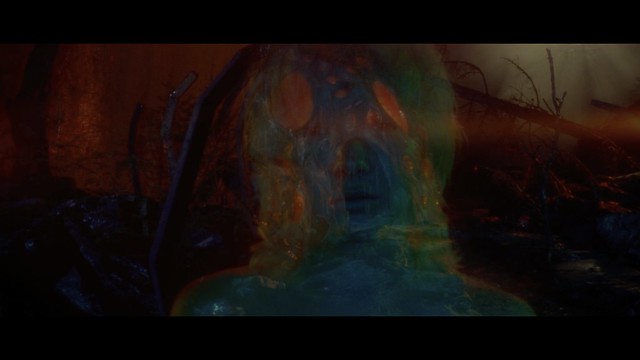
After Blue (Dirty Paradise) (2021) - Mandico Screen Shot 2022-05-23 at 8.42.10 AM Screen Shot 2022-05-23 at 8.48.32 AM Screen Shot 2022-05-23 at 9.01.36 AM Screen Shot 2022-05-23 at 10.38.11 AM Screen Shot 2022-05-23 at 10.53.17 AM Screen Shot 2022-05-23 at 8.22.19 AM Named after a settlement somewhere in the universe after the (wo)mankind escaped our uninhabitable, post-apocalypse planet, Dirty Paradise is an extremely queer planet with oozing flora and fauna. All the men have died out and the new planet is only inhabited by female and proliferated only by insemination. Roxy (Paula Luna), a young blonde kid who relentlessly gets bullied by her peers because she is different, lives with her town's hairdresser mom Zora (Elina Löwensohn). Because of hormon imbalance the settlers of the new planet grows tufts of hair on their necks and this gives submissive Zora plenty of work.

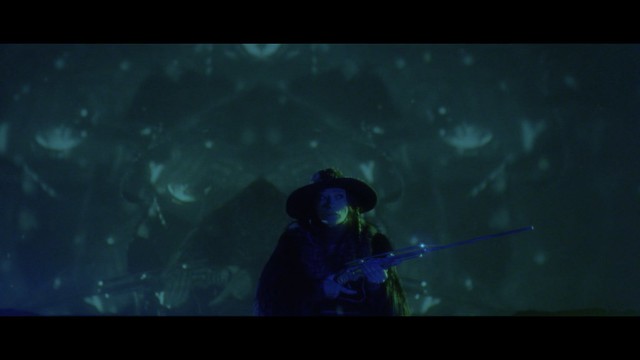
Roxy accidentally digs up a notorious killer/agitator named Kate Bush(!!)(Agata Buzek) on the beach who grants her three wishes. This turns into the death of Roxy's tormentors and Kate Bush escaping, running up the hills. The town's elders orders Zora and Roxy out of the confines of their cozy settlement and hunt for Kate Bush. This sets up After Blue as a sloggy western, where the mother and daughter pair needs to survive in an unforgiving and weird environs while tracking down to kill Kate Bush. The psycho-erotic telepathy that Roxy and Kate Bush shares keeps the film going forward, providing the its slight tension in the film.

Bertrand Mandico, known for his dreamy, neon colored queer fantasy films (Prehistoric Cabaret, Wild Boys), treads lightly in After Blue, rather uncharacteristically. It's a coming of age tale with sexual awakening themed sci-fi. There is no discernable message or strong metaphor or anything. But Mandico still knows how to have fun. But it's a tad bit long to sustain any kind of momentum. After the initial kitchy retro vibe of the production design, glow-in-the-dark paints and glitter wear off, there is nothing much to do for the cast, other than looking like being stranded in a darkly lit muppet show episode. I wish Mandico went all out and created over-the-top camp touching upon our desire and curiosity and gender politics.

Tuesday, May 31, 2022

Its Soul Got Sucked Out

Crimes of the Future (2022) - Cronenberg Crimes of the Future Hardly reinventing the wheel, but with Crimes of the Future, David Cronenberg reiterates his usual theme strongly- inadequacy of human bodies and our soulless society. Crimes might lack his usual titilation and shock value, but it's still quite potent in making those points, more so than his better films over the years, namely - Dead Ringers, Crash, Cosmopolis and even Dangerous Methods.

Crimes of the Future presages with a disturbing beginning where a mother murders her own child after the young boy starts chomping at the plastic garbage bin in their bathroom. It's the indescript near future where human bodies evolved to a point that they don't feel pain or in needs of anticeptics when the knives cut into them. Saul Tenser (Viggo Mortensen) is a performance artist. He and his partner, a former surgeon Caprice (Léa Seydoux) performs a sort of live autopsy on Saul's torso. It's Saul's ability to will a new organ that serves no function to his body and Caprice's tattooing and removing the organs that make them the superstars of this seemingly still unlawful and underground art form.
Saul, always shrouded in veils and hunched over, is physically not well. Either his mutations made him always brittle and ill, or his performances left him looking like a MS sufferer; he spends most of his time in the aide of a cocoon like bed hanging from the ceiling - a true cronenbergian contraption that looks like an upside down cockroach and a skeletal chair that helps him feed.

Their registering the new organs at the very literally named Organ Registy Office, a dreamy, Kafkaesque reimagining of what 'institution' looks like, connects the pair to a nebbish bureaucratic hottie Timlin (Kristen Stewart in a very comical performance), who breathlessly praises Tenser's artistry. Surgery is new sex, she declares. The dead child's father, who's also training his body to the effects of poison, approaches the pair and offers his son's body for the performance. Do they perform the live autopsy of the boy in front of the live audience or no?

Watching Crimes of the Future immediately reminded me of the famed painting by Rembrandt - The Anatomy Lesson of Dr. Nicolaes Tulp. In it, spectators surround a recently deceased corpse and Dr. Tulp is explaining the denuded musculature of the corpse's left forearm. Yet, the spectators' attention is not with the corpse but elsewhere and they are not even noticing the inaccurate arm (it's the right hand depicted instead of the left). Rembrandt was commenting on the inadequacy of seeking knowledge and truth in the human body in the Age of Enlightenment. And this is the point Cronenberg has been making all his career- our futile quests for answers in what makes us humans, in our bodies which are the most personal, tangible things that each of us possesses, and not finding it there. And pursuing so hard to find something in all the blood and guts, you lose sight of whatever the humanity that's left in us. In a way, Cronenberg is going back to the basics - to the flesh after more cerebral musings in searching for the soul (Dangerous Methods, Cosmopolis). Crimes of the Future is less kitschy and much less over the top parody like History of Violence or Maps to the Stars. And its general mood is closer to Spider and Dead Ringers. But nonetheless it's undeniably Cronenbergian and great.

Sunday, May 22, 2022

Love Knots

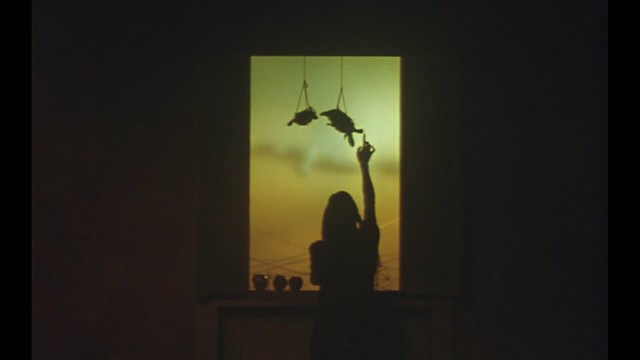
Undo (1994) - Iwai Screen Shot 2022-05-22 at 9.30.57 AM Screen Shot 2022-05-22 at 9.54.24 AM Screen Shot 2022-05-22 at 11.02.02 AM Screen Shot 2022-05-22 at 9.56.49 AM Screen Shot 2022-05-22 at 9.59.37 AM Screen Shot 2022-05-22 at 10.02.29 AM Screen Shot 2022-05-22 at 10.04.40 AM Screen Shot 2022-05-22 at 10.08.10 AM Screen Shot 2022-05-22 at 10.10.25 AM Screen Shot 2022-05-22 at 10.17.14 AM Yukio (Etsushi Toyokawa) and Moemi (Tomoko Yamaguchi) are a young couple very much in love. Yukio is a writer, spending most of his time at his computer. Yet, he tries to tend to Moemi's needs. Dogs and cats are not allowed in their seemingly large and specious apartment, so Yukio gets a couple of turtles for Moemi. First apprehensive, Moemi gets used to the idea of turtles as pets and takes them to stroll outside and stuff. Moemi also got her braces off from her teeth, the new reality that Yukio has to get used to while kissing her: she notices that he is missing that metalic taste and half jokingly suggests she will wear them for him, forever.

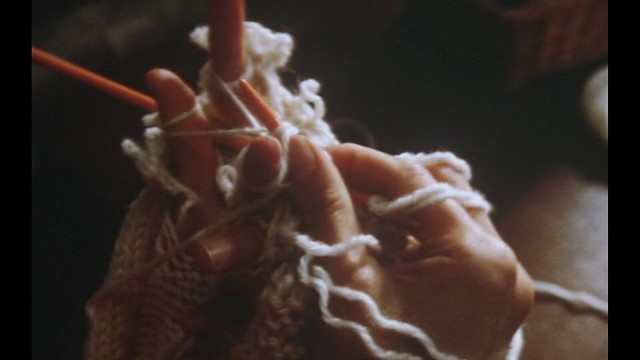
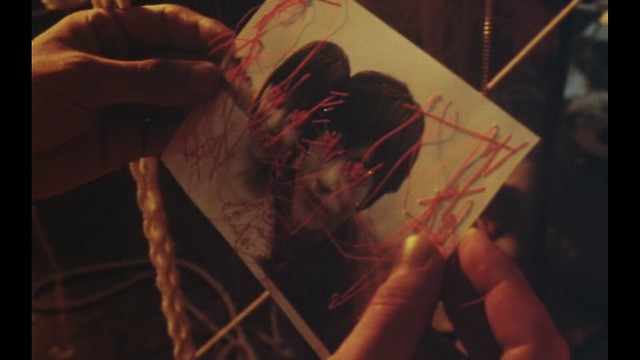
Moemi also develops Obssessive Knot-Binding Syndrome, where she continuously binds everything in the house with her yarns - the turtles, fruit, books, sissors, etc. She finally ends up with binding herself. Is this some sort of symptoms of their seemingly normal relationship? Why is she doing this? What's the cause of her maladies? Short on exposition and but extra on surrealism, Undo befits that early 90s soft-edged Japanese emo dramas.

Undo operates in that distinct 90s Japanese literary universe, helmed by writers Banana Yoshimoto and Haruki Murakami - something whimsical, surreal yet ultimately shallow and harmless. These slight stories only exists within the universe where nothing is too dramatic or tragic, as if afraid of digging deeper into their own meanings would shatter their thin visage and evaporates into ether. But yet, that preciousness was the charm and lure so many of my peers were enraptured by back then. And Undo is the pinnacle of that fragile preciousness on display.

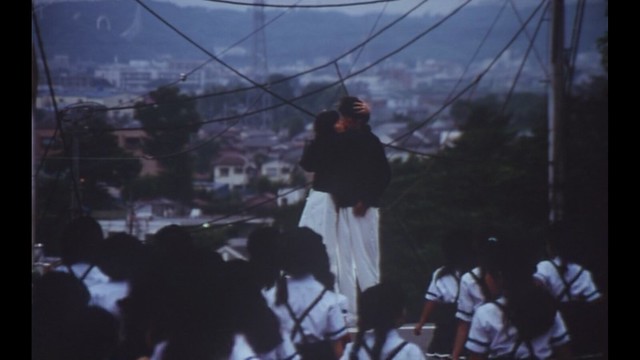
Shunji Iwai has a talent for visual flair - the turles hanging from the windows, gaggle of school children while the couple are embracing, the sunbeams on Yamaguchi's lovely face are all memorable.

Saturday, May 21, 2022

Cinema Finally Caught Up with the Internet

We're All Going to the World's Fair (2021) - Schoenbrun Screen Shot 2022-05-14 at 8.31.53 AM Screen Shot 2022-05-14 at 8.32.44 AM Screen Shot 2022-05-14 at 8.33.24 AM Screen Shot 2022-05-14 at 7.28.29 AM Screen Shot 2022-05-14 at 8.30.52 AM Screen Shot 2022-05-14 at 8.30.24 AM It's remarkable to think that it's been more than twenty years since Kiyoshi Kurosawa's internet themed horror, Pulse, came out. And it took twenty years for another, more down to earth, acute observations of growing up with the internet to come out, which is Jane Schoenbrun's We're All Going to the World's Fair. There has been some internet themed horror films in recent years, but none really concentrated on the alienation and performative aspects of the internet in a heartbreaking and poignant way Schoenbrun presents here. The main point of the movie is that in the internet discourse, no one knows one another, there is no distinguishing between what's real and what is not,that everyone has been circling around one another, for comfort, for lust, for real human connections, reaching out ever so timidly and endlessly without no tangible satisfaction. On a larger context, for the last two decades, this has been the case for millions of lonely souls.

On another level, Schoenbrun, a non-binary filmmaker, uses the film to reflect on the internet as a stage for countless queer teens in non-major cities trying to find their way around in the internet ether, trying to find themselves through performance. And I'm not saying that performance aspect of the internet is only relegated to the queer teens. But you can read the film as that way. Internet also can be a hazadous and dangerous place. But the film also turns the tables on the perceived predator/victim catfishing theme. It encompasses many layers of the internet dominated world and reflect the melancholy of accepting and living with something less than authentic, honest, truthful relationship because those things don't exist.

Queer Space

Terminal Norte (2021) - Martel Screen Shot 2022-05-21 at 8.32.17 AM Screen Shot 2022-05-21 at 7.41.16 AM Screen Shot 2022-05-21 at 8.34.40 AM Screen Shot 2022-05-21 at 8.13.07 AM Lately I've been reading up a lot on 'queer space' - the periperal space where one can create their own utopia and at the same time, giving a middle finger to the heteronomative and highly patriarchal majority. After Zama, Lucrecia Martel, one of the greatest living filmmakers, goes back to Salta, the Nothern Andean region where she hails from, during pandemic induced lockdown, and makes Terminal Norte, a short documentary on copleras/female singers and musicians. Our guide is Julieta Laso, whose gravelly voice makes my spine tingle into the mountainous slopes and introduces many queer, trans artist dabbling in traditional and non-traditional music (Trap and Noise included). In Martel's hands, one loses themselves soon enough, and becomes multitudes of voices across gender, age and time. What a pleasure to witness an artist in her zenith of power creating something so consistent and true to her craft in the time of global crisis, where togetherness, human touch has become the enemy? As Laso sings in her moanful voice with her tiger's stare, I feel that it's only art that can help us through in tough times.

Wednesday, April 27, 2022

Lovely Contemplation on Nature, Filmmaking and Human Connection

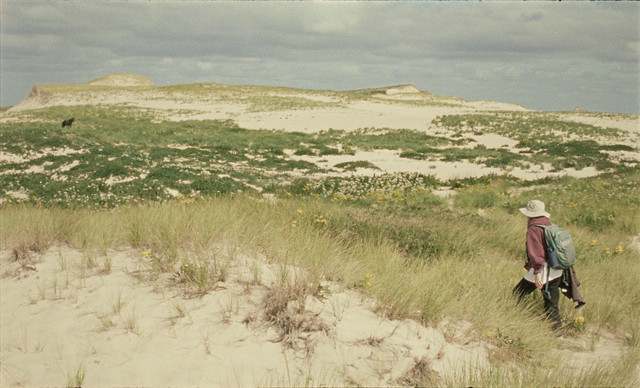
Geographies of Solitude (2022) - Mills Geographies_of_Solitude_Landscape We are presented with a night sky; thousands of stars are twinkling, a shooting star appears and crosses the screen. It's so picturesque it looks almost fake, very graceful but nonetheless a computer-generated animation, perhaps. Then the horses at the bottom of the screen begin to move. Then a moving lantern. It is dawn, and we realize the scenery that we are introduced is real. So, starts miraculously beautiful Geographies of Solitude.

Zoe Lucas is a naturalist/environmentalist. She first came to Sable Island, a patch of land 20 miles long and one mile wide, 100 miles off the coast of Nova Scotia in 1971 to study wild horses living there. She fell in love with the island and couldn't wait to get back on. She got a job as a cook in the seal population research team, then off and on, spent some 9,000 days there and made it her home. She has been meticulously logging data, not only on the horse population, but also sorting through mountains of plastic debris being washed up ashore, diligently cataloging them, leaving records of environmental impacts of the Anthropocene era.

Her shed is full of found treasures both alive and stationary - stacks of note books with daily written reports, photo slides, petri dishes, wind chimes made out of washed up materials and crystals, meticulously cataloged insects and other specimen in jars, patches made out of thousands blown balloons, plastic vats of yet to be cleaned and cataloged debris washed up ashore...

Filmmaker Jacquelyn Mills, in collaboration with Lucas, lovingly documents all that a windswept remote island can offer - sand dunes, horses, seals and insects, its intricate ecosystem. She also comments on the human footprints on environment through Lucas while capturing some of the most breathtakingly gorgeous images on 16mm film. It includes naturally exposed film stocks only by moonlight and hand printed footage using natural surroundings, like horse dung, sand, kelp and yarrow.

Soundscapes play big part in the film too. It’s filled with humming of the seals, insects, never ceasing winds, neighs of the horse, waves… Using small contact microphone, in Mills’ hand, tiny insects’ footsteps, the creaking of an abandoned wooden structure turn into music.

As Lucas says in the beginning of the film, her life on the island has been the process of discovery. I'm grateful that through Mills, we too could discover, albeit second hand, the grains of sand becoming the twinkle of the stars and dead horse becoming the source of new vegetation.

Later in the film, after a day of collecting samples in the field, Lucas says that because of being on the island was so rewarding, engaging and fulfilling, she lost track of everything else in her life. As they turn back to go back to the shed, Mills insists that she wants to stay in the field to collect some sound. “You don’t really need me to stay here for that do you?” Lucas quips, “No but this way we can spend some time together.” Mills shyly responds. Solitude takes a comforting tone in Geographies of Solitude. The film is one of the loveliest feature debuts in years.

Geographies of Solitude plays part of this year's edition of Hot Docs Festival on 4/30 and 5/4. Please visit Hot Docs Festival website for tickets and info.

Wednesday, April 13, 2022

Vibrant, Youthful Take on Old Paris

Paris, 13th District (2021) - Audiard PARIS 13TH DISTRICT - Still 2 Known as Les Olympiades, named after cities across the world which had hosted Olympic games, are the middle income high-rise residential buildings built in the 70s, near shopping malls and pedestrian overpasses, situated in the 13th District (13th Arrondissement), which is commonly regarded as a Chinatown of Paris. It's a place far from the images associated with the famed city. With its diverse population and nondescript modern buildings, shops and business offices and constantly changing landscapes due to new developments, it can double as any other modern Asian city. This is the backdrop of Paris, 13th District, a new film by Jacques Audiard, the supreme purveyor of French outlier cinema (Prophet, Rust and Bone, Dheepan), chronicling the stories of immigrants who make up and represent the face of the increasingly diverse nation.

After delving into the Western genre with wry The Sisters Brothers, Audiard takes yet another unexpected turn with Paris, 13th District, delicately sampling American cartoonist Adrian Tomine's 3 decades spanning work- specifically, Hawaiian Getaway, Amber Sweet and Killing and Dying and situating them in to contemporary Paris setting. Shooting in crisp monochrome, with kinetic camera movement and editing and a diverse cast, with the script co-written by Céline Sciamma, the film has a distinctly modern and youthful feel to it. Skillfully interweaving Tomine's stories of urban ennui, mistaken identities, and human connections in an Internet age, Audiard captures vivid and lively portraiture of an emerging new generation and while doing so, reinvents the notion of Parisian romance.

Émilie (luminous newcomer Lucie Zhang), a Taiwanese transplant, is a rootless, rudderless, lonely young woman living in her grandma (who's in group home due to her Alzheimer’s)'s apartment, rent-free. It's in one of those high-rise in Les Olympiades. She subsists her living with a telemarketing job she hates and getting a revolving array of roommates. After mistaking Camille (Makita Samba) who responded to her web classified for a roommate, for a female because of the female sounding name, she reluctantly agrees to their new living arrangement. Soon they start a no-strings-attached sexual relationship. But Camille is a disillusioned, cynical public school teacher with know-it-all attitude. He has aspirations to have a business of his own. Soon he starts lecturing about Émilie's lazy millennial lifestyle while she grows feelings for him. Would he help her to get her life in order? Would she melt his cold, calculating heart?

Then there is Nora (Noémie Merlant of Portrait of a Lady on Fire), a nebbish 30-something country bumpkin who is fleeing a disastrous marriage and just excited to be a student again (at Sorbonne), only to find her life turning upside down when she is mistaken for a popular web porn star Amber Sweet (played by singer Jehnny Beth of Savages), the constant harassment at school makes her impossible to continue her study. Would Nora let her frigid self go and let herself loosen up by way of connecting with Amber?

The breakout star of the film is definitely young Lucie Zhang as she inhabits her character with ferocious physical intensity and abandon. She understands the power of her youthfulness and knows exactly how to use it. Her portrayal of Émilie's wayward lifestyle and urban ennui are so natural and authentic, you see her great potential as a major acting talent in the making. Makita Samba is also great as a self-assured individual finding his priorities slowly, so is Noemi Merlant, as a bookish woman letting things go, so is Camille Léon-Fucien as Eponine, a sassy, precocious young woman on her way to her Internet stardom.

Coincidences and chance meetings weave these Parisians' lives together in an Internet age in Paris, 13th District. With Tomine's astute insight to his characters' psyche intact, Audiard creates sexy, vibrant and ethnically diverse portrayals of youthful love stories that upends the postcard-ready and homogenous Paris romances we are presented with. It's a welcoming change.

Paris, 13th District opens in theaters 4/15 via IFC Films.

Tuesday, April 12, 2022

Jacques Audiard, Lucie Zhang on PARIS, 13TH DISTRICT: Chinese Food, Covid Lockdown and The Internet

AudiardZhang Jacques Audiard, known for his superb thrillers (Read My Lips, The Beat that My Heart Skipped), became the supreme purveyor of French outlier cinema, chronicling gritty immigrant experiences in an increasingly diverse nation with such films as The Prophet, Dheepan and even to some extent Rust and Bone, comes out with a slight, sexy romance film based on Adrian Tomine's graphic novels called Paris, 13th District (Les Olympiades, Paris 13e). With its diverse cast and unusual setting (a lesser known and seldom seen neighborhood, in films anyway), Audiard is upending the typical notion of romantic French film taking place in Paris.

He also introduces us his new ingénue, Lucie Zhang, a 21 year old French actress of Chinese descent, giving a star making performance as Émilie, a disaffected, live-by-the-moment millennial who tries to navigate ever so complicated human relationship in the Internet age. They both were in New York for Rendez-Vous with French Cinema in March and I was able to snag an interview with them. It took place in Midtown Regency Hotel in Manhattan. Audiard, an industry veteran who worked with many great actors over the years, is a fast talking gregarious man, whereas Zhang by comparison, is much more subdued and shy, unlike the uninhibited charactor she portrays. It was an interesting dynamics that I got to witness.

Paris, 13th District opens Friday 4/15 in theaters statewide.

I know that the 3 narrative threads are based on the work of American graphic novel artist Adriane Tomine, I am curious how Paris, 13th District all came about?

Jacques Audiard: I’m afraid my answer might be a little uninteresting. At the time I was looking for a subject for a film. I didn’t have anything specific in mind. And a friend of mine recommended these graphic novels by Adrian Tomine, saying, “if you read them I’m pretty sure you will find something you might like,” and I wasn’t really familiar with him at all. And I read some of his work and I really loved them. So it was a good suggestion. And what I found interesting about Tomine as an author, is that for a graphic novel, it has a lot of psychological analysis - it had characters that are complex and he also left things unexplained in them. At the same time, his drawing style, he doesn’t beautify things- he just shows the reality of what they are like and that appealed to me as well.

Um hmm.

JA: I really didn’t know the popularity of Tomine. So when I started working on the project, people asked me what I was up to and when I tell them that I am doing this project based on Tomine’s work, I was surprised that everyone knew his work. I was the last to know! How does Tomine’s work translate to the Paris setting? Is it because the stories are universal? AJ: I don’t know. I think, the psychology of it, to me it is very individual and even very local. But what I think he does is he creates these portraits of complicated people. (pause) Ask Lucie. She will know. (laughs)

Lucie, What’s your relationship with Les Olypmiades?

Lucie Zhang: My answer is not that interesting either. I have a very good friend living there right now. And my parents met each other for the first time there and fell in love. I don’t live there but I often go there to get bubble teas and food and shop with friends.

What is your relationship with the place?

JA: My relationship is historical. I’ve lived there for a really long time. I moved away after between my first and second film. It’s an area that I know very well. I like it very much. It’s very diverse and always has been. It’s also an area that the last 15-20 years has really undergone a lot of physical change. And the sensation that you get, when you are there, is that you are in Paris without being in Paris, because it doesn’t have the look that we are all familiar with. Particularly, by filming it in black and white, it gave me an opportunity to show an illusion that it could be not even Paris, that it could be an Asian city. It has that kind of look to it. This is true, particularly when you go to Les Olympiades (the 4 high rise residential buildings and shopping malls), that give that kind of feeling. Well, its not like New York high rises in comparison. (laughs) It also feels very young because there are two branches of universities, so there are a lot of young people there. 


I mean, I go to Chinatown here in Manhattan all the time to eat and shop.

JA: Are we far from Chinatown here?

It's just a subway ride away downtown.

LZ: I was looking for it yesterday but took the subway and ended up in Queens Plaza.

Oh no. You took it to the wrong direction.

LZ: Oh really? I wanted to go to a Chinese restaurant because I was craving some good food. I ended up in some place and the food was not so good.

I should've known. I know some good places. How was the casting process?

LZ: Three sessions. First I saw it on the internet. I sent the email and met with Christel Baras (casting director). Second, it was a call back because she liked me, even though I wasn’t the obvious choice because at the time I was 19 and I believe the character was 25 I think. They thought I looked too young and too childish- I am still, I think. So they rejected me. Then the covid lockdown started. And during it I got a phone call again. Then I met with Jacques.

And how did you get to choose Lucie?

LZ: I won’t hear. (Laughs)

My question stirred up a frantic conversation in between Audiard and Zhang in French. I can only make out when Zhang says in English, looking at me laughing - "I lacked confidence," in response to what Audard was saying.

JA: Christel suggested several actresses for the part. So even though the casting process seemed very long for Lucie, it’s quite normal how we did it. What I learned from this process is I shouldn’t always trust my instincts because my first choice for a particular role can turn out to be a completely a wrong person. And for this film, with Amber (Jehnny Beth) and Nora (Noémie Merlant), were also a similar kind of situation. I think for me what worked here was Christel who really pulled the cast together. so you have to be really careful what to say when you are a director.

LZ: How do you know...at what point you know if it's the right person or wrong person for the role?

JA: Well, I worked with you in rehearsals and found out. It's actually very interesting because it concerns the timeline of how long it takes versus when I knew you were the right actor, for you it is the exact moment but for me it was working together for a while that I knew. That it wasn't temporal. Does it make sense?

LZ: I understand.

JA: I think the moment I knew was that Makita (Samba) who played Camille, came in that you guys work together very well. It's when they were talking and listening to each other that I knew.

This conversation was revealing in a lot of ways how Audiard's process with actors works. That it's not necessarily choosing the right actors but it's a bigger process and sculpting the actors during the rehearsal.

Obviously this film was shot during Covid Pandemic. Was it difficult for you?

JA: Of course there were a lot of protective restrictions and constant testing...and in a way it was kind of funny because after you come on to the certain part of the set, you test, you wear the mask, then you come on to the actual set, you take off your mask and take off your clothes... so it's a peculiar situation. But interesting thing during the lockdown is that you basically have a whole population that are forced to be inside, but here the actors were able to come to work and it was a really good time for them because it gave them some place to go outside. The french word here is confinement because they were really confined.

The party scene with the DJ, there were about 100 extras and all of them have been tested, tested and tested again to be able to come. And when they came they were really partying because it was a liberation for them, to the point they didn't want to leave! We had to usher them out because it was the first time they were out of their room in 3 month!

The film is vibrant and has a lot of great energy and has a hopeful ending. The world we live right now is not like that. It's full of disasters and wars. As a generation Z, who went through all these difficult times - The Gulf Wars, the financial collapse, pandemic and another war or invasion happening right now all in your lifetime. Do you feel that your generation is hopeful for the future?

LZ: It's a very hard question. I feel there are two types of people. One is people who are feeling really ill at ease and sometimes they feel they are victimized by all the things that are happening. For these people, they feel there is no hope. The other type is people who are more cognizant of history and what happened in the past that there were worse situations in the past and people managed to survive through them. And they are more optimistic. So it's really hard to say.

Internet. Is it helping or a hindrance for human connection?

JA: We can't make that kind of black and white distinction. It's bad in a sense that its a conveyor of conspiracy theories, fake news, all of that. But at the same time it helps people to connect with culture and broader idea of society, in that aspect it is good. If I can give you a brief analogy in the political world: In France right now they banned RTTV. the purveyor of propaganda. Personally I don't think its a good idea to ban it. We all know it's propaganda, we all know it's fake news, we all know that they are rallying against the liberal agendas and trying to rewrite history with their own fairytale in what is really happening. But at the same time, if we leave it there, we know we can look at them, see how they think and how they are progressing. But if we ban them completely, it robs us of that possibility. And sometimes people do stupid things (like banning) in the spur of the moment but I think it's better for us to leave it. OK. that's my bit of intellectualizing for the day. It's a time for a cigaret break!

Thursday, April 7, 2022

Love (is) Unclassifiable

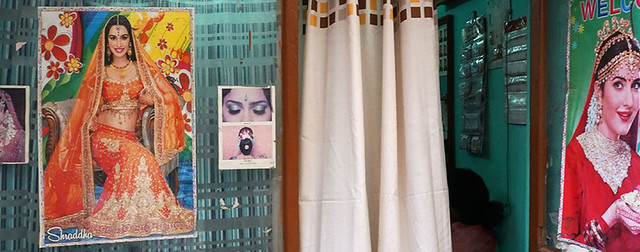
Yeh Freedom Life (2018) - Sen Yeh Freedom Life Priya Sen's film, Yeh Freedom Life, sketches out two queer love stories in bustling Delhi streets. Parveen is a street bendor who has strings of female lovers and currently in love with a married woman who keeps vascillating, going back and forth from her family to Parveen. Sachi works at a local beauty parlor. She fell in love with a woman who works as a security guard, their stories unfold in Ambedkar Nagar, a densely populated neighborhood in Old Delhi, India. It feels very real and intimate. The film starts with a mass 'baby shower' that Indian Gov. initiatives to 'educate' pregnant women and these officials rhetoric are some of the most sexist I've ever heard. They all culminates to 'if you don't follow these common rules, your husband will leave you" variety. The radio show overheard in driving car shot suggests that women are inferior intellectually is also very demeaning to woman. It's as if making the rudimentary case for intelligence equals emotional intelligence. In a later conversations with the subjects and one of the 'aunties' saying queer love that Sachi has for her lover is 'too strong' to be natural, seems to be based on observation soley based more on emotional level, as if it is a bad thing.

Yeh Freedom Life makes an interesting pair as I saw another Indian (actually Sri Lankan) queer documentary last week at Art of the Real, If From Every Tongue It Drips by Sharlene Bamboat. Unlike ordinary subjects in Sen's film, Bamboat's subjects are well-known Tamil feminist activists, as the director records their intimate daily lives together and touches upon the repressed desires. The two films contrasts and accompany each other in terms of its subjects' class differences and human desires and love. Sen's subjects, in discussing their love, are more direct but quite unconcerned with their sexual identities. It's their uncluttered nonnomative view on love, even in highly heteronomative and extremely patriarchal society that is refreshing and hopeful, especially in the context of India decriminalizing homosexuality in 2018.

Wednesday, April 6, 2022

Chamber Piece with Thousands Stories

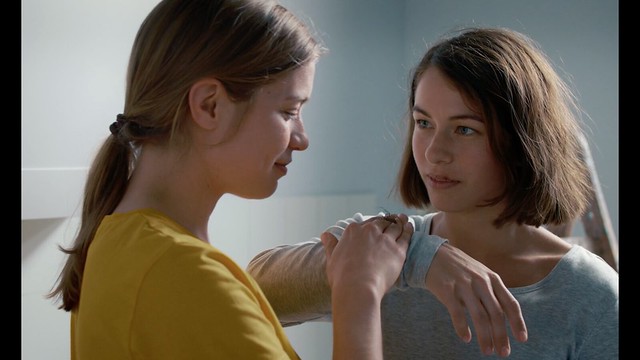
The Girl and the Spider (2021) - Zürcher Screen Shot 2022-04-02 at 10.00.52 AM Screen Shot 2022-04-02 at 10.05.43 AM Screen Shot 2022-04-03 at 12.37.41 PM Screen Shot 2022-04-03 at 12.42.15 PM Screen Shot 2022-04-03 at 12.33.45 PM Screen Shot 2022-04-03 at 12.23.05 PM Twin siblings Ramon and Silvan Zürcher's second film, after enigmatic The Strange Little Cat (2013), is yet another chamber piece as a microcosm of people's inner yearning and desire to connect in the modern society. And The Girl and Spider is just as ambiguous and non-conclusive as the former, if not more so.

The plot is pretty simple - one of the two roommates (who seem more than roommates), Lisa (Liliane Amuat), is moving out and getting her own flat. Mara (Henriette Confurius) with striking dark blue eyes, with herpes on her upper lip prominently displayed, is the one who is left behind. Like their debut feature, Zürchers concentrate on the indoor flat settings with a camera firmly fixed on the confines of the flats with several characters crammed in, squeezing by one another, making the places claustrophobic and devoid of any room for privacy. There's Lisa's mother, their friends, flirty neighbors, a handyman and his son, a cat, a dog, rowdy kids and of course, a hefty spider from the title who usually sits on the corner of the ceiling and makes unannounced appearances from time to time. Also like their previous film, The Girl is a very wordy film. Everyone has a story to tell, whether it falls on deaf ears is not as important. No communication is direct, no one would blurt out that they want to sleep with each other, or being extremely judgmental or cruel. Our society is too polite for that. It's in the slight touches on the shoulders and glances.

The human relationships are fickle; there are a lot of missed opportunities, one night stands, jealousy, yearning and desire that are not fulfilled - all these are happening around Mara, our static figure on the sidelines. She's not immune to be the object of desire, as she gets attention from both sexes. Is she taking a break from the sinewy human connections because of the STD? Or is she somewhat autistic the way talented people are (she sketches gorgeous portraits of people around her). She is also capable of cruelty. Does the spider which gets passed on from Mara to others and back, signify a disease or desire or both?

Only solvable mystery is the case of missing cat. It was the neighbor upstairs- a lonely old lady who took the cat in to her apartment. Does she need our scorn or empathy? Therefore, however complicated we see ourselves to be, do we need to be scorned for our jealousy, desire and cruelty or do we need empathy? Everyone, in Zürcher's films, imagined or otherwise, like the shop girl at the window, the chambermaid who left the piano in their apartment and went on to work at a cruise ship, even inanimate objects - plant, drawings, styroform cups, feathers, paint, have a story to tell and needs to be heard and deserve our empathy.

Stylistically original, but The Girl and the Spider reminds me of the ending of Kieslowski's Red by way of Schanelec in its enigmatic storytelling and it's wonderful. I can't wait for Zürcher's The Sparrow and the chimney as they conclude the trilogy.

Friday, April 1, 2022

Post-Realist

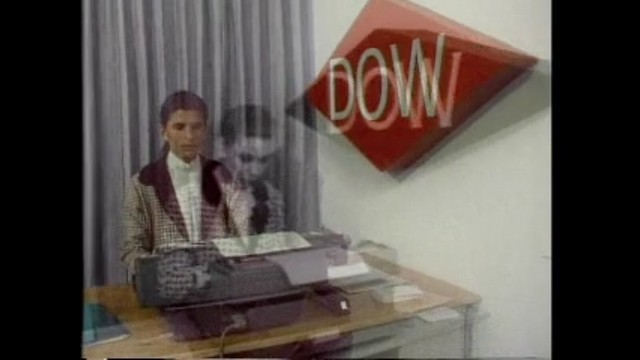
What Farocki Taught (1998) - Godmilow Screen Shot 2022-04-01 at 4.33.33 AM Harun Farocki, a German filmmaker, made a short film The Inextinguishable Fire in the late sixties. It was a fierce anti Vietnam War film that implicates not just the US Government and the Dow Chemical but it implicated the ordinary US citizens in its atrocity also, while explaining the napalm production in such a detached, scientific manner. To put it better way, instead being confrontational by showing the pictures such as the iconic 'napalm girl' or other atrocities and turned the viewers off, it explained how modern division of labor- 'the building blocks' of the Dow Chemical company, where each individual worker makes only one component of the bomb, surreptitiously hides its true intent on what those individuals are contributing in making. The film broke down scientifically how it's done and how the thought of individual responsibilities in those kind of endeavor dissolve. It was short. It was emotionless and it was to the point.

Jill Godmilow, an American experimental filmmaker, watched the film in the 90s for the first time and thought it was perfect. It was a documentary unlike any other, but far more effective than any documentaries that plead to the viewer's emotions with 'shocking' evidences. She was just disappointed that she didn't make it herself. So she decided to remake it, shot-by-shot, but this time in English and in color. She would make it in the US and closer in vicinity to where the Dow Headquarters were situated. With the colleagues and collaborators, Godmilow seeks exact copies in reenactment scenes. Farocki's minimalist and obviously fake staging of Dow Chemical offices are reenacted in the same manner. The burning of the lab rats, non-actors portraying scientists, delivering lines in monotones are exactly the same, except it's now in English and people in period costumes. Godmilow sometimes superimposes Farocki's film directly over her image, making sure that viewers see it is the exact replica. The message remains the same. The times have changed but the atrocities commited in our name have not.

Considering that, just like any other decade, 90s were riddled with wars as it is now and the modern military industrial complex is fully in place with the thought of individual responsibilities in the atrocities of war getting further and further away from our consciousness with more complex division of labor, What Farocki Taught reminds us that things haven't changed much. And it's quite remarkable the far reaching influence of Harun Farocki, as a writer, philosopher and filmmaker, to generations of filmmakers both in experimental and narrative field.

What Farocki Taught is also a good reminder of the state of what is considered as a documentary nowadays. Since the explosion of topical liberal documentaries in the 90s, the word is hijacked by the news media - every major newspaper now has its vlogs, CNN has its own documentary production division, streaming platforms are awash with its own documentary productions, all catered toward shocking revelations and appeal to your emotions with 'real footage' and 'truth seeking' manipulating viewers this way or that way. Is showing the shocking images and playing with your emotions with a narrativeized documentary a right way to go about discovering the truth? Or is the truth elsewhere, in a cellphone shot footage of war in Syria, Palestine, Yemen, Ukraine put on youtube? Our critical analysis of what we see is necessary. The context matters. How we approach to seek the truth is important. Farocki and Godmilow shows more effective way to communicate and it's valuable.

Wednesday, March 30, 2022

Art of the Real 2022 Preview

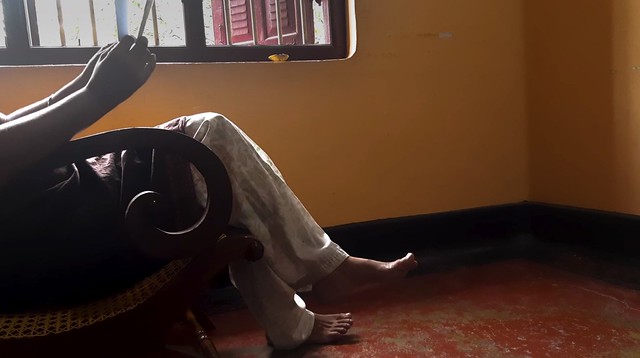
This House - Miryam Charles This-House On the onset, a grown version of a 14-year old girl who died in 2008 tells that the film will travel space and time since in film medium, everything is possible. So starts lyrical staging of unspeakable grief and all the potential of what could have been. Terra, played by Schelby Jean-Baptist, witnesses her funeral, carries on imaginary conversations with her mom (Florence Blaine MBaye), a Haitian immigrant, first to Quebec, then to Connecticut, US.

This House contemplates many things - the idea of home for both body and spirit, how the tragedy rips open a hole in space/time continuum, and giving voice to the voiceless/dead. The film consists of obvious indoor studio stagings, the lush greenery of the Haiti and its coastline and footage of bleak Northeast US footage all captured in grainy 16mm. Filmmaker Miryam Charles sort out a tough subject close to home with cinematic playfulness and poetic lyricism. This House is a poignant and compelling cinematic experience.

Train Again - Peter Tscherkassky Train Again-2 From the beginning of motion picture with Lumière Brothers, trains and film have a long and intertwined history. With Train Again, the assemblage-film master Peter Tscherkassky painstakingly creates a thrilling cinematic cake, pulling clips from as far back as Lumière's, The Great Train Robbery, Ballet Mécanique, to The Spirit of the Behive, Shining to Hollywood B-action films. His usual technique - rapid cutting, erratic camera movement, repetition and flicker effects, Train Again tests your persistence of vision to a dazzling effect. With Dirk Scheafer's tension building score, the 20 minute long film works like a thrill ride just like Tscherkassky's previous works like Outer Space or Dream Work. You really want to see it on pristine film print.

Super Natural - Jorge Jácome Super Natural-2 From the visual void we are introduced to a static noise. This static noise decked with subtitles is an omnipresent being, guiding us through Super Natural, a visual aural invitation to a group meditation called film watching. Shot in stunning backdrop of Madeira, Portugal, the film remind us that we are all connected in this world, the air we breathe in, the rock we are standing on, the fruit we eat, the various sea creatures, a little plastic bugs, our bodies, our imagination, our consciousness....

Shot in various medium - super 8, VR computer graphics, instagram images and using a group of people, some with disabilities and some not, Super Natural wants to place us in an environment not as strangers. It wants us to acknowledge that we are part of the ecosystem in the unstable world we are living in. Jácome and his collaborators use loose visual and words associations throughout with vivid colors and humor. The non-narrative images colliding but holds its shape together like a collage. Super Natural is a sensual meditation on human existence and connections with one another.

Geographies of Solitude - Jacquelyn Mills Geographies_of_Solitude_Landscape Zoe Lucas is a naturalist/environmentalist. She first came to Sable Island, a patch of land 20 miles long and one mile wide off the coast of Nova Scotia some 40 years ago to study wild horses living there and made it her home. She has been diligently and meticulously logging data, not only on the horse population, but also sorting through mountains of plastic debris being washed up ashore and cataloging them, leaving records of environmental impacts of the anthropocene age.

Filmmaker Jacquelyn Mills in collaboration with Lucas, lovingly documents all that a windswept remote island can offer - sand dunes, horses and seals, its intricate ecosystem. She also comments on the human footprints on environment through Lucas while capturing some of the most breathtakingly gorgeous images on 16mm film, plus naturally exposed footage only by moonlight and hand printed footage using natural surroundings. Here, tiny insects footsteps turn into music, grains of sand become twinkle of the stars, dead horse brings forth new vegetation. Geographies of Solitude is one of the loveliest feature debut in years.

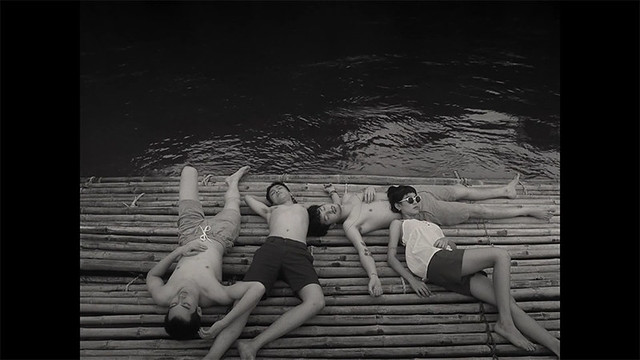
Come Here - Anocha Swichakornpong Come Here-2 A group of young theater actors take a trip to Kanchanaburi, west of Thailand, where Death Railway, once a site for WWII atrocities where tens and thousands civilians and Allied POWs lost their lives in labor camps. But the museum is under renovation and closed. The group, consists of 3 boys and 1 girl, leisurely hangs out at the lake house, smoke weed, mimics animal noises and engage in mundane conversations.

In a parallel action, a woman who is camping in the forest seems to be lost. Dazed and confused, she finds a stream, drinks the water then changes into a boy. Then we see the lakeside bungalow scene play out again on stage, with a scenery shot from the train out the stage window, moving us forward.

In her previous films, Suwichakornpong engaged us in a socio-political history buried underneath the lush forest of Thailand. Her approach is getting more and more abstract with each new film. Come Here, clocking at just over an hour, is like a puzzle piece with some of the vital pieces missing - what's the meaning of the transformation? Is the camper dreamed up by the girl by the lake or vice versa? How does a Bangkok's zoo closing figure into the story?

With the country's train and railway having imbued historical significance, Suwichakornpong's new film charts progress, nature, harkening back to animism, the younger generations collective historical amnesia, and the country's physical and spiritual transformation... in such a mysterious yet seductive manner. Watching Come Here is not frustrating- it provides you enough of threads, not at all in a teasing way, to decipher and mull over its sinuous connections and implications regarding history and it's thrilling.

If From Every Tongue It Drips - Sharlene Bamboat If From Every Tongue It Drips-1 An intimate potrayal of a Tamil queer feminist activist and historian Ponni Arasu and her activist partner Sarala Emmanuel as they record their daily lives and discuss Indian history and quantum physics in relation to human connections and the state repressed desires. Shot in sticky, tropical climate of Sri Lanka, If From Every Tongue It Drips is sensory overload experience with constant chatters of people, birds, insects, mechanical humming, traffic, street noise, water lapping at the shore, and music. Bamboat uses discordant sound, highligting the film's multicultural everywhere-ness. Arasu, almost always a subject of attention, recites Rekhti poetry full of passion and sensuality about female desires for one another that went against British colonialism and its purification of the culture that dominated much of the British rule.

The film is fascinating, informal history lesson done through many languages and culture, all spoken and sang by Arasu who gives a queer perspective on history that is sorely needed to understand the cultural, political landscape of modern India and its feminist movement. The film also celebrates tender, proud and loving relationship the two women shares.