Thursday, January 28, 2016

Can't Sleep? Drive to an Airport, See What Happens

Into the Night (1985) - Landis
 photo 667bc99b-e8f2-41a3-b82e-f290becc3fe1_zpsmbgwt2xp.png
 photo 649280d7-1c8b-4e88-b67c-4ac95eafa7e9_zpsiskeonxx.png
 photo 97013ad9-7c6b-4639-9043-80ae323eb29f_zpsmzva5mc3.png
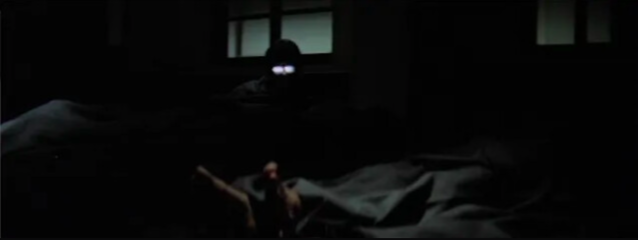
Average schulb Ed (Jeff Goldblum) has a bad case of insomnia. After finding out his wife is cheating on him, he aimlessly drives to LAX one night. There he rescues, Diana (Michelle Pfeiffer), a damsel in distress, and dove right into whole lotta trouble. Like many 80s movies, Into the Night boasts completely overblown plot so unnecessarily intricate and wordy yet mercilessly unexpositional- it's almost charming. It involves some Iranian imperial emeralds smuggling (up in Pfeiffer's tight butt) and Iranian Gestapos (including director John Landis doing Marx Bros routine as one in a quartet of bumbling idiot goons) and other interested parties. It also features David Bowie as a contract killer type, and flurry of other director cameo appearances - Roger Vadim, Paul Mazursky, Johnathan Demme, etc.

Whatever happened to Michelle Pfeiffer? She is so luminous in Into the Night. She looks mighty foxy in her little red leather jacket and tight jeans. The movie is much a do about nothing but has a goofy, screwball comedy charm in the backdrop of 80s excess.

OK Computer

Unfriended (2014) - Gabriadze
 photo 0871be54-0e33-4ddd-b518-8db924b3ecf7_zpskmwtstff.jpg
Finally a legit horror movie for the internet age, commenting on cyber bullying and inanity of private teen lives in America. Forget about some serial killer stalking attractive teens in the woods. It is just as nightmarish for these kids whose sole communication system is taken over by some vengeful, omnipresent computer hack! You don't care for any of these attractive teens if they will each die a horrible death or not. So all the cryin and hollerin and emotional fireworks these kids display on their own corner of skype boxes are for naught. Levan Gabriadze fully takes advantage of lack of details in internet communication to amp up the tension and fuzzy up the logic and it works mostly. Unfriended has no chance of aging gracefully, but I bet they spent as much money on the whole movie as they did for a pair of Keanu's sunglasses in Matrix.

Sunday, January 24, 2016

Life is but a waking dream

Cemetery of Splendour (2015) - Weerasethakul
 photo 51736493-5aba-49b5-ab18-037cc2c243a7_zpsqy6airxg.jpg
A former school-turned-hospital in Kon Kaen is the main setting for Cemetery of Splendour. A group of soldiers suffer from sleep disorder where they sleep most of the time, each hooked up to a glowing, color changing apparatus which gives you good dreams ("American soldiers used it in Afghanistan"). These giant glowing sticks stand out in a tropical setting like black monolith in 2001. But they are also pretty and give colorful glows, cinematically speaking. A middle aged local volunteer woman, Jen, takes care of a handsome soldier Itt who's suffering from the illness. They are played by Joe's regular, Jenjira Pongpas and Banlop Lomnoi. According to the young medium Keng (another Joe regular, Jarinpattra Rueangram), the ground the hospital is sitting on used to be a cemetery of ancient kings and they are harnessing the souls of these soldiers to fight for them when they are asleep.

Jen and Itt talk when he's awake. They talk about Jen's American husband whom she met on the internet, Itt's desire to leave the army and set up a Taiwanese style mooncake shop, etc. There are the usual, unsubtle yet natural eroticism and scenes of other ordinary bodily functions in Cemetery that you've seen in Joe's other films. They very naturally fit in to the gentle rhythm of the film. If the recent political unrest of the country is addressed in any way in Cemetery, it's regarded, blended within the universe Joe creates - the collective coma of the soldiers, unexplained digging of earth, some hushed government conspiracy theories uttered by characters. But the film feels more personal- like all his films, the film takes place in Isan province, Northwest of Thailand where the director grew up. And like his other films, Cemetery is infused with his memories of the place and myths and legends he grew up with.

'Life is but a waking dream' is much more pronounced in this film than any other weerasethakul films. But he also acknowledges a certain melancholy in resisting to let go earthly desires. Not as boisterous (for Weerasethakul standards) as Uncle Boonmee, but just as touching and beautiful, Cemetery of Splendour doesn't disappoint.

Thursday, January 21, 2016

Frozen

Crystal World (2013) - Borg
 photo crystal world1_zps6yj4sjfq.png
 photo crystal world2_zpsdetj4ha8.png
 photo crystal world3_zpslfytbmrd.png
 photo crystal world4_zpsiidyucrh.png
 photo crystal world5_zpsa4fcfbmq.png
Taking cues from Laughton's Night of the Hunter and JG Ballard, Pia Borg creates breathtakingly beautiful short, combining the iconic underwater death scene from the said movie and stop motion sequences. Plays part of First Look at MoMI.

Monday, January 18, 2016

Popularity is a slutty little cousin of prestige

Birdman or (The Unexpected Virtue of Ignorance) (2014) - Iñárritu
 photo c4aed749-698d-4043-b26a-58cba1fc44df_zpsqhtcvetj.jpg
A movie as a spectacle, Birdman is a virtuosic experience - technically brilliant and much more sophisticated than action hero franchises it makes fun of. But at the same time, the whole premise is as light as a feather, its comments on Hollywood and its narcissistic actors are emotionally and intellectually hollow. As much as I love Michael Keaton, who commands most of the screen time, his Keatonness is buried deep in meta-ness of the film premise and so never gets to shine. It's as if he is going through the routine of a hamster in a cage, just like the film's universe - one block radius möbius strip trip from and to an unnamed Manhattan theater in the Theater District near Times Square.

Ed Norton gets to play the more interesting part as Mike, a Brando-esque nihilistic actor who comes in to the troupe the day before the theater opens for the preview. Yet he is not written as a one dimensional character, so as other characters. There is much humanity to be found in characters and everyone's terrific acting-wise, from Norton, Emma Stone, Naomi Watts, Amy Ryan, Andrea Riseborough, Lindsay Duncan to even Zach Galifianakis. But there is not enough time to explore them all. Birdman wants to be many things- it wants to be a Robert Altman film (Raymond Carver connection too obvious?), but only half-heartedly. It never succeeds as those it aims for. It's a fun film that never stops. But it's not a great film.

Sunday, January 17, 2016

Back from the Dead

The Revenant (2015) - Iñárritu
 photo 7180ba5f-9ba1-430b-a1e5-1af0b2a5c92b_zpsdzssdria.jpg
In the tradition of ambitious, bravura, excessive filmmaking, Alejandro G. Iñárritu goes there with The Revenant and achieves Apocalypse Now and Fitzcarraldo worthy greatness. It's an unsentimental, relentlessly brutal, macho filmmaking that will undoubtedly turn a lot of viewers off. But I loved it. It concerns fur trapper/guide Glass (Leonardo DiCaprio) leading a cavalry of men in felt business to safety through the snowy and hostile western territory in 1800s. Because Glass has a half-breed, teenage Pawnee Indian son named Hawk and the group reeling after a vicious large scale Indian attack, the tension rises among the crew, especially from Fitzerald (Tom Hardy) an unsavory character who'd fuck over anyone standing in his way and his share of the profit. After the horrendous bear attack that leaves Glass almost dead, the captain of the cavalry (Domhnal Gleeson) orders (with the promise of large rewards) Fitzerald and young Bridger (Will Poulter) to care for Glass and Hawk and give Glass a proper Christian burial when the time comes, and leaves them behind to catch up later.

For the next two hours, The Revenant becomes a harrowing tale of survival and a revenge story. It's an amazing feat for DiCaprio, finally shedding all remnants of youth for the first time in my eyes, crawls the snowy earth, then dove right into the freezing roiling water, eats raw meat and fish, trek and climb the snowy Rockies with his bare hands. He is a live-action Wiley Coyote - he gets mauled, buried alive, almost drowned, thrown off the cliff, and so on and so on. He even uses a dead horse as a shelter, Empire Strikes Back style. Tom Hardy is perfect as a villain with his shifty gaze and mumbling.

Emmanuel Lubezki's only natural lit cinematography doesn't really chart anything new here, but the look and feel of The Revenant is polar opposite from Malick's The New World. And I am very glad that I decided to see the film in theaters. There are some blissfully beautiful shots in Glass's flashbacks/dreams of his dead Indian wife floating over him, but most of the time, the film is all dirt, mud, snot, wet felt and blood. And in its own way, it's spectacularly beautiful.

Thursday, January 14, 2016

Topography of Flesh

Meurtrière (2015) - Grandrieux
 photo 92d57be4-7ad7-462f-b50d-700d156cfe10_zpseecdlrlm.png
The second part of what Grandrieux conceived as trilogy (starting with White Epilepsy in 2012 and planned Unrest), Meurtrière/Murderess is another mesmerizing vertical mobile phone shot experiment. Your eyes gradually recognize human form in criminally underexposed images- the curvatures, concaves, female sex as they move in slow-mo. Distorted, muffled sound crawls to accompany tangle of naked bodies.

It's Caravaggio meets Munch meets Bacon. Slowwww cross-fades add another dimension to it, creating layers of flesh and movement on top of each other. The vertical canvas Grandrieux paints with these trained dancers as they gyrate, falling on top of one another, their light and dark skins contrast and accompany in graceful slow motion is quite intoxicating. Even though it is supposed to evoke or be about "anxiety", watching Meurtrière with all the lights off and plugged in is a beautiful, hypnotic experience.

Meurtrière plays part of First Look 2016 at Museum of Moving Image on 1/24. It is preceded by two shorts, Jet Lag and Lenz Elegy. Please visit MoMI website for more information.

Infidelity is an Equal Opportunity Offender

In the Shadow of Women (2015) - Garrel
 photo 14ce663d-3bfb-49fa-a403-302c2dab72b3_zpsfdwb62uz.jpg
Philip Garrel, known for making films about deeply self-reflexive romantic entanglements since the late 60s, is at it again with In the Shadows of Women. Infidelity, art, improvisation, one-take scenes, shot in monochrome on film & natural settings have been Garrel's MO and although his new film certainly encompasses all those elements, it seems much more concise and less ambiguous and melancholic than his other films, thanks to its script.

What's different here is his emphasis on looking love and romance from female perspective. Famed screenwriter Jean-Claude Carrière (Discreet Charm of Bourgeoisie, Tin Drum, Every Man for Himself, Birth) joined in with Garrel's regular writing partners - Caroline Deruas and Arlette Langman to write a script that represents the female point of view, as the title suggests. The result is another slight yet delicious, nuanced psychological drama.

Pierre (Stanislas Merhar of many Chantal Akerman films) and Manon (Clotilde Courau) are middle aged, poor documenatary filmmaker couple- Pierre directing and Manon Assisting. Manon has been completely devoted to her husband's artistic endeavor and believes in his talent. He is working on a documentary about resistance fighters during WW2, interviewing survivors who may or may not be real heros. The matter of fact narration reiterate the fact that Manon is living in her husband's shadows. Pierre is an introspective, thoughtful man but who can be totally aloof and blind on other life matters, especially when it comes to Manon's needs. He starts an affair with Elisabeth (Lena Paugam),an attractive intern at a film archive. And things get a bit complicated when Elisabeth starts spying on the couple and discovers that Manon is being unfaithful to Pierre as well. Pierre, justifying his infidelity to himself as 'male archetype thing to do', can't accept the fact that his wife's cheating on him.

There is nothing remarkable about In the Shadows of Women's premise. But it is interesting to see Garrel not using his hunky son (Louis Garrel) and other attractive young actresses to portray lovers in distress but enlisting older actors to play same romantic predicaments, illustrating that no matter what your age is, love and romance can make fool of yourself. And except the presence of cell phones, the film could easily be taking place in the 60s.

Merhar, who hasn't aged a bit in the last 20 years and still possesses naiveté and thoughtfulness in his eyes, is perfect for the role of Pierre. He assumes the difficult role of a man who is confused when his masculinity he took for granted and his idea of women's roles in society has turned upside down. Courau is beguiling as a frustrated wife of an underachiever looking for happiness in her life. Paugam's unassuming beauty and intelligence suit the role of Elisabeth very well and in tune with Garrel heroines. Even though the film centers around Pierre, In the Shadow of Women ultimately belongs to Cortilde, as she realizes the folly of 'men', thanks to a very well balanced script.

In the Shadow of Women might not be Garrel's best film, but it's good to see him quietly charting new territories in his ever so small, highly out of fashion, romantic entanglement oeuvre and I applaud him for it.

In the Shadow of Women opens theatrically on 1/15 in New York, other cities will follow. Please visit Distrib Films website for more info

Saturday, January 9, 2016

Forever Romantic

Jealousy (2013) - Garrel
 photo f1f5811c-b579-4eb4-9fa1-389b0475c28d_zpsm7j0qt7z.png
It starts with a break up. Louis (Louis Garrel) leaves his wife and their young daughter for another woman Claudia (Anna Mouglalis). Louis and Claudia are both struggling actors. He thinks moody Claudia is the one that he truly loves and reject all the other advances that are put on him. He is committed. But she isn't happy and their poverty is crushing her spirit. Holed up in their small attic apartment and without a job, Claudia secretly looks for a better man who can provide for her.

Delicately balanced and beautifully put together, Garrel's slight, 77 minute effort is very much akin to old black and white romance of French New Wave of the 60s. There are hardly any coverages, most scenes are shot on a single take and life-like. Garrel, a forever romantic, has never moved on like his contemporaries but has faithfully stuck in his brand of self reflexive filmmaking with his trusty actors who are all very on point.Louis Garrel reminds you of more handsome Jean-Pierre Leaud, sexy, I-just-smoked-10,000-cigarettes Mouglalis is great as a man-eater (yet not a caricature) and Olga Milshtein as Charlotte, Louis's daughter firmly anchors Jealousy in real-life realm. It's a delicious stuff.

Thursday, January 7, 2016

Get Your New Year's Cinephilia on with MoMI's First Look 2016

 photo f47fab6b-321b-4584-95eb-715da807daa9_zpsg3wnub0n.png
Starting this Friday and running for three consecutive weekends (1/8-1/24), in their beautiful state of the art theater in Queens, Astoria, the Museum of Moving Image's First Look Film Festival is fast becoming a new New York institution for many film aficionados. Selecting its roster from cinema's most cutting edge filmmakers, the 5th edition of First Look opens with the US premiere of Alexandr Sokurov's new film Francofonia.

Switching gears a bit this year with guest programmers such as Jean-Pierre Rehm of FIDMarseille, and Aliza Ma of Metrograph and Mónica Savirón, along with chief curator David Schwartz, this year's eclectic roster is heavy on the experimental/avant-garde/documentary.

It includes renowned experimental filmmaker Ken Jacobs' new films in 3D, Canadian video artist Dominic Gagnon's youtube culled Inuit epic Of the North, artist Margaret Honda's 70mm silent film Spectrum Reverse Spectrum, short films of Austrian visual artist Björn Kämmerer and Philippe Grandrieux's new film, Meurtrière (his continued exploration of bodies which started with White Epilepsy).

Then there are behind-the-scenes documentaries from Léa Rinaldi (This is What It Is- about Los Aldeanos, the most popular hip-hop group in Cuba, Traveling at Night with Jim Jarmusch and Behind Jim Jarmusch), a documentary on João Bérnard da Costa, a director of the Portuguese Film Museum in conjunction with Nicholas Ray's Johnny Guitar.

Here is how chief curator David Schwartz describes this year's edition in the press release:

This year's edition is a true cinephile's feast, filled with works that reflect on the medium itself, that urge us to reconsider our intimate connection to the ways that we experience cinema. as always, the films in First Look cannot be easily defined. They are artisan works, expressing distinct personal visions, with a strong emphasis this year on avant-garde cinema. To engage in the new possibilties of an art form is also to engage with the past, and this edition of First Look contains an ongoing dialogue with film history, with a selection of older works in dialogue withthe many premieres.

Twitch's own Christopher Bourne will be reporting on some of these selections in a short while, so keep a look out.

First Run Film Festival 2016 runs 1/8 to 1/24 at Museum of Moving Image. Please visit MoMI website for further information and showtimes.

Sunday, January 3, 2016

Night Hunting

Hunter (2015) - Barley
 photo 87a3c9ea-5300-48f8-8aee-7b47a3c0afde_zpsnh8mwqye.png
 photo 92fa8640-5f98-4d40-9b74-5c7a21892912_zps0ub0ozuw.png
 photo 3200254a-3a7b-4526-a62a-92dfbed96449_zpsr6wtr3b4.png
 photo 4c12798a-e8fb-407e-9440-9791b3a6e9a2_zpswapdvjbp.png
It's inspirational. A short film shot entirely on iphone by artist Scott Barley. The pitch dark night time photography barely sketches out the outlines of the scapes and objects. Barley's on par with Grandrieux to chart the unknown visual sensory territory here. Sound is just as immersive - the constant running of mountain stream. Barley then blends his images with computer generated aurora to top it off at the end. marvelous stuff.

Saturday, January 2, 2016

Uncomfortably Intimate, Bafflingly Beautiful

Field Niggas (2015) - Allah
 photo 73a42e1c-0456-4b1d-8208-6c75f2312f28_zpses4tek01.png
 photo 58b47754-e644-4643-9248-56972532beb8_zpszzfclixo.png
 photo 9430b6f1-b046-4a4e-b17d-5543adcd7dc8_zpszhqefsdo.png
 photo dbe2f1e2-ac73-4f12-b545-2c9e313c4184_zps6mnnrjv8.png
 photo 25516a4b-9cc6-49fc-a8ff-07eebc437384_zpsesv3gbtn.png
 photo 2a360c90-1a8f-4978-b8b0-21a27c4f6013_zps9n1o6hdi.png
 photo 5b555469-1ce3-4098-97de-5dbdfde92495_zps1hjwueo4.png
 photo 26ad3a0c-3ae8-49ed-82b9-85b6ddd6abd3_zpscllkgyag.png
 photo 2ce713bb-665c-463a-a3a4-46e6941ab1a1_zps6kzy7e80.png
 photo 6d49f8e4-e48f-4ce0-a476-e3f6d5a19f82_zps6266bh2o.png
 photo 43fd997f-5b16-448d-b06a-89019b069daf_zpsgi1mmsif.png
 photo 5f6b0aa6-c97d-43be-a83f-6513362174a9_zps3mwjldf2.png
 photo 8906a125-461c-40a1-80a0-649b8d88b5f0_zpsuicmtwpm.png
Kalik Allah has been photographing people in East Harlem (Lex & 125st) for years with his analog 35mm camera. Field Niggas is an extension of his practice with a small DSLR (shot in half the normal speed). The power of his arresting images is in his subject looking back at you straight in the eye. The experience of their lingering glance is bafflingly beautiful and uncomfortably intimate. I haven't felt like that probably since Robert Bergman photo exhibit in 2009. Accompanying wild tracks of its many subjects conversing with Allah give necessary context to the images presented. Obviously, Allah being a brother from the neighborhood gives him advantage to take these intimate photos at night in East Harlem. And the young photographer is not shy about his involvement in the process. He is seen and heard throughout the film.

Shot in the shadow of Robert Gardener incident during the Summer of 2014, the tension on the streets is reflected in the film as well. Police presence is everywhere and Allah includes them in his universe too. These young officers might be voiceless and distant in the film, but that doesn't stop Allah from getting in their faces and share his photo albums with them.

With the evocative title and constant presence of old chain gang songs, Allah draws parallels to the present inner-city life - poverty, drugs (it seems the drug of the choice at the moment is K2, the synthetic cannabis) & single motherhood. Field Niggas is a great snapshot of the nitty gritty present of the street people. But Allah seems incapable of staying away from beauty- time and time again he revisits pretty faces lit only by the dim street lights.

Please visit Khalik's Tumblr

Thursday, December 24, 2015

Same Suffering

Pursuit of Death/Jjacko (1980) - Im
Screen Shot 2021-08-08 at 11.49.37 AM Screen Shot 2021-08-08 at 11.43.54 AM Screen Shot 2021-08-08 at 11.44.22 AM  photo 75fd07dc-940f-46ef-9f86-d4aff55db07b_zpsdm2nfhxi.png
 photo a181dec7-19b4-45c0-acaf-3ddd899adcb7_zpshws94gte.png
 photo 36c5bd0c-ca4e-485e-bf7b-a08deed35698_zpsyu37mlyv.png
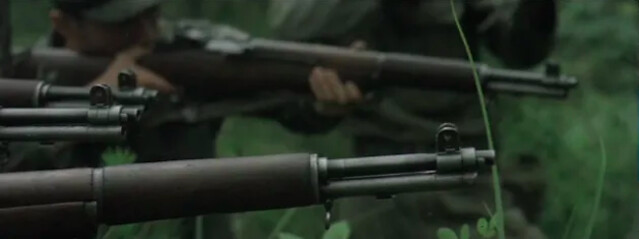
Song Gi-yeol (Kim Hi-Ra), an aging vagrant dying of stomach cancer gets picked up while sleeping in the streets and sent to a 'rehabilitation center': a place where old and invalid homeless people go to live and work (gardening and such) according to a strict schedule and eventually expire. It's a last stop for these unfortunates. There he finds Jjacko/Bak Gong-san (Kim Sang-Soo), his nemesis and obsession over the last 30 years. In the 50s, Song was a cop pursuing Jjacko, the notorious commie guerrila fighter, who's responsible for killing hundreds of civilians. Song's relentless pursuit of the commie took a toll on his life: lost everything that he holds dear and became a limping beggar. But no one at the rehab believes his tall tales and regards him as a mental case. Yet he is determined to bring Jjacko to justice and clear his name once and for all.

There are a lot of technical and plot issues with the version of the film I saw - there are scenes cutting out, has a terrible audio in some parts. Some seemingly important elements and motives are planted but never play out. And this being made while Korea was still in military dictatorship, there are no real political nuances to speak of: it's given that the reds are dirty, evil civilian killers and nothing more. Different ideologies that divided the country never factor in.

Jjacko is a slang for people with asymmetrical nose. It's also interesting to note that the bad commie is an ugly man with a huge mole over his nose and the cop always wears dark shades very much similar to ones Park Jung Hee (a military dictator who was assassinated in 1979)'s trademark look. I wonder if that was intentional or not.

But the film's all about how both sides suffered non-discriminately and that no one really cares now. Through overly melodramatic flashbacks, we see how both Song and Jjacko are alike in suffering- Jjacko as a fugitive and Song as an obssessive pursuer. These are also very macho characters who never regrets anything. Remorse doesn't figure in their thoughts. And women are just there to be sacrificed and remembered. Im is a competent director who always provides with some stunning compositions and energetic camera movements. He also weaves in two men's flashbacks as how their lives are connected in dramatic and bizarre ways. Jjacko is not a great film but an interesting one nonetheless.

Wednesday, December 23, 2015

Don't Cry, So Why Don't We Sing?

Good Men, Good Women (1995) - Hou
 photo 292ad633-a2d1-47c4-baf3-abac0b593c49_zpsixgenv4i.png
 photo 3dc6908f-b160-4d10-9e3c-3c2fbe9ad058_zpsjvr1f4xl.png
Compared with Hou's another Taiwanese historical epic City of Sadness which is told as a straight forward family saga, Good Men, Good Women is a much more complex film, both structurally and thematically. So it makes a much more challenging viewing experience. It starts out with a young actress Liang Ching (Annie Shizuoka Inoh) with a troubled past as she prepares the role of Chiang Bi-yu, a real life character in a film version of Good Men, Good Women, about a group of young Taiwanese idealists going over to the mainland China to join the resistance against Japanese in WWII. The monochrome version of the film within the film is scattered through out, giving the island nation's tumultuous history through these well intentioned characters who fell victims to political circumstances. It also loosely connects with the life of Liang in the present time who has been leading rather a trashy, decadent life.

Someone is stalking Liang with late night phone calls and faxing her the snippets of her own diary which was stolen. The diary reflects on her seedy past to herself as a bar hostess and a drug addict. She is also haunted by the memories of her lover, Ah Wei, a low level gangster who was murdered some years ago. We spend most of the running time with Liang in her present life and in flashbacks with Ah Wei, shot and framed beautifully in typical Hou mastery. The seemingly unconnected story resonates in the film's end as the same wide shot of people crossing the field of Chinese countryside, singing (one in monochrome and one color) reminding the prologue: "When yesterday's sadness is about to die/When tomorrow's good cheer is marching towards us/Then people say, don't cry. So why don't we sing." Liang's life can be construed as the director's comments on decadent present Taiwanese society. But Liang is a deeply unhappy character who can't escape the shadow of her past. We can't help but sympathize with her. There is obviously a larger context in play here - the nation's shameful past needs to be recognized in order to go forward.

Complex, asymmetrical and enigmatic, yet richly rewarding, Good Men, Good Women is the Hou film I was craving for. But now I have to watch Puppetmaster to finish the Hou's Taiwanese History Trilogy.

Tuesday, December 22, 2015

Blood Soaked Feministing

Tag (2015) - Sono
 photo 8350a5aa-7c74-4ead-8634-d1c3a01a04e7_zpslfeoblo4.jpg
Most of its 1 hour 25 minute running time, our titular heroine(s), Mitsuko/Keiko/Izumi are engaging in cardio vascular activity. Tag is Mulholland Dr. meets Ken Russell over the topness for the video game crowd. Sono even takes jabs at the largest movie watching demographic (his included) teen male, and teaches them a thing or two about respecting women while still engaging in upskirt photography (not as predominant as his other films though). Can he take the cake and eat it too? Is this even allowed?

Sono's strength has always been his manic energy and with all the drone shots and running, Tag is an unstoppable ball of energy with plenty of violence and gore. The cartoonish violence against these girls are not overtly sexual and interestingly, Sono keeps sex and violence separate until the last minute. There is obviously an agenda here that all of the characters are female until Mitsuko enters the 'male world' that Sono's commenting on male oriented society where 'girls' are treated as objects. But is he really serious about desensitization of these boys through games and pornography or half-heartedly commenting while actively engaging in desensitization himself? Is suicide the only option for girls everywhere? Unlike the promo trailer for the film where bikini girls get their heads blown off, Tag is much less scintillating in its presentation. He made a conscious choice not to push farther and mire him in contradictions. Like Sono's dark satire breakthrough Suicide Club, Tag leaves you in a somber, rather sad mood. In many ways, Tag is a better Sono film that actually has a direction and is a more concise and less exhausting experience than his grander scale, sprawling, unruly films. Sono exemplifies, along with Paul Verhoeven, that one can make a biting satire while awash with the very trope he's satirizing.

Monday, December 21, 2015

Top 10 Discoveries of the Year

The films below are the ones I discovered for the first time this year. Actually, I've seen Godard's Eloge de l'amour in theaters and I remember hating it. I wasn't really a Godardhead back then. Innocent times. But the rest of the films are the first time viewing.

My search for the works of particular artist continued and I landed on the works of Lisandro Alonso, who is by far, one of the most interesting filmmakers working out there. Then there is of course, Pedro Costa and Godard. My film viewing dwindled because of a job change in the middle of the year and not as robust as last few years. But still got to discover quite a few gems, the the ones below:

O Sangue - Costa
 photo d3733167-1a88-46ae-a60f-f5bee869f04b_zpskgxstg4t.png
Los Muertos - Alonso
 photo 61033b81-91a4-4c1b-ba7f-90825314b3b8_zps2n7woqba.png
Il Futuro - Scherson
 photo 8b53a354-4605-4ecd-b78e-b311dbb30005_zpsurybhhyt.jpg
Liverpool - Alonso
 photo b452ed8e-9619-4c48-abac-d21a7c553965_zpscykyvhup.jpg
Eloge de l'amour/Forever Mozart/Passion - Godard
 photo 9eea4be3-8894-43ba-b5ee-dc4a48c4d0ab_zpsvkgkgd74.png
 photo 8a1f9bfe-0f48-440a-ad75-8862c5652876_zpsh4ugzgr9.png
 photo f93d2f95-b32d-479f-a616-0ed6866243cd_zps7ab18eb9.png
Mildred Pierce *mini series - Haynes
 photo 79ec81c4-4428-48cc-90d3-dbefb3718c7f_zpstunksmtt.jpg
La belle personne - Honoré
 photo ffa44972-544c-464d-a876-684704f95dff_zps4es77nr9.png
Yearning - Naruse
 photo 2194cd01-4ed9-453f-a878-6ec32ecbb93f_zpsfqf7ih7j.png